MP’s rights and obligations

” … The tendency – reinforced no doubt by the 2009 parliamentary expenses scandal – has been to overlook the fact that MPs have long been, and should be now, the primary components of the unwritten British constitution.

It’s not just that the best of them perform a stupendously unrecognised social and public service, as Jo Cox was doing at the very time she was killed. It’s that while they are inevitably – and rightly – influenced by the party members and activists in their own constituencies, they are uniquely answerable beyond them to the wider electorate in those constituencies.

This is the absolute cornerstone of Britain’s system of representative democracy, including when it comes to deciding the country’s future or who should lead a party. MPs have to stand for election; they have to argue their case in front of the unconvinced – rather than merely the already converted – and they make their mistakes in public. …”

https://www.theguardian.com/global/commentisfree/2016/jun/30/parliamentary-democracy-mps-constitution-brexit-labour-leadership?CMP=fb_gu

Though some MPs regrettably do not think of their wider electorate and some barely think of their narrower electorate – preferring the trappings of higher office which render them mute in Parliament about their constituencies.

Hugo and Neil: between a rock and a hard place

Gove: Brexiter, the man who always said he didn’t want to be Prime Minister and wouldn’t be good at the job

Crabb: Remainer, the man who thinks homosexuality is a disease that can be cured and is married to a French woman

Liam Fox: Brexiter, the man who resigned because he took his flatmate “informal adviser” Adam Wherry on too many of his Ministry of Defence jaunts

Andrea Leadsom: Brexiter, a woman and someone who took advantage of offshore banking

Theresa May: Remainer, a woman who said there were no grounds for investigating widespread phone tapping by journalists

Tough one, boys!

Owl’s guess (note: Owl has no political nous or nose whatsoever) Hugo for Gove, Neil for Theresa. But not going to the bookies to put a bet on after the Boris Johnson shenanigans!

OK Hugo, who is your choice for PM? And Neil, what about you?

Will it be an old Etonian (Boris), a woman (May) a bloke from the working class (Crabbe) or Hunt – that chap you say you talked to a lot about our NHS but who doesn’t seem to have helped much?

How long will you sit on the fence? Or might you stand yourself? Or will you be campaigning to see which one will give you another ministerial post? Or the one offering you a peerage, perhaps?

Oh, the irony if you end up as just another common or garden constituency MP – who doesn’t have even a second home in it.

Owl feels your pain.

And Neil – now presumably so disliked by your Minister George Eustace for batting for the wrong side. And no hope of going back to the European Parliament!

Will the A303 now ever be completed … Will animal welfare continue to be protected by Brexiters? And forever destined to live with the fact that you were one of the 79 MPs who defied your party whip to force this Referendum.

But at least you do live in YOUR constituency.

Claire Wright: even more important that MPs represent their constituency

“Brexit: It is now more important than ever that this country has MPs who will represent the people

Tuesday, 28 June 2016 1 Comment by Claire

Since Friday events have moved so fast I haven’t even written a blog as each time I think of an angle it gets superseded by another major news story!

The only clear thing among all the chaos and confusion, is that this country has probably never been more divided – politically and socially – and in my view, more in peril than at any other time in living memory.

The party system seems to have totally fractured. Not only has the Conservative parliamentary party become bitterly broken, the Labour party is also at war.

Last Friday morning I felt shellshocked and upset that we had left an institution I believed worked for the greater good, despite its many faults. Since then I have watched fascinated as the subsequent dramatic events unfolded.

The economic fallout came swiftly and is very worrying. The value of the pound has plummeted to a 31 year low, we are told that the UK’s credit rating has been downgraded from a triple A to a double A rating, we have dropped from being the fifth largest economy in the world to the fourth and the Bank of England is on standby to pump £250bn of public money into the markets to reduce the jitters currently reverberating across the globe from our EU exit.

More than £200bn has been wiped from the value of the UK stock market – equivalent to 24 years worth of EU contributions.

A general election is now looking possible in October, to tie in with the selection of a new prime minister.

Lies and exaggeration were undoubtedly the order of the day for both the Leave and Remain campaigns, but what is really galling to me is that the Leave movement won people over on false pretences. On the NHS and immigration in particular – two major planks of their operation, their claims have been found to be resoundingly untrue.

The Remain campaign focused too much on scaremongering and too little on how the EU helps us, which only riled people and forced them into entrenched positions , setting family member and friend against one another.

The conservative IN bandwagon, seemed to be blinkered on issues mainly linked to the economy and immigration, discounting all the positive things that the EU does for us, for example on employment, the environment and human rights for example. I believe that this was because these are the issues that are not valued by the right wing political elite that we currently have governing this country.

David Cameron’s supposedly one nation conservative cabinet, which campaigned WITH big business against a ban on bee killing pesticides, has already scrapped or weakened as many environmental protections as it can get away with. Planning regulations are now as relaxed and in favour of developers as they have been since the introduction of the Town and Country Planning Act in 1947.

With a future hardline right wing government on the cards, possibly led by the current favourite Boris Johnson, the likelihood of the current protections remaining for our seas, clean air, recycling, waste and for rare species, landscapes and plants – the Habitats Regulations – is remote.

Over the past few years the Conservative government has lobbied to scrap the EU Habitats Regulations – tough laws which protect some of our most precious landscapes here in East Devon, such as Woodbury Common, Aylesbeare Common, the Exe Estuary, as well as large swathes of Dartmoor.

However, despite the Habitats Regulations protecting our most rare and precious species such as the dartford warbler and the nightjar, our government announced the laws were “gold plated,” and lobbied the EU hard to get them scrapped.

The EU has so far held firm to these regulations, which also mean strong planning rules in these areas , as well as the surrounding countryside.

But I now can see on the horizon an inevitable and horrible ‘bonfire of red tape’ as a new right wing conservative leadership sets about dismantling anything that it views as in the way of “growth.”

So what is the future of East Devon now most of the country has voted to leave?

In my own council ward of Ottery, there must now be question marks for a controversial quarry proposed at Straitgate Farm, which was quietly looking less likely, due in part to the strict Habitats Regulations Protecting Woodbury Common, where Blackhill Quarry is based and where stone and gravel processing currently takes place. It was due to cease as of the end of this year because of these laws.

What will Brexit mean for East Devon’s two biggest industries? Agriculture and tourism? And what will it mean for education? What does it mean for our cash strapped NHS and our local very much at risk
community hospitals?

What will it mean for the most vulnerable people in the constituency and those on low incomes?

Certainly, both agriculture and education are forced to rely on EU subsidies and grants.

Prolonged economic hardship will surely mean even deeper public spending cuts, yet deeper cuts to public services, which as always, will have the biggest effect on those people who have the least.

If a general election does take place in October, the future of our district – and the rest of the country – rests with those politicians examining thousands of pages of EU law and policy with a view to changing, scrapping or tightening it.

The future of our vulnerable residents also rests with MPs who have a duty to stand up for people who need help and support.

East Devon’s MP needs speak and vote in favour or against new laws and policies based on how they affect local people. That’s voting FOR the people of East Devon, not his party.

Each MP has a duty, in my view, to be a diligent scrutineer of this process.

What laws or policies do we want in East Devon that will benefit us, our communities, our wildlife and our businesses? Now is the time to consider this very carefully.

If democracy is working effectively people in East Devon should have the opportunity to influence such discussions through our MP.

And our MP has a responsibility to stand up for the people of East Devon and what they see as their priorities, especially at this very turbulent time.

The question has to be as ever. Is Mr Swire up to the job?”

http://www.claire-wright.org/index.php/post/brexit_it_is_now_more_important_than_ever_that_this_country_has_mps_who_wil

Tipton St John likely to lose its primary school due to flooding

Interesting how the article twists its fate from flooding to lack of housing development! Especially as various local vested interests made several attempts to move in on the area.

And many will recall Hugo Swire’s comments about his involvement in this. It now looks as though he might have realised its days on its current site were numbered at least as far back as September last year:

A Devon village looks set to lose its thriving primary school because of a flooding threat.

Tipton St John Church of England Primary School is likely to move to a site within the campus of The King’s School Ottery St Mary.

The move comes after the primary school missed out on funds to relocate within the village.

The school, which has a split site , currently faces the a threat of flooding.

The majority of its pupils come from outside the village and there is no prospect of significant housing development to allow the catchment area.”

http://www.exeterexpressandecho.co.uk/devon-village-set-to-lose-its-primary-school-amid-flood-worries/story-29416613-detail/story.html

Here is what Mr Swire said in January 2016:

I am, as I have been for some time, deeply concerned about the effect of flooding on Tipton St John Primary School and the recent floods show just how vulnerable the school is. This is clearly an unsustainable situation and it is not only the pupils’ quality of education but also their safety which is being compromised.

‘I spoke to Lord Nash this afternoon and re-emphasised the urgency of finding a solution to this problem. Whilst the long-term solution remains under consideration, the Minister agreed that in the short-term he would contact the EA and ask them to look into possible measures which could mitigate further flooding to the school.

It is clear to me that we need to take a broader look at flooding in East Devon and I have invited Sir James Bevan, the new Chief Executive of the Environment Agency, to the constituency so that I am able to show him some of the areas which are most affected’.

and in September 2015:

Very real concerns have been raised over the safety of the pupils at the school so it is essential that we find a solution to this problem. I am supportive of the proposal to move the school to a safer part of the village but securing the significant amount of funding required will always be a challenge.

‘I wanted to take this issue to ministerial level and impress upon Lord Nash the importance and urgency of this situation. I was very pleased that the Minister said he would look again at the school’s original PSBP2 application and send an official from the Department for Education to Tipton St John so that they can see for themselves the perilous situation in which the school finds itself in.

‘This is promising news but we still have a long way to go before finding a long-term solution to this problem’.

Doesn’t sound like he expected the school to survive in its current location and that he had a pretty good idea that the ” long-term solution” would be closure.

Ministerial “code”?

How come a Minister can’t talk about his constituency in Parliament but CAN say which side he supports in a referendum that will affect his all his constituents for decades to come?

EDA INVITES HUGO SWIRE TO BECOME INDEPENDENT

http://www.eastdevonalliance.org.uk/news/20160614/eda-invites-hugo-swire-to-become-independent/

Hugo Swire MP has used his blog to attack the idea of Independents both in Parliament and at District Council level. This is EDA Chairman, Paul Arnott’s response:

“The last time I saw Hugo in the paper he was greeting US Secretary of State, John Kerry, to the anti-corruption summit in London. It seemed marvellous that although the Swire family name was dotted throughout the Panama papers Hugo was joining the fight for accountability and transparency.

So, may I suggest that he casts off the shackles of Conservative membership, and the ministerial code which he claims prevents him speaking in Parliament about his constituency, and join the free-to-speak, free-to-act Independents? With all the extra time he may even be able to find a home down here.

But as a matter of fact, Hugo is wrong that East Devon Alliance Independents operate as a bloc in the council. There are 15 Independents in the Independent group, including 9 who are also members of the EDA, and it is a matter of record that every one of them votes as they individually decide. There has never been and never will be the kind of arm-twisting beloved of EDDC’s Tory hierarchy, which itself does a disservice to many excellent Conservative councillors as perturbed by this as us.

As to being anti-Tory, this is a canard Hugo has tried to float before. In fact, we have just made a submission to the Home Office in support of his colleague Theresa May’s Action Plan on Money Laundering and Terrorist Finance, with reference to the possibility of money laundering through property development. This is as relevant in East Devon as it is to the gleaming new towers of central London.

Finally, the EDA registered with the Electoral Commission precisely so that our microscopic spend at the May 2105 elections was open to analysis by the public. We look forward to Hugo’s views regarding a number of his Devon Conservative colleagues whose own Parliamentary electoral expenditure returns are now being investigated by the West Mercia Police.”

Claire Wright responds to Hugo Swire’s rant about independents and the “Ottery Pack”

From Claire Wright’s Facebook Page

It was fortunate for Mr Swire that I was in the process of moving house and without internet for two weeks which meant I couldn’t respond fully to his blog posts that I fundamentally take issue with, relating mainly to Ottery St Mary Hospital and his government’s property management company, which is set to acquire 12 community hospitals in Eastern Devon, later this year.

Fortunately, I now have a full internet connection and below is my reaction.

Mr Swire seems angry that around 250 people came along to my demonstration at Ottery Hospital last month and didn’t believe his claims that the Secretary of State’s for Health’s new private company – NHS Property Services is entirely well meaning and benign.

Residents present were sceptical of his assertions that the company is only acquiring community hospitals (currently owned by local NHS organisations) and charging high market rents, in order to help maintain the buildings.

I held the demonstration on 21 May, as I am outraged by the news that NHS Property Services is to help itself to Ottery Hospital and 11 others in Eastern Devon. NHS PS has a remit for selling off hospital buildings that are “surplus to requirements.”

Mr Swire unexpectedly turned up at the protest, which he is quite entitled to do and asked to address the crowd after me, which I readily agreed to.

His response (which received heckling and jeering from the crowd) largely related to claiming that Ottery Hospital is entirely safe and that NHS PS wouldn’t and couldn’t sell it off.

My question, which I have asked repeatedly of NHS PS and of Mr Swire – what happens if the local NHS (which is around £80m in debt) can’t pay the rent, still remains unanswered.

My request to NHS PS, which has offered me similar assurances to Mr Swire, to view the draft terms and conditions of the contract, so I can satisfy myself that Ottery Hospital’s building is safe, has been refused.

I am reliably informed that elsewhere in the country community hospital buildings acquired by NHS PS have remained shut, with health clinics having to be held in church halls because of unaffordable rents, totalling around £500,000 a year. Before being seized by NHS PS, local health trusts owned the buildings so no rent was payable.

In Ottery’s case local people raised around £250,000 just 20 years ago to assist with the new hospital building.

Yet Mr Swire has suggested that the community should take out a long term lease in order to protect the hospital – from his own government?

The fact that the responsibility for maintaining community hospital buildings is now shifting from the local NHS to a politically appointed government minister, is also very relevant and has worrying implications.
So that’s the background. What has Mr Swire asserted since?

Well, firstly, he has accused me of “scaremongering” and “weaponising” the issue for my “own political advancement.”

I will not lower myself to respond to these silly comments.

He then goes onto claim that Budleigh Salterton is a good example of a community hospital turned into a health hub … but omits to mention that Budleigh Salterton Hospital remains shut because of ownership issues wrangling related to NHS PS taking over the hospital later this year and charging unaffordable rents!

Our MP’s derisory response to the problem doesn’t end here. Mr Swire has even insulted all the protesters at my demonstration on 21 May. He announced in his column in the East Devon press two weeks ago, also reproduced on his blog, that the residents who attended were a “left leaning pack that follow Councillor Claire Wright.”

Ottery St Mary Town Council is so angry about this remark that it will write to Mr Swire to complain.

I intend to fight the very dubious intentions of NHS PS all the way. This is just the beginning.

NHS Property Services is on the agenda at Devon County Council’s health and wellbeing scrutiny committee (of which I am a member) on Monday 20 June at 2pm. Please come along to County Hall and observe or watch online via the council’s website if you would like to know more. If you wish to address the committee you will need to register asap.

Some constituencies have MPs who fight their corner. It is a shame that East Devon’s MP is only interested in defending the indefensible actions of his government, which appears to be on a mission to degrade the NHS further each year.

Campaign for Free [Independent] Parliament response to Hugo Swire

Dear Mr Swire,
Many thanks for devoting space on your website to the subject of independent candidates. You mount a stout defence of the party system and many of the points you raise, single issue candidates, rejects from other parties, lack of policies and so forth are valid.

However as you might expect, before committing over six million pounds to this project, on a one way ticket, we
thought long and hard about these factors and how to mitigate them.

Our guiding principle is that all policies and major decisions should be made in Parliament by the best people that can be found.

As you know, politics is in a state of flux throughout the Western world with extreme parties and extreme politicians emerging. From Golden Dawn in Greece, Alternative für Deutschland in Germany and Donald Trump in America
the writing is on the wall for the establishment.

Electorates are now looking for an alternative to parties that have long marginalised them and treated them with contempt.

However, the future lies not with new parties;
tribal politics has been tested to destruction. The future will be politicians hand-picked for their ability and accountable only to their constituents.

These people will become accomplished politicians who will
work collegiately with their colleagues towards the best possible decisions.

The end result will be policies arrived at by consensus in a powerful yet democratic parliament, rather than being used as electoral bait on the doorstep.

As you point out, independents are often regarded as political misfits or as being obsessed by single issues. However, all the candidates we endorse will have at least three things in common. They will all have signed up to
the Bell Principles, which set out clear standards of conduct; they will support parliamentary reform to stop politicians accepting promotion in return for unquestioning support; and they will have agreed to recall by their constituents if they fail to perform.

Future reforms may include the replacement of general elections, which have become time-wasting, immoral
and unaffordable festivals of bribery, with a permanent parliament. Rather than holding a general election every five years to change from one self-serving party to the next, it would make more sense to hold MPs accountable by recall instead.

The parliamentary term would become a
settled and productive continuum marked only by the periodic check and refreshment of its Members.

By habitually bribing voters to gain power, political parties have caused Western countries to live far beyond their means. Not only do political parties routinely bribe the electorate with their own money, they are now
bribing us with our children’s money as well.

We are imposing a truly immoral burden on future generations and every baby born in the UK today is already £24,000 in debt. Given the parlous state of our economy, by the time
they are sixteen this debt could have more than doubled.

Those who find work will face punitive levels of taxation; those who cannot will suffer an ever-decreasing level of support and opportunity. It has been known for
parents to cut up an offspring’s credit card, one day our children may well wish that they could have cut up ours. The prospect of a happy ending is fading fast as paper currencies, government bonds and quantitative easing
lose their charm in lockstep with stocks and commodities which are now also crumpling under the pressure.

With a clean sheet of paper, no sane person would replicate our present political system. Less than one percent of the electorate is now a member of a political party and seventy-six percent of that same electorate have not voted for the present government.

However, the system will not cure itself; the electorate will have to force reform by voting only for people
with a record of achievement rather than skilful orators. Staffed by MPs chosen for their ability rather than their political affiliation, parliament will have the views, needs and aspirations of the electorate woven into its
fabric rather than being cynically exploited for votes.

The political parties are now trapped by the very system they created and are condemned to keep on promising the earth to cling on to power. It is now up to the electorate to break this destructive cycle by voting only for people we
trust and respect.

You mention that most people are not political obsessives and may find it difficult to stay the distance. We would say that many have become fatalistic about their inability to control their own circumstances, institutionalised, confused by bureaucracy and demotivated by a system that only gives them a restricted choice of options to vote for once every five years.

You also correctly refer to the independents lack of resources in comparison to the big parties. Whilst this is true, crowdfunding will change that dynamic, not only in financial terms but by giving people a stake in their chosen candidate.

It has to be said that the ‘resources’ of the big parties have often been provided in exchange for influence and favours.

You mention that we have a position on the EU, we have and it is on our website;

“Brexit and Remain are both right in what they say. Brexit is correct about the inability to control our borders, red tape and the restriction on global trading by the EU.

Conversely, Remain is right to point out that there would
be damage to trade and that our ability to stand up to major players such as Russia and China would be weakened.

This tells us that the referendum will solve nothing.

However, no middle way is on offer and we are stuck with a
blunt Yes or No choice, neither of which will be in our best interests. The EU has made many mistakes but it has also got some things right and must be reformed rather than blown asunder.

However, it will take a concentrated
effort by all its member states to bring about the changes that will be required.”

The Free Parliament campaign is a philanthropic effort to replace a political system that is well past its sell-by date with one that is designed to work for us rather than against us.

We are now getting serious approaches from all round the UK not just from the West Country. I hope that this goes some way to assuage your concerns and there is also an
extensive FAQ section that you may find of interest.

However, I would be delighted to answer any further questions you may have.
Yours sincerely
Martyn Greene
Campaign Director.

Hugo Swire – you don’t have to be smart to be a minister, just in a safe seat

Interesting how many old-Etonians were parachuted into safe seats, including our own Hugo Swire. But it isn’t looking quite so safe at the moment. What on EARTH would Swire DO if he was just a constituency MP (or possibly not an MP at all). No wonder he rants at Independents – more of a threat now than ever before!

“Voters elect their members of parliament (MPs) in general elections, but a large majority of MPs have very little to do with the day-to-day governing of the country. It is rather the ministers in government, as selected by the victorious party leaders, who do. Hence there is an obvious link between the general elections and government formation with regard to who selects ministers.

In a recent study with Elad Klein, we show that there is another—albeit a less obvious—connection in terms of who gets selected as ministers; MPs in electorally safe seats are more likely to become ministers.

This is based on an analysis whether the constituency results from the elections to the House of Commons over the period 1992–2015 influenced the likelihood of MPs being selected as ministers in the United Kingdom (UK).

The House of Commons provides the perfect case to assess the electoral connection of ministerial selection due to the single-member districts, large government size, and the relatively decentralised candidate selection process in the UK.

Electoral safety affects the ministerial selection because elections are a constraint over the preferences of MPs and their parties. MPs need to stay in the parliament by being re-elected to be able to pursue other goals, including attaining promotion to government ranks. On the other hand, party leaders need to maximise the number of their MPs in order to stay in the government to achieve their policy ideals.

Electoral constraints differ with the marginality of seats for each MP in Westminster systems. In single-member districts, it is comparatively clear to members and to their leaders how electorally safe their parliamentary seats are.

As the electoral marginality of a seat increases, or in other words as the number of votes separating success from failure to secure a seat decreases, re-election becomes the dominant motivation.

Our results show that there is indeed a positive relationship between MPs electoral safety and their probability of securing a ministerial office. …

… For an MP with 5% electoral safety, which is often considered as marginal, the probability of becoming a minister is one in 10. In contrast, a 35% majority more than doubles this probability for MPs.

http://www.democraticaudit.com/?p=22300

Swire upsets Ottregians who disagree with him by calling them ‘a pack’

Ottery St Mary Town Council last evening unanimously agreed to write to Hugo Swire deprecating his description of Ottery people in his blog as a ‘pack’ when protesting at NHS changes that affect the viability of community hospitals.

So, that’s all independents, all Ottregians, all current and former Lib Dems, every candidate who stood as an independent in PCC elections, anyone standing for Parliament who does not belong to a mainstream party, anyone whose manifesto is not Tory – basically anyone who doesn’t view the world as he does comprehensively trashed in one blog post of no less than 2,254 words – around 2,500 more words than he has ever spoken about East Devon in Parliament!

Well done Hugo, keep up the good work … it’s doing independents no end of good!

Swire – many, many feathers ruffled!

Oh dear, Hugo really does have his tighty-whities in a twist with this (very long, very pompous, very verbose) rant on his website about independents (i.e. what he REALLY means is how much he is rattled by Claire Wright).

It’s just too rambling, too illogical and too vituperative to quote, but read it if you must here:

http://www.hugoswire.org.uk/news/blog-how-independent-are-independents

Poor old Hugo, times are changing and he just can’t keep up with it.

Hugo: an Independent has one BIG, BIG, BIG advantage over you – he or she can actually SPEAK out for East Devon in Parliament and elsewhere, whereas you refuse to do so, citing you ministerial foreign office post as an excuse ( not a reason, an excuse).

It will be very interesting to see, if Brexit wins, just what you will then do.

Oh, and an independent is likely to actually LIVE in the constituency, unlike you!

A snap election?

The Conservatives have raked in nearly £9 million than Labour in donations in the past 12 months – amid mounting speculation there could be a snap general election. …

… According to the official data, most of the Tories’ money came from companies and wealthy individuals.

They include a £569,300 cheque from telecommunications firm Lycamobile, £150,610 from Sun Mark Ltd, more than £500,000 from former stockbroker Alexander Fraser, and £333,000 from Tory peer Lord Glendonbrook.

The Conservatives also received £554,000 from the National Conservative Draws Society – a weekly fundraising prize draw for party members.

Trade union Unite were Labour’s largest single donors, giving the party around £3.5 million in the past year. They were followed by the GMB, who donated £2.7 million.

In total, the main unions gave the party £11.4 million in 2015/16.

https://www.politicshome.com/news/uk/political-parties/conservative-party/news/75456/tories-rake-millions-more-labour-amid-early

Wright and Swire clash over NHS and Panama Papers

http://www.exeterexpressandecho.co.uk/Hugo-Swire-met-250-angry-protesters-morning/story-29301708-detail/story.html

Swire says that hospitals will not be charged rent by NHS Property Services.

HE IS WRONG!

Here is the proof:

For the new financial year 2016/17 there are some important changes to charging arrangements. This includes a move to market-based rental charging on all freehold properties, which has been agreed with the Department of Health and NHS England.

On 4 April 2016 Pat Mills, Commercial Director at the Department of Health issued a letter to the NHS to set out the background on the move to market rentals along with the reimbursement arrangements.

The move to market rents is consistent with initiatives being introduced more widely across central government to improve utilisation and value for money in property occupancy.”

Charging arrangements from April 2016

and here is the letter sent to all NHS tenants on 4 April 2016 confirming the new arrangements including a clause that if there is “dilapidation” of the property at the end of the lease the cost of reinstatement must be paid by the tenant:

http://www.property.nhs.uk/wpdm-package/dh-letter-changes-to-nhs-property-services-ltds-charging-arrangements/?wpdmdl=10457

and here is a helpful leaflet:
http://www.property.nhs.uk/wpdm-package/lease-regularisation-leaflet/?wpdmdl=10231

So, basically, the more money a community raised to help build new facilities, the more NHS Property Services will charge in rent.

What MPs think about their expenses watchdogs

“Furious MPs have lashed out at the ‘rubbish’ watchdog that handed them a 10 per cent pay rise in a serious of extraordinary private rants.

Staff at the Independent Parliamentary Standards Authority (Ipsa) were told to ‘grow some’, and condemned for publishing information that embarrassed politicians.

One MP lambasted the body for failing to increase their pay to more than £200,000 a year to replace expenses, and said they were preparing champagne to toast the departure of chairman Sir Ian Kennedy.

The messages have been released following a freedom of information request by MailOnline.

Ipsa handed MPs a bumper salary increase from £67,000 to £74,000 last year, despite the rest of the public sector being limited to 1 per cent.

They busted the cap again last month with a 1.3 per cent rise.

However, many MPs were angry about the timing of the increases and way they were handled, while the watchdog has also come under fire for publishing details of expenses debts.

Ipsa agreed to disclose the ‘free text’ responses from a recent survey of satisfaction levels among members and their staff, which was carried out anonymously.

One MP who was re-elected at the general election accused the watchdog of locking them in a ‘Kafkaesque nightmare’.
‘You are rubbish at acting on behalf of the Members of Parliament – you serve yourselves and are so far from ‘helping us do our job’ the complete opposite. Everyone feels the same – new and older MPs,’ they wrote.

The same politician insisted the expenses system should be ‘replaced completely by an allowance system rolled up with our salary’. That could see them handed around £140,000 a year on top of their current salary of just under £75,000. There would be no obligation to file receipts but they would have to fund their own offices.

‘No forms just £10-12k per month to go and do the job we want to do, freed up from your Kafkaesque nightmare of a system,’ the MP wrote. ‘Office/staff costs run as now but freeing us up from the bureaucratic bullying of Ipsa and allowing us to get on with doing the job we were elected to do – not form filling, looking over our shoulder and dealing with the media storm that Ipsa wonderfully conjures up for us…

‘And you wonder why you aren’t popular… ‘

Adding £12,000 per month to MPs’ salaries would leave them earning nearly £220,000 a year.

Answering a question about how communications from the watchdog could be improved, the politician replied: ‘Grow some and put your full name on there.’

WHAT MPS SAID TO THE WATCHDOG

‘You are rubbish at acting on behalf of the Members of Parliament – you serve yourselves and are so far from “helping us do our job”, the complete opposite…

‘Can’t wait till the discredited bully Ian Kennedy receives his marching orders – 650 glasses of self-funded champagne will be raised on that great day that can’t come soon enough.’

‘To be reduced to tears due to attitude and being ignored, left me very upset and vulnerable…

‘Just sort out basic incompetence and bad attitude. I have never used a more customer unfriendly service EVER.’

‘The decision to name and shame MPs with written off claims with an Ipsa press release was disgusting, unprofessional and as it turned out erroneous in too many cases.’

‘The justification for the large pay increase was appalling.
‘In essence Ipsa took the view that at the time when some (perhaps many) MPs were submitting claims that were permitted but publicly indefensible, the total amount claimed was acceptable.

‘They therefore took the combined value of all the indefensible claims, averaged them out, and added them to everybody’s salary – thereby implicitly condoning what had happened before.’

The MP added: ‘Can’t wait till the discredited bully Ian Kennedy receives his marching orders – 650 glasses of self-funded champagne will be raised on that great day that can’t come soon enough.’

They went on: ‘Trust you have enjoyed reading the responses as much as I enjoyed writing them!… I wonder when they will be published…’

Other re-elected MPs were similarly scathing.

One wrote: ‘The decision to name and shame MPs with written off claims with an Ipsa press release was disgusting, unprofessional and as it turned out erroneous in too many cases.’

Another complained that Ipsa was not covering all the costs it should.

‘Your ‘cost neutral’ payrise will for all MPs do further damage to our reputation as no one in the media seems to mention that it is not a raise in the package at all,’ they added.

Newly-elected politicians did not hold back in their criticism either.

One commented: ‘Too complicated. Too bureaucratic. Sloppy administration of paperwork in support. Guidance unclear. Online system cumbersome and complicated.’

Another respondent said they had been reduced to tears by ‘abysmal’ treatment from Ipsa.

‘I have submitted five official complaints due to the attitude I have received,’ they said.

‘I find the Ipsa service extremely unhelpful, arrogant, and choose not to listen. The behaviour meted out towards me has left me very upset on occasion and highly stressed.

‘To be reduced to tears due to attitude and being ignored, left me very upset and vulnerable. Dealing with Ipsa has been a completely frustrating and upsetting experience. I just don’t trust them.

‘Just sort out basic incompetence and bad attitude. I have never used a more customer unfriendly service EVER.’

Among the new-intake MPs taking aim at the pay hike was one who said: ‘The justification for the large pay increase was appalling.

‘In essence Ipsa took the view that at the time when some (perhaps many) MPs were submitting claims that were permitted but publicly indefensible, the total amount claimed was acceptable.

‘They therefore took the combined value of all the indefensible claims, averaged them out, and added them to everybody’s salary – thereby implicitly condoning what had happened before.’

Another more experienced politician complained that Ipsa’s approach meant they were under ‘constant pressure’ to refuse the increase.

‘Ipsa announced MPs one off pay rise very frequently, against the wishes of the public we serve, and failed to highlight the offsetting savings being made elsewhere,’ they said.

‘As a result, colleagues were under constant media pressure to refuse their pay rises, as the public were unaware of the offsetting reductions. It did nothing to help the reputation of politicians.

A spokesman for Ipsa said today: ‘We recognise that there is room for improvement and we are committed to working with MPs and their staff to continue to improve our services and systems, to make them more efficient, whilst still regulating MPs’ business costs and expenses effectively.
‘From the survey feedback, we are developing a new website that will be launched later this year.’

http://www.dailymail.co.uk/news/article-3592539/Grow-200-000-year-MPs-private-rants-watchdog-awarded-bumper-10-pay-rise.html

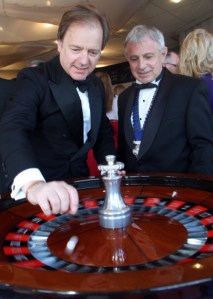
Hugo Swire pictured in Cameron’s anti-corruption squad – may have to start with his own family firms

Four of the Swire family holding companies feature in the Panama Papers and Swire is in record as saying that he thinks full tax disclosures for MPs should not be required.

http://www.telegraph.co.uk/news/2016/05/12/david-camerons-anti-corruption-summit-risks-ridicule-after-it-em/

MPs pay family members an average of £5,600 more than other staff

Our MP Hugo Swire, employs his wife.

Family members employed by MPs are paid on average £5,600 more than other staff, a watchdog has revealed.

Pay of such “connected parties” has also risen at twice the rate of other staff, the Independent Parliamentary Standards Authority (Ipsa) found.
The group called for a review of whether MPs should be allowed to employ relatives in the future, arguing jobs must not be “personal benefits”.
In total, 139 MPs employ family members at a public annual cost of about £4.5m.

The review will only apply to future staffing as the Independent Parliamentary Standards Authority (Ipsa) said it would be “unfair and legally challengeable” to investigate existing contractual arrangements.

The watchdog, which is responsible for determining MPs’ pay and expenses, said there was a lingering “perception of risk” about whether the taxpayer was getting value for money in terms of the number of family members and close business associates working for MPs.

After reviewing the matter in 2010, Ipsa decided against prohibiting the employment of family members, saying it did not believe the system was being abused and family members played a “valuable role” in assisting MPs – while limiting their numbers to one per MP.

‘Limited controls’

The watchdog said it was still happy with the majority of contractual arrangements but believed that controls preventing the misuse of funds were “limited”. Since relatives generally occupied more senior roles it found they were paid “significantly more” than other staff.

“Public concern about the employment of connected parties has remained,” it said.

“In order to determine whether these constitute any grounds for concern, Ipsa would need to undertake intrusive and potentially disproportionate work to investigate the employment practices in MPs’ offices. “But, given that there remains a perception of risk to taxpayers’ money, we are obliged to address it. Therefore we are consulting again on the practice, but only in respect of the employment by MPs of any new staff.”

The issue will be considered as part of a wider review of business costs and expenses payable to MPs – with any change to the rules likely to take effect either next year or after the next election, scheduled for 2020.

Ipsa is also looking into the £4.4m cost of paying off staff who worked for the 182 MPs who retired at the last election or lost their seats.
While all the sums were within the rules, it expressed concern that £975,000 was paid to 125 staff who were taken on by newly elected MPs within the subsequent 10 weeks – “sometimes in the same constituency and in the same role”.

As MPs are all separately self-employed, it said the election represented a “legal break” in the staffers’ employment but it noted that in other areas of the public sector the rules had been changed to prevent staff from getting pay-offs if they are soon taken on in a similar field.”

http://www.bbc.co.uk/news/uk-politics-36260573

Claire Wright on BBC Today programme this morning

Talking about the new charitable fund to encourage independent candidates in all constituencies.

She made the point that those who believe Independents cannot make their mark in Parliament are totally wrong – they have a great deal of influence and, being free to speak and free to act, can represent their voters more effectively.

And DEFINITELY more effectively than Hugo Swire, who constantly tells us that, because he is a Foreign Office minister, he is not allowed to speak on East Devon issues in Parliament! For East Devon issues, read all issues.

He says he IS allowed to lobby other ministers behind closed doors (where is the democracy in that?) but refused to bring up the issue of closure of East Devon community hospitals with Jeremy Hunt.

In the last minutes of the programme this morning.

Now available on iPlayer Here is the brief interview – at 02.55.32 – on this morning’s Today programme:

http://www.bbc.co.uk/programmes/b079mwss#play