Collapse of social care could force more elderly people out of their own homes

Elderly and vulnerable people could be forced to move out of their own homes into institutional care unless the chancellor invests billions of pounds to shore up social services and reform England’s broken care model, The Independent has been told.

www.independent.co.uk

In an exclusive interview ahead of Rishi Sunak’s Budget on Wednesday, James Bullion, president of the Association of Directors of Adult Social Services (ADASS), warned the care system risked “catastrophic failure in some areas” without urgent changes to the way vulnerable people, including younger disabled people, are looked after.

He warned the number of people needing care had doubled in some parts of the country since March, as a result of the coronavirus pandemic.

Ministers are planning to bring forward reforms to social care later this year, but Mr Bullion, who leads social services in Norfolk, said the system needed at least £4bn over the next two years “just to keep the show on the road”.

He warned the sector had been rocked by more than 30,000 deaths in care homes from Covid, with a 40 per cent turnover in staff, higher sickness, and more than 100,000 vacancies on top of rising costs.

“We’ve got social care providers who are very much more fragile and at risk than they were a year ago. We were able to pay premiums to providers to keep going, but we’ve now reached the point where the revenue consequences of the last year will come home to roost. And we’re very worried about the impact on the social care market and whether it will still be there for us in a way that it’s been in the past year if we take that support away.”

He said in some areas this could lead to the “catastrophic failure” of providers who could go out of business while others refuse to take more residents.

He warned: “If somebody wants to be supported at home, but we can’t find home-care providers, then we have to start looking at alternatives to make sure their needs are met. You can get situations where, because you can’t be supported at home, you end up being supported in an institutional setting like a care home.

“There are vacancies in care homes at the moment so one of our worries is that if we can’t reshape the way social care works with better wages and recovery, then we might have very limited choices for people.”

He added that rising unmet need in social care would lead to more pressure on hospitals as people’s health worsens.

Age UK has estimated there could be at least 1.4 million people with unmet care needs but Mr Bullion said he believed that had probably increased by at least half a million now.

“If you take March 2020 as a baseline, many people’s health has been made worse as a result of Covid. In some cases, during the peaks, we’ve seen a doubling of the numbers of people we’re dealing with.

“In Norfolk, we normally see 700 people come through our doors in a month, but that’s up to an average of 1,200 now.”

He added: “We need respite from the current situation to stabilise it, we need a recovery model that gets social care on a par with the NHS and gets it functioning properly, and then we need reform.

“If all we get from the chancellor next week is that they’ll be laying out proposals for adult social care later in the year then we will be bitterly disappointed. We think the evidence is there that social care should be part of how you build back better.”

Councils have been given £1bn extra for social care from April along with the option to add a 3 per cent council tax levy. Mr Bullion said this was inadequate to meet the rising costs and not all councils had opted to increase their share of council tax.

“The reality is the settlement left us very short,” he said.

ADASS is calling for a rise in pay for social care workers, with hourly rates of £10.90, equivalent to what an NHS healthcare assistant can earn. Most social care staff are paid the national living wage, which will reach £8.91 from April.

Mr Bullion warned: “The social care workforce needs parity of value with the NHS and that means raising the wages of that workforce. Around 15 to 20 per cent of all care services have got a quality problem. If we want to solve that problem, we’ve got to invest in training and in the workforce. We need half a million new people working in social care over the next 10 years and we won’t get them by keeping wages low.”

MPs on the Health and Social Care Committee have said social care needs at least an annual funding boost of £7bn to begin the process of reform.

Debate has raged over whether care costs could be capped and whether the value of people’s homes should be used to pay for care.

But Mr Bullion said half of the social care budget was spent on looking after younger disabled people who didn’t have any capital of their own.

He said: “Solving the ‘selling your house problem’ will not impact on any of those people, and that’s half of our challenge.”

He said the emphasis had to be on “pooling the risk” as much as possible and in exchange the social care sector had to accept tougher regulation and more rights for residents and councils.

“The current arrangements are not working well. People using services have very few rights, they can be evicted just because their needs change, or because they’ve gone into hospital and come out, they can be refused entry. We find people having to move home because companies are collapsing or changing hands. If we’re to ask people to contribute their own resources to social care, people need better protection.

“We can’t just leave the care market to drift, which is I think what’s happening at the moment.”

He said the traditional care home model would need to change to one where more people are given help earlier to stay in their own homes or live in their own flats as part of assisted living schemes.

He said: “We have a problem, because our system really rewards very large institutions with high occupancy in order to get to the breakeven point. If you try and fit everything into that one model, you end up dragging in people who could be at home.”

He urged the chancellor and prime minister to summon the bravery of postwar governments.

“In 1948, three things were born, the NHS, the welfare benefits system, and the social care system. All in the same year, under complementary legislation. We have got it right when it comes to health and thinking about that as part of our national infrastructure, but we need to return to the spirit of those times. We need to get social care right, otherwise we are going to be creating poor health.

“I see lots of evidence of local politicians having to make brave decisions with adult social care as a result of funding constraints. What we need is national bravery.

“That will take a long-term view and to see it as an investment; a practical business case for growing the economy and for minimising future costs for future generations.”

East Devon District Council agrees £5 annual Council Tax increase for average band D property

Looking at the details; the support to LED at £1.3m just to keep them afloat is a reminder that EDDC has some significant legacy problems remaining. – Owl

Authored by News Desk www.thedevondaily.co.uk 

In line with many other councils across the country, East Devon District Council have agreed to a small Council Tax increase. This amounts to a £5 annual Council Tax increase for an average Band D property for 2021/22 to ensure EDDC continues to secure crucial front line services for its residents and businesses.

The increase means the authority’s portion of the annual Council Tax bill for a Band D property will be £151.78 a year or £2.92 a week for all the services it provides. The increase, which was approved by the council on 24 February 2021 is less than 10p extra per week.

The council takes 7p in every pound of the total Council Tax bill with the rest of the money going to Devon County Council, Devon and Cornwall Police, Devon and Somerset Fire and Rescue Service along with town and parish councils.

Councillor Jack Rowland, East Devon District Council’s portfolio holder for finance said: “I appreciate that any news announcing an increase in costs may be difficult to accept and understand during the current situation caused by Covid-19. However, I hope the following explanation will help clarify the reason for the 3.41% (on average £5 a year) increase from April on the East Devon District Council’s element of your Council Tax.

As a direct result of Covid-19 EDDC has over the past year seen a fall in income and a rise in expenditure and we are legally obliged to present a balanced budget for 2021/22.

The mandatory service costs involving, for one example, the waste and recycling service, have risen due to increased volumes and we have decided to retain all the discretionary services as well.

The discretionary services cover sports centres, swimming pools, parks and public toilets. As an example the council contracts Leisure East Devon (LED) to operate the sports centres and swimming pools owned by the authority. In the current financial year up to the end of March we will have supported LED with an additional £1.3m to keep them afloat due to the restrictions and lockdowns we have all experienced, but EDDC have only received £280k back from Central Government to offset this extra financial support.

In addition we have decided not to increase the EDDC owned car park charges from April, but to achieve a balanced budget we are using £300k from the general reserves that will reduce that reserve to the lowest level. Obviously we cannot continue to use those reserves going into the future to support income and certain car park charges will eventually have to be increased from April 2022 as by then they will not have been increased for 11 years so have not kept pace with inflation and the VAT rises over that period.

I hope residents will understand the need for the EDDC percentage increase as part of the overall precept charge that the council collects on behalf of themselves, Devon County Council, Devon & Cornwall Police, Devon & Somerset Fire & Rescue Authority and the Town and Parish Councils.”

Tory-linked PR firm hired to provide test and trace ‘reputation management’

A PR firm owned by Matthew Freud, who was closely associated with the Conservatives during David Cameron’s time as prime minister, was awarded a contract to provide “strategic communications”, including “reputation management”, for England’s beleaguered coronavirus test-and-trace system without a tender process, the Guardian can reveal.

Haroon Siddique www.theguardian.com 

The contract with Freud Communications Limited was for services to be carried out between 1 November last year and 15 January this year but it only came to light after details were published on a government website on 19 February.

They appeared on the same day as a high court judge ruled that Matt Hancock acted unlawfully by failing to publish details of multibillion-pound Covid-19 government contracts within the 30-day period required by law, amid allegations of “chumocracy” and lack of transparency in the awarding of contracts during the pandemic.

Although the start date for the £55,000 contract with Freud Communications was 1 November, the government website says it was awarded on 8 February 2021.

Freud, a friend of Cameron and George Osborne, is listed by the Electoral Commission as having made a one-off non-cash donation of £11,000, relating to travel, to the Conservative party in 2008. When married to Elisabeth Murdoch, he was part of the Chipping Norton set.

Gemma Abbott, the legal director of Good Law Project, which brought the high court action against the government, said of the contract: “Another day, another deal awarded with only a handshake and documented later. The fact we are just seeing the details of this arrangement now, months after work began and after the work has already been completed, speaks volumes about this government’s complete disregard for transparency.

“For the sake of good governance and protecting taxpayers’ money, government must get its house in order on procurement.”

The £12bn NHS test-and-trace system, which despite its moniker has been outsourced to private contractors, has been beset by criticism. In October, shortly before the start of the Freud Communications contract, Boris Johnson and his chief scientific adviser, Sir Patrick Vallance, admitted to failings, with the Scientific Advisory Group for Emergencies (Sage) describing the success of the supposedly “world-beating” system as “marginal”. Other experts have claimed it is not fit for purpose.

The contract with Freuds says: “A carefully curated group of senior reputation management specialists from across agency specialisms (eg corporate, crisis and issues) will be available to NHS test and trace to assist in reputational issues and provide counsel and assistance.”

The Freuds website says it can help “construct communications strategies that protect our clients at the time they need it most”. Work for past clients has included making “very factual changes” to their Wikipedia pages.

Last month, Freuds announced it had hired Sheila Mitchell, who was the Public Health England (PHE) marketing chief before leaving in September last year. In 2011, while Mitchell was at PHE, Freud Communications was accused of a conflict of interest over its approximately £500,000 contract to advise on PHE’s Change4Life anti-obesity scheme while at the same time promoting businesses selling fizzy drinks and sweets. As Mitchell only commenced work with Freuds this month, she was not involved in the NHS test-and-trace contract.

A Department of Health and Social Care (DHSC) spokesperson said: “As part of our response to this global pandemic we have drawn on the enormous expertise and resources of a number of public and private sector partners. The government has been clear from the outset that public authorities must achieve value for taxpayers and use good commercial judgment.”

A Freuds spokesperson said: “We’re proud of our long-term association with PHE and the DHSC for whom we have worked continuously for over 15 years through a procurement process that strictly adheres to government guidelines.”

Beware Tories making “promises” at election time. EDDC to ask Jupp and Jenrick what happened to General Election Exmouth pledge

A salutary story to bear in mind as we approach the County Council elections.

At the full Council on Wednesday, 24th February, EDDC agreed by 25 votes to 15 with nine abstentions to write to both Simon Jupp MP and the Secretary of State for Housing, Communities & Local Government Robert Jenrick to express their disappointment that Exmouth was not, as promised on December 8th 2019, given the opportunity to engage with the bidding process for the Future High Streets Fund.

Robert jenrick had just visited Exmouth to boost Simon Jupp’s general election campaign a few days before the general election. He made this promise as recorded by Simon Jupp: Exmouth will receive new funding from the Government’s new Future High Streets Fund. The Secretary of State for Housing, Communities & Local Government, Robert Jenrick, has confirmed that Exmouth will receive funding to help secure up to £20 million pounds from the Government’s new Future High Streets Fund. Also widely reported in the press eg here.

Only the funding, £150K, to support a bid never happened .

Now Councillors want answers to four questions:

1) Why the announcement four days before a General Election (see this link) was not followed with any communication, a firm process and confirmation of the next steps to be announced to East Devon District Council (the responsible authority for submitting such bids)?

2) Why no reply was received to the letter sent by the former Leader of the Council in January 2020 (see this link)?

3) If there will be future iterations of Future High Street funding, even though the previous process was described as ‘once in a lifetime’ and a spokeswoman from the Ministry of Housing, Communities & Local Government has stated that the rest of the funding has been transferred elsewhere? (see this link)

4) Was a unilateral decision taken by the Secretary of State anywhere else in the country to subvert the bidding process?

Remember: Axminster had been chosen by EDDC as the preferred candidate Town to receive funding but failed to get short-listed in 2019. Owl subsequently posted an article suggesting that the explanation could relate to the fact that Axminster lay in a “safe” seat. So this highly politicised promise came out of the “blue”.

“Coincidentally”, last week two days before the EDDC Council meeting, Simon Jupp asked the following question of the Secretary of State and received an answer further muddying the waters by holding out hope in reference to two new funds: the levelling-up fund and the UK shared prosperity fund.

No apology for misleading the people of Exmouth, no explanation.

Topical Questions 22 Feb

Simon Jupp Conservative, East Devon

Since I was elected, I have been speaking up for Exmouth and East Devon in Parliament, and working hard to secure support for our hospitality industry, Exeter airport and the mighty Exeter Chiefs. Exmouth continues to grow, and I want to work with East Devon District Council to help the town stay a great place to live and work. Could the Secretary of State provide an update on when the next round of funding to improve towns, transport and high streets will be made available?

Robert Jenrick The Secretary of State for Housing, Communities and Local Government

I very much enjoyed visiting East Devon during the general election campaign, and I look forward to seeing Exmouth’s application in due course. As I said then, Exmouth is exactly the sort of town that we want to benefit from the town regeneration funds that we have made available. I am pleased to tell my hon. Friend that we are driving forward our plans to boost town centre regeneration in every corner of the country. The levelling-up fund and the UK shared prosperity fund will build on the work of the future high streets fund and the towns fund, and the prospectuses for those will be published very soon. I hope East Devon District Council will work with him to grasp this opportunity and put in good proposals that we can consider carefully.

If there really is hope of securing future funding the Council resolved to request a meeting with all MPs to work together on a cross-party basis to prepare a bid for which ever Town or community EDDC judges to be the candidate with the best chance meeting the criteria for success. [Owl paraphrases. At the meeting the proposers accepted s more generalised wording proposed by Cllr Sarah Jackson]

Owl would just reinforce the point made by Sarah Jackson during the debate: it is not for Simon Jupp to decide whether Exmouth should be the choice of community most in need, though the inappropriate intervention of December 2019 has now raised expectations.

The EDDC Council debate can be watched on the youtube replay for 24 Feb, starting at 2:20:50. See if you can spot any Tory showing signs of remorse/guilt/regret.

Using photo ID in British elections will harm democracy, say US civil rights groups

Plans to force people to show photo ID to take part in UK elections amount to Republican-style voter suppression and are likely to erode faith in the democratic process rather than reinforce it, three leading US civil rights groups have warned.

Peter Walker www.theguardian.com 

In an intervention that could prove embarrassing to ministers, US groups that were at the frontline of efforts to combat vote-blocking efforts by Donald Trump and his allies, said ID laws disproportionately affected people from poorer and more marginalised communities.

The American Civil Liberties Union (ACLU), Southern Poverty Law Center (SPLC), and Commons Cause said that while they did not campaign directly in the UK it was a common principle that such laws, without evidence of widespread election fraud, had a harmful impact.

Boris Johnson’s government is due to introduce a bill in the spring to make photo ID mandatory from 2023 for all UK-wide and English elections following two years of small-scale trials, despite repeated warnings from charities and others about its impact on groups less likely to possess the necessary documents.

“The real reason these laws are passed is to suppress the vote, and that is in fact what happens,” Caren Short, senior staff attorney with the SPLC, told the Guardian.

“There are certain communities that do not possess the required ID, or the underlying documents required to get the ID, and so it makes it harder for those folks to vote. That is what these laws are designed to do, and that is in fact what they do.”

Molly McGrath, a voting rights campaign strategist for the ACLU, said voter ID is “not about proving who you are – it’s about excluding the people who are least likely to have that ID”.

She said: “I can go to almost any place and find somebody who’s been disenfranchised. I’ve never gone to a food bank and not found somebody who needs an ID so they can vote.”

UK ministers insist a law is needed to combat what is officially termed voter personation – someone going to a polling station to physically cast a vote while pretending to be someone else.

But critics point out that the offence is virtually unknown in the UK. Following the 2019 general election, there was one conviction for voter personation. Between 2010 and 2016, spanning two general elections and the EU referendum, there were 146 allegations with seven convictions, including five in one single incident.

UK charities representing groups including older people, those from minority ethnic backgrounds and the homeless have urged the government to reconsider the law.

Sylvia Albert, the director of voting and elections at Common Cause, a Washington DC-based civil rights group, said introducing voter ID when there was negligible evidence of a problem tended to have the paradoxical effect of making voters trust elections less.

“They try to say that they want to protect the integrity of the election, but the reality that our elections have strong integrity,” she said. “By doing this you’re actually undermining their integrity.

“Instituting aspects of voter suppression, including voter ID, is allowing the politicians to choose their voters, and that is not the strength of a democracy.”

Whereas the UK trials of voter ID at English council elections in 2018 and 2019 permitted different areas to show a variety of documents, the law is expected to mandate photo ID such as a passport or driving licence. Those who do not have such ID will need to apply to their local council in advance of elections.

Cat Smith, Labour’s shadow Cabinet Office minister, said the government “should heed the warnings of these respected civil rights groups, who have seen first-hand the undemocratic and discriminatory impact of mandating voter ID at elections”. The ID law is also opposed by the Lib Dems, SNP, Plaid Cymru and Greens.

A Cabinet Office spokeswoman said mandatory ID was “a reasonable way to combat the inexcusable potential for voter fraud in our current system and strengthen its integrity”, and that the “overwhelming majority” of people were able to vote successfully in the pilots.

She added: “We will make sure this policy works for everyone. There will be free electoral ID available locally and we continue to work with a broad range of charities and civil society organisations.”

NHS hospital bosses urge ministers to increase ICU beds in England

Hospital chiefs are urging ministers to expand the NHS’s supply of beds in intensive care units, which have borne the brunt of the Covid-19 pandemic over the last year.

Denis Campbell www.theguardian.com 

It is unsafe for patients and unfair on frontline staff for the health service to continue with one of the lowest numbers of intensive care beds in Europe, they have told the Guardian.

ICUs across the UK have played a key role in treating more than 25,000 people whose health has been the worst affected by Covid since it struck last March. Patients at serious risk of death have received oxygen through either a ventilator or continuous positive airway pressure and also steroids in an attempt to keep them alive, with some spending many weeks in ICU.

Hospitals had to double and in some cases triple their stock of intensive care beds during the pandemic to cope with the number of patients. But they did so only by turning wards, operating theatres and recovery areas into makeshift mini-ICUs and redeploying staff from other areas to work there.

But hospital bosses in England say the NHS can no longer provide proper care with so few beds and are demanding the government order a review into whether it has enough. They want a major increase in both the number of beds and also medical specialists needed to staff them.

“Trusts’ experience of Covid-19 has strongly confirmed what we already knew: that the NHS is significantly short of intensive care capacity, both beds and staff,” Chris Hopson, the chief executive of NHS Providers, told the Guardian.

“We now need a formal review of what intensive care capacity is required going forward. It’s neither safe nor sensible to rely on NHS hospital trusts being able to double or triple their capacity at the drop of a hat as they’ve had to do so over the last two months, with all the disruption to other care and impossible burdens on staff that involves.

“The UK is towards the bottom of the European league table for intensive care beds per head of population. Whilst the UK has 7.3 intensive care beds per 100,000 people, Germany has 33.8 and the USA 34.3. We also have comparatively fewer than France, Italy, Australia and Spain.”

A series of international studies over the last decade have confirmed the gap between the UK and many other European or industrialised nations.

Hopson added: “A significant expansion in the number of intensive care beds needs to be a lasting legacy of Covid-19. That would ensure that the NHS can provide the right quality of intensive care to the sickest patients where access to that care is literally a matter of life and death.”

He urged ministers to not just instigate a review but also commit to implementing and funding whatever changes in bed numbers and increase in staffing it recommends.

The Faculty of Intensive Care Medicine (FICM), which represents doctors working in ICUs, backed the call. “FICM has been saying for years, long before Covid, that there needed to be a review of adult critical care capacity in the UK”, said Dr Alison Pittard, its chair.

“However, it is more complex than just increasing beds. As the pandemic has shown, staff are our most valuable resource and we cannot have more beds without a corresponding increase in trained staff … not just intensive care doctors and nurses but also the entire multi-professional team such as physiotherapists, pharmacists, speech and language therapists and dieticians.”

FICM has been concerned for some time that, while demand for ICU beds had been rising by 4% a year from 2009 until Covid, the number of beds and staff had remained almost unchanged, which meant hospitals were less able to respond to the growing need for life or death care.

Hopson said the review would need to look at why some areas in the east, south-east and south-west of England have far fewer intensive care beds than the rest of the country. For example, the east of England had five beds open per 100,000 people in 2020-21 compared with 21 in London.

Acute shortages of intensive care beds during the recent surge of Covid forced the NHS to transfer record numbers of those with the disease to hospitals outside their home area. Some London hospitals were so overwhelmed that patients were taken as far afield as Newcastle, Yorkshire and the Midlands .

One intensive care consultant in London said they expected the capital to permanently increase its supply of intensive case beds by about 400 in the coming months but mainly by adding more beds that are used for “enhanced care” and post-operative monitoring, which need fewer staff.

“The plans I’ve heard are proportionate and pragmatic but it will be a fight for any money at all. Claps not cash. Plus ça change,” the doctor said.

A Department of Health and Social Care spokesperson said: “We are hugely grateful to all the NHS and care staff working tirelessly on the frontline of the pandemic.

“The government is determined to back the NHS in every possible way in its fight against this virus, investing £52bn this year and £20bn next. This is on top of £9.4bn capital funding to build and upgrade 40 new hospitals and £3bn earmarked for supporting recovery and reducing the NHS waiting list.

“We know how integral staffing is, and there are a record numbers of qualified doctors working in our NHS, with over 6,500 more doctors and over 10,500 more nurses compared to the previous year, and the government is on track to deliver 50,000 more nurses by the end of this parliament.”

Masterplan to explore expanding Honiton industrial estate into fields

Work is to get under way on a masterplan to explore turning ‘pretty to look at’ green fields near Honiton into an ‘economic driver’ for East Devon.

Daniel Clark eastdevonnews.co.uk 

District council cabinet members in February backed committing up to £20,000 towards the costs of the exercise to look at commercial development at the Hayne Lane plot.

The site is allocated for employment use in the authority’s existing Local Plan.

East Devon District Council (EDDC) owns land to the west of Hayne Lane in Gittisham, close to Honiton’s Heathpark Industrial Estate.

An adjoining plot is owned by Combe Estates.

Costs of the masterplan will be met equally by the council and Combe Estates.

The February meeting of EDDC’s cabinet heard plans to extend the Heathpark Industrial Estate in Honiton have been ‘bubbling away for many years’.

Members were told the joint masterplan exercise will consider the feasibility of undertaking a commercial development on the Hayne Lane site, what opportunities are suitable, and what constraints need to be overcome.

Project manager for place, assets and commercialisation Alison Hayward, told the meeting that the masterplan work will include commissioning a number of surveys and studies to identify relevant site issues and provide evidence for the proposed uses.

Consideration will be given to uses that will support the council’s agenda to tackle climate change, will include a report on the viability of the development and the implications for the respective land owners.

Councillor Susie Bond, whose Buckerell ward the site sits in, said that while it is a visually sensitive plot, the extension of the Heathpark Industrial Estate has been ‘bubbling away for many years’.

She called for representatives from the parish and town councils to be involved in the development.

Cllr Paul Hayward, portfolio holder for economy and assets, added: “The input from the parish and town council will be critical as they are the boots on the ground.

“This is a joint project as they need us to get access to the land, and we need them as they have more land than us.

“This has been a long time coming. The land is pretty to look at, but is doing nothing at the moment, but as an economic driver for East Devon and Honiton, it has huge potential.”

Go-ahead for plans totalling 240 homes in the ‘Topsham gap’

Exeter Councillors have unanimously approved proposals totalling 240 new homes for the ‘Topsham gap’.

About Author Daniel Clark eastdevonnews.co.uk 

Exeter City Council’s planning committee gave the go-ahead to a trio of separate applications for plots on the edge of the town.

They include outline blueprints for 61 residential units on land at Broom Park Nurseries and Five Acres off Exeter Road.

Also backed were outline plans for 24 homes at an adjacent site.

And councillors also granted permission to detailed proposals for 155 new homes in Clyst Road.

The reserved matters application was supported only after the authority’s initial decision to reject initial outline plans was overturned on appeal.

Fifty-four of the Clyst Road homes will be ‘affordable’.

The development’s dwellings will range from one to five bedrooms.

An artist's impression of the Clyst Road development of 155 homes in the Topsham gap.

An artist’s impression of the Clyst Road development of 155 homes in the Topsham gap.

The Clyst Road site in the Topsham gap.

The Clyst Road site in the Topsham gap.

Planning committee chair Councillor Emma Morse said: “The concept of developing the land has been tested and approved at appeal, despite our feelings on the matter.

“It is a good application, if you have to develop the land there.”

Recommending approval, officers said: “The principle of the residential development of this site, the access arrangements and off-site highway improvement works have already been established through the outline consent allowed on appeal.

“In this context the detailed proposals comprised in this application are considered acceptable in terms of design, layout, scale, appearance and landscaping and the proposals are also considered in respect of residential amenity standards and open space provision.”

An artist's impression of the Clyst Road development of 155 homes in the Topsham gap.

An artist’s impression of the Clyst Road development of 155 homes in the Topsham gap.

The Clyst Road site in the Topsham gap.

The Clyst Road site in the Topsham gap.

All three applications won unanimous support from councillors.

Officers said of the two Exeter Road schemes: “It is fact that the scheme would result in development of part of the Topsham gap and landscape setting around Topsham, and would consequently harm the character of part of it.

“However, the development of this site, which already contains a single residential dwellings and holiday accommodation, would not in itself lead to any material coalescence between the two settlements.

The Exeter Road site where 85 homes will be built in the Topsham gap.

The Exeter Road site where 85 homes will be built in the Topsham gap.

“The development is considered acceptable in terms of its design/amenity and transportation impacts, and sustainable in terms of its location.

“In terms of design/visual amenity impact it is considered that in principle the site is capable of accommodating the level of development proposed in a satisfactory manner through a subsequent ‘reserved matters’ application.”

New homes around Broadclyst will outsize village

5,000 new homes planned for parish of 3,000 souls

Just on the edge of Exeter, the landscape of the parish of Broadclyst is changing forever – with settlements around the main village about to get bigger. High density, new homes are on their way. The natives are restless – and have a plan.

Daniel Clark, local democracy reporter www.radioexe.co.uk

The parish of Broadclyst – consisting of Broadclyst village with smaller settlements at Westclyst, Budlake and Beare along the B3181, Columbjohn and Westwood in the rural north, and settlements at Broadclyst Station and Blackhorse along on the old A30 – had a population of 2,962 at the time of the 2011 Census.

While historically the main settlement and largest population was the village of Broadclyst, both Westclyst and Tithebarn will be larger in the near future.

The population is estimated to have increased by two thirds by 2021. With 4,050 new houses planned across at West Clyst, and Tithebarn (the latter in Cranbrook), it will result in a large population influx.

It is the biggest parish and the fastest growing parish in East Devon. Now the parish has produced a draft Neighbourhood Plan which is currently out for consultation.

It says: “The parish council and community have no legislative power to stop or even negotiate development other than by responding to planning applications as a consultee. This is frustrating, especially when the concerns we raised at planning stage have being retrospectively been recognised and altered.

“But the neighbourhood plan changes the community’s position from reactive to proactive, creating a plan for the parish; a clear mandate from the community; a proactive way to move forward. Without it, the parish remains at the mercy of the district council’s decisions who do not necessarily address local needs.

“Unlike national and district planning frameworks, it is “community-led” which puts the community, in the driving seat when it comes to having a say over what, how and where development should take place. This neighbourhood plan is the community’s plan for Broadclyst Parish. It represents the community’s vision and priorities for how they would like to see the local area change in the coming years.”

THE PARISH

The parish of Broadclyst is located around 3km (1.5 miles) to the north east of Exeter. The western boundary lies next to Pinhoe while the south east boundary abuts Cranbrook. There is coalescence between the Parish and Exeter, making it difficult to known where one boundary stops and the other starts.

It is the biggest parish in East Devon and is the biggest growing parish in East Devon with the population estimated to have increased by two thirds since 2011. It has an attractive rural setting and landscape character with the majority of the land belonging to the Killerton Estate owned and run by the National Trust.

The Killerton Estate houses are clearly identified throughout the parish due to the recognizable cream limewash / cream and brown sepia in combination with red brick, tile and local sandstone.

Historically the main settlement in the Parish was Broadclyst village with smaller settlements at Westclyst Budlake and Beare along the B3181. In the rural area lie the settlements of Columbjohn and Westwood. There are two further settlements at Broadclyst Station and Blackhorse both of which are in the south of the Parish lying close to the old A 30 road to London. But new major strategic development at East Devon’s West End has and will continue until completion, to dramatically change the natural environment of this area of the parish.

Broadclyst houses (courtesy: Nigel Mykura/Geograph/LDRS)

HOUSING

Strategic development sites, which are already allocated for development and not subject to the Neighbourhood Plan, will bring new houses. This will see the biggest centre of population move from Broadclyst village to two new settlements of Westclyst and Tithebarn.

At Westclyst, 430 homes at Pinn Court Farm are allocated for development, with 1,000 at Old Farm Park, 80 at Taveners Field, at 35 at Moonhill Copse, with the Tithebarn Green/Mosshayne site allocated for 1,500 homes.

However, the neighbourhood plan allocates several smaller sites too. One at Blackhorse Gardens in Blackhorse is allocated for homes, land at Broadclyst station for 24 homes, of which 12 will be affordable houses and five self-build plots, and a children’s play park, and provision of land for a 5m pedestrian and cycle lane for the Cranbrook to Exeter Cycle route..

Land on the edge of Broadclyst village is allocated for a small scale development to include the following: 16 houses, while further land allocated to provide a new residential development for the Killerton Estate to 20 homes.

Proposals for new dwellings on allocated sites in the Neighbourhood Plan will be required to provide: 50 per cent affordable housing for those with a local connection.

Proposals for the renewable energy systems of micro hydroelectricity, solar farms and ground Source and Air Source Heating will be supported.

ECONOMIC DEVELOPMENT

Broadclyst parish is a commuter settlement for Exeter with commuting by car being the predominant travel choice, but this choice has resulted in road capacity and safety issues, and with the construction of 5,000 new houses, the existing road networks are struggling to cope with movements in and out of Exeter and north to south across the parish.

The plan provides support for less commuting to work and to provide more employment within the parish, and for regeneration of sites for business or mixed development and support for new business provision across the parish, for work hubs and work live units, for food/ drink production businesses, an increase in provision of holiday accommodation and an increase of tourism related businesses.

The Beare Farm site is allocated to be regenerated to provide flexible commercial space for offices, food and/ or drink production, and small light industrial workshops, but proposals for Class B2 and B8 industrial uses will not be supported.

A site at Crannaford is allocated to be regenerated through refurbishment and selective development to provide flexible commercial space for light industrial, and garden centre including a café, a children’s play park and café; and a nursery day care centre.

The Winter Gardens site to be regenerated to provide flexible commercial space for offices and light industrial use.

Land at the Silverton Mill site is to be regenerated to provide a mixed use development for the Killerton Estate. It will include 25 new dwellings, a car park for access to Ellerhayes Bridge, areas for water activities and recreation uses, a café and retail units, a visitor centre, car parking and up to 2000m2 of employment space.

And an area of Elbury Farm is to be regenerated to provide a new mixed development for the Killerton Estate. This would include 10 new dwellings and the conversions of existing brick buildings to provide residential accommodation, a Nature Reserve visitor reception and facilities, and the demolition of agricultural buildings will facilitate a car park for visitors and residents and business units.

TOURISM

Broadclyst is a popular destination attracting around 300,000 visitors a year, with the main attraction being is the Killerton Estate owned by the National Trust.

Ashclyst Forest and Danes Wood, both on the Killerton Estate, are also popular, with Ashclyst is one of the largest woods and a known haven for butterflies, bluebells and birds, with waymarked trails for exploring the wood and surrounding countryside.

The plan says that visitor accommodation is very limited and does not cater for all sectors of the holiday market, as there are no public camping and caravan sites, no hotels, but there are very few bed and breakfast establishments, Airbnb and selfcatering holiday cottages, with the total accommodation provision is of eight to 12 properties.

The plans says: “The community recognises the contribution tourism makes to the local economy and is keen to promote an increase in visitor numbers and accommodation particularly outside the main holiday season but reflects that growth must be balanced against protection of the very features and attractions which appeal to visitors.”

Development of sustainable tourism in the parish will be welcomed and supported throughout the parish including provision of sustainable tourism promoting visitors’ enjoyment and understanding of zero carbon living, nature recovery, high quality local food and drink and local character, history and custom

New small-scale low-impact high-quality built holiday accommodation will be supported but proposals will need to demonstrate that such uses are in character in landscape, heritage and design terms and do not adversely impact the setting. New holiday accommodation will be approved subject to the following condition in order to ensure the accommodation remains in holiday use and prevents its use for residential purposes or second home ownership.

Applications for the development of sustainable tourism- related camp sites would be welcomed & supported by the parish, particularly if they are sympathetic to the surrounding countryside, the plan says, adding: “Development proposals for the use of land for small-scale sustainable high-quality touring caravanning and /or camping sites offering a range of styles, types and qualities of camping (to include Yurts & Shepherd Huts, Pods & Lodges) will be supported.”

INFRASTRUCTURE

The Broadclyst Neighbourhood Plan supports the development of a route providing safe and direct access for pedestrians and cyclists between Broadclyst village and Broadclyst station to help people get to and from Clyst Vale Community College, Broadclyst Primary school, Killerton House, and Ashclyst Forest and to facilitate residents of Broadclyst Village travelling southwards to Cranbrook. A bridge over the Waterloo to Exeter railway line is also supported.

Station Road is the most direct route from Broadclyst village, to Broadclyst Station and onwards to the A30. With the Build out of Cranbrook Blue Hayes phase this will be an even busier route and this route is unsafe for pedestrians and cyclists, the Plan says, adding: “To minimise the impact of the Cranbrook Western traffic and to satisfy the community’s evidenced aspiration, a bridge over the railway is supported.”

SPORTS HUB

The plan allocates land for a new sports community hub with an all-weather pitch floodlight facility and community building, which follows support from the local community. As well as the all-weather pitch, it would include a large community room, a café/ social area, a gym/ fitness facility, meeting rooms for commercial use, a crèche, office space, and changing rooms and toilets.

The plan says that 84 per cent of the community supported a Community Sports Hub facility being allocated at a site adjacent to Clyst Vale Community College with the backup site being at Brockhill if the preferred site cannot be developed.

Proposals for new, indoor and outdoor sport and recreation facilities in suitable locations served by a choice of sustainable travel options, which meet specific identified community needs will be supported, the plan adds.

Proposals for the development of a community swimming pool and/ or proposals for the provision of a swimming pool as part of a tourist facility which provides community access are supported.

The Broadclyst Neighbourhood Plan says that it wants to promote economic development across the parish and to provide new economic sites and mixed development sites across the parish and to support specific economic growth and opportunities.

  • To provide a new Community Sports Hub.
  • To maintain and improve existing community facilities.
  • To provide additional community spaces for Sports, Leisure and Recreation. To secure high quality development which addresses the challenges of climate change.
  • To integrate the built and natural environment.
  • To protect historic structures, landscapes and buildings which determine the heritage character of settlements and landscapes within the Parish.
  • To expand and diversify economic development and activity within the Parish.
  • To regenerate brownfield sites within the Parish. To provide housing to meet local needs.
  • To increase accessibility and affordability of housing for local people.
  • To increase provision of self-build and live-work units
  • To enhance the movement of people and traffic in and across the Parish.
  • To increase infrastructure and provision for sustainable modes of travel.
  • To protect and enhance the natural environment and diverse habitats of the Parish.
  • To protect and enhance the landscape setting of the Parish.

Planning applications validated by EDDC week beginning 15 February

Parking charges in East Devon’s popular car parks will rise

Controversial plans to hike car parking charges by 20 per cent in some of East Devon’s most popular car parks have been agreed – but the rise won’t kick in until April 2022.

Daniel Clark www.devonlive.com

East Devon District Council on Wednesday night voted in favour of rising car parking charges for the first time in a decade, with the hourly tariff to go from £1 an hour to £1.20 per hour.

The recommendation had initially come from the council’s car parking TAFF and scrutiny committees with a proposal that the charges were introduced from April 2021.

Wednesday’s full council meeting though decided to delay the rises until 2022 in order to help town centres recover from the coronavirus pandemic as they felt that price hikes just as the area comes out of lockdown would be a mistake.

But the decision to delay the rise by a year will leave a £300,000 black hole in East Devon’s finances that will either have to be filled by cutting back on other services, or reducing the reserves to the bare minimum level that they can hold.

Cllr Paul Millar, who had called the recommendation of the scrutiny committee for debate, proposed that the rise in parking charges be agreed, but for them not to take effect until April 1, 2022, rather than the initially planned 2021 introduction.

He said: “For the last 12 months, we have given grants to keep businesses alive. At this crucial stage when businesses have narrowly survived going under and gone through a mountain of hell, why would we let them fall the moment they approach the finish line, and why would we nudge people out of the town centres?

“We need to encourage them back to high streets and town centres after the year of getting into the routine of online shopping. For the next year, the savings should be made elsewhere and this can be done, and for one year only. Raising the charges has to happen, but doing it in less than two months’ time is the wrong thing to do, and we can delay the increasers until April 1, 2022.”

Cllr Jack Rowland, the council’s portfolio holder for finance, said: “It is important to remember why we are doing this. We are having to fill a gap of £300,000 which will diminish our reserves to the absolute minimum. We have to do this but doing it this year is not the best way forward, but next year, we will have to.”

He said that he realised the inherent risks of reducing the council’s reserves and said the danger was if they are hit with emergencies or extraordinary requests, they will have to look at how the money is raised or defer services.

But he added: “I feel this is wrong time because of the highly unusual circumstances we are in to increase car parking charges. There will be a certainty about next year, reserves are there for a reason and ideally are not taken to a minimum, and if we are faced with emergencies, have to think about the impact and the decisions that we will take.”

Cllr Sarah Jackson added: “Unfortunately I appreciate that there will have to be rises in car parking, and we haven’t put them up for years, so we are at the point where we have to generate some revenue somewhere to support our services. But I welcome the deferral for people to get back to some normality and back into work and they were face additional financial pressures, so it is sensible to defer it but we need to be clear there do need to be some rises.”

But Cllr Ian Thomas felt that delaying the rise for another year ‘bordered on irresponsible’ due to the fact it would cut the reserves of the council down to the absolute minimum they can hold.

He said: “This a shortfall of £300,000 in a £9m budget – over three per cent of the total budget. How does the administration intend to make £300,000 this year, or is it taking the reserves down to the absolutely minimum? I think that borders on irresponsible and is a risk far too far.

“We bottled the car parking issue 12 months ago and it was a great disappointment. We have sailed close to the wind and on this we are sailing close to the wind into the eye of the storm, and that is irresponsible for a public body. In a time of enormously uncertainty, it doesn’t take much of a jolt to put a significant threat to the revenue budget.”

And Cllr Tom Wright said that while it was sensible to delay the rise, it was unwise to decide now what the increase it 2022 would be, with Cllr Philip Skinner adding that it was unknown what the situation next year would be.

Councillors voted by 36 votes to 17, with two abstentions, with support from all political parties across the chamber, in favour of the 20 per cent car parking charge rise, which will take effect from April 1, 2022.

The car parks affected are:

Sidmouth – Roxburgh, Ham (East and West), Manor Road, Mill Street and Manor Pavilion

Exmouth – Imperial Road, Imperial Recreation Ground, London Inn, Beach Gardens, Queens Drive, Queens Drive and Queens Drive Echelon

Honiton – Lace Walk, King Street and New Street (North and South),

Beer – Central and Fore Street

Budleigh Salterton – Rolle Mews and Lime Kiln

Proposals from the TAFF over the introduction of an evening parking charge of £1 and for a Sunday parking charge to be introduced in Ottery St Mary, Honiton and Axminster will go before the council’s cabinet on Wednesday, before they will make a recommendation to the next full council meeting for a final decision.

Wednesday’s meeting saw councillors agree to raise council tax by £5 a year – up to £151.78 for the average Band D property – as part of budget proposals that were agreed by 54 votes to one.

But Simon Davey, strategic lead for finance, said: “The budget includes an increase in prime car park charges and permits which generates £300,000 in additional income for 2021/22. Should the council not accept the increase in charges, the General Fund Balance will have to make good the loss of £300,000 and proposals would then have to come back how savings could be made to meet this not insignificant gap in the underlying budget.”

Business sells £75 bottled ‘Cornish air’ that’s actually from Devon

No wonder it costs so much – Owl

Charlotte Becquart www.cornwalllive.com

There’s nothing quite like a walk along the coast of Cornwall – the sound of the waves, the breathtaking views and the amazing fresh air…

And now a business is selling bottles of coastal air from different locations across England – including one advertised as being from the ‘Cornish coast’, although the source is in Devon.

Coast Capture Air advertises for 500ml bottles of air for £60, while the 700ml bottles cost £75.

Your fresh air can come from Suffolk, the Isle of Wight or Hartland Point – which the company says is on the Cornish coast.

The website states: “Each Coast Capture Air signature glass bottle holds fresh coastal air in its purest form, direct from the natural and unspoiled coast lines of Great Britain. Our select Air capturing locations are typically rural, unpolluted by man or machinery and often remote and hard to reach.

“Such idylls are rare. Our Collections are therefore of precious and exceptional quality. Bottled at source: Hartland Point, Cornish Coast, Great Britain”

Hartland Point is on the north coast of Devon, about 16 miles west of Bideford.

Coast Capture Air says its glass bottles of coastal air were initially created as a talking point and souvenir – but that some customers now make use of the fresh air in their every day lives.

“The concept of being able to breathe freshly bottled UK coastal air soon sparked interest from polluted areas around the world,” its website reads.

“Some people continued to purchase our bottles as souvenirs. Others inhale the fresh coastal air at home on a daily basis. They told us that it helped counter the harmful effects of air pollution. Many customers live in in smog-filled cities across the world where the pollution levels are very high.

“Our customers like to inhale the cool refreshing air prior to a mindfulness session and yoga practice.”

Some testimonials have also been shared on the website.

Feng Mian, from Beijing, said: “A good product. Well worth buying. I purchase each month.”

Erica S, from California, wrote: “I breathe my Coast Capture Air during my daily mindfulness meditation. I know it makes a real difference to my breathing and I love that is clean air from Great Britain.”

CornwallLive has contacted Coast Capture Air for more information.

Concerns grow as UK Covid testing labs scaled back before even opening

New Lighthouse labs, created by the government to boost the nation’s Covid testing capacity, are to be dramatically scaled back before they open. It is understood that new multi-million pound labs in Gateshead and Plymouth, announced last year but yet to open, are among those to see a big cut in daily testing by as much as 50% compared with original plans.

Michael Savage www.theguardian.com 

Some smaller labs will be decommissioned and others will not have their contracts renewed this spring as part of the overhaul, with officials citing new technology and the changing pressures of the pandemic as factors behind a rethink. The changes are likely to reignite the debate over the use of public money by the £22bn NHS test and trace programme.

Officials insisted there would be no overall reduction in the existing capacity of more than 750,000 tests a day, and the changes would ensure better value for money. However, the move suggests capacity will not be expanded in the way originally planned. There are also there are concerns about overhauling testing capacity weeks ahead of school reopening. Dido Harding, the head of NHS Test and Trace, admitted the service had failed to predict demand when schools and universities returned last autumn.

The Gateshead Lighthouse lab, scheduled to open in December, was due to have a daily capacity of 80,000 tests a day. The Plymouth lab was meant to open in January, with a 40,000-a-day capacity. Both are yet to open, but are expected to do so with significantly reduced testing targets. A so-called “mega lab” originally planned for Scotland with the capacity to process up to 300,000 tests a day has already been shelved. A similar lab in Leamington Spa is still due to go ahead as planned.

Some insiders warned that the debate about testing capacity should be put on hold until after the summer, while others said that quicker and cheaper lateral flow tests, which do not need to be processed in a lab, should not be used in place of lab-based PCR tests. NHS test and trace officials said lateral flow tests were not being used this way.

Gabriel Scally, visiting professor of public health at Bristol University and a member of the independent Sage group of scientists, said: “Tailoring your lab capacity to meet the need is, of course, what you should do. We’ve got to be aware that variants are coming at us – we might get a variant that damages the immunity provided by vaccination. Even if it reduced the effect of the vaccine by 50%, that would be still hugely problematic for the country. So, if they are going to reduce the labs at all, they should be mothballing them rather than bulldozing them.”

The government’s focus should be on helping local public health teams to conduct rapid contact tracing and supporting and compensating people who are asked to self-isolate, according to several public health officials.

Richard Murray, the chief executive of the independent charity the King’s Fund, said: “It is vital that the government gets this right – a failure to track and respond quickly to local outbreaks, especially of new variants, could mean that case numbers begin to rise, and risks squandering the hard work of the NHS and the sacrifices made by the public since the pandemic began.”

Professor Maggie Rae, president of the Faculty of Public Health, said she did not want to criticise people working in the testing programme. “But what I am going to question is the amount of money spent on the programme – to what purpose and to what impact?” She asked how much of funding was also going to local authorities and their public health teams.

A Department for Health and Social Care spokesperson said: “Our testing system has continued to evolve, and now includes both symptomatic tests processed in a lab, and asymptomatic tests that can be used rapidly at home or at work. Turnaround time has improved and new technology means we can process hundreds of thousands of tests a day in one lab, and respond to increased demand as needed. Our vaccine rollout also continues at pace, getting jabs into arms and offering as much protection as possible, as quickly as possible.

“Testing must remain a vital part of the response to Covid-19 as we cautiously ease lockdown restrictions, but this improved system means we are now able to consolidate our laboratory network to achieve the best value for money. Our overall national laboratory capacity will not reduce, and everyone who needs a test will still be able to get one, quickly.”

Austerity is alive and well, and giving public services a kicking

There are plenty of ways to measure austerity. Before, during and after the budget this week, voters will hear Rishi Sunak herald the end of tight spending as the government builds a bridge from the pandemic to a glorious recovery.

Phillip Inman www.theguardian.com

What economists do when they want to kick the tyres on such claims is look at the Treasury’s books. They want to see whether public spending is contracting or expanding. And if there is a squeeze, we can be said to be living in a period of austerity.

In the period when George Osborne was chancellor, his supporters would claim that after the first two years of his reign, the spending taps were turned on again and austerity was no more.

Many were unhappy that the state was playing a significant role – believing more austerity was justified – while becoming incandescent with rage that those on the left were perpetuating the “austerity myth”.

Most economists continued to tag the Treasury as “austere” because inflation meant that public sector budgets were underwater in real terms. An increase in cash is still a cut when the rate of inflation is higher, and especially when the rising prices are affecting the government and its agencies.

This macro view of government spending is what lies behind Sunak’s shock and disbelief when he is accused of sticking with austerity.

The message from the Treasury is that a chancellor who is on the cusp of borrowing around £400bn to rescue the economy, and who has kickstarted the largest public works programme for 20 years, cannot be bracketed as an austerity-monger with Osborne, and certainly not with Philip Hammond, who doubled down on Osborne’s approach during his years in No 11.

A more nuanced assessment by the Institute for Fiscal Studies shows that the trends set in the Osborne years – when spending went up in just a few areas of government, while others were left to starve – will continue next year and probably for the rest of the parliament.

Sunak, like his predecessors, will protect health, schools and the state pension. To this short list he will add the police and border control, giving large parts of the Home Office a break from decades of grinding cuts.

Local government, cultural organisations and unloved departments such as Justice have received bailouts that make up some of the shortfall in pandemic spending, but nothing like enough.

If the effect is therefore waiting months to appear at a crown court – if it is finding a library open only on Thursdays, a children’s centre sold or an appointment for a mental health issue delayed by a year – then austerity remains with us.

When the Environment Agency, the Crown Prosecution Service and the Health & Safety Executive have to go on operating with a skeleton workforce, while the Victoria & Albert museum and Tate galleries need to cut staff to pull back from the brink of insolvency, then austerity is a way of life.

And away from Whitehall, the sign on every town hall reads “welcome to austerity” ahead of the sixth year of inflation-busting council tax rises planned for April, which will hit low- and middle-income earners the hardest.

The 5% jump sanctioned by the Treasury is supposed to be a generous loosening of the purse strings when inflation is only 0.7%.

That would be true if the £1.9bn of “spending power” that counties, boroughs and districts will gain were to be drawn from borrowed funds along with the rest of the chancellor’s £400bn. But trapped by Whitehall rules that force them to balance the books each year, councils must either hit communities with a tax rise up to the 5% cap, or reduce services.

One element of the tax increase is a maximum 3% rise in the “social care precept” to cover rising care costs. This is married to a maximum 1.99% increase to cover general running costs. To increase the tax by more than 4.99%, councils must ask taxpayers in a local referendum.

In Hartlepool, the coalition of independents and Tories that runs the council will freeze the tax and largely pay for it by dipping into reserves. But officers says the fund is not big enough to prevent services being cut in subsequent years.

Tory-run Surrey county council covers one of the most affluent areas of the UK, but has still had to cut the number of children’s centres it funds from 58 to 21 over the past two years to balance the books.

Next year it must find savings of nearly £12m in its adult social care department after limiting the precept rise to 0.5% and the council tax rise to 3.49% overall.

Surely marrying cuts to social care with tax rises in the wake of a pandemic is the definition of austerity. And a form of austerity that hurts the very people the government seeks to protect.

Pop-up Glamping site run by event organisers coming to a cliff top near you?

Could be if you live in Otterton – providing competition for the Carters.

Many tented camping sites operate under the “28 day rule”, a form of ‘permitted development’ allowing land to be used without planning permission ‘for any purpose for not more than 28 (now 56) days in total in any calendar year. Although Owl is unclear as to whether this applies in designated landscapes, in this case the East Devon AONB, or whether any form of  licence would be required for the infrastructure and services advertised..

Anyway Owl spotted that a couple of web sites are up and running for bookings in July and August (or were at the time of going to press – see screenshots and advertising text below).

Could this be the next link in the “wall to wall” coastal holiday park development along the World Heritage Coast from “Devon Cliffs” Sandy Bay, in the west, through “Pooh Cottage” Budleigh Salterton to “Ladram Bay”?

“Our family of 5 had a great stay – everything is fantastically done! Beautiful tents, great bedding, fabulous loos – and all run by wonderful staff. I’m running out of superlatives but you get the idea. A real treat!” Clare  [Just when and where did you have this family experience Clare? – Owl]

“Dreamfields (https://coolcamping.com/glamping/uk/england/south-west-england/devon/sidmouth/10067-dreamfields-glamping)… it sounds a bit like a festival doesn’t it? It looks a bit like one too with a few key elements missing; there’s no stage; no pumping music and definitely no crowds. “I suppose it’s a bit like the VIP chill-out area at Glastonbury,” says Lucy, one of the expert event organisers behind this pop-up glamping site. That sums it up nicely. This is a bell tent camping site with stunning sea views, a stylish tented bar for the adults and an outdoor cinema for the kids.

This is what happens when you let a bunch of experienced event organisers loose in a field. There’s festoon lighting, communal campfires, on-site catering and staff who keep everything running smoothly. These are not your average campsite wardens who’ve chosen an outdoor lifestyle but work-hungry execs from a high-end events company. When all their events were cancelled in 2020, they decided to put their skills and their kit to good use by running a pop-up glamping site. The CEO and the managing director helped pitch tents, the senior operations team welcomed guests and everyone had a good time. So good, in fact, that Dreamfields is returning for 2021 in a new and idyllic location.

This year, they are setting up their 31 bell tents on an organic farm high on a Devonshire clifftop. The location and the layout affords each tent a safe sea view. You’re a couple of fields, a footpath and a number of fences away from the cliff edge but that can’t detract from the scene that awaits every morning when you unzip the tent to receive your campsite breakfast. This is glamping for glampers; beds are made, electricity provided and breakfast is served. Over at the bar; campfires are lit, films are screened and drinks are poured.”

Owl also notes that Lympstone manor has opened five indulgent Shepherd huts – complete with outdoor hot tubs, rolltop baths and walk-in showers,  www.exmouthjournal.co.uk but so far has been unable to find a related planning permission for these structures in the curtilage of a listed building.

NHS GP practice operator with 500,000 patients passes into hands of US health insurer

One of the UK’s biggest GP practice operators has quietly passed into the hands of the US health insurance group Centene Corporation, prompting calls for an official investigation into what campaigners claim is “privatisation of the NHS by stealth”.

Julia Kollewe www.theguardian.com 

The merger is expected to create the largest private supplier of GP services in the UK, with 58 practices covering half a million patients.

A coalition of doctors, campaigners and academics has voiced concerns in a letter sent this week to the health secretary, Matt Hancock, asking him to order an investigation by the Care Quality Commission.

Operose Health, a UK subsidiary of Centene, has recently taken over the privately owned AT Medics, which was set up in 2004 by six NHS GPs and runs 37 GP practices across 49 sites in London. Operose already operates 21 GP surgeries in England.

Objectors are concerned because they claim the change of control was approved for eight practices in the London boroughs of Camden, Islington and Haringey in a virtual meeting on 17 December that lasted less than nine minutes, during which no mention was made of Centene and not a single question was asked.

The approval was granted by the North Central London clinical commissioning group (NCL CCG), a local NHS body that purchases health services from GPs, hospitals and others using taxpayer funds.

The campaign group Keep Our NHS Public, Doctors in Unite, Allyson Pollock, a clinical professor of public health at Newcastle University, and others have written to Josephine Sauvage, the chair of NCL CCG, urging her to block the change of control at AT Medics, which has made £35m in profits over the last five years.

During the meeting on 17 December, AT Medics indicated there would be “no change to the board of directors,” according to the draft minutes of the event, which were approved last week.

However, despite this pledge, the change of control was effected when all six AT Medics directors resigned on 10 February, and three new directors were appointed, all of them also directors of Operose. The latter include Prof Nick Harding, who is Operose’s chief medical officer and a practising GP, and Samantha Jones, Operose’s chief executive and a former head of West Hertfordshire hospitals NHS trust.

The letter to Hancock said: “Whilst we imagine you will not be sympathetic to those of us who consider that US health insurers have no place in the provision of NHS services, we ask you to consider carefully the reasons for our request.

“Most of the CCGs have published nothing about this significant change, and held no meetings in public … This matter is an example of the privatisation of the NHS by stealth to which we have consistently drawn attention, and which you have, equally consistently, dismissed.”

Pollock told the Guardian: “What we’re really worried about is changes in the model of care and quality of service, especially in areas of high deprivation. Practices may employ fewer GPs – and they may bring in substitutes for GPs like pharmacists and nurses – there may be cuts in services and reduced access, for example, closures of branch surgeries.”

Operose confirmed the change of control, saying: “The care that we deliver to our patients and the services accessed through our surgeries will not change. We have followed all the required regulatory procedures, including obtaining consent from our CCGs. As a provider of NHS services, care remains free at the point of delivery. In addition, and as with all other GP services throughout the country, we will continue to be regulated and inspected by the Care Quality Commission.”

Operose said only those involved in delivering care had access to patients’ data, and that data would not be shared with with third parties unless obliged by UK law.

Liz Wise, the director of primary care and public health commissioning for the NHS in London, said: “The ownership of the holding company of AT Medics Ltd has been transferred after consent was given by the relevant commissioners. Patient Care remains unaffected by this change and patient data is protected.”

Frances O’Callaghan, North Central London CCG’s accountable officer, said there had been no legal or contractual basis for the CCG to reject the transfer of ownership, and doing so would have posed a risk to continuity of care.

“We followed a robust process to confirm that the transfer would not affect our patients, which included being assured regarding patient data protection. Twelve other London CCGs who commission AT Medics also considered and individually approved the transfer.”

The Department of Health and Social Care said the NHS had always involved a mixture of public and private provision, and it was not for sale to the private sector.

COVID-19 hotspots projected with new website

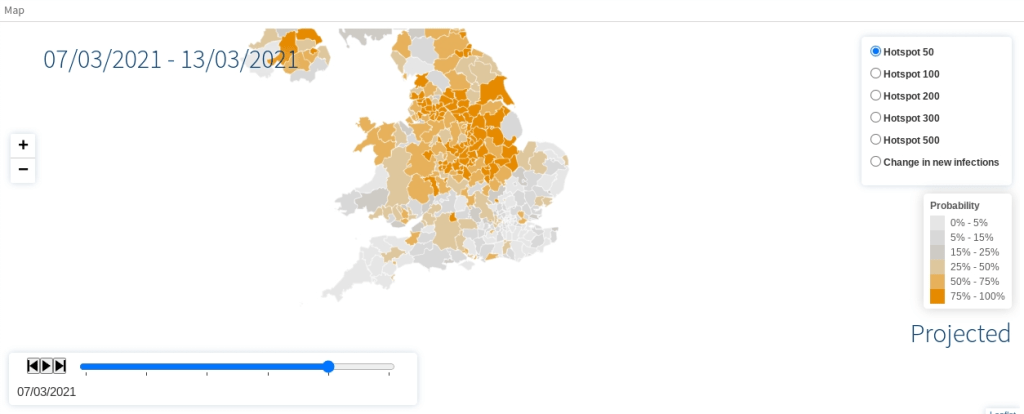
Owl has just come across this Covid-19 hotspot predictive web site produced by Imperial College. 

Exeter and to a lesser extent Mid-Devon are shown as lingering concentrations of local infection as we move into March

by Hayley Dunning, Dr Sabine L. van Elsland 03 September 2020 www.imperial.ac.uk

Screen shot

A new website uses reported cases and deaths to estimate the probability regions in England, Scotland and Wales will become COVID-19 ‘hotspots’.

The team behind the website, from Imperial College London, define a hotspot as a local authority where there are more than 50 cases of COVID-19 per 100,000 of the population per week.

COVID-19 is, unfortunately, very much still with us, but we hope this will be a useful tool for local and national governments trying to bring hotspots under control. Professor Axel Gandy

Using data on daily reported cases and weekly reported deaths and mathematical modelling, the team report the probability (%) that a local authority will become a hotspot in the following week.

The site also provides estimates for each local authority in England, Scotland and Wales on whether cases are likely to be increasing or decreasing in the following week and the probability of R(t) being greater than 1 in the following week.

The reproduction number R(t) indicates the number of people each infected person will pass the virus onto. An R(t) larger than 1 indicates the outbreak is not under control and cases will continue to increase.

Current hotspots

The site will be updated daily. 

The website was produced by the Department of Mathematics in collaboration with the WHO Collaborating Centre for Infectious Disease Modelling within the MRC Centre for Global Infectious Disease Analysis (GIDA), and Abdul Latif Jameel Institute for Disease and Emergency Analytics (J-IDEA) at Imperial.

Lead researcher Professor Axel Gandy, from the Department of Mathematics at Imperial, said: “The model allows us to project where local hotspots of COVID-19 are likely to develop in England and Wales based on the trends that we’re seeing in those areas. COVID-19 is, unfortunately, very much still with us, but we hope this will be a useful tool for local and national governments trying to bring hotspots under control.”

Enabling swift action

The predictions assume no change in current interventions (lockdowns, school closures, and others) in a local authority beyond those already taken about a week before the end of observations. Each local authority is also treated independently of its neighbours in the modelling, i.e. the epidemic in one local authority does not affect or is not affected by the situation in any adjacent a local authority.

The team also note that an increase in cases in a local authority can be due to an increase in testing, which the model does not currently account for. The model also assumes all individuals within each local authority are equally likely to be infected, so demographic factors such as the age structure of the population are not considered.

Dr Swapnil Mishra, from the MRC Centre for Global Infectious Disease Analysis, said: “We provide weekly predictions of the evolution of COVID-19 at the local authority level in England and Wales. Our model helps to identify hotspots – probable local areas of concern. We hope that our estimates will enable swift action at the local level to control the spread of the epidemic.”

Doorstep campaigning for local elections to resume in England

Game on! – Owl

Door-to-door political campaigning will be allowed to resume in England from 8 March in the run-up to local elections in May, the government has announced.

Aubrey Allegretti www.theguardian.com

Activists will be permitted to stand on people’s doorsteps and canvass as long as they abide by the 2-metre social distancing rule.

They will not be able to enter people’s homes and should only access shared hallways in blocks of flats where “absolutely necessary”. The new advice also urges organisers to keep the number of campaigners to a minimum.

Campaign literature should be collected or dropped off without people meeting inside, and planning meetings should take place virtually.

From 29 March, when people will be allowed to gather in groups of six or two households outdoors, the same rules will apply to political campaigning.

When it comes to polling day on 6 May, the government said people must not share a car with anyone from outside their household or support bubble to be driven to vote.

Chloe Smith, the minister for the constitution, said: “Democracy should not be cancelled because of Covid. Voters appreciate being well-informed and campaigning is an important part of effective elections.”

She said the easing of restrictions would ensure free and fair elections that were also “Covid-secure”.

“I urge political campaigners to continue to show social responsibility, and for parties, agents and candidates to ensure that their campaigners understand the clear rules,” she said.

Public Health England advises campaigners to wash their hands or use hand sanitiser for at least 20 seconds on a regular basis and wear a face covering when meeting anyone they do not live with.

Given that the government expects many people to vote by post, it also encourages those who want a postal ballot to apply as early as possible to avoid a rush closer to polling day.

Elections will take place at the county, district and parish level, and mayors and police and crime commissioner will also be elected, including any polls pushed back from last spring because of the coronavirus pandemic.

Parliamentary elections will also take place in Wales and Scotland on 6 May, but the devolved administrations will make their own decisions about whether restrictions should be eased to allow for political campaigning.

Devon is building 30% more houses than required, including EDDC! – CPRE

Latest government figures show Devon is building a third more houses than ‘required’.

www.cpredevon.org.uk

Devon’s Local Planning Authorities – with the exception of Torbay – have over-delivered on housing for the last five years, according to the government’s own figures.

Devon CPRE’s analysis of the Housing Delivery Test: 2020 measurement shows the county as a whole has delivered 30% more new homes than it was required to over a five-year period, in effect building 6,332 more houses than it had to. The government data substantiates what we’ve been saying for years – that Devon is building far more homes than required and the countryside is being ravaged as a result.

The Housing Delivery Test is a measurement published annually by the Ministry of Housing, Communities & Local Government. It compares the net homes ‘delivered’ to the homes ‘required’ to be built over the same period.

The 2020 Housing Delivery Test ‘required’ an average of 4,667 homes each year across Devon from 2017/18 to 2019/20. The number of homes ‘required’ is increasingly higher than the true number of homes needed because of the government’s aspiration to deliver 300,000 each year across England. There is no evidence that this number of homes is needed.

Analysis of the 2020 measurement reveals:

• Exeter over-delivered by 45%, 25% and 90% over the past three years (average 53%); by 50% overall over the past five years (1,501 excess houses).

• Plymouth, West Devon and the South Hams over-delivered by 108%, 5% and 28% over the past three years (average 44%); by 44% overall over the past five years (2,401 excess houses).

• North Devon & Torridge over-delivered by 57%, 22% and 48% over the past three years (average 41%); and by 32% overall over the past five years (1,076 excess houses).

• Mid Devon has over-delivered by 76%, 19% and 28% over the past three years (average 39%); by 30% overall over the past five years (473 excess houses).

• East Devon has over-delivered by 37%, 5% and 28% over the past three years (average 22%); by 33% overall over the past five years (1,155 excess houses).

• Teignbridge has over-delivered by 32%, 5% and -35% (under-delivery) over the past three years (average -2%), and over-delivered by 11% overall over the past five years (342 excess houses).

Devon CPRE Director Penny Mills says, “The government’s own figures vindicate what we have been saying for years. In 2018, Devon CPRE commissioned an independent report from specialists at Opinion Research Services to establish the true number of homes needed across the county. It showed that delivering 4,300 homes each year would meet all local needs, allowing for a continuation of past migration trends and a fall in average household sizes. In July 2020, a second report produced for us by ORS concluded that a total of 2.3 million homes are needed nationally over the decade 2020-30 to meet household growth and provide for past under-supply, an average of 230,000 each year, NOT the 300,000 which the government claim.”

Lets hope our local planning authorities, their officers and elected councillors will now start to put our countryside and green spaces first, before permitting any more unnecessary new housing developments.

Managing flood risk – Public Accounts Committee

“The Department for Environment, Food and Rural Affairs (the Department) and the Agency have not done enough to determine whether all areas of England are getting a fair share of flood defence investment and that households are resilient to floods.”

publications.parliament.uk

Summary

Flooding puts people’s well-being and livelihoods at risk and can impact on food production and destroy natural habitats. More extreme weather, as a result of climate change, and increased housing development will increase flood risks. The impacts of climate change can already be seen through the increasing strain on existing flood defences. Only half of the defences damaged in the 2019–20 winter floods have had their standard of protection restored. Despite the obvious risks, the Environment Agency (the Agency) thinks there could still be a large increase in the number of houses built on flood plains over the next 50 years.

The Department for Environment, Food and Rural Affairs (the Department) and the Agency have not done enough to determine whether all areas of England are getting a fair share of flood defence investment and that households are resilient to floods. There has been a significant decline in the proportion of flood investment going to deprived areas since 2014 and there is wide variation in the level of flood defence investment per property at risk across regions. Neither the Department nor the Agency understand enough about the reasons for these investment patterns. We are not convinced that the Department has yet done enough to address the difficulties those recently flooded have in getting affordable insurance, or to remove the obstacles for households to take up individual flood resilience measures. Reforms to the planning system need to ensure that the risks of building in areas liable to flooding are fully mitigated.

The Agency is set to achieve its target to better protect 300,000 homes through its capital investment programme on time and budget, which is a significant achievement. However, the department should recognise that with new build on the flood plain and increased vulnerability to existing properties from climate change the net figure of homes that are better protected is actually less than 300,000. With the level of investment due to increase significantly over the next six years, the Department needs to do more to scrutinise and challenge the Agency’s performance. It also needs to have a better understanding of whether funding to each local authority matches the level of flood risk it faces. We are also concerned to learn that the current indicators used to monitor national flood risk do not cover important elements such as risks to agricultural land and infrastructure.