Devon people on the county’s biggest causes of deprivation

Devon is known for its uniquely pretty towns and villages – but hidden behind the expensive postcodes are some of the country’s most deprived areas.

Jess Morcom www.devonlive.com 

Recently, Devon Live launched its campaign, Hidden Devon, a series of campaigns highlighting issues that lie beneath the surface of our county, including deprivation.

Last year, the Index of Multiple Deprivation (IMD) statistics were released, which showed that the area around Clarence Place in Stonehouse, Plymouth, is the most deprived in the county.

The figures took into account various factors, including income, crime, employment and education.

They also revealed that overall, 17% of neighbourhoods in Plymouth and 16% in Torbay, are among the most deprived 10% in Devon.

Many non-deprived people live in deprived areas, and many deprived people live in non-deprived areas. It is important to note that the index is designed to identify and measure specific aspects of deprivation, rather than measures of affluence.

But we wanted to know if residents of Devon agreed with these results.

We asked readers where they thought was the most deprived neighbourhood in Devon – and most importantly, how it could be improved.

A staggering 25% of participants, that took part in the survey, thought that Torquay was the most deprived area in Devon, followed by Paignton, which gained 20% of the vote.

In addition, 12% of readers that took part said that they thought Plymouth was the most deprived in the county, although no specific parts of the city were listed.

Newton Ferrers, Tiverton, Exeter and Torbay were also popular suggestions.

The majority of readers thought that unemployment or underemployment was the main concern within the deprived areas of Devon, with this option gaining over 40% of the vote.

A further 29% of readers opted for homelessness being the main problem in the deprived town or neighbourhood.

A lack of adequate schools, as well as lack of support for arts and culture were also suggestions.

There were mixed suggestions for ways that Devon’s most deprived towns could be improved.

One reader wrote: “The whole of Paignton needs vast improvement, too much talking from the council, needs more action.

“The so-called town is an embarrassment, from cheap pubs where people just sit on the streets to the terrible bus station and railway – the appearance is horrendous. Very deprived.”

Another said: “Improvements could be made to Torquay by using the many empty and unused hotels, old buildings boarded up to create temporary accommodation for those who wish to turn their lives around.

“More funding is needed to give people the help and opportunities to get them integrated into society where alcohol and drug dependency is no longer their only choice.

“Torbay seems to be a town that’s overlooked and has no funding for fixing the issues and now looks like a town fresh out of a horror or apocalypse film. Shocking reality is no one appears to care about this or those stuck on streets either.”

Another reader said of Torquay: “It’s a shame as the place has really gone down the shoot in recent years, more like driving through parts of the North West now, derelict streets filled with alcoholics and drug addicts. Shocking place to see now.”

A third added: “More jobs in and around the Torbay area. Employment outside of the hospitality industry is lacking following the demise of Nortel, Brookers and WKD. We need more industry and transport links here.”

Meanwhile, one Exeter resident feels as though litter is its biggest issue: “Litter is the main issue its becoming such a dirty area – it needs more rubbish bins, including dog waste bins as the area is also rife with dog dirt.”

Promoting sustainable transport

EDDC’s Local Plan consultation document on the issues and options contains a whole chapter on promoting sustainable transport. This fleshes out policies: to prioritise walking, cycling and public transport and make provision for charging electric vehicles, whilst reducing reliance on fossil fuelled vehicles.

At the same time CPRE launches an online petition calling for a reliable bus service for every community.

EDDC consultation Chapter 11 – Promoting sustainable transport

Para 11.7 As we develop policy for sustainable transport we will also look at other emerging themes and issues that we may wish to address in our plan. Key issues identified so far include:

1. To look more fully at bus routes and accessibility when planning for new development and consider ways we can promote public transport quality and use.

2. Providing and promoting high quality walking and cycling networks and support cycle parking.

3. Focus development in the most accessible locations where most journeys can be made by walking, cycling and public transport.

4. Protect existing valued services and facilities from being lost to other uses.

5. Require large scale development to provide a mix of uses on site and/or show how a range of different uses can be easily accessed from the development by walking, cycling and public transport.

6. Set walking distances from new homes to a range of identified services (including bus stops) – generally 800m is a comfortable walking distance.31

7. Set targets for new development relating to the proportion of people who will walk, cycle and use public transport.

8. Identify and protect sites and routes which could be critical to widen transport choice.

9. Provide for large scale transport facilities such as public transport projects and roadside services.

10. Recognise the importance of Exeter airport with the expectation of a specific policy for the airport and its future.

11. Consider levels of car parking in new development and the need for electric charging for vehicles, specifically given the proposed ban on the sale of new petrol and diesel cars from 2030.

12. Recognise the importance of providing adequate overnight lorry parking facilities.

13. Require cycle racks and electric charging for bicycles.

Respondents are asked: Question 24 – Do you think these are appropriate sustainable transport policy areas to be addressed in a new local plan and are there any other major policy areas that you think we should be addressing?

Meanwhile CPRE launches online petition calling for a reliable bus service for every community

takeaction.cpre.org.uk

Save rural life – buses for every community

We all have the right to a full, rich life – wherever we live. But without regular bus services, many people in rural communities are being cut off, isolated and left without the means to live an independent life. 

The people living in our towns and villages deserve better. 

As we start to rebuild, will you join us in calling for a reliable bus service for every community, wherever they live? 

This situation isn’t inevitable. It’s the result of decades of underinvestment from successive governments leading to unreliable bus services. But we know it can be done differently.

We must act now if we want to create a truly thriving countryside for all. 

More buses means: 

  • Less traffic and air pollution 
  • Better access to local green space for everyone 
  • More spending on our local high streets 
  • Access to training and jobs for everyone 
  • A ticket out of loneliness and isolation for our friends and family. 

If people across the country speak with one voice, we know politicians will have to listen. With just a few clicks, you can be part of this. 

Planning applications validated by EDDC week beginning 11 January

Swathes of England’s vital flood defences ‘almost useless’

Thousands of England’s vital flood defences were in such a state of ruin last year they would fail to protect communities from extreme weather, an investigation has found.

Josh Halliday www.theguardian.com

More than 3,400 of England’s “high consequence” flood assets, defined as those where there is a high risk to life and property if they fail, were judged by the Environment Agency to be in such a bad condition they were almost useless.

This means that more than one in 20 of the country’s crucial flood defences were in disrepair in 2019-20, the highest proportion in years. This rose to nearly one in 10 in the regions battered by Storm Christoph last week.

The findings comes from Environment Agency data obtained by Unearthed, the investigative arm of Greenpeace UK, and shared with the Guardian. Doug Parr, the chief scientist and policy director at Greenpeace UK, said: “The poor state of so many critical flood defences in England is putting thousands of people and homes at risk. This is unacceptable.”

Most of Britain was placed under a weather warning for snow and ice on Monday after an Arctic blast of cold air hampered the recovery effort from Storm Christoph, which caused at least 600 homes to be flooded as two months’ worth of rain fell in 48 hours in some areas.

The Environment Agency said its 2020 recovery programme inspected more than 20,000 assets and that they were “winter ready” either through repairs or, if not, “robust contingency plans are in place”. It said that 95% of its 78,000 flood assets, which range from embankments to culverts and tidal barriers, were in good condition and that repairs were prioritised when there was “significant threat to lives and livelihoods”.

The Unearthed analysis found that 3,460 of England’s most important flood defences were judged by the Environment Agency to be in a poor or very poor condition in 2019-20. This accounts for 5.9% of the total, the highest proportion in years, up from 4% in 2017-18.

Of the 3,460, 791 were judged “very poor”, meaning they had “severe defects resulting in complete performance failure”, essentially rendering them useless. The remaining 2.669 were in poor condition, meaning they have defects that would “significantly reduce” their performance.

Just under half of England’s 59,000 vital flood defences are managed by a complex array of third parties, including government departments, local authorities and private landowners. The figures show that 8% of those managed by third parties are in poor or very poor condition, compared to 4% of those overseen by the Environment Agency. In the picturesque district of Hart, in Hampshire, all of its vital flood defences are managed by third parties and nearly half are in a state of ruin.

Experts have warned that the UK faces an increased risk from more extreme and unpredictable weather owing to the climate emergency. Major floods had been expected every 15 to 20 years in the last century but in the past decade this has shortened to every two to five years.

The Environment Agency has said it needs £1bn a year to build and maintain England’s flood defences, significantly more than the £5.2bn announced by the government for 2,000 new projects up to 2027.

Parr urged ministers to increase funding to better protect England’s flood defences and stop building on high-risk floodplains. He added: “We know that the climate crisis is making our winters wetter, increasing the risk of floods across the country. We’ve had warning of the climate threat for years so there’s no excuse for not being prepared.”

In the Midlands, South Yorkshire and north-west of England, where nearly 600 homes were flooded last week, 831 of these vital defences are in a state or disrepair – 9% of the total. In Cheshire, where at least 150 people had to be rescued by firefighters last week, 16% of “high consequence” flood defences are in a poor or very poor condition, according to Environment Agency data.

Dan Jarvis, the mayor of the Sheffield city region, said residents would have to endure “sleepless nights” due to a £125m funding gap in its flood defence allocation from Whitehall.

Jarvis welcomed an additional £80m given to the region last week for flood management projects but said this was a “sticking plaster over a much bigger wound”. He has asked ministers for months to fund 27 projects that would protect 10,300 homes, 2,800 businesses as well as crucial infrastructure.

A Defra spokesperson said: “We know how flooding can devastate communities, which is why since 2015 a record figure of £2.6bn has been invested in flood schemes, better protecting 300,000 homes, and over the next six years we are doubling that investment – £5.2bn for 2,000 new defences to better protect a further 336,000 properties.”

What is going on with England’s May elections?

Two different views on the May elections.

What’s the betting that we end up with the worst case scenario: the government pushes ahead only to have to make a U-turn late in the day, when councils will already have spent a fortune in money and time preparing? – Owl

Elections are fundamental to democracy and must be properly managed

Author: Josiah Mortimer www.electoral-reform.org.uk

This past week we’ve seen a dizzying array of conflicting reports for the government’s plans for May’s polls, with Conservative party figures suggesting delays are likely, despite official advice that plans are unchanged but ‘under review’.

Last year’s English local elections were already delayed by a year due to the pandemic – so Ministers need to give clarity as soon as possible as to whether the public will be able to exercise their right to vote safely in May.

Electoral experts have warned that despite delaying elections for a longer time than many other countries, the UK government ‘still isn’t ready’ to hold polls under pandemic conditions.

Wales and Scotland are passing legislation on the issue, and having an open debate around any election delay. In Wales, a cross-party working group is regularly reporting on the state of plans and preparations for how to hold May’s Senedd elections safely. In England, it feels like the public are only getting hearsay through selective briefings to journalists. That’s no good for public trust, with fears that partisan interests could come into play when ministers are considered another delay.  

We all deserve openness and transparency over how any decision over a delay will be made. The current stream of confusing reports damages planning and public confidence in the process.

Ministers should set out plans for ensuring democracy can take place safely and securely and make clear when and how any decision over another delay will be made. Wales and Scotland’s contingency plans have allowed proper debate and scrutiny about how the elections can happen safely, and how a delay might work – giving everyone time and space to plan. We should expect the same respect for voters in England.

Elections are not a ‘nice to have’. They are fundamental to democracy and must be properly managed. And electoral administrators need to be properly resources.

May’s elections, which include delayed elections from 2020, will see a bumper set of votes with elections due to be held for English councils, police and crime commissioners, the London mayor, the London Assembly, regional mayors and local mayors as well as elections in Scotland and Wales. Local administrators need resources to prepare properly.

Over 100 elections have taken place worldwide since the pandemic began, including by-elections in Scotland. With the vaccine now being rolled-out, we should be doing everything we can to make sure elections take place fairly and safely.

English council chiefs back postponement of May local elections

A further postponement to this year’s local elections, in the wake of the continuing difficulties caused by the Covid pandemic, is backed by the vast majority of senior council figures across England, the Observer can reveal.

Michael Savage www.theguardian.com

Only 11% of the senior officials dealing with the forthcoming elections believe they should go ahead in May as planned, despite the government’s determination to press ahead. More than two-thirds (69%) believe the huge set of elections should now take place in the autumn, according to the most comprehensive survey of council chief executives, leaders and officers in charge of organising elections to be conducted on the issue.

A further 14% called for a shorter delay to the summer and 6% backed a postponement beyond this autumn, according to the analysis by the Local Government Information Unit (LGIU). Of the more than 350 officials who responded, two-thirds said they were “very concerned” about holding elections in May.

Difficulty recruiting and training electoral workers, complications in ensuring safety of polling stations and concerns that voters worried about Covid-19 may be disenfranchised are among the concerns expressed by those drawing up local election plans. One Conservative council leader said: “It will be a grave error not to act early and announce a delay now.” Another Tory council leader said: “Go for the end of July or October: don’t tempt fate with May, only to have to call them off. I am really concerned about vulnerable candidates.”

The postponement of 2020’s local elections in England has meant this year’s were to be the biggest in years. They include county councils, district councils, unitary authorities, mayoral races, police and crime commissioners, and the London assembly. Elections also take place for the assemblies in Scotland and Wales. Decisions over those elections are controlled by their respective devolved governments.

The Scottish government has said it is still planning for elections to go ahead, but has emergency powers to delay or to hold polling over more than a day. The Welsh government has said that it intends to proceed in May, but that “significant uncertainty” around the pandemic means a delay may be needed.

Boris Johnson has backed holding elections in May but has suggested he is keeping the decision under review. However, it is understood that the serious concerns among councils about the practicalities of proceeding with the poll have been made clear to Robert Jenrick, the housing, communities and local government secretary.

Four-fifths of those surveyed by the LGIU (80%) were concerned about their ability to recruit and train electoral workers, with fewer volunteers likely to come forward. Difficulties in obtaining polling and count venues have also emerged, while the usual use of schools as polling stations is also proving contentious. Some traditional polling venues are also being used as vaccination centres. “We will not get all the staff we need and we will be lucky to get the venues for polling and/or counting,” said one electoral administrator. “You can throw as much PPE at the polls as you like, if people do not want to volunteer to work, we can’t run the elections.”

Some insiders expressed concern about the democratic problems created by a further delay. After elections were delayed last May, some councillors and mayors will have exceeded their original mandate by 18 months if voting is delayed until autumn. Some local councillors have already stood down in their area because they could not serve beyond the scheduled end of their tenures last year.

Jonathan Carr-West, the chief executive of the LGIU, said: “Local government is committed to democracy, but the overwhelming view from councils is that it is no longer possible to hold safe and open elections in May. The logistical challenges are formidable and there’s a real risk that we effectively disenfranchise millions of people who do not feel safe going to the polls.

“The worst scenario of all would be for government to push ahead only to have to make a U-turn late in the day, when councils will already have spent a fortune in money and time preparing. Better to take a bold decision now to delay the elections and use the additional time to ensure they can be run safely. Such measures should include the vaccination of poll workers and an expansion of postal voting. Public confidence in elections is an essential foundation of our democracy – once lost, it takes years to rebuild. That risk is not worth taking.”

Full details of the mass vaccination centres opening near you

NHS England has announced that more than 30 new NHS Vaccine Centres will start delivering life-saving Covid jabs this week as the health service continues to accelerate the biggest immunisation programme in its history.

Richeldis Cain www.devonlive.com

Three of the new large scale sites are located across Devon and Cornwall – these centres will be able to jab thousands of people a week.

In Plymouth, the Mayflower Grandstand has confirmed it will host a mass vaccination centre at Home Park.

Whilst Stithians Showground, near Truro,  in Cornwall and Westpoint, near Exeter, in Devon will also be opening in the coming days.

People aged 75 and over are being invited to book a vaccination at the centres or one of more than 70 pharmacy services now operating across the country.

If they cannot or do not want to travel to a Vaccination Centre people can wait to be jabbed by a local GP service or hospital hub.

The new Vaccination Centres will kick off by jabbing mainly health and social care staff tomorrow (Monday, January 25) before opening their doors to more patients on Tuesday.

The NHS vaccinated over 140 people every minute last week and hopes to do more people this week as more becomes available.

Vaccine Minister Nadhim Zahawi said, “I am delighted we are opening even more places for people to get a jab – as of this week there will be almost 50 vaccination centres, more than 250 hospitals hubs and over 1,000 local vaccination service sites, run by GPs and pharmacies right across the country.

“This will enable us to vaccinate as many people as possible in the weeks and months to come and I encourage anyone who has been invited for a free vaccine to come forward and get a jab.

“Remember, with high levels of infection everyone must continue to follow the rules, stay at home and maintain social distancing – even if you have had the vaccine.”

Health and Social Care Secretary Matt Hancock has thanked NHS staff for the vaccination roll out so far but has reminded the public that now is not the time to “drop our guard”.

“Through the vaccines delivery plan, we have made outstanding progress in vaccinating our NHS and care staff and the most vulnerable people in society.

“My utmost thanks go out to everyone in the NHS and all our volunteers who have worked round the clock to make this happen.

“We must not drop our guard. While the vaccine can prevent severe disease, we do not know if it stops you from passing on the virus to others, and it takes time to develop immunity after a jab, so for now, everyone must continue to stay at home to help bring down infections and protect the NHS.”

Someone is trying to hack Claire Wright’s website (again) after Tory “Worst week ever?” blog

Who is (still) trying to hack into my website?

Claire claire-wright.org

While I was experiencing email problems yesterday morning he [web-site host?] had a call from the data centre who look after his server.

They informed him that one website (mine) was being “bombarded” and that they would have to suspend it or it would bring down all 733 websites.

Apparently the attacker was simulating thousands of hits to my website in order to take it offline. It worked. For a while.

My email and website were down until yesterday evening when both were restored.

The hacker used what is called a ‘virtual private network’ which means that the IP address is untraceable.

I never get spam on my website, but I had a spam comment (IP address California) on latest controversial blog demanding answers from Mr Jupp. [See below – Owl]

This came through last night when my website was restored.

But the hacker(s) have not given up. They have been at work this morning repeatedly attempting to gain access via my username and password.

My website host tells me that he has had a server for 15 years. It has been hacked just four times and two of those have been attempts on my website – the last one in the run up to the 2019 election.

Heavy duty security has now been installed.

Is this the worst week ever of the Conservative government’s rule? Our MP should explain himself

In the blizzard of appalling decisions voted through this week by Conservative MPs, it’s hard to know which was worse.

The Tories’ approach appears to be parcel it up for one or two days, presumably in order to bamboozle the media and make the rest of us feel as though it is hopeless to oppose, keep up to date with, or get chance to ask our Conservative MPs to oppose the next atrocity they’re about to commit.

Our MPs are there to act on our behalf and represent our views. I cannot imagine for a second that the residents of East Devon would support these decisions/actions.

I have written to Mr Jupp asking for an explanation.

– Voting down an amendment which could prevent the UK doing post Brexit trade deals with countries that commit genocide and other human rights abuses

– Voting down protective post Brexit trade deal amendments to ensure our NHS remains free at the point of delivery, protections on selling patient data and the ability to control drug prices (see Independent article below).

– Voting down a motion to extend the £20 a week Universal Credit increase, which is supposed to help prevent destitution and hunger

– Voting down clauses that ensure parliament gets to scrutinise the detail of post Brexit trade deals

– Voting down an amendment which would prevent the government from lowering our animal welfare/food standards in a post Brexit deal

– Voting through new boundary rules that favour the conservatives, alongside per party election expenditure of £33m

– In the news there is the threat of a bonfire of workers rights, post Brexit

– And this is all during the week that the covid death toll has reached the worst in the world.

– And in Brexit news the fishing industry looks as though it is about to go off a cliff, musicians

PS. Also revealed, the new BBC Chairman, Richard Sharp, a former of boss of the Chancellor, has donated over £400,000 to the Conservative Party.

PPS. And the new Chair of the College of Policing, Nick Herbert, a Tory Peer, turns out to be a former Countryside Alliance Chair.

Have I missed anything? Please do add anything I have overlooked…

English councils battling financial ruin

Whatever happened to: devolution for England; localism; and “levelling up”? – Owl

By Jennifer Scott www.bbc.co.uk

Throughout the coronavirus pandemic, warnings have been clear about the threat to local councils and their ability to provide services.

BBC analysis in 2020 showed nine out of 10 major local authorities in England did not have enough cash to cover their spending plans this year, and coronavirus could lead to them going £1.7bn over budget.

Now, a committee of MPs has criticised the Treasury for its “worryingly laissez faire attitude” to the state of local government finances, warning of a “significant risk” that Town Hall debts could drag down the “whole of government”.

The department says it provided “a significant funding uplift for councils” at last year’s Spending Review, on top of additional funding “to ensure they can continue to deliver essential local services as we tackle the impacts of the pandemic”.

And the government has confirmed local authorities will be able to raise council tax by 5% to help – something Labour leader Sir Keir Starmer has called “absurd”.

But the reality is stark – coronavirus pressures have hit councils hard and, as the Public Accounts Committee says in its report, they have been taking on “extremely risky levels of debt in recent years” investing in commercial ventures “in an effort to shore up dwindling finances”.

Here is a snapshot of the financial state of local councils from some of the BBC’s local political editors.

It should give you an idea of the kind of dilemmas facing local leaders across the UK, as they battle to balance the books.

Energy saps Nottingham budget

Tony Roe – political editor for BBC East Midlands

Every council has spent the past decade working with less money from government grants.

And in the past year, they’ve had to deal with Covid costs too, with Labour-run Nottingham far from alone in saying they haven’t had the full cost reimbursed yet from Whitehall.

Local authorities have been told they can put 5% on council tax bills this year – including 3% for adult social care – but mindful of elections this May, cost cutting comes into play.

For Nottingham, there is also the impact of local investment threatening the books – namely the collapse of its Robin Hood Energy company, projected to have lost the council £38m.

It led to a government review into the council’s finances, which was critical of its involvement in too many of its own commercial companies, and it has left Nottingham with a “very significant” gap in its budget and depleted reserves.

A panel of experts were appointed to help the council improve its finances and they were working towards having a recovery plan in place by the end of this month.

So now the Council will be putting up bills by 5%, as well as cutting costs, which means axing 272 jobs, reducing services and charging more for other things they provide.

The cost of providing social care takes a big chunk of any budget – in Nottingham’s case it’s 40% – so they are looking at ways to “review and redesign” how they provide that too.

Airport shares ground Manchester’s finances

Kevin Fitzpatrick – politics reporter for BBC Radio Manchester

Some councils look further afield than property investments.

Manchester Airport was built by the city council and it has owned a large chunk of it ever since.

In the past 20 years the Manchester Airport Group has significantly expanded, buying Stansted and East Midlands airports, and in 2011, creating Airport City, one of the governments low tax Enterprise Zones.

It’s been an incredibly fruitful investment, paying out large dividends to its shareholders – that was until Covid grounded planes and saw passenger numbers dramatically cut.

Manchester City Council holds the largest stake with 35.5%, while the region’s nine other councils share a further 29% between them.

The yearly dividend has increasingly been factored into their financial plans – for example, in 2018 they received more than £110m between them, with nearly £60m going to the City Council – but there won’t be a pay out this time.

Their airport investment has reaped rewards for decades, but the impact of the virus has had on air travel will be felt in council budgets here for years to come.

Bath rents rinse cashflow

Pete Simson – political reporter for BBC Bristol

Under normal circumstances – a portfolio of over 1,000 properties worth around half a billion pounds – is a nice little earner for Bath and North East Somerset Council (BANES).

However, this pandemic has been a punch in the gut for those councils like BANES – run by the Liberal Democrats – which rely heavily on income from rent and other activities to balance the books.

A wholesale review of its estate was announced in December, after losing millions in rent payments from its commercial properties.

Meanwhile, its other normal banker – income from tourism – has also been decimated over the past 12 months.

Residents can expect a 5% council tax increase from April, which alone isn’t enough to cover an £11.6m shortfall next year.

For that, they’ll need to dip into their reserves, and hope for better days to come.

Emergency budget not quite enough for Luton

Andy Holmes – political reporter for BBC Three Counties Radio

Manchester is not the only one with their hopes for funds focused on the skies.

Labour-run Luton Borough Council in Bedfordshire has an Emergency Budget it agreed in July to thank for the fact that its 2021/22 finances aren’t as bad as was perhaps feared.

Luton was one of the first councils to agree to the emergency measure during the pandemic as it faced a financial shortfall of £49m and, at the time, claimed the moved prevented the threat of bankruptcy.

As the major share holder in Luton airport, the council lost millions when the pandemic grounded flights last year.

And the emergency plan meant 365 jobs were put at risk, along with cuts to key services, with an agreement later in the year to charge residents for green waste collection.

However, when it comes to the 2021/22 budget, they now need to find a comparatively small sum of £1.2m of savings.

They are planning on raising Council Tax by the maximum of 4.99% – any more and the council would need to hold a referendum to approve it.

But Luton Council is still lobbying the government to try and get extra funds to cope with the pandemic, arguing the situation with the airport makes it a special case.”

Museums under threat on the Wirral

Claire Hamilton – political reporter for BBC Radio Merseyside

The Labour-run Wirral Council is faced with a £40m funding gap.

The cost of the response to the pandemic is being blamed for the shortfall, plus loss of income from business rates and parking charges.

And, even after borrowing around £25m, it’ll still need to save £16m to balance the books.

So, how is the council planning to find the money to help its budget for the next financial year?

Despite welcoming visitors for just under 100 years, Birkenhead’s neo-classical Williamson Art Gallery and Museum could close, as the end of the museums service could save the authority £327,500 per year.

But it is not the only service at risk.

The council’s asking the public for feedback on a long list of options, from axing school crossing patrols, to closing swimming pools and golf courses.

These are emotive issues, which might be seen as a bit of political sabre rattling from a Labour-run council.

But this year, Wirral Council moved to a committee system of governance – so all parties are involved in decision making, and all will need to take responsibility for the cuts to come.

Social care still threatens Birmingham’s bolstered budget

Kathryn Stanczyszyn – political reporter for BBC Radio West Midlands

Things are a little brighter in the heart of the West Midlands.

At the moment it looks like there won’t be any significant cuts by the Labour-run Birmingham City Council this year – at least none that impact directly on public services.

The local authority has also been able to increase its reserves with the latest pot of coronavirus money of over £30m.

But it warns that spend – especially on adult social care – is still very high and likely to eat into that as pressure on services continues to increase.

And it says that’s not just a pandemic consequence, it’s a trend.

The largest council in the UK has been scrutinised in recent years over its finances, but appears to have kept to its revenue and capital budget last year.

Now the biggest change on the cards is a restructure of the senior levels of officers – planned to cost £500,000 extra year in wages – as it seeks to attract expertise.

The timing may raise questions from some, but the interim chief executive described it as a moment to future-proof – saying the council must seize opportunities to “leverage growth” in the coming years.

Covid: ‘More deadly’ UK variant claim played down by scientists

Scientists say signs a new coronavirus variant is more deadly than the earlier version should not be a “game changer” in the UK’s response to the pandemic.

BBC News www.bbc.co.uk

Boris Johnson has said there is “some evidence” the variant may be associated with “a higher degree of mortality”.

But the co-author of the study the PM was referring to said the variant’s deadliness remained an “open question”.

Another adviser said he was surprised Mr Johnson had shared the findings when the data was “not particularly strong”.

A third top medic said it was “too early” to be “absolutely clear”.

At a Downing Street coronavirus news conference on Friday, the prime minister said: “In addition to spreading more quickly, it also now appears that there is some evidence that the new variant – the variant that was first identified in London and the South East – may be associated with a higher degree of mortality.”

Speaking alongside the PM, the government’s chief scientific adviser Sir Patrick Vallance said there was “a lot of uncertainty around these numbers” but that early evidence suggested the variant could be about 30% more deadly.

For example, Sir Patrick said if 1,000 men in their 60s were infected with the old variant, roughly 10 of them would be expected to die – but this rises to about 13 with the new variant.

The announcement followed a briefing by scientists on the government’s New and Emerging Respiratory Virus Threats Advisory Group (Nervtag) which concluded there was a “realistic possibility” that the variant was associated with an increased risk of death.

But one of the briefing’s co-authors, Prof Graham Medley, told BBC Radio 4’s Today programme: “The question about whether it is more dangerous in terms of mortality I think is still open.”

“In terms of making the situation worse it is not a game changer. It is a very bad thing that is slightly worse,” added Prof Medley, who is a professor of infectious disease modelling at the London School of Hygiene and Tropical Medicine.

Another 1,348 deaths within 28 days of a positive coronavirus test were reported in the UK on Saturday, in addition to 33,552 new infections, according to the government’s coronavirus dashboard.

2px presentational grey line
Analysis box by James Gallagher, health and science correspondent

There is huge uncertainty in the evidence on how lethal the variant is.

The scientific experts that reviewed the data used a precise phrase saying it was a “realistic possibility” the new variant is more deadly.

That means there’s a roughly 50-50 chance it will turn out to be true.

With time, and sadly more deaths, the picture will become clearer.

While people debate the uncertainties though, we already know this variant has the ability to kill more people than the old ones.

A virus that spreads faster (this one is 30-70% faster) will infect more people, more quickly, putting a greater strain on hospitals and leading to a sharper spike in deaths.

It is why viruses becoming more transmissible can be a bigger problem than ones becoming more deadly.

Nervtag’s chairman Prof Peter Horby defended the government’s “transparency” in making the announcement.

“Scientists are looking at the possibility that there is increased severity… and after a week of looking at the data we came to the conclusion that it was a realistic possibility,” he said.

“We need to be transparent about that. If we were not telling people about this we would be accused of covering it up.”

media captionSir Patrick Vallance: “There is evidence that there’s an increased risk for those who have the new variant”

But Dr Mike Tildesley, a member of Sage subgroup the Scientific Pandemic Influenza Group on Modelling (Spi-M), agreed it was too early to draw “strong conclusions” as the suggested increased mortality rates were based on “a relatively small amount of data”.

He told BBC Breakfast he was “actually quite surprised” Mr Johnson had made the early findings public rather than monitoring the data “for a week or two more”.

“I just worry that where we report things pre-emptively where the data are not really particularly strong,” Dr Tildesley added.

Public Health England medical director Dr Yvonne Doyle also said it was not “absolutely clear” the new variant was more deadly than the original.

“There is some evidence, but it is very early evidence. It is small numbers of cases and it is far too early to say,” she told the Today programme.

How fast should we make new-build homes greener?

This is one of the issues raised in EDDC’s new local plan consultation document and is discussed in this timely press article.

First, here is the relevant consultation question – see here to download the full consultation document.

Buyers of brand-new homes face £20,000 bill to make them greener

Fiona Harvey www.theguardian.com 

Householders buying brand new homes in the next four years are likely to find an unpleasant surprise awaiting them in the future: homes built today will have to be retrofitted with energy efficiency measures and low-carbon technology, at an average cost of more than £20,000.

The extra costs will amount to more than £20bn for the whole of the UK, if the government’s targets of building 300,000 new homes a year are met. Critics say the costs could have been avoided if ministers had agreed to bring in low-carbon standards sooner.

The government this week set out proposals to change building regulations to reduce greenhouse gas emissions, but declined to bring forward its proposed future homes standard from the scheduled 2025 commencement date, disappointing advocates of greener homes.

Building a new house with high energy efficiency standards and a heat pump instead of a gas boiler costs about £4,800 more than building to current standards. However, building to current standards and then retrofitting the house with the same would cost an average of £26,300, or about £21,500 more than installing the technology in the first place, according to an analysis by the Labour party of data from the Committee on Climate Change (CCC).

John Gummer (Lord Deben), chair of the CCC, has warned repeatedly that at least 1m homes built in recent years will need to be refurbished at large expense, as they were built to inferior standards of efficiency.

All UK homes will need to be brought up to high standards of efficiency and equipped with low-carbon heating in place of gas boilers if the government is to meet its target of net zero greenhouse gas emissions by 2050.

The 2025 commencement date for the government’s future homes standard is a decade after the zero carbon homes standard, which the last Labour government had scheduled to come in from 2015. The government scrapped that, after some of the construction industry lobbied against the standard, arguing it adds to the cost of a new home.

Proponents of green building say the cost of equipping a new home to a low-carbon standard is small compared with the overall cost of a house or flat, and homes equipped to the higher standard cost less to run.

Labour called on the government to take swifter action, and said the 10-year delay to a requirement to build homes to a low-carbon standard would cost £45bn in total upgrade costs in the future.

Thangam Debbonaire, shadow housing secretary, said: “The Tories’ short-term approach to the climate is hitting families and the economy. Their irresponsible decision to scrap the zero carbon homes policy will have wasted £45bn by the time the Tories have scrambled to catch up with Labour’s policy.”

Labour has also estimated that scrapping the warm front home insulation scheme in 2013 cost households £3.7bn in additional energy bills, and produced an extra 14.6m tonnes of carbon dioxide by 2017.

Debonnaire added: “Families will spend years in homes [that] are colder and more expensive to heat. Every year of delay is costing billions of pounds and pumping millions of tonnes of carbon into the atmosphere. The government needs to wake up to the importance of warmer, more efficient and sustainable homes.”

A spokesperson for Friends of the Earth said: “Saving money and combating the climate crisis should merrily go hand in hand but the government seems to think otherwise. We would have already been building low-carbon homes if it weren’t for the Conservative government scrapping the standards and capitulating to the lobbying of the profit-hungry high-volume house-builders. Delaying the future homes standards will lead to money being wasted while homes continue to run on planet-wrecking gas heating.”

Julie Hirigoyen, chief executive at the UK Green Building Council, said: “After a long wait, the government’s response to the future homes standard consultation brings much-needed clarity to our industry. We are pleased to see confirmation that the future homes standard will mean new homes will have carbon dioxide emissions 75%-80% lower than those built to current building regulations – though it’s regrettable that the standard won’t be implemented till 2025, despite it being widely trailed that it would be brought forward to 2023.”

Housebuilders have said they are in favour of higher standards, but warned of a potential shortage of workers. Brian Berry, chief executive of the Federation of Master Builders, said: “Small- to medium-sized house builders must be at the heart of plans to improve the sustainability, quality and design of our homes, but they need greater support to build homes and tackle climate change. Bringing forward the future homes standard must be balanced with addressing the construction skills shortage, so that local builders can employ quality local tradespeople on site. One in three small to medium house builders said a lack of skilled workers would be a significant constraint on their activity over the next three years.”

The government has said bringing in the future homes standard from 2025 will mean new homes built from that date will produce between 75% and 80% less carbon dioxide than homes built to current specifications, and that these homes would be “zero carbon ready”, to become fully zero carbon at a future date without further retrofitting work. Before 2025, building regulations will be strengthened so that homes built or renovated in the interim will need to meet higher standards than those now in place.

A government spokesperson said: “We are improving the quality of housing across the country by ensuring new homes adhere to strict energy efficiency standards, which will help us meet our target of net zero emissions by 2050. Retrofitting homes can have a positive impact on both jobs and the climate, which is why we are investing £2bn in the green homes grant scheme. This will help with the costs of energy efficiency upgrades in 600,000 English homes, so households can cut their bills and emissions.”

Man made, not the work of Nature

Is it a landmark or eyesore? – Owl

Devon’s new landmark takes shape

Chloe Parkman www.devonlive.com 

New pictures show the transformation of Exmouth’s new Sideshore development – which is almost complete.

The water sports complex at Exmouth sea front was due to open last summer, however it was delayed by the pandemic.

In November, Devon Live reported that local developer Grenadier indicated it will be a phased opening beginning with local operator Edge Watersports opening first back in October.

Sideshore development in Exmouth

It is being run by four-times world champion kite-surfer Steph Bridge – It is anticipated Steph and two of her three sons will qualify for the next Olympics, meaning Sideshore will become a world-renowned watersports destination in the UK.

As well as offering a watersports centre, the development includes a restaurant run by Exeter celebrity chef Michael Caines.

It will feature a terrace with a retractable glass canopy to ensure the dining area can be used all-year-round – an opening date for the restaurant is yet to be confirmed.

Michael Caines’ plans for Sideshore are set to be quite different to the fine dining experience available at nearby Lympstone Manor and include a range of offers to suit all tastes, from a casual dining restaurant complete with an upstairs terrace, to a dog-friendly cafe offering a lighter menu and serving homemade ice-creams, local coffee and healthy takeaway snacks, and a beach bar.

It was due to open in the summer of 2020 but delayed due to coronavirus

Last year, a look inside the Mickeys Beach Bar and Restaurant alongside Sylvain Peltier and Michael’s Café Patisserie Glacerie was revealed.

The project will incorporate a casual bar complete with resident weekend DJs, first floor destination restaurant with a glasshouse and outdoor terraces alongside neighbouring Café Patisserie Glacerie which will serve serve artisan pastries and ice-creams.

The development looks over the seafront

Aiden Johnson-Hugill, director of Grenadier, said last year: “Together we have built an exciting community hub where visitors can learn how to safely stand-up paddleboard, kitesurf, power kite, and sea swim.

“Sideshore will also help distinguish Exmouth as a leading Watersports destination on the national and international stage.”

Nature sends a message

A correspondent writes:

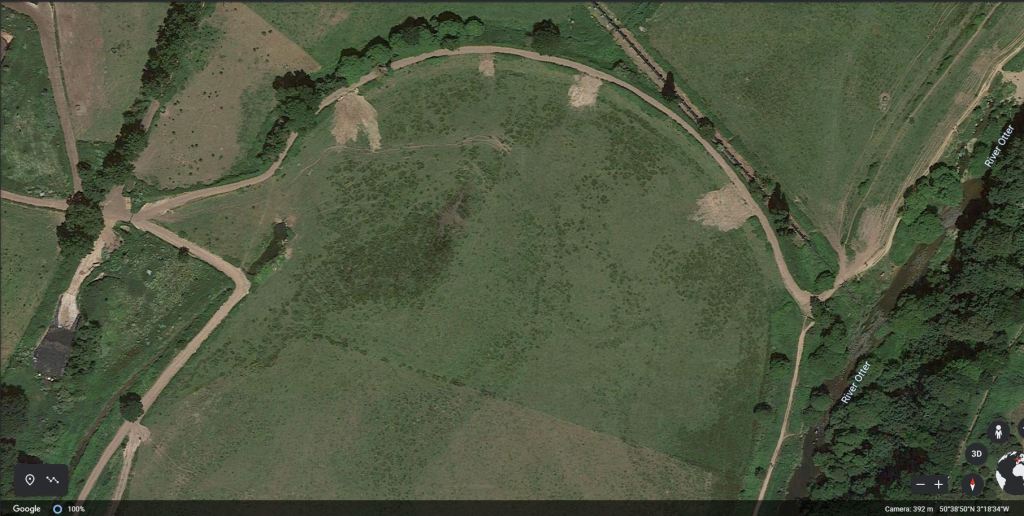
Just three weeks [correction two weeks] after the unanimous EDDC Planning Committee decision to grant planning permission for the Lower Otter Restoration Project, South Farm road flooded, as did the Budleigh Salterton cricket pitch and pavilion. The result of overnight rainfall from storm Christophe.

As a passer-by remarked to this correspondent: “Yet again”. 

To understand why this happens you only have to look at the current Google Earth image of the northern end of “Big Banks” to see how “permeable” these 200 year old earth embankments have become.

Once the water gets inside the embankments, the historic flood plain, it takes time to drain as the the cricket field is now one metre below the level of the estuary.

Examples of “essential” journeys: going for kebabs, fish and chips and now

‘Casanova’ fined for travelling to Plymouth to see girlfriend

Lee Trewhela www.devonlive.com 

A man has been issued with a Covid fine after travelling from London to Plymouth … to see his girlfriend.

Posting an emoji of a man facepalming, PC Tom Ottley took to Twitter to say “this is exactly why we are in this situation”.

Posting last night, PC Ottley wrote: “Tonight I’ve issued a Covid fine to a Casanova that decided to ignore all restrictions and travel from London to Plymouth to visit his girlfriend.”

Earlier this week, a father with his kids in the back of his car was around 350 miles into a trip from Exeter to Coventry and back when he crashed his white BMW on the motorway near Portishead, according to Avon and Somerset police.

The family told officers they had made the trip to pick up a kebab, and were on their way home when the smash occurred.

Officers fined the motorist for various offences, including driving with no licence or insurance, and coronavirus breaches.

But he was not the only one. Over the weekend, a group who had travelled from Torquay to Teignmouth to enjoy some fish and chips were caught by police.

Officers said they were having to deal with a surge of rule-breakers in the Teignmouth and Dawlish area carrying out non-essential journeys during this lockdown.

Last week, Devon and Cornwall Police stopped a car with two men inside in Brixham after they noticed it was registered in Wolverhampton.

After learning it had travelled almost 200 miles without a good reason and writing out Covid fines for both, they realised they could smell alcohol on the breath of the driver.

He failed a breath test too and is now facing a potential ban from driving.

Reasons why Covid variant could kill more people are uncertain

Those who may have been comforted in recent weeks by the evolutionary theory of virus mutation – that the more transmissible they become, the less lethal they are – may now be pondering the news that the variant that originated in Kent not only spreads more easily but may kill more people too.

Sarah Boseley www.theguardian.com

Britain’s chief scientific adviser, Sir Patrick Vallance, at the Downing Street press briefing, said it could be that in people over 60 with Covid, 13 or 14 might die in every 1000, instead of 10 as has been the case. The reasons still seem to be uncertain.

The theory of the tradeoff between infectivity and lethality goes that a virus is programmed for survival. If it is too deadly, it will kill off its hosts. So if it starts to spread more, the lethality reduces, because if it didn’t, there would be nobody left to infect.

Sars-CoV-2 has a way around that conundrum. It infects people before they know they are ill. So anyone carrying the virus could be walking around feeling fine and spreading it. By the time someone has been admitted to hospital and is fighting for their life on a ventilator, transmission to other people has already happened.

“The fact the people die is almost like a side-effect,” said Prof Deenan Pillay, a virologist at University College London.

One possible reason is that the increased transmissibility that we have been seeing in the virus is a result of people having a higher viral load – more of the virus in their respiratory system.

“It would then follow if that is the mechanism, then, with more viral replication going on, you can imagine that could correlate with worse disease,” said Pillay.

Until now, that has not been documented, he says. Vallance said they did not think a higher viral load was responsible. He said it may be that the new variant binds more solidly to the receptor and gets into cells more easily or grows more readily in certain cell types.

There is clearly a lot more work to do before they get real answers and the data may not be sufficient yet for that. Pillay points out that the results come from people tested in the community. These are not people with severe illness in hospital so the sample size of those who die is smaller.

Undoubtedly, this discovery is going to make other countries pull up the drawbridge on people wanting to visit from the UK. And that’s the right thing to happen, says Pillay. Border control has worked well in many places, such as Australia and New Zealand.

In fact, what this really tells us is just that we have got to use all the measures to control the virus that we know about already. There is no new way to deal with it. Increased lethality just means we have to try even harder not to catch it. Pillay points out that the first lockdown was more restrictive and better observed than the current one. There is more mobility, for one thing.

The news will strengthen hopes that we can be delivered from our sorry plight through mass vaccination, yet even that now looks less certain. There are suggestions that the variants originally found in South Africa and Brazil may be less susceptible to the vaccines we are now using.

The Mail reported remarks apparently made by the health secretary, Matt Hancock, at a webinar for travel agents. He said there was “evidence in the public domain” that the South African variant reduces vaccine efficacy by “about 50%”. Although he followed up by saying: “We are not sure of this data so I wouldn’t say this in public.”

The good news is that the vaccine manufacturers have consistently said they can tweak the vaccines to deal with variants – and there are indications that they are working out whether and how to do exactly that right now.

Government finances at ‘significant risk’ from debt-laden councils due to Covid

Local authorities who are taking on risky levels of debt to shore up dwindling resources during the pandemic present a “significant risk” to the government’s finances, MPs have warned.

Rajeev Syal www.theguardian.com 

The Commons’ public accounts committee urged the Treasury on Friday to detail how it will manage the risk to the nation’s finances as the extra pressures of dealing with coronavirus adds to the pressure on councils.

Meg Hillier, the committee’s chair, criticised the department as having a “worryingly laissez-faire attitude” to the issue as the MPs predicted more authorities will soon be unable to balance their books.

In its government accounts report, the committee urged the Treasury to ensure it has sufficient oversight of local finances as the “funder of last resort” if they go bust.

Hillier said that “some local authorities have taken on extremely risky levels of debt in recent years in an effort to shore up dwindling finances”, particularly in commercial property investments such as office blocks, industrial sites or retail premises.

“The pandemic has doubly exposed that risk – in the huge extra demands and duties it is placing on local authorities, and in the hit to returns on commercial investments.

“The Treasury has a worryingly laissez-faire attitude to what now presents a significant risk to the whole of government.

“It must step firmly back into the driving seat, demonstrating that it has a clear handle on significant risks in our public finances and is managing them – and that it’s ready to take on the unprecedented additional impact of Covid-19 and EU exit,” she said.

Over the past decade, Westminster has cut a fifth – £15bn – of central funding to councils without designing effective means for them to raise equivalent sums locally.

A Guardian analysis of finances in July indicated that councils were set to shed thousands of jobs and cut services following a collapse in income.

The committee also highlighted an “apparent lack of ownership” by the Treasury of analysis and scenario planning to manage the impact of coronavirus on Government finances.

The MPs said the Treasury has not explained how the disease will impact investments and projects nor has it set out which programmes would be priorities if some need delaying or cancelling.

Croydon council in south London imposed emergency spending restrictions in November – the first council to declare a Section 114 order, effectively saying it was bankrupt, since Northamptonshire council in 2018.

A Treasury spokesperson said: “We provided a significant funding uplift for councils at the spending review last year to support local services, on top of funding to ensure they can continue to deliver essential local services as we tackle the impacts of the pandemic.”

No need to go to the races: Devon’s mass vaccine centres open next week

East Devon has one of the oldest populations in the Country (if not the oldest) so must pose one of the country’s biggest vaccination challenges.

9% of the population is over 80, 6% of the population is aged 75 – 79 and 8% are in the 70 – 74 bracket. In total 23% are over 70. (Comparable figures for Inner London are 2.5%, 1.7% and 2.4% – total 6.6%).

So Owl is pleased to see that Exeter is now getting a mass vaccination centre which will be a lot easier for East Devon residents to get to than Taunton racecourse.

The NHS has confirmed that two mass vaccine centres will be opening in Devon next week.

Anita Merritt www.devonlive.com

Event venue Westpoint in Exeter, and The Mayflower Grandstand at Plymouth Argyle Football Club’s Home Park Stadium will be welcoming their first booked appointments to people aged 80 and above from next Tuesday, January 26.

The two new large-scale vaccination centres will enable thousands more vaccinations to be given every week in Devon, and will provide local people have a wider choice of options when they receive their invitation for an appointment.

Anyone who cannot or does not want to travel to one of the sites can be vaccinated by their local GP service.

Westpoint will be managed by the Royal Devon and Exeter NHS Foundation Trust (RD&E). The site was established by the NHS with support from a team of volunteers from Network Rail, whose volunteers also pitched in to help set up the NHS Nightingale Hospital in Exeter last year.

Suzanne Tracey, chief executive of the RD&E and Northern Devon Healthcare Trust said: “If you are invited to attend an appointment here, I can reassure you that measures are in place to keep everyone safe, and our brilliant staff and volunteers will look after you while you’re with us.”

Steve Brown, director of Public Health at Devon County Council, added: “We’re very proud to be part of this key project. Vaccination is the way of out lockdown and the pandemic and the new centre in Exeter will give us more capacity to vaccinate local people in the weeks and months to come.”

The Home Park site will be managed by University Hospitals Plymouth NHS Trust,which runs the city’s Derriford Hospital. Plymouth Argyle FC has been supporting the NHS since the beginning of the pandemic, with the Mayflower Grandstand temporarily hosting health services such as phlebotomy and antenatal services to relieve pressure on Derriford Hospital.

A reminder has been issued that there is no need to contact the NHS for a vaccination as people will be invited when it is their turn and people cannot get vaccinated by just turning up.

Appointments, which are offered by letter via a nationally-run booking system, are staggered to allow for social distancing and people are urged not to turn up early to avoid queues.

In northern Devon, vaccinations are taking place at GP-led centres in Barnstaple and Holsworthy, as well as North Devon District Hospital.

The site at Barnstaple Leisure Centre, which is capable of vaccinating a similar number of people to the large-scale vaccination centres, can be scaled up as further supplies come in, with around 8,000 vaccinations expected over the next week.

Two pharmacy sites will also begin delivering vaccinations to northern Devon residents in the coming days.

The Oxford AstraZeneca vaccine, which is easier to transport and store, is also enabling GPs to run day clinics at selected individual practice sites in northern Devon and across the county, to bring vaccination facilities closer to people in places where the location of the local vaccination centre makes it difficult for people to access it.

North Devon District Hospital is scaling up clinics to vaccinate frontline health and social care workers from across the northern Devon area, with around 7,000 vaccinations expected over the next few weeks.

France passes ‘sensory heritage’ law after plight of Maurice the noisy rooster

From crowing roosters to the whiff of barnyard animals, the “sensory heritage” of France’s countryside will now be protected by law from attempts to stifle the everyday aspects of rural life from newcomers looking for peace and quiet.

www.theguardian.com 

French senators on Thursday gave final approval to a law proposed in the wake of several high-profile conflicts by village residents and vacationers, or recent arrivals derided as “neo-rurals”.

A rowdy rooster named Maurice, in particular, made headlines in 2019 after a court in western France rejected a bid to have him silenced by neighbours who had purchased a holiday home nearby.

“Living in the countryside implies accepting some nuisances,” Joël Giraud, the government’s minister in charge of rural life, told lawmakers.

Cow bells (and cow droppings), grasshopper chirps and noisy early-morning tractors are also now considered part of France’s natural heritage that will be codified in its environmental legislation.

“It sends a strong message,” said Pierre-Antoine Lévi, the senator who acted as rapporteur for the bill. “It can act as a useful tool for local officials as they carry out their educational and mediation duties.”

The law is emblematic of growing tensions in the countryside between longtime residents and outsiders whose bucolic expectations often clash with everyday realities.

Corinne Fesseau and her rooster Maurice became the image of the fight when she was brought to court by pensioners next door over the bird’s shrill wake-up calls.

Critics saw the lawsuit as part of a broader threat to France’s hallowed rural heritage by outsiders and city dwellers unable or unwilling to understand the realities of country life.

Thousands of people signed a “Save Maurice” petition, and a judge eventually upheld the cock-a-doodle-doos.

In another case from 2019, a woman in the duck-breeding heartland of the Landes region was brought to court by a newcomer neighbour fed up with the babbling of the ducks and geese in her back garden.

A court in south-west France also threw out that case.

Covid-19: Dorset NHS trust ‘on a knife-edge’ transfers patients to Devon

A fully-stretched NHS trust is starting to transfer patients with Covid-19 to one of the government’s emergency Nightingale Hospitals.

BBC News www.bbc.co.uk 

University Hospitals Dorset (UHD) NHS Trust said its hospitals in Bournemouth and Poole were “absolutely full” and “on a knife-edge”.

The number of patients has risen from “more than 350” to “about 380” in the past week, it said.

Up to 10 patients are due to be moved to the Nightingale Hospital in Exeter.

The move will allow the Dorset hospitals to continue accepting emergency admissions.

UHD medical director Tristan Richardson said: “If we can make that happen two or three times in the next fortnight, I think that will just about see us through but it’s still very much on a knife-edge.

“We are absolutely full of Covid patients on both sites.”

Senior nursing sister Ann Brown said: “We knew it was going to be much worse than previous winters, however I still wasn’t expecting it to be quite this bad.”

BBC South health correspondent Alastair Fee, who interviewed staff at the hospital on Wednesday evening, said he saw the pressure building as ambulances delivered more patients with Covid-19.

Exeter Nightingale Hospital

image captionNightingale Hospital Exeter can cater for up to 116 Covid patients

The NHS trust remains on a level four Operational Pressures (OPEL) alert, denoting potential for patient care to be compromised.

Dr Richardson said: “Speaking to families on the phone when you’ve said, ‘That family gathering you had at Christmas has ended up with your grandparent catching Covid and they are sadly going to die in the next 24 hours’, and that penny drops, is sad, so sad.”

Nightingale Hospital Exeter is a specialist facility for up to 116 patients with Covid-19 from the south west of England.

It received its first patients in November from the Royal Devon and Exeter NHS Foundation Trust.

In a statement, UHD said: “This joined up regional support will help us to carry on accepting new emergency admissions and providing the best possible care for our remaining patients.”