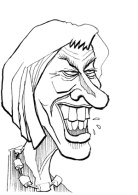
Alan B’stard MP explains:
How to eradicate hospital waiting lists
Alan B’stard MP explains:

Alan B’stard MP explains:
Too ill to be cared for at home or in community-bedless Devon? Tough.
But no worries for the rich in their luxurious “assisted living” apartments in places like Pegasus in Sidmouth and Millbrook Village in Exeter!
And even there no use having beds if there are no carers to take care of people post-Brexit.
“Devon and the South West is heading for a major shortfall in care home beds, a leading property expert has warned.
The region will need to create 1,350 beds a year to offset closures and pressures from an ageing population.
Anthony Oldfield, director at property consultancy JLL, which has an office in Exeter, said: “Even before we take into account the impact of bed closures, the care home sector needs to double the delivery of new beds. Demand for private pay stock set to increase across all regions of the UK, not just the wealthy prime markets, as a result of historic house price growth and no change in the threshold for publicly funded care since 2010.
“The election showed what an emotive subject social care and how it is going to be funded can be. But it is essential that the government reaches a sustainable solution as to how social care is to be funded in a way that doesn’t pass the burden to a shrinking working age population.”
JLL estimates that there will be a shortfall of nearly 3,000 care home beds in 2018 based on the current development pipeline and anticipated increase in demand due to growing demographics in the UK.
Just within the South West, the forecasts suggest a need for an extra 15,100 beds by 2026, or roughly 151 beds per year. With just over 1,200 beds lost in the market in 2016, the regional build rate could actually be closer to 1,350 new beds per year in order to offset home closures.
At the same time that demand is rising, the pipeline of planned developments in the South West suggests that just 700 beds will be built during 2018.
With about 77% of all care home beds built before modern quality standards were adopted in 2002, there is an urgent need for new development to meet demand and improve living standards for future care home residents.
Mr Oldfield said that priority should be given to care home provision in planning policy.
“A change of mindset is required that sees the development of care homes as an imperative for society and ensures that applications are resolved in a timely manner and without the frustrations that many operators report. “Attendant to reforms contained in the green paper should perhaps be protection or classification of land allocated to retirement living developments to ensure that the right type of housing is being built in the right locations. This would enable people to extend the period of independent living.”
“The Budleigh Salterton Community Hospital Health and Wellbeing Hub (Budleigh Salterton Hub) will bring together local residents, the NHS, the voluntary, statutory and business sectors under a common purpose – to improve the quality of health and wellbeing for approx 48,500 people in the Woodbury, Exmouth and Budleigh (WEB) areas, including all the local villages and hamlets.
As a provider of health and wellbeing support, whether it be through fitness, social activities and groups, holistic therapies, mental health guidance, weight management, physiotherapy, healthy eating and lifestyle choices, art therapies, NHS outpatient services, catering, or childcare provision, this is your opportunity to get involved in this new and exciting project, supporting babies and children from early years through to older people.”
https://www.westbank.org.uk/Pages/FAQs/Category/budleigh-hub
Here is the “information pack”:
https://www.westbank.org.uk/Handlers/Download.ashx?IDMF=48d9c97d-1ad5-4ec3-86f5-1aab4f405774
Rooms ( including the kitchen) are from (not at) £15-25 per hour (NHS or private) and it seems from reading the brochure that, as yet, it has no tenants.
“… Dr Sonja Manton, director of strategy for both Devon Clinical Commissioning Groups, said: “The current model of care is not sustainable either clinically or financially, so we have to look at doing something differently.
“We are extremely grateful to the Devon Health Scrutiny Committee members for the time they have put in to reviewing our plans in order to feel assured about the changes we are making. We thank them for their diligence and constructive challenge. Their insight was invaluable.
“We are now ready to move to the next step and start the final preparations of implementation and making the changes we have proposed.”
The Your Future Care proposals, which were subject to a 13-week public consultation that closed earlier this year, set out to move away from the existing bed-based model of care. Instead it focuses on a model of care that proactively averts health crises and promotes independence and wellbeing. By redirecting and reinvesting some existing bed-based resources, community services can be enhanced to support more home-based care by establishing:
Comprehensive Assessment
Single Point of Access
Urgent Community Response
The net result of this new approach will mean a reduction in inpatient beds in community hospitals in the Eastern* locality of Devon and an increase in community-based staff to support Out of Hospital Care.
Deputy Chief Executive/Chief Nurse of the Royal Devon and Exeter NHS Foundation Trust, Em Wilkinson-Brice, said: “The endorsement from the members of the committee coupled with the clinical recommendation to proceed from the assurance panel, will support public confidence that our plans are not only safe but will provide improved care.
“By moving to this model of care, we can help more people to have a better outcome – ensuring that across the whole of Eastern Devon everyone has access to safe, reliable services that promote independence and support people to live their life to the fullest.”
A significant amount of implementation planning including engagement with the workforce, stakeholders and local communities has already been undertaken and now that these two important milestones have been reached, the RD&E will, for the benefit of staff and patients, ensure that the move to provide more care and support in people’s homes is done in a safe and timely manner. In order to achieve this, the RD&E will continue to work closely with staff, partner organisations and communities to take a phased approach to implementation.
Further information specific to each of the four community hospitals will be provided in due course.
*The Eastern locality includes Exeter, East Devon, Mid Devon and parts of West Devon including Okehampton”
http://devonccg.newsweaver.com/GPNewsletter/un6s1ilvrc3qm5yxda10xa?email=true&a=2&p=1797435&t=289800
” … A Department of Health spokesman said: “Today he [Jeremy Hunt] visited Weston Hospital, Barnstaple Hospital and Exeter Hospital.
“The purpose of these visits was not to do media but to talk to hospital staff and managers about their work and gain insights into the local healthcare system.”
Councillor [Frank] Biederman [DCC Independent, Fremington Rural] sees the visit as more political than practical, he said: “Jeremy Hunt is at North District Hospital today. This tells me they are expecting another election, within 12 months, no other reason he would come to North Devon.”
Frank, with his tongue firmly in his cheek, added: “They should stamp on his foot, really hard and send him to Exeter for treatment.”
The visit comes a couple of months after the results of an Acute Services Review from the Northern Devon Healthcare Trust.
A report issued as a part of the review recommended that North Devon District Hospital, one of those visited by Mr Hunt today, retain its A&E, maternity, paediatrics, neonatal care and emergency stroke services.
Health campaigners from Save Our Hospital Services welcomed the news but are seeking clarification on how theses services will be funded in the future.”
“Up to 3,000 elderly people will not be able to get beds in UK care homes by the end of next year, research suggests.
Research commissioned by BBC Radio 4’s You and Yours programme reveals a huge shortfall in the number of beds available.
Increasing demand from an ageing population could see that grow to more than 70,000 beds in nine years’ time.
The Department of Health said local authorities in England had been given an extra £2bn to help fund social care.
But in the past three years one in 20 UK care home beds has closed, and research suggests not enough are being added to fill the gap. …
The research, carried out by property consultants JLL, found that since 2002 an average of 7,000 new care home beds had opened in the UK every year, but by 2026 there would be an additional 14,000 people needing residential care home places per year.
Lead researcher James Kingdom said: “We’re currently building half the number of care home beds every year that we need.”
“There are more people living longer.
“We know that over the course of the next decade there is going to be 2.5 million more over-65s, and as a result that means there is going to be demand for care home beds.
“To fix that, we need to double the rate of delivery”. …
In the past three years, 21,500 care beds have closed in the UK.
People in the care industry worry that as bed capacity decreases and demand increases, there will be more pressure on NHS beds as elderly people are admitted to hospital because they can’t cope at home.
The government estimates this already costs the NHS in England £900m a year.
Pete Calveley, from Barchester Health Care, said it was an increasing feature of the health and social care environment because there was not enough capacity in the community.”
“Councillor-Sara-Randall-Johnson (from this article):
Why did Devon’s Health and Adult Care Scrutiny Committee block the proposal to refer the closure of our beds to the Secretary of State?
The idea that the Chair, Councillor Sara Randall Johnson (left), was settling an old score with Claire Wright makes a nice story but overlooks the concerted Conservative position. The collusion between Randall Johnson and Rufus Gilbert – who rushed to propose a ‘no referral’ motion before Claire could move her motion to refer – was obvious to all, as was her keenness to persuade her colleagues not to have a recorded vote.
Equally striking, however, is that only one out of 12 Tories on the Committee – Honiton’s Phil Twiss – voted against Gilbert’s motion. The other 7 Tories who voted were all for allowing the beds to be closed; 2 who had reservations abstained; 2 more were (diplomatically?) absent. Whipping is not allowed on Scrutiny committees, but this gives a strong impression of a Tory consensus. Members who were uncertain of their support were unwilling to defy it beyond abstention. Twiss was obviously a special case, as the one committee member whose hospital will lose its beds.
Clearly the Conservative Group on DCC gave their East Devon members the main role in dealing with the Eastern Locality hospital beds issue when in May (with its return to Scrutiny looming) they made Randall Johnson chair and nominated two Exmouth members, Jeff Trail and Richard Scott, as well as Twiss as members of the Health Scrutiny Committee. With East Devon Tory leader, Paul Diviani, representing Devon’s district councils, 5 of its Tory members were from East Devon and only 7 from the other five-sixths of the Tory group.
East Devon Tories on the committee certainly lived up to their role on Tuesday. All except Trail voted, making half of all Tory votes cast on the committee and 3 out of 7 on the pro-CCG side. In contrast, only 4 of the 8 Tories from elsewhere in the county cast a vote on this crucial issue: East Devon’s Tories may have convinced themselves, but not their colleagues.
Paul Diviani spills the beans
With Randall Johnson preoccupied with timekeeping (except when the CCG were speaking), Scott silent and Twiss asking questions, it was left to Diviani to express the Tory rationale. He claimed to speak for Devon district councils as a whole, but has acknowledged that he had consulted none of the others. He was happy to defy his own Council, which has voted to keep hospital beds, and spoke for himself – and East Devon Conservatives.
Diviani’s caustic little speech deserves more attention than it has been given.
He started by saying that those who decide to live in the countryside expect diminished service, and must cut their cloth accordingly in current times – forgetting that many have lived here all their lives, or moved here long before the present Tory government arrived to savage the NHS.
‘Costs will always rise without innovation’, Diviani continued, forgetting that the ‘costs’ of community hospitals are rising particularly because of the Tory innovation which gave them over to NHS Property Services and its ‘market rents’.
‘Local decisions should be made locally’, he averred, overlooking the fact that Sustainability and Transformation Plans, Success Regimes and NHS property sales are all national initiatives forced on the local NHS – while NEW Devon CCG is so unrepresentative even of local doctors that only full-time managers (Sonja Manton and Rob Sainsbury) are allowed to present its case in public while its ‘practitioner’ figurehead, Dr Tim Burke, hides in a corner.
When, however, Diviani warned that ‘attempting to browbeat the Secretary of State to overturn his own policies is counter-intuitive’, he expressed the truth of the situation. The closure of community hospitals results from the determined policies of the Conservative Government. (Referral would have served the purposes of delaying permanent closures, embarrassing the Government and forcing its Independent Reconfiguration Panel to give an assessment of the issue.)
East Devon Tories are the Government’s faithful servants. ‘Don’t trust East Devon Tories’ over the hospitals, I warned during the County elections. How right have I been proved.”
East Devon Tories were central to ditching Seaton and Honiton hospital beds
“The Conservatives on Devon County Council’s health and adult care scrutiny committee on Tuesday, torpedoed local people’s views and any possibility of a referral to the Secretary of State for Health for a decision to close 71 community hospital beds.
I will keep this blog post short and instead post three articles that explain things just as well as I could have explained them.
Suffice to say that I am deeply disappointed.
Not just with the behaviour of chair, Sara Randall Johnson, who appeared to do her utmost to prevent any referral, both at the previous meeting last month and at Tuesday’s meeting.
But also with the attitude of the majority of the Conservative group, who used a variety of ill-informed views and remarks, to justify their determination not to refer, refusing to hear or see any member of the public’s distress, frustration and disbelief at the proceedings.
The chair’s attitude made me angry and led to a protracted row where I repeatedly asked her why she had allowed a proposal to be made and seconded at the very start of the meeting by her conservative colleague, Rufus Gilbert, NOT to refer to the Secretary of State for Health, when I already had a proposal that I had lodged with her and the two officers, before the meeting.
I had been indicating to speak since the start of the meeting, yet, Cllr Randall Johnson chose to call four councillors before me.
When I was finally called to speak I challenged her on why she had not made my proposal, which she had a copy of in front of her, known to the committee at the start of the meeting, which is the usual practice.
Cllr Gilbert’s seconded proposal before questions or the debate had even started had nullified my proposal, which was why I was so angry.
Cllr Randall Johnson admitted that it was her decision not make my proposal known to the committee and her decision on who is called to speak.
When they did what they did at Tuesday’s health scrutiny meeting, the Conservatives betrayed thousands of local people.
As I said in my final speech, local people had written letters, organised petitions, replied to public consultations, attended meetings, spoken at meetings, attended demonstrations, some had even spent significant sums of money on a legal challenge.
Time after time, month after month, the committee has asked questions which have not been properly answered on issues such as evidence that it will work, the staffing required, the finances, care of the dying. Local GPs are up in arms, staff have objected… yet the Conservative group knew best.
The vote was agonisingly close – six votes to seven, with two abstentions. All those who voted with Cllr Gilbert’s motion were conservative. Cllr Randall Johnson also voted with Cllr Gilbert – another unusual move at such a highly charged and significant meeting.
I am quite certain, that with a different approach by the chair, that the outcome would have been different. And local people’s views would have been respected and acted upon.
Councillors are elected by local people to represent their views.
Why was it so important to the chair and her colleagues that my proposal failed on Tuesday?
A whip at scrutiny committees, much least a legally constituted committee such as the health and adult care scrutiny committee of Devon County Council is strictly forbidden.
Yet to the members of the public present, who were repeatedly shouting “fix” it certainly appeared that way.
Since the meeting I have been inundated with messages from people who are disgusted at what happened.
Alongside two other councillors, I am seeking advice on what took place at Tuesday’s meeting.
The debate can be viewed on the webcast here – https://devoncc.public-i.tv/core/portal/webcast_interactive/293466
Seaton councillor, Cllr Martin Shaw, wrote an excellent account of the meeting here – https://seatonmatters.org/2017/07/26/the-health-scrutiny-committee-which-didnt-scrutinise/
My row with Cllr Randall Johnson has led to a local newspaper running a story about revenge… – see http://www.devonlive.com/tory-sara-randall-johnson-derails-claire-wright-s-health-campaign-six-years-after-election-defeat/story-30457493-detail/story.html”
Councillor Richard Scott yesterday voted for closure of Honiton and Seaton hospitals. Yet on 26 March this is what he wrote about councillors from outside an area voting on matters that had “nothing to do with them”:

Questions at last night’s Full Council meeting at Knowle shed some light on this. Members of the public pointed out that Councillor Paul Diviani had voted against both his own EDDC council and public opinion, at Devon County Council just two days previously (25th July), by supporting the decision that ‘Your Future Care’ should not be referred to the Secretary of State.
The EDDC Leader’s vote on this occasion could be regarded as crucial, as the decision had been narrowly carried by 7 votes to 6, and was met by cries of “Shame on You” from the public, as reported on BBC Spotlight tv the same evening.
Last night at Knowle, Councillor Diviani replied that he had to vote the way he had at the DCC Health and Adult Care Scrutiny Committee because he was representing the views of the eight Devon District Councils. But when Cllr Roger Giles, Chair of EDDC Scrutiny Committe, then asked him if he had consulted Mid Devon, North Devon, South Hams, Teignbridge, Torridge and West Devon, the answer was no.
So is the oft-repeated phrase from Cllr Diviani and close colleagues, “We are where we are” , the consequence of poor leadership? Fortunately in democratic Britain, our leaders are not permanent fixtures.
Footnote: For reference, one of the questions asked last night, is copied below. All can be heard on the audio recording of the Full Council meeting, soon to be available on the EDDC website.
‘At the 17th May 2017 EDDC Full Council meeting, Councillor Mike Allen said, and the council formally agreed, that care in the community had not yet been proven to work.
Yesterday (25th July 2017), the EDDC Leader voted at Devon County Council Health and Adult Welfare Scrutiny Committee that ‘Your Future Care’ proposals be NOT referred to the Secretary of State. (This decision was made by 7 votes to 6).
Through the Chair, will Councillor Diviani kindly explain how voting against his own Council fits with his leadership of it? ‘
Owl says: So, Honiton and Seaton hospitals sacrificed to Randall-Johnson’s anger?
By P Goodwin, Western Morning News
“As the old saying goes: revenge is a dish best served cold.
For Conservative county councillor Sara Randall Johnson the wait to gain the upper hand on old rival Claire Wright stretched to six years.
When she did, the result was painful and public.
At this week’s bad-tempered and rowdy council health scrutiny meeting, Ms Randall Johnson used her new power of chairmanship to thwart the independent rebel and stamp her authority on the newly-elected authority.
In a move which prompted jeers and cries of “fix” from the public gallery, Randall Johnson ignored a tabled motion to halt hospital bed closure plans and instead allow a fellow Tory, Rufus Gilbert, to seize the momentum by kick starting the debate and swiftly proposing the exact opposite.
She then dismissed Ms Wright’s protest by telling her the power to choose was entirely at her discretion as chair, before moving to a vote against referring the proposals, which was won by a majority of one, with one abstention.
It was a swift and brutal piece of politics. The result: bad headlines averted, no need to trouble Jeremy Hunt with the protests of a rebellious council and the upstart put firmly in her place.
Former Lib Dem county council leader and respected political veteran Brian Greenslade remarked after the meeting that the move had been highly unusual.
He considered that not mentioning or circulating a table motion – one submitted before the meeting begins – was rare: not against procedure but definitely a departure from protocol.
In other words: a low blow but not quite below the belt.
It was clear from the tetchy exchanges during the meeting that there is little love lost between the two women and this is perhaps no surprise.
Wright pulled off a shock victory when she ousted Randall Johnson from her East District Council seat and her position as leader, relegating her into third place in a race for two seats, by the slender margin of just 25 votes.
The defeated leader put on a brave face, claiming she had got her life back after 20 years of public service, but this hardly sounds like the words of a woman who just two years earlier was vying with Sarah Wollaston to become MP for Totnes.
Since that victory, Wright, an outspoken independent campaigner, has become a painful thorn in the side of local Tories at district and county level, particularly around the NHS, where she worked in PR before launching her political career.
She has led the opposition ever since, including two general election campaigns in which she gave MP Hugo Swire a run for his money.
But the campaign to halt bed cuts and hospital closures has been a major factor in her rallying call to local people, the jewel in her campaigning crown.
The recent background to Tuesday’s meeting went like this:
Plans by the Northern, Eastern and Western Devon Clinical Commissioning Group to axe 71 beds across four cottage hospitals sparked anger in the Eastern locality.
Amid fears the NHS is planning to sell off the hospitals, relations between the public and NHS officials deteriorated with many accusing executives of lying about their true intentions.
Campaigners, angry that the case has still not been made for the Your Future Care model of home visits, labelled the consultation a sham and turned to the Health and Wellbeing Scrutiny Group for help.
It could refer to Mr Hunt though in reality it the plans would have gone to an independent reconfiguration panel who would make recommendations.
What many people wanted was a change in the way the CCG operates and communicates. they wanted a more open approach and they felt this might give the health trust a jolt.
Under the chairmanship of veteran Labour councillor Richard Westlake, the scrutiny group was poised to refer the plans to the Secretary of State if 14 documented points were not addressed.
But he stepped down at the election and Ms Randall Johnson took up control.
At the first meeting of the newly constituted committee in June, it became clear that she did not intend to let this happen.
Ms Wright had proposed to the last meeting that it was time to vote to refer to the Health Secretary and the chair repeatedly came under fire for not putting this to a vote.
There was a lack of clarity among one or two members about the whole process and eventually, members were persuaded to defer a decision until yesterday to get more information.
It appeared that the Conservatives had their ducks in a row on Tuesday.
Wright cried foul when her tabled motion was ignored, claiming she had never seen it happen in six years of committee meetings.
Unfortunately, the legal advice from the council backed Randall Johnson: Motions needed to be proposed and seconded in the meeting.
Would it have changed the vote? Maybe not. It was close though. East Devon leader Paul Diviani rebelled against his members and voted not to refer and one Tory did admit he was wavering.
The way the meeting was handled did little to foster good relations between the council and the community.
Ms Randall Johnson may have done nothing wrong but she certainly didn’t make any new friends in the public gallery.
As for old foes among the membership – no change there.”
Councillor Martin Shaw (EDA, Colyton and Seaton) reports:
[Names of those voters have been amended – it does not affect the result]
“The 7 councillors who voted NOT to refer the decision to close Honiton and Seaton hospital beds were:
Sarah Randall-Johnson
Paul Diviani (Leader of East Devon District Council, representing Devon district councils), and county councillors
Richard Scott (Exmouth),
Rufus Gilbert,
Sylvia Russell,
Paul Crabb and
Ron Peart.
The 6 councillors who voted against this motion, i.e. to refer the decision, were Claire Wright (Otter Valley, Independent), Brian Greenslade and Nick Way (Liberal Democrat), Hilary Ackland and Carol Whitton (Labour) and Phil Twiss (Honiton, Conservative).
Jeremy Yabsley (Conservative) abstained as did John Berry. Two other Tories,
Jeffrey Trail (Exmouth) and
Philip Sanders, gave their apologies.
Six public speakers, Cllr Roger Giles (Chair of East Devon’s Scrutiny Committee), Paul Arnott (Colyton), Cllr Jan Goffey (Mayor of Okehampton), Cllr Mike Allen, Bob Sturtivant and Stephen Craddock (Honiton), spoke eloquently against the closures for two and a half minutes each. County Councillor Ian Hall (Axminster) and I also addressed the committee for five minutes each.
Three representatives of NEW Devon CCG and the RD&E (who run the hospitals and are working with the CCG) were then allowed to make a very lengthy Powerpoint presentation and contribute freely to the discussion – which none of the public speakers, Ian Hall or I were allowed to do.
Claire Wright had prepared a detailed motion to refer the closures and had submitted it to the Chair before the meeting. However when debate began, Cllr Randall Johnson chose not to call Claire to speak but called Rufus Gilbert who immediately proposed the motion not to refer, which was quickly seconded by Sylvia Russell.
This blatant manoeuvre by the Chair meant that the committee never considered point by point, as Claire’s motion would have required it to, the 14 questions on which it had asked the CCG to satisfy it. Despite an excellent report from Hilary Ackland which concluded that the CCG had failed to convince, the Committee basically abdicated its scrutiny role and blocked a referral without discussing most of the objections which we had raised.
Claire and I are planning to complain about the way the meeting was handled. If you want to watch it, it’s online at
https://devoncc.public-i.tv/core/portal/webcast_interactive/293466.
Thank you all for your support for the hospitals over the last 9 months. Be assured, however, that this is not the end of the matter, since the CCG and RD&E are both developing ‘estates strategies’ which will centre on what to do with space freed up by the closures. “
In December 2016, East Devon Watch published this article::
“Owl has been passed a copy of the “30 [plus] questions” that must be asked BEFORE care at home can be implemented:
Pre-implementation
The model of care:
• Does the new model of care align with our overriding ambition to promote independence?
• Is there clinical and operational consensus by place on the functions of the model and configuration of community health and care teams incorporating primary care, personal care providers and the voluntary care sector?
• Is there a short term offer that promotes independence and community resilience?
• Is there a method for identifying people at highest risk based on risk stratification tool?
• Are the needs of people requiring palliative and terminal care identified and planned for?
• Are the needs of people with dementia identified and planned for?
• Is support to care homes and personal care providers, built into the community services specification?
• Is support for carers enhanced through community sector development support in each community?
• Has the health and care role of each part of the system been described?
• Have key performance indicators been identified, and is performance being tracked now to support post implementation evaluation, including impact on primary care and social care?
Workforce:
• Is there a clear understanding of the capacity and gaps in the locality and a baseline agreed for current levels and required levels to meet the expected outputs of the changed model of care?
• Is there a clear understanding of and plan for any changes required in ways of working:
o thinking
o behaviours
o risk tolerance
o promotion of independence, personal goal orientation
• Have the training needs of people undertaking new roles been identified, including ensuring they are able to meet the needs of patients with dementia?
• Do we have detailed knowledge with regards to investment, WTE and skill mix across the locality and a plan for achieving this?
• Are system-wide staff recruitment and retention issues adequately addressed with a comprehensive plan, and where there are known or expected difficulties have innovative staffing models been explored?
Governance, communications and engagement:
• Is there a robust operational managerial model and leadership to support the implementation?
• Has Council member engagement and appropriate scrutiny taken place?
• Is there an oversight and steering group in place and the process for readiness assessment agreed?
• Have providers, commissioners and service users and carers or their representative groups such as Healthwatch agreed a set of key outcome measures and described how these will be recorded and monitored?
• Is there a shared dashboard which describes outcomes, activity and productivity measures and provides evaluation measures?
• Is there an agreed roll out plan for implementation, which has due regard to the operational issues of managing change?
• Is there a comprehensive & joint communications and engagement plan agreed?
• Is there a need for a further Quality or Equality Impact Assessment?
Implementation
• Is there a clinical and operational consensus on the roles of each sector during the implementation phase including acute care, community health and care teams, mental health, primary care, social care, the voluntary care sector and independent sector care providers?
• Is there an implementation plan at individual patient level describing their new pathway, mapping affected patients into new services?
• Are the operational conditions necessary for safe implementation met?
• Have the risks of not implementing the change at this point been described and balanced against any residual risk of doing so?
Post Implementation
• Is there a description of the outcomes for individuals, their carers and communities?
• Are the mechanisms for engagement with staff, users of services and carers in place and any findings being addressed appropriately?
• Is there a process in place for immediate post implementation tracking of service performance including financial impact to all organisations?
• Is longer term performance and impact being tracked for comparison against pre-implementation performance?
• Have we captured user experience as part of the process, and have findings been addressed and recorded to inform the planning of future changes?
• Are there unintended consequences or impacts (e.g. on primary care or social care) which need to be addressed before any further change occurs?
• Is there a clear communication plan for providers and the Public describing the new system and retaining their involvement in community development?
Source: http://www.newdevonccg.nhs.uk/about-us/your-future-care/publications-and-evidence-sources/102085
( point 14, page 94)”
“By 7 votes (all Conservative) to 6 (2 Liberal Democrats, 2 Labour, 1 Conservative and Independent, Claire Wright), Devon County Council’s Health Scrutiny Committee today sealed the fate of the beds in the two hospitals (and Okehampton) by voting not to refer the closure of beds to the Secretary of State for Health.”
Tory majority sacrifices Seaton and Honiton hospitals at Devon Health Scrutiny
Tory voters – this is totally down to you.
Owl says: and newspapers are only just finding this out when we have known it for months and months! Amazing.
“SECRET Government plans to impose “radical and rapid” spending cuts on debt-ridden NHS trusts will lead to cancelled operations, redundancies and hospital closures, the British Medical Association has warned in a new report.
The effects of the proposed Capped Expenditure Process could be “devastating”, says the BMA, warning maternity and A&E wards would be closed and waiting times increased.
Experts say the plans, which would impose up to £250million of savings across the 14 health authorities which have the biggest deficits, could sound the “death knell” for the NHS.
The recent proposals, which have been discussed with NHS managers across the country, have not been put out for consultation with public or patients, a decision which has angered health care leaders, MPs and clinicians.
“PRESS RELEASE
Protestors from Seaton, Honiton, Okehampton and elsewhere in Devon will converge on County Hall again on Tuesday 25th July from 1 pm, before the special meeting of Devon County Council’s Health Scrutiny Committee at 2.15 which will decide whether to refer the closure of beds in the three hospitals to the Secretary of State.
NEW Devon Clinical Commissioning Group proposes to replace the beds with a new system of care at home. We shall be pointing out that:
The new system, which they have been developing only since March, has not been tested in winter, let alone a flu epidemic; it is uncertain that they will be able to staff it effectively over time given the complex travelling arrangements that it requires for medical as well as care staff.
The small number of beds (halved to 71) which they propose to retain across the 3 remaining community hospitals ignores the facts that East Devon has far more over-85s (the key users of community beds) than other areas of Devon and that these numbers are projected to treble in the next two decades.
The remaining beds will not be distributed in an ‘even geographic spread’ as the CCG claim but, concentrated in Tiverton, Exmouth and Sidmouth, give no provision at all in the Axe Valley which is the area of East Devon furthest from the RD&E.
The closure of beds is driven by the CCG’s aim of reducing the amount of rent which it has to pay to NHS Property Services for community hospital space, and is probably a prelude to the gradual elimination of community hospitals over the next few years.
Six speakers from the affected communities will address the Committee in the Public Participation session, and I shall be addressing them as County Councillor for Seaton and Colyton.
We urge that the Committee use its legal power to refer the CCG’s decisions to the Secretary of State.
Martin Shaw
Independent East Devon Alliance County Councillor for Seaton & Colyton”
“The Health and Adult Care Scrutiny Committee will decide whether to refer a decision to close 72 community hospital beds in Eastern Devon, on Tuesday (25 July), to the Secretary of State for Health.
It follows protracted discussions at the previous meeting last month about whether this was the preferred course of action, after I made a proposal to do so.
Dozens of people were in the public gallery waiting to hear what the committee had to say.
A full account of this meeting can be found here –
In the end it was decided that a special meeting should take place in July to debate the issue.
The agenda papers for Tuesday’s meeting include a legal paper which sets out some issues that the committee may consider before coming to its decision.
Since the June meeting it has been announced that Honiton Maternity Unit is set to close along with Okehampton and Tiverton’s. The loss of the general medical beds has been a factor in maintaining the viability of those units.
There will be a demonstration from a coachload of people from Seaton and Honiton that will take place at 1pm on Tuesday on the steps of County Hall.
The meeting starts at 2.15pm.
Pic: Giving an interview to ITV about the sad closure of Ottery Hospital’s beds back in 2014.
Here’s the link to the papers: – http://democracy.devon.gov.uk/ieListDocuments.aspx?CId=429&MId=2643&Ver=4
Owl says: it remains to be seen whether Tory members of the scrutiny committee will be dragooned and manipulated as they were at the last meeting – when chair Sarah Randall-Johnson bent over backwards to ensure that no vote was taken on whether to refer the CCG’s decisions to the Secretary of State. The CCG had not fulfilled the criteria previously set by the committee to avoid the decision, but she insisted they should be given even more time to defend themselves
“Council [DCC] to make crucial decision on proposal to axe hospital beds
“Hospital campaigners in the Seaton and Honiton areas are preparing for a crucial meeting of Devon County Council’s health scrutiny committee next week.
Next Tuesday, Devon County Council’s scrutiny committee will decide whether to use its power to refer the decision of the NEW Devon Clinical Commission Group (CCG) to close all in-patient beds in Seaton, Honiton and Okehampton hospitals to the Secretary of State for Health.
The meeting is a defining moment in the saga surrounding the CCG’s proposals to axe all of Honiton and Seaton’s inpatient beds.
Under the initial proposals, Seaton was earmarked to retain its 18 beds – but those in Honiton and Okehampton did not appear in any of the shortlisted options following the scoring process.
A large group of protesters have now planned to congregate outside County Hall in Exeter in a last-ditch effort to reverse the proposals, before they attend the meeting at 2.15pm.
Among those who will be speaking against the plans are Seaton and Colyton county councillor Martin Shaw, Seaton mayor Jack Rowland, and the chairman of East Devon District Council’s scrutiny committee, Cllr Roger Giles. Other residents of Axminster and Honiton will also speak at the meeting.
Cllr Shaw said: “This is a crucial decision not only for the beds but also for the future of the hospitals.
“The CCG’s next step is its local estate strategy, which is likely to involve partial or even complete closures of hospitals.
“Seaton is more remote from acute hospitals than any other East Devon town and it is vital that we retain our hospital, which was built by the local community.”
Devon County Council’s scrutiny committee reviewed the proposals last month but opted to defer referring them to the Secretary of State while it investigates the health authority’s evidence for saying its ‘care at home’ policy will be better for residents.
Speaking at the meeting, Dr Sonja Manton, director of strategy at the CCG, assured the committee that they will not introduce the bed cuts until they are sure the new model of care works and she invited members to sit in on their planning for it.
If it was shown it could not be implemented, the decision to close the beds could be reversed.”
“The extent of the crisis in England’s GP services has been laid bare. And if there was any doubt as to why patients are struggling to get appointments with their doctors, Jeremy Hunt now has the answer right in front of him. And it’s staggering.
Staggering numbers
NHS Digital has released statistics [pdf] on the number of GP surgeries that have opened and closed, for the year up until 30 June 2017. And they show that, in the space of 12 months, 202 GP practices either closed or merged across England; with just eight opening to replace them.
As GP Online reported, the regional breakdown of closures and mergers was:
North of England – 64.
South of England – 54.
Midlands and East – 45.
London – 39.
GPs pushed to the brink
But the closures were confined to 47% of the 209 Clinical Commissioning Groups (CCG); meaning the majority of England saw no closures or mergers at all. In contrast, NHS Digital’s data showed that the number of patients registered with GPs had increased, again; up 55,178 in July compared to June. And there are now 2,427,526 more registered patients than in July 2013. Meanwhile, the number of full-time GPs dropped by nearly 3% in the year up to March 2017.
NHS Digital’s figures come as the British Medical Association (BMA) has balloted its GP members for industrial action. This would involve GP practices stopping taking any new patients. They would either suspend new patient registrations, or apply for a formal closure of patient registration lists.
The broader context
But any action by GPs comes in the context of a wider crisis within the NHS. As The Canary has repeatedly documented:
The amount the NHS paid to ‘independent’ companies has more than doubled since 2010 to over £8bn a year.
8% of government health funding now goes to private companies.
Private companies working in the NHS have seen their profits soar by up to 100%.
The NHS has seen a real-terms cut in the amount of money given to it per patient.
The Tories have cut the number of people getting social care by 26%. And they’ve cut £50m from children’s mental health services.
Successive Tory-led governments have capped [paywall] the pay rises of doctors, nurses and healthcare workers at just 1%.
Additionally, between 2010 and 2015, mental health trusts lost the equivalent of £598m a year from their budgets. And findings show that there are still £4.5m of mental health spending cuts to come. Also, there will be an additional £85m in cuts to public health budgets this year alone.
A GP speaks out
The Canary spoke to writer and GP Dr Kailash Chand OBE. And he perhaps best summed up the situation:
General practice, ‘the jewel in the crown of the NHS’, is at the brink of extinction. Across the board, GPs today are underpaid and overworked. The NHS is losing good people because GPs feel demoralised. They haven’t had a pay rise in seven years: a 1% uplift this year is a real-terms pay cut. The entire crop of GPs is undervalued, and more and more work and expectations are being put on them.
But the NHS is also facing financial meltdown, catastrophic workforce issues and political uncertainty. It is a world-class institution – with world-class practitioners now being torn apart by second-rate politicians. We are already on the way to the end of comprehensive healthcare, free at the point of need, available to all who need it.
Once the NHS is gone, it will be gone forever. And sick people will face the nightmare of not being able to afford the treatment they need. It’s time to stand up and fight!
The end of the NHS?
We have a now-permanent crisis in hospitals; GP surgeries over-subscribed and at breaking point; and social care is severely under-funded. But many believe that the Tories’ approach to the NHS is one of ‘shock therapy‘; that is, create a crisis so bad that the only apparent solution is to sell it off to private companies. And with this latest news about GP practices, we could – as Chand says – be well on the way to the end of the NHS as we know it.”
Even the vaguest association with “health” that you can get people to pay for seems to be acceptable.
And lots of rooms for rent as the NHS appears to be using very few of them.
“Floor plans for Budleigh health hub revealed
Individuals and organisations in Budleigh Salterton are being urged to come forward to take rooms at the town’s new health and wellbeing hub.
The hub, which will be managed by Westbank, is currently under construction on the site of the former Budleigh hospital.
Floor plans have been released for the facility, which is due to open later this year.
Westbank is now looking for people and organisations to register their interest in taking rooms at the hub.
A spokesman for Westbank said: “We would like to offer a range of services which reflects the local community needs and as such are seeking expressions of interest from as many people/organisations as possible.
“Please can interested parties look at our website for more information to discuss things further.”
According to the floor plans, there will be a café in the main reception, three NHS clinical rooms, a nursery, a kitchen and a day service room.
There will also be two multi-use rooms measuring around 26sqm, as well as rooms dedicated to the hub and Westbank.
The second floor will have five more multi-use rooms, two NHS clinical rooms, as well as a smaller room earmarked for audiology.
A kitchen and a restroom are also planned for staff on the first floor, as well as a fitness and rehabilitation room and more office space for Westbank.”
http://www.exmouthjournal.co.uk/news/floor-plans-for-budleigh-health-hub-revealed-1-5096997
 East Devon Watch