Outgoing audit chief tells government some home truths

“I still get angry – and that is the word for it, angry – 10 years into the role, when I see badly-thought-through programmes and wasted public money,” says outgoing watchdog chief Sir Amyas Morse. “And the reason I’m angry is because the citizen ends up picking up the tab. They are the ones who end up suffering.”

For almost a decade, as comptroller and auditor general – the head of the National Audit Office – it’s been Morse’s statutory duty to keep an eagle eye on the spending of central government departments, holding ministers and civil servants to account for cost overruns, project mismanagement and profligacy with taxpayers’ money.

He doesn’t have far to look. As he prepares to leave his post in May, Morse’s final public speech at the Institute for Government last week included a damning list of failures: Crossrail costing £2.8bn more than forecast; changes to probation costing £467m to put right; the smart meters fiasco that will cost at least £500m more than originally estimated; and the Ministry of Defence’s latest unaffordable and unsustainable 10-year equipment plan going over budget by at least £7bn. And that’s just a selection from the past few months.

Morse looks back in anger at the billions that could have been spent on vital services, wasted instead through what he calls “inappropriate bravado” on the part of government ministers, lording it over cowed civil servants, behind an increasing amount of secrecy and spin. “We don’t need people jumping out of an aeroplane in the dark with a parachute of taxpayers’ money,” he says.

A proud Scot – his only meeting with Theresa May was a “brief conversation” at a No 10 Burns Night last year – Morse cares passionately about public services. While his upbringing has contributed to his concern for fairness, it’s his decade at the watchdog, to which he came from a senior position in consultancy PricewaterhouseCoopers via the MoD, that has fuelled his rage over the wasteful ways of too many government ministers. “I really realised that society belongs to us. We’re all paying for it.”

Public money is finite, he points out. There is no magic money tree. When money is lost in one place, it’s taken away from another programme, usually one that’s easier to cut. Every wasted £1bn, he says, is enough to run NHS England for three days, fund 625m A&E attendances, 135m day cases in hospital, or 4m ambulance attendances.

Morse has warned the government that it needs to invest more in the NHS and social care, to meet the needs of an ageing population. In 2016-17, the UK spent just over £170bn on health and social care – more than 10% of GDP, but less than the 11.2% of GDP Germany spent in 2015 on health alone. …”

https://www.theguardian.com/society/2019/mar/20/amyas-morse-head-national-audit-office-ministers-waste-taxpayers-billions

“Public Accounts Committee calls for ‘step change’ in transparency in local public bodies”

“There is a need for a step change in transparency by local public bodies and particularly those in the NHS, MPs have said.

In a report, Auditing local government, the Public Accounts Committee noted that in 2017-18, auditors found that more than 1 in 5 local public bodies did not have proper arrangements in place to secure value for money for taxpayers.

“The numbers are worst for local NHS bodies such as clinical commissioning groups and hospital trusts, where 38% did not have proper arrangements,” it said.

The MPs added that some local bodies were not putting enough information in the public domain about their performance, including reports from their external auditors.

The report called on central government departments to make clear their expectations, “not only for what is made publicly available, but also for making the information accessible to users and so helping citizens to hold local bodies to account”.

The PAC said there appeared to be few consequences for those local bodies who did not take auditors’ concerns seriously and address them promptly. “Even where local auditors use their additional reporting powers to highlight failings, this does not always lead to the bodies taking immediate action.”

The report also recorded the MPs’ concern that, as partnership working becomes more complex, accountability arrangements will be weakened, and the performance of individual local bodies will become less transparent.

Meg Hillier MP, chair of the committee, said: “Taxpayers must be assured that their money is well-spent but in too many cases local bodies cannot properly safeguard value. Particularly concerning are NHS bodies such as Clinical Commissioning Groups and hospital trusts: last year almost two in five did not have adequate arrangements.

“As we reported last week, many CCGs are underperforming and this must improve as they take on responsibility for commissioning services across larger populations.”

Hillier added: “It is vital that local bodies take auditors’ concerns seriously, address them swiftly and ensure meaningful information on performance is made accessible to the public.

“Our report sets out ways central government can help to drive improvements at local level and we urge it to respond positively to our recommendations.” …”

https://www.localgovernmentlawyer.co.uk/governance/396-governance-news/40088-public-accounts-committee-calls-for-step-change-in-transparency-in-local-public-bodies

Knowlegate “Flog it” – some “answers”

Response to Freedom of Information request”

“Thank you for your request for information. Please find the response to your query below.

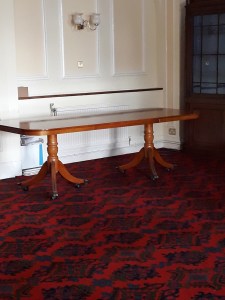
“Recently an email from a Conservative councillor was released into the public domain regarding the purchase of a “very large table in the members room” as a result of “an auction of council furniture, chattels, etc” to the benefit of members and EDDC staff. The email went on to state “I have been told that I have been successful in my bid so the table along with the 8′ extension is heading back to Exmouth to sit in (address of councillor), Exmouth in its rightful town (some may say)” and then stated arrangements for its removal date in order that it could be used for the Councillor’s Christmas dinner for 22 family members. Subsequently on 21st December 2018, the Leader of the Council made a statement about the disposal of a range of items, including this table. He said the large table “attracted little professional interest with one valuer estimate of just £50”. I would like to know:

1. If one valuer’s estimate was £50, what were the other estimates?
Other valuers viewed but were not interested in estimating for the table due to its low value

2. What are the names of the valuers who gave estimates for the table?
The other agents who attended to provide estimates were;
Potburys
Whittons
Lyme Bay
MST

3. Does EDDC audit not require a range and record of estimates for the disposal of council assets, as well as a record of disposals?
It is not clear what specific information is being requested here. Bids and disposal receipts will be recorded.

4. EDDC, like other councils, should have a written policy and procedure for the disposal of assets such as used equipment, furniture and other plant, What is that policy and procedure?
There is a link below to the ‘Property Matters’ section of the Council Constitution which is on our website, specifically items 15 & 16;

15. Authority (after consultation with the relevant Portfolio Holder) to dispose of property assets which have a market value which does not exceed £30,000.
16. Sale of vehicles, equipment or machinery surplus to the Council’s needs where the consideration does not exceed £30,000.

http://eastdevon.gov.uk/media/2537547/cj…

5. Who was the Councillor that successfully bid for “the very large table in the members room”?
This information is exempt from disclosure under s40 of the Freedom of Information Act as being personal data.

6. How much did the Councillor pay?
The bid was £400

7. Was the ornate clock on the mantel piece (as shown on the cover of the Residents Magazine, December 2018) part of this disposal process?
The clock in question originally belonged to Honiton Rural District Council and has been offered to Honiton Town Council.
If so, what was the valuation given? ? See above
What price was paid? ? See above
Who bought this clock? ? See above

8. How much money was raised from this sale of “items of sentimental interest or practical use”?
The items have not been sold yet so no information is currently held. We anticipate that a figure in the order of £2,000 will be raised which will be ring-fenced in the Civic Fund.

9. What are the “other sales” Councillor Thomas refers to?
The vast majority of items are office furniture (desks, chairs, cabinets). Items will be disposed of in a number of ways. These include via public auction, items given to local groups, town and parish councils in return for donations and income from bulk clearance.

10. How much money was raised from each of these “other sales”?
No information held

11. What is the total now of the Chairman’s Civic Fund?
The Civic Fund is a budget and therefore there is no ‘total’ fund as such. The ring-fenced fund is currently £0 as the items have not been made available for collection / payment.

12. Information about the Chairman’s Civic Fund is not easily accessible on the EDDC website; a word search on the site produces “no result”. Where can details of this fund and its administration be found?
Civic Fund and Civic Expenses are agreed as part of the Council’s annual budget: this is identified in the Councils approved Budget book for 2018/19:
http://eastdevon.gov.uk/media/2413383/re…
The relevant items can be found on page 7 and page 24.

I hope this information is helpful but, if you feel dissatisfied with the way we have responded to your request, please contact our Monitoring Officer, Mr Henry Gordon Lennox, to request an internal review [email address]

You may also approach the Information Commissioner for advice at http://www.ico.org.uk

https://www.whatdotheyknow.com/request/auction_of_council_furniture_cha#incoming-1300789

Improving standards in public life (hint: a good few of our councillors fail the suggested tests!)

“On 30 January 2019, the Committee on Standards in Public Life published its long-awaited report on local government ethical standards, reflecting evidence obtained via a consultation exercise carried out from January-May 2018.

The report makes 26 recommendations.

Below we highlight the top five that will be of interest to local authorities, in particular to monitoring officers.

Some of the recommendations could be implemented quickly without the need for primary legislation – most important of these is the recommendation concerning amendments to registrable interests.The wide-ranging report, which runs to over 100 pages, finds that while the majority of councillors and officers maintain high standards of conduct, there is clear evidence of misconduct by some – mostly bullying, harassment or other disruptive behaviour. The report also raises concerns about risks to standards under the current rules governing declaring interests, gifts and hospitality.

The report provides an excellent review of the current framework governing the behaviour of local government councillors and executives in England and then makes a number of recommendations to promote and maintain the standards expected by the public. While it identifies numerous points of best practice, it makes 26 separate recommendations for improvement.

Top five recommendations

The top five recommendations, likely to be of most interest to those in local government, are:

Updating the model code and extending it to parish councils: the report finds considerable variation in the length, quality and clarity of local authority codes of conduct. It therefore recommends enhancing quality and consistency by requiring the Local Government Association to create an updated model code. In a bid to help ease the burden on principal authorities (who must investigate code breaches by parish councillors), the report also recommends requiring parish councils to adopt the code of conduct of their principal authorities or the new model code.

Presumption of official capacity: perhaps the most arresting suggestion, the report recommends combatting poor behaviour by presuming councillors to act in an official capacity in their public conduct, including statements made on publicly-accessible social media. This arises from the perennial concern that the current understanding of public and private capacity is too narrow, undermining public confidence.

Extending the list of registrable interests: the report considers that current arrangements for declaring councillors’ interests are too narrow and do not meet public expectations, so it suggests refining the arrangements for declaring and managing interests, including extending the list of registrable interests to include two categories of non-pecuniary interest:

(1) relevant unpaid commercial interests such as unpaid directorships; and

(2) trusteeship or membership of organisations that seek to influence opinion or public policy. As this does not require primary legislation to be implemented, this is one recommendation which may soon be acted upon. We are particularly pleased to see written evidence submitted by members of Cornerstone Barristers was cited in relation to recommendation (iii): see more below.

A new “objective” test for when councillors must withdraw or not vote:

monitoring officers will be particularly interested in the discussion in the report about the need to update the test for when councillors are forbidden from voting or participating in discussion on matters in which they have an interest.

The report recommends the test be overhauled and that councillors be required to refrain from voting or withdraw whenever they have any interest at all – whether registered or not – that a member of the public would reasonably regard as so significant as to likely prejudice the councillor’s decision-making.

Strengthening the sanctions system:

the report considers the current sanctions insufficient and so recommends allowing local authorities to suspend councillors without allowances for up to six months, with suspended councillors enjoying a right of appeal to the Local Government and Social Care Ombudsman for investigation and a binding decision on the matter.

Other conclusions and recommendations

The report further concludes that there is no need for a centralised body to govern and adjudicate on standards and that various benefits exist to local authorities maintaining their responsibility for implanting and applying the Seven Principles of Public Life.

A number of other recommendations are likely to be of interest, including:

Assisting local authority monitoring officers, the “lynchpin of the arrangements for upholding ethical standards” (p 81), by extending disciplinary protections and offering additional training for the statutory officers who support them.

Giving local authorities a discretionary power to establish a standards committee to advise on standards issues and decide on alleged breaches and/or sanctions for breaching the code of conduct.

Abolishing the current criminal offences in the Localism Act 2011 relating to disclosable pecuniary interests, which are said to be disproportionate in principle and ineffective in practice.

Requiring local authorities to take a range of steps to prevent and manage conflicts of interest that can arise when decisions are made in more complex and potentially less transparent contexts such as Local Enterprise Partnerships and joint ventures.

Fostering an ethical culture and practice by requiring councillors to attend formal induction training by their political groups, with national parties adding the same requirement to their model group rules.

The report recognises that many of its recommendations would require primary legislation and therefore be subject to parliamentary timetabling. The remaining recommendations – in particular those relating to registrable interests (as mentioned above), statutory officers and formal training for councillors – could however be implemented relatively quickly.

The Committee intends to monitor the uptake of its suggestions in 2020.”

Robin Green, Estelle Dehon and Dr Alex Williams, all members of the Cornerstone Planning and Government teams, submitted written evidence item 281 to the committee. Their evidence was cited at p 45 of the report in relation to recommendation (iii) above, on registrable interests.

Robin and Estelle are also contributors to Cornerstone on Councillors’ Conduct (Bloombsury Professional, 2015), which identifies and explains the law following the changes implemented by the Localism Act 2011 in relation to the standards system governing the conduct of elected members in local government.”

https://www.localgovernmentlawyer.co.uk/governance/314-governance-a-risk-articles/39908-improving-ethical-standards

EDDC: “Relocation cost, No Deal Brexit, electric charging points and climate change motions rejected from being discussed”

Owl says: remember, the Chief executive, Mark Williams, is supposed to be a NEUTRAL civil servant and yet ALL of the refused motions are from ALL the minority groups ONLY……!

“Motions to support recycling, to call for a new property ombudsman to streamline complaints against shoddy builders, and for East Devon to get its fair share of the police precept rise will be discussed at next Wednesday’s full council meeting.

But motions over the full relocation costs of the move from Sidmouth to Honiton, to put electric charging points in all car parks, what to prioritise in a ‘No Deal’ Brexit and on climate change will not be discussed.

Various motions that councillors had put forward for debate at East Devon District Council’s full council meeting on Wednesday, February, were rejected by the council’s chief executive, as either the agenda already provides the opportunity for debate or the wording of the motions were inaccurate.

RELOCATION

Cllr Cathy Gardner had proposed a motion calling for the council to commit to publish an annual ‘summary of accounts’ for the relocation project until break-even is reached as relocation from Sidmouth to Honiton was proposed and predicated on the basis that the project would breakeven within 20 years and deliver cost-savings to the council tax payers of East Devon.

Cllr Gardner said: “Whilst some of this information is already available we feel it is vital for the ongoing costs to be published to show confidence that this project will breakeven. A majority of Councillors voted for relocation on the basis that money would be saved on energy bills. We are left unsure of whether breakeven will ever be proven.”

But an EDDC spokesman said: “The rejected motion contained inaccuracies and omissions that had the potential to mislead councillors and it was also premature. It is however proposed to bring a report to the next meeting of the Cabinet that will summarise the position reached with regard to the sale of the Knowle and the relocation. Cllr Gardner can raise the matters she is concerned about as part of the debate into that report.”

The motion would have called for the accounts to include

energy costs for the Knowle for the past 20 years (for comparison);

energy costs for both Blackdown House and Exmouth Town Hall per year;
the capital receipt for the sale of the Knowle;

a Red Book valuation of Blackdown House as of 1 March 2019;

the full costs for the relocation project since its inception, including: project management; removal, furnishing and equipment;

staff retraining and travel expenses;

new-build costs for Blackdown House; refurbishment costs for Exmouth Town Hall; and any other associated costs.”

CLIMATE CHANGE

Cllr Matthew Booth’s motion had called for the council to recognise that Climate Change and Global Warming are the key issues of our time, to acknowledge the strong concerns of young people in particular the recent walk out of school children and for the council to commit to introducing a policy of carbon measurement and reduction within all aspects of its own activity.

He said: “I personally do not care how we begin to do this, or who does it, but that we act now not wait for some planned strategy in the future.”

An EDDC spokesman said that the issue of climate change emergency is acknowledged to be of critical importance but that it would be appropriate to wait to see what Devon County Council decides. They added: “Currently, however, the County Council is considering its position and will shortly debate the matter. As we are in a two tier area it is appropriate for the District Council to assess the position taken by the upper tier authority and then respond accordingly. The public would expect us to work in partnership with the County Council rather than unilaterally.”

ELECTRIC VEHICLE CHARGING

Cllr Eleanor Rylance had submitted a motion calling for the council to plan for and implement over the next five years a full rolling renovation programme of its car parks estates to fit and bring into operation electrical charging points at every space for domestic cars, and cycle parks with charging points for all types of cycle and that there should be mandatory EV charging points for the parking spaces of every new-built house in East Devon.

She added: “This council should approach the future of electrically-powered domestic vehicles with enthusiasm and proactivity, play a positive role in helping develop the use of electrical and should make this infrastructure, that will be a necessity within the next ten years, available in advance of full electrification of domestic vehicles in 2042.

But an EDDC spokesman said: ““The agenda already provides an opportunity for this issue to be raised so this motion was inappropriate.”

BREXIT

Cllr Rylance had also submitted a motion that said in the event of a No Deal Brexit or a version of Brexit that causes significant disruption, the council should approach this event as a situation of emergency in respect of its most vulnerable residents, dedicating any available human, material and financial resources required to palliate any negative outcomes for these groups, but the motion was rejected.

Talking about all the motions, a council spokesman said: “The council agenda for February contains the most important annual decision, namely the setting of the budget and the approval of the Council Tax for the forthcoming year. The process leading to this meeting has included several meetings where members were encouraged to raise all items of future relevance so these could be assessed as part of our service planning process and for assessment as part of the budget.

“It is unfortunate that some members did not take these opportunities and have chosen instead to submit their proposed motions.

“It is also noted that the wording of the motions was not checked in advance with relevant officers who would have been able to give timely advice as to their wording.”

But motions on the police precept, protection for new home owners and supporting recycling will be discussed.

POLICING

Cllr Tom Wright’s motion says: “In view of the £24 per band D property increase in policing precept, this council urges the Chief Constable to recognise the needs of East Devon when deciding how to allocate extra resources. East Devon residents are the biggest contributors to the police budget in Devon, other than Plymouth. It is only fair that we should get a fair share of the larger cake.”

NEW HOMES

Cllr Douglas Hull’s motion says: “The Government has stated that it would therefore be introducing as a priority a new property ombudsman to streamline complaints against shoddy builders. As a council that not only provides an excellent and highly regarded building control service but also has seen significant levels of new building in its district, we call on the government to fulfil its pledge to provide this much needed remedy for homeowners as a matter of the highest priority.”

RECYCLING

Cllr Peter Burrows’ motion says: “This Council continues to support the fine work done by the EDDC Recycling team in achieving the best results in Devon and to support and encourage local Organisations and voluntary groups who are involved in trying to reduce the amount of single use plastics used in their communities & beaches by making resources and expertise available, where appropriate. The order of priority should be – Reduce, Reuse, Recycle. To actively help promote such activities through the Councils social media platforms.”

The full council meeting will be held at East Devon District Council’s new Honiton Heathpark HQ on February 27 at 6pm.”

https://www.devonlive.com/news/devon-news/relocation-cost-no-deal-brexit-2557565

“Knowlegate”: Del-Boy and the Trotters spring to mind – but just the fools (no horses that we know of)

“East Devon District Council’s senior management team have been rebuked by scrutiny councillors after failing to consider the public perception over the sell-off of assets from their former Knowle HQ.

The council this week completed its move from its former Sidmouth home at the Knowle, to Exmouth town hall and the new Honiton Heathpark HQ, and as part of the move, they had to find homes for various items that are unsuitable for its new building.

But a furore erupted just before Christmas when it was first revealed that council staff and members, but not the general public, were given the chance to bid on various items, and then when an email was leaked claiming a councillor managed to buy a large mahogany dining table and 20 chairs for £50 at the internal staff auction, instead of allowing it to be publicly auctioned for the best possible price.

A council spokesman had said that this leaked information was totally incorrect with the bid being for £400 and only including some of the chairs, and that the bid was withdrawn when Exmouth Town Council, who initially declined the offer of the table originally, changed their view just before Christmas and are now expected to take ownership of the table.

Cllr Ian Thomas, Leader of East Devon District Council, had previously said in a statement: “Our council relocation team has been working with professional auctioneers, Sidmouth Town Museum, charities and clearance specialists, to value and dispose of a wide range of items from our old East Devon District Council offices at The Knowle in Sidmouth.

“As part of this process, we offered our staff and elected members the chance to bid for items that may be of sentimental interest or practical use, but are of negligible commercial value.

“The value of items to be disposed were identified based on the view of experienced professionals. They included the large table from the Members area, which attracted little professional interest with one valuer estimate of just £50.

“All proceeds from this sale and those raised from other sales will go to the Chairman’s Civic Fund, to be donated to nominated charities.”

East Devon District Council’s scrutiny committee considered the disposal of the contents of the Knowle at their meeting last Thursday.

Richard Cohen, the Deputy Chief Executive, produced a report that outlined the process of disposal of items from the Knowle prior to handover to PegasusLife for demolition.

He said: “As part of that process and prior to the handover of the old office buildings to the developer, the council needs to clear the buildings. In total there are just over 2,600 separate items in the Knowle.

“The vast majority of these are office furniture: desks, chairs, cabinets etc of varying ages, condition and size. There are also a number of particular items of varying antiquity and value: these involve both furnishings and fixture and fittings. From a perspective of bulk disposal the estimated total weight of all these items is 45 metric tonnes.”

He outlined that Sidmouth Museum and Sidmouth Town Council were both interested in re-home various items, multiple local auction houses were invited in to look over items but that the majority of items were not of interest to them, and that for remaining items an opportunity was offered for council staff and members to bid for items whether for practical or aesthetic reasons.

He said: “These were items that had been attributed little or no sale value by the various professional auctioneers and ranged from standard office furniture items to cupboards, upholstered furnishings, tables, curtains for example. This element of the disposal process involves around seventy separate items and is likely to raise of the order of £2,000 for the Chairman’s chosen charities.”

Mr Cohen added that groups such as Action East Devon, Green Furniture Aid and Hospicare who are all either networked with voluntary groups or can sell furniture via charity outlets were asked whether they had an interest in some of the for the more generic items such desks, chairs and tables, but the response has been largely muted.

Town and parish councils will also be contacted asking them whether they have an interest in any items with the requirement that they transport said items away themselves, he added.

But councillors said that contrary to what Mr Cohen said, a full list of the items for disposal had not been circulated to them.

Scrutiny committee chairman Cllr Roger Giles said: “There has not been a list that we have seen so could someone produce a list that will be circulated very soon.” He also asked wat do town and parish councils know about the process, as the answer he had heard from them is nothing.

Cllr Cathy Gardner added: “Why was the full explanation of the process not circulated to members before we were given the chance to bid for items? The reason there was a furore around the subject as the offer of sale of items internally was offered in isolation and the lack of communication meant there was a lack of understanding of the wider process that this sat.”

Her recommendation, which the scrutiny committee backed unanimously, was that they remind the senior management team of the council to always consider the public perception of actions taken, particularly when it is involves public assets, and the disposal of public assets.

https://www.devonlive.com/news/devon-news/council-management-team-rebuked-over-2545040

“Heart of the South West, our Local Enterprise Partnership, gets its first school report and it’s not good”

Local David Daniel, a former senior government strategist, who has done much work on the East Devon economy, Heart of the South West Local Enterprise Partnership (HotSWLEP) statistics and forecasts and county growth figures (and presented these to EDDC and Devon County Council) has provided this analysis of the current “achievements” of HotSWLEP.

It must be recalled that HotSWLEP is sucking up vast amounts of money that in the past would have gone direct to local authorities and its board members (apart from a few councillors) have vested interests in housing development, the nuclear industry, commercial banking and Hinkley C recruitment.

Here is the report:

“As a result of the 2017 Mary Ney review of Local Enterprise Partnership (LEP) Governance, a newly formed Joint Scrutiny Committee is to scrutinise Heart of the South West’s (HotSW) annual performance review. This will take place on

Thursday, 14 February, in County Hall at 2.15.

There will, however, be no opportunity for public engagement or speaking and this Scrutiny Committee is not politically balanced but appointed by the very councils that agreed HotSW’s strategy in the first place.

Credit where credit’s due, this is progress! Remember, HotSW was appointed by the Government to act as our “devolution body in waiting” in 2011. It didn’t publish minutes of any meetings in the public domain until 2015. Yet it had already agreed a growth deal with the Government on our behalf the year before, 2014.

It has since published wildly ambitious strategy papers culminating with its Productivity Strategy in late 2017 aimed at doubling our local economy first in 18 years, later revised to 20 years, through transformational growth in the “Golden Opportunity” economic sectors of: Aerospace; Marine; Nuclear; Data Analytics and Healthcare. Economic growth comes from increasing the labour force and/or increasing productivity.

Demographically, the population is set to grow 0.8% p.a. but it is an ageing one and the growth of those of employable age will only be a fifth of this at 0.16% p.a. HotSW intends to “limit growth” in employment to 0.8% per annum and concentrate on raising productivity way above the national average. But even this “limited” growth in employment is five times the trend and will need substantial inward migration.

When this strategy was written, productivity in the HotSW area ranked 7th worst in England. An Office of National Statistics (ONS) report last week said: “The lowest labour productivity in 2016 was in Cornwall and Isles of Scilly. Other largely rural LEPs with relatively low labour productivity included Heart of the South West, Greater Lincolnshire, and The Marches”. The ONS now places HotSW lower at 4th worst, 18% below UK average.

We now have the opportunity to lift the lid and peer into how successful HotSW has been in meeting the targets it agreed, by reading the HotSW annual performance review for 2017, commissioned from Ash Futures.

Investment

HotSW has secured a total of some £245M to date from central government funds, though, when assessed on a per head basis, HoSW has actually received one of the lower allocations across the LEP network. These funds are supposed to be matched by funding from other sources.

LEPs have to be business-chaired and business-led and it was intended that LEPs would unlock private investment. However, the bulk of this matched funding is forecast to come from public bodies including 17% from local authorities. Only 23% will come from the private sector. In regard to this the report says: “Our consultations have also highlighted that the strategic plan is not perceived as having had any significant influence over private sector investment plans.”

Only seven of the 56 funded projects are yet complete in spending terms and so the bulk of the benefits are yet to come. Though this needs to be read in the context of a continuous stream of past funding previously distributed through Regional Development Agencies.

Of these projects, 30 are designed to create conditions for growth e.g. transport and digital infrastructure; 17 are designed to capitalise on distinctive assets in expected high growth sectors such as low-carbon and nuclear energy, marine, big data and photonics; and seven on maximising productivity and growth such as opening up employment space.

Several stakeholders feel that rural areas have been ‘overlooked’ by LEP investments and much of this due to this original identification of urban-based transformational opportunities. However, this should not come as a surprise given the composition of the original HotSW board which was dominated by individuals from a construction/development; defence/nuclear or big education background.

Here are some examples of the sort of projects submitted in the bid proposals:

£13 million to provide Hinkley C infrastructure and £55 million of pump priming to provide Hinkley housing;

a Nuclear Training College;

and one of the deals agreed includes £13.7 million loan funding to three developers to accelerate home building at: Frome, Brixham, Exeter and Highbridge. (You may ask why developers need such funding).

Much is made of the “Golden Opportunity” offered by Hinkley C. This is not the first nuclear power station to be built on the site. Hinkley A was constructed between 1957 and 1965 and Hinkley B between 1967 and 1976. So there should be plenty of historical evidence of the short and long-term economic benefits of such developments. Where are they or are they too insignificant to be found? It is no longer obvious that this is a growth industry.

Economic Measures and Growth

Lack of progress in making any significant changes to our economy are best illustrated by two direct quotes from the review:

“…….the review of economic data leads to the overall conclusion that the HoSW economy, at best, continues to track the ‘baseline’ growth scenario. That is, there is no firm evidence that it is achieving either ‘strong’ or ‘transformational’ growth as aspired to in the Strategic Economic Plan.” [Baseline – continuing to fall behind UK average; Strong – keeping pace with UK average; Transformational – faster than UK average]

“The plan outcome measures and objectives in the current economic environment do not currently look achievable, certainly in the short-term. Some of this is outside of the LEP partnership’s control (with more muted conditions nationally). However, the fact that many of the Strategic Plan outcome measures are expressed in relative terms does means that even if significant absolute improvements have been made to the HoSW economy, they may still never meet their outcome measures given that other areas will grow more quickly, notably London and South East. It is our view that some of the outcome targets, particularly those associated with the ‘transformational’ target, now look very aspirational in their nature.”

The only areas on track appear to be in the delivery of broadband coverage and in housing development density (development rates against existing stock).

Conclusion

For an unelected body that made a pitch to Government eight years ago that it could transform the local economy, including, initially, delivering health and transport, this below average performance from unlocking investment to falling productivity surely can only be seen as a failure?

The review catalogues the “critical issues” (excuses) for shortfalls: the economic context has changed; the expected ‘freedom and flexibilities’ have subsequently been rolled-back by Government; parameters [strings] have been tied around what could be funded; HoSW is a relatively new ‘construct’ and does not naturally represent a functional economic, or political, area as found elsewhere in the UK.

But that’s life. Any worthwhile strategic plan needs have been developed to be robust against a set of likely future scenarios. The “critical issues” listed above shouldn’t have come as surprise and the sensitivity of the plan to these sorts of “issues”, some use the term risks, should have been examined and reported. Another essential component, given the extreme uncertainty of how to improve productivity, should have been the development of a set of metrics and a feedback mechanism. So it is heartening to see that the reviewers make this recommendation:

“Currently, there is no ‘feedback loop’ back to the Strategic Investment Panel to develop its understanding of ‘what has worked well, and what not’ with investments made. Whilst we recognise that many projects are still at an early stage of development, we feel this is a missed opportunity. A better understanding of how investments have developed would lead to better long-term decision-making.”

On the basis of this review, is HotSW delivering value for money (our money)?

SOURCES:

Joint Scrutiny Agenda and Ash Futures Review reports pack:
https://democracy.devon.gov.uk/documents/g3570/Public%20reports%20pack%2014th-Feb-2019%2014.15%20Heart%20of%20the%20South%20West%20HotSW%20Local%20Enterprise%20Partnersh.pdf?T=10

Office for National Statistics latest productivity data:
https://www.ons.gov.uk/employmentandlabourmarket/peopleinwork/labourproductivity/articles/regionalandsubregionalproductivityintheuk/february2018#results-for-local-enterprise-partnerships-and-city-regions

HotSW Productivity Strategy:

Click to access HeartoftheSouthWestProductivityStrategy.pdf

HotSW Strategic Economic Plan

Click to access Non-tech-summary-FINAL.pdf

Information Commissioner wants Freedom of Information Act extended to outsourced companies

“The Information Commissioner has called for the Freedom of Information Act 2000 (FOIA) and the Environmental Information Regulations 2004 (EIR) to be updated to include organisations providing a public function.

In a report to Parliament, ‘Outsourcing Oversight? The case for reforming access to information law’, Elizabeth Denham said: “In the modern age, public services are delivered in many ways by many organisations. Yet not all of these organisations are subject to access to information laws.

“Maintaining accountable and transparent services is a challenge because the current regime does not always extend beyond public authorities and, when it does, it is complicated. The laws are no longer fit for purpose.”

She added: “Urgent action is required because progress has been too slow. It is now time to act. This report sets out solutions that can extend the law to make it fit for the modern age.”

Denham said the main aim her report was to make an evidence-based case to extend the reach of FOIA and the EIR “to enable greater transparency and accountability in modern public services, which in turn improves services”.
The Commissioner said in the report that she would welcome a Parliamentary Inquiry via a select committee into the issues raised. The ICO has submitted the report to the Public Accounts Committee (PAC) and PACAC for their consideration. …”

http://www.localgovernmentlawyer.co.uk/index.php

Councils relied too much on informal cabinet briefings: contract legality now being probed

“A CATALOGUE of errors detailing how two district councils were run have been exposed in a ‘gobsmacking’ report.

Initial findings from an investigation into contracts signed by Vale of White Horse and South Oxfordshire district councils between 2010 to 2016 show councillors’ knowledge was stymied by a ‘lack of information’.

The two councils are conducting reviews into several contracts after fears were raised last year that contracts could have been handed out improperly.

All of them have a value of or more than £10,000. Between the two councils, there are 162 of those in total.

A report also highlights there was an ‘over reliance’ on briefing cabinet members informally, rather than decisions being made at public cabinet or council meetings.

‘A lack of detail’ was also found to be a problem in papers for those cabinet briefings and at cabinet meetings.

The review also found there was ‘poor procedural compliance by officers and members, most notably in documenting decision making’.

Debby Hallett, Lib Dem councillor on Vale council and former group leader, said the ‘gobsmacking’ papers seemed to indicate a ‘culture of sloppiness and shortcuts’ over key contracts.

But she added: “The thing that surprised me is [the councils] have promised to have this done by March, which is putting this in the public domain before the local elections [in May].”

That, she said, showed the councils’ willingness to conduct the reviews in a spirit of ‘transparency and integrity’.

Adrianna Partridge, the councils’ head of corporate service, notes in the report: “This review has identified a significant risk that the councils have incurred expenditure that has not been adequately approved in accordance with the councils’ constitutions, which could have both financial and reputational risk.”

In the report which will go to the councils’ joint audit and governance committee on Monday, she states: “Action has already been taken to address and strengthen the decision making process on individual projects, and it is acknowledge that a greater transparency is needed, including an increase in the number of formal papers taken to cabinet and full council which the senior management team is enforcing.”

The councils have set aside a budget of £30,000 for legal advice if they need to take any action over contracts in the future.

Confidential papers will be discussed next week.

They are understood to refer to specific details of the councils’ eight to 10 contracts which are being reviewed.

https://www.oxfordmail.co.uk/news/17377868.gobsmacking-errors-in-how-oxfordshire-councils-awarded-contracts/

Are DCC councillors refusing to let Claire Wright’s star shine before local elections?

Owl says:

Local council elections: 2 May 2019

Greater Exeter Strategic plan:
not going out for consultation until June 2019

Claire Wright’s long-promised inquiry into how Devon carers are coping:
Delayed by at least a year to June 2019 at the earliest

Anyone smell rats (on a sinking ship)?

“My efforts to get a spotlight review into how Devon carers are faring seems to have hit another delay.

I first proposed a review at the April Health and Adult Care Scrutiny Committee meeting of last year, but the vote was delayed until councillors had visited the contractors who look after the service, Westbank League of Friends.

My interest in the subject was sparked after reading a report which indicated that many carers were feeling exhausted, ill and short of money. Here is the background –

http://www.claire-wright.org/index.php/post/scrutiny_review_to_take_place_into_how_devon_carers_are_coping

After a useful meeting at Westbank, I duly proposed a spotlight review once again at the September meeting. It was agreed this time.

I have now enquired twice when this review is going to have its first meeting but have had unsatisfactory answers.

At yesterday’s committee meeting I asked again when the first meeting was going to take place.

I was told that it wouldn’t take place until at least June as more information was needed.

I pointed out that this was almost a year after I had proposed the review (actually it is longer as I originally proposed it last April but it was not agreed then).

But the chair said the information was required before a spotlight review was held.

This is deeply disappointing and feels as though the issue is being kicked into the long grass.

I know many carers out there are struggling and to defer this issue is unfair and wrong in my view.

I will definitely be pursuing this.”

http://www.claire-wright.org/index.php/post/review_into_how_devon_carers_are_faring_delayed_until_after_june

Knowle Flog It: statement raises more questions than answers

An “explanation” of the Knowle Flog It fiasco appears in today’s Sidmouth Herald. It appears to be printed verbatim from a council statement.

Owl wonders why this statement was printed without challenging some of its very, very vague claims – one hesitates to use the word ‘facts’. “Journalism”? Not as Owl knows it!

Guess some answers MIGHT come from the Freedom of Information request by an Exmouth resident on 8 January 2019:
https://eastdevonwatch.org/2019/01/10/the-knowle-flog-it-scandal-rumbles-on/

In the meantime:

Amongst Owl’s questions:

It seems Councillor Skinner paid £400 for the table he wanted so urgently – earlier reports mentioned it being valued at a very low price, much lower than £400. Which is correct? And including just how many chairs?

Who decided on the “three disposal methods? It does not appear to be the Asset Management Group.

Which councillors have bought items? Have they declared these on their Registers of Interest?

Which groups were offered ‘free’ items, how were they chosen and by whom? Have any of these groups taken items – and if so, which groups and how much did they pay for them?

What exactly is the Chairman’s Civic Fund and how and when has it been used recently and in the past? What are its rules? Who oversees the disbursements?

Which local groups and charities will be able to bid for what is left after officers and councillors have taken their pick? How have they been chosen and by whom?

Are internal and external auditors happy with the procedures?

Will the Scrutiny Committee be scrutinising these actions?

Owl is sure readers have many more questions!

Chilling report on NHS sustainability – it isn’t sustainable

Owl says: anyone who cares about the NHS should read EVERY PAGE of this 58-page report, which is written in clear and accessible language.

Every page signals a death-knell for the NHS sooner rather than later.

It is hard to pick out anything – every page tells a story of (deliberate?) mismanagement, underfunding and chaotic accounting.

For example:

“Key findings

The funding settlement for the NHS long-term plan

8 The long-term funding settlement does not cover key areas of health spending. The 3.4% average uplift in funding applies to the budget for NHS England and not to the Department’s entire budget. The Department’s budget covers other important areas of health spending such as most capital investment for buildings and equipment, prevention initiatives run by Public Health England and local authorities, and funding for doctors’ and nurses’ training. Spending in these areas could affect the NHS’s ability to deliver the priorities of the long-term plan, especially if funding for these areas reduces. The government will consider proposals in these areas as part of its 2019 Spending Review. In addition, without a long-term funding settlement for social care, local NHS bodies are concerned that it will be very difficult to make the NHS sustainable (paragraphs 2.27 and 2.28).

9 There is a risk that the NHS will be unable to use the extra funding optimally because of staff shortages. Difficulties in recruiting NHS staff presents a real risk that some of the extra £20.5 billion funding will either not be used optimally (more expensive agency staff will need to be used to deliver additional services) or will go unspent as even if commissioners have the resources to commission additional activity, health care providers may not have the staff to deliver it (paragraphs 1.19 and 2.29).

10 From what we have seen so far, the NHS long-term plan sets out a prudent approach to achieving the priorities and tests set by the government, but a number of risks remain. The long-term plan describes how the NHS aims to achieve the range of priorities and five financial tests, set by the government in return for the long-term funding settlement, which NHS England believes are stretching but feasible. As with all long-term plans, it provides a helpful indicator of the direction of travel, but significant internal and external risks remain to making the plan happen. These risks include: growing pressures on services; staffing shortages; funding for social care and public health; and the strength of the economy. Our reports have highlighted how previous funding boosts appear to have mostly been spent on dealing with current pressures rather than making the changes that are needed to put the NHS on a sustainable footing (paragraphs 2.24 to 2.26).

Financial and operational performance of NHS bodies

11 In 2017-18, NHS commissioners and trusts reported a combined deficit of £21 million. This was made up of:

The combined deficit of £21 million does not include adjustments needed to report against the Department’s budget for day-to-day resources and administration costs.

12 It is not clear that funding is reaching the right parts of the system.
The overspends by trusts and CCGs were broadly offset by the underspend by NHS England. In 2017-18, NHS England’s underspend included: £962 million from non-recurrent central programme costs, including efficiencies from vacancies;

a £280 million contribution to the risk reserve and £223 million from centrally commissioned services, mostly specialised services (paragraphs 1.4 and 1.8).

13 Most of the combined trust deficit is accounted for by a small number of trusts, while the number of CCGs in deficit increased in 2017-18. The net trust deficit hides wide variation in performance between trusts, with 100 out of 232 trusts in deficit. In 2017-18, 69% of the total trust deficit was accounted for by 10 trusts. NHS Improvement has committed to returning the trust sector to balance in 2020-21, but it is difficult to see how this will be achieved for the worst-performing trusts under current arrangements. Although support provided to trusts in NHS Improvement’s financial special measures programme has been successful in improving the position of some trusts (by £49 million in 2017-18), the financial performance of the 10 worst-performing trusts deteriorated significantly in 2017-18. Between 2016-17 and 2017-18, the number of CCGs reporting overspends against their planned position increased from 57 to 75. The NHS long-term plan sets out the national bodies’ aim that no NHS organisation is reporting a deficit by 2023-24 (paragraphs 1.6 and 1.11).

14 There are indications that the underlying financial health in some trusts
is getting worse. In 2017-18, trusts reported that their combined underlying deficit was £4.3 billion, or £1.85 billion if the Provider Sustainability Fund (which replaced the Sustainability and Transformation Fund in 2018-19) is allocated to trusts in future years. There is no historical data on the underlying deficit that takes account of one-off savings, emergency extra cash and other short-term fixes that boost the financial position of the NHS, so it is not clear whether this position is getting better or worse. However, indicators such as cash support and one-off efficiency savings suggest the position has not improved. For example, in 2017-18, the Department gave £3.2 billion in loans to support trusts in difficulty, up from £2.8 billion in 2016-17. In 2017-18, 26% of trusts’ savings were one-off. Trusts will need to make additional savings in 2018-19 to replace these one-off savings (paragraphs 1.13, 1.14, 2.13, 2.17 and 2.18).”

Click to access NHS-financial-sustainability_.pdf

Auditers warned about council manipulation of funds for commercial ventures

“Auditors have been encouraged to scrutinise council accounts to ensure that balance sheets are not being manipulated in order to justify commercial ventures.

The National Audit Office has released a new guidance note for local government auditors, covering a range of issues thrown up by recent changes in regulation and council practice.

The section on commercialisation has been produced in response to the growth in council commercial activity as a means of dealing with substantial funding reductions, the note said.

“Auditors should be mindful of any incentives to achieve a particular balance sheet position that arise from an authority’s commercial activities when planning their audit work,” the note said.

The note also brought auditors’ attention to the changing nature of investment activity, primarily in commercial property, carried out through asset-backed joint-venture arrangements, rather than traditional debt-backed approaches.

It said: “The scale and nature of authorities’ commercial activity brings both risks to the auditor’s value for money arrangements conclusion and the opinion on the financial statements.

“The former covers the reasonableness of decision making, including the relevant risk assessment, appropriate skills of the authority and the appropriateness of advice.”

Councils need to consider the impact of commercial ventures both on the accounts of any standalone entities, as well as the group accounts, it said.

The note also warned councils that the general power of competence, introduced in the Localism Act 2011, does not give them unlimited powers over their decisions relating to commercial ventures.

It said: “Auditors in considering their value for money arrangements conclusion will need to assure themselves that schemes have been entered into following appropriate legal and financial advice, having regard to Wednesbury principles of reasonableness.

“While the general power of competence has made it easier for authorities to undertake commercial activity, this power does not override the need for authorities to comply where there is already an existing legal duty, for example, compliance with the capital financing regulations.”

Elsewhere,the NAO note encourages auditors to ensure that councils are complying with rules allowing councils to use certain capital receipts on revenue funding.

“With pressure to find revenue funding authorities may incorrectly apply the guidance to apply capital receipts for a revenue purpose contrary to the requirements of the capital financing regulations,” the NAO said.

In March last year, auditor KPMG warned that warned that plans by Northamptonshire County Council to spend £40.9m in capital receipts on transformation projects were “not on any view achievable”.

Auditors,the NAO said, should determine whether councils have complied with the capital receipts flexibility guidance, and review the “reasonableness and realism” of councils’ assumptions.

“Auditors should be alert to the risk that authorities may misapply the flexibility to convert ineligible capital receipts to support their general fund expenditure,” it said.

The NAO note also reiterated the role of the auditor in cases where councils might decide to issue a section 114 notice.

In situations where a section 114 notice could be issued, auditors should seek discussions with the NAO and “engage with the section 151 officer regarding consequent courses of action should the section 151 officer’s actions not be successful in averting an unbalanced budget.”

Stephen Sheen, managing director of local government finance consultancy Ichabod’s Industries, said: “Auditors are required to have regard to the guidance when planning and carrying out their audits.

“This doesn’t mean that they have to agree with it, but they must have considered it in arriving at any position that they take on the relevant issues.”

http://www.room151.co.uk/funding/nao-urges-close-watch-on-commercialisation/

“Spending watchdog urges ministry to address weaknesses in local authority governance”

“The National Audit Office has sounded the alarm about local authority governance and audit for the second time in a week.

In its latest report, Local Authority Governance, the spending watchdog said the government should improve its oversight of the local governance system in the face of increasing financial pressures on councils.

It said councils’ responses to these pressures had “tested local governance arrangements”, as some had pursued large-scale transformations or potentially risky commercial investments that added complexity to governance arrangements.

But spending to support governance fell by 34% in real terms between 2010-11 and 2017-18.

The NAO said external auditors issued qualified conclusions for around 20% of unitary and county councils, and “several authorities did not take appropriate steps to address these issues”.

A NAO survey of auditors found 27% did not agree that their authority’s audit committees provided sufficient assurance about governance arrangements.

Some councils had questioned the contribution of external audit to providing assurance on their governance arrangements, with 51% of chief finance officers wanting to see changes, including a greater focus on the value for money element of the audit.

The NAO said the Ministry for Housing, Communities & Local Government (MHCLG) did not systematically collect data on governance, and so it could not assess whether issues that arose were isolated incidents or symptomatic of failings in aspects of the system.

Ministry intervention at councils was not always made public “meaning its scale and effectiveness is not open to scrutiny or challenge”, the watchdog said.

The report’s recommendations include that the MHCLG should work with local authorities and stakeholders to assess the implications of, and possible responses to, the various governance issues it had Identified.

This would include examining the status of section 151 officers and the efficacy of their statutory reporting arrangements, the effectiveness of audit committees, the effectiveness of overview and scrutiny functions, and the sustainability and future role of internal audit. …”

http://www.localgovernmentlawyer.co.uk/index.php

“‘Secret’ £75m Brexit contracts [to management consultants] facing investigation”

“The government has quietly awarded £75m of Brexit-related contracts to some of the world’s biggest consultancy firms, Sky News can reveal.

The deals, uncovered today for the first time, were never publicly announced.

They were given to nine high-profile international companies, including familiar names such as Deloitte, Accenture and PwC.

Each company received a contract worth between £5m and £10m.

Three of the contracts – together worth £25m – went to the American firms Bain, McKinsey and Boston Consulting.

All nine agreements are described as contracts for “the supply of Cabinet Office consultancy support for EU Exit”.

Each is due to run until 30 April 2019, but with the option for them to be renewed for a further year at the same cost.

Details of the plans were placed on an unobtrusive part of the government website just before Christmas, eight months after they had come into action.

But despite each including contracts running to more than 200 pages, crucial facts were removed – such as who in the government signed off the agreements and what work was actually involved.

In addition, the contracts were awarded under a framework titled “Health and Community” – but are, in fact, entirely focused upon preparations for Brexit.

That process, which restricted selection to companies which had already passed a “vetting process” all but ended the chance of smaller, Brexit-specific consultancies winning any of these contracts.

The chair of the public affairs committee, Meg Hillier, condemned the secrecy and delay as “ridiculous” and said the contracts would now be referred for investigation by the National Audit Office. …..

…. Joe Owen, association director of the Institute of Government, is researching Whitehall preparations for Brexit. He told me that “febrile politics” had changed the way in which information is being shared.

He said: “We’ve not had a huge amount of transparency with regards to much on Brexit over the last few years, particularly not the kind of preparations that are going on for no deal.

“There’s definitely been an increase in secrecy more generally across the civil service as a result of Brexit, just because of how politically difficult it’s been for many reasons.

“There are the divisions inside the country, the government, parliament, the cabinet and that’s kind of fed into this level of secrecy.”

Sky News has contacted all the companies involved. So far six have replied – all saying they could not comment on matters involving clients.

These are the details of the nine contracts, each for consultancy support:

:: The Boston Consulting Group – £10m

:: Bain & Company Inc. United Kingdom – £10m

:: McKinsey and Company, Inc. United Kingdom – £5m

:: Accenture (UK) Limited – £5m

:: Deloitte LLP – £10m

:: Ernst & Young LLP – £10m

:: Mott Macdonald Limited – £5m

:: PA Consulting Services Limited – £10m

:: Pricewaterhousecoopers LLP – £10m”

https://news.sky.com/story/secret-75m-brexit-contracts-facing-investigation-11603001

Effective scrutiny essential when councils fail – as they will do more often in future

“There needs to be a “thorough rethink” about how to approach failure in local government, think-tanks have warned.

Methods of addressing failure in local government are “no longer fit for purpose” according to a briefing paper published on 10 December by the Centre for Public Scrutiny and Localis.

They identified four main types of failure including: a failure of culture, a failure of service, a failure of function and a failure of duty.

CfPS and Localis said councils experiencing these types of failure often become less outward looking, more introspective and more defensive. The warning was timely, they said, because of the recent high-profile failures at Northamptonshire County Council, and increasing pressures on the sector more widely.

Jacqui McKinlay, chief executive of the Centre for Public Scrutiny, said: “Our recent experience of working with local authorities shows that it is time for a thorough rethink about local government failure.

“Failure in local government is not something that is going to go away – in fact, a range of looming pressures mean that the problem is likely to become more prevalent in the years ahead.”

McKinlay urged local government needs to prepare for increasing instances of failure in the years ahead.

She added: “We are clear that improved scrutiny processes at the local level will be crucial in this effort.” …”

https://www.publicfinance.co.uk/news/2018/12/call-rethink-councils-approach-failure

Ottery Community Hospital – a campaigner speaks on council in-fighting

Text of address to Ottery Town Council by Philip Algar, a long-term campaigner for the Ottery hospital, including its in-patient beds:

“OSMTC 29th NOVEMBER 2018

As an interested member of the public, I have attended almost all the town council meetings over the last few years. During that time, I have seen the councillors confront many issues, some trivial and some serious. However, I have not seen a collective, note the word “collective”, and timely public effort by the council as a whole to support those of us who have been campaigning to save the Ottery hospital. I can think of nothing that is more important to the local people than having access to a well-located modern greatly-valued hospital and this, surely, justifies your collective support. Why has such support been missing?

Whenever the subject of the hospital’s future has been included on the town council agenda, the main speaker, often the only speaker, has been one councillor, who, quite correctly, has said that she does not speak for the council but for a group of which she is a leading member.

As recently as last August, I asked the council to adopt an official and supportive role but nothing happened and, as far as I know, my suggestion that the hospital should become a community asset, which was rejected by EDDC, was not challenged by this council, even although such status has, I am told, been granted to other hospitals. I had suggested in advance that it might be wise to devise a response in anticipation of a negative decision.
All this is why I shall no longer be attending your meetings which will be good news for many of you. Furthermore, the well-intentioned and hard-working unofficial groups have failed to make much progress with the official bodies and, apparently, admit this. That said, it would be helpful if they were more communicative with the public.

Given this lamentable situation, it was hardly surprising that three councillors, backed by a county councillor, suggested setting up a semi-official working group to solve the crisis. Three councillors voted in favour and six, according to the draft minutes of the meeting, abstained.
I was astonished to learn that, allegedly, some councillors construed this as a defeat for the trio. That is breathtaking and worthy of Private Eye. If this is true, it also exposes a level of ignorance that calls into question the competence of those involved. If it is not true, I withdraw this comment immediately.

Now, despite an objective explanation from Dr. Margaret Hall, explaining that, effectively, NHS groups, apparently, will only discuss matters with official groups or those under the aegis of the council, you still chose to organise this meeting, at an unusual time when so many residents are at work. I note the comments that this meeting was planned as councillors were attending a finance meeting. The claim by the abstainers, that they did not have sufficient information, has already been undermined by Dr. Hall’s contribution so why have another meeting?

This, presumably, is an effort to overturn the initial decision on the creation of a working group. The agenda also raises the possibility of supporting a decision that has already been agreed after a vote of three to nil, and which has now been explained by Dr. Hall. I find the possibility that organising a meeting to consider reversing the democratically-taken decision to be a truly ludicrous waste of time and totally unnecessary.
Those who were penalised by the decision to remove inpatient beds and now face the prospect that the hospital may not even become a hub, deserve much more from their councillors.”

End: 29.11.18

“The public service gamble: Councils borrowing billions to play the property market”

New report from the Bureau of Investigative Journalism:

“In the last two years, the number of councils investing in property has doubled. In the past financial year alone, councils spent a total of £1.8 billion on investment properties, a six-fold increase from 2013-14.

Of biggest concern is the scale of debts accrued by four of the smallest local authorities in England – including Spelthorne Borough Council in Surrey, which says it is “heavily reliant on investment income” to fund the services it provides.

Spelthorne has so far borrowed £1 billion despite having a net annual budget of just £22 million – this equates to 46 times its spending power. Three other councils, Woking, Runnymede and Eastleigh, have borrowed more than ten times their budget.

The Bureau has obtained details of the property investments made by more than 100 local authorities. Today we have published the details in full, providing unprecedented insight into how councils are becoming property speculators – with additional details on the millions paid to property and finance consultants.

Properties bought by councils include a BP business park in Sunbury purchased by Spelthorne for £392 million; a Tesco Extra bought for £38.8 million by East Hampshire District Council; branches of Waitrose and Travelodge acquired by Runnymede District Council for £21.7 million and a B&Q store that is now owned by Dover District Council. Other acquisitions range from farmland and gyms to a Royal Mail depot and a solar farm.

Councils say they have been forced to find new ways to generate income given the steep cuts in central government funding, which the National Audit Office calculates has fallen by half in real terms since 2010.

But experts warn that commercial property investments are volatile, and the fact that councils are financing them through borrowing makes them even riskier. If anything goes wrong, the consequences for taxpayers could be severe.

“This is a risk that local authorities have never been exposed to before”
“If you look at the most extreme examples, there are public services used by vulnerable people which are dependent on how well rental income in the property market is doing,” said Don Peebles, Head of Policy for the Chartered Institute of Public Finance and Accountancy (CIPFA), which oversees council finance and publishes the guidelines local authorities are supposed to follow.

“This is a risk that local authorities have never been exposed to before and you have to ask whether they are equipped to handle that risk.”

Warnings unheeded

The spending spree has been made possible by councils’ easy access to low interest loans from the Public Works Loans Board (PWLB), a national government body. There are no limits to how much councils can borrow and they do not have to prove they can afford it – the PWLB leaves this up to councillors to decide. … “

https://www.thebureauinvestigates.com/stories/2018-12-04/councils-borrow-billions-to-buy-real-estate

Never trust a Tory with numbers!

“Mayor James Palmer admitted he underestimated the cost of running the new combined authority, and says original predictions it would cost £850,000 a year were never going to be realistic.

The Cambridgeshire and Peterborough Combined Authority was founded in 2017 in a bid to simplify local government. It is involved in many major housing and infrastructure schemes, including the proposed Cambridge metro, and the Wisbech rail link.

However, having initially been hailed as an “efficient” and low-cost authority, some are beginning to worry about rising costs and the “spiralling” cost of paying for staff.

Initially, it had been claimed the authority could be run on £850,000 a year.

Now there are fears costs are “spiralling out of control” after it emerged the authority is set to spend £5.6million on staff salaries alone this year. Total operational costs of the combined authority are set to come to £7.6million.

In leaflets distributed when Conservative James Palmer was running to be mayor of the combined authority, Mr Palmer said: “Under my leadership, the new combined authority will have very few staff, less than 20, and will be very efficient, costing around £850,000 a year to run. Most authorities cost tens of millions. As mayor, I will make sure the cost is kept low.”

Today (November 26) Lucy Nethsingha, chairwoman of the combined authority’s overview and scrutiny committee, noted that costs at the authority were “considerable higher” than had been originally expected. She asked Mr Palmer what he had to say about the increased costs.

Mr Palmer now says he “can only apologise” for the increased costs of running the authority, saying he “underestimated” its running costs.

Mr Palmer said: “I can only apologise. I underestimated the cost of running such an important authority. I think, realistically, we were never going to be able to function on £850,000 a year.”

Mr Palmer said he was concerned about costs at the authority which is why he has commissioned a review of its structure. He also pointed out that the combined authority had taken on staff and spending from the local enterprise partnership (LEP), a group which supported business and sustainable investment and growth, which was scrapped in December 2017.

Mr Palmer also noted that senior staff at the combined authority were not earning more than similarly senior staff in other tiers of local government. He said, however, that after the review is completed, he anticipates the authority will be spending less on staffing. He said he expects running costs to be reduced as the authority relies less on consultants.

“It is a difficult one, “said Mr Palmer. “It’s something the general public rightly gets concerned about. It is their money. But we are working to deliver extraordinary infrastructure and doing things that were previously not achievable.”

https://www.elystandard.co.uk/news/james-palmer-and-cost-of-combined-authority-1-5795358