PM’s aide linked to election fraud allegations

Michael Crick is on the case again about the evidence showing how one of Prime Minister Theresa May’s top aides was closely linked with activities now being investigated by the police.

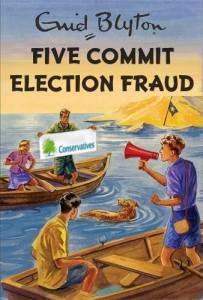
At the heart of the matter is the Conservative election campaign in South Thanet during the 2015 general election campaign. The party saw off Nigel Farage and Ukip in that seat, but there are many questions over whether the Conservatives hid campaign spending such as accommodation costs for those working on the campaign so that its official return could show the party kept within the legal limit.

In particular, Michael Crick has highlighted how hotel costs for Nick Timothy were excluded from the expense return because, as I covered previously:

“Rather oddly, the Conservative Party’s explanation as given to Channel 4 is that Nick Timothy was working on the national campaign from the hotel in Ramsgate. Not working on it from his home, or from the Conservative Party’s national HQ where the national campaign was being run. But from a hotel in Ramsgate.”

Now Crick and Channel 4 has unearthed evidence suggesting Nick Timothy was indeed working on the constituency campaign:

A cache of secret documents obtained by Channel 4 News reveal the Prime Minister’s chief of staff Nick Timothy played a central role in a controversial election campaign now under police investigation…

They also appear to directly contradict a previous statement issued by the Party which, when asked about Mr. Timothy’s role in South Thanet, said Mr Timothy “provided assistance for the Conservative Party’s national team”.

The Conservative Party has consistently denied that Mr Timothy worked directly on Craig Mackinlay’s local campaign against Nigel Farage in South Thanet in the 2015 General Election.

But emails seen by this programme appear to show Mr Timothy devising strategy and campaigning messages that were used by Mr Mackinlay’s local campaign.

http://www.markpack.org.uk/148541/nick-timothy-thanet-south-election-expenses/
Exeter councillor goes Green because of “lack of transparency”

Swap Labour for Conservative and East Devon Alliance for Green in East Devon and you have a similar situation – an entrenched old-boys-and-girls power base that needs removing.

“Exeter has its first ever Green Party city councillor following the defection from Labour of Alphington councillor Chris Musgrave. And Cllr Musgrave says he has made the decision as he has become increasingly disillusioned with a ‘small clique making decisions behind closed doors’ and a refusal by the Labour group to accept proper scrutiny in decision making.

Cllr Musgrave says he has been drawn to the Green Party because of their deep-seated commitment to openness and transparency in local government, something he says is ‘in short supply with the current Labour administration.’

He added: “Openness and transparency is in short supply in the local Labour Party. Major decisions are increasingly made by a small clique behind closed doors with the majority of councillors locked out of the process. Whenever I have challenged the Labour Party and Labour-led council on major decisions – which is exactly what I believe I should be doing as an elected Councillor – I have been told in no uncertain terms to be quiet. …”

http://www.devonlive.com/exeter-city-councillor-defects-from-labour-to-join-the-green-party/story-30168791-detail/story.html

Lincolnshire can’t vote on unitary authority on same day as elections – instead must shell out extra £1 million

“The Leader of Lincolnshire County Council, Cllr Martin Hill, has accepted that its proposal for a poll of residents on the creation of a unitary authority for the area cannot go ahead after some districts refused to be involved.

Earlier this month it was revealed that the districts had received legal advice from Timothy Straker QC of 4-5 Gray’s Inn Square suggesting that any attempt by the county council to combine their elections with such a referendum would be unlawful.

According to the City of Lincoln Council, Straker’s opinion said the plans were “contrary to the Election Rules and fraught with danger of litigation.”
Lincoln argued that this meant, in effect, “the referendum would need to be held completely separately or on a different day, incurring costs to Lincolnshire taxpayers of around £1m”.

Cllr Hill, Leader of the county council, had sought to argue that holding a poll on 4 May, when many residents would already be going out to vote in county council elections, would have kept administrative costs to a minimum and encouraged a high turnout.

“Unfortunately, it won’t now be possible to hold a poll on 4 May, which is deeply disappointing,” he said.

“For various reasons, some of the county’s seven district councils – the bodies responsible for conducting the elections – are not prepared to co-operate. Although I don’t personally agree with their legal and other objections, the county council can’t require them to help with the holding of a poll.”

At a meeting of Lincolnshire County Council last week councillors voted to seek the views of residents on the principle of moving to a unitary system of local government.

After receipt of the legal advice earlier this month, Cllr Ric Metcalfe, Leader of City of Lincoln, said (on 17 February): “If the county council had consulted on this proposal [for a poll on local government reorganisation] with any of the district councils prior to their announcement, we could have raised our concerns then. Sadly, they did not.”

He added: “I and my district colleagues are in favour of a collective debate on the future of local government in Lincolnshire, but to hold a referendum at such an early stage in discussions is ludicrous, especially at such massive cost.”

Describing the proposal for a unitary council for the whole of Lincolnshire as “ridiculous”, Cllr Metcalfe said: “We are one of the largest counties in the UK and contain a diverse range of areas with significantly differing challenges and needs….

“A county unitary would be too remote a tier of government – district councils are best placed to deliver services that meet the needs of all their residents and businesses and we want to protect these services. This will not happen under a county unitary.”

http://localgovernmentlawyer.co.uk/index.php?option=com_content&view=article&id=30216%3Acounty-plan-for-poll-on-unitary-scuppered-after-districts-refuse-to-co-operate&catid=59&Itemid=27

Man who ran for Police and Crime Commissioner convicted of electoral fraud

From the blog of Dr Mark Pack – who is assiduously following the cases of electoral fraud from the 2015 elections:

“Last year I covered the odd case of a man facing trial on electoral fraud charges who managed to get the trial delayed… because he was running for Police and Crime Commissioner.

When I published that earlier post, he commented on this site, saying, “with complaints about the investigating Policeman, the behaviour of the Judge, the incompetence of the Court, and the fact that the CPS have only circumstantial evidence, it is most unlikely that this case will ever go to trial”.

Well, the trial has now happened and Steve Uncles of the English Democrats found guilty:

“A disgraced far-right activist is facing jail for cheating the election system by submitting fraudulent nomination forms.

English Democrats regional leader Steven Uncles dreamt up fictitious names such as Anna Cleves and Rachelle Stevens – referred to by a judge as “the lady from S Club 7”.

The 52-year-old local politician, who has since resigned but remained an official in high office, was convicted of seven charges of using a false instrument with intent and two of causing or permitting a false statement to be included in a nomination form…

The case faced several delays caused by Uncles applying for adjournments – one being because he ran for the post of Police Commissioner in May last year.

He failed to appear on the first day of his trial on February 8 and was arrested on a warrant outside the court when he turned up the next day. He has denied breaching his bail. [Kent Online]

http://www.markpack.org.uk/148525/steve-uncles-english-democrats/

Is there a DCC election coming up? You bet!

How does Owl know? DCC Highways councillor Stuart Hughes takes a sudden interest in the A3052! Which apparently leads to Sidmouth and on to Seaton … funny, Owl thought it led direct to Lyme Regis … with Sidmouth and Seaton offshoots … B3176 leads to Sidmouth, B3052 to Seaton… or at least they did until today …

Expect more and more of this sort of stuff between now and purdah …

which must start on 27 March 2017:

http://www.local.gov.uk/documents/10180/6869714/L15-91+Unpacking+Purdah_04.pdf/c80978b9-dc0b-4eee-9f81-49bd47afeb2d

which states:

Publicity [during purdah] is defined as “any communication, in whatever form, addressed to the public at large or to a section of the public.”

The first question to ask is ‘could a reasonable person conclude that you were spending public money to influence the outcome of the election?’ In other words it must pass the ‘is it reasonable’ test. When making your decision, you should consider the following:

You should not:

• produce publicity on matters which are politically controversial
• make references to individual politicians or groups in press releases
• arrange proactive media or events involving candidates
• issue photographs which include candidates
• supply council photographs or other materials to councillors or political group staff unless you have verified that they will not be used for campaigning purposes
• continue hosting third-party blogs or e-communications
• help with national political visits (as this would involve using public money to support a particular candidate or party). These should be organised by political parties with no cost or resource implications for the council.

You should also think carefully before you:

• Continue to run campaign material to support your own local campaigns. If the campaign is already running and is non-controversial (for example, on issues like recycling or foster care) and would be a waste of public money to cancel or postpone them, then continue. However, you should always think carefully if a campaign could be deemed likely to influence the outcome of the election and you should not use councillors in press releases and events in pre-election periods. In such cases you should stop or defer them. An example might be a campaign on an issue which has been subject of local political debate and/or disagreement.

• Launch any new consultations. Unless it is a statutory duty, don’t start any new consultations or publish report findings from consultation exercises, which could be politically sensitive.”

http://www.sidmouthherald.co.uk/news/fears_over_speeding_on_sidmouth_s_main_access_route_prompt_calls_for_action_1_4903876

Just so everyone is clear!

Registered voters in East Devon – time for an update?

Remember our campaign to find out why at least 6,000 voters were lost in East Devon? Here are EDDC’s current figures:

Electorate (People registered to Vote)

February 2013 104,274

February 2014 103,254

January 2015 102,849

January 2016 108,502

Strange that during the period that Cranbrook was developed and residents started moving in, figures went down every year. After EDW highlighted discrepancies – and after Returning Officer appeared before a Parliamentary committee to explain himself – (he preferred telephone registration over the advised check-up canvassers) there was a sudden jump in registrations.

EDW looks forward to seeing the figures for January 2017 very very shortly – in good time for DCC elections in May 2017.

Scotland plans to stop council CEOs from getting extra money as Electoral Officers

At present, council CEOs all receive extra payments for this task and are not subject to Freedom of Information laws about how they spend their money on it.

“Senior council executives in Scotland should lose their system of multi-thousand pound payments for acting as returning officers at elections and referendums, according to MSPs.

A report from the Scottish Parliament’s local government committee found that the payments regime for overseeing the conduct and counting of elections, a role usually taken on by council chief executives, was insufficiently transparent, inconsistent, and little understood by the general public.

Bob Doris, the committee convener, said: “We believe that all costs associated with elections should be processed around the principles of openness and transparency if the public are to have confidence in how our elections are run.

“There is a lack of transparency around the value of these payments and how they are allocated,” Doris said.

“We heard that payments can range from £2,500 in Orkney and Shetland to over £16,000 in Edinburgh and may reportedly be worth as much £1m in total.” …”
http://www.publicfinance.co.uk/news/2017/01/scrap-special-payments-scots-returning-officers-say-msps

Should public funding of political parties be dependent on their diversity?

The House of Commons Women and Equalities Committee has published a report including a call for state funding of political parties to be linked to their progress in improving their own diversity.

http://www.markpack.org.uk/148026/state-funding-candidate-diversity/

“Us versus Them – The New World” – tomorrow, 9 am, Radio 4

“Us Versus Them – The New World”, Radio 4, tomorrow 9 am:

Political movements which proclaim themselves as anti-elitist challengers to the mainstream establishment have been achieving success, from Brexit campaigners to Donald Trump and various European parties.

John Harris explores the reasons behind this international phenomenon, examines the motivating forces for the anxiety and anger of voters, and considers the response of the political establishment in this new era.”

To be followed same time next week by:

“It’s the Demography, Stupid!
The New World

How is population change transforming our world?

Think of a python swallowing a pig: a big bulge makes its way slowly down the snake from the head end to the other end. That’s a bit like what’s happened to the UK demographically.

The baby boom generation – which has changed Britain politically, culturally and economically – is now retiring. That means a large bulge of pensioners with big implications for the generations that come behind them. Other advanced economies face a similar challenge and emerging economies – most notably China – will be dealing with an ageing bulge themselves soon.

But in Africa, the bulge is at the other end. A very young generation is about to make its way through the snake.

Former government minister David Willetts, now executive chair of the Resolution Foundation, wrestles with this python of population change.

What will these challenges of both ageing and very young populations mean for the world?
What are the implications for future migration patterns, for geopolitics and for global economic growth?

This programme is part of a special week of programmes for the first week of 2017, examining major forces which are changing the world around us.”

“Outcry after Republicans vote to dismantle independent ethics body”

Well, we know all about this in Devon – we could probably give Trump some tips!

“House Republicans have gutted an independent ethics watchdog, putting it under their own control, in a secret ballot hours before the new Congress convened for the first time.

The unheralded vote severely weakens the Office of Congressional Ethics (OCE), which was set up after a lobbying scandal in 2008 to investigate corruption allegations against members of Congress. The move, led by the head of the House judiciary committee, defied the Republican congressional leadership and was reportedly supported by several legislators currently under OCE scrutiny.

The amendment was voted through by the House Republican conference over the New Year’s holiday with no prior notice or debate and inserted in a broad rules package the House will vote for on Tuesday. It turns the formerly independent OCE into the Office of Congressional Complaint Review, a subordinate body to the House Ethics Committee, which is currently run by the Republican majority and has a long history of overlooking charges of malfeasance by lawmakers.

The new body will not be able to receive anonymous tips from members of Congress or make its findings public.

The vote comes at a time when the Republicans control all three branches of government and are seeking to remove some of the residual constraints on their powers. The rules package to be voted through on Tuesday, for example, will limit the ability of the Democratic minority to block legislation like the repeal of Obama’s Affordable Care Act by staging a filibuster.

It also comes at a time when president-elect Trump is attempting to fend off scrutiny over multiple conflicts of interests questions arising from his bid to keep his business empire in his family’s hands even after he takes office on 20 January.

The House Republican vote triggered a wave of outrage from Democrats and government ethics specialists.

“Undermining the independence of the House’s Office of Congressional Ethics would create a serious risk to members of Congress, who rely on OCE for fair, nonpartisan investigations, and to the American people, who expect their representatives to meet their legal and ethical obligations,” Norman Eisen and Richard Painter, ethics counsels to Barack Obama and George W Bush respectively, argued in a joint statement.

“If the 115th Congress begins with rules amendments undermining OCE it is setting itself up to be dogged by scandals and ethics issues for years and is returning the House to dark days when ethics violations were rampant and far too often tolerated.”

The House Democratic leader, Nancy Pelosi, said: “Republicans claim they want to ‘drain the swamp’ but the night before the new Congress gets sworn in the House GOP has eliminated the only independent ethics oversight of their actions,” Pelosi said in a statement.

“Evidently, ethics are the first casualty of the new Republican Congress.”

Goodlatte defended the vote.

“The amendment builds upon and strengthens the existing Office of

Congressional Ethics by maintaining its primary area of focus of accepting and reviewing complaints from the public and referring them, if appropriate, to the Committee on Ethics,” the judiciary committee chairman said in a statement.

Goodlatte did not explain how the OCE had been strengthened by being stripped of its independence and stopped from making public statements.

The OCE was set up in 2008 after a string of corruption scandals involving two Republican politicians and a Democrat. Former congressman Randy “Duke” Cunningham, a California Republican, served more than seven years in prison on bribery and other charges.

Ohio Republican congressman Bob Ney pleaded guilty to corruption charges and a Louisiana Democrat and former congressman, William Jefferson, was convicted on corruption in a separate case.”

“Company boss who gave £930,000 to Tory party receives knighthood”

Owl wonders if it wins Euromillions it might be able to call itself “Croney Owl”? Hugo’s croney knighthood from old pal and Eton schoolfriend David Cameron is looking grubbier and grubbier.

“David Ord, who becomes a knight in the new year, is a co-owner of Bristol ports and a member of the Conservative party’s Leaders’ Group, who were granted exclusive access to cabinet ministers under David Cameron and George Osborne. He has given more than £930,000 to the party since 2013.

Ord, a major opponent of the Severn Barrage, was once embroiled in a donations row after it emerged in 2014 that Bristol North West MP Charlotte Leslie had failed to declare the port owner’s donations to her local party on time, despite making numerous parliamentary interventions about the project. She apologised and was cleared of wrongdoing by the parliamentary watchdog.

Jeremy Corbyn said the honours for Tory donors were an insult to those who had been rewarded for charitable work or achievements. “The Conservatives are making a mockery of our honours system,” the Labour leader’s spokesperson said. “Every crony appointment is an insult to the incredible people from right across Britain who are rewarded for the great contributions they make to our national life”.

A Downing Street source defended the honours for Conservative donors, saying: “Being involved in political parties is generally considered to be an important part of civic society, and the alternative is having state funding for political parties, which is not where the consensus lies. When people dedicate their time and service to civil society it’s appropriate they can be honoured.” …

https://www.theguardian.com/uk-news/2016/dec/30/company-boss-david-ord-tory-donor-receives-knighthood

George Osborn – political quote of the year?

“[Osborne] told The Times:

‘I guess I assumed that you’ve got to get the economy going and then people see the benefits and it’s good for people to be in work. I didn’t understand that people want more than just that. They also want to feel that their views are understood and their voices listened to and that the system is working for them.’

http://www.dailymail.co.uk/news/article-4043254/Finally-gets-Ex-chancellor-George-Osborne-admits-lost-Brexit-vote-didn-t-listen-British-people-office.html

Really, George? It took losing the Brexit vote to teach you that? So what was it about power, privilege and cronyism that drew you into politics then, George?

Labour and Lib Dems fined for election rule breaking – no news on Conservative investigation

“The Liberal Democrats have been hit with a maximum £20,000 fine by the Electoral Commission for failing to declare hundreds of items of campaign spending at the general election.

The watchdog has notified the police of a possible electoral offence after 307 payments totalling £184,676 were found to be missing from the Liberal Democrats’ spending return “without a reasonable excuse”.

In addition, invoices supporting 122 out of the 307 payments were
missing from the return. It found the declaration to the Electoral Commission may have been signed recklessly, as there was evidence indicating some people in the party knew it was incorrect. …

… It comes after Labour was hit with a £20,000 fine in October for similar missing election expenses, including more than £7,000 on the “Ed Stone”.

It found two payments totalling £7,614 missing from the party’s
election return that were spent on the stone tablet on which the then
Labour leader, Ed Miliband, had carved his six key election pledges, promising to display it in the Downing Street rose garden if he won the election. …

… Conservative spending at the election remains under intense scrutiny after a Channel 4 investigation alleged some local spending was allocated to the national account to avoid tight limits for each constituency. About nine police forces have been investigating the accusations of higher-than-permitted spending in a number of marginal seats, which could have helped the Tories gain a majority at the election.”

https://www.theguardian.com/politics/2016/dec/07/lib-dems-fined-20000-for-undeclared-election-spending

May’s right-hand man implicated in election expenses scandal?

This is the same scandal that our Police and Crime Commissioner, Alison Hernandez is involved in as an election agent in Torquay just prior to becoming PCC.

“Michael Crick over at Channel 4 news has kept on digging into the series of Conservative election expense scandals which have seen more of Theresa May’s MPs implicated than the size of her majority:

Theresa May’s Downing Street aide is in the spotlight amid questions over the Conservatives, campaign to stop Nigel Farage winning a seat in Parliament at the last election.

Channel 4 News, which has been investigating the party’s election spending since February, has obtained new evidence suggesting a “crack team” of Tories including Mr Timothy were involved in Craig Mackinlay’s local campaign from a hotel in Ramsgate.

Kent Police and the Electoral Commission are currently investigating whether the Conservative Party broke the law by failing to properly declare tens of thousands of pounds in hotel bills, including approximately £14,000 at the Royal Harbour Hotel in Ramsgate where Mr Timothy stayed.

Rather oddly, the Conservative Party’s explanation as given to Channel 4 is that Nick Timothy was working on the national campaign from the hotel in Ramsgate. Not working on it from his home, or from the Conservative Party’s national HQ where the national campaign was being run. But from a hotel in Ramsgate.

It’s the same explanation the Conservatives have given to the police (which ups the stakes about it being true rather):

Any national Conservative Party staff based in the Royal Harbour Hotel were part of a national campaign team and were engaged in activities at the direction of Conservative Central Headquarters.”

Other Conservative staff has been further implicated too as Channel 4 further reports:

The new evidence obtained by Channel 4 News also suggests that Conservative staff staying at the Royal Harbour Hotel were working on Craig Mackinlay’s local campaign.

The programme has obtained a large number of press releases sent out on behalf of Mr Mackinlay by the former Conservative Party Head of Press, Henry Macrory. Mr Macrory was part of the team who were guests at the Royal Harbour.

The press releases are branded “Craig Mackinlay – Conservative Candidate for South Thanet”. They contain Mr Mackinlay’s twitter handle and Facebook page. All say “For further information please call Henry Macrory”. The press releases were promoted by his local agent.

The programme has also obtained emails showing Mr Macrory acting as Mr Mackinlay’s press officer. In one email sent in March 2016, Mr Macrory told local journalists: “I will be helping out with Craig Mackinlay’s media during the election campaign.

“Please don’t hesitate to contact me if I can assist in any way. In the next few days or so I will start sending you a regular e-mail giving you an outline of what Craig will be up to during the week ahead.

http://www.markpack.org.uk/146484/nick-timothy-election-expenses/

Thank goodness we have an Electoral Commission!

“Speaking to Radio 4’s Today programme, UKIP chairman Paul Oakden said he would check with the Electoral Commission to see who the party leader was and admitted it could technically be Mr Farage.”

http://www.bbc.co.uk/news/uk-politics-37558485

Where is the “centre ground”?

With the centre of the Tories now being much more to the right and the centre of Labour being much more to the left, Lib Dems not sure where they are except on Europe, UKIP – well, they can’t even get a new leader who can stick the job, and Greens tending towards Labour and with the major parties outdoing each other with spin, back stabbing and infighting – who do you vote for if you are a centre-left Tory or a centre-right Labour voter or Lib Dem Brexiteer or a disaffected Kipper or a non-left leaning Green or anyone else who doesn’t want to be button- holed?

Why, an independents, of course – who occupy the real centre ground by just doing what they believe is right by the communities they serve without allegiance to any of the parties and with no party whip!

Or, as Claire Wright would say: Free to speak, free to act.

“Election officers urge “root and branch” review of electoral system”

We know all about election problems in East Devon! Indeed our Returning Officer and CEO Mark Williams was called to Parliament to explain our omnishambles when 6,000 voters disappeared from the electoral roll in the year before general and local elections.

And an interesting point made on the declarations of electoral administration expenses.

“Election officers were “pushed to the absolute limit” by this year’s glut of polls, the Association of Electoral Administrators has said in a report.

This covered the period of local elections last May and the referendum on European Union membership in June, both conducted on new registers under the individual electoral registration system.

The report said election administrators would recall 2016 “as the year that the system came closer to collapse than ever before”.

The combination of May and June polls left administrators “stretched beyond belief” as they struggled to run multiple local polls and the referendum back to back, the AEA said.

This was complicated by the 48-hour extension to the registration deadline for the referendum.

The AEA warned that the system would be unable to cope with further burdens unless it were reformed.

Chief executive John Turner said: “What is required is a root and branch review of the whole arrangements for registration and the conduct of elections rather than more adjustment and change to a system so deeply rooted in the 19th century.

“Many of the problems that currently exist and which surfaced again at this year’s elections are because of the historic nature of the systems in place and which are increasingly becoming unfit for purpose.”

The AEA said the Government should implement the Law Commission’s
recommendations for a single Electoral Administration Act setting out the high-level framework governing electoral registration, elections and referendums in the UK, with the operational detail of registration, absent voting, and elections contained in secondary legislation.

It should also publish an assessment of the risks associated with any proposed changes to legislation before making any changes.

The Cabinet Office should ensure that administration expenses claims submitted are audited and settled within the same financial year, the AEA said.

It also called for staff to be exempt from auto-enrolment for pensions when they were working on elections and referendums, as opposed to their normal duties, to avoid creating a liability for election administrators.

The AEA sounded the alarm over the multiple polls due on 7 May 2020, when a UK Parliamentary general election, police and crime commissioner elections and those for numerous local authorities and elected mayors are due to coincide. It called on the Government to consider changing the date of some of the polls involved.”

http://localgovernmentlawyer.co.uk/index.php?option=com_content&view=article&id=28433%3Aelection-officers-urge-root-and-branch-review-of-electoral-system&catid=59&Itemid=27

Devolution and scrutiny

It is no coincidence that George Osborne, whose current Cheshire parliamentary seat will be lost in boundary changes and who wishes to remain an MP, has created a ‘Northern Powerhouse Partnership’ think tank and put himself in charge of it:

http://www.bbc.co.uk/news/uk-politics-37380653

If Owl lived in the area it would be VERY afraid!

“The proposed reduction in the number of MPs in the House of Commons will affect how government is held to account and how Whitehall’s devolution schemes are scrutinised.

The publication of the Boundary Commission for England’s plans for new parliamentary boundary has received heavy press coverage. Inevitably a lot of this has focused on the fate of some high profile MPs, and the possibility of increasing the country’s democratic deficit through the reduction of the number of parliamentarians in the House of Commons from 650 to 600.

However, some of this coverage is speculative in nature. We won’t know until 2018 the details of the boundaries on which constituencies will be fought in the 2020 election. And we don’t really know what the effect will be on politics both national and local.

What we do know is that it will create uncertainty in Westminster – and is likely to have an impact on the devolution agenda, too.

It’s early days but here are what I think could be some of the likely outcomes.

• MPs may find themselves distracted from their parliamentary activities. For some this will be because they are having to deal with reselection battles; for others it will be because they are having to prepare to campaign in a new constituency without the benefit of incumbency. This probably won’t affect the government’s legislative programme but it may affect scrutiny in select committees and the quality of scrutiny in Public Bill Committees, as MPs direct their time to the more pressing business of reselection and re-election. For progress on devolution, it could mean that the progress of deals – and a continued focus on pursuit of the devolution policy in the heart of government – is not held to account as effectively by MPs;

• Some MPs – those who fail to be reselected and/or those who choose not to stand again – may start to be more independent-minded. This may serve, in contrast to the point above, to enhance parliamentary scrutiny, and place government under pressure to do more to pas power down to local levels;

• In areas where prominent MPs have been a driving force in pushing forward devolution, the possible disappearance of those people from the current political scene may cause uncertainty and difficulties both for local areas and for government.

For local areas, this will bring additional uncertainty. Between now and 2018 comes a period during which local authorities can attempt to capitalise on what they have achieved so far, and can use existing channels to try to achieve more. Local areas will need to press on with more, and more ambitious, deals while the opportunity exists.

The pace of this exercise reflects the fact that between 2018 and 2020, boundary changes will lead to the reorganisation of political parties at a local level and the ramping up of the 2020 general election, not to mention the need to direct resources (parliamentary and otherwise) to the Brexit negotiations, which will presumably by then be in full swing.

The next two years, therefore, are crucial in embedding some results for local areas that are as positive as possible, and arguing successfully for more powers. This will be important if devolution is to maintain momentum over the 2018-20 period, which is likely to be more politically febrile.

Effective member-led scrutiny at local level can help to play a part in this. Local councillors, through scrutiny, can keep up pressure to continue to argue for strong deals which will make a difference for local people; they can help to demonstrate and promote an appetite within the local area for more powers. They can also help to draw together the evidence to support new proposals to government. Even where combined authorities have been set up and the election of Mayors is on the horizon, good scrutiny can still – in the next two years – help to get that message across both to government and to local people. Beyond 2018 at the latest, all bets are off – the prospect of boundary changes and Brexit will make Westminster a strange and unpredictable place, and government’s (and parliamentarians’) interests are likely to have moved elsewhere.”

Ed Hammond is the head of programmes (Local Accountability) at the Centre for Public Scrutiny

http://www.publicfinance.co.uk/opinion/2016/09/what-parliamentary-boundary-changes-mean-scrutiny

Cameron aides given massive pay rises before he left office

“David Cameron gave some of his special advisers bumper pay rises just months before they were given generous severance packages, it has been reported.

The former prime minister upped the salary of some of his advisers by as much as £18,000 – or up to 24%, according to an analysis by Civil Service World.

The double-digit hikes were ordered despite pay rises being capped at 1% across the public sector. Trade unions and taxpayer groups said the increases were “shameful” at a time when government departments have faced cuts. …

… Seven out of 10 of the Downing Street advisers reappointed after last year’s general election – and who therefore became entitled to bigger severance packages – received pay rises of up to 24% in 2015, according to Civil Service World. This far outstripped the 2% average pay award across the private sector in 2015.”

http://www.theguardian.com/politics/2016/aug/30/david-cameron-gave-pay-rise-of-24-to-some-special-advisers-before-resignation

The huge pay rises also affected their redundancy packages, which were increased from four and a half months pay to six months:

http://www.theguardian.com/politics/2016/jul/15/cameron-gave-aides-extra-severance-pay-against-official-advice

We were NOT all in it together – only the cronies, many of whom also got gongs from Cameron (along with his friend Hugo Swire).