PPE to go up in smoke – literally – as the bill for waste tops £10 billion

goodlawproject.org

The Government has wasted more than £9.9 billion on PPE, which is more than it would cost to give every nurse in the NHS a 100 per cent bonus on their salary. 

The figure comes from the Department of Health’s Annual Report, which reveals it spent:

  • £673 million on PPE “not suitable for any use”
  • £2,581 million on PPE “not suitable for use in the NHS”
  • £4.7 billion paying inflated pandemic prices for PPE we didn’t need to buy
  • £750 million buying PPE which will pass its expiry date before we can use it.

It has also “written down” the value of £1.231 billion in PPE, which is still yet to be delivered.

The Department also reports that some of the PPE will need to be recycled and it’s now contracting “waste providers”. Some of it is too complex to be recycled and so will need to be burned.

Thanks to an FOI response, Good Law Project can also reveal that, between April 2020 and August 2021, the Government spent £677.6 million storing excess PPE. It continues to spend £500,000 a day on this.

Civil servants complained at the time that the need to service VIPs, the majority of which were introduced by Government Ministers, was interfering with good procurement. It is unlikely we will ever know the true cost of this taxpayer-funded feeding frenzy for the friends and associates of Ministers.

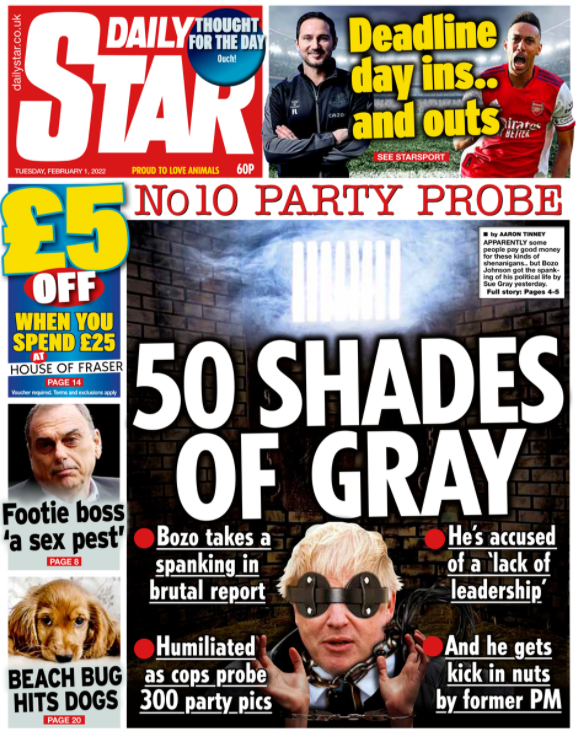
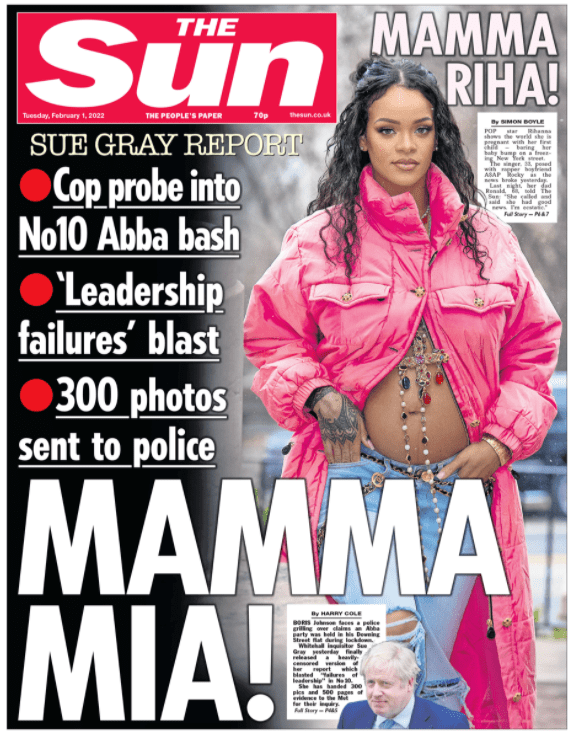
11 things missing from Sue Gray’s report

Sue Gray’s long-awaited report into lockdown-busting parties at Number 10 has finally arrived. And it isn’t exactly ‘War and Peace’.

Martin Williams www.opendemocracy.net

Gray’s report runs to just nine pages long – with fewer than 500 words of findings.

Concerns about its transparency had already been raised by privacy campaigners through openDemocracy. We revealed that Gray had, in previous roles, helped to block the release of information and shield Number 10 from scrutiny.

Gray says in the report that she was “told” by the Metropolitan Police that it would not be “appropriate” to make more than “minimal reference to the gatherings on the dates [the force is] investigating”.

The SNP’s Commons leader, Ian Blackford, today called the report “a fact-finding exercise with no facts”. Here are 11 key things that it doesn’t address.

The four events Gray *was* free to talk about

Twelve of the 16 gatherings that Gray looked at are also the subject of a police investigation. Gray was told not to reveal details about those events so as not to ‘prejudice’ the police investigation. But what about the other four?

There was a gathering in the garden of Number 10 in May 2020, where Boris Johnson was pictured drinking wine with colleagues. Then there was the Zoom quiz on 15 December, as well as two other gatherings, in late November and early December.

We may never know what Gray discovered about these events, because she writes: “I have decided not to publish factual accounts in relation to those four dates. I do not feel that I am able to do so without detriment to the overall balance of the findings.” No further explanation is offered.

What did Johnson do?

Although the report criticises “failures of leadership”, it makes very little mention of Johnson himself, and does not say whose leadership failed. We’re not told which events Johnson attended or knew about. Nor does Gray make a judgement about the prime minister’s personal failings. In fact, he is mentioned just eight times in the entire report.

How many people were at the parties?

It might be understandable to withhold incriminating evidence against named suspects until the police finish their investigation. But is there any legal reason why Sue Gray cannot at least tell us how many people attended each party?

Were the parties late, boozy, or paid for on government expenses?

Likewise, we’re not told anything about what happened at the parties – whether they were a few colleagues having ‘cheese and wine’ or giant alcoholic blowouts. Reports suggest that some events continued into the early hours, with attendees drinking and dancing. Sue Gray has nothing to say about this – yet it’s hard to see how disclosing this information could possibly prejudice the police investigation.

However, Gray, a former pub landlady, does hint at a general boozy culture in Downing Street, saying: “The excessive consumption of alcohol is not appropriate in a professional workplace at any time. Steps must be taken to ensure that every government department has a clear and robust policy in place covering the consumption of alcohol in the workplace.”

Who was actually there?

Allegations have been made that some of the parties were attended by people who didn’t work in Downing Street, such as senior journalists and friends of the prime minister. Gray might not be able to name them before the police have finished investigating, but can she at least confirm whether outsiders were present? No.

Was there any social distancing?

Even if the parties had been socially distanced, they would still have been illegal. That means that the question of social distancing is not really a police matter. However, knowing the facts about this could shed light for the public on the extent to which those at Number 10 felt that the rules in general did not apply to them. Yet the words ‘social distancing’ do not appear anywhere in Gray’s summary.

The role of the police

Police officers stationed at Downing Street have been strongly criticised for failing to stop the parties. But last week, it was claimed in The Telegraph that the officers had been “only too willing” to give “extremely damning” statements to Gray about the parties. Her report makes no mention of them.

So much as a single word from any the 70 interviews Gray conducted

As openDemocracy has reported, Gray has a reputation for blocking transparency. We now know that she interviewed more than 70 people about Downing Street parties – and yet her report does not contain a single quote or reference. Nor do we know who she interviewed, as not a single scrap of evidence has been published.

Were government guidelines breached?

Gray can’t comment on whether the law was broken. But there’s also the question of government guidelines, which are distinct from the law. This might include rules on social distancing, face masks or the way offices are set up to reduce the risk of COVID. It’s possible that some events were legal but against the government’s own guidelines. Gray says that: “Some of the events should not have been allowed to take place.” But she doesn’t tell us which ones, or what rules they broke. Likewise, she does not discuss ministerial rules – or whether she intends to refer the evidence to Boris Johnson’s ethics adviser, Lord Geidt, who could investigate this further.

What was cut?

Nobody was expecting this report to contain all the detailed evidence that the police are investigating, but it doesn’t even tell us what kinds of information she has redacted. Did she have a guestlist for each event? Does she have video or photo evidence? Who were the 70 people she interviewed? Whose WhatsApp messages were accessed? Was any information missing?

Whose decision was it to redact the report this extensively?

Before her report was published, Gray says the Metropolitan Police “told” her to make “minimal reference to the gatherings on the dates they are investigating”. We don’t know if she pushed back in the interests of transparency (when explaining the redactions, she does strike a tone of disappointment that she is not able to publish a fuller document), whether the police provided any further detail about what to withhold and why, or whether their requests for redactions were deemed proportionate by any third party. Nor do we know whether Gray was merely asked to withhold the information, or whether she was ordered to, by the police or otherwise.

What’s more, Gray’s report goes way further than this. Huge swathes of information are omitted entirely, including everything above. Did someone in government ask her to do this? Or was its Gray’s own decision to publish such a hollow report?

Police investigating party in Boris and Carrie Johnson’s flat

A party in Boris and Carrie Johnson’s flat is one of 12 events being investigated by the Metropolitan police over alleged lockdown breaches, it has emerged, as the Sue Gray report found “failures of leadership and judgment” in No 10.

Rowena Mason www.theguardian.com 

Gray, a senior civil servant, criticised the culture in Johnson’s Downing Street that allowed social gatherings to take place during lockdown, which were “difficult to justify”.

The findings were released on the government’s website in a shortened and redacted form, after the Met last week said it was investigating some of the gatherings.

Although Gray said she was not able to publish her full report, a string of Conservative MPs said the conclusions were still extremely serious for Johnson – not least because one of the gatherings under police investigation was in the prime minister’s apartment.

In the Commons, Johnson was challenged by Theresa May, his predecessor as prime minister, who said either he “had not read the rules, didn’t understand the rules, or didn’t think they applied to No 10”.

Andrew Mitchell, a Tory MP and former cabinet minister, said Johnson “no longer enjoys” his support.

And in a dramatic moment, Ian Blackford, the SNP Westminster leader, accused Johnson of having “lied and misled” the house of Commons and was ejected from the chamber by the Speaker.

Johnson had previously denied in the House of Commons that any party on 13 November, 2020, had taken place. Johnson was also present at another of the parties under investigation by police – in the Downing Street garden on 20 May, 2020.

Johnson rejected these criticisms in turn but promised that he would overhaul the structure of No 10 to address some of Gray’s criticisms. “I get it and I will fix it,” he told MPs.

In the report, Gray did not criticise the prime minister personally, or pass judgment on his past statements, but highlighted failures of leadership in No 10 and the Cabinet Office.

The 12-page report said: “At least some of the gatherings in question represent a serious failure to observe not just the high standards expected of those working at the heart of government but also of the standards expected of the entire British population at the time.”

It added: “At times it seems there was too little thought given to what was happening across the country in considering the appropriateness of some of these gatherings, the risks they presented to public health and how they might appear to the public.

“There were failures of leadership and judgment by different parts of No 10 and the Cabinet Office at different times. Some of the events should not have been allowed to take place. Other events should not have been allowed to develop as they did.”

Gray listed 16 gatherings on 12 dates across 20 months in 2020-21 that she had examined for evidence of rule-breaking, of which 12 are being investigated by police. These include a gathering in the No 10 flat – thought to be a reference to the prime minister’s own residence even though he lives at No 11 – and a Christmas party in Downing Street, as well as several leaving parties.

The civil service chief said she had interviewed more than 70 people and examined relevant email information, WhatsApp messages, photographs and exit logs. She said some staff had “wanted to raise concerns about behaviours they witnessed at work but at times felt unable to do so”.

“A number of these gatherings should not have been allowed to take place, or to develop in the way that they did. There is significant learning to be drawn from these events which must be addressed immediately across government.”

Gray said her report was limited by the Met police request for her to make only minimal reference to gatherings they were investigating. She said she had decided not to publish factual accounts of the other four dates as she did not feel able to do so without detriment to the overall balance of findings.

However, she left the door open to returning to the evidence she gathered after the Met police had investigated, saying it was being stored and saved “until such time as it may be required further”.

Earlier on Monday, No 10 had said it was “unclear” whether she would publish a further, more comprehensive, report in the future.

Devon building giant confirms bombshell news plus projects in jeopardy 

Troubled South West construction giant Midas Group has confirmed that it wants to appoint an administrator in a move which has stunned the region.

Guy Henderson www.devonlive.com

The business, one of the UK’s largest privately-owned construction and property services companies, filed notices of intention to appoint an administrator on Friday, January 28.

This was for three companies: Midas Group, its construction arm Midas Construction, and its housing division Mi-Space.

Midas was recently ranked as the ninth largest private sector firm in the South West, by the Western Morning News, with a reported turnover of £291,267,008 and 498 employees.

But rumours have been circulating in recent weeks that the company was in financial trouble, after it announced a £2m loss in 2021 – its first deficit in 40 years of trading.

The company has important construction jobs ongoing throughout the region and has offices in Indian Queens in Cornwall, Exeter, Newton Abbot, Bristol, Newport in South Wales and Southampton.

However, concerns were raised when it emerged that work has ceased on three major Midas Construction hotel projects in Torquay, and that the Coal Orchard development in Taunton had been hit by a dispute with subcontractors.

Midas has now confirmed its intention to appoint an administrator – a process which can save a firm from liquidation and halts pending creditor action.

In a statement, Midas said: “On Friday January 28, 2022, the company filed notices of intention to appoint an administrator in respect of Midas Group, Midas Construction Ltd and Mi-Space (UK) Ltd.

“This does not mean that Midas has entered into administration and the company continues to operate, while the directors work to explore all available options to achieve the best outcome for the business and our people, our customers, supply chain partners and all our stakeholders.

“Midas is committed to pursuing an outcome that will achieve continuity for our live contracts and asks all our valued stakeholders to remain supportive of the group at this time.”

In 2021, Midas blamed much of its losses on the Covid pandemic and in its statement said: “As has been well documented, there have been issues relating to the Covid pandemic, ongoing shortages of materials and labour, and significant cost inflation, which are providing challenges in the construction sector and across the UK economy, which have had a direct impact on Midas’s own operations.

“Over recent weeks we have been working closely with all our stakeholders to attempt to resolve the situation and are continuing to do so.”

List of projects in jeopardy – and it’s long

Guy Henderson www.devonlive.com

Concerns are growing over the future of some of the South West’s biggest construction projects after Midas Group Ltd announced it intended to appoint an administrator.

The Exeter-headquartered firm and its subsidiaries Midas Construction Ltd and Mi-Space (UK) Ltd are involved in key building schemes across the region including in Plymouth, Torbay, Cornwall, Somerset and Bristol.

The projects include commercial and residential developments, for private and public sector clients, and are in various stages of completion.

But now the future of the schemes has been thrown into doubt after Midas filed notices of intention to appoint an administrator.

Midas was recently ranked as the ninth largest private sector firm in the South West, by the Western Morning News Annual Business Guide 2022, with a reported turnover of £291,267,008 and 498 employees. But rumours have been circulating in recent weeks that the company was in financial trouble, after it announced a £2m loss in 2021 – its first deficit in 40 years of trading.

The company has offices in Indian Queens in Cornwall, Exeter, Newton Abbot, Bristol, Newport in South Wales, and Southampton.

It has sought to reassure stakeholders, stressing it is still operating and said: “Midas is committed to pursuing an outcome that will achieve continuity for our live contracts and asks all our valued stakeholders to remain supportive of the group at this time.”

But if it does go into administration, which could follow in a matter of days, construction projects may well be affected. And if the company goes into liquidation or ceases trading, other firms would have to be brought in to complete the buildings.

Tim Jones, chairman of the South West Business Council, questioned whether the South West would have the capacity or ability to complete so many key projects.

He said: “We are entitled to worry about how any of these outstanding projects can be delivered as they are all pivotal as catalysts for growth.”

Here is a rundown of the key projects Midas is involved in:

Torbay – £40m hotels

Concerns about the financial health of Midas surfaced when work dried up at three major hotel projects in Torbay.

Midas Construction’s work stopped completely at Torbay Council’s £11 Premier Inn scheme at The Terrace in January 2022. The hotel was expected to be completed in late 2022.

And The Fragrance Group, which is ploughing £30m into two hotel builds on Paignton Esplanade, stated it was “increasingly concerned” about lack of process on the sites. The 160-bed Mercure Hotel was expected to open in February 2022, with the Ibis Styles hotel to follow this year.

Plymouth – £22m Barne Barton rebuild

Construction was due to start in spring 2022 after Midas was appointed to build 204 homes as part of the £22m regeneration of the Barne Barton area of Plymouth.

The UK’s largest provider of affordable housing, Clarion Housing Group, is transforming what was once Britain’s largest naval estate into a “sustainable and vibrant community” and Midas was selected to develop a 4.65-hectare site within the neighbourhood via its Mi-space company. The homes are supposed to be ready by early 2023.

Midas was also chosen to carry out hard and soft landscaping, including the creation of a one-way home zone to provide people-friendly streets, together with a public square, open spaces and green areas for people to enjoy.

Bodmin – £6.3m STEM Centre

Midas’ work on Cornwall’s £6.3m “shovel-ready” STEM centre is due to be completed by Spring 2022.

The STEM (Science, Technology, Engineering and Maths) and Health Skills Centre for North and East Cornwall, called the Ottery building, is being built in Bodmin by Truro and Penwith College and is designed to train the aerospace, space, creative, energy, mining and health sector workers of tomorrow.

The project, on which work started in February 2021, is being supported by the Cornwall and Isles of Scilly Local Enterprise Partnership (LEP), which is meeting £3.78m of the costs through the Government’s Getting Building Fund (GBF) for “shovel-ready” projects.

Penzance – £5.8m Creative Cluster

Work started in late 2021 on a hub for creative businesses. The Penzance Creative Cluster being built by Midas Construction at Causewayhead is intended to provide up to 30 modern studios and flexible workspaces for creative sector businesses, from high tech digital companies to visual and performing artists.

The £5.8m project is an important part of Cornwall Council’s wider strategy to regenerate and reinvigorate Penzance town centre.

Liskeard and Bodmin – 146 homes

Building work on 46 homes in Liskeard reached a major milestone with a topping out ceremony in October 2021. The Maudlin Farm scheme, on land south of Lake Lane, is being developed by Treveth, the partnership company set up by Cornwall Council to deliver new homes and commercial development to benefit people who live and work in Cornwall.

It will feature 35 homes for private rent and 11 affordable homes, including seven affordable rent and four shared ownership properties, available from spring 2022. Construction is being carried out by Mi-space which started on the project in March 2021.

Mi-space is also involved in Treveth projects to deliver 100 homes at the former St Lawrence’s Hospital site in Bodmin. The scheme, called Park Lanneves, is expected to see the first homes available in the summer of 2022.

Redruth – £1.9m school extension

The £1.9m project at Pennoweth Primary School, part of the Crofty Multi-Academy Trust, is being carried out to meet growing demand for places and will enable the school intake to increase from 315 to 420 pupils.

Midas Construction was chosen to build the new single storey extension which will provide new teaching rooms and a new small hall in addition to creating an accessible and sustainable building for the expanding school. With work now under way on site, the aim is for the transformation to be complete in time for the start of the new school year in September 2022.

Paignton – affordable homes

Work began in December 2021 to develop nine affordable rent homes including one adapted home at Totnes Road, Paignton.

TorVista Homes and Torbay Council aim to increase the supply of affordable homes within Torbay with the homes due for completion in November 2022.

Mi-space was appointed to build the homes and commenced demolition of the two derelict homes on site in December.

Taunton – Coal Orchard flats

Work has also ground to a halt at the Coal Orchard development in Somerset after subcontractors reportedly walked off site in the days leading up to Midas’ notice of intention to appoint an administrator. Midas Construction is involved in the multi-million pound project to build flats, work spaces and leisure business units on a plot owned by Somerset West and Taunton Council.

Gloucester – £11.8m student accommodation

An £11.8m scheme which will provide additional student bed spaces in the heart of Gloucester city centre is being developed by Cityheart Limited with Midas Construction as the contractors.

The Blackfriars Residence project, in Barbican Way, is the second phase of the Blackfriars Residence scheme and follows the success of the first phase, a 295-bed development, which opened its doors to its first cohort of students in 2018.

The latest project involves the creation of a further 190 bedrooms over two blocks, with 128 student spaces in one block and 62 in the second.

Midas Construction is due to complete the second phase in summer 2022 with the residences will be available for students from the University of Gloucestershire and Hartbury College and University.

Yeovil – town centre refresh

Work has been ongoing in Yeovil to improve the look of the town centre and make it easier and more accessible for shoppers.

Westminster Street was the first area in the town centre to see improvement work under the Yeovil Refresh public realm enhancements. Midas was appointed to undertake the scheme where construction works were due to end in late 2021 with other parts of the town to follow in 2022.

Wincanton – £10m care home

Care provider Cornerstone Healthcare chose Midas Construction to build the £10m Cale View scheme, in Wincanton.

The 74-bed home will provide care for adults of all ages, with challenging behaviours associated with complex neurological and mental health conditions. It is due to be completed in 2022.

Fleet – 60-bed care home

The first of a new generation of care homes is to be built in Fleet, Hampshire, by Midas Construction on behalf of Principle Care Homes.

Heron Manor, on Reading Road North will see the creation of a 60-bedroom care home which will provide residential and dementia care and include features such as a physiotherapy suite, exercise studio and hydrotherapy pool. It is scheduled to open in Spring 2023.

During the past five years Midas has built 15 care homes, on behalf of private operators and local authorities, with a combined value of £100m and providing a total of 627 bed spaces.

Bristol – £10.6m office refurbishment

Midas Construction began work on the £10.6m office and retail refurbishment of the former Tower House, in Fairfax Street, close to The Galleries, with the new look building set to be renamed The Fairfax and opening in early 2022.

The development aims to offer a mix of office and social space, providing a cultural hub. The revamp of the 14-storey, 71,000sq ft office building will see substantial refurbishment across all floors, which includes offices, a café and retail units on the ground floor, one of which will be a yoga studio.

Swindon – £50m housing scheme

Nationwide Building Society’s £50m Oakfield project, delivering 239 homes, is being delivered by Mi-space. Work began in 2021 and is scheduled for completion by Spring 2022.

Southampton – £14m engineering centre

Midas Construction has started work on The Engineering Centre, a £14m project which will enhance collaboration for the University of Southampton Science Park and businesses within the Enterprise M3 LEP area. It will also house the Future Towns Innovations Hub (FTIH).

The building, due for completion in early 2022, will provide specialist laboratory facilities that will support a range of sectors such as eco-hydraulics, electronics, transport research, aerospace, energy, unmanned systems and a number of hydraulic flumes. Wave force tanks and anechoic chambers designed to deaden sound are among the elements to be developed by Midas Construction.

Camberley – power tools HQ

Midas Construction has been appointed to build a new warehouse and GB headquarters for leading global power tools company STIHL.

The project will see the creation of a 11,285sq m purpose-designed facility off the A331 in Camberley, Surrey.

The investment follows sustained growth for STIHL GB and will allow the business and its workforce of 95 employees to move from existing premises nearby in the Yorktown area of Camberley. The Southampton-based Southern Division of Midas Construction began preparatory work on site in December 2021.

Countryfile viewers infuriated by ‘cruel’ dairy farm segment ‘Very disappointed!’

This is the reaction of some viewers to the BBC Countryfile programme on Sunday. This was the first  time that Countryfile devoted a whole programme to just one landowner, in this case Clinton Devon Estate.

COUNTRYFILE viewers weren’t impressed with one aspect of Sunday’s instalment as Matt Baker visited a dairy farm.

Charlotte McIntyre www.express.co.uk

Matt Baker took a trip to Otter Farm on the Clinton Devon Estates in the latest edition of Countryfile. The BBC presenter spoke to Youngstock Manager Alice heading up the calving team but fans of the rural show took to social media to share their “disappointment” at one of the processes being implemented on the farm.

Alice showed Matt around the farm and introduced him to some newborn calves. 

“What time were these born?” Matt asked and Alice replied: “This one was born nine o’clock last night and the other two four o’clock this morning.”

“They’re doing very well but obviously not with mum,” Matt pointed out.

Alice explained: “Ideally we take them off as soon as possible.

Countryfile Matt Baker Alice cow

Countryfile: Matt quizzed Alice on how she and her team manage the dairy farm (Image: BBC)

“We let the mother cow lick the calf because it’s really important to release the pheromones in the cow’s brain, it helps with pain relief.

“But after that, we take the calf away to make sure it has its colostrum that it really needs.”

Matt remarked: “And that term colostrum, that really special milk with all of the antibodies.

“That’s really key to the [calves]. How do you get it to them?”

“With a cow, there’s no immunity passed through the placenta so it’s 100 percent dependent on the colostrum,” Alice answered. 

“But with cows, they produce so much milk that the colostrum gets diluted away within a matter of hours.

“So we take the calf away, put it somewhere nice and clean and cosy, milk the cow and then feed the calf the colostrum.”

“How long do they stay in this barn?” Matt queried.

“They’ll be in here for 14 weeks and then after that, they go outside and enjoy the sunshine on their backs,” she replied. 

Countryfile viewers took to Twitter to slam the process of taking calves away from their mothers.

Jane Ward tweeted: “Why on earth would you remove calves from their mums? Profit? Profit? Profit? #countryfile.”

Sarah Hutchison remarked: “Very disappointed to see #countryfile showcasing the practice of removing calves at birth. Calves should be with their mothers until weaning.”

“Naively thought that calves were kept with the mother cow until they were at least 6 months old Face with cold sweat #countryfile,” Mary Hinge said. (sic)

Michelle Gray wrote: “Calves should be with their mums #countryfile.”

“Dairy farming is so cruel on the mother cows and calves #countryfile,” @Bufferb2012 shared. 

Boris Johnson reorganises Downing Street in response to Sue Gray criticism

“I get it. I’ll sort it.”

First announcement, hot off the press: there will be a new “Office of the Prime Minister” to replace the “Prime Minister’s Office”.

PMO becomes OPM.

A re-branding exercise, what genius thought that one up?

Order the new stationary immediately! (And what about a new paint job for the flat?)- Owl

Sue Gray finds ‘failures of leadership and judgment’ in report on Downing Street parties

Sue Gray’s heavily-abridged report into the partygate scandal has blasted “failures of leadership and judgment” in 10 Downing Street and the Cabinet Office.

Andrew Woodcock www.msn.com 

The report considered a total of 16 separate social events at 10 Downing Street and other government departments which took place while Covid regulations imposed strict limits on gatherings anywhere in the UK.

And it revealed that the Metropolitan Police inquiry launched last week will focus on 12 events – including the ”bring your own booze” party on 20 May 2020 when Boris Johnson joined around 40 No 10 staff to drink alcohol and eat picnic food from trestle tables in the Downing Street rose garden, as well as an alleged party in the prime minister’s flat on the evening of the resignation of former aide Dominic Cummings on 13 November 2020.

The 13 November gathering may be of particular significance in determining whether Mr Johnson survives the scandal, as he has previously denied in a written response to a parliamentary question that it even took place.

In a scathing comment on the culture at No 10 under Boris Mr Johnson’s leadership, the Whitehall mandarin wrote: “Some of the gatherings in question represent a serious failure to observe not just the high standards expected of those working at the heart of government but also of the standards expected of the entire British population at the time”.

The report led to renewed demands for Mr Johnson’s resignation.

Liberal Democrat leader Sir Ed Davey said: “Everyone knows Boris Johnson broke the rules and lied to the country. It’s time Conservative MPs did their patriotic duty, listened to their constituents and stood up for decency by sacking Boris Johnson. He must go before he does our country any more harm,”

And Labour deputy leader Angela Rayner said: “I’ve spoken to constituents, people on the street, people on trains, primary school children, care home residents, and not a single person needs Sue Gray to tell them what to think about Boris Johnson.

“He made the rules, he broke the rules, he is unfit for office.”

She said it was “the most absolute failure of any prime minister” and Mr Johnson had “failed in his number one duty as leader of our country” and should immediately resign.

The long-awaited report was published by Downing Street at 2.30pm after being delivered to Boris Johnson at 11.20am on Monday. The prime minister was due to give his response and be grilled by MPs an hour later in a statement to the House of Commons.

After an eleventh-hour intervention by police, senior civil servant Ms Gray was required to strip the report of all but “minimal” references to alleged breaches of Covid regulations in parties and social gatherings in No 10 and Whitehall departments.

Ms Gray said that the police request had made it impossible for her to deliver a “meaningful report” on the full range of events which took place in No 10 during 2020 and 2021.

“I am extremely limited in what I can say about those events and it is not possible at present to provide a meaningful report setting out and analysing the extensive factual information I have been able to gather,” she said.

She described her 12-page report as an “update” on her inquiries, suggesting that a fuller report may be published when the police investigation is concluded.

And she said she will “ensure the secure storage and safekeeping of all the information gathered until such time as it may be required further” but will not share it with Mr Johnson or anyone else in government.

Only four events mentioned over the course of the controversy were not of interest to the police – a photograph taken on 15 May 2020 which showed Mr Johnson and wife Carrie with No 10 staff drinking in the Downing Street garden; a leaving do for aide Cleo Watson on 27 November 2020; a pre-Christmas gathering at the Department for Education on 10 December 2020; and an online Christmas quiz at No 10 on 15 December 2020.

The report did not mention Mr Johnson by name and made direct criticism of individuals for what took place in No 10.

And Ms Gray made clear she was not in a position to pass judgement on whether any Covid breaches amounted to breaking the law, insisting that that was a matter for law enforcement agencies.

She also said that she did not regard it as appropriate, while the police inquiry is ongoing, to deliver a verdict on whether individual gatherings breached guidance and regulations.

But she found: “There were failures of leadership and judgment by different parts of No 10 and the Cabinet Office at different times.”

And Ms Gray concluded: “A number of these gatherings should not have been allowed to take place or to develop in the way that they did.

“There is significant learning to be drawn from these events which must be addressed immediately across government. This does not need to wait for the police investigations to be concluded. “

The report acknowledged that Downing Street staff were in an unusual position during Covid lockdowns, as they were permitted to attend their workplace under a special exemption.

But Ms Gray made clear that this did not provide an excuse for breaching rules, noting that the same conditions applied to “key and frontline workers across the country who were working under equally, if not more, demanding conditions, often at risk to their own health”.

She said: “It is important to remember the stringency of the public health regulations in force in England over the relevant periods and that criminal sanctions were applied to many found to be in breach of them.

“The hardship under which citizens across the country worked, lived and sadly even died while observing the government’s regulations and guidance rigorously are known only too well.”

And she said: “Against the backdrop of the pandemic, when the government was asking citizens to accept far-reaching restrictions on their lives, some of the behaviour surrounding these gatherings is difficult to justify. “

Ms Gray raised concerns about the ability of Downing Street staff to raise concerns about gatherings and breaches of social distancing rules over which they felt uneasy.

“Some staff wanted to raise concerns about behaviours they witnessed at work but at times felt unable to do so,” she said.

“No member of staff should feel unable to report or challenge poor conduct where they witness it. There should be easier ways for staff to raise such concerns informally, outside of the line management chain.”

And she appeared to suggest that too little support had been given to principal private secretary Martin Reynolds, who has been targeted for blame for organising the 20 May garden party.

“Too much responsibility and expectation is placed on the senior official whose principal function is the direct support of the prime minister,” said the report. “This should be addressed as a matter of priority.”

Ms Gray said the report looked at a series of gatherings whose “necessity for work purposes has been open to question”.

Her team interviewed more than 70 individuals with knowledge of the events – some more than once – and examined relevant documentary and digital information, including emails, WhatsApp messages, text messages, photographs and official records.

The investigators also had access to entry and exit logs for government buildings in order to build up a picture of when individuals were arriving and leaving – and to pick up mass departures late in the evening after events took place.

Ms Gray said her investigative work is now “essentially complete” – leaving open some room for her to add further information which arises during the police investigation before releasing her final verdict.

Sue Gray’s update: the general findings

INVESTIGATION INTO ALLEGED GATHERINGS ON GOVERNMENT PREMISES DURING COVID RESTRICTIONS – UPDATE

Summary 

Every citizen has been impacted by the pandemic. Everyone has made personal sacrifices, some the most profound, having been unable to see loved ones in their last moments or care for vulnerable family and friends. It is with that context in mind that I make the following general limited findings

General findings

i.                     Against the backdrop of the pandemic, when the Government was asking citizens to accept far-reaching restrictions on their lives, some of the behaviour surrounding these gatherings is difficult to justify.

ii.                  At least some of the gatherings in question represent a serious failure to observe not just the high standards expected of those working at the heart of Government but also of the standards expected of the entire British population at the time.

iii.                  At times it seems there was too little thought given to what was happening across the country in considering the appropriateness of some of these gatherings, the risks they presented to public health and how they might appear to the public. There were failures of leadership and judgment by different parts of No 10 and the Cabinet Office at different times. Some of the events should not have been allowed to take place. Other events should not have been allowed to develop as they did.

iv.                  The excessive consumption of alcohol is not appropriate in a professional workplace at any time. Steps must be taken to ensure that every Government Department has a clear and robust policy in place covering the consumption of alcohol in the workplace.

v.                    The use of the garden at No 10 Downing Street should be primarily for the Prime Minister and the private residents of No 10 and No 11 Downing Street. During the pandemic it was often used as an extension of the workplace as a more covid secure means of holding group meetings in a ventilated space. This was a sensible measure that staff appreciated, but the garden was also used for gatherings without clear authorisation or oversight. This was not appropriate. Any official access to the space, including for meetings, should be by invitation only and in a controlled environment.

vi.                  Some staff wanted to raise concerns about behaviours they witnessed at work but at times felt unable to do so. No member of staff should feel unable to report or challenge poor conduct where they witness it. There should be easier ways for staff to raise such concerns informally, outside of the line management chain.

vii.                 The number of staff working in No 10 Downing Street has steadily increased in recent years. In terms of size, scale and range of responsibility it is now more akin to a small Government Department than purely a dedicated Prime Minister’s office. The structures that support the smooth operation of Downing Street, however, have not evolved sufficiently to meet the demands of this expansion. The leadership structures are fragmented and complicated and this has sometimes led to the blurring of lines of accountability. Too much responsibility and expectation is placed on the senior official whose principal function is the direct support of the Prime Minister. This should be addressed as a matter of priority.

 Conclusion

 The gatherings within the scope of this investigation are spread over a 20-month period – a period that has been unique in recent times in terms of the complexity and breadth of the demands on public servants and indeed the general public. The whole of the country rose to the challenge. Ministers, special advisers and the Civil Service, of which I am proud to be a part, were a key and dedicated part of that national effort. However, as I have noted, a number of these gatherings should not have been allowed to take place or to develop in the way that they did. There is significant learning to be drawn from these events which must be addressed immediately across Government. This does not need to wait for the police investigations to be concluded.

Breaking news: Lockdown party report delivered to Downing Street

Unlikely to be a Black and White day more a “Gray” day.

Report likely to be posted in the public domain here after all the niceties are observed on who sees it first, second, third etc Welcome to GOV.UK (www.gov.uk) Owl

www.bbc.co.uk /news/uk-politics-60195620

Boris Johnson has been handed Sue Gray’s report into Downing Street parties, ahead of its expected public release later.

Planning applications validated by EDDC in week beginning 17 January

National Trust reveals first of 20 planned ‘green corridors’

The National Trust has unveiled plans for a “green corridor” to link the centre of Bath to the surrounding countryside and create new habitat for wildlife.

Tess de La Mare www.standard.co.uk

It is the first of 20 such corridors first announced in January 2020 and will run through 40 hectares of riverside meadows newly acquired by the trust.

Bathampton Meadows, on the banks of the Avon was previously a mixture of farmland and council-owned land, and was once mooted as the site of a proposed park and ride.

The trust has plans for a programme of hedgerow and tree planting along the three-mile route to create a network of foraging habitat to help the declining greater horseshoe bat.

It also intends to improve wetlands to support wading birds and provide a boost for wildflowers and insects.

The corridor is aimed at helping people living in the town centre get closer to nature. A consultation on the proposals is due to start in the spring.

The National Trust has acquired Bathampton Meadows (Tom Boden/PA)

The National Trust has acquired Bathampton Meadows (Tom Boden/PA)

The National Trust has plans to create a further 19 green corridors in England, Wales and Northern Ireland by 2030.

Hilary McGrady, director-general of the National Trust, said: “These routes will improve access to nature for those living in urban areas who may feel disconnected from the countryside or cannot access rural areas easily.

Research has shown that engaging with nature is good for our wellbeing and that those connected to nature are likely to do more to help protect it.”

She added: “Connecting up green spaces isn’t just good for people, it’s also good for wildlife, allowing animals and birds to move from one habitat to another.”

The official start and end point of the corridor has yet to be determined, but should start close to Bath Abbey and is expected to finish in the village of Batheaston.

The green corridor will provide new habitat for wildlife (National Trust images/PA)

The green corridor will provide new habitat for wildlife (National Trust images/PA)

Tom Boden, general manager for the trust’s Bath properties, said: “With the meadows now protected forever, we will consult closely with the local community and stakeholders over the coming months to develop an exciting vision for the land to benefit both people and nature.”

He continued: “Hedgerow and tree planting to include the creation of an orchard will particularly help the current greater horseshoe bat population, a nationally rare and dwindling species, by providing wider, more connected foraging habitat on neighbouring land.

“Blossoming trees in the orchard will also be good for attracting pollinators.

“We’re also aiming to create new wildflower meadows to help insects such as the small blue butterfly, and areas of wet woodland planted with trees like willow, birch and alder to attract wading birds such as snipe and scarce native birds like siskin or willow tits.”

The trust is also considering how it can improve cycle access along the route.

Councillor Richard Samuel, deputy leader at Bath and North East Somerset Council, said: “Transferring Bathampton Meadows to the National Trust ensures the land is protected forever against inappropriate development, and it also supports our commitment to tackle the climate and ecological emergency.

“The transfer will provide much improved public access and an enhanced open space.”

‘Impossible’ for Covid inquiry to start on time as PM stalls, experts warn

It is “impossible” for the public inquiry into the government’s response to the Covid pandemic to begin on time after Boris Johnson delayed preparations for it, experts are warning.

www.independent.co.uk 

The prime minister is accused of shunting the investigation – which he pledged would begin in “spring 2022” – to the “bottom of the government’s to-do list”, after dragging his heels on agreeing its scope.

Now hearings will not be possible before the summer after hold-ups appointing a chair and agreeing on terms of reference, think tanks that have studied previous inquiries say.

There are fears of further delays with the government “in paralysis” over the Partygate scandal, with one source saying a promised consultation on draft terms is not expected imminently.

A former head of the civil service, Sir Bob Kerslake, has told The Independent he will demand answers from the government, saying: “I am concerned if the inquiry is going to be delayed.”

The Institute for Government warned it was now “very hard to see how the inquiry can begin until the end of May or June, based on previous inquiries such as Grenfell”.

The King’s Fund echoed the criticism, saying it is now “impossible for the inquiry to now start its work in earnest in the spring”.

“The public inquiry is too important to be shunted yet again to the bottom of the government’s to-do list,” Sally Warren, The King’s Fund’s director of policy, told The Independent.

The fresh delay has angered the families of Covid victims after Mr Johnson rejected several pleas to start the inquiry sooner.

He has been accused of stalling in order to prevent likely damning conclusions coming out before a general election in spring 2024, with public inquiries typically taking at least two years.

Lobby Akinnola, spokesperson for Covid-19 Bereaved Families for Justice, said: “Once the inquiry is officially set up, it becomes an offence to tamper with or destroy evidence. But until that happens, there’s a risk of key evidence being lost. After the attempts to cover up Partygate, that is especially worrying.”

Mr Johnson finally announced the inquiry last May but failed to appoint a chair – former Court of Appeal judge Heather Hallett – until just before Christmas.

He said draft terms of reference would be released “in the new year” but they have yet to be published.

In the Grenfell inquiry, it took two-and-a-half months between publication and hearings getting underway, but the Institute for Government (IfG) warned the Covid inquiry will be “far more complicated”.

The range of controversies is vast, including the timing of lockdown decisions, the scientific advice sought, testing and PPE, the discharge of infected patients into care homes and the initial decision not to close borders.

Many key decisions were devolved, which means there is a need to delve into the handling of the response in Edinburgh, Cardiff and Belfast too.

“Engaging the public and other parties in a consultation on those terms of reference is likely to be more complicated than the Grenfell consultation, because of the sheer scale of people and organisations who will want to be involved,” said Emma Norris, the IfG’s director of research.

“It was always clear that this would be a complex inquiry to set up, so it was important to begin in earnest as soon as possible – so the government should have started earlier.”

Mr Johnson defended his stalling on the grounds it would “weigh down” scientific advisers and take up “huge amounts of officials’ time” if the pandemic flared up again.

In the Commons last week, he appeared to pre-judge the inquiry, when he boasted to MPs: “We have the fastest-growing economy in the G7 and we have got all the big calls right.”

But an inquiry last year by two Tory-led Commons committees was damning, calling his response “one of the most important public health failures the United Kingdom has ever experienced”.

Delaying lockdown in March 2020 – as herd immunity was explored – and failing to protect elderly and vulnerable people in care caused thousands of avoidable deaths, it said.

The cabinet office declined to discuss the reasons for the delay in publishing draft terms of reference, when panel members will be selected, or whether office space for the inquiry has been secured.

A spokesperson said: “As the prime minister has previously stated, the Covid inquiry is set to begin its work in spring 2022.”

Devon covid on way back up

After dropping over the past few weeks, covid cases have once again risen in all parts of Devon.

Joe Ives, local democracy reporter www.radioexe.co.uk

In the latest complete seven day period (to Sunday, 23 January) the county recorded 12,745 new cases, 2,290 more than in the previous week. The 22 per cent rise takes the infection rate across Devon to 1,120 per 100,000 of the population, higher than the national average of 954.

The Devon County Council, which excludes Plymouth and Torbay, recorded the largest spike, with a 29 per cent (+1,816) rise. Its 8,176 new cases take the area’s infection rate to 1,009 per 100,000.

Torbay continues to have the highest infection rate in the county, with 1,270 cases per 100,000 of the population. The latest figures record 1,730 infections in the Bay; 181 (12 per cent) more than the previous week.

Plymouth’s 2,839 new cases are 279 (12 per cent) more than the previous week. The infection rate is 1,080 per 100,000 of the population. 

The spike is a setback for the city’s health services. Speaking recently Kevin Baber, chief operating officer of Plymouth Hospitals said the number of people waiting for treatment at Derriford is 40,000; up 10,000 since the beginning of the pandemic.

More than 3,000 people have been waiting over a year and 461 patients, primarily needing elected orthopaedics or spinal surgery, who have waited over two years.

Mr Baber said the pandemic has taken a toll on NHS workers in Plymouth, noting “an increasing number of staff who are off sick with stress, anxiety, depression and covid PTSD.”

Hospitalisations

As of the most recent data (from Wednesday 25 January) 240 patients with covid were in Devon’s hospitals. The majority (188) are in Derriford. 

Twenty-seven people are being cared for at the RD&E in Exeter, while a further 25 are being treated in Torbay Hospital.

Three patients in Devon are in mechanical ventilation beds. 

Deaths

Nineteen people died within 28 days of receiving a positive covid test across Devon in the most recent complete seven-day period (to Sunday 23 January), six more than last week. 

Ten people died in the Devon County Council area, which excludes Plymouth and Torbay. Five deaths were recorded in Torbay and four in Plymouth.

Across Devon, a total of 1,518 people have now died within 28 days of a positive covid test.

Vaccinations

Eighty-eight per cent of people aged 12 and above have had their first dose of a vaccine in the Devon County Council area, which excludes Plymouth and Torbay, with 83 per cent receiving both doses. Seventy per cent have now had their ‘booster’ dose.

In Plymouth, 85 per cent have had one dose, while 79 per cent have had both. Fifty-nine per cent have had the booster.

In Torbay, 86 per cent have received one dose, while 8q per cent have had both jabs. Sixty-five per cent have had their third vaccine.

The national rates are 91, 84 and 65 per cent respectively.

Devon Covid dashboard shows cases rising in all age groups except 60 to 79 year olds (cases to 25 Jan)

Has Exeter based construction giant Midas lost its Golden Touch?

“One of the South West’s largest employers, the Exeter-based construction giant Midas, has reportedly filed a court notice of its intention to appoint an administrator.”

Steve Hindley, the Executive Chairman of the Midas Group, is also Chair of the “Great South West” which seems to have set itself up to take a leadership role for promoting economic growth across a number of neighbouring Local Enterprise Partnerships in the peninsular. 

In February 2020, with incredibly bad timing, “The Great South West” sent a report to Savid Javid just as he was replaced by Rishi Sunak, see: “The Great South West pitches to the wrong man. A week is a long time in politics” . Then the pandemic broke.

In July 2020 The Great South West appeared to be defunct, but it re-emerged in time for the G7 to publish a new, green, way forward in June 2021. This “greening” report, however, was  written by none other than one of the main polluters of our rivers and seas, the Pennon Group.

Currently we await Michael Gove’s “levelling up” White Paper, supposedly this week, but who knows what the government’s agenda is these days.

Concerns over future of SW construction giant

Colleen Smith www.devonlive.com 

The £290million turnover company filed the notice for itself and its main subsidiary Midas Construction Limited, the UK’s leading building trade resource Construction News revealed.

It follows a DevonLive exclusive yesterday which revealed that work had come to a virtual standstill on three major hotel construction projects worth £40m-plus in Torbay.

Midas is one of the region’s largest employers, with more than 400 people directly employed and supporting more than 10,000 jobs in supply chains.

The Exeter-headquartered business is ranked as the ninth largest in the Top 150 businesses in Devon and Cornwall 2021.

A notice of intention (NOI) typically means that a company will formally appoint an administrator within 10 days, unless it can find an alternative financial solution to its problems first. It follows the resignation of Midas Group’s commercial director Scott Poulter at the end of December and a nine-page Registration of Charge was posted on Companies House in mid January.

Administration is often used as part of a company restructure if the business is deemed viable. Directors can purchase some or all of the assets, and set up a ‘newco’ to move forward and save the business.

Midas is one of the region’s largest employers, with more than 400 people directly employed and supporting more than 10,000 jobs in supply chains.

The Exeter-headquartered business is ranked as the ninth largest in the Top 150 businesses in Devon and Cornwall 2021.

If they do enter administration there will be eight weeks in which to save the company, with sale as a going concern often the preferred option.

After months of concern within the building trade, fears for the company’s future mounted this week after the Fragrance Group spoke publicly to DevonLive about its fears for the lack of progress over the last three months at its twin £30m new hotel builds on Paignton seafront.

At the same time work ceased at the £11m construction of the Premier Inn in Torquay on The Terrace.

The company said its projects had been affected by the pandemic, Brexit, and labour and material inflation and shortages. “We are working closely with all our stakeholders to resolve the situation,” it said in a statement issued this morning.

A number of subcontractors have today revealed that they are owed five-figure sums by the company, whose HQ is in Pynes Hill, Exeter, and with offices stretching across the South West from Southampton to South Wales.

Last year the company reported a £2m pre-tax loss for the first time in it’s 40 year history. Midas is one of the UK’s largest privately-owned construction and property services companies.

Singapore-based Fragrance Group appointed Midas to build the two new hotels on Paignton seafront in January 2020, but after three months with little progress on the build their patience ran out this week.

A spokesperson for the group told DevonLive : “Over the past three months, the Fragrance Group has become increasingly concerned by the very limited progress on our two new Paignton seafront hotel developments, located on the neighbouring sites of the former Park Hotel and Lighthouse club.

“We are in constant discussions with the main contractors and are now reviewing our options to complete the development of these hotels.

“Our priority is to deliver these two new seafront hotels which mark a vital investment in the wider Torbay. We can confirm that the Fragrance Group is committed to Torbay.”

Torbay Council contracted Midas to build the £11m Premier Inn at The Terrace in Torquay. But after work stopped on site this week a council spokesman said on Thursday: “We are working with Midas to identify any issues that may be affecting the site and any required solutions.”

Midas works primarily in the commercial sector and also delivered jobs in the residential and education markets, with much of its work in the South West. In Torquay they are also currently building a new Special Educational Needs department at St Cuthbert Mayne school.

A spokesman for Midas told DevonLive yesterday: “As is well known in the industry there are issues relating to Brexit, Covid, ongoing shortages of materials and labour, and significant cost inflation, which are providing challenges to project delivery and timescales.

“We are working closely with all our stakeholders to resolve the situation.”

Former councillor to pay almost £50,000 after unsuccessful High Court challenge

A former Hartlepool councillor will have to pay almost £50,000 in legal fees after an unsuccessful High Court challenge to void a result in the May 2021 local elections.

Laura Love www.gazettelive.co.uk

The hearing took place following a petition from Bob Buchan over claims of damaging information in Labour’s campaign material shortly before the 2021 local elections.

Mr Buchan, who previously represented the Independent Union on the borough council, missed out on being one of three councillors elected in the Fens and Greatham ward to Labour’s Jennifer Elliott by 609 votes to 619.

After hearing evidence on Thursday, judge Philip Kramer on Friday concluded the statement in the election material related to “political conduct and character”, rather than a “personal” attack, and ruled in favour of Cllr Elliott.

He said: “The exercise of a vote in committee is a political act, the councillor is discharging a political function.

“Politicians are entrusted to take these decisions on the public’s behalf and when they discharge that trust, they are undertaking a political act, which is correctly characterised as political conduct.”

The defence submitted legal costs of just under £79,000 to the court, with the judge ruling Mr Buchan must pay just over £48,000 of this, after questioning and analysing the fees.

Speaking at the hearing Mr Buchan, said he had kept his legal costs to “about £3,500” and noted he will have to seek “support from family and friends” to pay the defence’s fees.

Speaking after the result, Mr Buchan said: “I’m naturally disappointed with the outcome of this case.

“The reason I brought this case in the first place is that Jennifer had informed 700 residents in the village I voted in favour of a controversial development, when it has now been proven in open court and accepted by Jennifer that this was not true.

“I am astounded that the defence team asked for almost £79,000 and I’m grateful for the judge for slashing the bill down by almost £30,000.”

The fees must be paid within 28 days, however Mr Buchan was told he can make a request to pay in instalments.

The case revolved around a Labour campaign letter just days before the May local elections, which claimed Mr Buchan had voted in favour of a controversial development for 18 council homes in Hill View, in Greatham, which was approved in January 2021.

The former councillor reiterated he was not at the meeting when plans were approved, and voted against a similar previous application in July 2020.

Judge Kramer ruled there was “no dispute” Mr Buchan did not vote in favour, as he was not present at the meeting .

During the hearing, Cllr Elliott had said it was an “honest mistake” in stating Mr Buchan had voted for the application.

However Mr Buchan had said he felt there had been an “attack on his reputation and good standing in the community” with the comments made in election material.

Speaking after the case, Cllr Elliott said she was “very pleased” with the court’s ruling and she is now focused on continuing to “fight for the residents of Fens and Greatham”.

She said: “I would like to thank all those who have supported me through a stressful and unpleasant time.

“I am looking forward to getting back to what really matters.”

Judge Kramer, speaking at the start of proceedings, had said if Mr Buchan had been successful, the result of the election would have been “void” and “have to be rerun”.

GPs nationalised in Javid plan to reduce hospital admissions

GPs would be nationalised under plans from the health secretary to make them do more to keep patients out of hospital.

Chris Smyth www.thetimes.co.uk

Sajid Javid is considering radical changes to the 70-year-old structure of the NHS that could see many family doctors directly employed by hospitals instead of running their own surgeries.

He has told Boris Johnson that there are “considerable drawbacks” to the system under which GP surgeries are in effect independent contractors paid per patient by the NHS.

A review of primary care planned by Javid will look at how to better integrate GPs with hospital care as part of attempts to do more to stop people developing serious illness.

Sources insisted there would be no forcible state takeover of GPs, who are likely instead to be given incentives to link up with hospital trusts.

The plans are likely to provoke resistance from doctors who said that the independence of GPs boosts innovation and offers value for taxpayers’ money.

Javid is keen to accelerate the pace of reform in the NHS as he feels pressure to deliver tangible progress in exchange for billions of pounds in extra funding.

He is reviewing hospital management to hold NHS chiefs more closely to account as well as considering “academy style” hospitals with more freedoms, which he hopes will start taking over GPs.

This month he wrote to the prime minister setting out his ideas for NHS reform, telling Johnson that he had “an ambitious agenda that has the potential to be a central plank of your domestic policy legacy”.

He suggested setting up a “new National Vaccination Service” to free surgeries from the need to administer regular Covid boosters, which could keep on some of the non-medical vaccinators employed during the pandemic to administer routine immunisations.

GPs in England were told to prioritise boosters before Christmas, but this week they were told by NHS England to “restore routine services” now that demand for jabs has dropped off.

In the letter, seen by The Times, Javid said: “Whilst there are some strengths to the system of primary care, it’s also clear that the historic separation of general practice from the wider healthcare system as created in 1948 comes with considerable drawbacks including an underinvestment in prevention.” He says he will launch “an independent review of the future of primary care”, to look at “workforce, business models and how GPs work with the other parts of the NHS such as hospitals”.

This month, The Times reported that Javid was considering a new class of “reform trust” in the NHS, modelled on the academy school scheme. The letter said that they would “drive innovation with the freedom to improve outcomes by pioneering approaches including by bringing together primary and secondary care”. The idea has been dubbed the Wolverhampton model after the city’s hospital took over GP practices and cut emergency admissions.

Martin Marshall, the head of the Royal College of GPs, said the current model “delivers exceptional benefits for the NHS”, and that the main problem was a lack of qualified staff. “There has to be a very good reason for changing a model that works well” for all.

Aren’t GPs already run by the NHS?

Although GPs are the front door to the health service, practices have never been owned by the government but are owned and managed by GP partners, whose pay in effect comes out of surgery profits.

How are GPs paid?

Surgeries get a fixed sum per patient, currently £155 a year, with extras for hitting targets on chronic conditions and for offering extra services, with allowances for extra staff such as pharmacists.

Why is the NHS set up like this?

It was a compromise struck as Nye Bevan set up the NHS facing resistance from the British Medical Association and others, who compared the plans to Nazism. To buy off their opposition, he allowed consultants to carry on seeing private patients and GPs to remain independent small businesses.

What is the case for reform?

Joining up care and preventing chronic illness is a key goal of health systems globally. Some argue that the divide between GPs and hospitals hampers this integration. Hospitals lack the opportunity to prevent disease while GPs lack the resources and financial incentives to prevent disease they do not pay to treat.

What is the case against?

GPs are established, developing long-term local links and are responsive to patients, not looking to the NHS hierarchy and an unresponsive bureaucracy.

Are any GPs paid a salary?

Yes, and the number is growing as fewer younger doctors want the responsibility of in effect running a small business. The number of salaried GPs in England has gone from 6,650 in 2009-19 to 11,000 in 2019-20, a rise of 65 per cent. GP contractors have fallen 27 per cent from 26,400 to 19,250.

What does nationalisation mean in practice?

Javid’s allies insist family doctors will not be forced to hand over their surgeries. They are more likely to be offered incentives to become part of larger NHS organisations, often hospitals.

What will this mean for patients?

The goal is a more seamless link between doctors and specialists, meaning problems picked up quicker and patients given help staying well. Critics say the changes will not address the fundamental problem of falling GP numbers.

Sidmouth: The clifftop homes that are ‘falling into the sea’ because of the climate crisis

Paul Griew always knew that his home, which sits on top of a cliff in Devon, would not last for ever.

www.independent.co.uk 

When he bought it in the late 1990s, he worked out that it would take 300 years for the crumbling edge to reach his property.

But the rate of erosion has since increased. “It’s 30 years at best at the moment,” the retired 73-year-old tells The Independent from his living room overlooking the sea.

His house in Sidmouth is one of many across the UK whose lifespan will be determined by how quickly the cliffs on which they sit crumble.

The Climate Change Committee, which advises the government, has warned that more than 100,000 properties could be at risk of coastal erosion by 2080.

Since Mr Griew has lived in his house on Cliff Road, he has seen around 20 metres of his garden, including a summer house, tumble into the English Channel.

When the first section went, the 73-year-old rushed to check that the gardener – who had been there not long before – was safe. “I told him and he had to sit down,” he says.

Five minutes later, the summer house followed over the side of the cliff.

Mr Griew says he was just about to go and collect some things from it when the bit beyond it collapsed. “And I didn’t, fortunately.”

Even so, the retired consultant says he does not worry too much about getting caught in a collapse. “It happens once every six years and you lose five or six metres. So the chances of it going when you’re there are quite low.”

He adds: “I tend to keep at least a metre away from the edge anyway.”

While he would lose 10cm of his garden every year when he first bought the property, it is now more like a metre.

Mr Griew says one of the reasons is that the flood defences set up to protect the town of Sidmouth have prevented a process known as longshore drift – a natural defence against coastal erosion – which means that shingle has not been able to build up at the base of the cliff.

The Environment Agency has also warned that the risk of coastal erosion is growing as sea levels rise and the frequency of storms increases as a result of the climate crisis.

But for Maria and Richard Dudley, who live further up the road, the threat is a small price to pay for a house in such a scenic position.

“Where else would you get this view for less than a million?” Maria asks from her garden backing out onto the sea.

She explains that the garden has lost just a metre of its 60-metre length since they bought the property around seven years ago.

Her husband tells The Independent that coastal erosion is “not a problem”. However, he says, he is fed up with the publicity.

Another resident, Jasmine Reeves, says house prices are being driven down by the crumbling landscape – but puts this down to a lack of protection rather than media attention.

The 31-year-old says her house – which lost its orchard over the side of the cliff – has been valued at around £750,000. “But the properties around here would go for more than that if it wasn’t for the cliff,” she adds.

But this isn’t a problem for Mr Griew, who is not thinking about selling his house – despite the fact that it could disappear into the sea within the next few decades.

That isn’t to say its estimated lifespan of 30 years doesn’t bother him. It could always end up being faster than that, and it would be nice to pass the house on to his children, he says.

“But also it’s a lovely position,” he adds, as the sea gleams through the huge glass doors at the back of the house. “It’s worth keeping houses along here.”

After years of back and forth between different agencies, engineers, consultants and the council, there are plans for protective measures, including several metres of shingle on the beach and groynes, Mr Griew says.

“We’re told summer of 2023 is a likely start date, but I’m not holding my breath at the moment,” he adds.

An East Devon District Council spokesperson said that the gradual erosion of the East Beach cliffs was “natural and unpredictable”, as the rocks are soft and prone to falls – although periods of heavy rain can increase the rate.

Experts suggested that heavier and more frequent storms as a result of the climate crisis, more rainfall, the collapse of an abandoned railway tunnel, manmade structures on the promenade and the Sidmouth flood defences are all possible reasons behind the increased cliff erosion. “Any of these could be the cause, or it may be simply a combination of all of them,” they said.

The council has faced delays to its beach management plan while trying to secure extra funding, and is aiming to start work on the £14m project in 2024, the spokesperson added.

MP criticises North Devon broadband: “circle of doom”

North Devon’s MP has criticised the government’s “piecemeal” approach to high-speed internet connectivity in her rural constituency. 

Joe Ives, local democracy reporter www.radioexe.co.uk

Speaking in the House of Commons on Wednesday [26 January], North Devon’s Conservative MP Selaine Saxby said she wanted faster roll-out of fibre internet than currently planned for North Devon.

Ms Saxby said: “The pandemic has clearly showed how vital connectivity is to all our communities, as those without good broadband have struggled with so much during the pandemic. 

“Too many schoolchildren have explained to me the problems of the circle of doom, so I thank [BT] Openreach again for coming to the aid of some of my more rural primary schools and expediting their broadband connection, but I remain concerned that this piecemeal approach to connectivity and the focus on competition in urban conurbations is reducing fibre access altogether in rural Britain.

“If we are truly to level up our rural communities, speeding up our digital roll-out to them is vital.”

Fibre-optic broadband offers much faster internet speeds and a more reliable connection than older home broadband networks that run on old-fashioned copper telephone lines.

The MP, who is also chair of the all-party parliamentary group on broadband and digital communication, added: “In this day and age, fibre broadband is a utility, and there should be universal provision. 

“Rural constituencies such as mine should not be left behind to facilitate market competition in our towns and cities.”

Ms Saxby wants a change of approach: “before any other visitors to my lovely constituency find themselves in an all-too-readily-available North Devon notspot.”

She was speaking at the second reading of the Product Security and Telecommunications Bill.  

It is aimed at speeding up the deployment and expansion of mobile, full-fibre and superfast capable networks across the UK and will introduce new measures to make ‘smart’ products more secure against cyber attacks. 

Plymouth councillor deselected: Senior Tory expresses “complete surprise”

A senior Plymouth Tory councillor has expressed his anger and “complete surprise” after not being selected by his party to run in upcoming elections.

Joe Ives, local democracy reporter www.radioexe.co.uk 

Councillor Downie has been a city councillor for almost eight years and was planning to stand again as the Conservative candidate for Budshead in the May elections.

The move is particularly surprising given that cllr Downie is also a cabinet member for education, skills and children and young people, and chair of the council’s corporate parenting group.

It’s not clear why he had his application to represent the party rejected by the eight-member approvals panel of Plymouth Moor View Conservative Association on Saturday 22 January. 

Cllr Downie said he was supported by the leader of the council, Nick Kelly (Conservatives, Compton) who, Downie said, “gave a very good testimony” prior to the interview.

“I interviewed extremely well in the opinion of my leader and in my own humble opinion but, for whatever reason, the panel chose not to approve me as a candidate in the ward that I have served for eight years.”

He said it was a “complete surprise…to be deselected by your own association is extremely upsetting and has made me very angry, if truth be told.”

Cllr Kelly says the matter was not directly a matter for the Conservative group at Plymouth City Council, nor a decision the group has control over. 

Cllr Downie said he “could speculate all day” as to why he was rejected but admitted, “there’s no proof of anything.” 

“I have my own thoughts and opinions as to why my own executive wouldn’t support me, although I have an unblemished record.”

Cllr Downie said he had the support of the council leader and that he would be appealing the decision, although he can only appeal on technicalities and processes. 

He added: “I don’t understand it. I’m amazed that in this day and age there can be a secret ballot with no feedback given as to why someone was not chosen.

“These unelected people [at the Conservative Association] are allowed to make unelected decisions about other people’s livelihoods and not give any feedback and any information as to why they declined their application for approval.”

Margaret Boadella, chair of the Plymouth Moor View Conservative Association said she was unable to comment on the decision at the moment.

Cllr Downie said if his appeal fails he would “seriously consider” standing an independent candidate for Budshead.

He said: “I would like to think I would gather quite a few votes because I’m extremely well known there, I’ve done a lot of work for the community over the years.

“I’d like to think I could challenge whoever was put up in Budshead ward and give them a good fight.”