Shining a spotlight on recycling and waste in Sidmouth and East Devon 

Cllr Denise Bickley (Independent East Devon Alliance, Sidmouth Town Ward) sidmouth.nub.news 

L: Cllr Denise Bickley. R: A pile of recycling waiting to be sorted at Greendale.

L: Cllr Denise Bickley. R: A pile of recycling waiting to be sorted at Greendale.

I’m writing my first column for Nub News linked to my ‘passion’ – the environment, litter and specifically this time to shine a spotlight on recycling and waste collections in the area.

Being both a member of East Devon District Council and Sidmouth Town Council, plus being the Chair of the Sidmouth Plastic Warriors I have a unique insight into the work of the teams in Streetscene and Suez, who do such a fantastic job.

I sit on the Recycling and Waste Partnership Board, which meets to discuss how the contract between Suez and EDDC is going, and gives us regular updates on the service.

There are complaints, of course, but the statistics regarding recycling and waste in East Devon are impressive. As members of the public we are the third partner in this system and we all need to do our bit to keep our recycling rates as high as they are.

The teams are stretched because of the following factors:

• More properties being built;

• Consumption high due to pandemic effects (working from home, self- isolation, internet shopping);

• Christmas-equivalent levels of collection every week since the pandemic started. Christmas week this year was unprecedented;

• Regular crews having to self-isolate.

There have unfortunately been some missed collections and some spillage complaints, but the vast majority of collections have been trouble-free.

This is all done for a tiny fraction of what houses spend on their council tax, which I did not realise before I was a councillor. A mere 7% of total council tax goes to EDDC. Of this 7%, 54% goes to Streetscene in total, with Recycling and Waste getting a mere 26% of the 7%.

To illustrate this, if we use the band D average council tax of £151.78 a month, 7% equals just £10.62 to EDDC, with just £2.76 (26%) per month for the complete recycling and waste service. Less than the price of a coffee, per month!

If there is litter left on the ground in your street when the crew have speeded through, maybe we could all be a little more tolerant?

Sidmouth Plastic Warriors are happy to give out litter pickers to anybody who would take a little responsibility for their road and a 2 minute walk around after the crew have been would be fantastic teamwork! Contact info@sidmouthplasticwarriors.org to find out more.

The massive Christmas tonnage should start to decrease now, so well done to the teams for getting through so well. Thanks to all of us too for helping East Devon to be the ninth-best recycling council in the country, whilst having the number one spot for least residual waste (that goes into our black bins) per household! That is all down to households actively recycling. What teamwork!

Lastly, remember that none of our waste goes to landfill – all non-recycling goes to the Energy from Waste Plant, to generate electricity.

Next time: reducing our carbon and waste footprints, circular economy and true recycling.

Cllr Denise Bickley with Cllrs Ledger, Jackson and Hayward in a trip to the recycling centre at Greendale

Covid in Devon’s care homes at highest level

Covid outbreaks in Devon’s care homes are at their highest level since the pandemic began.

BBC News www.bbc.co.uk

New figures presented to Devon County Council showed 160 outbreaks in care settings across Devon as of 10 January.

The number is far higher than the previous peak of just over 90 a year ago, with the total number of active outbreaks tripling in less than a month.

A council director warned the situation in care was “as tough as ever”.

Tim Golby, associate director of commissioning at the county council, warned that despite reports the pandemic may be easing, outbreaks were having a “massive impact” on the ability to discharge and support people from hospital.

“But we manage that,” Mr Golby said, “and we work with the market teams to get those homes clear of infection and work through all national protocols to make sure that eventually we can admit people once the infection is brought under control.”

Mr Golby was speaking to Devon County Council’s health and adult care scrutiny committee on Thursday, as reported by the Local Democracy Reporting Service.

The government is providing an additional £60m to local authorities to support the social care response to Covid in January, with Devon receiving just under £900,000 from the fund.

The money is going towards increasing ventilation in care homes, enhancing the direct pay local authorities can offer to friends and family carers, and pay for temporary staff to cover increased staff absence.

MP blackmail claims: Tory William Wragg to meet police

A Conservative backbencher who accused Downing Street of trying to “blackmail” MPs seeking to oust Boris Johnson is to meet police to discuss his allegations.

www.bbc.co.uk 

William Wragg said he will be speaking to a Met Police detective in the House of Commons early next week, after requesting a meeting with the force.

The MP, who wants the prime minister to quit, said he wanted to leave any probe to “experts” rather than No 10.

Downing Street said it had not seen any proof of the behaviour he alleges.

A spokesman said on Friday they were not investigating the allegations but would look “carefully” at any evidence presented to them.

It comes as Tory whips and No 10 try to shore up support for the prime minster ahead of civil servant Sue Gray’s report into a series of Downing Street lockdown parties which is expected next week.

Mr Johnson has been facing down an attempt from some Conservative MPs to oust him since he admitted attending a drinks event at No 10 during the first lockdown, although he says he believed it was a work event.

So far six Tory MPs have publicly declared no confidence in the PM, but more are thought to have submitted letters to Sir Graham Brady, chairman of the backbench 1922 committee, who organises Tory leadership contests.

Under party rules, if 54 letters are submitted a no confidence vote is triggered which could result in a leadership election.

Mr Wragg, MP for Hazel Grove in Greater Manchester and chairman of the Commons Public Administration and Constitutional Affairs Committee, first raised his concerns on Thursday and advised colleagues who feel threatened to go to the police.

He told the committee that Tory whips – the MPs in charge of party discipline – had threatened those suspected of wanting Mr Johnson out with the removal of government investment in their constituencies.

He also said he had received reports of government ministers, advisers and staff at No 10 “encouraging the publication of stories in the press seeking to embarrass” those suspected of lacking confidence in the prime minister.

Mr Wragg claimed the reports “would seem to constitute blackmail” – and as well as contacting police, affected MPs should contact the Commons Speaker.

He told the Daily Telegraph he would outline “several” examples of bullying and intimidation when he speaks to police.

“I stand by what I have said. No amount of gas-lighting will change that,” he said.

“The offer of No 10 to investigate is kind but I shall leave it to the experts.”

A Met Police spokesman said: “As with any such allegations, should a criminal offence be reported to the Met, it would be considered.”

After Mr Wragg made his allegations on Thursday, Christian Wakeford – who this week defected from the Conservatives to the Labour Party – said he was threatened he would not get a high school in his constituency if he did not vote in a certain way.

Business Secretary Kwasi Kwarteng later questioned Mr Wakeford’s claims, saying he had “never heard of anything like this” since becoming an MP but if it had happened it would be “very seriously regarded” by the government.

West worst affected by ambulance A&E waits

From today’s Western Morning News:

Ambulance handover delays at A&E departments in England improved slightly last week, though hospital pressures “remain high”, figures show. Nationally, a total of 14,961 delays of at least 30 minutes were recorded across all hospital trusts in the seven days to January 16, representing 18% of all arrivals. This is down from 23% in the previous week, which was the highest level so far this winter. 

Some 7% of arrivals last week (5,610) took more than 60 minutes to be handed over to A&E teams, down from 10% in the previous week, according to figures published by NHS England. 

A handover delay does not always mean a patient has waited in the ambulance as they may have been moved into an A&E department, but staff were not available to complete the handover. 

Analysis of the data by the Press Association shows that University Hospitals Plymouth NHS Trust reported the highest proportion of ambulance handovers that were delayed by at least 30 minutes last week (58%), followed by University Hospitals Bristol & Weston (53%), Gloucestershire Hospitals (51%) and Torbay & South Devon (49%). 

Royal Cornwall Hospitals topped the list for the proportion of arrivals that were delayed by more than an hour (41%), followed by University Hospitals Plymouth (39%), Torbay & South Devon (35%) and University Hospitals Bristol & Weston (34%). 

Hospital pressures in England “remain high”, with staff facing a growing number of routine checks as well as ambulance arrivals, NHS England said. 

More than 93% of general & acute beds were occupied last week, the equivalent of nearly 500 more adult patients per day than the previous week. 

Staff absences due to Covid-19 have fallen week-on-week in every region, though most areas are still reporting higher numbers than at the start of December. 

Separate figures published by NHS England yesterday show that just under half of all patients in acute trusts are being treated primarily for something else. Of the 14,588 patients reported as having the virus on January 18, 6,983 (48%) were not being treated principally for Covid-19. This is the highest proportion since these figures were first published in June 2021, and is up from 26% at the start of December, 2021. 

All hospital patients who have tested positive for Covid-19 need to be treated separately from those who do not have the virus, regardless of whether they are in hospital primarily for Covid-19 or not. But the growing proportion of patients who are in hospital “with” Covid-19 rather than “for” Covid-19 is another sign that the current wave of the virus has not led to the same sort of pressure on critical care as in previous waves. 

A total of 614 patients in all hospitals in England were in mechanical ventilation beds on January 18, compared with 773 at the start of December – well below the 3,736 recorded on January 24, 2021. 

Masks stay mandatory at Exeter secondary school

St Peter’s head says covid still here.

More evidence that Boris Johnson’s sudden “Freedom” announcement is not based on evidence. – Owl

Sam Sterrett www.radioexe.co.uk

St Peter’s School in Exeter have made face masks mandatory, despite Boris Johnson saying school pupils no longer have to wear them from today (Thursday 20th January).

However, the school’s headteacher, Phil Randall, emphasised that covid has not gone away.

On St Peter’s Facebook page, Mr Randall wrote: “Despite the Prime Minister’s announcement earlier today regarding wearing of face masks in classrooms I will be requesting that students do wear them in classrooms as well as corridors in line with other local and national schools.

“This is because: Public Health predict increased covid in our area over the coming weeks. Our own evidence of increasing absences amongst students and staff indicate we should not be reducing approaches to keep our community safe.

“Wearing a face covering in indoor areas is a kind and thoughtful approach that supports our school community and our families, many of whom have vulnerable children and adults living with them

Therefore we will still be expecting all of our community to wear appropriate face coverings in corridors as well as classrooms. Please remember to bring a spare face covering and a suitable bag to keep them in.”

Rage against the Party Machine

Repurposing Rage Against The Machine‘s 1991 protest anthem ‘Killing In The Name’ starring Boris Johnson with his own words!

Owl is not sure how familiar readers might be with 1991 protest anthems, but have a go!

Spaffing the Cash – your cash

Research into Johnson’s planned Irish Sea bridge cost taxpayers £900,000

www.theguardian.com 

Nearly £900,000 of taxpayers’ money was spent on a study commissioned by Boris Johnson that found it would be too expensive to build a bridge or tunnel between Scotland and Northern Ireland.

The Department for Transport (DfT) said the research into the feasibility of a fixed link cost £896,681.

The Network Rail chair, Sir Peter Hendy, led the investigation, which found that a bridge would cost £335bn, while a tunnel would require a budget of about £209bn.

His report concluded that the project “would be impossible to justify” as “the benefits could not possibly outweigh the costs”.

In addition to the huge expense, the inquiry also noted that the necessary work would be incredibly challenging.

The report described how Beaufort’s dyke – an underwater trench on the most direct route between Scotland and Northern Ireland – would need to be “carefully surveyed” due to 1m tonnes of unexploded munitions being dumped there between the first world war and the 1970s.

Johnson previously talked up the creation of a fixed link but accepted the conclusion of the report.

The research was carried out alongside a wider review of connectivity in the UK, which cost £1,102,525.

The DfT said the total of £1,999,206 for both studies was the amount spent on consultancy fees and department staff costs.

Sir Peter led the review alongside his role at Network Rail, and did not receive additional pay.

Louise Haigh, Labour’s shadow transport secretary, said: “There is a cost of living crisis and the prime minister blew nearly £1m on an utterly infeasible vanity project. That’s enough to fill 18,000 potholes.

“This just shows the Tories’ sheer disrespect for public money.”

Willie Rennie, the economy spokesman for the Scottish Liberal Democrats, said: “This is a gobsmacking sum to have spent on a PR stunt. It sounds like something that the prime minister came up with at 2am at a Downing Street party.”

Mhairi Black, an SNP MP, said the bridge was an “unworkable, doomed from the get-go idea”, and added: “This just goes to show the Tories’ warped spending priorities. How many lateral flow tests could this have bought, or nurses’ salaries paid, or PPE purchased for those on the frontline in this pandemic?

“However, as daft as this idea was, it still promised to put £20bn of investment into the Scottish and Northern Irish economies. The prime minister must honour the spending commitments he made and deliver that money to Scotland and Northern Ireland so they can use it for worthwhile infrastructure proposals.”

A Department for Transport spokesperson said: “The purpose of the Union Connectivity Review was to examine, in detail, all aspects of transport connectivity between the nations to boost and deliver further opportunities for people, families and communities.

“As part of this detailed review, we consulted with the best engineers and technical consultants and undertook extensive social and geographical research to carry out a comprehensive study. This has informed our approach to rail, road and air, including making travel cheaper for all parts of the UK by reducing air passenger duty by 50% for domestic flights.”

Sue Gray is reported to have copy of “significant” email

The Guardian is reporting:

A significant email from a senior official warning Martin Reynolds not to hold the summer party on 20 May has now been obtained by Gray, first reported by ITV.

Cabinet Office sources said she had already been given the authority to search email records – which are retained even from departing officials. A Whitehall source said Gray is nearing the end of her inquiry and publication next week was very likely.

Allegations of bullying and blackmail by whips further debase Johnson

Now Operation “Thumb Screw” – Owl

www.independent.co.uk 

It is a remarkable feature of the present political landscape that the future governance of Britain rests on the varying, not to say wavering, bravery of Conservative backbenchers. Who, in other words, are they more frightened of? Like unwilling participants in a Westminster version of Squid Game, they are subject to pressures that are as diverse as they are intense, and appear to be in stalemate.

Is it the threats and alleged blackmail coming from special advisers and the party whips? These enforcers stand accused by William Wragg, himself a Tory MP and select committee chair, of bullying Tory MPs into supporting Boris Johnson. Or, depending on their majorities, are these hapless tribunes of their people more anxious about the anger of their electors? Do they stay awake at night worrying about whether their local associations, usually more loyal to the party’s leadership, will back them if they rebel against the prime minister?

Weighing such factors must leave little time for them to consider the wider national interest, or navigate the moral maze of Partygate. Sad to say, when politicians wrestle with their conscience, their conscience usually loses.

“Operation Save Big Dog” might sound cuddly – comical even – but, just like Big Dog himself, it could have a nasty side. As our reporting has revealed, insiders claim they were told to delete their texts and emails and effectively dispose of evidence relating to lockdown parties – advice that may have been unlawful. Downing Street has, however, denied these claims.

No one should be under the illusion that the Commons is some sort of kindergarten and the whips kindly nursery school teachers. Threats and malice are their trade. They maintain black books, and files, and spreadsheets on the private lives of elected members (from which information is occasionally leaked). The Johnson file is probably more extensive than most, ironically. They know where the bodies are buried, because they buried them. In some cases, TV shows such as The Thick of It and House of Cards look more like documentary than fiction.

What is perhaps new in the Johnson operation is the blatant leverage of public expenditure in certain parliamentary constituencies to force MPs to do what they are told. The allocation of regeneration funding, along with the relocation of government offices, to places chosen on the basis of their political significance rather than their merit has been well remarked on. The suspicion is that if some red wall community was wise enough to elect a Conservative MP, or another prosperous area is lucky enough to have a cabinet minister representing them, they have a better chance of the high street being done up, courtesy of the Treasury and the taxpayer.

The threat to withdraw such schemes from recalcitrant Tory backbenchers in marginal seats is another manifestation of the “spoils” system of politics. The intimidation is nothing new, but the novelty is that constituents will suffer because their MP wants to do the right thing. It represents another debasement of public life under this prime minister.

In the end, though, public opinion still matters the most. Defeat in a general election is the ultimate sanction on any MP – the most potent of threats. With hostile, disillusioned, defrauded voters, no MP will remain an MP for long. The signs are that many of the 2019 intake, who admittedly owe their seats to Mr Johnson, will have painfully short careers once the prime minister, having won his election, has no further use for them or the people who live in their constituencies. That may well have been one of the factors in the defection to Labour of the former Tory MP for Bury South, Christian Wakeford.

Even if they stay in the Tory party, Mr Wakeford’s former colleagues must wonder if they might be better off with someone less tainted leading them into the next election.

Staff blow whistle on Environment Agency that ‘no longer deters polluters’

Staff at England’s Environment Agency say it has been cut back to such an extent that they cannot do their jobs and the regulator is no longer a deterrent to polluters.

Rachel Salvidge www.theguardian.com

Three officers at the EA have described to the Guardian and Ends Report how they are increasingly unable to hold polluters to account or improve the environment as a result of the body’s policies.

The officers wish to remain anonymous because the EA’s chief executive, Sir James Bevan, has “been very clear that he will sack anybody that is seen to be openly criticising the agency”, one officer said.

The Environment Agency has a large budget but the officers say it is not being directed towards protecting or improving the environment. Government grants to the agency rose from £880m to £1.05bn over the past two years, and money for flood operations has steadily increased. But government funding for the agency’s environmental protection work has slumped from about £170m in 2009-10 to a low of £76m in 2019-20, and £94m last year.

As a result, work that does not generate any income for the agency, such as attending pollution incidents, has been deprioritised, say the officers. Last week the Guardian revealed that the agency would no longer respond to lower-impact pollution incidents.

One EA officer said there had been a “drive to make the agency almost entirely self-sufficient, so if you can’t charge for something it gets a lower priority, which is why a lot of the officer roles have been cut – those that go out to pollution events and inspect works … it’s been cut and cut and cut and left us where we are at the moment, which is with a very limited resource on that side.”

In a speech on Tuesday, Bevan signalled that he would like industry to eventually pay the full cost of its regulation, alongside tougher punishments for polluters that could lead to custodial sentences for the worst offenders.

A second officer said increases in charges and other agency income filled the gap left by dwindling government grants but the money did not find its way to frontline work. Instead it was directed to middle management, they said.

“Part of the theory of paying for a permit is that a certain percentage is used to tackle illegal activity that operates without one,” they said. “Yet frontline officers have to watch this money go elsewhere, usually to fill newly created management roles that have no impact on frontline duties. The only sectors to benefit are the operators who want to avoid meaningful regulation. The Environment Agency appears to be making a choice to direct current funding away from frontline water quality.”

Other moves by the agency that are said to stifle fieldwork include “new incident teams that don’t leave the office” and the “removal of lease cars to attend incidents”.

Issuing permits for a potentially polluting activity, such as discharging effluent into a river, brings money into the agency, but one officer said that when making a decision on the activity, “we’re told, largely through the permitting process, to give business the benefit of the doubt, rather than the environment.

“Unless you can find a 100% solid reason not to grant something, you will grant it. The precautionary principle, which is what a lot of these decisions should be based on, is not prevalent … we don’t really get to use it.”

Permitting decisions are further undermined by the patchy nature of the agency’s data, according to the insiders. “It’s all tied up with the fact that our monitoring now is a lot poorer,” one officer said. “When you try to make a decision on an impact of something, it’s so much more difficult to prove because the data isn’t there any more. Priority is given to the applicant rather than the environment unless it’s absolutely clearcut.”

The upshot is that the agency’s funding and operational decisions have “resulted in a regulator that is toothless,” said one officer. “Should a polluter be caught, any tools that were at [its] disposal to take action have been systematically removed … Officers are actively encouraged not to take enforcement action, and asked to find another solution. We are no longer a deterrent to polluters.”

There is considerable anger among staff that “those who adhere to the legislation are paying significant sums, whilst those that chose to ignore the legislation escape any charge or meaningful punishment,” according to one officer.

Another officer said the reduction in enforcement activity would “embolden people to break the law because they know that there’s not really a strong police force out there watching over them and able to take any form of significant action against them”.

The overall feeling is that areas such as water quality are “no longer a priority and the environment in most cases is expendable. There appears to be a direction aimed at working alongside water companies, industry and agriculture, rather than regulating them.

“The Environment Agency is as far removed from the ‘polluter pays’ principle as it has ever been, and what is most concerning is that this appears to be by design,” said one.

Being unable to get out into the field to do the jobs they were hired to do has also taken its toll on staff morale, according to the officers. “Morale is so low, and the main reason for that is our poor performance on water quality and enforcement – it upsets people when they see the stuff they’re passionate about being red-carded and ignored,” said one officer.

Another said: “The majority of staff joined the Environment Agency because of a vocation for environmental protection, and their morale is at rock bottom because they are being asked to ignore this vocation with no visible justification.”

Another officer said: “You’ve got a lot of very passionate, very well meaning people, very often forbidden from doing their jobs to the full. They join the agency because they care, they really want to make a difference, [but then] their ambitions are invariably stifled and slowly blunted by an organisation that just grinds them down and gives them very few opportunities to make a difference.”

An Environment Agency spokesperson said: “Our staff are vital to our work to protect the environment, people and wildlife from harm, and we are committed to providing a healthy and high-quality working environment.

“Our most recent employee people survey highlights many positive aspects of working at the Environment Agency – with staff engagement at 68% and the majority reporting they like their job, feel supported in their health, safety and wellbeing, and want to stay within the organisation. However, we are not complacent and understand the last few years have been particularly challenging for all public servants. We continue to listen to and act upon feedback from our staff as a key priority.”

‘Operation Save Big Dog’ To ‘The Pork Pie Plot’: Westminster’s Word Salad Explained

(And get ready for the nuanced report from Sue Gray, who did for Damian Green with the single word “plausible”. According to Politico London Playbook “It’s not going to be as good as what people think. She’s genuinely struggling to reconcile the prime minister’s claim that this was a work event with what she’s been hearing from other people. It’s very difficult for her.”– Owl)

Graeme Demianyk www.huffingtonpost.co.uk 

Westminster is a jargon-filled place at the best of times (hello to “laying a statutory instrument”). But in recent days, British political watchers could be forgiven for being utterly confused by the salad of words being casually served up. Here’s our best attempt to explain what they mean.

Last Friday, the Independent reported Boris Johnson was drawing up a list of officials to offer resignations in a bid to save his prime ministership. What’s more, the PM reportedly called the plan “Operation Save Big Dog”.

The idea is to limit the damage caused by the much-anticipated Sue Gray report in the numerous alleged rule-breaking Westminster and Whitehall parties during lockdowns. The boozy gatherings were variously said to be fuelled by “a suitcase of wine” and “wine time Friday”.

Dan Rosenfield, Johnson’s chief of staff, and his private secretary Martin Reynolds, the man behind the infamous ‘BYOB’ party email, were being considered as possible falls guys.

The Independent reported: “The ‘save big dog’ plan includes a communications ‘grid’ in the lead up to the investigation’s conclusion and beyond.”

Operation Red Meat

If saving “Big Dog” is the over-arching aim, then “Operation Red Meat” is the suite of policies (punched in to the aforementioned “grid”) being set out by ministers underpinning the mission. By offering “red meat” to Tory MPs, the thinking is they can be distracted from the Downing Street party allegations and dissuaded from attempting a coup.

Among the initiatives designed to please riled Conservative voters, as well as the backbenchers, is putting the BBC on notice that the licence fee could be replaced after the current deal ends in 2027 (although that already appears to be in retreat). Culture secretary Nadine Dorries has confirmed that the annual payment will be frozen at £159 until 2024, however.

On Wednesday, Johnson confirmed the end England’s Plan B measures, including mask-wearing and work-from-home guidance, on their current expiry date of January 26. They were warmly welcomed by the lockdown-sceptic MPs on the Conservative benches, and the move avoided another massive rebellion if he tried to renew them.

Newspapers have been reporting Tory kite-flying on tougher action against Channel crossings, tasking the military with reducing the number of small boats risking the journey. The Times reported plans are being drawn up to send migrants, including asylum seekers, to countries such as Rwanda and Ghana for processing.

Senior Cabinet minister Michael Gove was reported to be preparing to publish his “levelling up” plans to improve lives in neglected areas across the country.

New plans are also expected to alleviate the impending cost-of-living crisis and further tackle the backlog of operations in the health service caused by the coronavirus pandemic.

Operation Dog’s Dinner and Operation Dead Meat

But not everyone has read the script.

Some Tory MPs were not that impressed with the MoD taking over command of the Channel, warning the Royal Navy will be operating a “taxi service” for migrants. Conservative MP Philip Hollobone said in the Commons: “This isn’t Operation Red Meat, it’s Operation Dog’s Dinner.”

Meanwhile, the government of Ghana dismissed any suggestion it is involved in the migrant crackdown. In a tweet, the country’s ministry of foreign affairs has denied talks are ongoing with the UK about hosting a migrant processing facility.

The Ghanaian government not only slapped down the notion it was involved – it even referred to the flurry of ideas as “Operation Dead Meat”.

It said: “The ministry of foreign affairs and regional integration wishes to state categorically that Ghana has not engaged with the UK on any such plan and does not intend to consider any such operation in the future.”

Albania has also dismissed the claim the country is involved in offshoring asylum seekers, with the country’s ambassador telling The Independent it would be “against international law” and “totally contrary to the position of (his) country”.

“2019-ers”, “Grey Wolves”, and “The Pork Pie Plot”

Despite the attempts to rally MPs behind their leader, Tory wounds appeared to have widened rather than healed. Eight Tory MPs have publicly called for Johnson to go (including one that on Wednesday defected to Labour), and the feeling was the plot to oust Johnson was widening.

On Tuesday, around 20 MPs from the 2019 election intake – called “2019-ers” by many blue-tickers on Twitter – were said to have met to discuss Johnson’s future. The summit was nicknamed the “pork pie plot” (see also: “pork pie putsch”) because it was allegedly hosted in the office of MP Alicia Kearns, whose Melton Mowbray constituency is the home of the traditional meat pie.

It’s unclear where the pastry-themed rebellion fits in with Operation Rinka, a Tory counter-attack on Operation Save Big Dig that’s named after the dog killed in the Jeremy Thorpe affair in the 1970s, according to the Guardian.

Sky News’s deputy political editor Sam Coates reported an “ally” of Johnson dismissing the MPs elected three years ago as “grey wolves … because they were not socialised in parliament during the pandemic”.

Another senior MP said told Politico: “Some of these pork pie-rs are getting high on the adrenaline of change rather than thinking through the implications for party and government.”

The Mirror and the i reported one MP joking that the unrest would not be quelled. “It’s not Operation Big Dog, it’s Operation Massive Cock,” they mused.

Cranbrook Plan – Proposed Main Modification consultation – East Devon

Consultation period:  17 January 2022 to 28 February 2022 closing at 5pm

eastdevon.gov.uk

In conjunction with the independent Planning Inspector, Janet Wilson BA (Hons) BTP MRTPI DMS, who is examining the Plan, and following a direction from her, a Schedule of Proposed Main Modifications (PMMs) to the submitted Cranbrook Plan has now been prepared.

In accordance with Regulation 20 of the Planning and Compulsory Purchase Act 2004 (as amended) these changes are now subject to a formal 6 week consultation.  Any comments that you wish to make should be submitted on the forms set out at the bottom of this page and should address whether the proposed Main Modifications comply with legal requirements and are considered necessary to make the plan sound.

The schedule of proposed main modifications (PMMs) can be accessed here

The Council has also prepared the following documents which form part of the consultation.  The documents can be accessed by clicking on the relevant titles:

Updated/additional documents which support the plan making process have also been prepared.  These can be accessed by clicking on the relevant titles: 

(Minor Council proposed modifications are not required to make the plan sound but they either make the plan clearer and easier to understand or they correct factual errors.  They are presented within this document for information purposes only.  As they do not form a Main modification, they are not endorsed by the Inspector capable of being changed by her or form part of the consultation).

Copies of the consultation documents can be viewed at the District Council Office in Honiton or the Town Council Office in Cranbrook by prior arrangement.  Please allow at least 2 clear working days’ notice between your request and your preferred time to view the documents.

To arrange to view the document please email either:

plancranbrook@eastdevon.gov.uk (to view in Honiton) or

clerk@cranbrooktowncouncil.gov.uk (to view in Cranbrook).

How to make a representation?

Comments can be made on the consultation documents by completing the forms below. 

Where comments relate to the Proposed Main Modifications they will be considered by the Inspector. Comments made should not introduce new concerns or repeat comments made at earlier stages of the examination. Comments made in respect of each of the PMMs, Policies map and schedule or other documents, should all be separately referenced and clearly distinguished from one another. Please note that comments are only permitted in relation to the Main Modifications. 

Comments received on the proposed Main Modifications, will be collated and submitted to the Secretary of State for consideration as part of the examination by the Planning Inspector.

Please note that copies of all comments will be made available for the public to view (including your name, but will not include any personal contact details or signatures), and therefore cannot be treated as confidential. Data will be processed and held in accordance with the General Data Protection Regulations 2018 and Data Protection Act 2018.

The consultation period will run from Monday 17 January 2022 to Monday 28 February 2022 closing at 5pm. Representations made must be received by this time.

Consultation response forms

To submit comments on this consultation please complete one part A and B form for your personal details and first PMM that you wish to comment on, and separate part B forms for each subsequent PMM that you wish to comment on.

Link to form A & B

Link to form B

Please email the completed form to: plancranbrook@eastdevon.gov.uk

Alternatively, you can post your completed form to: The Cranbrook Plan, Planning Policy, East Devon District Council, Blackdown House, Border Road, Heathpark Industrial Estate, Honiton, EX14 1EJ.

Welcome to the baffling world of local government 

Letters www.theguardian.com

“Please, someone, explain,” pleads Adrian Chiles at the end of his article on how local democracy works (I believe in local democracy – I just don’t understand it, 13 January). On the basis of two years’ experience as a local parish councillor, I can tell him that in the case of parish councils, “it doesn’t”.

In those two years, at the end of which I resigned in utter frustration, I learned that our parish council has virtually no powers or decision-making authority with respect to anything of significant importance.

Almost all matters of significance are the responsibility, and within the jurisdiction, of someone else: planning and housing (borough council and central government); roads and road safety, including local speed limits (county council and central government); education/schools (education authority and central government); health and social care (health trust, county council and central government); crime, policing and public safety (police and crime commissioner, and the home secretary); bus service (county council, bus service providers and central government); flooding (county council).

In its election manifesto in 2019, the Conservative party wrote: “Our new Towns Fund will help communities make sure their towns are safe to walk in and a pleasure to be in … Above all, we want the town’s future to be in the hands of the people who live there.”

The reality, however, is that during its first two years in office, the central government has sought to increase its control over decision-making, at the expense of the authority of local government, in almost all of the areas of governance that I have listed above.

Philip C Stenning

Eccleshall, Staffordshire

Sajid Javid’s axing of all Covid restrictions draws warnings from NHS

“The speed of the plans, even with confirmed daily UK cases above 108,000 on Wednesday, and nearly 19,000 Covid patients in hospital, has brought speculation that a main motivation has been to provide a politically embattled Johnson with some good news for his mutinous MPs.”

Peter Walker www.theguardian.com 

The government has pledged to abolish almost every existing Covid restriction over the coming weeks in England and “get life completely back to normal”, a course popular with Conservative MPs but which immediately prompted stark warnings from health groups.

The NHS Confederation said the move would inevitably place renewed pressure on hospitals, while the British Medical Association said the changes planned were “not guided by the data”.

After Boris Johnson announced the end of all plan B rules, imposed to cope with the Omicron variant, by next week, Sajid Javid set out the government’s wider vision to go further, with rules on self-isolation expected to be replaced by voluntary guidance in March.

“I will come back in the spring and set out how we will live with Covid,” the health secretary told a No 10 press conference. “But the way we are going to do this is that we are going to have to find a way to remove almost all of these restrictions, and get life completely back to normal.”

The speed of the plans, even with confirmed daily UK cases above 108,000 on Wednesday, and nearly 19,000 Covid patients in hospital, has brought speculation that a main motivation has been to provide a politically embattled Johnson with some good news for his mutinous MPs.

In a hastily arranged Commons statement on Wednesday, Johnson announced the cabinet had agreed an end to all plan B measures. Advice on working from home would change immediately, while compulsory mask-wearing on public transport and in shops and vaccine certificates would cease next week.

To cheers from some on the Conservative benches, Johnson announced an immediate end to the need for pupils to wear masks at secondary schools.

While Javid has been seen as one of the more cautious cabinet voices on Covid rules in recent months, he expanded on Johnson’s theme, telling the press conference he expected vaccination and testing would be the only measures to remain.

“This plan has worked and the data shows that Omicron is in retreat,” he said. While warning of “bumps in the road”, perhaps including new variants, Javid said the UK “must learn to live with Covid in the same way we have to live with flu”.

Addressing the press conference alongside Javid, Susan Hopkins, the chief medical adviser to the UK Health Security Agency, did not take up invitations to openly disagree with the strategy, but was less bullish, stressing that any end to self-isolation would have to be based on evidence.

While rules on masks would go, Hopkins urged the public to “take our personal behaviour seriously” and use face coverings when in crowded places among strangers.

However, medical and NHS groups expressed alarm, while teaching unions warned that the changes were taking place at a time when many English schools were still seeing widespread disruption because Covid.

Dr Chaand Nagpaul, chair of the British Medical Association, said ending plan B measures rapidly could create a rebound in still-high infections and “risks creating a false sense of security” with the NHS still under crippling pressure.

“This decision clearly is not guided by the data,” Nagpaul said. “When plan B was introduced in December, there were 7,373 patients in hospital in the UK. The latest data this week shows there are 18,9791.

Chaand said ditching mask-wearing mandates “will inevitably increase transmission and place the public at greater risk, especially for those who are vulnerable”. He also said the announcement of plans to end self-isolation rules was “premature”.

Matthew Taylor, chief executive of the NHS Confederation, which represents the healthcare system in England, Wales and Northern Ireland, accused ministers of not being honest with the public that the decision to lift restrictions was “a trade-off”.

He said: “We will have greater freedoms but the cost – at least in the short term – will be that more people are likely to get sick with Covid, and that the health service will continue to have to deal with the extra burdens that this creates.”

Mary Bousted, the joint general secretary of the National Education Union, said that while the trend of secondary school infections was down, it could change: “Such uncertainty could lead to a pronounced risk of increased disruption with children and staff having to isolate.”

A director of public health in a city in the north of England said they were also concerned at the move. “This feels like more of a political decision than a decision based on the evidence and the science, and it could be quite London-centric,” they said.

“We’re seeing a reduction in cases, but they’re still incredibly high. Taking out all these measures does feel risky.”

The changes apply only to England. Covid restrictions, as part of health policy, are a devolved matter.

More on the state of our rivers and the regulator

Dear Owl

I have fished our rivers for more than 60 years. Where we now are was predicted when the National Rivers Authority was subsumed into the EA in 1996.

The EA do not publicly accept that they are short of money and people and still employ people whose job is to promulgate platitudinous drivel.

I recently subscribed to a petition and have posted the government’s response below. It did not fill me with confidence.

Roland Craven, Ottery St. Mary

“Dear Roland Craven,

The Government has responded to the petition you signed – “Give the Environment Agency the funds and freedom to protect English rivers”.

Government responded:

     The Government recognises the importance of protecting the natural environment and are investing accordingly to progress our 25 Year Environment Plan and its commitment to clean and plentiful water.

     We are determined to build back greener following the pandemic and progress our 25 Year environment Plan and its commitment to clean and plentiful water.

     The Government recognises the importance of protecting the nation’s natural environment and we are investing accordingly.

     The Department for Environment, Food & Rural Affairs Spending Review settlement provides a £4.3 billion cash increase over the rest of this Parliament to £7 billion in 2024-25.

     The settlement will allow us to deliver on the Government’s ambitious environmental agenda to halt the decline in species abundance by 2030, achieve Net Zero by 2050, increase resilience to flooding and coastal erosion, support innovation and progress the levelling up agenda.

     The settlement delivers against the goals of the 25 Year Environment Plan for nature’s recovery and includes more than £250 million in public investment over three years to include, among other things, tackling nutrient pollution in rivers and streams.

     The Spending Review 2021 also sets a stretching new target to raise at least £500 million in private finance for nature’s recovery every year by 2027 and more than £1 billion a year by 2030.

     The Government has taken powers in the Environment Act 2021 to create new, legally-binding targets in four priority areas including water. These new targets will be an important mechanism to drive

environmental improvement and meet our ambitious objectives for the water environment in the 25 Year Environment Plan.

     The Act places clear duties on water and sewerage companies to progressively reduce the adverse impacts of discharges from storm overflows and improve transparency of reporting when discharges occur.

     The Environment Agency is driving transparency with 80% of storm overflows now having Event Duration Monitors and all overflows will be monitored by the end of 2023, allowing water companies to report the frequency and duration of spills to the Environment Agency (EA) each year so they can  assess compliance. The Environment Agency is acting on new information, suggesting that some water companies in England may indeed not be complying with their permits and a major Environment

Agency/Ofwat investigation has been launched.

     We are committed to funding the EA to improve the water environment. For example, we are providing additional funding to the EA to increase their farm inspection regime nationwide over the next 18 months. In 2021/2 this includes an expectation of a fourfold increase in farm inspections undertaken nationally with plans to scale up further in 2022/3.

     Whilst necessary to uphold basic standards, enforcement of the regulations alone are not sufficient because farmers need advice to understand the risks posed to water by agriculture and funding support

where actions beyond regulatory requirements are needed to reduce pollution further.

     We are expanding the Catchment Sensitive Farming Programme, almost doubling its funding by providing an additional £17 million over the next three years to enable it to cover 100% of farms in England. Over the last 15 years this programme has been one of the main ways to help farmers tackle pollution which results from manure, fertiliser and soil running off into rivers when it rains. It provides free 1-2-1 advice to farmers to help them reduce water and air pollution through management

of nutrients, soils, animals and infrastructure among other things.

     Department for Environment, Food and Rural Affairs

Click this link to view the response online:

https://petition.parliament.uk/petitions/586378?reveal_response=yes

The Petitions Committee will take a look at this petition and its response. They can press the government for action and gather evidence. If this petition reaches 100,000 signatures, the Committee will consider it for a debate.

The Committee is made up of 11 MPs, from political parties in government and in opposition. It is entirely independent of the Government. Find out more about the Committee:

https://petition.parliament.uk/help#petitions-committee

Thanks,

The Petitions team

UK Government and Parliament

Cornwall Council declares social care critical incident

From today’s Western Morning News:

DESPERATE measures to get elderly patients out of hospital and into social care are to be undertaken in the Westcountry in response to a health care crisis.

Cornwall Council yesterday declared a critical incident in adult social care, echoing a similar warning from the National Health Service.

The council pledged to work with its 70 homecare providers and 222 care homes to find accommodation for 180 patients, who have finished their hospital treatment but are currently blocking beds needed for new cases.

It has also called on residents to help out neighbours or friends recently discharged from hospital to ease the pressure on the system.

Cllr Andy Virr, Cabinet Member for Care and Wellbeing said: “These extraordinary circumstances require a different level of response in our care system, which is currently unable to meet demand – particularly for hospital discharges. This approach will see us work as one system, sharing risk in order to meet these increased demands, and I’d like to say a big thank you to those families and service users who are helping support us in this.

“If you have a friend or neighbour who was recently discharged from hospital please consider how you might be able to help in their recovery. It can be something as simple as running an errand or making a phone call to check they’re OK.”

The council is also asking the voluntary sector to mobilise resources to support efforts to free up 100 beds within two weeks.

Hospitals across the South West have reported huge pressure during the coronavirus crisis, made worse by the problem of finding care for patients ready to go home.

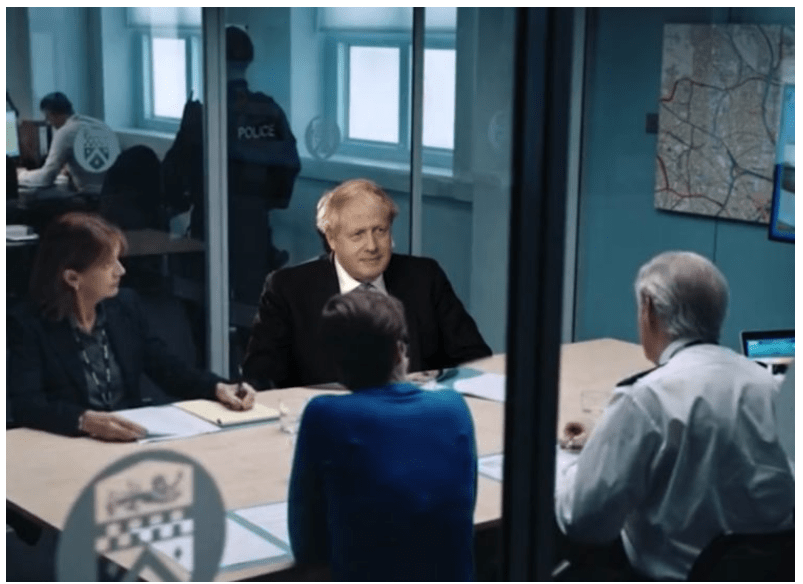
Boris Johnson is interviewed in “Line of Duty”

Line of Duty creator Jed Mercurio has produced a bonus episode for fans following the show’s nail-biting finale.

Ted Hastings, Steph Corbett and Steve Arnott face one of their most difficult challenges to date after they came face-to-face with a serial liar in the latest episode.

Questioning the prime minister of Great Britain, Boris Johnson, they delve into his deception around a BYOB party hosted in Downing Street during the height of lockdown.

Hastings concluded that the PM “knowingly and intentionally flouted the rules” because he believes he’s “above the law”. – The London Economic

Watch the clip on twitter in full here.

Energy crisis: PM and Sunak won’t feel heat of rising bills

Boris Johnson and Rishi Sunak will not be hit by the expected sharp rise in energy bills in April because of a cap on the contributions they have to make towards their Downing Street flats.

Oliver Wright www.thetimes.co.uk

Under the rules, the prime minister and chancellor are allowed their “grace and favour” accommodation rent-free, with utility bills and council tax also covered by the government.

As part of an agreement with HM Revenue & Customs, unlike other “benefits in kind” paid to employees, their total taxable liability is limited to 10 per cent of their ministerial salary. This means they will not be expected to pay more when energy bills rise.

Ofgem, the energy regulator, is due next month to announce a rise in the maximum amount that energy companies can charge customers.

Analysts believe that, unless the government steps in to reduce taxes on bills, the cap could increase by about 50 per cent, pushing up the average cost of bills to almost £2,000 a year.

Johnson and Sunak will not have to pay the bill because of a longstanding agreement with the tax authorities that because they are expected to live in Downing Street for security reasons, it would not be fair to charge them the full cost of the benefit. The story, first reported by MailOnline, is likely to increase pressure on the government to take action to limit the effect on bills before Ofgem’s announcement.

A government spokeswoman said: “As has always been the case, the prime minister and chancellor are provided with residential accommodation in Downing Street.

“It is not possible to disaggregate the energy costs of 10-12 Downing Street, as it is one combined building.”

Asked what action was being taken on bills, the prime minister’s official spokesman said: “Discussions are still ongoing.”

Hubris, Hugo?

“When did Tobias Ellwood become a ‘senior Tory MP’ to anyone other than anti-Conservative commentators?” sneered Sir Hugo Swire on Twitter after his former colleague had a pop at the PM. As chairman of the defence select committee, Ellwood is perhaps a touch more senior than Swire, once a minister in the Foreign Office (he outranked Swire in the army too), but there may be a personal reason for this envy. In 2017, Ellwood gave first aid to a dying police officer after a terrorist attack on the parliamentary estate. Swire’s wife, Sasha, noted in her diaries that her husband wished it had been him. “He has longed for the headline ‘Hugo the have-a-go hero’,” she wrote, “but it will never happen.”

Extract from Times Diary,Patrick Kidd www.thetimes.co.uk