Questions over Exmouth’s bowling alley purchase

Cllr Paul Arnott, leader of the council, said: “It is extraordinary that the council made this purchase and the only knowledge we had of it was with a press release. The point is not about the process but that we didn’t know about it, and it hadn’t been reported, and I still don’t understand why we weren’t told.”

Daniel Clark, local democracy reporter and Radio Exe News www.radioexe.co.uk

Council deal done quickly to avoid competition

Questions have been raised by East Devon councillors about why the council spent nearly £3 million buying Exmouth’s seafront development ‘Ocean’ this year, despite many councillors not knowing about it.

The centre, which was dogged by delays when it was constructed in the late 2000s, was originally known as the ‘bowling alley’ and now houses a soft play area, two restaurants as well as bowling. It is also marketed as a wedding venue. It is operated by a company called Leisure East Devon, which also runs leisure centres across the district. The building was acquired in March for £2.7 million, but the reasoning and the process was only presented to councillors last week. 

Cllr Kevin Blakey, who at the time of the purchase was the portfolio holder for economy, said that the decision was taken quickly under agreed commercial investment frameworks to avoid competitors coming in to “gazump our position.”

He added: “We had a chance to make a sensible investment that brings in money for the council and had this been out in the wider world, we may have lost that. It was not an attempt to play secret squirrels and keep the council in the dark, but for good sounds reasons, and I would not do anything different now.”

Tim Child, senior property and estates manager for the council said that the council also own adjacent land and has opportunities to unlock potential of the wider area encompassing Queens Drive, Harbour View Café and Ocean into one ‘offering’. He added: “The business case to invest was based on the income stream from LED but for the reasons mentioned, other opportunities are open to EDDC that would not have been open to other purchasers and hence the investment is worth more to EDDC than other purchasers.

“There is a forecast net income in year 1 of £79,000 which represents a return of 2.79 per cent increasing to £99,000 (est) and 3.47 per cent in year 2 and if a more cautious approach is taken to EDDC maintenance liabilities then a net income of £49,000 representing 1.73 per cent increasing to £68,000 (est) and 2.40 per cent in year 2. These rates of return are after borrowing costs and do not reflect possible enhancement in capital values.”

Cllr Geoff Pook, the then portfolio holder for asset management, added: “It was a commercial property investment, the due diligence was done and it had a value of the income it was generating. We did go through the process and it was the one that was agreed. This is a key development on Exmouth seafront and to own it and controlling it seemed to be a good thing for EDDC to control the development that goes ahead.”

But Cllr John Loudoun said that it was disappointing that seven months after the acquisition, this was the first time they had the chance to find out what they have done and for what reason.

Cllr Paul Arnott, leader of the council, said: “It is extraordinary that the council made this purchase and the only knowledge we had of it was with a press release. The point is not about the process but that we didn’t know about it, and it hadn’t been reported, and I still don’t understand why we weren’t told.”

He added: “People were surprised that the council bought this – it was on sale for quite a long time before the council bought it, and I am certain there was no other buyer. The building hasn’t generated the profit and footfall and turnover that it was expected to do, and even with the present tenants, there is a possibly we can talk to them and discuss how we may adapt the building so it fits in and compliments all the other developments on the Queen’s Drive area.

The cabinet agreed to note the report around the process of the acquisition, and that a further report over the future of Ocean would come back to the cabinet at a later date.

Owl repeats the history:

The long, sorry, back-story

The Bowling Alley (now the Ocean) was considered, at the beginning of the century, to be the single “Iconic” building that would regenerate Exmouth, rather in the way that the Tate regenerated St Ives. It gained initial planning approval in 2002. But Its construction was dogged by the need subsequently to submit 16 revised plans. During construction the site went on hold for a couple of years so that a court case concerning faulty design aspects could be resolved.

So – 25 June 2013  “Spectacular top-floor bowling alley venue on the way”

Exmouth’s seafront bowling alley is set to create up to 40 new jobs when its new wedding and events venue opens this summer.

Sean Keywood   www.exmouthjournal.co.uk 

Workers are currently putting the finishing touches to the Ocean Blue suite, located on the top floor of the Coast complex on the Esplanade.

As well as a large main function room with a permanent stage and bar area, there are also large roof terraces, with weatherproof speakers, enabling guests to gaze out across the seafront.

The venue will also be obtaining a marriage licence, allowing it to host the whole wedding day, and there will be a bride suite and groom suite provided for the wedding couple to get ready.

Coast is setting up its own wedding service to operate from the venue, and proprietor Isaac Robb says the opening of the new facilities – which will also host other events – is good news for the town.

He said: “It’s a really exciting thing, not just for us but for the whole of Exmouth. We want everybody that has functions or events to come and look at the room.

“We think it’ll sell itself by the views it has. Everybody who sees it just gasps.”

Just by word of mouth, the Ocean Blue suite already has five events booked ahead of its August opening, including a charity casino night in December, and Isaac says he is lining up a “very big musical act” to perform next summer.

As part of the new operation, Coast needs to recruit 30 to 40 staff, ranging from a master of ceremonies, events managers and wedding planners, to chefs, bar and waiting staff.

These jobs will add to the 30 already created at Coast since the ground-floor bowling operation opened at the start of the year.

Anyone interested in applying for the new roles should send their CV to Coast by post.

However, within a couple of years EDDC were having to engineer a take-over.

10 June 2015 LED take over lease of Exmouth sea front facility

The lease of the Ocean bowling and restaurant complex in Esplanade has been taken over by LED Leisure Management.

Daniel Wilkins www.exmouthjournal.co.uk  10 June 2015

LED has announced they will be running the sea front entertainment facility with immediate effect.

The complex will continue to offer 12 lanes of bowling, plus a Bar and Grill and Sega Entertainment Centre, on the ground floor.

Later this month a new soft play area is due to open once the fit-out and staff training is completed.

Ocean will also continue to offer a venue for weddings, conferences and other events.

Councillor Andrew Moulding, chairman of Exmouth Regeneration Programme, said: “This is fantastic news for everyone who lives in Exmouth or who comes to the resort for holidays or leisure.

“This is already a wonderful facility in a prime position on the seafront. With LED management, their ideas and marketing expertise, it promises to be a very popular all-weather attraction for families as well as a place for parties, celebrations and meetings of all kinds.

“I look forward to seeing it go from strength to strength in the coming months and years.”

Now in 2020 you the rate payers appear to have bought it outright
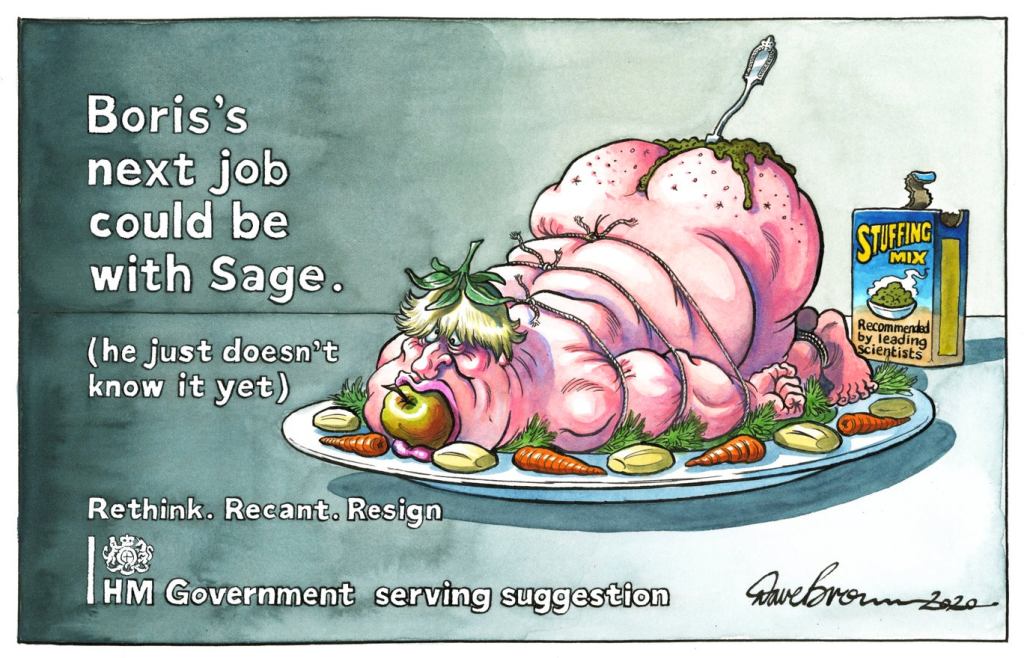
Ending Covid-19 via herd immunity is ‘a dangerous fallacy’

The concept of ending the Covid pandemic through herd immunity is “a dangerous fallacy unsupported by scientific evidence”, say 80 researchers in a warning letter published by a leading medical journal.

Sarah Boseley www.theguardian.com

The international signatories of the open letter in the Lancet say the interest in herd immunity comes from “widespread demoralisation and diminishing trust” as a result of restrictions being reimposed in many countries because of surging infections in a second wave.

The suggestion that the way out is by protecting the vulnerable and allowing the virus to transmit among those less at risk is flawed, they say. “Uncontrolled transmission in younger people risks significant morbidity and mortality across the whole population. In addition to the human cost, this would impact the workforce as a whole and overwhelm the ability of healthcare systems to provide acute and routine care.”

The signatories have expertise spanning public health, epidemiology, medicine, paediatrics, sociology, virology, infectious disease, health systems, psychology, psychiatry, health policy, and mathematical modelling. They include a number of scientists who sit on the breakaway Independent Sage group in the UK, such as former chief scientist Sir David King, former WHO director Anthony Costello, virologist Prof Deenan Pillay, behavioural scientist Prof Susan Michie and professor of European public health Martin McKee.

There is no evidence that immunity after recovering from Covid-19 lasts, they say, adding that people who are vulnerable would be at risk for the indefinite future and cannot be kept safe.

“Prolonged isolation of large swathes of the population is practically impossible and highly unethical,” they say, calling for action to suppress the levels of virus in the population.

“It is critical to act decisively and urgently,” they say. “Effective measures that suppress and control transmission need to be implemented widely, and they must be supported by financial and social programmes that encourage community responses and address the inequities that have been amplified by the pandemic.”

Those restrictions will be needed “to reduce transmission and fix ineffective pandemic response systems, in order to prevent future lockdowns”. If the numbers of infections can be pushed down to a low level, it will be possible to keep the virus suppressed through “an efficient and comprehensive” test, trace, isolate and support system, “so life can return to near-normal without the need for generalised restrictions. Protecting our economies is inextricably tied to controlling Covid-19. We must protect our workforce and avoid long-term uncertainty.”

There are success stories – among them Japan, Vietnam and New Zealand, they say.

“The evidence is very clear: controlling community spread of Covid-19 is the best way to protect our societies and economies until safe and effective vaccines and therapeutics arrive within the coming months. We cannot afford distractions that undermine an effective response; it is essential that we act urgently based on the evidence.”

Other signatories to the letter from the UK include epidemiologist Prof David Hunter, cancer researcher Prof Charles Swanton of the Crick Institute and global health professor Devi Sridhar. Those from the US include global health professor Gavin Yamey of Duke University, Prof Rochelle P Walensky from Harvard medical school and Dr Ali Nouri of the Federation of American Scientists. Researchers from Italy, Israel, Malaysia, Spain, Ireland, Germany, France, Australia, the Netherlands, Switzerland and Canada have also signed.

Ministers pressured to explain high payments to Test and Trace consultants

Ministers are under pressure to come clean over payments to consultants after reports some are earning more than £7,000 a day to work on the government’s ailing Test and Trace programme.  

www.independent.co.uk

Anthony Costello, a member of independent Sage group of scientists, described the figures as “shocking”.  

Sky News said that the day rate for senior consultants on the project was around £7,000, even with a 10 per cent discount applied.  

The figures equate to an annual salary of around £1.5 million.  

The government’s flagship Test and Trace scheme has come under increasing pressure in recent weeks.  

Ministers have spent billions on the system, but it is still failing to alert many people who have been in contact with suffers of Covid-19.  

Sky News said the payments were being made to senior executives at Boston Consulting Group (BCG), a leading firm of management consultants.  

Shadow health secretary Jonathan Ashworth said: “The figures being spent on this broken system are truly shocking.

“Testing and contact tracing is failing to keep the virus under control, which makes it even more disgraceful that such huge sums of money are being spent on something that isn’t fit for purpose.”

Labour MP Toby Perkins called for “dedicated public servants” to be used instead.  

“You won’t find dedicated public servants being paid £7,500 per day, you won’t find them on £1.5m, but what you will find is a basic competence, a knowledge of their area, a desire to make sure that the systems work before they are implemented,” he said.

He added that in his former career in the sales industry: “I never came across a customer nearly as naive as what we have with the government.”

A department of Health and Social Care spokesman said: “NHS Test and Trace is the biggest testing system per head of population of all the major countries in Europe.

“It’s processing 270,000 tests a day and nearly 700,000 people who may otherwise have unknowingly at risk of spreading coronavirus have been contacted.

“To build the largest diagnostic network in British history, it requires us to work with both public and private sector partners with the specialist skills and experience we need. Every pound spent is contributing towards our efforts to keep people safe as we ramp up testing capacity to 500,000 tests a day by the end of October.”

Tories are squandering our greener future

“Many farms will disappear, and the fields and hedgerows will be untended, as our basic foodstuffs will be shipped or flown in more cheaply from abroad, from countries that care less about food standards.”

Alice Thomson www.thetimes.co.uk 

During the pandemic the British have rekindled their love of the countryside. Farmers’ approval ratings soared as they kept food on the supermarket shelves and milk on the breakfast table, and “cottagecore” — celebrating such pursuits as foraging, baking and pottering — became the hashtag for the new good life. Boris Johnson, in his conference speech last week, set out his vision of Britain in 2030, where people would wander among millions of newly planted trees and picnic in new “wild belts” across the countryside.

Many now feel that those rural dreams have been crushed. This week the government overturned amendments to the new Agriculture Bill that would have ensured imported food meets domestic legal standards after Brexit. By rejecting these calls it has alienated an astonishing cross-section of farmers, chefs, environmentalists and consumers, and united the Cumbrian shepherd James Rebanks with Sir James Dyson, Britain’s richest man.

The former environment secretary Theresa Villiers voted against the government, as did Neil Parish, Conservative chairman of the environment select committee, and a dozen other Tory MPs in rural constituencies, along with Labour and the Lib Dems. Jamie Oliver and Delia Smith are incandescent, Prue Leith from The Great British Bake Off has spoken out, as has Joe Wicks, the fitness guru. Chris Sherwood, chief executive of the RSPCA animal welfare charity, says the government has reneged on its manifesto promise to safeguard standards.

In just a few weeks a million people have added their names to a National Farmers’ Union petition begging the government to reconsider but the prime minister still hasn’t met Minette Batters, the NFU president. All they are asking for is proper scrutiny of potential trade deals that can run into tens of thousands of pages, and for countries that want to export to the UK to adhere to similar animal welfare standards so there is a level playing field.

But the government has refused. Liz Truss, the trade secretary, may say she loves British cheddar but she appears to be encouraging ultra-processed imports. “I don’t want to stop developing countries exporting their goods to us,” she insists. The government’s concern is that countries such as the US and Australia will not sign up to a trade deal if they are expected to conform to higher standards.

The Americans have made it clear that they believe their chlorinated chicken and hormone beef is safe to eat but the conditions in which many of their animals are raised would concern both meat eaters and vegans in this country, as would the Australians’ use of antibiotics in livestock farming, and insecticides currently banned under EU rules.

Detractors insist that only the rich can afford to be concerned about higher food standards but polling for the consumer rights group Which? shows it’s the least affluent 10 per cent who are most concerned about being fed substandard burgers, pork sausages and BLT sandwiches. They also care most about animal cruelty and count on the government to maintain quality in supermarkets, fast food outlets, school cafeterias, care homes and hospitals. Henry Dimbleby, who leads the National Food Strategy, explains that the well-off can afford to be less concerned because they can buy their way out by favouring expensive luxury brands and organic food, creating a two-tier food system.

In the past few months farmers have come to be seen as some of the most trusted and valued workers in the country, while politicians’ reputations have sunk further. But farmers won’t be able to compete if they are rearing their products to higher ethical standards than their foreign counterparts. Many of the country’s 140,000 farms will go out of business and more food will have to be imported, just when the British have embraced the idea of supporting local producers and shopping at farmers’ markets. This is what Dyson, who is trying to make Britain self-sufficient by pioneering new farming methods, most fears. “Why import when we have some of the best soil in the world and can grow most food here?” he told me. “The demise of manufacturing in the UK has been a tragedy. I don’t want farming to go the same way.”

There was a moment when Britain, the third biggest food market globally, could have decided in the wake of Brexit to lead the world in food standards and environmentally friendly farming. “We will be throwing away the opportunity of encouraging a great industry to lead the world,” says Villiers, now free to speak her mind on the backbenches. “We should be projecting our values through our new trade policies.”

Instead it is now clear that the government has a very different vision of the countryside after Covid-19 and Brexit. It dreams of a land that is 30 per cent rewilded, with beavers and otters, bison and boar roaming the lakes and the dales, while the rest is open to being tarmacked over and covered with new housing estates.

Many farms will disappear, and the fields and hedgerows will be untended, as our basic foodstuffs will be shipped or flown in more cheaply from abroad, from countries that care less about food standards.

Mr Johnson, brought up in wellies on one of the most beautiful hill farms on Exmoor, must know what he is doing, and he should at least be honest about the reality of his plans for a new Jerusalem.

Your chance to help shape the economic heart of the South West

HotSW is recruiting four new board members. Belief in Unicorns essential (Owl).

Our Local Enterprise Board still seems focussed on delivering its Industrial Strategy to double the 2018 economy in 20 years. This unrealistic and unachievable strategy, four years in the making, has, within two years, been well and truly overtaken by events (dead and buried by Covid-19).

HotSW needs to take a clean sheet of paper and start again, formulating a recovery plan. This time, can we please have something that doesn’t prioritise “build, bulb, build”, that reflects “the new normal” and is economically realistic? 

Running an economy is very different from running a business. Few individuals with have any relevant experience.

From Midweek Herald:

The Heart of the South West Local Enterprise Partnership is looking for four new board directors.

One of 38 LEPs in England, covering Devon, Plymouth, Somerset and Torbay, the LEP is a business-led partnership between the private sector, local authorities, universities and colleges.

Following retirements it is now seeking directors from the private or social enterprise sector.

The new board members will work to strengthen the LEP’s role as the main thought-leader influencing economic development in the HotSW area and deliver the area’s Local Industrial Strategy.

Non-executive directors will be expected to attend Board meetings once every three months and periodic meetings or events related to their areas of expertise to support LEP activity.

Appointments are for three years and would normally be extended for up to a further three-year term. The closing date for applications is 5pm on 14 October.

Dominic Cummings and family ‘avoid huge council tax bill on Durham properties’

One law for them, another law for us. Owl has lost count of how many examples of divisiveness we had had, and that is just for this week!

www.independent.co.uk 

Dominic Cummings and his family are liable for council tax on two properties built at his family’s farm in the northeast of England, but backdated charges that reportedly could have amounted to tens of thousands of pounds will not apply. 

Officials have concluded that charges for the buildings, on the outskirts of Durham,  should start from this month rather than from when both properties were built, without planning permission.

The senior adviser to Boris Johnson is listed as a property owner, alongside his parents and sister, according to Land Registry title deeds.

The Northern Echo, which first reported the story, said council tax would be paid on Mr Cummings’ band A cottage, and his sister’s band C family home from 4 October. The paper claimed the amount written off could total up to £50,000.

The Valuation Office Agency refused to comment on individual cases when approached by The Independent.

However, John Hewitt, corporate director of resources at Durham County Council, said: “I can confirm that the Valuation Office Agency have concluded their inspection and provided us with details of the required changes to the valuation list in respect of North Lodge, where the current single assessment will be replaced with three entries in the rating list going forward.

“These changes will be implemented with effect from October 4, 2020, which is the date we have been instructed to apply the changes from.

“The date from which the rating list is to be amended is a matter for the Valuation Office Agency.

“We are instructed that it has made its assessment in line with the relevant legislation and custom and practice in terms of such changes in accordance with Article 3 of the Council Tax (Chargeable Dwellings) Order 1993.”

Dominic Cummings makes rare statement as resignation calls grow over lockdown trip

John Shuttleworth, a Durham County councillor, told The Northern Echo: “If it was anybody else, they would be getting charged and it would be backdated, or they would be getting taken to court.

“It just proves there is two sets of rules, one for them and another for everyone else. It is not right.”

In June it was reported that there were “historic” breaches of planning regulations on Mr Cummings’ family estate on the outskirts of Durham city, where the No 10 adviser stayed with his wife and son after experiencing coronavirus symptoms.

Mr Cummings described the property at the time as “sort of concrete blocks” roughly 50 metres from his parents’ home.

In the aftermath of his lockdown trip to the farm, Durham County Council launched an investigation into planning permission relating to the properties after receiving a number of complaints.

The Independent has contacted No 10 for comment. 

English councils told to set up hundreds of Covid-dedicated care homes

Anyone showing any remorse over all the community hospital closures?

Who picks up the tab for the increased cost to be dumped on the care homes unlucky enough to be “chosen” as “hot” homes by the end of this week!

How many existing residents will have to be relocated (turfed out of what they see as their home)? – Owl

Robert Booth www.theguardian.com 

Hundreds of dedicated Covid-positive care homes are to be set up in an effort to keep patients discharged from hospitals from spreading the virus more widely, as happened in the first wave of the pandemic.

The Department of Health and Social Care (DHSC) has instructed councils to identify homes in their areas that could be used and to have them checked by inspectors to assure infection prevention controls are in place. As many as 500 facilities – sometimes known as “hot homes” – could be designated by the end of November, the equivalent of one or two in each council area.

The move was first flagged in September in the government’s winter plan for adult social care when it said it was developing a designation scheme with the Care Quality Commission (CQC) “for premises that are safe for people leaving hospital who have tested positive for Covid-19 or are awaiting a test result”.

The letter to local authority directors of adult social care, seen by the Guardian, says the Covid homes should be “stand-alone units or settings with separate zoned accommodation and staffing”.

It adds that “given the diversity of existing provision and arrangements, it is acknowledged that there needs to be flexibility to meet local circumstances”.

Before anyone is discharged into one of the homes from hospital with a positive Covid test result, the unit must be registered with the CQC and the regulator will check it has the “policies, procedures, equipment and training in place to maintain infection control and support the care needs of residents”, the DHSC said.

In a clear sign the policy is aimed at freeing up hospital space as well as reducing cross-infection, the homes will not be used for people who contract Covid in their existing care home or at home. Councils have been asked to supply locations by the end of this week and the Department of Health wants every local authority to have access to at least one CQC-designated accommodation by the end of October.

Some care bosses have reacted with concern to the proposal, with some suggesting patients being discharged, albeit with a Covid diagnosis, will be reluctant to enter a hot home and that staff, many earning the minimum wage, will be asked to risk their health by working in one.

The DHSC said councils needed to “ensure that there is repeat testing, PPE, arrangements for staff isolation or non-movement, protection from viral overload, sickness pay and clinical treatment and oversight”.

While a few care homes that opened recently may be only partially occupied and so could be transformed into Covid step-down facilities, the instruction will require others to try to separate staff and residents. Earlier in the pandemic some councils struggled to get insurance to reopen closed care homes to be used for Covid-positive residents.

Sam Monaghan, the chief executive of MHA, the largest charitable provider of care homes in the UK, said he was “highly concerned” about bringing infected people “into close communities where the risk of spread is considerable and you are asking staff to place themselves in the way of potentially contracting the virus as well”.

“Unless you are talking about care home providers who have buildings that aren’t yet occupied, it will mean moving people out of their home, their room,” he told Radio 4’s Today programme. “You would be separating your staff into those working without Covid and those working with Covid and what the arrangements and protections for those staff at the heightened level of risk would be. Then there is the risk of transmission within that geographic space even if you manage to create an artificial barrier between the two.”

A DHSC spokesperson said: “Our priority is the prevention of infection in care homes and ensuring that everyone receives the right care, in the right place, at the right time. Building on the commitments of the adult social care winter plan, we are working with the CQC and the NHS to ensure that everyone discharged to a care home has an up-to-date Covid test result, with anyone who is Covid positive being discharged to a care home that CQC has assured is able to provide care and support for people who are Covid positive.”

‘Operation Moonshot’: doubts over UK’s Covid test ambitions after trial scaled back

Time to move on to the next “game changing” idea? – Owl

Fresh doubts have been raised over “Operation Moonshot”, the government’s £100bn testing plan, after a pilot to regularly test a quarter of a million people was paused then significantly scaled back.

Helen Pidd www.theguardian.com 

The trial, in Salford in Greater Manchester, had been heralded as the first step in a mass-testing mission which Boris Johnson said “would allow people to lead more normal lives, without the need for social distancing”.

All 254,000 residents were to eventually take regular saliva tests – a scientific breakthrough Johnson said would turn round results “in 90 or even 20 minutes”.

But six weeks after the pilot began, it was paused last week and on Tuesday the government admitted it would now be smaller in scale and focused on “high-risk environments and groups”.

Regular testing would only be offered to select residents “in some areas of high-density housing”, said a spokeswoman for the Department of Health and Social Care (DHSC).

At its launch in early September, the government promised a pilot with up to 250 tests a day that would be rapidly scaled up to cover the whole area, with regular testing at venues across the city.

The Salford pilot would test people “in indoor and outdoor venues”, meaning “workplaces could be opened up to all those who test negative that morning and allow them to behave in a way that was normal before Covid”, the prime minister said.

But sources said the pilot scheme was struggling to persuade even 250 Salfordians to provide saliva samples. An NHS official also admitted earlier this month that more progress needed to be made because the target was not being met.

Addressing health secretary Matt Hancock in parliament on Tuesday, Rebecca Long-Bailey, the Labour MP for Salford and Eccles, said: “Salford was to be one of the pilot areas testing this Moonshot programme. However, my local council confirmed to me this morning that some time ago now they had asked the Department for Health to share the clinical validity data behind this new technology.

“To date, this query remains unanswered and until this morning Salford city council had been told to pause the programme – so can the secretary confirm his current plans for the development of mass testing?”

Hancock did not respond to her but the Guardian understands that shortly before she stood up in parliament, Salford council was told that the pilot’s pause was reversed.

A DHSC spokeswoman said the project was ongoing. “The pilot is focusing on testing in high-risk environments and groups to prevent and manage outbreaks, and regular testing will continue to be offered to residents in Salford in some areas of high-density housing. The no-swab Optigene LAMP test used in the Salford pilot is ongoing and has already proven to be effective.”

Announcing the Salford pilot on 3 September, the DHSC said it was part of a £500m project trialling next-generation testing technology and increased testing capacity.

Paul Dennett, the directly elected mayor of Salford, said he was told by council officers this week that its part in Operation Moonshot had been paused due to a lack of clarity over the accuracy of the saliva testing system.

“Today, we’ve received new correspondence from the DHSC, after chasing a written update for several weeks, ‘un-pausing’ the community testing project with an emphasis on more targeted testing towards high-risk individuals and communities – as opposed to whole city ‘mass’ community testing being rolled out after a few initial weeks of concept testing.

“We are reviewing the new correspondence … and will come to a conclusion soon, especially given the urgent need to update our residents in the city.”

Farmers hit out as MPs reject calls to protect food standards

Farmers have been defeated in their efforts to enshrine Britain’s exemplar food production and animal welfare standards in law after MPs rejected an amendment to the Agriculture Bill which would have banned low-standard imports.

Athwenna Irons www.devonlive.com

Despite protests from campaigners and 14 Conservatives who rebelled to support the protections, the House of Lords clause fell by 332 votes to 279 when coming before the House of Commons on Monday (October 12) evening.

Tabled by Lord Grantchester, it sought a “requirement for agricultural food and imports to meet domestic standards” from January 1, 2021.

Defending the Government’s refusal to back the amendment, Environment Secretary and Cornish MP, George Eustice, said the legal protection “wasn’t necessary” and assurances had already been given to the National Farmers’ Union (NFU) that it would “protect and uphold our standards”.

Speaking on BBC Good Morning Scotland on Tuesday (October 13), he explained: “We have already got legislative processes that protect those standards and so this clause wasn’t necessary to protect those standards.

“We already have a prohibition of the sale of things like chlorine-washed chicken or hormones in beef and that’s not going to change.”

Neil Parish, MP for Tiverton and Honiton and chair of the Environment, Food and Rural Affairs (Efra) Select Committee, was one of the 14 Tories who voted against the Government to support the amendment, alongside North Dorset MP Simon Hoare.

In an impassioned plea during the debate, Mr Parish said the legislation was heading in the right direction but the UK should be a “great beacon” on animal welfare and the environment when negotiating future trade deals.

“When we’ve tried to amend the Trade Bill, we get told it’s not the place to put it, but it’s not the place to put it in the Agriculture Bill either, so where is the place to put it?

“The place to put it is in this Parliament and I will very much support this and [Richard Fuller, Conservative MP for North East Bedfordshire] does and many on our side do because we want to negotiate very good trade deals – not only with Australia, New Zealand and America but later on, this is not about today or tomorrow, this is about several years down the road.”

Mr Parish criticised Brazilian farming techniques which “destroy the land”, adding: “We, the British, believe in animal welfare, we believe in the environment… so does this Government, but for goodness sake get the backing of Parliament.”

Labour’s Luke Pollard, Shadow Environment Secretary and MP for Sutton and Devonport in Plymouth, also commented: “The Conservatives have again broken their promise to British farmers and the public. No one wants lower quality food on our plates, but there is an increasing risk that this could happen because the prime minister is refusing to show leadership. Labour will always back British farmers and it is a disgrace that the Tories won’t do the same.”

Farmers and industry campaigners in the Westcountry have repeatedly warned of the dangers of opening the UK’s borders to imports of inferior quality, produced to standards not permitted by law in the UK. They say this would undermine and undercut the high standards adhered to by farmers in the South West and across Britain, putting many traditional family farms – the bedrock of the region’s rural economy – at a serious competitive disadvantage.

Reacting to the vote, Devon farmer Jilly Greed, co-founder of Ladies in Beef and the Suckler Beef Producers Association, said South West farmers have worked “incredibly hard” to achieve environmental good practice and high animal welfare standards over many years – which the public “overwhelmingly support”.

Mrs Greed, who farms near Exeter, commented: “To find our commitment and long term investment, so blithely and shamefully voted away by Conservative MPs last evening, is an utter betrayal, including those MPs who chose to abstain.

“It’s Brexit trade deal desperation, at any cost. Do not doubt for any moment substandard crops and beef, illegal to produce here, will be slipped in through the back door.

“The farming community, led by the NFU and president Minette Batters, asked MPs to morally stand up to be counted alongside Neil Parish, Simon Hoare and many others – and do the right thing.

“I doubt the farming community will be quite so trusting of a Brexit-driven Prime Minister when it comes to the next general election and the rural vote.”

Tim Mead, owner of Yeo Valley Organic based in Somerset, described the Government’s refusal to back the House of Lords amendment to the Agriculture Bill as “extremely concerning”, as these aimed to “ensure the standards of food imports, climate change and pesticides and protect the livelihoods of British farmers”.

He continued: “This ruling works against our commitments for mitigating climate change and the green recovery. We need to produce healthy food as nature intended, with increased diversity and bio abundance (for example by not using chemical fertilisers and sprays such as on an organic farm) and the potential to sequester large amounts of carbon into the soil.

“If biodiversity and other sustainability metrics continue to be excluded from the list of conditions for receiving public money it will have dire effects. Putting soil front and centre of Government policy is imperative for the future of our wildlife, the world and its people.”

For Richard Vines, founder and owner of Dartmoor-based Wild Beef, parliamentarians now need to focus their debates on the “integrity of labelling”.

Mr Vines, who sells his ‘beyond organic’, wholly grass-fed and finished beef direct to shoppers at London’s Borough Market and Broadway Market in Hackney, said: “We live in a big world and we already import beef from South Africa and South America, rice and farmed prawns from the Far East and lamb from New Zealand, which would not be reared to the same standards as ourselves. They’re intensively reared and they get on with it, hell or high water.

“What is important is consumer choice. Everybody always talks about consumer choice, but you can’t have consumer choice if you haven’t got honest and highly visible labelling.

“At the moment we do not have that and, to my mind, it’s not acceptable for the country of processing to pose as the country of origin, and to be labelled primarily as that. That is the issue that Parliament should be debating – the integrity of labelling. Currently people do not have choice because they don’t know what they’re buying.

“Furthermore, I feel that we talk endlessly about ethical and sustainable farming, but really the debate should move on to processing. For far too long there’s been a glass ceiling above production. You can produce all the clean, healthy food in the world, but as soon as the processors get hold of it they change it, so that’s another debate that should be had.”

Mr Vines, a former soldier and brewery executive, stressed that farmers need to re-think how they sell their products to the British people. He added: “Rather than banging on about imports from around the world, we ought to be using our energy to sell to ourselves.”

Debbie Kingsley, who rears rare and native breeds of cattle, pigs, sheep and poultry at South Yeo Farm West near Okehampton, wrote on Twitter: “This is not just terrible for farmers as seems to be the response so far. It is a disaster for anyone that eats.”

Meanwhile, the House of Lords amendment proposed by Lord Curry of Kirkhale, which aims to strengthen the powers of the recently-established Trade and Agriculture Commission and give MPs greater scrutiny of its findings and recommendations in relation to future trade deals, was not put to a vote by the Speaker of the House of Commons.

This was dispute over the terms of the ‘Money Resolution’ of the Agriculture Bill, which allows for the expenditure of public money on new laws.

The Agriculture Bill, with its defeated amendments, will now return to the House of Lords and there will be further chances this week for debate.


A Correspondent has pointed out that Labour supported all the Lords amendments: 

  • Total number of votes on the amendments:

https://labourlist.org/2020/10/mps-reject-labour-backed-amendments-to-brexit-agriculture-bill/

Lords Amendment 11, which sought to limit the use of pesticides to protect the public, was voted down by 347 votes to 212.

Lords Amendment 16, which aimed to maintain British food standards in trade deals, was voted down by 332 votes to 279.

Lords Amendment 17, which sought to improve environmental protections, was voted down by 344 votes to 206.

  • Neil Parish’s voting record – he voted against keeping the climate amendment 17, and the pesticides amendment 11

https://members.parliament.uk/member/4072/voting


What about “Jumping Jupp Flash” the MP chosen to keep Bojo at a “safe distance” at the “unencumbered” visit to Exeter when Bojo failed to make any promise of funding for the region? How did he vote?

City dwellers idealise the countryside, but there’s no escaping rural poverty

Patrick Butler www.theguardian.com 

The British countryside, or at least the seductive popular myth of the rural idyll, has become increasingly vivid in the public imagination as the pandemic continues. Covid has caused many to reassess their lives, and for city dwellers, that often includes where and how they want to live. “What am I doing here, so far from nature?” as one London columnist mused at the height of lockdown.

For urban dwellers with means, whose work allows them to be free from proximity to the office, rural living offers the heady promise of a refuge from the suddenly alarming cheek-by-jowl intimacy of the city, and all its noisy modernity. Fleeing to the country seems to offer respite from pollution, poverty, astronomic living costs, high rents and spiralling Covid infection rates. But is it really the promised land?

A paper by the Cardiff University geographer Andrew Williams and colleagues offers a reality check, pointing out that austerity did not bypass rural England and Wales. It too has seen big cuts to public infrastructure and services. Rural housing has its own affordability crisis. Poverty, so often imagined solely as an urban affliction, thrives, though often hidden, amid the pretty market towns and rolling green fields.

The disconnectedness of rural living may be part of its charm but it is also a driver of inequality, the paper points out. Almost no one in urban areas lives more than 4km (2.5 miles) from a GP – one in five households in rural areas do. It is the same for supermarkets: 44% of country dwellers have to travel more than 4km to get to one, while 59% are not within 4km of a bank. Public transport has been decimated – if you don’t have a car, good luck.

The closure of Sure Start children centres, jobcentres and youth clubs has exacerbated the access problem. Of 605 libraries closed in England since 2010, 150 were in rural areas. They were more likely to be rescued by volunteers in urban areas, Williams points out, “suggesting that the ‘rural’ is not quite the ‘ideal laboratory’ for community-run public services that it is made out to be by proponents of the big society.”

One way rural local authorities have sought to mitigate the cuts enforced on them by central government is by “switching” services such as public toilets and parks to the care of parish and town councils, who raise local taxes to pay for them. Not a problem for wealthy villagers but hardly fair to those who are less well off, who are in effect taxed twice at a time when their incomes have been shrinking as a result of welfare cuts.

Many rural economies are weak, even in the prettiest, chocolate boxy parts. Low wages and casual labour are rife, and the rural premium on fuel and food is eye-watering. Households in rural hamlets with a car spend an average £139 a week on transport, compared with £79 in urban areas. More than 40% of households in rural Wales live in fuel poverty, says Williams, compared with 22% in urban areas. Similarly, people in isolated rural areas spend an average £71 a week on food, compared with £61 in cities.

Fall on hard times, and the nice views may not entirely compensate. Rural benefit claimants are significantly more likely to receive higher-level sanctions than their urban counterparts. Food banks can be few and far between. Devon has one food bank for every 45,000 people; in Cumbria it is one for every 62,000. Williams’ field work brought him into contact with hungry, penniless people forced to walk miles for a bag of charity food.

What is to be done? The mostly Tory-controlled county councils in England have lobbied the government to invest more in rural areas at the expense of (mainly Labour-run) urban areas. It’s not an either-or, says Williams, we need a bigger funding pot. Pitting city versus shire in a bitter fight over the shrivelled local government settlement is no basis for an ambitious national, locally-led, Covid recovery strategy, nor a way to heal the divisions of Brexit. Williams, meanwhile, calls for a new development plan that takes rural Britain seriously: one that reimagines the countryside “in terms of future desires rather than nostalgic myths”.

• Patrick Butler is the Guardian’s social policy editor

Council leader slams former MP over hospital bed closures, following release of wife’s revealing memoir

The leader of East Devon District Council, Paul Arnott, has offered a scathing criticism of former MP Hugo Swire, following the publication of his wife’s explosive memoir.

Francesca Evans axminster.nub.news 

East Devon District Council leader Paul Arnott (left) has criticised former MP Hugo Swire following the release of his wife's memoir (pictured inset)

East Devon District Council leader Paul Arnott (left) has criticised former MP Hugo Swire following the release of his wife’s memoir (pictured inset)

Lady Sasha Swire’s ‘Diary of an MP’s Wife: Inside and Outside Power’ has been described in the national press as “jaw-dropping” and “indiscreet” as she lays bare the secrets of her high-powered Conservative friends, including former Prime Minister David Cameron.

But it is matters much closer to home that led Councillor Arnott to describe the book as a “political obituary for a truly dreadful MP” this week.

Councillor Arnott, leader of the Independent East Devon Alliance, made the comments during a virtual meeting of Colyton Parish Council – on which he also serves – while giving his regular update on district council matters.

He said discussing the book was “probably not appropriate for a formal meeting” but described it as a “hell of a read”.

“I suppose the principal interest is in what was in fact our former MP, before the boundary was changed several years back, Hugo Swire, referring to his own local councillors and faithful party supporters as ‘toilet seats’,” he commented.

Councillor Arnott went on to say that the book had made it “absolutely clear” that Sir Hugo – who served as MP for East Devon from 2001 to 2019 – had “meddled” in the controversial closure of local hospital beds.

He said: “The really serious side of it is that it’s absolutely clear when, against all evidence Seaton Hospital lost its inpatient beds to benefit Sidmouth – even though that wasn’t the recommendation to come out of the committee concerned – it’s absolutely clear from this book that he had meddled, as we had suspected, in that entire matter and he did a bit of grandstanding at Ottery St Mary Hospital essentially to spite Claire Wright.”

Devon county councillor Claire Wright stood against Sir Hugo as an Independent candidate in 2015 and 2017, and against his successor Simon Jupp in 2019.

In her book, Lady Swire said her husband launched a campaign to save Ottery hospital in a deliberate attempt to anger Cllr Wright, as she had been campaigning on the issue for several years.

Councillor Arnott concluded: “I think this is as good as a political obituary for a truly dreadful MP, who won’t be missed by me.”

Sir Hugo told Nub News he “would not dignify any comment made by that man with a response”.

Keir Starmer Gives Boris Johnson – And The Country – A Clear Alternative

Quote of the day:

“If we follow the science and break the circuit – we can get this virus under control, if we don’t, we could sleep-walk into a long and bleak winter” – Keir Starmer

Paul Waugh www.huffingtonpost.co.uk 

When he appeared on the Andrew Marr Show on the eve of his ‘virtual’ party conference nine days ago, Boris Johnson defended his coronavirus strategy with this dismissive swipe at his critics: “We haven’t had any alternative suggestions. No one has come up with any better proposals that I’m aware of.“

Well, thanks to the bombshell Sage document dump of Monday night, we now know that’s an inverted pyramid of piffle. A fortnight before his Marr appearance, his own scientific advisers had indeed recommended a string of bold alternatives, and they were measures that made his piecemeal local lockdowns look both confused and inadequate.

Of course, Johnson’s jibe was aimed not at Sage but squarely at Keir Starmer. Yes, ‘Captain Hindsight’, the ‘flip-flopper’ on school reopening was also chopping and changing his line on supporting the government on Covid. His view of the “sniping, carping” Labour leader conjured up that infamous phrase used by actors about theatre critics: like eunuchs at an orgy, they just don’t get it.

Well, after Starmer’s live televised address (complete with ‘New Leadership’ lectern branding) produced that really big alternative of a three-week Covid “circuit breaker”, maybe the PM should be careful what he wished for. If Johnson couldn’t handle the concept of constructive criticism, he may find out that the destructive kind is even worse.

Now it’s true that Starmer has been monk-like in his adherence to his own gospel of constructive opposition. When I raised with his shadow cabinet minister Steve Reed last month the idea of Labour getting ahead of the government with its own plan for tougher restrictions, he replied: “Labour doesn’t want to add to the confusion by proposing alternative rules that people should or shouldn’t be following at this time. I don’t actually think we should be trying to ‘get ahead’ of the government, that’s playing politics.”

Well, the good folks of Channel 4’s Gogglebox had their own verdict on the limits of that approach. In a memorable rinsing of Starmer’s tactics, normally loyal Labour voters were seen watching him on Marr equivocating over his support for the PM’s policies, and then yelled: “But what would YOU do?!!” Sophie in Blackpool said surely he needed to stop being “Captain Hindsight” and start being “Bruce Foresight” (God, I love a bonkers pun).

Foresight will be Starmer’s new weapon if the PM is indeed forced into a circuit break in a few weeks’ time. If Johnson refuses to heed his call, and hospitalisations and deaths keep rising, the Labour leader will be in a stronger position to speculate that the world could have been different if only his plan had been followed. 

Of course, there is a live lab experiment going on in the sense that Scotland’s own circuit break has been started by Nicola Sturgeon (though on a much smaller scale). If that fails to make an impact, Johnson could well be the one crowing. So today’s announcement is not without risks.

Although Starmer’s move was undeniably a big moment in the politics of the pandemic in the UK, the way he has inched his way towards his current position mirrors the way he nudged Labour towards a second Brexit referendum. Johnson will be hoping that this shift too is as much of an historic mistake for Labour, and he’ll push hard that Starmer doesn’t care about jobs or the economy.

The Labour leader was stunningly vague about the costings of his proposal, apart from a generality that failure to act would cost more money in the long run. His team may argue that in fact many of Rishi Sunak’s own big policies have been unfunded spending commitments, paid by extra borrowing.

Yet with Johnson portrayed as a prisoner of Sunak’s opposition to further lockdown, Starmer gets to kill two birds with one stone with his new announcement. His call for full compensation for businesses closed down in the three-week period highlights the chancellor’s own Achilles heel in coming weeks: the final removal of furlough at the end of October.

At the same time, he is reminding the public that the PM seems to be putting wealth ahead of health. Only today, No.10 told us that the reason Sage’s advice was rejected was because it receives advice not just from scientists but from “economists” and “ultimately for ministers to make decisions”.

There are other political benefits for Starmer too. He’s seen to be the defender of independent scientific advice. He exploits Tory splits (those liberty loving backbenchers were on the march tonight in decent numbers) while offering his support in any vote on a circuit break. He papers over Labour divisions about local lockdowns by creating a unifying, “we’re all in it together” set of national rules. And he also rams home his message that test-and-trace has to stop being a national outsourced disaster zone and start being a locally-run success.

Given that the public have shown in polls they want tougher curbs (YouGov shows a big majority for the circuit break tonight), Starmer is also managing to punch way above the weight of his rump of a party (and don’t forget its numbers in parliament are pitifully low). His emphasis on keeping schools open also underscores that this crisis is not just about “lives and livelihoods” but that third leg of “life chances”.

Most importantly, politics is often about owning the future, and if this comes off Starmer can say he owned it even for a few weeks. Taking the lead of his mayors Sadiq Khan (first to call for mask wearing) and Andy Burnham (first to call for local control of test and trace), he’s also learning that being bold can pay dividends.

Johnson, by contrast, has lost his boldness in the eyes of many of the Blue Wall voters who backed him on Brexit. It was just before that Marr interview this month that the PM said the reason the virus was spiking was because “everybody got a bit, kind of complacent and blasé”. That’s the very charge now levelled at his door in his handling of the pandemic. And Starmer’s biggest alternative of all tonight has been to show the public he’s an alternative PM.

Agriculture bill: Bid to protect post-Brexit food standards rejected

Fourteen pro-farming Tory MPs rebelled in a Commons vote last night attempting to impose a legal bar preventing the government from watering down food standards. The rebels were: Peter Aldous … George Freeman … Tracey Crouch … Roger Gale … Simon Hoare … Neil Hudson … Jason McCartney … Stephen McPartland … Caroline Nokes … Neil Parish … Douglas Ross … Henry Smith … Julian Sturdy … and Theresa Villiers.

But…………

Neil Parish’s rebellion was ultimately a case of “shearing a pig”: a lot of squealing and no wool. Liz Pole

[Owl never found a Sasha quote about the “farmer next door”]

BBC News www.bbc.co.uk

Steak and chips

MPs have rejected the latest attempt to require imported food to meet domestic legal standards from 1 January.

They struck down a Lords amendment to the Agriculture Bill to force trade deals to meet UK animal welfare and food safety rules.

Campaigners have warned the UK could be forced to accept lower standards to secure a future US trade deal.

But Farming minister Victoria Prentis said the government was “absolutely committed to high standards”.

Existing laws would safeguard them, she told the House of Commons, adding that these were “of more use than warm words” in maintaining animal welfare, food standards and environmental protections.

The bill – designed to prepare the farming industry for when the UK no longer has to follow EU laws and rules next year – returned to the Commons on Monday following amendments by the House of Lords.

The government says EU rules banning imports of chlorine-washed chicken and other products will be automatically written into UK law once the post-Brexit transition period ends on 31 December.

But peers made a number of changes, including one which would give MPs a veto over sections in trade deals relating to food imports, which would be required to comply with “relevant domestic standards”.

They argued these changes were necessary to make it impossible for the US or other countries to export so-called chlorinated chicken or beef fattened with hormones.

However, MPs voted by 332 votes to 279 – a majority 53 – to back government plans to reject the amendment.

media captionJamie Oliver accuses the government of using “back door” secondary legislation to avoid scrutiny of post-Brexit food standards

However, Conservative MPs Sir Roger Gale and George Freeman said they would vote for the amendment to remain in the bill, saying it was in line with their party’s 2019 manifesto pledge to maintain welfare standards.

Neil Parish, the Conservative chairman of the Commons Environment, Food and Rural Affairs Select Committee, told the Commons that Brexit meant UK agriculture could move in a “much more environmental direction”, including planting more trees and cutting the use of nitrates.

The country should be a “beacon” of high animal welfare and countryside-protection standards, he added.

But Conservative MP John Lamont supported the government, saying the amendments were “not in the interests” of food producers or standards and would be “bad for trade”.

Party colleague Anthony Mangnall said there had been a “huge amount of fear-mongering” over the importation of chlorinated chicken and hormone-injected beef, and that “has to stop”.

‘Back British farmers’

In the Commons, Liberal Democrat environment spokesman Tim Farron said the controversy over chlorinated chicken was not “about the quality of food” but the “integrity of our farming industry”.

For Labour, shadow environment secretary Luke Pollard said this was a “crucial moment for British agriculture”, adding that high standards could all be “thrown away”.

He urged the government to “show some leadership” and “back British farmers”.

The bill must include guarantees that UK farmers would not be “undercut” in post-Brexit trade deals, Mr Pollard said.

However another potential rebellion by backbench Tory MPs was avoided by the government when the deputy speaker ruled out an amendment to strengthen the new Trade and Agriculture Commission.

Speaking about this week’s votes in Parliament on the Agriculture Bill, Labour’s Constituency Spokesperson for Tiverton and Honiton, Liz Pole, said “Labour supported the Lords Amendment on keeping British standards in trade deals. On the other hand Neil Parish’s rebellion was ultimately a case of “shearing a pig”: a lot of squealing and no wool. In voting down all the Amendments – which were backed by Labour along with a broad coalition of major environmental groups and the National Farmers Union – the Conservatives have broken their word on sectoral support and Climate Action, and have failed Minette Batters’ test of “the moral compass of government” by failing to guarantee the future of British farming, British standards, British trade and British food security.”

From Today’s Western Morning News:

FARMING: Farmers took their fight on food imports to the heart of the capital yesterday, reports our Farming Editor, Athwenna Irons

Farmers taking part in a protest organised by Save British Farming in central London yesterday, as the Agriculture Bill returned to the House of Commons (Image: Aaron Chown / PA)

Farming leaders have made a last-ditch effort to safeguard Britain’s high food production and animal welfare standards from being undermined in future trade deals as the Agriculture Bill returned to the House of Commons.

Last night, MPs were granted a second chance to debate and vote on the landmark piece of legislation as they considered two amendments that were backed by the House of Lords last month.

The first, proposed by Lord Grantchester, sought a “requirement for agricultural food and imports to meet domestic standards” – amid long-standing fears that opening up the UK’s borders to cheap, lower quality imports such as chlorinated chicken could put British farmers at a major competitive disadvantage.

The second, tabled by Lord Curry of Kirkhale, aims to strengthen the powers of the recently-established Trade and Agriculture Commission and give MPs greater scrutiny of its findings and recommendations in relation to future trade deals. 

Supporting both amendments, the National Farmers’ Union (NFU) wants Parliament to be provided with independent advice about the impact every trade deal will have on British food and farming standards before it decides whether to accept or reject those trade deals.

Currently there is no requirement for Parliament to debate trade deals before they are signed into law, the NFU has warned, and safeguards to allow MPs to reject such deals are limited.

Speaking to Times Radio yesterday ahead of the debate, Minette Batters, president of the NFU and a Wiltshire farmer, said: “We must expect the same standards of our food imports that we expect of our farmers here. It is very straightforward for farmers, if we are undermined by cheap raw ingredients that come in that do not have to abide by the same laws that we have to in this country, it will obviously undermine our producers here and in many cases it could put them out of business.

“The big success story for us as UK citizens is that we have the most affordable food in the whole of Europe, and we sit third in the league table globally… It’s about making sure that we do not put at risk what we have. We should show global leadership in this area and that’s what farmers are really up for – the opportunities around achieving net zero emissions and carbon neutral food, but we’ve got to maintain our standards.”

Labour is calling on ministers to put a “guarantee in law” that British food standards will not be lowered  as a result of the trade deals that the Government are currently seeking with countries including the USA, Australia and New Zealand.

Shadow Environment Secretary and Plymouth MP, Luke Pollard, said it’s time for the Government to “put their money where their mouth is” and support British farmers.

Mr Pollard, Labour MP for Sutton and Devonport, added: “Ministers keep promising they’ll maintain high animal welfare and environmental standards after Brexit, but there’s still a serious threat that they will drop that promise to get the trade deals they’re so desperate to secure with Donald Trump and others.

“If the Government are serious about maintaining our high UK standards post-Brexit, they should get a guarantee in law, and support Labour’s amendment on Monday [October 12] to safeguard our standards and back British farmers.

“To vote out their own manifesto commitment to protect British food standards from their flagship food and Agriculture Bill is absurd.”

In May, the House of Commons voted against an amendment to the Agriculture Bill that would have guaranteed high standards for food and drink entering the country post-Brexit. In response, the NFU launched its food standards petition, which was signed by more than one million people and has been backed by celebrities including chef Jamie Oliver, presenter Jimmy Doherty and, most recently, Great British Bake Off judge, Prue Leith.

It also emerged yesterday that the Speaker of the House of Commons looked set to deny MPs the chance to vote on the Lord Curry amendment concerning the powers of the Trade and Agriculture Commission, amid a dispute over the terms of the ‘Money Resolution’ of the Agriculture Bill, which allows for the expenditure of public money on new laws.

When handouts go straight to ministers’ constituencies, it’s time for local control

Simon Jenkins www.theguardian.com

Before last year’s election, Boris Johnson’s local government minister, Robert Jenrick, announced a massive £3.6bn of handouts to 101 “left-behind” towns across England. Forty of these were defined by Whitehall as most in need. The remainder were allegedly chosen by two ministers, Jenrick and his number two, Jake Berry. Most were marginal seats, all but one of which voted Tory at the subsequent election. They included Jenrick’s Newark and Berry’s Darwen, neither in the most needy category. (Newark was 270th.) Jenrick even boasted that he had secured an opportunity to future-proof Newark, after it was awarded the maximum £25m grant. He has subsequently insisted that there was a “robust and fair” methodology to the allocations and dismissed as “completely baseless” allegations that he was involved in Newark’s selection.

The grants were strongly condemned by the National Audit Office last July and Labour is now demanding an explanation, which Jenrick is refusing to give. The accusation is that, to a degree, Johnson’s majority of 80 was bought.

Never has Britain’s centralised government been more in the spotlight than now. After over six months of trying single-handedly to suppress coronavirus, Johnson has today accepted what was evident from across Europe, that local government is best at governing locally. His “world-beating” private contractors and beta-quality ministers have failed. He now needs the local knowledge, resources and staff that only elected town and city government can supply.

Local councils are replying that they need power and money if they are to rebuild Whitehall’s chaotic coronavirus regime. They need power to micro-manage social distancing, hospitality and the protection of hospitals and care homes. They need power over local universities, clearly reckless hotspots of infection. Reports of Whitehall arguments into the night suggest that Johnson’s aides are denying them this power. They want to fix the three new tiers of lockdown, their content and their timing.

Local government also desperately needs money, both to make enforcement consensual and to pinpoint the most desperate recoveries in local economies. That restoration cannot be centrally determined. Least of all can it be in the hands of Jenrick. Grants, loans and furloughs cannot be apparently built on an edifice of favouritism and political advantage.

In just a year in office, Jenrick has shown blatant bias in his decisions. He attempted to help the Tory donor Richard Desmond avoid tax by rushing through approval for a housing development in Docklands, a decision that was subsequently overturned. His new planning algorithm will favour property developers in the south. His white paper even invents a class of builder to be excused from regulations governing conserving historic buildings with “earned autonomy”. It’s not clear how those rights can be earned.

Whitehall ministers have for decades banned local councils from raising taxes or loans, forcing them to come cap in hand to the centre for grants and other favours. This has led Britain to the widest disparity between rich and poor regions in west Europe. It has also led to favouritism to contractors and projects more typical of a banana republic. Rumours are already swirling round the sums disbursed to certain companies during coronavirus.

Public funds must be subject to public audit. Yet the towns fund affair showed the National Audit Office to be a paper tiger, and parliament likewise. Vast sums of taxpayers’ money are now splurging into the public and private economy without meaningful control. If Johnson’s post-Covid, post-Brexit Britain must rely on the sweepings of a political pork barrel, the outlook is dire.

• Simon Jenkins is a Guardian columnist

A resident comments on the Sidmouth Beach Management Plan

From a resident:

“I think Owl needs to be informed that the Sidmouth Beach Management Plan, or at least its Preferred Option, is very far from ‘fully funded’, as it says on East Devon Watch.

In fact, the opposite is the case.   It is an eye-watering £50 million short, according to EDDC’s own figures.  Ironically the Preferred Option is the most expensive of all the options that have been considered.

The PO explicitly states that regular recycling and recharging of both the main and east beach will be required throughout the 100 year lifetime of the BMP.  EDDC helpfully provide an estimate of how often this will be needed and what it will cost. Recharge and recycle will be needed every 10 and 4 years respectively.   The cost of both combined is about £4 million. Recycle is less expensive than recharge, but we can therefore expect the cost to be £50 million over 100 years.   So half a million pounds per annum will have to be found.   The PO offers no indication as to where this money is coming from.   Not from EDDC, that is for sure.   I think they expect Sidmouth Town Council to find it, which is unthinkable.

So EDDC’s plan is to get a cheaper option undertaken now, and then allow future generations to pick up the longer term consequences.

But, its worse than that. The PO explicitly states that its calculations of the level of protection from sea ingress and continued erosion both depend upon the maintenance of a ‘design level’ beach.   However, by recognising the future need to recharge and recycle, the document recognises that this will not be maintained.  Why recharge and recycle, if the beach is already satisfactory and doing its job? So the PO is explicitly designed to fail.

And, its even worse than that. Most locals expect any recharged material to quickly disappear in the next significant storm. The beach presently has a fairly consistent profile arising from the forces of wind and wave that act upon it.   Since the PO includes no offshore changes, those forces are going to remain much the same over the next 100 years.   It is therefore inevitable that the beach will quickly revert to its current profile.   So well below design level. The PO thus openly acknowledges that it is not going to work.

So there is no money for recharge and recycle, and even if there were, it is only going to work quite briefly.   Both beaches are likely to return quickly to their current profiles.  This means that erosion at East Beach and vulnerability to flooding at Main Beach are likely to continue for the foreseeable future.

It is for this reason that the huge splash wall ( higher than Seaton’s ) has been introduced at the eleventh hour to the scheme, having previously been rejected.”

How is the plan for 48 hospitals going?

By Reality Check team BBC News www.bbc.co.uk 

Boris Johnson said in his virtual conference speech: “This government is pressing on with its plan for 48 hospitals. Count them. That’s eight already under way and then 40 more between now and 2030.”

This is an upgrade of the “40 new hospitals” pledge Mr Johnson made during the election campaign in 2019 – a claim we examined last December.

So, how is the hospital-building plan progressing?

The eight

In a press release announcing £3.7bn funding for the 40 hospitals, the Department of Health and Social Care (DHSC) listed the schemes.

The first four on the list are described as “in build”. Some of them were started before Mr Johnson became prime minister.

We contacted the hospital trusts involved to find out how the projects were going.

Two of them – the Midland Metropolitan University Hospital and the Royal Liverpool – have been beset by problems and delays since the collapse of contractor Carillion.

The Midland Metropolitan University Hospital was originally due to be completed in 2018 but is now expected to open in 2022. Building costs are set to almost double from the original £350m.

A report by the National Audit Office said the total costs associated with the project were likely to reach £988m, of which £709m would be met by taxpayers.

Building work started on the Royal Liverpool Hospital in 2014 and the hospital was originally scheduled for completion in 2017.

The trust told us that although parts of the hospital opened temporarily earlier this year, they were now closed and construction work was ongoing. The completion date and total cost of the scheme have not yet been finalised, it added.

Construction of the Cumberland Cancer Hospital began in January 2020 and it is expected to finish next year.

And work on the outside of the 3Ts Hospital in Brighton is almost finished, but the trust told us it didn’t have a firm completion date at this stage.

At the Greater Manchester Major Trauma Hospital, the trust says government investment has been confirmed and building work on the Acute Receiving Centre will start soon.

The rebuilding of Northgate Hospital in Northumberland is expecting final ministerial and Treasury approval of £54m funding by November. Preparatory work has started on site and it is hoped to have the new building fully operational by March 2024.

The Moorfields Eye Hospital NHS Foundation Trust says it is aiming to submit a planning application for its new building this autumn, with an estimated opening date of 2025-26.

Planning for the Defence and National Rehabilitation Centre near Loughborough is progressing – £70m of government funding has been earmarked for the building and the target is for the rehabilitation centre to be treating patients in 2024.

We asked the DHSC for a statement on the status of these eight projects and whether they were all under way. It told us that all eight were hospitals that were committed to under previous governments so were already under way when this government made its pledge in 2019 to build 40 new hospitals.

So the prime minister is taking credit for projects begun by his predecessors.

‘Forty more between now and 2030’

A further six hospital trusts have been promised funding and form the first phase of the government’s Health Infrastructure Plan, known as HIP1.

The schemes involved in HIP1 are:

  • A new Princess Alexandra Hospital in Harlow
  • The rebuilding of Watford General Hospital
  • A new hospital at Whipps Cross University Hospital in north-east London
  • A new hospital for Epsom General Hospital and St Helier Hospital
  • A rebuild at Leicester Royal Infirmary and Glenfield, and new facilities at Leicester General
  • A new hospital at Leeds General Infirmary.

We asked for updates on these projects. Most of them are still in the planning stages but demolition works have started at Leeds General Infirmary. The first patients are expected to be seen in the new hospital in 2026.

Twenty-one hospital trusts were given a share of £100m in seed funding in September 2019 to develop their proposals.

The government now says those trusts will all be fully funded to deliver 25 new hospital buildings (some trusts are building more than one).

A new hospital at Shotley Bridge in Durham has been added to the list, and the government is inviting bids for a further eight schemes.

Taken together this does add up to 40 but with eight of them yet to be identified.

How much will it cost?

Last year the government pledged £2.7bn funding for six hospitals in HIP1.

With the addition of new projects to the list, it has now increased the funding commitment to £3.7bn but this will be a fraction of the final cost of building 48 new hospitals.

The DHSC has not provided an estimate of final costs, and turned down the BBC’s request for a breakdown of how much individual trusts were receiving from the £3.7bn.

Is the Government one tier short of a full set?

The Government, following its obsession with simple messaging, has placed all local authorities into one of three tiers. The bottom tier represents “medium risk” of infection,  the one we are in. Successive tiers represent escalating risk.

In this plan, which has been in preparations for days, there is no “low risk”, no hope, no escape.

What message does that send?

How coronavirus is impacting Devon outside of Exeter

Below this article Owl posts the latest (9 October) press release from Tim Spector’s symptom tracker app group. This is less gloomy than current statements from the Government. It reports that this is the second week in a row that “R” numbers have come down. Infection rates are slowing down but still rising. 

Chloe Parkman www.devonlive.com 

The picture of coronavirus in Devon, outside of the city of Exeter which is dealing with an outbreak at the University, has been explained by health bosses.

It comes as the county is put in Tier 1, medium risk, in the Government’s three-tier lockdown system.

A spokesperson for Public Health Devon said: “Cases elsewhere in Devon are still comparatively low (and certainly below the national average) compared to other local authorities.

“Outside of Exeter the highest current weekly rate in Devon is East Devon at 48 per 100,000 population and the lowest currently weekly rate is Torridge at 20 per 100,000 population, compared to a national weekly rate of 165 per 100,000.

“There is no dominant factor that would explain how the infection is spreading – some have arisen from residents returning from abroad or other areas where infection rates are higher, while other cases arise within households, or from social interaction.

”There is no evidence to suggest significant infection occurring in schools.

”Because of that broad pattern of infection, it’s even more imperative that we follow the latest guidance around social distancing, washing our hands regularly, and wearing face coverings.”

PM Boris Johnson has warned that there are more people in hospital with coronavirus than when the country first went into lockdown and that deaths are rising.

Making a statement in the Commons, the Prime Minister said: “This morning, the deputy chief medical officer set out the stark reality of the second wave of this virus.

“The number of cases has quadrupled in the last three weeks, there are now more people in hospital with Covid than when we went into lockdown on March 23 and deaths are already rising.”

The PM added that he did not think a second national lockdown ‘would be the right course’

COVID cases still on the rise and North South divide continues

covid.joinzoe.com /post/covid-cases-still-on-the-rise

According to the COVID Symptom Study (CSS) UK Infection Survey figures, there are currently, 21,903 daily new symptomatic cases of COVID in the UK on average over the two weeks up to 04 October (excluding care homes). This is an increase of 1,000 cases in the last seven days. This figure is based on the number of newly symptomatic app users per day, and the proportion of these who give positive swab tests. The latest figures were based on the data from 12,078 recent swab tests done between 20 September to 04 October.

The app’s data shows a big disparity between the North and South of England. There are more than five times more cases in the North compared to the South of England, with the most new cases being seen in North East and Yorkshire (5,425) followed by North West (5,248). The South of England data suggests that the second wave has yet to impact this region. Currently the new cases in South West and South East are still below a thousand daily (985 and 914 respectively). This supports a regional approach to restrictions. The top three areas of concern with one in 100 estimated people infected are around Glasgow, Nottingham and Sheffield according to our data.

The CSS UK Infection Survey R values for the UK are; England 1.0 , Scotland 1.1 and Wales 1.1. This is the second week in a row that the R values have come down. The R value of 1.0 in England is a positive sign that the upward trend that was seen a few weeks ago has slowed down, but is still rising.

The CSS UK Infection Survey has been running since early May when the COVID Symptom Study commenced the daily swab testing programme provided by the Test and Trace. The CSS has so far recorded over a million swab results from app users. The CCS UK Infection Survey estimates the number of current COVID-19 positive cases in the community based on the information logged by users in the app and the results from the swab testing programme. It identifies differences in numbers within the regions throughout the UK, and tracks the change in estimated cases over time. It is the largest survey of its kind in the UK, bigger than the ONS’s COVID-19 Infection Survey and the REACT study by Imperial College London.

The COVID Symptom Study app is a not-for-profit initiative that was launched at the end of March 2020 to support vital COVID-19 research. The app was launched by health science company ZOE with scientific analysis provided by King’s College London. With over 4 million contributors, the Study is the world’s largest ongoing Symptom study of COVID-19.

Tim Spector, Professor of Genetic Epidemiology at King’s College London, comments:

“There are a lot of data sources out there and they are generally showing the same trends. Our data shows that rates are still rising but we have been seeing a slowing down nationally of the increase in daily new cases, which is reflected in the R values of 1 and 1.1. The data also show increasing regional differences with worst hit areas in the North of England still increasing rapidly- especially now Yorkshire and the North-East.

Our data is a number of days ahead of the other sources, which means we are an early warning system, unlike the figures on confirmed cases, which have a big lag and are prone to error. It’s good news that cases are slowing down, but we aren’t out of the woods yet, especially hospital admissions are starting to increase, which we predict will continue to do so over the next two weeks.

It’s unclear yet if local measures like the 10pm curfew have had a real impact but what is important is that people understand the risks in their area and the range of early symptoms found on the app. The key to get this virus back under control is to follow the guidelines around self isolation. If you think you might have COVID-19 stay at home, get better and help to keep others safe and stop the spread of this virus.”

Plans to hand contact tracing to England’s local authorities ‘too late’

Plans to hand greater control of Covid-19 contact tracing to town halls will come too late to affect the second wave of the virus in some of the worst affected parts of England, public health experts have warned.

Nazia Parveen www.theguardian.com 

Officials in Yorkshire and Newcastle said plans floated by ministers at the weekend to boost local resources to track outbreaks might only help stem a later third wave.

The communities secretary, Robert Jenrick, on Sunday appeared to confirm reports the government will empower councils in England to employ more people to knock on doors to get contacts of Covid-infected people to self-isolate and give them greater control over testing.

“We want to work very closely with the local mayors and with the councils,” he told Sky News. “We are going to be ensuring that the national testing infrastructure … works in harmony with what’s happening locally. Because local councils and local communities are very good at contact tracing.”

The move is seen as an admission that the national NHS test and trace system has been failing. It follows months of lobbying by local directors of public health, mayors and council leaders for more power to track the virus locally. Local leaders caution, however, that the additional responsibility, and potential for blame, must be backed by resources.

Boris Johnson is expected to address local roles in an announcement on Monday about lockdown restrictions. The Local Government Association says local contact tracing systems have a 97% success rate at finding close contacts and advising them to self-isolate. The latest figure for reaching contacts within 24 hours of them being identified by NHS test and trace is 67%.

However, Eugene Milne, the director of public health in Newcastle-upon-Tyne – where there were 487 infections per 100,000 people last week, one of the highest levels in the UK – said additional local test and trace will not, of itself, suppress the current second wave, but preparations now would ensure a working system for once the wave has passed.

Another public health director, in Yorkshire, added: “It may be too late in the university towns in the north.”

Newcastle wants to create about 15 local contact tracing teams, using the existing national call centres only as a backup. Each team would be able to track down at least eight case chains a day, with details logged on a single computer system. It also wants money to hire behavioural scientists to guide its effectiveness and fund regional advertising campaigns.

More than 90 councils have already launched or are close to launching their own locally supported contact tracing arrangements, according to the LGA. These use call centres, redeployed environmental health and sexual health officials and door knocking to trace contacts. Birmingham city council has been using members of the military to offer tests door-to-door in infection hotspots.

Andy Street, the Conservative mayor of the West Midlands, said: “We’ve always known that there was a need for a local element of test and trace, as a centralised system does not have local expertise and is not able to cut through the harder to reach communities. In the West Midlands our local councils have been leading the way on this for months.”

Privately, some local officials have voiced fury at the weaknesses of the privately run national system. One director of public health in north-west England said it was “still so bad and poor quality in the data being provided”.

“We asked for [local powers] since day one,” they said. “Shame it’s taken so long for them to realise we were right.”

Andy Burnham, the Labour mayor of Greater Manchester, said the government had finally acknowledged it would be better for test and trace to be handled locally.

“They now need to back this with serious resources,” he said. “Council leaders in many regions have been relying on volunteers but this cannot continue. It can’t be done on the cheap – councils have to be given more resources to employ expanded, trained teams.”

One local contact-tracing system in Hertfordshire has already cost £1m. Access to accurate data from the national system remains a key problem. The national contact tracing database, CTAS, remains unavailable to some local district councils, said one senior director of public health who described the system as “creaking”.

“Too many contacts are coming through without phone numbers and about a third don’t have occupations [which hinders efforts to quell workplace outbreaks],” he said.

Downing Street and the Department of Health and Social Care said they did not wish to comment ahead of Monday’s statement by the prime minister.