Poll shock: Tories may be left with only 98 MPs. Owl reveals PM’s secret plan

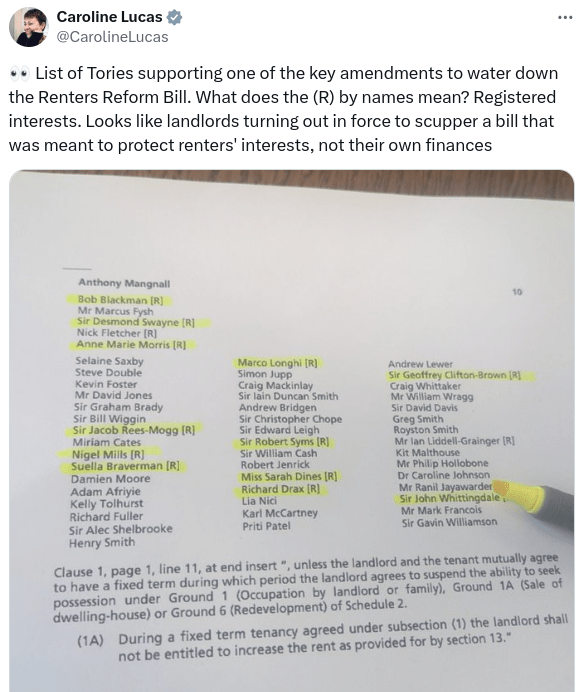
“Chatty rats” in the Tory party whisper to Owl that, emboldened by the success of his Easter Honours list, the PM is contemplating giving any of these 98, not already “recognised”, a Knighthood. He believes this will give them a fighting chance at the election.

He also wants to ensure their loyalty.

Of course, those 20 or 30 who are thought to have submitted a “Dear Sir Graham” letter to the Chair of the 1922 Committee will be expected to withdraw their letters in exchange.

The first tranche of these “Loyalty” Knighthoods and Damehoods could be announced in a surprise “St George’s Day” honours list later in the month.

Our Simon failed to be nominated in the Easter list, if he fails to make it into the “St George’s” list, he might still make it in the expected follow on “Mayday” list.

Or is he now a “lost cause”?

So watch this space! – Owl 1/4/24

‘Significant weaknesses’ at Mid Devon contributed to failure of 3 Rivers

Mid Devon District Council did not scrutinise its property firm ‘robustly enough’

Poor oversight of a controversial housing firm owned by Mid Devon Council contributed to its failure and financial losses, a new report has revealed.

Bradley Gerrard, local democracy reporter www.radioexe.co.uk 

External auditors Grant Thornton highlighted two areas of “significant weakness” linked to 3 Rivers Developments, namely that the council did not adequately scrutinise the firm and that the delay in approving the company’s 2022 business plan dented the authority’s reputation.

“The council did not exercise its shareholder role effectively, contributing to the failure of its arm’s length company and a significant financial loss,” the report said, adding that a protracted debate over the firm’s business plan “damaged the council’s reputation and meant the council was not able to set its budget in a robust and timely manner”.

The auditors acknowledged that the local authority did now have a plan to close the company, but its predicted net loss of £6 million could be higher or lower, and that even if it was correct, it represented “a significant amount” for a council of its size.

Andy Nichols, a senior manager at Grant Thornton, which is being replaced as Mid Devon’s external auditor by Bishop Fleming, said that the council’s oversight and stewardship of 3 Rivers was “insufficiently strong”.

He told the council’s audit committee.: “By 2022/23, there had been quite a lot of significant change in the operating environment, and while this was not all in the council’s control, such as rising inflation and interest rates, it’s clear that the council’s original objective [for the firm] in 2017 to deliver a financial return had not been fulfilled.

“The role of a shareholder is to hold a company to account using good quality financial risk and financial performance information, but it is incumbent for the council to ask whether, through the company, it is achieving its objectives, and where that is not happening to stand back and review whether it is achievable.

“That’s always good practice, but that did not take place.”

Mr Nichols added that the debate around the 2022 business plan was “not conducted in a sufficiently constructive and prompt manner”, and ultimately prevented the council from setting its budget for the 2023/24 financial year in time.

The report, which also highlighted “mission creep” from one objective to another, and stated that the council did not routinely compare 3 Rivers’ performance to its expectations, is likely to embolden members of the public who routinely raise questions about the firm and their perception of mismanagement.

Speaking after the meeting, resident Goff Welchman said he and his fellow critics would “keep on and on and on until something is done about it”.

He continued: “Some people will get heartily sick of it, but we won’t let up.

“You can count on me to keep picking at the scab until something happens, as this has had an impact on the public finances.”

He added that one of the authority’s newer councillors had spoken to him after the audit committee meeting to thank him for his persistence.

“The councillor said it was very enlightening for them as they were a new member of the council and so didn’t know as much about 3 Rivers as I do,” Mr Welchman said.

Resident Paul Elstone is also pleased about the Grant Thornton report. “It reinforced our concerns about the way the company was set up, and the lack of full and proper due diligence,” he said.

Mid Devon’s scrutiny committee set up a working group last year to learn lessons, with the aim of outlining mistakes made with 3Rivers and which shouldn’t be repeated if the authority starts another company..

The group outlined 10 lessons. However, critics claim its scope had unnecessary parameters, and that it was not given enough time to thoroughly delve into all the issues.

Councillor Rhys Roberts (Conservative, Cadbury) told this week’s audit committee that the council had taken “difficult decisions” to stem its losses in relation to 3 Rivers, and acknowledged it had been a “difficult process for councillors and officers.

“I believe it has been the right decision [to close the company] but I don’t believe we are in a position to say the lessons have been learned,” he said.

“It would be helpful if we can debate the actions and suggested measures that the working group set out in its report, alongside Grant Thornton’s report, and move to that area of the exercise so that we can repair the reputation of the council and improve public confidence.”
 

One in three Thames Water sewage sensors are faulty (one in seven faulty nationally)

Plus: hospital admissions for diseases transmitted by water-borne infections rose 57 per cent between 2010 and 2022. 

Adam Vaughan www.thetimes.co.uk

A third of Thames Water’s sewage monitors do not work properly, analysis of official figures has revealed.

The new data comes on a torrid week for the UK’s biggest water company, after shareholders refused to inject £500 million into the heavily indebted business on Thursday, leaving it scrambling for funding and raising fears of the government having to put it into special administration.

Thames Water’s contribution to the state of the country’s rivers also came to the fore this week after new data showed a record number of sewage spills nationally last year after wet weather. The company had the biggest relative increase in raw sewage spills, which soared 112 per cent to almost 17,000 in 2023.

Yet even that number is likely to be an underestimate, according to an analysis of Environment Agency data by the Liberal Democrats. Across England, about 2,200 of the 14,500 monitors on storm overflows which discharge sewage into rivers and seas are not working properly.

Faults can mean monitors not operating for more than 90 per cent of the time, as required by regulations, or problems owing to installation or design issues. Across the industry in England, an average of 15 per cent of monitors are faulty. However, that jumps to 33 per cent at Thames Water, making it the worst company in the sector.

The high figure will also impact the reliability of a real-time spills map published by the company, which still remains the only firm to offer such information on dumping in rivers.

After Thames, the worst companies for faulty sensors were Southern Water and Yorkshire Water, both on about 18.5 per cent. The lowest share was at 4.4 per cent at Wessex Water.

One Southern Water monitor for the Solent was faulty throughout 2022 and only worked for 30 per cent of last year. One Northumbrian Water monitor at Brancepeth, Co Durham, has been recorded as broken for two years.

The government and the water industry have repeatedly boasted about how comprehensively sewage spills are surveyed, after monitoring 100 per cent of outlets at the legal deadline last December.

However, the reliability issues have led the Lib Dems to accuse water firms of a cover-up. “Water companies could be complicit in an environmental cover-up,” said Tim Farron, the Lib Dem environment spokesman. “Why on earth would a firm install these monitors if they don’t even work? The scale of the sewage scandal could be even larger than originally feared.”

A Thames Water spokesman said: “Taking action to improve the health of rivers is a key focus for us and we want to lead the way with our transparent approach to data. We have experienced higher than average long-term rainfall across London and the Thames Valley with groundwater levels exceptionally high for the time of the year.”

A Water UK spokesman said: “Due in part to their operating outdoors and in all weather conditions, some monitors will occasionally be temporarily out of action while maintenance is underway. This has improved and the regulator has taken tough new powers to ensure the highest standards.”

The analysis came as Labour highlighted NHS data showing hospital admissions for diseases transmitted by water-borne infections rose 57 per cent between 2010 and 2022. Counting 15 water-borne diseases, the number of admissions increased from 2,085 people to 3,286. The biggest single cause was Salmonella enteritis, which can be caused by eating contaminated food or drinking contaminated water. Labour claimed the increase showed “the horrific impact of the Tory sewage crisis”.

If you thought Exmouth Poolution was bad, consider Tale Vale, Woodbury & Sidmouth….

As Paul Arnott says the figures from the Environment Agency make for some shocking reading – showing just how widespread a crisis South West Water’s failure to get on top of sewage overflows really is.

Coming in at nearly 10,000 hours – half the total duration of all the 20116 hours of sewage spills in East Devon by South West Water throughout 2022 and 20% of the 2023 total – Tale Vale ward, encompassing villages like Talaton, Payhembury, and Dulford, suffered the most overflows in the East Devon in 2023. 

This is a stark illustration that sewage ‘poollution’ is not just a problem for our coastal towns like Exmouth: it affects all of us.

Remember, the inland “spills” all end up in local water courses and tributaries eventually polluting one or other of our four rivers the: Exe, Otter, Sid or Axe. These then pooliute our swimming water, beaches and the sea.

The table below shows the spill duration data as published by the Environment Agency for the “Top Ten” pooluted East Devon wards in 2023, compared to 2022. These top ten account for 80% of the total 2023 spills in East Devon.

(Caution: not all combined sewage overflows have been monitored during this period – there are some suspicious zeros in 2022. And emergency overflows have not been monitored at all.)

East Devon top ten wards for recorded sewage spills in 2023

Ward2023 HoursChange vs 2022
Tale Valley9472+5465
Woodbury & Lympstone5313+2770
Sidmouth Rural4827+4827
Clyst Valley4089+3286
Coly Valley3338+1568
Newbridges2879+1640
Honiton St Paul’s2856+209
Exe Valley2408+1684
Exmouth Littleham2083+1194
Trinity1892+1378

Raw sewage dumped in English Channel leaving sealife ‘full of cocaine, amphetamines and MDMA’

A marine biologist has revealed raw sewage being dumped in the English Channel has left every marine species in the water “full of cocaine, amphetamines and MDMA”.

Barney Davis www.independent.co.uk 

Traces of the drug routinely make their way into Britain’s waters after passing through users’ bodies, and could be altering the natural behaviour of some fish including whether they fight or take flight from danger.

Professor Alex Ford, working alongside Dr Tom Miller of Brunel University, has been investigating the impact of one huge sewage pipe in Hampshire’s Langstone Harbour which carries the waste of some 400,000 Portsmouth residents.

He told The Independent: “I was shocked when I saw the readings to be honest.

“These are unpublished results but so far we have tested crabs, shrimp, oysters, limpets, worms and seaweed.

“We thought [cocaine] would make shrimp swim quicker but it’s hard to compare to other creatures.

“We don’t know the full effect of it entering the water cycle, unfortunately. Many of these organisms will be exposed to a wide spectrum of different prescribed and illegal drugs.”

He insisted the drugs are in such small traces that they wouldn’t be able to kill an aquatic creature by overdose but the drugs, especially cocaine, amphetamines and MDMA, could alter their behaviour.

He added: “We don’t really know the full effects of cocaine on behaviour change but studies using other behavioural altering drugs such as antidepressants and anti-anxiety meds can cause changes in a wide variety of behaviours including swimming activity, reproductive behaviours and predatory escape responses.

He added: “Some industrial chemicals like the forever chemicals in our frying pans and waterproof stain-proof clothing are bioaccumulating up the food chain.

“One Australian study predicted duck-billed platypus were getting 60 per cent human equivalent dose of antidepressants through eating stream invertebrates.”

“In the marine life, we are finding they are full of drugs – contraceptive pills, antidepressants – every single marine species that we’ve looked at so far is full of cocaine.

“If you give a fish contraceptive pill it starts to feminise, if you give crabs antidepressants it changes their behaviour because those drugs were designed to change behaviour.

“If you give them illegal drugs as well, it has very much the same effect it has on them as it would do on people.”

The professor called for a full public inquiry into the actions of water companies as raw sewage discharges into rivers and coastal waters more than doubled to record levels in England last year, new figures show.

Environment agency data published on Wednesday showed there were 3.6 million hours of spills in 2023, compared with 1.8 million in the previous 12 months.

Water companies discharge waste into rivers and seas when sewers are overwhelmed by rainwater, with outlets known as storm overflows acting as relief valves when rain is particularly heavy.

In a 2018 study, biologists at the University of Naples Federico II put European eels in water containing a small dose of cocaine – similar to the amount found in rivers – for 50 days.

They found the fish “appeared hyperactive” compared to eels which had not been kept in waters containing cocaine.

The drug accumulated on the brain, muscles, gills, skin and other tissues of the cocaine-exposed eels, researchers said.

The eels’ skeletal muscle showed evidence of serious injury, including muscle breakdown and swelling, which had not healed 10 days after they were removed from the drug-contaminated water.

Seaton beach huts smashed by storm as owners are condemned

Owl has also received images of damage to beach huts in Budleigh (see below). 

Owl’s Budleigh correspondent points out that huts were badly damaged in the Spring ten years ago and observes that, in recent years, some owners appear to be putting their huts up early and taking them down late. Gales are quite likely from mid October to end of March and this creates a potential H&S flying debris issue. This is likely to get worse with global warming.

Anita Merritt www.devonlive.com

Beach hut owners have been condemned for putting themselves at risk amid a raging storm in an attempt to salvage their beach huts. Coastguards were called to Seaton beach last night, March 28, following reports that people were on the beach as waves battered the huts.

Dramatic photographs of the scene today, shared on social media by Beer Coastguard Rescue Team, show the extent of the damage caused to some of the beach huts. One appears to have been completely flattened while another is shown upturned.

Others have been shunted off their bases with the doors broken following yesterday’s onslaught of high winds and heavy rain.

Beer Coastguard Rescue Team posted on its Facebook page: “Seaton beach this morning after last night’s high tide and storm. Beer and Lyme coastguards were tasked to attend last night as some people were putting themselves at risk of injury by trying to get to their beach huts as seas were breaking over them.”

Damage caused by the storm to beach huts in Seaton (Image: Beer Coastguard Rescue Team)

Yesterday, March 28, the Met Office extended its yellow weather warning for the region until midnight. It warned of gale-force winds expected for much of the south. Today’s weather is a much calmer picture with a mixture of sunny spells and scattered showers predicted in the south west.

Damage caused by the storm to beach huts in Seaton (Image: Beer Coastguard Rescue Team)

Beach huts at Budleigh 2024

Budleigh in 2014 (When EDDC contemplated all year leasing)

Public has no right to swim in sea, claims South West Water

South West Water claims it has no legal responsibility to keep the rivers and sea in the counties clean and clear of sewage.

South West Water also says it is the responsibility of the Government and the EA to ensure clean water, not the water companies that manage the nation’s rivers and coastline.

Owl has consulted a local historian who points out that:

The medical recognition of the value to health of sea water is recorded in various medical treaties of the mid eighteenth century. The first reference to bathing in the sea in Devon was made by Bishop Pocock of Exeter in 1750 at Exmouth, which by 1759 boasted of its bathing machines.

Royal patronage by George III of the “cure” in Weymouth 1798 ensured the rise to prominence of the “Seaside Town” as an alternative to the “Health Spa”.

Typical contemporary medical advice, recorded in the “Royal Magazine Teignmouth” in 1762 reads: “For the sake of drinking that fashionable purging draught, seawater, and bathing…..numbers of people from all parts resort here in the summer season, and cripples frequently recover the use of their limbs, hysterical ladies their spirits and even lepers are cleansed.”

So the amenity of bathing in the sea to health is long established and fundamental to the existence and prosperity of Exmouth.

Public has no right to swim in sea, claims firm that dumped sewage at bathing spot

David Parsley inews.co.uk 

South West Water is claiming it has no legal obligation to keep rivers and seawater clean of sewage in its defence against a Devon swimmer who is taking the water company to court.

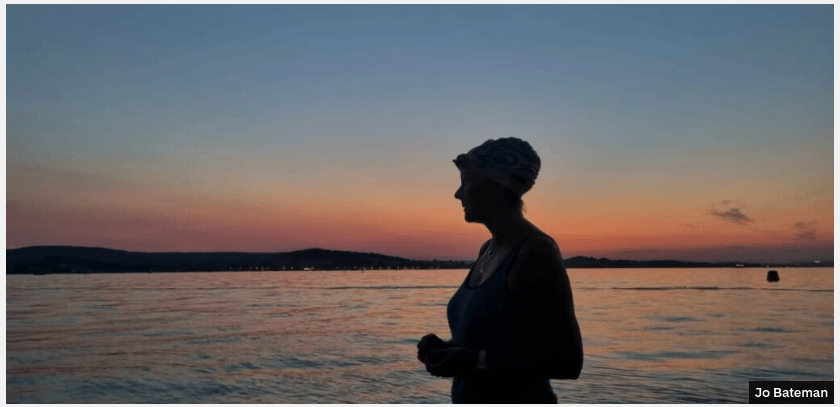
Jo Bateman, who attempts to swim every day off the coast of Exmouth, is taking legal action against South West Water, claiming its frequent sewage discharges into the sea have taken away her legal right to a public “amenity”.

However, in its defence to Ms Bateman’s claim, seen by i, the water firm states no one has a legal right to swim in the sea.

Despite owning the sewage network in Devon and Cornwall, South West Water also claimed it has no legal responsibility to keep the rivers and sea in the counties clean and clear of sewage. Water companies are, however, subject to regulation enforced by the Government and Environment Agency (EA).

The company said Ms Bateman’s claim has “no basis in law” and requested that the case be struck out and, instead, go to mediation.

Ms Bateman told i: “There is no chance I will go to mediation just to hear their public relations guff about how well they’re doing to improve the sewage network. I want to see them in court and that’s what I will do.”

On Thursday, figures from the EA showed that South West Water was one of the UK’s biggest polluters, and was responsible for three of the 10 worst pollution spots across England in 2023.

This week, i revealed the EA was investigating all South West Water’s sewage overflows since December.

Water companies are only permitted to discharge sewage into rivers or the sea if adverse weather conditions cause storm overflows. To do so in moderate weather conditions can be considered illegal.

In its defence against Ms Bateman’s claim that she has lost an amenity she is entitled to, South West Water states: “The law does not recognise such rights, nor does the law impose a duty on South West Water.”

For wild swimming – outside the bathing season – there is no legal duty to achieve a certain water quality standard, the firm said.

Its added that even during the peak summer holiday season, South West Water and other firms have no duty to meet certain water quality standards.

The defence states: “Even during the bathing season, there is no absolute right to swim each day.”

South West Water said it is the responsibility of the Government and the EA to ensure clean water, not the water companies that manage the nation’s rivers and coastline.

Neither the Department of Environment, Food and Rural Affairs nor the EA would comment on South West Water’s claims.

While rejecting Ms Bateman’s claims, South West Water acknowledged her “understandable concern about the environment”, adding “it is a concern shared by many of South West Water’s customers, and by South West Water itself”.

The firm has said it is investing record amounts to reduce the use of permitted storm overflows across the region, including £38m earmarked for Exmouth up to 2030.

Ms Bateman, who is claiming compensation of £379.50, has submitted an action to the Small Claims Court, alleging illegal sewage spills have affected both her physical and mental wellbeing.

She has detailed 54 instances when she believes the water company illegally dumped sewage into the sea during 2023. Ms Bateman is claiming the company’s pollution of the Exmouth coast has led to what is legally known as a loss of amenity, which means she must prove she has been injured.

Ms Bateman added: “Their defence is 16 pages of guff. They’ve said things like, I don’t have a legal right to swim in the sea, which, of course, is absolutely rubbish.

“It’s widely documented that you have a right to go in what are described as tidal and navigable waters, which obviously includes Exmouth’s beach and the River Exe.”

Many clean water campaigners dispute South West Water’s claims.

The Outdoor Swimming Society believes there is a right to swim in tidal and navigable waters. The coastline in Exmouth is both tidal and navigable.

It states “there is a public right of navigation” on all rivers and coastlines that can be navigated by any non-powered boat, and therefore “a right to swim”.

Kate Rew, co-founder of the society, added: “As human beings, we have the same right to clean water as we do to clean air.”

Daniel Start, the author of Wild Swimming, said: “Everyone is legally entitled to swim in the sea or tidal waters.”

Geoff Crawford, co-founder of End Sewage Convoys And Poollution Exmouth, criticised South West Water’s response to Ms Bateman’s claim.

“I believe that the company has both a legal and moral obligation to not pollute, to minimise pollution and use of emergency overflows to a minimum and to treat sewage as they are contractually obliged to do, not to discharge, overflow and dump it in our rivers, seas and wildlife sanctuaries.

“They seem to have and even speak with an utter contempt for anything other than maximum profit.”

However, a solicitor familiar with swimming rights suggests the law is not as clear as campaigners suggest.

Nathan Willmott, a partner at law firm Ashurst, said: “The statutory regime governing water companies has been held by the courts to cancel out certain common law rights that water users would otherwise have against water companies for allowing sewage discharge into the water and making it unsafe to swim in.”

But he suggested that if South West Water were to be found guilty of breaching the regulations on when sewage can been spilled into the sea, then its immunity from prosecution may not apply.

South West Water declined to comment on an ongoing legal case.

The water regulator Ofwat was contacted for comment.

The law on prosecuting water companies over sewage spills

The law around whether an individual can take legal action against sewage discharges appears to provide immunity to water companies if they are abiding by the Environment Agency (EA) regulations on spills.

David Green, a senior partner at law firm Edwin Coe, refers to a 2022 Court of Appeal decision in The Manchester Ship Canal Company v United Utilities Water case.

In 2022, a Court of Appeal decision found claims against water companies, that may have existed under common law, were superceded by the Water Industry Act 1991. It meant that if sewage discharges were due to an inadequate infrastructure, then the companies were not legally liable.

The ruling agreed that United Utilities’ regular discharges of untreated sewage into Manchester Ship Canal would, in common law, give rise to a legitimate damages claims. It was also undisputed that discharging untreated sewage was a breach of the EA regulations. 

Mr Greene agrees with South West Water’s claim that “the regulatory regime is enforceable ultimately by government”. 

However, Mr Greene added that the Court of Appeal’s judgement left open the possibility that common law claims could be valid for discharges caused not by “policy” or “capital expenditure” decisions but rather “operational” or “current expenditure” issues.  

“Whatever the conceptual tenability of this distinction, obtaining evidence pointing to an ‘operational’ decision leading to discharge is likely to be challenging,” added Mr Greene.

Nathan Willmott, a partner at law firm Ashurst, shared Mr Greene’s assessment.

He added: “While certain common law claims may persist – for example where the reason for the sewage release is ‘operational’ rather than infrastructure based – there is little incentive on the part of the water companies to prevent those releases of untreated sewage into rivers as there is little or no risk of civil claims being pursued against them.”

Investigation into Plymouth £72 million investment

An independent investigation is to take place into Plymouth City Council’s £72 million pension transaction deal.

Alison Stephenson, local democracy reporter www.radioexe.co.uk

The council used government money to invest in a consultancy firm to reduce a pension deficit in 2019. It says it has saved more than £9 million because of the decision.

But auditors raised concerns over the move which they said was unusual and is now the subject of a  investigation by the Department of Levelling Up, Housing and Communities (DLUHC).

Council Leader Tudor Evans (Lab, Ham) and head of finance David Northey have welcomed the scrutiny.

“We are happy to work with an independent team to review the whole process and ensure everyone can learn from this, ” said Cllr Evans.

David Northey added that he would be “open and transparent”.

Questions will be asked of audit and governance committee members from 2019 and officers and financial management and practices looked into.

The Labour party was in control of the council at that time.

“I hope that everyone will take the opportunity to tell them exactly what they know and didn’t know and any issues that arise will be in their recommendations I’m sure,” said Mr Northey.

He added that he had asked the levelling up department to conduct its investigation sooner rather than later so the council could draw a line under it, and that things had moved on.

The controversial decision has held up accounts from 2019/20 being approved, but the council confirmed this week that auditors Grant Thornton were now content with the accounts and were “in the process” of signing them off.

The auditors have made recommendations about the way such matters are handled and these had been implemented.

A spokesperson from Plymouth City Council added: “We have always been transparent about the transaction and it has been discussed at various council meetings, including the audit and governance committee.

“We knew that the transaction was novel in local government, but we were doing our best to think outside the box to ensure we didn’t need to make cuts to local services as our funding [from central government] continues to reduce. ”

Former council leader Cllr Richard Bingley (Con, Southway) said a formal independent investigation was needed to “get to grips” with what had happened.
 

England’s ludicrous experiment in privatised water is coming to a messy end 

Since privatisation in 1989, water bills across Britain have increased 360%, more than twice the rate of inflation (in Scotland, water is government-owned, and bills are lower). At these rates, you would think that our water system would be state of the art.

Adam Almeida Adam, a senior data analyst at the thinktank Common Wealth www.theguardian.com

The question mark over the future of Britain’s largest water supplier, Thames Water, has put its 16 million customers across London and south-east England – myself included – in an uncertain position. While water will still keep coming out of our taps, the price of these financial woes will probably be borne by customers and taxpayers. Meanwhile, Thames Water’s shareholders have spent the last three decades benefiting from the company’s massive financial gains. If ever we needed an example of the risks of selling essential infrastructure to investment firms, this is it.

Auditors warned in late 2023 that the debt-laden company could run out of money by April if shareholders did not inject it with much-needed cash. Now investors are saying they won’t provide Thames Water with £500m of emergency funding, leading to speculation that the company will be temporarily renationalised.

Since privatisation in 1989, water bills across Britain have increased 360%, more than twice the rate of inflation (in Scotland, water is government-owned, and bills are lower). At these rates, you would think that our water system would be state of the art. Instead, news broke this week that Thames Water was responsible for almost 17,000 occasions of dumping raw sewage in 2023 because of poor overflow systems that have had insufficient infrastructural investment.

In Margaret Thatcher’s imagination, selling off this public asset was meant to bring about shareholder democracy, but it has instead resulted in a major wealth transfer to Thames Water’s nine shareholders – institutional investors that are mostly based overseas in places such as Abu Dhabi, Beijing and Brisbane. The result is a company buckling under the weight of unserviceable debt, which over the years had not had sufficient investment, and had value extracted in the form of dividends. For their part, the shareholders released a statement criticising the water regulator, Ofwat, for the current crisis, saying it had “not been prepared to provide the necessary regulatory support for a business plan which ultimately addresses the issues that Thames Water faces”.

The largest shareholder – owning 31% – is the Ontario Municipal Employees Retirement System (Omers), a Canada-based public pension fund. Funnily enough, Omers happens to be the pension plan covering my grandmother, who collects a widow’s pension left behind by my grandfather, José. As a construction worker employed by the city of Toronto, José contributed to his pension using wages earned by paving the city’s roads in the summer and clearing the snow in the winter.

This is a bizarre arrangement, in which I (and millions of others) pay escalating prices for drinking water so that my grandmother in Canada and thousands of other pensioners can live out their golden years. Yet this model of ownership is becoming increasingly common as Britain’s essential infrastructure is bought by institutional investors with portfolios worth hundreds of billions of dollars. These firms typically manage money on behalf of their clients, which include pension funds, university endowments and insurance companies.

As a result of this system, public infrastructure changes hands in quick succession as investors turn a profit and leave companies in worsening financial states with each exchange. This has had grim consequences for people who rely on these essential services in their daily lives. During the pandemic, for instance, care homes loaded with high levels of debt (a staple business practice of institutional investors) saw death rates twice as high, according to one study that linked the rates to cost-cutting practices such as reduced staffing and limited supplies of personal protective equipment. The morbid effects of institutional investor ownership are also experienced by workers, as seen recently with the Body Shop’s employees facing probable layoffs while under the management of a private equity firm. Water systems, care homes and chain stores are all transformed into assets to be squeezed of their value.

Even the supposed beneficiaries of this system, such as my grandmother, enjoy quite muted gains from this ownership arrangement. The average Omers pensioner receives 28,040 Canadian dollars (£16,348) a year, not nearly enough to afford the cost of a bed in a long-term care home – another asset increasingly acquired by investment funds. Care for my grandmother’s complex health needs, resulting from a lifelong physical disability, would require her to pay $96,000 (£55,970) a year in a private facility. This means that my mother has become her full-time carer while she waits up to two and a half years for a bed to become available in a public nursing home.

By far the largest winners in this whole arrangement are the executives at the helm of investment firms that reap massive profits from these business practices. In 2022, the Omers CEO, Blake Hutcheson, made the equivalent of £3m. Hutcheson’s earnings pale in comparison to those of the CEO of Macquarie, an Australian asset manager that sold its share in Thames Water to Omers. The chief executive took home a whopping 30m Australian dollars (£15.5m) last year alone. These extraordinary figures are a severe indictment of a truly ludicrous system.

The solution, rather than tinkering with the ownership structure or again trying to regulate a privatised industry, is to ultimately end the exploitation of our public goods. England must follow the lead of the rest of the world – and bring water back into public ownership. Water systems act as a natural monopoly, meaning there is little to be gained in terms of “competitive innovation” through privatisation. Returning Thames Water to public ownership would mean that profits would no longer seep out through shareholder payouts, but would instead be reinvested back into the system by lowering water bills, upgrading crumbling infrastructure or funding future research and development. Public ownership of water companies could plug the leaks in the system, physical and financial.

Exmouth Sideshore expansion approved after planning appeal

A new building and five pay-to-use loos can be built at the Sideshore water sports and retail development on Exmouth seafront after a successful appeal.

Will Goddard www.exmouthjournal.co.uk

The approved plans are for a single-storey flexible office and community hub on a wedge of grass to the west, and five public toilets to the rear of Sideshore in an extension to the bin store. The new loos would open from dawn until dusk and use contactless payments.

East Devon District Council’s planning committee initially refused to give permission to a company called Queen’s Drive CIC for the project in February last year, but the Planning Inspectorate has overturned the decision.

The committee thought the proposed building would detract from the “character and appearance of the wider area” and would have been “detrimental to the openness and special landscape qualities of Exmouth seafront”.

But the inspectorate overruled the council.

An artist’s impression of the new building. (Image: Hilton Barnfield Architects)

It said the proposed structure would not be out of keeping with the character and appearance of this part of the seafront because of the nearby buildings, it would not interrupt views and it would occupy “a relatively small part of a grassed area and therefore would not compromise the openness of the site and its surroundings”.

The new building will have desk space for the Sideshore venue manager and “flexible meeting space” for the company and other community groups.

Planning documents say it will also “assist in facilitating events held on the adjacent Sideshore open space” and feature bird boxes, insect hotels, window plant boxes and trellises.

South West Water more than tripled the number of Budleigh sewage discharges in 2023

South West Water are holding a roadshow in Budleigh on Tuesday 2nd April. 

Book now, and let them know what you think!

[The Community Roadshow will take place from 12:30pm-16:30pm at the Venture Hall, Moor Lane, Budleigh Salterton, EX9 6QE, on Tuesday 2 April. Anyone looking to attend the event can pre-register here: Our roadshows | Get involved | South West Water]

In figures released today, South West Water more than tripled the number of Budleigh sewage discharges in 2023 vs 2022, dumping 546 hours of sewage into our brooks and beach area

Petercrwilliams fightingpoolution.com 

This time last year, South West Water trumpeted their ‘success’ in “reducing overflows by 50% and their duration by 75%”. We pointed out at that time that this statement was highly disingenuous, as any apparent ‘success’ was almost certainly caused by 2022 having 25% lower rainfall than average – and that they would need to take real action in order to bring sewage discharges down.

Well today, the results of that underinvestment were made clear.

Five of Budleigh’s eight sewage overflows were in full flow in 2023, with 187 incidents discharging 546 hours of sewage into our town streams and beach area. This represents a more than tripling of the number of events, and almost doubling of the discharge time, compared to 2022.

It sometimes seems that SWW focus more on spinning the news than tackling the underlying issues, so it will be interesting to see how they approach today’s shocking figures.

One item they’ve already trailed as a reason for the poor performance is the rainfall in 2023. They are talking about ‘exceptional’ rainfall, ‘which clearly they couldn’t plan for’ …. except that’s really not the case. The south west area rainfall in 2023 was not significantly different to the 2015-2022 pattern, and it was 2022 which was the outlier (approx 25% less rainfall compared to average years). As can be seen from the Met Office rainfall charts below, the South West had about 1,200mm rain in 2023, slightly less in 2021, and about 900mm in 2021.

So yes, 2023 was wetter than the previously very dry year, but that should not trigger a doubling of sewage into our local environment. It’s also worth noting that rainfall variation does not change the water companies legal obligations to achieve the Government-set discharge targets.

South West Water, and the Environment Agency, like to quote rainfall comparisons to the 30-year ‘Long Term Average’, and on that basis 2023 was a wetter year. The problem with that argument is that the UK is going through a sustained period of increasing rainfall. So justifying poor discharge performance on the basis of outdated averages just won’t cut it in future.

The largest single polluter remains the Lime Kiln Pumping Station, where 116 discharges dumped sewage for a total of 466 hours. That’s a discharge every three days on average. If South West Water want to make a major improvement in Budleigh’s water quality, they really must address the critical issues at Lime Kiln pumping station. As it’s built on a large car park, there can be no excuse for not having the space to significantly increase sewage holding capacity (so called storm tanks).

Lime Kiln actually has two sewage outlets. One goes out to Otter ledge, but the Emergency Overflow (which we know they did use in 2023) dumps raw sewage straight into the Kersbrook and from there directly into the sea. As both outfalls are covered by a single data point, we don’t know how much of that was dumped onto the shoreline, and how much was slightly further offshore. This lack of clarity really needs to change.

SWW’s pollution performance in Budleigh is fairly typical of their dire performance across the region. 2023 saw a shocking 1/2 million hours of sewage being discharged from SWW’s overflows, an increase of 88% on 2022.

Looking across the broader River Otter catchment area (which all flows out alongside Budleigh beach), there were more than a thousand pollution events in 2023, discharging over seven thousand hours of sewage into the river. Again, this was around 40% higher than in 2022.

This data highlights why we need SWW to take real action now, particularly to sort out the Lime Kiln sewage problems. No ‘spinning’, no excuses.

Water firm that drove truckloads of sewage to the sea in Exmouth may have broken law

“Many of the overflow lasted days, according to the water company’s own data, while two were non-stop for a full week.”

South West Water is facing investigations into more than 100 sewage spills in a popular Devon tourist town following major failures in the system since last December.

David Parsley inews.co.uk 

The Environment Agency (EA) has told i that every spill and subsequent transportation of thousands of truckloads of sewage through the seaside town of Exmouth is being investigated.

After a pipe burst in the East Devon town on 11 December, local residents had to endure up to 240 trucks a day moving sewage to pumping stations, one of which was broken and allowed sewage to flow directly into the sea.

Since the first pipe burst, two more pipes have failed, leading to further sewage spills.

While preliminary data for the level of sewage spills is yet to be confirmed, initial figures suggest that South West Water has pumped sewage into the sea and the River Exe estuary for 1,600 hours since the first pipe burst occurred.

Internal South West Water data obtained by i shows that at the pumping stations in Exmouth and nearby Sandy Bay there have been 106 sewage overflows so far this calendar year. These figures do not include the overflows between the 11 and 31 December.

Many of the overflow lasted days, according to the water company’s own data, while two were non-stop for a full week.

Water companies are only permitted to discharge sewage into rivers or the sea if adverse weather conditions cause storm overflows. To do so in normal weather conditions is against the law.

A spokeswoman for the EA told i: “We take all pollution incidents seriously and at Exmouth we are investigating all discharges linked to the burst pipe and the subsequent tankering operation.”

Andy Tyermen, one of the founders of End Sewage Convoys And Poollution Exmouth (ESCAPE), said: “The EA has confirmed they are investigating spills associated with the four pipe bursts on the rising main that started 11 December last year.

“Escape understands this will include the use of tankers to transfer sewage to Maer Road pumping station, which was already overflowing spilling sewage into the sea.

“As SWW does not provide a history of spills we estimate in Exmouth there have been 1,600 hours of overflows since the problems began.”

In January, South West Water transported millions of litres of sewage to what the EA called a “failed pumping station” just 200 metres from Exmouth’s sandy beach. The move was described by a local campaign group as “wilful pollution” by the company.

In February, the Government announced a ban on water company bosses receiving bonuses if a company has committed serious criminal breaches.

The ban will apply to all executive board members and chief executives and is set to come into effect later this year.

In 2023 the boss of Pennon Group, which owns South West Water, gave up £440,000 in bonuses in the wake of record water quality fines for the company.

Chief executive Susan Davy waived a £157,000 bonus and £283,000 in long-term incentives after the firm was fined £2.15m last April for illegally dumping sewage into rivers and the sea in Devon and Cornwall.

Despite giving up her bonuses, Ms Davy, who was paid more £1.6m the previous year, still took home her annual base salary of £460,000, while the firm’s shareholders benefited from a dividend payout of £122m, despite the company making a loss of £8.5m in the financial year to the end of March 2022.

The EA also has new powers to impose uncapped civil penalties and next year (2024-25) it is expected to quadruple inspections of water company assets to 4,000 a year, and then to more than 10,000 from April 2025.

This will include an increase in unannounced inspections, strengthening oversight of water companies and providing greater assurance alongside operator self-monitoring.

The EA spokeswoman added: “We continue to hold polluters to account and since 2015, we have secured over £150m in fines through prosecutions.”

A spokeswoman for South West Water declined to confirm the number of sewage spills since mid-December, adding that the company does not “comment on live regulatory investigations”.

Planning applications validated by EDDC for week beginning 11 March

Apologies – a little later than usual this week

Tories now the party of the 1 percent

Labour has 99% chance of winning next election, says polling guru John Curtice

The party of the 1 percent (chance): Though Labour has been consistently riding 20 points clear of its rivals, Tory strategists still insist the polls will narrow dramatically in the heat of the election campaign. But Curtice says the chances of a Tory turnaround are fractional, adding that Keir Starmer’s party also stands a far better chance of forming a government in the event no one wins a majority. “The Labour Party will be in a much stronger position to negotiate a minority government than the Conservatives because, apart from possibly the DUP, the Conservatives have no friends in the House of Commons,” he said. Happy Easter! London Politico Playbook

“I see no crisis” just raise productivity 5% to meet the challenge. Millionaire Sunak on local government funding

What bubble is our Prime Minister living in?

Is he totally detached from the everyday life of ordinary people? – Owl

Sunak denies ‘crisis’ in local government funding despite bankruptcy warnings

Pippa Crerar www.theguardian.com 

Rishi Sunak has denied there is a “crisis” in local government funding despite warnings that well-run councils are on the brink of bankruptcy and local services at risk without more support.

The prime minister admitted that councils faced “challenges”, in particular with inflation, which has significantly outpaced recent cash injections, at the cross-party liaison committee.

The Local Government Association has warned that councils are starting this financial year in a “precarious position” financially, and having to scale back or close a wide range of local services.

It has calculated that English town halls need an extra £4bn over two years just to maintain services at current levels, or risk a financial crisis, against a backdrop of significant spending cuts since the Conservatives came to power 14 years ago.

Clive Betts, the chair of the levelling up, housing and communities committee, asked whether there was a crisis, to which Sunak responded: “I wouldn’t characterise it that way.

“Of course there are challenges, particularly with inflation, which is why … the overriding economic priority of the government was to bring inflation down because that will help local councils with their finances too, as well as helping families up and down the country.

“And if you look at what’s happened from central government to local government over this parliament, since 2019, the grant in cash terms has more than doubled.” However, Betts pointed out this was in the context of a 30% cut in councils’ spending power since 2010.

Tuesday’s committee appearance was Sunak’s last before local council elections on 2 May, in which the Tories are expected to face a wipeout.

In a wide-ranging session, the prime minister promised that the public could “safely assume” the pensions triple lock would remain in place throughout the next parliament if the Tories win the election, after Jeremy Hunt confirmed it would be in the party’s manifesto.

The triple lock has become a hallmark of successive Tory governments since it was announced in 2010 but there has been a debate about its long-term future due to its costs. Sunak, however, insisted it was affordable.

Sunak suggested that while public spending would continue to grow in real terms, public services must become 5% more productive. “I do think it’s right that we focus on productivity to get more out of the investment we’re putting in to public services,” he said.

“To give just one statistic – public sector productivity is around 5% lower today than it was before the pandemic. So, no one is asking anything heroic; it’s just a return to where we were. Obviously the private sector has managed that.”

There was a heated row over the government’s flagship Rwanda deportation scheme, with Sunak objecting to the Scottish National party MP Joanna Cherry’s question about whether he was proud of telling Tory MPs to vote against an amendment preventing Afghans who had supported British forces from being deported to Rwanda.

“I really disagree with that characterisation,” he said, adding that in light of recent debates in parliament about MPs’ intimidation, “I actually think characterising like that is deeply unhelpful.”

The prime minister refused to say if the government had finally found an airline willing to fly asylum seekers to Rwanda, suggesting it would be subject to commercial confidentiality.

Responding to other questions, Sunak declined to give a date for when defence spending would hit the 2.5% of GDP target. He also said the UK would continue to push Israel to allow more aid into Gaza, particularly by land.

He acknowledged concerns that the UK had backed the UN security council’s Gaza ceasefire resolution even though it did not explicitly condemn Hamas’s actions. But he added that “whilst not perfect”, the UN’s position was “close enough” to the UK’s position that it should support it.

In a lighter moment, the prime minister gently mocked his predecessor Liz Truss’s claim that the “deep state” had brought her down. Asked whether he was a member of the deep state, he replied: “I probably wouldn’t tell you if I was.”

South West Water make bold assertions – do they stand scrutiny?

“The increase in the storm overflow spills this year can be accounted for by the amount of named storms and weather warnings in 2023.” (South West Water) .

“Can be accounted for” – Is an assertion that needs detailed justification.

Average rainfall in 2003 was unexceptional. As Feargal Sharkey keeps saying, and said so forcefully yesterday on BBC’ ‘s “World an One”, water companies can legally only discharge overflows in “exceptional” conditions. Named storms are not necessarily exceptional.

Increased housing development without the concomitant increase in capacity to carry away and treat the waste water is also a significant underlying factor. (Increased connections increases revenue.)

“We were one of the first water companies to have all our storm overflows monitored meaning we know exactly what is happening, when and where, allowing us to target investment and make changes where it matters most.” (South West Water)

But what about the unmonitored emergency overflows?  See what comes out of them here.

And do they really know what is going on? These freedom of information requests suggest not. 

“We will also be the first water company to meet the Government target of less than 10 spills per overflow, per year – a decade ahead of target.” (South West Water)

What evidence exists to back up such an assertion, are they just targets? We have yet to see any detailed, funded, plans.

Anyway this addresses only spill frequency, there is also the matter of quantity. You could reduce the spill frequency to only once a year just by leaving the sluice gates open! – Owl

Sewage spills from storm overflows in the South West in 2023

Adam Manning www.exmouthjournal.co.uk

New figures from the Environment Agency show South West Water spilled sewage into the sea for 530,737 hours this year.

The figures relate to England’s storm overflows, which dump untreated sewage into rivers and the sea, usually during heavy rainfall to stop sewers backing up and which are now all monitored by water companies.

The number of hours of sewage spills from monitored storm overflows for South West Water:  was 530,737 hours in 2023. Up from 290,271 hours in 2022.

The average duration of sewage spills from monitored storm overflows for South West Water: was 9.1 hours. Up from 7.7 hours in 2022.

The total number of sewage spills from monitored storm overflows for South West Water was 58,249. Up from 37,649 in 2022.

The average spills per monitored storm overflow was 43.4 up from 28.5 in 2022.

South West Water said: “We care about our 860m of coastline, our regions 100% bathing water quality, which we have successfully maintained for 3 consecutive years and protecting the environment now and in the future.

“We were one of the first water companies to have all our storm overflows monitored meaning we know exactly what is happening, when and where, allowing us to target investment and make changes where it matters most.

“We are serious about tackling storm overflows and change of this scale takes time, ambition, and increased investment – and that is why we are investing £850m in our region over 2 years.

“The increase in the storm overflow spills this year can be accounted for by the amount of named storms and weather warnings in 2023. It’s clear we need to redesign our systems, which we are already doing.

“We will also be the first water company to meet the Government target of less than 10 spills per overflow, per year – a decade ahead of target.”

Figures published by the Environment Agency show there were 464,056 spills in 2023, up 54% from 301,091 in 2022, which the organisation said was partly due to England experiencing its sixth-wettest year on record.

The company behind South West Water and Bristol Water has abandoned its ambition to reach a four-star environmental performance rating in 2024, blaming ‘current operating conditions’. South West Water delays environmental performance target

The latest data shows nationally, the duration of sewage spills had more than doubled from 1,754,921 hours hours in 2022, to 3,606,170 hours in 2023.

Both the frequency and duration of spills were also up on 2020 levels, which saw comparable amounts of rainfall, although the number of monitored storm overflows had also increased in that time.

United Utilities had the highest average number of sewage spills per storm overflow of any water company in England last year, at 45.4, followed by South West Water (43.4) and Yorkshire Water (35.9).

South West Water has become the focus of attention in East Devon over the past few years with environmental campaign group ESCAPE Exmouth being very vocal on the issue. 

Water companies say they are investing in tackling pollution from storm overflows and sewage infrastructure, but have faced criticism over profits, bonuses and the way the businesses are managed.

Beaches rated as excellent can be hit by pollution from storm overflows after bad weather, causing warnings against swimming to be issued on multiple occasions. This is the case in Exmouth where the beach is often classed as ‘not safe to swim’ after heavy rain.

Data also show none of England’s rivers are in good overall health and (23%) are classed as in poor or bad overall condition, according to an assessment based on the combination of their chemical pollution and “ecological” state, which measures the health of aquatic plants, fish and insects.

All English rivers are failing on chemical health and just 15% of stretches of waterway are in a good ecological state, according to a recent report from the Rivers Trust based on official data gathered in 2022.

Figures from the Environment Department (Defra) show that wastewater is responsible for 36% of pollution affecting rivers and lakes, while 40% is down to runoff of pesticides, fertilisers, slurry and soil from farming.

Average 2023 rainfall in South West not exceptional, beware the spin

Peter Williams comments on ESCAPE

So here’s the official rainfall map for the last three years. Looks like 2021 and 2023 have had an average of about 1,200mm rain in the South West South West Water region, 2022 being the anomaly at around 900mm. This totally explains any reduction in sewage discharges from 2021 to 2022, but indicates that 2023 is not in anyway unusual (contrary to SWW’s PR messaging!). In fact, it’s pretty much the same as 2015-2023 average. So let’s see IF South West Water try and spin “excess rainfall” to explain their dire performance.

We need to counter this disinformation wherever it is promoted.

Peter Williams

4m hours of raw sewage discharges in England in 2023, data expected to show

More than 4m hours of raw sewage discharges poured into rivers and seas last year, a 129% increase on the previous 12 months, new figures are expected to reveal on Wednesday.

Sandra Laville www.theguardian.com 

Total discharges from the 14,000 storm overflows owned by English water companies that release untreated sewage into rivers and coastal waters increased by 59% to 477,972, making 2023 the worst year for sewage spills, according to an early estimate of the Environment Agency figures seen by the Guardian.

Senior industry sources were preparing for the government to turn its guns on water companies after the record year of discharges. The Environment Agency said it was setting up a whistleblowing hotline for people who work in the industry to report any activity that concerns them.

The heavy rainfall over the autumn and winter is likely to be blamed by the industry for the huge rise. Storm overflows are supposed to be used only in extreme weather but for many years they have been used routinely, discharging raw sewage even on dry days in some cases. The academic Peter Hammond has shown how water companies are routinely using storm overflow discharges in their water management.

This year, for the first time every storm overflow has been fitted with a monitor, known as an EDM, but the scale of the rise in discharges is beyond what full monitoring would be expected to provide.

The scale of releases into waterways comes as rivers in England are at crisis point, suffering from a toxic cocktail of raw and treated sewage pollution, chemical toxins and agricultural runoff.

The revelations will put pressure on the water industry and the government, whose plans to tackle storm overflows have been criticised for not going fast enough. The plan aims to eliminate only 40% of raw sewage overflows into rivers by 2040 and discharges would continue being released into waterways until 2050.

In the last few weeks ministers have engaged in a flurry of announcements in anticipation of the shocking data on record sewage spills.

These included an announcement of a £180m plan to fast-track action on sewage discharges, in the face of criticism not enough is being done.

The water industry wants to invest a record £96bn to the end of the decade to tackle sewage discharges, leaks and the impending water supply crisis but has been criticised for passing the costs on to customers for investment that should have been carried out years ago.

The regulator Ofwat has to decide whether to allow companies to increase water bills to pay for the investment. Some customers will face huge bill rises to pay for vital infrastructure work. Thames Water is seeking to raise bills the highest of any company, by 40 per cent. Ofwat is the ultimate arbiter of whether the industry will be allowed to pass the cost directly on to customers as they seek to tackle years of underinvestment and the pressure of extreme weather from climate change.

When the full data from every storm overflow in England is released by the Environment Agency on Wednesday, some rivers and seas are likely to be shown to be suffering hugely from sewage pollution.

As well as total discharges increasing from just over 301,000 in 2022, the average discharge per storm overflow has increased to almost 35, a 52% increase, suggesting huge surges in spills into some waterways.

More than 60 discharges a year from a storm overflow should spark an investigation by the Environment Agency. The agency is in the middle of a criminal investigation into potentially illegal discharges by water companies and the regulator Ofwat is investigating six firms for widespread illegal sewage dumping from treatment works via storm overflows.

Industry insiders said groundwater ingress into pipes is to blame for some of the scale of the discharges.

Figures from the Met Office show 2023 had four individual months within the top 10 wettest on record and the UK recorded its sixth wettest October since 1836 last year.

Met Office assessments said Storm Babet in the autumn brought the third wettest three-day period on record for England and Wales. In November Storm Ciarán was an exceptionally powerful storm, comparable to the Great Storm of 16 October 1987. Rainfall in the autumn of last year was 410mm, which is 122% of the 1991-2020 average.

Defra has been approached for comment.

Pay more for food if you want to cut sewage spills

Consumers should pay extra for food so farming becomes more sustainable and better for the environment.

Alison Stephenson, local democracy reporter www.radioexe.co.uk 

That’s just one of the ways to help improve water quality suggested at a special policy development committee of North Devon Council, where members of the public were invited to ask questions of a panel of experts.

Another suggestion is for councils to ask developers to clean up their act so that waterways don’t become polluted.

The meeting at Petroc College followed public concerns about sewage spills. Representatives attended from South West Water, the Environment Agency, North Devon Biosphere, Surfers Against Sewage, Westcountry Rivers Trust, North Devon Surfing Reserve and members of the farming and angling communities.

South West Water has committed to having no more than 10 spills from its 1,342 storm overflows a year by 2030, which is 20 years ahead of the government’s target.

The company, which reported 38,000 sewage spills in England in 2022, is investing £2.8 billion into improving water quality with a pledge to fix storm overflows at beaches and eradicate pollution.

But people from SWW told the meeting the company is only responsible for 30 per cent of water quality issues. Agricultural and surface water run -off from developments accounts for a large proportion of the problems.

Experts said all the data currently being collected, including from “citizen scientist” volunteers who have water testing equipment from Westcountry Rivers Trust, should not become a “data fog” but be used intelligently to inform solutions.

Exmoor farmer Robin Milton, who is also an independent North Devon councillor for Bishops Nympton, said when he was growing up he saw salmon and brown trout in the local rivers, but not any more.

He said 50 years of the government’s “cheap food policy” meant farmers had been free to do what they liked with their land, with limited regulation of chemicals which end up in the rivers.

Policies are changing to ensure farming is sustainable and protects the environment, but this means consumers having to pay more for food to make it a viable option for farmers, he said.

He said councils like North Devon would be tested on their commitment to biodiversity, which requires developers to leave the natural environmental in a better state than when they arrive. It is an opportunity to improve the environment and water quality through the planning process. Residents were asked to hold councillors to account over this.

Director of asset management at South West Water Mark Worsfold said developers should be encouraged to come up with ‘nature-based sustainable drainage solutions’ (SuDs) to reduce surface-water flooding and river pollution.

He said they work with Plymouth City Council on such projects and want more councils to come forward.

One resident said after reporting fish deaths in the River Torridge and signs of chemical pollution he was told by the Environment Agency that it was not of “major impact”.

Bruce Newport from the Environment Agency said they deal with the worst incidents first and there was are “simply not enough resource” to do any more.

The EA is investing in better technology and 500 more employees in the regulation department and would be much more effective at monitoring rivers in the future, he said.

North Devon’s beaches are currently rated excellent, with the exception of Hele Bay, Ilfracombe, but its rivers and streams are a different picture. The meeting heard that out of 98 bodies of water, 83 had failed to meet good ecological standards.

Residents asked for year-round testing of bathing waters, of which there are 151 in South West Water’s area. Right now they are tested from May to September.

Director of external liaison at South West Water Alan Burrows said wet wipes are still ending up in water courses following heavy rainfall, despite a campaign  to only put “pee, poo and paper” down the loo.

“The system was not designed for this. It’s like putting diesel in a petrol car. It’s a foreign body and they are causing a significant amount of problems on our network, for homes and the environment”

Animals in rivers and seas consume wet wipes which can result in them suffocating or starving to death.

This article was amended on 26 March to remove a reference to SWW monitoring half its overflows and being ahead of target on the rest. The company says it monitors all overflows.