Current bed cuts in Devon hospitals – the reality

“The number of beds at a Devon hospital trust have fallen by more than a quarter over the past six years.

In July to September 2010, the average number of general and acute beds open overnight at Torbay and South Devon

The occupancy rate for these beds has grown from 64.6% in July to September 2010, to 87.7% in 2016, an increase of 36%, one of the highest in England.

At Northern Devon, the number of beds has also dropped by 21%, from 370 to 294, with occupancy rates rising from 85.5% to 86.4% over the same period.

Across England, for general and acute beds open overnight, the occupancy rate between July and September was 89.1%, up from 87% over the same period in 2015.

The average daily number of beds open overnight was 129,458 in July to September 2016 compared with 130,774 in April to June. The average occupancy rate for all beds open overnight was 87.5%.

Health experts advise that occupancy levels should ideally be under 85%. Anything over this level is regarded as riskier for patients as this leads to bed shortages, periodic bed crises, and a rise in healthcare-acquired infections such as MRSA.

Commenting on the numbers, Mr Ian Eardley, a consultant urological surgeon and Vice President of the Royal College of Surgeons, said:

“The NHS has been able to reduce bed numbers as medical advances mean more modern surgery can take place without an overnight stay. However, these figures suggest bed reductions have now gone too far in the absence of sufficient social care or community care alternatives.

“We are now seeing increasing numbers of frail older patients in hospital because they have nowhere else to go. The lack of additional money in the Autumn Statement for social care and the NHS is only going to make this even harder.

“Today’s figures will come as no surprise to frontline staff who struggle every day to provide for their patients because of increasing demands and a shortage of hospital beds. I and too many of my colleagues all around the country are regularly having to cancel patients’ operations due to a lack of beds and delays in transferring patients back into the community.

“A number of sustainability and transformation plans are proposing further hospital bed reductions. Today’s figures suggest NHS leaders need to think carefully about whether this is a good idea without first putting in place better care in the community.”

The Royal College of Surgeons warned the figures almost certainly underestimate hospital bed shortages in the NHS. The Nuffield Trust think tank warned last month that NHS England’s bed occupancy statistics do not show the true scale of the problem, stating that “with a growing number of patients coming and going during the day, counting bed occupancy at midnight means that crunch times are often invisible”.
http://www.exeterexpressandecho.co.uk/number-of-hospital-beds-in-devon-falls-creating-potential-risk-for-patients/story-29936995-detail/story.html

Greedy housebuilders make billions while getting taxpayer subsidies – yet fail thousands of homeless families

The Chancellor has been blasted for giving more taxpayer ­subsidies to greedy housebuilders – who rake in billions while making the homes crisis worse.

In his Autumn Statement, Philip Hammond ploughed another £1.4bn into the affordable homes programme as well as £1.7bn for developers building on public sector land.

Yet the biggest builders – Persimmon, Taylor Wimpey, Barratt and Berkeley Group – have all missed affordable housing targets set by councils in recent years, while watching profits soar.

They even plan to pay out £6.6bn in extra shareholders’ dividends by 2021, the Bureau of Investigative Journalism found.

Now housing experts are ­questioning why builders need subsidies when the top four raked in more than £2bn in pre-tax profits last year – with their bosses getting immensely rich.

Eight directors of major housebuilders together earned £230m in the past five years.

Meanwhile, the number of homeless families in temporary accommodation in England has risen 45% since 2010 to 73,120.

Two bosses, Tony Pidgley and Rob Perrins, of Berkeley, have taken £141m in pay and share sales since 2011. They have shares totalling £440m.

MPs and campaigners have accused the top firms of keeping housing supply low to drive up prices.

The big four built 50,000 houses between them in the past year, but are sitting on 450,000 empty building plots.

Joanna Kennedy, chief of housing advice firm Z2K, said: “Only a fool would imagine the big volume builders work in the national interest.”

Shadow Housing Minister John Healey said: “We need much tougher rules. Non-developing firms should forfeit planning permission.”

The big four are all in the Home Builders Federation, who told us: “House building is a high risk business.”

http://www.mirror.co.uk/news/uk-news/greedy-housebuilders-make-billions-getting-9342409

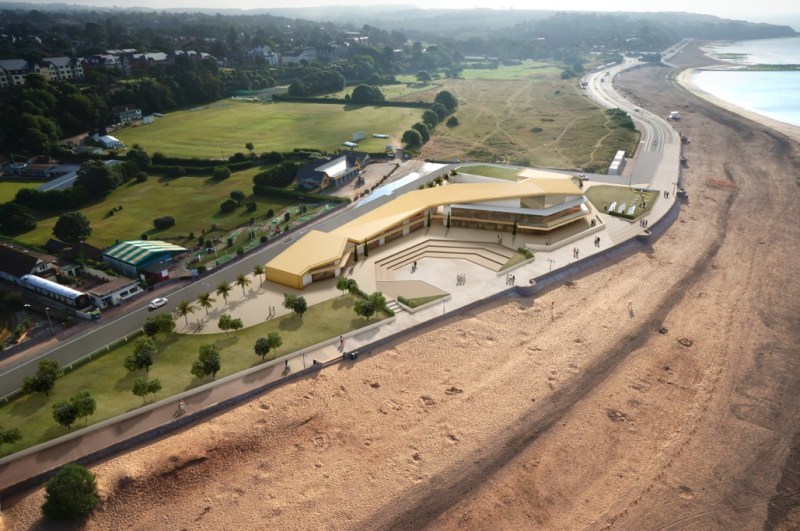
is this a mock-up of Grenadier’s Exmouth watersports centre?

Sent by a correspondent who says it has appeared on the Grenadier website:

img_1345

Owl thinks … well, no matter what Owl thinks … what do others think?

If it ISN’T a Grenadier mock-up, perhaps the company would confirm this and perhaps send us an image of their plans.

East Devon ward boundary changes- days left to comment

“Professor Colin Mellors, Chair of the Commission, said: “We will consider every submission we receive from local people before we draw up draft recommendations. We will then open another phase of consultation on those proposals in February.

He added: “Don’t miss this chance to have your say on how your council is run.”

This phase of public consultation closes on December 5.
Consultation responses should be sent to:The Review Officer (East Devon), Local Government Boundary Commission for England, Floor 14, Millbank Tower, London SW1P 4QP”

More information at:

http://www.exeterexpressandecho.co.uk/it-s-the-last-call-for-views-on-ward-boundary-changes-in-east-devon/story-29936690-detail/story.html

South-west Cross Country rail service “decimation: Newton Abbott services cut and more trains terminating at Exeter

No doubt our Local Enterprise Partnership is on the case. What, it isn’t? What a surprise! Wasn’t “connectivity” one of its responsibilities?

But perhaps it won’t be long before Hinkley C gets its own station to make up for such losses!

Will we be seeing DCC transport supremo Stuart Hughes commenting on this? Hhhmm …

http://www.torquayheraldexpress.co.uk/hands-off/story-29925191-detail/story.html

Cranbrook 0-2 nursery to close before Christmas

“Families have reacted with fury at plans to shut Cranbrook Nursery’s provision for babies up to two years old at incredibly short notice.

An email on behalf of the Tillhouse Road nursery was sent out to parents at 7pm yesterday, telling them they are considering closing the baby room and restructuring the rest of the nursery’s provisions.

The closure of the baby room could be as soon as Friday, December 16.
A consultation period has now opened.

One parent, Kelly Keatley, said: “Obviously this is upsetting and frustrating as they are stating that the possibility is that the last day could be December 16 which gives us very little notice to find an alternative.

“It is supposed to be a consultation process but we wonder what that really means.

“They are making this decision without regard for the implications for working parents now in a position where they could be without childcare for January.”

…The nursery, part of Cranbrook Education Campus, consists of four rooms that currently cater from birth to five years.”

http://www.exeterexpressandecho.co.uk/fury-at-to-permanently-shut-cranbrook-nursery-before-christmas/story-29936560-detail/story.html

Most LEP money going to areas other than south west

Autumn Statement 2016 – Cities, regions, and nations

3.49 Local infrastructure – The government will award £1.8 billion to Local Enterprise Partnerships (LEPs) across England through a third round of Growth Deals.

£556 million of this will go to the North of England,
£392 million to LEPs in the midlands,
£151 million to the east of England,
£492 million to London and the south east, and
£191 million to the south west.

Awards to individual LEPs will be announced in the coming months. This funding of local infrastructure will improve transport connections, unlock house building, boost skills, and enhance digital connectivity. The government will give mayoral combined authorities powers to borrow for their new functions, which will allow them to invest in economically productive infrastructure, subject to agreeing a borrowing cap with HM Treasury. The government will also consult on lending local authorities up to £1 billion at a new local infrastructure rate of gilts + 60 basis points for three years to support infrastructure projects that are high value for money.

3.50 English devolution – The government remains committed to devolving powers to support local areas to address productivity barriers. The government will continue to work towards a second devolution deal with the West Midlands Combined Authority and will begin talks on future transport funding with Greater Manchester. The government will transfer to London, and to Greater Manchester, the budget for the Work and Health Programme, subject to the two areas meeting certain conditions, including on co-funding. The government has also confirmed the Greater London Authority’s (GLA) affordable housing settlement, under which the GLA will receive £3.15 billion to deliver over 90,000 housing starts by 2020-21, and will devolve the adult education budget to London from 2019-20 (subject to readiness conditions). The government will continue to work with London to explore further devolution of powers over the coming months.

3.51 Regional productivity – The government has published a strategy setting out an overall approach to building the Northern Powerhouse, through addressing the key barriers to productivity that the region faces. The government will also publish a Midlands Engine strategy shortly.

3.52 Northern Powerhouse Investment Fund and Midlands Engine Investment Fund – The Autumn Statement confirms the arrangements for these funds, and the British Business Bank will make its first investments from the Northern Powerhouse Investment Fund in early 2017 to support local SMEs and its first investments from the Midlands Engine Investment Fund shortly after.

3.53 Scotland – The government will work with local partners and the Scottish Government towards a city deal for Stirling. The government has confirmed funding for city deals in Aberdeen and Inverness, is making progress towards a deal with Edinburgh, and will consider proposals for a deal with the Tay cities once they are brought forward, meaning all Scottish cities have the opportunity to agree a city deal. The government is also continuing to work with the Scottish Government to implement the Scottish Government’s fiscal framework and new powers set out in the Scotland Act 2016. (37)

3.54 Wales – The government is making good progress in discussions with local partners and the Welsh Government on a city deal for the Swansea Bay City Region. It will also consider options for a growth deal in north Wales and looks forward to receiving proposals from local partners. The government is also continuing to support the implementation of the £1.2 billion city deal for the Cardiff Capital Region, which was agreed in March.

3.55 Northern Ireland – The government continues to work closely with the Northern Ireland Executive towards the introduction of a Northern Ireland rate of Corporation Tax, subject to the Northern Ireland Executive demonstrating it has placed its finances on a sustainable footing.”

Remember, that small amount of money for the south-west has to be shared with:

Swindon and Wiltshire LEP
West of England L
Dorset
Cornwall …

… Devon and Somerset

Not quite the Mighty Boosh then, our LEP!

The true cost of NHS cuts

“Hospitals have been told to discharge thousands of patients and pass some scheduled surgery to private organisations to reduce pressure ahead of a potential winter crisis, it was reported.

Leaked memos also revealed that managers have been banned from declaring black alerts, the highest level, when hospital services are unable to cope with demand, the Daily Telegraph said.

The newspaper claimed instructions were sent by NHS England and the regulator NHS Improvement last month to reduce the levels of bed occupancy in hospitals, which are the most crowded they have ever been ahead of winter.

In the three months to the end of September, 89.1% of acute and general beds were full, compared with 87% last year, prompting the order for hospital trusts to take the drastic measures.

The goal is to reduce occupancy levels down to the recommended safe limit of 85% from December 19 to January 16, the Telegraph said.

Dr Mark Porter, chairman of the British Medical Association, said: “This is evidence of an over-stretched healthcare system that the government has failed to properly fund, which must outsource patient care to private providers to cope with predictable patient demand.”

Hospitals have been told to turn to the private sector to “maximise elective activity”, with operations such as knee and hip replacements likely to be among the outsourced procedures to help free up beds for urgent patients.

The measures are likely to have a significant cost to the NHS.

NHS England said plans to pace elective programmes and hospital discharges are put in place every year to maximise bed availability and reduce the possibility of cancelled operations.

A spokeswoman said: “Our ambition to reduce bed occupancy in hospitals over the festive period is about timely discharge and getting people to the most appropriate care setting ahead of the holidays, so there is capacity for early January when we know pressure is greatest.

“This is part of our well-rehearsed winter preparedness every year.”

A spokeswoman for both NHS England and NHS Improvement added there was a lack of a historic national protocol for hospitals when declaring alerts, leading to “a hotchpotch of confusing terminology”.

She said: “This has led to confusion between hospitals, ambulances and the public over what is happening, how to respond or how they can help.

“The new NHS guidelines are for hospitals to use when managing local operational pressures in order to deliver a consistent approach across the country.”

https://www.theguardian.com/society/2016/nov/26/send-patients-to-private-sector-to-avert-winter-crisis-hospitals-told

EDDC and Knowle – reasons for refusal of PegasusLife planning application – but will a new HQ sway councillors?

A letter from Michael Temple, Sidmouth

“Compare and Contrast

The highly controversial PegasusLife application for Knowle is to be decided at 10.30 am on Tuesday 6 December in the Council Chamber at Knowle, Sidmouth.

Readers might like to compare it with other recent PegasusLife applications:
1. Bath (assisted living): refused: “excessive and incongruous height”, “harmful impact upon surrounding heritage assets”, “nearby listed buildings undermined”, “the excessive tall building fails to respect its context”, “harmful impact on character and appearance of surrounding conservation area”.

Bristol (Nuffield Hospital site) – officers can’t support due to “excessive bulk and massing”, “doesn’t relate to surrounding context”, would “dominate the townscape”.

Wilmslow: refused: “too large, too high, no affordables”.

Harpenden (retirement flats) – refused due to “height (20.7 metres)”, “lack of privacy for neighbours”, “footprint 28 degrees greater than existing buildings”, “visually intrusive”, “residents’ parking would spill onto neighbouring roads”.

Knowle, Sidmouth (assisted living – or second homes?) – officers approve.

The East Devon District Council’s planning officer, departing from the Local Plan and its planning strategies, claims the the “benefits” to Sidmouth outweigh the harm to an English-Heritage listed building.

“Benefits”? Could he mean

the overbearing, intrusive impact on the park and neighbourhood of an excessively high, out-of-scale massed development?

the loss of heritage buildings and public assets like the Council Chamber where so many people met recently over the proposed hospital bed cuts?

the loss of weekend parking to this tourist town?

the loss of about 100 jobs?

the blot on Sidmouth’s skyline?

the loss to the public of the park’s fine lawn prospect?

the lack of a contribution towards affordable housing?

possible downtown drainage overflow during flash floods?”

Swire shows concern for (private) pensioners – no worries about the not-so-lucky?

Written Answers – Department for Work and Pensions: State Retirement
Pensions: Uprating (24 Nov 2016)

https://www.theyworkforyou.com/wrans/?id=2016-11-21.53946.h&s=speaker%3A
11265#g53946.q0

Hugo Swire: To ask the Secretary of State for Work and Pensions, what
information his Department holds on the number of pensioners whose
contributions were paid prior to 1997 who are not receiving annual
increases to their private pension payments which are in line with the
retail price index.

Written Answers – Department for Work and Pensions: State Retirement
Pensions: Uprating (24 Nov 2016)

https://www.theyworkforyou.com/wrans/?id=2016-11-21.53946.h&s=speaker%3A
11265#g53947.q1

Hugo Swire: To ask the Secretary of State for Work and Pensions, if he
will make an estimate of the potential cost to providers of requiring
all private pension payments, including to those pensioners whose
contributions were paid prior to 1997, to increase in line with the retail price index.

Is he thinking of retiring?

Big rise in hospital admissions for malnutrition

The number of hospital beds in England taken up by patients being treated for malnutrition has almost trebled over the last 10 years, in what charities say shows the “genuinely shocking” extent of hunger and poor diet.

Official figures reveal that people with malnutrition accounted for 184,528 hospital bed days last year, a huge rise on 65,048 in 2006-07. The sharp increase is adding to the pressures on hospitals, which are already struggling with record levels of overcrowding.

Critics have said the upward trend is a result of rising poverty, deep cutbacks in recent years to meals on wheels services for the elderly and inadequate social care support, especially for older people. …”

… The Department of Health figures showed that the number of bed days accounted for by someone with a primary or secondary diagnosis of malnutrition rose from 128,361 in 2010-11, the year the coalition came to power, to 184,528 last year – a 61% rise over five years.

Such patients only account for one in 256 of all hospital bed days, or 0.4% of the 47.3m total, but the financial cost is considerable as each bed costs the NHS an average of £400 a day to staff and given the condition each spell in hospital because lasts an average of 22 to 23 days.”

https://www.theguardian.com/society/2016/nov/25/huge-rise-in-hospital-beds-in-england-taken-up-by-people-with-malnutrition

Let’s add the Royal College of Surgeons to that list of NHS change critics

“The Royal College of Surgeons has warned of a chronic shortage of NHS hospital beds in England, after occupancy rates for overnight stays topped 89% for a fourth successive quarter.

The maximum occupancy rate for ensuring patients are well looked after and not exposed to health risks is considered to be 85%, a figure that has not been achieved since NHS England began publishing statistics in 2010.

From July to September this year the percentage of beds occupied in wards open overnight was 89.1%, compared with 87% in the same period last year. That was the last time it was below 89%.

The RCS said the figures, published on Thursday, made for alarming reading and indicated a failure to cope with the increasing number of older patients in hospital.

Ian Eardley, a consultant urological surgeon and vice-president of the RCS, said: “The NHS has been able to reduce bed numbers as medical advances mean more modern surgery can take place without an overnight stay. However, these figures suggest bed reductions have now gone too far in the absence of sufficient social care or community care alternatives. …”

https://www.theguardian.com/society/2016/nov/24/nhs-hospitals-suffer-from-chronic-bed-shortage-surgeons-say

Donald Trump and Devon devolution – what do they have in common?

What they have in common is, now The Donald has won his election, he is involving his family, his own businesses and his cronies in his political appointments and “strategic” decision-making.

If we have an elected Mayor with vested interests in Devon or Somerset or Devon AND Somerset, what checks and balances do we have to stop the Mayor putting his or her own interests first like The Donald?

If we get a Mayor with Hinkley C connections can we be sure that, where a decision on Hinkley C conflicts with a Devon interest, the Devon interest will have equal weight? Or vice-versa if the Mayor is Devon-centric.

And what if the Mayor has allegiance to neither county – only a national interest as a developer, a developer’s friend or is a large developer’s shareholder. What then?

We all know of politicians and business people with dubious reputations. Few politicians and even fewer members of our Local Enterprise Partnership are trusted. Who can we trust to represent us all?

Now the well-regarded Institute of Fiscal Studies joins health row

Institute of Fiscal Studies”

Chancellor Philip Hammond will not be able to resist calls for extra funding for health and social care for much longer, the head of the Institute for Fiscal Studies has predicted. …

http://www.publicfinance.co.uk/news/2016/11/pressure-will-mount-health-and-care-funding-boost-says-ifs

They join:

The King’s Fund:

Which reported that changes were kept secret from doctors and the public:

http://www.independent.co.uk/life-style/health-and-families/health-news/hospital-closures-stps-secret-kept-nhs-ae-public-kings-fund-england-chris-ham-stp-a7415836.html

The National Audit Office:

Which reports that the NHS is underfunded:
https://www.theguardian.com/society/2016/nov/22/nhs-financial-problems-endemic-and-no-longer-sustainable-national-audit-office-deficit

and

The UK Statistics Agency:

which says numbers simply don’t add up including the purported £10 billion extra cash:

https://eastdevonwatch.org/2016/11/23/and-now-the-uk-statistics-agency-criticises-nhs-funding-figures/

Who disagree? Theresa May and Jeremy Hunt. Their plan? Cut, cut, cut – then privatise what makes money and keep cutting essential services don’t show a profit.

Moral of this story: Don’t get sick but do get angry!

Hernandez refuses TV interview on police 101 shambles

Report on Spotlight just now. People unable to get through to police non-emergency 101 number because it was being used for internal police administration:

http://www.bbc.co.uk/news/uk-england-devon-37553204

Hernandez refused to appear on the programme simply saying that she had “challenged the Chief Constable to make significant improvement to the length of time the public take to get through to someone”.

Well, that’s alright then.

Recall that Hernandez and the Chief Constable are currently under investigation by other forces – Hernandez for alleged electoral expenses violations in Torbay and the Chief Constable for unguarded remarks during a TV interview.

Hernandez has been banned by the Police and Crime Panel for making political statements. Presumably, this has left her almost mute.

“£7.4 million of NHS funds for ‘reorganisation’ in eastern Devon”

Does Project Omega (see post below) include profligate spending on NHS ‘reorganisation’ to bring it to its knees so it can be privatised?

Health bosses have come under fire for spending £7.4million of NHS funds on ‘reorganisation’ – that campaigners say could have gone towards frontline care.

The Northern, Eastern and Western Devon Clinical Commissioning Group (CCG) is identified as one of the most economically challenged in the country with a predicted £384million deficit by 2020/21.

In response to the crisis, the region was chosen to undergo a drastic ‘transformation’ led by the Success Regime, which is proposing to axe 71 community hospital beds as part of a series of cuts.

Campaigners have hit out at plans that would see Sidmouth lose its inpatient beds and said patients should not suffer as a result of badly-managed finances.

District councillor Cathy Gardner said: “I think it’s shocking that £7.4million can be found for reorganisation but not for frontline care. Many will question how wisely NHS funds are being spent when management consultants and internal managers are using up so much cash.

“Health and social care in Devon has suffered from chronic underfunding. The NHS does need serious reform but not of the kind being undertaken under the guise of improvements.”

The CCG confirmed that the Success Regime in Devon received £1.4million in 2015/16 and a further £6million in 2016/17 – but stated that the money was specifically set to implement changes and was not taken from the region’s £1.1billion budget for health services.

Campaigner and chairman of the Sid Valley patient participation group Di Fuller said: “The additional costs of managing the Success Regime, to try and put right what CCG management had failed to do, have diverted yet more funding from frontline services in the NHS.

“We must not endorse cuts to try and put this right until CCG can prove that alternative provision will be safe and meets quality standards.”

A CCG spokesman confirmed a total of £3.3million was spent on the Success Regime’s first phases of ‘transformation’ in Devon, Essex and Cumbria, with a further £17million budgeted for 2016/17. He added that the Success Regime’s programme aims to transform the way care is provided with a move towards a ‘home-based’ model of care.

This is expected to save between £4.7million and £7million a year after reinvestment into community services.

The CCG says it is continually looking at how to make the administration of care more efficient and streamlined.

http://www.sidmouthherald.co.uk/news/7_4_million_of_nhs_funds_for_reorganisation_in_eastern_devon_1_4791348

Destruction of the NHS planned in Thatcher era National Archive documents show -‘The Omega Project’

“… Another document in the National Archives outlines radical plans to end universal free healthcare.

The document stamped “secret” was called, in keeping with films and books of that era, “The Omega Project”.

Civil servants noted that “for the majority it would represent the abolition of the NHS”.

But in spite of what was described as the nearest thing to a Cabinet riot in the history of the Thatcher administration, the prime minister secretly pressed ahead with the plans – before later backing down”.

http://www.bbc.co.uk/news/uk-38101020

The choice of name is chilling – Omega being the last letter of the Greek alphabet, Alpha being the first. So the phrase ‘Alpha and Omega’ came to mean ‘the beginning and THE END’.

It appears that it has been resurrected.

East Devon Alliance invites local politicians to Exeter health crisis rally

“To: Hugo Swire MP, Neil Parish MP, Mel Stride MP, Sarah Wollaston MP, Anne‑marie Morris MP, Peter Heaton‑jones MP, Gary Streeter MP, Geoffrey Cox MP, Kevin Foster MP, Oliver Colvile MP, Johnny Mercer MP

Cc: Jon Ashworth MP, Jeremy Hunt MP, Ben Bradshaw MP

Dear all,

As a representative of residents in East Devon I am addressing this to Devon MP’s but also to those in senior positions in parliament.

Will you be there when the National Health Service Bill (Margaret Greenwood MP) has its second reading? (By the way, that will be on 24th February 2017)

Will you back this bill? If not, why not?

Be aware: your electorate are watching. We in the East Devon Alliance are doing all we can to let them know how you vote on NHS and other healthcare issues, to counter the messages you try to get out down here that you are ‘against’ the current proposals to close community hospital beds. We know this issue is far bigger than that. We know that the 2012 Health and Social Care Act paved the way for the dismantling of the NHS. It’s taking a while for the public to wake up to what is being done, but they will.

And where is Labour? I am afraid a media blackout might be stopping us from hearing from the ‘opposition’. If you can mobilise your supporters all over the country, we will hit the headlines. Come the next election you might find there are new candidates opposing you in your previously safe seats. Or the person who gave you a run last time is out in front.

Are you prepared to continue with this programme to dismantle the NHS? Or do you have the courage to speak out and vote to reverse the changes?

Will you join us in Exeter on 3rd December to parade your support for the NHS as it was?

Please do let me know your position.

Yours sincerely,

Cllr Dr Cathy Gardner
Leader
East Devon Alliance

http://www.eastdevonalliance.org.uk/cathy-gardner/20161124/open-letter-mps-ministers-nhs-reinstatement-bill/

Devolution: “flawed fiscal ‘power’, an unjust system, unfulfilled potential”

“… local authority funding (for services) will become far more volatile as year to year income will be intrinsically linked to those who pay rates locally and those who choose to appeal. So, in sum business rates devolution in its current guise is less about devolved power and more about the devolution of risk and the associated, potentially negative, effect on services. …

… In 2016, there is no such thing as the UK housing market, rather a polarised collection of divergent, individual markets (hyper-dynamic price inflation in London versus low demand and price stagnation in parts of Liverpool & East Lancashire, for example) bearing little or no resemblance to the situation at the time of the last revaluation some 25 years ago.
The effect of this is an increasingly unfair council tax banding where a resident in Blackpool in a Band A property currently pays 35% more in council tax than a resident in a Band A property in Kensington and Chelsea, where average gross earnings are more than double that of those living beside the Pleasure Beach. …

… So far, devolution has only served to deflect risk and responsibility for the local effect of national cuts and add a further layer of complexity to an already intractable local government governance system. The lack of real power in devolution deals to date does not fully equip places or the incoming City Mayors to effectively deal with the challenges of the modern economy whilst driving tax revenue.

Without true devolution of power, the potential contribution of local government towards a prosperous future for people and place is in danger of drowning in a mire of unnecessary fiscal constraints and excessive levels of localised risk.”

http://www.cles.org.uk/wp-content/uploads/2016/11/CLES-Think_Devolution-Beyond-the-rhetoric_Nov-2016.pdf

Retired Cornwall GP: undemocratic and secret plans bad for Cornwall and Derriford Hospital

Radical cuts to Westcountry health services are being planned without consultation and in a rush, says Dr Jan Macfarlane. In an open letter to Cornwall’s councillors she calls for the full plans to be made public.

“I am writing to you with regard to the NHS Sustainability and Transformation Plan (STP) which was due to be submitted to NHS England.

“Sustainability”, as I am sure you know, means a plan to eradicate the financial deficit in the short-term. “Transformation” means plans to provide a cheaper health service in the longer term. This means drastic cuts driven, not by a desire for health care improvement, but simply in order to balance the books.

Prior to 2012 there was no deficit. The current deficit has been caused by a deliberate political choice to under-fund the National Health Service.

Britain’s spending on its health service is falling by international standards and, by 2020, will be £43 billion less each year than the average spent by its European neighbours, according to research by the independent King’s Fund.

Devon’s plan is already in the public domain and includes the loss of 400 acute beds, the loss of 190 community beds, and an 11% cut in the nursing workforce. “Consolidation of services” means that North Devon District Hospital will lose maternity neonatal and paediatric services and possibly acute stroke services.

The pressure group Save Our Hospital Services (SOHS) is mounting public opposition in North Devon and has a good Facebook page and website. Clearly this is of great interest to us in East Cornwall because 20% of Cornwall’s citizens access their secondary care from Devon.

Derriford Hospital is already struggling to cope with the workload and is frequently on “red alert” with bed shortages. It must now absorb much of North Devon District Hospital’s workload.

In Cornwall the deficit is £140million for 2016/17 and will be £277million by 2020/2021.

The draft outline Sustainability and Transformation Plan for Cornwall gives little detail as yet but the main thrust is out-of-hospital care and we can expect this means closing beds. More patients are to be looked after in the community but interestingly, according to their own document, 30% of GPs in Cornwall are planning to retire in the next three years.

Nationally there has been a 28% reduction in district nurses since 2009 and local authority spending has fallen by 17%, while the number of people over 85 has risen by 9%.

In the light of this the aspiration to keep people out of hospital seems somewhat optimistic and much of the burden is likely to fall on unpaid carers. The plans envisage “a few urgent care centres… in place of a multitude of unsustainable minor injury units”. There is likely to be a sell-off of estates and a reduction of the workforce.

Councils have been asked not to publish these Sustainability and Transformation Plans (STPs) and they are due to be signed off on December 23, just two days before Christmas – an excellent time to bury bad news.

The result of this secrecy and timing is likely to be that there will be insufficient public consultation and no time for the public to organise against the cuts.

The geographically based “footprints” are an undemocratic de facto extra-legislative reorganisation which has not been subject to the scrutiny of Parliament, as all previous health service reorganisations have.

I am asking for your help in ensuring the Sustainability and Transformation Plan (STP) plans are published as soon as possible and that Cornwall Council’s health oversight and scrutiny committee do not pass the plan without extensive and meaningful public consultation.”

Dr Jan Macfarlane is a retired GP from East Cornwall

http://www.plymouthherald.co.uk/issue-health-cuts-planned-in-8216-secrecy-and-haste-8217/story-29924066-detail/story.html