“Universal credit: Urgent report calls on ministers to push back any votes over ‘major areas of concern’ “

“Major areas of concern remain with , a group of MPs warn today in an urgent report calling on ministers to push back any vote on the flagship welfare reform.

The Commons Work and Pensions Committee claims that getting “managed migration” – the process of transferring claimants from existing benefits to universal credit – wrong when it starts in mid-2019 could “plunge claimants into poverty and even leave them destitute”.

Despite money being allocated for universal credit at the Budget, the committee warns that “major areas of concern” about the welfare reform remain.

It adds that MPs in the Commons have not had a chance to scrutinise and report on the revised regulations brought forward by the government in November, and claims the indicative timetable suggests “there will be no opportunity for expert scrutiny”.

While a specific date has not yet been allocated for the vote by the government, the committee recommends that no vote take place until the Social Security Advisory Committee (SSAC) has been able to report on the regulations.

The report states: “These regulations have a profound effect on the lives of millions of people, including some of the most vulnerable in society. It is impossible to overstate the importance of getting them right.” …

https://www.independent.co.uk/news/uk/politics/universal-credit-vote-report-warns-major-areas-concern-government-ministers-a8645526.html

“Ministers Sold Student Loans Book Worth £3.5bn For £1.7bn To Cut Public Debt”

Owl says: throwing out the baby, the bathwater AND the bath and then demolishing the bathroom …!

“Ministers who sold off student loans to cut government debt failed to get the best price for the taxpayer and stand accused of being “short-sighted”.

The sale in 2017 of the first tranche of student loans with a face value of £3.5bn raised just £1.7bn – a return of just 48p in the pound, the Public Accounts Committee has found.

The committee’s report says that, according to the Government’s own analysis, had it held on to the loans it would have recouped the £1.7bn sale price in just eight years.

As there was little chance all the loans would be repaid, ministers could not have expected face value but should have sought “the best possible deal”, MPs said.

“In this case, government received too little in return for what it gave up,” the report said.

“Treasury’s focus on reducing its ‘public sector net debt’ measure is a short-sighted approach which fails to convince us that the deal is the best one for public sector finances in the long term.”

https://www.huffingtonpost.co.uk/entry/government-sold-student-loans-book_uk_5bf5930ae4b03b230f9def5f

“At least 320,000 homeless people in Britain, says Shelter”

“At least 320,000 people are homeless in Britain, according to research by the housing charity Shelter.

This amounts to a year-on-year increase of 13,000, a 4% rise, despite government pledges to tackle the crisis. The estimate suggests that nationally one in 200 people are homeless.

Shelter says its figures, which include rough sleepers and people in temporary accommodation, are likely to be an underestimate of the problem as they do not capture people who experience “hidden” homelessness, such as sofa-surfers, and others living insecurely in sheds or cars, for example.

Newham in east London is ranked as England’s number one homelessness hotspot, with at least one in every 24 people in housing insecurity. More than 14,500 people were in temporary accommodation in the borough, and 76 were sleeping rough.

In the capital as a whole, 170,000 people – equivalent to one in 52 – have no home. Westminster had the most rough sleepers, 217, followed by Camden, with 127. In Kensington and Chelsea, the UK’s richest borough, there were over 5,000 homeless people – equivalent to one in every 29 residents.

The figures indicate how homelessness and housing insecurity is spreading beyond its traditional heartland of London into the wider south-east and Midlands, and the impact of high rents and welfare cuts ripples outwards.

Outside the capital, high homelessness rates were recorded in Birmingham, Luton, Brighton & Hove, Slough, Dartford, Milton Keynes, Harlow, Watford, Epsom, Reading, Broxbourne, Basildon, Peterborough and Coventry.”

https://www.theguardian.com/society/2018/nov/22/at-least-320000-homeless-people-in-britain-says-shelter

“Save Exmouth Seafront campaigners challenge ‘arrogant’ Queen’s Drive plans”

Is Grenadier’s funding perhaps contingent on EDDC moving the road? A big gamble for EDDC …

“Save Exmouth Seafront campaigners have expressed concerns after East Devon District Council pushed through plans to realign the Queen’s Drive road and car park.

Seafront campaigners have hit out at ‘arrogant’ plans to fast track the redirection of Exmouth’s Queens Drive to make way for a new watersports centre.

Save Exmouth Seafront (SES) said it ‘views with grave concern’ the decision by East Devon District Council (EDDC) to proceed with diverting Queen’s Drive behind the proposed Watersports centre, because the decision was ‘taken at very short notice’.

The campaign group’s concerns are in response East Devon District Council’s (EDDC) cabinet approval for work to begin on phase one of the regeneration, despite no ‘legal commitment’ from Grenadier Estates for ‘phase two’.

Nick Hookway, SES chairman, said: “This decision by the EDDC cabinet, taken at very short notice and voted through before residents had a chance to speak, shows yet again the arrogance of this council and the contempt with which residents’ views and concerns are considered.

“This decision raises a whole range of questions.”

He said the campaign group wants to know why the new road is being moved behind the before the developer has fully signed up to the project, and questions why EDDC was funding it.

The group asked what would happen if Grenadier Estates did not go ahead with the watersports centre and whether there was a contingency plan, fearing residents face a future with a derelict seafront site.

EDDC said it was ‘making sure’ it was on track to deliver what residents want.

An EDDC spokeswoman said: “The council is not prepared to allow further delays on the delivery of a new road and car park, which will pave the way for the much awaited water sports centre and a vision for the wider Queen’s Drive site.”

She added: “We also appreciate that there are a number of long term detractors who have their concerns about how the new seafront is taking shape, so we want to provide reassurance that we are constantly keeping under review the programme of development and maintaining progress while keeping Exmouth people informed on what we are doing.”

She said the council was ‘fully committed’ to the ongoing consultation with the public about changes to the seafront.”

http://www.exmouthjournal.co.uk/news/save-exmouth-seafront-group-challenges-redirection-of-queen-s-drive-1-5788976

“Berkeley Group [housing developer] bosses were accused of engaging in years of bribery”

Owl says: cannot recall using the category “Sleaze” so often as in the last few weeks.

“Bosses at the housebuilding firm Berkeley Group were accused of engaging in years of bribery with a partner at a major estate agent, according to papers filed in a pair of lawsuits brought against Berkeley by a former finance director in 2014 and 2015.

The claim was among numerous “whistleblowing” allegations by Nicolas Simpkin, 49, who served on the board of the £2.7bn turnover company from 2009 until he was fired in 2014.

Berkeley ​paid £9.5m ​to Simpkin​ in an out-of-court ​settlement​, according to the company’s annual report published in August. It also stated that the allegations had been withdrawn as part of the deal. On Wednesday, Berkeley said the settlement had been reached after it had “thoroughly” investigated the allegations and found them to be “unfounded”.

After an acrimonious dismissal in September 2014, Simpkin filed an unfair dismissal case the following December and then a 2015 breach of contract case in the high court.

According to court documents in the second case, Simpkin had made a series of whistleblowing allegations in his 2014 case, all of which were denied by Berkeley. The company argued that Simpkin had failed to raise and act on his claims. As the cases were settled, none of the allegations were ever tested and they remain unproven.

High court papers obtained by the Guardian and the investigative website Finance Uncovered show that Simpkin accused Berkeley’s chairman, Tony Pidgley, who earned £174m from the company over the previous decade, of being “consistently engaged in bribing one of the partners in a major estate agency with whom Berkeley Group regularly dealt in relation to land acquisitions” between 2005 and 2010.

The documents further ​detail how Simpkin claimed that “this bribery included” Pidgley “making expensive gifts” to the estate agency partner; extending a Berkeley loan to the same partner, which the housebuilder’s “managing director [Rob Perrins] later … instructed the then financial controller to write off”; and allowing Berkeley to carry out work at the estate agency partner’s property “without the partner being properly charged”.

According to the court papers Simpkin said he had been “staggered” when he was told in 2011 that the loan had been written off four years earlier.

While Simpkin withdrew his legal cases as part of the out-of-court settlement, the ​substance of the allegations remains in court filings because Berkeley Group used a 113-page high court defence document to dismiss its former director’s claims.

In those papers, Berkeley said the facts underpinning many of his allegations were wrong, as it also denied his claims that between 2005 and 2014:

• Pidgley benefitted from “around” £660,000 of Berkeley Group’s money that had been “intended to be used on fitting out” one of the chairman’s luxury London flats “on the pretence the flat was to be used as a show home”.

• Berkeley’s staff were “pressurised to make false claims to recover VAT in relation to [Pidgley’s] property”.

• There had been “inappropriate payments by the Berkeley Group” to Pidgley’s son.

• Perrins had “deliberately and unlawfully provided quantities of non-public and price sensitive information to a shareholder in May 2014”.

In its annual report published in August, Berkeley Group said: “During the period the company settled the proceedings brought by Mr Nicolas Simpkin, its former finance director, in the employment tribunal and high court. Under the settlement Berkeley made a payment of £4.95m to Mr Simpkin and a further payment of £4.55m towards his legal fees and disbursements.”

Simpkin, who was earning a base salary of £330,000 a year but who had pocketed a £1.2m package in the previous 12 months, was sacked in September 2014.

The court filings show that Berkeley’s board claimed he had been performing poorly in his role and had lost the confidence of senior colleagues.

If Simpkin had succeeded in his legal claims he would have been entitled to his share in a bonus scheme set up for Berkeley executives, which would have been worth many millions of pounds to him.

As well as denying all the whistleblowing claims, Berkeley said Simpkin had failed to raise any of the allegations with the group solicitor, the board or independent directors of the company.

The company added that if any of the allegations were true, Simpkin should and could have taken action, adding he would have been complicit in any criminal activity if his claims were accurate.

A Berkeley spokeswoman said the settlement dated back 18 months, adding: “There was a thorough and extensive investigation by a QC and a senior lawyer from a major law firm which concluded these allegations were unfounded, following which Mr Simpkin withdrew his allegations and settled all his claims.”

Simpkin said: “The counter-allegations made by Berkeley against me in the high court documents are unfounded, untested, plainly vexatious and risible … Following the payment of damages the court proceedings were withdrawn.

“I am bound by confidentiality terms which prevent me from making any comment on the other issues you raise.”

https://www.theguardian.com/business/2018/nov/21/berkeley-group-bosses-were-accused-of-engaging-in-years-of-bribery-allegations-withdrawn-court-settlement

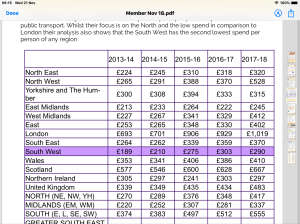
“Poor families could take in lodger to beat benefit cap – minister”

“Families living in poverty because of the benefit cap could consider taking in a lodger to make ends meet, a minister has suggested, prompting a scathing response from the MP questioning him about the system.

Justin Tomlinson, the junior work and pensions minister, told MPs that other ways families could cope with the impact of the cap would be to move, or to seek to renegotiate their rent so it was cheaper.

Answering questions from the work and pensions committee, Tomlinson also said there was no specific government analysis taking place about the impact on people of the cap, introduced under David Cameron’s government, and reduced in 2016.

The absolute maximum amount of benefits a couple can receive, whatever their circumstances, is £20,000 a year, rising to £23,000 in London.

While the government argues it incentivises people to work and prevents the unfairness of people on benefits receiving more than the average wage, critics say it is pushing many families into extreme poverty and debt.

Questioning Tomlinson and the DWP’s head of working-age benefits, Pete Searle, the Labour MP Ruth George asked what analysis was being done into this effect. Stephen said that as part of a wider evaluation of “other outcomes” of the policy, officials were looking into how people “respond to the cap”.

George said: “Responding to the cap – does that include things like having to switch the heating off and be freezing cold at night? Does that include things like not being able to feed their children to a nutritionally decent standard?”

Almost two-thirds of people affected by the cap were not entering work, George, the MP for High Peak, said.

Tomlinson responded: “Of those, some will have made other changes, including in their housing costs, whether that is either moving or renegotiating what their rental housing costs are. Or they could, for example, take in a lodger. So there’s other circumstances than work.”

George responded with incredulity: “These are large families, they’ve often got three children in one bedroom. How are they going to take in a lodger?”

Tomlinson said this was an argument in favour of the government’s bedroom tax: “If there’s three children in one bedroom then you should start joining us in supporting releasing more family homes through or spare room subsidy changes.”

While some tenants in social housing are allowed to take in lodgers, for those in private accommodation it usually needs the landlord’s permission, and any income would need to be declared.

Explaining the reasons for the benefit cap to the committee, Tomlinson said it had three objectives: saving money; the “fairness test” over comparisons with working incomes; and incentivising work.

This had worked for many families, he said. “For those people where it has made a difference, it has significantly improved their life chances, for not just them but for their children.”

But George pointed out that of those affected by the cap, 81% are not subject to “work conditionality” – meaning circumstances such as very young children dictate they are not automatically expected to seek work.

Later in the session, the committee chair, Frank Field, asked if there were any plans to raise the cap, given rising rents and other costs.

Tomlinson replied: “There isn’t any work at the moment that I’m aware of that’s looking to change that cap.” Searle added that it was reviewed at least once every parliament.”

https://www.theguardian.com/society/2018/nov/21/poor-families-could-take-in-lodger-to-beat-benefit-cap-minister-justin-tomlinson

“Bet365 founder paid herself an ‘obscene’ £265m in 2017” (£726,000 per DAY)

“Denise Coates, the multibillionaire founder and boss of the gambling firm Bet365, paid herself £265m last year in a record-breaking pay deal for the chief executive of a British company.

The huge pay package, which equates to nearly £726,000 a day, dwarfs the previous UK record set by Coates when she collected £217m a year earlier.

Coates was paid a base salary of £220,004,000 in the year to March 2018, accounts filed at Companies House on Wednesday reveal. On top of this, she collected dividend payments of £45m from her more than 50% shareholding in the Stoke-based company. Bet365 made a £660m profit last year from a record £52.6bn of bets.

Her pay is more than 9,500 times the average UK salary, 1,300 times that collected by the prime minister and more than double that paid to the entire Stoke City football team, which Bet365 owns and which was relegated from the Premier League last season.

Luke Hildyard, a director of the High Pay Centre, said: “Why does someone who is already a billionaire need to take such an obscene amount of money out of their company? It is difficult to find a reason beyond pure greed.

“A payment of this size would be impossible to justify for someone whose business was in unquestionably life-enhancing products or services. It is doubly offensive when awarded to a betting company CEO at a time when problem gambling is spiralling out of control.”

Mike Dixon, the chief executive of the addiction charity Addaction, said: “It’s astonishing that a CEO of one gambling company is paid 26 times more than the entire industry’s contribution to treatment. We know problem gambling affects more than 2 million people. We need a proper levy on gambling industry profits so more people can get help and support.” …

https://www.theguardian.com/business/2018/nov/21/bet365-denise-coates-paid-herself-an-obscene-265m-in-2017

A good political example of an oxymoron

Oxymoron – definition:
“a figure of speech in which apparently contradictory terms appear in conjunction”

A good example:
“Conservatives launch campaign to help low-paid women”

https://www.theguardian.com/lifeandstyle/2018/nov/21/conservatives-launch-campaign-to-help-low-paid-women

Company auditing EDDC under investigation for “Patisserie Valerie” black hole

“Accountancy firm Grant Thornton is under investigation for its role as the auditor of Patisserie Valerie, the bakery chain which nearly collapsed last month after it discovered a £40m black hole in its accounts.

The Financial Reporting Council (FRC) said it was investigating the audits of the financial statements of Patisserie Holdings – the chain’s parent company – for the years ended 30 September 2015, 2016 and 2017.

The accountancy watchdog said it was also investigating the “preparation and approval” of financial statements by Chris Marsh, the former finance director of Patisserie Holdings who was suspended from the company when the black hole was found in October. Marsh was subsequently arrested on suspicion of fraud and bailed, before resigning from the company.

A spokesman for the FRC said it had moved quickly to consider whether the case required an investigation and that this was just the beginning of a process which could take up to two years to complete.

“The important thing is to do a thorough job and get the right decisions. Investigators could have thousands of emails and different pieces of paper to examine, so it’s not something that can be done quickly,” he said.

Once the FRC has completed the investigation, it will decide whether it has a case against Grant Thornton and Marsh to be presented to a tribunal, which could ultimately lead to a fine or, in the case of individuals, banning them from practising as accountants.

A spokesman for Grant Thornton said: “I can confirm we have received a letter from the Financial Reporting Council informing us of its decision to commence an investigation, and we will, of course, fully cooperate in this matter.” …

https://www.theguardian.com/business/2018/nov/21/patisserie-valerie-accountants-face-black-hole-investigation

[EDF]Heysham 1: Three hurt in nuclear plant accident

“Power company EDF, which owns Heysham 1 power station, said the employees were taken to hospital following an “accidental steam release”.
The BBC understands one person suffered burns, one a broken hip and the other a broken back.

EDF said Monday night’s incident was not related to the nuclear process and there was no danger to public safety.

The casualties were said to be conscious and speaking when they were taken to hospital.

Five fire crews attended the incident at 22:40 GMT and remained at the site for more than two hours as a precaution.

A spokeswoman for EDF said a “full investigation” would now be carried out to determine the cause. …”

https://www.bbc.co.uk/news/uk-england-lancashire-46275104

London unsold homes numbers jump – wrong homes in wrong places and Brexit uncertainty blamed

Domino effect?

“London’s stock of completed but unsold homes has surged by almost half this year as Brexit uncertainty and affordability issues dog the housing market.

The number in the capital jumped to 2,374 units as of Sept. 30, the most on record and up from 1,595 at the end of 2017, according to data compiled by Molior London. The borough with the biggest stockpile is Wandsworth, an area that borders the River Thames, followed by Croydon, an outer borough in the south of the city.

Some of this excess has built up because it’s the wrong product at the wrong pricing for what people want to, and can afford to buy,” said Tim Craine, founder of the property research firm. “For the rest, it’s a case of bad timing due to the lull in the market that’s come about due to Brexit.”

Britain’s housing market is slowing after a multi-year boom as the U.K.’s impending divorce from the European Union weighs on sentiment and prices remain out of reach for many potential buyers. It now takes the average Londoner 14.5 times their annual salary to purchase a home, the highest multiple ever, according to Hometrack.

Homebuilders fell on Tuesday, led by Barratt Developments Plc, which dropped 2.2 percent as of 10:59 a.m. in London, while Taylor Wimpey Plc slipped 2 percent. Both were among the 25 worst performers in the benchmark FTSE 100 Index. Crest Nicholson Holdings Plc fell 2.1 percent.

Overseas buyers from Asia to the Middle East piled into London property in recent years as a weak pound and price gains made the capital’s real estate an attractive investment. Developers began building higher-end homes to capitalize on that demand, and many have been left holding empty units as foreign investment dwindles amid a rise in property taxes.

Asking prices for U.K. homes fell for the first time since 2011 in October, data from Rightmove show, with prices declining the most in the center of London. Asking prices dropped 0.2 percent overall, while in Greater London, they declined 2.4 percent annually. Homes located within London’s Zone 1 area lost the most, with a 6.9 percent retreat on the year to an average of 1.3 million pounds ($1.7 million).”

https://www.bloomberg.com/news/articles/2018-11-20/london-s-stockpile-of-unsold-homes-jumps-almost-50-to-a-record

Sidford Business Park: Traffic action group to reveal survey results at public meetings on 21 November 2018

Sidbury Traffic Action Group (STAG) is hosting a meeting in which the results of a traffic survey will be announced.

The survey focused on electronic speed and traffic movement and was part of ongoing concerns over drivers not sticking to the enforced speed limits.

Also at the meeting, the group will discuss the establishment of a speed watch group that will work in conjunction with the police.

There will be information about the group’s recent discussions with Devon County Council.

Finally, the group will reveal where it will go next in their pursuit for 20mph flashing signs.

The group launched a campaign in April urging people to ‘kill their speed and not villagers’.

Members of the group have concerns with cars breaking the speed limits in the town.

The meeting will take place in Sidbury Village Hall on November 21 at 2 and 7pm.”

http://www.sidmouthherald.co.uk/news/sidbury-traffic-action-group-to-reveal-survey-results-at-public-meeting-1-5781477

“IRONY ALERT: Former Work and Pensions Secretary Esther McVey on her income cut”

“Hypocrisy in British politics comes as no surprise to your mole, who has recently had to report on Brexiteers with second homes in Europe, the Mail discovering closed borders are bad, and liberals defending the gulag. But this latest IRONY ALERT has slapped it right in the snout.

Esther McVey, the recently resigned Secretary of State for Work & Pensions overseeing Universal Credit’s disastrous roll-out, has tweeted to the general public about her lower wages after stepping down from the government post.

“By resigning, my salary has been halved,” she tweeted, to a nation of people experiencing punitive sanctions, delayed payments, cuts to their benefits, rent arrears, loss of income, eviction, food bank use, and less money for their disabilities, illnesses and child support thanks to her former Department’s policies.

In what McVey clearly thought was a SICK BURN in response to a guy on Twitter suggesting jokingly that she should be sanctioned for leaving a job voluntarily (as is the case under the DWP’s social security system), she clarified that – actually, yes – she did suffer a loss of income when she left her job.

This wasn’t quite the zinger she hoped it would be, however, considering the horrifying lack of self-awareness that someone on an MP’s salary – who had presided over a government system making people worse off against their will – would think it appropriate to point out the loss of income from their own political decision.

https://www.newstatesman.com/politics/welfare/2018/11/irony-alert-former-work-and-pensions-secretary-esther-mcvey-her-income-cut

Greater Exeter – city council plans and housing need

Now that Exeter is planning (at least) 450 homes on sites adjacent to Exeter bus station (and possibly even more), is this 450 fewer homes that the rest of Greater Exeter has to supply to “meet Exeter’s needs”?

https://www.devonlive.com/news/business/new-300million-exeter-bus-station-2236936

Teignbridge District Council Tory majority down to 1 – implications for Greater Exeter

Owl says: The Greater Exeter Strategic Plan must be approved by all linked authorities. EDDC has already refused to sign up to the latest draft and now Teignbridge can no longer rely on whipped Tories. 1 vacancy, 23 Tories, 6 Independents and 16 Lib Dems – so Independents now VERY powerful ….

“The ruling Conservative party have seen their majority on Teignbridge District Council slashed to a wafer-thin one after the resignation of a councillor.

Cllr Amanda Ford, the previous ward member for the Teign Valley, quit the council earlier this month.

No reason for her departure has officially been stated, but just weeks before she left, she had threatened to quit as a result of ‘allegations of bullying by senior council officers’, an accusation the council has strongly refuted. …”

https://www.devonlive.com/news/tory-majority-slashed-one-after-2238257

“Parish council has ‘stronger reservations’ about housing plans for East Budleigh bat habitat”

Owl says: Will EDDC’s old mates Clinton Devon Estates get their own way (as they so often do) or will conservation win the day? Hhmmm …

“Wildlife concerns have been raised over a plan to demolish the home of roosting rare bats in East Budleigh to make way for a new house.

An amended application by landowner Clinton Devon Estates to demolish a barn on an area of village green space known as ‘The Pound’ is seeking to construct a separate ‘bat barn’ on the site as mitigation for concerns raised for rare species of bats.

At an extraordinary parish council planning meeting held at the village hall, residents raised fears that lighting from the dwelling may deter bats from using their new habitat and the village could lose its rare bats.

Councillors, who previously supported the application, said they now had ‘stronger reservations’ about the proposal and want to see a lighting strategy put in place prior to development. They also want a period of 12 months between the bat barn and the house being built to allow bats to get used to their new home.

Village resident Cathy Moyle chairs the East Budleigh Parish Wildlife Conversation Group set up earlier this year to fight the ‘destruction’ of the wildlife habitat.

Speaking at the meeting, she said: “If the light impact cannot be resolved, then in accordance with legislation, the planning permission should be refused.

“If, unfortunately, the application does get approved, then conditions should be placed on the planning permission that no artificial external lighting should be erected by future occupants.

“As the application stands, there is likely to be a significant adverse impact on the conservation status of, in particular, the international rare greater and lesser horseshoe and the exceptionally rare grey long-eared bat.”

Karen Alexander-Clarke, secretary of the conservation group, added: “We have incredibly rare bats in our village, they are European-protected species and there is no mitigation measure that is guaranteed to be successful.

“Clinton Devon Estates are involved with many conservation projects and seems to be incredibly proud of what they are doing for bats in the rest of the county yet they want to destroy a roost in their own parish.”

East Devon District Council will make the final decision on the application at a later date.”

http://www.exmouthjournal.co.uk/news/east-budleigh-housing-development-1-5786516

Extracts from the UN report on poverty – yes, it IS a political choice

“Extracts from the UN report on poverty in GB by Professor Philip Alston,
​16 Nov 2018

• 14 million people, a fifth of the population, live in poverty. Four million of these are more than 50% below the poverty line,1 and 1.5 million are destitute, unable to afford basic essentials.

• For almost one in every two children to be poor in twenty-first century Britain is not just a disgrace, but a social calamity and an economic disaster, all rolled into one.

• The Government has remained determinedly in a state of denial. British compassion for those who are suffering has been replaced by a punitive, mean-spirited, and often callous approach apparently designed to instill discipline.

• In England, homelessness is up 60% since 2010, rough sleeping is up 134%.
​In-work poverty is increasingly common and almost 60% of those in poverty in ​the UK are in families where someone works.

• Low wages, insecure jobs, and zero hour contracts mean that even at record unemployment there are still 14 million people in poverty.

• One pastor said “The majority of people using our food bank are in work…. Nurses and teachers are accessing food banks.”

• The costs of austerity have fallen disproportionately upon the poor, women, racial and ethnic minorities, children, single parents, and people with disabilities.

• The Equality and Human Rights Commission forecasts that another 1.5 million more children will fall into poverty between 2010 and 2021/22 as a result of the changes to benefits and taxes, a 10% increase from 31% to 41%. Sanctions against parents can have unintended consequences on their children.

The experience of the United Kingdom, especially since 2010, underscores the conclusion that poverty is a political choice. Austerity could easily have spared the poor, if the political will had existed to do so. Resources were available to the Treasury at the last budget that could have transformed the situation of millions of people living in poverty, but the political choice was made to fund tax cuts for the wealthy instead.”