More on Audit Committee Report on river pollution: threat to cut dirty water chiefs’ bonuses

Coincidentally, Owl has been informed by a correspondent that, over the past couple of weeks, core samples have been taken along the path of the Victorian sewer discharge pipe that runs from the Lime Kiln car park at Budleigh, under the Otter to the Otter Head. 

Renewing this pipe under the estuary to continue to allow untreated sewage discharges into the sea just east of Otter Head, is being done in parallel with the £15M Otter Restoration Project, financed partly by South West Water. Essentially this maintains the status quo.

According to the River Trust data, this pipe discharged 60 times in 2020 for a total of 591 hours.

Threat to cut dirty water chiefs’ bonuses

Ben Webster www.thetimes.co.uk

Bosses of water companies that regularly breach permits by discharging raw sewage into rivers and the sea should be stripped of their annual bonuses, MPs will recommend in a report today.

The Commons Environmental Audit Committee will call for an urgent review of the system by which water companies self-monitor their sewage works. It warns that a “chemical cocktail” of sewage, slurry and plastic is polluting England’s rivers and putting public health and nature at risk.

The report calls for much tougher regulation, saying successive governments, water companies and regulators “have grown complacent and seem resigned to maintaining pre-Victorian practices of dumping sewage in rivers”.

The report notes the latest Environment Agency data, which shows that all rivers and lakes monitored in England failed tests for chemical pollution and 84 per cent did not meet the government’s target of good ecological status.

It says poor river water quality is the result of chronic underinvestment by water companies and multiple failures in monitoring, governance and enforcement. “Water companies appear to be dumping untreated or partially treated sewage in rivers regularly, often breaching the terms of permits that only allow this in exceptional circumstances,” the report adds.

It says most swimmers and other river users cannot find out when it is safe to use them because of a lack of information about sewage discharges.

The revelation in last year’s prosecution of Southern Water that billions of litres of sewage were deliberately dumped into the sea over several years raised “obvious and urgent questions” about the system of self-monitoring.

The committee accuses Ofwat, the regulator, of focusing on keeping bills down rather than ensuring adequate investment. The MPs accuse Liv Garfield, the chief executive of Severn Trent, who was paid £2.8 million in 2020, including £1.9 million in bonuses, of making a “disingenuous” claim in evidence to the committee that storm overflow discharges were “pretty much already rainwater”.

The report says discharges can be highly contaminated with raw sewage and “to claim otherwise shows a disregard for the public’s concern about water quality in rivers”. The report demands “far more assertive regulation and enforcement from Ofwat and the Environment Agency to restore our rivers to their natural glory”.

It calls on Ofwat to examine its powers “with a view to limiting the awards of significant annual bonuses to water company senior executives in the event of major or persistent breaches in permit conditions”.

Other recommendations include:

• The government should set “challenging improvement targets and timetables” for reducing the impact of sewage discharges.

• Ofwat should prioritise long-term investment in wastewater when setting the prices water companies can charge.

• The industry should provide real-time, easily accessible information on sewage discharges.

• At least one popular stretch of river should be designated for bathing in each water company area by 2025 at the latest.

• A review of sentencing guidelines for water pollution offences to ensure that companies act.

• A ban on wet wipes containing plastic because they cause “fatbergs as big as blue whales” that block sewers.

Severn Trent said it believed an average of about 90 per cent of the discharge from its overflows was rainwater. Water UK, which represents water companies, said: “Water companies want to invest more and are pushing the government to encourage the economic regulator, Ofwat, to enable this increased spending over the next decade.”

The Environment Agency said improvements to rivers had “flatlined over the last ten years” and that water companies, regulators and farmers must do more to protect them.

Christine Colvin, of The Rivers Trust, said the report was a “devasting indictment on the status quo”.

Expert reaction to Environmental Audit Committee report on Water Quality in Rivers

“We need to get real. This problem has arisen because of chronic, long-term under investment in sewers, water quality monitoring, and regulation. It will take billions of pounds over decades to fix, which society has to pay for. This is everyone’s responsibility to solve. 

“We can’t just keep dumping the costs on nature, because it can only take so much punishment before it breaks, with dead rivers and water that kills. I don’t want to live in that country.” Prof Hannah Cloke, Professor of Hydrology at the University of Reading

Owl really doesn’t need to add anything to this catalogue of expert comments:

www.sciencemediacentre.org  January 13, 2022

A report on the water quality in UK rivers has been published by the Environmental Audit Committee (EAC).

Dr Veronica Edmonds-Brown, senior lecturer in aquatic ecology from the University of Hertfordshire, said:

“Water companies and communities are dealing with a lack of infrastructure. Even though more housing is being built, these developments are connected to existing systems which are mostly of Victorian origin and over capacity. New developments increase local surface run off by 8 – 18% and this must go somewhere. If more housing is to be built, more money needs to be spent on infrastructure. Not doing so will lead to more flooding events, like we saw in London last summer.

“The bodies responsible for our drainage systems, drainage boards, local authorities and water companies all have different priorities, and action taken against pollution is often not joined up. Misconnections, where wastewater drains into the surface water drains instead of the sewage pipes, were not mentioned in the report and it is a big problem, particularly for urban rivers. Plumbing sewage and black wastewater into surface water drains is much more common than is acknowledged and difficult to rectify. Bacteria is often used to find misconnection hotspots, but these are not picked up unless they are looked for. Unlike beaches, bacteria testing in rivers is only done if there is concern, not as routine.

“There are several solutions to improve the water quality of our rivers. A national capital project is needed to improve drainage and sewage infrastructure in new developments. All new builds should also be checked for misconnections, and all homeowners should be legally responsible for assessing misconnections before selling the property. There should also be an over-arching body that deals with drainage and can work alongside different authorities. And finally, bacteria testing should be routine for rivers like bathing beaches.”

Dr Eulyn Pagaling, environmental microbiologist at the James Hutton Institute in Scotland, said:

“We agree with the conclusions from the Environmental Audit Committee on the water quality of English rivers and agree with the recommendations for improving the state of these aquatic environments. Amongst the issues highlighted was the prevalence of emerging contaminants, including persistent chemical pollutants, microplastics and antimicrobial resistance.

“Antimicrobial resistance is one of the greatest challenges we face today, and we could potentially enter a post-antibiotic era where minor infections can have serious health consequences. Microplastics and chemical pollutants exacerbate this risk by enhancing the prevalence of resistant microbes. Rivers act as conduits of these biological and chemical pollutants, and therefore can have far reaching impacts on the environment and public health. Through regular monitoring, a targeted strategy for reducing these pollutants in the environment can be created.

“We welcome the report highlighting the need for government, regulators and the water industry to come together to restore these aquatic environments that have been neglected for far too long.”

Prof Kate Heppell (Chilterns Chalk Streams Project/Queen Mary University of London) & Dr Leon Barron (MRC Centre for Environment and Health at Imperial College London) said:

“’Citizen Science’ can play a critical role in developing our knowledge and response to chemical pollution. For example, as part of Thames Water’s Smarter Water Catchments initiative academics, industry, local government, conservation bodies, like the Chilterns Chalk Streams Project, and residents are combining their skills to develop new approaches to monitor chemicals of emerging concern in the River Chess. If scaled up, such collaborations could contribute to a sustainable UK-wide survey of emerging pollutants recommended by the Environmental Audit Committee report which we consider both timely and necessary.”

Prof Rick Stafford, British Ecological Society Policy Committee Chair and Bournemouth University, said:

“Given the previous major improvement in water quality and ecological health of UK rivers in the 1990s and 2000s, it is sad to see these improvements being undone.  Sewage and agricultural waste not only cause disease, but disrupt the nutrient dynamics of rivers, causing excess algae and harming biodiversity.   Poor water quality can also greatly impact many charismatic river species, including salmon and otters, which have only recently recovered in many UK rivers.”

Prof Iwan Jones, Head of the River Communities Group at Queen Mary University of London, said:

“We welcome the report from the Environmental Audit Committee, and their concerns about the condition of UK rivers. Whilst we strongly support more robust monitoring of the condition of our rivers, the responsibility for addressing the issues raise lies across the whole of society, from individuals to industry and government. We all need to consider the waste we make, how we deal with it, and the impact is it having.”

Prof David Slater, Director of risk management and sustainability consultancy Cambrensis, said:

“A very thorough, helpful, accurate and long overdue report, which needs urgently to be addressed. It is not a surprise, as the issue has been a concern and getting worse for at least 100 years.

“At the turn of the 20th century, waterworks were built and operated privately.  But from the 1970’s onwards, water was formally recognised as a public health necessity and public sector Regional Water Authorities (River basin Management Boards) were established and run by Local Authorities. But underfunded and under invested in by successive governments, there was no improvement, rather a steady decline in water quality.

“When in the 80s the EU introduced stricter legislation for water and prosecuted the UK for noncompliance, the estimated costs of compliance were considered unaffordable, then of the order of £25-30 billion. The quick fix was to privatise the problem and leave the solution to the River Basin Management bodies, which became the 10 largely private equity owned companies we see today.

“All the extra river management duties – pollution regulation, flood defence, drainage, conservation, etc. – were transferred to a new body, the National Rivers Authority.  So, rather than a traditional independent regulator, the water quality enforcement was diluted and left with the people used to marking their own homework.  This “light touch” tentative approach was a source of frustration to the professional regulators that were subsumed into the NRA when the current successor body, the Environment Agency, was formed in the 90’s.  Admittedly there are major challenges and problems with upgrading the infrastructure, such as the combined sewage outfalls (CSO’s), which seem to be regarded as an insoluble problem and are responsible for the bulk of the largely unenforced, illegal discharges into rivers and the sea.

“In contrast Tap water quality was assigned to a traditional small, effective professional inspectorate which has been quietly efficient (in costs and performance).

“So, what we are seeing now is the result of (tolerated) underfunding of the infrastructure by the companies and increasingly underfunded and underpowered (weak by design?) regulation. No surprise then – we have a major problem with our water quality.  What took us so long to recognise it officially?”

Prof Hannah Cloke, Professor of Hydrology at the University of Reading, said:

“I welcome this report which provides a scathing snapshot of the state of the water quality in England’s rivers. I am appalled that we have reached a point where every single river in the country is considered dangerously polluted by chemicals.

“This report highlights the scale of the problem and makes a useful recommendation that the government, water companies and other agencies come together to take every action possible to clean up our dirty rivers.

“Fundamentally this is a question of long-term investment in infrastructure, which means spending cash.  It is understandable that the committee isn’t making this their number one priority, because asking the government for more money tends to lead to a dismissive wave from the Treasury. Collaboration is fine but will mean nothing without investment.

“We need to get real. This problem has arisen because of chronic, long-term under investment in sewers, water quality monitoring, and regulation. It will take billions of pounds over decades to fix, which society has to pay for. This is everyone’s responsibility to solve. 

“We can’t just keep dumping the costs on nature, because it can only take so much punishment before it breaks, with dead rivers and water that kills. I don’t want to live in that country.”

Prof Paul Withers, Professor of Catchment Biogeochemistry at Lancaster University, said:

“It’s very reassuring to see that the report has highlighted and endorsed the need for every catchment to have a nutrient budget to allow targeting of appropriate and effective solutions to tackling nutrient pollution, and for the current outdated, inadequate and under-resourced water quality monitoring programmes to be greatly improved not only to help identify pollution sources better, but also critically to monitor future progress towards healthier rivers and our future water security.”

Prof Nigel Watson, Professor of Geography and Environmental Management, Lancaster Environment Centre, Lancaster University, said:

“The Environmental Audit Committee inquiry is the most comprehensive and in-depth investigation into river water quality for many years. The final report presents clear and alarming evidence of insufficient investment, ineffective monitoring, inadequate reporting, coupled with weak regulation and enforcement. All of this points to an urgent need for a major shake-up and re-think of the water sector, alongside stronger action to tackle pollution from farming and from highways.

“Early progress in the 1990s following water privatisation has clearly not been maintained. We now have a situation where almost every river in England is degraded by cocktails of untreated or partially treated sewage, agricultural waste, plastics and persistent chemicals.

“The risks to public health and to wildlife from poor water quality are exacerbated by the impacts of climate change. Discharges of untreated sewage have become increasingly commonplace as a result of more frequent intense rainfall and storm events, despite those discharges only being permitted by law in exceptional circumstances. People spending more time outdoors, and the growing popularity of wild swimming, have helped to bring these issues to public and political attention.

“The EAC report sets out some clear and very welcome recommendations, including the enhancement of catchment partnerships, the use of technology to enhance water quality monitoring, better reporting and transparency, and more stringent economic and environmental regulation of water companies, and re-direction of agricultural support towards the environment. All of this is going to cost money, and the critical question now is how much of that should come from water customers, company shareholders, and public taxation.”  

Prof Paul Kay, Professor of Water Science at the University of Leeds, said:

“I think the report represents a fair and robust analysis of the water quality of England’s rivers. I always find that the EAC does a very good job.

“General interest in river quality appears to have increased in the last few years, perhaps as a result of failing to meet Water Framework Directive objectives so spectacularly, but these problems have existed for many years. Water quality has improved a lot since the pollution caused by the industrial revolution but over recent decades we have taken few effective steps to keep on improving water quality. For instance, we have known about combined sewer overflows and diffuse agricultural pollution for a long time but have failed to do anything effective in response. With a growing population and ever increasing consumption of resources and generation of waste the situation is only likely to get worse if left unchecked.  

“Rivers are not in a terrible state but could be improved. Things such as fish kills are not uncommon and I certainly wouldn’t swim in England’s rivers below the very headwaters due to chemical and bacterial pollution. Limiting discharge of raw sewage by sewer overflows is key as is reducing diffuse agricultural pollution. Urban diffuse pollution could also be reduced. We all have a role to play though; so long as we keep consuming as we are (e.g. production of masses of relatively cheap food, lots of meat consumption, using water without thinking, new housing, more and more cars etc etc) it will be difficult to see changes. We also need a government which takes environmental protection seriously and I don’t see that at the moment – see chronic underfunding of the Environment Agency and the shambolic creation of the Environmental Land Management Scheme for instance.”

Declared interests

Prof Paul Withers: “was a contributor to the report.”

Prof Nigel Watson: “appeared as an expert witness at the EAC inquiry on March 10, 2021.”

Prof Iwan Jones: “Action on plastics is being informed by research at Queen Mary University of London, helping to determine the risks involved, monitoring methods and appropriate actions to help address this emerging issue.  Iwan Jones submitted evidence for this report.”

Private hospital sector could earn up to £90m a month being on standby for NHS

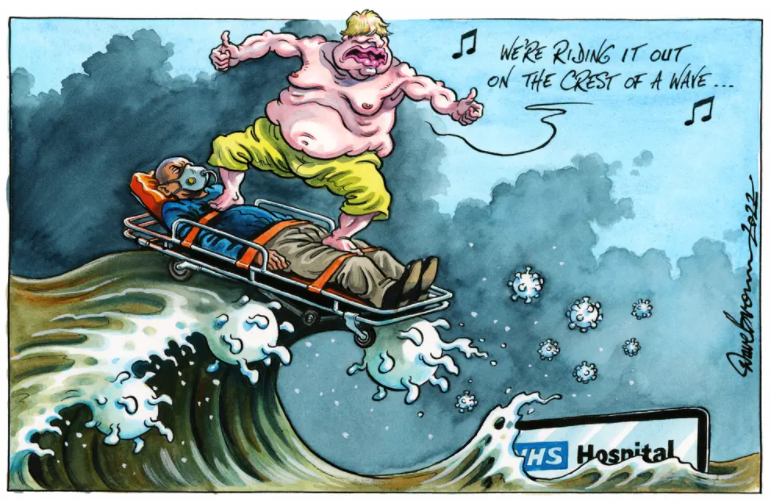
Private hospitals could earn up to £90 million a month for being on standby to help the NHS in England as it grapples with Omicron over the next three months.

www.independent.co.uk 

The three-month agreement sees private healthcare staff and facilities put on standby to support the NHS should Covid cause unsustainable levels of hospital admissions or staff absences.

When the deal was announced on Monday, health officials did not disclose the sum to be paid to the independent sector.

But it has since emerged that the private hospitals will earn a minimum of between £75 million and £90 million per month, which they will receive upfront.

This could reach up to £175 million per month, depending on the level of services used.

A letter from NHS England boss Amanda Pritchard to Health Secretary Sajid Javid states that the deal comes with a “minimum income guarantee”.

“We estimate that value based on current information at between £75-90 million a month,” the letter states.

“However, in the event that any system requires surge arrangements to be put in place, the cost recovery arrangements then applicable will be significantly more expensive at around £175 million a month.”

Ms Pritchard points out that this is, on a per bed basis, “significantly more expensive than the equivalent cost of an NHS site with much less certainty on the potential staffed capacity.”

Highlighting the letter at a meeting of the Public Accounts Committee MP Meg Hillier said: “(This) is a very expensive proposal.

“It is proposing in order for the independent private sector providers to be ready to stand up at a moment’s notice – seven days – that the cost would be between £75 to £90 million pounds a month based on current information.”

Ms Hillier, chair of the Committee, asked: “Are you content with this very large expense taxpayers being exposed to?”

Sir Chris Wormald, permanent Secretary to the Department of Health and Social Care, said that he was “content the decisions had been made properly”.

Ms Hillier continued: “There is a very big liability there for the taxpayer. Nightingale hospitals were stood down and a not all of the private sector capacity was used last time.”

She added: “The key thing is this is a ministerial direction on an issue we have now been dealing with for two years… it is a minimum income guarantee of between £75 and £90 million a month, which will double if its actually used.

“Why is it such an emergency now? Surely this sort of planning could have happened ahead of time.”

Sir Chris referred to the new Omicron variant but Ms Hillier interrupted him adding: “But we knew from the beginning of the pandemic, variants were talked about right back in March 2020.

“The question is, why wasn’t there a better plan in place that avoids having to pay a minimum income guarantee of that level to the private sector whether or not they deliver?

“Surely by now we’d have got into a better place of negotiation to make sure that we can deliver that extra surge capacity at a lower costs to the tax payer and not do it as an emergency?”

Sir Chris replied: “We have in this case a surge that has the risk of having very severe consequences for the NHS and this is one of the mitigations.”

Bereaved daughter shuns Boris apology

“They did not care. They have never cared. They only care about themselves, and particularly the prime minister only cares about what he can get away with. Until he is caught out, he won’t admit anything.”

Edward Oldfield www.devonlive.com 

A daughter whose father died in a care home early in the pandemic has refused to accept the Prime Minister’s apology over the Downing Street lockdown party.

Dr Cathy Gardner, from Sidmouth, is challenging the government’s handling of the pandemic, arguing that it failed to protect care home residents.

Dr Gardner’s father Michael Gibson died aged 88 in April 2020. His death certificate says the cause was “probable Covid” as he had not been tested.

At that time, elderly patients were sent into care homes from hospital without being tested, leading to thousands of deaths.

Dr Gardner said she had watched Boris Johnson’s statement in the House of Commons on Wednesday lunchtime.

The East Devon councillor said: “I don’t accept an apology from him. That does not go anywhere near far enough.

“Doing something that he knew was wrong – they all did – at such a point in the pandemic, is indefensible.

“I do not accept an apology, he should be held to account for breaking the law, and whatever rules were in force at the time.

“He would not have said anything about it at all if he had not been caught.

“They did not care. They have never cared. They only care about themselves, and particularly the prime minister only cares about what he can get away with. Until he is caught out, he won’t admit anything.

“It is just another reminder, if another was needed, it is one rule for us, and another for them – or no rules for them.

“How they could actually do that, and not think, ‘Hold on, we have just been telling people not to do this’, beggars belief, it really does.”

Dr Gardner’s challenge in the High Court is listed to be heard over six days in mid-March.

She is bringing the judicial review alongside Fay Harris, whose father also died with Covid-19 in a care home.

They argue certain key government policies and decisions led to a “shocking death toll” of more than 20,000 care home residents from Covid between March and June 2020.

These include a policy of discharging around 25,000 patients from hospital into care homes – including the homes of the claimants’ fathers – without testing and proper isolation.

The prime minister apologised in the House of Commons for attending a “bring your own booze” gathering in the garden of No 10.

He acknowledged the public “rage” over the incident but insisted he believed it was a “work event”.

Builders still bleat about Grenfell compensation despite £21bn profits

The push back against Michael Gove’s plan starts! – Owl

Calum Muirhead www.thisismoney.co.uk (Key points)

Britain’s major housebuilders have raked in billions of pounds in profits since the Grenfell Tower fire – and handed vast sums to their bosses.

As debate rages about who should pay to remove unsafe cladding from buildings, analysis by the Mail shows the eight biggest listed housing developers have made £21billion since the deadly inferno in 2017 and can well afford to make restitution.

The profit bonanza has prompted firms to hand their chief executives a total of £202million since 2017. 

The revelations come after Housing Secretary Michael Gove this week said he was prepared to take ‘all steps necessary’ to force the industry to contribute towards a £4billion fund to cover the cost of safety works……

…..Since 2017 the eight FTSE 350 builders have amassed profits of just over £21billion, our analysis shows. Persimmon, the largest London-listed housebuilder by market cap, raked in nearly £4.9billion.

Barratt Developments amassed profits of £3.9billion, and Berkeley Group £3.4billion. All three have developed properties found to have been covered in unsafe cladding, presenting a fire risk.

Bosses have also earned handsome sums, with Persimmon attracting attention for £86million it has doled out. 

A hefty chunk of this was the £82million bonus paid to former boss Jeff Fairburn in 2017 and 2018 – a package that drew outrage from politicians, corporate governance experts and charities, and ultimately led to his ousting from the company.

Berkeley chief executive Rob Perrins was paid nearly £60million.

Barratt and Taylor Wimpey paid out £14.9million and £11.3million to their bosses respectively.

The builders are now being asked to fund cladding removal, having already set aside £1billion to fix existing buildings, while another £2billion is expected to be raised from a cladding tax that comes into force in April.

However, many in the industry have criticised the Government focus on housebuilders, arguing that the makers of the cladding should also pay up.

Others have said their cash will be used to repair properties they were not responsible for building, such as those where the developer has gone bust. 

While the figure demanded by the Government is eye-wateringly high, it pales in comparison to the bumper profits hauled in by major builders, which has left many swimming in cash.

The profit boom has been fuelled by the ever-rising price of houses. The Help to Buy scheme has also been a boon for builders, but has been criticised for funnelling money into the pockets of developers and failing to stop first-time buyers from being priced out of the market.

A House of Lords report on Monday said the scheme, which will have cost £29billion when it ends next year, did not provide ‘good value for money’ for taxpayers, inflating house prices.

It said the money would have been better spent on building more homes. Several firms continued to rake in money despite a series of scandals in addition to the cladding controversy. 

In 2019, a review found some of Persimmon homes had exposed residents to an ‘intolerable’ fire risk due to poor build quality.

And last month, Taylor Wimpey agreed to scrap leasehold contracts that would double homeowner ground rents every ten years.

House price growth accelerated during the pandemic as buyers, encouraged by a stamp duty holiday and low interest rates, stormed into the market, seeking bigger homes.

The frenzy pushed the average cost of a UK home to a record £254,822 in December, according to data from Nationwide.

While the firms have grappled with rising costs of building materials caused by supply chain disruption, this has been more than offset by the escalating cost of British homes.

Newton Abbott MP has whip removed after voting to cut VAT on energy bills

With an 80 seat majority this government looks to be paralysed and foundering, and that was before the Prime Minister’s “Sorry…not sorry” statement.

Simon Jupp dutifully voted with the whip, yet we still have no plan to relieve the massive increases in household energy bills. – Owl

Anne Marie Morris, the MP for Newton Abbott, supported an opposition day motion tabled by Labour that urged the Government to remove the current tax rate of five per cent on domestic fuel supply.

By Dominic Penna www.telegraph.co.uk

Labour had proposed to fund the measure, which the Resolution Foundation estimated would cost around £2 billion, with a one-off windfall tax on North Sea oil and gas companies.

Ms Morris was previously suspended for five months in 2017 after she was recorded using the ‘N-word’ during a panel event. She repeatedly apologised for this and acknowledged she had used “inappropriate and offensive language”.

On Monday, she said removing VAT was the “right thing to do” in the face of the cost-of-living crisis.

“It is deeply disappointing to have had the whip removed by the Government, especially on a matter of simply standing up for what I believed to be the best interests of my constituents,” she wrote on her website.

“Yesterday’s opposition day debate on removing VAT on household energy bills was an issue that I have voiced my support for a number of times.

“I remain strongly committed to Conservative principles and supporting a Conservative government that acts in the best interests of the country. But I will always vote on the issues of the day, whatever they may be, in the best interests of my constituents in Teignbridge as well as the wider country.”

Ms Morris added that while she understood the Government’s opposition to the procedural nature of the bill, which would have given Labour control of the order paper, she “won’t apologise” for supporting measures she believed would help her constituents.

The issue of rising fuel costs has been thrown into sharp focus ahead of April 1, when the energy price cap is predicted to rise by as much as 51 per cent, adding an estimated £600 a year to average bills.

The Treasury is planning a package of measures to ease the burden on lower-income households. The Telegraph reported on Tuesday that people living in colder parts of the country could receive greater financial support in a bid to protect them from rising costs.

Ms Morris was the only Tory MP who voted against the Government on the motion, which was ultimately defeated by 319 votes to 229. She will continue to sit as an independent, reducing the number of Conservatives in the Commons to 360.

In a winding-up speech, Greg Hands, the energy minister, said Labour “doesn’t have a plan, they have a four-page motion” on the issue of soaring bills.

“This is a student union tactic which they well-rehearsed during the Brexit years,” Mr Hands said. “They have completely lost the plot into their own world of procedural gobbledygook.”

Yet more “goings on” in Honiton Town Council!

There have been mass resignations before.

In September 2020, Honiton and District Chamber of Commerce and Industry cut all ties with Honiton Town Council.

This latest set of mass resignations includes the Mayor Cllr John Zarczynski.

Is this significant? – Owl

Upheaval at Honiton Town Council as six members walk out of meeting and resign

Philippa Davies www.midweekherald.co.uk

Six Honiton Town councillors including chairman Cllr John Zarczynski have resigned after walking out of the full council meeting on Monday, January 10. 

Vice-chairman Cllr Carol Gilson also resigned, along with Cllrs Jill McNally, Luke Dolby, Phil Carrigan and John Taylor. 

They all left the meeting after a vote was taken to approve the coming financial year’s budget and spending plan. The remaining councillors voted to continue the meeting with Cllr Serena Sexton in the role of chairman. 

The week before, on Monday, January 3, Cllr Vera Howard had resigned from the council. 

Honiton Town Council will meet again on Monday, January 17, when a new chairman will be elected and possibly a new vice-chairman. Councillors will also consider making the former Cllr Vera Howard an honorary citizen of the town. 

East Devon District Council will be notified of the seven vacancies. It will post an advert asking if by-elections are demanded, otherwise the vacancies will be advertised by the Town Council for co-option. 

BREAKING: High Court finds Government PPE ‘VIP’ lane for politically connected suppliers ‘unlawful’

actions.goodlawproject.org

Over a year of hard work has paid off today. The High Court has ruled that the Government’s operation of a fast-track VIP lane for awarding lucrative PPE contracts to those with political connections was unlawful. 

In a challenge brought by Good Law Project and EveryDoctor to the behind closed door VIP lane worth billions of pounds, the Court found:

the Claimants have established that operation of the High Priority Lane was in breach of the obligation of equal treatment… the illegality is marked by this judgment.” (§512)

The Judge agreed the VIP lane conferred preferential treatment on bids: it sped up the process, which meant offers were considered sooner in a process where timing was critical, and VIPs’ hands were held through the process. She said: 

“offers that were introduced through the Senior Referrers received earlier consideration at the outset of the process. The High Priority Lane Team was better resourced and able to respond to such offers on the same day that they arrived”. (§395)

The Court found the Government allocated offers to the VIP lane on a “flawed basis” (§396) and did not properly prioritise bids: 

“there is evidence that opportunities were treated as high priority even where there were no objectively justifiable grounds for expediting the offer.” (§383).

The Court noted that the overwhelming majority by value of the product supplied by Pestfix and Ayanda could not be used in the NHS. 

An independent investigation by the BBC has also revealed issues with the product supplied by Clandeboye which were not disclosed to the High Court. Good Law Project believes that the Government misled the Court and is in correspondence with lawyers for the Secretary of State.

The Judge found that, even though Pestfix and Ayanda received unlawful preferential treatment via the VIP lane, they would likely have been awarded contracts anyway. The Judge also refused to allow publication of how much money was wasted by the Government’s failure to carry out technical assurance on the PPE supplied by Pestfix and Ayanda. Good Law Project is considering the wider implications of these aspects of the ruling and next steps.

We first revealed the red carpet-to-riches VIP lane for those with political connections in October 2020. Since then, we have fought to reveal details of those who benefited, and at whose request – while the Government fought to conceal them.

Never again should any Government treat a public health crisis as an opportunity to enrich its associates and donors at public expense.

Thank you for your trust in us, and your continued support of this case over 18 long months. Without you, this simply wouldn’t have been possible.

We also want to express our deep gratitude to our expert legal team on this case: Rook Irwin Sweeney and Jason Coppel QC, Patrick Halliday and Zac Sammour of 11KBW. They have worked tirelessly on this case and we hugely appreciate their efforts.


You can read the full judgment from the High Court here.

Good Law Project only exists thanks to donations from people across the UK. If you’re in a position to support our work, you can do so here.

Contender for the crown Rishi Sunak escapes the Westminster bubble by visiting – Devon!

Convenient coincidence, anyone know where Liz Truss is? – Owl

Rishi Sunak in North Devon today as ‘partygate’ fury continues – live updates

Live updates DevonLive 

Chancellor in Devon as PM faces calls to resign

Chancellor of the Exchequer Rishi Sunak is visiting Devon today as the ‘partygate’ scandal surrounding the Conservative government continues to spark fury.

Mr Sunak tweeted a picture of him with North Devon MP Selaine Saxby during a planned trip to Ilfracombe where he will be visiting Pall Corporation’s base.

During the visit, the Chancellor will welcome the pharmaceutical’s firm – who have helped with the Covid vaccine rollout – announcement that it is investing £60million into creating 200 jobs.

In his tweet, Mr Sunak said he was “excited” to be in Ilfracombe with Ms Saxby.

Gatherings, the Met Police and what does Cressida Dick’s cat know?

Read on to find out, including the latest bizarre explanation from the Met for closing the case.

It’s not just Boris Johnson’s credibility that’s on the line – Owl

Context. Police in England and Wales have processed a total of 117,213 fixed penalty notices for breaches of Coronavirus restrictions up to 20 June 2021. Including:

Large gatherings (£10,000 fine) 

  • 366 FPNs have now been processed relating to holding a gathering of more than thirty people in England and three in Wales. 
  • These include, but are not limited to, unlicensed music events, protests and private parties. 

Participating in a gathering of more than 15 people (£800 fines) 

  • 3,440 FPNs have been processed in England under regulations requiring people not to participate in a gathering of more than 15 people. 501 processed in Wales.

More than 800 people were fined for lockdown breaches in week of the alleged Downing Street party. In May 2020, people could only meet one other person outdoors. And the fine for breaching this rule had risen to £100, with a maximum £3,000 penalty for repeat offences.

Met Police facing legal challenge for not investigating Boris Johnson parties

www.independent.co.uk

The Metropolitan Police is facing a legal challenge over its decision not to launch an investigation into numerous lockdown breaking parties at Downing Street.

The move comes as a former chief constable, Sir Peter Fahy, said the force’s approach was becoming “an issue of competence in the police”.

Lawyers acting for the Good Law Project issued formal legal proceedings against the Met on Tuesday, alleging that the failure to investigate was unlawful. The service’s decision will now be subject to judicial review.

Government officials and the prime minister are alleged to have repeatedly broken Covid restrictions at No.10, hosting parties and cheese and wine evenings throughout lockdown.

The gathering include social events to celebrate Christmas, as well as a “bring your own booze” drinks on 20 May which the prime minister and his wife reportedly attended.

The Met has however resisted opening a formal investigation into the events despite many other people hosting parties around the same dates receiving hefty fines.

Questions have also been raised about why police officers guarding Downing Street did not spot and report an apparent crime in progress at the time.

It was reported overnight that the Met is in contact with the Cabinet Office over the 20 May event.

Sir Peter, who previously headed Greater Manchester Police, told Times Radio on Tuesday that “questions have been asked why the police are not investigating”.

“Normally, if an organisation is thought to have breached the law, you don’t normally leave it for that organisation to go away and investigate it themselves and wait for the result,” he said.

“And I think obviously, some people have said there’s quite a lot of police officers on duty, around Number 10, why did they not realise that there was something going on and report it or at least give advice that this shouldn’t be going on?

“So I think, unfortunately, it’s becoming, you know, as well as an issue of political confidence, one of competence in the police and almost the investigation system.”

Sir Peter said he understood the force’s initial decision not to investigate but that it needed “to give a very full statement about their decision making, probably in consultation with a Crown Prosecution Service, and with the Mayor of London so that “the public do understand the reasoning as to why they’re going to investigate or not investigate”.

Jo Maugham, director of Good Law Project, said: “You can have the rule of law, or you can defer to the powerful. But you can’t have both. Cressida Dick’s cat will know that multiple criminal offences were committed.

“It shames the Met, and ultimately all of us, that she refuses to investigate.”

The Met Police’s response raises more questions than it answers about No 10’s Christmas parties

goodlawproject.org 

Before Christmas, we wrote to the Metropolitan Police asking them to explain or reverse their refusal to investigate the unlawful parties alleged to have taken place at No 10 Downing Street in December 2020. 

We’ve now received the Met’s response, which raises more questions than it answers, and strongly suggests their refusal to investigate the alleged No 10 parties was unlawful. And now the Met’s approach is under the spotlight again following yesterday’s revelations of yet another party, this time organised by a top No 10 aide at Downing Street in May 2020. Each new revelation makes the Met’s policy of not investigating these breaches more damaging. 

In short, the Met says it concluded that further investigatory work would be required before they could decide whether to bring charges, but rather than attempting to do this, they just closed the case. 

Their attempts to justify that decision really don’t make sense. First they say they relied on the Government’s assurances that no rules had been broken. Then they say there would have been no point in interviewing No 10 staff about the parties because they would have refused to answer questions that exposed them to a risk of prosecution. In what other crime would police decline to investigate because the suspected offender assured them no rules had been broken? And those justifications can’t both be true; if no rules were broken, there’s no risk of self-incrimination. We’re intent to get to the bottom of it.

It is not good enough for the Met to delegate their investigative duties to the press. We don’t believe they would make such concessions for anyone else accused of breaking the law.

They seem to be operating a two-tier system, with one rule for those in power and one rule for everyone else. And we think that sets a dangerous precedent with serious implications for public trust. 

We’re issuing formal legal proceedings to force the Met to revisit their decision. Those in power broke the rules – repeatedly. They should face the same consequences as everyone else.

Pssst – it’s located on the fourth floor!

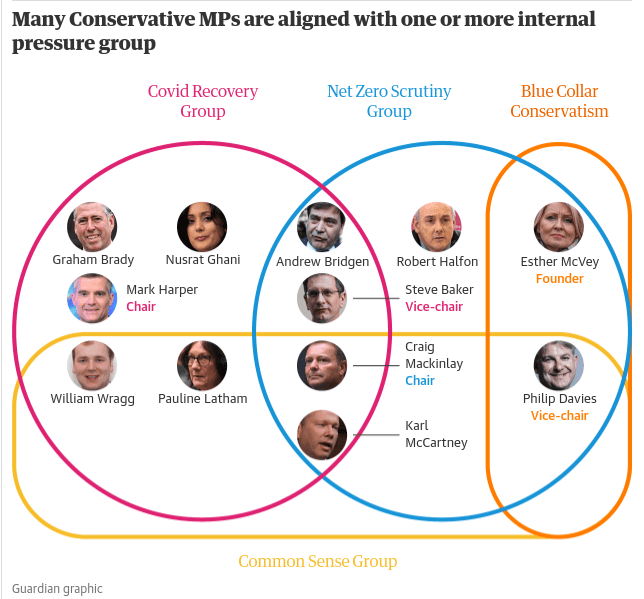
Many of the “Brat Pack” Tory MP’s elected in 2019 are still a little unfamiliar with the layout of the Palace of Westminster. 

Owl believes that the office of the Chair of the 1922 Committee, Sir Graham Brady MP can be found somewhere on the fourth floor.

In the coming days this might be useful to honourable members, especially those of a rebellious inclination, seeking to deliver a letter on a matter of confidence.

NHS England had no choice but turn to private hospitals during Covid surge

“The many people offended by NHS billions being handed to private hospital groups will balk at what is likely to be a long-term marriage of convenience. But a decade of successive governments’ underfunding, and ignoring or exacerbating its staff shortages, has left the NHS with no choice.”

Denis Campbell www.theguardian.com 

Another day, another initiative to stop hospitals becoming overwhelmed by a combination of the Omicron surge and normal winter pressures. NHS England has struck a deal with private healthcare providers under which their hospitals will be ready to start treating NHS patients who cannot get the Covid or non-Covid care they need because their local NHS hospital is under too much pressure.

This follows the recent news that “mini-Nightingale” field hospitals are being built in the grounds of eight hospitals, that gyms and education centres in hospitals could be turned into overflow wards, and that thousands of Covid patients could be treated at home in “virtual wards”. Any or all of this could happen if the increase in Covid hospitalisations leads to a hospital trust or even entire region of the NHS deciding it needs “surge capacity”.

Announcing the latest tie-up with the private sector on Monday, NHS England’s chief operating officer, Sir David Sloman, who is also the service’s Covid incident director, said: “This deal … means as many people as possible can continue to get the care they need.

“It also places independent health providers on standby to provide further help should hospitals face unsustainable levels of hospitalisations or staff absences. Just like the Nightingale hubs being created across the country, we hope never to need their support. But it will be there if needed.”

Sloman said the the new arrangement was “struck under direction from the secretary of state”. It is easy to see why Sajid Javid would look to private hospitals to ease the NHS’s burden. First, the waiting list for non-urgent hospital care in England is already at a record 5.83m and may break through the 6m barrier when the latest monthly performance figures come out on Thursday. Downing Street is open about the fact that getting that number down is a key priority.

Second, the number of hospitals that have been forced to cancel elective surgery in the face of intense pressure will increase the headline total when the same statistics come out next month.

Third, however one feels about privatisation of NHS care, it is unarguable that people who needed urgent surgery during the pandemic, for a range of serious conditions but especially for cancer, have been able to undergo a procedure in a private hospital that they would otherwise have had to wait an indeterminate length of time to receive on the NHS, because the pandemic disrupted so many non-Covid services, especially in the first wave. The health impact of that is still emerging.

Will any part of the NHS need to in effect commandeer their local private hospital(s)? The deal is “another NHS insurance policy”, one health service boss says. The fact that at least 24 trusts in England have had to declare a major alert since New Year’s Day, because they could not cope with the level of demand they were facing, especially with so many staff off sick because of Omicron, suggests the arrangement may have to be triggered, especially with Covid admissions rising in many regions – up 7% in 24 hours on Monday in both the north-west and south-west, for example.

But David Rowland, director of the Centre for Health and the Public Interest thinktank, cautioned that private hospitals’ reliance on NHS consultants means the plan “really doesn’t stack up as a way of adding capacity to the NHS”.

He also asked whether private hospitals would be paid just the NHS “tariff” rate for any treatment they do provide – the fee they receive when performing a hip or knee replacement on an NHS patient – or whether the health service’s almost desperate need for extra capacity means they will receive a markup as part of the deal. NHS England said only that details about the pricing of the arrangements would follow in the next few days.

The deal confirms that the sheer scale of the healthcare backlog means the NHS will be looking to private hospitals to undertake as many operations as they can for the foreseeable future. NHS England was budgeting to spend £10bn on them for that purpose over the next four years even before Javid ordered this tie-up. A report by the Commons health select committee last week said the private sector would play a key role in the NHS’s efforts to tackle the backlog and that reality was central to NHS England’s finished but still unpublished “elective recovery plan”.

The many people offended by NHS billions being handed to private hospital groups will balk at what is likely to be a long-term marriage of convenience. But a decade of successive governments’ underfunding, and ignoring or exacerbating its staff shortages, has left the NHS with no choice.

Can Michael Gove stop Industry passing the buck over building safety scandal?

For nearly two years, a small army of lawyers has been trying to decide who to blame for Grenfell Tower’s dangerous cladding. At the outset of the latest phase of the public inquiry into the disaster, lead counsel warned the organisations involved against indulging in “a merry-go-round of buck-passing”.

Robert Booth www.theguardian.com

Some chance.

After hundreds of hours of hearings where architects have blamed builders, builders have blamed manufacturers and manufacturers have blamed regulators, a conclusion about why 72 people died after their homes were wrapped in plastic that burned like petrol is still months away.

Michael Gove now faces a similar problem as he seeks to pin responsibility for similar failures on not just one, but thousands of apartment buildings across England. It is a quagmire that has defeated several cabinet predecessors in charge of housing, to the anguish of hundreds of thousands of people whose homes have been rendered worthless.

“We want to try and cut through that,” the secretary of state for levelling up, housing and communities declared on Monday morning.

Gove’s plan – to give developers until March to come up with a plan to foot the £4bn bill to fix cladding on medium-rise blocks – rests on giving the housebuilders very little room for manoeuvre and stopping them from pointing the finger elsewhere, at least in the first place.

His team understand that the problem requires an urgent fix, not least with the fifth anniversary of the Grenfell fire looming in June and backbench MPs facing considerable pressure from constituents whose lives are in turmoil. They also recognise it doesn’t solve everyone’s building safety problems. But they have decided to start here.

Gove will threaten to strip builders of valuable government contracts and access to subsidies such as the help-to-buy programme unless they promise to do two things: “Fund and undertake all necessary remediation of buildings over 11 metres that you have played a role in developing” and “make financial contributions this year and in subsequent years to a dedicated fund to cover the full outstanding cost to remediate unsafe cladding on 11-to 18-metre buildings”.

The punishments for inaction could include a new law requiring them to pay, restricted access to government funding and public contracts, the pursuit of companies through the courts and even using planning powers to make their operations difficult. Gove has one more “blunt but heavy instrument” in his armoury: a tax hike. The government has already consulted on a new 4% tax on profits of residential property developers to raise £200m a year to help fund remediation works. This could be increased and the Treasury has given Gove permission to “use a high level threat of tax … as a means of gaining voluntary contributions from [developers]”.

Some observers believe this will be a sufficiently tight vice to trigger action. They calculate housebuilders cannot afford to wreck their relationship with the government and will pay up and consider pursuing materials manufacturers and others with threats of legal action of their own.

Stewart Baseley, the executive chairman of the Home Builders Federation, hinted at what may be to come when he accepted that leaseholders should not have to pay for remediation, but said builders should not cover the costs alone. The implication was: what about the companies like Kingspan and Arconic that made combustible cladding materials? What about the subcontractors who may have assembled them wrongly?

If Gove doesn’t manage to quickly reach the £4bn target from the developers (and remember, previous appeals for developers to do the right thing failed), his department’s own coffers could be raided. That is an unappealing prospect given Gove’s responsibility for Downing Street’s flagship levelling up policy and the urgent need to keep investing in social housing.

“Leaseholders shouldn’t pay, the polluter should pay and we want to work with everyone involved to get to a constructive solution,” Gove said on Monday.

Whether that happens may come down to who blinks first.

Meanwhile

£1bn wiped off FTSE house builders as Gove delivers cladding bill

Oscar Williams-Grut www.standard.co.uk 

House builders lost more than £1 billion in value today after the government gave the industry just a few weeks to come up with fully costed plans fix the £4 billion cladding scandal…

….Shares in house builders slumped. Persimmon was the biggest faller on the FTSE 100, down 3.1%, while Redrow dropped 3.3% on the FTSE 250. Other major developers registered similarly sharp falls and £1.3 billion was wiped off the sector’s market value in early trade, according to stockbroker AJ Bell.

UBS analyst Gregor Kuglitsch said the cost of the new measures was “significant”.

“The current market cap of the sector is around £40bn so a £4bn cost would equate to ~10% on a pre-tax basis,” he and his team wrote in a note to clients. “This assumes the listed sector would bear the brunt of the cost, although there are likely some private companies that will also need to pay.”

Gove’s announcement comes on top of the building safety levy and residential property developer tax. Both were announced last year to help fund the government’s £5 billion commitment to tackling the problem.

Stewart Baseley, executive chairman of the Home Builders Federation said: “The largest UK based house builders, who only built a minority of the affected buildings, have already spent or committed approaching £1bn to remediate affected buildings and the recently announced Property Developers Tax will raise billions more.

“We will engage directly with Government but any further solutions must be proportionate, and involve those who actually built affected buildings and specified, certificated and provided the defective materials on them.”

Rico Wojtulewicz, head of housing and planning policy at the National Federation of Builders (NFB), said: “The Government has already introduced one industry specific cladding tax, and now another is on its way. This piecemeal approach is confusing, unnecessarily complex and will likely impact the number of homes built.

“It’s also worth pointing out that the developer paying for remediation will almost certainly not have been responsible for the cladding put on the property – most of which was retrofitted long after construction and has nothing to do with the developer.

“Another construction industry related tax is neither fair, nor proportionate and industry will be dismayed at this scatter gun approach to fixing an issue that several governments set the regulation for.

“Perhaps all MPs will sacrifice a percentage of their salary and pensions to help fund remediation, as the real responsibility lies with legislators?”

A spokesperson for Taylor Wimpey said it has “acted on this already for its customers” and “made sure Taylor Wimpey customers do not have to pay for these improvements.”

“We trust that we will not be penalised for our early action to do the right thing,” the company said. “There are many organisations involved in the issue of fire safety, including large business in our supply chain and indeed Government themselves, and so the proposed response must recognise this.”

Gove said: “Some developers have already done the right thing and funded remedial works and I commend them for those actions. But too many others have failed to live up to their responsibilities.”

Hug your dog to stay warm if you can’t afford heating.

Insensitive advice from SSE energy (formerly Scottish and Southern Energy plc) one of the UK’s largest energy suppliers as the government struggles to come up with a solution. – Owl

Hug pets or do star-jumps to stay warm if you can’t afford heating, energy supplier suggests

By Nick Duffy inews.co.uk 

People should hug their pets for warmth and exercise to stay warm to avoid having to turn up the heating, one of the UK’s largest energy suppliers has suggested.

The email was sent to customers of SSE Energy, the electricity and gas supplier acquired by Ovo in 2020, suggesting “simple and cost-effective ways to keep warm this winter”.

Charities have warned that millions will be left struggling to afford heating in the year to come after adjustments to the energy price cap in April, with the average consumer expected to see their bills go up from £1,277 to £1,865 a year, an increase of 50 per cent.

SSE’s “tips” for consumers trying to “keep an eye on” their bill prices, still available on its website, suggests that “putting on another layer of clothing is the best thing you can do to keep warm without touching the thermostat.”

It adds: “Some brisk activity will help warm you up. You don’t have to nip down to the gym. Try cleaning the house, challenging the kids to a hula-hoop contest, or doing a few star jumps. You only need to do just enough to create a little extra heat until you feel warm again.”

If that fails, SSE suggests consumers should “have a cuddle with your pets and loved ones to help stay cosy”.

People struggling to keep their bills down could also apparently enjoy “hearty bowls of porridge” or eat ginger that “keeps you warm by encouraging blood flow”.

Labour MP Darren Jones, chair of Parliament’s Business, Energy and Industrial Strategy Committee, told the Financial Times that Ovo should apologize for the “insensitive” remarks.

“Being told to put on a jumper instead of turning on your heating if you can’t afford it, at a time of such difficulty for so many families, is plainly offensive,” he said.

Former Cabinet minister Theresa Villiers said that while the advice was likely well-intentioned, “many people are very anxious about rising energy bills and won’t take kindly to being told to do some star jumps.”

Ovo said: “We understand how difficult the situation will be for many of our customers this year. We are working hard to find meaningful solutions as we approach this energy crisis, and we recognise that the content of this blog was poorly judged and unhelpful.

“We are embarrassed and sincerely apologise.”

Big payouts for tenants who downsize

Devon tenants are in line for a payout of up to £5,000 if they downsize to free up their home for a family.

Edward Oldfield www.devonlive.com

The scheme is being promoted by West Devon and South Hams councils, who say it is open for anyone renting a home that is bigger than they need in the area they cover.

It applies to tenants of housing associations or registered providers of social housing and is a response to what one councillor described as a “housing crisis” due to a lack of larger properties.

The councils say there is currently a shortage of three and four bedroom homes for local families, with many struggling in cramped conditions.

A statement said: “The scheme is designed to help tenants to downsize to smaller homes as their household needs change.

“For example, when children grow up and leave home. This, in turn, helps the council to free up some of the larger homes in our area for younger families in need.”

Private sector rents have been rising and properties turned into holiday homes due to a rise in demand for staycations as a result of the pandemic, leaving people struggling to find a property and increasing pressure on the social housing stock.

The district councils covering South Hams and West Devon have now introduced an extra ‘High Demand Area’ payment of £2,500 due to the shortage of larger family homes.

The total payment downsizers will receive depends on how many bedrooms become available due to the move.

It includes a £1,000 fixed payment, the extra £2,500 High Demand Area sum, and £500 per bedroom released, with the total capped at £5,000.

For example, if you move from a four-bedroom property to a two-bedroom property you will receive £4,500.

According to Devon Home Choice, there are 46 families in the two council areas classed as severely overcrowded.

That means they need a home with two or more extra bedrooms, or there are at least two children in the home lacking a bedroom. There are also 300 families waiting for a home with an extra bedroom.

Nearly two million children in England are living in overcrowded, unaffordable or unsuitable homes, research has revealed.

The report from the National Housing Federation shows the biggest single housing issue affecting children in England is overcrowding.

The councils say it found there are 1.1 million children living in overcrowded homes, which is having a detrimental impact on their health and development.

There are also a million children whose families cannot afford their rent or mortgage payments, while 293,000 children live in homes that are unsuitable for their needs or health requirements.

A further 283,000 children living with their families in other people’s homes, the report found.

The National Housing Federation said the research shows 1.3 million children are in need of social housing as this is the only suitable and affordable type of home for their families.

It is calling on the Government to prioritise long term and sustained investment in social housing as part of its ‘levelling up’ agenda.

Cllr Judy Pearce, South Hams District Council’s Executive Member for Housing, said: “We face a housing crisis here in the South Hams with too many families living in cramped conditions and we want to change that.

“By helping people to move out of homes that are now bigger than they need, for example when their family grows up and leaves home, we can make sure the next generation also have a suitable home to enjoy.

“This scheme is all about looking at the homes we have in the South Hams and making sure they are allocated as effectively as possible – that means doing what we can to make sure residents live in homes that are the right size for their needs.

“If people are interested in moving, our team can give you practical support. We’ll help you to find a suitable alternative property in the location that you want and with everything you need close to hand.

“As a downsizer, you will be awarded a high priority band for bidding on properties on Devon Home Choice – including priority for brand new homes on the latest developments. We’re also increasing the amount of money you will receive to make that move easier.

“Maybe you’ll choose new items for your kitchen or a new TV to fit your new home. Maybe you’ll spend the money on new carpets or curtains.

“Or maybe you’ll treat yourself to something completely different. You can spend the money however you want and know that by moving you’re helping a young family to have the best start in life.”

Cllr Barry Ratcliffe, West Devon Borough Council’s Lead Member for Housing, said: “We desperately need to make some of our larger houses in the borough available for the local families who are currently struggling in homes that are too small.

“That’s why we’ve decided to give as much help as possible to anyone who is thinking about moving to a smaller home, for example because their own family has grown up and moved away.

“Our team can give practical support with things like filling in forms for making the move. You’ll be given priority, so you can choose a new home in the location you want – including brand new homes on the most modern developments.”

Who is eligible

The Tenants Incentive Scheme is available to applicants who met the following criteria:

  • are an existing Housing Association tenant on an Assured tenancy, living in the council areas and whose housing association landlord confirms that the nomination rights for the property being vacated will be given to South Hams or West Devon council;
  • are in a family-sized house – two bedrooms or larger;
  • want to move to a property that is at least one bedroom less;
  • are registered on Devon Home Choice;
  • where the move will not result in overcrowding.

How to apply

The councils say the scheme is limited and subject to change. Anyone interested should email devon.homechoice@swdevon.gov.uk or call 01803 861234 (South Hams) or 01822 813600 (West Devon) to find out more and to apply for the available funding.

NHS England strikes private hospitals deal to fight Omicron surge

What we need are community hospitals – oh wait …..

Hospitals in England will be able to use private hospitals and staff under a deal with the NHS to maintain services as Omicron cases surge, avoiding delays in treatment for patients with illnesses such as cancer.

Sarah Marsh www.theguardian.com 

The move comes as hospitals have also been told to find extra beds in gyms and education centres owing to rising numbers of Covid patients.

The three-month agreement means private healthcare staff and facilities will be on standby to support the NHS if required and to maintain services for patients who can be referred, including some of those waiting for cancer surgery.

Nightingale hubs are being created in the grounds of some hospitals as part of a move to create up to 4,000 extra beds.

Announcing the deal, the health secretary, Sajid Javid, said: “This agreement demonstrates the collaboration across our healthcare services to create an additional safeguard that ensures people can continue to get the care they need from our world-leading NHS, whenever they need it.”

The move has been put in place to make sure the health service is not overwhelmed and to avoid implementing further Covid restrictions on socialising at pubs, clubs and sports venues as have been introduced in Scotland and Wales.

Last week, the transport secretary, Grant Shapps, said more than one in six NHS trusts across England had declared a critical incident due to Covid pressures in recent weeks, adding that the Omicron variant was putting “very real” pressure on the health service.

The agreement includes Practice Plus Group, Spire Healthcare, Nuffield Health, Circle Health Group, Ramsay Health Care UK, Healthcare Management Trust, One Healthcare, Horder Healthcare, Aspen Healthcare and KIMS Hospital, the NHS said.

Paolo Pieri, the CEO of Circle, said that since the first Covid wave in March 2020, its hospitals had supported the NHS by performing urgent, life-saving operations and treatments for more than 400,000 NHS patients.

“We stand ready to support the NHS in its time of need,” Pieri said.

Spire said the final details of the contract still had to be agreed. The deal expires on 31 March.

A Whitehall source told the Telegraph: “We are going to do everything we can to avoid more restrictions … Our lines of defence through vaccines, testing and antivirals are crucial and holding up but we are also boosting NHS capacity as much as we can.

“Sajid wants the NHS to make use of the independent sector if needed. The aim is to ensure as much capacity as possible is available to help the NHS get through the Omicron wave.”

In March 2020, a similar deal costing about £400m was agreed, when private hospitals provided more beds, ventilators and thousands of healthcare staff to help the NHS fight against Covid. At the time, 20,000 staff were offered, including 10,000 nurses and 700 doctors.

The Centre for Health and the Public Interest (CHPI), a thinktank that has raised concerns about how little NHS-funded work was done under the previous deal, said it doubted the independent sector had the capacity to treat meaningful numbers of NHS-funded patients.

“This new announcement raises more questions than it answers,” said Sid Ryan, a researcher at the CHPI. “Firstly, it’s not clear what help the private sector can really provide when it relies so heavily on NHS consultants working privately outside their core NHS hours. The private sector may have beds, but their workforce is vanishingly small, and just as challenged by Omicron as the NHS, so it seems unlikely their support will be the key difference-maker.

“The last time NHS England stepped in to override local contracting by NHS trusts, the taxpayer ended up footing the bill for a lot of empty hospital capacity. Are we risking that happening again?”

The number of hospitalisations has been slower to rise than Covid cases, relative to previous waves of the disease, with ministers buoyed by the booster rollout. However, hospitals have struggled as a result of NHS staff being among the hundreds of thousands of people self-isolating because of the rapidly increasing number of Omicron cases.

Three months is a long time in the life of a Police Commissioner

Unveiling her strategy for 2021-25 at the end of September “Alison Hernandez says she takes it seriously but…”, she said key community priorities are breaking the cycle of violence, reducing drug harm, tackling antisocial behaviour and improving road safety. 

Alison Hernandez responded to suggestions that tackling gender-based violence isn’t given high enough priority in her draft plan.   

She said it was important to note that, although violence against women is an important issue, it is crucial to see the statistics in perspective.   “I will just highlight that men are more likely to be a victim of crime than women, and that more men are likely to be murdered than a woman,” she said.

Fast forward three months, Plymouth has new priorities:

Violence against Plymouth women and girls is being tackled

Daniel Clark www.plymouthherald.co.uk 

A commission which has been formed to review what more needs to be done to prevent violence against women and girls in Plymouth will meet for the first time on Monday.

The Violence Against Women and Girls (VAWG) Commission will review what is being done across the city to educate men and boys, prevent and deter these types of crimes and consider what support is available for victims.

It will invite local organisations who work with female victims of violence, to hear more about their experiences and their recommendations about what more needs to be done.

The commission was set up following the death of 18 year-old Bobbi-Anne McCleod who disappeared from a bus stop in the Leigham area of the city last month. Cody Ackland, 24, has been charged with her murder.

The Commission will meet for the first time on Monday, January 10.

A protest in Plymouth which calls for an end to male violence against women following the disappearance of 18-year-old Bobbi-Anne McLeod.

A protest in Plymouth which calls for an end to male violence against women following the disappearance of 18-year-old Bobbi-Anne McLeod. (Image: Eve Watson)

Chair of the Commission, Cllr Rebecca Smith, said: “Last year we saw the tragic murders of a number of women in our city at the hands of men. This kind of crime is not unique to Plymouth, however as we heard at our virtual Q and A in December 2021, many women and girls sadly do still feel fear, intimidation, harassment and helplessness on a regular basis. We cannot let this continue.

“Too often the responsibility for tackling male violence against women and girls falls on women. In Plymouth, we want to tackle this issue at the root, whilst supporting anyone who is a victim of this type of crime.

“We have put together an extensive panel of experts from across Plymouth and beyond, who are all committed to the same goal, and I look forward to working with them over the weeks and months ahead.

“On our journey, I am also really pleased that we are able to get guidance and advice from Nazir Afzal OBE – who is a national leading expert in this area.

“One of the first things our Commission will be looking at is ensuring that we have a wide engagement programme, ensuring that as many voices as possible across Plymouth have an opportunity to help shape our work.”

In addition, former Chief Crown Prosecutor for NW England, Nazir Afzal OBE, will be working with the Commission as an independent advisor, bringing expertise from his 24 year career prosecuting the most high profile cases in the country and advising on many others.

He has led nationally on several legal topics including Violence against Women & Girls, child sexual abuse, and honour based violence. His prosecutions of the “Rochdale grooming gang” and hundreds of others were ground-breaking and drove the work that has changed the landscape of child protection.

Over the next three months the Commission will aim to shine a spotlight on the national issue of violence against women and girls and to understand more about the issue for those living in Plymouth.

To do this, the Commission will work:

· To take a proactive stance to better understanding a wide range of views and experiences, and consider what more needs to be done to tackle the issue.

· To improve the perception, and the lived experience of women and girls that Plymouth is a safe city.

· To promote a better understanding of the causes and means of addressing male violence against women and girls.

· To provide impetus for key partners and the private sector to review their contribution to tackling VAWG in the city.

· To take the opportunity to revisit and revise local policies if appropriate, including the Public Health approach to addressing VAWG, and to identify and seek to influence any areas of national policy that need revising.

· To review existing partnership arrangements in the city to make sure there is a clear focus and tangible action on addressing VAWG, including its wider impact on the families and children of victims and abusers.

· To ensure there is strong and visible leadership on VAWG for the city to drive through the recommendations identified by the Commission, and to be the champion for change.

As part of the work of the Commission a full engagement programme will be launched, inviting local organisations who work with female victims of violence and residents across the city to hear more about their experiences and their recommendations about what more needs to be done.

Gatherings storm gathers momentum

Should have used the self deleting WhatsApp? – Owl

Email proves Downing Street staff held drinks party at height of lockdown

ITV News UK Editor Paul Brand reports on the email providing the first evidence of a party on May 20, 2020 in the Number 10 garden

Paul BrandUK Editor www.itv.com 

Downing Street staff were invited to a drinks party in the Number 10 garden during the height of nationwide lockdown to “make the most of the lovely weather”.

An email shared exclusively with ITV News provides the first evidence of a party on May 20, 2020, when the rest of the country was banned from meeting more than one other person outdoors.

The email was sent by the Prime Minister’s Principal Private Secretary Martin Reynolds to over a hundred employees in Number 10, including the Prime Minister’s advisors, speechwriters and door staff.

In it, Mr Reynolds – a senior No 10 civil servant who has run Boris Johnson‘s private office since October 2019 – says:

“Hi all,

“After what has been an incredibly busy period we thought it would be nice to make the most of the lovely weather and have some socially distanced drinks in the No10 garden this evening.

“Please join us from 6pm and bring your own booze!”

ITV News understands around 40 staff gathered in the garden that evening, eating picnic food and drinking. Crucially, they included the Prime Minister and his wife Carrie Johnson.

The email invitation sent by Martin Reynolds, seen by ITV News Credit: ITV News

The May 20 party was first alluded to in a blog by the Prime Minister’s former advisor Dominic Cummings on Friday.

​The email follows allegations about staff gathering in the garden on a separate occasion on May 15, with a photograph emerging of Mr Johnson and his wife sitting with No 10 staff including Martin Reynolds on the terrace with a bottle of wine and cheese.

Downing Street has previously insisted that the photograph showed a work meeting. But the email about the drinks party on May 20 makes it clear that this was a social gathering, which is far harder to explain away.

Less than an hour before the drinks, the then Culture Secretary Oliver Dowden had reminded the rest of England at the daily press conference that they must only meet in pairs outdoors.


On May 20, 2020, then Culture Secretary Oliver Dowden told the public at a press briefing:

“You can meet one person outside of your household in an outdoor, public place provided that you stay two metres apart”


Guidance allowing the ‘rule of six’ outdoors wasn’t brought in until June 2020 and large gatherings remained banned.

The latest revelations have led to fresh calls for the Prime Minister to be questioned as part of the internal inquiry into a series of parties in Downing Street, launched after ITV News aired footage of Number 10 staff laughing and joking about an event on December 19 2020.

In that video, the Prime Minister’s then spokesperson Allegra Stratton suggested that there had been “no social distancing” at the event, which staff jokingly referred to as a “business meeting” with “cheese and wine”.

ITV News later revealed that the Prime Minister’s Head of Communications, Jack Doyle, handed out awards to staff at the party and made a speech.

Since then, there have been allegations of multiple other parties.

The cabinet office inquiry into the allegations is currently being carried out by senior civil servant Sue Gray, who took over from the Cabinet Secretary Simon Case due to allegations that he knew of at least one party himself.

ITV News understands that the drinks party on May 20 will form part of the ongoing investigations, with the inquiry due to report back this month.

When Mr Johnson was asked on Monday if he and his wife attended the party on May 20, he replied: “All that, as you know, is the subject of a proper investigation by Sue Gray.”

Downing Street told ITV News they would not comment on the story due to the Sue Gray inquiry.