“Slums Croydon: ” Political pygmies” and their rabbit hutch flats

This is legal:

Offices to homes permitted development has led to some of the tiniest micro-flats being built in Croydon.

“PDR, as it is known, has managed to strip local authorities of their planning powers, but left them to deal with the costs and consequences arising from such developments. The government is considering extending PDR, allowing shops to be converted into flats or for extensions to be built without requiring any planning permission.

In Croydon, where the local authority used legislation to block any further office-to-resi conversions in the town centre after 2014, senior councillor Sean Fitzsimons has called such flats, “the slums of the future”.

But that was not before planning permission had already been given for the lucrative conversion of offices to at least 2,700 flats in the borough, and where some of the “micro-flats” are being marketed to Chinese investors, with one-bed apartments fetching £280,000.”

‘Political pygmies’ to blame for Croydon’s ‘slums of the future’

“An influential figure in British architecture has hit out at office-to-flat conversions – of which there have been thousands in Croydon – describing them as “ghastly little f**k-hutches”, and all thanks to policy which is being ruined by “political pygmies”.

“Copley has also discovered that 1,837 London PDR flats are smaller than the legal minimum standards, and that 240 were less than half this lowest threshold.

In a statement issued from Copley’s City Hall office they said, “Some of the worst examples are seen in Croydon where 80 per cent of properties identified failed to meet minimum space standards, including one development where the smallest flat was just 10 square metres.”

That flat is in Urban House on Cavendish Road in West Croydon.”

Slums of the Future: Croydon has capital’s smallest micro-flat

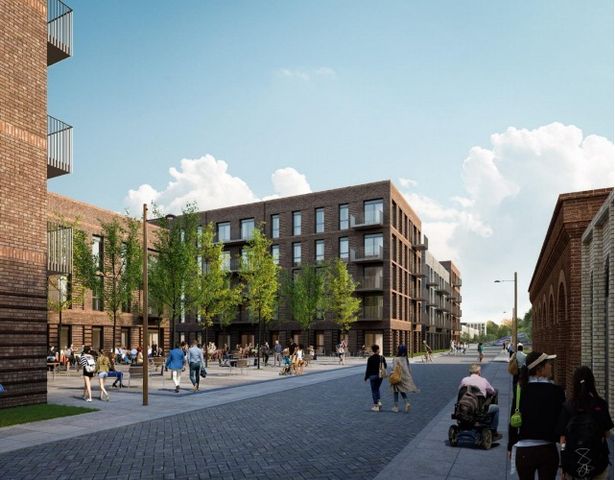
The Greater Exeter “mini-village” – quality or quantity?

A correspondent, on seeing the post a couple of days ago about a new “mini-village” in Exeter:

https://eastdevonwatch.org/2019/05/28/design-for-new-mini-village-in-exeter/

has deja-vu as it appears to mimic another time and (local)place! Owl is still wondering if this was a late April Fool prank …!

“Kensington Council Made £129m From Selling Property That Could Have Prevented Cost-Cutting At Grenfell”

“Kensington and Chelsea council made £129m from selling property in the years leading up to the Grenfell fire tragedy – money which we can show for the first time could have prevented cost-cutting on the tower’s renovation works.

An investigation by HuffPost UK, the Bureau of Investigative Journalism and the BBC Local Democracy Reporting Service can reveal the property deals overseen by senior officers and the council’s cabinet in the run up to the Grenfell disaster.

Evidence shows one of these deals was directly linked to the financing of the Grenfell Tower renovation and our investigation reveals that the council had far greater power over its funding of the works than it has previously admitted.

The council has previously claimed legal restrictions meant it could only use rental income from local authority housing to pay for renovation works. But this was not the case.

In fact, the council’s own documents show £6m of the Grenfell works was paid for with proceeds from the sale of council property – basement units in Elm Park Gardens in Chelsea.

The government has confirmed to us that councils are free to use money from the sale of property to fund improvements in housing stock.

This new information means the council had a far larger pot of money available to invest in its council housing than it has previously acknowledged – including on Grenfell Tower.

Our investigation also found the council had £37m in the bank, specifically from the sale of property, at the time when funding decisions over Grenfell were being taken.

But in 2014, cuts were made to the budget for building work by the tenant management organisation that was managing the project, including saving £300,000 by using cheaper, more combustible cladding.

The cladding was a key contributor to the speed with which the fire tore through the building on June 14, 2017, killing 72 people and leaving hundreds of families homeless.

The revelations have prompted fury over why spending on the Grenfell works was tight when the council had a significant income stream that could have been used to increase the budget. …”

https://www.huffingtonpost.co.uk/entry/kensington-chelsea-council-property-sales-grenfell_uk_5ced6003e4b0bbe6e3342f04?utm_hp_ref=uk-homepage&guccounter=1

Design for new mini-village in Exeter

Is this an example of the level of design we can expect in Greater Exeter? Breathtakingly beautiful isn’t it (not!):

https://www.devonlive.com/news/devon-news/400-homes-pretty-village-green-2916444

“Regulator warns housing stock-owning local authorities of application of consumer standards”

“The Regulator of Social Housing has written to the chief executives of all housing stock-owning local authorities to remind them that the watchdog’s consumer standards – in particular in relation to the health and safety of occupants – apply to them.

The move follows a letter sent by the Regulator after the Grenfell Tower fire to all registered providers of social housing to remind them of their obligations for their tenants’safety under the Regulator of Social Housing’s Consumer standards.

Since that first letter, the watchdog has issued regulatory notices to two local authorities in respect of compliance with the Home Standard (which is one of the consumer standards), and specifically a range of health and safety requirements. …

MacGregor noted that that obligation remained with the local authority where it is the stock-owning body, even if the management has been contracted to another body such as an ALMO.

She then cited an extract from the original letter saying, amongst other things, that meeting health and safety obligations was a primary responsibility for registered providers, and that boards and councillors must ensure that they have proper oversight of all health and safety issues.

The first letter stressed that contracting out delivery of services did not contract out responsibility to meet the requirements of legislation or standards, so providers needed systems to give boards assurance of compliance.

It also said that should any provider find that they have systemic failings in relation to internal control of health and safety, which indicate that they were not in compliance with the Standard, based on the co-regulatory approach, the Regulator expected them to notify it as Regulator and resolve the issues immediately.

Ms MacGregor said her latest letter was “a reminder to local authorities that the consumer standards apply to them and that while we currently only consider information that is referred to us, this does not diminish the obligation on local authorities to comply with the standards.

“Currently, legislation only permits us to take enforcement action where there has been a breach of a consumer standard, and that breach has, or could, cause serious detriment to current or future tenants. As can be seen from our various Consumer Regulation Review publications, we most commonly find breach and serious detriment in relation to the Home Standard.”

She added: “You may wish to seek your own assurance that your authority is complying with the consumer standards.”

https://www.localgovernmentlawyer.co.uk/housing-law/397-housing-news/40654-regulator-warns-housing-stock-owning-local-authorities-of-application-of-consumer-standards

3 days to local elections – today’s pictures

Today our theme is developers, affordable housing and housing in general.

Did you know that EDDC has overperformed on the housing delivery test set by the government by 50%?

The government set East Devon a target of 1,762 homes to be built in 2018 whereas the number actually built was 2,632 – more than 900 extra, very, very few of which were “affordable” (see pictures below about that!).

Source: https://assets.publishing.service.gov.uk/government/uploads/system/uploads/attachment_data/file/779711/HDT_2018_measurement.xlsx

Persimmon is making £73,000 per HOUSE profit, Taylor Woodrow £68,000 per HOUSE. Help to Buy is adding £33,000 to the price of new houses for first time buyers.

EDDC has been developer-led for YEARS because Conservative housing policies were designed by them and most major housebuilders are donors to the Conservative Party.

How to stop this? Vote Independent. Break the chain.

all this talk of a lack of affordable housing is exaggerated, i know, i’ve got six!

Affordable Housing Estate Agents – ‘It’s affordable if you’re rich…’

Designated area of outstanding natural profitability.

“Well one step down from our ‘Luxury Executive Mansion’ is our ‘crap terrace with outside loo’.”

New Planning Body in beauty spot – ‘Nice spot for our HQ…’

“Housebuilder Persimmon faces new investor revolt over ‘highly excessive’ pay”

“Housebuilder Persimmon is braced for a fresh revolt over its controversial bonuses after shareholder advisers urged investors to vote against the company’s ‘highly excessive’ pay.

Advisory group PIRC has instructed investors to oppose the pay report for a second year running at the annual meeting early next month.

Last year, the FTSE 100 company narrowly escaped defeat over its bonus scheme for top bosses, but still suffered a major rebellion.

The scheme included a bonus worth more than £100million for former boss Jeff Fairburn that was trimmed to around £75million after a public backlash. The bonus pot was boosted by the taxpayer-funded Help to Buy scheme.

Persimmon, led by new chairman Roger Devlin, has attempted to draw a line under the scandal by trimming the overall payouts, ousting Fairburn, ensuring that all staff are paid more than the living wage, and making steps towards improving the quality of its homes.

Two other advisory firms Glass Lewis and ISS have both backed changes made by Devlin.

A Persimmon spokesman said the company understood ‘the need for pay restraint and spent 2018 working to ensure Persimmon’s future remuneration is clearly aligned with best practice’.”

https://www.thisismoney.co.uk/money/markets/article-6943125/Housebuilder-Persimmon-faces-new-investor-revolt-controversial-bonuses.html

“End of Right to Buy set to increase demand for affordable housing”

Affordable housing output needs to be increased as the Help to Buy scheme is wound down, according to property consultancy Savills. The Help to Buy scheme has been a major factor in helping young people to afford their own home in recent years. However, its eligibility criteria are set to be tightened in 2021 with the future of the scheme up in the air.

[Take this with a pinch of salt – those “affordable” homes are, on average £33,000 more expensive than they ought to be]:

‘Help to Buy’ costs first-time buyers an average £33,000 extra

A report by Savills said that housebuilding in England may need to increase by up to a third between 2021 and 2025 to make up for the end of the current Help to Buy scheme. Emily Williams, associate director for residential research at Savills, said: “Private sector housebuilding for market sale has underpinned the rapid expansion in housing supply since 2013, including affordable housing delivery through Section 106. But that growth is slowing against market headwinds.”

http://www.room151.co.uk/brief/#end-of-right-to-buy-set-to-increase-demand-for-affordable-housing

‘Help to Buy’ costs first-time buyers an average £33,000 extra

“First-time buyers who use Help to Buy to get on to the property ladder face paying a premium of more than £30,000.

That’s according to new research by the price comparison website Reallymoving, which claims first-time buyers using Help to Buy paid an average £303,000 in February, significantly more than the average of £270,000 spent by those who bought a home on the open market. …”

First-time buyers face a £33,000 premium when using Help to Buy

EDDC: Consultation on affordable housing (but not social housing)

Owl wonders if this is appropriate during the run-up to local elections in May – a time when only non-controversial and non-political issues should be brought up.

But, more importantly, surely there are two words missing from the document?
Shouldn’t it be “SOCIAL AND Affordable Housing Policy?

“The draft Affordable Housing SPD and accompanying documents are being published for consultation, available through the links below:

Draft Affordable Housing Supplementary Planning Document

Click to access affordable-housing-spd_approved-at-spc-26319.pdf

Draft Affordable Housing Supplementary Planning Document – Screening report for Strategic Environmental Assessment and Habitats Regulations

Click to access ah-spd_screening-assessments_sea-hra.pdf

Draft Affordable Housing Supplementary Planning Document – Equalities Impact Assessment

Click to access affordable-housing-spd_eqia.pdf

If you would like to comment on the draft Affordable Housing supplementary planning document and/or the accompanying documents (Environmental and Habitats screening reports, Equalities Impact Assessment), please email us at planningpolicy@eastdevon.gov.uk or post comments to Planning Policy, East Devon District Council, Blackdown House, Border Road, Heathpark Industrial Estate, Honiton, EX14 1EJ.

The consultation period runs from Thursday 28 March until Friday 10 May 2019 (at 5pm).

http://eastdevon.gov.uk/planning/planning-policy/housing-issues/affordable-housing/

“The Mass Sell-Off Of Public Land Is Driving The Housing Crisis”

“A major new investigation by the Bureau Local and HuffPost UK revealed austerity’s dirty little secret: massive funding cuts have been, in part, offset by a mass sell-off of public land. But what’s not being examined is who is buying that land, and what they are building on it. If used appropriately, surplus public land could be an important first step towards solving the housing crisis, but the present fire sale is, if anything, making it worse.

The Bureau’s research uncovered 12,000 public spaces sold into private ownership since 2014/15, ranging from grand metropolitan libraries to small patches of scrub land. Guy Shrubsole and Anna Powell Smith, in mapping landownership in England, discovered that £100million worth of the land sold-off by councils between 2017 and 2018 went to offshore companies. Earlier this year, Brett Christophers revealed that 10% of the UK’s land has transferred from public to private hands since 1979. In 2016, our own work at NEF revealed an alarming spread of sales from central government departments in recent years. The government itself claims to have sold 25% of the ‘core’ property holdings government departments since 2010.

Why are we offloading land at all? Ostensibly it’s to meet the government’s target: 160,000 new homes on previously public land by 2020. But the murky reality is that local authorities, like other public bodies, are selling land to fill the vast funding gaps driven by austerity. And it’s because of this fact that selling public land won’t generate the affordable homes that we desperately need to solve the housing crisis.

Local government funding has been cut in half between 2010/11 and 2017/18, so when government policy dictates selling surplus land, it’s no wonder that councils are using their land assets to plug the holes in their budgets. Birmingham City Council has used £53million from asset sales to balance its books, more than any other local authority in England, with as much as £26million of that revenue used to fund redundancies (also a result of austerity) at the council.

As NEF have shown, a key driver of the housing crisis is the price of land. When the incentive in selling public land is to raise cash to keep vital services afloat, councils inevitably sell to the highest bidder, as quickly as possible. While local authorities are technically allowed to sell at slightly less than the highest value (although many don’t out of financial necessity), central government departments are actually prohibited from selling land at lower than the ‘best consideration reasonably obtainable’. Developers cannot both build affordable housing and make a profit, because the price of land is prohibitively high. Expensive land leads to expensive houses. In this upside-down system, the price paid for land ultimately dictates what gets built when it should be the other way round.

This theory is laid bare in the planning documents that sit behind the sites. In our research on the central government sell off, we’ve come across countless examples of developers securing planning permission with promises of affordable housing, only to wriggle out of their commitments a few months later by claiming they can’t afford to.

Take Runwell Hospital in Wickford. Chelmsford City Council’s affordable housing plan requires that 35% of homes on new developments are affordable. Yet the site’s initial planning permission required only 20% affordable housing provision. Even so, the developer later submitted an application to reduce this further to just 10% on the grounds of affordability – just 61 of 575 homes.

Our research in 2017 revealed that:

Only one is five of the new homes to be built on sold-off public land is likely to be classed as ‘affordable’ (which, at 80% of market rates, is still largely unaffordable to those who need it most).

As little as 6% of new homes are likely to be social housing, and in some cases developments comprise solely of luxury properties.

New homes on formerly public land are dramatically behind schedule. At the current rate, the government’s target of building 160,000 homes will take until 2032 to achieve, 12 years later than promised.

Releasing land into the private market is not delivering the quantity or quality of affordable homes we need. As more land is sold, there is less opportunity to reverse these trends.

The sell-off of public land for hole-plugging cash receipts is not only economically short-sighted and unsustainable, it’s also driving the housing crisis. There is a clear tension between disposing of land to plug funding gaps and developing high-quality, genuinely and permanently affordable housing and other infrastructure. This year we are continuing to get to grips with the effect of the public land sale on the housing crisis. First up is a close look at NHS sites sold in the last year, then in the coming months we will be bringing together central government and local authority land sales to get a truly national picture of the sell-off. Only then can we build a picture of an alternative to the fire sale of public land, that results in the supply of genuinely affordable homes.”

https://www.huffingtonpost.co.uk/entry/housing-crisis-public-land_uk_5c811055e4b0a135b5199d5d

“Right to Buy homes re-sold since 2000 made £6.4bn in profit” (many sold within 6 weeks)

Proof that the destruction of social housing is a Conservative policy.

“A former council tenant bought their home under Right to Buy for £8,000 and sold it on for £285,000 nine days later – a £277,000 profit, the BBC found.

The Solihull buyer was among 140 in Great Britain who bought and resold within one month, making a £3m collective profit.

Opponents of the scheme said too many people had profited from a policy that had “much bigger social ambitions”.

Supporters said Right to Buy helped people secure their financial future.
The Chartered Institute of Housing (CIH) said it was “shocking to see the extent of the profit margin in black and white”.

It called for the scheme to be suspended in England. In January it was halted in Wales, as it was in Scotland in 2016.

Housing commentator Henry Pryor said: “Far too many… simply profited from a scheme that had much bigger social ambitions”. …”

https://www.bbc.co.uk/news/uk-47443183

Today’s promise of 30,000 housing association dwellings put into perspective

Owl says note that the “affordable” hoysing will still be 80% of market value … making these homes still unaffordable for those on low incomes.

Chancellor Philip Hammond has today committed £3billion in extra borrowing to deliver 30,000 new affordable homes in England.

In the Spring Statement, the Chancellor announced that the Government will guarantee the extra borrowing by housing associations to support the delivery of the homes, but did not supply a timetable for delivery.

The Chancellor also announced that £717million from the £5.5billion Housing Infrastructure Fund will be used to help ‘unlock’ up to 37,000 homes at sites including Old Oak Common in London, the Oxford-Cambridge Arc and Cheshire. …”

BUT IN THE SAME ARTICLE:

“In November This is Money revealed that local councils have fallen over six years behind their own house building targets.

Councils’ own figures revealed that development across the UK is moving at such a glacial pace that 316 sites will have fallen short of targets by 889,803 homes within the next eight years. …”

https://www.thisismoney.co.uk/money/mortgageshome/article-6804561/Spring-Statement-Housing-associations-borrow-3bn-build-new-affordable-homes.html

Shock news: ‘Government Agency ‘U-turn’ puts Axminster relief road at risk…’

EDDC press release:

“The £17m relief road and 850 homes, in the Masterplan for the east of Axminster, have been put at risk by a late change in Homes England funding.

East Devon District Council has reacted with dismay to news that government agency Homes England has changed how it is assessing the council’s £10 million bid for Axminster relief road.

The council bid for a non-repayable grant in 2017. This bid was accepted in February 2018, to be used to help fund the delivery of the crucial new relief road and associated homes, employment land and community facilities.

The council has now been told by Homes England that a new condition of the funding is that the money must be repaid by the development.

Council leader Cllr Ian Thomas is enormously concerned that the decision potentially puts the Axminster Masterplan in jeopardy.

He said: “We are dismayed by this fundamental change of mind. It throws the whole Axminster scheme up in the air and means that the effort we and our partners have put into this critical scheme over the last 12 months may have been completely wasted.

“Since I was first elected leader, I have been absolutely consistent that we don’t simply build homes, we build sustainable communities. The Axminster Masterplan is an excellent example of such a community. It would bring enormous social and economic benefit to Axminster, by delivering high quality affordable housing and employment land, together with other essential community facilities. After this decision from Homes England, it feels like we are back to square one. It’s bitterly disappointing.

“We understand that our scheme is one of a number across the country where similar funding decision changes are being made, as Homes England assesses the viability of schemes on a fundamentally different basis, to that applied in our original agreement with them.

“Our council is now considering its options. This includes taking legal advice to investigate whether we may have strong grounds to challenge Homes England’s decision.

The masterplan for 850 homes with employment land, open spaces and community facilities was endorsed by the council’s strategic planning committee in January. The plan was based on the money from Homes England not being repaid and even then, the development could only be made viable by expanding the site area and increasing the number of homes proposed to around 850. The amount of affordable housing required from the additional 200 homes was also reduced from 50% to 25%.

Following a decision by Homes England last week, it would appear that the development will have to repay the £10 million of government “grant” and the masterplan is no longer viable in its current form.

The council must also consider revisiting the masterplan to understand the consequences of the decision for the amount of affordable housing, employment land and community facilities to make the development viable again.

Throughout the masterplan process, the council has always been clear that the urban extension of Axminster is not just about delivering housing and the relief road but is about helping the town grow as a community in a sustainable way supported by the services and facilities that it needs.

The council is frustrated that Homes England’s change in approach puts this all at significant risk and could make the development undeliverable. It will be seeking an urgent meeting with Homes England to discuss this case and other implications for investment in the district.”

“Homeowner discovers 700 faults in £280,000 [Persimmon] new house after spending life savings”

https://www.mirror.co.uk/news/uk-news/homeowners-discover-700-faults-280000-14089952

Swire to attend CPRE seminar on Devon Housing – tickets available

Date And Time

Thu, 21 March 2019
11:00 – 15:00 GMT

at

The Estuary Suite
Sandy Park
Sandy Park Way
Exeter
EX2 7NN

Tickets £5 each available via Eventbrite
https://www.eventbrite.co.uk/e/devons-new-housing-need-a-government-local-authority-perspective-tickets-57377917897

“Have you noticed how many houses are being built in Devon? Do we need so many? What is the genuine underlying need? How many are genuinely affordable? Who are the planned new houses actually for? How many new homes are planned for your community and where?

To address these questions and more, we are delighted to have organised this important seminar where we will be joined by Kit Malthouse MP, Minister of State for Housing & Planning, Sir Hugo Swire MP East Devon and Stephen Walford, Chief Executive Officer Mid Devon District Council. CPRE Devon’s Dr Phillip Bratby will also be summarising the key findings of our recently commissioned independent Devon Housing Need Report.

What do you think of all the new house building in Devon? Please join us for this important and exclusive opportunity to hear from our guest speakers and to put your questions to them. All welcome. Admission by ticket only. £5, to include refreshments.

CPRE Devon – The Voice for Devon’s Countryside
http://www.cpredevon.org.uk

“Excessive” housing in a Local Plan allowed to go to appeal

“CAMPAIGNERS battling the impact of Waverley’s “excessive” housing targets are celebrating a landmark legal decision giving them the green light to appeal.

In a fresh twist threatening to undermine the borough council’s adopted Local Plan, which calculates 11,200 houses must be built by 2032, the Court of Appeal agreed last Thursday it would hear the joint challenge by Surrey Campaign to Protect Rural England (CPRE) and Protect Our Waverley (POW).
The challenge centres on whether Waverley had to increase its housing target by 1,600 homes in order to accept Woking’s “unmet need”.

If the joint appeal succeeds – due to be heard later this year – it will anger residents forced to accept unpopular housing schemes driven by Waverley’s determination to meet its housing target, such as a controversial scheme for up to 200 houses agreed last week in Milford (see page three).
Last week’s Court of Appeal decision reverses a High Court decision in October 2018 rejecting POW and CPRE’s case that Waverley should not be obliged to take half of Woking’s unmet need.

Celebrating CPRE’s successful appeal against October’s verdict, Andy Smith, CPRE Surrey branch director, said: “We are pleased that the Court of Appeal wish to see the matter of Woking’s so-called unmet need properly addressed, as there are big question marks over it.

“In the housing requirement numbers for both the Waverley and Guildford Local Plans, this issue of Woking’s unmet need, lurks in the background. It will be good to bring this issue out in the appeal court, as it has profound consequences – not just for Waverley and not even just for West Surrey, but also county wide and nation wide.

“Our countryside is at risk from excessive, arbitrary and unsustainabule housebuilding targets, and that is why we needed to challenge the housing calculations.”

POW chairman Bob Lees highlighted that the appeal coincides with Woking Borough Council declaring it now has no unmet need, and new demographic figures released by the Office for National Statistics implying a much reduced need for new housing.

Welcoming last week’s decision, Mr Lees said: “This is great news. It provides Waverley Borough Council with a golden opportunity to significantly reduce the mandatory number of new houses to be built in the borough over the next 14 years.

“POW fought against the housing requirement at the examination of the Local Plan. POW fought again in the High Court. POW will fight in the Court of Appeal. POW is fighting to protect our Waverley against unneeded development of our towns, of our villages and in our beautiful countryside.”

Waverley has set aside a “fighting fund” of £300,000 to defend its Local Plan. Responding, borough council leader and Farnham councillor Julia Potts, said: “This news is obviously extremely disappointing for us, but we will, of course, be vigorously defending our adopted Local Plan; the plan we believe represents the best possible vision for the borough’s future.
“It means we can work in partnership with the borough’s towns and parishes to develop Neighbourhood Plans, so communities can mould new development where they live. It means we can safeguard our borough against inappropriate development.

“It should be remembered that Waverley did not bring this legal action, but we have to defend both the borough and town and parish councils, whose Neighbourhood Plans are now threatened by this action. We all want appropriate plan-led development and we did everything possible at the inspection to defend a lower housing number.

“It is extremely disappointing that a few determined individuals continue to raise these legal challenges, despite the High Court upholding the Local Plan following the hearing in October 2018 and despite it having been approved by a government inspector.

“We are committed to preserving and protecting the adopted Local Plan. It will remain our principal planning document and continue to guide our planning decisions.”

http://www.farnhamherald.com/article.cfm

The many drawbacks for buyers using Help to Buy (as well as greedy developer rip-off prices)

” … One of the biggest drawbacks of Help to Buy is that if you choose to sell up, the Government will ask for its 40% stake back. But with house prices falling in inner cities, Kim says this isn’t necessary bad. “Upon selling the property, if it does make a loss then the Government will absorb 40% of the loss made,” she said.

“One of the biggest benefits is the number of companies now offering the scheme. There were plenty of options all over London.”

But she says, bear in mind that after five years you will have to start paying back the interest – and your current salary is taken into consideration for this.

The government loan is interest free for the first five years. After that the borrower is charged a fee of 1.75% of the loan’s value. That fee then increases every year at 1% above inflation.

“You also can’t sub-let a buy to let property” she adds.

“This means that everyone living in the building is an owner – minimising any risks of investors renting neighbouring flats to frequently changing tenants. But bear in mind, you will have to pay a ground fee.”

However, while being unable to sub-let means you’ll be able to build a community with local residents, if you choose to move out, the only option you have is to sell up.

This, she says, means she won’t be able to work abroad or travel in the near future, as she’d not be able to rent the property to pay off her mortgage in the meantime.

Speaking of the drawbacks, she added: “Any profit made upon selling the flat will be shared with the Government – you’ll keep 60% and pay back 40% of the total amount made from the sale.”

“The Help to Buy scheme has been a very beneficial for first time buyers who otherwise would not be able to get on the housing market. But due to the complex nature of the equity stake from the Government, buyers do need to go into this with their eyes open,” explained Richard Campo, manager at mortgage advisor Rose Capital Partners.

“We have seen eye watering ground rent and service charges to the degree where lenders were declining mortgage applications due to the prospect of high future rises and subsequent concerns on affordability on the mortgage.

“Even the introduction of leasehold houses was only stopped by developers when mortgage lenders refused to offer products for these properties.

“The loan offered on Help To Buy is set as a percentage rather than a fixed amount, meaning if a house price doubles the loan would stay fixed, less any capital repayments, while the government would double it’s share (20% outside London, up to 40% in London). As such, serious thought needs to be given on how to exit or refinance down the line. …”

https://www.mirror.co.uk/money/what-dont-tell-you-help-14035383

“Help-to-buy scheme pushes housebuilder dividends to £2.3bn”

“Britain’s biggest housebuilders paid out £2.3bn in dividends in their most recent financial year, as the help-to-buy subsidy pumped up their profits and house prices.

The nine biggest housebuilders listed on the London Stock Exchange declared the dividend payouts in their last full financial years, according to an analysis by AJ Bell, an investment platform.

Help to buy, introduced in 2013 and recently extended until 2023 for first-time buyers, was one of the flagship policies of the coalition government. Former Conservative chancellor George Osborne hoped to boost home ownership among young people, as house price growth far outpaced wage growth.

However, many economists believe the scheme boosted house prices without making a significant impact on the supply of new houses, enabling a profits bonanza for Britain’s biggest housebuilders and their shareholders.

In 2012, the final full year before the help-to-buy scheme was introduced, the top nine firms – many of which had been battered by the financial crash – paid dividends of only £57.7m, according to AJ Bell. Dividends declared in the companies’ most recent financial year were about 39 times greater.

Since 2013 the nine housebuilders have paid out nearly £8bn in dividends, while City analysts forecast another £5.2bn in payouts in 2019 and 2020. Furthermore, shareholders have also enjoyed appreciation in housebuilders’ share prices, which have been sustained by the promise of further profits.

Persimmon, half of whose sales were part of help to buy, was responsible for 2018’s largest giveaway. Its shareholders collectively earned £732m in dividends in the year ending in December, after the company earned more than £1bn in profits.

Taylor Wimpey declared dividends of slightly less than £500m during the same period. Barratt Developments declared £435m in the year ending in June 2018. Bellway, Berkeley Group and Bovis all declared dividends of more than £120m in their last full financial year.

The large profits of housebuilders have attracted heavy criticism, amid a continued housing crisis and rising homelessness. Persimmon’s former chief executive, Jeff Fairburn, resigned in November following public fury over his £75m bonus, which had been scaled back from £110m after investor outrage. …”

https://www.theguardian.com/business/2019/mar/01/help-to-buy-pushes-uk-housebuilder-dividends-to-23bn