Grassroots campaign maps – stronger together. Very few in South West

https://www.linkedin.com/pulse/grassroot-campaigns-stronger-together-rosie-pearson

Astonishingly, the grassroots map already has 275 campaigns! It has been viewed 12,000 times.

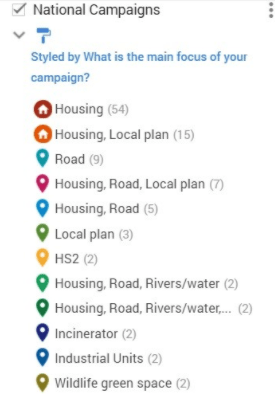
List of campaign headings

For those campaigning against unsustainable housing, the pie chart below shows the number of houses proposed. 67% of campaigners are fighting developments of more than 500 houses. (Some of these results may be the local plan housing target as a whole):

No alt text provided for this image

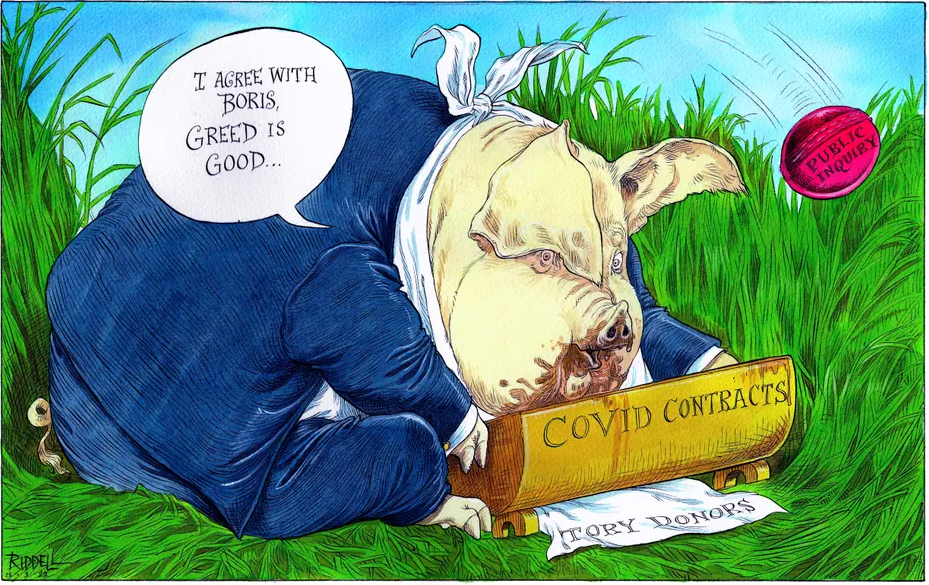
Revealed: Political Parties Used Loophole To Claim Covid Bailouts While Millions Got Nothing

A legal loophole in England has allowed branches of political parties to claim hundreds of thousands of pounds of public cash during the Covid crisis – even as millions of ordinary people were frozen out of help.

Rachel Wearmouth www.huffingtonpost.co.uk

A Freedom of Information investigation by HuffPost UK has revealed more than 22 local branches of political parties were handed £10,000 grants to pay their business rates for high street campaign offices. 

Branches of the ruling Tory Party claimed by far the most, a total of £150,000, with 15 Conservative Associations (CAs) applying to town halls for money. Seven Constituency Labour Parties (CLPs) claimed £70,000 in total. One branch of each party subsequently repaid their share of the cash.

Chancellor Rishi Sunak set up a series of support schemes last year, giving councils the job of handing out money. 

No political party has been found yet to have successfully claimed in Scotland or Wales, where devolved governments issued stricter guidance to town halls. 

The Scottish government told councils: “No part of the grant shall be used to fund any activity or material which is party political in intention, use, or presentation, or appears to be designed to affect support for a political party.” 

In Wales, it was underlined to councils that grants were “targeted at supporting hospitality, leisure, retail, tourism and supply chain businesses”, adding: “Applicants have had to demonstrate a material impact on their business to be eligible for funding.” 

In England, however, the guidelines were more open, with organisations asked only to show they were forced to close during lockdown, and that their premises were subject to business rates.

The Conservative Party has said associations are “no different from other organisations in facing challenging times”. 

But it comes as small businesses complain of long delays to their grant applications to councils, and as millions of hard-pressed self-employed people remain cut off from government support altogether. 

Excluded UK, a campaign group set up to support those frozen out of state aid during Covid, said handing cash to political parties while businesses were folding was “very unjust”.

Rachel Flower, founder of the campaign, said there had been a “postcode lottery”, with different councils “applying the rules differently” for businesses, with a “large number” of Excluded members refused any grant. 

She said: “It seems very unfair that grants are being used in this way yet not for the small businesses for which we were all led to believe that they were intended.” 

The local parties who claimed include: 

  • Conservative Associations of serving ministers, attorney general Suella Braverman, foreign office minister Nigel Adams and solicitor general Michael Ellis;
  • The local Tory Party branch of Esther McVey, the former work and pensions secretary who has campaigned against supermarkets claiming rates relief;
  • The Tory Party branch of first secretary of state Damian Green and David Davis, though HuffPost understands the latter was returned;
  • Ten Conservative Associations who claimed from a Tory-led town hall, with five who claimed from Labour, Lib Dem or hung councils; 
  • Seven local Labour Party branches, including Stella Creasy’s Walthamstow, though HuffPost understands Walthamstow CLP subsequently returned the payment.

Our Freedom of Information requests also uncovered that grants and supports were handed to clubs that may raise cash for parties, including £162,000 that went to various Conservative clubs and £68,000 to Labour clubs. Parties do not run these organisations, however, and not all will be involved in raising political funds. 

Democracy campaigners have hit out at the trend of local party branches claiming public cash. 

Steve Goodrich, senior research manger with anti-corruption group Transparency International UK, said: “There are heightened sensitivities about the use of public funds during the current crisis, and especially so when they are received by political parties.

“Whilst it may be permissible for constituency parties to accept government support, doing so may risk appearing as self-serving, especially by those who have not been eligible for assistance.

“Given the current low levels of trust in politics, it would be prudent for them to think carefully about the broader impacts of them applying for this funding, especially when these organisations would be ineligible for similar relief in other parts of the UK.” 

Tom Brake, director of Unlock Democracy, a non-partisan pressure group campaigning for a written UK constitution, said: “People will be really unimpressed to learn that politicians, often already in receipt of taxpayers’ support, have seen their parties benefit from covid business grants too. 

“The UK government would have been well advised to look over the border to Scotland, where such payments were prohibited.”  

A Conservative Party spokeswoman said that councils decide whether a CA is eligible.  

They added: “Local political associations are no different from other organisations in facing challenging times. The purpose of the coronavirus support schemes is to protect small organisations and prevent local job losses.

“The funding from these schemes is in line with government guidance.”

The Labour Party declined to comment. 

Labour MP Stella Creasy said her CLP did not apply for the cash but was paid the grant automatically by the local authority. The money was repaid by the CLP last year, when this became apparent.  

Creasy said: ‘’Walthamstow CLP pays rates as a small business and so was automatically given this grant, without applying for it, by the local authority.

“When the officers of the CLP realised what had happened, they took steps to repay it.’

Covid grants handed out to Tory associations

Local associations select and campaign for parliamentary candidates.

Ashford Conservative Association (Tory MP Damien Green): £10,000

Bassetlaw Conservative Association (Tory MP Brendan Clarke-Smith): £10,000

Beverley and Holderness Conservative Association (Tory MP Graham Stewart): £10,000

Haltemprice Conservative Association (Tory MP David Davis): £10,000, later returned

Tatton Conservative Association (Tory MP Esther McVey): £10,000

Crewe and Nantwich Conservative Association (Tory MP Kieran Mullan): £10,000

Westmorland and Lonsdale Conservative Association (no local Tory MP): £10,000

Fareham Conservative Association (Tory MP Suella Braverman): £10,000 

Harrogate and Knaresborough Conservative Association (Tory MP Andrew Jones): £10,00

Hemel Hempstead Conservative Association (Tory MP Mike Penning): £10,000 

Romford Conservative Association (Tory MP Andrew Rosindell): £10,000 

Selby and Ainsty Constituency Conservative Association (Tory MP Nigel Adams): £10,000

Shipley Conservative Association (Tory MP Philip Davies): £10,000 

Northampton Central Conservative Association (Tory MPs Michael Ellis, Andrew Lewer and Andrea Leadsom), £10,000

South Suffolk Conservative Association (Tory MP James Cartlidge): £10,000 

Covid grants handed to Constituency Labour Parties 

Dartford Labour Party £10,000 (no Labour MP) 

Ipswich Labour Party £10,000  (no Labour MP) 

St Albans Labour Party £10,000 (no Labour MP) 

South Suffolk Labour Party £10,000 (no Labour MP) 

Suffolk County Labour Party £10,000 (no Labour MP

Walthamstow Labour Party £10,000 (Stella Creasy, payment returned)

Workington Labour Party £10,000 (no Labour MP) 

Retirement apartments scheme is rejected by planning inspector

Plans for a four-storey high development of retirement flats have been thrown out at appeal.

Kerry Ashdown www.stokesentinel.co.uk

Permission had previously been granted for 26 apartments in two blocks on the site at the corner of Stone Road and Cooperative Street in Stafford.

But Stafford Borough Council refused permission for a revised application that sought consent for 30 owner-occupied retired living flats. It followed concerns that the development would be overbearing to surrounding homes.

Now an appeal against the council’s decision has been dismissed by planning inspector Helen Hockenhull.

In her decision notice, she said: “The appeal proposal seeks to construct an additional four apartments by adding a third floor and roof garden to both blocks. The additional floor would be set back on the roof and feature railings would be provided around the roof gardens matching that of the balconies to the individual apartments below.

“The appellant has stated that the 26 approved apartments are not financially viable and the further four apartments proposed in the appeal scheme are required to assist overall scheme viability.

“No substantial evidence has been provided, however, such as a viability appraisal, to confirm and demonstrate this position. I am therefore unable to give this matter any weight in my decision.

“The appeal scheme, a four-storey development, would be out of character with the predominantly two-storey residential properties in the vicinity of the site. A development of this scale and height would form a visually dominant addition to the street scene, causing harm to the character and appearance of the area.

“The appellant has advised that the original property on the site was, in effect, four-storey, with three floors and a basement. However, the existing building had a smaller footprint and was centrally located within the site.

“The appeal proposal is not only higher by approximately 900 mm, but has a greater visual impact as it extends closer to the site frontages following the building line of properties on Cooperative Street.

“I acknowledge that there are four-storey buildings near to the appeal site. However, these are set back from Stone Road and form the backdrop to two-storey development fronting Stone Road and Cooperative Street. They do not therefore have the same visual impact and prominence in the locality.”

Stafford Borough Council’s planning committee considered the appeal decision at its meeting on Wednesday (March 17).

Councillor Bryan Cross said: “This was on the corner, just next to the railway bridge, where there was quite a substantial house which has been knocked down. They’ve flattened the house and there is just a pile of rubble there and the site is surrounded by a high wooden fence.

“It’ll be interesting to see how it progresses from there. Had it been built, it certainly would have overshadowed the houses opposite in Cooperative Street.”

Councillor Jack Kemp said: “There was some history attached to two of those villas. One of them was for a councillor Anderson and the other one was for Mr Hollins, who started from Railway Cottages and became a very important person in the town.

“They were really well-built, they had a lot of character. It was a shame it was knocked down, because I don’t think anybody thought that was going to happen.”

Robert Jenrick: We need to build on green fields

More homes will have to be built on greenfield land if the government is to hit its target of building one million homes before the next general election, the housing secretary has admitted.

Tim Shipman, Political Editor www.thetimes.co.uk

In a private call last week with MPs and donors, Robert Jenrick also suggested that there might need to be building on the protected green belt as well.

Jenrick made the comments in a video call with members of the Conservative Friends of India.

He stressed that the government wanted to “build on brownfield sites first”, but added: “We also know that we will have to build on some greenfield sites as well if we want to meet our overall housing targets, which are very significant.”

It was a “Conservative mission” to help “young people and those on low incomes back onto the housing ladder”, he said.

Where possible the government did not build on the green belt or protected places, Jenrick said.

But he added: “Where we do build on green fields, we are making sure that we are enhancing the natural environment with biodiversity net gain, which we are legislating for in the environment bill.”

Tom Fyans, the deputy chief executive of the CPRE, the countryside charity, seized on the comments and pointed out that the number of homes being built on the green belt was already rising.

The charity’s recent annual report, State of the Green Belt 2021, reveals that 257,944 homes are proposed for land removed from the green belt, nearly five times as many as in 2013.

Fyans said: “We support the brownfield-first approach. The huge increases in the pressure to release green-belt land for housing have been driven by the government forcing the hand of local authorities to meet unrealistic housing targets.”

In his talk Jenrick also said he wanted to “use the opportunity of Covid to convert more offices” in high streets “to bring more life into town and city centres”.

On Wednesday, Jenrick will unveil new planning rules that will make it easier to convert empty and derelict commercial properties into residential properties. The rules will also enable schools, colleges, universities and hospitals to add extensions without going through lengthy planning processes.

The housing department said: “We are prioritising building on brownfield land and revitalising town and city centres. Where there is home building in more rural areas, it needs to be sensitive and proportionate, and protect the local environment.”

UK government scraps green homes grant after six months

The government has scrapped its flagship green homes grant scheme, the centrepiece of Boris Johnson’s promise to “build back greener” from the Covid-19 pandemic, just over six months after its launch.

Fiona Harvey www.theguardian.com

The abandonment of the £1.5bn programme, which offered households grants of up to £5,000 or £10,000 to put in insulation or low-carbon heating, leaves the UK without a plan for tackling one of the biggest sources of greenhouse gas emissions.

People who have had their applications for vouchers under the scheme accepted will receive any money owed, but no new applications will be accepted after the end of this month.

Green campaigners said the scrapping of the programme – the only major green stimulus policy yet announced by the government and originally expected to create tens of thousands of green jobs – came as a serious blow as the government prepares to host vital UN climate talks, called Cop26, this November.

Ed Matthew, campaigns director at the E3G thinktank, told the Observer: “The demise of the green homes grant is an embarrassment [before Cop26], and a disaster in terms of the UK getting on track to net zero [carbon emissions]. Emissions from buildings and transport have flatlined over the last 10 years. If we don’t have programmes to tackle this, we have no hope of meeting the net zero target.”

The green homes grant has been troubled since its launch last September, after it was announced in July as the central plank of the government’s bid to “build back better” and create new green jobs to help the economy recover from the pandemic. There were more than 123,000 applications for the grant by the end of February, but only 28,000 vouchers had been issued and only 5,800 energy efficiency measures had been installed.

Builders complained of excessive red tape in registering for the scheme, while households found it difficult to access. A US company was awarded the contract to administer the grants, but a Guardian investigation found numerous people unable to get a response. Many people were given conflicting advice, while builders have complained that heat pump installations in particular have been stymied by the rules.

Last week, a select committee of MPs delivered a damning assessment that found the scheme “botched [in] implementation … the administration seems nothing short of disastrous”. Far from creating new green jobs as had been promised, the environmental audit committee found some builders had laid off staff owing to problems with the scheme. The MPs recommended an urgent overhaul.

The government said on Saturday that an extra £300m would be directed towards helping people on low-incomes gain access to energy efficiency improvements, through local authorities.

Kwasi Kwarteng, the secretary of state for business and energy, said: “Upgrading the country’s homes with energy efficiency measures means we can cut emissions and save people money on their energy bills. Today’s funding boost will mean even more households across England are able to access these vital grants through their local authority. This latest announcement takes our total energy efficiency spending to over £1.3bn in the next financial year, giving installers the certainty they need to plan ahead, create new jobs and train the next generation of builders, plumbers and tradespeople.”

However, overall the amount of money earmarked for greening homes is being reduced from the £2.5bn announced with fanfare last summer. Of that, £1bn was earmarked last year for local authorities to improve homes for people on low incomes, now raised to £1.3bn. But the green homes grant was meant to disburse an additional £1.5bn, most of which remains unspent.

Scrapping the green homes grants leaves the 20m households on moderate incomes without any government help to undertake the improvements necessary to reduce greenhouse gas emissions.

Heating the UK’s draughty homes makes up about 14% of the country’s carbon emissions, according to the Committee on Climate Change, and successive efforts to tackle the problem have run into problems. The failure of the green homes grant follows the abandonment in 2015 of the previous scheme, the green deal loan scheme.

Kate Blagojevic, head of climate at Greenpeace UK, said: “We’re just seven months away from hosting a global climate conference at which we’re supposed to be leading the world on climate action. But we cannot expect anyone to think we’re a credible leader when our own policies on climate action are going in the wrong direction.”

The government on Saturday said the scheme was only ever intended to be a short-term stimulus. However, Matthew said that was part of the problem. “There has been a stop-start approach [to home energy efficiency] which has stopped businesses investing in skills, and has failed to give households confidence,” he said.

“They [the government] must pick themselves up and create a new green programme that works, and has long-term funding in place from the beginning. It is surely not beyond the capability of this government to give money away at a time of economic crisis.”

‘You did what you were told’ – the inside story of Liverpool City Council’s collapse into scandal

Despite suspicions, these things seldom see the light of day. Compulsive reading – Owl

(All this in a week when a General has been jailed for falsely claiming almost £50,000 in allowances; and two members of staff at a Sidmouth care home have been arrested on suspicion of wilful neglect in connection with a Covid-19 outbreak after a multi-agency investigation.)

www.independent.co.uk 

In an interview given in 2020, Joe Anderson, the then mayor of Liverpool, was asked what the biggest misconception about him was.

“Things like the brown envelope comments,” he told the Trailblazer website. “I live in a terrace house in Old Swan… I’m a scouser that wants the best for his people.”

This week, the city council which he led for a decade until December was found to be mired in scandal so rotten it will now be partially taken over by government commissioners.

In an eviscerating report following a three-month investigation, inspectors described an authority where “dubious” contracts were regularly handed out, key records were routinely destroyed and staff who dared voice concerns – or even ask questions – were intimidated. “Those who did not comply,” the report states, “did not last”.

Among major issues highlighted were senior councillors benefiting financially from funding decisions, a scrutiny process described as “sketchy”, and the handing of at least one major contract to a direct family member in breach of all regulations. Insiders suggest as much as £100m of public money may have been squandered.

“It could hardly be more damning,” says Jonathan Tonge, professor of politics at Liverpool University. “You could hardly get a more excoriating report. It is page after page of the most shameful stuff.”

Now, with Anderson himself under police investigation following his arrest on suspicion of bribery in December, the civic soul-searching is beginning: how could England’s 10th biggest authority – one that serves a metropolis of half a million people – fail so badly?

Part of the answer to that, it now seems, may lie in nothing more obscure than a couple of city centre flyovers.

The Churchill Way – a pair of brutalist 240-metre long road bridges – carried four lanes of traffic up and above Liverpool for almost 50 years until their much-welcomed demolition in 2019.

Now, two years on, they are at the centre of one of the most eyebrow-raising sections of the new report.

Specifically, it is said that, during their demolition, Amey – the company charged with the £6.75m job – was given a “direct instruction” by council officials to contract out part of the work to a small Liverpool venture called Safety Support Consultants.

While bosses at the infrastructure giant questioned this – SCC had “no published highways experience” – it ultimately did as it was told. Over a four month period, some £250,000 was paid out to the smaller firm for safety work.

Why is this significant? Because the director of SSC, it turned out, was none other than David Anderson, the 33-year-old son of the mayor.

“This action exposed the site teams to considerable health and safety risk,” says the report, which was written by government inspector Max Caller. “It also increased the commercial risk to the council of budget overrun.”

Any allegations of wrong doing have quickly been denied by both Anderson senior and junior.

In a statement released on Thursday, the latter described the 69-page report as “slanderous, unfounded, biased, tactical and politically motivated” as well as “factually incorrect”.

Yet it was his company’s involvement with the Churchill Way that perhaps first truly set alarm bells ringing about wider issues at the authority, insiders tell The Independent today.

By 2019, backbench councillors and officials were already becoming concerned about the way the regeneration, planning and highways departments were being run. Deputy mayor, Ann O’Byrne, had quit her role in May 2018 with a blistering attack: “The mayor isn’t listening to the Labour group, wider party and, most importantly, to the people of Liverpool”. Six months after Anderson himself was questioned by Lancashire Police in connection with a fraud inquiry.

Yet, up until the flyover demolition, there remained a widespread belief that, if the methods being deployed were unorthodox, they were not without their benefits. What the new report has judged to be “intimidation”, many saw as the forthrightness required to get Liverpool moving. What it has called “dubious” contracts were widely considered a way of ensuring local companies got local jobs; that money came into the city and stayed here.

The old government maxim was regularly thrown about: what’s right is what works. And on some level, it did work. According to Anderson himself, some £10bn was pumped into Liverpool during his tenure and 31,000 jobs were created.

“You have to remember Joe got things done,” says one Labour backbench councillor today. “He promised to bring development and jobs and he did that, so when people heard about corners being cut, there was a willingness to give the benefit of the doubt and accept it was being done for the right reasons. Which I think, to some extent, it probably was.”

But?

“But then SSC happened, and it was just one contract too many that was difficult to justify,” comes the reply. “People looked at that and it didn’t pass any kind of smell test.”

Indeed, it was by no means the only dealing that failed to meet such standards, according to the Caller report.

In total, inspectors analysed 65 sample property transactions entered into by the council between 2015 and 2020. Not a single one was found to be entirely satisfactory. “When selling land,” communities secretary Robert Jenrick told parliament after assessing the findings, “Liverpool City Council’s best interests were not on the agenda.”

The report itself goes back no further than 2015 but arguably a more key date in all this was 2010 and what some have called Liverpool’s Night of the Long Knives.

Within six months of Anderson sweeping to victory in that year’s local elections, the council’s chief executive Colin Hilton along with six or seven of its most senior directors and officers had either retired, moved on to other authorities or been asked to step down.

“It was a major clear out of the stables and, in effect, what ought to have been a neutral civil service was replaced by senior figures that were far closer to the politicians leading the authority than perhaps they should have been,” says Tonge today.

Key among the replacements was new interim CEO David McElhinney, a man with a reputation as an enforcer so ruthless he had the nickname Mack The Knife. His appointment, the Liverpool Echo reported at the time, would “send shivers down the spines of staff”.

A message, one insider says, soon started coming down the food: “You did what you were told or you started looking for a new job.”

The problem was – and still is – that there was no real opposition to scrutinise such manoeuvres. Liverpool is all but a one-party state. Of 90 councillors here, some 72 are Labour. Every single one of the city’s MPs is red.

“The Liberal Democrats are energetic, but they don’t have the volume or resources to engage in full scrutiny,” says Tonge. “There were a lot of Labour backbenchers who were brassed off with what was happening, but they have no mechanism to change things. Those that did speak out were marginalised. They were sent to political Siberia.”

None of this was in anyway illegal, or even necessarily improper, it should be said. It is the same political power plays that go on everywhere.

But it does offer context as to how, from then on in, certain council departments were able to operate, as Caller’s report notes, with minimal transparency.

Indeed, that opaqueness was only compounded in 2012 when the council shifted to a directly elected mayor system – a post which Anderson himself duly won in a city-wide election.

“It was a new system so there was confusion about who had what authority,” says one backbench councillor. “The consequence was that there was significant overreach that went effectively unchecked.”

Thereafter, power became increasingly concentrated in the hands of the few. In one of the bombshell lines from his report, Caller acknowledged this. He suggested the council’s leadership became not altogether different from a “secret cabal”.

Where exactly Liverpool goes now from here is not immediately clear. No other city of this size had ever had government officials move in like this. It is unprecedented territory.

What is already clear is that – excluding some on the hard left who talk of a Tory takeover – there appears some political agreement that communities secretary Robert Jenrick had little choice but to appoint commissioners to oversee change.

“We’ve got to be big enough to own [what has happened],” said Paula Barker, MP for Liverpool Wavertree. “If we expect any moral authority to call out alleged government corruption and cronyism, we’ve got to have the bravery and integrity to investigate it out in our own ranks.”

Sir Kier Starmer, too, supported the move.

The commissioners, it is understood, will now work alongside the council’s chief executive, Tony Reeves –acknowledged in the report for beginning to turn things round – to implement a plan for action in the authority’s planning, highways, regeneration and property management departments. They will likely stay in position for three years.

The police investigation into Anderson and at least four other men remains ongoing, meanwhile. All strenuously deny any wrongdoing. Anderson released a statement this week saying of the Caller report that “success brings jealousy”.

And, then, just to throw an extra ingredient into the pot, there’s the upcoming mayoral election in May.

Labour are still to pick a candidate – a process which has already been the subject of infighting – yet, whoever they do choose, their ultimate victory retains an air of inevitability.

“Will it all have an impact politically?” ponders Tonge. “The report is so damning, it could hardly fail to have some impact but I can’t see this staying anything other than a Labour city. The movement away would need to be too big. What it might mean is that we now have a contest rather than a coronation.”

Plea for tourists to not visit Devon too soon and ruin summer

Would-be holiday makers are being warned ‘not to put the summer at risk’ by travelling down to Devon this Easter before lockdown restrictions ease.

Daniel Clark www.devonlive.com

Under the government’s roadmap, Monday, April 12, is the earliest date outdoor attractions and self-contained accommodation such as campsites and holiday lets, where indoor facilities are not shared with other households, are allowed to open.

Until then, many facilities, shops and hospitality venues will not be fully open with food and drink only available from essential shops or takeaways.

Visitors are being warned it is illegal and could be dangerous to travel before Government restrictions are lifted.

With Easter approaching, there are fears a minority of tourists might be tempted to travel early and before facilities are ready or attractions are open, Thursday’s Devon County Council corporate infrastructure and regulatory services scrutiny committee meeting heard, with the potential that the ‘false start’ to the tourist season would risk spreading Covid-19 and put unnecessary extra strain on the emergency services.

Keri Denton, Devon County Council’s head of economy, skills and enterprise said: “We will give people a warm welcome when the guidelines allow but not before.

“We are not ready for visitors yet and we do not want to put the summer at risk for the sake of a few more weeks.

“After all our hard work to keep Covid-19 cases in Devon so low we do not want to risk things now.

“We ask everyone thinking of coming to Devon after April 12, to behave responsibly and make sure you book the sort of accommodation and experiences you can enjoy safely in advance.

“We also ask potential visitors, as well as our own residents thinking of travelling within Devon, to take extra care and to show our local communities respect and courtesy. This includes the simple things like parking responsibly, respecting the countryside and taking litter away.”

But Dr Phil Norrey, Devon County Council’s chief executive, added: “Last year we saw little evidence of transmission of the disease in outdoor settings so even if there is the usual or enhanced number of visitors, it won’t pose an increased risk based on what happened last year.”

The council is also urging Devon residents and potential visitors after Monday, April 12, to take extra care, to act responsibly and to show local communities courtesy and respect at all times, and with them being urged to ‘find a bin or take it home’ in a new county-wide anti-littering campaign.

As lockdown eases and the warmer months beckon, the multi-agency partnership Clean Devon wants to encourage everyone to take more responsibility for their rubbish whilst enjoying the beautiful moors, beaches, wildlife, countryside, towns and villages.

Littering is an increasing burden on society, both financially and environmentally and the partnership aims to improve the issue through preventing, detecting and deterring this type of behaviour in Devon.

Principal waste manager from Devon County Council and Clean Devon co-ordinator, Annette Dentith, says: “One of our key priorities is to protect and enhance Devon’s wonderful environment. Local authorities do their best to keep bins emptied however with increased visitors over the warmer months we must take responsibility for our own rubbish.

“If bins are full, bring your own bag and dispose of it when you return home. Please don’t leave it next to an already full bin as this contributes to littering and is considered fly-tipping for which you could be fined. It’s really important we protect our beautiful county, not only for ourselves but for future generations.”

Infection rates in the county are down to 15.3/100,000 – the lowest on the mainland of England with only the Isle of Wight lower – with North Devon, the South Hams, Teignbridge, Torridge and West Devon is the bottom ten for lower tier authorities.

Dr Norrey told councillors on Thursday that cases were still declining – and have dropped by 25 per cent in the last week – but that at the lower levels they are currently seeing, further declines will be slower and bumpier.

Steve Brown, director of Public Health Devon, added that we are all going to have to learn to live safely with COVID-19 for the foreseeable future, and that a key part of that is for us to keep the infection rates as low as possible.

Mr Brown said: “Please continue to maintain your social distance, wear your face coverings when you’re indoors in a public place, and remember to wash your hands frequently and properly.

“If you are somebody who has to leave home to work or volunteer, or you’re a carer for somebody, or you happen to be in a family, household or maybe a bubble with somebody who attends a nursery or education, please access regular testing twice a week.”

Devon in “good place” as lockdown eases

Rates down, but higher than summer.

Daniel Clark, local democracy reporter www.radioexe.co.uk

Devon is in a “good place” to cope as restrictions  ease in the roadmap out of lockdown.

Infection rates in the county are down to 16 per 100,000 – the lowest on the England mainland, with only the Isle of Wight lower – with North Devon, the South Hams, Teignbridge, Torridge and West Devon in the bottom ten for lower tier authorities.

Dr Phil Norrey, Devon County Council’s chief executive, has told councillors cases are still declining and have dropped by 25 per cent in the last week – but further declines will be slower.

He said that while restrictions are beginning to ease and that life begins to return to normal, there will still be a public health role as we will be living with covid over the next couple of years.

And he added that with more than 100,000 tests a week being carried out in the county through community testing, schools, care homes and health settings – around 12 per cent of the population – Devon is a good position to spot anything if it occurs. Even with the reopening of schools and twice weekly testing for pupils, infection rates are lower for people up to age 19 in Devon than when schools returned on 8 March.

Speaking at the council’s corporate infrastructure and regulatory services scrutiny committee meeting, Dr Norrey said: “Rates are still coming down but have slowed and we are into the hard yards to drive them out from a relatively low position. They are still higher than last summer, but we had far fewer tests then than now, and overall rates are still coming down but slowly and bumpily.”

On the relaxation of restrictions, he added: “It is important to emphasise that it is an end to the behaviour changes so we still need to follow the precautions where possible as we are not out of the woods today and the pandemic won’t move on and we will be living with Covid over the next couple of years.

“We have a public health role as we emerge from the restrictions and our core role will be ongoing surveillance, community testing, local contact tracing including enhanced tracing which is working really well and supporting self-isolation, and to control outbreaks where they occur.

He added: “Last year we saw little evidence of transmission of the disease in outdoor settings so even if there is the usual or enhanced number of visitors, it won’t pose an increased risk based on what happened last year.”

Answering questions on the upcoming local elections, Dr Norrey said they are confident that they would run smoothly, although that there were still a few isolated issues to sort out, including that one of the proposed centres for the count is being used as a vaccination centre, and that one district may be counting on the Saturday, rather than the Friday, which could delay the result.

Cllr Alistair Dewhirst, chairman of the committee, in a message to those planning to visit Devon in the summer, added: “We will have a fantastic summer for business, but while some places may be pretty busy, other places may be as quiet as you imagine Devon to be.”

Jackie Weaver: ‘End virtual council meetings? Dreadful idea’

Jackie Weaver has joined critics of a government move to end virtual council meetings in England from May.

By Jennifer Scott www.bbc.co.uk

Jackie Weaver

Minister Luke Hall has written to local authorities saying the government is under too much pressure to fit in legislation to allow them to continue.

Ms Weaver, who rose to fame after a meeting of Handforth Parish Council went viral, said it would be “dreadful” to bring them to an end.

The Local Government Association also called for the decision to be reversed.

Chair of the organisation, Councillor James Jamieson, said reintroducing face-to-face meetings “could easily involve up to 200 people in one room, even before adding in members of the public and reporters” – so their return would pose a “significant challenge” to councils to make them Covid-secure.

Lawyers in local government, along with Hertfordshire County Council, have now made an application to the courts to declare authorities already have the powers needed to hold online meetings.

The Ministry of Housing, Communities and Local Government said it had asked councils to share their experiences of remote meetings, saying they will use the evidence “to inform any potential future legislation regarding their use beyond the pandemic”.

Like many other organisations, local councils were forced to go online in 2020 due to the pandemic and restrictions on public meetings.

Emergency legislation was passed in the Commons to give them the power to do business over video conferencing tools, but the temporary law is due to run out the day after the local elections on 6 May.

In his letter, Mr Hall – the minister for regional growth and local government – praised the efforts of local authorities in England, saying they had “risen magnificently to the challenges of this period”.

But he said extending virtual meetings past May would involved primary legislation in the Commons, which would have a “significant impact… on the government’s legislative programme, which is already under severe pressure in these unprecedented times”.

media captionViral moments like this Handforth Parish Council meeting could come to an end – but there are more serious reasons for concern too

Mrs Weaver – the chief officer of the Cheshire Association of Local Councils – told BBC Radio Derby it would be “dreadful” to bring virtual meetings to an end.

She added: “I think all the evidence is out there to show that actually Zoom has done more… [and] has been instrumental in getting people involved.

“We can see it in the figures [with] people turning up. We are seeing it in the people that are showing interest in elections.

“I am not saying all council meetings should be held virtually and I know a lot of my councils are keen to get back to face-to-face meetings, but it would be so helpful, so valuable to be able to hold Zoom meetings.”

Mr Jamieson agreed the move risked “damaging the gains seen in public participation in remote council meetings during the pandemic and our vital local democratic process”.

He also pointed to the imbalance when it came to the rules in Westminster.

“MPs will retain the right to participate remotely until at least 21 June, but the powers-that-be in the House of Commons will not make time available to legislate for councillors to do the same,” he added.

The County Councils Network said the government’s decision was “deeply disappointing, considering the success of remote meetings”.

Its chairman, Councillor David Williams, said he had concerns over whether face-to-face council meetings could be done safely, adding: “The decision is illogical when you bear in mind the government’s own guidance stipulates that indoor events cannot be organised until 17 May at the earliest.”

‘Consider permanent option’

Asked for a response to the criticism, the ministry sent a statement from Mr Hall, who said: “Councils continue to play a vital role in our response to the pandemic and I am grateful for how they have used emergency powers introduced a year ago to continue to operate at a difficult time.

“As the vaccine roll-out continues and restrictions are lifted, councils holding face-to-face meetings from 7 May are being given the support and guidance they need to do so in a safe and secure way.”

He added: “I am keen to hear from councils and local residents about their experiences of virtual meetings so that we can properly consider whether to make these a permanent option.”

Councils will have to resume holding meetings in-person

The Council Chamber in Blackdown House is long and narrow – so Owl wonders whether the only way to achieve social distancing is to put the Tories in an ante-chamber somewhere? In 2019 the opposition was relegated to the back row anyway from where it is quite hard to engage effectively with the meeting. Do we count this as an “Own Goal”?

Here is the view of Tim Todd in his June 2019 FOI entitled: “What thought went into the design of the debating chamber at the new EDDC HQ and its suitability for participation by the public?”

Along with a fair number of members of the public, I attended the first council meeting under the new intake of councillors in May. Even arriving early I found that there was no room to accommodate me and a number of other members of the public, we had to use a less than satisfactory gallery with a restricted view of the participants. We also had to put up with broadcast information and missed out on all that was said when speakers forgot to use the microphones. Being quite separate from councillors and others, we were not readily able to have conversations with others on matters that may have been relevant and could have been raised by our representatives.

I gather from some in the small chamber downstairs, and from social media, that many were less than impressed and some felt the design and construction did not give due weight to public engagement in council matters in their public meetings, that the council has failed in its duty to provide adequate facilities or encourage participation.

Jackie Weaver’s view on abandoning virtual meetings is posted separately.

Daniel Clark www.devonlive.com 

Legislation that has allowed councils and local authorities to meet virtually during the last year throughout the coronavirus pandemic will not be extended.

Last April, the Government introduced emergency legislation to relax the requirement for local authorities to hold public meetings in person, with the regulations applying to all meetings taking place before May 7, 2021.

But on Thursday night, it was confirmed the Government have decided that it is not possible to bring forward emergency legislation on this issue and that the successful rollout of the vaccine and the reduction in cases of Covid-19 should result in a significant reduction in risk for local authority members meeting in person from May 7.

It means that from May 7 onwards, all councils – from Devon County down to the parish councils – will have to resume meetings in person, and also applies to the Dartmoor and Exmoor National Park Authorities, the Devon and Somerset Fire Authority, as well as the Police and Crime Panel.

Councils though are being encouraged to continue to live stream the meetings to meet the legal obligation to ensure that the members of the public and press can access the meeting without having to physically attend.

Luke Hall MP, Minister of State for Regional Growth and Local Government, in his letter to councils, said: “Extending the regulations to meetings beyond May 7 would require primary legislation. The Government has considered the case for legislation very carefully, including the significant impact it would have on the Government’s legislative programme which is already under severe pressure in these unprecedented times.

“We are also mindful of the excellent progress that has been made on our vaccination programme and the announcement of the Government’s roadmap for lifting Covid-19 restrictions. Given this context, the Government has concluded that it is not possible to bring forward emergency legislation on this issue at this time.

“As outlined in the Government’s Spring 2021 Covid-19 Response, our aim is for everyone aged 50 and over and people with underlying health conditions to have been offered a first dose of the Covid-19 vaccine by April 15, and a second dose by mid-July.

“While local authorities have been able to hold meetings in person at any time during the pandemic with appropriate measures in place, the successful rollout of the vaccine and the reduction in cases of Covid-19 should result in a significant reduction in risk for local authority members meeting in person from May 7, as reflected in the Government’s plan to ease Covid-19 restrictions over the coming months.”

Mr Hall said that he recognised there may be concerns about holding face-to-face meetings, but that ‘ultimately it is for local authorities to apply the Covid-19 guidance to ensure meetings take place safely’.

He added: “If your council is concerned about holding physical meetings you may want to consider resuming these after May 17, at which point it is anticipated that a much greater range of indoor activity can resume in line with the roadmap, such as allowing up to 1,000 people to attend performances or sporting events in indoor venues, or up to half-capacity (whichever is lower).

“While you do have a legal obligation to ensure that the members of the public can access most of your meetings, I would encourage you to continue to provide remote access to minimise the need for the public to attend meetings physically until at least June 21, at which point it is anticipated that all restrictions on indoor gatherings will have been lifted in line with the Roadmap.”

But responding to the announcement that emergency legislation allowing virtual council meetings will not be extended, Cllr James Jamieson, chairman of the Local Government Association, said: “This decision is extremely disappointing. The Government’s own roadmap out of lockdown states that indoor gatherings or events – organised by a business, charity, public body or similar organisation – cannot be organised until May 17 at the earliest. Yet councils will be unable to hold remote meetings from May 7.

“MPs will retain the right to participate remotely until at least June 21 but the powers-that-be in the House of Commons will not make time available to legislate for councillors to do the same.

“The case is clear for the ability for councils to continue to be able to hold meetings flexibly. We urge the Government to reverse this decision and not force councils to have to hold Covid-19 secure face-to-face council meetings until all restrictions are lifted.

“Holding face to face council meetings, with supporting staff, could easily involve up to 200 people in one room even before adding in members of the public and reporters.

“This is likely to be a significant challenge with councils, for example, having to source larger venues in order to be able to host meetings with social distancing measures in place, such as full council meetings which will need to be held following the May local elections.

“This also risks damaging the gains seen in public participation in remote council meetings during the pandemic and our vital local democratic process.

“Left with no choice, Lawyers in Local Government, the Association of Democratic Services and Hertfordshire County Council have made an application to the Courts to declare that councils already have the powers needed to hold online meetings. The LGA will be providing support in these proceedings as the representative body for councils.”

Mr Hall said that councils who are not subject to elections could consider conducting their annual meetings prior to May 7, and therefore do so remotely while the express provision in current regulations apply, but for councils were elections are taking place, this is not possible, and after a new elections, an annual council meeting has to take place within 21 days of the election, so Devon County Council will have to allow 60 councillors to meet in person.

A Devon County Council spokesman said: “This decision presents all local authorities with a complex challenge in deciding how best to hold face-to face council meetings safely after May 7.

“We will be looking very carefully at the detail of the new guidance before considering the best approach for the County Council.”

East Devon Alliance announces candidates for May Devon County Council elections

From EDA press release:

Three Independent candidates supported by the East Devon Alliance (EDA) will be standing for Devon County Council on May 6th. The Independent alliance has decided to concentrate its efforts in the divisions where it won or came a strong second in the last County elections in 2017.

In AXMINSTER, PAUL HAYWARD, who is deputy leader and economy portfolio holder at EDDC, will be standing. Paul came a close second in the last County election and says, ‘Axminster is tired of waiting for better times. We need action on potholes now. We need better healthcare provision now. We need a solution to our traffic and speeding problems now. Our residents need better and faster broadband now. On May 6th, if elected, I will start to deliver the change Axminster needs and deserves.’

In the Seaton and Colyton division, the current County Councillor, MARTIN SHAW, is standing again. He says, ‘My battle to secure the future of Seaton Hospital is only half-won, and I still have a huge amount of work to do, to help improve our environment, extend the Stop Line Way cycle route, achieve 20 mph limits in our town and village centres, and repair our rural roads. I am looking forward to another term if the voters agree.’

In Sidmouth, where EDA also came a close second last time, the Independent candidate will be LOUISE MACALLISTER, a project manager at Devon Communities Together who has worked on many projects in East Devon, including Sidmouth. She says, ‘As a passionate environmentalist, I am keen to enhance and protect Sidmouth’s natural assets and flood resilience. If elected, I look forward to working with the community to tackle issues with highways, traffic, and public transport, and ensure our NHS services and education provision are maintained and improved.’

In addition to its strong performance in these areas in the last County elections, the East Devon Alliance has 13 councillors on EDDC and its leader, Paul Arnott, is Leader of the Council.

[Owl draws attention to the trends. In the 2015 District elections there were 10 EDA councillors a net gain of 7. In 2019 this rose to 13 despite Cllr Ben Ingham’s double defection to “Independent” now “Conservative” and Cllr Megan Armstrong campaigning as one of Ingham’s “Indys” though now part of the “Independent Progressive” grouping working with the coalition. As mentioned in the press release EDA currently have only 1 County Councillor but are campaigning in two more divisions where they came a strong second.]

40,600 people likely caught Covid while hospital inpatients in England

More than 40,600 people have been likely infected with coronavirus while being treated in hospital in England for another reason, raising concerns about the NHS’s inability to protect them.

Caelainn Barr www.theguardian.com

In one in five hospitals at least a fifth of all patients found to have the virus caught it while an inpatient. North Devon district hospital in Barnstaple had the highest rate of such cases among acute trusts in England at 31%.

NHS England figures also reveal stark regional differences in patients’ risk of catching the virus that causes Covid-19 during their stay. Just under a fifth (19%) of those in hospital in the north-west became infected while an inpatient, almost double the 11% rate in London hospitals.

Hull University teaching hospitals trust and Lancashire teaching hospitals trust had the joint second highest rate of patients – 28% – who became infected while under their care. The former has had 626 such cases while the latter has had 486. However, the big differences in hospitals’ size and the number of patients they admit mean that the rate of hospital-acquired infection is a more accurate reflection of the success of their efforts to stop transmission of the potentially lethal virus.

The trusts with the next highest rates were Stockport (28% – 386 cases), Brighton (367 cases – 27%) and James Paget in Norfolk (27% – 319 cases). At least one in four of all patients with the virus in hospital became infected at 10 of England’s 127 acute trusts.

Across England as a whole one in seven (15%) of all patients treated for the virus between 1 August 2020 and 21 March got it while in hospital.

The data shows that hospitals in England estimate a total of 40,670 people probably caught coronavirus while in hospital in their care during that time.

Doctors and hospitals claim that many of the infections were caused by the NHS’s lack of beds and limitations posed by some hospitals being old, cramped and poorly ventilated, as well as health service bosses’ decision that hospitals should keep providing normal care while the second wave of Covid was unfolding, despite the potential danger to those receiving non-Covid care.

“These heartbreaking figures show how patients and NHS staff have been abysmally let down by the failure to suppress the virus ahead of and during the second wave,” said Layla Moran MP, the chair of the all-party parliamentary group on coronavirus.

 Doctors and hospitals say many infections were caused by the NHS’s lack of beds, old hospital buildings and the decision to run normal services during the second wave. Photograph: Hannah McKay/PA

“It is simply staggering that one in seven hospital patients who developed Covid-19 caught the virus while being treated for another illness. This analysis also reveals deeply alarming regional disparities, with rates of hospital-acquired Covid in the north-west almost twice those in London.”

NHS England does not publish figures showing how many of those deemed likely to have caught coronavirus as an inpatient later died. But experts in hospital-acquired infection pointed out that many of those being admitted for other reasons – such as an operation or after a fall or flare-up of an existing medical problem – are frail and vulnerable and have underlying poor health, so would be more likely to die if they did get Covid.

“It is impossible to eliminate the risks of nosocomial infection, but the huge drive to run parallel Covid and non-Covid care since the summer has inevitably heightened those risks,” said Dr Claudia Paoloni, the president of the Hospital Consultants and Specialists Association.

“Due to years of systemic understaffing and a cost-cutting approach to new hospital design we have far fewer beds available than our European counterparts, which has made it harder to separate out cases and led to an increase in the chances of hospital-acquired infection. Tragically, people will have caught Covid and inevitably died as a result of this shortsightedness.”

NHS staff need proper personal protective equipment to reduce the risk of transmitting the virus at work, especially FFP3 masks rather than just surgical masks, as the former are better at limiting the spread of the new variants of coronavirus, she added.

Stopping the spread of coronavirus in hospitals has been a key priority for hospitals internationally during the pandemic. The Healthcare Safety Investigation Branch watchdog published a report last year which criticised the NHS in England’s track record. Recent research by Public Health England found that 15.5% of all cases of Covid among hospitalised patients had either probably or definitely occurred while they were in hospital.

Three small single-hospital trusts in London have had some of the lowest rates of nosocomial infection in England among acute trusts. Thirteen people since August have caught coronavirus while an inpatient at the Whittington hospital, giving it a rate of just 1%. The North Middlesex and Homerton hospitals have had 66 and 47 such cases respectively, so the rate at each was 4%, the NHS figures show.

Dr Rob Harwood, chair of the British Medical Association’s consultants committee, said: “The NHS went into the current pandemic underfunded, understaffed and overstretched. The knock-on effects – particularly limited bed and workforce capacity – has unfortunately meant that controlling the spread of Covid-19 within hospitals has been more difficult than necessary.”

University hospitals Birmingham trust has had the most cases since August – 1,185. But its size means that those cases represent a rate of 14%, just below the national average of 15%.

Northern Devon healthcare trust said: “We acted quickly to put in place enhanced infection prevention and control measures when needed, including increased inpatient testing to identify any patients with no symptoms.”

A spokeswoman for the Hull trust cited high local rates of infecton and added: “We are taking all possible steps to reduce the risk of hospital-acquired infections, given the constraints placed upon us by our ageing estate, including the creation of ‘pods’ with floor-to-ceiling partitions, the removal of beds to reduce the risk of transmission, the isolation of patients with the virus and a regular testing regime.”

Lancashire teaching hospitals trust said that it had had a spate of nosocomial infections in November and December when it was very busy and that had led to an increased risk of hospital-acquired infection and affected its average over the year. “We also have an old estate which limits the opportunities for ventilated space,” a spokesman added.

NHS England insisted that the real rate of hospital-acquired coronavirus is 4.5%, not 15%, and blamed high rates of infection in the population. Its statement was based only on cases regarded as “definite” because the person tested positive on or after the 15th day after their admission.

An NHS spokesperson said: “The Office for National Statistics and other data conclusively demonstrate that the root cause of rising infection rates in hospitals is rising rates in the community.

“Since asymptomatic tests kits were made available for the first time by the government’s test-and-trace programme in November, millions of staff have been tested helping to keep infections as low as possible, and all staff have been asked to rigorously follow PHE’s infection control guidance with hospital infection rates currently standing at around 4.5%.”

On Thursday Sir Simon Stevens, NHS England’s chief executive, recommended that the health service reduce the national alert threat level from Covid from four to three because of the recent big fall in the number of people in hospital with the disease. UK hospitals are now looking after 5,407 such patients, a fraction of the 39,249 they were treating on 18 January, at the peak of the pandemic’s second wave.

• This article was amended on 26 March 2021 to correct the spelling of Barnstaple.

County council to take control of Special Educational Needs and Disability support

A radical plan to bring Devon’s school improvement services and support for special needs children back in-house has been agreed. 

Does this count as a U-Turn in DCC? – Owl

Daniel Clark Local Democracy Reporter www.exmouthjournal.co.uk

Devon County Council’s cabinet unanimously backed the plans at their meeting on Wednesday (March 10) which entails the authority taking responsibility for some 200 staff when its current contract with providers Babcock ends. The contract is worth £8.8 million a year. 

The meeting heard that one of the key aims of the move is to integrate all Devon’s support for children in the county with special educational needs and disabilities (SEND) and that bringing the service in-house will achieve a much more seamless offer across Devon. 

The decision in response to the national reforms that were introduced in 2014 that required much closer cooperation between education, health and social care providers. 

And it aims to address some of the issues that have led to the council’s children’s services being found inadequate by Ofsted. 

Devon County Council deputy leader and cabinet member for children’s services, Cllr James McInnes, said: “Bringing all these services back under one roof will mean we can offer a much better package of integrated help and support for these vulnerable children and their families in a one-stop shop. 

“This doesn’t imply any criticism of the work that Babcock has done which is much valued and which has achieved good outcomes for children. 

“Indeed successive annual reports have demonstrated the significant positive impact the services have on children in Devon. 

“But these services were outsourced in 2012 and the national picture has changed dramatically since the national reforms of 2014. 

“When we came to review our services and the current contract, it became clear that it made sense to integrate all our help for children with special needs. 

“We looked at whether private companies would want to bid to provide our school improvement services in the future but in the end it seemed more sensible to bring them all back in-house.” 

The SEND services include education psychology, early years support and advice, children missing education, physical and sensory support, social, emotional and mental health, communication and interaction and multi-sensory impairment which is currently under a separate contract. 

The other services which are currently out-sourced are: teaching, curriculum and learning advisory support, governance, school improvement and quality assurance, education safeguarding, elective home education support and monitoring, English as an additional language and the education welfare service. 

Devon’s chief officer for children’s services, Melissa Caslake, added: “There is a strong, partnership-wide commitment to develop a truly transformative SEND service where education, health and care work as one team. 

“Parents have told us we need to meet the needs of children with SEND earlier and better and improve access to and coordination of support. 

“We have excellent inclusion opportunities for children with SEND in Devon with 57 per cent of statutory school age children with education, health and care plans accessing mainstream education. That is 14 per cent above the national average. 

“We are committed to improving and securing the best long term futures for our children with additional needs and integrating these services will help us to achieve this.” 

Cllr Rob Hannaford, leader of the Labour group, said: “This is a good move and one I support as it is a better opportunity to lead and develop to changes. Getting this right is key to turning children’s’ services around.” 

Cllr Alan Connett, leader of the Liberal Democrat group, added: “I welcome the broad direction of travel and huge synergies that can be achieved by bringing the service in house, and doing the right thing for the children of Devon is the most important thing for all us of.  

“After seven years of Ofsted finding the service inadequate, if this step does anything to help improve that, then it is very much to be welcomed.” 

Leader of the council, Cllr John Hart, added: “This one decision which will have a fundamental effect on children’s services.” 

Q.When is a “nightclub” not a nightclub? A. When it’s closed

Exmouth’s only nightclub has permanently closed

Chloe Parkman www.devonlive.com 

Exmouth’s only nightclub – Popworld – has closed permanently, it has been confirmed.

Stonegate pub company has confirmed that the nightclub will not be reopening at all after lockdown.

Back in 2019, Devon Live reported that Popworld took over from Fever, Boutique and Kukui – it’s last remaining nightclub in East Devon.

A spokesperson for Stonegate Group said: “We can confirm that our lease at Popworld in Exmouth has come to an end, so unfortunately, it will not reopen after lockdown.

“However, Popworld in Plymouth will reopen on 21 June, in line with government restrictions, and we are looking forward to throwing our customers a Popworld Party once more.”

In August, Devon Live reported that following the lockdown Popworld in Exmouth reopened with strict social distancing measures.

According to the PM’s roadmap out of lockdown, from June 21 at the earliest, all remaining restrictions on social contact could be lifted, larger events can go ahead and nightclubs could finally reopen.

Tracking Financial Vulnerability in the UK

Go online to select a nation, region, or parliamentary constituency to see that area’s Financial Vulnerability Index score and the six component measures that make up that score.

apps.urban.org 

A Data Tool for Policymakers

As the United Kingdom deals with the economic effects of COVID-19, policymakers need to know how their constituents are faring. But many measures of financial health are out of date or narrow in scope.

To offer a clearer picture, we created the UK Financial Vulnerability Index using unique consumer data from Lowell and publicly available measures. Use this tool to see how financial vulnerability has changed since 2017 and where resources could be targeted to improve financial resilience.

Cabinet Office To Probe Deloitte Contract To Draft Ministers’ Answers On Test And Trace

“This is a government which appears to have even outsourced itself!”

Paul Waugh www.huffingtonpost.co.uk 

The Cabinet Office has vowed to investigate HuffPost UK revelations that private consultants Deloitte are being paid to draft ministers’ parliamentary answers about Test and Trace.

Minister for implementation Julia Lopez told the Commons she would look into the issue after Labour jibed that £323m contracts with the company showed “this is a government which appears to have even outsourced itself”.

HuffPost UK revealed on Wednesday that the small print of contracts between Deloitte and the Department of Health and Social Care (DHSC) included a requirement to “draft and respond to parliamentary questions, Freedom of Information requests, media queries and other reactive requests”.

Civil service union chiefs and transparency campaigners warned that the clause risked undermining Whitehall impartiality and possible conflicts of interest, with outsourcing firms potentially “marking their own homework” in formal replies to MPs’ questions.

Shadow cabinet office minister Fleur Anderson raised the issue in the Commons on Thursday, declaring that since the start of the pandemic ministers had relied on a “centralised, privatised” approach to contact tracing that gave millions of taxpayers’ cash to a handful of large companies.

“Last night, we learned that as well as paying Deloitte £323m for their role in the Test and Trace system, they are even paid to draft government ministers’ parliamentary answers, defending the indefensible,” Anderson said.

“This is a government which appears to have even outsourced itself! What will the minister do to end this practice – or do I need to write to Deloitte to find out?”

In reply, Lopez said: “I thank her for highlighting that interesting piece of information to me.

“I’m very happy to look into this idea that consultants are drafting responses for ministers, it’s not something I’m aware of.”

“I appreciate the concerns that have been raised about the use of consultants and in relation to some of the work that’s been done during the pandemic we had to surge our capacity very quickly. But I appreciate the concerns have been raised about the cost of contracting.”

Green party MP Caroline Lucas ridiculed the practice by tweeting a new parliamentary question referencing Deloitte.

DHSC officials revealed earlier this year that 900 of Deloitte’s consultants were currently being used at a pay rate of £1,000 a day, equivalent to nearly £1m every day.

Government documents show that Deloitte has been awarded four different contracts worth £323m to support Test and Trace, the controversial service run by Tory peer Dido Harding. The most recent is for £122m, and runs from February this year until September.

Two of the contracts have a clause that specifies a role for the firm in “communications” on so-called Pillar 4 of the testing programme, which covers blood and swab testing for national surveillance on the prevalence and spread of the virus, as well as the accuracy of home testing.

Boris Johnson defended the £37bn allocated to Test and Trace claiming it was “a very valuable thing” that enabled ministers to understand the pandemic in a “very granular way”.

But the service has been dogged with criticism, with the National Audit Office and the Public Accounts Committee highlighting its use of outsourced private firms, consultants being paid £1,000 a day and poor performance on contact tracing and testing turnaround times.

Earlier this year, Harding defended the use of consultants needed to build the testing programme from scratch last May, claiming that their use would be phased out and their skills transferred to civil servants in coming months.

Gemma Abbott, legal director of the Good Law Project, told HuffPost UK: “We have a government so addicted to outsourcing that it has even outsourced being held to account.

“If a member of the public submits an FOI request, or an MP asks a parliamentary question about the government spending millions on contracts with Deloitte, it seems that it’s Deloitte at the other end marking its own homework – it is beyond parody.

“Does anyone know where the Department for Deloitte ends and the Department for Health begins?”

In a late night response on Wednesday, a spokesperson for the DHSC did not deny the contracts specified support for drafting parliamentary questions but suggested the ultimate responsibility lay with the civil service and ministers.

“The government employs contractors in the same vein that private businesses do and responsibility for answering parliamentary questions, freedom of information requests and media enquiries rests firmly with a team of civil service communications professionals within the Department of Health and Social Care,” they said.

“Every single response is subject to the highest levels of scrutiny to ensure they are both factual and detailed.”

In her evidence to the Public Accounts Committee earlier this year Harding defended the use of consultants. “I think it is appropriate to build a service in extreme emergency circumstances using short-term contingent labour and consultants for some of those roles,” she said.

“I think they’ve done very important work alongside the public servants, the military, the healthcare professionals and members of the private sector who have come and joined us as well. We couldn’t have built the service without all of that combined expertise.”

Later in the House of Lords, two peers – Green party peer Baroness Bennett and shadow minister Baroness Thornton – raised the Deloitte issue.

“The news today does not bode well when we hear from HuffPost that private firm Deloitte has been receiving taxpayer cash to help ministers draft parliamentary answers and media lines to take to defend Test and Trace,” Thornton said.

“Which raises two questions. It is, I always thought, at the heart of an official’s job to help ministers to be accountable to parliament in a truthful manner. And is it not like marking your own homework if Deloitte’s are receiving taxpayers’ money to answer those questions?”

Breaking news: Two arrested after deadly care home outbreak

Police have confirmed that two members of staff at a Sidmouth care home have been arrested following a major Covid-19 outbreak resulting in the deaths of nine residents.

Anita Merritt www.devonlive.com 

A 57-year-old woman from Sidmouth and a 30-year-old man from Exeter have been arrested under suspicion of wilful neglect at Holmesley Care Home.

There have been nine deaths at the home since February 25, which are all believed to be related to the outbreak.

No other arrests are currently planned by police in relation to the ongoing enquiry.

The investigation is currently being led by Devon and Cornwall Police in partnership with a multi-agency safeguarding response in order to maintain safeguarding of those residents in the home.

As part of the police investigation, officers have been speaking to staff and conducted a search of the home.

Police previously confirmed the investigation was focusing on infection control and management within the home. It has not been related in any way to the vaccination of residents.

An inspection was carried out at the care home last month after concerns were raised with health and social care regulator the Care Quality Commission (CQC). The outcome of its inspection is yet to be published.

Residents and staff had already received their first vaccination, and were reportedly due their second vaccination this weekend. It is the first Covid outbreak at the home.

The care home had 42 residents living there in September 2020, when it was inspected by the CQC. It received a focused but not full inspection, and was rated good for being safe and well-led.

It was the first inspection of the service since it was newly registered in August 2019. People living in the home, staff and most relatives praised the provider and management team for the improvements they had made.

Greens and Lib Dems in Exeter election pact

They won’t challenge one another

Voters in the forthcoming Exeter City Council elections won’t be able to choose between Liberal Democrats or Green Party candidates in six areas after the two groups agreed not to stand against one another. 

Paul Nero www.radioexe.co.uk 

Elections for many seats on the city council are to be contested on Thursday 6 May. Right now, Exeter has two Lib Dems and one Green member, who together with a single independent councillor form a Gang of Four they call the Progressive Group.

Now the two parties have decided the best way to try to get more councillors elected is not to offer a choice to many of the electorate. It’s a tactic they hope will help them overtake the Conservatives to become the key opposition party on the council.

The Green Party will field candidates uncontested by a Liberal Democrat candidate in St David’s, Heavitree and Newtown and St Leonards wards. The Liberal Democrats will field candidates uncontested by the Green Party in Duryard and St James, Pennsylvania and St Thomas wards.

Councillor Diana Moore, for the Greens said: “The Progressive Group has proven that councillors from different parties and independents can work cooperatively together. We have worked hard to scrutinise the ruling Labour group and hold them to account.

“It is in the interests of the city, Exeter residents and the environment that we increase the number of Progressive Group councillors on Exeter City Council to provide a strong voice for local residents.”

The Lib Dems claim the Conservatives on the council don’t offer opposition to the Labour administration or challenge its policies. Liberal Democrat Councillor Kevin Mitchell, who leads the Progressive Group on the council said:  “The people of Exeter don’t want a one-party state they want a council that represents a variety of opinions and one that consults and listens to the variety of communities that make up contemporary Exeter.”

It could be argued the decision not to put up Green Party and Lib Democrat candidates is likely to reduce the variety of opinions that voters can select, but Exeter Liberal Democrats chairperson Cllr Michael Mitchell says their agreement offers voters the opportunity to ensure an effective opposition on the council.

They’re concerned that the Labour-controlled council has created too many non-accountable bodies. 

The pact doesn’t affect Devon County Council elections, which are on the same day. Both parties will field candidates in all areas in those elections on 6 May, so all voters will have the opportunity to vote for one of them.