Conservatives and Russians … and Saudis … and Quataris

Owen Jones, Guardian:

“The Conservative party is in the pocket of foreign powers that represent a threat to the national security of Britain. It is a grotesquely under-reported national scandal, lost amid a hysterical Tory campaign to delegitimise the Labour party with false allegations of treason. If Labour had received £820,000 from Russian-linked oligarchs and companies in the past 20 months – and indeed £3m since 2010 – the media outrage would be deafening. But this is the Tory party, so there are no cries of treachery, of being in league with a hostile foreign power, of threatening the nation’s security.

When questioned about the Russian donations to the Tory party, the chancellor, Philip Hammond, pointedly refused to return the money. “There are people in this country who are British citizens, who are of Russian origin,” he protested. “I don’t think we should taint them, or should tar them, with Putin’s brush.” How noble: a Tory challenging the demonisation of migrants.

Before we get out the bunting, though, let’s look at one donation as an example. It was 2014, and Lubov Chernukhin, the wife of Russia’s former deputy finance minister, paid the princely sum of £160,000 to play tennis with David Cameron and Boris Johnson. In total, since 2012 – when the Electoral Commission initially declared her an “impermissible donor”, before subsequently allowing her to donate – she has handed the Tories £514,000.

I put it to you gently that if Labour took half a million pounds from the wife of a former Cuban minister, there would be no debate about whether this represented a scandalous financial relationship with the Cuban regime. Other examples include £400,000 from Gérard Lopez, a businessmen on the board of a company that partnered with Russian banks that had sanctions imposed on them during the Ukraine crisis.

It goes further than that. By last October, Tory MPs had received four times more money from Russia’s state-run Russia Today TV channel than Labour MPs: it is welcome that the shadow chancellor, John McDonnell, has said that his colleagues should no longer appear on the channel. The Conservative party is notoriously dependent on donations from the financial sector. The tens of millions of pounds poured into the Tories’ war chest are not offered as acts of charity and munificence.

In 2011, for example, the Financial Times reported that “even donors admit that Tory MPs’ desire to cut the 50p top rate of income tax is because these rich City donors are so close to the party”. This same City of London is awash with dodgy money from Russia. No wonder, then, that in 2014 a secret government document revealed plans to stop any sanctions against Russia that might damage the City. Labour has attempted to introduce legislation that could prevent certain Russian individuals entering Britain or block their assets: how mysterious, then, that the Tories blocked it for “technical reasons”.

Then there are the links to other regimes that combine contempt for human rights with a threat to our national security. Take Saudi Arabia, ruled by a totalitarian, fanatical regime that likes to slice the heads off gay men and dissidents, which treats women with what can only be described as barbarism, and which exports international extremism. In the two years or so after it began bombing Yemen – including with British weapons – Tory MPs received £99,396 from the Saudi regime in the form of gifts, travel expenses and consultancy fees. Hammond was one of them: he received a watch worth nearly two grand from the Saudi ambassador.

In the past five years, moreover, Saudi Arabia and other autocracies spent £700,000 on luxury trips for MPs, more than 80% of whom were Tories. Just under £200,000 of that was money from Saudi Arabia to pay for the excursions of 41 MPs, 40 of whom were Conservatives. Now why would they possibly be doing that? Could it be – given that MPs receive nothing from our democratic allies for such trips – that this is part of a clear PR offensive, an attempt to secure influence over the Conservative government?

Indeed, Rehman Chishti – the newly appointed vice-chair of the Conservative party for communities – received £2,000 a month from the Riyadh-based King Faisal Center for Research and Islamic Studies between March 2016 and January 2018. Although the parliamentary commissioner for standards saw no reason to take action, it is worth noting his rampant pro-Saudi dictatorship sympathies. His Twitter feed includes boasting of being congratulated by the Saudi dictator for being re-elected as an MP in 2015, hosting lectures by Saudi officials, and leading Tory parliamentary delegations to Saudi Arabia. His colleague, Daniel Kawczynski, goes on TV to justify the barbaric Saudi assault on Yemen, crows about writing the “most pro-Saudi book ever written by a British politician”, but then threatened to sue when this was linked with went on a trip worth £6,722.14 paid for by the Saudi regime.

Litvinenko widow warns Tories over Russian donations
And then there is the Tories’ financial heart. The Qatari dictatorship owns three times more property in London than the Queen, and more than the mayoralty. Indeed, the Qatar Investment Authority owns Canary Wharf, the Shard and Harrods. Let’s be clear: the Qatari regime has backed extremist and terrorist organisations, as have wealthy individuals under its jurisdiction. As Paddy Ashdown put it in 2015, David Cameron failed to put sufficient pressure on Qatar and Saudi Arabia to stop funding extremism, leading Ashdown to “worry about the closeness between the Conservative party and rich Arab Gulf individuals”. Consider Theresa May’s refusal to publish a report on foreign funding of extremism. Well, it would hardly go down well with the Gulf states, which are so deeply embedded in Tory milieus, would it?

What a farce. There was rolling coverage smearing Jeremy Corbyn as a traitor based on the testimonies of a single crank from the former Czechoslovakia. And yet the Tories are at the centre of a web spun by the Russian and Gulf regimes. Hundreds of people in Salisbury are now washing their belongings after traces of a nerve agent were found at the restaurant suspected to be the location where a Russian spy, and his daughter and a British policeman were poisoned.How is it morally acceptable for the Tories to take the Russian or Saudi shilling? What are the practical implications of this? And where is the never-ending media outrage over it? The answers to these three questions paint a damning picture indeed.”

https://www.theguardian.com/commentisfree/2018/mar/12/tory-links-russia-saudi-links-corbyn-spy-extremism

Better council scrutiny? Not on our watch says government!

“The Government has rejected calls from MPs for the extension of the requirement for a statutory scrutiny officer to all councils.

The proposal had been contained in a Communities and Local Government Select Committee report, Effectiveness of local authority overview and scrutiny committees, published in December 2017.

MPs on the CLG committee had suggested that such a post-holder should have a seniority and profile of equivalence to the council’s corporate management team. Statutory scrutiny officers should also be required to make regular reports to full council on the state of scrutiny, explicitly identifying any areas of weakness and the work carried out to rectify them, they argued.

However, in its formal response the Government reiterated its view that decisions about the allocation of resources for the scrutiny function were best made at a local level. “Each council is best-placed to know which arrangements will suit its own individual circumstances. It is not a case of one size fits all.” …”

In other words, if a council has something to hide – it can hide it.

“Litvinenko widow warns Tories over Russian donations”

Why should ANY UK Party be allowed to take donations from non-UK companies or nationals?

The Conservative Party has also blocked us knowing who funded the DUP anti-Brexit campaign that paid hundreds of thousands of pounds for anti-Brexit newspapers not available in Ireland.

“The Conservative party is facing pressure to return Russian donations after the attempted murder of the former Russian spy Sergei Skripal on British soil.

Marina Litvinenko, the widow of another former Russian spy, Alexander Litvinenko, whose murder is believed to have been carried out under the direction of Russia’s FSB spy agency, said the Tories risked tainting their reputation if they held on to the cash.

“You need to be very accurate where this money came from before you accept this money,” she told Sky News. “If you identify it’s dirty money [you’re] just not allowed to accept it because I think reputation is very important. [The] reputation of the Conservative party in the UK and all around the world needs to be clear.”

The Sunday Times reported that Russian oligarchs and their associates had registered donations of £826,100 to the Tories since Theresa May entered No 10.

A spokesman said: “All donations to the Conservative party are properly and transparently declared to the Electoral Commission, published by them and comply fully with the law.”

Litvinenko accused May of failing to act to prevent a reoccurrence of the type of attack to which her husband fell victim. …”

https://www.theguardian.com/politics/2018/mar/11/litvinenko-widow-warns-tories-over-russian-donations

Privatisation: consultants hire more consultants to bail them out (maybe)

(The final paragraph gives some perspective to the Capita boss’s upbeat message!)

The embattled outsourcing giant Capita is plotting a £700m fire sale of assets alongside a heavily discounted rights issue intended to raise a similar sum.

The new chief executive of the former FTSE 100 favourite is understood to be working on a more aggressive than expected review that could lead to the sale of six or seven businesses.

Jonathan Lewis, who overhauled the oil services company Amec Foster Wheeler, admitted in January that Capita needed a rescue cash call.

Delivering a profit warning that almost halved the market value to £1.1bn, Lewis said Capita had underinvested and relied on acquisitions to fuel growth.

The company has contracts ranging from army recruitment to customer services for Tesco Mobile [and BIG contracts with local authorities such as Barnet where they run just about everything]. It is wrestling with a debt pile that totalled £1.2bn at the end of last year and a reported £381m pension deficit.

Capita has hired the consultancy McKinsey & Co to work on its strategy and Bain & Co to help scythe through costs.

Lewis said in January that two businesses would be sold — Constructionline and ParkingEye — as part of non-core disposals. It is understood Capita has now identified six or seven businesses, worth up to £700m, that could be sold in stages. With the rights issue, this would allow Capita to raise up to £1.4bn of fresh capital. The company has had more than 120 approaches from potential bidders interested in its offshoots.

Capita has delayed publishing its 2017 results until it finalises the rights issue, which could be launched within weeks. Lewis is expected to reveal a cost-cutting plan that will strip hundreds of millions of pounds from its overheads.

The turnaround drive comes amid a toxic climate for outsourcing companies, illustrated by the collapse of Carillion in January.

Interserve is trying to refinance its £513m debt. The share price leapt last week on hopes that a deal with lenders may be agreed within days.

Lewis has insisted Capita is not in the same position as Carillion, pointing out it has £1bn of cash and bank facilities. Its shares closed last week at 168p. A year ago they were trading at 518.6p.

● Advisers to Carillion were handed £6.4m just before its collapse. Law firms including Clifford Chance and Slaughter and May and the investment bank Lazard were among the firms that were paid fees on January 12, an inquiry by MPs has found. Carillion went into liquidation 72 hours later.”

Source: Sunday Times (pay wall)

DCC Councillor Martin Shaw (East Devon Alliance) updates on NHS changes

This is a long article but if you want to know where we are with NHS changes in Devon this gives you all the information.

Our pressure has led to Devon NHS joining a national retreat from privatising Accountable Care Organisations. However the Devon Integrated Care System will still cap care, with weak democratic control – we need time to rethink

We must thank ALL our Independent Councillors – particularly DCC Independent Councillor Claire Wright, DCC Councillor Martin Shaw (East Devon Alliance) and EDDC Councillor Cathy Gardner (East Devon Alliance) for the tremendous work they have done (and continue to do) in the face of the intransigence (and frankly, unintelligence) of sheep-like Tory councillors.

At EDDC Tory Councillors told their Leader to back retaining community hospitals, so he went to DCC and voted to close them (receiving no censure for this when Independents called for a vote of no confidence).

At the DCC, Health and Social Care Scrutiny Committee Tory members were 10-line whipped by its Chair Sarah Randall-Johnson to refuse a debate on important changes and to vote for accelerated privatisation with no checks or balances.

At DCC full council – well Tory back-benchers might just as well send in one councillor to vote since they all seem to be programmed by the same robotics company!

That “6.5% payrise” for NHS workers deconstructed – it’s a pay cut!

“The good news: the eight year cap on NHS staff pay may finally be removed! The bad news? What’s being offered by way of “pay rise” is anything but.

Following months of negotiations between Ministers and Union officials, 1 million NHS staff are set to be offered what the Government is calling a 6.5% pay rise according to a leaked report today.

However, in practice, what that looks like is as follows: a 3% increase in salary from 2018-2019, which is simply the rate of inflation, and then a rise of 1-2% in the following two years.

The pay rise, which simply lines pay with inflation, is not a pay rise in any meaningful sense. Considering the fact that such an inadequate, paltry measure comes after eight years of pay that hasn’t even nearly matched the rate of inflation, the insult is stark.

NHS Nurse and ardent pro-NHS activist Jac Berry explained exactly why the Tories’ latest offer is so demeaning in a Facebook post, saying:

“Somebody (probably in a suit) has leaked what the government plans to offer us NHS staff over the next three years.

The chat is we will be offered a 6.5% increase which sounds good BUT ACTUALLY there are problems with what’s allegedly on the table.

1) The “award” is spread out over three years. If the rumours are true, this year we’ll be offered 3%, followed by 1-2% for the 2019-2021. The cost of living is going up faster than that, so this is in effect a pay cut.

2)In return, we must give up a day of our hard won Annual Leave. Personally I believe we need that annual leave to get rest and recuperation from doing incredibly undervalued work in increasingly challenging circumstances.

Sacrificing a day of that doesn’t just effect our pockets, it also affects our general well-being.

I do not view this as a acceptable offer so unless the 14 Health union leaders in direct negotiations can push the government back, I think we have no choice but to reject it.

On the question of strike action. No worker, let alone those of us caring for the sick and the vulnerable, withdraws their labour lightly. However, if the above is the best that (c)an be achieved through negotiations then I can’t think of any other option.”

To add more insult to the insult, in return for the paltry Government offering – some Twistian helping served up and slopped into the bowls of Britain’s most cherished workers – it is also a condition of the Tories’ offer that NHS staff sacrifice a day’s holiday. Indeed, the condition is a so-called red line.

Such a red line constitutes, in reality, a 0.4% pay cut. All this comes after a 14% real terms pay cut following years of austerity.

With an NHS suffering a massive dearth in staff: underfunded and under-appreciated, the Government’s response highlights exactly how little they truly care, and how little they appreciate the scale of the issue.

It’s symptomatic of a Government that thinks it can continue to strangulate the air out of the lungs of the institutions that make this country great and still expect it to sing in perfect falsetto.

Our NHS staff already work untold hours of unpaid overtime, already they sacrifice for strangers, and now in order to be graced with the honour of a meagre pay rise, they are expected to give up their only time to rest, to recuperate, to recover and rejuvenate so that they can continue to provide the service that they do.

After May patronised the profession by lying to them that a “magic money tree” doesn’t exist before jimmying up wads of cash for the DUP, and after she proselytised that there are myriad reasons why nurses might use food banks, this supposed ‘offer’ from the Government is truly outrageous.

It is arrogant, condescending, brutish and destructive, and NHS Staff should reject it.”

The Tories’ NHS “Pay Rise” is a CON – it’s a PAY CUT – and they plan to steal paid holiday from NHS staff for the privilege

MPs profess shock at £817 million housing underspend

Owl says: Let’s say each affordable home cost a very generous £200,000 – that’s just over 4,000 affordable homes! If we went down the prefabricated route and homes were £100,000 that’s just over 8,000. Cranbrook currently has about 3,500 homes. Scandalous.

“MPs are demanding an urgent explanation from ministers after being told that £817m allocated for desperately needed affordable housing and other projects in cash-strapped local authorities has been returned to the Treasury unspent.

The surrender of the unused cash has astonished members of the cross-party housing, communities and local government select committee at a time when Theresa May has insisted housebuilding is a top priority and when many local authorities are becoming mired in ever deeper financial crises.

On Monday the committee, which discovered the underspend for 2017-18, will interrogate housing minister Dominic Raab and homelessness minister Heather Wheeler on the issue, before Tuesday’s spring statement by the chancellor, Philip Hammond. He is under heavy pressure from MPs, and the Tory-controlled Local Government Association, to signal extra help for the local authority sector, which has seen budget cuts of around 50% since 2010.

The acting chair of the committee, the Tory MP Bob Blackman, said: “We will be wanting to know why this very large sum has not been spent at a time of great strain on local authority budgets, and why it was not channelled to other spending projects. It does not help those of us who argue that more should be given to local authorities if the chancellor knows money he gave last time has not even been spent.” MPs believe they can argue for more for local authorities because Hammond will announce that unexpectedly high tax receipts have left the Treasury with a windfall of between £7bn and £10bn.

Speaking on Saturday night, the chancellor said the government had gone a long way to put the public finances back in order and was now able to pump more into services, including housing: “We’re making good progress on building the homes this country needs with, last year, a 20-year record high for housebuilding. This is how we build an economy that works for everyone.”

But Helen Hayes MP, a Labour member of the select committee, said it was “astonishing” that money was lying unspent when the number of social homes built by local authorities from government grants had dropped dramatically since 2010. “This is the biggest issue for families up and down the country, including in my Dulwich and West Norwood constituency,” she said. “It is simply astonishing and unacceptable that there is so little urgency being shown.”

For the last 30 years, councils have cut back council housebuilding in the face of severe budget cuts. Local authorities have also been discouraged from building by the government’s “right to buy” scheme, which allows tenants to buy council properties at a 40% discount.

Hundreds of councils have set up their own property development companies to build homes and get around the rules. But progress has been slow, in part because of the threat from ministers that they might extend the right to buy to the new council-owned companies.

Shadow housing minister John Healey said housing and local government secretary Sajid Javid’s department had also failed to spend £220m of funding allocated to affordable housing last year. “Sajid Javid needs to explain why he is selling families short by surrendering much-needed cash for new homes,” he said.“If the secretary of state can’t defend his department’s budget from the Treasury he should give the job to someone who can.”

A housing ministry spokesman said: “We are investing £9bn in affordable homes, including £2bn to help councils and housing associations build social rent homes where they are most needed.

“All of the affordable housing underspend from 2016-17, including £65m returned by the Greater London Authority, has been made available to spend on similar schemes.”

Last week, the National Audit Office estimated that 10% of unitary authorities and county councils have less than three years’ reserves left if they continue to deploy them at current rates, leaving them vulnerable to potential insolvency.

The Tory chair of the health and social care select committee, Sarah Wollaston, said action was needed urgently: “NHS public health and social care need a boost now, but also a long-term plan to provide the funding they need and a clear plan to set out how the money will be raised.”

Labour will counter Hammond’s claim that the public finances are on the mend by calling for an emergency budget to address the funding crisis hitting Tory- as well as Labour- and Lib Dem-run councils.”

https://www.theguardian.com/society/2018/mar/10/housing-budget-817-million-unspent-astonished-mps

Warning light for our LEP council partner’s finances (Somerset)

Owl wonders how our Local Enterprise Partnership will function with (at least) one partner council “showing financial stress” – and the lead partner which provides most of the administrative services to the LEP … and have some of those “fallen useable reserves” (fallen 60% in five years) “fallen” to the LEP – possibly even towards Hinckley C support?

As we do not get to see LEP accounts, we will never know.

“Three Conservative-run counties have been added to the list of those showing signs of financial stress because of funding cuts.

Somerset, Norfolk and Lancashire county councils are exhibiting some of the warning signs demonstrated by Northamptonshire county council before it declared itself effectively bankrupt last month, according to the Bureau of Investigative Journalism.

The three join the Tory-run Surrey county council, which is facing a £100 million shortfall, as the counties in the deepest financial crises. The National Audit Office has found that one in ten councils could run out of money in the next three years. County councils have been hit hard by cuts to local government funding since 2010 and social care costs are rising.

Somerset, Norfolk and Lancashire’s usable reserves — effectively rainy day funds — have all fallen substantially in recent years, the bureau’s research found. Somerset’s usable reserves have fallen by 60 per cent in the past five years, Norfolk’s have halved and Lancashire’s have fallen by 48 per cent.

All three show further signs of financial difficulty. In Somerset the council overspent on children’s and adult’s social services in each of the past three years and its budget this year projects a £14.6 million overspend on children’s services, the largest in the country. Last month it announced plans to close two-thirds of its children’s centres.

In Norfolk the council has spent more than it budgeted for in each of the past three years, the bureau found, although the council disputed the claim it had been overspending and insisted its budgeting was “robust and prudent”.

Lancashire has overspent on children’s and adult social services in each of the past three years, and its funding gap is £97 million in the coming financial year.

A spokesman for Somerset said that the findings “overstate the position and don’t take account of our considerable contingency funds or the plans we have in place to make savings”. A Norfolk spokesman said the research was “scaremongering” and that the council had recently “set a balanced budget for 2018-19”. Angie Ridgwell, Lancashire’s chief executive, said: “There may be sufficient funds within the transitional reserve to support the identified budget gap in 2018-19 and 2019-20. However, further savings will need to be made.”

Source: The Times (paywall)

[Somerset county council has announced plans to close two thirds of its children’s centres in a bid to save cash]

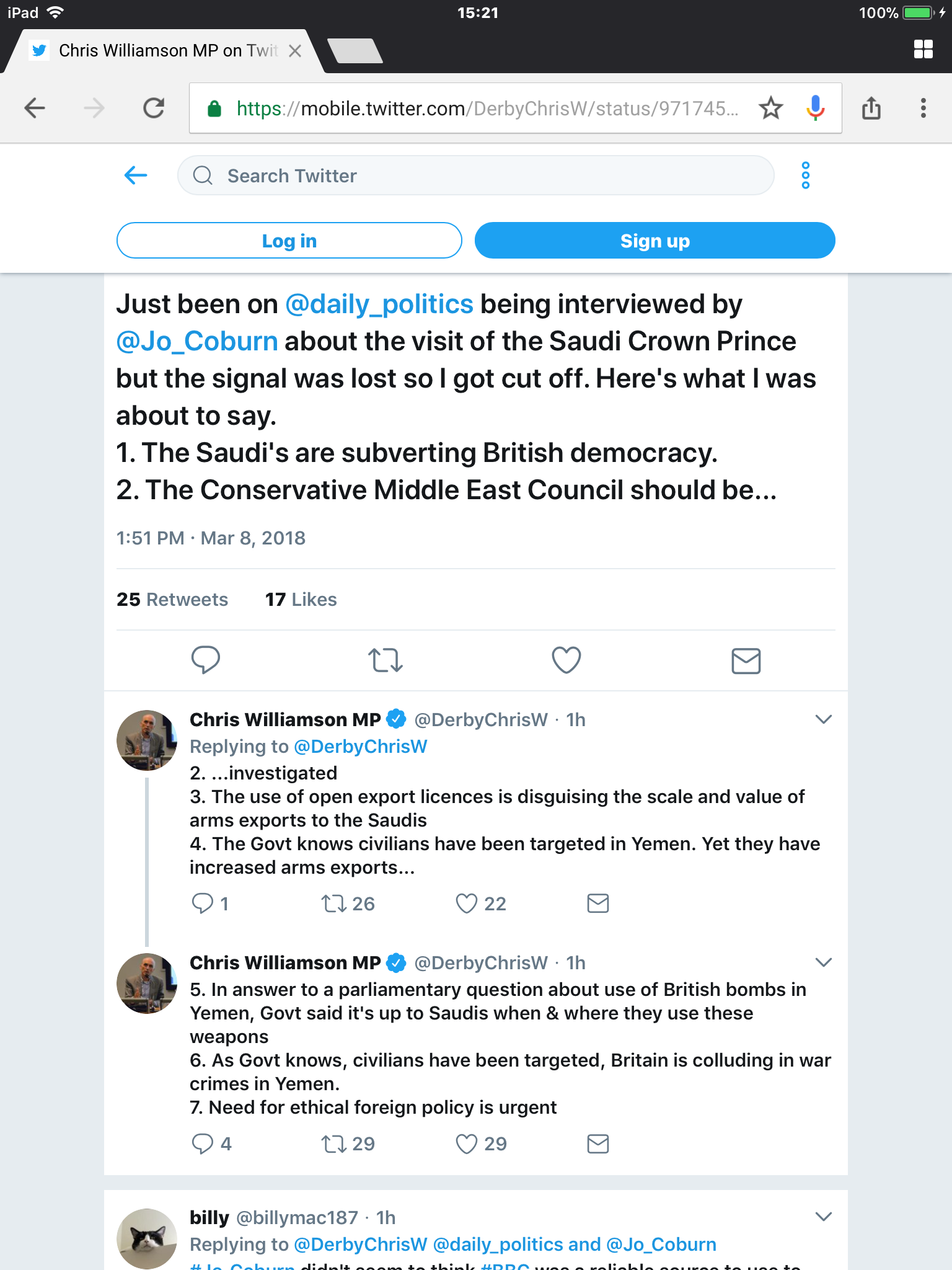
Conservative Middle East Council (and Swire) come in for some stick

Owl has no understanding of Middle East politics whatsoever, flying only over East Devon, but well-known journalist Peter Oborne (see below for credentials) does have such an understanding and has quite a lot to say about Hugo Swire, the Conservative Middle East Council and its donors in this fascinating article:

http://www.middleeasteye.net/columns/why-uk-conservative-party-ignoring-palestine-cmec-focus-on-gulf-bahrain-uae-saudi-libya-israel-1824625298

Wiki: “Oborne is an associate editor of The Spectator and former chief political commentator of The Daily Telegraph, from which he resigned in early 2015. He is author of

The Rise of Political Lying and
The Triumph of the Political Class, and,
with Frances Weaver, the pamphlet Guilty Men.

He writes a political column for the Daily Mail and Middle East Eye. He sat as a Commissioner for the Citizens Commission on Islam, Participation and Public Life. He won the Press Awards Columnist of the Year in 2012 and again in 2016.

Oborne is known for his acerbic commentary on the hypocrisy and apparent mendacity of contemporary politicians. …

https://en.m.wikipedia.org/wiki/Peter_Oborne

EDDC has second-highest number of complaints about councillors and staff in Devon

North Devon Council recorded the most complaints at 87, with Exeter City Council recording the least with just two.

https://www.devonlive.com/news/devon-news/revealed-330-complaints-made-devon-1309919

“Westminster councillor resigns after receiving nearly 900 gifts and hospitality packages in six years”

Owl says: what is happening to Westminster council’s Monitoring Officer, Leader and Standards Committee? Nothing, so far.

And NO-ONE should be Chair of a Planning Committee for SEVENTEEN years!

“The deputy leader of Westminster city council has stepped down after it was revealed he had received nearly 900 gifts and hospitality packages over six years.

Robert Davis, a Tory councillor, was the chair of the borough’s planning committee until last year.

He has stepped aside as deputy leader and cabinet member for business, culture and heritage as an independent QC investigates his conduct.

Councillor Robert Davis has referred himself to the City Council’s monitoring officer and has decided to stand aside as Deputy Leader and Cabinet Member for Business, Culture and Heritage while the investigation is undertaken,” said Nickie Allen, the leader of Westminster City Council.

“Our residents need reassurance that the planning process is not only impartial, but is seen to be impartial,” she said, adding she had “asked the council’s chief executive to look at all aspects of the decision-making process to ensure planning is, and is seen as, an independent and impartial process.”

The Guardian revealed Mr Davis had received gifts and hospitality invitations 893 times over the last six years, which frequently came from property developers who were seeking planning permission.

Gifts and hospitality packages worth more than £25 must be declared and some of the items and invitations received by Mr Davis exceeded the figure.

The Cambridge graduate is the longest serving member of the council, having been elected in 1982. He was voted Conservative councillor of the year in 2014 and given an MBE in 2015 for his service to local and government planning.

“I think it’s important to recognise Robert Davis remains a candidate for the May election,” Adam Hug, leader of the Labour Group, told The Independent. “He remains a councillor.

“This move has been described as standing aside, with a clear view that if no legal wrongdoing is found he may return to his post. As he remains a candidate it is clear that the Tories believe what is known and not disputed is acceptable for them.”

He added: “Westminster Tories knew this was going on, did nothing for decades, and it is clear that unless legal wrongdoing is found, he may return to his post.”

In a statement, Mr Davis said: “Due to the ongoing interest and wrongful assertions regarding my time as chairman of planning I have decided to step aside from my roles as deputy leader and cabinet member for business, culture and heritage whilst the council investigates.

“In 17 years as chairman of planning committees which granted hundreds of applications and resulted in the council receiving substantial sums for affordable housing, public realm and other public amenity, I have at all times acted with the independence and probity required by my role.

“My desire to rigorously declare all meetings and hospitably, regardless of its nature, underpins this transparency and independence. It is trite to confirm that within these 17 years, I have got to know many of the developers and associated professionals who work in the city and help to develop Westminster into one of the most important economic centres in the country and home to over 280,000 people. Any suggestion or implication that I have done anything other than to further the interests of the city and its residents are baseless and strenuously denied.”

http://www.independent.co.uk/news/uk/politics/westminster-councillor-robert-davis-gifts-hospitality-bribery-investigation-corruption-planning-a8245626.html

Labour MP calls for investigation into Swire’s Conservative Middle East Council

Image: Saudi Crown Prince’s UK visit PR

Swire retains a massive interest in the Middle East via his chairmanship of the Conservative Middle East Council. He visits many Middle East Countries and is often around at the same time as British arms companies, and hosts many visits and seminars as well as hosting Middle Eastern potentates and politicians in the UK. We have reported on the group’s controversial funders (see below). Now a Labour MP has called for an inquiry into the group. He is particularly concerned about UK arms sales to Saudi Arabia being used in their war with Yemen:

Blackill Engineering Extension – is this an excuse to drive a new industrial site into the heart of the Pebblebed Heaths?

These days most large developers pay for pre-application advice before submitting a planning application. A recent Freedom of Information request has uncovered the advice that was offered to someone (name redacted) seeking such advice on proposed business units at Blackhill Quarry, Woodbury in early October 2017.

Specifically this proposal was for the erection of AN ADDITIONAL industrial building to support the existing business, Blackhill Engineering, being operated form the site together with the erection of FIVE ADDITIONAL industrial buildings for use by other businesses.

In summary the advice given was that this would not comply with the protective policies that cover this sensitive site. A much stronger employment benefit case regarding the expansion of the existing business to justify a departure from these policies would be needed. The five speculative industrial buildings would not justify a policy departure.

On 20 December 2017, within three months of this advice, planning application 17/3022/MOUT was submitted for outline application seeking approval of access for construction of up to 3251 sqm (35,000 sq ft) of B2 (general industrial) floor space with access, parking and associated infrastructure.

The accompanying justification reads:

“There is considerable and clearly identified need for the existing business at Blackhill Engineering to expand as a result of that business having grown considerably over recent years and with its existing premises now at full capacity. The provision of additional facilities on the application site would allow the company to continue its expansion and so deliver additional economic and employment benefits to the local area…. With the winding down of the existing quarry use of the site, there is a short and fortuitous window of opportunity in which to address BESL’s growth requirements with the reuse of an area of former minerals processing site….It is a crucial part of both local and national employment strategy to protect existing businesses and to encourage their expansion. If approved, the scheme would allow the existing business not to only remain at the site but also to expand. The resulting investment will enable a substantial increase in the provision of highly skilled jobs in the area, increased training opportunities for apprentices and added value to the local economy. Furthermore, the expansion of the Blackhill Engineering will help reinforce the vitality of its parent organisation…”

So, is this application all about the needs of Blackhill Engineering to expand, having already designed flood defence gates for New York City Hospital, worked for the European Space Agency and the pier at Hinkley Point, which in October seemed to require only one building; or more about Clinton Devon Estates trying to generate rent from a new industrial park? Restoration provides no income.

For those interested here is the detailed pre-application advice, given on an informal basis and without prejudice, in about half the words:

The extant planning permission on the site requires a restoration and aftercare scheme to be implemented following cessation of the quarrying operations. As part of this condition, alternative schemes (subject to planning permission) can be considered but two policies are of particular relevance:

East Devon Local Plan- Strategy 7 – Development in the Countryside.

This strategy states that development in the countryside “will only be permitted where it is in accordance with a specific Local or Neighbourhood Plan policy that explicitly permits such development”. In this instance, there is no local or neighbourhood plan which would permit the proposal and, therefore, it is considered that it would not comply with Strategy 7.

East Devon Local Plan- Policy E5 – Small scale Economic Development in Rural Areas.

This policy states that the expansion of existing businesses designed to provide jobs for local people will be permitted where

1. it involves the conversion of existing buildings. Or

2. if new buildings are involved, it is on previously developed land. Or

3. if on a greenfield site, shall be well related in scale and form and in sustainability terms to the village and surrounding areas.

In this instance, the Local Planning Authority recognise the previously developed nature of the site, however, in the ‘Glossary of Terms’ section of the Local Plan (which echoes those contained in the National Planning Policy Framework) previously developed land specifically excludes land that has been developed for minerals extraction or waste disposal by landfill purposes where provision for restoration has been made through development control procedures.

Accordingly, the land would be considered as greenfield.
In terms of Policy E5, as the site would not be well related in sustainability terms to Woodbury or surrounding areas, the proposal would be contrary to policy.

However, if sufficient justification can be made in terms of the needs of the existing business being operated from the site to expand into an additional building, then the economic benefits may outweigh the environmental harm, of the unsustainable location as a departure from the Local Plan.

For this purpose, an economic benefits statement would need to be submitted as part of an application.

The five speculative units being located in an unsustainable location would not be acceptable.”

“Tories seek to block move to reveal donations to DUP in EU referendum”

Imagine if this was Corbyn paying off the Lib Dems with £1 billion and then agreeing to keep all Lib Dem referendum donations secret – what would the Conservative Party be saying and doing?

“Ministers will whip Conservative MPs to block a move to reveal donations to the DUP during the EU referendum, which Labour has said is “doing the party’s dirty work”.

The government is set to help the Northern Irish party conceal details of past political donations, including a highly controversial sum given during the referendum, despite a 2014 law that extended party transparency rules to Northern Ireland.

The rules on transparency were to bring Northern Ireland into line with the rest of the UK, which first introduced in legislation in 2014 with the wide understanding it would be applied from that year.

However, the government has since said the transparency rules will apply from 1 July 2017, which would mean donations during the EU referendum in 2016 will not be made public.

The shadow Northern Ireland secretary, Owen Smith, said it was outrageous that the government would not backdate the donations rules.

“All parties in Northern Ireland apart from the DUP support the government’s previous promise to publish. There is simply no excuse to not publish the donations,” he said.

“The Tories must explain why they are doing the DUP’s dirty work by helping them avoid publishing the source of the funds received in the EU referendum. Those funds played a significant part in the referendum campaign across the UK and the public have a right to know precisely where that money came from.”

Serious questions remain over the DUP’s spending on the EU referendum in June 2016 – including a £435,000 donation from a group called the Constitutional Research Council (CRC), chaired by Richard Cook, a former vice-chairman of the Scottish Conservatives and Unionist party.

The DUP spent more than £280,000 of that money on a wraparound advertisement in the London-based Metro newspaper, which is not distributed in Northern Ireland.

On Monday night, the government attempted to enact the transparency rules in the legislation via statutory instrument, a process which allows the provisions of an act of parliament to come into force or be altered without parliament having to debate them.

However, after objections by Labour at the last-minute nature of the SI, the measure will now be put to a vote on Wednesday, where the party will attempt to get the law backdated to its introduction in 2014. Conservative MPs are under a three-line whip to oppose.

A Labour source said: “The government tried to pull a fast one and got their minister to sit down early so they could vote on the SIs last night rather than deferred on Wednesday. We stopped it but it’s very unusual and shows the nervousness on this, especially the NI political donations.”

https://www.theguardian.com/politics/2018/mar/07/tories-seek-to-block-move-to-reveal-donations-to-dup-in-eu-referendum

Danger of Exmouth’s “temporary” attractions

Letter in Exmouth Journal:

“There is very important meeting at the Town Hall on Tuesday 6th March at 10 am.

The future of Queens Drive is at stake. Do not be deceived by the description that the planning application is for 12 months only and is “temporary”.

Our Town Council has been bullied and harassed by EDDC paid officials and members of the Regeneration team to try and force this through using the threat of dereliction if they don’t get their way.

This plan reduces the play and recreation of this area to about a quarter. The bulk of the site is to be cheap food outlets and a big screen and spurious as yet unnamed and untested events. To this end to also force the issue EDDC has signed a contract for some play equipment and hired an events manager without consulting our elected representatives.

This area up to now has been protected by the Masterplan for Play and Recreation. Even in the wonderful, could now say fantastical, plans in Reserved Matters last year there is a huge area put aside for water play and other recreational activities. All this can now be lost forever if this so called “temporary attractions“ application goes through in its current form.

If you care about our Seafront, send someone to this meeting. We must stand up to bullying. We must stand up for democracy and above all we must continue to stand up for our lovely Seafront.

Sally Galsworthy, Exmouth”

So, how is the “Misconduct in Public Office” consultation going?

Here’s the current state of play:

Click to access cp229_misconduct_in_public_office_summary.pdf

Here’s a summary:

Click to access cp229_misconduct_in_public_office_summary.pdf

Owl says: chances of reform – zero. Why: there is no will for change from a government that has too much to lose from such reforms!

Two unitary councils for Dorset: whither Devon?

With permission now granted for Dorset to move from nine regional authorities to two unitaries, politicians across Dorset are hailing it as the way forward to cope with continued austerity and income losses.

Which begs the question: if unitisation is so good, why are we stuck with a myriad of district and city councils in Devon?

Is Dorset right or wrong? Should we be following their lead? Are we following their lead in secret?

Or is our Local Enterprise Partnership Joint Committee our de-facto unelected, unaccountable, unscrutinised unitary authority already – with heavily-weighted Somerset taking the majority of its funds?

http://www.midweekherald.co.uk/news/go-ahead-for-two-unitary-councils-for-dorset-1-5410515

The swamp, the sleaze … coming to a government very near you

“The vetting process by which Toby Young was appointed to the board of the new higher education regulator was flawed and rife with political interference, according to the results of an investigation by an official watchdog.

The commissioner for public appointments’ report castigates the Department for Education (DfE) and regulator the Office for Students (OfS) for failing to delve into Young’s controversial writings and social media postings, and uncovers a high degree of direct meddling by ministers and No 10 Downing Street.

The commissioner concludes that the OfS’s board appointments, including Young, showed a “clear disparity” in the treatment of different candidates, and that parts of the process “had serious shortcomings in terms of the fairness and transparency aspects” under the code governing public appointments.

The report reveals Jo Johnson, who was then the universities minister, contacted Young about applying for the post and that his nomination was later queried by Justine Greening, the education secretary at the time.

The commissioner also detailed the involvement of Downing Street special advisers in blocking nominees for the “student experience” role on the OfS board, who were blacklisted because of previous involvement with student unions and their expressed opposition to the government’s Prevent counter-extremism programme.

“The evidence presented to the commissioner indicates that the decision on whether or not to appoint one candidate in particular was heavily influenced, not by the panel but by special advisers, notably from 10 Downing Street,” the report concluded.

Emails and memos “show that there had been a desire amongst ministers and special advisers not to appoint someone with close links to student unions, such as the National Union of Students”.

Young’s appointment was announced by the DfE at midnight on New Year’s Eve, when the powerful new higher education regulator was formally launched.

Young’s inclusion on the board immediately attracted sustained public controversy, with critics highlighting Young’s Twitter account, containing salacious and crude comments about women, and Young’s writing in support of what he dubbed “progressive eugenics”. Eight days later Young announced he would withdraw.

The commissioner found that while the DfE said it conducted online vetting of the candidates, “by its own admission, it did not delve back extensively into social media so it was not aware of the tweets by Mr Young”. The report adds: “However, the social media activity of the initially preferred candidate for the student experience role was extensively examined.”

The commissioner also revealed that departmental emails referred to “No 10 Googlers” in highlighting social media comments by the student candidates. “Notably, no such exploration or research was made on other possible appointees, including Mr Young,” the report states.

“Mr Young’s reputation as a controversialist, in itself hardly a secret, should have prompted further probing to examine whether what he had said and done might conflict with his public responsibilities and standards expected on the OfS board.

“Second, the rapid disclosure of what were described as offensive tweets in the days after his appointment suggests that it was not that hard to find them, that not much delving was required,” the report added.

The OfS and its chair, Sir Michael Barber, also came in for criticism for their part in the proceedings. Barber sat on the appointments panel, alongside two DfE officials. “Regrettably, and contrary to best practice, the panel for the generic non-executive roles was all male,” the commissioner noted.

The report also details the DfE’s repeated efforts to minimise or delay requests for information about the appointment process from the commissioner’s office.

Peter Riddell, the commissioner for public appointments , said: “My investigation uncovered a number of areas where important principles in the governance code were breached or compromised in the appointments to the board of the Office for Students.

“In my experience, this episode is unrepresentative of the hundreds of public appointments that take place each year, but it is important that lessons are learned – not least so that talented people from a wide range of backgrounds are willing to put themselves forward to serve on the boards of public bodies.”

https://www.theguardian.com/media/2018/feb/26/no-10-advisers-meddled-in-toby-young-getting-ofs-role-finds-report

“Party’s over for City jollies” but alas not for local government schmoozing

A short article in today’s Sunday Times Business section notes that new EU rules now forbid fund managers and analysts from accepting hospitality beyond a minimal level – it has to benefit “ordinary” customers and if over a reasonable limit it is considered “an inducement”. It goes on to say that most firms have set £100-150 a head as the maximum in London.

Fortunately, our local Tory councillors can rest easy as it does not apply to local government, so they can still take their Exeter Chiefs rugby tickets and their meals with developers and the like – which never seem to cost more than £25 a head when declared (where are they going – Nando’s or perhaps Frankie and Benny’s? And DEFINITELY t-total!).

Source: Sunday Times Business supplement (pay wall)

“Wine and dine democracy is now on trial – and about time”

There wasn’t a paragraph in this article that could be edited out – truly we are in The Swamp:

“Each time a US gunman goes berserk, the British media erupts in fury at the money the gun lobby can devote to its lethal interest. To be sure, big time lobbying is the occupational disease of American politics. In the US, it can have murderous consequences. Still, on matters of principle, Britons would do well to watch their hypocrisy.

The sums spent by property companies on lobbying Westminster city council’s planning committee – revealed in Tuesday’s Guardian – may be dwarfed by those spent across the Atlantic. But the hospitality showered on the committee’s chairman for 16 years, the amiable Robert Davis, was breathtaking. Five-hundred freebies, including 10 foreign trips, in just three years. At least 150 of these were from a who’s who list of property industry figures. Even Harvey Weinstein is on the list. Entertaining Davis was clearly a Westminster cottage industry. He can hardly have had time to down one glass of champagne before raising another.

Everywhere money is at stake, those regulating it will be open to temptation
Meanwhile in the planning committee, the London Evening Standard’s Jim Armitage – there as a local resident objecting to a planning application – watched planning approvals get ticked off mechanically. He noted that not a single objection was upheld. Members “looked at the ceiling, buffed their nails and scratched their noses” as each was nodded through.

Westminster council asserted this week that all hospitality was received during “meetings”, and the idea that any of its councillors “could be bought by the property lobby was demonstrably untrue”. The meetings apparently took place at Wimbledon, at a performance of the musical Hamilton, and in the south of France. There is nothing wrong in this, provided gifts and hospitality are declared. But this assumes that what is declared cannot be considered, under the 2010 Bribery Act, a “financial or other advantage” offered or accepted to secure “improper performance”. Transparency is not enough.

Davis’s most extraordinary case was that of the late Irvine Sellar’s 72-storey “Paddington Pole”. This required the demolition of an Edwardian baroque sorting office and the erection of a gigantic tower, within the boundary of a conservation area and towering over Brunel’s Paddington station. Proposed in 2016, it breached every conceivable principle of good planning, but Sellar entertained Davis and apparently secured his approval for the pole Davis later described as a potential masterpiece. Sellar added seven more storeys to his plans. A public outcry led eventually to plans for the pole being withdrawn, but only to be replaced by a proposal for a bigger in volume but lower glass box. This was waved through the planning committee against all local opposition after Davis had publicly hailed it as a “game-changer”.

What is highly questionable is what happened next. Protesters pleaded for a meeting with the council but were ignored. Despite the obvious unsuitability of a vast box in a conservation area, Sadiq Khan, the mayor of London, declined to intervene. That decision was followed by a similar refusal by the planning minister, Sajid Javid, who declined to give his reasons for doing so. This is most unusual for such a controversial project. The Shard, also developed by Sellar, was, in contrast, subject to a lengthy public inquiry. Protesters are trying to take Javid’s refusal to explain why he declined to intervene to the court of appeal.

British planning is a mess. It is awash with political donations and lavish lobbying as the construction industry wrestles to capitalise on the Conservatives’ “let-rip approach” to urban and rural development. Before the 2010 election, the Conservative Property Forum is recorded as donating £500,000 to the party.

The Cameron government duly dropped proposals for local appeals against development from its planning framework document. Lobbyists from the British Property Federation and others were effectively invited to rewrite the framework for themselves. The industry then donated a further million pounds to stave off higher council tax banding in response to Labour’s mansion tax.

This is hardly unique to planning. The NHS is awash in inducements to doctors to prescribe branded medicines. Arms company boards are stuffed with generals. The banks that fund private finance initiatives keep the Whitehall doors revolving. Declarations of interest by members of the House of Lords read like a lobbyists’ congregation. It clearly pays companies to lobby. The irony is that it was David Cameron who made great play of curbing this in his Lobbying Act. It was, he said, “the next big scandal waiting to happen”. Yet the only scandal was how the act was watered down, and how Cameron’s transparency register for lobbyists was lobbied to oblivion.

British lobbying is not as blatant as Washington’s infamous “Gucci Gulch”, where interest groups stuff the pockets of congressional lawmakers. Corruption in Britain is rarely through payments to individuals, and public officials seldom indulge in the log-rolling – legislators trading support for each other’s pet projects – seen in American politics. But the risk of bias and partiality exist in parts of the public sector. Of these, property planning, where huge sums of money can be involved, is the most obvious.

Everywhere money is at stake, those regulating it will be open to temptation. That is why oversight is crucial. But oversight of British local government is currently on a par with a banana republic. The Standards Board for England was abolished in the course of Cameron’s “quango cull” in 2012. It supposedly monitored the ethical performance of officers and councillors in local government. It was criticised as cumbersome, meddlesome and bureaucratically intrusive. Few mourned the board’s passing. Each local council was then expected to make its own arrangements.

The minister at the time said there was a need “for a light touch”. Westminster council took him at his word. It might have been a good idea to see the Standards Board go, but it should have been replaced with something. Even the most ardent localist cannot expect councils to float free of any oversight. Millions of pounds can turn on a planning decision. Anyone who knows these local controversies will attest that many stink to high heaven.

Davis has denied any wrongdoing and nobly referred himself to Westminster’s own “monitoring officer”. It is hard to see how this meets any plausible test of independence. Much now rests on the shoulders of this officer, as it does on the judges reviewing the Sellar glass box decision. The Paddington horizon will be their memorial. Everyone is now on trial, not least local democracy.”

https://www.theguardian.com/commentisfree/2018/feb/23/wine-dine-democracy-trial-westminster-city-council-planning-committee