Urgent Call for evidence – Committees – UK Parliament. Closing date today

(Though later submissions will be accepted)

committees.parliament.uk 

The Inquiry: 

The Committee has been concerned to hear that people with protected characteristics are disproportionately affected by Covid-19 and the Government’s response, including the emergency Coronavirus Bill.  We are particularly interested to hear about what impact these measures have had, and will continue to have, and whether the Government’s aim to support workers and people more widely have considered all relevant equality impacts.  The Committee is calling for written submissions about:

Your experiences. We want to know:

  1. How people have been affected by the illness or the response to it
  2. If there have been specific impacts on people due to them having a protected characteristic
  3. Whether there may be unforeseen consequences to measures brought in to ease the burden on frontline staff, for example relaxing the measures under the Mental Health Act and Care Act)

Reviewing the measures

The Government has said current measures will be reviewed in three weeks’ time, and measures in the Coronavirus Bill be voted on again in 6 months’ time.

  1. What needs to change or improve, which could be acted on in three weeks’ time;
  2. What needs to change or improve, which could be acted on in 6 months’ time.

You can comment from a personal, organisational or expert opinion, or a mixture.

We would like to hear from you by 30 April 2020. If you cannot get it to us before then, please don’t worry, as it will still be useful to us if you submit it later. The sooner you can get it to us, the more likely the Committee can use it to press the Government to reconsider the current measures at the three-week review

We know that some impacts will be immediate, and others will be felt further in the future. We will look to follow-up this work in 12 months’ time to build a more complete picture of how people with protected characteristics have been affected.  

Your submission

If your submission is accepted by the Committee, it will usually be published online. It will then be available permanently for anyone to view. It can’t be changed or removed.

If you have included your name or any personal information in your submission, that will be published too. Please consider how much personal information you want or need to share. Your contact details will never be published.

Decisions about publishing evidence anonymously, or about accepting but not publishing evidence, are made by the Committee. If you want to ask the Committee to keep your evidence anonymous (we’ll publish your evidence but not your name or personal details) or confidential (the Committee will read your evidence but it won’t be published) then please tick the box on the form. This lets the Committee know what you would like but the final decision will be taken by the Committee.

We can’t publish submissions that mention ongoing legal cases – contact us if you are not sure what this means for you.

Please feel welcome to discuss any questions with the Committee staff on womeqcom@parliament.uk; 020 7219 6123

Signposting

We understand that the issues raised in this inquiry may be potentially distressing or sensitive.

Committees of the House of Commons are not able to take up individual cases but if you would like political support or advice you may wish to contact your local Member of Parliament.

If you would like support or advice you may wish to contact a support service through their website or helpline such as:

Samaritans– 116 123

Equality Advisory & Support Service 0808 800 0082

Citizens Advice 03444 111 444

Money Advice Service 0800 138 7777

Age UK– 0800 678 1602

Disability Rights UK

Maternity Action

Mind  – 0300 123 3393

Scope – 0808 800 3333

Switchboard, the LGBT+ helpline – 0300 330 0630

You may also find the following list of additional resources and helplines useful: Fawcett Society resources page


“Clinical Commissioning Group demands change to earlier headline”


https://eastdevonwatch.org/2020/04/26/send-us-boiler-suits-plead-nhs-bosses-at-hospitals-with-no-gowns-including-devon/

Owl has received an email from a spokesperson from the Devon Clinical Commissioning Group which says:

“The Sunday Times headline which you have copy-and-pasted [on Sunday 26 April] is incorrect in that it states hospitals have ‘no gowns’. This is not true. Unless you can evidence your headline, which is not supported by the copy-and-pasted story, please amend it. You may or may not have noticed that later editions of the Sunday Times used a re-written story and headline.”

Owl was one of many news outlets that carried this story and is pleased to see that the CCG reads our blog.

Owl has found the post of the precautionary advertisement [20 April] for: boiler suits, lab coats, painting suits, chemical suits and disposable (or washable) overall with full length sleeves, on the Torquay Chamber of Commerce website, quoting the Devon CCG contact.

https://www.torquaychamberofcommerce.co.uk/corona-virus-updates/

Happily, as Owl posted yesterday, the situation in Devon has improved: “Stocks of protective gowns for frontline NHS workers in Devon have improved since an appeal went out for urgent supplies…. it is understood the appeal was a precautionary step at a time when there was heightened concern over a potential shortage of gowns in the middle of April, which has now eased.

None of the items listed in the advertisement have been issued to NHS staff.”


Stock of gowns for healthcare staff improving says Devon NHS

Stocks of protective gowns for frontline NHS workers in Devon have improved since an appeal went out for urgent supplies.

Edward Oldfield www.devonlive.com 

An advertisement on behalf of the Devon NHS posted on Monday last week called for boiler suits, lab coats, painting coats, chemical suits or any type of disposable or washable overall with full-length sleeves.

But it is understood the appeal was a precautionary step at a time when there was heightened concern over a potential shortage of gowns in the middle of April, which has now eased.

None of the items listed in the advertisement have been issued to NHS staff.

Deputy chief nurse Vanessa Crossey QN, on behalf of the NHS in Devon, said: “Stocks of gowns have now significantly improved and some precautionary measures, designed to complement the national supply chain, were not needed.

“Devon’s position is no different to other areas, and health and care partners have put in place effective stock monitoring procedures and mutual aid systems to increase our resilience.”

The advertisement appeared on a procurement website on Monday, April 20, posted by Torbay Council on behalf of Devon NHS.

Torbay MP Kevin Foster said he has had regular briefings from local council and NHS leaders and was unaware of any urgent shortage of PPE supplies.

The MP said if there was an immediate problem he had offered to escalate the issue with the Department for Health to ensure enough supplies were available.

Any additional personal protective equipment sourced locally by the NHS is risk-assessed by experts.

Supplies of items of PPE equipment for the NHS and social care have been fluctuating due to increased demand.

More than 100 businesses and organisations in Devon have shared their own PPE kit with the NHS in recent weeks.

Volunteers are also working with the NHS in Devon to make extra items including scrubs, laundry bags, head bands and protective visors.

A Department of Health and Social Care spokesperson said: “We are working around the clock to ensure PPE is delivered as quickly as possible to those on the frontline during this global pandemic for as long as it is required.

“We have delivered over 1 billion items since the outbreak began, including to care homes, and there is a 24 hour NHS-run helpline where NHS and social care workers can call to report shortages in supply.”

A BBC investigation found the Government failed to buy some protective equipment to prepare for a pandemic. It reported there were no gowns, visors, swabs or body bags in the Government’s pandemic stockpile when Covid-19 reached the UK.

Some NHS staff told the Panorama programme broadcast on Monday night they were being put at risk because of the shortage of personal protective equipment.

The Government told the BBC it had taken the right steps and was doing everything it could to increase stocks.


The epidemic and care homes in East Devon

The epidemic hit some local care homes badly after developing in East Devon in March – but the lockdown stopped a wider spread.

seatonmatters.org 

The epidemic hit some local care homes badly after developing in East Devon in March – but the lockdown stopped a wider spread.

 From Seaton Matters Posted on April 29, 2020

I am now in a position to report further on the Covid situation in care homes and the local community.

Outbreaks occurred in several care homes in Seaton and surrounding towns at the end of March/beginning of April, reflecting people having become infected earlier in March before the lockdown was imposed. From one home, 8 residents have died and a care worker is in hospital, after a majority of residents and many staff become infected, despite measures being taken to try to protect people and support from the Devon care system.

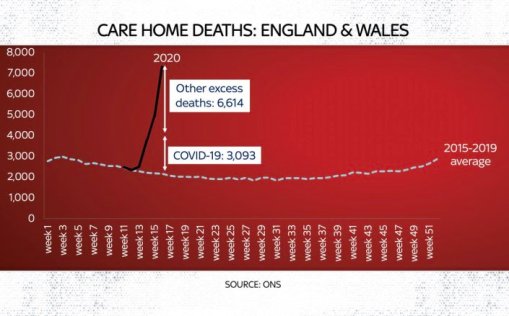
(The national graph above shows the drastic acceleration of deaths in care homes in the first two weeks of April; most ‘other excess deaths’ are probably Covid-related but not recorded as Covid.)

A conversation with a major local employer about the fluctuating level of absenteeism due to Covid-19 suggests that the epidemic was getting quite significant in the Axe Valley by the beginning of April, reflecting the same timescale. Today, illness-based absenteeism of those still in work is much lower, suggesting that social distancing has blocked off the spread of the virus. The care home outbreaks are more under control, and many other local homes appear to have escaped infection.

Imported from Italy in late February?

The spread of the disease in East Devon seems therefore to have come just a couple of weeks after the rapid growth of the epidemic in London. Anecdotal evidence suggests that the school half-term break in February could have been significant in starting community transmission, especially as some families and school groups returned from trips to Italy. At the time, no one was tested or asked to self-quarantine, although returnees from Wuhan had earlier been forced to undergo quarantine for 14 days.

So – the lockdown has worked, is working – but it came too late for some people in our community.


Example of ideology causing serious concerns – NHS staff shun testing centres

NHS staff shun testing centres amid concerns about safety and lost results

Contracts to operate testing facilities have been awarded under special pandemic rules, through a fast-track process without open competition. These include the accountants Deloitte, the public services specialists Serco and Sodexo, and the pharmacy chain Boots, which has also trained and provided more than 300 staff to administer swabs.

Owl wants to point out that if you decide, for expediency or ideology, to go down the contracting route for a complex sequence of operations then best practice would be to appoint an experienced prime contractor, with overall responsibility. Doesn’t seem to happened in this case.

“At Wembley tests have been lost, with no contact number provided to chase missing results. The site is operated by Sodexo, but the responsibility for ensuring staff get the results lies with Deloitte. The accounting firm is managing logistics and data across most of the test centres, including booking tests, getting samples to the labs and communicating the results.”

As a Royal Free source says: “…The chain of command is very opaque and it is very difficult to know how you get your results back. It should be run by people with operational experience of clinical tasks, not by an accountancy firm.”

The other ideology that concerns Owl is the element of competition that has been allowed to creep into the allocation of the scarce resource of testing. Everyday the Government announces yet another group eligible for testing (possibly driven by the need to be seen to be ramping up testing). The result is that we are witnessing an unseemly scramble for who can get to the telephone, or on-line, first. Owl believes that whilst testing is still limited there has to a prioritised system of rationing, for example, currently to care homes and their staffs. No doubt this is anathema to those adhering to the right wing “the devil take the hindmost” principle.

For the article read on:

Juliette Garside, Lisa O’Carroll the Guardian 29 April 2020

Key workers and NHS staff have raised concerns about the management of a national network of drive-in corona-virus testing centres, with doctors at one London hospital trust “actively discouraging” staff from using them.

Thousands of people have turned up at more than 30 locations around the UK to be swabbed for traces of the virus after the government opened up facilities previously reserved for NHS workers to all employees in essential services, including care homes and utilities companies.

The expansion in testing at the weekend has led to long queues at some facilities, with motorists – many of them already feeling unwell with symptoms of Covid-19 – stuck in their cars in hot weather for hours, forbidden from opening windows and unable to use toilets or find water.

The Guardian was contacted about multiple concerns, including queues of up to five hours, workers with appointments turned away because of delays, leaking test vials, wrongly labelled samples, and lost test results at Nottingham and Wembley.

A doctor at the Royal Free NHS trust, which operates three hospitals in north London, said they were so concerned about the drive-in facility located in the Ikea car park in Wembley that staff had been told not to use it.

The regional network, which will be extended to 50 locations, is a cornerstone of the government’s target of reaching 100,000 coronavirus tests a day by the end of April.

Contracts to operate the facilities have been awarded under special pandemic rules, through a fast-track process without open competition.

The contracts were handed to private companies including the accountants Deloitte, the public services specialists Serco and Sodexo, and the pharmacy chain Boots, which has also trained and provided more than 300 staff to administer swabs.

At Wembley tests have been lost, with no contact number provided to chase missing results. The site is operated by Sodexo, but the responsibility for ensuring staff get the results lies with Deloitte. The accounting firm is managing logistics and data across most of the test centres, including booking tests, getting samples to the labs and communicating the results.

The Royal Free source said: “All three [of the trust’s] hospitals are actively discouraging people from going there. We have no faith that they would get the result. The chain of command is very opaque and it is very difficult to know how you get your results back. It should be run by people with operational experience of clinical tasks, not by an accountancy firm.”

Instead of using Wembley the trust is swabbing staff at work and sending samples to Francis Crick Institute laboratories for analysis.

People attending a number of drive-in facilities reported being left with no choice but to take their own swabs, having expected the procedure to be carried out by a trained professional.

James Collins, a carer at a home for vulnerable adults in Lincoln, who has been self-isolating with a cough, said he waited five hours fora test at Robin Hood airport, Doncaster, on Saturday; it had involved a two-hour round trip.

He was surprised to have to swab himself. “I’m scared I haven’t done the test right,” he said after testing negative. “If I wanted to do it myself I would have gone for a home test.”

At Doncaster and elsewhere security guards patrolled the lanes warning motorists not to take photos or videos and not to open their windows. Drivers could communicate with marshals only by phone. There were some portable toilets, but after a single use they were sealed, awaiting cleaning.

Serco, which runs nine centres including Doncaster, said the longestrecorded wait was two hours, adding: “Serco is managing the site facilities at some of the Covid-19 test facilities. The sites are becoming increasingly busy and we are working hard to get people through the centres as quickly as possible?’

Anna Wittekind, a nutritionist who said she had been off work with chest and stomach pains for 12 days, said she and her husband, who worked for the NHS, had waited three hours at a drive-in facility. Her result arrived quickly and was negative.

“I have no idea whether I managed to take a good enough swab, so it may have all been a waste of time,” she said. “I felt for the poor souls working there, but the organisation was abysmal.”

A worker at the Lighthouse laboratory in Milton Keynes said she was concerned about safety and lost results. The lab was opened by the health secretary, Matt Hancock, this month as one of three “megalabs” created to support the testing initiative.

She claimed the lab, which is capable of processing up to 10,000 tests in 24 hours, had received hundreds of swabs in vials that either were leaking or were not sealed in two bags, meaning those handling them risked contamination. Other swabs had labelling errors, so the results were unlikely to reach the person tested.

“We do feed these problems back to the test sites and some improve,” she said, “but some are consistently poor and in some cases this goes beyond just making our lives difficult to actively endangering us or the reliability of results?’

Steve Fay, a physiotherapist in respiratory care in Leicester, said he was seen at a centre in Nottingham operated by Boots on 1 April. He was left waiting for more than a week for the results. His wife, who works as an NHS nurse and had her test at the same time, had to wait even longer.

After chasing, via 14 emails, Fay was eventually referred to Deloitte.

Fay said: “I threatened to make this public when suddenly [there was] a reply in one hour and a result an hour later. The tests both came back negative. Personally I’m very doubtful of this test because we both had the symptoms?’

A spokesman for Deloitte said: “Deloitte has a specialist health sector practice, which includes a large number of staff with operational healthcare experience. This is the group who is at the core of our work, supplemented where appropriate with individuals with technical skills relevant to the work we are doing?’

Boots said it managed the Nottingham site but had “no role in processing the results”. Sodexo also said it was not responsible for delivering test results.

The Department of Health and Social Care said the latest records showed that more than 90% of people tested up to 21 April had received their results within two days.

Protecting care homes must now become the Government’s top priority

Promises are not enough

“This week, we learned that ministers were warned by scientific advisers in January that care homes would be especially vulnerable to a pandemic. ….

The proper provision of PPE for care workers must be made an absolute priority for the government. Access to increased testing capacity, which remains haphazard and sketchy, must be vastly improved…….”

Editorial www.theguardian.com 

Boris Johnson has a talent for arresting phrase-making, and it was duly deployed outside Downing Street as he returned to active duty. Comparing Covid-19 to a street mugger, the prime minister said that as a result of ongoing lockdown measures, the country has begun to “wrestle it to the floor”, as recorded infection rates and NHS hospital deaths from the disease fall from their early April peaks.

Not for the first time in his career, Mr Johnson’s rhetoric was vivid, but it expressed at best a partial truth. Barely 24 hours later, the Office for National Statistics published an estimate by the Care Quality Commission that 4,334 people died from coronavirus in care homes in the fortnight leading up to 24 April.

Half of those CQC-reported deaths occurred within the final five days. As the curve of hospital deaths flattens and begins to descend, Westminster’s political energies have moved restlessly on to the question of how lockdown restrictions might be eased. But care workers are bracing for a deadly peak that has yet to come.

The struggle to protect the nation’s vulnerable and elderly must not be fought in lonely isolation, out of sync with the national mood. At the Downing Street press briefing on Tuesday, the health secretary, Matt Hancock, claimed that the potential crisis in care homes “was something we focused on right from the start”. But that social care became the forgotten frontline of the coronavirus crisis is generally accepted.

This week, we learned that ministers were warned by scientific advisers in January that care homes would be especially vulnerable to a pandemic. From personal protective equipment to testing, the response from the government to that advice was belated and inadequate. What is urgently needed now is the application of genuine political imagination to mitigate a tragic situation which is moving towards a deadly climax. Care homes need immediate help in three specific areas – medical equipment, human resources and financial capability.

The proper provision of PPE for care workers must be made an absolute priority for the government. Access to increased testing capacity, which remains haphazard and sketchy, must be vastly improved. Mr Hancock has announced that care homes will now be able to test asymptomatic as well as symptomatic carers and residents. This is welcome, as is the commitment to publish daily figures on care home deaths. But when some care homes are still struggling to perform any tests at all, the promise doesn’t count for much.

The National Care Forum, which represents 120 not-for-profit providers, has called for acute care specialists and geriatricians normally based in the NHS to lend their expertise in managing outbreaks. Their knowledge, and the experience they acquired during the early April hospital peak, could be an invaluable resource.

About 25,000 retired doctors and nurses responded to government calls to return to the NHS; their skills would be a vital boost in residential homes. Members of the 750,000-strong NHS “volunteer army”, most of whom have not been called on, could be diverted to perform specific tasks. Meanwhile, a financial lifeline from central government is also desperately needed: myriad extra costs have left large numbers of providers close to the edge.

The NHS has not been overwhelmed by the pandemic. Mr Johnson was right to celebrate that fact as he returned to Downing Street. The belated lockdown gave hospitals the headroom they needed. The same sense of urgency must finally inform the government’s response to the crisis in our care homes.


Contact tracing can’t be run by Westminster, experts warn

Successful implementation of contact tracing is an essential prerequisite to lifting lock down. It is an enormous task. What worries Owl is that the Government still seems to be trying to micromanage this from Whitehall. 

So far the Government’s track record of centralised management of the response to the pandemic is unimpressive. Owl is also worried that too much faith is being placed on the untried and untested use of smartphone apps. It is yet another example of UK exceptionalism. 

Sarah Boseley www.theguardian.com

Ministers must relinquish their top-down control of the coronavirus epidemic after the lockdown to allow millions of people potentially infected with Covid-19 to be traced and supported by local teams in their own communities, say experts.

Urgent discussions have begun between central government, local authorities and public health officials about the 18,000-strong army promised on Friday by the health secretary, Matt Hancock, to help trace the contacts of people who test positive or have symptoms of the coronavirus.

Hancock said they would be in place within three weeks but the Guardian understands that nobody has yet been recruited.

A letter to local authorities and other agencies on Friday, seen by the Guardian, said just 3,000 of these people would have public health expertise, while the other 15,000 would be call handlers.

It is understood that ministers such as Hancock, who is enthusiastic about digital technology, hoped the NHS app would take much of the strain. The app is designed to warn people who have come into close contact with anyone who has Covid-19 to go into self-isolation.

The government hoped that a high proportion of the population – up to 80% – would download the app on a smartphone. But in meetings, they have been advised that is unrealistic. In Singapore, with high smartphone use, the take-up was only 20%.

Public health experts say that apps are no substitute for a sympathetic and supportive conversation, even for those who are familiar and comfortable with using smartphones, which many older and more vulnerable people are not.

“It is absolutely ridiculous. You need the shoe-leather epidemiology, you need people on phones. Apps are simply supports for contact tracing,” said Allyson Pollock, a professor of public health at Newcastle University. “You need people on old-fashioned things like telephones or going door to door and they need to be local teams because they need to understand the local communities.”

The whole system should be run by directors of public health and environmental health officers based in local authorities, with the resources they need, because they understand their community, she said. That was how it used to be, before the multiple restructuring culminating in the Health and Social Care Act 2012, which led to the decimation of public health disease control and its centralisation and fragmentation, she added.

“We don’t know where the block is, but there is a huge block and huge resistance to doing this locally. This is partly because they’ve ripped out so much capacity and they’ve also ripped out the real-time data locally.

“We are never going to get on top of this if we don’t put back the local capacity in order to lift local restrictions.”

Contact tracing began immediately after the first case was confirmed in England at the end of January but stopped abruptly across the whole of UK – even in regions with barely any cases – on 12 March, along with community testing.

The government said it was moving from the “contain” to the “delay” phase because it was no longer possible to track down and isolate everyone infected. Countries that continued to follow that plan, as urged by the World Health Organization (WHO), have had fewer deaths. They include Germany, Singapore and South Korea.

The UK “gave up very early”, said Anthony Costello, a professor of global health and sustainable development at University College London and a former WHO director. By 12 March, there had been 10 deaths and 590 confirmed cases, and about 3,500 contacts had been traced. But most of the cases were in London and the West Midlands. Continued testing, tracking and tracing could have kept the virus out of other regions and reduced deaths, he said.

“If we hadn’t stopped it on 12 March, our epidemic would have been much less. They effectively allowed it to spread,” he said.

Public health, local government and environmental health officers all say they are capable of running the sort of extensive contact tracing network that will be needed in all areas of the country.

“Directors of public health – and their teams – have extensive experience and knowledge of contact tracing, their local communities and the wider health and social care system,” said Dr Jeanelle de Gruchy, the president of the Association of Directors of Public Health.

“Engaging directors of public health in the design and implementation of any new plan will help ensure whatever is developed will work on the ground and be integrated with other aspects of the response to Covid-19, including testing and protecting vulnerable people across the UK.

“The reality is that no single organisation or agency, whether national or local, can deliver and oversee this operation alone. A collaborative approach is fundamental. The government needs to fully involve us in this.”

The Chartered Institute of Environmental Health said its members and also many other people with expertise, such as retired doctors, had been in touch wanting to help. “We have quite early on opened up a national voluntary register,” said Gary McFarlane, its Northern Ireland director.

“My own view is that we need a national media call for those who have the skills – all those retired doctors and sexual health workers and environmental health officers who can hit the ground running.”

As businesses start to open, whether garden centres or offices or factories, local authorities would be busy engaging with them to ensure they did it safely – so the retired volunteers could help reduce their workload by taking on the contact tracing effort.

A government spokesperson said: “Tracing and testing those with symptoms of Covid-19 is essential if we are to limit the spread of this virus and save lives.

“The NHS is developing a contact tracing app, which alongside effective tracing and testing, is designed to give our country the confidence it needs to return to normality.

“We are working with clinicians, scientists and other specialists to plan a safe, staged path to national rollout.”


Questionnaire: How are things in Lock Down in Sidmouth?

Something to do in Sidmouth during lock down.

Q.1 Are you appreciating there being less traffic or can’t you wait to get back into your car? Owl wonders how many might be tempted to tick the box – “I like less traffic”. This is Regency Sidmouth after all.

Joseph Bulmer sidmouth.nub.news 

A Sidmouth community group is asking residents to fill out a questionnaire on ‘How are things in Lock Down’ in Sidmouth?

The Vision Group Sidmouth (VGS) has created a questionnaire to put to Sidmouth residents on the realities of life in lock down.

The questionnaire includes questions on: Traffic, cycling, money, home working, deliveries of essential goods, supermarkets, shopping habits, business and virtual communication.

VGS is particularly interested in whether you would continue to use the delivery services set up by local businesses once the lock down is over.

A spokesperson for VGS said: “We need your input now, as we look at how we are managing in such a different world – and also how we might manage in the future.

“We would be very grateful if you would ‘interact’ with this questionnaire; it looks a bit daunting but you can take as long or as short a time as you wish

“As you will see we are not asking for names, the data will be completely anonymous but of course you can always email us at vgs@visionforsidmouth.org if you want to give ‘on the record’ comments.

“All the questions are voluntary so you can just answer some of them if you want, although we hope it is easy enough for you to answer all those with tick boxes.”

If you are planning to fill out the questionnaire please tick ALL those which apply. You do have the chance to say more as well if you would like to.

The survey will close on Monday, May 4, and VGS hopes to have the results collated very soon.

The findings will then be put into a single document and circulated to the press and local councils.

The VGS spokesperson added: “Who knows what further ideas and actions might come out of your responses?”

Councils are using this emergency to shut out democracy

“Unfortunately, there appears to be an alarming number of cases where democratic scrutiny and accountability in councils is being shut down, with several using this crisis as an excuse for handing over sweeping powers to unelected chief executives and leaders.”

At  EDDC all meetings have been cancelled, including this month’s scrutiny meeting, but not yet the Annual Council – Wednesday, 13th May. So who is making the day to day operational decisions, how and under what authority? Previous announcements indicated extensive use of Skype. 

Remember that Ben Ingham has lost his majority and is Leader in name only (LINO). Shutting down democracy would be very convenient wouldn’t it?

Jonathan Bartley www.thetimes.co.uk 

The return of Parliament is undoubtedly a welcome development. At a time of national crisis, we know just how vital proper democratic scrutiny and debate is.

The decisions being made right now will affect every single one of us and so it is essential that a forum such as Parliament is able to use its experience and knowledge not only to scrutinise the decisions made, but also to offer help, guidance and support to the government so it can make the best decisions for us all.

The same could be said for local authorities up and down the country who are on the front line of this crisis and are responsible for delivering many of our essential services.

Unfortunately, there appears to be an alarming number of cases where democratic scrutiny and accountability in councils is being shut down, with several using this crisis as an excuse for handing over sweeping powers to unelected chief executives and leaders.

In Lambeth, where I am the official leader of the opposition, I had to watch on Wednesday night as Labour councillors pushed through changes to the constitution that allow the chief executive to make decisions that would otherwise be made by a democratically elected leader, cabinet, or any council officer, simply if he considers it is “expedient” and “necessary” to do so. There were no reasons given. And it already had an urgency procedure for emergency decision-making.

Putting to one side the suggestion that the way it made the decision may actually be in breach of the council’s own constitution, such a move is bad for democracy. It is also downright dangerous at a time when the local authority is already making bad decisions such as beginning the unnecessary demolition of large council buildings in densely populated areas and park closures, bringing national outcry. More than ever it needs scrutiny and to be harnessing as much expertise as it can.

Regrettably, Lambeth is not the only place where this is happening. Green Party colleagues in councils across the country are reporting similar power grabs in both Conservative and Labour-held authorities.

From South Hams, where it has been proposed the Head of Paid Services and the council leader are given the power to decide if meetings should take place, to Norwich where the council met online to decide not to hold any online council meetings, we are seeing an erosion of democracy at the most fundamental level. Decisions which have real impact on people are being made without the scrutiny they require.

Of course, many authorities are already hiding behind the logistical problems lockdown brings for taking decisions behind closed doors. But it’s not just Parliament that is able to sit and discuss issues virtually.

If a parish council’s grants committee in West Yorkshire is able to meet virtually, as my Green Party colleague Andrew Cooper highlighted last week, then I see no reason for any other council to hide behind this emergency as an excuse for closing down democracy.

At a national level we have seen just how vital proper scrutiny is in helping to shape government policy for the better, whether that is by the media or by opposition politicians. Whether it’s on the numbers of testing or access to personal protective equipment for health workers, we have seen throughout this crisis how proper questioning of ministers has led to changes in government policy.

At the local level too, we have seen how often it has been individual councillors and local communities who have led the response to the crisis through mutual aid, foodbanks and delivery services, being best able to identify where the needs are from the bottom up. It is this kind of expertise and knowledge that councils should be looking to harness and be led by.

We need more democracy, not less in this crisis. Before the coronavirus epidemic hit many local authorities were just beginning to embrace the idea of citizen assemblies as a response to the climate crisis, recognising that we make better decisions when we work together. Now they appear to be going in the opposite direction by excluding residents, councillors and the experts from decision-making right at the time that they need them most.

Those in positions of power are faced with an unprecedented and extremely challenging situation and nobody would blame them for finding it difficult. But this is why we have such a strong democratic system in the first place. Now is not the time to be letting that slip away.

Jonathan Bartley is co-leader of the Green Party and Leader of the Opposition on Lambeth council


Councillors issue words of support following shock resignation from Honiton Council

Trouble and strife continues to dog Honiton Council

Hannah Corfield honiton.nub.news

Yesterday evening (April 27), Honiton residents were saddened by the announcement that Duncan Sheridan-Shaw was resigning from his elected position on the town council.

In an emotional letter, Duncan stated that the ‘swathe of negativity and harassment faced’ was too much ‘for any decent human soul to deal with’ and that he ‘could not continue’ under the restraints of the current leadership.

He added reassurance that he still ‘believed wholeheartedly’ that great things are possible in a ‘loving and accepting community’ and that he would continue his involvement within the community as a citizen.

Nub News contacted members of Honiton Town Council for their response on his decision to stand down.

Town Mayor, John Zarczynski commented: “I’m very disappointed. Very disappointed. But I am not at all surprised.

“All I will say is this; I thank him and wish him well for the future.”

Deputy Town Clerk, Heloise Marlow said: “I wish you all the best in your future endeavours and hope that we can again work together at some point in the future.”

Former Town Mayor, Henry Brown also got in touch: ”Duncan can be proud of his service to our community.

“He worked hard to promote local organisations as is evidenced by a short conversation with people in the town.

“I’m confident that in time, when the council is renewed, he will return and make Mayor.”

Cllr Tony McCollum added: “It’s a sad day for Honiton, as they have lost a great ambassador for the town.

“Honiton Chamber of Commerce would like to him to stay on within his capacity as Tesco Community Manager.

“He is also involved as a trustee for The Random Kitchen, when it becomes a registered charity.

“We won’t lose him completely, however it is sad to see him leave the council.”

Cllr Caroline Kolek commented: “The resignation of our deputy mayor sadly came as no surprise.

“This council continues to be bogged down with fighting people rather than being proactive in supporting the community.

“There are some councillors who continually want to look back and make allegations, frame past actions, votes or correspondence as spurious or circumstantial evidence to portray others in a poor light.

“I still believe the best thing for this town is for the whole council to resign and face a full democratic election.

“In the meantime I wish Duncan well. He will make an excellent mayor, which will happen one day I am sure.”

Cllr Michelle Pollington responded directly to Duncan’s letter: “I am greatly saddened by your decision, but I cannot say I am surprised.

“You are a fantastic ambassador for the town, and I hope to have the opportunity to work with you on town projects in the future.

“Thank you for the hard work that you have put in as a Councillor and as Deputy Mayor.

“The Town Council have lost a valuable member.

“Thank you, also, for the hard work that you are putting in during this crisis for the people of the town.”

Cllr Jason Hannay expressed his regret: “I really feel for Duncan, he is by far one of the treasures of this town.

“‘Duty first and self second’, something he says time and time again.

“He really has lived up to this!

“I completely understand and it does come as no surprise that he has felt the need to resign.

“A constant barrage of private messages to him, open emails with continuous finger pointing by councillors too.

“It is unfortunate that once again this town is going to see history repeat itself.

“It is sad that another great councillor feels they have to resign.

“Understandably so and no surprise to most, but the worst thing is this town has lost an amazing individual who would have been great for our community, and an outstanding mayor fit for purpose to serve this great town!”


South Korean study shows ‘alarming’ spread of Covid-19 in open plan office

Was it wise for EDDC to have left the Knowle? What are they going to do about Blackdown House?

By Nicola Smith, Asia correspondent 28 April 2020 www.telegraph.co.uk

Scientists have tracked the aggressive pace at which the coronavirus can sweep through an open plan office based on data from a call centre outbreak in South Korea. 

The research by the Korean Centres for Disease Control focusses on a cluster that emerged in early March in a 19-storey building in a bustling district of Seoul, South Korea’s capital. Commercial offices are located on the 1st to 11th floors with residential apartments from the 13th to 19th. 

Of 1,143 people tested for Covid-19 in the building, 97 had confirmed cases, and of these, 94 were working in an 11th-floor call centre with 216 employees, indicating an “attack rate” of 43.5 percent,” researchers said in the study published in the CDC’s journal, Emerging Infectious Diseases. 

“This outbreak shows alarmingly that [the virus] can be exceptionally contagious in crowded office settings such as a call centre,” researchers concluded. 

“The magnitude of the outbreak illustrates how a high-density work environment can become a high-risk site for the spread of Covid-19 and potentially a source of further transmission.”

However, on a more positive note, despite considerable contact between workers on different floors in the elevators and the lobby, the spread of Covid-19 “was limited almost exclusively to the 11th floor, which indicates that the duration of interaction was likely the main facilitator,” they added.

Researchers also discovered that the number of asymptomatic patients – 4.1% – was lower than an earlier study in Beijing, which indicated a rate of 5%. 

“Our data might represent the likely proportion of asymptomatic COVID-19 infections in the community setting,” it said. 

The call centre cluster was contained through mass testing of the entire building, strict quarantines for positive and suspected cases and extensive contact-tracing.

A total of 16,628 text messages were sent to people who had stayed more than five minutes near the building during the outbreak. The message recipients were tracked using cell phone location data and urged to avoid contact with others and to take a Covid-19 test. 

Experts say South Korea has managed to avoid lockdowns or business bans through its aggressive “trace, test, treat” plan.


Data shows jobs in Devon are ‘most at risk’ throughout UK

Jobs in East Devon are in the top “twenty areas most at risk” in the UK, Exeter is in the twenty least at risk.

Has EDDC been putting quantity before quality in job creation? Remember the EDDC local plan is based on a “jobs-led policy on” growth scenario aimed at creating 950 job/year in order to justify the final 17,100 minimum housing target for the 18 year period of the Plan adopted in 2016.

Chloe Parkman www.devonlive.com

Jobs in Devon are among some of the most at risk from the coronavirus pandemic, a study has suggested.

Fresh analysis from the Royal Society for the encouragement of Arts, Manufactures and Commerce (RSA) has emerged showing that up to 35% of jobs in Britain are at risk due to COVID-19.

The analysis, based on the latest furloughing data from the Office of National Statistics (ONS), shows that five areas within Devon fall into the top 20 areas most at risk.

The chart below shows the areas in Devon most at risk, from the highest to lowest.

Local Authority Total number of jobs at risk Percentage of jobs at risk Region
West Devon 5,226 32% South West
South Hams 11,436 31% South West
East Devon 14,716 31% South West
Torbay 13, 856 30% South West
Torridge 5,676 30% South West

The RSA states that “the area with the highest proportion of jobs in the knowledge economy are least at risk.”

Interestingly, the city of Exeter featured in the ’20 least at risk’, with the number of jobs least at risk being 18,895 and 23% of jobs least at risk.

The full top ’20 most at risk’ chart can be seen below.

Local authority Total number of jobs at risk Percent of jobs at risk Region
Richmondshire 5,965 35% Yorkshire and the Humber
Eden 7,989 34% North West
East Lindsey 14,509 34% East Midlands
South Lakeland 17,424 33% North West
Derbyshire Dales 10,350 33% East Midlands
Scarborough 14,458 33% Yorkshire and the Humber
West Devon 5,226 32% South West
Ryedale 7,699 32% Yorkshire and the Humber
Argyll and Bute 10,074 32% Scotland
Cornwall 66,878 31% South West
Pembrokeshire 13,313 31% Wales
Cotswold 13,526 31% South West
South Hams 11,436 31% South West
North Norfolk 10,063 31% East of England
East Devon 14,716 31% South West
Isle of Wight 15,423 31% South East
Conwy 12,907 31% Wales
Staffordshire Moorlands 8,733 30% West Midlands
Torbay 13,856 30% South West
Torridge 5,676 30% South West

For further information on the RSA analysis click here.


UK to halt several ventilator projects after fall in demand

Good news and bad news – the good news is that clinicians do not believe they need to use as much invasive intubation ventilation. The bad news is for the Devon firms involved in “The Ventilator Challenge” 

Rob Davies www.theguardian.com 

Several teams that have spent weeks building medical ventilators for the NHS will be told to stop work after the need for the machines proved far smaller than expected.

In mid-March Boris Johnson asked British industry to help increase the number of ventilators available to the NHS from about 8,000 to 30,000, a target later revised down to 18,000.

Stocks have increased to 10,900 and now the number of firms working on new ventilators is to be wound down because many of the devices already available remain unused. Clinicians have credited lockdown measures and the increased use of less invasive treatment techniques for lowering demand.

Two sources familiar with government procurement and the medical equipment regulatory process told the Guardian that the reduced need had rendered several projects surplus to requirements.

The Cabinet Office was expected to inform the teams working on them by letter and telephone as soon as Monday evening, days after Dyson was told its CoVent prototype was not needed.

One of the projects likely to be stood down is OxVent, a collaboration between the medical equipment company Smith & Nephew and Oxford University.

A well-placed source said the government was also likely to abandon the Helix, a device made by Barnstaple-based Diamedica with the help of the contract manufacturer Plexus.

“I expect them to be told tonight,” said the source, adding that more simple devices were being cancelled first. “It was good to have some fallback devices but we didn’t need eight or nine of them.”

The source said both teams had “done an amazing job”, and said more projects could be dropped before the end of the week.

A second source said multiple ventilator projects were about to be stood down, without saying which ones.

The Guardian has approached OxVent and Diamedica for comment. The Cabinet Office said: “The Ventilator Challenge is continuing and any changes will be announced in due course.”

The government initially laid out a three-pronged strategy to increase the number of ventilators to 30,000 by ramping up production of existing designs, importing thousands more machines, and commissioning firms to make new ones.

The health secretary, Matt Hancock, then said in early April that the government now believed 18,000 might be needed.

So far 127 have been sourced from established UK suppliers, 877 from abroad and 264 from the Ventilator Challenge UK consortium, and 1,156 have been commandeered from the private sector.

Official figures released last week showed that the number of people occupying critical care beds had fallen by 13% in the previous week, from 3,360 to 2,910, far fewer than initially feared.

Clinicians put this down to two main factors, the first of which was the lockdown. “The effort that was taken to stress the importance of protecting people in vulnerable groups will have had an impact on the number of people that were presented,” said Dr Daniele Bryden, the vice-dean of the Faculty of Intensive Care Medicine.

The other factor was a growing recognition that it was often preferable to avoid intubation – where a tube is inserted into the trachea to provide oxygen – and to use less invasive methods to deliver oxygen early on in treatment.

Dr Martin Allen, a consultant respiratory physician and board member of the British Thoracic Society, said: “In Wuhan, when they tried other ventilation strategies they failed. Everyone needed to go on to invasive ventilation, so there was a concern that spread throughout the rest of the world.

“When the epidemic hit in northern Italy, provision of invasive ventilation was overwhelmed, so they needed to find other strategies. They found that using Cpap [continuous positive airway pressure devices] and other non-invasive methods stopped about half of the people going to intensive care. It has made a big difference to demand for intensive care beds.”

He said it still made sense for the NHS to have more ventilators than currently required, in case of a second wave of Covid-19.


The government’s secret science group (SAGE) has a shocking lack of expertise 

“So at a moment when the UK had fewer than 10 deaths from Covid-19 and less than 500 confirmed cases of coronavirus, the government, informed by Sage, decided to stop all community testing and tracing. The public health community were perplexed. It is difficult to think of other severe viral epidemics managed in this way, apart from influenza, which differs from coronvirus in important ways.

Six weeks later, the approach favoured by the WHO – testing, tracing and isolating the virus – is ostensibly back on the agenda. Matt Hancock has pledged that the UK will deliver 100,000 tests a day by the end of this week, with the army, Deloitte, Serco and Boots setting up test centres across the country…… Yet the government is bypassing the local authority public health teams and GPs who are at the forefront of routine screening and testing in the NHS and local communities. Its strategy still appears to be about flattening the curve, rather than finding every case of coronavirus.”

Anthony Costello is professor of global health and sustainable development at University College London and a former director of maternal and child health at the WHO www.theguardian.com

The success of any advisory group of scientists surely depends on a culture of openness, independence and diversity of opinion. Unfortunately this culture of openness has been conspicuous by its absence when it comes to the government’s Scientific Advisory Group on Emergencies. It’s only through the persistence of Guardian journalists that we can now identify 23 participants in Sage. Of these, 13 are paid government employees, working as ministerial, health or civil service advisers. As such, the presence of their bosses, Patrick Vallance and Chris Whitty, to say nothing of the prime ministers’s most senior adviser, Dominic Cummings, might well influence their ability to speak freely.

Beyond that, what does the membership of this committee actually tell us? We’ve learned from the list of attendees at a crucial Sage meeting on 23 March, leaked to the Guardian, that the group includes seven clinical academics, three microbiologists, seven modellers, two behavioural scientists with backgrounds in disasters and terrorism, one geneticist, one civil servant and two political advisers, one of which is the most powerful prime ministerial lieutenant in recent memory.

The makeup of Sage reflects an oddly skewed and overwhelmingly medical view of science. Indeed, there are many other perspectives that could bring value to a pandemic crisis team. Did Sage consult public health epidemiologists at the frontline of the response to coronavirus in China or Hong Kong, such as Prof Gabriel Leung? Did the group get input from infectious experts at the World Health Organization, such as the epidemiologist Mike Ryan, who leads the team responsible for containing of Covid-19 across the world?

The group includes no molecular virologists who could explain detailed pathogenic differences between Covid-19 and influenza, not one intensive care expert or nursing leader, and no immunologist to examine whether this virus produces lasting and protective immunity. There are no social scientists who could work on community engagement, nor a logistician, who would have expertise in planning for the delivery of supplies and resources during a pandemic. A balanced scientific advisory group would at the minimum include experts working at the frontline of the pandemic, such as those in public health, primary care and intensive care.

As to other measures of diversity, the gender balance of Sage is predictably skewed, with 16 men to seven women and only one ethnic minority person. Given that coronavirus has been shown to disproportionately affect people from black and ethnic minority communities, the comparative lack of black and ethnic minority experts seems a troubling omission.

In the absence of meeting minutes, we may never know whether, despite these deficiencies, a culture of openness exists within Sage. The lack of a paper trail also makes two of the group’s most important decisions particularly difficult to understand. At its first meeting on 28 January, Sage didn’t ask its mathematical modellers to model a community testing programme. Community testing and contact tracing reportedly wasn’t included as a possible strategy in the original modelling because not enough tests were available. The UK had been among the first countries to develop a Covid-19 test in mid-January, approved by the WHO, and has an exceptional national research infrastructure. Yet our national capacity to respond to a pandemic challenge appears to have been ignored. The basic principles of public health, and the daily mantra of the WHO – to find the virus, test, trace and isolate, to promote social distancing, and to do it all at speed – appear to have been effectively disregarded.

Whatever was discussed by Sage during February led to an alternative strategy, laid out by Boris Johnson, Vallance and Whitty at the beginning of March: to move from containing the virus to delaying its spread, allowing it to move through the population so that we eventually acquire “herd immunity” at a delayed speed.

So at a moment when the UK had fewer than 10 deaths from Covid-19 and less than 500 confirmed cases of coronavirus, the government, informed by Sage, decided to stop all community testing and tracing. The public health community were perplexed. It is difficult to think of other severe viral epidemics managed in this way, apart from influenza, which differs from coronvirus in important ways.

Six weeks later, the approach favoured by the WHO – testing, tracing and isolating the virus – is ostensibly back on the agenda. Matt Hancock has pledged that the UK will deliver 100,000 tests a day by the end of this week, with the army, Deloitte, Serco and Boots setting up test centres across the country. Health workers and their families can sign up for tests immediately. All hospital patients will be tested. Yet the government is bypassing the local authority public health teams and GPs who are at the forefront of routine screening and testing in the NHS and local communities. Its strategy still appears to be about flattening the curve, rather than finding every case of coronavirus.

Without testing, tracing those who have come into contact with infected people and isolating these clusters, the virus will flare up again. Future lockdowns will be necessary, and economic recovery extremely difficult. In a month’s time, we could be heading towards 60,000 deaths or more. It’s impossible to tell whether things would have played out differently had Sage included people from public health and primary care backgrounds. But had its membership and details of its decisions been revealed earlier, there would have been a chance for the wider scientific community to offer constructive criticism, maybe in time to save thousands of lives.


A damaging ideology has weakened our ability to defeat the virus

Damaging ideas within the Conservative party have weakened our ability to defeat the virus

Editorial  www.theguardian.com 

The coronavirus pandemic struck the United Kingdom when its National Health Service was on its knees suffering from staff shortages and the longest waiting times ever recorded. A decade of austerity had taken a terrible toll. Yet public satisfaction in the NHS went up. This surprising gap between the NHS failures and the public’s belief in the health system seems to have been driven by the support from across the political spectrum for more funding. This probably, say researchers, started to impact on public perceptions, most notably on their optimism for the future.

It would be a mistake to think the spread of Covid-19 can be checked by hope alone. The last 10 years have undermined the ability of the government to respond effectively and efficiently. As the UN rapporteur on extreme poverty told the Guardian, the “most damaging aspects of ‘austerity’ cannot and will not be undone” and represent “the fatal weakening of the community’s capacity to cope”.

Even today ideology plays a bigger part in the government’s response than many insiders care to admit. A more proactive mindset might have seen the state mobilise an effort to track down those in need of a coronavirus test and offer it to them. Instead voluntarism remains the creed of the current government which opted for an online booking system for tests that was predictably overwhelmed within hours.

In the coming weeks there will be an argument about whether the shutdown is more deadly than the virus. The case for lifting the current restrictions can be rooted within Conservative thought which privileges individual autonomy and the promotion of individual responsibility. Calls for these to be dogmatically pursued run in the face of evidence that the old and the poor are more vulnerable to the disease. A virus as communicable as Sars-Cov-2 means that the health of the richest is dependent on the health of the poorest. It does not make sense for at-risk working-age adults to return to jobs in which there are numerous social contacts. Having emptied Covid hospital wards, would this not just risk filling them up again?

Whitehall also has to find a way of ensuring press releases are realised on the ground in the country. Before the Conservative state-shrinking began in 2010, there had been government offices of the regions which could operate between ministerial departments and the various bodies, often very local, that are charged with implementing policy. These overlapped with regional health bodies and could deliver policy around the country. It is an open question as to what coordinating body will do that today.

Another aspect of Conservatism is, as Samuel Johnson opined, that “order cannot be had but by subordination”. The government has had to be pushed into saying it will be transparent about its scientific advice. It has a track record in adopting tactics to choke off critical voices. Tory ministers neutered the Health Protection Agency and brought the often loud scientists and doctors who led it to heel 10 years ago. Its successor is Public Health England, which is accountable to the health secretary, and led by a career NHS manager. Lost is an opportunity for an independent voice to speak influentially about important health matters.

Ministers are about to make a series of political choices that they will undoubtedly present as a natural response to be instituted so life can rebound. These choices may be informed by science. But they will be guided by a particular political morality, which will not be as evidence based or as rational as science.


Delays to UK’s full-fibre broadband rollout ‘could cost £30bn’ 

Delays to the government’s plan to roll out superfast broadband across the country could see the UK lose almost £30bn in economic benefits, according to research published today. [Monday 27 April 2020]

James Warrington www.cityam.com 

Telecoms analysts warned a 12-month delay to the 2025 target would mean the UK misses out on a £9.7bn boost to the economy, while a two-year setback would cost £28.7bn.

Read more: Ofcom plans to ‘supercharge’ rollout of full-fibre broadband

The government has outlined a £5bn plan to deliver gigabit-capable broadband — which is up to 40 times faster than standard superfast connections — to all parts of the country by the middle of the decade.

However, industry experts have warned that the rollout could be hampered by regulatory barriers and a lack of commercial incentives to build the network in remote rural areas.

These issues have been compounded by the coronavirus lockdown, though Openreach — which is leading the UK rollout — has said it is on track to hit its target of reaching 4m homes by the end of March 2021.

The report, compiled by Assembly Research, called on the government to provide funding for the rollout in non-commercial locations to ensure rural areas were not left behind.

It also urged policymakers to support the entry and expansion of alternative network operators such as Cityfibre, Fibrenation and Gigaclear.

The analysts called for deployment costs to be kept as low as possible by addressing remaining barriers that both increase costs and cause delays.

“Access to reliable, future-proof digital infrastructure for all isn’t a luxury, but now accepted as a necessity whether it’s used for work, education or play,” said Matthew Howett, principal analyst and founder of Assembly Research.

“Increasing investment in key digital infrastructure will provide the bounce-back and economic recovery the UK will desperately need in the months and years ahead.”

The report, commissioned by Chinese tech giant Huawei, said that while the UK had made significant progress in both mobile and fixed-connection coverage, it continued to lag behind other countries for full-fibre broadband.

However, if the barriers are overcome, the rollout could deliver an economic boost of up to £50bn in the next five years, it added.

Read more: Vodafone expands full-fibre network with Openreach deal

“Achieving the government’s ambitions for broadband will need a massive effort, significant investment from the private sector, and a faster build rate than virtually any other country has achieved,” said Catherine Colloms, director of corporate affairs and brand for Openreach.

“There has already been some progress on removing barriers, but action is needed to improve access rights for apartment blocks, make street works simpler and remove business rates on full fibre. Network builders need the right conditions to invest and the right policies to encourage a fast, efficient build.”


IT firm Cosmic “funded” by EDDC

“Funded by East Devon District Council, Cosmic are providing a range of training and consultancy services to support businesses in our region.” This is a quote from an article posted on the “Grow Exeter” website in January last year. 

Think Greater Exeter Strategic Plan – Owl

Grow Newsdesk grow-media.co.uk 

Free Training Support for East Devon Businesses 

Funded by East Devon District Council, Cosmic are providing a range of training and consultancy services to support businesses in our region.

Whilst Business Information Point (BIP) will be supporting new start-ups in the District, Cosmic will be providing workshops and 1-to-1 consultancy to established businesses in East Devon.

We are providing 4 innovative and thought provoking workshops designed to boost business productivity through the development of new business practices, the adoption of technology and new ways of working. There will be two chances to attend each workshop in the series – but places are limited – so book early! 

For the attendees of the workshop, there will also be the highly valuable offer of additional 1-to-1 business consultancy. Up to 6 hours of mentoring, advice and guidance on how to introduce these new business tools and practices into your organisation. All of this is provided to you for free if your business is based in  East Devon district. – Owl emphasis

The Workshops: 

  1. Moving to the Cloud: an introduction to some of the tools and processes that can help your business operations. We will look at cloud software services, mobile and flexible working practices. All designed to enhance your efficiency and daily productivity.
  2. Digital Marketing Made Easy: Useful guides, tips and tricks to enhance and improve your digital marketing. We will take a look at tools and techniques help you to promote your business, share your good news stories and reach new customers
  3. Digital Tricks to improve your working day: Explore the top tips to help you manage your day-to-day business activities. This Includes introductions to digital resources that can help you to keep track of your To Do list, communicate better with customers and suppliers, and plan ahead for future challenges
  4. Managing your business in a digital world: Learn how you can improve your project management and task delivery skills, in order to help your small business to grow and succeed. We will explore some of the new tools and techniques that you can adopt to help you run and manage your business


Cosmic is a Digital Consultancy and social enterprise based in Devon. The team of 36 people work across the South West, tackling the issue of Digital Exclusion in communities and business across the region.

They provide training, consultancy, website design and IT technical support to businesses, charities, communities, local authorities and individuals. For over 23 years Cosmic have been inspiring people to achieve success in the digital world.


Firm advised by ex-foreign secretary funding Russian fraudster’s legal case

A firm advised by a former Conservative foreign secretary and a former chief prosecutor is funding a large-scale legal action in the English courts by a convicted Russian fraudster once banned from Britain.

David Pegg www.theguardian.com 

The firm, 17 Arm, which is advised by Malcolm Rifkind, Ken Macdonald and other establishment figures, is financing the legal claim by Alexander Tugushev against a Russian billionaire in an expensive and lengthy court battle.

Tugushev was jailed for six years for fraud in Russia in 2007 after he was convicted of receiving an illicit payment while holding a government post. He disputes the conviction.

In the legal action in London, he alleges that his former business partner has cheated him out of his share of a substantial fishing empire. He is suing to recover the share, which he values at $350m. 17 Arm would be paid a slice of that sum – running to millions of pounds – if he wins.

The case throws a spotlight on a relatively novel and risky area of legal practice known as litigation funding. In such actions, a commercial firm backed by private investors pays the upfront cost of barristers and solicitors to fight a case for an individual who has a legal claim. If the individual wins, the commercial firm is rewarded with a cut of money won in court. If the individual loses, the firm gets nothing.

This winner-takes-all approach is funding a significant number of lawsuits in Britain. But critics such as the former justice minister Lord Faulks say it can mean that, for example, litigation is started to make a profit rather than to redress grievances.

In a statement, 17 Arm said: “Litigation funding is a common mechanism which empowers aggrieved people, who couldn’t otherwise afford to bring litigation, to fight their cases and win justice.”

Lord Clanwilliam, 17 Arm’s chairman, declined to respond when asked how much it would win if Tugushev were victorious in his legal claim. “We pride ourselves on discretion and do not discuss the specifics of our work,” he said.

The Eton-educated businessman described 17 Arm, which was set up three years ago, as being involved in litigation finance management as well as recovering and returning assets to their owners through investigative and legal means. It is based in Dubai and Jersey.

Its advisory board consists of Rifkind, a former foreign and defence secretary, Lord Macdonald, who was the director of public prosecutions between 2003 and 2008, Pauline Neville-Jones, a former security minister and chair of the joint intelligence committee, and another peer, Lord St John of Bletso.

The board gives advice on potential legal claims to see if, for example, they have a reasonable claim of winning.

Asked if the advisory board was giving credibility to a legal claim advanced by a convicted fraudster, the firm and its advisers said: “We believe in the right of every individual to have their case heard in a court of law.”

The firm added: “A disputed conviction in a jurisdiction notorious for corrupt and unfair trials is no bar to bringing an arguable and admissible case in London, where a just outcome can be expected. The English high court agreed that this case was properly brought here – and its ruling was so patently correct that the court of appeal has refused the defendants’ permission to appeal against it.”

The dispute, initiated by Tugushev in London’s civil courts two years ago, has yet to reach a full trial, although there have been preliminary hearings and other skirmishes.

A judge at one hearing described it as a “bitter battle” between two Russians that had generated a “depressingly vast amount” of legal paperwork. More than £5m has already been spent on teams of barristers and solicitors for both sides.

The legal fight is centred on Norebo Group, an international fishing business worth an estimated $1.5bn (£1.2bn). Based in Russia, it catches 400,000 tons of fish a year and sells to customers including Birds Eye, McDonald’s and Tesco.

Tugushev claims two former partners have dishonestly conspired to deny that he owns a third of the firm he helped set up in 1998.

Tugushev has told the English court that he was jailed after he and others were accused of receiving $3m for awarding a fishing quota while he was deputy chairman of an official Russian committee. He said the allegation was politically motivated and untrue.

He said that in 2013 he applied to travel to England to attend meetings at Norebo’s office in Maidenhead, Berkshire, but was refused “on the ground of my conviction”. 17 Arm said he held a UK visa and currently lived in London.

Vitaly Orlov, the Russian billionaire, and two other businessmen deny his claims, alleging that Tugushev is resorting to extortion.


UK coronavirus response utterly hypocritical, says UN poverty expert

The United Nations’ poverty expert Philip Alston has attacked the UK government’s coronavirus response as “utterly hypocritical” after successive administrations implemented policies of austerity and public-sector cuts.

Robert Booth www.theguardian.com

The UN rapporteur on extreme poverty, who in 2018 issued a blistering attack on Conservative welfare policy, also said that globally “the most vulnerable have been short-changed or excluded” by official responses to the disease, which had claimed over 203,670 lives by Sunday evening, according to Johns Hopkins University.

“The policies of many states reflect a social Darwinism philosophy that prioritises the economic interests of the wealthiest while doing little for those who are hard at work providing essential services or unable to support themselves,” Alston said, warning that the pandemic could push more than half a billion additional people into poverty globally.

“Governments have shut down entire countries without making even minimal efforts to ensure people can get by,” he said. “Many in poverty live day to day, with no savings or surplus food. And of course, homeless people cannot simply stay home.”

He highlighted how the most vulnerable populations had been neglected, which “forces them to continue working in unsafe conditions, putting everyone’s health at risk.” And he warned that, while some nations were seeing curves flattening, the virus was “poised to wreak havoc in poorer countries”.

“As for the UK,” Alston told the Guardian, “my thoughts of course hark back to the sense of how utterly hypocritical it is now to abandon ‘austerity’ with such alacrity, after all the harm and misery caused to individuals and the fatal weakening of the community’s capacity to cope and respond over the past 10 years.

“And of course, many of the worst and most damaging aspects of ‘austerity’ cannot and will not be undone. The damage caused to community cohesion and to the social infrastructure are likely to prove permanent.”

His comments are likely to anger ministers in the UK, who have said their strategy is to put their “arms around every single worker” while adopting an “everyone in” policy to tackle the risk to rough sleepers. They have sanctioned huge cash injections into wages and businesses to prevent economic collapse, and the chancellor, Rishi Sunak announced £14bn for the NHS and local authorities fighting the virus.

But other parts of the social fabric have been stretched. Food banks, which give out at least 1.6m parcels a year, have lacked supplies while care homes, where thousands are dying from Covid-19, have struggled for essentials including PPE and to maintain staffing levels. There have been real-terms cuts in public funding of social care in the UK, according to the King’s Fund thinktank, with a £700m reduction between 2011 and 2018.

“This pandemic has exposed the bankruptcy of social support systems in many countries.” Alston said. “While some governments have embraced far-ranging measures previously dismissed as unrealistic, most programmes have been short-term, stop-gap measures that merely buy time rather than address the immense challenges that will continue well into the future. Now is the time for deep structural reforms that will protect populations as a whole and will build resilience in the face of an uncertain future.”

A government spokesperson said: “We have a strong record on supporting hardworking people across the country as well as our most vulnerable, reaching record employment over the last ten years and with both income inequality and absolute poverty lower than in 2010.

“These are unprecedented times and it’s right that we do everything we can to support people through this difficult period, including increasing Universal Credit by up to £1,040 over a year.”


Free training for East Devon’s businesses to help them through the Covid-19 crisis

East Devon District Council is working with a company called Cosmic, specialising in digital skills for businesses, to provide the training. (Well not just “a” company – Owl)

Philippa Davies  www.sidmouthherald.co.uk

Businesses in East Devon are being offered free webinars and online workshops to help them survive the coronavirus lockdown.

East Devon District Council is working with a company called Cosmic, specialising in digital skills for businesses, to provide the training.

Cosmic are based next to the council’s premises, Blackdown House, in the East Devon Business Centre.

[Owl is struggling to recall the extent of EDDC’s involvement with the start-up of this Social Enterprise Partnership, but believes the purpose was to encourage the use of IT in East Devon. Mark Williams, EDDC Chief Executive, was a Cosmic director until 2011. Another example of EDDC’s close relationship with business is, of course, the ill -starred Business Forum ].

The sessions will be hosted online via video conferencing, with the first taking place on the morning of Tuesday, May 5.

It is aimed at small businesses and self-employed traders, and will focus on quick and simple ways to sell online, new ways to generate income overnight, and how to keep in touch with existing customers and retain their business during lockdown.

A follow-up workshop on Wednesday, May 13, will explore ways to maximise business opportunities in a remote environment, along with guidance on managing staff remotely and remaining productive and focused.

Future workshops will look at using social media, digital marketing, and useful software and other tools.

Visit the booking page at eventbrite for more information, and to register to take part.