
Yeah, right … and then somehow the houses don’t get sold (maybe because people don’t know where the affordable houses will go if ever they are built) and then the affordables disapear … and then all high-cost housing gets built … and then suddenly they all sell …
Monthly Archives: October 2019
Broadclyst Parish Council offices aren’t even in Broadclyst (and the rent is £16,000 a year)!

Broadclyst – where the council makes sure hedges don’t scratch your new car! Where bowls club members are heavily subsidised – and where the town council doesn’t even have an office – preferring to rent in Sowton for £16,000 a year!
AND where 4.5 employees share salary and pension costs of £204,000 – meaning if they were all paid the same they would be getting £45,000 plus per year. But they probably AREN’T being paid equally, which means someone – or a couple of someones – is probably being paid substantially more …
“Broadclyst Parish Council currently charges £244.51 for a band D property for its portion of the council tax, compared with the average in Devon of £42.20. …
Since the meeting [when new councillor Karl Straw tried to get the massive precept reduced] we’ve had this excellent cost cutting suggestion from a parishioner about re-locating the council office. The council pays £16,000 a year for office and car parking on the Sowton industrial estate, outside the parish, while the council owned village sports pavilion is a loss-making building, mainly used at weekends. The parishioner has suggested it would make sense to reduce costs and move the offices to the pavilion.
During the meeting one councillor said that we have to pay more because people with new cars would complain if they get scratched on uncut hedges. I don’t know what world they live in, but most ordinary hardworking people don’t have brand new cars, a lot of residents struggle even to have a car.”
Cllr Straw said that parishioners were also very concerned about the high cost of leasing a maintenance truck, at £4,500 a year, plus £3,000 for insurance and other costs.
Parish councillor Liz Straw, who joined the council in May and also voted to reduce the council tax added: “This council dramatically increased the tax now it’s time for a dramatic reduction and time to listen to local people’s concerns. We must behave responsibly and carefully with public money, other thriving Devon parishes charge a sensible council tax. We need to do the same.
“We can’t afford to subsidize the bowling club to the tune of £10,000 – it’s highly irresponsible, especially in a time of austerity. There have been a lot of complaints about the bowling club costs and I hope the club will take over most of the costs and not expect the public purse to fund their hobby.”
Councillors voted by six votes to two to reject the motion though, with the chairman not required to vote.
Speaking after the meeting, Cllr Massey, the chairman said that they welcomed the Straw’s motion looking to cut the cost and the council tax and that every line in the budget would be looked at, but cutting one third of the budget in one go was not something they felt they could support.
He said: “The council tax in Broadclyst is high, as it is in Cranbrook and Clyst Honiton, our neighbouring parishes. We do provide a lot of services and we have been asked by the community who don’t want to see things lost and we had a request to provide more services and so we have to set the council tax accordingly.”
https://www.devonlive.com/news/devon-news/bid-reduce-council-tax-parish-3427719
The Queen’s Speech: a summary
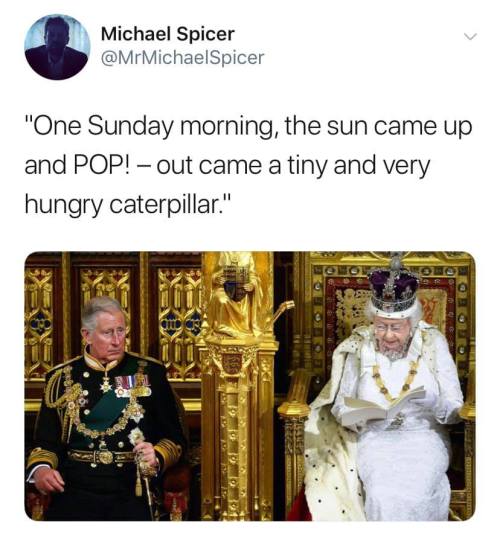
A tiny little bit of the money we took off you might come back to you one day in the future , perhaps, maybe, sort-of …
Even the Queen doesn’t trust Boris Johnson!
It seems she insisted in getting the Queen’s Speech (always written by her Prime Minister) delivered to her a week in advance so that he couldn’t spring any last-minute surprises!
https://www.mirror.co.uk/news/politics/palace-demands-copy-boris-johnsons-20574086
New retirement housing in Ottery – 1 bed flats from £250,000
£250,000 plus service charges, of course.
“… Councillor Giles said: “I was delighted to be invited to the opening of Tumbling Weir Court. I am pleased to see the excellent finished development which will help boost the choice for older people in Ottery St Mary and beyond.”
Ciara Hilley, divisional marketing manager for McCarthy and Stone, added: “We are committed to delivering an exceptional lifestyle and, as such, the development enjoys a prime location with access to a superb selection of local amenities, and the highest specification fixtures and finishes throughout.”
Prices at Tumbling Weir Court currently start from £250,000 for a one bedroom apartment and £299,000 for a two bedroom apartment.”
https://www.midweekherald.co.uk/news/new-retirement-living-development-in-ottery-st-mary-1-6318155
Councillor whose group enabled Sidford Business Park now wants traffic cuts!
EDDC’s Hypocrite of the Year Award should go to Tory councillor Stuart Hughes, whose Tory group when it was in power sneaked in permission for Sidford Business Park to be included in the Local Plan at the last minute. Now he is “trying” to get a vehicle weight restriction in the village!
In 2018 he said it was pointless trying to stop the development on Highways grounds:
Background from 2016 when he and his fellow councillors acted positively and some might say disingenuously to support the business park in Sidford:
Rumour has it that Councillor Hughes is spending much less time in his area these days so try to catch him when you see him if you want to give him your opinion!
Oh Lord! “Stupid” Neil Parish nearly got shot by local police!
PLEASE, PLEASE someone stand against this “stupid MP”!
The Evening Standard headline reads:
The Londoner:
‘Stupid’ MP in car chase caper
Tory MP nearly shot after tailing Jeremy Hunt’s armoured convoy in Volvo
“The Conservative MP Neil Parish risked being shot by police protecting Jeremy Hunt earlier this year after the Tory politician joined the then foreign secretary’s motorcade without authorisation. “They were not that far from f***ing shooting him because he was tailing the foreign secretary and they didn’t know who the f*** he was,” a source tells The Londoner.
Hunt, who was running for Tory leadership at the time, met Parish at a cheese farm shortly before a hustings in Exeter, near Parish’s constituency of Tiverton and Honiton, on June 28. “My intentions were honourable,” Parish told The Londoner this morning, before conceding: “I’m the guilty party. It’s a good job they didn’t shoot me.” As they travelled to Exeter, Parish “attempted to join the then foreign secretary’s convoy of three armoured police cars. Big, reinforced, five-and-a -half-tonne Land Rovers.
“He tried to join it in his Volvo because he thought it would be a quicker way to get into the venue,” the source said.
A second source explained: “The cops began to take evasive measures like running red lights and speeding over the limit. And he just kept up. And assumed he was allowed to be part of the convoy.”
The first source added: “The police officers in the convoy had gone, ‘What is this all about? Who is this d***head behind us?’ They were this close to calling in a full-on SWAT team.
“Fortunately, Devon and Cornwall Police were called to the scene. They pulled him over to one side and they screamed at him.”
“I am quite impulsive, I just did it. My biggest mistake was I didn’t tell them I was going to do it,” Parish told The Londoner.
“Then afterwards I thought, ‘Well, that was bloody stupid wasn’t it?’
“I’ve learnt my lesson, I will not be doing that again.”
Local Enterprise Partnership “scrutiny” laid bare (and a chance to see for the scrutiny not working for yourself)
Comment as post:
“Heart of the South West (HotSW) Joint Scrutiny Committee
meets on
Thursday October 17
at County Hall 2.15 pm
(public may attend but not speak) to consider, amongst other things, a review of its own scrutiny performance and how it could be improved. This Joint Scrutiny Committee is the nearest thing we have to democratic oversight of our Local Enterprise Partnership (LEP), HoTSW. Judge how good it is for yourselves. The Joint Committee comprises 17 councillors drawn from just nine of the 17 odd Devon and Somerset local and unitary authorities. Political proportionality only applies to the four nominees from each of the two County Councils.
FIRST A RECAP & SOME SCENE SETTING.
In 2010 the government started approving bids from self-selecting, business led, Local Enterprise Partnerships. LEPs were encouraged to make ambitious plans to run their local economies and bid for central government growth development funds, effectively kick starting English Devolution. HotSW is the selected LEP covering Devon and Somerset. By 2014 HotSW had agreed, in secret and with no scrutiny, a growth strategy with government. Nothing was openly published until 2015. This growth strategy is built around doubling the local economy in 20 years (3.53% annual growth rate) by increasing productivity and population growth. The targets are wildly unrealistic and therefore undeliverable.
This government devolution experiment has come in for severe criticism from the Public Accounts Committee (PAC) (e.g. 2016): “It is alarming that LEPs are not meeting basic standards of governance and transparency, such as disclosing conflicts of interest to the public….LEPs are led by the private sector, and stakeholders have raised concerns that they are dominated by vested interests that do not properly represent their business communities.”
As a result, the Department for Communities and Local Government commissioned a “Review of Local Enterprise Partnership Governance and Transparency”, Led by Mary Ney. This review made 17 recommendations (2017) to improve governance, accountability and scrutiny of LEPs. Although the Department accepted these recommendations, they adopted a “light touch” approach, leaving LEPs and Local Authorities to work out the details for themselves.
Not surprisingly the PAC concluded this year (June 2019):
“We welcome the improvements to LEP governance and transparency since we last examined these issues, but there is still a long way to go for all LEPs to reach the rigorous standards we expect. We remain concerned that LEP boards are not yet representative of their local areas and business communities and that local scrutiny and accountability arrangements are not strong enough considering the significant sums of public funding that LEPs manage.”
NOW TO THE HOTSW SCRUTINY REVIEW ITSELF.
First thing to note is that of the 17 members of this Joint Scrutiny Committee, only eleven attended the very first scrutiny meeting last November. This attendance dropped to ten in February and then to just five in June, with Devon County Councillor R Bloxham for Broadsclyst, being amongst the absentees. This is the bare minimum for a quorum. This scrutiny committee has all the appearance of being in crisis. Perhaps members feel out of their depth scrutinising regional economic issues? Perhaps members feel inhibited from diving deep where all past HoTSW decisions have been rubber stamped? Maybe they have been warned not to undermine the LEP for fear of losing central funds? Could HotSW be confusing them with detail (oldest administrative trick in the book)? There is a plea for shorter presentations up for discussion.
Scrutiny Committee Members have canvassed views from other County and Unitary Authorities to try to understand their Scrutiny arrangements for LEPs, and have concluded that the HotSW arrangements are “more developed than in many authorities”. “Current arrangements are having some impact but have further to go.” A report proposes some changes to strengthen the transparency and quality of scrutiny (e.g. to adopt the Devon County practice for public participation, web casting, public attendance and speaking) and minor tinkering with the Terms of Reference to allow them to be more pro-active.
For discussion is this list of how to judge their Scrutiny success over the next year, with only three meetings to do it in:
1. Positive and impactful relationship between Scrutiny and the LEP, evidenced by change or amendments to policy or decisions.
2. Being cited in advance of priorities, decisions and strategy arising for the LEP
3. Clarity on the Chair of the Board and LEP’s ambitions and how Scrutiny can add value particularly to investment strategy.
4. Representing the ambition and concerns of the South-West’s residents
5. Demonstrable contribution to productivity and growth by the LEP
6. Increasing democracy in regional government
7. Scrutiny to build a culture of learning and improvement, taking account of best practice nationally
THERE IS NO SHORTAGE OF THINGS TO SCRUTINISE.
At the February 2019 meeting the annual HotSW performance review, commissioned from Ash Futures, was presented to this Scrutiny Committee. It gave an early view of progress already faltering.
“…….the review of economic data leads to the overall conclusion that the HoSW economy, at best, continues to track the ‘baseline’ growth scenario. That is, there is no firm evidence that it is achieving either ‘strong’ or ‘transformational’ growth as aspired to in the Strategic Economic Plan.” [Baseline – continuing to fall behind UK average].
“The plan outcome measures and objectives in the current economic environment do not currently look achievable, certainly in the short-term. …..It is our view that some of the outcome targets, particularly those associated with the ‘transformational’ target, now look very aspirational in their nature.”
“Currently, there is no ‘feedback loop’ back to the Strategic Investment Panel to develop its understanding of ‘what has worked well, and what not’ with investments made….. A better understanding of how investments have developed would lead to better long-term decision-making.”
Following that, the LEPs covering Cornwall, Devon and Somerset had an opportunity to submit evidence at the beginning of August to the Treasury Committee Inquiry into regional imbalances in the UK economy:
The preface to the evidence reads: “We have put forward two submissions; one on behalf of Cornwall Council and Cornwall and the Isles of Scilly Local Enterprise Partnership and another on behalf of the Heart of the South West Joint Committee and the HotSW Local Enterprise Partnership representing Devon, Plymouth, Somerset and Torbay.”
“We are submitting this joint letter as being neighbouring areas we have similar policy asks which the committee might find helpful to have highlighted as well as the nuances that are described in our two responses. There is no clear definition of what constitutes a region and we believe these two documents provide detailed insight into the complexity of this subject.”
Cornwall then followed this introduction with a detailed response for their part of the region comprising 4,342 words and four graphs but the detailed HotSW response was left blank. My understanding is that Local Authorities decided/were instructed to feed inputs to HotSW, stand back and let HotSW take the lead. Unfortunately, any County inputs have got “lost in the post” and the only organisation that took the time, trouble and effort to answer questions raised in the Inquiry terms of reference from the perspective of Devon’s economy was the East Devon Alliance.
WHY DOES THIS MATTER?
Philip Aldrick, economics editor The Times, summarised why the Treasury will become more interested in regional funding in an article he wrote in 2018:
“….One theory doing the rounds is that the Treasury wants to know if its business support schemes are working. A crunch is coming. England’s 39 local enterprise partnerships [now reduced to 38- one went rogue], designed to boost growth, are funded largely with EU grants. For 2014 to 2020, they secured €6.51 billion of European Structural and Investment funds. Of that, €2.5 billion was allocated to “enhancing the competitiveness of small and medium enterprises”, about a tenth of which went to less developed regions.”
“After Brexit, now formally delayed until 2021 after yesterday’s transition deal, the money will no longer make the round trip via Brussels. It will come directly from Westminster, bringing with it more political accountability. If the money is not driving productivity, which it patently isn’t, the Treasury may decide the financial medicine could be administered more effectively.”
And the PAC in the 2019 report (referred to above) picks up the same theme:
“Despite spending up to £12 billion of taxpayers’ money [between 2015/16 and 2020/21], the Department has no real understanding of the impact which the Local Growth Fund has had on local economic growth. The Department chose not to set quantifiable objectives for Growth Deals. Its assertion that every £1 of local growth funding could generate £4.81 in benefits is an unsubstantiated estimate. Despite receiving quarterly performance data from LEPs, the Department has not used this to build up an understanding of the impact that local growth funding has had nationally, nor has it measured what value for money LEPs have delivered so far.”
Spending vast sums of tax payers’ money without strong scrutiny and without demonstrable value for money isn’t going to continue. Treasury watchers will be familiar with their scepticism over future plans that lack realism. Ambition not only has to be deliverable but be seen to be delivered.”
“New report reveals alarming shortage of country doctors”
“Hospitals in rural and coastal Britain are struggling to recruit senior medical staff, leaving many worryingly “under-doctored”, a major new report seen exclusively by the Observer reveals. Some hospitals in those areas appointed no consultants last year, raising fears that the NHS may become a two-tier service across the UK with care dependent on where people live.
Disclosure of the stark urban-rural split emerged in a census of consultant posts across the UK undertaken by the Royal College of Physicians (RCP), whose president, Andrew Goddard, has warned that patients’ lives may be at risk because some hospitals do not have enough senior doctors.
Just 13% of consultants appointed in England last year went to hospitals serving mainly rural or coastal areas, with the other 87% being hired by those with mainly urban populations.
…”
“Food bank users in Devon reach a record high”
And remember – you can’t just turn up at a foid bank: you have to be referred by a doctor, social worker and the like. And many recipients are from working families.
“The number of people using food banks in Devon has hit a record high, and Universal Credit has been blamed for contributing to the problem.
Figures provided by the Trussell Trust, a charity that works to end the need for food banks in the UK, more than 24,000 emergency food parcels were issued to people in need across our county in 2018/19.
One in three of these food parcels, or 8,242, was for a child.
Campaigners say “enough is enough” and warned Universal Credit is adding to the huge numbers of people who don’t have enough money to “cover the basics” such as food. …”
https://www.devonlive.com/news/devon-news/food-bank-users-devon-reach-3422071
“To save on teaching costs, school heads are increasingly busting the 30-child limit — illegal for pupils under seven” [including Broadclyst]

“Broadclyst school [photograph from article above]in Devon has a specially built classroom where 67 children are taught simultaneously. Though unions say such class sizes are detrimental to learning, the school’s head teacher insists pupils are offered an “excellent education”.
It looks more like a lecture theatre than a primary school classroom. Welcome to Broadclyst Community Primary School in Devon, where year 6 pupils are taught in a class of 67 — sometimes with just one teacher.
A Sunday Times investigation has found that cash-strapped primary schools are packing pupils into giant classes to boost their budgets. A school receives between £3,500 and £5,000 a year for each child. More than 559,000 primary pupils were taught in “super-size classes” averaging more than 30 children last year, compared with 501,000 five years earlier, according to our analysis of official data.
In parts of northwest England — including Oldham, Bury, Trafford and Tameside — a quarter of primary children are being taught in such big classes, as per-pupil funding encourages heads to fill their classrooms.
It is illegal to teach children under the age of seven in classes of more than 30 pupils, but there are no such rules for older children. But we have found that nearly 5% of pupils aged 5-7, roughly 73,000 children, were taught in classes of more than 30 last year. Some heads use just one teacher for occasional classes of more than 60 pupils. Broadclyst has one of the highest average class sizes, 42, and at times teaches 67 older children together in a specially built room.
Teaching unions and experts have always warned that such big class sizes damage children’s education. But this weekend Jonathan Bishop, Broadclyst’s head teacher, defended the policy, insisting that the school, about five miles northeast of Exeter, offered an excellent education, and class size “was not the big factor” in a good-quality education.
The school is rated as “outstanding” by the regulator Ofsted.
Bishop said: “I do not think 30 is a magic number to get better-quality education. It is not class size that dictates the quality of education. Our year 6 classroom has got 67 children in one room. There are times when one teacher teaches those 67 children. Is that wrong? Of course it is not wrong.
“Our year 6 classroom is designed like a lecture theatre: I can seat 67 children in there. I know I will be public enemy No 1 by saying this.”
Experts warned that the UK was moving inexorably towards the giant classes found in parts of Asia.”
Source: Times (pay wall)
DevonLive’s best misleading headline yet! “Cranbrook will get its town centre within years”

NOT the design – just a warning!
The headline appears above an article which suggests that Cranbrook developers will now get away with financing “one multi-use building” (cheap) instead of the larger number of (more expensive) single-use buildings they were supposed to construct!
The part of the article not reproduced is the second half where DCC councillors (including former EDDC Leader Sarah Randall-Johnson) desperately try to pretend this is good news.
“… The multi-purpose building would provide flexible space for children’s, youth, adult and library services with potential use for public health and highways services, as well as space for the town council.
The trigger point for the provision of the children’s centre facilities– 2,000 home occupations – has been met which means the Cranbrook consortium of developers have to construct the children’s centre facilities no later than June 10, 2021.
The existing planning agreement also requires them to provide town council offices in the town centre by June 2021, and youth facilities and a library when the 3,450 home is occupied, currently expected to be in 2025.
Devon County Council’s cabinet on Wednesday morning though unanimously agreed to try and renegotiate the agreement so that the multi-purpose building can be built, and subject to funding, should be complete within the next two years.
It would be built on land that is supposed to be the town centre, but currently remains an empty green space.
Cllr Rufus Gilbert, cabinet member for economy and skills, said that bringing forward the delivery of the library and the youth services would provide the town with the services that it needed. He added negotiations were still ongoing, but he enthusiastically welcomed the move, saying: ”
“The existing agreement is for these key services – the library, youth and a children’s centre facilities – to be built over the next two to six years.
“But as the town is continuing to grow, especially noting the high proportion of families with young children and need for additional support, we must bring them forward.
“We believe that our proposed integrated community facilities building in Cranbrook’s town centre is the best way to provide these required facilities.
“It would allow residents to benefit sooner, and give us greater control over the design and delivery of the facilities.” …”
https://www.devonlive.com/news/devon-news/cranbrook-town-centre-within-years-3414376
EDDC: Greater Exeter Strategic Plan update – delayed to at earliest April 2023
Highlights:
The Heart of the South West devolution bid highlights a number of challenges facing the LEP area which planning has a key role in addressing. These are:
Comparative productivity is 29th out of 39 LEP areas
An aging workforce and major skills shortages reported
Our performance remains low on key productivity measures: wages, innovation, inward investment exports and global trade
Disproportionate growth in our older population is placing unsustainable burdens on our services
Strategic infrastructure has good coverage, but is incomplete
Insufficient capacity of the road network and motorway junctions
Uncompetitive travel times to London and the south east
Incidents and extreme weather threatens transport resilience
Housing supply not keeping up with demand
Threats to National Parks and Areas of Outstanding Natural Beauty
Page 5: revised timetable pushes back a GESP agreement to not earlier than April 2022. HOWEVER, this is almost certainly a spelling error, as on page 11 this is contradicted:
Once adopted it will supersede specified strategic parts of the East Devon Local Plan, Exeter Core Strategy, Exeter Local Plan, Mid Devon Local Plan (once adopted), Teignbridge Local Plan Parts 1 and 2 and any other Development Plan Documents as necessary. The preparation timetable is as follows:
Site Options and Draft Policies – June 2020
Draft Plan – November 2020
Publication (Proposed Submission) – February 2022
Submission – July 2022
Examination – September 2022
Adpotion : April 2023
(not April 2022)
Page 8: The Greater Exeter Strategic Plan will cover the local planning authority areas of East Devon, Exeter, Mid Devon and Teignbridge (i.e. those Councils’ administrative areas excluding Dartmoor National Park). It will be prepared jointly by those four local planning authorities with the support of Devon County Council under Section 28 of the Planning and Compulsory Purchase Act. It will:
• set an overall vision and strategy for the area in the context of national and other high level policy and in particular climate emergency declarations and the NPPF;
• contain policies and proposals for strategic and cross boundary issues where these are best dealt with at a larger-than-local scale;
• set the overall amount of growth for the period 2020 – 2040;
• promote the Liveable Exeter vision by allocating urban regeneration sites in the city;
• implement the overall vision and strategy by allocating strategic sites of 500 or more
homes which may include urban extensions and new settlements ;
• provide districts’ local plans with targets for non-strategic development
EDDC response to Jurassic National Park: sit back and do nothing
“Resolve to await the Governments response to the recommendations; and note that the Chilterns, the Cotswolds and the Dorset and East Devon AONBs are potential candidates for future designation as National Parks.”
AveragecUK earnings increase 2p per hour in two years – top 1% earnings go up £7 per hour in same period
“The top 1% of high earners in the UK have enjoyed a 7.6% real terms pay increase over the last two years, while the average worker’s pay rose by just 2p an hour.
A TUC analysis of government hourly pay data between 2016 and 2018 shows thatpay among the very top earners increased at a faster rate than any other group.
People in the top bracket saw their pay increase by an average of 7.6% from £58.73 in 2016 to £63.18 in 2018, according to the Office for National Statistics (ONS) annual survey of hours and earnings. Over the same period, the real terms pay of average workers rose by just 0.1% or 2p to from £12.71 to £12.73.
The TUC said that average pay in real terms, when adjusted for inflation, was still worth less in real terms than before the financial crisis continuing the biggest squeeze on wages since the end of the Napoleonic Wars.
Frances O’Grady, general secretary of the TUC, warned that the gap between the richest and everyone else will continue to widen under the prime minister, Boris Johnson’s planned tax cut for high earners, which will cost the Treasury £9.6bn a year, according to the Institute for Fiscal Studies (IFS).
“While millions struggle with Britain’s cost of living crisis, pay for those at top is back in the fast lane,” O’Grady said. “We need an economy that works for everyone, not just the richest 1%. Boris Johnson’s promised tax giveaway to high earners would only make things worse. The prime minister is focused on helping his wealthy mates and donors, not working people.” …
Broadclyst – twinned with Mayfair?

Following on from the story below Owl has been flying over Broadclyst.
It has an interesting parish council.
It includes Green Party landowner Henry Gent, whose declaration of interest notes that he has land on option to Persimmon that could net him a nice little earner very soon:
Click to access roi-henry-gent.pdf
Lib Dem District Councillor Sarah Chamberlain.
Lib Dem District Councillor Eleanor Rylance, who plans to stand again against Claire Wright in a general election.
Henry Massey, whose company provides web services to Broadclyst Parish Council:
Click to access roi-henry-j-massey.pdf
(Check those web services out here on the parish’s less than informative and clunky website: https://www.broadclyst.org/
and now new councillors Karl and Liz Straw – where Karl is certainly shaking up the very expensive parish council with some incisive questions!
Interesting features of the parish accounts show:
Of its £422,170 budget £204,320 is being spent on 4.5 FTE employees (including the clerk) PLUS £18,000 on a PART-TIME handyman whose LORRY costs £7,500 PLUS someone being paid £5,000 to maintain public toilets PLUS someone being paid £9000 to run the sports pavilion.
The council also has a bill of £16,550 for office/telephone/internet services, £2500 for staff expenses and £12,500 for PUBLIC RELATIONS. Of this £2050 is telephone charges and £3050 rates.
They love their sport too. £21,000 goes on sports field and tennis court, £12850 on the bowling green (for which they receive £1800 in return from the club.
Of the rest, £18000 goes on “projects” which included £10,000 on “bus shelters”, £12,000 goes on youth work and a whopping £34,320 is set aside for the eighbourhood plan.
Income is £2000 from the parish magazine, £1413 from DCC towards parish maintenance and £500 from allotments and that £1800 from the bowling club.
If Owl were a councillor there, it would DEFINITELY be asking some very awkward questions! And many of them!
[Broadclyst] “Parish council with £2,500 in reserves for grass seed will not reduce council tax after bid to cap it fails”
“Broadclyst parish councillor Karl Straw saw his motion to reduce the authority’s precept from £233.83 to no more than £160 per Band D household, be rejected by six votes to two.
Parish council chairman Henry Massey said the authority could not vote to ‘arbitrarily’ slash its precept by one-third, as it would immediately see funding dry up for some services.
Cllr Massey said the population of Broadclyst has increased from 1,000 people to 8,000 people in the last ten years, and the parish council provides services other parish authorities do not.
The vote, taken at Victory Hall on October 7, means Broadclyst remains the fourth most expensive non-unitary parish in the country, and the second most expensive precepting parish in Devon.
Cranbrook is the most expensive precepting parish, due to the maintenance bill for its country park.
Cllr Straw said Broadclyst Parish Council’s precept has ballooned by more than 66 per cent in the last five years.
He said: “Broadclyst pays on average £233.83 against the Devon average of £42.20.
“Seaton pays £101.60, Axminster pays £88.64, Sidmouth pays £72.36, Honiton pays £71.08, Exmouth pays £60, and Ottery pays £49.03
“The average East Devon parish charge is £46.55 and in Devon the parishes charge on average is £42.20.
“My motion was to reduce the precept by at least £75 in 2020/21 and to introduce a policy of continued reductions until the parish as charging no more than the average across Devon.”
Broadclyst Parish Council currently has £2,500 reserved for grass seeds for its bowling green.
However, Cllr Massey said nothing has been spent on grass seeds this year, and the figure would only be spent in full in a worst-case scenario.
Cllr Massey said Broadclyst has grown significantly from a ‘relatively small size’ since 2009.
He said: “We have to balance the needs of the people and groups who use the village as well as at the same time ensuring that we are giving good value for money.
“We provide a huge number of services for a parish council and, due to cutbacks in district and county council, have taken on additional services that otherwise would not be provided.”
Cllr Massey said the council welcomes the input made from Cllr Straw and will be carefully examining its budget in the next two months.
Cllr Straw said he is planning to request the council set up a people’s forum, which will invite residents to discuss what precept they would like to see the authority operate with.”
https://www.midweekherald.co.uk/news/broadclyst-precept-motion-outcome-1-6318881
“Doctors fear winter crisis chaos is looming in Devon”
“Fears of a winter crisis chaos across hospitals have been raised after new figures have shown A&E waiting times in parts of Devon are already worse than would be expected during the hardest months of the year.
NHS figures show 72.8 per cent of people arriving at Royal Devon and Exeter NHS trust’s major A&Es waited less than four hours before being admitted, discharged or transferred.
It is the trust’s worst performance since A&E waiting times began to be measured on a monthly basis in June 2015. Performance has been deteriorating at the trust since March this year. The target is 95 per cent.
The RD&E says the reason is due to ‘very high’ patient demand, staffing pressures and shortages in the care sector.
The British Medical Association (BMA) has warned poor A&E performance in September meant the NHS was on a “collision course” for what is likely to be the worst winter ever.
Overall, 81.9 per cent of patients waited less than four hours at all A&Es and minor injury units run by the RD&E in September.
Across England, 77 per cent of people waited less than four hours in major A&Es in September before being admitted, discharged or transferred.
BMA council chair Dr Chaand Nagpaul said: “The NHS has just experienced its worst-ever summer. This is incredibly alarming and should be taken as a serious warning sign of the chaos that is likely to unfold in the NHS this coming winter.
“With summer performance now as bad as recent winters, we have reached a point of year-round crisis and the Government cannot continue to let this happen.
“September A&E waits were the worst performance record outside of winter since 2010 and trolley waits and referrals to treatment are worse than we have seen in the last decade.
“Patient care is suffering, NHS staff working tirelessly around the clock are suffering, and with Brexit on the horizon and early indicators of an extremely cold winter, we are on a collision course for what is likely to be the worst winter ever.
“This is a serious plea – we need to see investment across the board including community and social care, and resources such as more beds, reaching the frontline now.”
https://www.devonlive.com/news/devon-news/doctors-fear-winter-crisis-chaos-3419929
Naughty Waterstones!
A window-dresser at Waterstones in Piccadilly let his or her feelings be known …

“Tory MPs five times more likely to vote against climate action”
Neil Parish scored 17%: was present for 12 votes and voted positively in 2
Hugo Swire scored 25%: Swire was present for 12 votes and voted positively in 3
Boris Johnson score 0% (yes, that’s right zero), Jacob Rees-Mogg scored 17%, Jeremy Corbyn 92%, Caroline Lucas 92%, Exeter’s Ben Bradshaw 75%, Jo Swinson 50%, Oliver Letwin 17%.
MORAL OF THIS TALE: If you believe in climate change and want to see something done about it, don’t vote Tory, be wary of Lib Dems and vote Labour or Green (or Independent in East Devon)!
“Conservative MPs are almost five times more likely to vote against climate action than legislators from other parties, a Guardian analysis of 16 indicative parliamentary divisions over the past decade has revealed.
The Tories also registered many more donations, shares, salaries, gifts and tickets to sporting events from fossil fuel companies, petrostates, aviation companies and climate sceptics, according to declarations made in the parliamentary record of MPs’ interests between 2008 and 2019.
The Guardian, in collaboration with the investigative environmental journalism group DeSmog UK, rated MPs from 0% to 100% based on 16 parliamentary votes since 2008. The selection sought to cover a range of measures that would affect the UK’s carbon emissions, with an emphasis on votes where MPs were willing to break ranks and put the climate before their party.
The analysis shows that although most politicians publicly express support for ambitious long-term climate targets, when it comes to short-term measures to reduce the UK’s carbon footprint, those in power are less likely to make this a priority.
The scores are not intended to be a definitive evaluation of an MP’s green credentials – both the Conservatives and Liberal Democrat parties complained they had been hard done by.
But experts said the scores were an important tool for voters to make a choice through a climate prism with a potential general election looming. …”
 East Devon Watch