Persimmon Homes divides and rules on safety of homes leaving it to individuals to ask for safety checks

“A Persimmon Homes employee is urging all home owners to have their properties inspected to make sure they are not missing essential fire safety barriers after claiming the problem is widespread.

The worker, who asked to remain anonymous, has alleged that although homes have been confirmed to have failed inspections in a housing development in Exeter, there are other sites which have the same issues.

The house builder has previously refused to answer vital questions about properties in one of its developments, Greenacres, and the Newcourt area near Topsham, including how many have failed vital fire safety barrier inspections.

The issue was exposed following a ‘ferocious’ blaze which broke out in Trafalgar Road off Admiral Way and Topsham Road, last April, which spread into the roof spaces of two of the adjoining properties.

… [An Exeter owner said] he found [his home] to be missing vital fire barriers in its cavity walls.

He says Persimmon Homes were originally unwilling to tell him how many homes they had inspected and had failed, so Paul asked residents to share their pass or fail inspections in order collate his own figures.

Of the 135 residents who have so far disclosed their inspection findings, he says 65 per cent have currently failed across the whole housing development.

When broken down by the age of properties, 50 out of 76 built within the past five years failed, amounting to a 65 per cent fail rate.

Out of homes built five to nine years ago, 38 out of 58 failed which is also a 65 per cent fail rate, according to Mr Frost’s data.

Persimmon Homes hit the headlines last year when former chief executive Jeff Fairburn left the company following huge controversy about its bonus scheme which is believed to be the most generous from a FTSE 100 company. In 2018, he had been in line for a £110m payout before it was scaled back to £75m in the face of political and public outrage.

When approached for a comment over the allegations made by the employee, a spokesperson for Persimmon Homes said: “Persimmon Homes will not comment on anonymous claims and allegations.

“The focus is on customers and as, has been stated repeatedly Persimmon Homes will liaise directly with them.”

Austerity: Death by a thousand (local) cuts

“Brexit is one of the great issues – and news stories – of our time. But austerity, now nearly a decade old, has been just as transformative – in a slow, attritional way that is all too easy to overlook.

The reality is a picture of a thousand small decisions taken in grey council meeting rooms, a thousand deductions from spreadsheets, and countless lives quietly made a little worse. Sexy news copy and television report material it is not.

And while it would be wrong to say the bigger picture hasn’t received a lot of coverage over the past eight years, the real-life impact is rarely “news”. These small stories seldom pass muster in newsrooms where reporters pitching ideas are asked by their editors daily: “But is it new?”

Meanwhile at a local level, councils faced with impossible budgetary decisions are having to make hard choices. So how do we mark the slow, incremental, and sometimes devastating disappearance of local services? How do we serve our readers by making sure our coverage reflects what they see where they live?

This is why HuffPost UK is devoting a week of coverage on the impact of local cuts – properly local cuts. In this series, What It’s Like To Lose, we have stepped away from considerations about what is traditionally “newsworthy”, ignoring the usual measures of scale, to look at some of the holes left in communities over the past few years, and to write about things that people tell us are important to them.

The fact is that the closure of a single leisure centre, or a library, is a local issue. If the council stops cutting the grass in your park, or doesn’t mend the swings that have been broken for a month, you don’t expect to see it on the News at Ten. And these cuts are often enacted by people working hard to make the least-worst decision. Do we consider a mother-and-baby swimming class or a judo club as essential a service as keeping streetlights on, or collecting rubbish?

When Birmingham Council recently decided to no longer employ lollipop ladies, they did so in order to prioritise other services. In narrow terms, the logic might have seemed inescapable. But with that, a familiar feature of the landscape of British childhoods is gone in one city. Where will it be gone next?

So to pay closer attention, and to understand the ways in which austerity is linked to wider political issues, we’ve spoken to an old lady whose bus into town on a Sunday has been discontinued, and a teenager who won’t travel further afield to a sexual health clinic area after the one nearby was closed. We’ve spoken to people who have to travel miles to their local job centre, or who are missing their leisure centre and can’t find an affordable alternative.

And while this can only be a snapshot of the nationwide reality, we’ve found that the stories that matter to one person can tell us something about what it’s like to lose that ought to matter to all of us, in a society that is quietly changing.”

https://www.huffingtonpost.co.uk/entry/austerity-what-its-like-to-lose_uk_5c3c8e54e4b01c93e00bbd26

Here is the first of those stories:
https://www.huffingtonpost.co.uk/entry/what-its-like-to-lose-your-leisure-centre_uk_5c1d1b41e4b08aaf7a885786

Outsourcers should be allowed to fail – says outsourcing boss

“Politicians and regulators responding to Carillion’s collapse should resist the temptation to turn outsourcing companies into “safe spaces” that cannot fail, the boss of a rival has urged.

Carillion, which built roads and hospitals and provided cleaning and catering to the public sector, went under one year ago this week, leading to calls for tighter rules for outsourced services and greater scrutiny of those providing them.

But Rupert Soames, who led Serco through its own financial crunch four years ago, told The Sunday Telegraph: “You will get companies that are ­well-run and ones that are badly run – and the bad ones should go bust. …”

https://www.telegraph.co.uk/business/2019/01/20/outsourcers-must-allowed-fail-says-soames-anniversary-carillion/

Sidford Business Park – disproportionate industrial development?

Recently posted comment:

“At the full EDDC Council meeting at the end of October 2018, independent Councillors Ben Ingham and Roger Giles, supported by 11 other councillors, tabled a motion to discuss the over provision of housing needs in our Local Plan and called for an independent assessment. In answer to a question as to why East Devon is taking a disproportionate share of development [58% more than Exeter, 53% more than Teignbridge and nearly three times that of Mid Devon according to independent analysis conducted by CPRE] Councillor Paul Diviani said:

“Because we have the land and we are good at it”!

[Perhaps he should be reminded that two thirds of East Devon lies in an AONB, or perhaps he doesn’t care].

This is not the argument that was put to Inspector Thickett at the public examination of the EDDC local plan in 2015 by Ed Freeman. Then, the argument for pitching the EDDC target at a minimum of 950 houses/year [about 30% more than could be supported by the evidence] was that we had jobs coming down the line. Specifically he mentioned 1,000 full time equivalent jobs a year.

Thankfully, we are effectively at full employment. Office for National Statistic population projections shows the South West population as a whole growing over the local plan period at around 0.8% per annum, including expected migration. However, we have an ageing population and the annual increase of those classified as of working age is only going to be 0.16% (16 to 64 for all genders). To satisfy this annual demand to find new jobs in East Devon [population 142,300] would only require around a couple of hundred a year, nowhere near the 1,000 that are being planned for.

The creation of jobs is generally a good thing but pursuing jobs as a primary objective is, I suggest, not what we need in Devon. What we need are better quality jobs to lift earnings and I am pleased to see that that is what ratepayers’ investment of £1.1M in the Exeter Science Park is aimed at achieving. But it only creates a one-off 158 jobs against the 1,000 a year needed to justify the development plan.

Can anyone provide an evidence based explanation of where these housing and job targets come from? Anyone believe that this is what they were voting for when they elected their councillors? And who are the “we’s” in Councillor Paul Diviani’s explanation?”

‘Let them eat spuds!’ Ex-UKIP candidate says food banks are fuelling the obesity crisis

Owl says: Of course she is right: the poor should be using their Range Rovers to get to farm shops for their sacks of potatoes … and should be using their outdoor barbecues to roast them, seeing as they don’t have enough money to use their ovens – and bags of charcoal can also be put in the Range Rover’s capacious boot! Really, these so-called poor people need a good talking to and must pull up their (darned) socks!

And no, they shouldn’t be bothering our hard-pressed doctors with their vitamin-deficiencies when little Arabella needs to have her ballet sprain massaged!

“The former UKIP parliamentary candidate for Great Yarmouth claims that food banks are contributing to obesity and that the poor “cannot be bothered” to cook.

Writing online for The Conservative Woman, Catherine Blaiklock argues that no-one in Britain should be starving because potatoes are cheap at her farm shop and living on nothing but boiled potatoes would be healthier than being handed a box of products in tins and packets.

Addressing claims that millions of people struggle to put food on the table she compares the plight of Britain’s poorest families with the Sherpas in the Himalayas who eat “practically nothing but boiled potatoes with a bit of salt and chilli on the side.”

“You get bored with both the eating and peeling long before you could possibly get obese,” she adds.

The column carries the headline Hungry? Let them eat spuds! echoing the words supposedly spoken by Marie Antoinette when she learned the peasants had no bread.

It goes on to argue that it is not the cost of food that is the problem but the people who consume it.

Catherine Blaiklock stood for the far-right Eurosceptic party in Yarmouth in 2017.

Described at the time as running a guest house in Lingwood, near Acle, she took a photograph of her black husband to a hustings in an apparent bid to prove the party is not racist.”

https://www.edp24.co.uk/news/health/former-ukip-candidate-catherine-blaiklock-says-foodbanks-fuel-obesity-1-5853723

Electoral Commission – unfit due to modern loopholes

“Craig Mackinlay, the Conservative MP who was cleared while a senior Conservative official was convicted over election expenses, has some very critical things to say about the Electoral Commission.

Writing for PoliticsHome after his acquittal, the Conservative MP said:

“It is their responsibility to interpret the law into understandable guidance for candidates and agents and have extra-statutory authority to produce guidance and rules to assist the electoral process. During the trial, the prosecution spent days considering the status of personalised and party generic Correx boards. Conservative Party guidance recommends a 4x potential use. If such plastic posters survive defacement or vandalism that characterises many election campaigns, they could last for many years. The Prosecution and Electoral Commission disputed that view, long held by the party. The Electoral Commission publishes not one word of guidance as to how to account for such boards, how to deal with criminal damage and replacements, relying on the vacuous phrase ‘honest assessment’. To face potential criminal conviction with life-changing consequences on the back of scant guidance cannot be right.”

That is but one of a range of details over which the Electoral Commission’s guidance is indeed unhelpful. Sometimes the Electoral Commission has played with being weirdly prescriptive. (I still remember the discussion I had with them about depreciation rules for party rosettes.) Often however it has also – as the above example illustrates – super-cautiously vague.

Part of the problem, I suspect, is that lack of detailed knowledge in the Electoral Commission, an absence of knowledge bizarrely illustrated by its mistakes over pencils:

https://www.markpack.org.uk/143476/indelible-pencils/

A much bigger problem, however, is one that MPs such as Craig Mackinlay share with the Electoral Commission. Even if no-one breaks the law, the rules limiting constituency expenditure have collapsed because so much can now be done that is charged against the much more generous national limit.

What used to be a tight limit on constituency expenditure set by the law is now in effect a massively generous limit set by the size of your bank account. See the full details here:

https://www.markpack.org.uk/130283/internet-speeds-up-the-killing-off-of-expense-controls-in-marginal-seats/

Neither MPs nor regulators have done anything so far other than sit on the sidelines, often apparently oblivious and always unresponsive to this collapse.”

https://www.markpack.org.uk/157315/craig-mackinlay-electoral-commission/

Flybe biggest shareholder threatens legal challenge to Virgin/Stobart takeover

Owl says: East Devon really does seem to be a very complicated place to do business!

“Flybe’s biggest shareholder has launched a stunning attack on its directors, accusing them of breaching their duties to investors and threatening a legal challenge to the cut-price takeover of one of Britain’s best-known airlines.

Sky News has learnt that Hosking Partners, a prominent London-based asset manager which holds a stake of close to 19% in Flybe, has instructed lawyers to explore its options in relation to the company’s proposed sale to a consortium‎ led by Virgin Atlantic Airways.

These options could include attempting to obtain an injunction prohibiting the deal from being completed, Hosking Partners is understood to have warned Flybe’s bosses this week.

The initial 1p-a-share deal, announced eight days ago, came at a huge discount to the airline’s prevailing share price and underscored its industry’s profound financial challenges.

In a letter to the directors of Flybe, details of which have been relayed to Sky News, Hosking Partners is understood to have expressed concern that they had allowed a false market in the company’s shares to develop by failing to update the City on its financial position in a timely fashion.

‎The fund manager, a long-standing shareholder in Flybe, is understood to have copied its ‎letter to City watchdogs including the Takeover Panel, which polices mergers and ‎acquisitions activity, and the Financial Conduct Authority.

Hosking Partners is said to have raised doubts as to whether the £2.2m offer reflected the intrinsic value of Flybe, and alleged that the handling of its proposed sale had blocked a rival offer from emerging at a higher price.

Flybe’s fate took a further twist this week when it said that its sale to Connect Airways – a consortium comprising Virgin Atlantic, Stobart Group and Cyrus Capital Partners,‎ an investment fund with links to the other two parties – would be restructured.

‎Instead of simply comprising a conventional offer for the shares, Flybe’s trading assets would be sold next month to Connect Airways for £2.8m, leaving the holding company as‎ a shell for which ‎the consortium would continue to pay a nominal sum.

Flybe said this change had been necessitated by its urgent need for liquidity – a claim challenged by Hosking Partners because of the company’s cash balance and ability to raise funds from the sale of assets such as its take-off and landing slots at London Gatwick Airport.

In a statement to the market on Tuesday, Flybe said it had had no alternative but to agree to the revisions because unspecified conditions attached to a bridging loan had not been met.

Hosking and other shareholders are said to be furious about the restructuring of the takeover because Flybe’s recent switch from a premium to a standard listing on the London market meant investor approval was now only required for the holding company bid, not the sale of the airline’s assets.

The fund manager is understood to have told Flybe directors that other parties remained interested in acquiring the airline but would now be unable to make an offer.

At the 1p-a-share offer price, Hosking Partners’ stake is worth roughly £400,000.

If it escalates, the row could pose significant reputational risks to the board of Flybe, which is chaired by Simon Laffin, a City grandee who has served as a director of companies including Mitchells & Butlers, Northern Rock and Safeway.

Investors’ anger has been exacerbated by the fact that early last year, Stobart made a takeover approach to Flybe understood to have been valued at roughly 40p-a-share.

This was rejected by Flybe’s board.

In a further development, Sky News revealed last week that Stobart’s estranged former chief executive, Andrew Tinkler, had himself swooped to snap up a stake of more than 10%‎ in Flybe.

Until as recently as this month, it appeared that Virgin Atlantic and Stobart were ‎likely to table competing offers for the regional airline, before it emerged that they had teamed up as part of the same consortium.

Hosking is understood to have raised concerns in its letter about the process through which they were permitted to form an alliance, although one source close to Flybe said that it had not breached any undertakings by doing so.

The investor is also said to have highlighted the rise in Stobart Group’s share price following confirmation of the 1p-a-share bid as evidence of “value transfer” from Flybe to one of its acquirers, according to a City source.

Under their plans, Stobart Air will be folded‎ into Connect, with all of Flybe’s services re-branded under the Virgin Atlantic name.

The chief executive and chief financial officer of Flybe will transfer to the bidding consortium, according to documents published by the company.

Hosking Partners’ letter is said to enquire about any incentive payments due to either of the duo as a result of the consortium’s takeover.

In a statement, a Flybe spokesman said: “The board of Flybe was faced with a very tough decision based on Flybe’s current difficult liquidity position and the expectation that this pressure will continue.

“Obtaining the revised facility, as announced on 15 January, from the consortium provides the security that the business needs to continue to trade, which preserves the interests of its stakeholders, customers, employees, partners and pension members.

“Flybe will be responding directly to letters received from shareholders.”

Flybe launched a formal sale process last autumn, blaming a toxic cocktail of currency volatility, rising fuel costs and Brexit-related uncertainty.

Although it is small in financial terms, it remains one of the UK’s best-known airline brands, carrying thousands of passengers between largely second-tier British airports as well as European destinations.

A source close to the company pointed out that it had warned in the results accompanying the launch of its sale process that if its credit card partners “were to choose to seek significantly higher cash collateral and the group cannot access sufficient additional liquidity, this would give rise to a material uncertainty which may cast significant doubt about the group’s ability to continue as a going concern”.

The Takeover Panel declined to comment, although a source close to it said it was confident its supervision of the bid had been handled in accordance with its policy of acting in investors’ interests.

For Virgin Atlantic, still part-owned by Sir Richard Branson’s Virgin Group, control of Flybe’s regional network will provide a valuable feed into its long-haul flights to international destinations.

Its return to the domestic UK aviation market will come four years after it announced the closure of Little Red, its previous attempt to make money from a notoriously difficult sector.

Rising oil prices and the weakening of sterling have put airlines under intense pressure, with a deepening industry price war accentuating the financial squeeze.

A Hosking Partners spokesman declined to comment on the contents of its letter, but said this weekend that investors were “entitled to transparency over precisely what has gone on to drastically reduce Flybe’s value”.

“The auction undertaken under the formal sale process has clearly not yielded a favourable outcome for all stakeholders, and it seems that the outcome has locked out any other bidder who may be able to provide a better solution for all of Flybe’s stakeholder‎s.”

https://news.sky.com/story/top-flybe-shareholder-threatens-legal-challenge-over-2m-bid-11611470

Why do we “need” Sidford Business Park when we have the Science Park Enterprise Zone down the road?

Enterprise Zones give favourable start-up arrangements such as business rate relief to businesses that take space in them – Sidford is not in an Enterprise Zone.

“East Devon District Council’s Cabinet last night agreed to invest £1.1m in the development of a new Open Innovation Building at Exeter Science Park, in the Exeter and East Devon Enterprise Zone.

The investment will bring forward 20,000 square feet of space under one roof for growing small and medium sized enterprises (SMEs) in science, technology, engineering, maths and medicine (STEMM) sectors.

Funding has been raised against future business rates income from the growing list of businesses seeking to establish offices and laboratories alongside leading regional science and tech companies already based at Exeter Science Park.

Councillor Ian Thomas, Leader of East Devon District Council said: “The Exeter and East Devon Enterprise Zone is a significant and strategically important development site for the area, with the potential to create over 10,000 jobs.

“This investment will bring forward the opportunity for up to 158 high value jobs in the Open Innovation Building for local people as well as boosting the local economy.

“The £1.1m grant is 15% of the total cost of the building, providing an additional 20,000 square feet of employment space at the Science Park. It means the Open Innovation Building can be ready for occupation in the second half of 2020.”

The Enterprise Zone investment will help fund the building, including the fitting-out.

Dr Sally Basker, Chief Executive of Exeter Science Park Limited said: “Exeter Science Park is growing rapidly and is on-track to become a community of around 700 people by 2021.

“The Science Park helps innovative STEMM companies to deliver extraordinary growth and this Enterprise Zone grant will help us meet accommodation needs of STEMM businesses – both those already located at the Science Park and new firms wishing to take the next step in their growth journey and create a sustainable business.”

Steve Hindley CBE DL, Chair of the Heart of the South West Local Enterprise Partnership, said: “Exeter and East Devon Enterprise Zone is part of the Heart of the South West’s multi-site enterprise zones offering economic opportunities in the area’s key sectors. These enterprise zones, with other sites at Oceansgate in Plymouth and at Gravity in Somerset, enable the local areas to retain a greater share of business rates to re-invest and attract new jobs and growth.”

Councillor Rufus Gilbert, Devon County Council Cabinet Member for Economy and Skills, said: “This is another welcome investment in the Exeter and East Devon Enterprise Zone. The site is key to economic growth in Devon and the Open Innovation Building will add to the portfolio of excellent facilities being developed within the Zone. New infrastructure will attract new businesses and help create high value job opportunities in the area.”

The Exeter and East Devon Enterprise Zone is in its second year of operation, with businesses benefiting from Government-funded business rate relief.

In April 2018 the Council agreed in principle to borrow up to £8m, with detailed approval for £3.4m of expenditure. Projects include the launch in September 2018 of an enhanced ConnEXions bus service with free wifi, a park and change site near Exeter Science Park which will be delivered this year, and design work for an upgrade to Long Lane adjacent to Exeter Airport.”

https://heartofswlep.co.uk/news/east-devon-district-council-agrees-1-1m-enterprise-zone-investment-exeter-science-park/

40% of London’s right-to-buy council houses now privately rented

“Ministers are facing calls to shelve Margaret Thatcher’s totemic right-to-buy scheme after a devastating analysis revealed that more than 40% of council houses sold under its terms in London are now privately rented.

The damning findings of an analysis of Freedom of Information data also show that:

• Tens of millions of pounds are being paid by local authorities to rent former council homes in order to house growing numbers of homeless families;

• Some councils have bought back their former homes at more than six times the amount they sold them for;

• Hundreds of private landlords now own five or more right-to-buy properties. There are several London boroughs where more than half the houses sold through the policy are now in the hands of private landlords. Private renters have to pay more than people living in council-owned properties.

Labour London assembly member Tom Copley, who released the report containing the new data, said the findings provided fresh evidence for why right-to-buy should be scrapped in the capital.

“Something has gone very wrong when tens of thousands of homes built to be let at social rents for the public good are now being rented out at market rates for private profit, sometimes back to the very councils that were forced to sell them,” he said.

Right-to-buy, which offers discounts to council tenants who buy their home, has been in place since 1980 and was boosted in 2012 under the Tory-Lib Dem coalition government. The latest analysis found that 42% of homes sold under the scheme in London are now rented out by private landlords, up from 36% in 2014.

Around 466 individuals or companies have the leasehold for at least five former council homes each, while there are 2,333 right-to-buy properties where the local authority pays private landlords to house homeless families across London. Councils have spent £22m a year on renting back properties they once owned to use as temporary accommodation. …”

https://www.theguardian.com/society/2019/jan/19/ministers-urged-halt-right-buy-council-homes-rented

Blossom Hill holiday park near Honiton enters administration

“… As well as offering lodges to holidaymakers, the luxury sites – which boasted facilities such as indoor swimming pools and spas – were open to investors, who were promised “guaranteed returns”.

Lodges cost about £200,000 to buy but part-ownership schemes were available, which Ms Day said were “a bit like a time-share”. …”

https://www.bbc.co.uk/news/uk-england-46912555

Workplace parking charges -will EDDC officers and councillors finally have to cave in

Just about every year, Ottery independent councillor Roger Giles – whose environmental credentials are strong – has petitioned for EDDC councillors and officers to introduce parking charges to encourage them to think more about the need to use their cars. Every year, the Conservative majority has voted him down.

Maybe this will change – though with rural public transport so poor, it seems likely that they may have to stump up the cost! Particularly when what is left of it often stops so early!

Buses from the new Honiton HQ to Sidmouth will end at 8 pm, to Axminster they will end at 6.10 pm and to Seaton at 3.40 pm (yes, that’s right 15.40!).

Owl’s guess – allowances and salaries will be raised to cover the extra cost.

“The AA says plans to charge drivers up to £1,000 a year to park at work could become a “poll tax on wheels”.

Under plans to cut congestion, reduce pollution and raise money for public transport, a workplace parking levy is being considered by at least 10 councils.

The charges would affect businesses with more than 10 parking spaces and the AA said the costs would be passed on to workers.

The levy has already been rolled out in Nottingham where four in 10 companies pass on the costs to staff.

Since it was introduced in 2012, the charge has raised £53.7m which has been used to improve Nottingham’s tram network.

Hounslow Council in west London is proposing to charge between £500 and £1,000 a year for every parking space and at least nine other councils are considering imposing the levy.

Other cash-strapped authorities are likely to consider the measure because of a shortage of funding for road improvements and public transport.”

https://news.sky.com/story/drivers-could-be-charged-up-to-1000-a-year-to-park-at-work-11611486

Deposit-free renting – another government scam to benefit its donors!

The government is touting the information that it is going to make it easier for renters to begin a tenancy without a big deposit.

What the small print does NOT tell people is that they will need to pay the equivalent if (at least) a week’s rent for a NON-REFUNDABLE insurance policy to cover potential damage!

“… Groups representing tenants say they cannot see the benefits for most of their members.

Dan Wilson Craw from Generation Rent says zero-deposit schemes are an unnecessary expense for tenants.

“This is money that you will never see again, whereas with a standard deposit if you take care of the property you should get all that money back,” he says. “People need to realise that it’s not taking away their responsibility for keeping the home in good condition and paying the rent. If there are problems you will have to pay what they ask for.”

Even landlord groups are concerned. John Stewart, policy manager at the Residential Landlords Association, says he can see the potential for a loss-loss situation with this type of scheme.

For tenants, he says “it might cut the upfront fees but it is an absolute cost at the end of the day”, while for landlords it was unclear how long claims would take to be paid and what would happen if a scheme went bust.”

https://www.theguardian.com/money/2019/jan/19/could-renting-without-huge-deposits-become-the-norm

Knowle Flog It – yes, it IS public property, officers and councillors

Sidmouth Herald has finally put up the story about the Knowle Flog it scandal on its website:

https://www.sidmouthherald.co.uk/news/public-property-auction-rumours-quashed-1-5855743

Yes, it is PUBLIC property – NOT councillors’ and officers’ property!

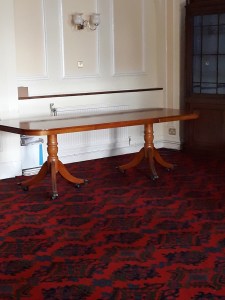
And Owl wonders what is going to happen (or has happened) to public property such as the rather lovely globe lights in the Council Chamber, the beautiful fireplaces and the MANY square metres of still very serviceable Axminster carpets, for example …

Austerity – carries on after you die with “funeral poverty” thanks to your local authority

Owl says: EDDC expects to make £150,000 from crematoria fees next year – up from £105,000 last year – a 50% increase.

Click to access 020119bpcabinetcapitalestimatesbook2019-20.pdf

(page 40]

“Inflation-busting rises in cremation and burial fees meant council profits from funerals leapt to almost £100 million last year.

Fee increases have been so steep that local authorities’ cremation, burial and mortuary services are operating on an average profit margin of more than 43 per cent. If these services were collectively listed as a single publicly traded company, they would make the FTSE 250 index of leading businesses.

Critics have described the level of charges as immoral and accused local authorities of pushing residents into “funeral poverty”.

Source: Times (paywall)

Want to change things in East Devon – become an independent councillor

You don’t have to do it alone – East Devon Alliance is happy to help those who want to help their communities, who have that necessary independent streak, and who are happy to adhere to the Nolan Principles of Public Life:

https://www.gov.uk/government/publications/the-7-principles-of-public-life/the-7-principles-of-public-life–2

Elections take place on 2 May 2019.

Young people, women, minorities and people with disabilities are particularly unrepresented on councils – there is a government fund for helping disabled people to become councillors:

https://www.gov.uk/government/news/cash-grants-to-help-disabled-people-in-standing-for-election-extended-for-another-year

If you are interested, you can attend the EDA AGM on Saturday 23 February 2019 at 11 am (Dissenters Hall, Sidmouth) where you can meet current councillors or you can contact EDA at:

secretaryeastdevonalliance@gmail.com

The more independent councillors there are, the sooner East Devon can be changed for the better. No following party lines, no party whip, no instructions from people who know nothing about your area and care only about party policies … what’s stopping you!

East Devon Alliance AGM – Sidmouth, Saturday 23 February 11 am

East Devon Alliance Annual General Meeting

Saturday 23 February 2019

11.00 am – 12.30 pm

Dissenters Hall, The Old Meeting Unitarian Chapel,
All Saints Rd, Sidmouth EX10 8ER

All East Devon Alliance Members & Supporters are cordially invited to attend the Annual General Meeting

Further information available from the EDA Secretary: secretaryeastdevonalliance@gmail.com

“Number using food banks in part of Devon doubles in six months”

“The number of people using food banks in the Sid Valley has more than doubled in the last six months.

The Sid Valley Food Bank’s co-ordinator Andie Milne told East Devon councillors on Wednesday night of the alarming numbers of people and the stark rise in numbers of people they are seeing.

She said that six months ago, they were dealing with 15 families a week, but last week, more than 30 families came through their doors, with 36 children being helped.

And she added that last week they helped a family from Axminster as there was no help available in the East of the county for them, and raised concern over what would happen to the emergency food bags located at the council’s Knowle HQ, that sometimes are refilled four times a week, when the council offices move to Honiton early in 2019.

Her comments came prior to the full council unanimously supporting a motion brought forward by Cllr Cathy Gardner, of East Devon Alliance, calling for a report on the potential impacts of benefits changes and spending cuts on people in East Devon and whether there was a need for further support from the council in supporting the roll-out of Universal Credit, homelessness prevention or for local food banks.

Proposing her motion, Cllr Gardner said: “Most of us are doing okay and are comfortable, some are doing extremely well, but some are struggling, and we have a civic duty to see if we can do more. I would be horrified to learn if a child suffered as we failed to something in some way to help.

“I am not criticising the council or the hard work that our officers do to help people but simply to ask if there is anything more that we could do, as we know that people are struggling with Universal Credit.

“If the report says it is all perfect, then we can rest easy, but I want the report to come forward so we can be seen as outstanding, caring and vigilant.”

Cllr Marianne Rixson, supporting the motion, added that some people are being forced to use food banks just to make ends meet, even though they are in employment. …”

https://www.devonlive.com/news/devon-news/number-using-food-banks-part-2323249

Knowle Flog It: statement raises more questions than answers

An “explanation” of the Knowle Flog It fiasco appears in today’s Sidmouth Herald. It appears to be printed verbatim from a council statement.

Owl wonders why this statement was printed without challenging some of its very, very vague claims – one hesitates to use the word ‘facts’. “Journalism”? Not as Owl knows it!

Guess some answers MIGHT come from the Freedom of Information request by an Exmouth resident on 8 January 2019:
https://eastdevonwatch.org/2019/01/10/the-knowle-flog-it-scandal-rumbles-on/

In the meantime:

Amongst Owl’s questions:

It seems Councillor Skinner paid £400 for the table he wanted so urgently – earlier reports mentioned it being valued at a very low price, much lower than £400. Which is correct? And including just how many chairs?

Who decided on the “three disposal methods? It does not appear to be the Asset Management Group.

Which councillors have bought items? Have they declared these on their Registers of Interest?

Which groups were offered ‘free’ items, how were they chosen and by whom? Have any of these groups taken items – and if so, which groups and how much did they pay for them?

What exactly is the Chairman’s Civic Fund and how and when has it been used recently and in the past? What are its rules? Who oversees the disbursements?

Which local groups and charities will be able to bid for what is left after officers and councillors have taken their pick? How have they been chosen and by whom?

Are internal and external auditors happy with the procedures?

Will the Scrutiny Committee be scrutinising these actions?

Owl is sure readers have many more questions!

Chilling report on NHS sustainability – it isn’t sustainable

Owl says: anyone who cares about the NHS should read EVERY PAGE of this 58-page report, which is written in clear and accessible language.

Every page signals a death-knell for the NHS sooner rather than later.

It is hard to pick out anything – every page tells a story of (deliberate?) mismanagement, underfunding and chaotic accounting.

For example:

“Key findings

The funding settlement for the NHS long-term plan

8 The long-term funding settlement does not cover key areas of health spending. The 3.4% average uplift in funding applies to the budget for NHS England and not to the Department’s entire budget. The Department’s budget covers other important areas of health spending such as most capital investment for buildings and equipment, prevention initiatives run by Public Health England and local authorities, and funding for doctors’ and nurses’ training. Spending in these areas could affect the NHS’s ability to deliver the priorities of the long-term plan, especially if funding for these areas reduces. The government will consider proposals in these areas as part of its 2019 Spending Review. In addition, without a long-term funding settlement for social care, local NHS bodies are concerned that it will be very difficult to make the NHS sustainable (paragraphs 2.27 and 2.28).

9 There is a risk that the NHS will be unable to use the extra funding optimally because of staff shortages. Difficulties in recruiting NHS staff presents a real risk that some of the extra £20.5 billion funding will either not be used optimally (more expensive agency staff will need to be used to deliver additional services) or will go unspent as even if commissioners have the resources to commission additional activity, health care providers may not have the staff to deliver it (paragraphs 1.19 and 2.29).

10 From what we have seen so far, the NHS long-term plan sets out a prudent approach to achieving the priorities and tests set by the government, but a number of risks remain. The long-term plan describes how the NHS aims to achieve the range of priorities and five financial tests, set by the government in return for the long-term funding settlement, which NHS England believes are stretching but feasible. As with all long-term plans, it provides a helpful indicator of the direction of travel, but significant internal and external risks remain to making the plan happen. These risks include: growing pressures on services; staffing shortages; funding for social care and public health; and the strength of the economy. Our reports have highlighted how previous funding boosts appear to have mostly been spent on dealing with current pressures rather than making the changes that are needed to put the NHS on a sustainable footing (paragraphs 2.24 to 2.26).

Financial and operational performance of NHS bodies

11 In 2017-18, NHS commissioners and trusts reported a combined deficit of £21 million. This was made up of:

The combined deficit of £21 million does not include adjustments needed to report against the Department’s budget for day-to-day resources and administration costs.

12 It is not clear that funding is reaching the right parts of the system.
The overspends by trusts and CCGs were broadly offset by the underspend by NHS England. In 2017-18, NHS England’s underspend included: £962 million from non-recurrent central programme costs, including efficiencies from vacancies;

a £280 million contribution to the risk reserve and £223 million from centrally commissioned services, mostly specialised services (paragraphs 1.4 and 1.8).

13 Most of the combined trust deficit is accounted for by a small number of trusts, while the number of CCGs in deficit increased in 2017-18. The net trust deficit hides wide variation in performance between trusts, with 100 out of 232 trusts in deficit. In 2017-18, 69% of the total trust deficit was accounted for by 10 trusts. NHS Improvement has committed to returning the trust sector to balance in 2020-21, but it is difficult to see how this will be achieved for the worst-performing trusts under current arrangements. Although support provided to trusts in NHS Improvement’s financial special measures programme has been successful in improving the position of some trusts (by £49 million in 2017-18), the financial performance of the 10 worst-performing trusts deteriorated significantly in 2017-18. Between 2016-17 and 2017-18, the number of CCGs reporting overspends against their planned position increased from 57 to 75. The NHS long-term plan sets out the national bodies’ aim that no NHS organisation is reporting a deficit by 2023-24 (paragraphs 1.6 and 1.11).

14 There are indications that the underlying financial health in some trusts
is getting worse. In 2017-18, trusts reported that their combined underlying deficit was £4.3 billion, or £1.85 billion if the Provider Sustainability Fund (which replaced the Sustainability and Transformation Fund in 2018-19) is allocated to trusts in future years. There is no historical data on the underlying deficit that takes account of one-off savings, emergency extra cash and other short-term fixes that boost the financial position of the NHS, so it is not clear whether this position is getting better or worse. However, indicators such as cash support and one-off efficiency savings suggest the position has not improved. For example, in 2017-18, the Department gave £3.2 billion in loans to support trusts in difficulty, up from £2.8 billion in 2016-17. In 2017-18, 26% of trusts’ savings were one-off. Trusts will need to make additional savings in 2018-19 to replace these one-off savings (paragraphs 1.13, 1.14, 2.13, 2.17 and 2.18).”

Click to access NHS-financial-sustainability_.pdf

How many pensioners might lose free TV licenses in East Devon?

The plan is to offer free licenses only to those on Pension Credit and/or only those over 80 years of age.

Actually, what is just as worrying is just how many people in East Devon are already receiving pension credit because they have incomes below the poverty line.

“In Tiverton and Honiton (Neil Parish), there are 9,730 households with someone over 75 who qualifies for a free TV licence; 3,640 households would lose free TV licence eligibility if the age threshold was raised to 80, and 7,980 households would lose eligibility if it the benefit was linked to Pension Credit.”

In East Devon (Hugo Swire), there are 10,350 households with someone over 75 who qualifies for a free TV licence; 3,590 households would lose free TV licence eligibility if the age threshold was raised to 80, and 8,830 households would lose eligibility if it the benefit was linked to Pension Credit.”

https://www.mirror.co.uk/news/politics/free-tv-licences-search-see-13871591