A picture is worth a thousand words. Words here:
https://www.devonlive.com/news/devon-news/objectors-outline-traffic-chaos-safety-2934450
Some of the pictures here:
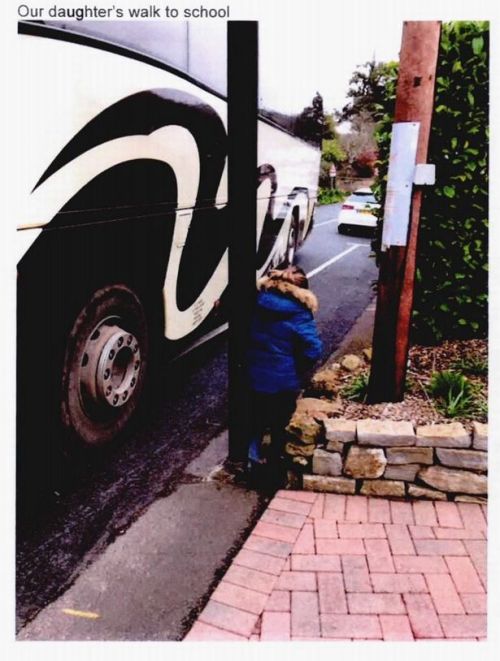
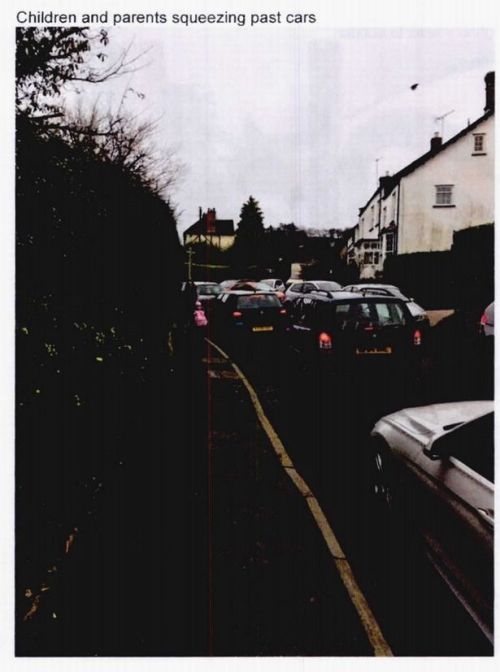



A picture is worth a thousand words. Words here:
https://www.devonlive.com/news/devon-news/objectors-outline-traffic-chaos-safety-2934450
Some of the pictures here:
Today’s Midweek Herald. SO odd that Hugo has JUST discovered that Cranbrook development is a problem … still TiggerTories involved in planning will be glad to know he is NOW onside! Such a pity he wasn’t so vocal when Tories alone were in charge!


Not just energy bills in Devon … a large tranche of our money is being used to subsidise Hinkley C via our Local Enterprise Partnership.
“Energy bills in the UK are inflated partly because households are subsidising nuclear submarines, MPs have been told.
Experts think one government motive for backing civilian nuclear power is to cross-subsidise the defence industry.
They say nuclear power is so expensive that it should be scrapped in favour of much cheaper renewable energy.
Others argue that nuclear still plays a key role in keeping on the lights, so the military aspect is not significant.
But in evidence to MPs on the Business Select Committee, researchers from the University of Sussex said the government should be frank about the inter-dependence of the civilian nuclear programme and the nuclear defence industry.
Supply chain
Prof Andy Stirling from Sussex argues that one reason the government is willing to burden householders with the expense of nuclear energy is because it underpins the supply chain and skills base for firms such as Rolls Royce and Babcock that work on nuclear submarines.
He said: “It is clear that the costs of maintaining nuclear submarine capabilities are insupportable without parallel consumer-funded civil nuclear infrastructures. …
The government has declined to comment on the research, but a committee source told BBC News the researchers’ evidence appeared persuasive and well-researched.
The committee is expected to release the evidence in coming days as it prepares to discuss whether the UK really needs nuclear power for energy security.
The debate has taken on greater significance as the true costs of nuclear power have been revealed.
It was once forecast that nuclear energy would be too cheap to meter. But it’s clear now that bill-payers will give price support to the Hinkley Point C nuclear station at a cost of £92.50 per megawatt hour, compared with £55 for offshore wind.
Ministers expect that, before long, wind energy will operate without support.
Prof Stirling says the issue of nuclear inter-dependence is addressed openly in the US.
In 2017, the former US Energy Secretary Ernest Moniz (a nuclear scientist) said: “A strong domestic (nuclear) supply chain is needed to provide for Navy requirements. This has a very strong overlap with commercial nuclear energy.”
Prof Stirling told BBC News: “We need this sort of transparency in the UK.”
Catch-22
But the government faces a Catch-22 situation on this issue.
If it continues to decline to admit the inter-dependence of civil and military nuclear, it will stand accused of hiding a self-evident truth.
But if it accepts that decisions on nuclear power are influenced with half an eye on manufacturing jobs and nuclear deterrent, it will face resistance from consumer groups unwilling to cross-subsidise submarines.
The MPs’ hearing is timely, as the government will shortly publish an energy white paper outlining how the UK will supply electricity in a zero carbon economy.”
“The government has been left red-faced – and potentially £15m out of pocket – by repeating an error which last year cost it £36m and prompted major reforms to its administration of local government finance.
Last year, the government issued a correction to its top-ups and tariffs formula, after it led to a number of business rate pilots receiving more grant than they were entitled to.
Last week, Ministry of Housing, Communities and Local Government permanent secretary Melanie Dawes wrote to the National Audit Office (NAO) admitting that the incorrect formula was used again this year after officials failed to update it.
In her letter to Sir Amyas Morse, comptroller and auditor general at the NAO, Dawes said: “We are looking into the precise circumstances of how this happened.
“However, it originated from a failure to correct the guidance following last year’s error, rather than a new mistake in our computations.”
The error, which exaggerates the forecast benefit of participating in a pilot, appeared in the formula used to calculate section 31 grant payments to business rates pilots in the ministry’s NNDR1 guidance note.
Dawes admitted some local authorities – especially those participating in a pilot for the first time this year – may have based some element of their budget planning on the incorrect formula.
She said: “Given that the financial year has already started, and particularly since the error in the guidance repeats the same mistake as last year, the secretary of state has exceptionally decided to offer a goodwill payment to those councils who used the incorrect guidance for their financial planning in 2019-20, and where the consequences of doing so could be more difficult to mitigate.”
The cost of the payments is expected to be up to £15m, according to the permanent secretary’s letter.
Pilot authorities have been asked to contact the department by 21 June if they think they would qualify for a payment.
In her letter, Dawes said that the sums involved represent the equivalent of less than 0.2% of spending power for those affected.
Last year, the government admitted that the mistake led to 27 local authorities and the Greater London Authority being over-compensated by £36m in 2018/19.
At that time, former communities secretary Sajid Javid issued a direction to allow the department to ignore the rules and allow councils to keep the cash.
In a statement to Parliament, Javid said officials would “use the corrected methodology to calculate the Section 31 grant compensation due to authorities”.
However, the department omitted to update the original guidance note, and the error was repeated in this year’s NNDR1 form, which was issued to local authorities on 17 December.
The problem came to light when the correct figures for 2019/20 were issued to pilot local authorities in late April.
The repeat of the mistake is doubly embarrassing for the government because it carried out a thorough review of governance processes relating to business rates following the original incident. …”
Ministry repeats business rates blunder despite tightened oversight
Owl says: if so few vehicles would use the business park – why build it!
https://www.devonlive.com/news/devon-news/objectors-outline-traffic-chaos-safety-2934450
A dilemma for The Independent Group and their Tory supporters.

Summary: dangle a carrot (a doctor’s surgery), take away the carrot, put two houses in the place of the surgery/carrot, get planners to say it cannot now be refused even though the carrot has disappeared… although the carrot never actually existed anyway!
https://www.devonlive.com/news/devon-news/villagers-anger-understandable-over-broken-
“The proposal from Boris Johnson, the favourite in the Tory leadership contest, to ensure that every school in England gets at least £5,000 per pupil (see 10.51am) could amount to a spending increase of just £48.6m, or 0.1%, according to a report for Schools Week.”
… Schools Week analysis of provisional national funding formula data for next year found just 35 of 150 local authorities are due to be funded at less than £5,000 per pupil.
To increase per-pupil funding to £5,000 for the roughly 755,000 secondary pupils in those areas would cost just £48.6 million – the equivalent to just 0.1 per cent of the £43.5 billion the government will spend on schools in 2019-20.”
OK with you, Tory parents?
“Finland is the only EU country where homelessness is falling. Its secret? Giving people homes as soon as they need them – unconditionally”
“A wealthy businessman who lived a life of luxury paid just £35.20 income tax, a BBC investigation has discovered.
Frank Timis rented a £14,000-a-month penthouse and spent thousands dining in London’s finest restaurants.
But his personal tax return for 2017 shows he paid just £35.20 in tax, after claiming that he had hardly any income from his worldwide business empire.
Mr Timis’s lawyers say he has fully complied with all of his tax obligations.
Documents leaked to BBC Panorama and Africa Eye also reveal how Mr Timis managed to do this.
They show that in 2017, Mr Timis received payments totalling £670,000 from his offshore trust.
These were mainly payments called distributions, which should have been taxable. But shortly before he submitted his tax return, Mr Timis allegedly asked the trust to turn the distributions into untaxable loans.
A backdated loan agreement was created making the loans look legitimate.
John Christiansen, from the Tax Justice Network, said it looked like Mr Timis was dodging tax: “It all points to this being a manoeuvre to cheat the tax man. And, if that is the case, because it’s been done retrospectively, there seems to be prima facie evidence that this is tax fraud and it should be investigated.” …”
” Participation not Consultation:
At Civic Voice we are aware of the growth agenda and the need for more homes to be built. Our members understand this too, yet all over England many of these members, who are knowledgeable and positive people, have had to engage in fighting Local Plans and planning proposals that they feel passionately are not right for their places.
It is time to change the way things are done and to bring communities genuinely to the heart of planning and place-making. ‘Participation not Consultation’ is about bringing people in at an early stage to develop the proposals through collaborative planning processes, also known as Charrettes.
The Charrette approach involves community members working alongside local authorities and developers to co-create design-led, visual plans and strategies. It is an inspirational and energising activity where the results of collaboration are seen immediately, with the knowledge that an individual’s input actually matters. It also has the potential to greatly increase the speed of the formal planning and design process.
Civic Voice has launched a campaign to bring these collaborative processes into mainstream planning so that, through shared working from an early stage, communities can help shape and support growth and development that is right for their place.”
Owl sats: this one change means that all NHS plans (and even those for privatised health services) cannot work.
“A controversial target of hiring 5,000 foreign nurses a year for at least 15 years has been cut from a flagship plan to deal with the NHS’s staffing crisis, the Observer understands.
The move will frustrate health chiefs, who are desperate for a clear strategy to reduce NHS staffing pressures, which are expected to worsen.
There are also mounting concerns that new post-Brexit immigration rules could end up making the situation even worse unless the NHS is handed special treatment. The government’s long-awaited plan to tackle shortages included the ambition of recruiting 5,000 nurses a year until 2024 to help relieve short-term pressure. However, it is understood that while the latest version talks about the need for a significant increase in nurses from overseas, the specific figure has been removed.
Senior medics have complained about the government’s failure to solve the health service staffing shortage. Many point to the decision by George Osborne, as chancellor, to stop paying nursing students’ tuition fees and maintenance grants as a key factor in the nursing crisis.
Including the target for overseas would be politically difficult as the government remains committed to a big reduction in net migration. The plan is being drawn up by senior NHS executives led by Baroness Harding, the Conservative peer who chairs the regulator NHS Improvement.
Health experts are still unclear about how new post-Brexit immigration rules will affect the NHS. Proposals released last year that migrants would have to earn at least £30,000 a year would have barred more than 40% of migrant nurses joining the NHS in 2017-18, according to the Nuffield Trust thinktank.
It found that 72% of nurses, 70% of scientific, therapeutic and technical staff and 36% of ambulance staff earn less than the required £35,800 threshold for indefinite leave to remain. It said that while occupations with shortages are exempt from the thresholds, such exemptions are temporary.
Its analysis of the new rules warns: “The NHS is in a state of chronic staff shortage due to poor planning and insufficient training numbers over many years. There are 100,000 vacant posts in English trusts alone, although many will be filled by agency workers. The problem is concentrated in nursing and general practice.”
Mark Dayan, policy analyst at the Nuffield Trust thinktank, said: “Even if you take all the actions that we could identify in terms of boosting nurses in training, preventing them from leaving at the same rate, the nursing gap is not going to shrink at all in the next five years without international recruitment.
“We calculated that international recruitment of 5,000 nurses a year would be what it would take to halve the nursing gap, not even eliminate it, by 2023-24. If that doesn’t happen, the sort of shortages we have now will continue. That’s a patient safety issue and the ability of the NHS to move forward and get out of this crisis situation.”
Ditching the figure will place even more pressure on the need to train up British nurses. Dame Donna Kinnair, chief executive and general secretary of the Royal College of Nursing, said: “While it’s beneficial in the short-term, reliance on overseas nurses to plug gaps in England is clearly unsustainable.”
NHS Improvement said: “NHS Improvement and the Department of Health and Social Care are finalising the interim [workforce] plan which should be published shortly.”
https://www.theguardian.com/society/2019/jun/02/foreign-nurses-target-cut-from-nhs-staffing-plan?
“More than 130,000 deaths in the UK since 2012 could have been prevented if improvements in public health policy had not stalled as a direct result of austerity cuts, according to a hard-hitting analysis to be published this week.
The study by the Institute for Public Policy Research (IPPR) thinktank finds that, after two decades in which preventable diseases were reduced as a result of spending on better education and prevention, there has been a seven-year “perfect storm” in which state provision has been pared back because of budget cuts, while harmful behaviours among people of all ages have increased.
Had progress been maintained at pre-2013 rates, around 131,000 lives could have been saved, the IPPR concludes. Despite promises made during the NHS’s 100th birthday celebrations last year to prioritise prevention, the UK is now only halfway up a table of OECD countries on its record for tackling preventable diseases.
The report is concerned with preventable diseases or disorders such as heart disease, lung cancer or liver problems, which can be caused by unhealthy lifestyles and habits, formed often at a young age. It finds evidence of disturbing reductions in physical activity in schools and chronic underfunding of health visitors.
The lead researcher and author, Dean Hochlaf, said: “We have seen progress in reducing preventable disease flatline since 2012. At the same time, local authorities have seen significant cuts to their public health budgets, which has severely impacted the capacity of preventative services.
“Social conditions for many have failed to improve since the economic crisis, creating a perfect storm that encourages harmful health behaviours. This health challenge will only continue to worsen.”
The IPPR calls for a “radical new prevention strategy” involving a renewed and increased commitment to the state’s role in preventing disease.
“No longer can we place the burden of responsibility exclusively upon the individual, while turning a blind eye to a social environment which makes healthy lifestyles difficult to achieve. This means investing in public health and ensuring the government takes a greater responsibility to create a healthy environment.”
On cuts to physical education in school, it says: “PE has been reduced in schools across England, with a 5% reduction at key stage 3 and a 21% reduction across key stage 4 reported between 2011 and 2017. This is despite the noted benefits of physical education – not simply on physical development, but also through promoting healthier lifestyles and helping to enhance people’s cognitive and social skills.”
The report adds: “Funding for physical education – supposedly coming from the sugar tax revenues – was reduced in 2017 from £415m to £100m, to part fund an increase in the core school budget. The lost funding should be replenished, potentially funded by an expansion of the sugar levy to other drinks and confectionery with high sugar content.”
Five compulsory health visits should be made to every child during their early life, with an additional visit six months before a child starts nursery school, the IPPR says. “These should be carried out by a trained professional. Health visitors should be provided with additional training to collect vital information on key health indicators and be prepared to offer support and guidance to encourage breastfeeding based on clinical evidence and ensuring that parents are vaccinating their children.”
Researchers found the system of health visits creaking under the strain.
“An estimated two in five (44%) of health visitors reported caseloads in excess of 400 children, well above the recommended level of 250 per visitor needed to deliver a safe service.” The report recommends another 5,100 training places for health visitors.
In a statement, the Local Government Association said the government urgently needed to reverse the £700m reduction in public health funding since 2015 and plug a £3.6bn gap in funding for adult social care by 2025.”
Some interesting articles:
Punch and Judy politics:
Ending the Punch and Judy show: How to get a more cooperative politics
Make Parliament grow up:
Ending the Politics of Division – How We Can Build a New Democracy after Brexit
Ensure fairness for female politicians:
Euro elections show how Westminster’s first past the post holds back women
The first test of The Independent Group on large-scale development. It got to make up the EDDC Cabinet and its Leader, Ben Ingham, has appointed several current and former Tories to positions of influence.
What will each group’s stand be on large-scale development? And what happens if the smaller parties have different views to that of the Independent Group and Tories if they agree? Interesting.
There are a few worrying words in this press release – potential, proposed, outlines, capable of, vision, could, opportunities. Lots of leeway for developet mund-changing at a later date.
And missing words: affordable and social housing.
Plus our local NHS Trust wants more than £1.3 million before it considers the proposal sustainable for health needs.
“Plans for 930 new homes as part of the western expansion of Cranbrook have been revealed.
The proposals for the Bluehayes site would also see a primary school, sport and recreational facilities, community uses, green infrastructure, as well as a mixed use area of shops, food and drink and professional services built.
The Bluehayes site, which lies between the existing Cranbrook development and Broadclyst Station, is one of four proposed expansion areas of Cranbrook.
A new link road that would run from the Cranbrook railway station to London Road and to Broadclyst Station, through the middle of the Bluehayes site, is also proposed in the scheme handed in recently to East Devon District Council planners.
And the plans also reveal that a footbridge over the London Road that would connect the Bluehayes site with the proposed Treasbeare site, south of the road, could be built.
The Cranbrook Plan was backed by East Devon District Council’s Strategic Planning Committee in February which outlines the land where a further 4,170 new homes will be built.
It allocates 40 hectares of land at the Bluehayes Expansion Area for around 960 new dwellings, land capable of accommodating a community building, formal open space recreational land, a 420 pupil place primary school, formal play space with facilities for children and youth and allotments totalling an area of 0.55 hectare of land
Details with a planning statement submitted with the planning application says: “The submission of the new outline application for the Western Expansion of Cranbrook and the change of use of agricultural land to the north of Cranny Brook to SANG land, is consistent with the planning policy and the longstanding policy to deliver new homes to meet the needs of the area.
“The submission of the application for the Western Expansion area and their progression delivers certainty required in the long term delivery of growth and of the delivery of the vision for Cranbrook.
“The proposals have been designed to be residential led with the potential for the delivery of a new primary school and formal outdoor sports pitches to provide complementary community and social infrastructure to meet the needs of new residents.
“The application demonstrates provision of the necessary infrastructure to include internal roads, public transport provision, formal and informal open space uses to support itself and to mitigate any impacts of development on existing communities and wider infrastructure.
“Cranbrook and its Western Expansion have been fully justified in the context of local planning policy and in the context of the growth agenda and the national and local need for housing.
“The proposals will result in substantial and demonstrable benefits in terms of meeting the need for new homes in a sustainable manner, fostering economic development and further underpinning the sustainability of Cranbrook.
“The proposals will also help deliver the vision for Cranbrook and underpin the planning and delivery of infrastructure and the town centre.”
A 1.14 hectare site for a one-form entry primary school could come forward as part of the plans. The primary school will be built in either the Bluehayes or the Treasbeare allocation, depending on which is constructed first.
Details with the scheme also outline that a new link road from the Cranbrook station to London Road and to Broadclyst Station will be built.
There will be a new frontage to London Road which will comprise a mixed use area, providing opportunities for a range of residential, retail and small scale employment uses, and in future, a crossing over London Road to the southern expansion area may be accommodated.
But the Royal and Devon Exeter NHS Foundation Trust have requested a contribution of £1,332,313 from the developers, cash which will be used directly to provide additional health care services to meet patient demand.
Commenting on the application, they say: “Without the contribution being paid, the development would not be acceptable in planning terms as the consequence would be inadequate health services available to support it.”
Having considered the cost projections, the Trust say that they will require the full figure to ensure the required level of service provision is delivered in a timely manner.
They add: “Failure to access this additional funding will put significant additional pressure on the current service capacity, leading to increase delays for patients and dissatisfaction with NHS services.
“The contribution will ensure that Health services are maintained for current and future generations and that way make the development sustainable.”
The Bluehayes expansion is one of four proposed expansion areas for Cranbrook, which development also proposed for Treasbeare and Grange, south of the existing town, and Cobdens, to the east of the town.
A reserved matters application has also been submitted for 80 homes, for which outline planning permission has already been granted, for land north-east of the Cranbrook Education Campus.
East Devon District Council planners will determine the fate of the applications at a later date.”
https://www.devonlive.com/news/devon-news/cranbrook-getting-bigger-930-new-2923726
“CAMPAIGNERS fighting to keep Brighton General Hospital land in public ownership are calling for more people to get involved.
About 100 people heard NHS campaigners, councillors and two MPs at a public meeting speak about the using the site for low-cost social housing.
Plans to redevelop the former Victorian workhouse at the top of Elm Grove are under discussion.
A new community health hub is proposed for the current ambulance station site, with a GP surgery and pharmacy, along with existing services for mental health, podiatry and early parenting. Health chiefs have said the cost of the project could be funded by selling the rest of the site for housing.
When Brighton and Hove City Council’s health and wellbeing board was given a briefing in November last year, one suggestion was the site be used to build homes for health workers.
An online petition, calling for meaningful public consultation about the future of the site, as well as asking for community beds and homes for social rent has more than 1,300 signatures.
Green councillor David Gibson said the site was a public asset in a city with “horrendous” housing problems. He added the Greens and Labour councillors and activists from the Brighton Housing Coalition, Sussex Defend The NHS and the Save Whitehawk Hill group had come together to shift the agenda to social housing.
Cllr Gibson said: “Privatisation and inequality have gone together. This country has become one of the most unequal countries in the developed world.
“You get better outcomes if you narrow inequality. If you want to narrow inequality, you need public provision, public support and public services which are decent.”
He said the council’s chief executive Geoff Raw would be meeting the board of the Brighton General landowner, Sussex Community NHS Foundation Trust, to discuss options.
The campaign is pushing for the site to be taken into council ownership.
Carolyn Pickering, of Sussex Defend The NHS, reminded the audience the NHS freed people from the fear of choosing which child to spend their savings on if one became ill. She said: “The land is still part of the NHS. The NHS belongs to us and the land belongs to us so they should not be allowed to sell it.”
Council leader Nancy Platts said: “We will be inviting all interested parties into meetings about the Brighton General site and this includes the Sussex Community NHS Foundation Trust as well as those campaigning about the future use of the site.”
https://www.theargus.co.uk/news/17673627.campaign-to-keep-brighton-general-hospital-land-public/
Owl says: only 1 in 5!
“One in five members of the House of Lords are working as consultants or advisers to private businesses at the same time as serving in parliament, the Guardian can reveal.
An analysis of the Register of Lords’ Interests shows 169 peers reported working as advisers earlier this year, with more than a dozen registering that they were also paid by foreign governments on top of the expenses they are entitled to as peers.
The consultancies range from a former Conservative MP advising the company of a Romanian businessman facing extradition, through to a former chief of defence staff who advises the government of Bahrain.
The worlds of finance, energy, mining and defence are extensively represented among peers’ clients. Unlike MPs, peers are considered part-time public servants, which allows them to pursue other business. Peers are permitted to work as advisers for private interests, as long as they are properly declared.
The findings include:
A leading Labour peer, Lord Levy, has apologised after admitting failing to register three private interests connecting him to a billionaire Russian businessman.
Fifteen peers are working for or advising foreign governments, including a former coalition government cabinet minister and a former chief of defence staff.
Thirty-eight peers indicated they provide public affairs or strategic advice, an area of particular sensitivity because such work can easily stray into lobbying.
Eighty-three peers have declared an interest in finance or banking, with HSBC, Santander and Royal Bank of Scotland among those to have provided paid roles as directors or paid advisers to peers.
Twenty-seven have declared an interest in energy firms, with the same number reporting an interest in companies working in the defence or security sectors.
…”
“Today Bureau Local launches an exciting pilot project for a new kind of collaboration – and we need your help!
During a set period each year the public has the right to inspect the accounts and related documents of every local authority in the UK. The power is supposed to make local government, and other public bodies, more accountable. In reality, most people are unaware of their rights and fewer still are making use of them.
This is where you come in!
We are looking for people to take part in a trial crowdsourced local democracy project, where network members sign up to make use of this law to scrutinise the finances of their local authority throughout June (in England, times vary in other parts of the UK).
We hope you will help us find more information about the property consultants advising local councils on their investments. But you will also be able to use the guide we have created to look at and get copies of other documents that interest you too.
We hope the information we obtain will lead to local and national stories. But we also plan to submit our findings to the government, as we have done previously during our ongoing investigation into council finances, and to take what we learn from this pilot and hopefully turn it into a yearly event.
Read our guide to this project
https://docs.google.com/document/d/1RhOWI7FT82xC9Cdgi4an1KZ5rfT78S93NVy69FqVPBQ/mobilebasic
and the law it is based on. Then you can sign up using this spreadsheet:
https://docs.google.com/spreadsheets/d/1Xbbq3rgu1MfF11ckbVa37pJdFN43V5hCbx6EV_8YnIs/htmlview
Once you have done that let our reporter
garethdavies@tbij.com
know and he will add you to the newly created channel on our Slack.
Also, if you would like to take part in this project or would like to know more, we will be holding an open newsroom in the #newsroom channel of our Slack between 1pm and 2pm on Thursday 6 June.”
No surprises there, then. But what about the rest of us?
https://www.devonlive.com/news/devon-news/neil-parish-backs-gove-over-2927618
Hugo’s pick Raab is for crashing out under WTO rules. Here’s Tory hopeful Rory Stewart on what that means in practice.
Mmmm … cheaper milk from the US and cheaper beef from Argentias … cheaper cars from Japan … sounds good until you realise we have to export milk, beef and cars into the EU with massive tariffs!
Owl cannot believe this was accidental.
“Regulators have allowed water, energy, broadband and telephone networks to overcharge customers by £24.1 billion over the past fifteen years, according to stark new figures from Citizens Advice.
The news comes after research found an initial investigation that unearthed £7.5bn of overcharging for connection to key services was just ‘the tip of the iceberg’.
In 2017 Citizens Advice found Ofgem made errors in setting price controls for energy networks, resulting in energy customers being overcharged £7.5 billion over an 8-year period. After the charity highlighted these concerns, three energy network companies returned a total of £287m to consumers.
But now the charity has found the same errors have been made by Ofgem over a much longer period and by regulators in other markets including water, broadband and phone networks.
This research shows misjudgements by the regulators Ofgem, Ofwat and Ofcom on key decisions have meant customers have been paying far too much for the pipes and wires that connect their homes to essential services over the last 15 years.
These sectors include companies that face little, or no, competition to drive down the price they can charge their customers. Instead, regulators tell the network companies how much they can charge by setting a price control. Customers then pay the charges for these networks as part of their water, energy, broadband and phone bills.
These overpayments partly occurred because regulators made forecasting errors. They predicted that costs, such as debt, would be higher than they became. Regulators also over-estimated how risky these businesses were for investors.
Citizens Advice is now calling for both widespread compensation and a fundamental change in the way these calculations are made.
Instead of forecasting costs, regulators should use available market data to calculate costs and adjust their estimates of investment risk, it argues. This would avoid consumers paying too much in future.
While several energy and water companies have taken steps to return some money to customers, Citizens Advice is calling for all firms to provide a voluntary rebate to their customers. If they don’t, the government should step in.
“Regulator error has meant customers have been charged too much by energy, broadband and phone networks for far too long,” says Gillian Guy, chief executive of Citizens Advice.
“At a time when so many people are struggling to pay their essential bills, regulators need to do more to protect customers from unfair prices. They have started to take steps in the right direction but it is vital they continue to learn from their past mistakes when finalising their next price controls.
“Companies need to play their part in putting this multi-billion pound blunder right. They must compensate customers where they have been paying over the odds. If they don’t government needs to intervene.”
In a statement responding to the research, the energy regulator Ofgem said: “Ofgem remains determined to drive the best deal possible for consumers. Overall, energy network regulation has delivered for consumers, with £100 billion invested, power cuts halved, record customer satisfaction and reduced costs.
“While we do not agree with Citizens Advice’s estimate of excess profits, we welcome their report and recommendations. We will continue to work closely with them and wider stakeholders to apply lessons learnt from previous price controls for the next price control period (RIIO2).”
Last week Ofgem confirmed its methodology for calculating their next set of price controls, including a lower return on equity of 4.3 per cent and a lower allowed return on debt. This would lead to customers’ bills being reduced by £6 billion over five years from 2021, calculations it says Citizens Advice supports.
Meanwhile, households were warned they could be hit with average annual energy bill rise of almost £210, or 20 per cent, as 60 fixed dual fuel energy tariffs come to an end this week according to switching service weflip, charities have called for immediate action to better support energy customers in vulnerable circumstances.
An independent report published this week says urgent action is required by all energy companies, regulators and government as well as price comparison websites – with support from consumer groups and charities – to better identify customers in vulnerable circumstances and improve the help and support given to them.
Joanna Elson, chief executive of the Money Advice Trust, who served as a member of the Commission for Customers in Vulnerable Circumstances, which produced the report, said the charity is increasingly hearing from people struggling to meet everyday household costs.
“This report puts the energy industry firmly under the spotlight. Significant work is needed to improve support for energy customers in vulnerable circumstances. As the report notes, there is good practice out there, but this support is inconsistent and varies greatly across the sector.
“Training frontline staff to identify customers in vulnerable circumstances is a crucial first step, while actions such as committing to not use High Court Enforcement Officers, can also make a big difference for the most vulnerable.
“There is also an important role for the third sector to play alongside suppliers through greater partnership working. This could be through signposting to debt or energy saving advice, and helping people access financial help and other essential costs.”
 East Devon Watch