Brexit: The law of unintended consequences strikes again

“Brexit will be biggest ever task for Whitehall, even though staffing is at lowest level since 1940s after redundancies”

” … Huge swaths of policy and legislation will need to be reconsidered and decided upon by ministers, government and parliament. All of this is required whilst maintaining our public services and carrying out business as usual.

“Many of our members have serious concerns about how we will implement this at a time of political and economic uncertainty. Many of these questions cannot be answered right now.”

The civil service is now at its smallest size since the second world war, employing about 392,000 full-time staff, according to the latest figures. It represents an 18% drop since the coalition government came to power in 2010. The government’s spending review has meant that departments have drawn up further staff cuts.

Lord Kerslake, the former head of the civil service, has called on the government to begin a rethink of government cuts to staffing levels because of Brexit.

“If they’re going to get through this mammoth negotiation, they are going to have to increase resources for a period of time – and they ought logically to put a stop on haemorrhaging people,” Lord Kerslake told the publication Civil Service World.

Senior officials believe the untangling of 40 years of EU legislation as the biggest task the civil service has ever faced. This will include deciding on what to keep, amend and reject from EU-related laws and around 13,000 regulations.

At the same time, the British government will be negotiating any new deals with the EU and the rest of the world.

Oliver Letwin, the prime minister’s close associate, is expected to coordinate the unit’s work across Whitehall.

However, former head of the civil service Lord Turnbull told the Treasury select committee on Tuesday that Letwin was “completely unsuitable to do that job in the longer term” because “he has been a kind of consigliere to the prime minister”.

Hannah Williams, the programme director from the Institute for Government, said that the government has failed to explain how the work will be completed. “The announcement today gives no further detail of how this new unit will be run, the expertise it will draw from, or how it will coordinate Whitehall’s Brexit efforts,” she said.

Olly Robbins, the civil servant who is currently responsible for policy on immigration, has been given the job of heading the new Brexit unit.

Robbins, 40, was the UK’s deputy national security adviser to the cabinet office. He told the high court in 2013 that the Guardian’s Edward Snowden revelations could lead to “widespread loss of life”. The government has not yet released proof to back up his claims. Robbins, who is second permanent secretary at the Home Office, was also accused of giving “extremely unsatisfactory” answers on the funding of the Border Force when he appeared before the Home Affairs select committee in April.

Keith Vaz, committee chairman, had asked him repeatedly whether Charles Montgomery, Border Force director-general, had been told what his budget was to be for the year ahead.”

http://gu.com/p/4n5zh

Oliver Letwin (2) – privatise, privatise, privatise – including the NHS

The man David Cameron just put in charge of the government’s Brexit policy (see post directly below)

Oliver Letwin books andpamphlet:

Oliver Letwin and John Redwood. (1988)

Britain’s Biggest Enterprise – ideas for radical reform of the NHS

“… four out of five main recommendations made in the 20-page pamphlet are already being put into place.

Britain’s Biggest Enterprise :

– calls the NHS “a bureaucratic monster that cannot be tamed”.
– says the NHS needs “radical reform” and “revolutionary ideas”.
– claims waiting lists were caused by the “system itself” rather than a lack of funds, and that spending more money would simply increase waiting lists.

It makes these five recommendations:
1) Establishment of the NHS as an independent trust.
2) Increased use of joint ventures between the NHS and private sector
3) Extending the principle of charging

Source: http://liberalconspiracy.org/2011/06/03/revealed-the-pamphlet-underpinning-tory-plans-to-privatise-the-nhs/


Oliver Letwin (1988)

Privatising the World: A Study of International Privatisation in Theory and Practice

Amazon Books 1 star Review:

This is the well spring of what they are doing to our country. The owners of the snouts in the trough that cannot bear to think of any money, any transaction happening without a profit being made for a shareholder or a bank, or Letwin’s friends like Cameron, Osborne and Hunt. An appalling treatise on how greed is right and the public interest is wrong. How to dismantle the stuff that glues us together and sell it off to corporate cartels – the failure of the fuel market, the chaos of our “privatised” railways, the reluctance of bus companies to run unprofitable routes, zero hours contracts – all of these should be warnings of where this sort of poisoned, anti social thinking can lead. Read this book and be afraid.


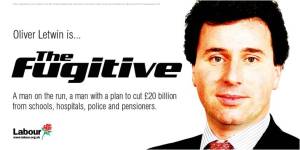
Oh Lord No: Letwin to head Brexit unit in Whitehall!


the-fugitive

Cabinet Office minister Oliver Letwin is to lead a cross-Whitehall unit to prepare for Brexit ahead of the election of David Cameron’s replacement as prime minister.

Cameron told MPs yesterday that the EU unit would bring together officials and policy expertise from across the Cabinet Office, the Treasury, the Foreign Office and the Department for Business, Innovation and Skills.

He said the Brexit negotiations would be the “most complex and most important task that the British civil service has undertaken in decades”, so the unit would report to the whole Cabinet on delivering the outcome of the referendum. This will include objectively exploring options for the UK’s future relationship with Europe and the rest of the world from outside the EU.

This will ensure the new prime minister, who is set to be chosen by 2 September, would have the best possible advice from the moment of their arrival, he told MPs.”

http://www.publicfinance.co.uk/news/2016/06/letwin-helm-whitehall-brexit-team

OLIVER LETWIN

“According to official government documents from 1985, released in December 2014 under the 30 years rule, Letwin recommended the Prime Minister to “use Scotland as a trail-blazer for the pure residence charge”, i.e. the controversial Community Charge or ‘Poll tax’, having trialled it there first, and to implement it nationwide should “the exemplifications prove… it is feasible.”

Another 1985 internal memo released in December 2015 showed Letwin’s response to the Broadwater Farm riot, which blamed the violence on the “bad moral attitudes” of the predominantly Afro-Caribbean rioters, claiming that “lower-class, unemployed white people lived for years without a breakdown of public order on anything like the present scale”. It also criticised some of the schemes proposed to address inner-city problems, suggesting David Young’s proposed scheme to support black entrepreneurs would founder because the money would be spent on the “disco and drug trade”. Letwin later apologised, saying that parts of the memo had been “both badly worded and wrong.”

Letwin coauthored Britain’s biggest enterprise: ideas for radical reform of the NHS, a 1988 Centre for Policy Studies pamphlet written with John Redwood which advocated a closer relationship between the National Health Service and the private sector. This is regarded as providing a theoretical justification for NHS reforms carried out by subsequent governments, particularly the Health and Social Care Act 2012.

Letwin unsuccessfully stood against Diane Abbott at the 1987 election for Hackney North and Stoke Newington and against Glenda Jackson for the Hampstead and Highgate seat in the 1992 election.

He went on to win the historically safe Conservative seat of West Dorset at the 1997 general election, although he only achieved a majority of 1,840 votes over the next candidate. …

… May 2005, Letwin was appointed Shadow Secretary of State for the Environment, Food and Rural Affairs. The Times reported that he had requested a role less onerous than his former treasury brief so that he would have time to pursue his career in the City. Until December 2009, he was a non-executive director of the merchant bank NM Rothschild Corporate Finance Ltd.

Following the decision by Michael Howard to stand down as Conservative Party leader after the 2005 election, Letwin publicly backed the youngest candidate and eventual winner David Cameron.

EXPENSES

The Daily Telegraph reported in 2009 that Letwin agreed to repay a bill for £2,145 for replacing a leaking pipe under the tennis court at his constituency home in Dorset, which he had claimed on his parliamentary expenses.

Public Sector Reform
Speaking to consultancy firm KPMG on 27 July 2011, Letwin caused controversy after stating that you cannot have “innovation and excellence” without “real discipline and some fear on the part of the providers” in the public sector. This was widely reported, with The Guardian headline stating Letwin says ‘public sector workers need “discipline and fear”‘.

Government Document Disposal
In October 2011 the Daily Mirror reported a story that Letwin had thrown away more than 100 secret government documents in public bins in St. James’s Park, with no real care to dispose of them properly.[31][32] Enquiries made by the Information Commissioner’s Office found that Letwin did not dispose of any government documents; they were in fact his constituents’ personal and confidential letters to him and did breach data protection rules.[33] Letwin later apologised for his actions.

In 2003, The Independent reported comments Letwin had made saying that he would “go out on the streets and beg” rather than send his children to the state schools in Lambeth where he and his family lived.

After two strangers on his London street had asked if they could use his lavatory in 2002, and he agreed to let them do so, they then stole his credit cards and other belongings. He retrieved his credit cards after chasing the accomplices in his dressing gown and pyjamas.

https://en.m.wikipedia.org/wiki/Oliver_Letwin#Political_career

“Progressive Alliance”

“… the best or only prospect for victory in the onrushing general election could be a broad progressive alliance or national unity platform of citizens and parties from the centre to the left. Such an idea has been floated before, and usually founders on the rocks of party tribalism. But the stakes have never been this high, and the Achilles heels of the status quo parties have never been so spotlit.

Such an alliance could only succeed if it embraces the lessons of new politics and establishes itself on open principles. A coalition of sore losers from Westminster is unlikely to appeal. But if an open primary was held in every constituency to select the best progressive candidate, that would provide unprecedented democratic legitimacy and channel a wave of bottom-up energy into this new alliance as well as its constituent parties.

In England, such an alliance could gather together many of those who have campaigned together for Remain in this referendum and opposed Tory policies, from Labour to Greens and Liberal Democrats. It might even appeal to Conservative voters or politicians who are disenchanted with the Leave movement. In Scotland and Wales too, some form of engagement with the SNP or Plaid Cymru might be possible.

An electoral alliance built on open and democratic foundations would provide a new entry point to politics for the millions of young people who voted to stay in the EU and today feel despairing and unheard. Vitally, it could also make a fresh offer to Labour heartland voters, enabling them to elect candidates who are free to speak to their concerns on immigration as well as economic insecurity. I believe it could win a thumping majority.”

http://www.newstatesman.com/politics/staggers/2016/06/progressive-voters-must-ditch-party-differences-gain-voice-brexit-britain

Claire Wright: even more important that MPs represent their constituency

“Brexit: It is now more important than ever that this country has MPs who will represent the people

Tuesday, 28 June 2016 1 Comment by Claire

Since Friday events have moved so fast I haven’t even written a blog as each time I think of an angle it gets superseded by another major news story!

The only clear thing among all the chaos and confusion, is that this country has probably never been more divided – politically and socially – and in my view, more in peril than at any other time in living memory.

The party system seems to have totally fractured. Not only has the Conservative parliamentary party become bitterly broken, the Labour party is also at war.

Last Friday morning I felt shellshocked and upset that we had left an institution I believed worked for the greater good, despite its many faults. Since then I have watched fascinated as the subsequent dramatic events unfolded.

The economic fallout came swiftly and is very worrying. The value of the pound has plummeted to a 31 year low, we are told that the UK’s credit rating has been downgraded from a triple A to a double A rating, we have dropped from being the fifth largest economy in the world to the fourth and the Bank of England is on standby to pump £250bn of public money into the markets to reduce the jitters currently reverberating across the globe from our EU exit.

More than £200bn has been wiped from the value of the UK stock market – equivalent to 24 years worth of EU contributions.

A general election is now looking possible in October, to tie in with the selection of a new prime minister.

Lies and exaggeration were undoubtedly the order of the day for both the Leave and Remain campaigns, but what is really galling to me is that the Leave movement won people over on false pretences. On the NHS and immigration in particular – two major planks of their operation, their claims have been found to be resoundingly untrue.

The Remain campaign focused too much on scaremongering and too little on how the EU helps us, which only riled people and forced them into entrenched positions , setting family member and friend against one another.

The conservative IN bandwagon, seemed to be blinkered on issues mainly linked to the economy and immigration, discounting all the positive things that the EU does for us, for example on employment, the environment and human rights for example. I believe that this was because these are the issues that are not valued by the right wing political elite that we currently have governing this country.

David Cameron’s supposedly one nation conservative cabinet, which campaigned WITH big business against a ban on bee killing pesticides, has already scrapped or weakened as many environmental protections as it can get away with. Planning regulations are now as relaxed and in favour of developers as they have been since the introduction of the Town and Country Planning Act in 1947.

With a future hardline right wing government on the cards, possibly led by the current favourite Boris Johnson, the likelihood of the current protections remaining for our seas, clean air, recycling, waste and for rare species, landscapes and plants – the Habitats Regulations – is remote.

Over the past few years the Conservative government has lobbied to scrap the EU Habitats Regulations – tough laws which protect some of our most precious landscapes here in East Devon, such as Woodbury Common, Aylesbeare Common, the Exe Estuary, as well as large swathes of Dartmoor.

However, despite the Habitats Regulations protecting our most rare and precious species such as the dartford warbler and the nightjar, our government announced the laws were “gold plated,” and lobbied the EU hard to get them scrapped.

The EU has so far held firm to these regulations, which also mean strong planning rules in these areas , as well as the surrounding countryside.

But I now can see on the horizon an inevitable and horrible ‘bonfire of red tape’ as a new right wing conservative leadership sets about dismantling anything that it views as in the way of “growth.”

So what is the future of East Devon now most of the country has voted to leave?

In my own council ward of Ottery, there must now be question marks for a controversial quarry proposed at Straitgate Farm, which was quietly looking less likely, due in part to the strict Habitats Regulations Protecting Woodbury Common, where Blackhill Quarry is based and where stone and gravel processing currently takes place. It was due to cease as of the end of this year because of these laws.

What will Brexit mean for East Devon’s two biggest industries? Agriculture and tourism? And what will it mean for education? What does it mean for our cash strapped NHS and our local very much at risk
community hospitals?

What will it mean for the most vulnerable people in the constituency and those on low incomes?

Certainly, both agriculture and education are forced to rely on EU subsidies and grants.

Prolonged economic hardship will surely mean even deeper public spending cuts, yet deeper cuts to public services, which as always, will have the biggest effect on those people who have the least.

If a general election does take place in October, the future of our district – and the rest of the country – rests with those politicians examining thousands of pages of EU law and policy with a view to changing, scrapping or tightening it.

The future of our vulnerable residents also rests with MPs who have a duty to stand up for people who need help and support.

East Devon’s MP needs speak and vote in favour or against new laws and policies based on how they affect local people. That’s voting FOR the people of East Devon, not his party.

Each MP has a duty, in my view, to be a diligent scrutineer of this process.

What laws or policies do we want in East Devon that will benefit us, our communities, our wildlife and our businesses? Now is the time to consider this very carefully.

If democracy is working effectively people in East Devon should have the opportunity to influence such discussions through our MP.

And our MP has a responsibility to stand up for the people of East Devon and what they see as their priorities, especially at this very turbulent time.

The question has to be as ever. Is Mr Swire up to the job?”

http://www.claire-wright.org/index.php/post/brexit_it_is_now_more_important_than_ever_that_this_country_has_mps_who_wil

Hunt says EU must change its rules to suit us so we can stay!

“… Mr Hunt says: “The people have spoken – and Parliament must listen. Britain must and will leave the EU. But we did not vote on the terms of our departure.” He says that the referendum shows that “that the country has rejected the free movement of people as it currently operates”.

“So our plan must be to encourage them to reform those rules, thereby opening up a space for a ‘Norway plus’ option for us – full access to the single market with a sensible compromise on free movement rules,” Mr Hunt adds. “As their biggest non-EU trading partner, it is in the European interest to do this deal with them as much as it is in our interests to secure it.”

He says by negotiating an exit deal and putting it to the British people in a vote, it will “concentrate minds across the Channel: if they want to conclude this amicably and quickly, which is in their interests as much as ours, they need to put a ‘Norway plus’ deal on the table”. …

http://www.telegraph.co.uk/news/2016/06/27/tory-cabinet-minister-calls-for-second-referendum-on-terms-of-eu/

Did he learn nothing from his handling of NHS doctors’ contracts? Silly question – slapped talons, Owl!

Back to work you over 65’s – Work (free?) for Brexit!

“Devon business leaders have urged Brexit-supporting pensioners to cancel their retirement and help Britain’s post EU economy.

The Devon and Cornwall Business Council (DCBC) has called on the over 65s – 60% of whom are thought to have voted to leave the EU – to “bear responsibility” for the outcome.

Retired Brexiters in the region have reacted with anger to suggestions that they should go back to work, insisting many have contributed since they were teenagers.

However, Steve Crowther, the Devon-based chairman of UKIP, said the age group had much to offer the “bright economic future” many hope will arrive.

Steve Crowther said the wisdom and experience of the older generation was required. …

… Mr Jones [DCBC chair, LEP member, nuclear-involved nd multi-company director] said elderly “contributions could be big or small” and suggested the elderly might start a new business.

“Huge benefits could come from just half a day a week helping with a local school or community project,” he added.

“Greater responsibility for personal health and wellbeing could make massive differences to our over stretched health service. Using the accumulated wisdom gathered over many years could be valuable in mentoring local start-up businesses.

“The challenge has been made and is it now up to everyone to respond.”

http://www.exeterexpressandecho.co.uk/brexit-supporting-pensioners-urged-to-cancel-their-retirement-and-help-britain-s-post-eu-economy/story-29449414-detail/story.html

Owl is thinking that its parents should get off their fluffy bottoms and start a business counselling elderly people forced to go back to work for England!

Google ” most-searched-for words locally pre-Referendum

Exeter, Cornwall, Plymouth and North Devon – immigration (unsurprising)

Torridge and the South Hams – expats (obviously second-homers on both sides of the channel!)

Mid Devon, West Devon and Teignbridge – NHS (they are about to lose several local hospitals)

And East Devon? The economy. The only area that searched first on the economy.

Owl thinks it’s because lots of East Devon developers (particularly those at the Growth Point and Cranbrook) farmers who might become developers ( you know who you are) and councillors worried about paying for their new HQ hogged the search engine!

Wonder what our LEP members searched for? Still waiting for that upbeat press release, guys.

http://www.exeterexpressandecho.co.uk/google-stats-show-the-most-searched-for-issue-in-exeter-ahead-of-the-eu-referendum/story-29449216-detail/story.html

Update: the nearest other county that searched for the economy near us was North Somerset – so close to Hinkley C!

Devolution Dead Duck?

“… Thursday’s referendum delivered a 52% vote in favour of leaving the EU, causing David Cameron to resign as prime minister and £120bn to be wiped off the FTSE 100.

Alexandra Jones said: “Now that the result of the referendum is clear, we need to focus on what happens next. It’s too early to understand the full implications of Brexit for places across the country, but the political and economic uncertainty ahead will clearly have a huge impact on the future of UK city economies.”

She added that there are “big questions” about how Brexit will affect cities which have historically relied on EU funding to strengthen their economies, as well as places which have been able to attract international jobs and investment partly due to the UK’s membership of the Single Market.

“There is also a serious risk that the government’s devolution agenda will come to a standstill, with the political focus likely to shift to moving powers from Brussels to Westminster, rather than empowering UK cities to grow their economies,” said Jones.

“In the weeks ahead, it’s vital that political leaders seek to provide as much clarity and certainty on these issues as possible, and demonstrate that UK cities remain open for trade, talent and investment.” …

http://www.publicsectorexecutive.com/Public-Sector-News/devolution-could-come-to-a-standstill-following-brexit-says-centre-for-cities

Dear Next Prime Minister

OK next PM, let’s make it simple. You now have three choices:

1. Invoke Article 50 the day you become PM
2. Invoke Article 50 soon after you become PM
3. Find an excuse not to invoke Article 50

If you settle for (1) or (2) it is probably not a good idea for you to go for the Norwegian model – they pay to be in the EU but they don’t get any voting rights AND they have to accept free movement. Either (1) or (2) means LOTS of negotiating (by lots of extra civil servants you need to recruit NOW, by the way) as, if it takes more than 2 years, you walk away with nothing or whatever scraps the EU chooses to throw at you on the way out. And if it is (1) or (2) why wait? Just do it.

If you settle for (3) you pee off A LOT of the English and Welsh, but you make a lot of people in Northern Ireland and Scotland (and the EU) very happy. And you can blame LOTS of people for having had to take the decision, though your career might be rather short-lived. Good to have a Plan B with this one – maybe a job with an EU bank in Frankfurt.

So, if you still really haven’t decided what to do by this point, sit down with the people you trust, lock the door and don’t come out until you have made a decision. If you are still there after 24 continuous hours, it is an automatic (3).

Owl is glad to have helped.

Jo Cox fundraising

The fundraising for murdered MP Jo Cox is attempting to raise £1.5 million for causes which were dear to her, including those for reconciliation and aid for refugees. As of now it is only £69,000 short of this target.

Donation via:

https://www.gofundme.com/jocox

Devon and our Local Enterprise Partnership’s dependence on EU funding

“The 2007-13 round of the European Regional Development Fund delivered 65,000 jobs and more than 15,000 new businesses.

The main priorities in the Heart of the South West for this round of the programme are:

• research and innovation;
• supporting and promoting small to medium-sized enterprises;
• low carbon;
• Information and communications technology …

… A total of £116,315,073 of ESIF has been provisionally allocated to the Heart of the South West LEP, made up of: £57,596,574 European Regional Development Fund; £43,178,166 European Social Fund and £15,540,333 European Agricultural Fund for Rural Development. (Exact figures will vary slightly reflecting changes to exchange rates.)

A European Strategic Investment Fund Committee for the Heart of the South West has been established. This committee, which was set up following an open advertisement, is made up of leading figures in the HotSW private and public sector and is on hand to assist and inform potential applicants about the process and advise on criteria that is most likely to achieve success. …

… The European Growth Programme is worth just over €7.3billion (almost £5.8billion). It is made up of the following three Funds:

• European Regional Development Fund (€3.6billion)
• European Social Fund (€3.5billion)
• Part of the European Agricultural Fund for Rural Development* (€221million)

The Rural Development Programme 2014 to 2020 has a total value of over £3.5 billion, of which €221 million will be invested through the European Growth programme to help promote rural economic growth.

We have agreed the major points of principle about the ERDF operational programme with the European Commission. Therefore, although the programme document has not formally been agreed, we feel able to invite applicants to apply for funding. The references in the call documents are based on the latest text of the ERDF Operational Programme. This text may be subject to further amendment during final agreement with the Commission. We will take the possibility of relevant changes to the text into account when assessing outline and full applications, and where such changes occur, will notify applicants of any issues that arise, and propose a method of dealing with them. We expect the operational programme to be formally agreed before the need to enter into funding contracts with applicants.

Between 23 March and 27 March, calls for projects are going live across all three of the above programmes. These can be accessed at http://www.gov.uk/european-growth-funding.

European Structural and Investment Funds
The Department for Communities and Local Government and the Department for Work and Pensions are the managing authorities for ERDF and ESF funding through the Growth Programme, funds established by the European Union to help local areas stimulate their economic development. By investing in projects the funds will help to support innovation, businesses, skills and employment to improve local growth and create jobs. For more information visit https://www.gov.uk/european-growth-funding”

http://www.heartofswlep.co.uk/news/new-european-funding-programme-opens-today

Whither Cornwall? Its Local Enterprise Partnership has no idea

“According to figures from the Cornwall and Isles of Scilly Local Enterprise Partnership (LEP), the region was on course by 2020 to have benefited from a total of £2.5bn of funding – EU cash matched with public and private investment – since the turn of the century.

Headline projects completed with EU backing have included a £132m scheme to bring super-fast broadband to the far south-west, three innovation centres, rail line improvements and the development of a glitzy university campus at Penryn, near Falmouth.

It wasn’t going to end there. Between now and 2020, key projects supported by EU funding were set to include exciting work around aerospace – with Newquay touted as a possible site for the proposed spaceport announced in the Queen’s speech – and in geothermal energy.” …

… In the hours that followed the referendum result, Cornwall council and the local enterprise partnership (LEP) sought reassurances that they would not lose their funding and were mocked on social media, where critics claimed they had voted out and then asked if they could keep the EU cash anyway.

Sandra Rothwell, chief executive of the LEP, told the Guardian it wasn’t like that. “Cornwall was one of those places with a high percentage for leave and we’re not asking Europe if we can keep the money anyway. Our focus is on getting a message to national government: We have a clearly evidenced economic need, we have very clear plans of what we want to do. We have been delivering that plan on the basis of investment up to 2020. That plan needs to continue.”

Rothwell has asked for assurances about how Cornwall will continue to be funded, both up to the point where the UK leaves the EU and in the years after that. “There has been no clarification yet,” she said.” …

http://gu.com/p/4myyq

Brexit, developers, local plans and devolution

So, we voted out – and suddenly housebuilders (developers) shares plunged by 40%.

There does not seem to be an immediate link with voting out, but there is. We are in for an unstable time. There will be a recession and pundits differ only on whether it will be short (around 2 years) or long (anywhere from 5-20 years depending on who you listen to). House prices will reflect this by falling and mortgage rates may well rise, pushing some into negative equity and others wary of buying in case they fall into negative equity.

Housebuilders will also need to factor in higher import costs coming in the near future when EU trade reduces and new trade agreements have not begun, along with a local skills gap as workers from the EU dry up. Plus likely (possibly temporary)increases in income tax to cover lost government income from (again possibly temporary) shrinking markets. Not to mention higher unemployment benefits to those whose jobs currently depend directly and indirectly on those employers who would normally benefit from being in the EU.

To compound this, many developers have recently taken their huge profits out of their businesses by giving their directors massive bonuses.

All these factors cause a “perfect storm” for Local Plans and the general East Devon economy. Our Local Plan is predicated on continuous growth and increasing employment, fuelling a constant demand for new housing. And, more worryingly, there are penalties if this does not happen. If we (and all other councils) do not maintain a 5-year land supply, we are penalised by having our housing numbers INCREASED by 20%.

Another complication is that, currently, our council (and others) depend for income on the government’s “New Homes Bonus” – the more new homes it gets a developer to build, the more income it gets.

All this conspires to suddenly make our local plans hardly worth the paper they were written on.

Then there is devolution – which in Devon and Somerset also highly depends on housebuilding – having “promised” an extra 176,000 houses over and above Local Plans, and also dependent on continuous growth and constantly increasing employment. It is no coincidence that the Chairman of our Local Enterprise Partnership (LEP: the lead in the devolution bid) is Chairman of big developer, Midas.

Our LEP was also promised “jam tomorrow” funds (over 30 years) from the government AND anticipated masses of EU funding, all riding on the back of a new Hinkley C nuclear power station. All other devolved areas were given similar promises.

Our new government will now have its hands full attempting to negotiate its way out of the EU, rewriting or scrapping those EU laws we have (including those on environmental protection and workers rights) and trying desperately to work out where this notional extra £350 million a week is eventually going to be spent. It has already been promised to the health service, areas currently in receipt of EU regeneration funding and academic research programmes currently supported by EU grants. That is simply an arithmetical nightmare and almost certainly an impossibility.

This leaves East Devon in a precarious position: heavily dependant on new housebuilding and continuous year on year economic growth with constant employment growth and receipt of funds from a distracted government which has also promised to stem immigration – many having voted for this as its first priority. These two priorities will mean little time for other things. Not to mention having to deal at the same time with the implications of Scotland and Northern Ireland’s differing position on their future in the UK and EU.

The Local Plan and devolution deals are now almost certainly of much lower priority to this beleaguered government and this may well lead to unintended consequences the like of which our council and our LEP can only imagine and for which they have no plan B.

Many warned that economic growth and increasing employment between now and 2030, when our local plan ends, was unattainable and that at least one event would intervene for which there was no contingency. Few expected it to happen quite so quickly.

The new political landscape

““If you haven’t got money, you vote out.” We were in Collyhurst, the hard-pressed neighbourhood on the northern edge of Manchester city centre last Wednesday, and I had yet to find a remain voter. The woman I was talking to spoke of the lack of a local park, or playground, and her sense that all the good stuff went to the regenerated wonderland of big city Manchester, 10 minutes down the road.”

http://gu.com/p/4my2k

or, in the case of East Devon:

If you are not in with the powerful in-crowd, you vote out. If you are in Axminster on the hard-pressed eastern side of East Devon … that has seen its local playing fields gobbled up by a developer, a muddy broken-down S106 playground that has been hedged in by mean housing, feeling that all the good stuff has gone to the councillors and senior officers in their new HQ in Honiton and the “regenerated” Seaton 10 minutes down the road?

Will the demand for ” sovreignty” mean an end to secondary legislation?

This was published by the Daily Telegraph a few days ago, and now Brexit is a reality it should be read with new eyes:

“Perhaps the most powerfully held aspiration for Brexiteers is to restore UK parliamentary sovereignty: in the words of Michael Gove, to “take back control” and, of John Redwood, for Britain to “be a democracy again .

But what would this “taking back control” mean in practice? Brexiteers imply that while EU legislation is “imposed”, Westminster parliamentarians control non-EU law-making through active debates and votes.

Except they don’t, because for voters what impacts on their lives most is not primary legislation – Bills – on which parliamentarians can vote, but the meaningful detail of the Bills, which Whitehall civil servants and ministers increasingly choose to hide in secondary legislation (sometimes called delegated legislation of Statutory Instruments – SIs).

The scale of this was estimated for the Lords by former minister Baroness Andrews:

80 per cent of the laws as they impact on individuals are transported through statutory instruments, whether that is welfare benefits, food safety, planning requirements or competition across the NHS…”

Essentially Whitehall civil servants and ministers are defining important laws as “secondary legislation” in order to subvert the ability of parliament to choose whether to pass or not to pass laws.

Brexit is no guarantee of British control of its own destiny or of parliamentary sovereignty because our parliament is not in control.

SIs are rarely debated, and historic Westminster procedure means they cannot be amended. The idea that parliament meaningfully votes to “pass” them is no more real than the idea that the Queen gets to decide the content of the Queens Speech.

The problem is not new. An official Parliamentary report published in 2011 found that the last time the House of Commons rejected a SI was in 1979; it appears from the Hansard record that the rejection of this SI may have been a mistake.

The House of Lords, despite a 1994 resolution affirming its ‘unfettered freedom to vote on any subordinate legislation’, has voted down secondary legislation on only three occasions in the last half-century.

That one reason why the Lords’ hard line on the tax credits SIs in October 2015 caused such consternation in government and David Cameron to appoint Lord Strathclyde to review Lords powers and recommend further action.

The erosion of parliamentary sovereignty by the growing use of secondary legislation and “Henry VIII clauses” (which give ministers powers to change primary legislation through Statutory Instruments and thereby bypass the need for parliamentary votes) to reduce the parliamentary accountability of ministers and Whitehall civil servants was dubbed “The New Despotism” in a book by Lord Hewart of Bury, Lord Chief Justice of England and former Attorney General, published as long ago as 1929.

This would not change outside the EU. The problem was just as real before Britain joined the European Community.

Labour MP Willie Hamilton told parliament in the 1971 European Community accession debate:

“A great deal goes on even now under our own eyes that we do not know about… some 2,000 Statutory Instruments, which have legislative effect, go through this House every year and only a handful of them are debated. This is already government by default. In that sense this House, voluntarily and negligently, has surrendered a large part of its sovereignty to the Executive…. Much play has been made of the decision-making by the bureaucrats in Brussels. Things are not as simple as that. What about our own faceless bureaucrats in Whitehall? What part does this House play now in making policy decisions and in framing legislation? We have none at all. Everybody is consulted except us. Therefore, let us not pretend there will be any serious derogation there when we get into Europe.”

Some Brexiteers, notably Douglas Carswell, have a track-record of championing democratic accountability in Britain’s Westminster parliament. But they are the exceptions. Most are happy to indulge a Westminster parliamentary processes and rules more akin to Mornington Crescent than to cricket. Westminster “parliamentary sovereignty” would be no more certain of “returning control” to British voters, than a sovereign British space programme would be of sending a union-jack adorned rocket to Mars and getting it back in one piece.

That is nothing to do with the EU – if voters do back Brexit to “take back control” they could find themselves holding a political pudding whose democratic promise has been significantly over-egged.

http://www.telegraph.co.uk/news/2016/06/19/brexit-wont-return-power-to-mps-in-parliament-because-parliament/

And the first devolution worries appear …

“The devolution genie is out of the bottle. As we debate our future sovereignty there needs to be a strong role for local governance.

So now we know. Or do we? The UK faces months of uncertainty as the consequences of the Brexit vote, followed by David Cameron’s own exit, play out.

As all eyes turn to messy wrangling at Westminster, where does this leave local government? At this moment, the sector needs its voice heard, and clearly.

As a priority, local government needs a seat at the table as the financial and legal implications of Brexit are considered. The sector needs clarity over the replacement of nearly £6bn of European Structural Investment Funds invested in regional infrastructure, skills and youth unemployment schemes across the country. These funds play an important but largely hidden role in community infrastructure, with little public understanding of them. A Leave-led government will need to commit to continuing these or face huge local disruption. Beyond that, the practical implications for local government in legal and regulatory terms over huge swathes of activity – procurement, waste collection and disposal, energy efficiency – will need to be understood by those navigating the consequences of working outside EU directives.

Secondly, the future of devolution is by no means certain. George Osborne’s political future remains as bound to Cameron’s as it has ever been and so is now in serious doubt. Since devolution to date has been driven by a chancellor who invested his personal political capital in the agenda, local government now needs to make the policy resistant to personnel change at the Treasury. Whatever happens at Westminster and Whitehall, the impending invocation of Article 50 and ensuing trade negotiations will consume the energy of SW1 – so new and deeper devo deals will be much harder for the foreseeable future.

Thirdly, the repatriation of powers from Brussels to the UK will strengthen the supremacy of Parliament. It is likely that Scotland and Northern Ireland’s Remain majorities raise questions about their future within the UK. Local government in England needs to make sure any constitutional discussion does not stop at the national level and addresses how we are governed more fully. The Referendum vote lay bare the geographical divides within England and the alienation of swathes of the country from the Westminster establishment.

It is clear that representative democracy as we know it is in crisis – to ensure legitimate government in the future we need a serious discussion about where power lies and how our communities can have more influence in their own future. For those of us who are localists this is a given – but the terms of the national debate are not yet set in this way and they need to be. Local government needs to be heard.

Over the coming months there will be more opportunity for this. Continued dysfunction at Westminster, with both main parties divided from the Referendum fallout, gives an opportunity for local leadership to stand out on the national stage as never before. By the end of this year, candidates for new directly elected mayors will be in place and many of our city and county regions will have the opportunity to decide the future of their places. Will this help to shift the centre of political and constitutional gravity away from Westminster? Can we breathe new life into our struggling national democratic culture? Time will tell, but it is likely that the politics and kinetic energy generated by the referendum will continue and may influence these elections in ways we cannot yet foresee.

As we continue a national discussion over what sovereignty looks like, we need to make sure there is a strong local dimension which gives life to the rich diversity of our nation of cities and shires. The devolution genie is already out of the bottle and even as the Westminster bubble bursts, stronger local governance has the opportunity to take on a new life of its own. The future legitimacy of our democracy may well depend on it.”

http://www.publicfinance.co.uk/opinion/2016/06/brexit-raises-questions-about-osbornes-devo-push

And it begins already

“The Local Government Association has called for councils to be given “a seat around the table” when decisions are taken over how to replace EU laws as part of the UK’s exit negotiations.

In a statement issued in the aftermath of the vote for the UK to leave the EU, the LGA said: “It is vital that local government is part of the team. EU laws and regulations impact on many council services, such as waste, employment, health and safety, consumer protection and trading and environmental standards.

“There cannot be an assumption that power over these services is simply transferred from Brussels to Westminster. If services are delivered locally, then the power over how to run them should rest locally too. Decades of centralised control over funding and services has distanced our residents from the decisions that affect their everyday lives. With greater control in our areas we can improve services and save money.”

The LGA also called on the Government to protect the “vital” £5.3bn of EU regeneration funding allocated up to 2020. This was necessary, it said, “to avoid essential growth-boosting projects stalling and local economies across England being stifled”. …

http://localgovernmentlawyer.co.uk/index.php?option=com_content&view=article&id=27503%3Alga-calls-for-councils-to-be-given-seat-at-table-for-eu-exit-negotiations&catid=59&Itemid=27