“What does democracy require of England’s local governments?”

Local governments should engage the wide participation of local citizens in their governance via voting in regular elections, and an open interest group and local consultation process.

Local voting systems should accurately convert parties’ vote shares into seats on councils, and should be open to new parties entering into competition.

As far as possible, consistent with the need for efficient scales of operation, local government areas and institutions should provide an effective expression of local and community identities that are important in civil society (and not just in administrative terms).

Local governments should be genuinely independent centres of decision-making, with sufficient own financial revenues and policy autonomy to be able to make meaningful choices on behalf of their citizens.

Within councils the key decision-makers should be clearly identifiable by the public and media. They should be subject to regular and effective scrutiny from the council members as a whole, and publicly answerable to local citizens and media.

Local governments are typically subject to some supervision on key aspects of their conduct and policies, in England directly by UK government in Whitehall. But they should enjoy a degree of constitutional protection (or ‘entrenchment’) for key roles, and an assurance that cannot simply be abolished, bypassed or fully programmed by their supervisory tier of government.

The principle of subsidiarity says that policy issues that can be effectively handled in decentralised ways should be allocated to the lowest tier of government, closest to citizens.”

http://www.democraticaudit.com/2017/08/02/audit-2017-how-democratic-is-local-government-in-england/

Seaton DCC Councillor on that shameful DCC Health Scrutiny meeting – and Diviani’s disgraceful behaviour

“Councillor-Sara-Randall-Johnson (from this article):

Why did Devon’s Health and Adult Care Scrutiny Committee block the proposal to refer the closure of our beds to the Secretary of State?

The idea that the Chair, Councillor Sara Randall Johnson (left), was settling an old score with Claire Wright makes a nice story but overlooks the concerted Conservative position. The collusion between Randall Johnson and Rufus Gilbert – who rushed to propose a ‘no referral’ motion before Claire could move her motion to refer – was obvious to all, as was her keenness to persuade her colleagues not to have a recorded vote.

Equally striking, however, is that only one out of 12 Tories on the Committee – Honiton’s Phil Twiss – voted against Gilbert’s motion. The other 7 Tories who voted were all for allowing the beds to be closed; 2 who had reservations abstained; 2 more were (diplomatically?) absent. Whipping is not allowed on Scrutiny committees, but this gives a strong impression of a Tory consensus. Members who were uncertain of their support were unwilling to defy it beyond abstention. Twiss was obviously a special case, as the one committee member whose hospital will lose its beds.

Clearly the Conservative Group on DCC gave their East Devon members the main role in dealing with the Eastern Locality hospital beds issue when in May (with its return to Scrutiny looming) they made Randall Johnson chair and nominated two Exmouth members, Jeff Trail and Richard Scott, as well as Twiss as members of the Health Scrutiny Committee. With East Devon Tory leader, Paul Diviani, representing Devon’s district councils, 5 of its Tory members were from East Devon and only 7 from the other five-sixths of the Tory group.

East Devon Tories on the committee certainly lived up to their role on Tuesday. All except Trail voted, making half of all Tory votes cast on the committee and 3 out of 7 on the pro-CCG side. In contrast, only 4 of the 8 Tories from elsewhere in the county cast a vote on this crucial issue: East Devon’s Tories may have convinced themselves, but not their colleagues.

Paul Diviani spills the beans

With Randall Johnson preoccupied with timekeeping (except when the CCG were speaking), Scott silent and Twiss asking questions, it was left to Diviani to express the Tory rationale. He claimed to speak for Devon district councils as a whole, but has acknowledged that he had consulted none of the others. He was happy to defy his own Council, which has voted to keep hospital beds, and spoke for himself – and East Devon Conservatives.

Diviani’s caustic little speech deserves more attention than it has been given.

He started by saying that those who decide to live in the countryside expect diminished service, and must cut their cloth accordingly in current times – forgetting that many have lived here all their lives, or moved here long before the present Tory government arrived to savage the NHS.

‘Costs will always rise without innovation’, Diviani continued, forgetting that the ‘costs’ of community hospitals are rising particularly because of the Tory innovation which gave them over to NHS Property Services and its ‘market rents’.

‘Local decisions should be made locally’, he averred, overlooking the fact that Sustainability and Transformation Plans, Success Regimes and NHS property sales are all national initiatives forced on the local NHS – while NEW Devon CCG is so unrepresentative even of local doctors that only full-time managers (Sonja Manton and Rob Sainsbury) are allowed to present its case in public while its ‘practitioner’ figurehead, Dr Tim Burke, hides in a corner.

When, however, Diviani warned that ‘attempting to browbeat the Secretary of State to overturn his own policies is counter-intuitive’, he expressed the truth of the situation. The closure of community hospitals results from the determined policies of the Conservative Government. (Referral would have served the purposes of delaying permanent closures, embarrassing the Government and forcing its Independent Reconfiguration Panel to give an assessment of the issue.)

East Devon Tories are the Government’s faithful servants. ‘Don’t trust East Devon Tories’ over the hospitals, I warned during the County elections. How right have I been proved.”

East Devon Tories were central to ditching Seaton and Honiton hospital beds

Claire Wright’s report on the shameful behaviour of DCC Health Scrutiny Committee Tories

“The Conservatives on Devon County Council’s health and adult care scrutiny committee on Tuesday, torpedoed local people’s views and any possibility of a referral to the Secretary of State for Health for a decision to close 71 community hospital beds.

I will keep this blog post short and instead post three articles that explain things just as well as I could have explained them.
Suffice to say that I am deeply disappointed.

Not just with the behaviour of chair, Sara Randall Johnson, who appeared to do her utmost to prevent any referral, both at the previous meeting last month and at Tuesday’s meeting.

But also with the attitude of the majority of the Conservative group, who used a variety of ill-informed views and remarks, to justify their determination not to refer, refusing to hear or see any member of the public’s distress, frustration and disbelief at the proceedings.

The chair’s attitude made me angry and led to a protracted row where I repeatedly asked her why she had allowed a proposal to be made and seconded at the very start of the meeting by her conservative colleague, Rufus Gilbert, NOT to refer to the Secretary of State for Health, when I already had a proposal that I had lodged with her and the two officers, before the meeting.

I had been indicating to speak since the start of the meeting, yet, Cllr Randall Johnson chose to call four councillors before me.

When I was finally called to speak I challenged her on why she had not made my proposal, which she had a copy of in front of her, known to the committee at the start of the meeting, which is the usual practice.

Cllr Gilbert’s seconded proposal before questions or the debate had even started had nullified my proposal, which was why I was so angry.

Cllr Randall Johnson admitted that it was her decision not make my proposal known to the committee and her decision on who is called to speak.

When they did what they did at Tuesday’s health scrutiny meeting, the Conservatives betrayed thousands of local people.

As I said in my final speech, local people had written letters, organised petitions, replied to public consultations, attended meetings, spoken at meetings, attended demonstrations, some had even spent significant sums of money on a legal challenge.

Time after time, month after month, the committee has asked questions which have not been properly answered on issues such as evidence that it will work, the staffing required, the finances, care of the dying. Local GPs are up in arms, staff have objected… yet the Conservative group knew best.

The vote was agonisingly close – six votes to seven, with two abstentions. All those who voted with Cllr Gilbert’s motion were conservative. Cllr Randall Johnson also voted with Cllr Gilbert – another unusual move at such a highly charged and significant meeting.

I am quite certain, that with a different approach by the chair, that the outcome would have been different. And local people’s views would have been respected and acted upon.

Councillors are elected by local people to represent their views.

Why was it so important to the chair and her colleagues that my proposal failed on Tuesday?

A whip at scrutiny committees, much least a legally constituted committee such as the health and adult care scrutiny committee of Devon County Council is strictly forbidden.

Yet to the members of the public present, who were repeatedly shouting “fix” it certainly appeared that way.

Since the meeting I have been inundated with messages from people who are disgusted at what happened.

Alongside two other councillors, I am seeking advice on what took place at Tuesday’s meeting.

The debate can be viewed on the webcast here – https://devoncc.public-i.tv/core/portal/webcast_interactive/293466

Seaton councillor, Cllr Martin Shaw, wrote an excellent account of the meeting here – https://seatonmatters.org/2017/07/26/the-health-scrutiny-committee-which-didnt-scrutinise/

My row with Cllr Randall Johnson has led to a local newspaper running a story about revenge… – see http://www.devonlive.com/tory-sara-randall-johnson-derails-claire-wright-s-health-campaign-six-years-after-election-defeat/story-30457493-detail/story.html”

http://www.claire-wright.org/index.php/post/conservatives_torpedo_local_peoples_views_on_community_hospital_bed_closure

“[Devon County] Council announces ‘harmful’ special needs funding cuts without consultation”

“Cuts which will affect children with special needs in Devon’s schools and colleges have been described as “harmful”.

On Wednesday – just two days before many schools break up for the summer holidays – Devon County Council (DCC) announced from September 1, significant funding cuts are being implemented for pupils with special educational needs and disabilities (SEND) across Devon.

Devon Live asked DCC why the cuts have been made; why it was announced two days before the start of the summer holidays; why there was no consultation; what alternative provisions will be in place for the children affected by the cuts, if any, and how much the cuts will save the council.

“We therefore have to ensure that the high needs budget does not continue to overshoot. In consultation with headteachers and governors, a decision was made in the past week to concentrate our support from January 2018 on vulnerable children who have a statutory plan in place. All schools will be able to choose to apply for a statutory assessment of each child’s needs and no funding will be withdrawn until any non-statutory school plans have been reviewed. This means that by December 2018 we expect to have a single, transparent system of funding our most vulnerable children.”

The announcement has sparked anger not just because of the impact it will have on children’s education and job losses, but also because of the timing of it just before schools and colleges break up for six weeks.

In a letter sent to headteachers of all Devon mainstream schools by Dawn Stabb, DCC head of education and learning, it states that to date, Devon has been unique in providing a non-statutory route for schools and colleges to access SEND funding. However, due to increased need and entitlement it need to bring its high needs spend back within budget and that the continuation of the element three funding is “no longer sustainable”.

Hannah Rose, a teacher at Bradley Barton Primary School, said: “These changes will affect all children in all schools in Devon. Furthermore, there has been no consultation regarding these changes with any party, least of all those who matter most, the families of, and children with, special educational needs.

“The local authority’s duty is to, ‘when carrying out their functions, to support and involve the child and his or her parent, or the young person, and to have regard to their views, wishes and feelings’, as stated in the SEN code of practice, section 8.3.”

Hannah Rose is calling for the changes to be independently reviewed and, if necessary, legally challenged.

Dawn Stabb from DCC said: “The local authority recognises, following discussions at Schools Finance Group (SFG), that this has been a difficult but necessary decision if we are to avoid the budgetary challenges of last year. We ask for your support and understanding in implementing this new way of working to avoid ongoing significant overspend within the High Needs Block.”

https://www.consultationinstitute.org/consultation-news/council-announces-harmful-special-needs-funding-cuts-without-consultation/

“Being ethical puts people off government service”

Owl remembers the case of disgraced ex-councillor Graham Brown and other scandals close to home:

http://www.telegraph.co.uk/news/politics/9920971/If-I-cant-get-planning-nobody-will-says-Devon-councillor-and-planning-consultant.html

and wonders if the world will ever change.

“White House counselor Kellyanne Conway on Thursday suggested that filling out financial disclosure forms and having them released to the public discourages qualified people from serving in government ― despite the fact that the procedure is a basic measure of transparency in government.

Appearing on “Fox & Friends,” Conway aimed to defend new White House communications director Anthony Scaramucci, after he falsely claimed that his financial disclosure form was leaked to Politico.

“There are so many qualified men and women who wanted to serve this president, this administration and their country who have been completely demoralized and completely, I think, disinclined to do so, based on the paperwork that we have to put forward, divesting assets, the different hoops you have to run through,” Conway said. “This White House is transparent and accountable, and we’ve all complied with those rules, but it has disincentivized good men and women. I hope it doesn’t disincentivize Anthony.”

http://www.huffingtonpost.com/entry/kellyanne-conway-anthony-scaramucci-leaks_us_5979dfa0e4b02a4ebb734573

Who exactly does EDDC Leader Diviani represent? And who does he consult?

Questions at last night’s Full Council meeting at Knowle shed some light on this. Members of the public pointed out that Councillor Paul Diviani had voted against both his own EDDC council and public opinion, at Devon County Council just two days previously (25th July), by supporting the decision that ‘Your Future Care’ should not be referred to the Secretary of State.

The EDDC Leader’s vote on this occasion could be regarded as crucial, as the decision had been narrowly carried by 7 votes to 6, and was met by cries of “Shame on You” from the public, as reported on BBC Spotlight tv the same evening.

Last night at Knowle, Councillor Diviani replied that he had to vote the way he had at the DCC Health and Adult Care Scrutiny Committee because he was representing the views of the eight Devon District Councils. But when Cllr Roger Giles, Chair of EDDC Scrutiny Committe, then asked him if he had consulted Mid Devon, North Devon, South Hams, Teignbridge, Torridge and West Devon, the answer was no.

So is the oft-repeated phrase from Cllr Diviani and close colleagues, “We are where we are” , the consequence of poor leadership? Fortunately in democratic Britain, our leaders are not permanent fixtures.

Footnote: For reference, one of the questions asked last night, is copied below. All can be heard on the audio recording of the Full Council meeting, soon to be available on the EDDC website.

‘At the 17th May 2017 EDDC Full Council meeting, Councillor Mike Allen said, and the council formally agreed, that care in the community had not yet been proven to work.

Yesterday (25th July 2017), the EDDC Leader voted at Devon County Council Health and Adult Welfare Scrutiny Committee that ‘Your Future Care’ proposals be NOT referred to the Secretary of State. (This decision was made by 7 votes to 6).

Through the Chair, will Councillor Diviani kindly explain how voting against his own Council fits with his leadership of it? ‘

” How democratic and effective are the UK’s core executive and government?”

“…Conclusions

The UK’s core executive once worked smoothly. It has clearly degenerated fast in the 21st century. Westminster and Whitehall retain some core strengths, especially a weight of tradition that regularly produces better performance under pressure, reasonably integrated action on homeland security for citizens, and some ability to securely ride out crises. Yet elite conventional wisdoms, which dwelt on a supposed ‘Rolls Royce’ machine, are never heard now – after six years of unprecedented cutbacks in running costs across Whitehall; political mistakes and poor planning over Libya, Afghanistan and Iraq; and the unexpected loss of the Brexit referendum. Now the looming threat of leaving the EU on poor economic terms under a ‘hard Brexit’ strategy seems to cap a very tarnished recent record.

The clouds in the form of recurring ‘policy disasters’ and ‘fiascos’ are also gathering. Both the Conservative and Labour party elites and leaderships seem disinclined to learn the right lessons from past mistakes, or to take steps to foster more transparent, deliberative and well-considered decision-making at the heart of government. Like the Bourbon monarchs, the fear might be that they have ‘learnt nothing and forgotten nothing’.”

http://www.democraticaudit.com/2017/07/25/how-democratic-and-effective-are-the-uks-core-executive-and-government-system/

What do you do when your boss makes no sense?

Here is a useful touchstone: when things get this BAD, it’s time to call in the medics”

Donald Trump interview:

“Well, Napoleon finished a little bit bad. But I asked that. So I asked the president, so what about Napoleon? He said: “No, no, no. What he did was incredible. He designed Paris.” [garbled] The street grid, the way they work, you know, the spokes. He did so many things even beyond. And his one problem is he didn’t go to Russia that night because he had extracurricular activities, and they froze to death. How many times has Russia been saved by the weather?

Same thing happened to Hitler. Not for that reason, though. Hitler wanted to consolidate. He was all set to walk in. But he wanted to consolidate, and it went and dropped to 35 degrees below zero, and that was the end of that army. But the Russians have great fighters in the cold. They use the cold to their advantage. I mean, they’ve won five wars where the armies that went against them froze to death. [crosstalk] It’s pretty amazing.”

Immediately after that, after having brought up Napoleon and Hitler and people freezing to death, Donald Trump declared – with an apparent lack of irony – “So, we’re having a good time.”

http://www.palmerreport.com/politics/trump-hitler-napoleon-having-good-time/3959/

Full disturbing interview link:

Council fraud: never get complacent or assume auditors know what they are doing

Here are three examples, accessed within 5 minutes on Google.

EX-PLYMOUTH:

“A former Plymouth council official has been arrested as part of a long-running fraud investigation.

Geoff Driver, treasurer and chamberlain at Plymouth City Council in the early 1990s and now Conservative leader of Lancashire County Council (LCC), was held as police probe financial irregularities at LCC. …”

http://www.plymouthherald.co.uk/former-plymouth-council-official-arrested-in-fraud-probe/story-30449451-detail/story.html

CHESHIRE EAST:

A SECOND member of Cheshire East Council’s senior management has been suspended as a result of an internal disciplinary investigation.

Bill Norman, the council’s director of legal services and monitoring officer, has been absent from his post since April and has now been officially suspended.

The decision follows the suspension of council CEO Mike Suarez on April 27.

A CEC spokesman said: “The Investigation and Disciplinary Committee reconvened on Friday, July 14, 2017. The committee is considering allegations relating to the conduct of senior officers.”

http://www.knutsfordguardian.co.uk/news/15416114.Second_senior_management_suspension_as_Cheshire_East_Council_investigates_misconduct_allegations/

ABERDEEN:

A councillor has been suspended from certain duties for six months.
Sandy Duncan, who represents Turriff and District, contacted Aberdeenshire colleagues who were due to consider a planning application for a wind turbine from a firm he was partner in.

He was found to have breached the code of conduct for councillors.
The Standards Commission for Scotland found he had acted inappropriately by using council facilities having been expressly warned not to do so.”

http://www.bbc.co.uk/news/uk-scotland-north-east-orkney-shetland-40366506

Voting processes need tightening (and scrutiny) urgently

Why shouldn’t our council’s Scrutiny Committee check in its Electoral and Returning Officer’s procedures – even if the Monitoring Officer doesn’t like the idea because it MIGHT be considered political (by him)? A clean bill of health would reassure voters surely?

“The list of Brexit campaigners done for breaking the rules is getting lengthy.

Following the record £12,000 fine for breaches of spending rules, the pair of £1,000 fines for other offences, the company fined £50,000 for illegal text messages and the 11 anti-EU campaign groups struck off for breaking referendum rules, there’s now another £1,500 fine on a different Brexit campaigner:

The Electoral Commission has fined Mr Henry Meakin, a registered campaigner in the EU referendum, £1,500 for failing to submit his spending return on time. It is an offence not to deliver a spending return by the due date.

Though Mr Meakin reported spending of £37,000 in the campaign, the return was received more than 5 months late.”

https://www.markpack.org.uk/150816/henry-meakin-european-referendum-fine/

Conservative MEP’s “fake news”?

“In one of the more bizarre developments of silly season 2017, it has emerged that Daniel Hannan, the Conservative MEP and author of Brexit manifesto What Next, shared stock images of Wales and the US while claiming to be walking in the English countryside.

In May 2016 the MEP for South East England wrote that he was going on a walk and stopping for a pie at the Vine at Hannington, a “traditional country pub serving home cooked food and real ales”. “15 miles up and down over Hampshire’s sloping fields, pausing for a pie @VineHannington. God, I love England in May,” he declared in a now deleted tweet. He shared an image of a gate, a Hawthorn hedge and some rolling hills.

Unfortunately, that idyllic scene is nowhere to be found in Hampshire, which falls within Mr Hannan’s constituency. It is an image of Godre’r Graig, Glamorgan in Wales, and was taken by keen photographer John Ball in May 1998.

John Ball told the blog Zelo Street, which first spotted the tweets, that he had taken the photo 150 miles away from where Mr Hannan claimed to be. “The photo used by Daniel Hannan on 6 May 2016 is a copy of the photo in the ‘Images of Wales’ feature on my website. I took the photo myself eighteen years ago on 20 May 1998,” he said.

Mr Hannan wrote on Twitter some months later that he was walking in the Home Counties and enjoying the scenery. “And then, suddenly, the dandelions. Ah, the sweet sounds and sights of summer and the sun,” he wrote above an image of a field filled with dandelions. The tweet has since been deleted.

This image is actually of a field in Barre, Vermont, has been taken by a professional photographer, and is used by a blogger, Ruth Kassinger, to discuss the merits of the dandelion plant as a source of rubber.

i has contacted Mr Hannan for comment to see if indeed he downloaded random pictures from the internet of different places after returning from a walk to “give us a [very general] sense of what he’d seen” because he was too civilised to do so whilst actually walking.”

https://inews.co.uk/essentials/news/uk/fake-views-mep-daniel-hannan-says-hes-walking-english-countryside-tweets-picture-vermont-usa/

The newspaper failed to ask the question that is interesting Owl: was he REALLY in the English countryside when he says he was and, if not, where was he?

Oh, please NO! Police and Crime Commissioners can take over Fire and Rescue service

Cambridgeshire and Peterborough Fire Authority members have objected to plans from the area’s police and crime commissioner to take over its responsibilities.

Authority chair Kevin Reynolds said the commissioner’s proposal arose from a business case, which authority members had unanimously concluded “did not contain sufficient evidence to prove the case for what could be a costly and unnecessary change in governance arrangements”.
Members did though agree to offer a voting place on the fire authority to the commissioner.

Cllr Reynolds said one of the benefits cited by the commissioner for merging the services was better use of shared estates. “Evidence shows this collaboration is already happening not only between police and fire but also between fire and a whole range of public sector partners,” he said.
“The cost savings cited from a governance change in the business case also do not appear to have enough evidence behind them to support any change.
“We question whether a potential and unsubstantiated saving of £14,000 per year is a strong enough reason for wholesale change.”

Cllr Reynolds said the authority saw no “beneficial fit” with the police as they had “different cultures and accountabilities”.

Commissioner Jason Ablewhite had earlier cited new legislation enabling police and crime commissioners to take over fire and rescue services where they can make a case to do so.

He said PA Consulting had assembled a business case that showed “there are many advantages to be gained if I take on responsibility for governance of the fire service”.

Mr Ablewhite said: “My proposal is not a takeover of fire and rescue services, or a merger of the roles of police officers and firefighters. The distinction between operational policing and firefighting will be maintained.

“I believe that by taking over the governance arrangements from the council-run fire authority, I can provide greater accountability and transparency of both police and fire services and can maximise front-line resources and improve public safety.”

http://localgovernmentlawyer.co.uk/index.php?option=com_content&view=article&id=31932%3Afire-authority-sets-our-opposition-to-police-commissioner-takeover&catid=59&Itemid=27

John Crace, Guardian (humourist) columnist – but actually far, far too close to the truth.

“Left hand meet right hand. Just weeks after the prime minister insisted there was no extra spare cash for schools, the education secretary came to the Commons to make a statement on how she had miraculously found more money for schools.

Being a minority government is proving to be a very expensive drug habit for the Tories.

As is traditional with any U-turn, Justine Greening began by saying that everything was basically running brilliantly. Teachers had never been happier, pupils had never been happier.

Then came the but.

But she had listened to the concerns that people had raised during the election and had managed to come up with an extra £1.3bn over the next two years to offset any unfairness in a system that was definitely, totally fair.

“Let me be clear,” she said. “This is additional funding.” She had gone head-to-head with the chancellor, and Freewheelin’ Phil had blinked first. She’d tipped him upside down and a DUP-sized bung had fallen out of his pockets.

Only she hadn’t. At this point, Greening’s triumphal tone became more of the mumble of a remedial reading class. Barely audible were the words “efficiency savings”, “no cost to the taxpayer” and “transparently”.

So much of Greening’s statement had been barely audible that it took a while for the shadow education secretary, Angela Rayner, to actually make any sense of what had been said.

Justine Greening raids free schools budget for £1.3bn education bailout
It was only after mistakenly welcoming the “new money” that it dawned on her that nothing about the money was new. She hastily corrected herself and inquired where the savings were going to be made. Had the government finally admitted that its free schools programme was a bit of a waste of money?

“We’re not cutting the free schools programme,” Greening replied. The very idea. “It’s just we’re financing it in a different way.”

In a way that it would have £200m less. Even some of her own backbenchers had the grace to look embarrassed by this. Either the education secretary didn’t understand basic maths or she didn’t understand basic English.

Conservative Robert Halfon, the new chair of the education select committee, was quick to spot that, even after cutting £200m from the free schools budget, there was still £1.1bn of savings unaccounted for. Did she have any idea what other programmes she would need to cut?

Not really, Greening replied. There were a lot of different programmes and sooner or later she would get round to working out which ones were pointless and then she’d make the cuts accordingly. All she could promise for now was that the savings would definitely come in at £1.3bn in total.

It was quite some admission, as Greening rather fancies her chances of taking over from Theresa May.

Telling parliament she had been presiding over a government department that has been happily wasting £1.3bn a year, without feeling the need to do anything about it up till now, might not be the smartest job interview. There again, she isn’t up against the stiffest of opposition. The gene pool of available talent in the Conservative party is vanishingly small.

Having basically informed everyone that she wasn’t particularly good at her job, it was little surprise that everything rather went downhill for Greening from then on.

Labour’s Lucy Powell and the Liberal Democrats’ Ed Davey tried to help her out.

Let’s not worry about whether the £1.3bn was new or old money, they said. They understood that difference might be too nuanced for her. Let’s concentrate instead on the fact that £1.3bn is still going to be at least £1.7bn short of the figure the National Audit Office had said was required to maintain funding at its current levels, given rising costs and pupil numbers.

“Er …” Greening struggled. Er … All she could say was that under the new arrangements schools would be getting £1.3bn more than they had been getting an hour ago – apart from those whose budgets had been cut to provide the extra money for all the others – and it would be a big help if people could just be a bit more positive about the announcement.

Not even her own backbenchers could go along with that, and one after the other stood up to inquire if the unfairness in the funding formula would be addressed in their own constituencies.

Greening didn’t seem to have the answer to this. Or anything much. The government is now so weak that even what are intended to be good news statements are going down like a cup of cold sick.”

https://www.theguardian.com/global/2017/jul/17/tory-magic-money-tree-allows-justine-greening-to-splash-cash-on-schools

“Tory MPs Stop Public Submitting Petitions To Government Until At Least September”

“Members of the public are unable to submit any petitions to Parliament this summer thanks to Tory MPs.

Conservative backbenchers are delaying elections to Parliamentary committees until September – including the one which runs the petition website.

No new petitions have been allowed since Parliament broke up for the election on May 3, and all those open at the time were closed.

Mark Hunt, Communications Director at the charity Meningitis Now, is frustrated this vital tool for the public to put pressure on MPs is unavailable.

The charity helped sign up more than 823,000 people to a petition calling for the meningitis B vaccine to be given to all children after two-year-old Faye Burdett died just 11 days after contracting the illness.

Hunt said: “For us, the e-petition provided an open and transparent process for challenging government thinking around a topical and genuine issue, and whilst the petition didn’t succeed in its stated aim, it made the process of democracy more open and transparent.

“Having witnessed and been part of the e-petition process and the way that it gave the general public the chance to express its views, it would seem to be a retrograde step to postpone or deny them this opportunity even in the short term.”

The elections to parliamentary committees are organised by the Tories backbench 1922 Committee – but that body only held its own vote today on who should fill the officer positions needed to run the elections.

Should the Tories wish, they could hold the parliamentary committee elections before the summer recess – which starts on Thursday – but it has been reported the whips office are delaying the process.

Tory MP Julian Lewis – re-elected chair of the Defence Select Committee – last week resorted to asking Commons Speaker John Bercow for his help in moving the process along.

Bercow replied: “If memory serves me correctly, what the officers of the 1922 Committee usually do in respect of their party—perhaps something similar operates in other parties—is simply oversee the count.

“Whether the officers of the 1922 Committee have or have not been elected is not a matter for the Chair—that is a party matter—but, frankly, overseeing the count does not require Einsteinian qualities; it is a pretty prosaic task.

“I do not think it would be right to say that the resources of the House could be made available in what is essentially the oversight of a matter undertaken by parties.

“However, it would seem to be perfectly feasible, if my colleagues, the Deputy Speakers, were so willing, that they and I could volunteer our services to oversee the count, if the House thought that that would be helpful.

“My basic point stands: do colleagues want these Committees to be set up sooner rather than later?

“If they do not, that is a pity, but if they do, those of us who are of good will and can be relied upon to conduct the count perfectly fairly, would, I suspect, be very happy to offer our services.

Labour MP Helen Jones was re-elected chairman of the Petitions Committee last week, and spoke of her frustration that the system is in limbo.

She said: “The petitions site had to close when Parliament stopped unexpectedly for the general election. I know that this has been frustrating for many people.

“The site will open again once the new Petitions Committee is set up, so it’s essential that the Committee is established as soon as possible.

“This isn’t something that I can control, but I’ll be doing everything I can make sure that petitioners don’t have to wait longer than is absolutely necessary.”

http://www.huffingtonpost.co.uk/entry/tory-mps-petitions-government_uk_596ce991e4b0e983c057e8e8?

“The £104bn HS2 cover-up: Government refuses to publish report into whether the controversial rail route should be scrapped”

“Ministers were under fire last night after suppressing a key report into HS2 overseen by the country’s most senior civil servant.

The review assessed whether the UK’s biggest ever infrastructure project is on budget and provides value for money for taxpayers.

It was led by the Infrastructure and Projects Authority, which reports to the Cabinet Office, led by Sir Jeremy Heywood.

The review was concluded last summer, before the legislation required to build the first phase of the high-speed railway, between London and Birmingham, received Royal Assent.

But although the key findings were relayed to Sir Jeremy Heywood and the government spending watchdog, the National Audit Office, the report has never been published.

Sir Jeremy was nicknamed Sir Cover-Up after preventing the Chilcot inquiry into the Iraq War from seeing letters and records of phone calls between Tony Blair and George Bush.

The Government was last night under fierce pressure to release the findings after a rail expert warned that the London to Birmingham phase will cost £403million per mile to build, making it the most expensive railway in the world

How cash could be spent

An east to west high-speed trans-Pennine rail link – nicknamed HS3 – connecting Liverpool, Manchester, Sheffield, Leeds and Hull.

The electrification of the mainline between London and South Wales. Completion of this project has been delayed until 2024.

Improving rail links between London, Devon and Cornwall.

Rebuilding the vulnerable Dawlish coastal line between Exeter and Newton Abbot in Devon which has been repeatedly battered by storms and floods.

Reopening the Great Central passenger line between Burton upon Trent and Leicester. It was closed to passengers in the late 1960s as part of the Beeching cuts. Only freight trains now run on the line.

Electrification of the Valley lines in South Wales.

The calculations were produced by Michael Byng, the expert who devised the standard method used by Network Rail to cost its projects.

He told The Sunday Times that using his method the London to Birmingham phase, would cost almost £48billion – double the official estimate.

He claims the full scheme, including extensions to Manchester and Leeds, would cost up to £104billion. The first 6.6 miles, from Euston station in London to Old Oak Common, would cost £8.25billion, or £1.25billion a mile.
The Department for Transport stressed that it had not commissioned the report but said it would look at the figures.

One furious MP described a ‘pattern of concealment’ over HS2, with the Government also refusing to publish two critical Cabinet Office reports conducted in 2011 and 2012 on the project.

Ministers were finally forced to publish them in 2015, after losing a case in the Supreme Court brought by campaigners.

The Infrastructure and Projects Authority concluded last year that the £55.7billion project was £9billion over budget.

Sir Jeremy identified £9billion of savings that could be made, but because the full report has still to be published it remains unclear how he came to his conclusions.

Campaigners expressed fears that Sir Jeremy’s report had exaggerated the cost savings that could be made.

Opponents of HS2 believe the findings of the latest Cabinet Office investigation into the high-speed link have been kept quiet by ministers anxious to press ahead with the new railway without delay.

Cheryl Gillan, Tory MP for Chesham and Amersham, said: ‘No report on a project which uses so much taxpayers’ money should remain secret.

‘There is a pattern of concealment, with previous reports also withheld. If this report was positive the Government would have had no hesitation making it public.

‘This will make the public believe there is something highly risky about this project – which people like me know is the case.’

Andrew Bridgen, Tory MP for North West Leicestershire, said: ‘This white elephant is growing bigger and bigger.

‘It is especially galling to waste such eye watering sums on this disastrous vanity project when there are such pressing things to invest public money in.’

A fresh row is expected to erupt today as the Government announces the final route of the Manchester and Leeds arms of HS2.

Homes on a new housing estate in Mexborough could be bulldozed to allow the line to run into Sheffield city centre.

Transport Secretary Chris Grayling will stress the economic benefits of HS2 as he announces the winners of the first stage of the major construction contracts for the line. He will say the Government expects that the £6.6billion in contracts will support 16,000 jobs.

A Department for Transport spokesman said: ‘HS2 will become the backbone of our national rail network – creating more seats for passengers, supporting growth and regeneration and helping us build an economy that works for all.
‘We are keeping a tough grip on costs and the project is on time and on budget at £55.7billion.’ “

http://www.dailymail.co.uk/news/article-4701986/Government-refuses-publish-report-scrapping-HS2.html

EDDC: (second) postal votes fiasco WILL be scrutinised

“East Devon District Council’s chief executive will be asked to include an explanation of how 9,000 postal votes were sent out without an official security mark ahead of June’s General Election,

The postal vote pack sent out on May 25 to 9,000 voters by the Acting Returning Officer for the East Devon Mark Williams, who is also the council’s chief executive, contained voting slips that did not have an official security mark visible on the front of the ballot paper.

East Devon District Council were responsible for printing the ballot papers but Mr Williams issued a statement reassuring voters that no postal votes had been affected as a result of the error.

The council’s ruling cabinet committee voted on Thursday to agree with the council’s scrutiny committee that his forthcoming report to Cabinet on his two priority areas after the Parliamentary Election must include the explanation of the postal vote issue of May 25 that did not have an official security mark visible on the front of the ballot paper.

Paul Arnott, the chairman of the East Devon Alliance, had previously raised concerns about the fact that the council’s scrutiny committee were not able to investigate what he called the postal voting ‘cock-up’.

He was told that the current legal assessment is that the remit of the Scrutiny Committee does not extend to Parliamentary elections, which is the remit of the Electoral Commission. He queried this and was told that there is nothing laid down about where electoral matters can or can’t be discussed within the framework of local authority governance, and ultimately it is up to the Council and its operation of its scrutiny function as to whether any or all elections or electoral related matters are included in that scrutiny.

He has written to the council, asking them to take on board this advice and for scrutiny to investigate the matter, but in response, Henry Gordon Lennox, the Strategic Lead (Governance and Licensing) and Monitoring Officer of East Devon District Council, said that Mr Arnott had misinterpreted the advice he had been given and said that his query was ‘politically driven’.

Mr Gordon Lennox in a statement said: “In my view, Mr Arnott has misinterpreted the advice from the Electoral Commission, who said that there were no legislative provisions dealing with the role of Scrutiny and elections and therefore it is down to the rules of each authority that will dictate whether or not there is a role for Scrutiny.

“Mr Arnott has taken this to say that the Council’s Scrutiny Committee should be reviewing the conduct of elections. However, what they are saying, and it is my view too, is that effectively it is the Council’s Constitution and the Terms of Reference of the Scrutiny Committee that determine whether they can consider elections or electoral related matters.

“In general terms the role of Scrutiny is to review the actions relating to the various functions of the Council (in whatever form that takes). The role of Returning Officer is not part of the Council, save for the elections relating to towns and parishes and the district. It is for this reason that the Scrutiny Committee do not have the authority to consider the actions and conduct of the Acting Returning Officer / Deputy Returning Officer in the Parliamentary / County elections respectively.

“I think it important to also address the political side of this. I note that Mr Arnott says this is not political. However, Mr Arnott refers to the East Devon Alliance (EDA) report submitted to East Devon District Council following the May 2015 elections.

“Mr Arnott was at the time the Chair of the EDA and therefore a part of the Executive Committee who produced and submitted the report. At the County elections, Mr Arnott was an appointed election agent for the EDA.

“In the correspondence arising out of the postal vote issue during the Parliamentary election, Mr Arnott, when officially signing off his emails, referred to himself as the Chairman and Nominating Officer of the EDA.

“So my perception, notwithstanding what Mr Arnott says, is that his query is politically driven. To that end, the role of Scrutiny is supposed to be apolitical and I would be concerned that even if it were permissible for Scrutiny to be considering this matter, that the purpose for them so doing would be questionable.

“I have explained this matter in some detail in order to ensure that the correct context is understood and to give clarity on the issue. I would further confirm that, despite the above, it is my understanding that the Returning Officer will be presenting a report to Scrutiny at its next meeting on the key priorities he is working on, following what will now be the standard practice of a review process taking place after each election.”

In response, Mr Arnott said: “The independents who campaign under the protective umbrella of the East Devon Alliance have both a right and a civic duty in the public interest to ask questions about this matter without fear of partial criticism from the council’s legal chief.

“Nothing is more serious than questionable practices in a general election, and Mr Gordon Lennox’s boss, Mark Williams, has had since June 6 to the present day to simply explain why he printed the postal ballot papers sent out with no watermark or QR code himself and did not commission them from a professional printers. He has disdained to give a much-needed open answer and his team have focussed on giving reasons why he shouldn’t have to be questioned about it at Scrutiny. Why?

“Mr Gordon Lennox’s time would be better spent persuading his employer to answer councillors about their election concerns than taking swats at me. I am a volunteer while he and his boss are both handsomely paid by council tax payers.

“This matter, and the arrogant manner in which it continues to be dealt with is the essence of why the East Devon Alliance had to be constituted. When we say this issue is not political, what we mean is that Conservatives, Liberal Democrats and Independents alike at EDDC should all be equally alarmed about yet another badly-run election paid for by local people. If they aren’t, they should be.”

http://www.devonlive.com/east-devon-chief-executive-will-be-asked-to-explain-postal-vote-error/story-30443902-detail/story.html

Councillors and developers – a (happy for them) marriage made in hell

Journalist Anna Minton wrote a damning report in 2013 (“Scaring the Living Daylights out of People”) heavily featuring the chilling antics of the East Devon Business Forum and its disgraced Chairman, former EDDC councillor Graham Brown and mentions this in today’s article in The Guardian:

Click to access e87dab_fd0c8efb6c0f4c4b8a9304e7ed16bc34.pdf

This article on the politicisation of planning is reproduced in its entirety as there was not one sentence that Owl could cut. Although the article concentrates on cities it applies equally to areas such as East Devon.

“The politicisation of planning has come with the growth of the regeneration industry. While once planning officers in local government made recommendations that elected members of planning committees generally followed, today lobbyists are able to exert far greater influence.

It’s not easy to see into this world, but there are traces in the public domain. Registers of hospitality, for example, detail some of the interactions between councillors and the commercial property business. Take a week in the life of Nick Paget-Brown, the Kensington and Chelsea leader who resigned in the aftermath of the Grenfell fire. In October last year he had lunch at the five-star riverside Royal Horseguards Hotel courtesy of the property giant Willmott Dixon. The previous evening he had been at a reception put on by the business lobby group London First, whose membership is dominated by property and housing firms. He had breakfast with the Grosvenor Estate, the global property empire worth £6.5bn, and lunch at Knightsbridge’s Carlton Tower Hotel. This was paid for by the Cadogan Estate, the second largest of the aristocratic estates (after Grosvenor), which owns 93 acres in Kensington, including Sloane Square and the King’s Road.

Rock Feilding-Mellen, the councillor in charge of the Grenfell Tower refurbishment, who has stepped down as the council’s deputy leader, had his own list of engagements. As the Grenfell Action Group noted earlier this year, he was a dinner guest of Terrapin, the firm founded by Peter Bingle, a property lobbyist renowned for lavish hospitality.

Bingle is also a player in the other big regeneration story of recent weeks: Haringey council’s approval of plans for its HDV – Haringey development vehicle. This is a “partnership” with the Australian property developer Lendlease, a lobbying client of Terrapin’s. The HDV promises to create a £2bn fund to build a new town centre and thousands of new homes, but local residents on the Northumberland Park housing estate, whose homes will be demolished, are vehemently opposed. The Haringey leader, Claire Kober, has lunched or dined six times at Terrapin’s expense.

In Southwark, just as in Haringey and Kensington, there is a revolving door between politicians and lobbyists. The former leader of Southwark council, Jeremy Fraser, went on to found the lobbying firm Four Communications, where he was joined by Southwark’s former cabinet member for regeneration Steve Lancashire. Derek Myers, who until 2013 jointly ran Kensington and Chelsea and Hammersmith and Fulham councils, is now a director of the London Communications Agency, a lobbying agency with property developers on its client list. Merrick Cockell, the leader of Kensington and Chelsea until 2013, now chairs the lobbying firm Cratus Communications, which also specialises in property lobbying. In Westminster, the hospitality register for the last three years of its deputy leader, Robert Davis – chair of the council’s planning committee for 17 years – runs to 19 pages.

Cities other than London and rural areas also provide examples of worrying relationships. In East Devon a serving councillor was found in 2013 to be offering his services as a consultant to help developers get the planning decisions they wanted. In Newcastle a councillor who worked for a lobbying company boasted of “tricks of the trade” that included making sure planning committees included friendly faces.

Meanwhile the culture of regular meetings and socialising does not stop with councils. The diary of David Lunts, head of housing and land at the Greater London Authority for the first three months of 2017, reveals a lunch in Mayfair with Bingle, a VIP dinner laid on by a London developer, another meal paid for by a housing giant, and dinner on Valentine’s Day with a regeneration firm. Consultants and a developer furnished him with more meals before he headed off to Cannes for Mipim, the world’s biggest property fair. He also had dinner with Rydon, the firm that refurbished Grenfell Tower.

Further up the food chain, it was only because of Bingle’s boasts that we heard of a dinner he gave the then local government secretary, Eric Pickles. Held in the Savoy’s Gondoliers Room, it was also attended by business chiefs, including one who was waiting for a planning decision from Pickles’s department. The dinner was never declared on any register of hospitality because Pickles said he was attending in a private capacity.

Lunt’s former colleague Richard Blakeway, who was London’s deputy mayor for housing until last year, and David Cameron’s adviser on housing policy, became a paid adviser to Willmott Dixon. He is also on the board of the Homes and Communities Agency, the government body that regulates and invests in social housing. Its chair is Blakeway’s old boss, the former London deputy mayor for policy and planning Ed Lister, who is also a non-executive director of the developer Stanhope.

The MP Mark Prisk, housing minister until 2013, advocated “removing unnecessary housing, construction and planning regulations” as part of the government’s red tape challenge. He became an adviser to the property developer Essential Living, eight months after leaving office. Prisk advises the firm on legislation, providing support for developments and “brand” building. Essential Living’s former development manager Nick Cuff was also a Conservative councillor and chair of Wandsworth’s planning committee. A colleague of Cuff’s, who spent 30 years in the south London borough’s planning department, now works for Bingle’s lobbying firm, Terrapin.

This is the world that Kensington’s Paget-Brown and Feilding-Mellen, Haringey’s Kober and countless other council leaders inhabit. Socialising between these property men – and they are mostly men – is used to cement ties, and the lines between politician, official, developer and lobbyist are barely drawn. This culture, and the questions of accountability it raises, must be part of the public inquiry into Grenfell. It is perhaps no surprise that the government doesn’t want it to be.

• Tamasin Cave, a director of the lobbying transparency organisation Spinwatch, contributed to this article”

https://www.theguardian.com/commentisfree/2017/jul/14/grenfell-developers-cities-politicians-lobbyists-housing

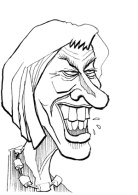
Local government “needs tough questions” … but what about the answers?

Owl says: but what happens when people simply refuse to answer those tough questions because they have their employees and/or their council majority councillors under such tough control they can over-ride those tough questions by just ignoring them or spinning nonsensical responses!

“Good governance across the public sector requires people who are willing to ask tough questions, CIPFA conference delegates heard today.

Peter Welch, director of the European Court of Auditors, speaking at an afternoon workshop on governance failures, responded to a question asking why there was a “fundamental lack of understanding of role and responsibility” across the public sector.

“If we want governance to really work we really need people who are not afraid to ask tough questions,” he said.

Panellists and the audience talked about the lack of diversity in public sector auditing.

Welch said “diversity works” to ensure there are people in organisations to ask the tough questions.”

http://www.publicfinance.co.uk/news/2017/07/cipfa-conference-good-governance-requires-tough-questions

EDDC officer accuses East Devon Alliance chairman of “point scoring” over (second) postal vote cockup

Owl says: if the point IS scored, surely that speaks for itself! And anyone reading this supposedly “neutral” officer’s report is bound to wonder if it is, er, political!

“East Devon District Council’s monitoring officer has accused the chairman of the East Devon Alliance of political point-scoring after he raised concerns that the council’s scrutiny committee were not able to investigate a postal vote ‘cock-up’ ahead of the General Election.

Packs that were issued on May 25 contained voting slips that did not have an official security mark visible on the front of the ballot paper were issued to more than 9,000 voters in the constituency.

East Devon District Council who were responsible for printing the ballot papers but Mark Williams, the council’s returning officer, issued a statement reassuring voters that no postal votes had been affected as a result of the error.

The ‘cock-up’ has left Paul Arnott, chairman of the East Devon Alliance, furious, and said that he would have more confidence in a village raffle than in Mr Williams running the forthcoming election and asked the council’s scrutiny committee at their last meeting in June to interrogate the reasons why 9,000 unmarked Parliamentary ballot papers were issued to postal voters.

But in response, he was told that the current legal assessment is that the remit of the Scrutiny Committee does not extend to Parliamentary elections, which is the remit of the Electoral Commission.

Mr Arnott queried this advice with the Electoral Commission, and says he was told that there is nothing laid down about where electoral matters can or can’t be discussed within the framework of local authority governance, and ultimately it is up to the Council and its operation of its scrutiny function as to whether any or all elections or electoral related matters are included in that scrutiny.

He has written to the council, asking them to take on board this advice and for scrutiny to investigate the matter, but in response, Henry Gordon Lennox, the Strategic Lead (Governance and Licensing) and Monitoring Officer of East Devon District Council, said that Mr Arnott had misinterpreted the advice he had been given and said that his query was ‘politically driven’.

The scrutiny committee have recommended to the council’s ruling Cabinet that the Chief Executive’s pending report on the election does includes explanation of the postal vote issue of May 25 that did not have an official security mark visible on the front of the ballot paper.

Mr Gordon Lennox in a statement said: “In my view, Mr Arnott has misinterpreted the advice from the Electoral Commission, who said that there were no legislative provisions dealing with the role of Scrutiny and elections and therefore it is down to the rules of each authority that will dictate whether or not there is a role for Scrutiny.

“Mr Arnott has taken this to say that the Council’s Scrutiny Committee should be reviewing the conduct of elections. However, what they aresaying, and it is my view too, is that effectively it is the Council’s Constitution and the Terms of Reference of the Scrutiny Committee that determine whether they can consider elections or electoral related matters.

“In general terms the role of Scrutiny is to review the actions relating to the various functions of the Council (in whatever form that takes). The role of Returning Officer is not part of the Council, save for the elections relating to towns and parishes and the district. It is for this reason that the Scrutiny Committee do not have the authority to consider the actions and conduct of the Acting Returning Officer / Deputy Returning Officer in the Parliamentary / County elections respectively.

“I think it important to also address the political side of this. I note that Mr Arnott says this is not political. However, Mr Arnott refers to the East Devon Alliance (EDA) report submitted to East Devon District Council following the May 2015 elections.

“Mr Arnott was at the time the Chair of the EDA and therefore a part of the Executive Committee who produced and submitted the report. At the County elections, Mr Arnott was an appointed election agent for the EDA.

“In the correspondence arising out of the postal vote issue during the Parliamentary election, Mr Arnott, when officially signing off his emails, referred to himself as the Chairman and Nominating Officer of the EDA.

“So my perception, notwithstanding what Mr Arnott says, is that his query is politically driven. To that end, the role of Scrutiny is supposed to be apolitical and I would be concerned that even if it were permissible for Scrutiny to be considering this matter, that the purpose for them so doing would be questionable.

“I have explained this matter in some detail in order to ensure that the correct context is understood and to give clarity on the issue. I would further confirm that, despite the above, it is my understanding that the Returning Officer will be presenting a report to Scrutiny at its next meeting on the key priorities he is working on, following what will now be the standard practice of a review process taking place after each election.”

The scrutiny committee have recommended to the council’s ruling Cabinet that the Chief Executive’s pending report on the election does includes explanation of the postal vote issue of May 25 that did not have an official security mark visible on the front of the ballot paper.

East Devon District Council’s Cabinet committee will consider the recommendation on Thursday, July 13.”

http://www.devonlive.com/east-devon-alliance-chairman-accused-of-politically-driven-query-over-postal-vote-scrutiny-request/story-30434940-detail/story.html

“Watchdog concern over “inherently complex” structures of combined authorities”

“The introduction of combined authorities has meant that inherently complex structures have been added to England’s already complicated local government arrangements, the National Audit Office has said.

The evidence that investment, decision-making and oversight at this sub national level was linked to improved local economic outcomes was “mixed and inconclusive”, it added.

In a report, Progress in setting up combined authorities, the watchdog did acknowledge that the Department for Communities and Local Government had worked “speedily” to make sure combined authority areas were ready for the mayoral elections in May 2017.

It also accepted that there “is a logic to establishing strategic bodies designed to function across conurbations and sub-regional areas, and there is a clear purpose to establishing combined authorities especially in metropolitan areas, as economies and transport networks operate at a scale greater than individual local authority areas.”

The report also found:

There was a risk that local councillors would have limited capacity for the overview and scrutiny of combined authorities.

In May 2017, six mayors were elected to combined authorities in England, with candidates having campaigned on manifestos which frequently made policy commitments beyond the current remits of these organisations. “This raises the question of whether mayors can be credible local advocates if they only deal with the limited issues under the remit.”

Combined authorities were not uniform, and varied in the extent of the devolution deals they had struck with government.

If the United Kingdom’s departure from the European Union resulted in reductions in regional funding, the economic regeneration role of combined authorities would become more pressing. “Combined authorities are generally in areas which receive the most EU funding,” the NAO noted.

The NAO highlighted how a number of authorities had been unable to bring local authorities together to establish combined authorities, while areas with a long history of working together had often found it most straightforward to establish combined authorities.

“The capacity of most combined authorities is currently limited and the lack of geographical coherence between most combined authorities and other providers of public services could make it more problematic to devolve more public services in the future,” the watchdog warned.

The NAO’s recommendations were:

The DCLG should:

(a) continue to support combined authorities as they put in place their individual local plans for assessing their impact, including demonstrating the value they add;

(b) review periodically all frameworks and guidance in place for combined authorities and other bodies with joint responsibilities, to ensure that accountability for the delivery of services is clear to stakeholders in local communities; and

(c) continue to work with combined authorities as they develop sufficient capacity to:

deliver the functions agreed in the devolution deals;
support economic growth and the government’s industrial strategy; and
provide sufficient scrutiny and oversight to their activities.
Combined authorities should:

(d) work with the DCLG to develop their plans for assessing their impact, including demonstrating the value they add; and

(e) develop and maintain relationships with key stakeholders in delivering economic growth and public services in their areas.

Areas planning to establish combined authorities should:

(f) make sure they have and can clearly articulate a common purpose;

(g) form an area with a clear economic rationale, mindful of existing administrative boundaries; and

(h) develop relationships across areas where there is no history of joint working.

Amyas Morse, head of the National Audit Office, said: “For combined authorities to deliver real progress and not just be another ‘curiosity of history’ like other regional structures before them, they will need to demonstrate that they can both drive economic growth and also contribute to public sector reform.”

http://localgovernmentlawyer.co.uk/index.php?option=com_content&view=article&id=31779%3Awatchdog-concern-over-inherently-complex-structures-of-combined-authorities&catid=62&Itemid=30