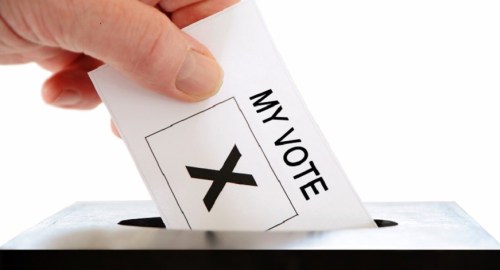
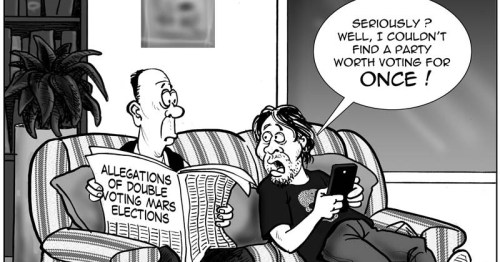
Polling station review

Is your polling station too far away (eg some Seaton people who now have to travel to Beer to vote)?

Is it inaccessible or has other disadvantages that make it difficult to cast your vote?

Have your say now:

https://eastdevon.gov.uk/elections-and-registering-to-vote/polling-place-review-2019/?fbclid=IwAR2rS9h_FF_oAV9481zBG2J0sX36d5iBNHZGh2VP0hLK_M11-u1In2f-YfA

and, if you haven’t registered to vote, you can do it here in less than 5 minutes:

https://www.gov.uk/register-to-vote

May 2019 local elections: “Democracy Denied”

Electoral Reform Society:

“May’s local elections in England showed just how unfit-for-purpose the voting system is, as voters were left with restricted choices and random results.

For voters of all parties, the local elections saw democracy denied: the First Past the Post voting system meant that millions of voters were unrepresented.

In our latest report, Democracy Denied: The 2019 Elections Audit, we present new analysis of local, regional and national results. Councils across England saw the wrong party winning, hugely disproportionate results, and voters left voiceless as many seats were completely uncontested. …”

The report is here:

‘Democracy denied’ as report reveals how voters are left voiceless across England

General election rumours increase – register to vote NOW (update if you have moved)

https://www.theguardian.com/politics/2019/aug/09/no-10-cancels-staff-leave-raising-possibility-of-snap-election?CMP=Share_iOSApp_Other

Register here:

https://www.gov.uk/register-to-vote

Yet another electoral roll mess up

From a correspondent:

As both my kids will be at university this autumn, they decided to apply for postal votes. I downloaded the application form but the return address on it is still The Knowle at Sidmouth. Whilst it may be an oversight on EDDC’s part, the cynic in me wonders if this is perhaps a cunning ploy to disenfranchise those in my daughters’ positions who are studying out of area, but still want a say in what happens.

As it is, I have saved the reply paid envelope from the application which has the Honition address on it and will use that instead. East Devon will pay for it, rather than me, and hopefully the form will arrive safely.

EDDC moved its HQ in February 2019. It seems our Electoral Officer (CEO Mark Williams, for an extra fee, of course) didn’t update the registration website – perhaps too busy having unminuted meetings with developers …

We must hope that mail is still being redirected and that ALL of it arrives at its new address …

The East Devon electoral roll – is it up-to-date and fit for purpose this time round?

Householders are currently receiving a form from EDDC about checking that the household occupants are registered to vote.

It comes with a prepaid envelope and an alternative option to complete online. If you choose the latter, one can end up being told the information has already been supplied. The wording implies the visit to the website may have been unnecessary.

If it WAS unnecessary then itis a waste of time and money – or perhaps the wording could be more appropriate if it WAS necessary?

One wonders about the scale of this and whether it really is necessary to ensure inclusion on the electoral roll? Perhaps CEO Mark Williams’ (Election Officer, for an extra fee and staff budget) ought perhaps to be better targeting – making extra sure he doesn’t “lose” another 6,000 or more voters like he did in the next-to-last general election.

Home visits to addresses in ever-spreading Cranbrook might be a good idea along with some of the other large new estates that have sprung up all over East Devon since the last election (there must be hundreds of new households). How many of those, in the current political climate, might prefer a candidate other than incumbent Tory Swire and where a few hundred votes mught be crucial?

And he doesn’t have the excuse of it being too dark at night for his canvassers to go out … like he said when he tried to explain to Parliament why telephone contact (sometimes to people newly arrived in the area where their telephone numbers would not usually be known, or these days where they are likely to have only mobile phones) was more preferablethan canvassing

Which you can read about here:

https://eastdevonwatch.org/2014/10/13/highlights-of-mr-williams-audio-transcript-of-evidence-to-the-parliamentary-select-committee-on-voter-engagement/

Scrutiny definitely needed this time around … where the stakes are so very high.

“Local elections: How voters in England were cheated by a broken voting system”

“Local democracy in England and Wales has long been under strain – with contests often seeing dismally low turnout, or indeed no contest taking place at all. But new research from the ERS adds fresh cause for concern.

There’s a ‘crisis of legitimacy’ for local elections in England, with the most detailed analysis of May’s elections in England yet revealing widespread disproportionality and absurd ‘wrong winner’ results.

In analysis published to mark this week’s 15 year anniversary of the introduction of proportional representation for Scottish local elections, we’ve highlighted a stark gap between the fairness of representation in Scotland and England.

In 115 English councils this May, a single party won over half the council seats up for election, despite getting fewer than half the votes in the area. This represents nearly half of all councils (46%) where local elections took place in England this year. In the most extreme case the Conservative Party took all of the seats up for election on Havant Council with just 43.9% of the vote.

Yet in the Scottish local elections in 2017 – conducted using the fairer Single Transferable Vote system – no council saw a party get more than half the seats with fewer than half the first preference votes. In other words, you only get a majority if you have majority support.

There are many other benefits to proportional representation. In many cases under First Past the Post, single-seat wards become ‘no go’ areas for other parties: the same person gets in every time, even in other parties have significant levels of support. That creates an incentive for parties to ignore areas all together and focus on ‘winnable’ seats. Voters lose out, denied a real choice.

In 2003, at the last Scottish local elections held under First Past the Post, 61 wards (5% of the total) were totally uncontested: there was only one candidate running.

In 2017 – having switched to proportional representation – there were just three uncontested wards in the whole of Scotland. Compare that with the broken winner-takes-all system in Wales where in 2017, 10.4% of Welsh council wards were uncontested.

In addition, in 17 English councils this May, the party with the largest number of votes did not secure the most seats creating ‘wrong winner’ results – a damning indictment of England’s woefully out-dated voting system.

As ERS Director of Research Dr Jess Garland noted, our analysis shows how our broken electoral system is distorting local election results. First Past the Post is delivering skewed results in over a hundred councils across the country meaning many voters’ voices are unheard.

England continues to rely on this undemocratic system for local elections, where only the votes for the top candidate to ‘get over the line’ secure representation – all others are ignored. Spread out over thousands of individual contests, this can lead to some parties being drastically over- or under-represented.

In Scotland and Northern Ireland, voters can rank candidates by preference, and ‘surplus’ votes (which would be ignored under FPTP) are redistributed according to voters’ other choices. Most advanced democracies use proportional systems where seats more closely reflect parties’ share of the vote.

It’s time we ended the broken First Past the Post system in England – a system that continues to warp our politics. A more proportional system would help open local democracy and make sure all voters’ voices are heard.

Local elections: How voters in England were cheated by a broken voting system

“An election could happen at any time – electoral law needs to be urgently updated”

Owl says: recalling the mess EDDC’s CEO made of past elections (where he “lost” 6,000 voters), and when he was later forced to explain himself (not all that well) to a parliamentary committee:

https://eastdevonwatch.org/2014/10/14/official-transcript-of-eddc-ceo-evidence-to-parliamentary-committee-on-voter-engagement/

this is LONG overdue!

“Last week, the House of Commons Digital, Culture, Media and Sport (DCMS) committee published its response to the government’s Online Harms White Paper, where it called for urgent legislation to safeguard future elections. Echoing the ERS’s calls, the committee noted that ‘[w]ere an election or referendum to take place later this year, campaigns would be fought using electoral law that is wholly inadequate for the digital age.’

The government’s long-awaited white paper on online harms was published in April 2019 and offered a package of measures to tackle online harms (e.g. cyberbullying and disinformation) and to regulate internet companies who do not adequately protect their users. This would be achieved by establishing a new statutory duty of care towards users, which would make tech companies responsible for users’ safety online and tackle harm caused by content or activity on their services. Compliance with this duty would be overseen by a new independent regulator. Both the duty of care requirement and the establishment of a regulator were proposals included in the DCMS committee’s Final Report on Disinformation and ‘fake news’.

While it welcomed the (limited) measures proposed to tackle disinformation, in its response the DCMS committee said it was ‘disappointed’ with the ‘scant focus’ the white paper paid to the urgent changes that are needed around electoral interference and online political advertising.

In particular, the committee said that the measures included in the white paper to tackle digital campaigning were limited and did not address the committee’s recommendations on creating a category for digital spending on campaigns (currently parties and campaigners do not need to provide a breakdown of online spend) and a searchable public repository where information on political advertising material would be available.

The committee also lamented the fact that white paper did not acknowledge the risks of foreign investments in elections or the role and power of unpaid campaigns and Facebook groups in influencing elections and referendums. Regarding the first point, the committee will be taking further evidence this month on how anti-money laundering regulations may be adapted to digital campaigning, particularly given the use of online payment systems such as PayPal.

Despite the government’s commitment to extending imprints (disclosures stating who paid for and promoted campaign material) to online election material, the committee voiced concern about ‘how long it may take in practice for digital imprints to be enshrined in legislation’ given the government’s lack of urgency in addressing the committee’s other proposals.

The committee is therefore calling for ‘urgent legislation’ to be brought forward at once so as to bring electoral law in line with digital campaigning techniques, particularly with regards to digital imprints, and has asked the government to respond by 24 July with a commitment on this.

Most of the calls reiterated by the DCMS committee in their report on the online harms white paper have also been made by the ERS and our contributors in our report on online campaign regulation, Reining in the Political ‘Wild West’: Campaign Rules for the 21st Century, namely:

  • Extending the imprint requirement to online campaign materials and improving how campaigners report funding and spending.
  • Creating a single online database of political adverts, which would be publicly available and easily searchable.
  • Ensuring that those charged with enforcing the rules have sufficient enforcement powers and resources that act as a meaningful deterrent against wrongdoing.
  • Establishing a statutory code of practice for political parties and campaignersaround online campaigning and the use of personal data.
  • Comprehensively reviewing our electoral law, ensuring that it is updated and future-proofed for the digital age.

Protecting the integrity of our elections and referendums is vital to ensuring public confidence in our democratic processes, and we welcome the DCMS committee’s calls for updating our outdated campaign rules. We hope the government will tackle this unregulated online Wild West with the urgency it deserves.”

An election could happen at any time – electoral law needs to be urgently updated

“Something fishy is going on with the Tory leadership race online”

“Two of the most prolific Twitter accounts supporting Boris Johnson have displayed bot-like behaviour, while three of Jeremy Hunt’s top followers have suspiciously high post rates.

The Institute for Strategic Dialogue (ISD), a London-based think tank researching political extremism, monitored the tweets mentioning either Jeremy Hunt’s or Boris Johnson’s handles, or their respective campaign hashtags, #HastobeHunt and #BackBoris, between May 24 and June 30.

The ISD researchers found that three of the top ten accounts engaging with Jeremy Hunt posted over 100 tweets a day, while another account in the top ten had been suspended as of June 30. The ISD sets the threshold for suspiciously high activity levels at more than 50 tweets a day.

Out of the top ten accounts mentioning Boris Johnson or his campaign, three produced over 100 tweets per day; two of those three accounts, the ISD says, presented “bot-like” behaviour and had already been spotted by the organisation when researching online “inorganic amplification” of UK political parties.

The majority of the tweets targeting Hunt do not seem to be directly connected with his leadership bid, but rather with his tenure as foreign secretary, mentioning topics such as war, human rights, and refugees rights. The suspended handle, @Kazem24529196, was the third most active Hunt-mentioning account and mostly tweeted about Iranian refugees’ resettlement in Turkey. Another account in Hunt’s top ten, @Ali85972170, has been suspended by the time of publication and seems to have mostly been tweeting about Sudan and other refugees issues.

Most of these issue-focused accounts were not hostile or aggressive towards Hunt himself. In contrast, the fifth most active account targeting Hunt, @EUVoteLeave23rd, has a decidedly anti-Hunt and pro-Johnson slant. It also appeared in Johnson’s top ten as the third most active account.

First created in 2016, @EUVoteLeave23rd pushes a pro-hard Brexit, pro-no deal agenda. It has over 35,000 followers, the identity of its owner is unknown, and its profile image features a Brexit Party rosette overlaid with a Back Boris tag.

According to the ISD, during the EU election campaign, @EUVoteLeave23rd was the most active account engaging with the Conservative Party; until recently, it was strongly opposed to the Conservatives, and to Theresa May’s leadership in particular. From late February to late June 2019, @EUVoteLeave23rd directly mentioned the outgoing prime minister in 10 per cent of its tweets.

The account styles itself as belonging to a former Conservative turned Brexit Party fan; now, it supports the Johnson campaign. According to the ISD, the account’s posts appeared times 1,309,493 between its creation on February 22, 2016 to June 27, 2019 – a figure that includes tweets, retweets, other accounts retweeting its posts, and deleted tweets. Although many of the account’s tweets appear to be original content, the volume and frequency of its posting, with an average of over 90 tweets a day, and a high number of retweets evince that at least some elements of automation might be at play.

Over the past few days, the account has been particularly active amplifying tweets that mention Boris Johnson’s account in a positive context, or feature the #BackBoris hashtag. Out of the last 3,200 tweets the account posted, over 500 contained Johnson’s handle and almost 1,000 contained the campaigning hashtag.

The account also mentioned Jeremy Hunt in 937 tweets, most of them rather scornful – one recurrent thread being that Hunt’s Brexit policy would be just a rehashed version of May’s. “It seems to pick up and retweet tweets that have either hashtags or flags in their handles,” says Chloe Colliver, head of the digital analysis unit at ISD.

“You could easily automate an account to pick up certain things and automatically retweet them if they had certain messaging. This looks like a managed account that is set up to pump out pro-Brexit accounts and messaging.”

Yin Yin Lu, a research affiliate at the Oxford Internet Institute, says that the account’s blend of human-generated content and aggressive retweeting caught her eye already back in 2016 during the EU referendum campaign. “It was quite interesting how it spits out original content at high volume, and the volume is so high that it has to be pre-programmed,” she says.

“From April to June 2016, it was very engaging, compared with the average sort of automated accounts or bot accounts,” Lu says. “On average, bot accounts had about 1.5 retweets, and non-bot accounts had 4.4 retweets. This account, even though it’s partially automated had an average retweet count of almost 11. It shows that the network it’s involved with is quite extensive – it’s got 36,000 followers.”

The ISD points out that, according to the Information Operations Archive, the account, had 172 interactions (mostly retweets) with accounts known to be associated with Iranian or Russian state-backed disinformation operations.

“This shows that even if these are not important accounts in themselves, they are useful as part of a wider strategy to polarise people online,” Colliver says. @EUVoteLeave23rd did not reply to a direct message asking for more information.

Another emphatically pro-Boris account, @WeBackBoris, was also flagged by the ISD for what looks like automated behaviour. The account was created in 2011, but only started operating on June 3, 2019 when it tweeted 245 times. Over the following month, the account posted almost 15,000 tweets and tens of thousands of retweets. It did not reply to a direct message asking for more information.

Twitter, in an emailed statement, said that “platform manipulation and spam are against the Twitter Rules and we take aggressive enforcement action when we identify violations of our policies.”

https://www.wired.co.uk/article/tory-leadership-race-twitter

“Tory leadership chaos as party members may not be able to vote for their next leader”

Owl says: if they can’t get this simple thing right, what hope for the country!

And will the Electoral Commission intervene?

“The Conservative leadership election has descended into chaos as furious members were told they face the prospect of being unable to vote for their next leader due to problems at the party’s headquarters.

Membership issues at Conservative Central Headquarters have meant hundreds of members have not received their ballot papers to cast their votes in the battle between Boris Johnson and Jeremy Hunt.

It comes just days after it emerged around 1,000 voters had been sent two ballot papers meaning they would be able to vote twice, raising doubts over the legitimacy of the election process.

Voting chaos

i has been told CCHQ staff have been forced to set up an Appeals Committee, which is holding meetings twice daily and working weekends, in a bid to work through the backlog of complaints.

According to John Hutchinson, a Tory member from Colchester who has not received a ballot paper, officials are struggling to manage having received 20,000 unique calls from members complaining about the handling of the leadership contest in just three weeks.

Mr Hutchinson, 75, who worked in the financial services before retiring, said he was told members’ details were lost after the party headquarters centralised their membership database.

“As a member I am pretty pissed off. Not only have we been told we will not receive a ballot paper, there is also the issue of the party losing members’ details, which is a major breach of new GDPR rules,” he said.

“It makes the legitimacy of the ballot very dodgy. How many more members have not got their ballot paper if the database is in such a mess?”

He was told there were more than 100 complaints from members who had not received ballot papers ahead of his own. It is unclear how many members have not received their voting slips.

Mr Hutchinson said he had written to the Information Commissioner about the handling of his and his wife’s personal details.

Another member said party officials were referring to today as the “date of high concern” as it is the latest that ballot papers could arrive in time for members to vote.

Senior party officials had expected around 60 per cent of voters to have sent back their ballot papers by Monday, but one Tory MP told i the number is much lower, suggesting members are holding back on voting.

‘You have to wonder what takes so long’

Kevin Edger, 31, was forced to contact his local constituency office in Bridgend and the Tory party HQ after his ballot paper failed to arrive.

He said he was told by party officials that 11 July is the “absolute cut-off for when it should be with me”.

The party said this date was several days after when it “should” have arrived and after this it would be a matter of “high concern”.

“You do have to wonder what takes so long,” he said. “I am going away soon so I need that ballot.”

Dillon Brown, 24, a student from Wakefield, was looking forward to voting for Boris Johnson to be the next leader but, without his ballot paper, he will be unable to do so.

“I am tempted to say this ballot could have been organised better,” he said. “It would be really quite concerning if they [ballot papers] aren’t getting out to everybody.”

Alison Morton, a 67-year-old author who lives in a village near Thouars, western France, said she is concerned the French postal system could be partly to blame for her lack of voting card.

“I’ve commented on Conservatives Abroad Facebook page and emailed the chair and the membership department,” she said. “I expect they are all very busy, but I want to make sure I participate.”

Some former members have received ballot papers despite cancelling their subscription to the party before the leadership race began.
Tory MP David Morris, who is a Jeremy Hunt supporter, told i: “There seems to be a glitch in the system at CCHQ. We have already seen some members being sent ballot papers twice, but I don’t think it’s a conspiracy.”

It follows news revealed by i in May that CCHQ is struggling to pay its rent with the party’s chief executive Sir Mick Davis bankrolling day to day operations after donors fled due to Theresa May’s handling of Brexit.

Ballot papers were sent to around 160,000 Conservative Party members around the UK to choose between Mr Johnson and Mr Hunt as their next leader as well as the country’s next prime minister.

Voting closes on 22 July, with the result announced the following day.

CCHQ has been contacted for comment.”

Tory leadership chaos as party members may not be able to vote for their next leader

Tories for Trumpery? Drafting new law to protect MPs on party overspending

Tories draft law to protect MPs if parties overspend

Conservative ministers are drawing up a new law to protect MPs and party officials from prosecution if their national parties overspend during elections, leaked documents disclose.

It follows the conviction in January of Marion Little, a Tory party organiser from head office, and the acquittal of the MP Craig Mackinlay after they were accused of breaking electoral law as the party fought off a challenge from Nigel Farage in Thanet South. …

Transparency campaigners believe the government’s latest move is an attempt to avoid future prosecutions and would overturn a ruling by the supreme court.

Alexandra Runswick, the director of Unlock Democracy, said a “test of authorisation” would give candidates and party officials another level of defence from prosecution. “Such a move would not appear to be about reinforcing and strengthening electoral law. This would instead protect party candidates and open up the possibility of outspending rivals.”

Plans for a new law have emerged in correspondence seen by the Guardian and sent to cabinet ministers by Kevin Foster, the minister for the constitution.

“Legislation currently requires candidates to account for free or discounted goods or services that are made use of by or on behalf of the candidate. There have been calls to amend this legislation to include a test of authorisation by or on behalf of the candidate,” he wrote.

Foster told members of a cabinet subcommittee that the law on notional expenditure was tested in July when the supreme court ruled that the statutory requirement for an election candidate is to declare notional expenditure incurred on their behalf during a campaign. This might arise where a national party provided additional campaigning support in the constituency and was not limited to authorised campaigning.

Foster wrote: “There is a concern that candidates, their electoral agents and others acting on their behalf could be operating under legal risk. I am seeking the committee’s agreement to announce at an appropriate time that the government is exploring options to clarify the law on notional expenditure to alleviate the concerns highlighted. Any amendments in this area of law would require primary legislation,” he wrote.

Little, who had been employed by Tory campaign headquarters since 1974, was charged with three counts of encouraging or assisting an offence related to the filing of election expenses. …”

https://www.theguardian.com/politics/2019/may/21/tories-draft-law-protect-mps-party-overspend

Thanks to all who voted, talks of the future and takes the weekend off!

Owl says thank you to EVERYONE who voted, however you voted. Those who did not vote cannot now moan!

It may surprise some to know that Owl will continue to hold the new council to account in the same way as the old one! Rest assured!

In the meantime, an exhausted Owl is flying away to pastures different for the weekend – back on Monday refreshed and beady-eyed bright!

FINAL RESULT Sidford Sidmouth – East Devon Alliance 2, Conservative 1

Sidmouth Sidford (three seats)
Stuart Hughes (Conservative) – 1,089 ELECTED
Dawn Manley (East Devon Alliance) – 1,303 ELECTED
Zachary Marsh (Conservative) – 721
Colin Mills (Labour) – 381
Marrianne Rixson (East Devon Alliance) – 1,326 ELECTED
Jenny Ware (Conservative) – 757
Ken Warren (UKIP) – 369

West Hill falls to Independent

West Hill and Aylesbeare (one seat)
Jess Bailey (Independent) – 956 ELECTED
John Sheaves (Conservative) – 285

EDA Val Ranger retains Newton Poppleford

Newton Poppleford & Harpford – 1 seat

David Graham Atkins, Conservative 114
Val Ranger, Independent East Devon Alliance 710 ELECTED

Budleigh and Raleigh – 2 Tory 1 Independent

Budleigh and Raleigh (three seats)
Alan Dent (Conservative) – 1,112 ELECTED
Pete Duke (Green Party) – 971
Brigitte Graham (UKIP) – 518
Patsy Hayman (Conservative) – 982
Paul Jarvis (Independent) – 1,187 ELECTED
Penny Lewis (Liberal Democrats) – 907
Thomas Wright (Conservative) – 999 ELECTED

Broadclyst result – 1 Tory (not Diviani) and 2 Lib Dem

Rebecca-Jayne Lipscombe (Liberal Democrats) – 397
Rob Longhurst (Conservative) – 345
Chris Pepper (Conservative) – 506 ELECTED
Eleanor Rylance (Liberal Democrats) – 555 ELECTED
Sarah Louise Chamberlain (Liberal Democrats) – 612 ELECTED
Paul Diviani (Conservative) – 319
Henry Frederick Gent (Green) – 426

Exe Valley returns Lib Dem; Whimple returns Independent

Fabian King (Liberal Democrats) – 378 ELECTED
Kevin Wraight (Conservative) – 289
16 spoilt

Mark Lloyd Evans-Martin (Conservative) – 234
Kathy McLauchlan (Independent) – 702 ELECTED
5 spoilt

Sidmouth Town – wins for EDA’s Gardner and Bickley

Sidmouth Town (two seats)
Denise Bickley (East Devon Alliance) – 922 ELECTED
Nicholas Diprose (Labour) – 127
Cathy Gardner (East Devon Alliance) – 971 ELECTED
Sheila Kerridge (Conservative) – 549
Timothy Venner (Conservative) – 409