
Cranbrook population to grow to 18,000 (with a town centre?)
“The new town of Cranbrook near Exeter will grow to have a population of around 18,000 people under a plan submitted to central government.
East Devon District Council has submitted the local plan for Cranbrook to the Secretary of State for examination.
Local plans are drawn up to shape the future development of towns and villages.
East Devon District Council said the plan envisaged the town growing to 7,750 homes.
When building first started in 2011 Cranbrook there were 2,900 homes planned as well as schools, shops, a library and energy plant.”
Johnson interferes with neutrality of civil servants
“Leaked Doc Reveals Civil Servants Told To Report ‘Unhelpful Narratives’ On Brexit To No.10:
Boris Johnson has been warned to “tread carefully” amid claims Number 10 aides are asking civil servants to operate an “overtly political” Brexit media strategy.
A Cabinet Office document leaked to HuffPost UK has revealed all government communications staff must report “unhelpful narratives” in the press and online to Downing Street.
While civil servants work for the government and are expected to ensure ministers can deliver on policy, they also have a duty to be impartial.
The document is further evidence suggesting Johnson’s most senior adviser Dominic Cummings – the ex-boss of Vote Leave once described by David Cameron as a “career psychopath” – is prepared to introduce sweeping change in order to deliver Brexit by October 31.
The controversial advisor is reported to have already had a huge impact on Number 10 since arriving last month, embarking on a so-called “jihad on spads [special advisers]” by cancelling annual leave and sacking aides from the Theresa May era.
According to the document, staff have been instructed to update Downing Street from 6am each morning with “all rebuttal lines to be approved by Number 10”.
The unit must also “counter emerging narratives” and ensure all departments push the Downing Street line, adding “if action not completed, escalate as needed”.
Shadow Cabinet Office minister Jon Trickett said Boris Johnson was “playing with fire”, adding: “Political neutrality is a central principle which has endured in relation to civil servants for more than 150 years.
“It is essential that the present government does not breach this basic part of the constitution. To do so would further imperil faith in politics, which is already at a low ebb.”
Alastair Campbell, who acted as former PM Tony Blair’s communications chief, called on civil servants to keep a record of “overtly political” requests.
Dave Penman of the FDA union, which represents senior civil servants, has also warned Johnson he risks “politicising” the work of his members.
Downing Street said it would not comment on leaked documents.
A source, however, stressed that the guidance was issued by the Cabinet Office and the Department for Exiting the EU, not Number 10, and was part of a standard cross-government communications plan.
But Campbell said: “There is a clear division between the legitimate work civil servants must do in support of ministers implementing government policy and this overtly political work which they are being asked to do.
“Clearly Johnson and his team wish to see that division straddled.”
He added that the cabinet secretary should issue clear guidelines on “the limits of what is permissible for a civil servant and assure civil servants they will not be punished for refusing to do political work.”
“UK must accept US food standards in trade deal, says farm chief”
Hello, Mr Parish, HELLO …
“The UK must accept US food standards as part of any future trade deal with Washington, the head of America’s farming lobby has said.
Zippy Duvall, head of the American Farm Bureau, said US farmers were keen to trade with their British “friends”.
But he said fears over practices such as washing chicken in chlorine and using genetically modified (GM) crops were not “science-based”.
The US has said the UK will be “first in line” for a trade deal after Brexit.
But some fear the UK will have to compromise on standards currently enshrined in EU law in order to secure a deal with Washington.
Mr Duvall, himself a poultry farmer in Georgia, said he wanted to have “a conversation” about US food standards given the concerns in the UK.
One of the most controversial practices is washing chicken with chlorine to kill germs, which is banned in the EU. This is not because the wash itself is harmful but over fears that treating meat with chlorine at the end allows poorer hygiene elsewhere in the production process.
“You know, here in America we treat our water with chlorine,” Mr Duvall told the BBC’s Today programme.
“So there is no scientific basis that says that washing poultry with a chlorine wash just to be safe of whatever pathogens might be on that chicken as it was prepared for the market, should be taken away.
“If there was something wrong with it our federal inspection systems would not be allowing us to use that,” he added.
Harmful competition?
In London this week, Donald Trump’s national security advisor John Bolton suggested that the US could strike trade deals with the UK after Brexit on a “sector-by -sector basis” to speed up the process.
But asked whether he could envisage a trade deal with the UK that did not include agriculture, Mr Duvall said it would be seen as a betrayal by US farmers.
“To have a trade treaty and not discuss agriculture would be turning your back on rural America and that’s where a big part of our population lives. …”
Anyone seen Neil Parish MP recently?
The pro-Brexiteer seems to have gone rather quiet since Boris Johnson became PM and hadn’t told us what (as a farmer) he thinks about a no-deal Brexit.
Sure, our MPs are all on holiday in this time of constitutional crisis (whatever happened to parliamentary sovereignty?) but surely his constituents deserve to know what he thinks and what he is planning to do on behalf of his Tiverton and Honiton voters?
After all, we do know what Swire is up to, even if some of us don’t approve!
Hinkley C: Beware the consequences of large infrastructure projects
“Hinkley Point C brings London-level traffic to small Somerset town.
Air and noise pollution, traffic chaos and rising rents are blighting the Somerset town that has found itself the gateway for the marathon construction of the new Hinkley Point C (HPC) nuclear power station, locals say.
Limits for air pollution have been exceeded on main roads on multiple occasions this year, while Highways England data shows truck numbers have increased by more than 20% since building work started in 2016.
On some roads, two heavy goods vehicles pass through every minute. Not all are delivering to Hinkley but, with no bypass built for the nuclear site, locals say it has made the town unnavigable at times.
Buses transporting 4,000 construction workers to the site add to the traffic – and the influx of workers is pushing up rents. Rat runs are in gridlock and a town that is home to just under 40,000 people is experiencing London-level traffic on some roads.
Friends of the Earth, which looked at the air quality data for 2018 and 2019 provided by the local Sedgemoor district council, said it was concerned about the high incidences of particle matter on some roads.
Data shows that particle matter measuring 10 micrometers (PM10) has exceeded safe limits on Quantock Road 16 times already this year, while on nearby Bristol Road those limits were exceeded 15 times.
The latest data for traffic shows the number of HGVs has increased from 470 a day in 2014 to 900 in 2018 on Quantock Road, the principal artery out of the town to Hinkley.
For nearby Horsey Level, the number of trucks a day is registered at almost 1,500, while on Taunton Road, the main road coming from the M5’s junction 24, residents have to endure 1,050 a day, making it difficult to cross the road and forcing many cyclists on to the paths for their own safety.
HPC says the number of HGVs travelling every day to and from the site is capped at 750.
… Hinkley agreed a fund to fit double-glazed windows on some of the busiest roads in Bridgwater. It says this is a goodwill gesture and not an admission of responsibility for the noise of HGVs.
“EDF have paid to replace all my windows, and it’s made no difference. On a summer’s night, I’m not able to sleep with the windows open at all,” said Balcombe. “I am woken up every morning at 5am from the noise of lorries. And when these lorries are empty the clatter they make is unbelievable with the metal bouncing round.”
HPC points out that the HGV movements will ease in the autumn when it switches supplies to the sea. The jetty is now complete and the permission it got for an extra 250 HGVs a day will expire.
For Bridgwater locals a bypass would have been the answer and helped relieve the town of its perennial traffic problem.
The former Labour councillor Mick Lerry, who was involved in the fight for a bypass, said the attempt was stymied because it was never part of the development consent order submitted by EDF. “As it was not part of the application, it could not be considered,” he said.
The government said it had considered the impact of HGVs on Bridgwater and was satisfied. …”
Don’t rely on Boris for fibre broadband – best do it yourself
A computer magazine (Computer Active!) has warned that Boris Johnson’s promises on UK-wide fibre broadband are just wishful thinking (or, if you prefer lying) – but there is an alternative for hard-to-reach properties:


70% of UK rail companies and 50% of fishing quotas foreign-owned
In some cases owned by the NATIONAL rail companies of the foreign company! Madness!
https://www.rmt.org.uk/news/70-of-uk-rail-routes-now-owned-by-foreign-states/
“Richard Branson has said he is ‘devastated’ that Virgin Trains’ reign over the West Coast Main Line train route is coming to an end after 22 years.
The Department for Transport has awarded Aberdeen-based First Group and Trenitalia UK, an arm of Italy’s main train operator, the contract to run the London-to-Glasgow rail line from 8 December.
After the contract starts, more than 60 per cent of train journeys made on British railway lines will be made using services partly owned by foreign companies, analysis by the Press Association has revealed. …”
AND
50% of UK fishing quotas are owned by foreign companies:
External auditors blamed for delays to local government accounts
“Auditors scrutinising local authority accounts and the body responsible for appointing them have come under fire after new figures showed 40% of audit opinions missed the target date of 31 July.
Public Sector Audit Appointments (PSAA), the body responsible for appointing auditors, this week revealed that 210 out of 486 audit opinions on local government bodies for 2018/19 were not delivered on time.
The figure has jumped sharply from last year, when only 13% of opinions missed the deadline.
Graham Liddell, managing director at financial reporting consultancy LPFG and former senior technical manager at the Audit Commission, said: “This is a failure of the audit firms and of PSAA who appointed them.
“Of course, local authorities can make improvements, but by and large local authorities delivered the accounts, and by and large auditors failed to audit them.
“All the audit firms have enough staff to deliver their portfolio of local authority audits, it is just that they have chosen to maintain their margins and prioritise other sectors.
“I have immense sympathy for public sector audit teams who have been a handed an impossible job by their employers, but none for the firms themselves.”
He said that PSAA has presided over a process which has seen audit fees driven down to unsustainable levels.
“The big question is what does it do next? For a start, PSAA needs to stop defending auditors and blaming local authorities.
“It then needs to think carefully about audit fee rebates and how loudly it is going to name and shame the culprits.”
In a statement, the PSAA said a number of factors had driven the deterioration in performance, including, in some cases, a shortage of appropriately skilled and experienced auditors.
It said that, in other cases, the standard and timeliness of draft accounts, or working papers, has been lacking.
Other delayed opinions arose from difficulties in obtaining responses to and resolving audit queries, and unresolved technical issues including matters arising within group accounts, it said. …”
Auditors and PSAA slammed after jump in accounts deadline failures
Useful tips when making Freedom of Information requests
EDDC Development Management Committee makes another controversial planning decision
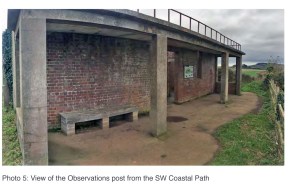
The planning application for the conversion of the South West Coast Path WW2 observation post into a holiday dwelling, covered by Owl here:
has been agreed. The roof will be “reconstructed and roof lights, doors, windows and solar panels will be added, thus destroying its original function as a historical building.
The owners of the land are, of course, Clinton Devon Estates.
What council in “no overall control” REALLY means
The full article has a very useful table at the end and includes a note that East Devon Alliance wants to change to a committee system.
“With the two main parties losing hundreds of council seats, and the Lib Dems, Greens and Independents gaining across England in May’s local elections, the number of councils where no single party had a majority increased in 2019. In the first of two articles, Chris Game details how this has shaped governing outcomes for English councils – and demonstrates why reporting political coalitions in local government matters. …”
England’s local elections 2019: council outcomes from ‘no overall control’ results
A couple of interesting Development Management Committee decisions
Greendale – two applications:
Applicant:
Mr Terence Adams.
Location:
Greendale Farm, Greendale Lane, Clyst St Mary, EX5 1AW.
Development Management Committee 6 August 2019
Proposal:
Demolition of existing farmhouse and replacement with 3 cottages and associated car parking, landscaping, bin store and ancillary works.
RESOLVED:
Approved as per officer recommendation.
WOODBURY AND LYMPSTONE Applicant:
FWS Carter and Sons Ltd.
Location:
10 Hogsbrook Units, Woodbury Salterton, EX5 1PY.
Proposal:
Retention of extension to industrial unit (including change of use from agricultural to Class B8 (storage)).
RESOLVED:
Approved as per officer recommendation.
And this one, where the applicant appears to be a senior member of Stags Estate Agency (Head of Residential Lettings and Property Management)
https://www.stags.co.uk/staff/andrew-luxton-mrics-farla
and the application was approved contrary to officer recommendation:
DUNKESWELL AND OTTERHEAD Applicant:
Mr A Luxton.
Location:
Emmetts Farm, Beacon, Yarcombe, Honiton, EX14 9LU.
Proposal:
General purpose agricultural building.
RESOLVED:
Approved contrary to officer recommendation with delegated authority to officers to impose appropriate conditions.
Members considered that the proposal was of an appropriate scale and materials such that it would conserve and enhance the AONB. In addition, it was considered that the proposed building was a sufficient distance from the nearby listed building to not cause any harm to its setting.
“Hinkley Point C: rising costs and long delays at vast new power station”
“The Hinkley Point nuclear site, on the Somerset coast, should have begun powering around 6m homes well over a year ago.
Instead, the 160-hectare (400-acre) sprawl is still the UK’s largest construction site more than a decade after the plan for Britain’s nuclear renaissance first emerged.
It will be at least another six years before Hinkley Point C, the first nuclear plant to be built in the UK since 1995, begins generating 7% of the nation’s electricity.
The price tag is expected to exceed £20bn, almost double that suggested in 2008 by EDF Energy, which is spearheading the project alongside a Chinese project partner.
At the time, EDF Energy’s chief executive, Vincent de Rivaz, said the mega-project would power millions of homes by late 2017. He pegged the cost at £45 for every megawatt-hour.
De Rivaz retired a decade later, but the promised switch-on moment remains distant. Delays have been blamed on protracted Whitehall wrangling over the project’s eye-watering costs: the price per megawatt-hour has since more than doubled.
Still, this summer workers carried out the UK’s largest concrete pour to complete the base of the first reactor. Simone Rossi, EDF Energy’s incumbent chief, said the milestone was “good news for anyone concerned about the climate change crisis”.
“Its reliable, low-carbon power will be essential for a future with no unabated coal and gas and a large expansion of renewable power,” he said.
The cost concerns have proved more difficult for executives and ministers to address.
The National Audit Office condemned the government’s deal to support the Hinkley Point project through consumer energy bills in a damning report, which accused ministers of putting households on the hook for a “risky and expensive” project with “uncertain strategic and economic benefits”.
Hinkley Point will add between £10 and £15 a year to the average energy bill for 35 years, making it one of the most expensive energy projects undertaken.
Under EDF Energy’s contract with the government, the French state-backed energy giant will earn at least £92.50 for every megawatt-hour produced at Hinkley Point for 35 years by charging households an extra levy on top of the market price for power.
The average electricity price on the UK’s wholesale electricity market was between £55 and £65 per megawatt-hour last year.
The dramatic collapse in the cost of wind, solar and battery technologies has made nuclear power even harder to swallow.
Despite its detractors, Hinkley Point has soldiered on because concerns over the project’s costs, although considerable, are still smaller than the concerns over the UK’s future energy supplies.
The project was first mooted under Tony Blair’s Labour government as an answer to the UK’s looming energy supply gap after years of underinvestment in the UK’s fleet of power plants.
The nuclear mantle was taken up in the coalition years by the Liberal Democrat energy secretary Ed Davey, before it was given the green light by the Conservative government.
Andrew Stephenson, the minister in charge of nuclear, said Hinkley was “key to meeting our ambitious target of net zero emissions by 2050”.
Nuclear power is controversial among environmentalists, many of whom do not consider the uranium-fuelled energy to be a sustainable option. But according to the government’s official climate advisers new nuclear reactors are needed.
The Committee on Climate Change expects renewable energy to play a major role filling the gap in energy supplies. Offshore wind will increase tenfold to help meet its 2050 target to reduce emissions to net zero, and the climate watchdog has called for onshore wind and solar to play a far larger role too.
But the advisers predict that at least two new nuclear reactors, in addition to Hinkley Point, will be required to help the UK meet its climate goals.
The verdict means households are likely to be called on to stump up for EDF Energy’s follow-on project at the Sizewell site in Suffolk. It also leaves the door open for a resurrection of plans to build reactors in north Wales, and possibly a Chinese-led nuclear project in Bradwell in Essex too.”
Mental health crisis at Hinkley C
“Hinkley Point nuclear power station, Britain’s biggest construction project since the second world war, is grappling with a mental illness crisis, with several attempted suicides since work began in 2016, a Guardian investigation can reveal.
More than 4,000 workers are on site delivering the vast decade-long building project, a central plank in Britain’s future energy strategy.
But according to union officials, there has been a surge in suicide attempts this year, a rise in the number of people off sick with stress, anxiety and depression, and an increase in workers suffering from mental distress.
Officials from the Unite union say they have been told of 10 suicide attempts in the first four months of 2019. The Guardian understands at least two workers connected to the project have taken their lives since construction started in earnest in 2016. …
… The main causes of the distress appear to be loneliness, relationship breakdown and the struggle of being sometimes hundreds of miles away from family.
Électricité de France (EDF), which is in charge of building Britain’s first new nuclear power plant for more than 20 years, disputes the figures, acknowledging two suicides – one of those a former worker who had left the project.
Executives say that a number of workers have said they are suicidal, but point to a wide range of measures to address the problem, including 200 mental health “buddies”, “time to talk” rooms, an on-site GP, and plans to recruit a chaplain.
“I’m aware of people who have said they have felt like committing suicide,” said Angie Young, the site health and wellbeing manager. She said the figure of 10 was a “total exaggeration”. “We do have people say life is not worth living but we’re getting in there and helping.”…
… At Hinkley, workers live on special campuses in nearby Bridgwater, or else in converted digs in the town. They work a variety of shift patterns and are shuttled to and from the site on scores of buses. Some contractors work as much as 11 days on with three days off, including an extra weekend day for travelling home. …
… Socially there are reports of increases in drinking, gambling and prostitution in Bridgwater, which has been upended by the huge construction site on its doorstep. One source in a local betting shop told of some workers spending up to £3,000 a week and others “self-excluding” from the premises in an effort to arrest the development of a financially detrimental habit.
Such is the concern among EDF management that, together with Unite union, they have stepped up efforts to tackle the crisis, including bringing in the former boxer Frank Bruno to talk to contractors about his own mental health condition.
Bruno, who has spoken about being sectioned after a mental health crisis, hosted three sessions with more than 200 attending each.
“People were talking about it for a while after. It energised people because they thought if someone like Frank Bruno can have mental problems, anyone can,” said Jonathan Davies, another union official.
EDF is also implementing an impressive mental health programme on the site, with posters urging troubled contractors to open up and one in 20 workers now trained as a mental health first aider, or “buddy” as they are known.
“We are seeing 12 people a month, mostly about relationships, some of them about gambling and being unable to cope with being away from family for a long time,” said Malcolm Davies, who has led the talks to get mental health top of the agenda with management.
“Construction is a very macho industry. We have the highest amount of mental health issues of any sector. People can be very upset over something but they won’t tell you.”
“Men are doing very physical work, with manual handling of heavy objects every day and if you’re the big bloke and you say you can’t cope or you are seen crying you get ridiculed,” he added. …”
Another developer attempts to rip-off EDDC (and the NHS)
.”A housing developer has been accused of ‘blackmail’ over a refusal to pay any contribution to the NHS.
Councillors had previously agreed to a land swap between the Exeter Science Park and Eagle One that would make the next phase of the Science Park expansion more deliverable and allow the 150 new homes to form an extension of the Redhayes/Mosshayne development.
The plans were agreed by councillors in April, subject to a viability assessment of a £216,000 contribution towards the NHS due to the impact of the development.
At last Tuesday’s East Devon District Council development management committee meeting, Chris Rose, the council’s development manager, said that the NHS contribution would not have a sufficiently detrimental impact on scheme viability to cause the proposed land transfer to fail.
But he said that Eagle One have said that as the overall transaction would not be in their interest, they will not agree to provide any NHS contribution.
Officers had recommended that councillors approve the application, even without any NHS contribution.
Mr Rose said: “In pure viability grounds, our viability consultant considers that with the contribution to the Trust, the development is still just viable but could certainly support a reduced sum of £81,422 as officers have tried to negotiate.
“However, the applicant is not prepared to enter into a S106 agreement which includes any contribution to the Trust as they consider it doesn’t meet the tests for acceptability and that the land deal is on the basis of what was previously agreed without the contribution to the Trust.
“The options open to the council are therefore to either refuse planning permission on the basis that the development does not adequately mitigate its impact on health services, or accept that no contribution to the Trust will be forthcoming and proceed.
“The main risk with a refusal is that the proposed land deal would be lost which would negatively impact on the delivery of the Science Park.
“To issue an approval of planning permission without the contribution to the Trust would secure the land deal and have huge benefits to the progress of the Science Park. Members would need to be clear that to do this would accept no mitigation for the impact of the development on health services.
While at the current time, significant weight should be attached to the request for a contribution to the NHS Trust, it is considered that greater weight should be attached to the proposed land transfer which will facilitate significant long terms gains for the delivery of a major science park integrated with the other development happening in the area.
“While there are grounds to secure a contribution to the Trust, nevertheless the applicant will not agree to a contribution and have advised that they will not enter into the land transfer on this basis. “The only way for the Council to proceed with confidence that the land swap transaction will go ahead would be without the NHS contribution.”
He added though that late documentation had been provided by the applicant from neighbouring councils to support Eagle One’s assertion that the NHS’s request was not justified, but that officers had not had the chance to fully assess the documentation.
Cllr Kevin Blakey, portfolio holder for economy, said that the application should be approved due to the benefits it would bring to the Science Park, and that if it was refused, the land swap deal was almost certain to fail.
He added: “Although the request is legal, this deal won’t proceed if there is a requirement for Eagle One to make a contribution. It may be unpalatable but if we want to see this happen and introduce opportunities for highly paid and highly skilled jobs, this deal should proceed.”
But Cllr Mike Allen, lead member for business and employment, said that while the land swap should proceed, there should be a contribution for the NHS as it was viable. He added: “This has been rejected by Eagle One and I think they have stepped over the line from negotiation to bullying.”
Cllr Steve Gazzard said that he had real concerns about the application and that Eagle One’s behaviour was ‘tantamount to blackmail’. He said: “They will build 150 homes so that could be up to 500 people, and it will increase pressure on the NHS. It is not an undemanding request that they should provide something.”
He proposed that the application be deferred to seek further advice on the legitimacy of the health contribution following additional information being submitted by the applicant.
Cllr Paul Hayward supported him, although said: “I wouldn’t use the word blackmail. I think undue pressure may be better. I am sure there is a reason why the NHS has asked, so we have to take it into account. We have asked for something, and they are saying they won’t pay and won’t move their position at all. We need to see the evidence.”
The council’s solicitor, Henry Gordon Lennox, said that officers had considered the benefits from the land swap were sufficiently great that the application should be approved, even if there is no contribution towards the NHS.
He said: “We were content that the contribution was justified, and we have now been given information that it isn’t, and we haven’t had a chance to look at it properly. But as they aren’t paying a contribution anyway, so it is irrelevant.
“Our officers are suggesting you approve it without any contribution to the NHS. If you are not willing to do that, then deferral is the right option, as we need to understand the legitimacy of the health contribution.”
The committee agreed to defer a decision for a further month to seek further advice on the legitimacy of the health contribution.”
https://www.devonlive.com/news/devon-news/blackmail-claims-over-housing-developers-3205288
Not the first time Eagle One has hit the headlines:
“Persimmon probe steps up a gear as 100,000 people are asked for their views on the housebuilder and its homes”
Owl says: So, a developer gets another developer to lead an “independent review ” into its practices that chooses its particicipants … you COULD NOT make this up.
“More than 100,000 people are being asked for their views on housebuilder Persimmon as an independent review into the company enters its next stage.
Customers, employees, suppliers, trade bodies, local authorities and civil servants will all be contacted on Tuesday in a bid to gather information about customer care and the quality of the group’s work.
The process, which was launched in April, is set to rigorously assess every aspect of the firm’s construction and inspection regime as it sets out to rebuild its image in the wake of controversy over payouts to executives. …
… Clive Fenton, the former chief executive of fellow housebuilder McCarthy and Stone, is providing assistance to the review as an industry expert.
The consultation period closes on September 16, with findings of the review due by the end of the year. …”
Luxury retirement schemes to get luxury lending libraries
Meanwhile, in real life, libraries are closing all over the country.
“London book chain Foyles is to supply libraries to high-end retirement homes in a deal with a residential developer.
The partnership with Elysian Residences will launch at its development in Stanmore, north-west London, when it opens later this year, with a mix of biographies, travel writing, novels and specialist books selected by Foyles. Residents at the development, which aims to combine “UK development expertise with a US hospitality-led approach to care”, will be able to borrow from a collection maintained and refreshed every quarter by the book chain. Foyles is being paid a lump sum for the work.
“Libraries are an important cornerstone of a vibrant community, offering visitors a place of relaxation, learning and discovery,” said Elysian chief executive Gavin Stein. “We wanted to provide our residents with a relaxing reading environment curated with the latest high-quality books.”
The deal will also allow residents to order books, music and DVDs from Foyles via the Elysian concierge, as well as giving them access to Foyles’ foreign language books, classical and jazz music recordings. The Foyles libraries will then be rolled out across Elysian homes in London and the south east as they open.
This is the first time that the bookseller, founded by the Foyle family in 1903 and sold to Waterstones last year, has curated private libraries. It now hopes to find further such deals.
“This is a new and exciting venture for us, and we look forward to offering a service of the same high standard to which we hold each of our bookshops,” said general manager Stephen Clarke.”
“East Devon District Council gives out £223,000 in emergency housing payments”
The average house price in East Devon is £295,208 (Zoopla).
“Nearly 400 people struggling with their housing costs had to be helped out by East Devon District Council last year, to the tune of £223,400.
A spokeswoman for East Devon District Council said:
“We have helped around 287 customers who claimed housing benefit and 93 customers who were in receipt of Universal Credit housing costs.
“All awards were made to customers in difficulties, whether it was due to the benefit cap, removal of the spare room subsidy, LHA restrictions, in debt, struggling on a low income due to the welfare reforms, or a combination of those mentioned and other circumstances too.
“The awards have been to single people, couples, single parents, families, working-age or pensioners, with or without disability.
“Each customer’s circumstances are looked at on an individual basis.”
The amount spent on Discretionary Housing Payments in East Devon has increased by 23 per cent since they were introduced in 2013-14.
Last year the amount paid out exceeded the Government allocation of funding by £19,000, meaning East Devon had to use money from its benefits budget.
The chief executive of Shelter, Polly Neate, has criticised the system.
“Discretionary Housing Payments are vital in many cases and can be the difference between people losing their home or not, but they shouldn’t be a replacement for a fit-for-purpose welfare system,” she said.
“These payments shouldn’t be needed in the first place – they’re simply a quick fix to structural problems,” she said.
“To solve the underlying crisis for good, the Government must commit to building 3.1 million social homes in the next 20 years, as well as making sure housing benefit is enough to actually cover rents.”
A DWP spokeswoman said the Government spent £23 billion a year helping people in the UK with their housing costs.”
https://www.sidmouthherald.co.uk/news/discretionary-housing-payments-in-east-devon-1-6212190
Appalling rates of child poverty in Devon
“One in eight children live in poverty in Devon – and one in three in parts of Barnstaple.
The startling figures are revealed as part of a new Devon County Council strategy to create “Healthy and Happy Communities” in the county.
The strategy aims to address health and wellbeing challenges that the county faces and to address the considerable inequalities in health and poverty.
It states that there have been recent increases in child poverty and more people are accessing emergency food supplies, and that one in eight children (12.5%) are in poverty.
However in the Forches area of Barnstaple, one in three children are in poverty, compared to just 1.1% of children in the Teignmouth Road area of Dawlish.
Fuel poverty rates also fluctuate dramatically, with 27.9% of people living in Mount Pleasant in Exeter facing it, compared to just 3.6% in Douglas Avenue in Exmouth.
Life expectancy in Ilfracombe Central is just 75 years, compared to 90 in Liverton. While in Sidwell Street in Exeter, 8.2 per cent of 16-64 year-olds have a long term health issue, compared to just 0.8 per cent in Widecombe-in-the-Moor.
About 800,000 people live in Devon.
A consultation on the draft Devon Joint Health and Wellbeing Strategy for 2020 to 2025, runs until 5 September.
The final version of the strategy is due to go to the Health and Wellbeing Board in October for approval.”

