No overnight fix for housing say “Civic Voice”

Civic Voice is the national charity for the civic movement. It leads and supports civic societies as a national movement for quality of place, with people actively improving their towns, cities and villages and promote civic pride, speaking up for civic societies and local communities across England.

“Speaking during a meeting for Civic Societies, Civic Voice President, Griff Rhys Jones said “Whilst the Government wants to see `The right homes in the right places` the draft National Planning Policy Framework is so lacking in teeth to ensure that the policies will be delivered, and combined with under-resourced local councils, that we are very likely to end up with the wrong homes in the wrong places.”

Craig Mackinlay MP, Chair of the APPG [All Party Parliamentary Group] for Civic Societies said, “Does anyone genuinely believe that if you build more houses, house prices will come down?”.

Without knocking developers, who are part of the solution, I have to query whether they are doing all they can to help build the houses? I say to them, to get more affordable housing, we must build real affordable housing in sustainable locations where people want to live in towns and cities. If not, we have to look at other ways of building the homes we need. It is easy to think of headline figures, but we are talking about real people’s lives being impacted by the housing crisis.”

The draft National Planning Policy Framework was published on 6th March with the consultation running to 10th May. Civic Voice and the All Party Parliamentary Group for Civic Societies held a debate on 13th March to ask the question “Wil the NPPF review lead to the homes, the nation needs, being built? The panel included speakers from Royal Town Planning Institute and Campaign to Protect Rural England.

The debate highlighted issues including:

• England has not one housing market, but many. We need to be working towards having a plan-led system so that decisions are made locally as a one policy fits all approach does not work for the whole country. Context matters. We need a solution for Alnwick, Blackpool and London. And everywhere in between.
• To ensure we get plans in place, the planning system needs effective resources, particularly at local authority level, commensurate with the important role it plays. Planning is part of the solution not the problem.
• The panel supported the inquiry being led by Sir Oliver Letwin who has been charged by the Government to investigate why there is a gap between the number of planning permissions granted and the number of homes that are then built on those sites.
• It is pleasing that despite the constant attacks on the Green Belt, the draft NPPF review retains the current green belt policies. It was felt that the test for exceptional circumstances for when Green Belt can be released needs to be clarified.
• Let local authorities charge the planning fees they need to cover the costs they are spending on supporting the delivery of homes. The panel heard the example of one authority that made £500k loss on planning work in the previous year.
• The need to consider the VAT and Tax anomalies within the planning system around VAT or refurbishment. The group discussed ideas of taxation of property and how a Householder Tax could help use change and nudge behaviour.

Craig Mackinlay MP finished by saying, “We all have a role to play in finding the homes for our children and grandchildren. The APPG for Civic Societies will be holding further debates during the consultation period to raise awareness of the issues. We will then collect the findings together and meet with the Minister and share our findings about what the draft means for communities. I call on people to respond with evidence to the draft NPPF consultation and to share your thoughts with Civic Voice.”

The Next APPG for Civic Societies meeting will be on May 8th in Parliament, on the Historic Environment section of the NPPF. Civic Voice members will be sent further information to attend.”

https://civicvoice.org.uk

Rees-Mogg’s firm manages nearly £100m invested in Russia

“Jacob Rees-Mogg praised the Prime Minister’s plan to impose sanctions on Russia this afternoon, saying “tyrants must be stood up to”, Adding:

“Can I encourage her to impose a freeze on assets so that people don’t have the opportunity to take them out of the country in the short-term.”

Scrapbook wonders if Rees-Mogg would similarly support a retaliatory Kremlin backed freeze on British assets in Russia – which could see his own financial interests jeopardised.

It’s a well known fact that the MP for North East Somerset has earned millions of pounds as a founder partner at Somerset Capital Management (SCM) and owns up to 15 per cent of the shares in the company, according to register of MP’s interests.

But according to investment websites, SCM manages sizeable assets invested in Russian firms (for which it takes a tidy management fee every year).

One of the company’s flagship funds (worth £1.4bn) has over £90m invested in Russian equities, according to investment firm Hargreaves Lansdown.

And most of that (£57m) is invested in Sberbank, a Russian state-owned banking service.

The Somerset Emerging Markets Dividend Growth fund was in fact set up by Mogg with fellow founding partner of SCM Edward Robertson in the early days of the company, according to SCM’s website.

What’s more, the fund’s done awfully well for SCM (and for Mogg as a shareholder and director), seeing as its capital has grown by 45 per cent over the past five years alone.

Rees-Mogg seems a little too happy to toe a strong line on Russia after having profited from the country for so many years.”

https://politicalscrapbook.net/2018/03/jacob-rees-mogg-firm-manages-nearly-100m-invested-in-russia/

Our MP tells his party (that caused the housing crisis) that they must fix it!

Good luck with that Mr Parish!

https://www.devonlive.com/news/news-opinion/need-fix-broken-housing-market-1340458

Devon NHS hospital all on black alert – a comment

Save our Hospital Services Facebook page comment:

“Ann Wardman:

I have a friend who was just discharged from NDDH [North Devon District Hospital] where it was code black all the time she was there. Patients waiting for further treatment , some life saving, in Exeter and Plymouth stuck in limbo as both these hospitals are also in the black. Patients still coming in the front door increasing the pressure.

Then there are also patients who are finished with their treatment but not well enough to go home that would have gone to community hospitals for further rehab prior to discharge Home. They are also stuck in limbo until fit enough to go.

There are also terminally ill patients not able to go home but who in times past would have got NHS care and be able to be nearer to friends and family in a community inpatient bed.

How stupid and short sighted to cut community inpatient beds!

Who makes these stupid decisions?

With these many cuts to our NHS – beds , services and staff – this government has caused this crisis and yes as long as they can make a personal profit they don’t actually care whether the plebs get the treatment they need, have paid for and deserve ! You are showing your true colours Phil [Philip Milton – a local controversial Conservative troll on the site] and most are disgusted at your uncaring stance.”

Statistics, damned statistics and lying (Tory MP) statistics!

“The Government has been forced into an embarrassing u-turn after the statistics watchdog slammed the education secretary for wrongly claiming school funding is going up.

Damian Hinds made an “error” when he claimed in parliament that schools would get a real-terms increase in per-pupil funding, the Department for Education has admitted, following an investigation by the statistics watchdog.

The education chief was reported to the statistics watchdog by Angela Rayner, Labour’s shadow education secretary after he claimed on January 29 that “real-terms funding per pupil is increasing across the system”.

Ms Rayner said today that Mr Hinds’s misleading comments were particularly troubling “given that he stressed the importance of honesty in our public debate” yesterday.

Although per-pupil funding will increase in cash terms in the next two years, it will not take into account inflation and cost pressures, and does not therefore represent a “real-terms” rise.

The head of the UKSA Sir David Norgrove, confirmed that the DfE admitted that Hinds’ claim was made “in error”, and that a correction had been recorded on parliament’s website.

Norgrove also warned claims made by Hinds about the impact of the new national funding formula were “perhaps too strong”.

On January 29, the education secretary said “each school will see at least a small cash increase”.

Funding for schools will increase in cash terms will increase in 2018-19 and 2019-20 but it will be up to local authorities how funding is allocated.

“The secretary of state’s suggestion that ‘each school will see at least a small cash increase’ was perhaps too strong. ‘On average will’ or ‘could’ would have been more precise,” said Norgrove. …

Last July, in response to growing protests over school cuts, Theresa May handed the Department for Education an extra £1.3bn, to be spent from next month.

However, even that cash will be taken from elsewhere in the department’s budget, such as spending on free schools, rather than boost overall education spending.”

https://www.mirror.co.uk/news/politics/government-u-turn-after-statistics-12188428

Greater London sucks up £1 billion of Help to Buy cash

“A new breed of “five per centers” is taking over the new homes market in parts of London, according to a study published today.

Using the Government’s subsidised Help to Buy London scheme and a five per cent deposit to get on to the housing ladder, these buyers are now responsible for more than half of all sales of new homes in a “halo” of postcodes around the capital.

These hotspots are led by West Wickham, near Croydon. Some 85 per cent of the new homes sold there over the last two years were to buyers bolstered by a 40 per cent government equity loan.

The average price of a new home in the BR4 postcode stands at just under £421,000, up 14 per cent in the past two years.

Other Help to Buy hotspots identified in the research by Hamptons International include Becontree in Barking & Dagenham, where Help to Buy London has been used in 79 per cent of all new homes sales and prices have risen 27 per cent, and Rainham in Havering, where 71 per cent of new properties were bought under the scheme and prices have grown by 23 per cent.

The vast majority of the top 10 Help to Buy locations are in the outer suburbs, including Edmonton in north London, Erith in the east, Peckham in south London, and Feltham and Southall in west London. …”

https://www.homesandproperty.co.uk/property-news/record-1bn-in-help-to-buy-london-loans-handed-to-firsttime-buyers-a118536.html

What if parishes controlled most local services?

Owl has been thinking – always dangerous and always upsetting some people! This time it is about unitary councils and how they might work for the “little people” (or even little owls).

It seems that almost everyone now agrees they will save money, by removing a tier of government. But, when and if they do, how do we safeguard ourselves from being hijacked by the likes of Local Development Partnerships, big business and greedy speculators (some of whom, unfortunately, are likely to be unitary councillors and some who could be all three!).

It seems the absolute key is the devolving of as much decision-making power as is practical to parish level.

Local power brokers (we know who they are!) will inevitably resist this as much as possible. Cornwall’s unitary system is generally accepted to have been something of a success, but the big criticism is the centralisation of decision-making, and lack of democracy.

If we devolve power to parish level, surely this should in lude planning – as the more local it is, the more likely it is to work. It is, of course, a myth that this will lead to nimbyism. Most communities are happy to accept new building – they just don’t want nasty little boxes in the wrong place at inflated prices.

It is obvious that we need to reduce the tiers of government. Look what we have locally: parish council, EDDC, Greater Exeter, the GESP area (which is not the same as it includes Mid Devon), County Council, the LEP (together with its new proto-authority/the Joint Committee), England, the UK, the EU. That makes nine levels of bureaucrats all reinventing the same wheels (and charging for it!).

We are leaving the EU (probably), and it seems to Owl we could quite happily exit EDDC, Greater Exeter, GESP, and the LEP without any loss – which would leave us with four. Parish, County, England, UK. Plenty enough. And imagine the savings!

We could devolve as much as possible to parish level, provided those parishes were of a certain minimum size, say 10,000 population. Parishes could cooperate with neighbouring parishes in the provision of some services such as environmental health. Most such as street cleaning, highway maintenance of everything except A roads, and non-strategic planning could be left to the parish.

But it would mean powerful (and often rapaciously greedy) people being forced to lose that power for the greater good.

Aaahh, well it was good to dream!

Northern Ireland civil service did not take minutes of meetings to avoid Freedom of Information requests!

And Arlene Foster (now DUP Leader x propping up the Tories) now conveniently can’t remember what she said about a shady project …

“The head of Northern Ireland’s civil service has admitted meetings were not minuted in order to frustrate Freedom of Information requests.

David Sterling was giving evidence to an inquiry into a botched green energy scheme on Tuesday.

In 2009 he was permanent secretary of the Department of Enterprise Trade and Investment, which implemented the renewable Heat Incentive. It offered financial incentives if firms switched to renewables. But critical flaws meant its claimants could earn substantial returns, far greater than intended.

The issue of minutes was raised in respect to a meeting between senior Department of Enterprise, Trade and Investment official Fiona Hepper and then-minister Arlene Foster, about whether to proceed with RHI in the absence of cost controls introduced in Great Britain.

Ms Hepper has told the inquiry she clearly flagged a warning from Ofgem about the risk of going ahead and introducing the controls later. Mrs Foster has said she has “no recollection” of the conversation.

Mr Sterling said the practice of taking minutes had “lapsed” after devolution when engagement between civil servants and local ministers became much more regular. But he said it was also an attempt to frustrate Freedom of Information requests.

Mr Sterling said ministers liked to have a “safe space where they could think the unthinkable and not necessarily have it all recorded”. He said the DUP and Sinn Féin were sensitive to criticism and in that context, senior civil servants had “got into the habit” of not recording all meetings. He said this was done on the basis that it was sometimes “safer” not to have a record which might be released under Freedom of Information.

But he agreed with the inquiry panel that when it came to ministerial decisions on matters of public money it should be recorded.

Mr Sterling also said he only got involved in projects day-to-day if three potential trigger points were reached.
These included a request from staff or his minister to take a closer interest, or if he considered it necessary himself.
He said none of those triggers had been reached in respect of the RHI scheme.

Inquiry counsel David Scoffield QC said the public might be surprised to learn that a complex scheme that involved a large amount of public money was one in which the permanent secretary of the department seemed to have had “limited involvement” and this was not considered unusual.

Mr Sterling said he could understand why the public or commentators “might think it strange”. …”

http://www.bbc.co.uk/news/uk-northern-ireland-43384189

District councils say they are being starved of most government funding

“The fair funding review will fail unless any reforms come with more money for local government, an umbrella-group has warned.

The Local Government Association said funding cuts had forced councils to divert ever-dwindling resources from other services to prop up adult social care and children’s services.

“Ultimately, the review will not be successful and lead to a sustainable outcome if it is not introduced alongside additional resources,” the LGA wrote in their response to the fair funding consultation, which ended on Monday.

“We estimate that councils face a funding gap of over £5bn by the end of the decade, on top of a £1.3bn pressure to stabilise the adult social care provider market.”

It called for 100% retention of business rates to try to plug the gap. The government confirmed in the draft local government settlement in December last year it is reducing the amount of grant it gives to councils and will allow them to keep 75% of business rates by 2020-21.

But the LGA said business rates retention and the calculation methodology for the four-year settlement had introduced “further layers of opacity” to a system already complicated by the use of 15 formulae and 120 indicators.

“It is positive that the government is attempting to reduce the number of cost drivers and formulae used in the relative needs assessment,” the LGA said. “It is important that complexity is only added where it is unavoidable and where it has a material positive impact on fairness.

“However, the right number of formulae and cost drivers must ultimately be driven by evidence or the outcome will not be seen as ‘fair’.”

The County Councils Network said any new formula arising from the review “must be capable of addressing spikes in demand for social care services”.

Its finance spokesperson Nick Rushton, leader of Leicestershire County Council, said: “This is a once in a generation opportunity to reform the system for the better.

“If we focus on the evidence and avoid introducing unnecessary complexity we may actually make something that stands the test of time. If not we will be back here sooner than we think.”

The District Councils Network said most districts would stop receiving revenue support grant by 2019-20 and were “continuing to see reductions in their core spending power for the whole period, compared to other councils who are all seeing an increase”. …”

http://www.publicfinance.co.uk/news/2018/03/local-government-funding-changes-will-fail-without-extra-resources

“Austerity will have cast an extra 1.5m children into poverty by 2021”

“An extra 1.5 million children will have been pitched into poverty by 2021 as a consequence of the government’s austerity programme, according to a study of the impact of tax and benefit policy by the Equality and Human Rights Commission.

The EHRC study forecasts dramatic increases in poverty rates among children in lone parent and minority ethnic households, families with disabled children and households with three or more children.

There are clear winners and losers from austerity tax and benefits changes since 2010, the study says. The regressive nature of the policies means that low-income families have been hit hardest: the poorest fifth will lose 10% of income by 2021, while the wealthiest fifth will see little or no change. …”

https://www.theguardian.com/society/2018/mar/14/austerity-will-have-cast-an-extra-15m-children-into-poverty-by-2021

Rural extra-fast broadband grants exclude East Devon

“Thirteen areas win funding for broadband

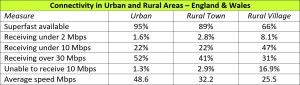
Thirteen areas have been awarded a share of £95 million to help with the rollout of ultrafast broadband – which delivers internet speeds of up to 1GB per second – which is currently only available to three per cent of the population. The successful bidders include Manchester, London, Blackpool, Cambridgeshire, Coventry, Mid Sussex, North Yorkshire, Portsmouth and Wolverhampton.”
Source: i p10

and full list:
https://www.ispreview.co.uk/index.php/2018/03/brief-summary-13-new-uk-full-fibre-local-network-projects.html

“Councils forced to sell off parks, buildings and art to fund basic services”

Of course, some councils (naming no names) positively relish selling off the family silver to fund such things as posh new HQ … and note the bit about “transforming services” … a phrase our council adores!

“On Friday, the government-appointed inspector sent in to examine Northamptonshire county council’s books after it went effectively bankrupt is due to publish his report on what went wrong.

While he may identify some failings that can be laid at the council’s door alone, in reality Northamptonshire merely had the dubious honour of last month becoming the first local authority since 1998 to be unable to balance its books. According to last week’s report by the government’s spending watchdog, the National Audit Office, there are around 15 councils that could follow suit in the next three years. The most likely contenders seem to be the Tory-run Surrey, Somerset, Lancashire and Norfolk county councils.

The NAO’s analysis highlights the financial predicament facing councils across England. Government funding has fallen by nearly 50% since 2010. Combined with increased demand for adult and children’s social care and homelessness services, as well as paying higher national insurance contributions for staff, implementing the “national living wage” and the apprenticeship levy, growing numbers of unitary and county councils are relying on their reserves to balance their budgets, the watchdog found.

If current rates of spending continue, the NAO calculates that 10% of social care authorities will have exhausted their reserves within the next three years, while more than 20% will have depleted them within four to five years. A recent survey by the Local Government Information Unit thinktank (LGIU) found that 80% of councils were concerned about their finances. Having already slashed spending on management, administration and non-statutory services, as well as raising council tax, local authorities are desperately trying to find sources of revenue. Most plan to increase or introduce charges for services such as parking, garden waste disposal, burials, planning, home care and meals on wheels. With no financial lifeline from the chancellor, Philip Hammond, in his spring statement on Tuesday, many are also having to sell off their assets to raise cash.

Although councils have long been able to sell school playing fields, swimming pools and leisure centres, they were previously barred from using money from building or land sales to fund frontline services. But since 2016, the government has allowed them to invest the proceeds of assets sold by April 2019 in “transforming” frontline services. This has given councils a greater incentive to flog assets. According to the NAO, in the year to April 2017, £118.5m of such capital receipts were used in this way.

Northamptonshire’s proposed sell-off of its new £53m HQ has been widely reported. But numerous other councils are hoping to sell their historic town halls, from Milford Haven in Pembrokeshire, to Southall in west London and Shotley Bridge in County Durham. Until last month Broxtowe borough council in Nottingham had also planned to sell Beeston town hall to developers, but in the face of fierce local opposition it is now inviting bids from those interested in making alternative use of the building.

“It’s a historic building which has been the civic centre for Beeston since 1936 and represents a lot for the people,” says Matt Turpin, a project and communications manager at Nottingham Unesco City of Literature and the co-founder of a blog about Beeston. “The locals are hugely against it. The council ran a consultation last year and 94% said they were against demolition.” A spokeswoman for the council says shortlisted proposals will be asked to submit business plans before a full council meeting makes a final decision.

With buoyant land values, it is hardly surprising that council-owned parks are vulnerable. Knowsley council in Merseyside is planning to sell 17 parks to developers for an estimated £40m. This will be used to create a charitable trust that will fund all future maintenance and upkeep of its remaining parks. The council will no longer fund parks and green spaces after 2019. After its 2018 budget was approved last week, the plans will now go before the scrutiny committee before a final decision later this year.

Knowsley is far from alone. More than half of cash-strapped councils in the north-west of England are considering selling their parks or finding other organisations to maintain them.

A 2018 parks survey being published on Thursday by the Association for Public Service Excellence (APSE) reveals that 85% of cash-strapped councils expect to cut parks and green spaces funding. Paul O’Brien, APSE’s chief executive, says this is a false economy. “While divesting parks may seem like a quick solution to financial pressures, in the long term we lose a valuable community asset that can generate a real return for local places and local people, he says.

“If we want to create healthy, active communities, develop attractive public realms to bring in new businesses and jobs, and safeguard the environment, then parks are the answer not the problem.”

https://www.theguardian.com/society/2018/mar/14/councils-forced-sell-parks-buildings-art-fund-basic-services

Another new unitary council approved – to save money

Owl says: how long can Devon hold out? And should it?

“The Secretary of State for Housing, Communities and Local Government has said he is “minded to” back the proposal for a single new unitary council in Buckinghamshire.

In a written ministerial statement Sajid Javid said he had chosen the structure proposed by Buckinghamshire County Council ahead of a proposal for two unitaries put forward by the district councils of Aylesbury Vale, Chiltern, High Wycombe, and South Bucks.

The latter plan would have seen one council for the area of Aylesbury Vale and the other for the remainder of the current county area.

Javid’s decision is subject to Parliamentary approval and further discussions.

The Secretary of State said: “I am satisfied that this new single council, if established, is likely to improve local government and service delivery in the county, generating savings, increasing financial resilience, facilitating a more strategic and holistic approach to planning and housing challenges, and sustaining good local services. I am also satisfied that across Buckinghamshire as a whole there is a good deal of local support for this new council, and that the area of the council represents a credible geography.

http://localgovernmentlawyer.co.uk/index.php?option=com_content&view=article&id=34517%3Ajavid-backs-plans-for-single-new-unitary-for-buckinghamshire&catid=59&Itemid=27

Conservatives and Russians … and Saudis … and Quataris

Owen Jones, Guardian:

“The Conservative party is in the pocket of foreign powers that represent a threat to the national security of Britain. It is a grotesquely under-reported national scandal, lost amid a hysterical Tory campaign to delegitimise the Labour party with false allegations of treason. If Labour had received £820,000 from Russian-linked oligarchs and companies in the past 20 months – and indeed £3m since 2010 – the media outrage would be deafening. But this is the Tory party, so there are no cries of treachery, of being in league with a hostile foreign power, of threatening the nation’s security.

When questioned about the Russian donations to the Tory party, the chancellor, Philip Hammond, pointedly refused to return the money. “There are people in this country who are British citizens, who are of Russian origin,” he protested. “I don’t think we should taint them, or should tar them, with Putin’s brush.” How noble: a Tory challenging the demonisation of migrants.

Before we get out the bunting, though, let’s look at one donation as an example. It was 2014, and Lubov Chernukhin, the wife of Russia’s former deputy finance minister, paid the princely sum of £160,000 to play tennis with David Cameron and Boris Johnson. In total, since 2012 – when the Electoral Commission initially declared her an “impermissible donor”, before subsequently allowing her to donate – she has handed the Tories £514,000.

I put it to you gently that if Labour took half a million pounds from the wife of a former Cuban minister, there would be no debate about whether this represented a scandalous financial relationship with the Cuban regime. Other examples include £400,000 from Gérard Lopez, a businessmen on the board of a company that partnered with Russian banks that had sanctions imposed on them during the Ukraine crisis.

It goes further than that. By last October, Tory MPs had received four times more money from Russia’s state-run Russia Today TV channel than Labour MPs: it is welcome that the shadow chancellor, John McDonnell, has said that his colleagues should no longer appear on the channel. The Conservative party is notoriously dependent on donations from the financial sector. The tens of millions of pounds poured into the Tories’ war chest are not offered as acts of charity and munificence.

In 2011, for example, the Financial Times reported that “even donors admit that Tory MPs’ desire to cut the 50p top rate of income tax is because these rich City donors are so close to the party”. This same City of London is awash with dodgy money from Russia. No wonder, then, that in 2014 a secret government document revealed plans to stop any sanctions against Russia that might damage the City. Labour has attempted to introduce legislation that could prevent certain Russian individuals entering Britain or block their assets: how mysterious, then, that the Tories blocked it for “technical reasons”.

Then there are the links to other regimes that combine contempt for human rights with a threat to our national security. Take Saudi Arabia, ruled by a totalitarian, fanatical regime that likes to slice the heads off gay men and dissidents, which treats women with what can only be described as barbarism, and which exports international extremism. In the two years or so after it began bombing Yemen – including with British weapons – Tory MPs received £99,396 from the Saudi regime in the form of gifts, travel expenses and consultancy fees. Hammond was one of them: he received a watch worth nearly two grand from the Saudi ambassador.

In the past five years, moreover, Saudi Arabia and other autocracies spent £700,000 on luxury trips for MPs, more than 80% of whom were Tories. Just under £200,000 of that was money from Saudi Arabia to pay for the excursions of 41 MPs, 40 of whom were Conservatives. Now why would they possibly be doing that? Could it be – given that MPs receive nothing from our democratic allies for such trips – that this is part of a clear PR offensive, an attempt to secure influence over the Conservative government?

Indeed, Rehman Chishti – the newly appointed vice-chair of the Conservative party for communities – received £2,000 a month from the Riyadh-based King Faisal Center for Research and Islamic Studies between March 2016 and January 2018. Although the parliamentary commissioner for standards saw no reason to take action, it is worth noting his rampant pro-Saudi dictatorship sympathies. His Twitter feed includes boasting of being congratulated by the Saudi dictator for being re-elected as an MP in 2015, hosting lectures by Saudi officials, and leading Tory parliamentary delegations to Saudi Arabia. His colleague, Daniel Kawczynski, goes on TV to justify the barbaric Saudi assault on Yemen, crows about writing the “most pro-Saudi book ever written by a British politician”, but then threatened to sue when this was linked with went on a trip worth £6,722.14 paid for by the Saudi regime.

Litvinenko widow warns Tories over Russian donations
And then there is the Tories’ financial heart. The Qatari dictatorship owns three times more property in London than the Queen, and more than the mayoralty. Indeed, the Qatar Investment Authority owns Canary Wharf, the Shard and Harrods. Let’s be clear: the Qatari regime has backed extremist and terrorist organisations, as have wealthy individuals under its jurisdiction. As Paddy Ashdown put it in 2015, David Cameron failed to put sufficient pressure on Qatar and Saudi Arabia to stop funding extremism, leading Ashdown to “worry about the closeness between the Conservative party and rich Arab Gulf individuals”. Consider Theresa May’s refusal to publish a report on foreign funding of extremism. Well, it would hardly go down well with the Gulf states, which are so deeply embedded in Tory milieus, would it?

What a farce. There was rolling coverage smearing Jeremy Corbyn as a traitor based on the testimonies of a single crank from the former Czechoslovakia. And yet the Tories are at the centre of a web spun by the Russian and Gulf regimes. Hundreds of people in Salisbury are now washing their belongings after traces of a nerve agent were found at the restaurant suspected to be the location where a Russian spy, and his daughter and a British policeman were poisoned.How is it morally acceptable for the Tories to take the Russian or Saudi shilling? What are the practical implications of this? And where is the never-ending media outrage over it? The answers to these three questions paint a damning picture indeed.”

https://www.theguardian.com/commentisfree/2018/mar/12/tory-links-russia-saudi-links-corbyn-spy-extremism

“Tories quietly delay plan to force porn websites to check their users’ age”

Owl says: Can this government actually DO anything right!

“Plans to force porn websites to check their users are of legal age have been quietly delayed by the Tory government.

The announcement was sneaked out at the bottom of a 3,400-word press release about 5G on the Orkney Islands.

Porn sites were originally told to install age verification software before April this year in an effort to make the internet safer for children.

In July last year, Tory minister Matt Hancock – now Culture Secretary – told MPs the measures would be “fully in place” by “April 2018”.

But on Friday afternoon his department admitted it needs more “time to get the implementation of the policy right”.

The British Board of Film Classification was decided as the age verification regulator in February, the government said. …”

https://www.mirror.co.uk/news/politics/tories-quietly-delay-plan-force-12173694

Cranbrook will grow to 8,000 homes over 15 years

Owl says: and still it has no town centre and developers refuse to fund one!

“Feedback on how Devon’s newest town, Cranbrook, should grow and develop over the next 15 years, goes before councillors next week.

The Cranbrook Plan: Preferred Approach’ document sets out how the growth of the town up to around 8,000 households over the next 15 years will be achieved.

A community consultation ran for eight weeks from mid-November last year to early January and it gave residents of Cranbrook and its neighbouring communities the opportunity to comment on the proposals for the future of the town contained within the document ‘Cranbrook Plan: Preferred Approach’.

In addition to identifying land for new houses, the document also identified land for sport and community, economy and enterprise, schools, allotments and Gypsy and Travellers pitches. …

Outline planning permission for the first 2,900 homes at Cranbrook was issued in October 2010 followed shortly by the reserved matters for the first 1,100 homes in April 2011. Today there are approximately 1,700 households living at Cranbrook, equivalent to a population of around 4,000 people, but the Local Plan anticipates Cranbrook comprising approximately 7,850 new homes by 2031. This equates to a population of around 20,000 people meaning that Cranbrook will have quickly expanded to become the second largest town in the District.

The consultation revealed that there is a concern over relationship with properties at Broadclyst Station, who are keen to retain a separate identity, that the East Devon New Community partners say that the Treasbeare area could accommodate a minimum of 1,000 dwellings as opposed to the 800-950 stated in the masterplan, and that there should be a school in both of the Bluehayes and the Treasbeare area of Cranbrook..

On transport issues, the responses reveal that the delivery of a half-hourly rail service is a key ambition of the plan in order to encourage use of rail travel as an alternative to the car, but that despite the wishes of residents for the old A30, the B3174 London Road to remain as a bypass to developed, it is scheduled to be downgraded from its current status and to become an integral part of the town. …”

https://www.devonlive.com/news/devon-news/council-discuss-how-devon-town-1328118

Better council scrutiny? Not on our watch says government!

“The Government has rejected calls from MPs for the extension of the requirement for a statutory scrutiny officer to all councils.

The proposal had been contained in a Communities and Local Government Select Committee report, Effectiveness of local authority overview and scrutiny committees, published in December 2017.

MPs on the CLG committee had suggested that such a post-holder should have a seniority and profile of equivalence to the council’s corporate management team. Statutory scrutiny officers should also be required to make regular reports to full council on the state of scrutiny, explicitly identifying any areas of weakness and the work carried out to rectify them, they argued.

However, in its formal response the Government reiterated its view that decisions about the allocation of resources for the scrutiny function were best made at a local level. “Each council is best-placed to know which arrangements will suit its own individual circumstances. It is not a case of one size fits all.” …”

In other words, if a council has something to hide – it can hide it.

EDDC “Council decision to sell HQ for £7.5M is worst deal ever, activists”

Activists have branded a council decision to sell its HQ “the worst deal ever” for taxpayers.

East Devon District Council is selling its offices at Knowle in Sidmouth to Pegasus Life Ltd, one of Britain’s largest retirement housing developers, for £7.5 million.

The developable value of the site – divulged in a response to a Freedom of Information request in January-has been set at £50 million, with Pegasus Life Ltd set to make a £10 million profit.

Pegasus is owned by an American firm listed in the so-called Paradise Papers, 13.4 million confidential electronic documents relating to offshore investments that were leaked to German reporters last year. Offshore investments enable companies and individuals to shelter their wealth and avoid tax. They are legal.

Paul Arnott, chairman of the East Devon Alliance campaign group, said: “Why were councillors never told that our last great piece of family silver the Knowle – would be worth a massive £50 million after development?

“If any individual person in East Devon was told their prime location property could be developed and sold on for £50 million they’d never accept £7 million.”

In December 2016, the council’s planning committee rejected Pegasus Life’s planning application for 113 extra care units, but following a four-day inquiry into the developer’s appeal in November, a planning inspector gave the firm approval for the scheme which includes a café and swimming pool. Sidmouth has been allocated only 50 extra care homes in the council’s Local Plan.

The Alliance said it was an “exceptionally bad” deal, because, in accordance with the old land buyer’s rule of thumb, the landowner of a site should expect around a third of its developable value – in this case £16.5 million.
A council spokesperson said the deal was based on the site’s land value – in its current state. The site includes the buildings, terraces and top car parks.

Moving council operations to Honiton, with a satellite office at Exmouth Town Hall, has a budget of £10 million and is being funded out of the council’s coffers and a Public Works Loan Board loan.

The council spokesperson said that “from day one”, council running costs would reduce significantly when it leaves the Knowle and during its first full year of operations at Honiton it will save £135,000, with savings increasing year-on-year.

The Alliance pointed out that because the proposed complex is considered to be a residential/care home development, as opposed to a general residential development, the developer is not required to pay Section 106 money towards providing community services. The developer is only contributing £12,000 to improve access/footpaths to the site from adjacent parkland.

However, the developer could have to comply with what is known as an overage clause: If more than a 20% profit is made from the development, the council will be entitled to 50% of any profit made over and above the 20%, to a maximum of £3.5 million.

A council spokesperson, said: “We have carried out due diligence on Pegasus Life Ltd and are satisfied that they are an established and successful company suitably financed, capable of delivering the promised development and able satisfy their contract with the council.

“Selling the Knowle and moving offices is key to continuing to serve our communities. Services to our communities are what matter, not the vanity of paying to stay in an outdated and expensive building.

Pegasus Life Ltd bosses did not comment when asked whether any of the profit of its Sidmouth development could end up in tax havens. However, Howard Phillips, its chief executive, said: “We pride ourselves on the quality of our developments and the sensitivity of our designs to ensure they fit in with the area’s achitectural vernacular.

“The UK is in the middle of housing crisis and local authorities need to make cohesive eve plans that meet the needs their local towns. This includes provision for people over 60.”

Source: Western Morning Newz