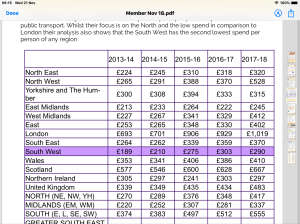
“Quarter of shop space in England and Wales lost after 2008 crash”

“More than a quarter of all retail floor space in England and Wales disappeared in the aftermath of the 2008 financial crisis, research has shown, as the industry struggled with the shift to online purchases.

The amount of shop space fell in all but five of 348 local authorities analysed in the study by academics at Northumbria University, Newcastle.

In 2008, there was more than 157m square metres of retail floor space in England in Wales. By 2015, the figure had dropped to just under 114m square metres, a 27.6% fall.

The analysis covers the period before the latest crisis to hit the UK retail sector, which has led to the collapse of high street brands including Toys R Us and Maplin. Many others including Marks & Spencer and Debenhams are closing stores and cutting staff.

Alongside the rapid rise of online shopping, retailers have been affected by consumers’ weak income growth.

The rateable value of retail property fell in two-thirds of the local authorities analysed during the period, despite the loss of a quarter of the total supply.

The figures illustrate a stark divide between regions. The value of central London locations surged during the period, with the biggest increase recorded in Westminster, where the average rateable value for retail premises grew by almost 80%.

In contrast, the value of retail property in south Wales slumped as areas such as Swansea, Port Talbot and Bridgend suffered from the decline of the steel industry. The local authorities on the south coast of Wales between Cardiff and Swansea all saw the rateable value of properties fall by more than 20% between 2008 and 2015.

The study compared the government’s data on business rates paid by companies on their property. The data was made available in the 2010 and 2017 rating lists.

The fall in the total rateable value of retail space could have significant implications for Britain’s model of funding local public services, said Paul Greenhalgh, a professor of real estate and regeneration at Northumbria, and a leader of the research.

Under changes to the funding formulae introduced by George Osborne as chancellor, local authorities keep more of the money collected from business rates. A fall in the total rateable value of properties in a local authority area could therefore leave the authority’s budget more exposed to price fluctuations in the property market.”

https://www.theguardian.com/business/2018/dec/03/quarter-of-shop-space-in-england-and-wales-lost-after-2008-crash

Thousands of disabled people shafted by “hostile environment ” benefit cuts

“The government has been accused of creating a “hostile environment” for disabled people after it was revealed almost 50,000 have been hit by benefit cuts in the past year.

Analysis by the Labour Party revealed the government’s decision to cut the Employment and Support Allowance (ESA) by almost £30 per week for some new claimants in a bid to encourage more people into work had affected 46,000 sick and disabled people.

The controversial welfare policy – which was introduced in April 2017 – saw ESA payments for those judged fit to work dropped to the same level as the Jobseeker’s Allowance, despite charities including Disability Rights UK warning it would have a “devastating” impact on disabled people and actually make it harder for them to find employment.

Labour’s research found 29,000 of the disabled people hit by the cuts in the past year – around two-thirds of the entire group – suffer from mental or behavioural disorders.

Meanwhile, the party estimated that approximately half a million people will be hit when the cut takes full effect. …”

https://www.huffingtonpost.co.uk/entry/nearly-50000-disabled-people-hit-by-appalling-cut-to-benefits-in-last-year-alone-analysis-reveals_uk_5c0504ede4b0606a15b70525

Raynsford Report on planning: hot on problems, cold on solutions!

Executive summary here:
https://www.tcpa.org.uk/Handlers/Download.ashx

Honestly, Owl can barely raise a talon. Nothing new, so let’s just stick with this paragraph:

” …The defining challenge for the future of planning is not to be found in any technical fix, but in the degree to which there is consensus in favour of an effective and democratic system to manage the future development of our communities and our nation.

The institutional and technical changes are possible and achievable.

The question is whether we have the will and foresight to secure the health and wellbeing of all our communities now and for the future …”

… rhubarb, rhubarb, rhubarb….

Yeah, right, ok …. zzzzzzzzzzzz.

“Councils appeal for cash injection to avoid ‘catastrophic collapse’ “

“Council leaders from some of Britain’s biggest cities are demanding an emergency cash injection to stop a “catastrophic collapse” of authorities that have faced the biggest cuts to their support.

Bosses from Manchester, Newcastle and Birmingham are among almost 80 Labour council leaders to write to James Brokenshire, the communities secretary, demanding that a forthcoming cut in funding of £1.3bn is cancelled “at an absolute minimum”.

It comes as several councils warn they are facing bankruptcy and one, Northamptonshire council, is effectively bailed out by the government after hitting a financial crisis. English councils face a funding gap of £5.8bn by 2020, according to the Local Government Association.

The plea from Labour councils comes ahead of this week’s financial settlement for local government. In their letter, they warn that by 2020, councils will have lost 60p out of every £1 they were given by central government in 2010.

“As leaders of councils representing millions of citizens, we are writing to make clear that you must use the settlement to truly end austerity in local government and immediately provide the funding we need to avoid catastrophic collapse in key council services,” they write.

“The most deprived areas of the country have been hit much harder than the richest areas – nine of the 10 most deprived councils in the country have seen cuts of almost three times the national average. After eight years of austerity, many councils have reached breaking point and council budgets are perilously close to collapse.”

“At an absolute minimum, you must use the funding settlement to cancel the planned further cut of £1.3bn to next year’s Revenue Support Grant. To blindly press on with further cuts at a time when local government is on the brink of collapse would be hugely irresponsible.”

A Ministry of Housing, Communities and Local Government spokesperson said: “We’ll be confirming local government funding for the financial year 2019/20 soon.

“Already we’ve committed to providing councils with £90.7bn over the next two years to help them meet the needs of their residents.

“In the budget we announced more than £1bn in extra funding for local government to address pressures on their services.”

https://www.theguardian.com/society/2018/dec/02/councils-appeal-cash-injection-avoid-catastrophic-collapse

“More visible police resources for Cranbrook”… but … not yet!

“Cranbrook has been promised a police office in its future town hall development, and ‘more visible resources’ to tackle speeding and anti-social behaviour.

No decision has been made yet on a neighbourhood beat manager, but residents are being urged to report all incidents to help make the case for a stronger police presence.

Devon and Cornwall’s Police and Crime Commissioner, Alison Hernandez, attended Cranbrook Town Council’s meeting on Monday, November 19, with two senior police officers and two from the local area policing team, to hear residents’ concerns.

During the meeting, Ms Hernandez said she was ‘committed’ to having a police office in The Tillhouse when it is built – a statement that was welcomed by the town council.

She said the employment of a neighbourhood beat manager would not be achieved in the short term, but Cranbrook needs to keep providing evidence of the need for one.

“Encourage your community to report everything – if you don’t, it will be harder to fight for that resource,” she said.

“Reporting is really important. It is logged and it has a resourcing implication.”

The police officers present said even if they cannot attend a reported incident immediately, they need information about offenders from the local community so that they can take action at a later stage. …”

Never trust a Tory with numbers!

“Mayor James Palmer admitted he underestimated the cost of running the new combined authority, and says original predictions it would cost £850,000 a year were never going to be realistic.

The Cambridgeshire and Peterborough Combined Authority was founded in 2017 in a bid to simplify local government. It is involved in many major housing and infrastructure schemes, including the proposed Cambridge metro, and the Wisbech rail link.

However, having initially been hailed as an “efficient” and low-cost authority, some are beginning to worry about rising costs and the “spiralling” cost of paying for staff.

Initially, it had been claimed the authority could be run on £850,000 a year.

Now there are fears costs are “spiralling out of control” after it emerged the authority is set to spend £5.6million on staff salaries alone this year. Total operational costs of the combined authority are set to come to £7.6million.

In leaflets distributed when Conservative James Palmer was running to be mayor of the combined authority, Mr Palmer said: “Under my leadership, the new combined authority will have very few staff, less than 20, and will be very efficient, costing around £850,000 a year to run. Most authorities cost tens of millions. As mayor, I will make sure the cost is kept low.”

Today (November 26) Lucy Nethsingha, chairwoman of the combined authority’s overview and scrutiny committee, noted that costs at the authority were “considerable higher” than had been originally expected. She asked Mr Palmer what he had to say about the increased costs.

Mr Palmer now says he “can only apologise” for the increased costs of running the authority, saying he “underestimated” its running costs.

Mr Palmer said: “I can only apologise. I underestimated the cost of running such an important authority. I think, realistically, we were never going to be able to function on £850,000 a year.”

Mr Palmer said he was concerned about costs at the authority which is why he has commissioned a review of its structure. He also pointed out that the combined authority had taken on staff and spending from the local enterprise partnership (LEP), a group which supported business and sustainable investment and growth, which was scrapped in December 2017.

Mr Palmer also noted that senior staff at the combined authority were not earning more than similarly senior staff in other tiers of local government. He said, however, that after the review is completed, he anticipates the authority will be spending less on staffing. He said he expects running costs to be reduced as the authority relies less on consultants.

“It is a difficult one, “said Mr Palmer. “It’s something the general public rightly gets concerned about. It is their money. But we are working to deliver extraordinary infrastructure and doing things that were previously not achievable.”

https://www.elystandard.co.uk/news/james-palmer-and-cost-of-combined-authority-1-5795358

“More than 350 GP surgeries face closure in England alone over the next 12 months”

“Up to 3m patients are expected to lose their GP surgery within a year because of a shortage of doctors.

More than 350 practices face closure in England alone over the next 12 months, according to a survey of doctors for the Royal College of General Practitioners.

Doctors’ leaders, patients’ groups and MPs expressed alarm and warned that general practice was at “serious risk” of collapse.

Rising numbers of GPs are retiring early, becoming locums in the private sector, changing career or moving abroad.

As well as pressure to work longer hours and see more patients, the closures are being driven by GPs deciding to stop work when their pension pots exceed £1m and attract heavy taxes. They are not being replaced by trainees despite intense regional NHS recruitment drives and £20,000 golden hellos. GPs earn £92,500 on average.

In an interview with The Sunday Times, Britain’s most senior GP said surgeries were “haemorrhaging doctors”. Professor Helen Stokes-Lampard, college chairwoman, said she was “gravely concerned” by the findings.”

Source: The Times (pay wall)

“HS2 rail chief Terry Morgan faces sack over spiralling costs”

The chairman of HS2 is facing the sack less than five months after his appointment because of fears that costs are spiralling out of control.

Sir Terry Morgan is also set to be removed as the chairman of Crossrail, the ambitious line linking east and west London, relieving him of leadership of two of the UK’s highest-profile infrastructure projects, according to a report.

Theresa May was expected to move against Morgan, who was described as “world-class” by Grayling when he appointed him in July to HS2, the planned high-speed rail link between London and Birmingham. A source said that Morgan was expected to leave both posts within weeks.

The news was first reported by the Financial Times on Friday. It is thought that both Grayling and the chancellor, Philip Hammond, had declared they had no confidence in Morgan’s leadership and urged May to remove him.

The FT quoted a government official close to HS2 as saying: “They told the prime minister they have no confidence in him and she agrees. It is only a question of finding the right moment to announce it.”

Downing Street, the Department for Transport and HS2 declined to comment. The DfT said: “We would not comment on personnel matters.” …

Grayling had allied himself closely to Morgan in the summer. “Sir Terry’s appointment as chair of HS2 ensures that we will continue to see world-class leadership in an exciting period for one of Europe’s most significant infrastructure projects, helping deliver huge economic growth and improvements for passengers across the country,” he said when he announced the decision.

Morgan, the transport secretary added, had a “wealth of experience and expertise”, as well as a “respected reputation and enthusiasm”. He cited Morgan’s work on previous infrastructure projects, including upgrading several London Underground lines and working at BAE Systems. Morgan said the appointment was a “privilege” and promised HS2 would “help transform this country”.

But concerns were raised about its direction after it emerged days after Morgan’s appointment at HS2 that Crossrail was running about £600m over budget. And, in August, the government’s infrastructure adviser said ministers should spend an extra £43bn on projects linked to HS2 in order to make it worthwhile.

In an article for the Sunday Telegraph, the chairman of the National Infrastructure Commission, Sir John Armitt, said the government “cannot simply construct a new high-speed rail line and leave it at that; to get the biggest bang for our buck, we need to think about the whole journey that passengers will take”.

He went on: “Once people reach the end of their HS2 journey and travel into the city they are visiting, on current form, they would in many cases face inadequate public transport links and congestion on the roads.” To deal with that, he suggested handing the cash to local areas to improve their infrastructure.

There were further reports that HS2’s budget could eventually spiral to £80bn. The Sunday Times said a leaked report had warned that the official budget of £56bn for the project may have to be significantly increased.”

https://www.theguardian.com/uk-news/2018/nov/30/hs2-rail-chief-terry-morgan-faces-sack-over-spiralling-costs

Why falling house prices can be a bad thing

“… An analysis released this week by the property firm Savills spelled out just one of the reasons why [a downturn in property prices could be a bad thing].

A property downturn could, it estimated, reduce the number of affordable homes being built by a quarter. When prices fall, developers’ profits shrink and they retreat from the market. And when developers stop building, promises to stop future buyers being locked out of the market by building 300,000 new homes a year aren’t worth the manifestos they were written on.

What was striking about the former cabinet minister Oliver Letwin’s recent report on land banking – the much-hyped practice of developers buying up land and sitting on it while it rises in value – was that he found precious little evidence of it happening. What he did find was developers building on their sites painfully slowly, over the course of several years, because they won’t do anything that causes neighbourhood property prices to fall. A glut of for-sale boards going up all at once means buyers can take their pick and haggle hard over prices. This may be exactly what first-time buyers need but it’s what developers are primed to avoid.

The problem with relying on the market to provide is that the market works to ration the one thing voters hope mass housebuilding programmes will deliver. And that’s in good times; imagine what happens when everyone is scrabbling frantically to protect their investment in a downturn. …”

https://www.theguardian.com/commentisfree/2018/nov/30/if-house-price-crash-sounds-like-good-news-think-again

“‘£65,000 prefab homes go into production” [but buyers will pay at least £200,000]

So, reading the article, they will REALLY cost buyers about £200,000 minimum each – but with less need for skilled trades developers will make more profit! Neat!

“The UK is entering a new era of prefab homes with the opening of a Yorkshire factory that will build fully-fitted three-bedroom homes with a price tag as low as £65,000.

Eight houses fitted with kitchens and bathrooms will roll off the production line every day in Knaresborough, to be loaded on to lorries for delivery across the country. Experts have hailed it a revolution in British housebuilding that would slash the 40 weeks it could take to build a traditional home to just 10 days.

The factory cost of a two or three-bedroom home would be from £65,000 to £79,000, although that excludes the cost of land, on-site assembly and connecting the home to services, which could double or triple the final price.

The plant, operated by the UK company Ilke Homes, said it would produce 2,000 houses a year, rising eventually to 5,000, which would catapult it into the top echelon of volume housebuilders in the country.

Meanwhile, the insurance company Legal & General has built a vast factory outside Leeds which it said would build 3,500 homes a year, with the first two and three-bedroom homes being delivered in the past few weeks. It said it intended to build similar factories in locations across the UK, which would turn L&G into a bigger builder than Persimmon or Barratt Developments.

The term prefab has been shunned by the new housebuilders. The new buzz phrase, with its connotation of low-quality, postwar emergency housing,has instead been described as “modular construction”. Developers have been promising homes built to higher standards than those using traditional methods. They also claim energy bills would be half that of a conventional home due to better insulation.

The housing secretary, James Brokenshire, speaking at the opening of the Knaresborough site on Thursday, said the factory would help the government reach an annual target of 300,000 new homes in England. Last year nearly 220,000 homes were built in England. “This is about challenging the ways we have done things in the past. We want to see 300,000 homes being delivered by the mid-2020s, so we need to scale up and build more, better and faster. And that is precisely what this facility is about,” he said. …”

https://www.theguardian.com/society/2018/nov/30/uk-housebuilding-revolution-65000-prefab-homes-go-into-production

New UK report: “Spending cuts breach UK’s human rights obligations”

“Cuts to public services and benefits that disproportionately affect the least well-off, single parents and disabled people put the government in breach of its human rights obligations, a study for the UK equalities watchdog has found.

Echoing the recent findings of the UN special rapporteur on extreme poverty, Philip Alston, the study concluded the scale of the cuts and their lopsided impact on the most disadvantaged were a policy choice, rather than inevitable.

“There were a lot of choices, and the government chose to balance the budget on the backs of the poorest,” said the study’s co-author, Jonathan Portes, a professor of economics at King’s College London.

The study examined the impact of spending on the NHS, social care, police, transport, housing and education between 2010 and 2015 on various groups in England, Scotland and Wales. It also looked at the expected impact of spending plans for these sectors to 2021-22, and tax and benefit changes.

On a per-head basis, reductions since 2010 were significantly higher in England – equivalent to about 18% – than in Wales (5.5%) and Scotland (1%), in part because the devolved governments chose to mitigate some effects of the cuts, it said.

The poorest 20% of people in England lost an average of 11% of their incomes as a result of austerity, compared with zero losses for the top fifth of households.

Measured in cash terms, total spending on public services will have fallen by £1,500 per household in England by 2021-22, compared with just under £500 in Wales and £200 in Scotland, according to the study commissioned by the Equality and Human Rights Commission. …”

https://www.theguardian.com/society/2018/nov/28/spending-cuts-uk-human-rights-obligations-report

Michael Caines to open new restaurant on Exmouth seafront

https://www.devonlive.com/news/devon-news/michael-caines-restaurant-confirmed-exmouth-2266592

Let’s hope prices won’t be too high for locals. Bed and breakfast at his nearby Lympstone Manor starts at a cool £250 per person per night – or a reasonable offer of £330 per room on Hotels.com.

Lunch costs £39 for 2 courses, £49 for three courses with a nice dinner for £125 per person – lobster, grouse, passion fruit souffle as an example.

Perhaps the seafront restaurant will use the leftovers!

“Property downturn could reduce number of affordable homes built by 25%”

“major downturn in the housing market could reduce the number of affordable homes built by a quarter, the property firm Savills has warned.

Savills estimates that about 100,000 new homes a year – a third of the government’s 300,000 target – need to be priced at levels below the going market rate, whether for rent or for sale.

However, only 43,498 such homes were built in England in the financial year 2017-18, albeit 10% higher than the previous year, according to government figures.

Many were built for so-called “affordable rent”, where rental costs are capped at 80% of local private sector rents.

Negative gearing report finds housing less affordable now than at height of the boom.

About half of affordable new homes, 22,000, were built through section 106 of the housing act, for social rent, affordable rent, intermediate rent and shared ownership.

Section 106 is a planning clause requiring developers to include a proportion of affordable housing in their developments, which is often sold to housing associations.

It accounts for 53% of all affordable homes built, passing the 50% mark for the first time in six years.

However, if there was a major housing downturn akin to the late 1980s, early 90s or 2008, when prices and the volume of transactions crashed, the number of section 106 affordable homes would be halved to about 11,000, Savills predicts.

A housing slowdown is also likely to lead to fewer of those homes being constructed. House prices have been falling in London and parts of the south-east for more than a year but values are still rising elsewhere in the UK.

Chris Buckle, Savills’ research director, said: “From the end of the last cycle in 2007-8, we saw a roughly 50% fall in section 106 affordable housing completions to fewer than 4,000 homes.

“Although we are not predicting a market downturn, the housing market is slowing and this could result in fewer section 106 affordable housing completions.”

The Savills analysis comes after official figures showed the number of new homes built for social rent has fallen by almost four-fifths in a decade – while more than 1 million families are stuck on waiting lists for council housing in England.

Only 6,463 homes were built in England for social rent in 2017-18, down from almost 30,000 a decade ago.

In London and southern England the affordable housing shortage is particularly acute. An estimated 42,500 households need homes priced below market rates every year but over the last three years only an average of 5,600 were built a year, leaving an annual shortfall of 36,900, Savills says.”

https://www.theguardian.com/business/2018/nov/26/property-downturn-could-halve-building-of-affordable-homes-savills

“Councils warn that schools are ‘running on empty’ after minister bets [with champagne] that they can still save more money”

“Councils have hit back after education minister Lord Agnew bet a bottle of champagne that he could identify waste in any school:

https://www.tes.com/news/minister-bets-champagne-schools-are-wasting-money

Representatives of local authorities today also warned the Commons Education Select Committee about increased pressure on SEND spending, and the impact of funding pressures on education standards.

The minister last week told the School and Academies Show: “I would challenge anyone here, if they want to have a wager with me, that I can’t find some waste in your schools. I will take you on.

“I will use the teams I’ve got at the DfE to win that wager. If I lose the wager, which is entirely possible, I promise to give you a bottle of champagne and a letter of commendation.”

Asked about the comments today, Paul Carter, of the County Councils Network, told MPs “the tank is running on empty”.

“Well, [schools] have delivered efficiencies,” he told the committee, which is holding an inquiry into school and college funding. …

Yolande Burgess, strategy director at London Councils, raised concerns about what some people may count as an efficiency saving.

She said a London Councils survey last year showed that 47 per cent of secondary schools had reduced the breadth of their curriculum, 70 per cent of primaries had cut the number of teaching assistants, and 63 per cent of all schools had cut spending on learning resources.

She asked: “Is that a cost efficiency?”

Anntoinette Bramble, of the Local Government Association, said there was a place for efficiency savings, but warned, “Let’s not conflate that with ensuring that we have the right investment in schools.”

She added: “If you have been a local authority or school that has taken that cost-efficiency journey, you are back to ‘we need to resource our schools and run our schools and we need the appropriate money in the system to do that’.”

Committee chair Robert Halfon asked the three representatives whether they agreed that “the efficiency argument that the minister has put is not really apt, but not really possible given the efficiency savings that have already been made”.

They said they agreed.

https://www.tes.com/news/councils-hit-back-over-lord-agnew-champagne-bet

“Poor families could take in lodger to beat benefit cap – minister”

“Families living in poverty because of the benefit cap could consider taking in a lodger to make ends meet, a minister has suggested, prompting a scathing response from the MP questioning him about the system.

Justin Tomlinson, the junior work and pensions minister, told MPs that other ways families could cope with the impact of the cap would be to move, or to seek to renegotiate their rent so it was cheaper.

Answering questions from the work and pensions committee, Tomlinson also said there was no specific government analysis taking place about the impact on people of the cap, introduced under David Cameron’s government, and reduced in 2016.

The absolute maximum amount of benefits a couple can receive, whatever their circumstances, is £20,000 a year, rising to £23,000 in London.

While the government argues it incentivises people to work and prevents the unfairness of people on benefits receiving more than the average wage, critics say it is pushing many families into extreme poverty and debt.

Questioning Tomlinson and the DWP’s head of working-age benefits, Pete Searle, the Labour MP Ruth George asked what analysis was being done into this effect. Stephen said that as part of a wider evaluation of “other outcomes” of the policy, officials were looking into how people “respond to the cap”.

George said: “Responding to the cap – does that include things like having to switch the heating off and be freezing cold at night? Does that include things like not being able to feed their children to a nutritionally decent standard?”

Almost two-thirds of people affected by the cap were not entering work, George, the MP for High Peak, said.

Tomlinson responded: “Of those, some will have made other changes, including in their housing costs, whether that is either moving or renegotiating what their rental housing costs are. Or they could, for example, take in a lodger. So there’s other circumstances than work.”

George responded with incredulity: “These are large families, they’ve often got three children in one bedroom. How are they going to take in a lodger?”

Tomlinson said this was an argument in favour of the government’s bedroom tax: “If there’s three children in one bedroom then you should start joining us in supporting releasing more family homes through or spare room subsidy changes.”

While some tenants in social housing are allowed to take in lodgers, for those in private accommodation it usually needs the landlord’s permission, and any income would need to be declared.

Explaining the reasons for the benefit cap to the committee, Tomlinson said it had three objectives: saving money; the “fairness test” over comparisons with working incomes; and incentivising work.

This had worked for many families, he said. “For those people where it has made a difference, it has significantly improved their life chances, for not just them but for their children.”

But George pointed out that of those affected by the cap, 81% are not subject to “work conditionality” – meaning circumstances such as very young children dictate they are not automatically expected to seek work.

Later in the session, the committee chair, Frank Field, asked if there were any plans to raise the cap, given rising rents and other costs.

Tomlinson replied: “There isn’t any work at the moment that I’m aware of that’s looking to change that cap.” Searle added that it was reviewed at least once every parliament.”

https://www.theguardian.com/society/2018/nov/21/poor-families-could-take-in-lodger-to-beat-benefit-cap-minister-justin-tomlinson

“Bet365 founder paid herself an ‘obscene’ £265m in 2017” (£726,000 per DAY)

“Denise Coates, the multibillionaire founder and boss of the gambling firm Bet365, paid herself £265m last year in a record-breaking pay deal for the chief executive of a British company.

The huge pay package, which equates to nearly £726,000 a day, dwarfs the previous UK record set by Coates when she collected £217m a year earlier.

Coates was paid a base salary of £220,004,000 in the year to March 2018, accounts filed at Companies House on Wednesday reveal. On top of this, she collected dividend payments of £45m from her more than 50% shareholding in the Stoke-based company. Bet365 made a £660m profit last year from a record £52.6bn of bets.

Her pay is more than 9,500 times the average UK salary, 1,300 times that collected by the prime minister and more than double that paid to the entire Stoke City football team, which Bet365 owns and which was relegated from the Premier League last season.

Luke Hildyard, a director of the High Pay Centre, said: “Why does someone who is already a billionaire need to take such an obscene amount of money out of their company? It is difficult to find a reason beyond pure greed.

“A payment of this size would be impossible to justify for someone whose business was in unquestionably life-enhancing products or services. It is doubly offensive when awarded to a betting company CEO at a time when problem gambling is spiralling out of control.”

Mike Dixon, the chief executive of the addiction charity Addaction, said: “It’s astonishing that a CEO of one gambling company is paid 26 times more than the entire industry’s contribution to treatment. We know problem gambling affects more than 2 million people. We need a proper levy on gambling industry profits so more people can get help and support.” …

https://www.theguardian.com/business/2018/nov/21/bet365-denise-coates-paid-herself-an-obscene-265m-in-2017

“IRONY ALERT: Former Work and Pensions Secretary Esther McVey on her income cut”

“Hypocrisy in British politics comes as no surprise to your mole, who has recently had to report on Brexiteers with second homes in Europe, the Mail discovering closed borders are bad, and liberals defending the gulag. But this latest IRONY ALERT has slapped it right in the snout.

Esther McVey, the recently resigned Secretary of State for Work & Pensions overseeing Universal Credit’s disastrous roll-out, has tweeted to the general public about her lower wages after stepping down from the government post.

“By resigning, my salary has been halved,” she tweeted, to a nation of people experiencing punitive sanctions, delayed payments, cuts to their benefits, rent arrears, loss of income, eviction, food bank use, and less money for their disabilities, illnesses and child support thanks to her former Department’s policies.

In what McVey clearly thought was a SICK BURN in response to a guy on Twitter suggesting jokingly that she should be sanctioned for leaving a job voluntarily (as is the case under the DWP’s social security system), she clarified that – actually, yes – she did suffer a loss of income when she left her job.

This wasn’t quite the zinger she hoped it would be, however, considering the horrifying lack of self-awareness that someone on an MP’s salary – who had presided over a government system making people worse off against their will – would think it appropriate to point out the loss of income from their own political decision.

https://www.newstatesman.com/politics/welfare/2018/11/irony-alert-former-work-and-pensions-secretary-esther-mcvey-her-income-cut

Extracts from the UN report on poverty – yes, it IS a political choice

“Extracts from the UN report on poverty in GB by Professor Philip Alston,
​16 Nov 2018

• 14 million people, a fifth of the population, live in poverty. Four million of these are more than 50% below the poverty line,1 and 1.5 million are destitute, unable to afford basic essentials.

• For almost one in every two children to be poor in twenty-first century Britain is not just a disgrace, but a social calamity and an economic disaster, all rolled into one.

• The Government has remained determinedly in a state of denial. British compassion for those who are suffering has been replaced by a punitive, mean-spirited, and often callous approach apparently designed to instill discipline.

• In England, homelessness is up 60% since 2010, rough sleeping is up 134%.
​In-work poverty is increasingly common and almost 60% of those in poverty in ​the UK are in families where someone works.

• Low wages, insecure jobs, and zero hour contracts mean that even at record unemployment there are still 14 million people in poverty.

• One pastor said “The majority of people using our food bank are in work…. Nurses and teachers are accessing food banks.”

• The costs of austerity have fallen disproportionately upon the poor, women, racial and ethnic minorities, children, single parents, and people with disabilities.

• The Equality and Human Rights Commission forecasts that another 1.5 million more children will fall into poverty between 2010 and 2021/22 as a result of the changes to benefits and taxes, a 10% increase from 31% to 41%. Sanctions against parents can have unintended consequences on their children.

The experience of the United Kingdom, especially since 2010, underscores the conclusion that poverty is a political choice. Austerity could easily have spared the poor, if the political will had existed to do so. Resources were available to the Treasury at the last budget that could have transformed the situation of millions of people living in poverty, but the political choice was made to fund tax cuts for the wealthy instead.”

NHS: thank heaven for Claire Wright – but will she be listened to by stubborn, uncaring Tories?

Owl says: how will Randall-Johnson and her cronies try to malign Claire Wright on this one with the overwhelming evidence Claire and her committee produced to show that cuts have gone much, much too far – to the point where it seems basic human rights are being infringed every day particularly for the dying?

Could Randall-Johnson and her cronies imagine some of the things described below happening to their parents, partners, siblings, friends?

What happened to this country – and this county – that health care has been allowed (nay, encouraged) to sink so low?

And all a political choice, NOT an economic one.

Shame on you Tory Health and Wellbeing Scrutiny for allowing this to happen.

“A scrutiny review into the system that’s designed to replace community hospital beds is recommending a raft of measures that will be debated at Devon County Council’s Health and Adult Care Scrutiny Committee, on Thursday this week.

I chaired the review, which took place during the summer and found that the care at home (or Rapid Response) service was very stretched and care of the dying in particular was highlighted as an area of concern, especially since community hospital beds had been closed.

Over 200 Devon community hospital beds have been closed in the past five years or so.

We interviewed a range of witnesses, including Dr Paul Hynam, GP and Secretary of the Local Medical Committee, GP, Dr Mike Slot (whose concerns prompted the review), Ann Rhys, Assistant Director of Care at Hospiscare and Richard Westlake, Chair of Exeter Patient and Public Involvement Group.

Also interviewed were various senior managers from Devon County Council and the local NHS.

I proposed the Spotlight Review after Sidmouth GP, Dr Mike Slot, attended the January Health and Adult Care Scrutiny Committee to outline his concerns about how care at home (or Rapid Response) was working.

Dr Slot said that although he supported it in principle, there simply weren’t enough carers available to look after patients.

On Thursday (22 November) health scrutiny councillors will be asked to endorse 12 recommendations, including:

– No further community hospital bed closures
– Consideration of reopening some community hospital beds on a flexible basis to ease pressure on the system
– A review of all intermediate (temporary bed-based) care provision across the county
– A standardised approach to Rapid Response across the county, including having GPs on the team
– A review of Hospiscare’s role in end of life care, with a view to providing more financial support

Sadly, the biggest pressure on the local healthcare system seems to be care of the dying.

This outcome was predicted by some GPs before the community hospital beds were closed.

Hospiscare’s Assistant Director of Care, Ann Rhys, told councillors that since the community hospital beds had closed Hospiscare had seen a significant increase in pressure on the service and a resultant large increase of patients dying in their 12 bedded inpatient unit in Exeter.

In the last three months (reported over this summer) 40 patients have been unable to access Rapid Response.

Worryingly, staff can make phone contact three to four times a day to the Rapid Response service because there is NOT support available. This is very time consuming and has a significant impact on community teams.

Councillors were very concerned to hear that one East Devon Hospiscare nurse had reported that in just one month during the summer there were eight instances where no care was available.

GP feedback revealed that the service has led to a lack of confidence by some GPs who say they spend a long time trying to find carers to support a patient at home, only to find there is no support available.

The result is then an admission to the local acute hospital instead. Something the service was set up to avoid.

The NEW Devon Clinical Commissioning Group did not provide hospital readmission rates to the scrutiny review, despite being asked several times to do so.

A survey to GPs prompted responses mostly from East Devon. Some of the comments are below:

– “Sometimes it can take some time to get a call back informing you that they cannot get the care requested, meaning the patient needs to be admitted much later in the day.”

– “Since the closure of community beds and supposed reallocation of funds the service seems rather worse than better.

– “I take the view when with a patient that I won’t be able to access Rapid Response but if I can it’s a bonus.”

– “Sadly SPOA (Rapid Response) sounds great, but in reality, it’s a time-consuming referral with low probability of delivering the service you want.”

– “I have had three recent episodes where I have called SPOA (Rapid Response) in recent months and they have been unable to put in appropriate care. Patients have been sent to the RD&E for admission. It is a frustrating process – often not staffed well enough so details at the point of contact cannot be taken. Most cases seem to involve two to four calls back to speak to the right person. GPs under pressure are tied up for too long by the service. So long in fact it has made me not want to use the service. It would be easier to admit patients than it is to call SPOA and arrange care – or try to arrange the care…. “

– “Our allocated care agency handed back their contract and we have been left with very little support for care… when we need Rapid Response to support patients and prevent admission we cannot link into subsequent long-term care packages. I had one chap with a neurological condition who had Rapid Response for over a year!”

I am really really glad this piece of work was carried out and I am proud to be the spotlight review’s chair.

For years we have been told by senior managers that the system is working well, with just a few minor problems. This report and the conversations we have had with people who work at the coalface clearly shows a different picture. A worrying picture that needs fully examining.

I trust that councillors who sit on Devon County Council’s Health and Adult Care Scrutiny Committee will fully support the recommendations.

Here’s the link to the report, which will be debated and voted on Thursday (22 November) https://democracy.devon.gov.uk/documents/s22439/RR%20Report%20final.pdf

http://www.claire-wright.org/index.php/post/no_more_community_hospital_bed_closures_recommends_devon_health_scrutiny_re