Claire Wright gets debate on NHS winter care crisis at next DCC Health and Adult Care Scrutiny meeting

From the blog of Claire Wright:

“I have asked the chair (Sara Randall Johnson) that a report on Devon hospitals winter pressures – ie A&E waits, delayed discharges, how many patients are waiting to be discharged etc, is presented at the next

Devon County Council Health and Adult Care Scrutiny Committee on
Thursday 25 January.

This has been agreed.

The agenda papers are out next week so we will know more then.

Also on the agenda is a presentation from NHS Property Services/NEW Devon CCG on the future of our community hospitals – asked for by Cllr Martin Shaw and I at the November meeting ….”

http://www.claire-wright.org/index.php/post/winter_pressures_report_to_come_to_the_next_health_and_adult_care_scrutiny

“Grenfell fire: KPMG quits inquiry amid conflict of interest furore”

“… The accountancy firm audits the Royal Borough of Kensington and Chelsea, where the tower is located.

It also audits Rydon Construction, which refurbished the tower in 2015, and Celotex, which manufactured insulation material used in the tower. …”

http://www.bbc.co.uk/news/business-42598976

Owl says: if conflicts of interest were taken as seriously in Devon, we would have many fewer councillors, almost no quangos and DEFINITELY no Local Enterprise Partnership!

“Social care postcode gap widens for older people”: EDDC tries to claw back its mistakes too late

Last week, desperate Tories put a much-too-little! much-too-late motion to East Devon District Council:

“To ask the Leader of East Devon District Council to request Sarah Wollaston, Chair of the Parliamentary Health Select Committee, to investigate the effects on Rural Communities of the STP actions and to test if Rural Proofing Policies have been correctly applied to these decisions in order to protect these communities”

https://eastdevonwatch.org/2017/12/13/effect-of-sustainability-and-transformation-plans-on-rural-communities-east-devon-tories-miss-the-boat-then-moan-about-it/

As Owl noted at the time, this is somewhat rich, as their Leader, Paul Diviani, voted at Devon County Council AGAINST sending the document to the Secretary of State for Health (where this could have been highlighted in the covering submission) against the instructions of his EDDC Tory Councillors and never having consulted other Devon Tory councils he was supposed to represent. He was ably assisted in this by former EDDC Chairman Sarah Randall Johnson, who as Chair of the DCC committee, railroaded their choice of action by effectively silencing any opposition (EDW passim)

This led to the accelerated closure of community beds in Honiton and Seaton, following on from earlier closures in Axminster and Ottery St Mary.

A subsequent vote of “No Confidence” in Diviani at EDDC (brought by non-Tory councillors) was defeated by the very Tory councillors he had defied!

Now we read that “Social care postcode gap widens for older people” and that social care is breaking down in deprived areas – many of which are inevitably rural.

… The knock-on effects for the NHS see elderly patients end up in hospital unnecessarily after accidents at home, while they cannot be discharged unless they have adequate community care in place. Among men, 30% in the poorest third of households needed help with an activity of daily living (ADL), compared with 14% in the highest income group. Among women, the need for such help was 30% among the poorest third and 20% in the highest third.

There is a growing army of unpaid helpers, such as family and friends, propping up the system. Around two-thirds of adults aged 65 and over, who had received help for daily activities in the past month, had only received this from unpaid helpers, the figures revealed.

Spending on adult social care by local authorities fell from £18.4bn in 2009-10 to just under £17bn in 2015-16, according to the respected King’s Fund. It represents a real-terms cut of 8%. It estimates there will be an estimated social care funding gap of £2.1bn by 2019-20.

While an extra £2bn was provided for social care over two years, a huge gap remains after the latest budget failed to address the issue. Theresa May was forced to abandon plans to ask the elderly to help pay for social care through the value of their homes, after it was blamed for contributing to her disastrous election result. The government has promised to bring forward some new proposals by the summer, but many Tory MPs and Conservative-run councils are desperate for faster action.

Ministers have dropped plans to put a cap on care costs by 2020 – a measure proposed by Sir Andrew Dilnot’s review of social care and backed by David Cameron when he was prime minister.

Izzi Seccombe, the Tory chair of the Local Government Association’s community wellbeing board, said: “Social care need is greater in more deprived areas and this, in turn, places those councils under significant financial pressures. Allowing councils to increase council tax to pay for social care, while helpful in some areas, is of limited use in poorer areas because their weaker tax base means they are less able to raise funds.

“In more deprived areas there is also likely to be a higher number of people who rely on councils to pay for their care. This, in turn, puts even more pressure on the local authority.

“If we are to bridge the inequality gap in social care, we need long-term sustainable funding for the sector. It was hugely disappointing that the chancellor found money for the NHS but nothing for adult social care in the autumn budget. We estimate adult social care faces an annual funding gap of £2.3bn by 2020.”

Simon Bottery, from the King’s Fund, said: “We know that need will be higher in the most deprived areas – people get ill earlier and have higher levels of disability, and carry that through into social care need.

“We also know that the councils that have the greater need to spend are, on average, raising less money through the precept [earmarked for funding social care].”

https://www.theguardian.com/society/2017/dec/16/social-care-for-elderly-postcode-gap-grows

Buckfastleigh dissolves its planning committee – as district and county councils take no notice of its recommendations

Most districts are more likely to take the views of their local Tory association and/or Freemasons Lodges and/or developers than any of its town councils! Well done Buckfastleigh for recognising and admitting this.

“Town Council Dissolve Planning Committee

Yesterday (Wed 13th Dec 2017), at the Buckfastleigh Full Town Council meeting, The Council decided to dissolve it’s Planning Committee.

The Planning, Environment & Transport Committee, which evolved from the Planning Committee that was in place until 2015, has up till now examined and responded on every local planning application made to the Dartmoor National Park Authority (DNPA), Teignbridge District Council (TDC) or Devon County Council (DCC).

At the meeting we observed that as a Town Council we have in fact had no powers in terms of planning since 1974, when TDC took over most of the powers of the then Buckfastleigh Urban District Council, but that many local people still felt that we had some control over planning decisions. This has led to both misplaced hope that bringing a case to the Planning Committee will make a difference to their case and consequent blame when planning decisions go ahead regardless of their concerns.

It has been made quite clear in recent years that the carefully considered and well-informed responses to planning applications to DNPA, TDC and DCC have been ignored by their planning authorities in reaching decisions. In fact the Town Council has recently a formal complaint with DCC about it’s inability to enforce planning legislation and it’s misconduct in issuing planning notices in the case of Whitecleave Quarry.

Since the start of this council in May 2015, none of the responses submitted by the council in response to any major planning proposal in the parish has had an appreciable effect on the outcome. This includes the Town Council’s responses to the DNPA for piecemeal development of the Devonia site at the heart of the town which has now twice been given permission to demolish and build afresh. This despite the Buckfastleigh Neighbourhood Plan, initiated by the Town Council, which, after prolonged and detailed consultation with local residents, has recommended developing a Masterplan for the site which takes into account flood mitigation and coherent future mixed-use and also after assurances that DNPA would work ‘closely’ with us in future and that ‘mistakes’ had been made in the past.

We are quite sure too that our carefully expressed concerns about the upcoming plans for 80 plus new homes at Barn Park and Holne Rd (despite proven lack of local housing need), resulting in increased traffic/parking issues, flood risk and pressure on local amenities, will also be ignored by the DNP, who, in line with the the other authorities, seem always by default to find in favour of commercial developers whilst disregarding the needs of local residents.

We feel that by maintaining a ‘Planning’ committee, which is clearly impotent, we are misleading the public and misdirecting any concerns they have. We believe it would likely have more impact if all the individual councillors and members of the public made their own representations to planning authorities (although evidence is limited that this has any effect either!) and we don’t want to be duped into inadvertently acting as fodder for those authorities going through the motions of carrying out statutory consultative procedures, unless our opinion is actually given some weight.

We will continue to flag up any planning proposals that are likely to have a significant impact on the parish and fight for the interests of our constituents, but we will no longer formally meet as a planning committee to formulate our responses – these will come from full council. The current Planning, Environment & Transport committee will be dissolved and it’s members will meet to discuss any future remit.

Buckfastleigh Town Council”

Local Enterprise Partnerships: The buck should stop at Devon and Somerset County councils

As it stands, those councils could not even veto or scrutinise a 26% salary increase which went through on the nod by the LEP this year! So, don’t hold your breath (especially as many councillors have close affinities with many other LEP board members).

Be thankful for small mercies that the scrutiny is at county level where there is a better representation of parties. Though, of course, the scrutiny can only be as good and as fair as its chairman, as we have found to our cost with DCC Health Scrutiny Committee!

“In light of our concerns regarding public oversight of LEPs, we call on the Government to make clear how these organisations are to have democratic, and publicly visible, oversight.

We recommend that upper tier councils, and combined authorities where appropriate, should be able to monitor the performance and effectiveness of LEPs through their scrutiny committees. In line with other public bodies, scrutiny committees should be able to require LEPs to provide information and attend committee meetings as required.”

Click to access 369.pdf

Devon/Somerset devolution: DCC Tories and Labour votes Yes on deal that scrutiny committee savaged

From the blog of EDA Councillor Martin Shaw:

“Most Labour members joined the Conservative majority on Thursday in voting down my amendment for the County Council to revisit its controversial ‘devolution’ proposals to join Devon with Somerset in the so-called Heart of the South West, first in a formal Joint Committee and then (envisaged but not proposed at this stage) in a Combined Authority. I argued that the proposals for an extra layer of bureaucracy have no democratic consent – they were not even in the Conservatives’ Devon manifesto last May.

I argued that we were being asked to support ‘a regional economic strategy that doesn’t add up to a government which doesn’t know what it’s doing about devolution, and for this we’re prepared to enter a half-baked new constitutional arrangement which will probably have to be scrapped as soon as a more rational government devolution policy is devised.’

Six of Labour’s Exeter members followed the line of Exeter City Council which is joining the Tory-run County and district councils in supporting the current devolution proposals (one abstained). They believe that Exeter’s economy will gain from the (currently unknown) amount of money the devolution bid will gain from government (which of course will be giving back a small proportion of the money it is currently taking from services). I argued that the plan does not have a viable economic strategy behind it, and that rural, coastal and small-town Devon stands to gain virtually nothing from it.

Liberal Democrat and Green councillors joined Independents in voting for my amendment. The webcast will be available here:

https://devoncc.public-i.tv/core/portal/webcast_interactive/305858”

Labour joins Tories at Devon County Council to support joint ‘devolution’ with Somerset, against Independent, Lib Dem and Green opposition

DCC Corporate Infrastructure and Regulatory Services Scrutiny Committee savages HOTSW Growth Strategy

NOW THAT’S HOW YOU DO SCRUTINY!
(Thanks to Independent East Devon Alliance DCC Councillor Martin Shaw for bringing to the committee 10 of the 11 points and Budleigh resident David Daniel for his succinct 3 minute take-down of the original document)
at:
https://eastdevonwatch.org/2017/11/30/watch-eda-councillor-shaw-and-budleigh-resident-david-daniel-make-most-sense-on-lep-strategy/

Heart of the South West Joint Committee and Draft Productivity Strategy (Cabinet Minute 77/8 November 2017)

Minute 31:

“The Committee received the Joint Report of the Head of Economy, Enterprise and Skills and the Head of Organisational Development (EES/17/5) providing information on the Heart of the South West Joint Committee and the draft Productivity Strategy, which was currently being consulted on and which highlighted a number of challenges facing the Heart of the South West area.

The consultation period had been extended to 14 December 2017 and an Action Plan would be shared with the Committee at a future meeting.

RESOLVED that

the Committee note the work to develop a Joint Committee and that, to enable a bid for devolved powers and funds to be successful, revisions were suggested to be made to the Heart of the South West Productivity Strategy, taking the following comments into account, namely:-

(a) the ambition to double the size of the economy in 18 years, involving an annual growth rate of 3.94%, was unrealistic given that the regional annual rate over the last 18 years had been 1.5% and the national growth rate, which had not exceeded 3% in a single year during that period, was now forecast to average less than 1.5% per annum in the next five years;

(b) the early ambitious aim of moving from less than average to above average productivity was not credible since the Strategy lacked the wide range of specific proposals needed to raise productivity across the board and contained little detail on how gaps in higher skills level would be filled;

(c) the Strategy did not adequately address the obstacles to higher than average productivity in sectors with endemic low pay and casual working, like social care and hospitality, which were disproportionately represented in the local economy, by our older than average population, and by under-employment;

(d) the Strategy said little about rural Devon and needed to include the key recommendations of the South West Rural Productivity Commission;

(e) the Strategy did not emphasise sufficiently the shortfall in broadband provision and the radical investment needed if Devon were not to fall further behind other regions;

(f) the Strategy did not provide details of the opportunities of Brexit, which it mentioned, nor did it take account of risks such as a decline in investment due to uncertainty, issues for firms exporting to Europe if the UK was not part of a customs union, and threats to the knowledge element of our economy due to universities losing EU staff and research opportunities;

(g) the Strategy needed to show how Devon would respond to automation and Artificial Intelligence;

(h) the Strategy needed to indicate clear performance indicators through which success could be measured;

(i) the Strategy needed to align more explicitly with the Government’s new Industrial Strategy and ‘Sector deals’ which may provide funding;

(j) the Strategy needed to explain what kind of devolution would help meet aspirations and articulate clear, realistic selling points and questions of Government; and

(k) the Strategy needed to include proposals to bring forward all forms of transport, including rail, which improved accessibility to the Peninsular.”

http://democracy.devon.gov.uk/documents/g2578/Printed%20minutes%2028th-Nov-2017%2014.15%20Corporate%20Infrastructure%20and%20Regulatory%20Services%20Scrutiny%20Comm.pdf?T=1

Watch EDA councillor Shaw and Budleigh resident David Daniel make most sense on LEP “strategy”

Jump to 2 hours into the meeting to see these two local people talk total sense to a bunch of mostly Tory councillors most of whom seem to understand beggar-all about why they are there!

Mr Daniel – a former government strategic analyst is at around 15 minutes into the meeting and speaks persuasively about why the Heart of the South West LEP strategy is totally unachievable. Independent East Devon Alliance DCC Councillor Martin Shaw (whose forensic report was totally accepted with one additional point added) is at around 2 hours into the meeting speaking on why the report before the councillors is style over substance and dangerous to go along with in its current form.

In Owl’s opinion, they run rings around the rest of the committee!

Although one councillor did make a point (Owl is paraphrasing here!} that this is an 18 year “strategy” and could well be redundant in a few years – when some other crazy idea might replace it!

https://devoncc.public-i.tv/core/portal/webcast_interactive/303464

DCC Health Scrutiny Committee – not fit for purpose

The DCC Health Scrutiny Committee lurches from poor practice to bad practice to utter chaos under the continued Chairmanship of Sarah Randall-Johnson

Can you imagine saying you will vote against questioning NHS Property Services about their intentions on the future of community hospitals which they now own “because they might not come”! And Randall-Johnson saying she is “not aware of any threat to any community hospital!!!

[CCGs have been offered match funding from the government for any properties sold in their areas]
http://www.mirror.co.uk/news/politics/naylor-plan-outline-sell-nhs-10544577
http://www.property.nhs.uk/asset-management/

Claire Wright’s Blog:
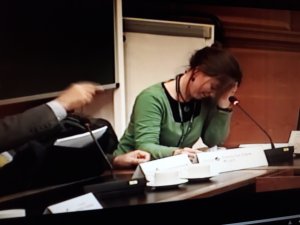
NHS Property Services will be invited to attend the next Health and Adult Care Scrutiny Committee in January.

But my simple request prompted a debate lasting over half an hour, at Tuesday’s meeting (21 November).

The lengthy and baffling discussion gave a poor impression of the committee in my view, with some Conservative councillors claiming confusion and dismissing the proposal several times as “premature.”

It all started off with a presentation to the committee by Independent councillor, Martin Shaw, under the final work plan agenda item.

Cllr Shaw rightly pointed out how many people were concerned about the potential loss of the hospital buildings, that they had put their own money into them and still there was no clarity over their future, yet NEW Devon CCG were (or at least would very soon be) paying large sums of money in rent each year when previously they owned the buildings outright.

NHS Property Services, a private company wholly owned by the Secretary of State for Health, set up under the Health and Social Care Act 2012, acquired the ownership of 12 community hospitals in Eastern Devon at the beginning of this year.

Given that the NEW Devon CCG is one of three most financially challenged health trusts in the country and must make huge cuts to try and stem a deficit of over £400m by 2020, people’s concerns about the future of the hospitals are very valid.

Following my proposal to invite NHS Property Services to the January meeting, chair, Sara Randall Johnson said there was a full agenda for the next meeting so it may not be possible to include it. She said that she was not aware that there was a threat to any community hospital.

Liberal Democrat, Brian Greenslade said NHS PS had been invited previously but questions had been remained unanswered and so should be invited again.

Conservative, Phil Twiss, who represents Honiton which has lost its own hospital beds, claimed in a number of long statements that it was “premature” to invite the company because the future of the buildings had not yet been decided.

He later added that they wouldn’t come anyway.

I replied that waiting until the March meeting was far too long and could mean that decisions were already made. Surely we need to talk to NHS PS and the CCG before their decisions?

I attempted to explain again why it was important we invited the company to the January meeting.

But apparently confusion reigned.

Conservative members became very fixated with the legacy issue, even though I had made it clear that it was about questioning NHS PS and the CCG about their plans on the future of community hospitals and the legacy issue was only part of that.

Chair, Sara Randall Johnson, suggested holding a meeting first to agree some questions to ask NHS PS. I have not seen this approach in my four and a half years as a member of the committee.

I had to make my proposal numerous times, while one or two persistent Conservative members continued to challenge it.

There was an amendment by Liberal Democrat, Nick Way, who wanted a spotlight review into the issue as well.

Phil Twiss then changed his tack and claimed there was no point in asking the company to attend as they wouldn’t come. He was in favour of a spotlight review instead (spotlight reviews are held in private).

But when the vote finally was taken, it was on the spotlight review amendment and not my original proposal to invite NHS PS to the next meeting …

I tried to intervene. Fortunately, the officers corrected matters… and then the majority of the committee voted in favour of my proposal. Finally.

My proposal couldn’t have been more straightforward or uncomplicated. It was entirely within the committee’s remit.

It was also within a couple of hours of hearing the county solicitor’s presentation about how scrutiny should do its job properly. Or be culpable. See this blogpost here – http://www.claire-wright.org/index.php/post/devon_county_council_solicitor_tells_health_scrutiny_committee_you_have_a_v

Here’s the webcast. It is the final item on the agenda – https://devoncc.public-i.tv/core/portal/webcast_interactive/302658

Pic: Me exasperated!”

http://www.claire-wright.org/index.php/post/nhs_property_services_will_be_invited_to_next_devon_county_council_health_s

Some councillors on DCC scrutiny committee seem to have difficulty in grasping the concept of ………. scrutiny

Claire Wright’s blog:

Devon County Council’s solicitor, Jan Shadbolt, reminded the Health and Adult Care Scrutiny Committee of its legal responsibilities at Tuesday’s (21 November) meeting.

I had asked for this agenda item following a disastrous meeting in July where a referral to the Secretary of State for Health on the closure of 72 community hospital beds in Eastern Devon was thwarted by the Conservative members of the committee, resulting in over 20 complaints from members of the public.

Mrs Shadbolt read out a paragraph from the Mid Staffordshire NHS Foundation Trust Public Inquiry, led by Sir Robert Francis in 2013. Many people had tragically died there as a result of poor care.

The local council’s scrutiny committee was deemed to have failed in its duty to effectively scrutinise the local health trust and identify problems.

Mrs Shadbolt said it was the first time that non-executive members of a local authority were held to account because they were deemed to have failed in their duty.

New regulations were brought in afterwards to beef up the legal powers of health scrutiny committees. These were that health scrutiny committees can:
– Require a local officer to attend to answer questions
– Expect to be consulted by an NHS body or service provider on substantial developments (although there is no definition of substantial developments)
– Refer to the Secretary of State for Health (subject to a series of constraints)

The county solicitor told the committee that we had a “very powerful role to play within the community” and that we were “unique in scrutiny committees” on that basis.

Conservative, Phil Twiss wanted to know who “scrutinises the scrutineers.” The county solicitor replied that the ultimate scrutiny was being called to account over the failure of a service provider, but that generally speaking councillors were answerable to the community.

Cllr Twiss then wanted to know how the committee knew it was performing properly. Mrs Shadbolt said that the committee’s role was to ask pertinent questions, call any officer to present. She added that there are all sorts of bodies who can give information to help with this, such as Healthwatch.

Conservative councillor, Paul Crabbe, wanted to remind the committee that this agenda item had been added because “some members felt we failed to scrutinise correctly…” He went on to say that a “chap from south Devon was fizzing with excitement over the success and how about how wonderful his new system was” then they were later asked to vote that it was “rubbish.”

Cllr Crabbe said that this struck him as a nonsense then and still struck him as a nonsense and just because the committee voted against “someone’s particular view” it didn’t necessarily mean that the committee was not fulfilling its role.

Liberal Democrat, Cllr Brian Greenslade asked the county solicitor to remind councillors that scrutiny is not a normal committee of the council in that it is not supposed to be political. He said that he thought it was worth underlining this point…”

Here’s the webcast – https://devoncc.public-i.tv/core/portal/webcast_interactive/302658

Independent EDA Councillor Shaw continues the fight for our local NHS

Thank goodness for (truly) independent councillors!

“PRESS RELEASE

Devon County Council’s Health and Adult Care Scrutiny Committee will ask both the NEW Devon and South Devon & Torbay Clinical Commissioning Groups, which commission services in community hospitals, and NHS Property Services, which now owns the hospitals, to its next meeting on 25 January to report on the future of the hospitals now that most of them have lost their in-patient beds.

The Scrutiny Committee decided to request the discussion at its meeting yesterday (21st) after concerns were raised by Cllr Martin Shaw, who represents Seaton and areas close to Honiton, both places where hospital beds closed this summer. Cllr Shaw is pressing for the contributions to community hospitals made by local communities and Leagues of Friends to be taken into account in planning their futures, and had presented a paper on the subject to the Committee’s September meeting.

Cllr Shaw raised particular concerns over the high rents to be charged by NHS Property Services, the fact that the CCG is committed to paying for space only until the end of the current financial year, and that the CCG has specifically said that existing outpatient services are not guaranteed to continue.

‘Many services can be delivered in community hospitals’, Cllr Shaw emphasised after the meeting. “We should be talking about increasing not reducing the provision close to where patients live. If most services are concentrated in the RD&E, patients will continue to face long journeys into Exeter. With deteriorating public transport many will have to drive in and contribute to the city’s ever-growing congestion. We need joined-up planning at Devon and local levels to make the best use of the hospitals, which are community assets whoever is the legal owner.’

The motion to invite the NHS organisations was proposed by Cllr Claire Wright (Independent) and seconded by Cllr Nick Way (Liberal Democrat).

Martin Shaw
Independent East Devon Alliance County Councillor for Seaton & Colyton”

Wilmington A35 Action Group presses for action on road improvements.

Press Release.

Following the lack of progress over the last 30 months to fund and install agreed road safety measures in Wilmington, the village action group recently held a meeting with local MP Mr Neil Parish and representatives from Highways England, Devon County Council, East Devon District Council and Widworthy Parish Council to discuss the current position and the way forward.

Highways England has undergone some major staff and structural changes and these changes account for the lack of progress over recent months. However, everyone attending this meeting agreed that Wilmington’s traffic problems are severe and immediate action is required.

Over the past 12 months Wilmington has been operating what has proved to be a very successful Community Speed Watch Scheme. Whilst this has been effective in helping to reduce excess traffic speeds, crossing the road is still hazardous, especially for school children catching buses an there are many roadsides without pavement.

Over the past 30 months or so, Highways England has been examining measures to not only improve the safety of pedestrians in Wilmington, but also to calm the very high volume of traffic that flows through the village. Among the proposals being considered by Highways England are the installation of two pedestrian crossings, an extension of the 30mph speed limit, and the construction of a pavement to the eastern end of the village.

Wilmington is blighted by air pollution, noise pollution, high volumes of speeding vehicles and a lack of pavements to enable residents to negotiate the village without imperilling their lives. The short lengths of pavement that do exist are totally inadequate and in places do not meet with modern standards. The A35 also has to contend with severe flooding every winter or whenever torrential rain is experienced.

In the longer term, The Wilmington A35 Action Group believes that the only real solution would be the construction of a by-pass, to re-route the A35 around the village as was planned nearly 20 years ago. The group also plans to talk to other villages along the A35 with similar problems such as Chideock, Morecombelake, Raymonds Hill and Kilmington.”

Tony Phillips,
On behalf of the Wilmington A35 Action Group.
01404 831360
e.mail: rap24081963sp@hotmail.co.uk

“ Abolish Devon district and borough councils to create super authority’ “

BUT, BUT, BUT – it’s already happening – EXCEPT we are keeping district councillors on the payroll!

Why does Owl say this?

Currently we have (at least) these new bureaucratic (and non-accountable) quangos in our area:

The Heart of the South West Local Enterprise Council
The “Greater Sourh West” group of LEPs
The “Joint Committee” of councils, NHS quangos and others in Devon and Somerset
“Greater Exeter”

and others working in the shadows.

In the middle of all this East Devon District Council is paying millions to build a new HQ and has not reduced its staff numbers throughout the period of austerity.

Questions … questions … but none of these groups are answerable to us and all choose how much (or more likely, how little) scrutiny they wish to have.

“The Government could deliver a £31 billion boost to the economy over five years by abolishing 201 district and borough councils in England and handing over their powers to county halls, a new report has said.

The report from think tank ResPublica calls for the abolition of the historic two-tier system of local government, which sees most rural areas of England covered by both a county council and a smaller district or borough authority with sometimes overlapping responsibilities.

ResPublica director Phillip Blond said the system is causing “needless confusion”, as businesses and developers find their plans frustrated by “parochial” decision-making on strategic issues.

Ditching the two-tier system and following the example of unitary councils adopted by most cities would help iron out wide variations in productivity which see workers in Cornwall take five days to produce the same value that can be delivered in three days in Surrey, he said.

With uncertain economic conditions after Brexit, the report said it was “vital” for counties to be prepared to weather the possible storm, particularly as those which voted most strongly to leave the EU are thought to be most vulnerable to any decline in trade resulting from it.

“The needless confusion that frustrates the ambitions of business and government alike in our county areas must end now,” Mr Blond said.

“With Brexit on the horizon and our city-regions already benefiting from devolution, we can’t afford the waste and complication that the current system creates.

“Single councils at the county scale are the future and we call on the Government to move rapidly to encourage them.”

Baroness Jane Scott, the leader of Wiltshire Council, said the move to a unitary authority in the county in 2009 had been a “great success” and warned that counties which fail to follow its lead face “the real risk of … being left behind”.

“Streamlining counties will contribute billions to the national economy and will be good for business,” said Lady Scott, the County Councils Network’s spokeswoman on reform.

“But the real winners are local residents who will benefit from improved public services, less bureaucracy, and access to more housing and facilities that meet local need and demand.”

The report will be launched at the County Council Network’s annual conference on November 20.

A spokesman for the Department for Communities and Local Government said: “Moving to a single tier large unitary authority can often give residents a better deal for their local taxes, improved local services, less bureaucracy and stronger and more accountable local leadership.

“However, we are clear that any such move must be both locally led and have support from the community.”

http://www.devonlive.com/news/devon-news/abolish-devon-district-borough-councils-790015

“Social care could drain local services cash dry, warns LGA”

For every £1 of council tax, almost 60p could be spent on social care by 2020, taking away from “vital day-to-day services”, the Local Government Association has warned ahead of the Budget later this month.

The umbrella-group has called on the government to ensure councils could keep raising the local tax to keep providing services as the money is “running out fast”.

Clair Kober, chair of LGA’s resources board, said: “With the right funding and powers, local government can play a vital role in supporting central government to deliver its ambitions for everyone in our country.”

She added: “Demand for services caring for adults and children continues to rise but core funding from central government to councils continues to go down.

“This means councils have no choice but to squeeze budgets from other services – such as roads, street lighting and bus services – to cope.”

The association projected 56p could be spent on caring for the elderly, vulnerable adults and children, up from 41p in 2010-11, and that this would take away funds that could be spent on services such as waste collection, road repairs and bus services.

Almost half of all local authorities (168 councils) will no longer receive any revenue support grant funding from central government by 2019-20, the LGA point out in a new analysis.

Uncertainty was growing over how local services would be funded after 2020, as the Local Government Finance Bill, which was passing through parliament before the election, was not reintroduced in the Queen’s Speech, the association said.

This has made it uncertain whether councils would be able to keep all their income from business rates by the end of the decade.”

http://www.publicfinance.co.uk/news/2017/11/social-care-could-drain-local-services-cash-dry-warns-lga

EDA Councillor Shaw: “Pursuit of elusive ‘devolution’ deal is leading to a new layer of bureaucracy: an unelected, one-party ‘Heart of the South West’ combined authority”

This week’s DCC Cabinet meeting approved a Conservative proposal to set up a formal Joint Committee with Somerset (report at item 7 of the agenda). Objections were raised to aspects of the proposal by the leaders of the Liberal Democrat and Labour groups, and I spoke on behalf of the Non-Aligned Group (which comprises the three Independents and one Green councillor). You can watch the debate, and read my speech below:

“I think we know what is going with devolution. We have a government which is ripping the heart out of local government spending, pushing services to the border of viability; this is causing enormous difficulties for this council but also driving down local incomes and so weakening our regional economy. But at the same time it is holding out the carrot of giving us limited extra powers and returning a modest bit of the lost funding, if we jump through its ‘devolution’ hoops. The government barely seems to know what it’s doing over ‘devolution’ and the hoops keep changing, but we still have to guess what they are and do our best to jump.

And so we end up with the papers in front of us today. We are asked to endorse a ‘vision’ of higher productivity and economic growth and create an extra layer of bureaucracy to support it. The problem is that the vision bears little relation to reality. The ambition is to double the regional economy in 18 years, i.e. to increase its size by 100% – this requires a compound growth rate of 3.94%. In the real world, the actual growth rate in the SW over the last 18 years has been 30% and the annual rate 1.47%. Nationally, the UK economy has never grown by more than 3% p.a. in any of the last 18 years, and is currently veering downwards below 1.5%.

So we are asked to believe that we can increase local productivity growth from below the national average to well above it, and thereby buck not only regional but also national growth trends. How are we going to that? By waving the wand of the Hinkley nuclear white elephant and hoping that it somehow spreads some stardust over Devon? I can tell you that so far the LEP has produced almost nothing which offers help to the economy in the rural, small-town, coastal Devon which most of us represent.

Let’s take a reality check – if I come to the budget meeting and tell you, ‘the economy will grow by 4%, business rate receipts will shoot up, so spend, spend, spend’, you are going to look on me as a madman, and rightly so. So why should Devon County Council buy this phoney prospectus? And why should we embark on radical constitutional change to support it?

I know this is only a proposal for a Joint Committee, with limited financial implications. But it is clearly presented as enabling us to ‘move relatively quickly to establish a Combined Authority’ if that is deemed necessary. We already have 3 tiers of local government. This is the beginning of creating a fourth tier, without a mandate, without elections, and without balanced political representation.

95% of the people of Devon don’t even know they’re living in something called the ‘Heart of the South West’. It says everything about the lack of democracy in this so-called devolution that we are using this PR-speak rather than the county names which people understand. I know the Government prefers cross-boundary devolution projects, but Cornwall got a stand-alone deal, and we are much bigger in both population and area.

Apart from Hinkley there is no strong reason for us to tie ourselves to Somerset rather than Cornwall or Dorset. Our local government is being distorted to support an anachronistic nuclear project – for the benefit of companies owned by the French and Chinese states – instead of developing renewable energy for which we have a good basis in the SW.

I have this Cabinet down as a group of a level-headed people. But here we have fantasy economics, making claims which are about as credible as the figures on Boris’s battlebus, and constitutional change which means that Devon people and their councillors are asked to start handing over democratic control to a one-party quango in conjunction with unelected business people.

Since the Government is always changing its mind about devolution, there is no reason why we shouldn’t change our minds too. I ask you to

go back to the Government with a realistic agenda for Devon, that addresses the needs of all areas of the county and all sectors of our economy and society
back off from this unnecessary proposal for a joint committee.

Pursuit of elusive ‘devolution’ deal is leading to a new layer of bureaucracy: an unelected, one-party ‘Heart of the South West’ combined authority

Stripped back local government and its consequences

“This week, the Grenfell Recovery Taskforce issued its first report into the response of the Royal Borough of Kensington and Chelsea after nine weeks of research. The findings are damning, as anyone following the story would expect, and focus on particular cultural failings in the council that worsened the response.

The report speaks of “a leadership vacuum”, with a “distant council” and a lack of emotional intelligence in dealing with survivors and the community. It says empathy and emotional intelligence need to be put at the heart of its recovery plans. “We have seen many good intentions, which have gone unrecognised by residents,” says the report.

“Often what has been lacking is the appropriate ‘style’ of delivery, where an approach that had empathy at its core would have had greater positive impact. Systems, policies and practice need to be designed with people’s current needs at the heart as opposed to what is good or convenient administrative practice.”

This comment speaks to one of the main failings of the council: to understand what the community needed, not just in terms of temporary accommodation, rehousing and the release of funds, but with regards to people centred response services. Many complained that the council seemed robotic in its responses, focusing on defending its approach rather than accepting and understanding that people viewed its actions as inadequate and working out precisely why.

It was a council that had become insular, disconnected and in particular distant from communities similar to those on the Lancaster West estate. Despite the tragedy being unprecedented, the council appears to have become fixated on behaving as though the recovery could be dealt with within traditional local government frameworks, notes the report, which says the council needs to be bolder.

The taskforce urges the government to encourage a “highly innovative” response responding to residents’ needs, rather than being “bound by tried and tested bureaucratic response systems that are not appropriate in these circumstances”. …

Kensington and Chelsea is an extreme example of the stripped-back local government we now see across Britain. This is due not just to austerity hollowing out council accounts and making it impossible to deliver services, but also to a philosophical shift in the way councils operate. Too many have shifted from providing hands-on, local services with a high level of resident involvement, to an aloof, threadbare service that consists of both councillors and staff who eschew frontline work and meetings for a rigid managerialism and dismissal of residents as obstacles and annoyances.

Local politics is far closer to everyday lives than national politics; by its very nature, empathy and emotional intelligence are absolutely imperative to a functioning council. It’s tragic that the Grenfell tower fire and external criticisms were necessary for the Royal Borough of Kensington and Chelsea to understand that.”

https://www.theguardian.com/housing-network/2017/nov/10/grenfell-council-lack-empathy-local-government-austerity-britain

“Axe Valley health hub plan launched as campaigners fight hospital sell off”

“Campaigners will continue to fight plans to sell off Seaton Hospital and to support plans for a new health hub for the Axe Valley. …

[Independent East Devon Alliance] County councillor Martin Shaw [Seaton and Colyton] said: “Forty campaigners from the Axe Valley area met in Seaton this week to review the state of the campaign for the local hospitals.

“I told the meeting that while the battle to save Seaton’s hospital beds had been lost, it had put Seaton on the map in the forthcoming discussions about health services in the area.”

Mayor of Seaton, Cllr Jack Rowland, said that a meeting to set up a steering committee for an Axe Valley Health Hub would take place shortly.

He was encouraged that the Royal Devon and Exeter Hospital Trust was putting resources into this and he also pointed out that more than fifty services involving over a hundred staff were still based at the hospital.

Campaigners will continue to fight plans to sell off Seaton Hospital and to support plans for a new health hub for the Axe Valley.

In August, a vigil was held outside Seaton Hospital as the beds inside the hospital were closed, as protesters waved banners, shouted “shame”, and expressed their anger and sadness outside Seaton Hospital as the controversial closures of community hospitals began.

Plans to remove the beds from Exeter, Seaton, Honiton and Okehampton community hospitals have been met with strong opposition since they were confirmed in March.

The North, East and West (NEW) Devon Clinical Commissioning Group (CCG) said the move will see more people being given care at home and save £2.6million.

Although the battle to save the hospital beds has been lost, a new campaign though has been set up in the Axe Valley area to support the development of a health hub in the region.

County councillor Martin Shaw said: “Forty campaigners from the Axe Valley area met in Seaton this week to review the state of the campaign for the local hospitals.

“I told the meeting that while the battle to save Seaton’s hospital beds had been lost, it had put Seaton on the map in the forthcoming discussions about health services in the area.”

He was encouraged that the Royal Devon and Exeter Hospital Trust was putting resources into this and he also pointed out that more than fifty services involving over a hundred staff were still based at the hospital. ‘Don’t let anyone say the hospital is closed’, he said.

The meeting, chaired by Paul Arnott of the East Devon Alliance, agreed that it was necessary to establish which health services could most usefully be based in Seaton and Axminster hospitals, and this might involve canvassing the views of local residents and a number of people present offered to help with this.

The meeting decided to set up a new Axe Valley Hospitals Campaign to support the development of a health hub around the two hospitals and to oppose any proposals to sell off hospital sites.”

http://www.devonlive.com/news/health/axe-valley-health-hub-plan-699423

Another council refers its hospital closure to Secretary of State

“The future of the inpatient ward at Rothbury Community Hospital is going to the top, after councillors voted to refer the matter to the Health Secretary.

After the joint executive board of the Northumberland Clinical Commissioning Group (CCG) last month voted unanimously in favour of permanently closing the inpatient ward and shaping the existing services around a Health and Wellbeing Centre at the hospital, the proposed closure of the 12 beds was discussed by Northumberland County Council’s health and wellbeing overview and scrutiny committee this morning.

And now that closure is on hold and the final decision rests with the Health Secretary Jeremy Hunt. The aim of today’s meeting was to decide if the consultation with the committee had been adequate; if the committee felt the proposal would not be in the best interests of the health service in Northumberland; and therefore it it had sufficient evidence of these concerns to make a referral to the Secretary of State for Health. And as part of her statement to members, Katie Scott, from the Save Rothbury Community Hospital campaign group, reflected on this first issue.

“Surely at all stages the scrutiny committee should have been consulted? It seems to us that you have been ignored,” she said. “I believe today is the first opportunity in over 14 months for the committee to fully examine the proposal to take away our beds.”

She also questioned the reasons put forward by the CCG for the proposed closure – the alleged savings, bed underuse and the drive to treat people in their own homes – claiming all are flawed, as well as saying the consultation has been ‘defective’.

However, Stephen Young, Northumberland CCG’s strategic head of corporate affairs, outlined the lengthy process of consultation, including with the committee, and explained that it was made clear to councillors that there was no local support for the proposed closure. He added: “We believe there’s alternative, suitable provision in the area.” His colleague, Dr Alistair Blair, the clinical chairman, set out the clinical reasons behind the proposed closure, which included the fall in bed occupancy and the wider national context around more care being provided at home and why this was beneficial.

He added that they had been monitoring the impact on healthcare services elsewhere in Northumberland for 12 months while the ward has been shut and there have been no adverse consequences. “We understand that this does not have local support but we have to look at the evidence base,” Dr Blair said. “We hope the Health and Wellbeing Centre will benefit more local people.”

One local who benefitted from the ward prior to its closure was Coun Steven Bridgett’s grandmother – the care she received at the hospital prior to her death in 2012 was the focus of an emotional address by the local ward member: “Gran was so well looked after and cared for that you would forget that she was 91 and had most of her body failing her.”

It was his statement which probably resonated most with the Rothbury residents who had filled the council chamber at County Hall in Morpeth. “We are no more than numbers on paper to the CCG,” he said. Turning their attention to the three questions mentioned above, a majority of the committee members considered that the consultation with the committee had not been adequate as the preferred option for consultation, ie, the closure of the ward and the creation of a Health and Wellbeing Centre, was decided and the consultation started before being brought to the scrutiny committee, albeit the CCG brought the matter to the first available meeting once that decision was taken.

A majority of the councillors also felt that whether the proposal was in the best interests of the health service in Northumberland could not be fully assessed as it had not been made clear exactly what the Health and Wellbeing Centre will be and there were also questions over the robustness of the data in relation to future-proofing and knock-on impacts in the rest of the county.

Therefore, following around half-an-hour spent thrashing out their reasons amid advice from the council’s senior legal officer, members voted to refer the matter to the Secretary of State. In each case, members voted by five votes to two with one abstention.”

http://www.northumberlandgazette.co.uk/news/future-of-rothbury-hospital-ward-goes-to-secretary-of-state-1-8808912

Referrals by councils to Secretary of State increase – but not in Devon where local Tories said it wasn’t worth doing

“2017 is shaping up to be a bumper year for NHS service change proposals in England being referred to the Secretary of State for Health by local politicians. And that means a bumper year for initial assessments by IRP, the independent body that advises the Secretary of State. [This is what would have happened – mandatory independent scrutiny – if the DCC adult care scrutiny committee had not had a block Tory vote to refuse it – spurred on by Diviani ignoring the wishes of his own council and some very dubious chairing by Sarah Randall-Johnson. What were DCC Tories afraid of, Owl wonders?

We saw just two initial assessment letters in 2016. The assessment letter IRP published on 18 October responding to concerns raised by Thurrock Council about the location for a specialist scanner, is the fifth IRP has published this year and we’re waiting for more to progress through the system.

Local councillors are uniquely placed to understand public sensitivities around changes to local health services, so it’s no surprise that NHS legislation gives them a crucial role in overseeing health service change programmes. The role is important and the legislation sets out responsibilities for NHS and council leaders to make sure the process is effective.

The IRP’s assessment of the Thurrock referral is a timely reminder of the requirement for councils to formally join together to scrutinise proposals that affect more than one local authority area. In this case it seems Thurrock councillors declined to take part in a joint scrutiny committee and instead dealt with the matter on its own. The process is there for good reason and not following it risks weakening whatever good case a council has for making the referral.

The regulations allow councils to come together to form joint scrutiny committees whenever they see fit. The same regulations require councils to form a joint committee when “a relevant NHS body or health service provider consults more than one local authority’s health scrutiny function about substantial reconfiguration proposals”. The rules mean where a section 30 ‘mandatory joint health scrutiny committee’ is in place, only the mandatory committee is allowed to respond to the consultation; exercise the power to require information about the proposals to be provided to it; and require people from the relevant body to appear before it to answer questions relevant to the proposals.

The power to make referrals to the Secretary of State for Health is different. Councils can choose to delegate that to a mandatory joint scrutiny committee, or retain it. So the rules would have allowed Thurrock to participate in the mandatory committee and still consider the matter of referral alone. Would it have strengthened their case to have done that? It’s hard to envisage that following the required process would have weakened it.”

https://www.consultationinstitute.org/focus-health-scrutiny-irp-essex-cancer-scanner-review/