River Otter beavers are healthy and can stay for at least 5 years

http://www.bbc.co.uk/news/uk-england-devon-31831665

Thanks to Independent Councillor and Parliamentary candidate Claire Wright who campaigned to keep them from the very beginning and liaised with Defra and Devon Wildlife Trust to ensure that, in line with local public opinion, they would be allowed to stay, if healthy.

Hugo Swire merely noted on his website that he was pleased to hear the news they might be allowed to stay.

East Devon housing numbers: near 25% increase in yearly quota over next 18 years

No wonder they wanted to keep the numbers under wraps until after district council elections in May!

And just where will we put these homes? And will this number be increased by 20% because we have no 5-6 year land supply?

The press release and consultants’ reports are here:

http://new.eastdevon.gov.uk/planning/planning-policy/emerging-plans-and-policies/the-new-local-plan/publication-and-submission-of-the-local-plan/plan-changes-and-new-evidence-march-2015

Promises that local Tories made to East Devon prior to the last general election in 2010 – read and weep

Real Zorro

http://realzorro1.blogspot.co.uk/

has drawn attention to the lamentable lack of policies from East Devon’s Tories (except, of course, for HQ relocation, which is the only things that has occupied them for MONTHS) with their website bereft of information or ideas about what they would do if re-elected.

A similar state of affairs pertains over at the Tiverton and Honiton official Tory website with a post which has been on the website since well before 2010 and which is still there today (but probably not tomorrow!). And what an embarrassing post it is! No doubt once it has been drawn to their attention it will disappear but, fear not, EDW has kept a copy for posterity and took this recent screenshot (taken on 19 February 2015 but the same page is still there today).
IMG_0708

http://www.tivertonhonitonconservatives.co.uk/campaigns

On the webpage (under the heading “Campaigns”) EDDC Tories state that UNDER LABOUR in 2009:

♦  There were 200 fewer rural schools (there are now even fewer)
♦  1,400 rural post offices had been lost since 2000 (even more post offices have since been lost)
♦  384 police stations had closed in the shires in Labour’s first two terms (even more police stations have been closed and we have far fewer police on the streets
♦  Dramatically widened funding gap between urban and rural areas (the funding gap between urban and rural areas has widened even further)

and they promised that, if they were successful in 2010 they would:

have an agenda that would:

RESPECT RURAL PEOPLE

♦  Give rural communities a voice to decide their own future
♦  Respect the rural way of life
♦  Only regulate where self regulation fails
♦  Fairer rural funding

They said that they would

EMPOWER RURAL COMMUNITIES

♦  Return real power to individuals and communities
♦  Give villages the right to build their own affordable homes
♦  Allow councils to oppose development planned for green belt land

THEY SAID THEY WOULD

PROTECT RURAL SERVICES

♦  Realise the social value of vital rural services like post offices
♦  Give parents the power to stop rural schools closing and open new ones
♦  Allow rural public services to diversify
♦  Pilot new rural transport solutions

They said that they would

REVIVE THE RURAL ECONOMY:

♦  Cut tax rates for small businesses to encourage growth and protect jobs
♦  Allow councils to offer rural business rate discounts
♦  Simplify the planning system to improve accountability
♦  Reduce the burden of regulation to give businesses more freedom

THESE ARE THE PROMISES THEY MADE TO YOU IN 2010

WILL YOU STILL VOTE FOR THEM IN 2015?


‘Better use of facilities’ at Knowle than making it a retirement community!

Display 3

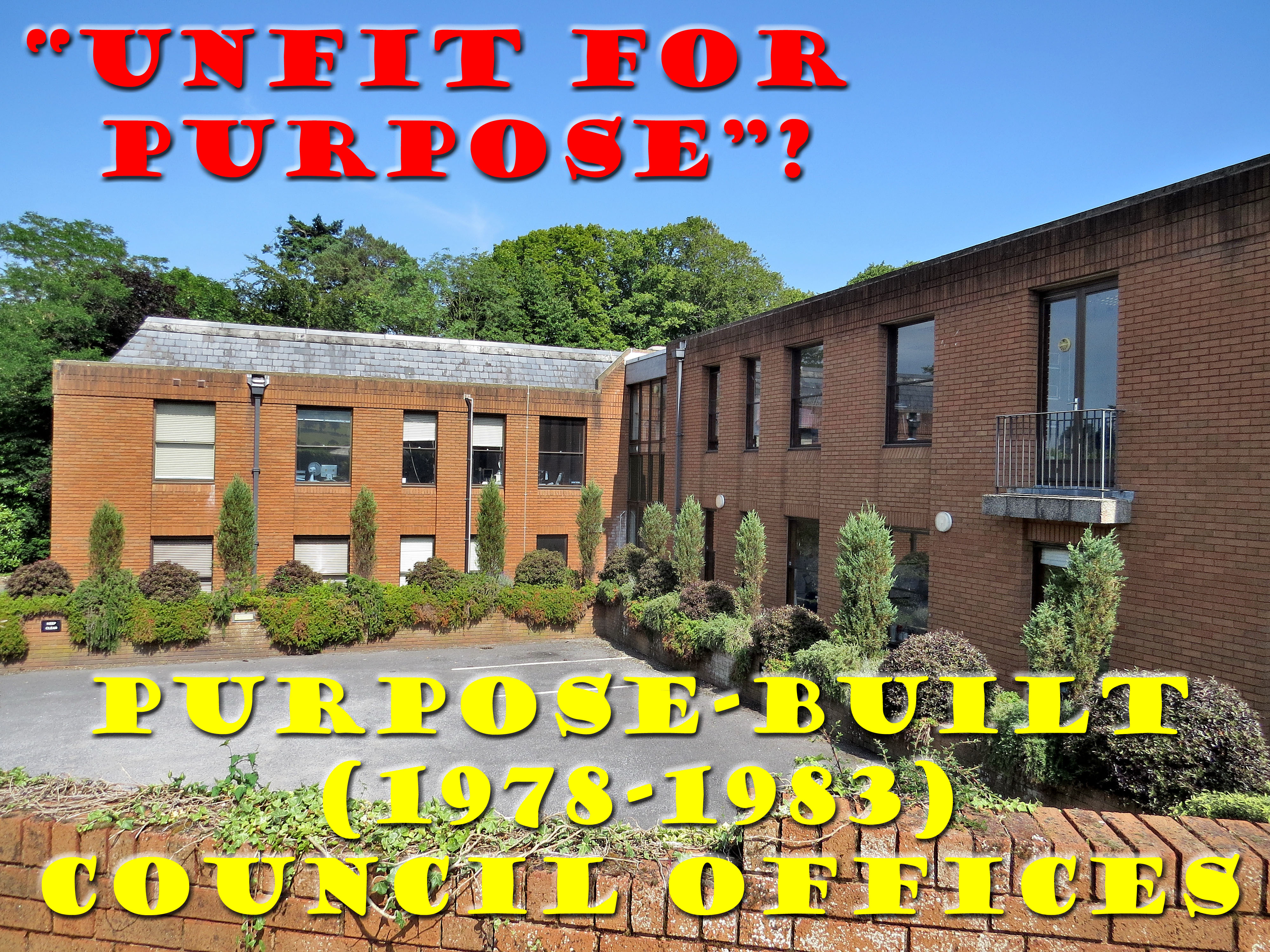
EDDC’s announcement in today’s Sidmouth Herald, of its preferred buyer for Knowle, could have massive repercussions, not least at the May District Council election.The plan is to change this prime employment site, and shrink the surrounding historic  parkland, to make a residential development exclusively not for young people. The purpose is to relocate the District Council offices, to a much older building (Exmouth Town Hall) requiring major refurbishment, and a not-yet-built office at Honiton.
Here’s just one local conversation on the topic https://www.streetlife.com/conversation/3h3lq15pbi7i/

Photo supplied by https://sidmouthindependentnews.wordpress.com

Two tier home ownership: green for the rich and brown for the poor

Green = executive-style homes in lovely surroundings and in beautiful countryside or coastal areas – you choise – where, if you fancy a change or a trade up or downsize or you get a job elsewhere, you sell for something else of your choice

Brown = little boxes on brownfield sites, no planned infrastructure, forced to keep the “starter home for 5 years before selling, so if you get a job elsewhere or your family size increases beyond your number of (small) bedrooms, before 5 years is up, tough luck, you have to pay the 20% discount back if you need to move.

And what if your Local Plan doesn’t accommodate the “200,000 starter homes” but instead relied on affordable housing? Tough luck again, affordable housing is thrown out in this plan.

Can you work out how the “starter homes” are funded from this press release:

“The 20% discount will be paid for by waiving the fees homebuilders have to pay to local authorities under so-called Section 106 agreements, amounting to at least £45,000 per dwelling on brownfield sites.

The Conservatives say homes worth £250,000 outside London – or £450,000 in London – would be eligible for the scheme and that first-time buyers would have to repay the 20% price advantage if they sold within five years.”

Anyone else thinks there are more holes in this scheme than in a pair of fishnet tights?

http://www.bbc.co.uk/news/uk-politics-31683974

Visions of East Devon

Great news for those who enjoyed the preview launch (Sidmouth, December 2014) of Peter Nasmyth’s  new book on ‘East Devon’s Literature and Landcape’, AND for those who missed it. A follow up performance will take place in May, in Coleridge’s home town, Ottery St Mary. Special dispensation has been given for pixies in the church! Here’s the poster, with another of Peter’s stunning photos (Click to enlarge).

Visions of Childhood poster rgb

Meanwhile, this poem, by co-organiser of the event, Mike Temple, has just been published in the Express and Echo. It’s called simply, ‘A Vision’.

(with apologies to Coleridge)

In Honiton E.D.D.C.
Says its new offices shall be –
Far from the town where, as we know,
The office workers like to go.
No longer all Knowle’s greenery
But superstore and factory.
An Exmouth office, too, a place
Where few will find a parking space –
The building looks like an old barn,
Not like the “dome” in “Kubla Khan”.

But, Oh, the waste of public money –
The ratepayers don’t think it funny:
To build a glass and concrete shed
And trash the park and Knowle instead,
For “Our Great Leader” and his crew
Have no care for the public’s view;
Nor badger-setts, nor many a tree;
Nor office blocks, built ’83;
Nor Chambers, used by you and me;
Nor weekend tourist-parking, free;
Nor jobs and trade Sidmouth will lose;
Nor all the lovely parkland views –
All sold to builders for a fee –
And all for what? For vanity?
This Council, with no Local Plan,
Lets builders build where’er they can.

Yet in my crystal ball I see
A new look for E.D.D.C.:
Independents there will be
As councillors for you and me,
Come from every town and shire
With the Wright One to remove Swire,
Who all will cry: Please be aware:
We will not relocate somewhere
Based on false claims that there will be
“Big”(?) savings made in energy.
We come to bring Democracy,
And Probity, Transparency.
You all know there’s a better way –
It’s signposted by E.D.A.* ,
So, all you readers, lend a hand
And save our green and pleasant land.

(*EDA is East Devon Alliance)

Tribute to Broadclyst Councillor who fought for years against inappropriate development

The Full Council meeting at Knowle this week, opened with a warm tribute to District and County Councillor Derek Button, who died last month. Representing the people of Broadclyst, he was strongly opposed to the massive development nearby at Cranbrook. And many Councillors listening to the acknowledgements of Derek Button’s dedication to his electors’ concerns, will have recalled his courage in standing up against what he saw as irregular planning matters. He was one of the three Liberal Democrat members of the Development Management Committee (DMC) who temporarily resigned in protest over alleged procedural irregularities in the Waldron’s Farm case. The Ombudsman found no evidence of anything untoward, however, and the controversy lingers on. More info here: https://sidmouthindependentnews.wordpress.com/2013/05/14/waldrons-farm-application-stirs-bitter-memories/

And those following the Task and Finish Forum set up to do an “in-depth report” into EDDC’s relationship with the group then known as the East Devon Business Forum, would also remember Cllr Button’s part in trying to progress this so-called Business TAFF, which never pursued its original aim. See the voting recorded here: http://saveoursidmouth.com/2013/03/29/planning-issues-are-within-the-scope-of-the-business-taff/

As Council Leader Paul Diviani put it, in a tribute in the Midweek Herald (27 Jan 2015), Derek Button’s colleagues “will mourn the loss of a good man”. http://www.google.co.uk/url?sa=t&rct=j&q=&esrc=s&source=web&cd=3&cad=rja&uact=8&ved=0CDEQFjAC&url=http%3A%2F%2Fwww.midweekherald.co.uk%2Fnews%2Ftributes_paid_to_respected_east_devon_district_councillor_1_3935704&ei=CGHwVOn3KML3UoWHgYgL&usg=AFQjCNESXXA6c5muF1a_V-2EscfoUkUD7w&bvm=bv.87269000,d.d24

Progress update on Village Plan and EDDC Plan

From Save Clyst St Mary organiser, Gaeron Kayley:

‘A big thank you to everyone that attended the meeting with Hugo Swire last week. A number of questions came up regarding our neighbourhood plan and our local plan.

Please See the update from Mike Howe regarding our local Plan below*.

Please also see our poster advertising the neighbourhood plan, where you can view and have your say on our Parish. Click here to open Exhibition poster (1) . (Saturday 7th March at Clyst St Mary School 10am- 4pm, 10th March Cat and Fiddle Inn 10am-Noon & Sowton Village Hall 6pm-9pm)’

*email fromMike Howe:

The production of the SHMA has unfortunately been a long and drawn out process. There are 6 key stages to the production of the SHMA. These are:

Definition of the housingmarket area

Understanding household projections

Addressing Market Signals

Addressing Housing Backlog

Measuring Affordable Housing Need

Future Employment and Economic Growth Assumptions and Aspirations

A so-called draft SHMA was sent through from the consultants in August 2014 after they had completed only the first two stages of the process. This information was communicated to Members via a report to Development Management Committee on the 26th August 2014 and an all Members briefing note on the 27th August 2014. This report and briefing note made it clear that the information available so far simply

modelled housing numbers based on historic trends and that without taking account of factors such as the backlog of affordable housing need and projecting future employment and economic growth the information was largely meaningless. No further draft SHMA information has been made available to any Members since that time indeed until the SHMA process is complete and all factors have been taken into account any data would have been misleading. I appreciate that this delay has been highly frustrating for all of us but we have been entirely dependent on consultants to carry out this work. Given the expertise required and the need to consider data from all of the authorities within the housing area there was no other option than to use external consultants on this work. Unfortunately, it has taken them much longer than envisaged.

In advance of receipt of the final SHMA Mid-Devon District Council have proceeded with production and consultation on their Local Plan. It is understood that their work is based on the draft SHMA data that all of the participating authorities received in August 2014 and some subsequent employment projections. Mid-Devon do not have any additional data than we do, however their position is slightly more straight forward as they do not have a growth point and therefore it is easier to predict factors such as future job growth in Mid-Devon than it is here in East Devon. Clearly there are risks associated with Mid-Devon’s approach however this is not our concern as we must focus on delivering our own Local Plan.

I am pleased to say that the SHMA work is now complete and only yesterday a draft report was provided by the consultants to officers of the commissioning authorities. The work now needs to be considered by officers and any queries raised with the consultants before the report can be finalized and published. This will happen in the next week to 10 days. We envisage publishing the SHMA in a co-ordinated way between the authorities and their respective Members with the report being sent to Members slightly in advance of wider publication.

The SHMA was the remaining key piece of evidence that enables us to produce an objectively assessed housing need for the district and move forward with the Local Plan. We had previously envisaged that the upcoming election would prevent progress being made until May however the Inspector has made it clear that he expects to see the proposed changes to the Local Plan by mid-April and we must adhere to the timescale that he has set as the process moving forward is led by the inspector.

Our time line now looks like this:

 Early March – Publication of the SHMA

 By end of March (pre-purdah) – DMC and full council meeting to consider

revisions to the Local Plan including proposed housing numbers

 Submission of revisions to Inspector immediately following incorporation of

any changes following full council

 Inspector provides questions upon which to seek views through consultation

 Consultation commences (mid-April)

 Consultation ends (end May)

 Oral examination sessions reconvene (August/September)

 Local Plan adoption by end of year

“The Myth of the Housing Crisis” – Sir Simon Jenkins (Chair, National Trust)

Article in “The Spectator” by Sir Simon Jenkins, quoted in full:

“We’re destroying green belts and despoiling villages for the sake of a moral crusade based on developers’ propaganda:
g
There is no such thing as the English countryside. There is my countryside, your countryside and everyone else’s. Most people fight just for theirs. When David Cameron told the BBC’s Countryfile he would defend the countryside ‘as I would my own family’, many of its defenders wondered which one he meant. In the past five years a national asset that public opinion ranks with the royal family, Shakespeare and the NHS, has slid into trench warfare. Parish churches fill with protest groups. Websites seethe with fury. Planning lawyers have never been busier. The culprit has been planning reform.

My files burst with reports from the front, each local but collectively a systematic assault on the appearance of rural England. In Gloucestershire, Berkeley Castle gazes across the vale of the Severn to the Cotswolds as it has since the middle ages. It is now to face fields of executive homes. Thamesside Cookham is to be flooded not by the river but by 3,750 houses. The walls of Warwick Castle are to look out over 900 houses. The ancient town of Sherborne must take 800.

So-called ‘volume estates’ — hundreds of uniform properties rather than piecemeal growth — are to suburbanise towns and villages such as Tewkesbury, Tetbury, Malmesbury, Thaxted, Newmarket, Great Coxwell, Uffington, Kemble, Penshurst, Hook Norton, Stow-on-the-Wold, Mevagissey, Formby. Every village in Oxfordshire has been told to add a third more buildings. Needless to say there is no local option.

Developer lobbyists and coalition ministers jeer at those who defend what they regard as ‘chocolate-box England’. But did Cameron mean so radically to change the character of the English village and country town? These are not just chocolate boxes. The list embraces the country round Durham, Gateshead, Rotherham, Salford, Redditch, Lincoln and Sandbach. Such building will ‘hollow out’ town centres. Three-quarters of hypermarket approvals are now out of town, even as this market collapses. The green belt is near meaningless. The Campaign to Protect Rural England estimates some 80,000 units are now proposed for greenbelt land.

The coalition’s planning policy was drafted in 2011 by Local Government Secretary Eric Pickles’s ‘practitioner advisory group’. This group is a builders’ ramp, composed of Taylor Wimpey and others. Councils were told that either they could plan for more building or it would proceed anyway. Brownfield preference was ended. Journey-to-work times were disregarded. Fields could sprout unregulated billboards. ‘Sustainable’ development was defined as economic, then profitable.

The draft proved so bad it had to be amended. But the disregard of local wishes and bias against rural conservation remained. As with siting of wind and solar installations, the centre knew best. Whereas 80 per cent of new building before 2010 had been on serviced land within settlements, this has now shrunk to half.

The most successful tactic of the rural developers was the hijacking of ‘the housing crisis’. They claimed the crisis could only be ended by building in open country, even when their wish was for ‘executive homes’. This ideal of land lying enticingly ‘free’ for homeless people acquired the moral potency of the NHS.

Housing makes politicians go soft in the head. An old Whitehall saw holds that England ‘needs’ 250,000 new houses a year, because that is how many households are ‘formed’. The figure, a hangover from wartime predict-and-provide, takes no account of occupancy rates, geography of demand, migration or housing subsidy, let alone price. Everyone thinks they ‘need’ a better house.

Yet this figure has come to drive a thousand bulldozers and give macho force to ideologues of left and right, whose ‘own’ countryside is somewhere in France or Italy. Few Britons are homeless. Most enjoy living space of which the Japanese can only dream. Yet the Economist magazine cites the 250,000 figure at every turn. The Institute of Economic Affairs wails that housing has become ‘unaffordable for young people’. A recent FT article declared, ‘The solution to the housing crisis lies in the green belt.’

This is all nonsense. The chief determinant of house prices is wealth, subsidy and the supply of money. During the credit boom, prices soared in America and Australia, where supply was unconstrained. Less than 10 per cent of Britain’s housing market is in new building. Although clearly it is a good thing if more houses are available, there is no historical correlation between new builds and price.

Neil Monnery’s Safe as Houses is one of the few sane books on housing economics. It points out that German house prices have actually fallen over half a century of steady economic boom. The reason is that just 43 per cent of Germans own their own homes, and rarely do so under the age of 40. The British figure hovers between 60 and 80 per cent. Germans are content to rent, a more efficient way of allocating living space. They invest their life savings elsewhere, much to the benefit of their economy.

The curse of British housing, as another economist, Danny Dorling, has written, is not under-supply but under-occupancy. In half a century, Britons have gone from ‘needing’ 1.5 rooms each to needing 2.5 rooms each. This is partly caused by tax inducements to use houses as pension funds, partly by low property taxes and high stamp duty on transfers. Britain, Dorling says, has plenty of houses. It just uses them inefficiently, though high prices are now at last shifting the market back to renting.

London’s housing has been ‘in crisis’ for as long as I can remember. Yet its under-occupancy is remarkable. Famously its annual growth could fit into the borough of Ealing if it was developed at the density of inner Paris. The agents Stirling Ackroyd have identified space in the capital for 500,000 new houses without encroaching on its green belt. The reality is that housing ‘need’ (that is, demand) is never met in booming cities, only in declining ones.

This has nothing to do with building in the countryside. Past policies aimed at ‘out-of-town’ new towns and garden cities merely depopulated cities and duplicated infrastructure. Central Liverpool and Manchester (like Shoreditch) numbered their voters in hundreds rather than tens of thousands. A rare architect wise to these things, Lord Rogers, recently wrote that this led to ‘new town blues, lifeless dormitories, hollowed-out towns and unnecessary encroachment on green sites’. Sprawl was about profit, not planning.

The answer to housing a rising population has to lie in towns and cities, in reducing the pressure on commuting and raising the efficiency of infrastructure. Cities are where people and jobs are, and where services can be efficiently supplied. England’s urban population per acre is low by world standards, half that of New York or Paris, yet even so its housing occupancy is low. A boost to urban densities — not just empty towers along the Thames — is a sensible ‘green’ policy.

England’s countryside will clearly change over time. Its occupants no longer farm it, and are more often retired or commuters. Yet its amenity is clearly loved by the mass of people who visit, enjoy, walk and play in it. Its beauty in all weathers remains a delight of living and moving about in this country. England made a mess of its cities after the war. The rural landscape is its finest environmental asset.

Any civilised society regulates the market in scarce resources, including those of beauty. It guards old paintings, fine buildings, picturesque villages, mountains and coasts. England is the most crowded of Europe’s big countries, yet a past genius for policing the boundary between town and country has kept 80 per cent of its surface area still visually rural in character. This has been crucially assisted by the 14 urban green belts created in the 1950s by a Conservative, Duncan Sandys.

I am sure the way forward is to treat the countryside as we do urban land. It should be listed and conserved for its scenic value — as it is for its quality as farmland. I would guess this would render sacrosanct a ‘grade one’ list of roughly three quarters of rural England, to be built on only in extremity. The remaining grades would enjoy the protection of a ‘presumption against development’, but a protection that would dwindle down the grades to ‘of limited local value’.

One feature of such listing is that green belts could be redefined. Those of minimal amenity value would be released in favour of belt extension elsewhere. It is stupid to guard a muddy suburban field while building over the flanks of the Pennines.

In making these judgments we need to rediscover the language of landscape beauty, fashioned by the sadly deceased Oliver Rackham and others. Without such language, argument is debased and money rules. The policy of ‘let rip’, adopted by both major parties at present, means that England’s countryside is having to fight for each wood and field alone. At which point I say, praise be for nimbys.”

This article first appeared in the print edition of The Spectator magazine, dated 28 February 2015

http://www.spectator.co.uk/features/9452952/the-myth-of-the-housing-crisis/

“Ban second home-owners buying new homes in popular rural villages”

Western Morning News on a new report:

Affordable Housing: A Fair Deal for Rural Communities

at

Click to access afairdealforruralcommunitiesmainreport3-1.pdf

highlights:

“…. Cornwall and Devon have among the highest levels of second home ownership in the country, with around 26,000 part-time properties in the region. …

…. The report also calls on the Government to reverse its new policy that means developments of fewer than ten homes are exempt from ensuring a proportion of the properties are sold or rented at affordable rates.

Lord Taylor said small sites are the “mainstay” of rural housing development.

He said: “In Cornwall and Devon this change, pushed through by the Conservative Planning Minister, will be devastating – leaving most small communities with no hope of affordable housing within local developments and local people unable to afford the vast prices inevitable on the open market in attractive villages.”

He said while new planning guidance had some rural exemptions the main effect will be to “increase site values to the benefit of wealthy landowners at the expense of local people unable to afford a local home”.

The report also calls on the “bedroom tax” to scrapped in rural areas, and for the Right to Buy council housing discount to be curbed because of fears the housing stock is being diminished.

Brandon Lewis, Housing Minister, said: “Trying to impose state bans on who can own property is totally inappropriate and simply will not stand up.”


Read more: http://www.westernmorningnews.co.uk/Ban-second-home-owners-buying-new-homes-popular/story-26070311-detail/story.html

Local Plan delay “quite incredible”,says planning expert

See today’s post on http://www.saveoursidmouth.com

South Somerset now has a Local Plan in place

Thanks to the correspondent who sent in two related pieces of news: firstly, that South Somerset’s Local Plan has just been declared sound:  and secondly, that the Conservative parliamentary candidate has adopted a stance that would get him elected here!

‘SOMERSET: District reaches ‘major milestone’ in Local Plan process
BUT CONSERVATIVE PARLIAMENTARY CANDIDATE QUESTIONS WHETHER HIGH HOUSING FIGURES ARE NEEDED

SOUTH Somerset District Council’s Local Plan, which will act as a guideline for development up until 2028, has been deemed “sound” by a government inspector, subject to a series of modifications.

The council’s received the inspector David Hogger’s report on the Local Plan (2006-2028) on January 8th, marking a “significant point” in the process of formally adopting the plan.

The necessary modifications listed in the report are the same as those consulted upon by the council in March and November 2014, and the document can be read in full online at http://bit.ly/17GNjCz

The report ratifies the council’s objectives to deliver 15,950 homes and 11,250 jobs by 2028, and confirms the council’s ambition for how towns, villages and rural areas will grow and change. It also endorses the policies against which the council will judge planning applications for homes, businesses, community facilities and infrastructure provision across the district.

The next step is for the council to make the proposed changes and present the final Local Plan to a meeting of full council on March 5th. Councillors will be asked to approve and adopt the plan and allow the policies to come into full effect.

Councillor Tim Carroll, deputy leader and portfolio holder for Finance and Spatial Planning, whose responsibilities include the Local Plan, emphasised the importance of the conclusions in the Inspector’s Report.

He commented: “This is a major milestone for the council. The overall conclusion of the inspector is that the SSDC Local Plan and the 12 modifications that were incorporated during the process are sound and therefore the plan itself is capable of adoption without any further change.

“It has been a lengthy process and I would pay tribute to everyone’s hard work over the last few years. We have reacted positively to the inspector’s requests to make changes and it is pleasing that these have now been confirmed. These changes have been fully debated and subject to extensive consultation.

“The plan focuses on bringing much needed homes and jobs to the district in the right number and place and having the formal sign-off by the Inspector puts the council in a stronger position to make better decisions about the future of South Somerset and to resist inappropriate or speculative applications. We will now move quickly to formally adopt the plan and that date has now been set for March 5th for a meeting of all councillors”.

Despite the inspector finding the Local Plan “sound”, Conservative parliamentary candidate for the Yeovil constituency, Marcus Fysh, has questioned the process the council has followed over the past eight years to reach this point.

He said he has “mixed feelings” about the report, as many good things are at risk from the bad, and claimed the proposed housing figure was too high, which he fears will “do a huge disservice to our district”.

‘Not as simple as it seems’

Mr Fysh commented: “It’s now about eight years and over £2.8million of public money which have been spent by South Somerset District Council attempting to make and adopt a Local Plan, a document with power in law to direct how much housing should be built and where it will go in our area.

“Having found the initial plan submitted in 2013 unsound, the planning inspector sent to our area by the Planning Inspectorate to assess the proposals has now issued his decision on a plan revised and resubmitted by South Somerset District Council last year.

“In that decision he has found the amended plan sound, although the decision has some peculiar reasoning and assertions that suggest he may not have properly applied his mind, which may tempt opponents of the plan to challenge it, and it is not as simple a matter as it seems.

“A lot appears to have been left to the concept of ‘early review’, in which the housing figures will be looked at bi-annually.

“And that gets to the nub of the problem with this plan and the process the council has followed to get to this stage: sadly, it may not be the last we hear about controversial planning decisions in our area.

“It is true that an adopted plan should give certainty to residents and developers alike, and on the face of it we should welcome that the inspector has not sent the district council right back to the drawing board.

“But the housing figure is a key problem. The council has been obsessed with keeping the overall housing requirement high, despite good evidence that it is too high, to the extent that many aspects of the plan have changed over the years, but the one thing that strangely has not, has been the 15,950 house building figure they have ‘aspired’ to over 20 years. Some say it is because they get extra revenue as a ‘New Homes Bonus’, which allows them to avoid cutting their spending cloth to suit in other areas (this amounted to £3million last year).

“Somehow they seem to have persuaded the inspector, against the evidence and legal precedent, to keep this number, which I fear will do a huge disservice to our district in the medium term.

“The problem is that the housing figure means that over 1,000 new houses per annum will need to be built in the district in each of the next five years if the district is not to be adjudged at planning appeals as not having met its target. Were the target not met, in planning law the Local Plan would be regarded as not up to date and would not apply at appeal hearings, therefore it would be ‘open season’ for developers again.

“There is only one year in the last 20 in which more than 1,000 houses were built, when the district grabbed money on offer from Gordon Brown and fast tracked developments with a mixed record at at Wyndham Park and Wincanton. The rest of the time the district has built around 500 houses per year, which gives an idea just how far short we could fall behind.

“So, it is with mixed feelings that I look at the inspector’s report. A lot of the good things in the plan are sadly at risk from the bad things. I am not against all development, but it has to be in the right place and have the right infrastructure and facilities.

“In Chard, for example, we want to get the regeneration scheme in place and not overload the roads through the town, and the plan looks to do that, but this will not apply if the district’s housing target is missed.

“In Ilminster we want development to complement the existing town, not turn the town into an over-built dormitory. Over-development is a risk if the housing target is missed, a recipe for even more unhappiness on all sides of the town’s development issues.

“Crewkerne and Wincanton have been told they may get more housing, depending on early review by the council, and would lose control if the housing target is missed.

“And Yeovil, which needs to get more people living downtown to regenerate and support its businesses, shops and restaurants, but doesn’t on the real numbers require yet more big urban extensions, faces yet more bolt-on green field developments that do little to upgrade the town’s infrastructure. That process would just accelerate and be even less controlled if the house build target is not met, with consequent problems for school places, traffic and health care availability.

“South Petherton faces similar pressures that could get even worse.

“One thing is clear to me; the old thinking about development in our area is stale. A huge opportunity has been missed locally to plan for development in many areas that will solve problems rather than create them.

“I do hope later this year local Conservative councillors may be in a position to review these matters and put proper solutions in place, in control of the district council. To do that we need to vote for them though. I will certainly give them my full support.” ‘

Call for archive pictures of Pennington Point – AGAIN 13 months after the last call for them

January 2014:
https://sidmouthindependentnews.wordpress.com/2013/12/11/change-of-tack-at-eddc/

And here we are – 13 months later – reinventing the same wheel. Nothing has moved on except a bit of shingle has been shifted around at a cost of £100,000.

Why bring it up again when in January 2014 there was a similar call for similar photographs after an exhibition about the beach management issue?

Well, it’s getting close to district elections and Sidmouth’s majority party (Tory) council is hoping people don’t have memories as sharp as this owl and think they are being taken care of.

More re EDDC’s attempt at Knowle ‘landgrab’

See http://saveoursidmouth.com/2015/02/13/sidmouth-town-council-adamantly-opposed-to-eddc-appropriating-extra-land-to-develop-at-knowle/

REMINDER: ‘Knowle landgrab’ objections DEADLINE NEXT FRIDAY 20 FEB

What is widely considered the secretive saga of EDDC’s bungled relocation plans, is reaching a costly crescendo…and not just in monetary terms. If the District Council’s plans go-ahead, this unique landmark parkland will have restricted access, and the Public Open Space will be much reduced.
P1030079

To have your say, see http://saveoursidmouth.com/2015/02/12/where-how-to-send-comments-on-appropriation-disposal-of-land-at-knowle/

What happens when you put all your eggs in an “anchor store” basket

“…The problem now is that many of the Tesco developments on which town hall leaders had staked regeneration plans have been cancelled. These include schemes to redevelop the town centre in Kirkby, Merseyside (where previously Tesco’s plans to build a complex alongside a new stadium for Everton FC were rejected by the government in 2009) and the former Royal Hospital in Wolverhampton, West Midlands …”

http://www.bbc.co.uk/news/magazine-31365003

Following EDA

As you will have noticed, the East Devon Alliance has grabbed the headlines, and been prominently featured in the local press and radio over the past week or so.
Now this invitation has come from EDA, for any EDWatchers who might like to follow EDA news for themselves:

There are 4 options:
a. Subscribe to emails on the site – http://www.eastdevonalliance.org.uk
b. Subscribe to RSS on the site – http://www.eastdevonalliance.org.uk
c. Like EDA on Facebook – EastDevonAlliance
d. Follow on Twitter – EDevonAlliance

And if anything specially grabs EDWatchers’ attention, it can be shared with neighbours and local friends by:

a. Forwarding the email
b. Clicking the share buttons on the EDA website
c. Sharing EDA posts with friends on facebook.
d. Re-tweeting.

……There seems to be lots going on!!

Three cheers for Save Clyst St Mary campaigners!

Congratulations to Gaeron Kayley of the Save Clyst St Mary campaign, who tells us, “I have been advised that the development at the Cat and Fiddle has been refused! This shows that a collaborative, fair and open approach does give us a true voice. Lets hope events continue to go this way and our village’s character preserved.” Full story, with reasons for refusal,  here: http://saveclyststmary.org.uk/2015/02/12/cat-and-fiddle-planning-application-refused/

‘Candidates meet at HQ’: Express and Echo report on EDA news

ExpressandEchoEDA12thFeb15 001