Campaigners in Huddersfield win right to judicial review of hospital closure

Campaigners against a hospital closure in Huddersfield have been granted a judicial review hearing of the decision.

Hands Off Huddersfield Royal Infirmary said plans from Calderdale and Huddersfield NHS Foundation Trust would see the town’s hospital demolished but not replaced.

Its chair Mike Forster said the grounds for judicial review would be flaws in the consultation, inadequate travel and transport provision to alternative hospitals, lack of community care provision and potential breach of the law on equalities.

The campaign group originally applied to the High Court in November.
Forster said: “We would like to thank the people of Huddersfield who have made this legal breakthrough possible through your long standing support.
“To those who told us this was a done deal, you were wrong. If you stand and fight, you can win. This is a huge hurdle we’ve passed but the fight goes on.”

The trust did not respond to a request for comment, but its chair Andrew Haigh told the BBC: “We note the judge’s findings today and we will continue to work with our healthcare partners, local communities, scrutiny and campaign groups.”

http://localgovernmentlawyer.co.uk/index.php?option=com_content&view=article&id=34637%3Acampaigners-secure-permission-for-legal-challenge-to-hospital-closure&catid=174&Itemid=99

“Scrap ‘highly regressive’ council tax, says thinktank”

“Council tax is an outdated and regressive levy on households that should be scrapped in favour of a progressive levy on property, according to a report by the Resolution Foundation.

The thinktank said council tax had become almost flat-rated in some areas to leave it resembling the much maligned poll tax of the early 1990s.

Someone living in a property worth £100,000 pays around five times as much council tax relative to property value as someone living in a property worth £1m. This is exactly the kind of result that opponents of the poll tax wanted to avoid and in stark contrast to income tax, which increases with incomes in a progressive way so higher earners pay a higher average tax rate,” she said.

There are eight council tax bands that determine annual charges. All the bands are based on 1991 property prices following the failure of successive governments to sanction revaluations.

The highest band (H) is for homes valued at £320,000 and above, despite the average London houseprice now being more than £480,000. Purbeck district council in Dorset will charge band H homes £3,747 from April while Wandsworth council in London, which hosts some of the most valuable homes in the UK, will charge £1,433.

The foundation said ministers should consider replicating the 2017 reforms implemented in Scotland across England and Wales, which involved increasing council tax rates in the top four bands and generated a little over £1bn.

An alternative reform would be a “mansion tax” surcharge of 1% on the value of properties worth more than £2m and 2% on the value of properties above £3m, which would also generate just over £1bn.

A broader overhaul could involve a switch to a 0.5% charge on all properties that would result in a £100,000 home in Newcastle being charged £500 a year and a similar sized £1m home in London charged £5,000 – a £3,000 increase on current charges. …”

https://www.theguardian.com/money/2018/mar/20/scrap-highly-regressive-council-tax-says-thinktank

“Official figures mask A&E waiting times”

“Tens of thousands more patients spent more than 12 hours in A&E waiting for a bed last year than official figures suggest. Doctors and MPs called for a change to how “trolley waits” were reported in England after an investigation by The Times.

Official numbers show that 2,770 A&E patients had to wait more than 12 hours for a bed last year. These NHS statistics only capture the time between a doctor deciding a patient needs to be admitted and then being found a place on a ward. If the time is recorded between arriving at A&E and being found a bed, the number of patients who had to wait in emergency departments for more than 12 hours leaps to at least 67,406 patients, 24 times higher, according to data obtained under freedom of information laws.

The true figure is likely to be even higher, as only 73 hospitals out of 137 replied to the requests. The Times also asked hospitals for details of the longest wait they had recorded each week. Those revealed about 200 patients waiting more than a day for a bed last year. In December a 103-year-old woman spent 29 hours in A&E before she was admitted to the Great Western Hospital in Swindon, Wiltshire. The trust said that it had been one of the busiest months on record. The longest wait reported to The Times, of almost four days, was a 16-year-old boy at Barking Havering and Redbridge NHS Trust.

Sarah Wollaston, Conservative chairwoman of the health select committee, said that long waits in A&E raised patient safety concerns. “When departments are already at full stretch, having to care for individuals who may be very unwell and waiting for transfer to a more appropriate clinical setting reduces the time clinicians are free to assess and care for new arrivals and this can rapidly lead to spiralling delays,” Dr Wollaston said. “The total length of time that people are spending in emergency departments should be recorded alongside the current figures.”

Paul Williams, a Labour member of the committee, said: “If the clock doesn’t start ticking on ‘trolley waits’ until this decision has been made, then hospitals can legitimately have someone waiting for more than three hours to be seen and assessed, and then another 11 hours on a trolley without this leading to a breach of targets.” In Wales, Scotland and Northern Ireland, 12-hour waits are recorded from when a patient arrives in the department.

Rachel Power, chief executive of the Patients Association, said: “It’s clear from this data that many patients are enduring even longer waits with their safety, privacy and dignity compromised than the official statistics show.”

Taj Hassan, president of the Royal College of Emergency Medicine, said: “I think all independent observers would agree that, at the moment, the way we are describing our 12-hour trolley waits is not accurately describing the numbers.”

An NHS England spokesman said: “In the last 12 months to February 2018 the number of 12-hour trolley waits has dropped by more than 20 per cent on the previous year, and this has been achieved while hospitals also successfully looked after 160,000 more A&E patients within the four-hour target this winter compared to last winter.” NHS Digital is set to publish separate monthly statistics on the total number of patients spending more than 12 hours in A&E, whether or not they eventually needed admission. They said there were more than 260,000 during the financial year 2016-17.

Behind the story

Hospitals are expected to treat, admit or discharge 95 per cent of patients within four hours of their arrival at A&E (Kat Lay writes).

However, they have not met that target since July 2015. In January, only 77.1 per cent of people going to larger A&Es were dealt with within four hours.

For patients who require admission — “the sickest group” attending A&E, says the Royal College of Emergency Medicine — it appears to be worse.

At hospitals that provided figures to The Times, on average only 53 per cent of patients requiring admission were found a bed within four hours in January this year.

A lack of social care means that many of the beds that such patients need to be moved on to are taken up by people who do not need to be in hospital any longer, doctors complain.

Source: The Times (pay wall)

Our NHS: Demo at DCC HQ Thursday 22 March from mid-day

Join SOHS demo from midday – County Hall, Exeter – This Thursday 22nd March.

Save Our Hospital Services (SOHS) Devon are lobbying against plans to introduce structural changes in NHS delivery of services from April 1st with the introduction of an Integrated Care System (formerly known as ‘Accountable Care System’). This is yet another reorganisation of Health & Social Care services, which hasn’t been consulted on and is part of the ‘Sustainability & Transformation Plan’ imposed by the government to cut another £550 million off Devon’s Health care and introduce more privatisation…

IF YOU CARE ABOUT THE NHS COME AND JOIN US

We will also address the DCC Health & Adult Care Scrutiny Committee at 2.00pm on Thursday with 12 key questions about Integrated Care Systems (ICS)
planned for introduction by NHS England from April 1st without consultation. SOHS have sent these 12 questions to Dr Tim Burke, Chair of the NEW CCG
which meet also at 1.00pm on Thursday at County Hall.

“The town that’s found a potent cure for illness – community”

What this provisional data appears to show is that when isolated people who have health problems are supported by community groups and volunteers, the number of emergency admissions to hospital falls spectacularly. While across the whole of Somerset emergency hospital admissions rose by 29% during the three years of the study, in Frome they fell by 17%. Julian Abel, a consultant physician in palliative care and lead author of the draft paper, remarks: “No other interventions on record have reduced emergency admissions across a population.”

Frome is a remarkable place, run by an independent town council famous for its democratic innovation. There’s a buzz of sociability, a sense of common purpose and a creative, exciting atmosphere that make it feel quite different from many English market towns, and for that matter, quite different from the buttoned-down, dreary place I found when I first visited, 30 years ago.

The Compassionate Frome project was launched in 2013 by Helen Kingston, a GP there. She kept encountering patients who seemed defeated by the medicalisation of their lives: treated as if they were a cluster of symptoms rather than a human being who happened to have health problems. Staff at her practice were stressed and dejected by what she calls “silo working”.

So, with the help of the NHS group Health Connections Mendip and the town council, her practice set up a directory of agencies and community groups. This let them see where the gaps were, which they then filled with new groups for people with particular conditions. They employed “health connectors” to help people plan their care, and most interestingly trained voluntary “community connectors” to help their patients find the support they needed.

Sometimes this meant handling debt or housing problems, sometimes joining choirs or lunch clubs or exercise groups or writing workshops or men’s sheds (where men make and mend things together). The point was to break a familiar cycle of misery: illness reduces people’s ability to socialise, which leads in turn to isolation and loneliness, which then exacerbates illness.

This cycle is explained by some fascinating science, summarised in a recent paper in the journal Neuropsychopharmacology. Chemicals called cytokines, which function as messengers in the immune system and cause inflammation, also change our behaviour, encouraging us to withdraw from general social contact. This, the paper argues, is because sickness, during the more dangerous times in which our ancestral species evolved, made us vulnerable to attack. Inflammation is now believed to contribute to depression. People who are depressed tend to have higher cytokine levels.

But, while separating us from society as a whole, inflammation also causes us to huddle closer to those we love. Which is fine – unless, like far too many people in this age of loneliness, you have no such person. One study suggests that the number of Americans who say they have no confidant has nearly tripled in two decades. In turn, the paper continues, people without strong social connections, or who suffer from social stress (such as rejection and broken relationships), are more prone to inflammation. In the evolutionary past, social isolation exposed us to a higher risk of predation and sickness. So the immune system appears to have evolved to listen to the social environment, ramping up inflammation when we become isolated, in the hope of protecting us against wounding and disease. In other words, isolation causes inflammation, and inflammation can cause further isolation and depression. …”

https://www.theguardian.com/commentisfree/2018/feb/21/town-cure-illness-community-frome-somerset-isolation

“LIST OF SHAME: THE 312 MPS WHO VOTED TO TAKE FREE SCHOOL MEALS FROM 1M POOR CHILDREN”

Of course, it includes Swire and Parish

“In the House of Commons on Tuesday, MPs defeated a Labour motion, moved by Shadow Education Secretary Angela Rayner, to block a planned government move that will take a free, hot school meal from the mouths of around one million children from low-income families.

Tory MPs have attempted to deflect blame for their callousness by selectively quoting a Channel 4 Fact Check article – which said it could not fault the Labour Party’s calculations – in order to claim they are actually giving free meals to an additional 50,000 children and not taking it away from the million.

But that pathetic deflection was laid to rest in the very first exchange of the debate around Labour’s motion:

Chris Philp (Croydon South) (Con)

Does the hon. Lady agree with Channel 4’s FactCheck, which says:

“This is not a case of the government taking free school meals from a million children”.

These are children who are not currently receiving free school meals, and in fact the Government’s proposals ​would see 50,000 extra children receive free school meals. Perhaps the hon. Lady could stop giving inaccurate information to the House.

Angela Rayner

The hon. Gentleman should know that his Government have introduced transitional arrangements, and we are clear that under the transitional arrangements, those 1 million children would be entitled to free school meals. With the regulations, the Government are pulling the rug from under those hard-working families.

In my own boroughs of Oldham and Tameside, a total of 8,700 children growing up in poverty are set to miss out. In the Secretary of State’s own area, the total is 6,500. So much for the light at the end of the tunnel that the Chancellor mentioned over the weekend on “The Andrew Marr Show”!

The UK has one of the worst rates of child malnutrition and ‘food insecurity’ among rich nations – with one in five UK children suffering food insecurity.

In spite of this – and the callousness of depriving hungry schoolchildren of food, with the consequent impact on their health and education – the government defeated the motion.

Not a single Tory MP rebelled – and of the ten DUP MPs, ‘incentivised‘ by a Theresa May pledge to maintain the free school meals for Northern Irish children – only one declined to vote away the provision for children in Britain.

The full roll-call of shame of MPs who voted down Labour’s attempt to protect poor children from hunger is below [includes Swire and Parish]”

https://skwawkbox.org/2018/03/14/list-of-shame-the-315-mps-who-voted-to-take-free-school-meals-from-1m-poor-children/

Homelessness minister doesn’t know why homelessness has risen!

“The UK’s new homelessness minister has told the Guardian she does not know why the number of rough sleepers has increased so significantly in recent years. Heather Wheeler said she did not accept the suggestion that welfare reforms and council cuts had contributed to the rise.” …

https://www.theguardian.com/society/2018/mar/18/homelessness-minister-heather-wheeler-rough-sleeping-housing-first

“100,000 low-cost homes have had rents hiked since 2012”

“Labour has unveiled plans to stem the loss of low-cost homes as new analysis reveals more than 100,000 social homes have been converted into a more expensive type of property in the last six years alone.

The party said it would scrap a policy introduced by the Conservative-Lib Dem coalition government in 2012 that forces housing associations and local councils to raise rents by an average of 40 per cent by converting social homes into “affordable homes”.

The announcement is the second to come out of Labour’s review into the future of social housing, which is likely to report in the coming weeks.

It comes as analysis seen by The Independent revealed the huge loss of social homes largely as a result of a change made by the coalition. …

While social rents are generally around 40 per cent of market value, affordable homes can cost up to 80 per cent of market rents, prompting criticism that in many parts of country they are out of the reach of people on ordinary incomes. …

The coalition made the conversion of low-cost social homes into affordable homes a key plank of its housing policy.

An official document from 2011 explaining the Government’s approach said: “The conversion of existing stock to affordable rent is a crucial element in generating additional financial capacity and it is anticipated that it will be integral to the offer that providers bring forward as part of their proposals for funding new supply.”

The change was made despite the Government’s own impact assessment making it clear that forcing the conversion of social housing into affordable housing would result in “greater costs to Government through increases in housing benefit”, although this was forecast to be offset by cuts to housing spending. …

At the same time as the change was made, Government funding for new social housing was ended entirely and instead diverted to fund “affordable” homes.

As a result, the number of new, Government-funded social homes has plummeted by 97 per year since 2010, with just 1,102 new homes completed last year – funded via existing programmes set up before 2010. …

About 102,000 homes have been converted since 2012, while around 60,000 have been sold to tenants under Right to Buy.

Only around 50,000 new social homes have been built in that time – the vast majority funded by housing associations. …”

http://www.independent.co.uk/news/uk/politics/labour-social-housing-policy-affordable-homes-100000-converted-coalition-government-a8256776.html

“Councils STILL unable to access billions of pounds for new houses”

“A £2bn fund to build a new generation of council homes is yet to be released despite the UK’s shortage of social housing.

Theresa May promised five months ago that the state would address the crisis.

But Paul Dennett, elected Labour mayor of Salford, said councils still cannot apply for the money.

In a letter to Sajid Javid, secretary of state for housing, he wrote: “We are concerned and frustrated that… 

“We are still being advised by Homes England and partner registered providers [housing associations] that the guidelines for the allocation of grants to build homes for social rent have not been published, and that no date has been set for when this funding will be made available.” …

Councils are currently prevented from using the proceeds of social housing sales to build replacement homes.

Instead regulations have required private developers to build or fund so-called affordable housing with rents at 20 per cent below the market average. …

Mr Javid has yet to reply to Mr Dennett’s letter asking for details about the £2bn fund.

The Ministry of Housing said: “We are delivering the homes our country needs and since 2010 we have built over 357,000 new affordable properties.

“But we are determined to do more and we are investing a further £9bn, including £2bn to help councils and housing associations build homes for social rent.” …

https://www.express.co.uk/news/uk/932820/Councils-cannot-access-billions-pounds-funding-new-homes-property-development-Sajid-Javid

“Eight out of 10 academies in deficit, say accountants”

Academy budgets are in an even worse state than those of council-run schools with eight out of 10 in deficit, suggest figures from their accountants.

Two more years like this and the entire sector could face insolvency, says a report from the Kreston UK accountancy network which looked at 450 schools.
It follows data published on Friday which showed over a quarter of council-run secondary schools were in deficit.

The government disputes the findings of both reports.

The 450 schools analysed in the Kreston UK report are all audited by accountancy firms in the network and are a representative sample of academies in England, say the authors.

The figures, for the year ending 31 August 2017, show that of these academies:

55% were in deficit before the effect of depreciation of assets like buildings, equipment and furniture was taken into account

this rose to 80% when the accounts were adjusted to include depreciation.
The report, co-authored by accountants Duncan & Toplis, calls for more money to be put into schools to avoid staff cuts.

Staff make up 72% of costs in these academies, say the authors.

“This means that schools will have little choice other than to cut teacher numbers to reduce financial losses in future.”

The report warns that cutting staff numbers and finding enough money for redundancy payments could accelerate some schools towards insolvency.
Nick Cudmore, report author and director at Duncan & Toplis, said school senior management teams already faced tough decisions.

“Schools are doing everything they can to save as much money as possible; cutting back on staff, replacing experienced teachers with less qualified people and going cap-in-hand to parents, but it still isn’t enough to avoid overspending.”

He said the academies in the report were also delaying repairs and putting off replacing obsolete technology, which he warned could be more expensive in the long run.

“The whole sector will be on the verge of insolvency if they have just two more years like this one.

“Accountants can work with governors to help them save every last penny possibly, but without significant increases in public funding, this could become a full-blown crisis,” he said.

On Friday, research by independent think tank the Educational Policy Institute found the number of council-run secondary schools falling into deficit had trebled to 26.1% in the four years to 2017.”

http://www.bbc.co.uk/news/education-43435689

Devon County Council: the place democracy goes to die

Facebook post by DCC Lib Dem Councillor Brian Greenslade

Late last year we started to learn about plans by the Health Secretary Jeremy Hunt and NHS England to introduce by the 1st April Accountable Care Organisations to replace CCG’s in the Health Service. These organisations would provide health and social care services. Bringing these services together makes sense but democratic oversight appeared to be an after thought. ACO’s seemed to be based on similar type Organisations in the US.

What was clear was that little or no public scrutiny of these proposals had happened. Congratulations to Sarah Wollaston MP Chairman of the Health Select Committee who then intervened to stall this initiative to allow the Parliamentary Health Select Committee chance to scrutinise the proposals. The same was true at Devon County Hall where nothing about this was brought to the attention of members of the Health Scrutiny Committee.

Opposition to ACO’s started to brew up so then suddenly the Government and NHS England started to talk about integrated care systems instead which apparently are different. How different is not clear and I am concerned that this could be a back door attempt to introduce ACO’s.

Yesterday at the DCC Cabinet a report by the Chief Executive about Integrated Care Systems was considered. It failed to answer key questions but it was clear that changes from April were on the way.

My Lib Dem colleagues and I hotly contested the recommendations and called for time to have this report sent to Scrutiny first. This was voted down by the Tory majority.

We reacted to this by calling in the Executive decision for scrutiny. This as the effect of delaying any decision on this being made until 11th April at the earliest to consider representations by Scrutiny.

Amazingly the Tories are rushing scrutiny through by making it an urgent item for the Health Scrutiny meeting on the 22nd of March giving little time for consideration of this critical issue for the health of the people of Devon.

Democratic standards that the Lib Dem’s stand for mean little to Devon’s ruling Tories!”

Devon NHS hospital all on black alert – a comment

Save our Hospital Services Facebook page comment:

“Ann Wardman:

I have a friend who was just discharged from NDDH [North Devon District Hospital] where it was code black all the time she was there. Patients waiting for further treatment , some life saving, in Exeter and Plymouth stuck in limbo as both these hospitals are also in the black. Patients still coming in the front door increasing the pressure.

Then there are also patients who are finished with their treatment but not well enough to go home that would have gone to community hospitals for further rehab prior to discharge Home. They are also stuck in limbo until fit enough to go.

There are also terminally ill patients not able to go home but who in times past would have got NHS care and be able to be nearer to friends and family in a community inpatient bed.

How stupid and short sighted to cut community inpatient beds!

Who makes these stupid decisions?

With these many cuts to our NHS – beds , services and staff – this government has caused this crisis and yes as long as they can make a personal profit they don’t actually care whether the plebs get the treatment they need, have paid for and deserve ! You are showing your true colours Phil [Philip Milton – a local controversial Conservative troll on the site] and most are disgusted at your uncaring stance.”

Statistics, damned statistics and lying (Tory MP) statistics!

“The Government has been forced into an embarrassing u-turn after the statistics watchdog slammed the education secretary for wrongly claiming school funding is going up.

Damian Hinds made an “error” when he claimed in parliament that schools would get a real-terms increase in per-pupil funding, the Department for Education has admitted, following an investigation by the statistics watchdog.

The education chief was reported to the statistics watchdog by Angela Rayner, Labour’s shadow education secretary after he claimed on January 29 that “real-terms funding per pupil is increasing across the system”.

Ms Rayner said today that Mr Hinds’s misleading comments were particularly troubling “given that he stressed the importance of honesty in our public debate” yesterday.

Although per-pupil funding will increase in cash terms in the next two years, it will not take into account inflation and cost pressures, and does not therefore represent a “real-terms” rise.

The head of the UKSA Sir David Norgrove, confirmed that the DfE admitted that Hinds’ claim was made “in error”, and that a correction had been recorded on parliament’s website.

Norgrove also warned claims made by Hinds about the impact of the new national funding formula were “perhaps too strong”.

On January 29, the education secretary said “each school will see at least a small cash increase”.

Funding for schools will increase in cash terms will increase in 2018-19 and 2019-20 but it will be up to local authorities how funding is allocated.

“The secretary of state’s suggestion that ‘each school will see at least a small cash increase’ was perhaps too strong. ‘On average will’ or ‘could’ would have been more precise,” said Norgrove. …

Last July, in response to growing protests over school cuts, Theresa May handed the Department for Education an extra £1.3bn, to be spent from next month.

However, even that cash will be taken from elsewhere in the department’s budget, such as spending on free schools, rather than boost overall education spending.”

https://www.mirror.co.uk/news/politics/government-u-turn-after-statistics-12188428

Greater London sucks up £1 billion of Help to Buy cash

“A new breed of “five per centers” is taking over the new homes market in parts of London, according to a study published today.

Using the Government’s subsidised Help to Buy London scheme and a five per cent deposit to get on to the housing ladder, these buyers are now responsible for more than half of all sales of new homes in a “halo” of postcodes around the capital.

These hotspots are led by West Wickham, near Croydon. Some 85 per cent of the new homes sold there over the last two years were to buyers bolstered by a 40 per cent government equity loan.

The average price of a new home in the BR4 postcode stands at just under £421,000, up 14 per cent in the past two years.

Other Help to Buy hotspots identified in the research by Hamptons International include Becontree in Barking & Dagenham, where Help to Buy London has been used in 79 per cent of all new homes sales and prices have risen 27 per cent, and Rainham in Havering, where 71 per cent of new properties were bought under the scheme and prices have grown by 23 per cent.

The vast majority of the top 10 Help to Buy locations are in the outer suburbs, including Edmonton in north London, Erith in the east, Peckham in south London, and Feltham and Southall in west London. …”

https://www.homesandproperty.co.uk/property-news/record-1bn-in-help-to-buy-london-loans-handed-to-firsttime-buyers-a118536.html

What if parishes controlled most local services?

Owl has been thinking – always dangerous and always upsetting some people! This time it is about unitary councils and how they might work for the “little people” (or even little owls).

It seems that almost everyone now agrees they will save money, by removing a tier of government. But, when and if they do, how do we safeguard ourselves from being hijacked by the likes of Local Development Partnerships, big business and greedy speculators (some of whom, unfortunately, are likely to be unitary councillors and some who could be all three!).

It seems the absolute key is the devolving of as much decision-making power as is practical to parish level.

Local power brokers (we know who they are!) will inevitably resist this as much as possible. Cornwall’s unitary system is generally accepted to have been something of a success, but the big criticism is the centralisation of decision-making, and lack of democracy.

If we devolve power to parish level, surely this should in lude planning – as the more local it is, the more likely it is to work. It is, of course, a myth that this will lead to nimbyism. Most communities are happy to accept new building – they just don’t want nasty little boxes in the wrong place at inflated prices.

It is obvious that we need to reduce the tiers of government. Look what we have locally: parish council, EDDC, Greater Exeter, the GESP area (which is not the same as it includes Mid Devon), County Council, the LEP (together with its new proto-authority/the Joint Committee), England, the UK, the EU. That makes nine levels of bureaucrats all reinventing the same wheels (and charging for it!).

We are leaving the EU (probably), and it seems to Owl we could quite happily exit EDDC, Greater Exeter, GESP, and the LEP without any loss – which would leave us with four. Parish, County, England, UK. Plenty enough. And imagine the savings!

We could devolve as much as possible to parish level, provided those parishes were of a certain minimum size, say 10,000 population. Parishes could cooperate with neighbouring parishes in the provision of some services such as environmental health. Most such as street cleaning, highway maintenance of everything except A roads, and non-strategic planning could be left to the parish.

But it would mean powerful (and often rapaciously greedy) people being forced to lose that power for the greater good.

Aaahh, well it was good to dream!

District councils say they are being starved of most government funding

“The fair funding review will fail unless any reforms come with more money for local government, an umbrella-group has warned.

The Local Government Association said funding cuts had forced councils to divert ever-dwindling resources from other services to prop up adult social care and children’s services.

“Ultimately, the review will not be successful and lead to a sustainable outcome if it is not introduced alongside additional resources,” the LGA wrote in their response to the fair funding consultation, which ended on Monday.

“We estimate that councils face a funding gap of over £5bn by the end of the decade, on top of a £1.3bn pressure to stabilise the adult social care provider market.”

It called for 100% retention of business rates to try to plug the gap. The government confirmed in the draft local government settlement in December last year it is reducing the amount of grant it gives to councils and will allow them to keep 75% of business rates by 2020-21.

But the LGA said business rates retention and the calculation methodology for the four-year settlement had introduced “further layers of opacity” to a system already complicated by the use of 15 formulae and 120 indicators.

“It is positive that the government is attempting to reduce the number of cost drivers and formulae used in the relative needs assessment,” the LGA said. “It is important that complexity is only added where it is unavoidable and where it has a material positive impact on fairness.

“However, the right number of formulae and cost drivers must ultimately be driven by evidence or the outcome will not be seen as ‘fair’.”

The County Councils Network said any new formula arising from the review “must be capable of addressing spikes in demand for social care services”.

Its finance spokesperson Nick Rushton, leader of Leicestershire County Council, said: “This is a once in a generation opportunity to reform the system for the better.

“If we focus on the evidence and avoid introducing unnecessary complexity we may actually make something that stands the test of time. If not we will be back here sooner than we think.”

The District Councils Network said most districts would stop receiving revenue support grant by 2019-20 and were “continuing to see reductions in their core spending power for the whole period, compared to other councils who are all seeing an increase”. …”

http://www.publicfinance.co.uk/news/2018/03/local-government-funding-changes-will-fail-without-extra-resources

“Austerity will have cast an extra 1.5m children into poverty by 2021”

“An extra 1.5 million children will have been pitched into poverty by 2021 as a consequence of the government’s austerity programme, according to a study of the impact of tax and benefit policy by the Equality and Human Rights Commission.

The EHRC study forecasts dramatic increases in poverty rates among children in lone parent and minority ethnic households, families with disabled children and households with three or more children.

There are clear winners and losers from austerity tax and benefits changes since 2010, the study says. The regressive nature of the policies means that low-income families have been hit hardest: the poorest fifth will lose 10% of income by 2021, while the wealthiest fifth will see little or no change. …”

https://www.theguardian.com/society/2018/mar/14/austerity-will-have-cast-an-extra-15m-children-into-poverty-by-2021

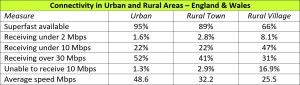
Rural extra-fast broadband grants exclude East Devon

“Thirteen areas win funding for broadband

Thirteen areas have been awarded a share of £95 million to help with the rollout of ultrafast broadband – which delivers internet speeds of up to 1GB per second – which is currently only available to three per cent of the population. The successful bidders include Manchester, London, Blackpool, Cambridgeshire, Coventry, Mid Sussex, North Yorkshire, Portsmouth and Wolverhampton.”
Source: i p10

and full list:
https://www.ispreview.co.uk/index.php/2018/03/brief-summary-13-new-uk-full-fibre-local-network-projects.html

That “6.5% payrise” for NHS workers deconstructed – it’s a pay cut!

“The good news: the eight year cap on NHS staff pay may finally be removed! The bad news? What’s being offered by way of “pay rise” is anything but.

Following months of negotiations between Ministers and Union officials, 1 million NHS staff are set to be offered what the Government is calling a 6.5% pay rise according to a leaked report today.

However, in practice, what that looks like is as follows: a 3% increase in salary from 2018-2019, which is simply the rate of inflation, and then a rise of 1-2% in the following two years.

The pay rise, which simply lines pay with inflation, is not a pay rise in any meaningful sense. Considering the fact that such an inadequate, paltry measure comes after eight years of pay that hasn’t even nearly matched the rate of inflation, the insult is stark.

NHS Nurse and ardent pro-NHS activist Jac Berry explained exactly why the Tories’ latest offer is so demeaning in a Facebook post, saying:

“Somebody (probably in a suit) has leaked what the government plans to offer us NHS staff over the next three years.

The chat is we will be offered a 6.5% increase which sounds good BUT ACTUALLY there are problems with what’s allegedly on the table.

1) The “award” is spread out over three years. If the rumours are true, this year we’ll be offered 3%, followed by 1-2% for the 2019-2021. The cost of living is going up faster than that, so this is in effect a pay cut.

2)In return, we must give up a day of our hard won Annual Leave. Personally I believe we need that annual leave to get rest and recuperation from doing incredibly undervalued work in increasingly challenging circumstances.

Sacrificing a day of that doesn’t just effect our pockets, it also affects our general well-being.

I do not view this as a acceptable offer so unless the 14 Health union leaders in direct negotiations can push the government back, I think we have no choice but to reject it.

On the question of strike action. No worker, let alone those of us caring for the sick and the vulnerable, withdraws their labour lightly. However, if the above is the best that (c)an be achieved through negotiations then I can’t think of any other option.”

To add more insult to the insult, in return for the paltry Government offering – some Twistian helping served up and slopped into the bowls of Britain’s most cherished workers – it is also a condition of the Tories’ offer that NHS staff sacrifice a day’s holiday. Indeed, the condition is a so-called red line.

Such a red line constitutes, in reality, a 0.4% pay cut. All this comes after a 14% real terms pay cut following years of austerity.

With an NHS suffering a massive dearth in staff: underfunded and under-appreciated, the Government’s response highlights exactly how little they truly care, and how little they appreciate the scale of the issue.

It’s symptomatic of a Government that thinks it can continue to strangulate the air out of the lungs of the institutions that make this country great and still expect it to sing in perfect falsetto.

Our NHS staff already work untold hours of unpaid overtime, already they sacrifice for strangers, and now in order to be graced with the honour of a meagre pay rise, they are expected to give up their only time to rest, to recuperate, to recover and rejuvenate so that they can continue to provide the service that they do.

After May patronised the profession by lying to them that a “magic money tree” doesn’t exist before jimmying up wads of cash for the DUP, and after she proselytised that there are myriad reasons why nurses might use food banks, this supposed ‘offer’ from the Government is truly outrageous.

It is arrogant, condescending, brutish and destructive, and NHS Staff should reject it.”

The Tories’ NHS “Pay Rise” is a CON – it’s a PAY CUT – and they plan to steal paid holiday from NHS staff for the privilege