How many beans make 5?

Not to detract from the obvious success of the Seaton Jurassic Centre, but is it REALLY 20,000 visitors (see below)  if you count those on return visits –  when a one year tickets allow multiple entry?

If it is 20,000 UNIQUE visitors that’s brilliant, but if it includes multiple return visitors – who do not pay an entrance fee and so do not add to entry fee income – is it quite the same thing?  Perhaps EDDC could be more transparent here:

“The £4million visitor attraction, which welcomed more than 20,000 visitors since opening in April, is proud to promote a taste of Devon to its customers.” …
http://www.midweekherald.co.uk/news/jurassic_cafe_promotes_best_of_devon_food_1_4668463

Post-fact politics and accountability

The UK’s referendum and post-fact politics: How can campaigners be held accountable for their claims?

Both sides of the UK’s EU referendum campaign were criticised for presenting misleading information to the public. Alan Renwick, Matthew Flinders and Will Jennings write that the referendum highlighted the inability of the British political system to enforce standards of factual accuracy in how politicians campaign. They argue that while legal or regulatory changes could alter this picture to some extent, the real issue is a cultural one.
Boris Johnson campaigning for VoteLeave, in front of the battlebus with the writing: “We send the EU £350m a week. Let’s fund our NHS instead”. Via totalpolitics.com
Boris Johnson campaigning for VoteLeave. (via totalpolitics.com)

Will the EU referendum be remembered as a golden moment in British democratic history? Was it really an example of how to ‘do’ democracy in the Twenty-First Century? Or was it an example of fairy tales and falsehoods that tended to create more heat than light and a dysfunctional system that was unable to enforce truthfulness?

In its report published at the end of May 2016, the House of Commons Treasury Select Committee complained that ‘The public debate is being poorly served by inconsistent, unqualified and, in some cases, misleading claims and counter-claims.’ It added, ‘Members of both the ‘Leave’ and ‘Remain’ camps are making such claims.’ But the standard of public debate did not improve, and the former Prime Minister, Sir John Major, felt forced to state publicly that he was ‘angry about the way the British people are being misled’. Such claims resonate with a public letter signed by over 250 leading academics that suggested that the level of misinformation in the Referendum campaign was so great that the democratic legitimacy of the final vote might be questioned.
Now that the Referendum has happened and the storm has somewhat abated the question that demands urgent attention is how any future referendum might be conducted on the basis of a more rigorous – dare we suggest even fact-based – public discussion?
If the problem that the EU referendum exposed was the inability of the British political system to enforce even the most basic requirements in relation to publicly-funded information campaigns, there are at least four reforms that could be considered to prevent such situations arising in future. The first is a legal response in the form of new legislation that would state that, just as some lying in election campaigns is against the law, so too should lying in referendum campaigns be against the law. Campaigners who violate such provisions could then be subject to criminal sanctions. The risk is that this may create significant unintended consequences in the form of far-reaching concerns about freedom of speech and the transfer of powers from elected politicians to unelected judges.
Tighter press regulation would be a second option. The Independent Press Standards Organisation has upheld at least four complaints relating to inaccuracy that related to the Referendum. But its rulings typically take two or three months and there is a case for insisting that not only are rulings delivered more quickly but, where those complaints are upheld, retractions or corrections should have a prominence commensurate to that of the original article.
If statutory measures are deemed too draconian and press regulation too harsh then the official campaign organisations could be obliged to recognize their civic responsibilities, in the sense of promoting engaged and informed citizenship, in return for their civic rights, that come in the form of public funds, free mailings, broadcasts, etc. The mechanism in this case might be an enforceable code of conduct, which the Treasury Committee’s report (at paragraph 235) seemed to favour. Once again, the devil would be in the detail: who or what would be the arbiter of when the facts strayed from tenuous but legitimate into the terrain of deceit and political lying? Would they be able to act quickly enough to work effectively? How would penalties be decided and enforced?
A final option would be to alter the statutory role of the Electoral Commission to include a duty to enhance public understanding of the issues at stake in the referendum. The extensive materials the New Zealand Electoral Commission produced for that country’s 2011 Referendum on the voting system, for example, included detailed explanations of each option, statements of the criteria against which the options might be evaluated, and analyses of how the options perform against these criteria. In what was (it should be acknowledged) a much less intense or politicised campaign than the current one, journalists frequently relied heavily on the Commission’s guide as a basis for their reporting.
There is also a rather awkward question concerning the meaning and delivery of public service broadcasting in the UK, notably in relation to the BBC. If major broadcasters have a public service obligation, if they are maintaining high quality ‘fact-checkers’ and ‘myth busters’, then why are they required to maintain a degree of impartiality and balance between both sides of the debate when the expert analysis, on certain specifics, overwhelmingly favours one side of the argument over the other? Impartiality in this context risks simply facilitating the promotion of falsehoods, fig leaves, fantasy and fairy tales as fact.
The twist, sting or barb in the tale is, however, that institutional change is unlikely to prevent future storms without a complementary shift in the cultural foundations of British politics. This is a critical point that the EU Referendum brutally exposed. The operating culture of British politics appears increasingly infused with a form of attack politics in which negative campaigning, personal slurs and populist declarations are dominant. The paradox is that this form of politics risks achieving little more than fuelling anti-political sentiment and the emergence of ever-greater numbers of ‘disaffected democrats’.
In this context, there is a danger that any policing of the standards of claim and counter-claim in future referendums could simply be used to fuel a populist fire: that injunctions against certain claims could be turned around and presented as further evidence of the perfidy of ‘the establishment’. Fighting falsehoods therefore requires fundamental change in how we think about and structure our democracy. That is a challenge that we should all seek to address now the referendum is over. Failure to do so may do more than render future referendums unhealthy. If the degree of mendacity witnessed in this campaign were to become commonplace in our electoral politics as well, one of the crucial foundations of our democratic system would be badly damaged.”

The UK’s referendum and post-fact politics: How can campaigners be held accountable for their claims?

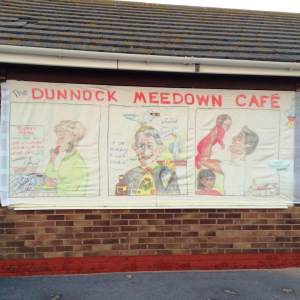
“Franksy” artwork update

The reason given by the council for removal of the art work was “it didn’t seem particularly contentious ” but E.D.D.C. were “trying to create a positive vibe in the town.”

As the site was re-visited this morning in order to remove any staples left sticking out by the hasty removal, these photographs were taken of a ripped circus poster to the back of the building, there clearly dated July 13 to 17:

image

and various little piles of screws left around the base of the building:

image

The art work was much admired and had a Great Vibe. The torn poster and abandoned debris and weeds less so.

It seems that if it does not emanate from the Thelma Hulbert Gallery (heavily subsidised by EDDC) it isn’t art!

image

This shows Councillors Diviani, Chubb and O’Leary perhaps indicating their idea of portraiture.

http://www.midweekherald.co.uk/news/gallery_launches_competition_to_celebrate_new_signs_1_4167515

Cracks in the devolution agenda at national level? And Hampshire starts the discussion

Owl, with its superior hearing, noticed Martyn Oates on Spotlight tonight saying that he had heard that devolution deals were no longer in favour and simpler unitary authorities might now be on the cards again.

Hhhm – Mrs May really is turning the rocks over to see what is underneath.

Well, it was one of George’s more crazy ideas.

But so far, only a rumour.

Hampshire, though, has seen the light:

“HAMPSHIRE County Council is calling on the Government to take a rain check on any plans for devolution while it consults residents on what they think about the idea of combined authorities, elected mayors and unitary options.

Following last month’s EU referendum result and a period of potential economic disruption, county council leader Roy Perry has called on the Government to avoid causing unnecessary instability to Hampshire’s economy – and instead halt plans that he believes would split up Hampshire and erode the strength of vital services to residents across the county.

And despite the change in Government, this message is felt to remain valid.
In a letter to former Prime Minister David Cameron, Mr Perry said that now was not the time to press ahead with proposals to implement a Solent devolution deal, thought to be favoured by East Hampshire District Council, which would break up crucial transport services on which Hampshire’s economy depends, and risk damaging, among other things, significant public investment in essential transport schemes.

And he has called for the resetting of the agenda on devolution.
“The closure of the referendum campaign brings an ideal opportunity to reset the agenda on devolution and refocus on what we’re actually trying to deliver – strengthened local democracy, sustainable local growth and reformed public services.

“The positive energy from Government’s initial announcement to devolve more decision-making powers to local areas has sadly dissipated, as councils up and down the country have divided over two issues – Government’s insistence on having directly-elected mayors, and possible local government reorganisation as the alternative. This is certainly the case in Hampshire and the Isle of Wight where the collective, previously healthy, working relationships have been placed under massive strain by the very process that was supposed to bring us better together.

“We shouldn’t be spending time and resources on these disputes at a time of such uncertainty for the future of the economy and public services.”
Mr Perry said that with the county council needing to save a further £120m by 2019, and most other local authorities also facing similar financial pressures, “there is deep concern across Hampshire about the enormous additional risks of dismantling consistently high-performing services such as child protection, highway maintenance and adult social care, and transferring them to combined or unitary authorities that split the county into several pieces, and cut across the well-established boundaries for the police, fire service and health”.

“That is the inescapable conclusion of the current Solent plans,” he said.
He was heartened therefore when at the Local Government Association conference in Bournemouth, then Secretary of State for Communities and Local Government Greg Clark gave an assurance that the devolution process would not fragment historic boundaries.

In urging the Government to get devolution back on track, Mr Perry repeated his call for proper deals to be delivered in areas that have rejected the Government’s demand for elected mayors as a condition of devolution.
“The Government should also set out the process and timetable for how new unitary councils could be created for areas pursuing local government reorganisation,” he said.

http://www.farnhamherald.com/article.cfm?id=112501&headline=Call%20for%20halt%20to%20devolution%20talks&sectionIs=news&searchyear=2016

Cameron’s Lords to cost taxpayer millions

“David Cameron sparked an outcry last night with a crony-filled resignation honours list that ‘would embarrass a medieval court’.

As he finally unveiled the ‘toxic’ nominations, the ex-prime minister gave out 13 Tory peerages and 46 honours to allies, aides, Remainers and party donors.

The Electoral Reform Society blasted the gongs as a ‘sorry legacy’ that would lumber the taxpayer with a bill for even more unelected Lords.”

http://www.dailymail.co.uk/news/article-3724567/Dave-s-two-fingers-voters-brazen-contempt-public-opinion-Cameron-showers-honours-chums-cronies-second-raters.html

and

“The list was denounced as “a sorry legacy” by democracy campaigners the Electoral Reform Society (ERS), which called on the new Prime Minister Theresa May to “sort out this mess once and for all” by allowing voters to choose members of the Upper House of Parliament.

ERS chief executive Katie Ghose said: “For a Prime Minister who promised to cut the cost of politics, David Cameron is leaving a big bill for the taxpayer as he leaves office.

“His parting gift of 16 lords is a sorry legacy, both in terms of cost to the taxpayer and the quality of our democracy.

“Mr Cameron’s Lords legacy could have been about real, democratic reform.

“Instead, he has unfortunately chosen to follow the well-trodden route of every other PM and packed the second chamber with former politicians, donors and party hacks.

“These unelected peers will cost the taxpayer millions over the long-term – hardly a fitting goodbye.”

“Devon and Cornwall’s police and crime commissioner blew her rivals out of the water when it came to campaign spending”

Devon and Cornwall’s police and crime commissioner blew her rivals out of the water when it came to campaign spending, it has emerged.

Newly submitted election expenses reveal Conservative Alison Hernandez spent more than twice as much as her Labour, Liberal Democrat and UKIP rivals put together during the campaign.

Ms Hernandez, who was elected to the £85,000-a-year post in May, spent

£31,212

during the campaign – more than any other candidate. Her campaign was funded by donations of money and services from Conservative headquarters and local branches in Devon and Cornwall.

The second biggest spender was retired senior police officer Bob Spencer, from Lympstone, who spent

£19,000 of his own money

on an unsuccessful campaign.

The full list:

Alison Hernandez (Conservative) – £28,595, plus personal travel and accommodation expenses of £2,617;

Bob Spencer (Independent) – £17,602, plus personal expenses of £1,446;

Richard Younger-Ross (Liberal Democrat) – £6,340, plus personal expenses of £490;

Gareth Derrick (Labour) – £4,982, plus personal expenses of £419;

William Morris (Independent) – £2,488, plus personal expenses of £1,453;

Jonathan Smith (UKIP) – £2,414.

http://www.exeterexpressandecho.co.uk/devon-and-cornwall-police-commissioner-election-expenses-reveal-gulf-in-campaign-spending/story-29581795-detail/story.html

Piles or no piles, that’s the question in Seaton

Owl is – as so often being an East Devon Owl – confused.

According to today’s View from newspapers, EDDC has again turned down affordable housing on the Seaton Tesco site being built on by Bovis, in part because of the high cost of raising the land because it was on a flood plain. This led, it says, to it being unviable to build three storey or terraced housing without the use of “prohibitively expensive” piled foundations. This means that density and height of the houses on the site has to be reduced and this means building affordable homes is unaffordable on the site. EDDC Development Management Committee has agreed.

So why did original plans show more and higher housing WITH affordables when it was known that this would not be financially viable to developers who would not want to take on the extra cost of piling? Why was it not mentioned that the original plans relied on piling and might need to be changed? Did Bovis know when the bought the land that it could only build lower density, lower rise housing and that this would rule out any affordable housing?

And what of the three-storey houses that have already been built on the site – are they in any danger of subsiding or do they have piling or other strengthening construction:

http://www.whathouse.com/housebuilders/bovis-homes/pebble-beach-seaton/3-bed-semi-detached-house_47069/

http://www.bovishomes.co.uk/new-homes-on-pebble-beach/the-tetbury?hse=p307

(early part of the sales video showing at 20-30 seconds in shows three-storey housing – and an impression at 1 minute 20 seconds that somewhere close to the site (“local amenities”) has a beautiful indoor swimming pool, too).

A check with the planning application shows that (terraced) Premier Inn IS being built with piling, so that’s a relief!

What one council did with a large development site

EDDC and Knowle and local NHS Estates: hang your heads in shame and pay particular attention to the last paragraph.

“Housing can be a gloomy beat: most news stories focus on eviction rates, homelessness, rising house prices and rent rates locking people out of stable homes, while council housing is forcibly sold thanks to short-sighted government policies.

Obviously, bad news needs to be reported; often the people most subject to discrimination and homelessness are precisely those people the political class view as voiceless. But amid the doom, small symbols of hope appear in housing.

One such example, in a corner of Haringey, is the St Ann’s redevelopment trust Start: a disparate team of local residents working together to try to work out what housing the local area needs and then deliver it. The St Ann’s hospital site in the borough is being partially sold off – two thirds of it has been earmarked for private development. In itself, that is not unusual. The NHS has a lot of land that’s undeveloped or hasn’t been in use, and with services changing, empty sites often pop up.

Originally the plan was for the site to be sold for private housing development, with only 14% of the homes being classed as “affordable” (itself a loaded term). But Start Haringey had different ideas. It wanted to use the land for a genuinely community-led development and asked locals what they wanted to see in the area. The organisation held consultation events with hundreds of attendees, circulated a survey completed by more than 300 locals, and collaborated with architects, who were asked how the community’s desires could be realised.

The clear winners were truly affordable housing, and a development that considers health in the built environment and the need to be environmentally friendly. St Ann’s already has areas of great natural beauty that the community wants to retain, but locals also pressed the importance of green space that is accessible to all, not fenced off.

With mental health services continuing to run from the remainder of the site, the community was keen to integrate the development into the existing NHS services. The provision of affordable housing would not only be sympathetic to the needs of patients and staff at the hospital, but could also provide valuable accommodation for people who wish to live independently with support. At the same time, local outreach work could be carried out, so early intervention and preventative health work could seamlessly integrate into the development if done properly.

Community land trusts are growing in numbers throughout the UK, but perhaps key to this group’s success so far is how easy it is to get involved: meetings on the progress of the plan are held weekly at a local school, with a housing sub-group looking particularly at the type of buildings St Ann’s could benefit from. They’re open to all those in the area over the age of 16, and, while membership is £1, anyone can contribute without becoming a member. Costs are covered by a crowdfunding campaign, which is a quarter of the way to its target with over 100 backers. The funds will allow the group to finish the architect’s plans and put together a bid for the site.

Starting with a bottom-up approach, Start Haringey has developed a genuinely costed and doable plan for a development that meets local needs and helps mitigate the housing crisis locally.

Too often, locals are completely locked out of public consultations on the very land they live on, and neighbourhoods they have called home for decades: the assumption that locals don’t care about development simply isn’t true. You only need to see the strength of feeling involved in the many housing protests around the country. But in many cases, residents are patronised, offered a so-called choice between very similar models of development, and are never asked what they want their local area to look like – or, more importantly, why. Start Haringey shows that the appetite for proper consultation is there, and the political will to devote time to doing so is rising.“

http://www.theguardian.com/housing-network/2016/jul/29/good-housing-plan-local-needs-nhs?CMP=Share_iOSApp_Other

Exmouth Jounal: when is news not news?

When it is the BIG, BIG story about EDDC dropping their development partner (Moirai Capital Investments) and going back to the drawing board for the seafront, which appeared on its website for only 24 hours, displaced by stories on the Tour of Britain, a school fete in Ottery and a by-election in Littleham.

Wonder how that decision came about?

The Seaton Seaside “chickens”

image

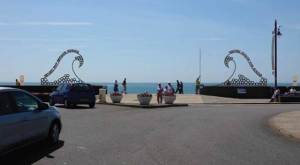
Much furore about a new sculpture erected on Seaton seafront a few days ago as part of its Jurassic Coast arts interpretation. Many people have remarked that it looks like two chickens heads, with some even saying that the noise of the wind passing through the sculpture even sounds like chickens clucking!

The saga began long ago in 2014 when the controversial sculpture was first mooted, when, in September 2014, then Mayor, Tony Woodman and Councillor Val Christmas voted against the project, which was carried by a majority of Seaton Town Council:

http://www.viewfrompublishing.co.uk/news_view/33584/21/1/seaton-oppositiongrows-to-proposed-jurassic

A photograph of the sculpture was published in the Midweek Herald on 8 April 2015:

http://www.midweekherald.co.uk/news/controversial_waves_sculptures_get_the_go_ahead_1_4025621

where it was reported that a survey of 200 people asked if they liked the design overwhelmingly approved of it.

The two newspaper reports seem not to have been seen by many people in Seaton who have taken to social media to violently disagree about the merits of the artwork.

Devolution – really delegation without funding

” … The promise of devolution is gaining the power to solve the problems that you are closest to by setting policy, raising resources and coordinating the state locally.

We have seen wide-ranging devolution to Scotland, Northern Ireland and Wales, where the default is to take over on all matters not reserved for Whitehall. So, for example, the home secretary has no role in policing in Scotland while borders and counter terrorism are reserved; the Scottish Government sets policy, raises tax resource and coordinates the state.

This default is not a facet of English devolution. In England, Westminster, in terms of legislation, and Whitehall, in terms of management, retain everything other than matters they devolve.

This is a profound difference because, other than metro mayors and police and crime commissioners – which are clearly still in development – England does not have comparable directly elected devolved administrations that sit between central and local government to manage the whole state locally. Combined authorities do not set policy, raise tax resource or coordinate the whole local state.

Without being a pedant, technically much of what we see in England is delegation and not devolution. But it’s a start and, once this has happened, it is often difficult to roll back. Scots are not demanding that Jeremy Hunt directly controls their NHS. We will see whether Mancunians welcome a sense of more direct control of their healthcare system.

The most powerful of devolved local governments in England, the Greater London Council, was abolished and there is no reason to believe that the partial early steps of devolution in England will not be rolled back. And, if devolution does not add value, the public will probably say “a good job too”. While abolishing the GLC was controversial, it was also popular. There is a strong English tradition that the mother of all parliaments is a pretty powerful mummy where we elect MPs to run the country and tell us what to do.

But remember, this is not all about wholly homegrown dynamics. We see a global trend for economic growth that focuses on cities and city regions.

CIPFA’s annual conference this year is examining what it takes for economies to succeed.

Recently, chief inspector of schools Sir Michael Wilshaw challenged leaders in Liverpool and Manchester to demonstrate “grit, imagination, faith and bloody mindedness” when tackling failing schools. His comments show that local leaders cannot rely on holding powers but must bring about change in complex, linked networks.

For public servants, success will be in nurturing local networks to create a strong commercial and civil society that reciprocates to support social progress and financial security in the public sector. The move to 100% business rate retention for local authorities is perhaps the most telling example of how devolution will look.

Councils’ own finances will be reliant on local economic success, so they will have a greater incentive to prioritise business support.

In the devolved world, curing the sick will not simply be about providing care. It will be an ongoing process of communication and leadership to bring communities together to tackle the causes of sickness. Mixes of businesses, charities and even passionate individuals who understand local cultural and environmental factors can surpass the one-size-fits-all approaches of the past.

Finance professionals and system leaders are at the heart of this revolution. Balancing budgets will be less about moving figures around and more about driving real change to grow community success.

There is an evolution to how we work and barriers to unleashing the full force of local public service entrepreneurialism still exist but, at the present rate, we are heading for a tipping point. Yes, public services have suffered unprecedented upheaval. And yes, many challenges remain. But now is the time to focus on a positive future with renewed energy and confidence.

http://www.publicfinance.co.uk/opinion/2016/07/local-enterprise-unlocking-public-sector-entrepreneurialism

Hinkley C – or a 28 minute journey to Norwich?

Hinkley C or a journey from Exeter to London that takes 20 minutes?

California-based start-up Hyperloop One has unveiled a feasibility study for building a [300 mile] high speed Hyperloop transport network from Finland to Sweden for around £16.2 billion ($23 billion). The journey, which currently takes a 16 hour ferry journey or an hour by plane would take 28 minutes.

This would be the equivalent of a journey from Exeter to Norwich, 5 hours by non-stop car or also an hour by air.

http://www.dailymail.co.uk/sciencetech/article-3676845/Is-Hyperloop-coming-Europe-Super-fast-transport-cut-310-mile-trip-Helsinki-Stockholm-28-minutes.html

Who guards the guards when the all the guards are in trouble?

This is the board of our Local Enterprise Partnership:

http://www.heartofswlep.co.uk/chief-executive-and-non-executive-directors

Post-Brexit, the vast majority of this board is having trouble: housebuilding slowing down, AgustaWestland talking of massive redundancies, universities losing EU funding and students, and many of them have cross-interests and common interests that are going to be very fragile (several have nuclear power interests).

How can we be sure that they will not put their own interests first in tough times when funding is tight?

If, given their interests, they had to decide between, say, supporting their direct or indirect business interests or supporting small and isolated rural communities which would you expect them to choose?

Telegraph journalist on how to survive Brexit: longer working hours and plenty of immigrants!

Be careful what you wish for but be even more careful to check what you think you are voting for.

In an article in today’s Telegraph entitled “Now the vote is over, let’s move on with six steps to a bright future” here are a couple of the proposed steps journalist Matthew Lynn suggests:

… “We should scrap EU-mandated labour market regulations and social protections as fast as possible. There is no reason why we should accept European limits on how many hours people do in the office – so long as we have a minimum wage in place, which we do, then it is up to every individual how long a shift he or she wants to put in. Issues such as parental leave can be freely agreed between companies and staff. Employers who want to hire lots of young women, the best educated, most skilled part of the workforce, will be generous; others less so. But business can decide for itself.

… Finally, keep immigration at high levels. Many people who voted for Brexit wanted it to come down, but that is a debate for another day. Right now business is structured around a constant flow of new workers and although it can change that by improving productivity and using more robots, it can’t be done quickly.

For the first five years, the Government should aim to keep net migration around the 300,000 mark every year, even if it wants to change the mix to allow in more Canadians and Indians and fewer East Europeans.”

http://www.telegraph.co.uk/business/2016/06/28/now-the-vote-is-over-lets-move-on-with-six-steps-to-a-bright-fut/

Matthew Lynn is a financial columnist and author. He writes for WSJ Marketwatch, The Spectator and Money Week as well as The Telegraph, and has worked as a columnist for The Sunday Tines and Bloomberg.

Today there is no local news …

… EVERYTHING today is national. No-one appears to have a clue what is going on or what will happen next.

Normal service may be resumed tomorrow, but don’t bank on it! If it is, Owl will be here!

Whither East Devon?

Whither Hugo Swire, who backed the losing side?
Whither devolution where much was based on EU funding?
Whither housebuilding and Local Plans?

So many questions and, as yet, so few answers.

Brave New World …

Hugo Swire replies to less than 25% of constituents’ letters within 2 weeks

according to statistics here:

https://www.writetothem.com/stats/2015/mps?o=n

Perhaps he should ask (one of) his Parliamentary Assistant to pull up her socks. It shouldn’t be too difficult, as it is his wife Sacha.

Councils must follow through on planning enforcement says Local Government Ombudsman

” … Councils and other planning authorities need to act more decisively when taking enforcement action against planning breaches in order to maintain control of the built environment, the local government ombudsman has said.

Publishing a report examining a case where a man complained that Hackney Council spent more than five years trying unsuccessfully to get his neighbour to remove an unauthorised extension, Jane Martin said all authorities must ensure effective enforcement measures are taken.

Planning authorities must keep track of enforcement action, and follow through when they promise to act in order for the system to function, she stated.

The report highlighted problems that can occur when councils do not take decisive enforcement action or keep neighbours up-to-date on progress. …

http://www.publicfinance.co.uk/news/2016/06/ombudsman-urges-councils-take-firm-action-planning-breaches