Yarcombe Neighbourhood Plan: Inspector unhappy about throttling of new businesses

In this month’s Cabinet agenda papers (page 56) there is a report of changes that its Inspector wishes to see before EDDC accepts it.

This comment caught Owl’s eye:

It is not the role of the planning system to protect existing businesses from the impact of market forces and competition from new entrepreneurs, which would run counter to national policy to support the sustainable growth and expansion of all types of business and enterprise in rural areas. For this reason, I am not satisfied that part ii) of policy CFS2, which requires new proposals not to have a negative impact on existing businesses, has appropriate regard to national policy. Nor would it contribute to the achievement of sustainable development. I therefore propose to modify policy CFS2 to delete ii) of CFS2, paragraph 6.9 and the last part of paragraph 6.8 after ‘our community’. For the reason explained in paragraph 4.9 above, I am modifying the policy to clarify in iii) that any ‘adverse impact’ should not be ‘significant’

Click to access 140617combined-cabinet-agendapublicversion.pdf

It seems that Yarcombe puts the protection of existing businesses over and above the creation of any new ones.

Leader Paul Diviani is the district councillor for Yarcombe and lists amongst other responsibilities:

Blackdown hills Area of Outstanding Natural Beauty (AONB) joint advisory committee
SPARSE rural special interest group
Making it Local Action Group (Chairman)

Surely he supports Tory free market policies and will wholeheartedly support the Inspector’s suggested changes.

Austerity and the poor

Letter in today’s Guardian:

“• Deborah Orr (Opinion, 30 June) is unfortunately absolutely right in all she says about the Grenfell catastrophe. A contempt has developed for health and safety considerations and they are considered a pathetic nanny-state approach.

This, coupled with the worship of cost-cutting at the expense of humanity, has caused this tragedy.

Even though I understood that terrible things were happening in the name of austerity I must admit I still thought we lived in a country that used regulation to require housing to be built or altered so as to offer adequate fire protection. Not if you live in social housing it seems. Could that be any more shameful?

Linda Maughan
Hartlepool”

Plymouth City Council passes ‘no confidence’ vote on Hernandez

“Plymouth City Council has narrowly passed a motion of no confidence in Devon and Cornwall Police and Crime Commissioner Alison Hernandez.

The motion, passed by 26 to 25, was proposed by Labour councillor Chris Penberthys.

It said: “Plymouth City Council is extremely alarmed at the recent comments from Conservative Police and Crime Commissioner Alison Hernandez about licensed firearm owners being allowed to act during terrorist incidents. Ms Hernandez’s statement that she would “really be interested” in the suggestion shows she is unfit and unsuitable for office.”

Source: BBC DevonLive Website 08.02

Hinkley C escalating costs – do we have too many LEP eggs in the Hinkley C basket?

First, the latest report:

“Hinkley Point C in Somerset will cost £1.5bn more than planned, says developer EDF, and completion could be delayed by 15 months beyond the 2025 target date. In one sense, this news lacks any element of surprise. EDF only seems to build nuclear reactors that are late and over-budget, as witnessed in Finland and on its own patch at Flamanville in Normandy.

Yet the timing of EDF’s “clarifications” is a shock. It is very early in the life of this £18.1bn (now £19.6bn, possibly rising to £20.3bn) project to be recasting the numbers. The tricky stages of construction, like pouring the right mix of concrete, lie ahead. The additional costs relate to mundane matters, such as “a better understanding” of UK regulators’ requirements and “the volume and sequencing of work on site”.

These are planning areas in which EDF would surely have made allowances for uncertainties. That all that slack, and more, has been used up is puzzling. Sceptics within EDF who argued that Hinkley is too big and too financially risky will feel vindicated already. EDF’s projected rate of return on the project was never high at 9%; now it is down to 8.5% and will fall to 8.2% if the delays materialise.

Still, it’s a French problem, right? Didn’t the UK government insulate us by making EDF and its Chinese co-financier shoulder the construction risks? Wasn’t that the trade-off for the UK guaranteeing to buy all Hinkley’s electricity for 35 years at twice the current wholesale price?

Well, yes, that’s how the contract is structured, and EDF’s UK boss was full of reassurance on Monday that UK taxpayers remain protected. But no contract of this size is ever so straightforward, as the National Audit Office pointed out in its blistering report last week.

“If the HPC [Hinkley Point C] project or developer runs into difficulties, the UK government could come under pressure to provide more support or take on additional risk, particularly given HPC’s potential importance to ensuring energy security,” said the NAO.

That dire circumstance remains some way off, but it can’t be ignored. What if real engineering problems follow? What if EDF’s projected returns fall to 7%, which would be closer to the company’s cost of capital? Would EDF seek better terms knowing that Hinkley is scheduled to provide 7% of our electricity?

“The [UK] government will hold a stronger negotiating position if it maintains alternative ways of ensuring energy security if HPC runs late or is not completed,” said the NAO. That advice was sound last week, now it looks prescient.

It is bad enough that UK consumers are locked into this “expensive and risky” project, as the NAO called Hinkley. It would be calamitous if we end up being bullied into paying more. Ministers need to draw up a proper contingency plan – starting now.”

https://www.theguardian.com/business/nils-pratley-on-finance/2017/jul/03/ofgem-energy-price-cap-shows-mays-help-for-millions-is-off-the-boil

And why does this matter to us in Devon? Hinkley C is Somerset isn’t it? Ah, but our Local Enterprise Partnership covers Devon AND Somerset, so masses of money that used to go directly to our councils for local projects is pouring into their (unaccountable and non- transparent) coffers.

And because these are the projects our LEP is putting OUR money into on the assumption everything is hunky-dory:

Bicton (Cornwall College) – this project is a dedicated Skills Centre for Engineering and Construction, including nuclear.
£300,000 from Growth Deal.

Bridgwater – HPTA – National College for Nuclear (Southern Hub). This project is to base the National College for Nuclear (NCfN) – Southern Campus on Bridgwater College’s newly developed University Centre in Cannington.
£3 million from Growth Deal

Exeter College – a Centre for Advanced Industrial Automation to address the LEP priorities for the HPTA, Hinkley Point C supply chain and the New College for Nuclear advanced manufacturing and Business Incubation.
£3 million from Growth Deal

South Devon College – The project is a suite of small capital investments that will enable the College to extend and enhance the range and quality of our provision to meet the direct and indirect skills needs for the new nuclear development at Hinkley and address the replacement skills resource needs locally.
Already received and spent £213,980 from Growth Deal

Yeovil College – Addressing skills gaps in Construction/Civils and Facilities Management
Provisional allocation of £637,500 from Growth Deal.
Of which our LEP says:
“This project forms part of the Nuclear South West strategy – a strong partnership between three south west LEPs (Heart of the South West, West of England and GFirst) the nuclear industry, local authorities, academic and skills sectors and business support agencies – generating £55bn of nuclear opportunities over the next decade”

The above does NOT include the massive numbers of houses to be built in the Hinkley C area by companies such as Midas (LEP board member).

Check out the nuclear and other interests of LEP Board Members (including EDDC Leader Paul Diviani and non-Board member Mark Williams, EDDC CEO) here:

http://heartofswlep.co.uk/about-the-lep/lep-board/

AND IF THERE IS NO NUCLEAR INDUSTRY? WHAT THEN?

“Why do England’s high-rises keep failing fire tests?”

“… Undermining the building regulations

The first thing to know is that local officials no longer run all building inspections. England has a so-called “Approved Inspector” regime.

Contractors must no longer wait for a local authority official to check their work. Instead, they may hire people to check their construction processes meet the required standards. There is no single regulator – or arm of government – directly upholding standards.

Second, the most important requirement in the building regulations is to build a safe building. So long as you do that, the fine print of the rules does not much matter too much. That is why, when inspectors sign off sites, they do not feel the need to work directly from the government’s own guidelines. And the guidelines set out by government are rather old, and cannot specify everything in all circumstances.

That has left a gap into which esteemed sector bodies have stepped. Their umbrella organisation – the Building Control Alliance (BCA) – has issued advice about how to get a building signed off as compliant without using the type of materials specified in the government guidelines.

And it is the case that, in the event of some prosecutions or a civil case, breaching the government’s guidance would count as a serious strike against a builder. But it would also be the case that following widely accepted professional practise and BCA guidance may also constitute a defence in a suit for negligence and grounds for mitigation in a criminal prosecution.

The problem is that this BCA guidance does not just suggest ways of making new technology fit the old rules. It introduces loopholes. The net effect of the sector bodies’ guidance is to set weaker standards than the government’s rulebook. …”

http://www.bbc.co.uk/news/uk-40418266

Better-off buyers are the ones who benefit from help-to-buy

“Government schemes designed to help more people get on the UK housing ladder have little impact on improving social mobility as better-off buyers are most likely to benefit from the support, a report has found.

Research by the Social Mobility Commission reveals that many low-cost home ownership schemes are beyond the reach of almost all families on average earnings, prompting warnings that the UK housing market is “exacerbating inequality and impeding social mobility”.

Those benefiting from low-cost home ownership schemes, such as Help to Buy, earn more than one and a half times the national working age median income, according to the findings. …”

http://www.independent.co.uk/news/uk/home-news/government-home-ownership-schemes-families-average-earnings-social-mobility-report-commission-low-a7818616.html

Almost 300 staff made redundant in Devon schools due to cuts

“Nearly 300 staff at schools across Devon have been forced to take voluntary redundancy as a result of budget cuts at school, it has been confirmed. Schools all across Devon are on average funded £268 per pupil below the England average, which has resulted in a £24 million shortfall.

Figures released by Devon County Council show that while 212 schools in the county could benefit as a result or the new fair funding formula, another 129 would be even worse off than they are now. They include 24 secondaries, 103 primaries and two all-through schools. …

Matthew Shanks, Director of Learning at Education South West, which inclues Dartmouth Academy, Coombeshead Academy, Kingsbridge Community College, Teign School and primary schools at Christow, Blackawton, East Allington, Kingswear, Rydon and Stoke Fleming, said: “I don’t think there is a single school across Devon who hasn’t been affected by this.”

He added that the cuts in education budget have meant that 86 teaching assistants, 35 senior teaching leaders, 19 caretaking staff, 25 administrators, 55 teachers, and 52 curriculum support staff across 27 secondary schools in Devon will leave their jobs at the end of the summer term and won’t be replaced. …”

http://www.devonlive.com/education-funding-cuts-means-nearly-300-staff-have-to-take-voluntary-redundancies/story-30420745-detail/story.html

Cranbrook expansion plans including travellers site

For plans and pictures see quoted article.

“Plans for the southern expansion of Cranbrook have been revealed – and it includes 1,200 new homes, a new primary school, a sports hub, a petrol station, and a site for travellers.

Two new applications for the southern expansion of Cranbrook have been submitted to East Devon District Council for the outline planning permission for 27.2 hectares of residential development, 9.2 hectares of employment development, a new primary school, a local community centre, and sport pitches and tennis courts as part of a sports hub.

Since the build of the new town in East Devon began in 2010, 3,500 homes, a railway station, St Martin’s Primary School, play facilities, the neighbourhood centre, local shops, the education campus, the Cranbrook Farm pub, while construction of buildings in the town centre and the sports pitches are underway, while plans for the ecology park in the town have also been submitted.

Now, as part of the southern expansion for Cranbrook, the town is set to get an additional 1,200 homes, but also a petrol station, a residential care home, employment land, a new primary school, and an all-weather sports facility.

The long-running problem of travellers pitching-up in Cranbrook is also set to be solved as an area has been identified within the employment area site as a potential travellers site, but discussions will need to be held with the district council about the exact location.

WHAT THE APPLICATION INCLUDES

Residential

The parameters plan proposes 27.2 hectares of residential development of up to 1,200 homes.

Employment

Employment provision forms part of the mix of uses within the southern expansion area. It proposes 9.2 hectares of employment land, comprising of up to 35,000 sq m of employment uses and a petrol station with associated convenience retail and facilities. An area is identified within the employment area as a potential travellers site. Provision is also made within the employment area for a future expansion of the energy centre if required.

Education

A two form entry primary school is proposed within the southern expansion area.

Local Centre

A local centre is proposed in the heart of the southern expansion area to serve all the residents and the employment area. It will comprise of financial services, restaurants, pubs, takeaway and business uses.

Open space

Around 35 hectares of green infrastructure will be provides. The sports pitches are proposed in one central location on the southern edge of the development. The outline application sports hub land can accommodate an all-weather playing pitch with floodlighting, senior and youth football pitches, changing facilities, and a youth and children’s play area. Two adult rugby pitches and four tennis courts can be delivered.

The application says: “The adopted East Devon Local Plan identifies the future growth of the town of Cranbrook as part of the strategic growth of the area referred to as East Devon’s West End. Land is allocated within the local plan to meet the demand for the town to grow to 6,300 dwellings.

“The three outline planning applications for the expansion of Cranbrook to the west, east and south were submitted in December 2014 which sought planning permission for up to an additional 4,120 dwellings. The three 2014 expansion area outline planning applications are awaiting a decision.”

The latest application comes following public consultation on the plans over the past two years.

The application says: “The southern expansion of Cranbrook establishes an attractive and sustainable development that will become a place where people will to and enjoy living.

“The vision for the town is that Cranbrook will be a dynamic town, of a size to support a broad range of facilities, infrastructure and opportunities in a vibrant town centre and local centres sustained by its population. Cranbrook will be independent from, yet serving, existing communities, with the identity of surrounding villages always protected by a strong green buffer.

“The expansion of Cranbrook, including the southern expansion area, is able to realise that vision.”

http://www.devonlive.com/major-cranbrook-expansion-plans-revealed/story-30420895-detail/story.html

“One in seven UK private tenants pays more than half income in rent – study”

“Only 2% of homeowners spend similar a salary percentage on their mortgage, according to LGA research. …”

https://www.theguardian.com/money/2017/jul/03/one-in-seven-private-tenants-pays-more-than-half-income-in-rent-study-finds?CMP=Share_iOSApp_Other

Oh, those poor, poor developers with their begging bowls

“Documents show plans to create 36 sheltered apartments for the elderly should be worth nearly £1million to the Sidmouth community – but the developer has shown it is ‘unviable’ to pay more than £41,000.

Churchill Retirement Living hopes to demolish the former Green Close care home in Drakes Avenue to make way for the development.

Its five-figure offer towards off-site ‘affordable’ housing was slammed as an ‘insult to Sidmouth’ by town councillors, who suggested the developer should pay at least £360,000.

After failing to reach an agreement with East Devon District Council (EDDC), Churchill launched an appeal due to non-determination of its application.

Papers submitted to the appeal process from EDDC say there is a policy expectation that half of the site should be provided as ‘affordable’ housing and that there is a ‘substantial’ need for one- and two-bedroom units in Sidmouth.

If 18 ‘affordable’ homes cannot be provided on-site, a payment of £935,201 would be expected so the properties can be built elsewhere.

Churchill said a viability assessment showed building ‘affordable’ homes on the site was ‘impractical’ and ‘unrealistic’.

It added: “It has been demonstrated that the application development is not sufficiently viable to permit the imposition of any affordable housing or planning gain contributions above £41,208.”

An EDDC spokeswoman said: “Unfortunately, the development is not sufficiently viable to pay this [£935,201] sum and, following an independent assessment of the viability of the scheme, it was reluctantly accepted that the scheme could only afford to pay £41,208 towards affordable housing.

“Under government guidance, we are required to reduce our requirements where a development is unviable and so we have no real choice but to accept this position.”

EDDC also expected Churchill to pay £22,536 for habitat mitigation, plus an £18,400 public open space contribution. The total is nearly £1million.

The delay in EDDC deciding the fate of the application was due to officers trying to apply an ‘overage’ clause that would require Churchill to pay up if its profits exceed current expectations.

A Planning Inspectorate spokesman confirmed that the appeal had been validated and it is in discussion with both parties.”

http://www.sidmouthherald.co.uk/news/eddc-wants-1million-in-community-cash-developer-offers-40-000-1-5084604

Surprise! Hinkley Point C costs rise say EDF!

“The company, which is the project’s main backer, said the total cost of the plant was now likely to be £19.6bn.

Hinkley Point C would be the UK’s first new nuclear plant for decades, but has been beset with budget problems.

A review of the project found there was also a risk it could be delayed by up to 15 months.

… The extra costs result from a better understanding of the design, supplier contracts and the volume of work, the company said.”

http://www.bbc.co.uk/news/business-40479053

1. The extra costs come from desperate attempts to rectify breathtakingly serious design flaws.

2. If you believe the numbers above, you need your head examining!

3. Green energy costs are tumbling; if ever this dangerous white elephant gets built … it will be a dangerous white elephant that has sucked up vast amounts of UK money in infrastructure and development costs that could have been better spent almost anywhere else – except on propping up this government with the DUP.

And PS: our nuclear-very-very-friendly company bosses and developers that make up the majority of our Local Enterprise Partnership just LOVE this project – so there must be something wrong with it!

EDDC employee number statistics not published for 6 months

EDDC has now missed six publication dates in a row for its statistics about how many people are employed by them.

The last figures available are for December 2016.

They used to be published regularly, at least quarterly and usually monthly.

What on earth is going on?

Surely, an accurate picture of the numbers of staff employed is required for the design of the new HQ?

Either EDDC are not bothering to record their staff numbers, which at a time of relocation is particularly foolish, or they are knowingly declining to tell us exactly how the figures are changing in this time of austerity and belt-tightening.

Either way, not good.

Swire backs Hammond for PM: says he’s “an homme serieux” and has “bottom”

Owl says: bottoms are obviously a particular interest for Swire:

http://www.telegraph.co.uk/news/politics/david-cameron/11946721/David-Cameron-caught-on-camera-giving-minister-slap-on-bottom-at-State-banquet.html

… “There is a sense that, in the present febrile climate, whoever is the next leader must be highly experienced. Davis qualifies; so does Hammond, who before his present job was foreign secretary and defence secretary, and who has belatedly displayed a mind of his own since May was hobbled.

Hugo Swire, a minister of state under Hammond in the Foreign Office, said of him: “He’s got bottom. He was very good to work for. He is an homme sérieux. I liked him very much and he would calm things down.” …

http://www.newstatesman.com/politics/uk/2017/06/humbling-theresa-may

Sustainability and Transformation Plans have no legal basis – so why are hospitals closing?

May backed down from a fight with MPs likely to involve hospital closures, Labour has alleged.

Legislation to allow local health chiefs to transform the delivery of care – and, crucially, save many billions of pounds – has been shelved after the Conservatives lost their Commons majority.

Health Secretary Jeremy Hunt has admitted the legal shake-up cannot go ahead without a “consensus” and that it will not happen while the Government is fixated on Brexit.

Two thirds of the 44 Sustainability and Transformation Plans (STPs) propose closing a hospital, or moving treatment to a different site.

The STPs have not been stopped in their tracks. Local health bodies will continue to create them, but without any legal underpinning.

Now it is feared that, without that legal footing, it will be significantly harder to compel the many different parts of the NHS to force through unpopular changes.

There have already been protests that the blueprints lack the “democratic legitimacy” they require to win public support, partly because they do not fully involve local authorities.

The Nuffield Trust health charity warned the much-needed transformation of the NHS – shifting treatments to more modern, community facilities – would now be “harder, slower and messier”.

Its chief executive, Nigel Edwards, said: “This will disturb the timetable of what’s being proposed and whether they can produce the savings wanted in the time available. There will be legal knots to work through.”

The NHS Confederation, which brings together hundreds of health bodies, said an extra £2bn a year was needed to make a success of STPs, with the NHS “struggling to cope with demand”.

And Jonathan Ashworth, Labour’s shadow Health Secretary, said: “The Government’s transformation plans for the NHS are in total chaos.

“The whole process has been shrouded in secrecy and has clearly lost the trust of the public. Now we’re told the necessary legislation to help local health providers work closer together won’t be ready until after Brexit.”

Without them, it will be far harder to avoid cuts to services – or to lift the cap on NHS pay, which many Tory MPs are urging the Prime Minister to do urgently.

The STP blueprints have already been unveiled, involving the closure of expensive, outdated buildings in order to join up care better and bring delivery closer to patients.

The shelving of the necessary legislation was revealed when the Queen’s Speech – for the next two years, through to 2019 – was published with no bills for front-line health or education services.

Mr Hunt himself told the NHS Confederation: “We said [in our manifesto] that we would legislate to give STPs a statutory underpinning if that was felt to be necessary.

“But obviously, the legislative landscape has changed, and that means that legislation of this nature is only going to be possible if there is a consensus across all political parties that it’s necessary.

“I don’t think that is in any way impossible, but it’s realistically not something we would do while the Brexit process was carrying on.”

At the election, Labour was criticised in some quarters for demanding a moratorium on changes planned in the STPs – even when there was a consensus they were badly needed.

Mr Ashworth added: “Jeremy Hunt has been totally unclear about which local plans are going ahead and which will be redrawn. Patients and the public deserve better. The Government should review their plans for the NHS.”

But a Whitehall source said: “Unlike Labour, we are supporting the NHS and social care services to join together and improve patient care through STPs.

“Respected independent figures like the King’s Fund have endorsed these plans – and we’ll shortly be outlining the details of millions of pounds of additional funding for them.”

http://www.independent.co.uk/news/uk/politics/nhs-rescue-plans-theresa-may-hospital-closures-mps-minority-government-healthcare-jeremy-hunt-a7817346.html

Not all Archant newspapers avoid politics – and the group has an Investigation Unit!

“The £5,000 first prize in this year’s Paul Foot Award for investigative and campaigning journalism has been won by Emma Youle of the Archant Investigation Unit, for her work in the Hackney Gazette on the borough’s enormous but hidden, homeless problem. …”

ARCHANT INVESTIGATION UNIT! Whoah!

Ah, but hold on, Hackney is a Labour borough! Would they, could they, do it in a Tory district?

Oh well, it’s good to dream for a while!

Source: Private Eye, 30 June, page 10

A northern Tory councillor and his view on devolved power

Tomorrow I’ll be toddling across to Leeds where, among other momentous matters, the West Yorkshire Combined Authority with consider whether to change its name to Leeds City Region Combined Authority. This has caused a ripple of disgruntlement in my city as people ask quite why this decision is being taken now and whether it marks the end of Bradford’s separate and individual identity.

I don’t like the proposal. Mostly this is because it is totally unnecessary. We’re told by officers that the current brand (essentially ‘West Yorkshire’) is confusing because there’s another brand – ‘Leeds City Region Local Enterprise Partnership’ – within the purview of the combined authority and having two brands might be confusing for high-powered, multi-million pound wielding international business folk wanting to invest. That and all the others are named after cities (well Sheffield, Manchester and Liverpool at least but not Birmingham and Bristol).

The report tells us that the basis for the change results from ‘comprehensive research’:

“…benchmarking the WYCA against other combined authorities nationally or internationally, an audit of existing communications activity by the organisation, and substantial engagement with audiences including elected members, local authority chief executives, private sector business leaders, central government officials, partner organisations and WYCA employees.”

Sounds good – just the sort of paragraph I’d have put into a client presentation about research when I didn’t have any budget. What we have here is a series of chats with existing connections such as members of the LEP, political leaders (but not opposition leaders) in the West Yorkshire councils and senior officials who we work with. There’s no script, no presentation of findings, no suggestion that we’ve done anything other than ask the opinion of a few people who we already know.

In the grand scale of things all this probably doesn’t matter much. Except that, for us in Bradford at least, we’ll begin to recognise that plenty of decisions previously made by councillors here in Bradford are now made somewhere else (Leeds) by a different organisation. This – as councillors on Bradford’s area committees have discovered – includes mundane and very local stuff like whether or not to put speed bumps on a street in Cullingworth.

What annoys me most about this stuff is that we are gradually replacing accountable political decision-making with technocratic, officer-led decisions. So us councillors, for example, get pressure to put in speed cameras but have precisely zero say in whether and where such cameras are actually installed. Somewhere in the documentation of the soon-to-be Leeds City Region Combined Authority there’ll be a line of budget referring to the West Yorkshire Casulaty Reduction Partnership. That is what ‘member decision-making’ means most of the time these days.

So to return to the name change. I’ll be opposed because it’s unnecessary nd divisive. But when it goes through (I love that they’re planning an extensive ‘member engagement’ after they’ve made the decision) it will at least be a reminder that most of the big investment decisions out there are being made on the basis of Heseltine’s ‘functional economic geography’ rather than using the democratically-elected local councils we all know and love. OK, not love- that’s going too far – but you know what I mean.”

http://theviewfromcullingworth.blogspot.co.uk/2017/06/so-is-bradford-part-of-leeds-on.html

Swire blocks Twitter followers he doesn’t like

Owl is proud to confirm that it has never, ever followed Swire on Twitter – for the simple reason it wouldn’t follow Mr Swire anywhere. Nor has Owl ever used Twitter to comment on Swire – finding East Devon Watch a more congenial platform from which to observe and comment on this rather tiresome person.

An MP has been accused of disregarding his constituents after blocking online followers.

Sir Hugo Swire has apparently begun a purge of Twitter followers following a threat to “drain the swamp” of “vile” opposition after a bitter election battle.

Marketing and business student Sam Gosling, from Sidbury, tweeted the MP earlier this month to complain that wages were not keeping pace with inflation.

His post came in response to figures showing the South West has the highest employment rate of all the UK regions, which had been posted by Tiverton and Honiton MP Neil Parish.

He said the statistics could hardly be good news for workers when “everyone’s getting poorer”.

Swire, who held onto his East Devon seat at the General Election with a reduced majority, responded by blocking the account, preventing him from following, viewing or commenting on posts.

The crackdown follows the Conservative’s angry claim in the aftermath of his victory that he and his family had received “vile” abuse on social media during the campaign.

Echoing Donald Trump, he said he was “taking time out to drain the swamp” of the “vile comments” of independent opponent Claire Wright and “her not so charming followers”.

Mr Gosling said he was “frankly appalled” at having been blocked by his own MP. “I’ve never tweeted or messaged him in any other way that could be deemed offensive,” he told Devon Live. “My last tweet to him was about understanding that unemployment has fallen but wages are going down.

“My mum, a midwife, has been losing wages in real terms for several years. I once asked him as well how he has represented East Devon whilst always voting along party lines.”

Swire, whose Twitter feed states that he does not reply to tweets, was criticised during the election campaign for not attending hustings events.

After his victory he said he was a “straight” fighter but now it was “time to call out” the people who had abused and in some cases libelled him.

Mr Gosling says blocking people it is just an easy way to “ignore and disregard the constituents you supposedly represent”.

“In terms of democracy this is shocking,” he added. “Hugo Swire is supposedly my MP and believes it is okay to totally disregard me as one of his constituents.

“I don’t understand if he thinks that blocking me will mean I won’t voice my opinion in some attempt to silence the people that disagree with him.

“I have felt left behind and excluded by my MP being a student from a working class family but this is a whole new level.

“I want to know why he didn’t turn up to the hustings. I want to know how he represents East Devon? I want to know why he feels it is okay to fail to engage in debate. I want answers but I’m worried that I’ll never get them from my MP as he fails to recognise democracy.”

Devon Live contacted Sir Hugo’s office for comment but the MP refuses to respond to enquiries from Devon Live or the Express and Echo.

His wife and personal assistant, Sasha, suggested that the former Foreign Office minister’s contribution to the Queen’s speech may of more interest than “the blocking of a few abusive tweets”.

Swire, who, before the opening of Parliamented attend two Vin D’Honneur receptions for new ambassador of Paraguay and new High Commissioner of Kingdom of Lesotho, called on the Government to use Budleigh Salterton and its high propertion of elderly people as a model for how Britain’s population will look in 2050.

He said it was now “incumbent on the Government to have a frank and honest consultation on how we fund and provide social care for the most vulnerable in our society” and made two offers.

Firstly, he said East Devon would act as a “the guinea pig for getting social care right in this country”.

Secondly, he called on the Government to build on the Dilnot report, which called for a £35,000 cap on care costs in 2011.

“We should leave nothing off the table, but a cross-party group should steer the Government forwards on this matter,” he added.

“Those are my two offers. As a humble Back Bencher, I will work with other Back Benchers to get social care right in this country, and I offer up Devon, particularly East Devon, as the guinea pig or template for trying to get a social care system that is properly integrated with the rest of the NHS.

“If we get it right there, we will get it right across the nation, and everyone, including our electorates, will be enormously grateful to us.”

http://www.devonlive.com/8203-blocked-the-twitter-users-who-criticised-tory-mp-hugo-swire/story-30417795-detail/story.html

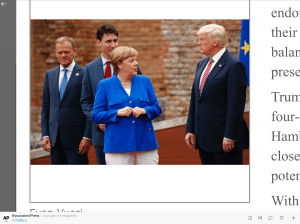
People banned from attending Grenfell Tower meeting were just ‘ people who like doing that sort of thing’ says councillor

A Tory Kensington and Chelsea councillor has claimed protesters who stormed Kensington Town Hall days after the Grenfell Tower fire ‘weren’t the local community’ but ‘people who like doing that sort of thing’.

Catherine Faulks was defending the council’s attempts to hold a cabinet meeting on the disaster on Thursday in private, initially citing public order concerns, and described press attempts to report on it by obtaining a High Court order as ‘a very clever stunt’.

The council cancelled the meeting after journalists were allowed to attend, claiming it would ‘prejudice’ the forthcoming public inquiry.

Ms Faulks told BBC Radio 4’s Today programme: ‘The reason we had given primarily to have the meeting in private was that we were worried there was a public order issue which had been already demonstrated by the invasion that happened at the council – which, by the way, when you say we weren’t affected, the whole council chamber had to be evacuated for the whole afternoon on the Friday after the tragedy.’ “

http://www.dailymail.co.uk/news/article-4656656/Kensington-councillor-DEFENDS-decision-meet-secret.html

Question: What is the average price a first-time buyer pays for a property?

Answer:

The average price first-time buyers are paying to get on to the property ladder has hit a record high of £207,693, according to the latest Halifax First Time Buyer Review.”

Source: Moneywise:
https://t.co/C5aHSWGKiV

Question: What is an average wage in Devon?
Answer:

Families in Devon need to earn almost £60,000 a year now to afford the average mortgage which represents a 156% pay rise for average earners.

With average Devon salaries now of £23,197, a worker would need a staggering £36,279 pay rise (156%) to £59,476 to get a mortgage for an average home in the county.

A couple each earning a combined average wage totalling £46,394 would still need a 28% pay increase to get a standard 80% mortgage.

With average private monthly rents in Devon of £687 this accounts for 43% of average monthly net pay. Average property prices are £260,209 which is more than 11 times the average salary.”

https://www.westwardhousing.org.uk/news-and-media/westward-building-to-meet-housing-needs-highlighted-in-report-1121/