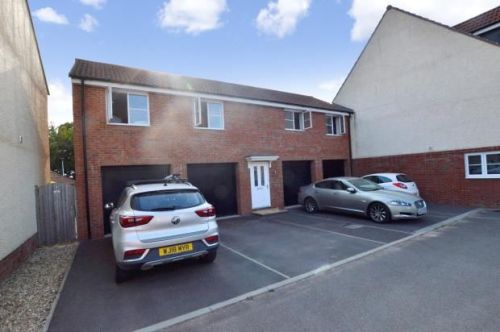
Who will get ditched councillor’s seat on “Queen’s Drive Exmouth Community Interest Company”?

Currently, directors are:

Ben [Correction: Sam] Hawkins – EDDC Independent Group councillor (Cranbrook)
Paul Millar – fired/resigned Independent Group councillor
Glen Woodcock – Grenadier
Grenadier Exmouth (whatever that means)

Source:
https://beta.companieshouse.gov.uk/company/11017649/officers

It will be REALLY interesting to see who gets the challice! In the gift of Leader Ingham? Depends as Tories and Independent group currently level pegging!

More revelations: EDDC Leader now says he sacked councillor BEFORE he resigned!

This omnishambles story gets more complucated by the minute!

“An Exmouth district councillor who quit the Independent party and attacked the district council’s senior management was sacked from Cabinet, an email has revealed.

In correspondence seen by the Journal, district council leader Ben Ingham said he had already removed Cllr Millar from his role as transformation portfolio holder with ‘immediate effect’ the day before his resignation was announced.

Cllr Millar sent an email to colleagues in which he directed criticism at East Devon District Council’s senior management team.

In an email exchange, Cllr Ingham said: “It was necessary to do this [remove Cllr Millar from post] for a number of reasons over a sustained period.”

Cllr Ingham said he was forced to sack Cllr Millar as he failed to take the ‘many chances’ given to him to ‘show respect to our officers and each other at all times’.

Cllr Ingham said: “This left me with no other choice.

“As a result he has chosen to leave our group.

“The Independent Group placed much faith and hope in Paul Millar.

“We consider it a great shame he was not able to work with us and our outstanding officers. We will adjust accordingly.”

Speaking today, Cllr Millar said: “I was trying to make a contribution but I don’t feel as though I was given any opportunity to do that.

“There have been a few occasions where I have clashed with senior officers.

“It is going to take me a while to learn the ropes. To become a new councillor and be put on the Cabinet, starting straight away while having a full time job, is always going to be a challenge.

“It would have been nice to meet the senior officers to be briefed on important decisions.

“I don’t feel as though I could make important decisions. I am going to carry on as a councillor and try and learn as much as I can and do the best job I think I can locally.”

https://www.midweekherald.co.uk/news/cllr-millar-sacked-before-resignation-1-6262548

Former “Independent Group” councillor expands on reasons for resignation

Just one thing missing from Councillor Ingham’s justification below – why did he choose a brand new councillor to be an important portfolio holder?

Answer: because he utterly refused to co-operate with other independent councillors – many of them experienced – because they belonged to the group he formerly led (East Devon Alliance), preferring to appoint Conservative councillors or ex-councillors (he had also been a Conservative!) from the “ancien regime”, which led this blog to call the group “TiggerTories”.

As you sow, so shall you reap.

“East Devon District Council is in political deadlock after the dramatic resignation of one of the ruling independent group’s councillors.

Former Independent Group councillor Paul Millar, who represents Exmouth Halsdon, resigned today, accusing the district council leadership team of keeping him in the dark on important policy issues.

The council is now deadlocked with 19 Independent councillors and 19 Conservative councillors.

Despite this the council’s leader, councillor Ben Ingham, has said that, ‘it is business as usual for East Devon’.

Nub News contacted Paul Millar and asked him to explain his reasons for resigning, he said: “My experience was that in my four months in the Cabinet I wasn’t asked what I thought about anything, I wasn’t briefed, given options with which to make informed decisions, and attempts to have any influence over my portfolio proved to be impossible.

“In my first week, an email was sent out to colleagues “on my behalf” without me having the opportunity to sign it off or influence its contents. This really upset me because it suggested to colleagues I had formed a particular view on a subject that I hadn’t.

“Being new to local government, I would have appreciated more support and, ultimately, I came to the sad conclusion that some in the Senior Management Team simply don’t trust Councillors to make the decisions the people elected us to make.

He added: “I do respect that others may view things in a different way, but I guess I just wanted to be honest and I’ve been humbled by the number of colleagues across parties who’ve agreed with my sentiments.”

Councillor Ben Ingham, leader of East Devon District Council, has responded to councillor Millar’s resignation stating, ‘it is business as usual for East Devon. He said: “It is very unfortunate when individuals resort to personal and unfounded comments. Such attacks do not help us advance understanding of the work carried out by East Devon District Council’s officers and councillors and their respective roles and responsibilities as detailed in the Council’s Constitution. Rather, they confuse, contribute to rumours and create more harm.

“However, I am confident that the council offered councillor Millar a high level of support and assistance to help him try to adjust to the demands of being a portfolio holder, and I thank him for his contribution. On behalf of the council I am very grateful for the work that councillor Millar has carried out since his election and appointment to the Cabinet and wish him well for the future. Looking forwards, though, it is business as usual for East Devon.”

Nub News was contacted by East Devon councillor and chairman of the East Devon Conservative Association, Bruce de Saram, he had this to say: “Clearly Paul Millar doesn’t yet fully grasp the difference between strategic and operational roles on a council, which I find puzzling, given his previous role as an advisor to a Labour MP Geoffrey Robinson; you might have thought he would understand something of the democratic process and the slow pace of it at times.

“There is huge democratic input and the officers at EDDC do an excellent job on behalf of all residents of East Devon in what is a very challenging work environment. It is hugely unfair and inappropriate to criticise them when they have no right of reply; councillor Millar needs to understand that ‘changing the world’ takes more than three months.”

However in conclusion Councillor de Saram sincerely wished Councillor Millar well and said he looks forward to seeing him at future meetings as a “genuine independent”.

https://exmouth.nub.news/n/district-council-deadlocked-after-dramatic-resignation

Ex-Tory cabinet minister Letwin (now Independent MP for West Dorset) back second referendum

The schism between East Devon and West Dorset MPs widens:

https://www.independent.co.uk/news/uk/politics/brexit-boris-johnson-latest-tory-oliver-letwin-no-deal-referendum-eu-a9098571.html

“Exmouth councillor’s resignation from ‘sinking ship’ Independent group ‘inevitable’ says Conservative chairman”

Councillor Millar was councillor for “transformation” and was investigating the change to the committee system that Independent Group Leader Boris (whoops, sorry Ben) Ingham had been all in favour of – until he became council leader.

“Councillor Bruce de Saram said ‘others are likely to follow’ after Cllr Paul Miilar sensationally resigned from the Independent group, effectively cancelling out its majority at district council.

In an email seen by the Journal, Cllr Millar criticised senior management at East Devon District Council (EDDC) for not consulting him on policy decisions.

Cllr De Saram said that criticism of senior management is ‘hugely unfair and inappropriate’ when they have no right of reply.

When approached by the Journal, Cllr Millar said his comments were based on his own personal experience of the few months he was on the district council cabinet.

Cllr De Saram said: “Councillor Paul Millar is the first senior member of the administration to jump ship before it sinks, whilst blaming others for his decision with others likely to follow.

“Clearly Paul Millar doesn’t yet fully grasp the difference between strategic and operational roles on a council, which I find puzzling, given his previous role as an advisor to a Labour MP Geoffrey Robinson.

“You might have thought he would understand something of the democratic process and the slow pace of it at times.

“There is huge democratic input and the officers at EDDC do an excellent job on behalf of all residents of East Devon in what is a very challenging work environment.

“Councillor Millar needs to understand that ‘changing the world’ takes more than three months.”

Cllr De Saram went on to say he looks forward to seeing Cllr Millar at future meetings as a ‘genuine independent’.

Cllr Millar’s resignation now means the council is deadlocked at 19 Independents and Conservative members apiece.

The Conservative members are set to hold a meeting next week where they will discuss the party’s next move.

Cllr Andrew Moulding, leader of the Conservatives at EDDC, said: “It is too early to say what we will do.

“This could be the start of more people moving away from the Independent group.”

https://www.exmouthjournal.co.uk/news/east-devon-conservatives-react-as-councillor-quits-independent-group-1-6262323

Cranbrook highest anti-social behaviour area in July 2019

“… Police crime statistics have revealed Exeter’s most anti-social neighbourhood.

The area with the most incidents of anti-social behaviour was ‘on or near’ Bluehayes Lane on the outskirts of Cranbrook. The data, provided by police.uk, says there were nine offences of that type in the month of July.

On top of that there were two more reports of criminal damage and arson, one of public disorder, and two vehicle crimes.

The ASB figure, which could include noisy neighbours, rowdiness, littering and graffiti, is higher than traditional trouble hotspots in the city centre of Exeter.

The crime map does not give exact locations of where incidents happened and instead refers to incidents ‘on or near’ a point on the map. That might explain why Bluehayes Lane, a seemingly quiet, rural, single-lane street which has yet to be developed as part of the wider Cranbrook scheme, is named and shamed while most of the other streets in Cranbrook appear crime-free.

The new town to the east of Exeter has been trying to shake off its reputation for low-level crime. Some residents have complained about older teenagers hanging around shops in the evening because they have little else to do. But most say the area is safe and welcoming. …”

https://www.devonlive.com/news/devon-news/crime-figures-reveal-exeters-most-3299820

Another think-tank says too many houses being planned

“Unaffordable property prices are down to Britain’s “broken housing market”, to use Sajid Javid’s words as housing secretary in 2017. The chancellor was referring to the undersupply of new homes, and he was not alone in his analysis. Most people accept that Britain is failing to build enough, including the Bank of England.

“The underlying dynamic reflects a chronic shortage of housing supply, which the Bank can’t tackle directly,” Mark Carney, the governor, said in 2014 and has repeated in various formats since. “We are not able to build a single house.”

Yet it turns out we’ve been wrong. Skyrocketing prices, which have risen 60 per cent above inflation since 2000, have more to do with the Bank than the builders. That’s the Bank’s own finding, published on its Bank Underground blog, where it posts research that officials believe is worth airing. The analysis, using housing data for England and Wales, could not have been clearer. “We find that the rise in real house prices since 2000 can be explained almost entirely by lower interest rates,” the authors write. “Increasing scarcity of housing has played a negligible role.”

To make their argument, they disaggregate housing into its two components: the asset, namely the property; and the service, by which they mean having a roof over your head. If the problem was supply, with more people wanting a place than there are homes to accommodate them, the cost of the service ought to have risen. But rents, a proxy for housing services, have increased roughly in line with inflation, the Bank found. That “does imply that housing hasn’t got significantly scarcer over the past two decades”.

But what about the “chronic shortage”? Ian Mulheirn, chief economist of Renewing the Centre at the Tony Blair Institute for Global Change, says there isn’t one. Official figures show that since 1996 English housing stock has grown by 168,000 per year, while household numbers have increased by 147,000. We have a surplus of 1.1 million homes now, he estimates. Amended figures suggest that England needs only 160,000 homes a year, not the 250,000 in Mr Javid’s 2017 white paper.

What that means, as both the Bank and Mr Mulheirn state, is that the explosion in house prices has been driven by falling interest rates. To many, that may seem obvious. Low rates mean that borrowers can afford more debt— and what they can afford banks will lend. More money means higher prices and, hey presto, a boom. But not a bubble, even though house prices are now eight times average incomes, compared with 4.5 times in the 1990s. Mortgages are as affordable today as they have always been because money is so cheap. In the 1990s the rate on a five-year fixed mortgage was 8 per cent above inflation. Today the margin is 2 per cent.

The Bank cannot be blamed for this price escalator effect. The cause has been near-zero rates and quantitative easing globally, which have pushed borrowing costs down everywhere, as well as fierce competition in the British mortgage market. Nor can it claim innocence. Its own analysis shows that central bank policies are driving up house prices, as it knew in 2014 when, on tightening the mortgage rules, it said that low rates pose “risks to housing markets”.

Rather than economic, the consequences have been social: pushing homes out of reach for those without rich parents, causing home ownership levels to tumble and leaving new borrowers with frightening levels of debt. Dame Colette Bowe, an incoming member of the Bank’s financial policy committee, calls housing “a social issue” and has questioned whether the commitee is getting its approach wrong. The Bank’s new analysis may be a good place for her to start.

Source: Times economic editor

“Green belt earmarked for homes ‘that may never be needed’ “

“Swathes of green belt in the heart of England have been earmarked for new homes for people who may never exist, in a trend fuelled by the drive to double the number built annually nationwide, campaigners have warned. …

… The city council believes it needs land to accommodate 42,400 new homes in the next 12 years, based on population predictions by the government’s Office of National Statistics (ONS), which predict the population will surge by almost a third between the last census, in 2011, and 2031. Green belt in neighbouring areas, including Warwickshire, Nuneaton and Rugby, has also been earmarked for housing to help Coventry meet its target.

Analysis presented at the British Society of Population Studies, in Cardiff, on Tuesday suggested homes earmarked for open fields were being planned for “ghosts”, because there is no wider evidence of the sharp predicted population growth. Just 15,000 new homes were needed, requiring the loss of far less green space.

“If there has been hyper population growth in Coventry, they are ghosts or vampires,” said Merle Gering, a Coventry-based campaigner whose analysis has been endorsed by leading demographers. “They don’t go to school, don’t attend A&E, don’t have babies, don’t own cars, don’t claim state pensions, don’t use gas or electricity, and don’t put waste into their bins … The net result? The death of the green belt.”

Similar fears have been raised elsewhere. Last week campaigners in Birmingham claimed housing need had been deliberately over-estimated after a scheme for 5,000 homes by 2031, on fields near Sutton Coldfield, was halved in size. In January, Andy Burnham, the mayor of Greater Manchester, accused the government of making it impossible to reduce the amount of protected green belt allocated to housing through the use of old population growth figures, which are higher than the most recent projections.

Housebuilders prefer to build on open land because they consider it quicker, cheaper and easier than previously-used brownfield sites. The government wants 300,000 new homes to be built annually by the middle of the next decade – more than double the output over the last 10 years. Campaigners fear planning inspectors are facing political pressure not to query ambitious targets set by councils, even when they involve the destruction of green belt.

“We agree with him entirely in terms of these crazy projection figures,” said John Wareham, the chairman of the Campaign for the Protection of Rural England in Warwickshire. “Coventry has forecasts of around 30% increase in population compared to Stratford-upon-Avon and others which are 10%, which makes no sense. This land between large urban settlements has been there for many hundreds of years and is valuable for leisure and for farming.”

Housebuilding targets set by councils are based on ONS population projections but Gering believes the figures for Coventry are skewed by a large number of foreign students, many of whom will not settle in the area. The ONS, which said it was always looking to improve its statistics to inform policymakers, said it used methods assessed by experts in the field and “we look to produce these estimates as accurately as we can”.

A spokesperson said: “We will continue to engage with the group of concerned residents in Coventry, as we would with any users who need assistance in understanding our estimates.”

Coventry city council said the population projections and the green belt site allocations were assessed by the government’s planning inspectorate.

A spokesperson said it saw “no evidence at this time that the housing requirements identified within its local plan are wrong or failing”.

It added it “will continue to work with our neighbours to monitor housing delivery and supply to inform any need to review the plan in the future”.

Gering’s analysis of the 2011 census and ONS predictions found the rate of growth predicted for Coventry was well over twice the regional average. He found attendances at A&Es over the last decade grew faster in Wolverhampton, Birmingham and Burton; increases in car registrations grew no quicker than in many other areas; and birth rates fell slightly as in most areas.

There was a lower-than-average increase in gas meters, electricity use fell quicker than in other areas, school admissions were average and the number of people on the electoral roll remained steady from 2011 to 2017. He also checked the volumes of domestic waste and found that it was trending in line with other areas.”

https://www.theguardian.com/uk-news/2019/sep/09/green-belt-to-be-destroyed-for-homes-which-wont-be-needed?CMP=Share_iOSApp_Other

Bad news for Cranbrook: “MPs call for pavement parking ban across England”

Many of Cranbrook’s roads are too narrow to avoid parking on pavements and many garages are too small for today’s larger cars.

https://www.bbc.co.uk/news/uk-politics-49635176

Were you 14 -15 at the time of the referendum – your vote now counts!

If you were 14-15 when the referendum to leave the EU took place you are now eligible to vote.

Your voice was NOT heard at the time, but it CAN be heard this time.

You are the generation that is fighting hardest to combat the climate emergency.

You are the generation most let down by inadequate funding of education.

You are the generation that has little hope of owning your own home x unless your home-owning parents help you or die.

You are the generation that needs to be heard.

Register to vote:

https://www.gov.uk/register-to-vote

Exmouth Journal: misleading headline

The headline is:

“Exmouth seafront regeneration talks to no longer be held in secret”

HOWEVER, as the article goes on to say:

following concerns over the ‘secretive’ nature of the new group, East Devon District Council’s cabinet agreed that while the group would meet in private until January 1, the situation would then be reviewed as to if it could be opened up to the public.”

https://www.exmouthjournal.co.uk/news/exmouth-regeneration-groups-talks-no-longer-secret-1-6258682

Not the same thing by any stretch of the imagination.

Still, Tory Exmouth town and district councillor Bruce de Sarum is now a member of the group and he has promised us all complete transparency:

https://eastdevonwatch.org/2019/09/07/tory-party-gangs-up-on-the-independent-group-in-exmouth-about-transparency-and-open-ness/

so it’s all fine – isn’t it!

Development and climate emergency: the tale of Mr Fox, Badger and Peter Rabbit

An independent councillor reports on a meeting of Teignbridge Council discussing development in the age of climate emergency: hilarious, sad, worrying.

“Dealing with the Executive is a strange thing. If like me you have a young child and you’re forced to watch Peter Rabbit on CBeebies you’ll be familiar with the sort of relationship the Exec has with members from other parties.
Fox and Badger really want to eat Peter because he’s a.) a rabbit and b.) a twat but, for some intractable reason, they pass most days in cordial coexistence. Fox even helped Peter move a wheelbarrow full of acorns once. This working relationship, you would think, would make the idea of eventually killing, skinning, disembowling, roasting and eating Peter taboo to Fox and Badger but no – they’ll still have a go one day, right after saying ‘Good morning’ to him. I can’t work out if all the animals are congenitally insincere or just good at compartmentalising their impulses.

There’s a similar ominous détente going on around Mr McShear’s vegetable garden. Nobody’s helping us to carrots, but nobody has, as yet, stoved our heads in with a shovel, despite a clear conviction that we are both on the menu and twattish. Captain Hook, whose avuncular eagerness to have everyone on board is a thousand times better than the Count (I said COUNT) of Monte Christophers, helped me get a new ipad so my constituents can actually talk to me again (the IT people sent me a dozen helpful emails about fixing it to the ipad they were fixing??).

Now, you’ll remember, Newton Abbot has ‘won’ £150,000 to help it become a ‘Garden Town’, with up to £9 million more if it does exactly what its told. We at NSN think this is a con to suck TDC further into the houses-for-money bullshit that makes us all do what we’re told for handouts rather than being properly funded and able to self-determine our own projects, as the ’Localism’ Act once promised (well, promised a bit more of).

Councillor Daws made some excellent points about the Mission Creep that drags councils to do one thing after another – Incremental Development it seems to be called. I asked when the council was going to rename the Climate Emergency a Climate Inconvenience, since every other paragraph TDC produces mentions the Climate Change Emergency with all the heartfelt panic of a sloth on mogodone choosing a supermarket sandwich. These windows will mitigate the Climate Change Emergency …. these drainpipes are Climate-Change-Emergency-neutral … this massive new road is being approved because cars going faster will contribute less to the Climate Change Emergency… the phrase is no more than a verbal tic.

I mentioned the article on Bicester (see past posts) – the ’dog’s dinner’ garden town where, in the name of getting people to work where they live, houses abide in the shadow of warehouses. Gordon, who really does know his background material, said that was written in 2015 (he was right!) before Bicester got its ‘Garden Centre’, which had made everything all right now. I didn’t know what he meant by garden centre… has it got a Fermoys?? We are not allowed follow-up questions. But Bicester has been dog-breakfasted by hideous building. It hasn’t been unbreakfasted by building MORE buildings.

Gordon added that he was disappointed – or was it dismayed? One or the other – that I was calling such things as triple glazing mere ‘green cynicism’.
I think the problem is this: Gordon and co live in a world where the march toward the abyss is inescapable, so we might as well put on the nice new boots Westminster has given us and march slowly if we can. When I suggested that, if the Executive truly believed there to be an EMERGENCY (lets put it in capitals til that, too, just makes us shrug) then it should defy Westminster’s housing targets. An emergency doesn’t mean you carry on as normal. It doesn’t mean you stick slavishly to the script. The car is on fire. Shall we stop on the hard shoulder or shall we keep driving the fucking thing to Alton Towers?*

This made Deputy Alistair Dewhirst smirk contemptuously, which is his absolute number one favourite thing to do when talking to us (unless he’s online at midnight, in which case his favourite thing is to type things and then immediately delete them).

In keeping with his late-night ruminations Alistair said that Welwyn Garden City was the best example of a garden town, and that it is ‘the best, most pleasant place to live and work that it is possible to imagine’. Possibly Alistair visited a different Welwyn Garden City to me, or else he passed through on the Magic Bus in the Sixties. Because the Welwyn Garden City I have visited, several times, is an unmitigated shithole. The deputy’s assertion that ‘if Newton Abbot is to become like that, then we will be remembered’ should chill us all to the marrow but it is at least true. Oh, you will be remembered.

Councillor Jackie Hook, holder of the (Compostable) Portfolio For Climate Change, then announced that she had joined Extinction Rebellion and they ALL agreed that it was National Government that had to change its thinking, not local councils. She added that if anyone wanted to lie down in the path of a digger they were free to do so. In precis, all the change has to come from the Big Noise or the Little People. The muscled appendage of TDC, which might actually have some power in its elbow, is not going to flex, now or ever.

We do, at least, get treated gently by the Lib Dems; I suppose because we’re idealists like they used to be, possibly… once – before they got neutrally reprogrammed by procedure. Not so the Tories, who had just been very cheeky. Mr Hook produced an unsolicited letter from some local cohort of business worthies who said they fully supported being bundled into a garden town. ‘Isn’t Jackie on their panel?’ they enquired.

The Tories then lambasted the Lib Dem Council Tax relief calculations saying that they would hurt the very poorest. All were reminded of their excellent track record of voting specifically to hurt the very poorest by Cllr Connet, who called their remonstrations ‘absolute tosh’.

It was all a lot of fun. But the existential problem we have as members of this council – and I don’t see a way around it – is that we are there with a moral argument, in a body that wants only to discuss procedure. So we find ourselves asked to contribute to working groups on the Greater Exeter Strategic Plan (our contribution: it belongs in the bin) and to the Local Plan (it belongs in the black bin, as no part of it is recyclable), and are constantly told NO. WE ARE MARCHING TO THE CLIFF EDGE TO THE TUNE OF THE BRITISH GRENADIERS* SO PLEASE JOIN IN WITH THE SINGING.

So what can we do, until we can get more of us onto council? I suppose we’ll just keep waiting for death and stealing carrots.

*Obviously I didn’t say the F word in the council chamber, as I don’t want to be in the MDA EVERY week for swearing.

*This in keeping with the 30th anniversary of the Second World War, in which the Germans redesigned our towns to look more like Welwyn Garden City.”

Source: https://www.facebook.com/Liam4college/?__tn__=%2CdkCH-R-R&eid=ARDQFiWLt-1V7yr-UWhnbYLhG-7025qcTpdAJzem7OOVxfz_0pEjE3cIFwYzUsHKSuPr3MS5zzkvSzOw&hc_ref=ARRYuH_r2FD7vNjad1qmLvz1GFcoaEakuz5o-uejwf72fA20k73RJzmTxZpQY6Sx8uI&fref=nf&hc_location=group

“Have your say on the management of East Devon’s Jurassic Coast”

A Jurrasic Coast National Park from Studland Bay to Exmouth? Surely our new ruling group will be keen on that won’t they?

“The organisation that looks after the Jurassic Coast is inviting input from people in East Devon, as it sets out its management plan for the next five years.

A draft plan has been drawn up, and consultation days will be held in Exmouth, Sidmouth and Seaton for people to learn about the proposals and have their say.

The Jurassic Coast Trust’s work includes putting out information about rock falls and landslips, promoting responsible fossil collecting, educating the public through museums and visitor centres, and giving guidance to local organisations, to ensure that development and tourism does not harm the Jurassic Coast.

Public consultation days will take place on

Tuesday, September 10,
at Exmouth Library;

Thursday, September 19,
at Sidmouth Library; and

Wednesday, September 25,
at Seaton Jurassic.

Members of the trust’s staff will be on hand between 10am and 3pm to talk through the draft plan and answer questions.

Following the consultation, the plan is due to be published in the next few months.”

Clean air: too late for Sidford

“Thousands of lives a year would be saved by reducing air pollution to safe levels under draft legislation to be presented to parliament.

The Air Pollution Bill would require the government to adopt tighter limits based on World Health Organisation recommendations, a key objective of the Times Clean Air for All Campaign.

Ministers would, for the first time, have a clear duty to act on a problem that cuts short the lives of 36,000 people a year, costs the economy £20 billion annually in healthcare and impact on businesses and, if left unchecked, would cause 2.4 million new cases of disease in the next 16 years.

The bill, which has been drawn up by a coalition of environmental groups and air pollution scientists, will be discussed tomorrow at the parliamentary launch of the Clean Air for All campaign. It would also require air pollution monitors to be installed in every postcode and outside every school and hospital.

It will be tabled as a private member’s bill in either the Commons or the Lords and is expected to gain support from MPs and peers of all the main parties. Its supporters hope the government will adopt the measures in the forthcoming Environment Bill.

The government has pledged that the Environment Bill will contain measures to reduce air pollution but has yet to confirm what they will be. Michael Gove said in one of his last speeches as environment secretary that he wanted “a legally binding commitment on particulate matter so that no part of the country exceeds the levels recommended by the WHO”. Theresa Villiers, his successor, has yet to set out her plans.

The Times launched its Clean Air for All Campaign in May with a manifesto calling for a new Clean Air Act to confer a legal right to unpolluted air for everyone in the UK. The campaign also calls for sales of new petrol and diesel cars to be banned by 2030.

The Air Pollution Bill has been drawn up by Environmental Defence Fund (EDF), a charity that has been working on it with the UK100 group, representing mayors of big cities, and other green groups, including Client Earth and Green Alliance.

Baroness Worthington, EDF’s director and a crossbench peer, said: “The current approach to lowering pollution isn’t working.”

The bill would also require the government to publish an annual report on progress and establish an independent body to advise the government on how to meet air pollution targets.

A spokesman for the Department for Environment, Food and Rural Affairs said: “We know the impact air pollution has on communities around the UK, which is why we are taking urgent action to improve air quality.”

Source: The Times

“Councils face bankruptcy after Tory cuts open £25billion black hole in finances”

“Council leaders say government funding cuts will leave a £25billion black hole and plunge stretched local authorities into worse debt.

Research by the TUC and New Economics Foundation think-tank shows the plans will lead to greater suffering and even council bankruptcies.

Grants will fall almost to zero and plans to let councils keep income from business rates will not match the shortfall.

Nationwide, £16billion has been taken from the Local Authority Grant since 2010, equivalent to 60p in each £1.

Labour ’s Paul Dennett, leader of Salford Council, said this summer that
3,000 children in his area were given emergency food vouchers, police numbers have been cut by 2,000 and new foodbanks have been opened.

“Local government is on its knees,” he said.

“Without serious investment, we will soon see more bankruptcies in local councils, as has happened in Conservative-run Northamptonshire.”

The TUC report shows ringfenced government grants to councils have fallen from £32.2billion in 2009-10 to £4.5billion in 2019-20, and are expected to be cut further by 2024-25.

TUC General Secretary Frances O’Grady warned: “A colossal hole will be left in local budgets and the poorest communities face the biggest shortfalls.”

https://www.mirror.co.uk/news/politics/councils-face-bankruptcy-after-tory-19843933

DevonLive or DevonUndead? Thank heaven for blogs!

There was a pro-EU demonstration in Exeter yesterday. Exeter’s MP spoke, Lib Dem MEP Caroline Voaden spoke, independent DCC Councillor Martin Shaw spoke as did, preumably others.

Was it a big turn out? Don’t know.
Were there many other speakers? Don’t know
Was it peaceful? Don’t know

Our local newspaper (website DevonLive) has no mention of it today. Owl found out information only by reading Councillor Shaw’s blog and the Devon for Europe Facebook page.

My plea at today’s Exeter protest against Johnson’s vandalism – where the Tories can be defeated (especially Exeter, Totnes, East Devon), we will need a single opposing candidate to make sure we win

It seems local news websites such as DevonLive have more advertising and more “filler” (stuff sent in from local social and voluntary groups) and less REAL news.

Thank heaven for other social media – including blogs!

Why multi-generational old Etonians are secure in these troubling times

Swire, of course, is an old Etonian whose wealth derives through many generations from Hong Kong and China.

” … There are no fundamental political differences between Cameron, Johnson and Rees-Mogg because they belong to the same world. A world of extreme wealth where there has never been any decline for them. They are secure, as their parents and grandparents and great-grandparents were before them. Once that security may have come from land; now it comes from hedge funds and shipping fortunes and extracurricular salaries (“chicken feed”, Johnson said of the £250,000 a year he was paid to write a column). Whatever happens in the next 30 or 40 years, post-Brexit, isn’t going to affect them. Privilege is like an unwritten constitution: you can never lose what you never have to find.”

https://www.thetimes.co.uk/magazine/the-sunday-times-magazine/how-etons-cosseted-world-shaped-boris-johnson-2k7dkppkh?

“Property giants pay bosses £63m while ‘exacerbating housing crisis’ by sitting on enough land for 470,000 homes”

“Property giants have been accused of rewarding bosses for “exacerbating the housing crisis” after spending £63.6m on chief executive pay last year while sitting on more than 470,000 unused plots of land.

The chief executives of Britain’s 10 biggest housing developers raked in a combined £63.6m, earning a median sum of £2.1m, according to figures compiled by the High Pay Centre. Four FTSE 100 companies handed £53.2m to their top bosses in total, a median pay packet of £5.7m.

The 10 firms completed and sold 86,685 homes last year, but hold planning permission for 470,068 other plots of land on which homes have not been built. The UK needs an estimated 340,000 new homes a year to meet demand.

Councils have repeatedly complained of developers taking longer to build on sites which have been earmarked for housing, with the Local Government Association calling for powers that would allow local authorities to seize unused land.

The High Pay Centre said its findings raised questions about whether executives “should receive such vast sums of money, particularly given the many criticisms levelled at the big housing developers regarding the extent to which they are exacerbating the housing crisis”.

Luke Hildyard, the think tank’s director, told The Independent: “Homes are a public good and housing companies are charged with quite an important social responsibility. If the housing companies don’t play their part in delivering enough homes then we have real problems.

“There is something particularly unseemly about people who are supposed to be providing a public good raking in millions or even tens of millions.”

The 10 companies, which are all FTSE 350-listed, paid a combined £150m to chief executives and other directors last year. The four FTSE 100 house-builders – Barratt, Berkeley, Persimmon and Taylor Wimpey – accounted for £131.1m of that sum.

The average UK construction worker is paid £24,964 a year, 89 times less than the median pay packet of the 10 housebuilders’ chief executives, according to the union Unite.

The pay disparity was greatest at Persimmon, where chief executive Jeff Fairburn earned £39m – equivalent to the average pay of 1,561 construction workers – last year. He was forced out of the firm in late 2018 after a public outcry over his £75m bonus.

The pay ratio between Berkeley’s chief executive and the average construction worker was 331:1, at Taylor Wimpey it was 126:1, and at Barratt it was 113:1.

Support free-thinking journalism and subscribe to Independent Minds
Labour MP Siobhan McDonagh, who cited the figures during a debate in parliament on Thursday, said the “vast scale of inequality” showed “the British housebuilding industry is broken”.

She added: “In the midst of a national housing crisis, how can it be right, just or fair, for the top housebuilding CEOs to walk away with such astronomical sums while there are workers are seeing their salaries stagnate?

“These companies have a land bank of a simply staggering 470,068 plots but completed just 86,685 homes between them. Is that really a record worth rewarding?”

Barratt, Berkeley and Taylor Wimpey all declined to comment.

Persimmon did not respond to a request for comment.”

https://www.independent.co.uk/news/business/news/property-developers-housing-crisis-homebuilding-chief-executive-pay-ftse-100-a9093676.html

EDDC Indie Groyp Leader adds critical Exmouth Tory to Queens Drive Delivery Group

Great – he wanted transparency so he will be reporting back to us on those secret meetings won’t he?

https://exmouth.nub.news/n/council-leader-responds-to-conservative-criticism-of-plans-for-exmouth