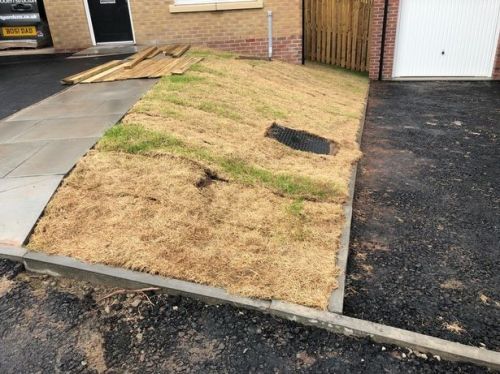
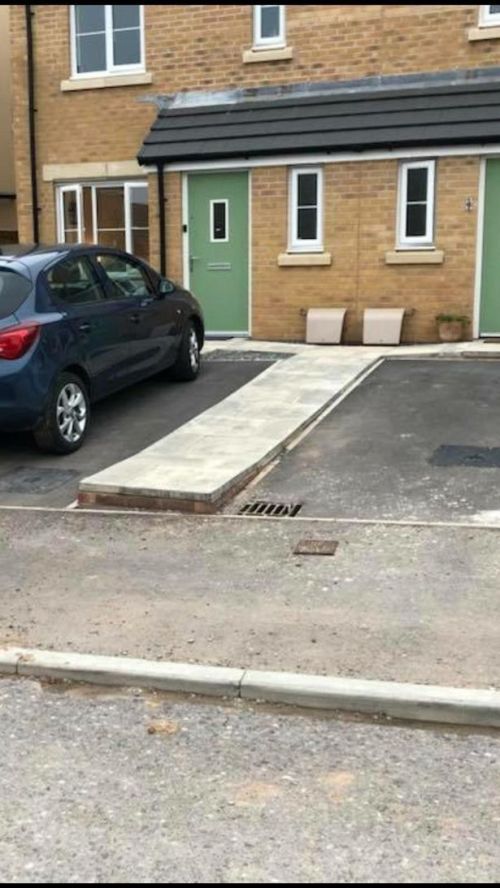
Affordable housing: cause and effect?

Do you think these two things might be linked?

CAUSE?

“Redrow hit by shareholder revolt over bosses’ bonuses and controversial new chairman”

… Former boss and founder Steve Morgan, 66, will still be entitled to bonuses, even though he has retired.

He has a 20 per cent stake in the company worth £422million.

There has also been anger at former chief executive Tutte, 63, becoming executive chairman, in breach of City rules for best practice in the boardroom.

Tutte is not considered independent enough because of his previous years at the company.

It prompted investor advisory services Glass Lewis and ISS to urge shareholders to oppose both changes. …”

https://www.thisismoney.co.uk/money/markets/article-7657339/Redrow-hit-shareholder-revolt-pay-controversial-new-chairman.html?

EFFECT

“Affordable homes built at ‘pitiful’ rate despite increase

The number of affordable homes built in Britain has risen for the second consecutive year but analysts warned that the current level of housebuilding remained woefully inadequate.

Sixty thousand homes classed as affordable were supplied between April 2017 and March last year, according to official figures. While this is an improvement on the 43,473 built in 2015-16, it is still below the ten-year average of 62,400.

Affordable housing includes properties for social rent, shared ownership and other intermediate tenures. In 2017 the government set up a £7 billion fund to increase the supply of affordable homes by 40,000 within four years. As chancellor, Philip Hammond promised £3 billion to fund an extra 30,000 affordable homes through the scheme this year.

Scotland supplied the most affordable homes per person last year, at about 16 homes per 10,000 people.

England produced 8.5 homes per 10,000 people, although this was an improvement on six per 10,000 people in 2015-16. At 47,100, the number of affordable homes built in England last year was below the long-term average of 50,800. Wales also dragged on the long-term average, while Northern Ireland and Scotland registered growth.

The government also promised that 300,000 homes a year would be under construction by the middle of the next decade to increase affordability, but the present rate is about 220,000. Analysts have warned that the government will only hit its target if it increases funding for affordable housing because it can no longer rely on the private sector.

Marc von Grundherr, director of Benham and Reeves, an estate agency, said: “Just 60,000 homes delivered in a year and no change in the level of social housing in a decade is pitiful.

“Affordability is an issue not just in the London market but nationwide, and an issue that is largely exacerbated by a failure to build more homes at all levels to keep pace with a growing population and an increase in buyer demand. We must build more and this, in turn, will help boost affordability.”

Last month L&Q, one of Britain’s leading builders of affordable homes, withdrew from the market citing a “serious downturn” due to persistent uncertainty surrounding Brexit.

Source – TIMES (pay wall)

Conservation against Profit? It’s Greendale again …

From a correspondent:

A development proposal adjacent to Woodbury Common for 14 “holiday lodges” could be built on a section of the golf course created by the owners of Greendale Business Park.

The Hotel and Golf course was sold some years ago to Nigel Mansell and two years ago, sold again to a c company known as the “Club Company” which operates 13 Country Clubs in the UK, who are owned by a London Based private equity group “Epiris”

The planning application documents outlines how falling numbers of golfers across England is forcing clubs to diversify and that it is necessary to attract golfing markets, such as golf breaks, through ventures like the proposed holiday accommodation.

The developers view:

It also says that with the golfing sector under pressure with declining membership and participation forcing many clubs out of business, they must look at new ways to attract golf societies and other groups looking for golfing holidays.

One way to do this is through investing in new accommodation and the lodges would add to the existing hotel on the site.

The statement explains how the number of registered golfers has dropped eight per cent in the last four years. Adults playing golf has fallen 27 per cent between 2007 and 2016, and juniors playing golf weekly have dropped five per cent since 2014.
It adds:

“In clubs where membership is growing, clubs have taken positive steps to address the issues and are catering for a range of different needs and are developing facilities to broaden income streams and become part of the community.”

“The proposed changes at Woodbury Park Hotel and Golf Club aim to follow a similar pattern, providing further golf accommodation in order to attract more golfers from a wider national market.”

“Given the declining popularity of playing golf in England and in order to maintain the business, it is necessary to attract golfing markets, such as golf breaks, through the proposed holiday accommodation. This will allow the club to attract more golfers and more visitors to the bars, restaurant, health club and spa, to generate a vital additional income stream.”

However, the location chosen to build these lodges is next to a very important historic and environmentally important ancient “Green lane” known as Walkidons Way.

The Conservation view.

A local conservation group describes the location:

“Walkidons Way is a rare example in our locality of a green lane – most of the rest having been tarmaced. It is a public access route and runs between Hogsbrook Farm at its north-western end and Woodbury Common at Woodbury Park to the south-east. Along the way it passes beside Rockham Wood – a (private) ancient wood that is a designated County Wildlife Site.

A green lane can be defined as an un-metalled track with field boundaries on either side. These boundaries may be banks, hedges or woodland edges, often with features such as ditches – all of which can be seen along the length of Walkidons Way. The hedges and woodland edges here are particularly rich in examples of hedge-laying and coppicing of great age, and possibly also an ancient boundary trees.

In terms of bio-diversity, green lanes are mini-landscapes with their own micro-climate and ecology, due to the combination of the track and its boundary features. They may be more botanically species-rich than a single hedge, act as wildlife corridors, and their sheltered conditions are of great importance, for example, to butterfly populations.
Historically, Walkidons Way linked Greendale Barton – formerly an important farm on the site of the present Greendale Business Park – to the Common. This route adopted from at least Saxon times, as a drover road, for moving stock between Greendale and the Common.

The former agricultural land here has been much altered for leisure use, and the lane now passes between golf courses at the higher end, and fishing lakes lower down, which were both created during the 1990s. The Woodbury Park complex, which opened in 1995, was a highly controversial development at the time, but has become a generally accepted element of the modern landscape.

The track and its verges are unfortunately suffering degradation from modern vehicular traffic, but Walkidons Way offers a beautiful walk of very different character to that of most of our local lanes, to the open spaces of the Common.”
It will be interesting to see if the need of “big business” will win over the concern to preserve an ancient way.

The Planning can be viewed on the EDDC planning website under the reference 19/2145/FUL

“None of pledged [200,000] starter homes built, says watchdog”

ANSWER: THERE ISN’T ONE!

The comments by developers at the end of this post, in BOLD, defy comment!

“A government plan to create 200,000 new homes in England for first-time buyers has resulted in no homes being built, the National Audit Office has found.

Announced in 2014, “starter homes” were meant to be aimed at those under the age of 40 and sold at a 20% discount.

But legislation to take the project forward was never passed.
Labour called the policy a total failure, but the government said it had a “great track record” for house building.
Former prime minister David Cameron committed to the scheme in the 2015 Conservative Party manifesto as a way of tackling the affordable housing crisis.

The project was also supposed to support the wider growth and regeneration of local areas, and some town centres.

The homes were meant to be built across the country by the end of the decade and more than £2bn was set aside for the first tranche of 60,000 dwellings.

According to the National Audit Office (NAO), between 2015-16 and 2017-18, the Ministry of Housing, Communities and Local Government (MHCLG) spent almost £174m on acquiring and preparing sites originally intended for building starter homes.

These were in places such as Plymouth, Bury, Basildon, Stockport, Bridgwater, Cinderford and Bristol.

But the spending watchdog said the sites were all now being used for housing more generally, only some of which was affordable.

‘Dashed expectations’

It said the scheme had faltered because the necessary legislation and planning guidance had never been put through Parliament, despite expectations it would happen in 2019.

As a result, even new homes conforming to the intended specifications cannot be marketed as starter homes, which has made getting developers on board challenging.

The NAO said the government also no longer had a budget dedicated to the starter homes project. …

… David O’Leary, policy director at Home Builders Federation, said that even though starter homes had not got off the ground, the scheme had not been a total failure.
He said the engagement it had generated between local government, builders, mortgage lenders and valuers was positive.

“The difficulty in creating a workable set of rules demonstrates the importance of ensuring that proper consideration is given to the practical implementation of interventions and their market impacts as early as possible.”

https://www.bbc.co.uk/news/business-50296672

Persimmon in trouble for unsafe junction in Newton Abbot

“Persimmon Homes have been ordered to close an unsafe junction at a new Newton Abbot housing estate.

From next Monday, bollards will be installed blocking access to Larkspur Drive from and from Mile End Road at the new Hele Park estate.

The junction has been left with a substantially obstructed by a nearby garden wall and as a result is not considered safe. Revised plans to improve the traffic situation between the junctions of Ashburton Road and Applegarth Avenue were approved but never implemented so the planning permission lapsed. …”

https://www.devonlive.com/news/devon-news/persimmon-ordered-shut-unsafe-junction-3499209

Are homes in National Parks REALLY more expensive than in East Devon?

Owl is informed that a correspondent carried out some research on house prices yesterday, using Rightmove and Zoopla, because they thought – is the old chestnut that housing in national parks ismore expensive – or do the Tories et al use it just an excuse to do nothing?

It turns out, Cranbrook is already on a par with 2 bed terrace house prices within Dartmoor national park. In East Devon, Budleigh Salterton and Sidmouth prices are higher, but maybe they attract a premium already as coastal locations – the premium is said to be about an extra 10%?

Hopefully, this should mean that prices will not increase dramatically in this area if we were to gain national park status…

Over to you those councillors who want to keep a tight hold on planning and a very loose hold on developers …

Jurrasic Park: a Halloween scary story

A scare story fit for Halloween. So scary that Owl is hooting with laughter.


Here is Owl’s dissection of the substance of the scare story recently spun by EDDC ex-Tory Councillor (and ex-leader) Ian Thomas, previously posted here:

https://eastdevonwatch.org/2019/10/22/eddc-ex-tory-councillor-doesnt-like-the-idea-of-a-jurassic-national-park/

Whilst he may now claim to be “Independent” the “Project Fear” he spreads is the established view of the previous Tory Council (and many in the current council).

It’s all about the proposal to create a new National Park by combining the East Devon and Dorset AONBs.

This proposal is not new. Like the creation of the Jurassic Coast World Heritage Site before it, a considered and reasoned case has been building for a number of years now.

The bit that SCARES Cllr. Ian Thomas (and others in the council) is that, despite EDDC attempts to pour cold water on the idea in the past, it has now been given endorsement by the Glover Review. (The Glover Review of Designated Landscapes was commissioned by Michael Gove to report in the 70th anniversary year of the National Parks and Access to the Countryside Act).

It calls for National Parks and AONBs to have a clear national mission to reverse environmental decline and specifically calls for the creation of two new National Parks and a National Forest – one such park being the area of the Devon and Dorset AONB/World Heritage site.

Click to access landscapes-review-final-report.pdf

Cllr. Ian Thomas’ stated FEAR is that house prices in East Devon could rise ‘considerably’ if proposals for a new ‘Jurassic’ national park’ covering East Devon and Dorset are successful (when did prices last fall,in the recession)?

The REAL FEAR, however, is, Owl thinks, loss of power, particularly the power of development. As Ed Freeman (Service Lead Planning) put it in the penultimate paragraph of his review of Glover Report for Cllr. Susie Bond’s Strategic Planning Committee:

“….there may also be felt to be concerns around loss of power by this authority to another body.”

Click to access 4Protected%20Landscape%20Report.pdf

It is interesting that Dorset has no such worries and has enthusiastically endorsed the idea.

How fitting then at Halloween that Owl should do the scary thing and examine the FACTS!

In terms of protective policies, both National Parks and AONBs have identical aims. These are to “conserve and enhance natural beauty”. (National Parks have the further responsibility to conserve and enhance “wildlife and cultural heritage” as well.) National Parks also have a duty to seek to foster the economic and social well-being of local communities within their park (note – communities not just developers). The Glover review proposes that in respect of this duty, National Parks should go further and “respond proactively to local housing needs”.

So where is the scare?

Could it be that under past EDDC regimes AONB responsibilities to “protect and enhance” the area have simply been ignored, something that might be harder to do under different management and wider scrutiny?

If this is the case, then EDDC is in for a REAL SHOCK – a LOOK BEHIND YOU moment – because the Glover Review also proposes that both AONBs and National Parks should be staffed by a shared National Landscape Service and that AONBs should be given greater status in the planning system. AONBs should become statutory consultees, and should be supported to work towards local plans for their areas, prepared in conjunction with local authorities. For larger AONBs such as East Devon (specifically mentioned), this plan should have statutory status in place of local authority plans. So even if the National Park idea doesn’t get off the ground immediately, the cavalier approach EDDC has adopted in the past to its AONB will have to change if the Glover Report is taken up.

We don’t know what the next government might make of the Glover Review but, whatever political persuasionit has, we can safely assume it will look for ways of demonstrating its Environmental Protection credentials. Not pushing forward with Glover would be an obvious own goal.

There are many positive reasons to embrace the proposal to create a new National Park by combining the East Devon and Dorset AONBs with the Jurassic Coast World Heritage Site. Here are four in addition to the proactive management of local housing needs mentioned above.

1. Wildlife

East Devon and Dorset AONBs have distinctive and valuable ecologies which are important on a national scale. The East Devon Pebblebed Heaths, which forms 5% of the East Devon AONB is one of the largest areas of lowland dry heaths in England and has European designation. Consolidation of these two AONBs within a new National Park would increase the biodiversity of the environment creating a continuous wildlife corridor nearly 70 miles long.

2. Farming Culture and impact on Heritage Landscape

In the past, only the larger landlords like CDE had the management structure and financial stability to promote landscape enhancement projects within the AONB. However, subsidies based on acreage are going to be changed to supporting specific environmental enhancements, distributed more widely. Depending on how it is managed this could make significant changes to protected landscapes. For instance, there could be haphazard re-wilding on a considerable scale. AONBs in the future will need to be more involved and supportive of the independent sector of farming if the Landscape is to be conserved and enhanced, thus becoming more like National Parks.

3. Tourism and Economic benefits

National Parks promote understanding and enjoyment of their area’s special qualities by the public. A clear identity as a National Park would bring an economic boost to East Devon. The South Downs NP has attracted over £100M in core support and project funding since 2011 and it is reasonable to expect an East Devon and Dorset NP to attract a similar level of funding. On a smaller scale, experience from the Pebblebed Heaths are that funds and grants become more readily available with higher environmental designations, in this case SSSI, SPA and SAC.

4. Recreation and Well-being for an ageing and growing population

Encouraging Recreation is already a National Park priority. Improving public enjoyment would go hand in hand with promoting activities to improve health and well-being. Improving these will become an overriding priority in our area which is not only set to grow and age but already has more than 30% of the population aged 65 or older. It will become even more necessary if Cllr. Phillip Skinners dream of creating a North West Quadrant of linked villages to support immigration of 12,000 is realised.

https://www.devonlive.com/news/devon-news/east-devon-could-getting-network-3454612

A confidant and forward-looking EDDC would now seek to form a joint liaison committee to work with the East Devon and Dorset National Park Team so as to get a seat at the table and maximise the opportunities, rather than continue to sulk in its (developer built?) kennel.

Are you scared now?

“ALTERNATIVE LOCAL VISION FOR QUEEN’S DRIVE”

Press Release

“Challenged by EDDC to come up with a solution for the development of Phase 3 Queen’s Drive, Councillor Nick Hookway and a team of committed local residents present their scheme to the Delivery Group at EDDC on Monday 28th October.

Highlight of the costed plan include a free play area for the under 8s and an innovative pay play area with high ropes, water wars and climbing towers for older children and adults.

The vision is to create a destination that will complement the Watersports Centre and Restaurant offer on phase2 and will cater for all age groups, all abilities and huge variety of interests. It is backed by research into current trends in the leisure industry, the experience of other seaside towns in England and surveys carried out by locals and HemingwayDesign.

In addition to the play areas there are plans for an intimate arts/performance space for hire, a sunken garden where the Swans used to be and a gift shop and café. The educational feature of the scheme is an interactive Discovery Centre telling the story of our unique coastline and estuary. Fronting the site a brand new Crazy Golf.

All this will be delivered by a not for profit organisation so that community benefit will be felt by local residents. Councillor Hookway will be asking EDDC that these proposals will be given equal opportunity alongside Hemingway Design so that the Town can decide what happens on the Seafront.”

and here:

https://www.devonlive.com/whats-on/alternative-vision-exmouth-seafront-site-3476360

“Leader says in hindsight, notes should have been taken when CEO met developers”

Owl says: Well, duh! And just how long has EDDC’s CEO been in the job? Where was his “hindsight”?.

And our “Leader” is now fully au-fait with the language if the previous majority party as far as giving non-answers is concerned!

Everything changes, nothing changes …

“At last Wednesday’s full council meeting, Cllr John Loudoun, asked questions around the keeping of notes from meetings that officers of the council are involved in.

Notes of meetings when senior council officers meet with developers over planning issues should be made in future, councillors have been told.

It follows an instance where East Devon District Council’s chief executive allegedly told developers to appeal his own council’s refusal of planning permission for the Sidford Business Park.

Paragraphs 13 and 14 of the Richard Kimblin QC final closing arguments at a planning inquiry held this said: “After the 2016 application was refused, there was a meeting with Councillor Stuart Hughes and the CEO of the Council. The CEO advised that the way to progress was to appeal. That is an extraordinary state of affairs.”

The claims, made both in writing and verbally, were unchallenged by East Devon District Council during the inquiry, but afterwards, an East Devon District Council spokesman said that Mr Williams did not advise the appellant of anything but the applicant chose to interpret the comments he did make as encouraging an appeal, and the comments were made in a ‘situation where a degree of hyperbole and exaggeration is not unusual’.

At last Wednesday’s full council meeting, Cllr John Loudoun, asked questions around the keeping of notes from meetings that officers of the council are involved in.

He said: “Sometimes officers from this Council, beyond those directly responsible for local planning matters, meet and/or discuss with developers their planning applications. Sometimes these meetings take place to discuss applications that this Council has failed to support.

“Does the leader of the council agree with me that when such meetings and/or discussions take place, it is most imperative that they are held in ways that give residents faith that the Officers are transparent and accountable in these matters?

“Does the leader agree with me that it would be appropriate that at such meetings, or in such discussions, there should be more than one Officer present, such as a legal adviser and/or planning officer? Do you agree that any meetings or discussion with developers when they relate to planning should have a formal record kept of what was discussed and agreed, and why?”

In response, Cllr Ben Ingham, leader of the council, said: “The circumstances surrounding any meeting will determine whether it is necessary for them to be held in any particular way. I have the upmost faith that our officers would appreciate the need to act in a way that ensures nothing untoward occurs.

“But in hindsight, it is probably a very good advice and many members and officers of the council may say in future they will.”

It was of a number of questions raised at the meeting relating to concerns about the processes of the council which followed what some councillors called the ‘shambles’ of the previous full council meeting which left councillors unclear as to what they were voting for.

Cllr Loudoun added: “At the last Full Council meeting there was lengthy debate around a motion. A Member at one point interjected and proposed ‘that the question now be put’ and the chairman put this point of order to the meeting.

“Many members did not fully appreciate the implications of voting for or against this point of order and when passed by a show of hands, there appeared to be confusion amongst some Members as to what had just been agreed. When the chairman invited the meeting to vote on the motion on the agenda paper, some Members appeared not to understand what was happening and what they were now being asked to vote on.

Once the meeting had voted on the motion some Members were confused and it was only at this point that it was fully explained what had happened and the implications of their first vote, but by this point the votes had been cast and decisions made.

“The meeting ended with some Members expressing frustration and/or confusion about what the meeting had decided. Does the Leader recognise this set of events and if he does, what would he recommend this Council does to avoid a similar set of circumstances occurring in the future?”

In response, Cllr Ingham said: “It is not for me to say what other members may or may not have understood. I understood what was happening but members are always able to ask for confirmation on what is going on and I am sure the Chairman would, in such circumstances, ensure that clarity was given on the procedures from the officers present. We have may acted at a speed that was not appropriate for new members.”

Asked by Cllr Paul Millar on the potential merits of ensuring Members can make informed decisions when asked to vote in Council meetings, Cllr Ingham said that any council or committee makes mistakes, but as the new council learns, he hopes members and officers will make fewer mistakes when acting in a hurry.

Cllr Eleanor Rylance also questioned why a significant number of meetings had been scheduled to take place during the half-term break. As well as the full council meeting, a Strategic Planning Committee, an Audit and Governance Committee, and a Scrutiny Committee meeting took place last week.

She said: “In the spirit of inclusivity, how is it that this council is wilfully disadvantaging anyone with school aged children, caring responsibilities for school aged children, or those who work in schools or other educational establishments, by organising major meetings including this one during school half term? This is entirely avoidable. Please can the council set its timetable with school dates in mind in the future?”

In response, Cllr Ingham said: “Whilst it would clearly be difficult to plan a yearly meeting cycle to accommodate school holidays, particularly bearing in mind the length of the summer holiday and the potential impact on the business of the Council, it would be helpful to consider if changes could be made in future. “

https://www.devonlive.com/news/devon-news/leader-says-hindsight-notes-should-3475242

Planning, dogs and tails: another correspondent writes

“The East Devon electorate were, indeed, hoping for a significant change by voting for an Independent Council and, therefore, it is frustrating to read such controlling comments from the Tory Councillor Philip Skinner (he who was responsible for the extending mahogany table fiasco and who lives in the rural village of Talaton which is not one of the proposed GESP Clyst Villages) stating that  ‘this is a really exciting project and I hope people grasp it with the enthusiasm, that I have so we get the good things for the area that we live in’!

Who are the ‘we’ he is referring to? Perhaps, not the numerous residents of the 10 rural  village communities of Poltimore, Huxham, Clyst St Mary, Clyst St George, Ebford, West Hill, Woodbury, Woodbury Salterton, Exton and Farringdon who appear to be the prime targets for his exciting large scale development? Living in the small, rural idyll of Talaton, he should be aware that those who have also chosen to live in rural village communities may not wish them to mutate into sprawling suburbs of Exeter and, therefore, many may question Councillor Skinner’s motives?
Yes – we all have to be forward thinking – but aren’t these 10 villages the very essence of the intrinsic nature and indispensable quality of East Devon? Some may be persuaded that the proposed idyllic concept of happy, peaceful, picturesque environments labelled ‘Garden Villages’ would be pure nirvana – but, unfortunately, the vision in planning terms is not always what you get in reality! 
 
Sizeable growth in this North West Quadrant, without adequate road infrastructure improvements in the surrounding districts, already results in the regular gridlock of the entire highway network! ‘The cart before the horse’ approach of continuing large-scale commercial growth and adding more people to the equation before the provision of an appropriate, sustainable transport system is an unsatisfactory method for success.
 
There is no doubt that we must do better with designing new communities than we have in the past and East Devon District Council Planners  are fully aware that there are lessons to be learned from pursuing misguided judgements and courses of action by barking up the wrong tree!
Hopefully, the Independents are canines with character strength and principled, with adequate bite at the sharp end! Dogs can control their tails but often wagging lacks conscious thought!  Canine body language is so much more than just tail movements, so to achieve control, it is very important to pay attention to other factors. Furthermore, excessive tail wagging  can often be associated with fear, insecurity, social challenge or a warning that you may get bitten!

Sidford Business Park already being touted for relocated Lidl

Or Alexandra Business Park – where its inadequate size and location for businesses was given as a reason for development of Sidford Business Park!

Shafted.

https://www.sidmouthherald.co.uk/news/sidmouth-lidl-relocation-possibility-raises-concerns-1-6335164

Tories pretend to try to solve problems they caused!

Er, who caused these problems?

“The housing secretary has warned that developers building poor-quality homes will have to “change their practices”.

Robert Jenrick called for a “systemic change” in Britain’s approach to planning and design, saying: “For too long there has been a misconception in the housebuilding industry that quality is the enemy of supply.

“In fact, experience shows us that it is those developments of the highest quality and the most attractive designs which are approved faster, sell faster and which are the most enduringly popular.”

Speaking at an event hosted by the Policy Exchange think tank and Create Streets, a research institute, he said: “Design now matters in this country and developers who bring forward poor-quality designs are going to have to change their practices.”

The government issued a national design guide this month setting out ten principles of good building. There was previously no accepted standard for new homes. The guide will be followed by a more detailed “national model design code” early next year. Local authorities will be encouraged to create their own versions of the code, giving communities a legal right to hold developers to account.

James Brokenshire, the former housing secretary, warned housebuilders in March that they must end “unacceptable” punitive costs and “nightmare” snagging problems in new homes if they wanted to continue to benefit from Help to Buy — the government-backed equity loan scheme that has supported home ownership. Some of its biggest housebuilder beneficiaries, such as Persimmon, have been criticised about the quality of their homes.

Mr Jenrick, 37, said that he would give “careful consideration” to how his department could use a revised version of the scheme in 2021 to stipulate improved build quality.

He also announced a “heritage preservation campaign” under which the government will commit £700,000 of funding for a campaign to encourage people to nominate buildings and assets in their local areas to be protected with listed status.”

Source: The Times

Berlin to freeze rents for 5 years

“… Berlin’s state cabinet has agreed on a rent freeze for five years to counter rising housing costs in the German capital.

The city’s leftwing coalition government wants to freeze the rent for apartments built before 2014, according to a report by the German news agency dpa.

Only a minority of Berliners own their homes or apartments and rent has been rising sharply in recent years, forcing many to move outside the city. …”

https://www.theguardian.com/world/2019/oct/22/germany-berlin-cabinet-agree-five-year-rent-freeze?CMP=Share_iOSApp_Other

East Devon’s “North West Quadrant” of “linked villages” – or Exeter’s North East suburbs?

“The potential for strategic scale development in the North West Quadrant area of East Devon was identified and a network of linked villages, referred to as Clyst Villages, has been put forward

The concept of a ‘network of linked villages’ being built in the North West Quadrant area of East Devon will be investigated.

East Devon District Council’s Strategic Planning Committee on Tuesday morning unanimously recommends to the Cabinet that East Devon supports the Exeter and East Devon garden communities status.

The Exeter bid would see around 12,000 new homes built in the city as part of the Liveable Exeter vision and has already been agreed by their council. …”

“The villages of Poltimore, Huxham, Clyst St Mary, Clyst St George, Ebford, West Hill, Woodbury​, Woodbury Salterton, Exton and Farringdon would be most likely to be included as ones that could be expanded further, based on them being in the quadrant and close to existing infrastructure….”

Cllr Philip Skinner said: “We are going to have the housing numbers whether we like it or not, and we cannot put off and delay this as there is a much bigger vision than just focusing on that. This is a really exciting project and I hope people grasp it with the enthusiasm that I have so we get the good things for the area that we live in.

“This is an extremely important document that we should be signing up to this now and I am bang up for seeing this comes forward in the right way.” …

https://www.devonlive.com/news/devon-news/east-devon-could-getting-network-3454612

Abbeyfield care homes in Budleigh and Axminster under threat of closure

Owl says: The tip of a very big iceberg … with the Titanic speeding towards it.

“Devastated residents and families of those living at a care home which is under threat of closure fear it could result in the deaths of those who are very old and vulnerable.

Long-established Abbeyfield Shandford in Budleigh Salterton provides nursing and personal care for 28 people, and of those five are aged 100 or over. It employs 35 staff.

In January it first announced it was reviewing the service and then stated it would continue to be provided.

However, in September it began a consultation into the future of the home which will run until November.

Abbeyfield Society, who own the home, have said it will carefully consider all submissions from residents, relatives and staff before a final decision is made.

It has confirmed if a decision is made to close the home in Station Road, no residents will be expected to leave until January 2020 at the earliest.

The consultation has resulted in a petition being launched which has already been signed by hundreds of local residents. …

… “Abbeyfield have made out it’s a failing care home and needs huge upgrading and expenditure, but it doesn’t. The last inspection by the Care Quality Commission was this year and it was rated good.” …

[Abbeyfield spokesperson said] “In the case of Shandford, we carefully considered a number of factors, including whether the increasingly complex needs of residents can continue to be well served in a building which requires significant renovations to bring in it line with best-practice standards. …

“”This situation is further compounded by the long-term recruitment challenges we have faced, meaning that we have often relied on agency staff – despite the best efforts of the local management team. This not only places significant further financial pressures on the home at a time when the wider funding of social care is under strain, but also means we cannot always provide the continuity of care that residents deserve. …”

https://www.devonlive.com/news/devon-news/deaths-feared-care-home-closed-3438701

The Great Help-to-Buy ripoff

“Building chiefs cash in on Help to Buy”

Bosses at Persimmon, Barratt and Bellway have been handed shares worth more than £12million.

Persimmon chief executive David Jenkinson exercised share options worth £10million under the housebuilder’s controversial bonus scheme, while two top Barratt executives received stock worth nearly £1million, and two Bellway bosses were handed performance-linked shares worth £1.6million.

The bonanza came just a day after Tony Pidgley, the founder and chairman of rival builder Berkeley, sold shares worth £42million.

His deal took the amount he has made from selling stock in the past two and half years to £166m.

Last night critics condemned the share awards, which came just a week after figures showed the rate of house building in the UK had hit a three-year low.

Developers such as Persimmon, Barratt and Bellway – but less so Berkeley – have also raked in record profits off the back of Help to Buy, a taxpayer-funded scheme that lends cash to buyers.

Reuben Young, a spokesman for housing campaign group Priced Out, said: ‘The scandal is these payouts are only made possible by Help to Buy, which has taken developer profits into the stratosphere by investing public money into rising house prices.’

Persimmon’s Jenkinson, 52, received 411,084 shares worth £9.7million at yesterday’s prices. After taxes he received 217,874 shares worth £5.2million and he is required to hold on to them for at last one year.

Barratt chief executive David Thomas received 64,182 shares worth £431,000 through a bonus plan and deputy chief Steven Boyes received 50,795 worth £341,000.

Bellway awarded 30,667 performance-linked shares worth about £1million to boss Jason Honeyman and 17,823 shares worth about £600,000 to finance chief Keith Adey.

The final amount of shares they receive will depend on whether they hit performance targets.

Meanwhile, Pidgley has sold shares in the past six months that have made him £79.2million.

That included 1m he sold in July for £37.2million and a further 1m on Tuesday for £42million, cashing in on his company’s rising share price.

The sales came after Pidgley previously sold a total of 2.5m shares for £86.8million in 2017 – taking the amount he has made since then to a staggering £166million.

The building firms declined to comment.

https://www.thisismoney.co.uk/money/markets/article-7585531/Building-chiefs-cash-Help-Buy.html

PegasusLife is NOT paying more for Knowle!

It’s just that S106 money which had been held in abeyance is being paid!

https://www.devonlive.com/news/devon-news/costs-delay-sale-east-devons-3439177

PegasusLife says Knowle to retain age restriction (for now?)

“… When approached for a comment by the Herald, a PegasusLife spokesman said: “The approved scheme at Portishead has a very different level of care requirement in terms of hours of care required and scope of what is included in the definition of care compared to the Sidmouth development.

“We have no plans to submit an application to remove the age restriction or change the use class at Sidmouth.”

https://www.sidmouthherald.co.uk/news/developers-pegasuslife-assure-the-same-won-t-happen-in-sidmouth-as-it-did-in-portishead-1-6325896

BUT PegasusLife is merging with two other companies

https://eastdevonwatch.org/2019/10/05/big-changes-for-pegasuslife-maybe-knowle-wont-be-retirement-homes/

and will soon be called “Lifestory” – will new brooms sweep in different directions?

Exmouth developer wants to build private houses before affordable ones …

Yeah, right … and then somehow the houses don’t get sold (maybe because people don’t know where the affordable houses will go if ever they are built) and then the affordables disapear … and then all high-cost housing gets built … and then suddenly they all sell …

Developer behind 36-home Exmouth scheme asks for more time to deliver last affordable dwellings – so it can sell private properties

New retirement housing in Ottery – 1 bed flats from £250,000

£250,000 plus service charges, of course.

“… Councillor Giles said: “I was delighted to be invited to the opening of Tumbling Weir Court. I am pleased to see the excellent finished development which will help boost the choice for older people in Ottery St Mary and beyond.”

Ciara Hilley, divisional marketing manager for McCarthy and Stone, added: “We are committed to delivering an exceptional lifestyle and, as such, the development enjoys a prime location with access to a superb selection of local amenities, and the highest specification fixtures and finishes throughout.”

Prices at Tumbling Weir Court currently start from £250,000 for a one bedroom apartment and £299,000 for a two bedroom apartment.”

https://www.midweekherald.co.uk/news/new-retirement-living-development-in-ottery-st-mary-1-6318155