“Councils sit on £375m earmarked for affordable housing”

“Local councils in England are sitting on hundreds of millions of pounds of money designated for affordable housing.

A total of £375m is available, £100m of which has not even been earmarked for a specific project. This is despite a survey last year for the Town and Country Planning Association showing that 98% of councils described their need for affordable homes as either “severe” or “moderate”.

The cash has been accumulated under so-called section 106 agreements by which builders and developers give a council a ringfenced amount of money instead of building affordable homes within a development themselves.

James Prestwich, the head of policy at the National Housing Federation, which represents housing associations, said it confirmed the federation’s view that section 106 was flawed. “Affordable housing should be delivered within new developments, rather than developers simply funding its delivery elsewhere,” he said. “This would guarantee that affordable housing will be built alongside other homes.”

Some of the worst offenders shown up by research carried out by the Huffington Post are in London and the south-east. The housing minister Dominic Raab’s own local council, Elmbridge in Surrey, has £8m waiting to be invested.

Raab was criticised this month after he blamed high levels of immigration for increasing house prices. A review by the statistics watchdog found that his department had used an outdated statistical method to calculate the causes of housing pressure and their relationship with house prices.

The London borough of Kensington and Chelsea, which has yet to find new homes for two-thirds of the Grenfell survivors and other families affected by the disaster, has £21m of dedicated reserves. It says £19m has been set aside for Grenfell families.

Two Labour-held councils also in London, Southwark and Camden, between them have more than £90m that could be spent on affordable homes. Altogether, just 14 councils account for two-thirds of the unspent cash.

Rough sleeping in London has risen by at least 18% over the past year; in England as a whole, it is up 15%. Although a shortage of affordable homes is only one of many causes that explains the continuous rise over the past seven years, its consequences have a series of knock-on effects.

A spokesman for Southwark said the money it had was already allocated and the projects for which it was intended would be completed within the next five years.

Camden has set up a new scheme for affordable home building, the community investment programme, which is intended to create 1,400 affordable homes over 15 years.

Tony Travers, a local government expert at the London School of Economics, said nearly a decade of cuts had left council capacity to manage big projects “hollowed out”.

“Average cuts of between 25% and 30% over eight years and the way they have protected children’s and adult social care services have led to bigger cuts in departments like housing and planning. There is no question that their capacity to handle major projects has been eroded.”

https://www.theguardian.com/society/2018/apr/22/councils-sit-on-375m-earmarked-for-affordable-housing

“Elderly and disabled at risk in inadequate housing, human rights watchdog finds”

Owl says: Not to worry – those at the luxurious PegasusLife development at Knowle will be just fine!

“Britain’s planning rules are fueling a housing “crisis” for the elderly and disabled which is forcing the frail to live in dangerous conditions, a leaked report by the Equality and Human Rights Commission seen by the Telegraph has found.

The Commission’s report, due to be released next month, found a “severe shortage of accessible and adaptable housing” with only seven per cent of homes in England offering minimal accessibility features.

It warns that local councils are failing to build enough accessible homes to meet demand and were not taking action against developers who failed to comply with regulations.

The Commission, a human rights watchdog, said that at least ten per cent of all future housing should be built with a growing elderly and disabled population in mind and that local authorities must reduce the bureaucratic hurdles for adapting homes.

The report comes at a time of a growing social care crisis in Britain with many elderly and frail people stuck in hospitals, unable to be discharged due to inadequate housing.

At the same time, younger Britons are struggling to get on to the housing ladder with older people unable to downsize due to a lack of suitable properties.

Following an inquiry into the state of housing for disabled people in Britain, the Commission reported that the “acute housing crisis“ was leaving elderly and disabled people in unsafe homes and leading to accidents and hospital admissions.

The report’s executive summary, seen by the Telegraph, said that some people were forced into “eating, sleeping and bathing in one room” and to rely on family members to carry them between rooms and up stairs.

Local authorities told the Commission that developers are “reluctant to build accessible houses, as they see them as less profitable”, and often failed to comply with accessibility standards.

Disabled older people are being let down and this is a stark reminder that urgent action is needed, which is the least they deserve in a compassionate society.

Despite this, just three per cent of councils took enforcement action against developers who failed to meet these standards, the Commission found.

The report also said that people were forced to wait an average of 22 weeks between application and the installation of home adaptations necessary to live safely and independently, with some waiting for more than a year.

The Commission’s report said that better housing would help ease the health and social care crisis as it found that poor housing led to an “increased need for social care” and “avoidable hospital admissions”.

Responding to the report, charities warned that the lack of suitable housing was exacerbating the NHS crisis as elderly and disabled people were forced to stay in hospital for longer due to a lack of safe accommodation.

Caroline Abrahams, charity director at Age UK said: “Providing accessible homes must be seen as core to reducing pressure on social care and the NHS.

“If these recommendations are implemented they will help many more older and disabled people to receive care and support at home.”

She added: “It’s vital that we build safe, accessible, high quality homes that work for all generations and that don’t undermine our ability to stay independent as we get older.”

George McNamara, director of policy and public affairs at Independent Age, the older people’s charity, said: “These are some of the most vulnerable people but they’re forgotten when it comes to housing policy. They are being discriminated against by a system that doesn’t work for them.

“This issue is only going to become more important as our population ages and people have a greater need for specialist housing that addresses all their health and care needs.

“Disabled older people are being let down and this is a stark reminder that urgent action is needed, which is the least they deserve in a compassionate society.”

Rob Wilson, former Government minister for civil society, said: “This isn’t a new problem, but this is a timely report and reminder that disabled people face enormous challenges with getting appropriate housing.

“Almost every local authority area faces the same difficulty in getting enough wheelchair accessible houses built.

“The Government’s drive to increase house building is very welcome, but clearly there is much more to do for those with these special requirements.”

Cllr Izzi Seccombe, chairman of the Local Government Association’s Community Wellbeing Board, said councils needed “greater planning powers and resources to hold developers to account”.

“Housing is too often unavailable, unaffordable, and not appropriate for everyone that needs it. This includes the availability of homes suitable for older people and people in vulnerable circumstances,” she said.

A spokesman for the Ministry of Housing, Communities and Local Government said: “Our new planning rules make clear that councils must take the needs of elderly and disabled people into account when planning new homes in their area.

“We’re also providing councils with almost £1 billion over the next two years to adapt properties for disabled and older people so they can live independently and safely.”

https://www.telegraph.co.uk/news/2018/04/22/elderly-disabled-risk-inadequate-housing-human-rights-watchdog/

Flagship Tory council may turn red due to councillors’ cosy relationship with developers

Owl says: If every Tory council with cosy relationships with developers turned red there wouldn’t be any left!!! Tory/developer, horse/carriage!!!

“It is the Conservatives’ local government flagship, blue since its creation in 1965. But in Westminster, amid a growing row about the influence of property developers, next month’s local elections are starting to look a bit tight.

In the ward covering London’s West End, some of the priciest real estate in Europe, two of the three sitting Tory councillors have been ousted by the party after opposing a wave of new building, which they say is overwhelming the area.

One of the councillors, Paul Church, said he had “tried to stand up for the communities I was elected to represent against the dominance of property developers and their agents, patronage and power in Westminster” but he had been “bullied, silenced and threatened by their powerful allies. Local government shouldn’t be like this.”

The other, Glenys Roberts, who has represented West End for 19 years, said: “I have tried to find out why I was deselected and they won’t tell me, so I feel as if I’m in a Kafka novel.” She said she had protested against “too much demolition” in Soho, part of her ward, adding: “If you completely get rid of the loucheness and the interestingness, do you just get rid of Soho and the reasons that anybody would ever come there?

“These are the issues I was very deeply involved with. They [the council leadership] didn’t like me being involved with State of Soho [a local group that campaigns against overdevelopment], but I just wanted the best for my area and the people I represent.”

Soho, a small area made up mainly of 18th and 19th-century houses, faces almost 20 large development schemes. Seven involve significant demolition of historic buildings, including the former Foyles bookshop in Charing Cross Road, a plan described by Historic England as doing “substantial harm” to the Soho conservation area.

The row will reopen concerns about developer influence at Westminster council, whose former deputy leader, Robert Davis, accepted more than 500 gifts or freebies, 150 of them from developers, while chairing the committee that decided on some of their planning applications.

Even the council leader, Nickie Aiken, admitted to The Sunday Times: “I do recognise that there was an historic issue in Westminster with the perception of these relationships. To date I have found no evidence of any wrongdoing or impropriety… [but] Westminster city council under my leadership will reassure residents about the integrity of the planning process.”

Davis left the planning job last year and “stepped aside” as deputy leader last month after it was revealed that he had taken gifts, meals or hospitality 514 times in three years, including nine free foreign trips, tickets to dozens of West End shows and hundreds of meals at top restaurants including the Ivy, the Ritz and Sexy Fish. He referred himself to a standards investigation but denies any wrongdoing and has been selected to stand for re-election as a Conservative.

In Mayfair, another part of her ward, Roberts said that “a lot of the rules [the council] have for keeping conservation areas in the right proportions and all the rest of it were being totally overruled”.

She said that Davis had once told her to “shut up” about a development and a number of other councillors “have told me he has tried [to silence them]”.

A third councillor who has been deselected in a different ward said Davis had telephoned to threaten them with “consequences” for their council career if they publicly spoke against controversial planning projects in their ward.

Davis said last night that he “never discouraged anyone from raising legitimate objections or concerns” but had “advised Mr Church that it is often sensible to air concerns with officers and members prior to a committee hearing, so as to allow them to be carefully considered and, ideally, addressed beforehand”.

He “expressly” denied threatening anyone with any consequences for opposing a planning application.

Roberts also said pressure was put on Westminster’s planning officers to change their recommendations to favour certain schemes.

“I was rung up by one of the officers saying there were meetings being held behind the scenes, off the record, no minutes taken,” she said.

“He was asked to change his recommendation and he refused . . . [but] the recommendations were changed subsequently.”

Roberts did not accuse Davis personally of pressurising officers and Davis said he had never asked any officer to change a recommendation.”

Source: Sunday Times (pay wall)

“Developers ‘must stop taking buyers for granted’ ” – says Minister who can stop it!

“Britain’s biggest housebuilders are taking customers for granted and doing too little to help when things go wrong, the housing secretary has said.

Sajid Javid intervened yesterday in the debate over construction standards at new-build developments to say it was “not acceptable” that some companies were “letting down their customers”.

The comments follow an investigation by The Times which found that Bovis Homes was misleading buyers and delaying essential repairs to poorly built properties. Hundreds of the company’s customers have complained of springy floors, leaks, missing insulation panels, poor drainage, unfinished gardens and, in some cases, serious structural faults.

Mr Javid wrote on Twitter: “Thank you The Times for highlighting how some big developers are letting down their customers. Not acceptable. Our plans to change… “

Source: Times (pay wall)

“Buyers in despair at badly built new homes” [particularly Bovis]

“One of the country’s biggest housebuilders is misleading buyers and “deliberately” delaying essential repairs to poorly built homes, according to an investigation by the Times. Bovis Homes, which builds about 3,500 properties a year, is also the only national builder to have been awarded a two-star rating out of five in the Home Builders Federation’s annual customer satisfaction survey for the year ending September 2017, meaning that between 30-40 per cent of customers would not recommend the company to a friend.”

Source:
Times p1, Sun p29

“Labour would rip up definition of affordable housing, Corbyn says”

“A Labour government would rip up the government’s definition of affordable housing and instead bring in a measure linked to people’s incomes, Jeremy Corbyn will say on Thursday.

A report, Housing for the Many, accuses ministers of stretching the term affordable to breaking point to include homes let at up to 80% of market rents – more than £1,500 a month in some areas – and homes for sale up to £450,000. “It has become a deliberately malleable phrase, used to cover up a shift in government policy towards increasingly expensive and insecure homes,” it says.

The Labour leader and John Healey, the shadow housing secretary, set out the party’s plans to link affordability to people’s incomes on tenures including social rent, living rent and low-cost ownership, in the 40-page green paper, to be launched on Thursday.

Labour says one “common yardstick” is whether rent or a mortgage costs more than one-third of a household’s after-tax income.

The green paper says Labour is keen to help not just the poorest in society, but also “the ‘just coping’ class in Britain today who do the jobs we all rely on – IT workers, HGV drivers, joiners, warehouse managers, lab technicians, nurses, teaching assistants, call centre supervisors, shop staff. They are the backbone of the British economy and heart of our public services.”

Britain faces an acute housing affordability crisis, with around 1.7m private rented households currently paying more than a third of their income in rent and 1m owner-occupiers paying more than a third of their income on their mortgage.

Corbyn will say: “When housing has become a site of speculation for a wealthy few, leaving the many unable to access a decent, secure home, something has gone seriously wrong. We need to restore the principle that a decent home is a right owed to all, not a privilege for the few. And the only way to deliver on that right for everyone, regardless of income, is through social housing.”

The paper includes a series of other measures, including creating a new Department of Housing and an independent watchdog, along the lines of the Office for Budget Responsibility, to assess the government’s policies and ensure they are delivered.

A Labour government would also end the right to buy, which the Cameron government extended to cover tenants in social housing, risking the depletion of the supply of social housing. Labour would also lift the cap on borrowing by local authorities, to allow councils to build more social housing themselves.

A Conservative spokesperson said: “Labour would kick away the housing ladder from everyone living in council houses by taking away their right to buy, just as Labour did in Wales. Under the Conservatives, we are investing £9bn to build more good-quality homes that people can afford and have seen the highest number of new homes being built for a decade.”

Healey will say: “The housing market is broken and current Conservative housing policy is failing to fix it. We have to build more affordable homes to make homes more affordable.”

https://www.theguardian.com/politics/2018/apr/18/labour-would-rip-up-definition-of-affordable-housing-corbyn-says

Plymouth gives away site; developer puts PART of it up for sale for £6 million

“Parts of the Plymouth Pavilions have been listed for possible sale, it has been revealed.

Devon businessman James Brent, who was given the site by Plymouth City Council in 2012, has advertised the pavilions as a “development site” with a guide price of £6m.

He is not selling the Pavilions centrepiece – its music arena. He plans to keep and improve that area.

In 2012, the council, which could not afford to renovate the site, struck a deal with Mr Brent. The authority called the decision “a huge step forward” for the Pavilions and claimed £83m would be invested.

Tim Jones, from the South West Business Council, said he was “disappointed” the potential development had not happened before the site went on the market.

No-one we’ve spoken to is accusing Mr Brent of profiteering, even if this sale does go through, as it was costing the cash-strapped council more than £1.5m a year to keep the Pavilions going. Mr Brent has taken that burden on.

A spokesman for Mr Brent said the businessman was “just exploring options”.

http://www.bbc.co.uk/news/live/uk-england-devon-43712628

Clinton Devon Estates: an early Lord Rolle’s interesting history in Budleigh

From Facebook’s ‘East Devon Past’:

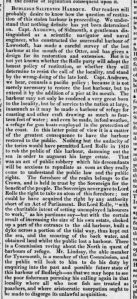
“I found this report relating to the old harbour at Budleigh, I knew that boats used to navigate up the Otter estuary to the mills at Newton Poppleford. Anyway it seems that Lord Rolle was a bit of a rogue and dammed up the harbour to increase his expanse of land but put an end to the use of larger boats on the Otter. So not only did he remove the Sidmouth stones but he took away the harbour for his own gain.”😵
Western Times 1858:

“Griff Rhys Jones supports new report and says we must not lose our precious countryside by building low density sprawling estates”

Press Release:

“Civic Voice president Griff Rhys Jones has today added his voice to campaigns by six community groups fighting “garden communities” being imposed on them by the Government.

He has penned a powerful Foreword to a Smart Growth UK report mostly written by community groups around the country who are opposing garden towns and villages. Griff warns that, far from being utopias, these are disordered schemes that ignore local communities and would be located in unsustainable locations.

“We encounter proposals that are not going to answer local needs for housing at all, but will waste precious countryside by building low density sprawling estates and creating expensive houses. Brownfield land in England can accommodate one million houses, So get on with it and use that.” he says.

Griff warns that terms like “housing crisis” and “emergency” are being used to force through development of the countryside which fails to provide the affordable homes we need as a nation.

The report sets out detailed objections by six groups opposing Government-sponsored garden communities and four opposing large greenfield developments marketed as “garden villages” by their promoters.

““Planning” by definition means looking to the future. That must mean the long-term future as well as the next few years. We need to recognize that people who urge care, caution and attention are not dwelling in the past. They are not NIMBYS, says Griff. “They are protecting the future.”

He says the protests, assessments and legitimate concerns in the report make sober reading.”

Report:

Click to access Garden%20Communities%20Report.pdf

“Stampede to build homes threatens the rights of locals”

Article by Andrew Motion, President, CPRE in today’s Times (pay wall):

In launching the revised National Planning Policy Framework (NPPF) last month, the communities secretary Sajid Javidpromised “a continued emphasis on development that’s sustainable and led locally”. Was he really talking about the same NPPF that, for the past five years, has forced wholly unsustainable development on communities already struggling with overstretched infrastructure and shrinking green spaces?

Initial analysis of the revisions by the Campaign to Protect Rural England shows that there is still not enough emphasis on a plan-led system such as the one that has been a cornerstone of our local democracy since 1947. We are calling for the final version to give a cast-iron guarantee that locally agreed development plans (including neighbourhood plans) should be upheld when deciding planning applications. It is the only way to restore communities’ faith in neighbourhood planning.

Local volunteers spend a great deal of time and effort in promoting good development, assessing housing needs and negotiating sites that respect settlement boundaries and preserve valued green spaces. So it is deeply disheartening that the revised NPPF could allow local authorities to overrule neighbourhood plans, either when local plans are reviewed (every five years) or if not enough homes are delivered elsewhere.

Communities across England are being targeted by parasitic “land promoters” who speculate on their ability to shoehorn large, expensive homes on to greenfield sites. In many cases the financial might of these companies allows them to steamroller councils in the appeals process, where the NPPF’s current “presumption in favour of sustainable development” provides the necessary loophole.

If it’s hard to achieve democratic decisions with respect to housing, the situation threatens to become even worse with fracking. The majority of recent applications have been decisively rejected by local authorities, yet the revised NPPF forces local authorities not only to place great weight on the supposed benefits of fracking for the economy, but also to recognise the benefits for “energy security” and “supporting a low-carbon transition”. This misguided emphasis can only lead to more travesties like January’s approval for oil exploration by West Sussex county council, in the face of 2,739 letters of objection (and 11 in support).

We must have new housing and infrastructure, but it remains vitally important that development benefits those who have to live with it. Now more than ever, we need to put people at the heart of the planning system.”

“THE COUNCILS SELLING LAND WORTH MILLIONS TO OFFSHORE COMPANIES”

“Councils are selling off land: vast swathes of it. It’s estimated that 10 million hectares of public land have been sold in the past four decades, and sales are accelerating. In Gloucestershire, where I live, the council has sold £100 million of land since April 2011 and recently announced plans to sell up to £53 million more.

Who’s buying it all? There has been little press coverage of this fire sale of land, and councils are cagey about reporting it. To find out more, I wrote code to compare a mid-2017 version of the Land Registry’s Corporate & Commercial Ownership data, which lists what UK corporate bodies own, with the latest Overseas Companies Ownership data, which lists what overseas companies own. If titles move from the first dataset to the second, that indicates they’ve been sold to an overseas company.

I found that since summer 2017, local authorities, government bodies and universities have sold public land worth more than £100 million to companies in Jersey, Guernsey, Isle of Man, British Virgin Islands, Malta and Cayman Islands. This is despite David Cameron promising to end property sales to “anonymous shell companies” in May 2016.

These countries are tax havens and secrecy jurisdictions. Private Eye, Global Witness and Transparency International have exposed for years how offshore companies hide the true identity of the buyers, allowing ‘dirty money’ to be laundered through the UK. Yet still the sales go on.

There’s no suggestion that the sales below are being used for money laundering, or even good old-fashioned corruption – the few I can identify look like UK development groups using offshore vehicles. But the problem is, we just don’t know who the buyers are – that’s the point of offshore. And most likely, nor do the public bodies doing the selling!

The government recently announced plans for a register of beneficial owners of offshore companies that own UK property. But campaigners say this is too little, too late: unless draft legislation goes to Parliament soon, the register won’t be in place till 2021.

In the meantime, and despite Theresa May also promising a ‘crackdown’ on companies’ use of offshore tax havens (£), public bodies are still merrily selling off public land – plenty of it to anonymous companies in these “sunny places for shady people”. …

The councils selling land worth millions to offshore companies

[For specific examples see the remainder of the article]

Cameron developer pal wants to build 28 luxury homes and use S106 to fund renovation of his derelict manor house “for the public”

David Cameron‘s multimillionaire friend has insisted the money earned from building 28 luxury homes will benefit the public by helping to restore his Grade II-listed manor house in the countryside.

Nicholas Johnston has claimed that despite owning two massive country estates, he doesn’t have the funds to restore his 4,000-acre Great Tew estate in the Cotswold Hills, Oxfordshire.

So the Old Etonian announced he plans to refurbish his manor with profits earned from a proposed £56million ‘world-class car museum’ that includes upmarket holiday lodges, as he says the restoration will be a public service.

The action has angered locals as it is common practice for big-time property tycoons to use a portion of the development funds to bankroll local parks, donate to schools or other initiatives for the community.

Mr Johnston told the [local] paper: ‘It is a very expensive thing to save. There isn’t the revenue from estate activities to allow the restoration of Tew Park.’

He added that if the Oxfordshire council rejects his plans, the hefty cost could fall back on the public, due to the council’s responsibility to protect listed structures, saying: ‘If I don’t have the money to do it … ultimately that falls back on the public purse.’

Mr Johnston is partnering with American billionaire Peter Mullin to build a ‘world-class car museum’ that has 28 holiday homes on site near an WWII airfield.

Mr Mullin is a vintage car enthusiast and owns a Bugatti Atlantic – there are only two in world.

The development on the estate would include a demonstration track and a suite for corporate events, as Mr Johnston claims that only owners who put their luxury cars up for sale will be able to buy a home there.

Kieran Hedigan, project director for the car museum, shot down claims the development was elitist and that Mr Johnston had ulterior motives.

In another fight over the Great Tew estate, involving rights of way access, a judge blasted Mr Johnston and said he would say ‘whatever he thought was most likely to advance his case, without regard to the truth’.

The Great Tew estate has been owned by the Johnston family since the 1960s.

Mr Johnston purchased the entire seaside village of Bantham in Devon for more than £11.5million in 2014 because he felt a sense of ‘freedom and an independence’ there.

He fought off a rival bid from the National Trust to buy the estate – which features a golf course, shop, beach and about 20 homes – and hopes his children will one day take it on as a lifelong project.

http://www.dailymail.co.uk/news/article-5593447/David-Camerons-friend-says-money-building-homes-benefit-public-restoring-manor.html

Housing: pay much more for much less!

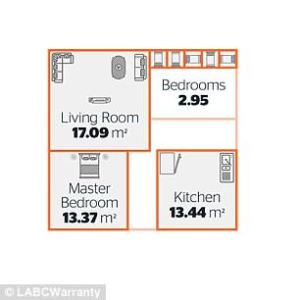
“British living rooms are nearly a third smaller than they were in the 1970s, a new study has found.
Homes built in the UK after 2010 have an average sitting room size of 184 sq ft (17.1 sq m) compared to 268 sq ft (24.9 sq m) around 40 years ago.
Houses also have less bedrooms today than they did in the past, with an average of just under three.

Read more: http://www.dailymail.co.uk/news/article-5592755/UK-living-rooms-smaller-1970s.html#ixzz5CAGuMDte
Follow us: @MailOnline on Twitter | DailyMail on Facebook

“The Greater Exeter plan has been delayed”

Owl is STILL having difficulty understanding how the Greater Exeter Strategic Plan (GESP) fits in with the Devon and Somerset Heart of the South West Strategic plan!!! So many strategies, so many plans, so many people being paid to work out how to invent what might, or more likely might not, turn out to be a wheel – though one of them MIGHT just manage to invent a square one!

“Mid Devon, East Devon, Teignbridge and Exeter City Council, in partnership with Devon County Council, are teaming up to create a Greater Exeter Strategic Plan (GESP) which focuses on the creation of jobs and housing until 2040.

… A consultation on the issues that the GESP should focus on took place 12 months ago and it was initially hoped that a consultation on a draft plan would begin in January of 2018.

But publication of the draft plan has been delayed and it is now likely that the draft GESP will be published in the summer of 2018.

Explaining the delay, a statement said: “In respect of the Greater Exeter Strategic Plan (GESP), and since our last Local Development Scheme was approved, there have been a number of factors which have delayed plan production.

“These include the fact that a great many sites were submitted through the Housing and Employment Land Availability Assessment ‘call for sites’ and these are being carefully assessed as well as further draft changes to national Government planning policy and a wish to investigate differing ways to ensure we can secure the best forms of development, including the highest quality new housing with supporting facilities, to meet our future needs.”

… The GESP will sit above District-level Local and community Neighbourhood Plans, taking a long-term strategic view to ensure important decisions about development and investment are coordinated. … “

https://www.devonlive.com/news/devon-news/greater-exeter-plan-been-delayed-1412993

Expansion of Cranbrook not going down well with – Cranbrook

“A total of 138 consultation responses were received from town and parish councils, councillors, specialist bodies, developers and the public. A wide range of issues were raised, including technical concerns about transport issues, such as problems providing vehicle access to some parts of the proposed expansion areas and how rail services can be improved to deliver a half hourly service into Exeter.

It was also noted that some additional land had been put forward by landowners for development through the consultation and this now had to be considered for inclusion in the plan.

… People were mainly concerned about the location and extent of development to the south of the London Road, particularly where this intrudes into Rockbeare parish and the Green wedge that was designated to prevent settlement coalescence (joining up) between Cranbrook and the village.

The community at Rockbeare raised strong concerns with these proposals, which also conflict with the emerging Rockbeare Neighbourhood Plan that has recently been out to consultation. Members were advised that this development was important for bringing the London Road into the town, as well as for creating a sense of place along the road as an entrance to Cranbrook….”

http://eastdevon.gov.uk/news/2018/03/councillors-review-report-on-cranbrook-plan-development-plan-document-dpd/

Risk of green wedge between Cranbrook and Rockbeare being swallowed up despite Local Plan rules

“Cllr Rob Longhurst said: “The main thing I would be concerned with is the idea that a green wedge could be disposed of if it doesn’t fit. It was put there for a reason after long debate and I think it is wrong to suddenly discard it as being inconvenient.”

Cllr Mark Williamson said: “It is so clear in the strategy of the Local Plan that it only takes up a single sentence, saying within green wedges, development will not be permitted. There are six green wedges in the Local Plan so if this was allowed then there will be sleepless nights around the district, where the other green wedges are, particularly around Seaton and Colyton.”

https://www.devonlive.com/news/devon-news/concerns-raised-building-green-wedges-1400152

Letwin explains rationing new builds to keep up prices with a new phrase “absorption rate”!

“A Government-commissioned report has blamed delays in the house-building process on builders concerns about future sale prices.

In the Autumn Budget the Chancellor set up an independent review to look at the delays between planning permission being granted, and houses being built. This review is being led by Sir Oliver Letwin.

The Treasury has now published the commission’s interim report alongside the Spring Statement:

Click to access Build_Out_Review_letter_to_Cx_and_Housing_SoS.pdf

These initial findings suggest that house-builders concerns about sale prices are a major factor in slow “build out” of homes on many of these larger developments.

Letwin says this review had initially focused on larger housing developments and major housebuilders. Further analysis may look at smaller scale models.

In a letter to the Chancellor and Sajid Javid – the secretary of state for housing communities and local government – Letwin says housebuilders have cited a number of “limitations”, including a shortage of available skilled labour, the availability of capital, provision of local transport infrastructure and the slow speed of installations by utility companies.

But in the interim report Letwin says: “I am not persuaded that these limitations are in fact the primary determinants of the speed of build out on large permitted sites at present.”

He goes on to say the fundamental driver of build out rates, once detailed planning permission is granted, appears to be the “absorption rate” – that is the rate at which newly constructed homes can be sold into the local market without materially disturbing the market price.

This rate, he says appears to be largely determined at present by the type of home being constructed and the pricing of the new homes built.

The interim report goes onto say this problem can be exacerbated by many larger development having a style of size of home that is fairly homogeneous.

The next stage of this review will look at whether build-out rates could be improved, either by reducing the reliance on large builders, or by encouraging them to offer more variety in terms of the type and price of property offered.

The report adds: “We have seen ample evidence from our site visits that the rate and completion of the ‘affordable ‘ and social rented’ homes is constrained by the requirement for cross-subsidy from the open market housing on the site.” This can delay the build out of these homes, the report adds.

Letwin says he plans to publish more detailed draft analysis by the end of June, which will contain a more detailed description of the problem and its causes.

The independent review will then seek comments from interested parties before a final analysis which will include a list of recommendations to improve the situation.”

Interim report on planning delays published alongside Spring Statement