“Councils sit on £375m earmarked for affordable housing”

“Local councils in England are sitting on hundreds of millions of pounds of money designated for affordable housing.

A total of £375m is available, £100m of which has not even been earmarked for a specific project. This is despite a survey last year for the Town and Country Planning Association showing that 98% of councils described their need for affordable homes as either “severe” or “moderate”.

The cash has been accumulated under so-called section 106 agreements by which builders and developers give a council a ringfenced amount of money instead of building affordable homes within a development themselves.

James Prestwich, the head of policy at the National Housing Federation, which represents housing associations, said it confirmed the federation’s view that section 106 was flawed. “Affordable housing should be delivered within new developments, rather than developers simply funding its delivery elsewhere,” he said. “This would guarantee that affordable housing will be built alongside other homes.”

Some of the worst offenders shown up by research carried out by the Huffington Post are in London and the south-east. The housing minister Dominic Raab’s own local council, Elmbridge in Surrey, has £8m waiting to be invested.

Raab was criticised this month after he blamed high levels of immigration for increasing house prices. A review by the statistics watchdog found that his department had used an outdated statistical method to calculate the causes of housing pressure and their relationship with house prices.

The London borough of Kensington and Chelsea, which has yet to find new homes for two-thirds of the Grenfell survivors and other families affected by the disaster, has £21m of dedicated reserves. It says £19m has been set aside for Grenfell families.

Two Labour-held councils also in London, Southwark and Camden, between them have more than £90m that could be spent on affordable homes. Altogether, just 14 councils account for two-thirds of the unspent cash.

Rough sleeping in London has risen by at least 18% over the past year; in England as a whole, it is up 15%. Although a shortage of affordable homes is only one of many causes that explains the continuous rise over the past seven years, its consequences have a series of knock-on effects.

A spokesman for Southwark said the money it had was already allocated and the projects for which it was intended would be completed within the next five years.

Camden has set up a new scheme for affordable home building, the community investment programme, which is intended to create 1,400 affordable homes over 15 years.

Tony Travers, a local government expert at the London School of Economics, said nearly a decade of cuts had left council capacity to manage big projects “hollowed out”.

“Average cuts of between 25% and 30% over eight years and the way they have protected children’s and adult social care services have led to bigger cuts in departments like housing and planning. There is no question that their capacity to handle major projects has been eroded.”

https://www.theguardian.com/society/2018/apr/22/councils-sit-on-375m-earmarked-for-affordable-housing

“Elderly and disabled at risk in inadequate housing, human rights watchdog finds”

Owl says: Not to worry – those at the luxurious PegasusLife development at Knowle will be just fine!

“Britain’s planning rules are fueling a housing “crisis” for the elderly and disabled which is forcing the frail to live in dangerous conditions, a leaked report by the Equality and Human Rights Commission seen by the Telegraph has found.

The Commission’s report, due to be released next month, found a “severe shortage of accessible and adaptable housing” with only seven per cent of homes in England offering minimal accessibility features.

It warns that local councils are failing to build enough accessible homes to meet demand and were not taking action against developers who failed to comply with regulations.

The Commission, a human rights watchdog, said that at least ten per cent of all future housing should be built with a growing elderly and disabled population in mind and that local authorities must reduce the bureaucratic hurdles for adapting homes.

The report comes at a time of a growing social care crisis in Britain with many elderly and frail people stuck in hospitals, unable to be discharged due to inadequate housing.

At the same time, younger Britons are struggling to get on to the housing ladder with older people unable to downsize due to a lack of suitable properties.

Following an inquiry into the state of housing for disabled people in Britain, the Commission reported that the “acute housing crisis“ was leaving elderly and disabled people in unsafe homes and leading to accidents and hospital admissions.

The report’s executive summary, seen by the Telegraph, said that some people were forced into “eating, sleeping and bathing in one room” and to rely on family members to carry them between rooms and up stairs.

Local authorities told the Commission that developers are “reluctant to build accessible houses, as they see them as less profitable”, and often failed to comply with accessibility standards.

Disabled older people are being let down and this is a stark reminder that urgent action is needed, which is the least they deserve in a compassionate society.

Despite this, just three per cent of councils took enforcement action against developers who failed to meet these standards, the Commission found.

The report also said that people were forced to wait an average of 22 weeks between application and the installation of home adaptations necessary to live safely and independently, with some waiting for more than a year.

The Commission’s report said that better housing would help ease the health and social care crisis as it found that poor housing led to an “increased need for social care” and “avoidable hospital admissions”.

Responding to the report, charities warned that the lack of suitable housing was exacerbating the NHS crisis as elderly and disabled people were forced to stay in hospital for longer due to a lack of safe accommodation.

Caroline Abrahams, charity director at Age UK said: “Providing accessible homes must be seen as core to reducing pressure on social care and the NHS.

“If these recommendations are implemented they will help many more older and disabled people to receive care and support at home.”

She added: “It’s vital that we build safe, accessible, high quality homes that work for all generations and that don’t undermine our ability to stay independent as we get older.”

George McNamara, director of policy and public affairs at Independent Age, the older people’s charity, said: “These are some of the most vulnerable people but they’re forgotten when it comes to housing policy. They are being discriminated against by a system that doesn’t work for them.

“This issue is only going to become more important as our population ages and people have a greater need for specialist housing that addresses all their health and care needs.

“Disabled older people are being let down and this is a stark reminder that urgent action is needed, which is the least they deserve in a compassionate society.”

Rob Wilson, former Government minister for civil society, said: “This isn’t a new problem, but this is a timely report and reminder that disabled people face enormous challenges with getting appropriate housing.

“Almost every local authority area faces the same difficulty in getting enough wheelchair accessible houses built.

“The Government’s drive to increase house building is very welcome, but clearly there is much more to do for those with these special requirements.”

Cllr Izzi Seccombe, chairman of the Local Government Association’s Community Wellbeing Board, said councils needed “greater planning powers and resources to hold developers to account”.

“Housing is too often unavailable, unaffordable, and not appropriate for everyone that needs it. This includes the availability of homes suitable for older people and people in vulnerable circumstances,” she said.

A spokesman for the Ministry of Housing, Communities and Local Government said: “Our new planning rules make clear that councils must take the needs of elderly and disabled people into account when planning new homes in their area.

“We’re also providing councils with almost £1 billion over the next two years to adapt properties for disabled and older people so they can live independently and safely.”

https://www.telegraph.co.uk/news/2018/04/22/elderly-disabled-risk-inadequate-housing-human-rights-watchdog/

“Labour would rip up definition of affordable housing, Corbyn says”

“A Labour government would rip up the government’s definition of affordable housing and instead bring in a measure linked to people’s incomes, Jeremy Corbyn will say on Thursday.

A report, Housing for the Many, accuses ministers of stretching the term affordable to breaking point to include homes let at up to 80% of market rents – more than £1,500 a month in some areas – and homes for sale up to £450,000. “It has become a deliberately malleable phrase, used to cover up a shift in government policy towards increasingly expensive and insecure homes,” it says.

The Labour leader and John Healey, the shadow housing secretary, set out the party’s plans to link affordability to people’s incomes on tenures including social rent, living rent and low-cost ownership, in the 40-page green paper, to be launched on Thursday.

Labour says one “common yardstick” is whether rent or a mortgage costs more than one-third of a household’s after-tax income.

The green paper says Labour is keen to help not just the poorest in society, but also “the ‘just coping’ class in Britain today who do the jobs we all rely on – IT workers, HGV drivers, joiners, warehouse managers, lab technicians, nurses, teaching assistants, call centre supervisors, shop staff. They are the backbone of the British economy and heart of our public services.”

Britain faces an acute housing affordability crisis, with around 1.7m private rented households currently paying more than a third of their income in rent and 1m owner-occupiers paying more than a third of their income on their mortgage.

Corbyn will say: “When housing has become a site of speculation for a wealthy few, leaving the many unable to access a decent, secure home, something has gone seriously wrong. We need to restore the principle that a decent home is a right owed to all, not a privilege for the few. And the only way to deliver on that right for everyone, regardless of income, is through social housing.”

The paper includes a series of other measures, including creating a new Department of Housing and an independent watchdog, along the lines of the Office for Budget Responsibility, to assess the government’s policies and ensure they are delivered.

A Labour government would also end the right to buy, which the Cameron government extended to cover tenants in social housing, risking the depletion of the supply of social housing. Labour would also lift the cap on borrowing by local authorities, to allow councils to build more social housing themselves.

A Conservative spokesperson said: “Labour would kick away the housing ladder from everyone living in council houses by taking away their right to buy, just as Labour did in Wales. Under the Conservatives, we are investing £9bn to build more good-quality homes that people can afford and have seen the highest number of new homes being built for a decade.”

Healey will say: “The housing market is broken and current Conservative housing policy is failing to fix it. We have to build more affordable homes to make homes more affordable.”

https://www.theguardian.com/politics/2018/apr/18/labour-would-rip-up-definition-of-affordable-housing-corbyn-says

“PM among cabinet members earning money as a landlord”

“Nine cabinet ministers, including the prime minister, are making more than £10,000 a year by acting as landlords, a Guardian analysis has found.

Following Jeremy Hunt’s failure to declare the purchase of seven luxury flats that he subsequently rented out, an analysis of the parliamentary register of MPs’ interests shows eight other members of the cabinet own and rent out a property.

The health secretary was forced in to an embarrassing apology on Friday after it emerged that he had failed to declare a business interest with both Companies House and the parliamentary register of MPs’ interests.

Hunt has amended the register, which now shows that he has a half share of a holiday home in Italy, a half share in an office building in Hammersmith and seven recently acquired apartments in Southampton.

Theresa May and Philip Hammond, who both live in Downing Street, rent out their personal homes in central London. Communities and housing secretary Sajid Javid also rents out property, while Chris Grayling, the transport secretary, rents out two properties, according to the register

The foreign secretary Boris Johnson, the international trade secretary Liam Fox, the minister without portfolio Brandon Lewis – who is also the Conservative party chairman – and the Welsh minister Alun Cairns also own and rent out a property, according to the register.

There is no suggestion that the ministers are in breach of the ministerial code. …”

https://www.theguardian.com/politics/2018/apr/13/pm-among-cabinet-members-earning-money-as-a-landlord

“Griff Rhys Jones supports new report and says we must not lose our precious countryside by building low density sprawling estates”

Press Release:

“Civic Voice president Griff Rhys Jones has today added his voice to campaigns by six community groups fighting “garden communities” being imposed on them by the Government.

He has penned a powerful Foreword to a Smart Growth UK report mostly written by community groups around the country who are opposing garden towns and villages. Griff warns that, far from being utopias, these are disordered schemes that ignore local communities and would be located in unsustainable locations.

“We encounter proposals that are not going to answer local needs for housing at all, but will waste precious countryside by building low density sprawling estates and creating expensive houses. Brownfield land in England can accommodate one million houses, So get on with it and use that.” he says.

Griff warns that terms like “housing crisis” and “emergency” are being used to force through development of the countryside which fails to provide the affordable homes we need as a nation.

The report sets out detailed objections by six groups opposing Government-sponsored garden communities and four opposing large greenfield developments marketed as “garden villages” by their promoters.

““Planning” by definition means looking to the future. That must mean the long-term future as well as the next few years. We need to recognize that people who urge care, caution and attention are not dwelling in the past. They are not NIMBYS, says Griff. “They are protecting the future.”

He says the protests, assessments and legitimate concerns in the report make sober reading.”

Report:

Click to access Garden%20Communities%20Report.pdf

Cameron developer pal wants to build 28 luxury homes and use S106 to fund renovation of his derelict manor house “for the public”

David Cameron‘s multimillionaire friend has insisted the money earned from building 28 luxury homes will benefit the public by helping to restore his Grade II-listed manor house in the countryside.

Nicholas Johnston has claimed that despite owning two massive country estates, he doesn’t have the funds to restore his 4,000-acre Great Tew estate in the Cotswold Hills, Oxfordshire.

So the Old Etonian announced he plans to refurbish his manor with profits earned from a proposed £56million ‘world-class car museum’ that includes upmarket holiday lodges, as he says the restoration will be a public service.

The action has angered locals as it is common practice for big-time property tycoons to use a portion of the development funds to bankroll local parks, donate to schools or other initiatives for the community.

Mr Johnston told the [local] paper: ‘It is a very expensive thing to save. There isn’t the revenue from estate activities to allow the restoration of Tew Park.’

He added that if the Oxfordshire council rejects his plans, the hefty cost could fall back on the public, due to the council’s responsibility to protect listed structures, saying: ‘If I don’t have the money to do it … ultimately that falls back on the public purse.’

Mr Johnston is partnering with American billionaire Peter Mullin to build a ‘world-class car museum’ that has 28 holiday homes on site near an WWII airfield.

Mr Mullin is a vintage car enthusiast and owns a Bugatti Atlantic – there are only two in world.

The development on the estate would include a demonstration track and a suite for corporate events, as Mr Johnston claims that only owners who put their luxury cars up for sale will be able to buy a home there.

Kieran Hedigan, project director for the car museum, shot down claims the development was elitist and that Mr Johnston had ulterior motives.

In another fight over the Great Tew estate, involving rights of way access, a judge blasted Mr Johnston and said he would say ‘whatever he thought was most likely to advance his case, without regard to the truth’.

The Great Tew estate has been owned by the Johnston family since the 1960s.

Mr Johnston purchased the entire seaside village of Bantham in Devon for more than £11.5million in 2014 because he felt a sense of ‘freedom and an independence’ there.

He fought off a rival bid from the National Trust to buy the estate – which features a golf course, shop, beach and about 20 homes – and hopes his children will one day take it on as a lifelong project.

http://www.dailymail.co.uk/news/article-5593447/David-Camerons-friend-says-money-building-homes-benefit-public-restoring-manor.html

Housing: pay much more for much less!

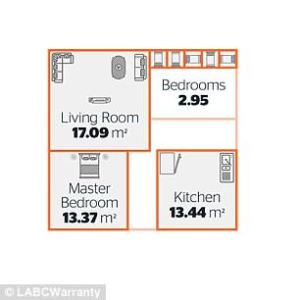
“British living rooms are nearly a third smaller than they were in the 1970s, a new study has found.
Homes built in the UK after 2010 have an average sitting room size of 184 sq ft (17.1 sq m) compared to 268 sq ft (24.9 sq m) around 40 years ago.
Houses also have less bedrooms today than they did in the past, with an average of just under three.

Read more: http://www.dailymail.co.uk/news/article-5592755/UK-living-rooms-smaller-1970s.html#ixzz5CAGuMDte
Follow us: @MailOnline on Twitter | DailyMail on Facebook

“The Greater Exeter plan has been delayed”

Owl is STILL having difficulty understanding how the Greater Exeter Strategic Plan (GESP) fits in with the Devon and Somerset Heart of the South West Strategic plan!!! So many strategies, so many plans, so many people being paid to work out how to invent what might, or more likely might not, turn out to be a wheel – though one of them MIGHT just manage to invent a square one!

“Mid Devon, East Devon, Teignbridge and Exeter City Council, in partnership with Devon County Council, are teaming up to create a Greater Exeter Strategic Plan (GESP) which focuses on the creation of jobs and housing until 2040.

… A consultation on the issues that the GESP should focus on took place 12 months ago and it was initially hoped that a consultation on a draft plan would begin in January of 2018.

But publication of the draft plan has been delayed and it is now likely that the draft GESP will be published in the summer of 2018.

Explaining the delay, a statement said: “In respect of the Greater Exeter Strategic Plan (GESP), and since our last Local Development Scheme was approved, there have been a number of factors which have delayed plan production.

“These include the fact that a great many sites were submitted through the Housing and Employment Land Availability Assessment ‘call for sites’ and these are being carefully assessed as well as further draft changes to national Government planning policy and a wish to investigate differing ways to ensure we can secure the best forms of development, including the highest quality new housing with supporting facilities, to meet our future needs.”

… The GESP will sit above District-level Local and community Neighbourhood Plans, taking a long-term strategic view to ensure important decisions about development and investment are coordinated. … “

https://www.devonlive.com/news/devon-news/greater-exeter-plan-been-delayed-1412993

Expansion of Cranbrook not going down well with – Cranbrook

“A total of 138 consultation responses were received from town and parish councils, councillors, specialist bodies, developers and the public. A wide range of issues were raised, including technical concerns about transport issues, such as problems providing vehicle access to some parts of the proposed expansion areas and how rail services can be improved to deliver a half hourly service into Exeter.

It was also noted that some additional land had been put forward by landowners for development through the consultation and this now had to be considered for inclusion in the plan.

… People were mainly concerned about the location and extent of development to the south of the London Road, particularly where this intrudes into Rockbeare parish and the Green wedge that was designated to prevent settlement coalescence (joining up) between Cranbrook and the village.

The community at Rockbeare raised strong concerns with these proposals, which also conflict with the emerging Rockbeare Neighbourhood Plan that has recently been out to consultation. Members were advised that this development was important for bringing the London Road into the town, as well as for creating a sense of place along the road as an entrance to Cranbrook….”

http://eastdevon.gov.uk/news/2018/03/councillors-review-report-on-cranbrook-plan-development-plan-document-dpd/

Helpers needed to drive forward Honiton’s neighbourhood plan

“Honiton Town Council and existing members of a steering group have been working together to formulate the town’s Neighbourhood Plan, a document which will enable residents to have a say on its future development.

A council spokesman said: “The aim is to work as a community to develop a plan which reflects the aspirations we all have for the future of Honiton.

“However, we now need a Chairperson and additional members of the Steering Group to lead and deliver the project for the benefit of the community.
“We are looking for a chairperson who is a collaborative leader, an effective communicator with project management experience who has the willingness, enthusiasm and time to devote to the whole project.”

No experience or qualifications are required, although anyone with knowledge of project management, town planning, community engagement and consultation and report writing will be warmly welcomed.

Additional information about the role of Chairperson and the Steering Group, including a person specification and job description, is available on request

Those interested in joining to help steer the group can contact deputy town clerk Heloise Marlow DeputyClerk@honiton.gov.uk

http://www.midweekherald.co.uk/news/chair-needed-to-help-complete-honiton-s-neighbourhood-plan-1-5445942

“100,000 low-cost homes have had rents hiked since 2012”

“Labour has unveiled plans to stem the loss of low-cost homes as new analysis reveals more than 100,000 social homes have been converted into a more expensive type of property in the last six years alone.

The party said it would scrap a policy introduced by the Conservative-Lib Dem coalition government in 2012 that forces housing associations and local councils to raise rents by an average of 40 per cent by converting social homes into “affordable homes”.

The announcement is the second to come out of Labour’s review into the future of social housing, which is likely to report in the coming weeks.

It comes as analysis seen by The Independent revealed the huge loss of social homes largely as a result of a change made by the coalition. …

While social rents are generally around 40 per cent of market value, affordable homes can cost up to 80 per cent of market rents, prompting criticism that in many parts of country they are out of the reach of people on ordinary incomes. …

The coalition made the conversion of low-cost social homes into affordable homes a key plank of its housing policy.

An official document from 2011 explaining the Government’s approach said: “The conversion of existing stock to affordable rent is a crucial element in generating additional financial capacity and it is anticipated that it will be integral to the offer that providers bring forward as part of their proposals for funding new supply.”

The change was made despite the Government’s own impact assessment making it clear that forcing the conversion of social housing into affordable housing would result in “greater costs to Government through increases in housing benefit”, although this was forecast to be offset by cuts to housing spending. …

At the same time as the change was made, Government funding for new social housing was ended entirely and instead diverted to fund “affordable” homes.

As a result, the number of new, Government-funded social homes has plummeted by 97 per year since 2010, with just 1,102 new homes completed last year – funded via existing programmes set up before 2010. …

About 102,000 homes have been converted since 2012, while around 60,000 have been sold to tenants under Right to Buy.

Only around 50,000 new social homes have been built in that time – the vast majority funded by housing associations. …”

http://www.independent.co.uk/news/uk/politics/labour-social-housing-policy-affordable-homes-100000-converted-coalition-government-a8256776.html

“How Bristol is standing up to developers”

East Devon developers do not disclose their viability agreements – EDDC thinks they should remain confidential because they contain “commercially sensitive information” yet Bristol disagrees and publishes theirs.

Baker Estates in Honiton have been allowed to reduce the number of affordable properties, using such a confidential document.

“Last autumn, campaigners scored an unprecedented victory. The target was “viability assessments”: dossiers produced by housing developers to justify the amount of affordable housing – or lack thereof – in their developments, and which are frequently used during the construction process to shrug off previous commitments.

“Developers were saying, ‘We can’t afford to put 30-40% affordable housing in here,’ to make the profits they are legally entitled to,” says Louise Herbert, spokesperson for Bristol-born tenants union Acorn. “But all of their numbers – how much they projected to sell the houses for, how much they bought the land for – were redacted.”

Acorn, along with the Bristol Cable media co-operative, campaigned for the full release of these files. Following a public outcry, the council voted to make the viability assessments public.

Now, Herbert says, the public can examine these assessments themselves, and make sure that more affordable housing is built in their areas.

In response, Andrew Whitaker, planning director at the Home Builders Federation (HBF), argues that those without formal training “may feel that the figures set out in such assessments are ‘too high’ or ‘too low’ and make representations and decisions accordingly, rather than based on the evidence.”

For now, it’s too soon to tell if publishing the viability assessments has achieved change in Bristol. But it’s a small step that could point the way for cities such as London, where viability assessments remain pervasive, or Manchester, where in contravention of the city’s own guidelines, none of the nearly 15,000 planned new developments have any provision for affordable housing.

Bristol’s mayor, Marvin Rees, believes that it sends a signal to developers: “We’re a great city to do business in – but we want the right kind of money.”

Councillor Paul Smith agrees. “Housing can’t be left to the market if you want to meet the housing needs of the whole city,” he says. “There are 500 families in temporary accommodation, 100 people sleeping rough on the streets, huge numbers who are inadequately housed, and people living in poor-quality, high-rent accommodation.”…

https://www.theguardian.com/cities/2018/mar/07/bristol-housing-developers-affordable-property

May desperately tries to claw back housing votes her government has lost

“Theresa May will hit out at the “perverse incentive” of housing industry bonus structures paying out millions of pounds to chief executives as a result of company profits rather than the number of homes built.

The prime minister will make the comments as she unveils a series of measures, previously outlined in the government’s housing white paper, to rewrite the rules on planning in an attempt to boost the speed of housebuilding and ease prices.

She will call the “national housing crisis” one of the biggest barriers to social mobility and argue that she “cannot bring about the kind of society I want to see” without tackling it.

May, who wants to make housing her number one domestic priority, will say she expects “developers to do their duty to Britain and build the homes our country needs”.

Under the plans:

Local authorities will be able to take into account how quickly a developer builds on a site before issuing future planning permission.
Independent inspectors will be given the power to take over decision-making in local areas if “nimby councils” fail to publish housing plans quickly enough.
Staff working for councils and hospitals will be given priority when public land is sold off.
Homeowners will be able to add two storeys to existing properties.
The prime minister will tell the national planning conference in London that developers must play their part too. “The bonuses paid to the heads of some of our biggest developers are based not on the number of homes they build but on their profits or share price,” she will say.

“In a market where lower supply equals higher prices that creates a perverse incentive, one that does not encourage them to build the homes we need.” [Duh – we told her that in 2010 when developers wrote their own rules]

The comments come after a decision to pay the chief executive of housebuilder Persimmon a £110m bonus was widely criticised, with some describing it as “corporate looting”. Jeff Fairburn collected the first £50m worth of shares on New Year’s Eve, while 140 members of senior staff were also in line for more than £500m, with more than 80 receiving in excess of £1m.

While the government cannot force a change in bonus structures, May will hope to pile pressure on companies. [While taking their donations to the Conservative Party and meeting them privately]

Areas where action can be taken include “allowing councils to take a developer’s previous rate of build-out into account when deciding whether to grant planning permission”, May will say.

May will argue that the aim is to improve affordability so that more people can achieve the dream of home ownership.

“I still vividly remember the first home I shared with my husband, Philip. Not only our pictures on the walls and our books on the shelves, but the security that came from knowing we couldn’t be asked to move on at short notice,” she will say.

But she will admit that in much of the country millions who ought to own cannot do so, and prices are being pushed upwards.

“The result is a vicious circle from which most people can only escape with help from the bank of Mum and Dad. If you’re not lucky enough to have such support, the door to home ownership is all too often locked and barred.”

Polly Neate, the chief executive of the housing charity Shelter, said the planning system was not delivering and welcomed the move, but said the evidence would be in the building figures. “It appears the government is waking up to the scale of our housing emergency and the critical need for action which is urgent and bold,” she said.

Steve Turner from the Home Builders Federation said: “We welcome measures to speed up the planning system and stimulate all parts of the market from starter to retirement homes. The industry has delivered big increases in recent years and is committed to working with government to go further and match supply to need.”

However, the shadow housing secretary argued that May should be embarrassed to be “fronting up these feeble measures first announced a year ago”.

“After eight years of failure on housing it’s clear her government has got no plan to fix the housing crisis,” John Healey said.

One industry expert questioned whether linking planning permissions to former build-out rates was workable. He pointed out that permissions were attached to the location, not a particular developer, and many were held by landowners or promoters who would then sell on the site to a housing company.

May will promise to retain protections for the green belt, saying boundaries can only be changed if every “other reasonable option” for places to build needed homes had been explored. Downing Street pointed out that only 10% of England has been built on and only 13% is covered by green belt. But Mark Littlewood, Director General at the Institute of Economic Affairs said the commitment to the Green belt meant the proposals fell “at the first hurdle”.

“I want to see planning permissions going to people who are actually going to build houses, not just sit on land and watch its value rise. Where councils are allocating sufficient land for the homes people need, our new planning rulebook will stop developers building on large sites that aren’t allocated in the plan – something that’s not fair on residents who agree to a plan only to see it ignored.”

https://www.theguardian.com/society/2018/mar/04/may-attacks-perverse-incentive-housing-industry-bonuses

EDDC, the property consultant and Premier Inns – a worrying menage-a-trois?

From East Devon Alliance Facebook page:

“Look who’s coming to advise our Council: Item 7 on Overview agenda, March 13th.

http://eastdevon.gov.uk/…/130318-overview-agenda-combined.p…
Do we trust these people? Public can attend the meeting”

Anyone recall a few years ago, Tesco was flavour of the month? Now it seems to be Premier Inns.

Oh, and JLL was the company that chose Moirai as the lead developer for the first ill-fated stab at seafront development in Exmouth!

https://eastdevonwatch.org/2016/07/18/exmouth-eddc-backtracks-on-moirai-capital-investments-seafront-development-up-for-grabs-again/

The blurb that goes with this agenda item says:

“Matters for Debate 7 JLL presentation – Commercial Property Investment for Local Authorities JLL is a leading professional services firm that specializes in real estate and investment management. A Fortune 500 company, JLL helps real estate owners, occupiers and investors achieve their business ambitions.

Presenting Team John Kinsey, National Director John Kinsey joined the practice in November 2003 and has over 30 years of experience within the property markets throughout the South West. He has considerable experience in out-of-town leisure and retail developments along with High Street A3 developments. He is the representative for Whitbread Plc for their Premier Inn hotel chain throughout the South West. He has advised a number of local authorities on key project work and regeneration schemes. Simon Bennett, National Director Simon joined Jones Lang LaSalle in October 1995. He has 22 years’ experience within the Investment Department, specialising in the disposal and acquisition of a variety of properties across the whole of the South West. His clients are a wide range of institutional, local authority, property companies and private investors, together with a number of charity clients. Recent clients include CBRE Global Investors, AEW, IO Group, Standard Life and Mayfair Capital. David Roberts, Director A Director in JLL’s Planning and Development Team with a focus on the preparation and implementation of effective estate strategies for a range of public sector clients. David also currently works on a significant number of commercial and residential regeneration projects across the South West. His specialist skills include concept development, masterplanning, options appraisal, viability analysis, due diligence, business planning and estate strategy, implementation strategy, development partner procurement, agency and funding support.

Presentation JLL will be presenting and discussing with the council the recent drive by local authorities to enter into the commercial investment market and how this is being used for both income generation and regeneration projects.

They will present a number of case studies and also discuss case studies where local authorities have used their covenant to enable regeneration and investment opportunities.“

“Persimmon increases freehold sales after Government pressure”

Persimmon – whose boss got a £110 million bonus. And note the headline doesn’5 say “stops” leasehold sales of houses … Why isn’t this illegal?

“Persimmon has upped the number of homes it is selling freehold in a sign it is bowing to Government pressure over the sale of leasehold properties.

The company is understood to have changed its sales tactics on a number of sites where it is currently developing homes after concerns were raised about the potential for third party firms to buy up tranches of freeholds, and the high cost of ground rents.

Homes being sold at a development in Melksham, Wiltshire, where a four bedroom house is available for £234,995, are now being offered freehold, where previously only a leasehold sale had been available. Other sites in Penrith, Crewe, Crawley and Bracknell are also now being marketed for freehold sales.

Persimmon, which builds around 15,000 new homes each year, has come under fire for selling houses on leasehold terms to then hold onto the freehold for future sale as an extra source of income. Some leasehold homeowners found themselves on punitive terms with rapidly increasing ground rents and extra charges, or facing spiralling costs to buy the freehold at a later date. There are around 1.4 million leasehold households in the UK in total. …”

http://www.telegraph.co.uk/business/2018/02/18/persimmon-increases-freehold-sales-government-pressure/

Another toothless tiger – a rented housing “watchdog”

Owl says: more money to be spent on another useless quango. Can you imagine the correspondence? Instead of a long-running battle with a landlord, it will be an everlasting problem with a taxpayer-funded quango, which could go something like this:

I live in a flat with no heating, my landlord refuses to fix it.
Rate your heating and explain your problem in as technical way as possible, on this 20 page form. (end of week 1)
I don’t have any heating, I can’t get more technical than that, I’m not a plumber or electrician.
We cannot process your complaint unless you fill in the form and have it certified by a plumber or electrician. (end of week 4)
(You fill in the form as best you can).
Sorry, you did not include information about the warranty and the plumber you engaged said he could not provide more information without a full inspection. (end of week 8)
I don’t have the warranty, my landlord has it and won’t let me see it, it’s my landlord’s responsibility to engage and pay for an inspection
Sorry, we can’t help you if you do not have a copy of the warranty and a copy of the inspection report from your landlord (end of week 12)
So what do I do now – I have no heating, I’ve paid for a plumber’s visit out of my own pocket and my landlord refuses to give me a copy of the warranty and refuses to call a plumber? (week 16]
Email: Thank you for using our service. Please rate our service on the attached questionnaire: was it
excellent,
brilliant or
outrageously, miraculously wonderful?

“HOUSEHOLDERS will soon be spared long-running battles with rogue landlords and builders to get their homes repaired.

A new watchdog will be appointed to adjudicate in disputes over damp walls, broken boilers and crumbling plasterwork.

The government appointed housing ombudsman will have sweeping powers to resolve disagreements between dissatisfied residents and landlords or builders.

He will also be encouraged to name and shame dodgy housing or repair providers.

It will be a lifeline for millions of tenants or home-owners locked in long-running rows over everything from outstanding repairs to cracks in new-build homes. …”

Housing Secretary Sajid Javid will today launch an eight-week consultation on the precise role of the new official.”

https://www.thesun.co.uk/news/5604478/new-housing-watchdog-to-be-set-up-to-deal-with-rogue-landlords-over-home-repairs/

“Firms on Caribbean island chain own 23,000 UK properties”

[The article says £1.5 billion of property is owned by these companies in the south-west of England]

“A quarter of property in England and Wales owned by overseas firms is held by entities registered in the British Virgin Islands, BBC analysis has found.

The Caribbean archipelago is the official home of companies that own 23,000 properties – more than any other country.

They are owned by 11,700 firms registered in the overseas territory.
The finding emerged from BBC analysis conducted of Land Registry data on overseas property ownership.

The research found there are around 97,000 properties in England and Wales held by overseas firms, as of January 2018. It adds to concerns that companies registered in British-controlled tax havens have been used to avoid tax.

Close behind the British Virgin Islands (BVI), which has a population of just 30,600, are Jersey, Guernsey and the Isle of Man.

Of the properties owned by overseas companies in England and Wales, two thirds are registered to firms in the British Virgin Islands, Jersey, Guernsey and the Isle of Man.

Many foreign UK property owners are also officially headquartered in Hong Kong, Panama and Ireland.

The analysis provides a new picture of ownership of property by overseas companies in England and Wales following a decision last November to make the database public and free to access.

It found:
Close to half (44%) of all properties owned by overseas companies in England and Wales are located in London

More than one in ten (11,500) properties owned by overseas companies in England and Wales are located in the City of Westminster

More than 6,000 properties owned by foreign companies are in the London borough of Kensington and Chelsea.

The government of the British Virgin Islands said it was incorrect to label the country as a tax haven.

It said that there were many practical reasons why UK properties might be owned by companies incorporated in the BVI. It argued that BVI companies can bring together multiple investors and owners, which is useful for big commercial property deals that have investors in more than one country.
The BVI also said that it shared “necessary information” including ownership details with relevant authorities. …”

http://www.bbc.co.uk/news/business-42666274

Tories disagree about compulsory land purchase for housing

Wonder where Swire stands on this?

“Labour’s plan to force the cheap sale of land to the state to boost housebuilding has been branded “deeply sinister” by Liz Truss, chief secretary to the Treasury, but the proposal has exposed a split in the Conservatives with influential Tory backbenchers backing the plan.

The shadow housing secretary, John Healey, told the Guardian on Thursday that a Jeremy Corbyn-led government could use compulsory purchase powers to buy land at closer to agricultural value rather than paying up to 100 times more, the kind of mark-up that land zoned for housing can currently fetch.

The proposal is intended to reduce the cost of building new council housing but Truss responded on Twitter saying: “First the utility companies, then the landowners. Who next? #freedomerosion #confiscation”.

She said she could not support the state imposing prices on landowners or private companies, adding: “We need more market not less.”

Nick Boles, the former Tory planning minister, who supports a similar policy to Labour, denied it was sinister and replied to Truss: “Why should a few landowners receive all of the windfall profit from planning permission when the taxpayer bears the cost of infrastructure?”

He argued that existing prices of development land aren’t the product of market forces.

“They’re the product of artificial scarcity created by the nationalisation of development rights and the introduction of the planning system,” he said.

Former education minister Robert Halfon also said he was sympathetic to the idea and said it was “an option we should look at”.

“We have to rapidly solve our housing crisis and we need to build social housing quickly,” he said. “We need to seriously look at this kind of thing and see the evidence on whether it would make a difference or not.”

Sajid Javid, the housing secretary, is examining proposals to remove planning permission from those who build too slowly. Oliver Letwin, the former Downing Street policy chief, is due to publish a review of land-banking later this year.

Landowners warned that small farms could suffer from the Labour proposal, which they described as “seeking to forcibly remove their assets at artificially low prices”.

“Compulsory purchase of land should only ever be a last resort and in practice it is far more likely to be small family farms that suffer, not the big players who have far more means to defend themselves,” said Christopher Price, policy director at the Country Land and Business Association which represents over 30,000 landowners across rural England and Wales.

Paul Smith, managing director of Strategic Land Group which makes money by securing planning permission for greenfield sites and sharing in the uplift in value, also attacked the plan.

“Land values are a consequence, not a cause, of house prices,” he said. “The industry and government should pool its collective wisdom and have a proper conversation around finding a workable solution to freeing up land – there are surely more straightforward ways to release land for development which should be fully explored.”

https://www.theguardian.com/society/2018/feb/02/labours-housebuilding-plan-labelled-deeply-sinister-by-tory-minister

“Number of council homes sold off under Right to Buy increases five-fold in six years after Tories lift cap”

“The rapid loss of social housing because of the Right to Buy scheme has been laid bare after new figures revealed more than five times more homes are being sold now than in 2012.

Councils said Right to Buy had become “unsustainable” after it emerged the sell-off of council homes has drastically accelerated in the past few years, while Labour labelled the figures “indefensible”.

More than £3.5bn of public money has gone to help almost 60,000 tenants buy their home at a hefty discount in the past six years, prompting local councils to warn of a “fire sale” of low-cost homes.

Town-hall leaders said Right to Buy had become “unsustainable” and could not be continued unless councils are given more powers to build replacement homes. …

In April 2012, Conservatives ministers “revamped” Right to Buy and raised the maximum discount on a property to £75,000 (it has since increased further, to more than £100,000, in some parts of the country). Since then, the number of homes sold off has increased by 409 per cent, from 2,638 in 2011-12 to 13,416 in 2016-17.

This has come at a rising cost to the taxpayer, with the average discount given to tenants having more than doubled since 2012, from £26,690 to £61,810 – a 132 per cent increase.

It means tenants are able to buy their home at less than half the market value – with the average discount now at 43 per cent of the property’s value, up from 25 per cent in 2012.

In total, nearly 58,000 council homes have been privatised under Right to Buy in the past six years alone.

The mass sell-off comes despite the number of social homes in England having hit record lows and council house waiting lists reaching ten years in some parts of the country. …”

http://www.independent.co.uk/news/uk/politics/right-to-buy-council-homes-sold-off-private-landlords-rent-tory-cap-a8189881.html

Axminster North-South relief road gets £10 million from government plus grant for “Greater Exeter” alternative green spaces

Good news for Axminster? The much-needed relief road that East Devon District Council Tories initially refused to put in the Local Plan (when Bovis was building in the town) is getting a government grant of £10 million. £10 million doesn’t go far on roads these days, so will it be enough? Good news for Crown Estates and Persimmon who are said to own a large parcel of land to the east of Axminster (at least they did in 2015]:

https://eastdevonwatch.org/2016/05/27/axminster-persimmon-and-crown-estates-meet-the-neighbours/

On a more worrying note, “Greater Exeter” (which includes East Devon) also gets £3.7 million for “Greater Exeter Suitable Alternative Natural Green Space” which means allowing developers to build on current green spaces if others can be created elsewhere.

The only problem being, the areas to be concreted over seem to get build on rapidly before the “alternative green spaces” are found or designated!

https://www.gov.uk/government/uploads/system/uploads/attachment_data/file/678379/MVF_Successful_Bids.xlsx