Another Guardian satirist takes a pop at Swire’s PM choice (and Swire)

… “Dominic Raab seems to have been disturbed during some policymaking again, leaving dogwalkers to find the remains of an idea to prorogue parliament so that no deal happens by default. On one level, this is the only policy position Dominic can adopt, having already resigned in protest at a deal he himself negotiated as Brexit secretary. However, Raab remains at large in this contest,

with people warned not simply to avoid approaching him – that is a given – but to stay away from anyone even backing him.

I mean, is he really going to drag the Queen into it? By it, I obviously mean a constitutional crisis, not his van.” ….

https://www.theguardian.com/commentisfree/2019/jun/07/tory-fantasists-theresa-may-leadership-candidates-brexit?

BoJo received nearly £700,000 for speeches and newspaper columns this last year

MORTEN CARTOON

“Boris Johnson has pocketed nearly £700,000 for speeches and newspaper columns since he quit government less than a year ago, while other prominent Brexiters have received tens of thousands of pounds while cheerleading Britain’s exit from the EU.

The former foreign secretary, who is the frontrunner to succeed Theresa May as prime minister next month, was paid £407,895 for just eight speaking engagements – a rate of £20,000 an hour.

His most recent paid speeches, disclosed in the register of MPs’ financial interests on Wednesday, included a £25,540 insurance brokers’ gig in Manchester where he confirmed his Tory leadership bid on 16 May. …”

On top of his £407,000 for speeches, the Tory MP resumed his £275,000 a year Telegraph contract and received a further £3,500 for four other newspaper articles, plus £27,000 in book royalties, taking his total income to £712,500 – almost 10 times his yearly MP’s salary of £79,000 for representing Uxbridge and South Ruislip in parliament.

Johnson’s best-paying gig was a speech about Brexit for India Today at the five-star Taj Palace hotel in New Delhi, India, for which he received £122,899.74 in March. He used that address to attack Brussels and critics of Britain’s departure from the EU, which he described as an “anti-democratic, over-legislating, job-destroying machine”.

Should Johnson become prime minister, he will have to forfeit his substantial second income and survive on the basic salary of £150,402 for the top job in government. The ministerial code prohibits those in government from being paid for speeches or media articles “of an official nature or which directly draw on their responsibilities or experience as ministers”.

However, upon leaving office they are free, within reason, to cash in on their role. Payments of over £100 must be registered every 28 days with the parliamentary commissioner for standards, who then publishes a fortnightly register of all MPs’ financial interests. …

One of the most prominent backbench Eurosceptics, Jacob Rees-Mogg, has received more than £28,000 for columns and media appearances since the referendum. The Tory MP, who chairs the influential European Research Group, was paid in champagne for one speech by Global Media, the owner of LBC radio where he hosts a fortnightly phone-in. The register of interests, first disclosed in April, states that he “received 12 bottles of champagne with a total value of £323.52”.

Dominic Raab, another former Brexit secretary, was paid nearly £11,000 for newspaper columns since the EU referendum, not including the five months he was in government. …”

https://www.theguardian.com/politics/2019/jun/06/boris-johnson-got-700000-for-speeches-and-columns-mps-register-shows?

Government to allow Community Infrastructure Levy to fund big projects

Oooh … just in time for Cranbrook’s latest expansion plans! AND when councils all over the country are declaring a climate emergency and trying to avoid unsustainable projects. Catch 22 there for TiggerTories!

Or perhaps it will go to a new National Park – lol.

“Councils will be required to report on the agreements reached with housing developers to pay for infrastructure, under new rules laid in Parliament this week.

Housing Minister Kit Malthouse claimed that “confusing and unnecessarily over-complicated” rules were being simplified, so that communities would know exactly how much developers were paying for infrastructure in their area.

Councils will have to set out how the money will be spent “enabling residents to see every step taken to secure their area is ready for new housing”.

The Government also claimed that the changes would make it faster for councils to introduce the Community Infrastructure Levy in the first place.

Restrictions are to be eased to allow councils to fund single, larger infrastructure projects from the cash received from multiple developments, “giving greater freedom to deliver complex projects at pace”, it added.

The Minister of State said: “Communities deserve to know whether their council is fighting their corner with developers – getting more cash to local services so they can cope with the new homes built.

“The reforms not only ensure developers and councils don’t shirk their responsibilities, allowing residents to hold them to account – but also free up councillors to fund bigger and more complicated projects over the line.

“The certainty and less needless complexity will lead to quicker decisions.”

The regulations will be debated once parliamentary time allows.

The Government has also published its response to the views received in its technical consultation on developer contributions reform.”

https://www.localgovernmentlawyer.co.uk/planning/401-planning-news/40736-councils-to-be-required-to-report-on-deals-with-housing-developers

Glorious Devon?

“… The Devon Branch of the Campaign to Protect Rural England says it has been overwhelmed by the response from the public to its Greetings from Glorious Devon postcard campaign.

The group has printed thousands of cards highlighting development on green fields and is asking people to send them to Kit Malthouse, the Minister of State for Housing and Planning.

In May, Mr Malthouse announced a major new scheme to build “20,000 much-needed properties” across Exeter, East Devon and Teignbridge.

“Holiday makers come to Devon because they love the countryside, the peace and quiet, the fresh air, the seaside. Are they honestly coming to look at sprawling housing estates and traffic jams? I don’t think they are, so we’re hoping this will attract a lot of attention.” [says] Penny Mills Director, CPRE Devon

Mr Malthouse says only one per cent of England is developed with homes and the government has “failed to build enough homes over the last few decades”.”

https://www.bbc.co.uk/news/live/uk-england-devon-48431440

Parish and town councils raising bills at a higher rate than larger authorities

“Villagers paying council tax are seeing their parish bills rise at a higher rate than the share they pay to larger authorities.

BBC News analysed the bills of more than 8,500 town and parish councils from 2013-14 to 2016-17.

Parish councillors say they are being asked to take on more responsibilities as their larger local authority counterparts make cuts.

The government said it expected parish councils to “demonstrate restraint”. …

BBC England’s data unit and BBC Newcastle found:

The total amount of tax collected by parish councils rose from £361m to £434m from 2013-14 to 2016-17

That saw the average bill rise from £50 to £57, a rise of 14%

Some parish councils have raised their share of the bill by far larger amounts

Parts of Kettering, West Berkshire, Peterborough, Rutland, Pendle, Harborough, Cornwall and Copeland saw the largest increases

Some 318 parish and town authorities out of 8,583 issued levies in 2016-17 that were at least double the amount they charged in 2013-14

Larger authorities are obliged to hold a referendum for any increases above 2%, although those responsible for adult social care are now allowed to increase bills by a further 3% for this purpose only.

Parish councils, which generally represent people with populations of less than 2,500, are not subject to the same cap. …”

https://www.bbc.co.uk/news/uk-england-38827421

Lib Dems and Indies unite against Tories – in Torbay, not East Devon

Here in East Devon it seems the larger group of Independents is working with Tories and very recently ex-Tories (called TiggerTories by Owl), leaving the smaller Lib Dem and East Devon Alliance Independents groups out in the cold. Not what most non-Tory voters were expecting. … or wanting.

“The new political leadership of Torbay Council has announced plans to invest £100m in the local economy.

The authority’s Liberal Democrat leader Steve Darling revealed the initiative to drive economic growth in a video posted on social media.

He said they had told council officers to develop business plans for £100m worth of investments.

The strategy was a key election pledge by the Liberal Democrats, who saw a big rise in support at the election in May.

The party’s councillors have joined with the Independents in a formal alliance to take control of the authority, leaving the Tories in opposition. …”

https://www.devonlive.com/news/new-council-leaders-announce-100m-2949176

“2.4 Million Britons In Poverty Despite Having Jobs”

“An estimated 2.4m working people were in poverty in 2017, of which 31% also experienced in-work poverty in 2016, new data has shown.

Figures released by the Office for National Statistics (ONS) also revealed that a third of people cannot face unexpected expenses, while 23.7% cannot afford a one-week annual holiday.

However, persistent poverty rates in the UK in 2017 are comparable to levels in 2008, equivalent to roughly 4.7 million people, or 7.8% of the population.

Peter Briffett, co-founder and CEO of the income streaming app, Wagestream, which campaigns against payday poverty, said: “For nearly five million people in the UK to be living in persistent poverty is a damning indictment of the state we’re in.

“It’s the 21st Century and yet for far too many households life is borderline Dickensian.

“High inflation and negligible wage growth will have accentuated persistent poverty in recent years, although some will invariably point the finger at austerity measures.

“Hopefully strengthening wage growth and inflation returning to target will be helping more people out of persistent poverty.

“For many people, the knock-on effect of persistent poverty is recourse to high cost credit simply to keep their heads above water and this only makes matters worse. The result is a cycle of debt from which it is near impossible to break free …”

https://www.huffingtonpost.co.uk/entry/24-million-people-in-the-uk-are-in-poverty-despite-having-jobs_uk_5cf8c5bee4b0638bdfa4b29d?

Women cheated out of their pensions have no right to fairness says government lawyer

“Nearly 4 million women who lost up to £47,000 each when their retirement age was increased from 60 to 66 have no right to expect fairness from the government, according to a lawyer representing the Department for Work and Pensions (DWP).

On the second day of a judicial review at the high court brought by the campaign group Back to 60, many of whose members received little or no notice that their pension age had been changed, Sir James Eadie QC also argued that the group had no right to expect either notification of the changes or legal remedy to soften its impact.

“Parliament has no substantive, freestanding obligation of fairness,” Eadie told a courtroom so packed that many supporters of the action had to wait outside. “It’s clear from case law that the enactment of primary legislation carries with it no duty of fairness to the public.”

But Michael Mansfield QC, representing the protest group, argued that a “subclass – of women, not men – has been created by this discriminatory legislation.”

Citing the case of a woman known only as PS, who after a lifetime of working and never drawing benefits was now reduced to what she described as a “degrading and humiliating life” visiting food banks and subsisting on tinned food and biscuits, Mansfield said: “They have pushed women who were already disadvantaged into the lowest class you can imagine.

“They’re on the brink of survival, and I’m not overstating that. This group – especially the percentage of the group affected born in 1953 onwards – are increasingly having taken away from them four to six years’ worth of state pension. We’re dealing with very serious sums: £37,000 to £47,000. I think any citizen would be concerned by that withdrawal.”

Eadie said there was no onus on the government to advertise changes to primary legislation or to individually inform the 3.8 million women affected by any changes.

“There is precisely no obligation on parliament to notify those affected by its judgments,” he said. “Indeed, any such suggestion that a duty of that kind exists would be contrary to established principles. There is no basis in principle for the creation of any such duty.”

Pressed by Lord Justice Irwin on whether there could be legal remedy for the women for the lack of notice of the changes, Eadie said there were no principles of natural justice or principles of fairness in play. “There can be no legal remedy,” he said. …”

https://www.theguardian.com/uk-news/2019/jun/06/no-duty-of-fairness-to-women-hit-by-pension-age-rise-court-told?

Guardian satirist’s view on Swire’s choice for PM

“With every new appearance, Dominic Raab increasingly resembles a man who views Hannibal Lecter movies as self-help documentaries. The anger is so barely repressed you expect his hand to explode through the screen and slit your throat. All done with the perfect rictus smile. It’s what you would have wanted.”

https://www.theguardian.com/politics/2019/jun/06/rory-stewart-seems-to-have-forgotten-its-the-tories-he-wants-to-lead?CMP=Share_iOSApp_Other

Cities (with highest wages) too expensive for young people to buy homes in

So, what happens when the towns and villages you do come from are just as expensive as Bristol (with wages in Exeter lower than those in Exeter)?

Well, in East Devon, you are mostly funnelled into Cranbrook – as that is where most so-called “Help to Buy” new homes are being built.

The national article uses an example of someone moving from East Devon to Bristol.

“More young people are getting stuck where they grew up or went to university because they cannot afford rents in places where they can earn more money, according to the Resolution Foundation thinktank. It found the number of people aged 25 to 34 starting a new job and moving home in the last year had fallen 40% over the last two decades. …

In 1997, moving from east Devon to Bristol increased median incomes by 19%, but rising rents cut that increase to 1% in 2018. …

Landlords blamed the government for failing to sufficiently increase the supply of new homes. The Residential Landlords Association (RLA) also criticised measures which appear to be encouraging landlords to sell up, including reduction in mortgage interest relief for landlords and an increase in stamp duty.

“The biggest threat to rent levels are the policies being pursued by the government which are choking off the supply of homes for private rent as demand is increasing,” said the RLA policy director, David Smith.

The findings came as the affordable housing commission released research found 43% of all renters were now facing affordability problems and that 5.5 million renters were unable to buy a home of their own.

The commission, which was established by the Smith Institute thinktank and chaired by the crossbench peer Richard Best, said that when rents or purchase costs exceeded a third of household income for those in work, it could lead to financial difficulties and these problems became critical where housing costs were 40% or more of household income.”

https://www.theguardian.com/society/2019/jun/06/high-rents-in-english-cities-forcing-young-to-stay-in-small-towns?CMP=Share_iOSApp_Other

Neil Parish says puppy smuggling can be more profitable than drug smuggling

“Some gangs seek to smuggle puppies rather than drugs as it is potentially more profitable, prosecutions are less likely and the punishments less severe, a Devon MP has told Government ministers.

Senior Conservative Neil Parish, MP for Tiverton and Honiton, pressed the Government to increase the maximum prison sentence for animal abusers to five years and also encourage best practice for puppy breeding to keep up with demand.

He suggested “criminal elements” will seek to exploit the market if there is not a good supply from reputable breeders.

Mr Parish’s remarks came as MPs backed regulations which require anyone looking to buy or adopt a puppy or kitten under six months to deal directly with either the breeder or with an animal rehoming centre. …”

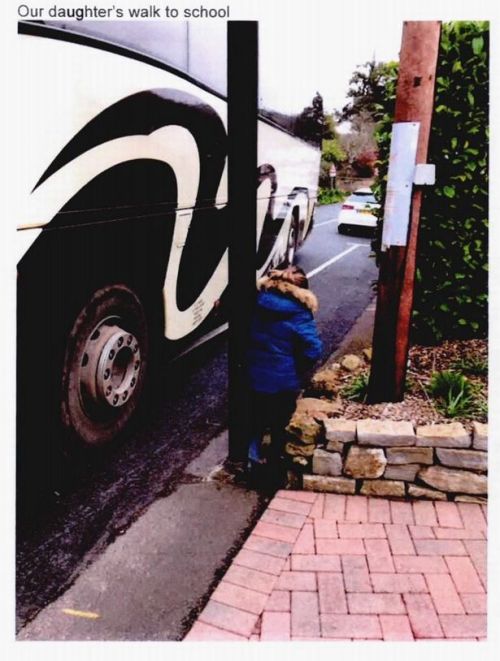
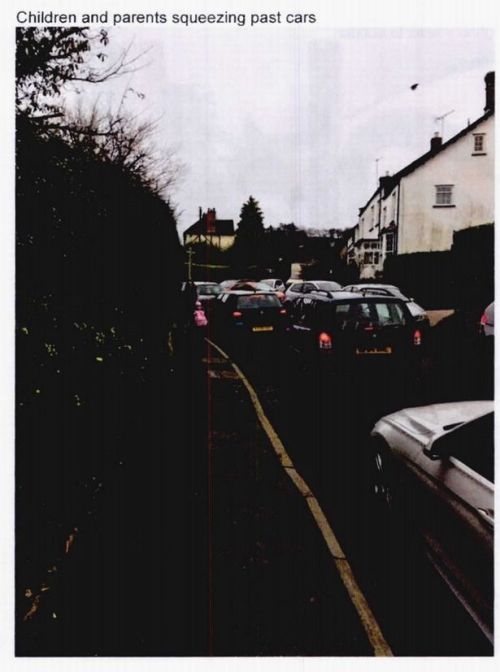
‘Say No to Sidford Business Park’ submission to planning inquiry

A picture is worth a thousand words. Words here:
https://www.devonlive.com/news/devon-news/objectors-outline-traffic-chaos-safety-2934450

Some of the pictures here:

Now Tories are not in control Swire decides Cranbrook is a development problem!

Today’s Midweek Herald. SO odd that Hugo has JUST discovered that Cranbrook development is a problem … still TiggerTories involved in planning will be glad to know he is NOW onside! Such a pity he wasn’t so vocal when Tories alone were in charge!

“Nuclear: Energy bills ‘used to subsidise submarines’ “

Not just energy bills in Devon … a large tranche of our money is being used to subsidise Hinkley C via our Local Enterprise Partnership.

“Energy bills in the UK are inflated partly because households are subsidising nuclear submarines, MPs have been told.

Experts think one government motive for backing civilian nuclear power is to cross-subsidise the defence industry.

They say nuclear power is so expensive that it should be scrapped in favour of much cheaper renewable energy.

Others argue that nuclear still plays a key role in keeping on the lights, so the military aspect is not significant.

But in evidence to MPs on the Business Select Committee, researchers from the University of Sussex said the government should be frank about the inter-dependence of the civilian nuclear programme and the nuclear defence industry.

Supply chain

Prof Andy Stirling from Sussex argues that one reason the government is willing to burden householders with the expense of nuclear energy is because it underpins the supply chain and skills base for firms such as Rolls Royce and Babcock that work on nuclear submarines.

He said: “It is clear that the costs of maintaining nuclear submarine capabilities are insupportable without parallel consumer-funded civil nuclear infrastructures. …

The government has declined to comment on the research, but a committee source told BBC News the researchers’ evidence appeared persuasive and well-researched.

The committee is expected to release the evidence in coming days as it prepares to discuss whether the UK really needs nuclear power for energy security.

The debate has taken on greater significance as the true costs of nuclear power have been revealed.

It was once forecast that nuclear energy would be too cheap to meter. But it’s clear now that bill-payers will give price support to the Hinkley Point C nuclear station at a cost of £92.50 per megawatt hour, compared with £55 for offshore wind.

Ministers expect that, before long, wind energy will operate without support.

Prof Stirling says the issue of nuclear inter-dependence is addressed openly in the US.

In 2017, the former US Energy Secretary Ernest Moniz (a nuclear scientist) said: “A strong domestic (nuclear) supply chain is needed to provide for Navy requirements. This has a very strong overlap with commercial nuclear energy.”

Prof Stirling told BBC News: “We need this sort of transparency in the UK.”

Catch-22

But the government faces a Catch-22 situation on this issue.

If it continues to decline to admit the inter-dependence of civil and military nuclear, it will stand accused of hiding a self-evident truth.
But if it accepts that decisions on nuclear power are influenced with half an eye on manufacturing jobs and nuclear deterrent, it will face resistance from consumer groups unwilling to cross-subsidise submarines.

The MPs’ hearing is timely, as the government will shortly publish an energy white paper outlining how the UK will supply electricity in a zero carbon economy.”

https://www.bbc.co.uk/news/science-environment-48509942

“Ministry repeats business rates blunder despite tightened oversight”

“The government has been left red-faced – and potentially £15m out of pocket – by repeating an error which last year cost it £36m and prompted major reforms to its administration of local government finance.

Last year, the government issued a correction to its top-ups and tariffs formula, after it led to a number of business rate pilots receiving more grant than they were entitled to.

Last week, Ministry of Housing, Communities and Local Government permanent secretary Melanie Dawes wrote to the National Audit Office (NAO) admitting that the incorrect formula was used again this year after officials failed to update it.

In her letter to Sir Amyas Morse, comptroller and auditor general at the NAO, Dawes said: “We are looking into the precise circumstances of how this happened.

“However, it originated from a failure to correct the guidance following last year’s error, rather than a new mistake in our computations.”

The error, which exaggerates the forecast benefit of participating in a pilot, appeared in the formula used to calculate section 31 grant payments to business rates pilots in the ministry’s NNDR1 guidance note.

Dawes admitted some local authorities – especially those participating in a pilot for the first time this year – may have based some element of their budget planning on the incorrect formula.

She said: “Given that the financial year has already started, and particularly since the error in the guidance repeats the same mistake as last year, the secretary of state has exceptionally decided to offer a goodwill payment to those councils who used the incorrect guidance for their financial planning in 2019-20, and where the consequences of doing so could be more difficult to mitigate.”

The cost of the payments is expected to be up to £15m, according to the permanent secretary’s letter.

Pilot authorities have been asked to contact the department by 21 June if they think they would qualify for a payment.

In her letter, Dawes said that the sums involved represent the equivalent of less than 0.2% of spending power for those affected.

Last year, the government admitted that the mistake led to 27 local authorities and the Greater London Authority being over-compensated by £36m in 2018/19.

At that time, former communities secretary Sajid Javid issued a direction to allow the department to ignore the rules and allow councils to keep the cash.

In a statement to Parliament, Javid said officials would “use the corrected methodology to calculate the Section 31 grant compensation due to authorities”.

However, the department omitted to update the original guidance note, and the error was repeated in this year’s NNDR1 form, which was issued to local authorities on 17 December.

The problem came to light when the correct figures for 2019/20 were issued to pilot local authorities in late April.

The repeat of the mistake is doubly embarrassing for the government because it carried out a thorough review of governance processes relating to business rates following the original incident. …”

Ministry repeats business rates blunder despite tightened oversight

Developer says traffic increase at potential Sidford business park would be “insignificant”

Owl says: if so few vehicles would use the business park – why build it!

https://www.devonlive.com/news/devon-news/objectors-outline-traffic-chaos-safety-2934450

How EDDC planners and Clinton Devon Estates justify the unjustifiable in Newton Poppleford

A dilemma for The Independent Group and their Tory supporters.

Summary: dangle a carrot (a doctor’s surgery), take away the carrot, put two houses in the place of the surgery/carrot, get planners to say it cannot now be refused even though the carrot has disappeared… although the carrot never actually existed anyway!

https://www.devonlive.com/news/devon-news/villagers-anger-understandable-over-broken-

BoJo: always check his promises …

“The proposal from Boris Johnson, the favourite in the Tory leadership contest, to ensure that every school in England gets at least £5,000 per pupil (see 10.51am) could amount to a spending increase of just £48.6m, or 0.1%, according to a report for Schools Week.”

… Schools Week analysis of provisional national funding formula data for next year found just 35 of 150 local authorities are due to be funded at less than £5,000 per pupil.

To increase per-pupil funding to £5,000 for the roughly 755,000 secondary pupils in those areas would cost just £48.6 million – the equivalent to just 0.1 per cent of the £43.5 billion the government will spend on schools in 2019-20.”

Johnson’s school funding pledge amounts to 0.1% increase

OK with you, Tory parents?

Young people: a home or a pension – take your pick

“Young people should be able to raid their pension pots early to help fund a deposit on their first home, a senior Government minister has argued.

Speaking this morning at think tank Policy Exchange, the secretary of State for housing James Brokenshire suggested that allowing savers to use pension savings as a deposit could help alleviate the financial barriers facing first-time buyers.

He said: ‘We should be looking at allowing an individual to use part of their pension pot as a deposit on a first-time home purchase.’

However, one pensions expert has labelled the idea as ‘bonkers’ and ‘dangerous’. …

… Tom Selby, senior analyst at AJ Bell, said: ‘This idea smacks of dangerous political short-termism.

‘While the housing market clearly has its problems, allowing people to raid their pensions is not a sensible answer.

‘Chronic undersaving for later life is one of the biggest challenges facing society today, so a proposal which encourages people to drain their pension pots risks making this problem even worse.’

Steven Cameron, pensions director at Aegon, added: ‘Saving for a house deposit and making provision for retirement are the two greatest financial challenges facing younger generations.

‘But the same money can’t be used twice and there’s a huge risk that offering early access to pensions to pay house deposits will be a far too tempting ‘bird in the hand’ offer.’ …”

https://www.dailymail.co.uk/money/mortgageshome/article-7098629/Plan-let-people-raid-pensions-home-deposit-branded-bonkers-experts.html?ito=1490