“‘Secret’ £75m Brexit contracts [to management consultants] facing investigation”

“The government has quietly awarded £75m of Brexit-related contracts to some of the world’s biggest consultancy firms, Sky News can reveal.

The deals, uncovered today for the first time, were never publicly announced.

They were given to nine high-profile international companies, including familiar names such as Deloitte, Accenture and PwC.

Each company received a contract worth between £5m and £10m.

Three of the contracts – together worth £25m – went to the American firms Bain, McKinsey and Boston Consulting.

All nine agreements are described as contracts for “the supply of Cabinet Office consultancy support for EU Exit”.

Each is due to run until 30 April 2019, but with the option for them to be renewed for a further year at the same cost.

Details of the plans were placed on an unobtrusive part of the government website just before Christmas, eight months after they had come into action.

But despite each including contracts running to more than 200 pages, crucial facts were removed – such as who in the government signed off the agreements and what work was actually involved.

In addition, the contracts were awarded under a framework titled “Health and Community” – but are, in fact, entirely focused upon preparations for Brexit.

That process, which restricted selection to companies which had already passed a “vetting process” all but ended the chance of smaller, Brexit-specific consultancies winning any of these contracts.

The chair of the public affairs committee, Meg Hillier, condemned the secrecy and delay as “ridiculous” and said the contracts would now be referred for investigation by the National Audit Office. …..

…. Joe Owen, association director of the Institute of Government, is researching Whitehall preparations for Brexit. He told me that “febrile politics” had changed the way in which information is being shared.

He said: “We’ve not had a huge amount of transparency with regards to much on Brexit over the last few years, particularly not the kind of preparations that are going on for no deal.

“There’s definitely been an increase in secrecy more generally across the civil service as a result of Brexit, just because of how politically difficult it’s been for many reasons.

“There are the divisions inside the country, the government, parliament, the cabinet and that’s kind of fed into this level of secrecy.”

Sky News has contacted all the companies involved. So far six have replied – all saying they could not comment on matters involving clients.

These are the details of the nine contracts, each for consultancy support:

:: The Boston Consulting Group – £10m

:: Bain & Company Inc. United Kingdom – £10m

:: McKinsey and Company, Inc. United Kingdom – £5m

:: Accenture (UK) Limited – £5m

:: Deloitte LLP – £10m

:: Ernst & Young LLP – £10m

:: Mott Macdonald Limited – £5m

:: PA Consulting Services Limited – £10m

:: Pricewaterhousecoopers LLP – £10m”

https://news.sky.com/story/secret-75m-brexit-contracts-facing-investigation-11603001

NHS: the REAL cost of privatisation

“The biggest emergencies-only hospital in Europe will take three years longer than expected to build and cost nearly twice its original budget.

The Midland Metropolitan Hospital was intended to treat 170,000 A&E patients a year from this summer but will not open until 2022. It will also cost at least £605 million, despite originally being priced at £350 million.

The problems were highlighted after Theresa May unveiled a ten-year strategy for the health service that included a £20 billion spending boost by 2023. The delay and increased costs were caused by the collapse a year ago of the construction company Carillion, halting building under the private finance initiative. The failure forced the NHS to implement contingency plans in 14 hospitals to maintain essential services delivered by Carillion.

The new 670-bed hospital in Smethwick, West Midlands, is meant to replace large parts of Sandwell Hospital and City Hospital, Birmingham. Carillion was paid £205 million towards the project before the firm’s collapse.

Toby Lewis, chief executive of the Sandwell and West Birmingham Hospitals NHS Trust, told its board last month that more than £400 million would be spent completing the hospital and keeping emergency services running at the Birmingham hospital.

The trust is paying Balfour Beatty, the construction company, £10 million to “winter-proof” the new hospital, which was left open to the elements. It is poised to seek bids from companies to complete the building, although some have already made clear that they are not interested.

John Spellar, Labour MP for Warley, said that outlay on maintaining existing hospital facilities had been cut in anticipation of the new building and that the delay was affecting recruitment and training. He said that civil servants were to blame for transferring too much risk to the private sector when they had “no concept what it actually means”.

A parliamentary inquiry into the failure of the multinational contractor with liabilities of almost £7 billion found that its “business model was an unsustainable dash for cash. The mystery is not that it collapsed but how it kept going for so long”.

Carillion was also building the Royal Liverpool Hospital, which features in a BBC Two documentary to be broadcast tomorrow. Aidan Kehoe, chief executive of the Royal Liverpool, tells the Hospitalprogramme: “I am very angry at the way Carillion have behaved. To leave us in this position is, I think, just unacceptable. These people are taking huge bonuses that they are not paying back and they are leaving the people waiting years more for a hospital. Serious questions have to be asked about the way Carillion have behaved.”

The £500 million Liverpool hospital building was due to be finished two years ago but is not expected to be completed until next year.

Jayne Halloran, an associate director at the Royal Liverpool and Broadgreen University Hospital Trust, said that it was expensive to maintain the partially built hospital, where 14 staff work full time turning taps on and off to stop legionella bacteria from growing. “It takes six days to complete that for the whole building,” Ms Halloran said.”

Source: Times, pay wall

“14 MPs turn up to discuss UN report on 14 million people living in poverty”

“The UN’s report on poverty in Britain is at risk of being swept under the carpet after just 14 MPs turned up to debate the issue in parliament yesterday.”

https://www.thelondoneconomic.com/news/14-mps-turn-up-to-discuss-un-report-on-14-million-people-living-in-poverty/08/01/

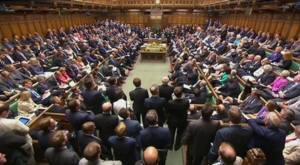
Meanwhile for the debate on increasing MPs pay:
“Sixty-four-metre ‘fatberg’ discovered in English seaside resort” [Sidmouth]

[The article has a particularly gruesome picture of the fatberg!]

Owl wonders if this sort of thing will increase or decrease when the luxury PegasusLife elderly housing facility replaces EDDC’s Knowle HQ!

“Eight weeks needed to remove mass of fat, oil and wet-wipes from sewer in Sidmouth, Devon.

A block of hardened fat, oil and wet-wipes longer than six double-decker buses has been discovered in a sewer metres from the sea in a popular Devon resort town.

It will take workers eight weeks to cut up and remove the 64-metre “fatberg” from the sewer beneath The Esplanade in Sidmouth.

South West Water is also planning to open a pop-up shop in the town to inform people about the unwanted visitor and to urge them not to “feed” fatbergs by pouring fat, oil, grease and wet-pipes into the system.

The company’s director of wastewater, Andrew Roantree, said: “It shows how this key environmental issue is not just facing the UK’s cities, but right here in our coastal towns.

“It is the largest discovered in our service history and it will take our sewer team around eight weeks to dissect this monster in exceptionally challenging work conditions.

“Thankfully it has been identified in good time with no risk to bathing waters. If you keep just one new year’s resolution this year, let it be to not pour fats, oil or grease down the drain, or flush wet-wipes down the loo. Put your pipes on a diet and don’t feed the fatberg.”

South West Water says a fatberg forms like a snowball – wet-wipes flushed down toilets congeal with fats, oil and grease, gradually forming a hard mass. The removal, which will be carried out by workers in full breathing apparatus, is due to begin next month but could be delayed if there is heavy rain.

Nearby businesses will not be affected by the removal and The Esplanade will remain fully accessible.

The fatberg was discovered during routine checks.”

https://www.theguardian.com/environment/2019/jan/08/sixty-four-metre-fatberg-discovered-in-english-seaside-resort-sidmouth-devon

“”England ‘needs millions of homes to solve housing crisis’ “

“Three million new social homes must be built in England over 20 years to solve the “housing crisis”, a report says.

Housing charity Shelter says upfront costs of £11bn a year could come from housing benefit savings by moving tenants from high-cost privately rented homes to social housing. … ”

https://www.bbc.co.uk/news/uk-england-46788530

“Andrew Lansley law that forced hospitals to compete could be axed”

Note: this 10-year plan does not tackle the crisis in social care nor the bigger crises of not having enough staff for either service.

[Andrew Lansley’s 2012 act made local GP groups “customers” to buy services from competing hospitals]

“Implementing the new ten-year plan could involve the reversal of market-based reforms introduced in 2012 by the former health secretary Andrew Lansley.

More than 100 local bodies would be merged under proposals to move away from internal health service competition and make parts of the NHS work more closely together.

The request for new laws by Simon Stevens, head of NHS England, sets the government up for a battle in the Commons. The reversal of the reforms is also likely to prove embarrassing for the Conservatives. Labour has already demanded an apology for a “bureaucratic disaster” that it says wasted billions.

The Health and Social Care Act 2012 made local GP groups “customers” to buy services from competing hospitals and other providers. It provoked opposition from health unions who said that it would fragment care. Senior Tories came to regard it as the coalition government’s biggest mistake.

Ministers will seek to present the changes as commonsense tidying up measures requested by the NHS. They hope that this will avoid a divisive political battle, but while opposition to privatisation was a key Labour objection to the act the party is unlikely to back a Conservative NHS reform.

In the ten-year plan Mr Stevens argues that there are too many NHS institutions working autonomously when they need to work together to join up care for patients. While arguing that his plan could be achieved in current structures, he said that changes to the law “would support more rapid progress”.

Matt Hancock, the health secretary, said: “We want to foster a culture of ambition and innovation in the way our health sector organises the services it delivers. I am prepared to make the changes necessary for this to become a reality, including changing the law.”

Jonathan Ashworth, the shadow health secretary, said: “The fact NHS bosses are now proposing significant changes to the Health and Social Care Act confirms what a wasteful, bureaucratic disaster it was in the first place.”

Source: The Times (paywall)

“370,000 More Families Hit By Tory Child Benefit Cuts, Institute For Fiscal Studies Reveals”

“The number of families hit by child benefit cuts has soared by 370,000 thanks to Tory ‘stealth’ tax changes, a leading think tank has revealed.

The Institute for Fiscal Studies found that George Osborne’s decision to freeze income eligibility thresholds will leave one in five families facing the loss of all or some of the payments.

Six years to the day since the former Chancellor introduced his austerity crackdown, the number of those affected has surged by a third, the IFS analysis discovered.

Labour’s John McDonnell pounced on the figures as proof of the continuing impact of Osborne’s cuts programme, telling HuffPost UK that it was further evidence for the need to back Labour’s Budget amendment on Tuesday to review child poverty and equality levels.

Child benefit was a ‘universal’ benefit until the Tories decided in 2012 to severely restrict eligibility to exclude any household with someone earning above £50,000 a year.

But the IFS study found that failing to increase the threshold in line with inflation – while increasing higher rate tax thresholds – has dragged many more middle income families into the cuts.

“For the first time, significant numbers of families without a higher-rate taxpayer will lose some Child Benefit,” it said.

Based on current earnings growth, it estimates that 60,000 families without anyone earning £50,000 will lose out in 2021–22, doubling to 120,000 such families in 2022–23.

Child benefit is currently worth £1,079 per year for the first child and £714 for each subsequent one.

The IFS said that in its first full financial year of operation (2013-14), the new policy meant that 13% of families with children, or around a million, lost at least some of the benefit as a result of the policy, with around 700,000 losing all of it.

In 2019-20, it estimates that the share of families with children who are affected will be 18%, or 1.4 million, of whom a million will have lost all of their entitlement.

“In other words, the number of families with children who are affected will have risen by about 36%, or 370,000, in just six years.

“What cannot be justified is to have an ever-increasing proportion of families exposed to the policy over time, with the increase determined by the rise in prices since 2013.

“The cumulative impact it has in raising taxes or reducing benefits by stealth can do nothing for trust in government….”

https://www.huffingtonpost.co.uk/entry/14-million-families-will-be-hit-by-tory-child-benefit-cuts-institute-for-fiscal-studies-reveals_uk_5c33d1e7e4b05d4e96bb243a

BREAKING NEWS: Seaton Mayor Peter Burrows resigns after “bringing the office into disrepute”

The audio file below is taken from tonight’s Seaton Town Council meeting where Mayor Peter Burrows resigns after saying he brought the office into disrepute with an “offensive” remark (since deleted) where he criticised a local (un-named) business using his official title.

Seaton Town Council had advertised this as a public meeting and as such “it could be filmed or recorded by broadcasters, the media or members of the public” and the statement is therefore legitimately in the public domain:

“Nearly 5,000 schools in England not given promised cash – union”

“England’s biggest teaching union has accused the government of breaking its promise to provide a modest cash boost to every school in England, claiming figures reveal that nearly 5,000 schools have received no extra funds or have even had their funding cut.

In the wake of mounting concern among teachers and parents about a school budget crisis, the education secretary, Damian Hinds, told MPs last year that a new national funding formula would guarantee each school “at least a small cash increase”, a pledge repeated by the prime minister in the Commons last May.

The National Education Union argued the offer was inadequate given the scale of the school funding squeeze, but its analysis of recent government figures subsequently revealed that 4,819 schools had either received no extra funds or had had their budget cut.

“This is yet another failure and another broken promise by government on school funding,” said Kevin Courtney, NEU joint general secretary. “The fact remains that schools were never going to manage on the money promised by government.

“However, headteachers, teachers, school staff and parents will be dismayed that even the meagre amounts of funds supposedly allocated to schools will not be received by everyone. Parents and school staff simply cannot trust what the government says on education funding.”

The NEU compared the schools block funding allocations for 2017-18 and 2018-19 and found that a quarter of primary schools (25%) and one in six secondary schools (17%) either received no cash increase or suffered an actual cut to their funding.

Responding to the NEU analysis, a Department for Education (DfE) spokesperson said that since 2017 the government had given every local authority more money for every pupil in every school in order to ensure fairer funding across the country.

“Government provides this money to local authorities and they have the freedom to work with schools to allocate their budgets in a way that best suits local needs,” the spokesperson said.

“While there is more money going into our schools than ever before, we do recognise the budgeting challenges schools face and that we are asking them to do more. That’s why we’re supporting schools and headteachers, and their local authorities, to make the most of every pound.”

According to the Institute for Fiscal Studies, total school spending per pupil in England has fallen by about 8% in real terms between 2009-10 and 2017-18. …”

https://www.theguardian.com/education/2019/jan/07/nearly-5000-schools-in-england-not-given-promised-cash-union

“Need to sign on? You’ll have to walk 24 miles to the jobcentre”

A lesson for all rural dwellers unlucky enough to lose a jobm

“Twenty-four miles there and back is one hell of a hike to your local jobcentre. But when Ray Taylor, 56, had his benefits cut for 13 weeks after illness meant he missed an appointment to sign on, he had no option but to get out his walking shoes. He doesn’t have friends with cars to give him a lift, and with no money coming in, he couldn’t pay the £7 bus fare from the small Cambridgeshire town of Ramsey to Huntingdon, where he is registered for benefits. And if he missed signing on again, he would be sanctioned again.

Taylor, a former electrician – he couldn’t afford to update his qualifications after being made redundant and going freelance – is remarkably stoical about what could be a weekly trek. “If you’ve got a 9 o’clock appointment, you have to set off in the early hours to make sure you get there,” he says. There have been “quite a few times” he has set off at two in the morning to avoid penalties for lateness. (“Sanctions” can involve benefits being reduced – or stopped entirely.)

A pre-dawn start in the pitch-black of rural Cambridgeshire with cars and farm lorries rumbling along pavement-less roads doesn’t sound all that safe. Taylor, who survived being homeless in Cambridge for seven years before being housed in Ramsey, smiles as his eyes stream from the cold. “There’ve been a few moments.” The police have picked him up a couple of times and taken him home to ensure his safety, he recalls.

Come the end of March, other Ramsey residents may have to embark on this trudge that is nearly the length of a marathon. That is because the No 30 bus that is the sole public transport link between Ramsey and Huntingdon is due to be cut. The only alternative for anyone without a car will be to beg lifts from friends or family, cycle or find the £40 round-trip taxi fare. It is an impossible sum for anyone on a low income, and even most working people couldn’t find it five days a week.

To experience the route Taylor has walked “oh, maybe 20 or 30 times”, we meet at the more civilised hour of 8am by the decorative wrought-iron bus shelter next to Ramsey’s clocktower. The night before, driving across Cambridgeshire, gusts of wind hurling rain across my windscreen, I begin to dread the walk to come. Morning, however, has dawned bright but chilly. Hoiking our rucksacks on our backs, we pull our hats down and head south out of town. We are accompanied by Steve Corney, the town council’s new mayor, and Jane Sills, the chair of the Ramsey Million Big Local residents group, which has campaigned for the past 18 months against the cutting of the No 30 bus.

“For the people here, the bus means everything,” says Corney over the noise of traffic streaming out of Ramsey. There are no big employers in the town, so there is a daily exodus. “It’s frustrating because when you see it, there’s a lot of people on it.” Corney notes too that housing development means Ramsey’s population of 8,000 is expanding.

We pick up the pace as we reach the edge of town, where Corney peels off. As we march past a long-abandoned RAF station, it is the isolation suffered by older people and teenagers in cut-off rural areas that is on Jane Sills’ mind. James Palmer, the mayor of the new Cambridgeshire and Peterborough combined authority, which is reviewing all the area’s bus routes, will visit Ramsey later this month, and Sills’ group of residents intends to lobby him hard. “He should know by now just how important it is for people on low incomes and for young people that they’re not trapped in a small town with their life chances inhibited,” she says.

Sills has a strong card up her sleeve. As well as marshalling a petition that gained more than 1,000 signatures – and secured a short-term stay of execution for the route – members of her group decided to use some of the Big Local Lottery money they had been awarded to strengthen their case. A report commissioned from the Campaign for Better Transport revealed that the local authority subsidy paid to the bus operator Stagecoach to run the No 30 bus is the lowest of any on the list of proposed route closures in Cambridgeshire.

The report also showed, Sills says, “how Ramsey already compares poorly to other parts of the county” in terms of its access to buses.

If Cambridgeshire’s long-term transport strategy is ratified later this year – it is the new Cambridgeshire and Peterborough combined authority, not Ramsey town council, that will set commissioning policy until 2031 – Ramsey will be cut off from the new “hub and spoke” public transport system. There will be no buses in or out at all.

Ramsey’s residents, of course, are not alone in their plight. The Campaign for Better Transport calculates that since 2010, councils in England and Wales have cut £182m – 45% – from the support they give to bus routes that would otherwise be unsustainable. Some areas have seen particularly harsh cuts: Somerset by 50%, Leicestershire by 72%, North Yorkshire by 81%. In the past year alone, according to the charity’s recent Buses in Crisis report, more than 300 routes have been reduced or withdrawn in England and Wales, and 3,347 since 2010.

“Whole areas are now transport deserts,” says the charity’s chief executive, Darren Shirley. “The people who are the most impacted are those who are most in need of public transport. Jobseekers who are reliant on public transport to get to work. People in poor health who need it to get to hospital.” Buses, he points out, are the only form of transport in England not to have a long-term investment strategy. …”

https://www.theguardian.com/uk-news/2019/jan/07/need-to-sign-on-youll-have-to-walk-24-miles-to-jobcentre

“England to Build Smallest Number of New Homes on Record”

“Homebuilding in England is set to drop for a fifth straight decade to the lowest number since World War II, according to the Centre for Policy Studies. That’s despite government pledges to step up construction to ease a chronic shortage that’s pushed prices out of the reach of many. Just 1.3 million new dwellings will be built in the 10 years through 2019, less than half the 3 million constructed in the 1960s. …”

https://www.bloomberg.com/news/articles/2019-01-02/england-to-build-smallest-number-of-new-homes-on-record-chart

EDA Councillor calls out Highways Department for inconsistency in Sidford

“‘Inconsistent’ highways bosses have been slammed for supporting a plan to build 40 homes when they refused to support one house being built just down the road.

District Councillor Marianne Rixson raised concerns about two cases where she claims the county council’s highways department’s decision making had been ‘inconsistent’.

Highways objected to an application to build one home in Sidford Road because the proposed development was next to the A375 Sidford Road, which connects to Sidmouth and Honiton, as well as to the A3052 Exeter to Lyme Regis at Sidford Cross at a staggered traffic light junction. At peak times, the signalled junction can cause long tailbacks past the new home.

However, Highways supported an application to build 40 retirement flats at Green Close in Sidford, just 0.2 miles away..

In its report Highways said the development at Green Close would ‘potentially’ generate a slight increase in traffic compared to the site’s former use as a care home.

Cllr Rixson said the South Lawn access to the development ‘in effect is single track because of parked cars’.

“There will be 40 apartments with 24 car parking spaces. These additional vehicles will be entering and exiting via South Lawn and this could cause tailbacks at the junction of South Lawn with the A375, yet Highways raised no objections,” she said.

“I really cannot understand why Highways raise no objections to major developments yet for a single dwelling produce arguments which would be applicable to all three of the applications listed below.

“The Herald attended the meeting on December 4 and heard East Devon District Council members being sympathetic toward my objections to the change of access but stated that, as highways had not objected, it would not succeed at appeal.”

A Devon County Council spokesman said: “Despite the close proximity of the two developments the implications of the two schemes on the highways network were very different, site specific and not comparable. When as the highways authority we give our observations regarding developments we follow the National Planning Policy Framework, the National Planning Policy Guidance and the Manual for Streets to ensure that our recommendations are consistent as possible.”

https://www.sidmouthherald.co.uk/news/highway-bosses-slammed-for-decisions-at-sidmouth-1-5839296

Tory councillor says you can’t try Vegan-uary in Shropshire!

And these people are running councils! Not to mention the conflict of interest as he “comes from a farming background”!

“A senior Tory councillor in Shropshire has called for adverts promoting veganism on buses to be removed because of the county’s agricultural tradition. Steve Charmley, the deputy council leader, posted a series of tweets about posters encouraging commuters to try ‘Veganuary’ – an animal product-free month – which were paid for by Shropshire Veggies and Vegans society.

He claimed that bus company Arriva was being inadvertently used to promote the “fake news of vegangalists” and called on bosses to meet him to discuss the issue. …”

https://inews.co.uk/news/uk/senior-tory-councillor-demands-vegan-adverts-be-removed-from-buses/

Business rates killing high street shops

“Leading retailers called for a major overhaul of business rates yesterday after Next suffered a sharp slump in store sales in the run up to Christmas.

With pressure mounting on ministers to reform the outdated tax, fashion chain Next said sales in its 500-plus stores fell 9.2 per cent over the crucial festive period.

In a clear sign of how shopping habits have shifted, the company said online sales soared 15.2 per cent in the same period, meaning overall revenues were up. …”

https://www.dailymail.co.uk/news/article-6556311/Retailers-demand-major-overhaul-business-rates-Christmas-sales-slump-9-2-cent.html

“UK CEOs make more in first three days of 2019 than worker’s annual salary”

“… Calculations by the High Pay Centre thinktank and the professional HR body the Chartered Institute of Personnel and Development (CIPD) show top executives are earning 133 times more than the average worker, at a rate of around £1,020 per hour or £3.9m annually. That’s up 11% compared to a year earlier.

It means CEOs working average 12-hour days would only have to clock in for 29 hours in 2019 to earn the median £29,574 of British staff.

The figures have prompted criticism from both unions and shareholder groups. …”

https://www.theguardian.com/business/2019/jan/04/uk-ceos-make-more-in-first-three-days-of-2019-than-workers-annual-salary

East Devon Alliance – action AND positivity !

As published in Express and Echo today) (rejected by Midweek Herald)

“Former Conservative District Councillor, Mrs Liverton has recently (in the local press) accused East Devon Alliance (EDA) Independent Councillors of “constant negativity” and lack of positive action.

• Was it (and is it) “negative” to campaign for greater transparency, democracy and accountability in local government as members of EDA and other Independents are constantly doing? This is clearly necessary and was done by other local groups supported by EDA during the EDDC office re-location affair when the District Council repeatedly withheld information from the public and was twice castigated by the Information Commissioner.

• Was it (and is it) “negative” to campaign against the closure of hospital beds (and local hospitals) across the district? Again, this was done and is being done by EDA councillors and other Independents at both district and county level and has been supported by many concerned members of the public.

• And is it now “negative” to campaign for more action against the huge rise in poverty and homelessness in this country as recently revealed by the United Nations Observer and as EDA Councillors Cathy Gardner and Marianne Rixson did at Full Council recently*?

• And is it “negative” to campaign, (as members and councillors of EDA are doing), for a National Park for “Wessex” to include the AONB (Area of Outstanding Natural Beauty) of East Devon which currently lacks proper protection against inappropriate development?

Thanks to you, the voters, EDA is a positive new force at EDDC. Meetings are open to the public. Come and see for yourself in 2019, at the new Honiton offices you are paying for (with a long-term loan).

* The attached photo shows how the EDA motion brought complete cross-party unity, unheard of in Mrs Liverton’s time, to the Full Council recently.

Mike Temple, Sidmouth”

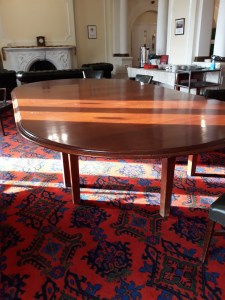
Mahogany tables …..

Story moving to regional media – watch this space.

If any town or parish council or local charity WAS or WAS NOT contacted about this or any other item for sale, Owl would be VERY interested to hear details!

Allegedly sold to Councillor Philip Skinner when officers and councillors given first dibs at Knowle furniture surplus to requirements – 22 ft extending mahogany board room table (only bid):
£50

Meanwhile on E-bay bay today:

Buy it now price
£12,000 mahogany board room table
https://www.ebay.co.uk/itm/Very-Large-Antique-Library-Table-Mahogany-Victorian-Boardroom-c-1870/323604161547

Buy it now price
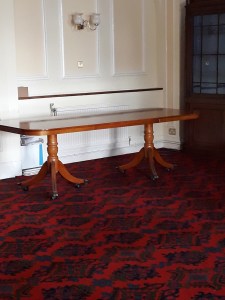
Modern plain wooden board room table, well-used 7 m
£600
https://www.ebay.co.uk/itm/Boardroom-table-meeting-table-wood-1-5m-7m/401613530214?hash=item5d82082466:g:DzYAAOSwPR9bu0La

East Devon average house price more than £50,000 higher than average

“A first-time buyer in East Devon is expected to pay an average of £220,486 to make their first step on the property ladder as part of an overall price increase of 1.6 per cent.

East Devon has seen property values increase by 3.6 per cent over the last 12 months and data from the Office of National Statistics shows the average property price in the area was £286,528. This price is over £50,000 higher than the UK average.

According to data from Rightmove, the average house price in Sidmouth was £358,370 which is a nine per cent increase since 2015.

The area has a similar average price to Ottery St Mary at £351,814 but is more expensive than Branscombe.

In the UK, house prices have increased by 3.5 per cent in 2018 and the average property owner in East Devon has seen their house value jump by £53,000 in the last five years.”

https://www.sidmouthherald.co.uk/news/east-devon-house-price-rise-1-5837746