Not heavily publicised, picked up off Twitter. One rule of scrutiny: make it accessible to all …!
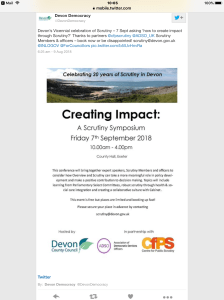

Not heavily publicised, picked up off Twitter. One rule of scrutiny: make it accessible to all …!
Owl says: children – not adults, children. How low we have sunk. But no doubt still even further to sink.
“A “silent crisis” in the care system has left more than 13,000 children with unacceptable levels of support from local authorities, an analysis warns.
Tens of thousands more are being looked after by English councils that are deemed to be in need of improvement, with warnings that a £3bn shortfall in the budget for children’s services will emerge by 2025. Anne Longfield, the children’s commissioner for England, said the findings cast “a stark spotlight on the inadequacies of systems that are meant to be in place to support our most vulnerable children”.
Vulnerable children are on the new frontline of a crisis in social care
The analysis by the Social Market Foundation thinktank examined the treatment of “looked-after children”, who have been taken into care. It found that over the past three years, about 47,000 of the children were with local authorities deemed by Ofsted inspectors to have inadequate children’s services or services that require improvement. The figure represents almost two-thirds of all children in care. There were 13,790 in inadequate authorities.
Local councils insisted that those deemed to need improvement in some way should not be seen as failing. However, only 36% of local authorities were classed as “good” and only 2% were rated as “outstanding”.
The study warns that children in care have educational outcomes that are way below average and are significantly over-represented in the criminal justice system. Only 14% achieved five A*-C GCSEs, including maths and English, in 2015. The national average is 55%. Looked-after children are five times more likely to be excluded from school, while 39% of children in secure training centres had been in care. …”
“In May, the Government (Ministry of Housing, Communities and Local Government) held a consultation on revisions to the National Planning Policy Framework – the headline planning policy document from which all other planning policy stems.
The Institute responded to the consultation, specifically commenting on the very opaque legislation / guidance surrounding the requirements for consultation in planning and development.
Despite growing concern about public disaffection in the planning system, the guidance contained within the original NPPF was very vague: while developers were encouraged to engage and the benefits are described, there was nothing in law to require developers to consult local people before submitting a planning application.
The revised NPPF has now been published and we were disappointed to see that very little has changed in the requirement to consult.
Engagement is still only ‘encouraged’; one of the few changes being that it has been extended from solely statutory, to both statutory and non-statutory consultees.
However, the list of information requirements that local authorities must make of developers has been reduced from ‘proportionate to the nature and scale of development proposals’ to ‘kept to the minimum needed to make decisions’. To view the exact changes between the two documents, click here:
While the legal requirement for developers to consult remains opaque, the notion that community involvement can benefit planning decisions is unequivocal.
Planning is ultimately about people: whether a local authority-run strategic plan or a private sector-led development proposal, change to the built environment impacts on communities. While it is generally believed that those proposing changes should involve local residents as a courtesy, additionally planners and developers have much to benefit from involving local people.
Consultation provides the opportunity to glean information and ideas from a local community. This might include knowledge of local history and which has the potential to enrich a scheme, otherwise unknown social issues which might have delayed the process, and the needs and aspirations of the community which may be met through the new development. With local input, proposals can be enriched and finely tuned to a specific neighbourhood, creating a unique scheme well suited to its location.
The local community, too, can benefit: community involvement can promote social cohesion, strengthen individual groups within it and create a shared legacy.
Following local dialogue at an early stage and having had proposals either challenged or welcomed, a developer has a greater chance of building local support for a proposed scheme. And a well-run consultation can build a trusting and mutually cooperative relationship between the developer and the community, which can minimise the potential for conflict and thereby remove risk in the process.
While tCI is disappointed by the lack of commitment to consultation in the revised NPPF, we are encouraged that policy might ultimately change following the Raynsford Review, a review of the planning system which has been commissioned by the Town and Country Planning Association and makes community participation a high priority. To view tCI ‘s contribution to the Review’s Interim Report, click here:
“MPs who backed calls for looser laws around vaping are attacked over their links to the industry.
MPs who called for restrictions on e-cigarettes to be relaxed have been criticised over their links to the vaping industry.
In a controversial report, they said bans on vaping in public places – such as in hospitals and restaurants or on buses – should be considered.
The report, by the Commons science and technology committee, also said that ministers should carry out a review to make it easier to get the devices on the prescription.
MPs who called for restrictions on e-cigarettes to be relaxed have been criticised over their links to the vaping industry.
It emerged yesterday that the committee’s chairman, Norman Lamb, spoke at an industry forum held by the UK Vaping Industry Association. The forum focused on how to boost the market for e-cigarettes.
He was also photographed next to John Dunne, the association’s director, at the launch of another report and told the audience: ‘I was horrified when the EU went down the route of health regulation [of vaping products]… I thought it was a complete own goal.’
Professor Simon Capewell, of Liverpool University, said: ‘The committee has concentrated solely on ‘experts’ who are e-cig champions.’
Mr Lamb said yesterday that it was unfair to say the committee has a pro-vaping bias.
‘I reject this assertion,’ he said. ‘The committee carefully considered evidence from more than 90 organisations including a range of academics, NHS professionals, NICE [the clinical guidelines watchdog], and government departments to inform the report.
‘It is my responsibility as chair of this committee to speak to a range of organisations and individuals about our work.’ “
“The Court of Appeal has issued an order granting campaign group 999 Call for the NHS permission to appeal the ruling against their Judicial Review of the proposed payment mechanism in NHS England’s Accountable Care Organisation contract.
The Accountable Care Organisation Contract (now rebranded by NHS England as the Integrated Care Provider contract) proposes that healthcare providers are not paid per treatment, but by a ‘Whole Population Annual Payment’, which is a set amount for the provision of named services during a defined period. This, 999 Call for the NHS argues, unlawfully shifts the risk of there being an underestimate of patient numbers from the commissioner to the provider, and endangers service standards.
In April, the High Court ruled against the campaign group’s legal challenge to NHS England’s Accountable Care Organisation contract – but the group and their solicitors at Leigh Day and barristers at Landmark Chambers found the ruling so flawed that they immediately applied for permission to appeal.
Although fully aware of this, on Friday 3rd August – the day Parliament and the Courts went on holiday – NHS England started a public consultation on the Accountable Care Organisation contract – now renamed the Integrated Provider Organisation contract.
The consultation document asserts that the payment mechanism in the ACO/ICP contract is lawful, because:
“The High Court has now decided the two judicial reviews in NHS England’s favour.”
Steve Carne, speaking for 999 Call for the NHS, said
“It beggars belief that NHS England is consulting on a contract that may not even be lawful. And a lot of public funds is being spent on developing the ACO model – including on the public consultation. We are very pleased that 3 judges from the Court of Appeal will have time to consider the issues properly. We shall shortly issue our stage 5 Crowd Justice appeal for £18k to cover the costs of the Appeal.
We are so grateful to all the campaigners and members of the public who have made it possible for us to challenge the lawfulness of NHS England’s attempt to shoehorn the NHS into an imitation of the USA’s Medicare/Medicaid system.
We will not see our NHS reduced to limited state-funded health care for people who can’t afford private health insurance.”
Jo Land, one of the original Darlo Mums when 999 Call for the NHS led the People’s March for the NHS from Jarrow to London, added,
“All along we have been warning about the shrinkage of the NHS into a service that betrays the core principle of #NHS4All – a health service that provides the full range of appropriate health care to everyone with a clinical need for it, free at the point of use.
Since we first started work two years ago on bringing this judicial review, there have been more and more examples of restrictions and denials of NHS care, and the consequent growth of a two tier system – private for those who can afford it, and an increasingly limited NHS for the rest of us.”
Jenny Shepherd said
“NHS England’s rebranded Accountable Care Organisation contract consultation is a specious attempt to meet the requirement to consult on a significant change to NHS and social care services.
We don’t support the marketisation of the NHS that created the purchaser/provider split and requires contracts for the purchase and provision of services.
Integration of NHS and social care services, in order to provide a more straightforward process for patients with multiple ailments, is not aided by a system that essentially continues NHS fragmentation.
This new proposed contract is a complex lead provider contract that creates confusion over the respective roles of commissioner and provider. It requires multiple subcontracts that are likely to need constant wasteful renegotiation and change over the duration of the lead provider contract. This is just another form of fragmentation, waste and dysfunctionality.
The way to integrate the NHS and social care is through legislation to abolish the purchaser/provider split and contracting; put social care on the same footing as the NHS as a fully publicly funded and provided service that is free at the point of use; and remove the market and non-NHS bodies from the NHS.
Such legislation already exists in the shape of the NHS Reinstatement Bill.”
The campaign team say they are determined in renewing the fight to stop and reverse Accountable Care. Whether rebranded as Integrated Care or not, they see evidence that it is the same attempt to shoehorn the NHS into a limited role in a two tier healthcare system that feeds the interests of profiteering private companies.
Steven Carne emphasised,
“It is vital that we defend the core NHS principle of providing the full range of appropriate treatments to everyone with a clinical need for them.”
999 Call for the NHS hope the 2 day appeal in London will happen before the end of the year. The Appeal will consider all seven grounds laid out in the campaign group’s application – with capped costs.
Details on the first instance judgment can be found here:
http://www.landmarkchambers.co.uk/news.aspx?id=5630
and the judgment itself here:
http://www.bailii.org/ew/cases/EWHC/Admin/2018/1067.html
David Lock QC and Leon Glenister represent 999 Call for the NHS, instructed by Rowan Smith and Anna Dews at Leigh Day.
“A property developer who launched a £13m legal bid against Northumberland County Council says it has been banned from sharing vital information with council members.
Newcastle-based Lugano Group was due to build the Dissington Garden Village – commissioned by Northumberland CC when Labour was in power in the authority – in a move that would create 2,000 homes north of Ponteland,
But since the Conservatives gained control of the area in last year’s local elections, the Dissington project has been put under review, potentially leaving the developer with significant costs reportedly totalling over £13,305,000.
The property firm this week claimed it had “no option” but to take the claim to the High Court against the council itself, leader Peter Jackson, Cllr John Riddle, and chief executive Daljit Lally.
Lugano has said that the council’s solicitors have disclosed the report into the contents of “several anonymous letters of complaints” regarding the conduct of Cllr Jackson and documents associated with that report— however, the information was disclosed 12 weeks after the request, and Northumberland only disclosed the documents subject to confidentiality provisions that bind Lugano.
In a letter to Northumberland CC dated 13 August, Lugano said the council’s solicitors had refused to provide confirmation the key pieces of information, noting that the lawyers are keeping information from council members confidential.
The property developer said that the only “reasonable inference” that can be drawn from the solicitors’ reluctance to disclose the information is that the council would attempt to sue Lugano if copies of the report were provided to the cabinet committee, and those tasked with reviewing the decision to indemnify the legal costs that will incur in defending Lugano’s proceedings.
“We strongly disagree with the council’s solicitors’ comment that they would have a cause of action against Lugano if we were to disclose the report and documents,” the letter said.
In a statement, Northumberland County Council denied all allegations, labelling them “inappropriate, untrue, and defamatory.”
A spokesperson added: “We are aware of further correspondence from the Lugano Group, and continue to take legal advice in this regard.
“As previously stated, we believe that the council has acted lawfully and reasonably throughout this process. We continue to work with Lugano on their live planning application for Dissington Garden Village.”
“The Department of Work and Pensions (DWP) has been forced to release updated Employment and Support Allowance (ESA) mortality statistics, in response to a Freedom of Information request from disability campaigner Gail Ward.
The shocking statistics reveal that 111,450 ESA claims were closed following the death of claimants between March 2014 to February 2017.
However, the DWP stress that “no causal effect between the benefit and the number of people who died should be assumed from these figures”.
This is because the Department “does not hold information on the reason for death”, meaning they cannot be directly linked to any benefit problems faced by those claimants or whether some of these people had died after wrongly being found “fit for work”.
The DWP has since been urged to update these statistics to include individuals who flowed off ESA after being found “fit for work” and who died soon after this time.
The data also shows that more than 8,000 Incapacity Benefit and Severe Disability Allowance claimants died over the same period.
Gail Ward told Welfare Weekly: “The fact the DWP know that disabled people are dying in such large numbers and refuse to adjust policy to reduce the stress on claimants and make sure the right outcome is 100% all the time, and with Universal Credit coming with such strict criteria, doesn’t bode well for the future for the disabled community”.
https://welfareweekly.com/dwp-forced-to-admit-more-than-111000-benefit-deaths/
DCC leader John Hart has gone on record as saying two unitary councils for two different parts of Devon can never happen, since however you split the county there would always be a poorer authority and a richer one.
Owl has challenged this idea citing “Greater Exeter” as a quasi-unitary authority by stealth already.
https://eastdevonwatch.org/2018/05/18/is-one-devon-unitary-council-being-created-by-stealth/
However, Dorset has just been split in two with two councils with very different profiles: a largely income-rich urban east and a more rural west.
It seems (after the Torbay debacle and continuing austerity cuts) that ALL councils are now poor, so does his argument still hold water – or is it now a leaky bucket?
Would a change result in savings that could go to front-line services? If so, what is the rationale for the status-quo?
Well, of course, it would mean fewer councillors …..!
During the last few turbulent years Torbay elected a super-Mayor, had a referendum to stop having a super-Mayor, its Tories split, split again, then split again and recently it was suggested by councillors that it should be subsumed back into Devon County Council. Not sure DCC will want to welcome it with open arms …..
“Torbay council has called an immediate halt to non-urgent spending and stripped its services back to the statutory minimum because of financial pressures.
The Conservative-run council ordered the freeze after its budget report for the first quarter forecast an overspend of more than £2.8 million by the end of the year, which it attributed to a substantial increase in the number of children being looked after.
Steve Parrock, the chief executive, told councillors: “Even if an activity or contract is budgeted for, the task or expenditure may be postponed or cancelled if the work is deemed not urgent by the chief finance officer or myself.”
He added that the Devonshire council faced “significant financial challenges due to government funding cuts and increasing demands, particularly in social care”.
Labour called it a crisis that had arisen because of cuts to local authority funding. Andrew Gwynne, the shadow communities and local government secretary, urged the government to “finally wake up to the consequences of their austerity programme”.
The Ministry of Housing, Communities and Local Government said: “We are providing local authorities with £90.7 billion over the next two years to meet the needs of their residents.
“We are also giving them the power to retain the growth in business rates income and are working with local government to develop a funding system for the future based on the needs of different areas.”
Northamptonshire county council recently approved major cuts to jobs and services to tackle a £70 million shortfall and continues to be supervised by government commissioners.
East Sussex and Somerset county councils have warned that they could run out of money in the next two to three years, and auditors have said that Lancashire county council’s financial position is at a “tipping point”.”
https://www.thetimes.co.uk/article/torbay-council-stops-spending-to-tackle-2-8m-shortfall-p660szvvj
“A house builder is checking wardrobe mirrors at a new development after one fell and ‘exploded’ near to where a baby normally sleeps.
Jennie and Joe Adams claim full-length wardrobe mirrors were ‘stuck on with tape’ at their new home in Gorebridge, Midlothian.
As a result, they say one of the mirrors fell off and crashed to the floor with a massive bang, leaving shards of glass everywhere. …
A spokeswoman for Taylor Wimpey East Scotland said: ‘We are very sorry to learn about the situation at our Harvieston Park development, and we have carried out a full investigation in conjunction with our wardrobe door installer to understand the circumstances.
‘We have apologised to the family involved and we have offered our assistance to resolve this matter for them.
‘As an additional precaution, and to provide comfort to other homeowners living at the development, we will conduct additional checks on similarly fitted mirrored wardrobe doors that could be affected to make sure this issue does not happen again.’
“Thousands of wealthy families are taking advantage of a taxpayer scheme designed to help struggling first-time buyers get on the housing ladder.
More than 6,700 households with incomes over £100,000 have bought homes using Help to Buy, according to the government’s own figures.
The scheme provides taxpayer cash to people seeking a mortgage. But despite its original aim to help people who could not afford big deposits, nearly one in 20 households with support have six-figure incomes.
And families with incomes of £50,000 or more have now received 40 per cent of loans, according to the report by the Ministry of Housing, Communities and Local Government.
Of the families who used the scheme, 136,700 were first-time buyers. A fifth of families using the scheme were not first-time buyers.
There is no maximum income on the Help to Buy scheme, which applies to new-build homes.
The scheme allows house hunters to purchase new-builds worth up to £600,000 using deposits of only 5pc – or £30,000.
The Government loans up to another 20pc interest-free for five years – or £120,000. In London, the taxpayer loan can reach 40pc of the value of the property – or £240,000.
When the house is sold, the government takes the same proportion of the sale price. If it goes up, the government makes money. If it goes down, the taxpayer makes a loss.
Campbell Robb, Joseph Rowntree Foundation chief executive, said a lack of cash invested in affordable housing meant more pressure on families forced to rent.
A government spokesman said: ‘The majority of those using our Help to Buy Equity Loan scheme had household incomes of £50,000 or less.’ “
Owl reported all these cases as the happened but it is useful to see them all in one place.
Consultation is going to have to mean consultation!
Four JR judgments in fifteen days with profound implications for public consultations! Almost every current public consultation – or those under preparation might be affected by one or more of these important judgments.
Owl says: The breath-taking brazenness of it is so shocking.
“Former Carillion boss Mark Davies has been appointed as the managing director for the HS2 joint venture between Balfour Beatty and VINCI.
The project is one of the world’s largest construction projects with billions of pounds-worth of contracts put up for the first phase between West Midlands and London.
Davies joined Carillion in 2008 and rose to managing director of its UK Infrastructure business until the firm went bust in January 2018.
The liquidation cost hundreds of jobs and was the most drastic procedure in UK insolvency law, with liabilities of almost £7 billion.
MPs claimed the demise was down to “recklessness, hubris & greed”, with directors focusing on bonus pay-outs to senior executives even as the firm teetered on the brink of collapse.
But that hasn’t stopped Davies heading up contracts for Lot N1 and N2 of the HS2 project, between the Long Itchington Wood Green tunnel to Delta Junction / Birmingham Spur and from the Delta Junction to the West Coast Main Line tie-in.
Combined, these two contracts are worth approximately £2.5 billion.
The joint venture is also currently bidding for further railways systems packages and Old Oak Common station, together valued at £3.8 billion.”
https://www.thelondoneconomic.com/news/former-carillion-boss-takes-reins-of-uks-hs2-project/15/08/
Amongst other things, our CEO “misplaced” 6,000 voters by using inadequate means of registering them and had to explain himself (not terribly well in Owl’s opinion) to a Parliamentary committee:
“A chief executive who was suspended over failures in the running of the 2017 general election process has left by mutual consent.
John Sellgren was suspended from his post at Newcastle-under-Lyme Borough Council in November 2017 after a review by Andrew Scallon, of the Association of Electoral Administrators, which found that more than 500 postal voters were disenfranchised, and close to 1,000 potential electors not included on the register.
A statement from the council on Sellgren’s departure said: “We would like to place on record our thanks for John’s efforts during his seven years with us. The council recently had its first all-out elections and the new administration has an ambitious manifesto and many significant projects to deliver in the years ahead.
“With this in mind the authority will now consider what management leadership arrangements to put in place to support this programme.”
Sellgren said: “I have enjoyed my time at Newcastle and send my best wishes to the dedicated team of staff and partners with whom it has been a pleasure to have worked.”
The council said it wanted to point out that there had been no additional payments made to Mr Sellgren.
Labour’s Paul Farrelly held the Newcastle-under-Lyme seat by 30 votes with 21,124 to his Conservative rival’s 21,094.
The Scallon report was commissioned shortly after the election when claims were made that some students at Keele University and postal voters were unable to vote despite following the correct procedures.
Some said they were turned away from polling stations despite having polling cards with them, and others who said they had registered to vote by the deadline were turned away for not having provided extra information required.
Scallon’s report said: “Human error and judgement and a lack of knowledge were responsible for the things that went wrong and led to the disenfranchisement of a significant number of people, raising questions about the mandate of the candidate declared elected as Newcastle-under-Lyme’s member of Parliament.”
He noted inadequate performance by Mr Sellgren (as acting returning officer/electoral registration officer) and consultants, worsened by a lack of experience among elections office staff and over-reliance on a software system, which was not properly managed.”
It can be done.
“New Zealand’s parliament has banned many foreigners from buying existing homes in the country – a move aimed at making properties more affordable.
The ban only applies to non-residents. Australians and Singaporeans are exempt because of free-trade deals.
New Zealand is facing a housing affordability crisis which has left home ownership out of reach for many.
Low interest rates, limited housing stock and immigration have driven up prices in recent years.
Is it a total ban?
No, only non-residents are affected by the Overseas Investment Amendment Bill, which was passed in a 63-57 vote on Wednesday.
They are now banned from purchasing most types of homes – but they will be able to make limited investments in new apartments in large developments.
Foreigners with residency status in New Zealand – as well as non-resident Australian and Singaporean nationals – are not affected by the ban….”
“Concerns have been raised that plans for an online portal for consultation on the vision for Exmouth seafront could leave 30 per cent of the town unable to have their say.
Hemingway Designs has been tasked with coming up with a vision for ‘phase three’ of the Exmouth seafront regeneration scheme and it was revealed at a town council meeting the seaside specialists will soon be launching an internet consultation website.
At the council’s August meeting, concerns were raised that if this was the only form of consultation, nearly a third of residents in Exmouth would be left unable to have their say.
East Devon District Council (EDDC) has since said there will be hard copies available for those without access to computers.
Speaking at the meeting, cllr Lynne Elson said: “My concern is that the majority of comments will be through the online portal.
“More than 30 per cent of residents in Exmouth don’t have access to online and if they do as suggested by EDDC and ‘go to the library’ they will have to pay as they will exceed the time allowed.”
Cllr Tim Dumper added: “We do need other ways of consulting.
“In the past East Devon (district council) hasn’t always covered itself in glory when it comes to consultation. “This time things are going very well.
“I wouldn’t like to let those 30 per cent or so down. Particularly involving residents who feel very strongly about our seafront and I think it would be wrong not to involve them fully in any consultation.”
A spokeswoman for EDDC said: “Hemingway Design will shortly be launching their survey to hear people’s views and ideas for this piece of Devon’s seaside.
“It will be easy to complete as you can do it online through the portal that Hemingway Design is setting up.
“When the survey is launched if you need access to a computer then you will be able to use the ones that we have in Exmouth Town Hall reception for free or paper copies will, of course, be available.
“The survey is being finalised at the moment and will be available soon.
“There will be an announcement to that effect.”
“The Government’s long awaited social housing green paper has concentrated on improving relations between residents’ and landlords but has disappointed councils by offering no new powers to support house building.
Among the main proposals in A new deal for social housing are publication of key performance indicators to allow residents to compare landlords, a revived stock transfer programme, a right-to-buy exercisable in stages and more effective resolution of complaints.
Judith Blake, the Local Government Association’s housing spokesperson, said: “This green paper is a step towards delivering more social homes but it is only a small step, compared with the huge and immediate need for more genuinely affordable homes.
“The Government must go beyond the limited measures announced so far, scrap the housing borrowing cap, and enable all councils, across the country, to borrow to build once more.”
National Housing Federation chief executive David Orr – who represents housing associations – said: “Our members fully share the Government’s commitment to ensuring tenants get the quality services they need – and that they can hold their landlords to account if they don’t.”
He added: “Without significant new investment in the building of more social housing, it is very hard to see how it can be a safety net and springboard for all the people who desperately need it.” …”
“Firefighters are tackling a huge blaze involving “300 to 400” hay bales near Exeter.
Fire crews were called to a field near Greendale Business Park in Woodbury Salterton at about 04:45.
Devon and Somerset Fire and Rescue Service said “approximately 300 to 400 large straw bales” were on fire.
They remain at the scene and are trying to stop the blaze from spreading.
Appliances in the lanes surrounding so may be tricky driving around Woodbury/Woodbury Salterton.”
“Pay for chief executives at Britain’s largest listed companies rose more than six times faster than wages in the wider workforce last year. The average boss’s pay packet hit £3.9m. A worker on a median salary of £23,474 would have to work 167 years to earn that.
Chief executive pay at FTSE 100 businesses surged 11% while average worker earnings failed to keep pace with inflation, rising just 1.7%, according to the High Pay Centre’s annual review. The report comes after years of workers’ pay being squeezed by weak pay growth and rising prices. The mean figure for female bosses was £2.8m – less than half the £5.9m average for men – and men got more than women in eight out of 10 companies and organisations that reported figures under government rules
Frances O’Grady, the general secretary of the Trades Union Congress, said: “Workers should get seats on boardroom pay committees to bring a bit of common sense to pay decisions. And the government should put the minimum wage up to £10 an hour to give more workers a fairer share of the wealth they create.” Meanwhile, unions have rebuffed a call from the transport secretary to cap train fare rises if rail workers agree to cap their pay claims accordingly. “As you will be aware, one of the industry’s largest costs is pay,” Chris Grayling wrote to rail unions. The RMT said rail staff would not pay for “the greed of the private train operating companies”.”
Source: Guardian e-briefing
“The British Toilet Association and the Local Government Association are right to point out budgetary pressures facing councils and innovative solutions as playing their part in helping halt the rapid rate of decline of public toilet provision (Cafes urged to let people use the loo without spending a penny, 8 August). But while the “Use Our Loos” campaign is admirable, what is urgently required is action by the government to exempt parish and town councils from paying business rates on the toilets they run and stop even more from closure. Parish and town councils are already saving our loos by taking them on from cash-strapped principal authorities. But at a price, with their small share of council tax increasing to cover costs which include business rates of around £16m levied on important and valued facilities which have an economic development as well as public health benefit.
Campaigning by NALC led to the government recognising this dilemma but so far it has failed to bring forward measures to help. What is now needed is renewed action to support communities by exempting local councils from paying business rates on their toilets and stopping more from being closed.
Cllr Sue Baxter
Chairman, National Association of Local Councils”
https://www.theguardian.com/politics/2018/aug/13/councils-spending-a-pretty-penny-on-loos

