“Council fails in appeal over FOI request and commercial prejudice”

“Hartlepool Borough Council has lost an appeal against a ruling by the Information Commissioner because it failed to provide evidence of what harm to commercial interests would be done by disclosing material dating from 2005 and relating to the transfer of ownership of Durham Tees Valley Airport.
In the First-Tier Tribunal General Regulatory Chamber (Information Rights), Judge Anisa Dhanji said neither the council nor property firm Peel had shown any convincing reason for keeping private details of the deal they did over the airport.

John Latimer had made a Freedom of Information request for papers relating to how ownership of 75% of the airport came to be transferred by the six Tees Valley local authorities to Peel.

Some information was provided but the council withheld the rest – though it later made further releases – and Latimer took his case to the Commissioner, who ruled in his favour.
Giving judgment in Hartlepool Borough Council v IC & (Dismissed : Freedom of Information Act 2000) [2018] UKFTT 2017_0057 (GRC), Judge Dhanji noted Hartlepool had not put forward any submissions or witness statements for this appeal.

She said: “It is not clear to what extent the council is still relying on prejudice to its own interests, but we entirely agree with the commissioner’s assessment…we do not find that the council has established that disclosure of the information would or would be likely to prejudice its commercial interests,”

Peel’s case asserted that disclosure could weaken its position in negotiations with potential new investors in the airport and could be used by competitors against it.

“What Peel has completely failed to do, however, is to support its assertions with evidence,” the judge said.
“There are no witness statements, and no evidence or even arguments to link the disclosure of any specific aspect of the information with any specific business interests that would or would be likely to be prejudiced by its disclosure.”

Peel had “failed to show the causal link between the disputed information and the claimed prejudice”, the tribunal concluded, ordering Hartlepool to send Latimer the information within 35 days.”

http://localgovernmentlawyer.co.uk/index.php

Full Judgment:
http://www.bailii.org/uk/cases/UKFTT/GRC/2018/2017_0057.html

“Two-fifths of private hospitals in England are failing safety standards”

As waiting lists get longer and bed numbers get fewer, many people in East Devon are now resorting to using their savings to pay for private hospital treatment.

Maybe think twice.

“Two-fifths of private hospitals in England fail to meet expected safety standards, according to a report by health inspectors.

While most independent acute hospitals provide good quality care, inspections by the Care Quality Commission (CQC) raised concerns over the safety and leadership of some services.

The regulator also said “a lack of effective oversight” of consultants with practising privileges was a “major concern”.

The issue had been “brought into sharp focus” by the case of the rogue breast surgeon Ian Paterson, who carried out unnecessary operations in NHS and private hospitals, it added.

The Royal College of Surgeons (RCS) said the report “exposes the poorer practices of some independent providers and underlines the need for a renewed focus on improving patient safety”.

Of the 206 independent acute hospitals inspected, 62% were given a “good” rating overall and 8% were described as “outstanding”. However, 30% of private hospitals were deemed to need improvement.

The CQC said it was particularly concerned about safety, with 41% of private hospitals rated as requiring improvement in this area and 1% as inadequate. Almost a third were rated as requiring improvement and 3% as inadequate in terms of how well they were led. …”

https://www.theguardian.com/society/2018/apr/11/two-fifths-of-private-hospitals-in-england-are-failing-safety-standards

Hinkley C French twin having problems

No worries – our Local Enterprise Partnership will sort it out … won’t they …?

“EDF Energy has warned that a flagship nuclear power station it is building in France could run further behind schedule and over budget, after it detected faults at the €10.5bn ( £9.2bn) plant.

The French state-owned firm said inspections last month had uncovered problems with welding on pipes at the Flamanville plant in north-west France.

Flamanville’s reactor design is the same as the one being used at a delayed plant in Finland and at Hinkley Point in Somerset, where EDF is building the UK’s first new nuclear power station in decades.

The company said that it had discovered “quality deviations” on 150 welds in a system used to transport steam to turbines used for electricity generation.

EDF said it was performing further checks to see what works would be needed to satisfy the safety requirements of the French nuclear regulator, ASN, and would report back in May.

In a statement, the firm said: “Following the current checks and the licensing process by the ASN, EDF will be able to specify whether the project requires an adjustment to its timetable and its costs.”

The plant is already three times over its original estimates and several years late.

Nuclear industry experts said the announcement cast doubt over whether Flamanville unit three would be operational by the end of 2019, as planned.

Stephen Thomas, professor of energy policy at the University of Greenwich said: “If remedial work is needed, this puts in further doubt whether Flamanville can be in commercial operation [as previously planned].”

ASN warned earlier this year that the start-up schedule for Flamanville was tight.

Paul Dorfman, of the Energy Institute at University College London, said the problems did not bode well for Hinkley Point C, which is due to come online in 2025.

“If they can’t build their own reactor in France, where can they build it? This seems counter to their claims that they are learning from their mistakes and Hinkley won’t be a repeat.”

https://www.theguardian.com/business/2018/apr/10/edf-warns-of-faults-at-nuclear-power-station-it-is-building-in-france?CMP=Share_iOSApp_Ot

Honiton Town Council slated for poor financial management

“Grant Thornton, who were appointed by the Audit Commission as auditor of the council, found that there have been a number of serious failings in governance and procedures at Honiton Town Council.

The internal audit report revealed that financial systems had not been updated between November 2016 and March 2017, no financial information had been provide to the council for scrutiny since September 2016 and that reserve levels were not being reported to the council.

The report of Mr Morris says that the internal audit report noted that:

The financial systems had not been updated between November 2016 and March 2017 and that only the clerk had the login details of the new finance system

The council did not have adequate contingency plans for key staff being absent, result in the council failing to maintain proper records

At the point of the internal audit review in March 2017 it was noted that due to the financial system not being kept up to date, there had not been any bank reconcillliations completed since September 2016

No financial information had been provided to the council for scrutiny since the October 2016 finance committee meeting

Insufficient information was provided on the assets and liabilities of the council

No amount had been input for the budgeted precept, resulting in the accounts showing the council was budgeting for a £236,000 deficit

Reserve levels were not being report to the council
There was little detail of how the council set its budget and that progress against the budget was not regularly monitored. …”

https://www.devonlive.com/news/devon-news/serious-failings-revealed-damning-report-1439581

Sidmouth Plastic Warriors lead the way in East Devon

“Sidmouth Plastic Warriors, a group started in January 2018 with the purpose of reducing plastic waste in Sidmouth, clearing up what is already here and helping to push forward change locally, nationally and globally.

Do please visit our Facebook page and join us in whatever way suits you – clearing up with a group (see our events page) or posting results of your own clear ups, let us know about what you’re doing to reduce plastic waste, become a keyboard warrior (use the hashtag #plasticpollution to make your posts searchable by other keyboard warriors who will like and share your posts about plastic waste) or just send us some cash! Anything raised will be poured back in to schemes to reduce plastic waste in the town. Email us with anything to contribute or any questions.

http://sidmouthplasticwarriors.org/sidmouth-town-council-meeting/

“DCC cabinet decides tomorrow if to back Health Scrutiny resolution over controversial health plans”

Claire Wright’s blog, as she ploughs (with EDA DCC Councillor Martin Shaw) the lonely furrow of integrity and common sense – both sadly lacking in the DCC Health and Social Care Scrutiny Committee:

“Devon County Council’s cabinet will decide tomorrow whether to back the Health and Adult Scrutiny Committee’s resolution on deferring the implementation of the controversial Integrated Care System, which many local people have huge concerns over.

At the last Health and Adult Care Scrutiny Committee on 22 March, I proposed the following which was supported by the majority of the committee.

An additional line on a public engagement, was voted down by Conservative councillors:

Here’s what the cabinet will be considering. If it supports the resolution, it will be implemented with immediate effect…..

I will be speaking in support of the resolution tomorrow…… If you are keen to know the outcome or hear the discussion, the meeting is webcast live here – https://devoncc.public-i.tv/core/portal/home

(a) record the Committee’s concerns over the emerging Devon Integrated Care System being a single Integrated Strategic Commissioner, a number of Local Care Partnerships, Mental Health Care Partnership and shared NHS corporate services;

(b) defer the implementation of the Integrated Care System process until assurances are provided on governance, funding, the future of social care from a democratic perspective;

(c) recommend Councillor Ackland’s paper and proposals on the reformation of the Health and Wellbeing Board as a sound democratic way forward to provide the necessary governance on a new integrated system;

(d) give assurance that the proposals will not lead to deeper cuts in any part of Devon as a result of the ‘equalisation of funding’; and

(e) provide a copy of the business plan being developed and a summary of views from staff consultations.

For more background on Integrated Care Systems see my blog
post –

http://www.claire-wright.org/…/devons_nhs_asked_to_provide_…

Bank of England and Big Business take over productivity drive from the amateurs – where does this leave our Local Enterprise Partnership?

Our LEP members are pretty much one-trick ponies representing primarily the interests of their companies or their councils. Are they now quietly being frozen out?

“British business leaders announce further plans to boost firm-level productivity at Bank of England

The governor of the Bank of England, Mark Carney, has chaired a meeting of UK business leaders who have announced a new set of commitments to help UK firms improve their productivity.

As the countdown to Brexit begins, Be the Business – the campaign organisation formed to tackle the UK’s longstanding productivity challenge – met with the governor to set out plans to make the UK more productive and competitive.

Attendees included the leaders of Amazon, BAE Systems, the British Museum, BT, CBI, Cisco, EY, KPMG, the John Lewis Partnership, McKinsey & Co, Rolls-Royce and Siemens UK.
UK productivity grew by 0.9 per cent in Q3 and 0.7 per cent in Q4 of 2017.

While positive, this follows a decade of under-performance and Britain remains 25 per cent less productive than Germany. In its latest inflation report, the Bank of England highlighted poor productivity growth as a key factor limiting the UK’s capacity to grow to around 1.5 per cent per year.

That’s why some of the UK’s leading businesses have committed to bringing world-class management and technology practices to thousands of British businesses in their communities and supply chains. This includes:

Support for a national digital platform, launched today, giving businesses best in class advice on how to improve.

A new mentoring programme, launching nationwide later this year, to help SMEs build essential management skills – supported by senior staff from companies including GSK, the John Lewis Partnership and Siemens

The national roll-out of Productivity through People – an executive education programme for SME leaders

A new business productivity index and a series of tailored programmes targeted specifically at SME productivity

The Bank of England has been at the forefront of highlighting the need for UK firms to improve their productivity. In March 2017, the organisation’s chief economist Andy Haldane warned that technological diffusion from business “leaders to laggards” has slowed. This message was echoed by chancellor Philip Hammond, who announced a call for evidence in the Spring Statement to understand how to best help the UK’s least productive businesses to learn from, and catch-up with, the most productive.

At the meeting, held on 9 April 2018, Carney said: “UK productivity has severely under-performed since the financial crisis, resulting in a lost decade for real incomes and a lower speed limit for the economy. Reviving productivity growth is critical for the UK’s long-term economic prosperity, and part of the answer lies in spreading best practice across a much wider range of firms. Be the Business are playing a key role in achieving that, helping businesses to identify and implement ways to improve their productivity.”

Also attending the meeting was Charlie Mayfield, chairman of the John Lewis Partnership and Be the Business, who commented: “Getting our businesses to improve their performance to the same level as our international competitors is the biggest economic challenge we face as a country. The UK’s businesses have the solution in their grasp. That’s why we’re building a movement that will recruit tens of thousands of companies across the UK to ensure we’re match fit to compete post-Brexit.”

Note:

Be the Business is a new business-led organisation created to close the UK’s productivity gap. Chaired by Charlie Mayfield, chairman of the John Lewis Partnership, Be the Business is spearheading a business-led drive to help companies across the UK improve their performance.

It is supported by some of the UK’s most senior business leaders including Tera Allas (McKinsey & Co), Olly Benzecry (Accenture), Sir Roger Carr (BAE Systems), Roger Connor (GSK), Ian Davis (Rolls-Royce), Carolyn Fairbairn (CBI), Doug Gurr (Amazon), Dame Fiona Kendrick (Nestle), Sir Richard Lambert (British Museum), Prof Juergen Maier (Siemens UK), Sir Charlie Mayfield (John Lewis Partnership), Gavin Patterson (BT Group), Phil Smith (Cisco), James Stewart (KPMG), Steve Varley (EY) and Nigel Whitehead (BAE Systems).

Be the Business’s advisory board members have committed the first 100 mentors to a leading nationwide mentoring programme. Be the Business will report on the programme roll-out at its next advisory board meeting, to be hosted by the chancellor, in September 2018.

Productivity through People is a 12-month regional productivity programme for SME leaders. Initially launched by BAE Systems and the University of Lancaster in January 2017, participants undertake a series of masterclasses, led by the leading business school faculty and industrial visits to some of the UK’s leading businesses, alongside tailored mentoring. Programmes are currently underway in Lancaster, Bath and Glasgow, and a national roll-out is in development for 2019.

Office for National Statistics, Labour productivity, UK: October to December 2017:
https://bit.ly/2uRexXl

Productivity puzzles, speech given by Andrew Haldane, chief economist at the Bank of England, at the London School of Economics on 20 March 2017:
https://bit.ly/2EwlP2q

https://www.bethebusiness.com/2018/04/british-business-leaders-announce-further-plans-to-boost-firm-level-productivity-at-bank-of-england/

EDDC car parking permit charges “survey”

Nore this is not a formal consultation and, as you might expect, is about raising and extending charges, not reducing them – specifically for car parking permits.

“Anyone interested in learning more about the changes and who wants to have their say, should visit:

http://eastdevon.gov.uk/consultation-and-surveys/car-park-review. Alternatively, anyone who would like a paper copy of the consultation posted to them, or who needs the consultation in another format, then please call the council on 01395 517569.”

http://www.midweekherald.co.uk/news/comments-invited-on-east-devon-car-park-charge-review-1-5469087

Chances of your comments making any difference – zero. But do it anyway and let them know how you feel.

And maybe don’t vote for Tory councillors next time round?

Do declining police numbers increase violent crime?

Owl is sure Tory Police and [Increasing] Crime Commissioner Hernandez will have an interesting theory!

“Police chiefs have hit back at claims a massive 90% rise in violent crime across Cornwall and Devon in the last nine years might be linked to ever decreasing officer numbers.

In Devon and Cornwall there were 32,509 violent crimes reported in the year to September 2017 (the latest figures), a 91% rise from the 17,058 reports received in the year ending September 2009.

However, over the same period the full-time equivalent number of police officers at the force has fallen by 18%, from 3,562 in September 2009 to 2,921 in September 2017, a loss of 641 officers.”

http://www.bbc.co.uk/news/live/uk-england-devon-43641547

Devon County Council has largest gender pay gap in South-West

“Devon County Council has the biggest gender pay gap of all the councils in the South West.

A woman’s average hourly rate is 17% lower than men’s. This means they earn 83p for every £1 that men earn.

In contrast, women working for Plymouth City Council earn 3% more than men on average.

Devon County Council said that it had a high number of female part-time workers and six out of eight of its senior leadership team were women. …”

http://www.bbc.co.uk/news/live/uk-england-devon-43641547

Productivity, high tech, software development? Look to Cornwall not Devon or Somerset

BBC Spotlight tonight: Cornwall – thanks to its attractive lifestyle and very fast broadband throughout the county from an EU project – is cornering the market in high-tech and software and gaming industries.

Devon – with its special, expensively – developed campuses and industrial areas and its “growth point” – is losing out.

Productivity match: Cornwall 1 – Devon 0

“THE COUNCILS SELLING LAND WORTH MILLIONS TO OFFSHORE COMPANIES”

“Councils are selling off land: vast swathes of it. It’s estimated that 10 million hectares of public land have been sold in the past four decades, and sales are accelerating. In Gloucestershire, where I live, the council has sold £100 million of land since April 2011 and recently announced plans to sell up to £53 million more.

Who’s buying it all? There has been little press coverage of this fire sale of land, and councils are cagey about reporting it. To find out more, I wrote code to compare a mid-2017 version of the Land Registry’s Corporate & Commercial Ownership data, which lists what UK corporate bodies own, with the latest Overseas Companies Ownership data, which lists what overseas companies own. If titles move from the first dataset to the second, that indicates they’ve been sold to an overseas company.

I found that since summer 2017, local authorities, government bodies and universities have sold public land worth more than £100 million to companies in Jersey, Guernsey, Isle of Man, British Virgin Islands, Malta and Cayman Islands. This is despite David Cameron promising to end property sales to “anonymous shell companies” in May 2016.

These countries are tax havens and secrecy jurisdictions. Private Eye, Global Witness and Transparency International have exposed for years how offshore companies hide the true identity of the buyers, allowing ‘dirty money’ to be laundered through the UK. Yet still the sales go on.

There’s no suggestion that the sales below are being used for money laundering, or even good old-fashioned corruption – the few I can identify look like UK development groups using offshore vehicles. But the problem is, we just don’t know who the buyers are – that’s the point of offshore. And most likely, nor do the public bodies doing the selling!

The government recently announced plans for a register of beneficial owners of offshore companies that own UK property. But campaigners say this is too little, too late: unless draft legislation goes to Parliament soon, the register won’t be in place till 2021.

In the meantime, and despite Theresa May also promising a ‘crackdown’ on companies’ use of offshore tax havens (£), public bodies are still merrily selling off public land – plenty of it to anonymous companies in these “sunny places for shady people”. …

The councils selling land worth millions to offshore companies

[For specific examples see the remainder of the article]

“Services best delivered locally, says study”

Owl sees a problem: these groups need GUARANTEED funding for minimum 5-10 years. Chances of that happening? Zero. Hand-to-mouth funding can be worse than none at all – offering false hopes.

“Commissioning local community organisations to deliver services boosts local economies, says a study.

The pilot study found that together 10 local community organisations enabled approximately 1,400 jobs and £120m of gross value to be added to the local economy.

Commissioned by Locality and conducted by NEF Consulting, the study calculated the impact of each organisation’s value chain.

The findings are part of Locality’s Keep it Local campaign, calling for local commissioning of public services, and are revealed in the charity’s Powerful Communities, Strong Economies report.

The report, published at a time when large national organisations delivering government contracts are struggling, sets out the benefits of local commissioning of public services.

It shows that not only do local organisations have the skills and capacity to deliver public services, there are huge benefits to the local economy when they do.

It sets out how local authorities can ensure the billions of pounds they spend each year on services has maximum community and economic benefit.

The Halifax Opportunities Trust (HOT) is one of the organisations included in the study.

NEF Consulting found that by hosting a range of services and enterprises, they contributed approximately 300 full time equivalent (FTE) jobs and £14m of gross value added (GVA) to the local area.

Locality also calculated the economic impact of their contract for the Jubilee Children’s Centre on the local Calderdale Council area.

It found every £1 of income generated by HOT at Jubilee Children’s Centre created £2.43 for the local economy.

HOT chief executive Alison Haskins said: “Halifax Opportunities Trust was established 17 years ago by local people to support regeneration and tackle poverty.

“Since then, we’ve grown to be an important local employer and purchaser.

“We realise that the way we operate as a community business is just as important as the activities and programmes we run to support businesses, employment, learning, families and social connections.”

Ms Haskins said HOT cared passionately about Halifax and about Calderdale.

“We will be here for the long term, not just for the length of a contract and will continue to contribute to local economic resilience and social value.”

Locality chief executive Tony Armstrong said: “Commissioners must heed the warning of the collapse of Carillion, and the profit warning at Capita.

“It’s time to halt the trend of outsourcing at scale to multi-national companies.

“Mega-contracts delivered by large national providers fails to meet people’s needs and wastes money.

“Organisations rooted in their local communities have deep knowledge and understanding of the area, strong existing relationships and the expertise to support people with complex needs.

“But their contribution goes much further – with huge impact on local jobs and the local economy.

“There is one sensible way forward for commissioning pubic services – keep it local.”

Locality is launching a set of free resources and toolkits to equip councillors, local authority commissioners and community organisations with practical advice to enable them to realise the local commissioning of services.

The three toolkits reflect the fact that council leaders, commissioners and community organisations need to work together to realise the benefits of local commissioning.”

More information about the events and toolkits to download can be found here.

http://locality.org.uk/our-work/campaigns/keep-it-local/

Cameron developer pal wants to build 28 luxury homes and use S106 to fund renovation of his derelict manor house “for the public”

David Cameron‘s multimillionaire friend has insisted the money earned from building 28 luxury homes will benefit the public by helping to restore his Grade II-listed manor house in the countryside.

Nicholas Johnston has claimed that despite owning two massive country estates, he doesn’t have the funds to restore his 4,000-acre Great Tew estate in the Cotswold Hills, Oxfordshire.

So the Old Etonian announced he plans to refurbish his manor with profits earned from a proposed £56million ‘world-class car museum’ that includes upmarket holiday lodges, as he says the restoration will be a public service.

The action has angered locals as it is common practice for big-time property tycoons to use a portion of the development funds to bankroll local parks, donate to schools or other initiatives for the community.

Mr Johnston told the [local] paper: ‘It is a very expensive thing to save. There isn’t the revenue from estate activities to allow the restoration of Tew Park.’

He added that if the Oxfordshire council rejects his plans, the hefty cost could fall back on the public, due to the council’s responsibility to protect listed structures, saying: ‘If I don’t have the money to do it … ultimately that falls back on the public purse.’

Mr Johnston is partnering with American billionaire Peter Mullin to build a ‘world-class car museum’ that has 28 holiday homes on site near an WWII airfield.

Mr Mullin is a vintage car enthusiast and owns a Bugatti Atlantic – there are only two in world.

The development on the estate would include a demonstration track and a suite for corporate events, as Mr Johnston claims that only owners who put their luxury cars up for sale will be able to buy a home there.

Kieran Hedigan, project director for the car museum, shot down claims the development was elitist and that Mr Johnston had ulterior motives.

In another fight over the Great Tew estate, involving rights of way access, a judge blasted Mr Johnston and said he would say ‘whatever he thought was most likely to advance his case, without regard to the truth’.

The Great Tew estate has been owned by the Johnston family since the 1960s.

Mr Johnston purchased the entire seaside village of Bantham in Devon for more than £11.5million in 2014 because he felt a sense of ‘freedom and an independence’ there.

He fought off a rival bid from the National Trust to buy the estate – which features a golf course, shop, beach and about 20 homes – and hopes his children will one day take it on as a lifelong project.

http://www.dailymail.co.uk/news/article-5593447/David-Camerons-friend-says-money-building-homes-benefit-public-restoring-manor.html

Housing: pay much more for much less!

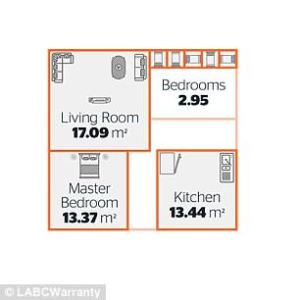
“British living rooms are nearly a third smaller than they were in the 1970s, a new study has found.
Homes built in the UK after 2010 have an average sitting room size of 184 sq ft (17.1 sq m) compared to 268 sq ft (24.9 sq m) around 40 years ago.
Houses also have less bedrooms today than they did in the past, with an average of just under three.

Read more: http://www.dailymail.co.uk/news/article-5592755/UK-living-rooms-smaller-1970s.html#ixzz5CAGuMDte
Follow us: @MailOnline on Twitter | DailyMail on Facebook

“Academy trust has failed Devon’s most vulnerable pupils”

Owl says: Academies: they were supposed to be BETTER than local authority schools because they were free from the financial constraints and poorer management of local authorities they would raise standards (while making pots of money for the private companies running them!!! Right!

Transpose to the NHS and hospitals and you can see where this is leading …

“A multi-academy trust in Devon which was commissioned to support children who are unable to attend mainstream school is being replaced due to serious failings.

Devon’s alternative education provision (AP) has been running as a sponsored academy by SchoolsCompany who this week have apologised to parents for its financial mismanagement and not providing a high quality of education.

The SchoolsCompany currently run three AP academies in Devon – Central Devon Academy in Exeter, North Devon Academy in Barnstaple, and South and West Devon Academy in Dartington.

AP includes pupil referral units and education for children with medical needs or who are in care.

As a result of its failings, it has closed Tavistock Youth Café, a community-based model of education provision for children who are out of school.

The decision was based on concerns over the quality of education being provided, and health and safety.

At the beginning of the year North Devon Academy pupil referral unit was placed into special measures after a damning Ofsted report deemed it to be “inadequate” across the board.

In October 2017, a monitoring Ofsted inspection report following a visit to Central Devon Academy concluded safeguarding is not effective.

The academy was formed in March 2015, replacing the Devon County Council Pupil Referral Unit.

South and West Devon Academy in Dartington was last inspected in July 2014 and was rated good. At that time it was seeking to become a sponsored academy.

SchoolsCompany has already come under scrutiny this year following revelations of financial mismanagement of its other academy in Kent.

In February it apologised to its pupils and parents after admitting “unacceptable failures of financial management”.

The educational consultancy, school management and training company describes itself as being dedicated to improving services for children, but has now had to issue another apology this week.

A spokesperson for SchoolsCompany said: “The academies in Devon have fallen short of the high standards that young people should expect and there have been shortcomings in the trust’s overall financial management.

“We would like to apologise to our students and their parents. Young people deserve the very best education.”

At the beginning of the year the trust’s chief executive Elias Achilleos was suspended and replaced by an interim, Angela Barry.

In Devon, a short-term service level agreement has been made for Plymouth-based ACE Schools Multi Academy Trust to step in and have identified actions to address the current shortcomings.

It has not been confirmed who will take over as new sponsors of Devon’s AP.

A spokesperson for SchoolsCompany continued: “We agree with the respective Regional Schools Commissioners that new academy trusts should be identified as prospective sponsors to take over the trust’s four schools in Devon and Kent.

“These strong trusts will provide the expertise and stability needed to run the academies successfully. No decisions have been taken as to who these new sponsors will be.”

Concerns have raised by the impact the trust’s failings are having on Devon’s most vulnerable pupils.

An education worker, who asked not to be named said: “Huge amounts of Devon County Council funding have gone into the contract, along with central government funding via the Education and Schools Funding Agency.

“In the meantime all sorts of injustices are being meted out to the most vulnerable young people in the county and closure of provision in some localities.

“SchoolsCompany were already a failed company before Devon took them on. Their reputation in Kent, for example, is associated with the failure of a number of schools in an academy group.

“The very sad thing is Devon was one of the first counties to commission the education provision for its most vulnerable children in this sponsored academy way. That’s the greatest tragedy.

““The county took a massive risk but they were also under a lot of pressure from the Department for Education to make their local authority education provision over to sponsored academies.”

A spokesman for Devon County Council said: “The three academies are overseen by the Regional Schools Commissioner on behalf of the Government and are not Devon County Council schools.

“However, these academies serve vulnerable Devon children and we have been having continuing discussions with the RSC and the provider about improving the quality of education and care for these pupils.

“The Plymouth-based ACE academy trust is now working with SchoolsCompany and we are regularly meeting with them to monitor the situation and to ensure the needs of these vulnerable pupils are met.”

https://www.devonlive.com/news/devon-news/academy-trust-failed-devons-most-1425284

Blackhill Quarry: EDDC’s left hand (Planning Dept) and right hand (its Economic Development Manager) at war over Clinton Devon site

The initial response by EDDC to the planning application to extend the industrial site at Blackhill Quarry was negative:

17.0191.PREAPP_redacted

However, subsequently EDDC changed its collective mind, as it so often does, and Dr Robert Murray – EDDC’s new Economic Development Manager (replacement for the somewhat controversial Nigel Harrison) now supports Clinton Devon Estate’s plans to extend industrial use of the site:

17.3022.MOUT Economic Development Response

However, each of Dr Murray’s points can (and should be) challenged as a correspondent details below:

“Further response to 17/3022/MOUT Blackhill Quarry

A response from the Economic Development Manager of East Devon District Council Dr Robert Murray gives support for the Blackhill Engineering proposed development within the AONB of Woodbury Common. (Planning Application 17/3022/MOUT)
However, the report includes many statements which are incorrect, and misleading.

Within the introduction summery Dr Murray states:

“The outline application seeks to accommodate (entirely within the industrial site) and improve the effectiveness and efficiency of an established and growing local business.”

This statement is not correct as the area which the expansion area is proposed to be built is outside the already approved engineering area (7/B/80/0620/22 dated 16/09/1980) and relates to land used for the processing of gravel and sand that had temporary planning rights from Devon County Council (the mineral Authority) with a clause that the area is required to be returned to the natural landscape of the heathland once processing and extraction has been completed.

This is also contrary to the view of Mr Gavin Spiller Principal Planning Officer for Western Planning Team at EDDC who wrote in Oct 2017 to Clinton Devon Estates regarding the proposed business units at Blackhill Quarry:

“In this instance, the Local Planning Authority recognise the previously developed nature of the site, however, in the glossary of Teams section of the Local Plan (which echoes those contained in the National Planning Policy Framework) previously developed land specifically excludes land that has been developed for minerals extraction or waste disposal by landfill purposes where provision for restoration has been made through development control procedures. Accordingly, the land would be greenfield”

A further statement Dr Murray makes in the following paragraph:

“Recently acquired by the SC group, Blackhill Engineering is a growing local business of almost 70 rears.”
Again, this statement is misleading and incorrect. Blackhill Engineering units where built following the granting of planning permission in 1980 for the regional workshop for the then tenant of the quarry for ECC (English China Clay). It was only following a change in tenants to AI (Aggregate Industries) in 1995 that the restriction for use for the quarry tenants’ own workshop was removed and full commercial use was permitted unrelated to the quarry.

Therefore, the commercial use at Blackhill Quarry could only have started in 1995 and therefore 23 years in operation, far less than the 70 years quoted.

Within the same paragraph Dr Murray states:

“The scheme requires no transport access modifications or landscape change”

Again, this is incorrect. The site in question has permitted development for Mineral extraction and processing only. Therefore, the access and landscaping is not as described as hardstanding and approved access, but temporary access and hardstanding which is required to be returned to the heathland area of Woodbury Common.

Dr Murrays Further comment in the Consultee Representations

“…. A change of use to B” industrial use is unlikely to have an impact on the qualifying features of the European designated site, or CWS (County Wildlife Site)”

The clear designation of this area is not Industrial land as Dr Murray implies but a part of Woodbury Common that until 2017 had a restricted permission to extract and process minerals. The total area around the quarry is designated as a SSSI (Special Site of Scientific Interest) and like other areas of the common which had temporary military or mineral uses have been returned to heathland, and included in the SSSI designation. Therefore, once the quarry and processing area has been re-landscaped would most likely to be included within the SSSI designation like these other areas within the pebblebed heaths.

Dr Murray then misrepresents a letter from Devon County Council by stating that they do not object.

Devon County Council are not a consultee on this EDDC Application, but where the agreed Authority for the previous Minerals extraction and therefore wrote explaining that the land proposed for Industrial development is on land agreed by DCC with an enforceable legal agreement to return this area back to the common.

Their final Paragraph explains their position:

“To clarify, Devon County Council as Mineral Planning Authority would not wish to raise any objection to the proposal so long as adequate complementary habitat to replace the lost heathland is provided elsewhere and that this is secured by condition or legal agreement. In such a scenario it would not then be reasonable for the County Council to seek to enforce the provisions of the legal agreement insofar as they relate to this small parcel of land”

Therefore, their conclusion is if the Applicant provides another suitable area as replacement complementary habitat they will not enforce the legal agreement. Unfortunately, the applicant has not provided evidence that they will provide any habitat replacement.

Dr Murray states on page 2 states:

“The submitted Statement on the Business Case and Economic Needs (Bell Cornwall Dec 2017) goes some way to highlighting the economic benefits of the proposed scheme, but falls short of a full economic impact assessment….
…. It fails to provide a fuller picture of the salient wider economic benefits which would follow from the proposed scheme”

Therefore, as the developer and their agents have not provided a full economic impact assessment that is generally required in these cases why is this application being considered until such a time that a full assessment has been made?

Dr Murray states on page 5 states:

“Recent constraints targeted at both Greendale and Hill Barton employment locations further reduce our ability to accommodate such valuable commercial development opportunities”

It is assumed that he is referring to the EDDC Villages plan that has a proposal to encircle both these large business parks with an “employment boundary”. This was agreed within the East Devon Local plan (approved only in 2016) that further growth at these 2 sites should not be further expanded into the countryside. This was because both are in unsustainable locations and distant from residential housing and public transport requiring employees to use their private cars which is against the NPPF (National Planning Policy Framework)

Both the Business Parks have never been in the local authority’s strategic policy for employment zones and grown as “exceptions” to the Local Plan Policies over the last 30 years.

The location of Blackhill Engineering existing site and the proposed extension are in similar unsustainable locations as Greendale and Hill Barton and require workers to commute in their own vehicles along unsuitable roads.

The Application for an extension to Blackhill Quarry would be against the NPPF and our local plan creating a third large industrial area within the countryside.

Further on Page 5 Dr Murray states:

“There is a clearly identified need for the subject business to expand with such positive recent trading (567% increase in annual turnover) taking their existing facility beyond capacity. The SC Group would not be seeking to take this substantial investment forward if they were uncertain of their ability to secure new employees….

Again, the above statement seems to conflict with the letter from Gavin Spiller following “pre-application advice in October 2017.

The letter states

“Pre-application advice is sought for the proposed erection of an additional industrial building to support the existing business being operated from the site together with the erection of 5 additional industrial use by other businesses”

The landowners Clinton Devon Estates asked for Pre-planning advice in Oct 2017 to build one unit for Blackhill Engineering and 5 additional buildings for “other businesses” but by Dec 2017 just 2 months later, a justification was submitted with the outline planning application that all the buildings where required for Blackhill Engineering.

This seems most odd that the advice given by the EDDC Planners in Oct 2017 was not to support the 5 speculative buildings but 8 weeks later there was a business justification to expand the whole area for Blackhill Engineering!

The final paragraph from Gavin Spillers letter regarding pre-application advice:

“…… it is considered that an application for the proposal to which the pre-application enquiry relates would not comply with the provisions Strategy7 and Policy E5 of the EDLP. However, should appropriate justification be submitted to support expansion of the existing business and additional building for their use may be able to be supported as a departure from policy given the economic benefits of retaining an existing employer.
The five speculative industrial buildings would not receive officer support”

Dr Murrays final comment:

“The economic case in favour of this proposed development on their existing site is particularly compelling. It is strongly recommended to our Planning Colleagues for approval”

It therefore can be seen that there is a conflict between the Economic Development Manager and the Planning Team at the Local Authority.

However, as Dr Murrays document shows the economic case presented has inaccuracies and should not form part of the evidence for a justification to:

• Ignore the condition regarding the restoration and aftercare scheme for planning application 10/0473/CM.
• Ignore Strategy 7 Development in the Countryside
• Ignore Policy E5 Small Scale Economic Development in Rural Areas
• Ignore Policy D1 Design and Local Distinctiveness
• Ignore Policy D3 Trees and Development Sites
• Ignore EN16 Contaminated Land
• Ignore Policy TC7 Adequacy of Road Network and Site Access

Until there is sound correct and true “Economic Impact Assessment” and adequate complementary habitat to replace the lost heathland is proposed and agreed by the landowner and the local authority this application should not be considered.

“Countryside dwellers ‘abandoned to poor coverage’ by big mobile phone companies”

“People living in the countryside have been abandoned and left in the “digital wildnerness” by big mobile phone operators, it is claimed, with the worst-hit areas getting no new masts.

A Freedom of Information request has found that in areas where signal is the poorest no new applications have been submitted for new mobile phone masts in the past three years. …”

https://www.telegraph.co.uk/politics/2018/04/07/countryside-dwellers-abandoned-poor-coverage-big-mobile-phone/

New centrist political party?

The best of both sides or the worst of both sides?

https://www.theguardian.com/politics/2018/apr/07/new-political-party-break-mould-westminster-uk-brexit?CMP=Share_iOSApp_Other

“Richest 1% on target to own two-thirds of all wealth by 2030”

Wonder which political party they vote for in the UK?

“The world’s richest 1% are on course to control as much as two-thirds of the world’s wealth by 2030, according to a shocking analysis that has lead to a cross-party call for action.

World leaders are being warned that the continued accumulation of wealth at the top will fuel growing distrust and anger over the coming decade unless action is taken to restore the balance.

An alarming projection produced by the House of Commons library suggests that if trends seen since the 2008 financial crash were to continue, then the top 1% will hold 64% of the world’s wealth by 2030. Even taking the financial crash into account, and measuring their assets over a longer period, they would still hold more than half of all wealth.

AdvertisementHide
Since 2008, the wealth of the richest 1% has been growing at an average of 6% a year – much faster than the 3% growth in wealth of the remaining 99% of the world’s population. Should that continue, the top 1% would hold wealth equating to $305tn (£216.5tn) – up from $140tn today.

Analysts suggest wealth has become concentrated at the top because of recent income inequality, higher rates of saving among the wealthy, and the accumulation of assets. The wealthy also invested a large amount of equity in businesses, stocks and other financial assets, which have handed them disproportionate benefits. …”

https://www.theguardian.com/business/2018/apr/07/global-inequality-tipping-point-2030