You can do so here:

The Brexit Party candidates are having their photos taken in what looks like the lobby of the Houses of Parliament.
For their first photo, they had to stand with a card with their name and constituency on it, rather like criminals having their details recorded ….probably because most of the higher-ups in the party have no idea who they are.
But far funnier is the saying behind the photographer’s white background:
HEAL THE SICK, CLEANSE THE LEPER,
RAISE THE DEAD, CAST OUT THE DEVIL

“East Devon’s attempts to ‘actively assess commercial investment opportunities’ could make them look like a ‘Casino Council’, it has been claimed.
Cllr Paul Arnott, leader of the East Devon Alliance, questioned the way the council’s careful choices consultation made it look like they were ‘punting an idea about the council being a development corporation’.
The survey, due to be sent out at random to 3,000 residents, asks for their views on services that East Devon District Council run and what is important to them as the council has to tackle a £2.7m funding gap over the next four years. …
Cllr Arnott though raised concerned about the wording in the document. Speaking at Wednesday night’s cabinet meeting, he said: “I worry that this will make us look like a casino council. We need to be informed and hear what services people want, but this looks like us punting an idea about us being a development corporation.
“I am not sure it is what people voted for or what they want, but in the survey, we have to be clear it is borrowed money that is being invested and have to detail it.”
Cllr Ben Ingham, leader of the council, replied and said that he wouldn’t use the same words to describe what the council is doing.” …
https://www.devonlive.com/news/devon-news/casino-council-claims-made-over-3498678
“Persimmon Homes have been ordered to close an unsafe junction at a new Newton Abbot housing estate.
From next Monday, bollards will be installed blocking access to Larkspur Drive from and from Mile End Road at the new Hele Park estate.
The junction has been left with a substantially obstructed by a nearby garden wall and as a result is not considered safe. Revised plans to improve the traffic situation between the junctions of Ashburton Road and Applegarth Avenue were approved but never implemented so the planning permission lapsed. …”
https://www.devonlive.com/news/devon-news/persimmon-ordered-shut-unsafe-junction-3499209
In his dreams!
NB: East Devon watch does not solicit or receive any money from anyone. It costs approximately £80 per year to maintain the site and 100% of this comes from the Owls’ own pockets.
“The BBC is asking private companies to pay the salaries of reporters who will scrutinise local councils in another sign that there is currently no commercial business model that can support much of traditional regional journalism.
While the US has a culture of wealthy philanthropists funding not-for-profit public interest journalism, the UK has been slow to adopt a similar model. The BBC’s director general, Tony Hall, is now calling on private companies and civic-minded individuals to pay the salaries of reporters who will “hold those in power to account” by covering local government and institutions such as the NHS.
His plans are part of a major expansion of the Local Democracy Reporter scheme, through which the BBC pays the salaries of about 150 journalists across the UK who share their work with commercial news outlets. Under the proposal, unveiled earlier this year, the BBC would give responsibility for the scheme to a not-for-profit charity, which would be able to seek external funding.
But Hall said the ambitious expansion would only work if companies start providing hard cash and challenged them to cough up: “I want businesses and other institutions to join with us so we can get even more reporters into communities – and give people the local journalism they deserve.”
There are already plans to allow publications aimed at minority ethnic audiences to employ reporters through the scheme, on the basis that they provide news to underserved communities. …”
Who is running this country?
https://www.mirror.co.uk/news/politics/donald-trump-defies-boris-johnson-20806886

“… What you need is a champion, a person of integrity, a person in the community and my goodness you have that – Claire I think you are going to win.
“It’s always difficult as an independent, to be up against the party machines, but it’s do-able.
“I think she is a remarkable candidate with a strong local presence. She’s well-known. I think it’s within her reach.
“Contrary to popular misconception, independents do have a strong voice in Parliament and, such is the current mass disillusion with mainstream parties, their voice will only become louder.
“I think for the people of East Devon to vote for this particular candidate is the very reverse of a wasted vote.
“It is a useful vote. It is a vote to put into Parliament someone who can genuinely represent you for the whole of a four or five-year term.” …”
NHS bosses have said that the NHS should not be used as a political weapon in the forthcoming general election:
https://www.bbc.co.uk/news/election-2019-50282333
But it will ALWAYS be used as a political weapon if it is given annual sums of money or has very short-term plans made by the political party currently in power, as is the case now.
The solution is to make the NHS independent of politics, have a long-term funding plan and have it run by non-politically appointed staff.
You can’t have it both ways.
Ask yourself where the money is supposed to be coming from … and why!
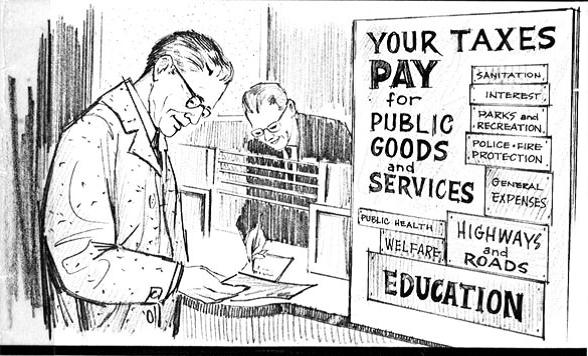
Just remember every tax cut costs. It costs public services (health, education, police, social services, young people’s services, environmental schemes).
They benefit the rich and make the poor poorer – the little bit you gain will be offset (and more) by what you and your family will lose. Indirect taxes (VAT, excise duty, fuel duty) are where the gain may be outstripped by bigger losses.
Tax cuts sound good but think twice before voting for them.
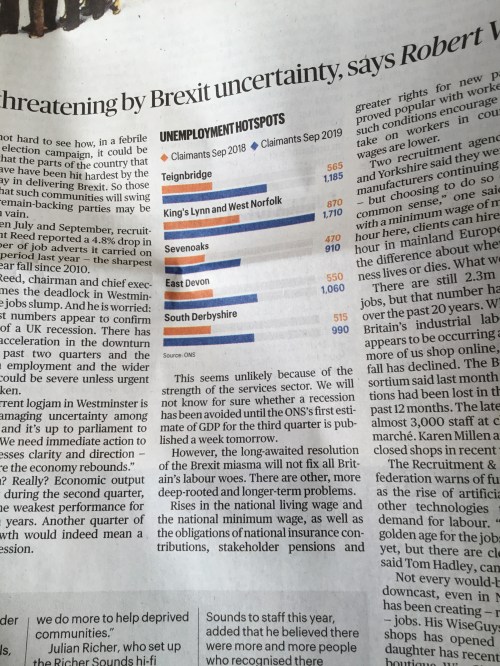
Sunday Times article on new unemployment areas – high street decline, business rate penalties, jobs moving abroad and reduced demand for labour due to automation are some reasons given. Owl would like to see the breakdown per town – oldies in some towns, unemployed youngsters in others …
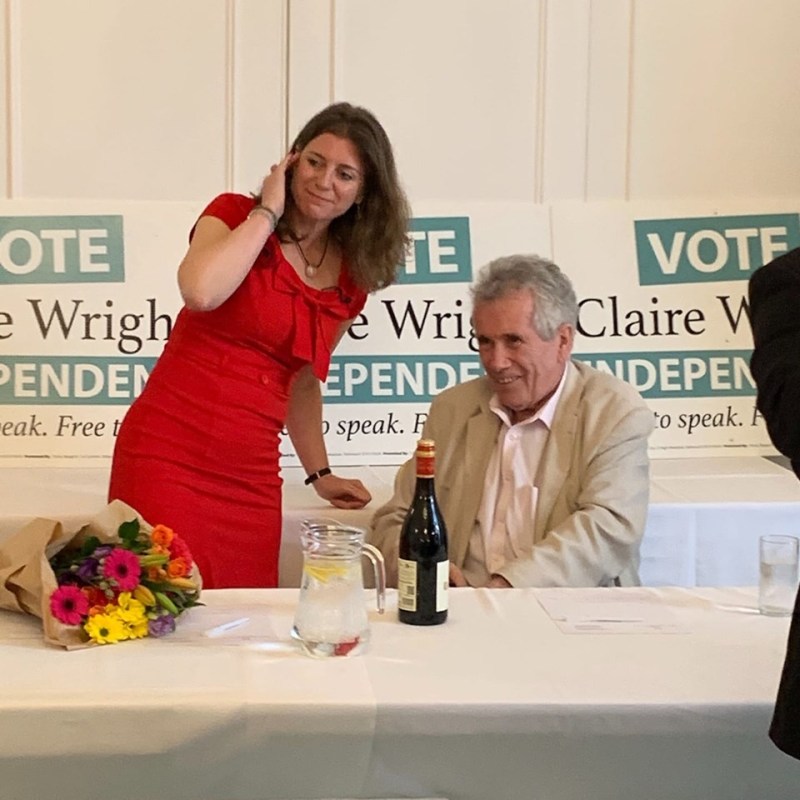
Independent parliamentary candidate Claire Wright at her launch party with well-known war journalist and former independent MP Martin Bell:

Does anyone else find it distasteful to say the least that the party that shafted the poor, brought the NHS to its (broken) knees and took 20,000 police officers off the street now says it will increase benefits, is funnelling short-term money into the NHS before a pre-election crises and promises to return SOME of those police officers to the streets is the one that caused all these problems in the first place?
“I hope that the election in East Devon will reflect the mood of the nation in that my opponents will be respectful and polite when challenging me and I in turn, also pledge to operate in the same way.”
Devon County Councillor Claire Wright has confirmed that she will be standing in the upcoming December General Election.
The Independent councillor for the Otter Valley ward has twice stood for election to Parliament and on both occasions came second behind the Conservatives.
The incumbent MP, Sir Hugo Swire, has announced he will step down from his role, and Claire, confirming that she will stand, said that she hope that this time the East Devon constituency will finally break its 150 year Conservative rule.
There will be a general election on the December 12, which will be the first December election since 1923, and her campaign was launch at the Royal Beacon Hotel in Exmouth on Saturday afternoon.
Claire said she is excited that the countdown to what is being dubbed the most unpredictable and epic general election in living memory has started and is adamant she can change the course of political history in East Devon.
She said: “I’ve always been an Independent. I’ve always been elected because of my hard work and the way I stand up for people, not because of the party I’m from.
“It’s a complete myth that you need a party around you in the Commons. You don’t. It’s all about the person. The Green Party’s Caroline Lucas is probably one of the best known and effective MPs in the country.
“I’ve worked cross-party for the last 10 years to achieve a range of things and I’d be exactly the same if I was in Parliament.
“In 2015, I was an unknown. Now, after two campaigns, I can really challenge. I just think I can do so much good.
“There’s nothing certain about this election. National predictions don’t really apply to East Devon, because I am independent and the only viable alternative because I have a track record.
“I think I can attract voters from across the political spectrum. I’m a hard-working and effective councillor and will be a hard-working and effective MP. I know I can win.”
She added: “The last December election was almost 100 years ago, and campaigning is going to tough, with dark nights, cold and possibly pretty awful weather.
“But despite the challenges of leafleting and door knocking, last night the air of excitement was palpable and we sensed the enormity and potential of what we’re about to enter.
“I hope that this time the East Devon constituency could finally break its 150 year Conservative rule and see an Independent MP elected, whose manifesto is based on local people’s views and who intends to truly represent the people of East Devon, with no party whip to get in the way of that representation.
“This is my third general election. I have effectively been campaigning to be East Devon’s MP for six years, including over a year of preparation for this one. And who would have thought that in this election, in a supposedly safe Conservative seat, an election would have been called with no Conservative candidate.”
She added: “This time feels different. It has a different energy about it. I’ve been a councillor for a decade. And I’m a seasoned campaigner, having fought five elections (this is the sixth) since 2011 and once again, I have a strong, committed and extraordinarily motivated and hardworking team around me. I am also very fortunate to have a much wider team of hundreds of leafleters and door knockers.
“Independent candidate Claire Wright hopes to end 150 years of Conservative rule in East Devon
“I hope that the election in East Devon will reflect the mood of the nation in that my opponents will be respectful and polite when challenging me and I in turn, also pledge to operate in the same way.”
Devon County Councillor Claire Wright has confirmed that she will be standing in the upcoming December General Election.
The Independent councillor for the Otter Valley ward has twice stood for election to Parliament and on both occasions came second behind the Conservatives.
The incumbent MP, Sir Hugo Swire, has announced he will step down from his role, and Claire, confirming that she will stand, said that she hope that this time the East Devon constituency will finally break its 150 year Conservative rule.
There will be a general election on the December 12, which will be the first December election since 1923, and her campaign was launch at the Royal Beacon Hotel in Exmouth on Saturday afternoon.
Claire Wright and her election team
Claire Wright and her election team
Claire said she is excited that the countdown to what is being dubbed the most unpredictable and epic general election in living memory has started and is adamant she can change the course of political history in East Devon.
She said: “I’ve always been an Independent. I’ve always been elected because of my hard work and the way I stand up for people, not because of the party I’m from.
“It’s a complete myth that you need a party around you in the Commons. You don’t. It’s all about the person. The Green Party’s Caroline Lucas is probably one of the best known and effective MPs in the country.
“I’ve worked cross-party for the last 10 years to achieve a range of things and I’d be exactly the same if I was in Parliament.
“In 2015, I was an unknown. Now, after two campaigns, I can really challenge. I just think I can do so much good.
“There’s nothing certain about this election. National predictions don’t really apply to East Devon, because I am independent and the only viable alternative because I have a track record.
“I think I can attract voters from across the political spectrum. I’m a hard-working and effective councillor and will be a hard-working and effective MP. I know I can win.”
Read More
Latest Local Democracy
She added: “The last December election was almost 100 years ago, and campaigning is going to tough, with dark nights, cold and possibly pretty awful weather.
“But despite the challenges of leafleting and door knocking, last night the air of excitement was palpable and we sensed the enormity and potential of what we’re about to enter.
“I hope that this time the East Devon constituency could finally break its 150 year Conservative rule and see an Independent MP elected, whose manifesto is based on local people’s views and who intends to truly represent the people of East Devon, with no party whip to get in the way of that representation.
“This is my third general election. I have effectively been campaigning to be East Devon’s MP for six years, including over a year of preparation for this one. And who would have thought that in this election, in a supposedly safe Conservative seat, an election would have been called with no Conservative candidate.”
Claire Wright
She added: “This time feels different. It has a different energy about it. I’ve been a councillor for a decade. And I’m a seasoned campaigner, having fought five elections (this is the sixth) since 2011 and once again, I have a strong, committed and extraordinarily motivated and hardworking team around me. I am also very fortunate to have a much wider team of hundreds of leafleters and door knockers.
Devon Community Insight Survey
Devon residents are being asked what matters most in a survey run by Devon County Council.
The Community Insight Survey asks about experiences of a range of services and the County Council’s strategic aims.
It also asks questions about Council Tax increases, community resources, if people have good access to green spaces, and if the council’s decision make sense.
A council spokesman said: “We are committed to building a Devon where everyone can live their lives well, and to do this we need to understand what matters most to you and where you experience difficulties. The results will be shared across services and used to inform budget decisions and how services are provided in future.”
The survey can be filled in online at https://forms.office.com/Pages/ResponsePage.aspx?id=gzehjWjLP0S7S5l_d_1b-3k2zoamfoJKgcKfgFq7GXBUQ0lXOFI1MVlPQkQ3N1Q0NUZPWFM1R1VENy4u
“I hope that the election in East Devon will reflect the mood of the nation in that my opponents will be respectful and polite when challenging me and I in turn, also pledge to operate in the same way.”
Former Independent MP Martin Bell OBE helped to launch her official General Election campaign on Saturday. Mr Bell, 81 who was Independent MP for Tatton (1997 – 2001) said: “I served as an Independent MP for four years and was privileged to represent the people not a party. Claire Wright will do the same. I am confident that she will be an outstanding MP.
Martin Bell
Martin Bell
“Claire Wright has forged a reputation as a formidable local government politician in Devon and I am in no doubt that she will do the same in the House of Commons.
“Contrary to popular misconception, independents do have a strong voice in parliament and, such is the current, mass disillusion with mainstream parties, their voice will only become louder.
“By supporting Claire, who has a proven track record of standing up for her constituents and instigating real change, the people of East Devon have, what is likely to be, a once-in-a-lifetime opportunity to change the future of politics in Devon, and indeed, the rest of the UK.”
East Devon has been a Conservative seat since the establishment of the constituency in 1997 and under previous boundaries as far back as 1868.
But she was the runner-up with more than 21,000 votes at the last General Election in 2017 and was the most successful Independent PPC in the country, by more than 10,000 votes.
A local politician of 10 years, Wright has a track record of overturning the odds.
In 2011, she won the seat from the Leader of East Devon District Council, Sara Randall Johnson which she’d held for a decade after 62 per cent of voters turned out to vote.
And in 2013 Wright won 74 per cent of the vote in the Devon County Council elections for the Otter Valley ward, taking over from Roger Giles who stood down after 20 years and winning the largest majority in the South West.
In the 2017 General Election, sitting Conservative MP Hugo Swire – who has been the MP for East Devon since 2001 and has announced that he is not standing again – won 48 per cent of the vote with Wright winning 35 per cent.
As of yet, no Conservative candidate for the seat has been announced, and the Conservative Party have been contacted for comment about who their candidate will be and when they will be selected.
Sir Hugo Swire
Announcing his decision to stand down, Hugo Swire, who has been the MP for the area since 2001, said: “My greatest privilege has been to serve my constituents, regardless of their political allegiance, I am truly grateful for consistently returning me at elections and will continue to serve them to the best of my ability until an election is called.”
In addition to Claire Wright, candidates have also been confirmed by the Labour Party and the Liberal Democrats.”
https://www.devonlive.com/news/devon-news/independent-candidate-claire-wright-hopes-3484074
“The 22-page briefing document is likely to embarrass Conservative HQ as it exposes the party’s strategy for the 12 December poll. …”
A few pages – note fake news like “we are not privatising the NHS … continuing to [de]fund publuc services … the prime Minister’s “Great New Deal” (shades of Trump there and really pretty much May’s old deal – but worse!).


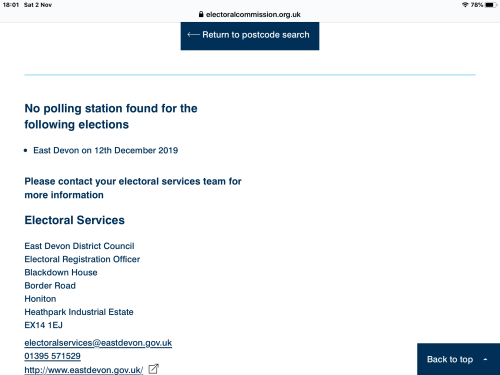
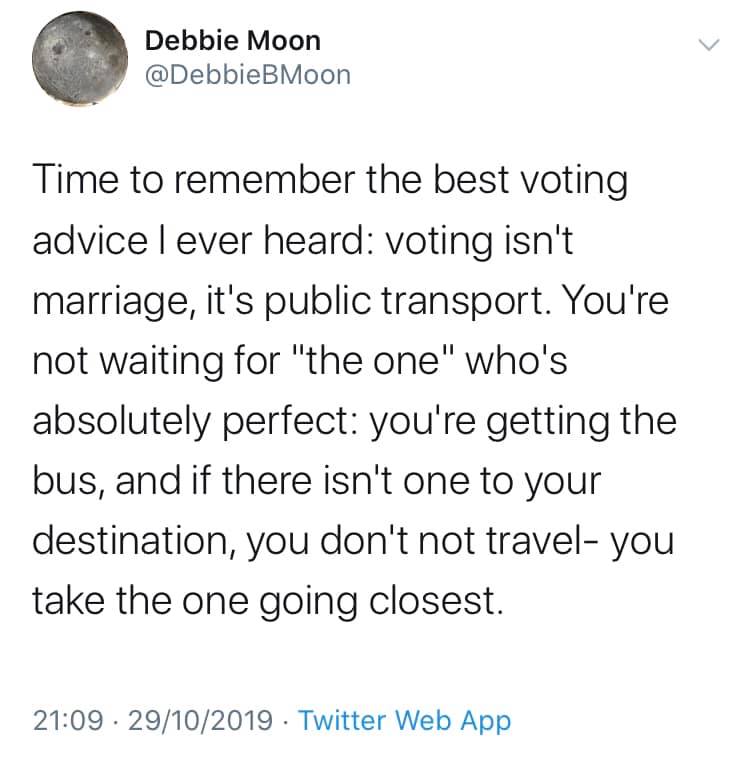
PLEASE, PLEASE be on your toes when general election parties and candidates give you their promises and “good news”.
A couple of examples, one local, one national from the past few days:
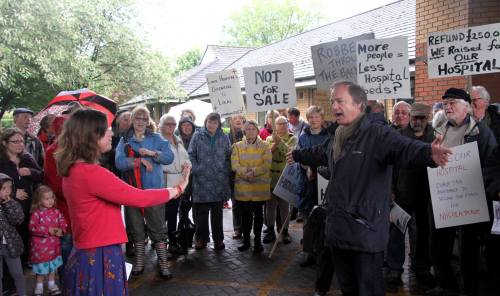
Swire says Ottery hospital is “safe”.
NO, NO, NO!
READ THE LETTER! It does NOT say in-patient beds will be re-opened or that current outpatient services will be maintained at the current level or that they will be increased – only that the situation is “under review”:

And:
Government has “stopped” fracking. TOTALLY UNTRUE!
“The government said it would not agree to any future fracking “until compelling new evidence is provided” that proves fracking could be safe.”
All it has to do is move the goalposts about what it considers “safe”!
Oh dear …austerity for the rich, that will be interesting!

