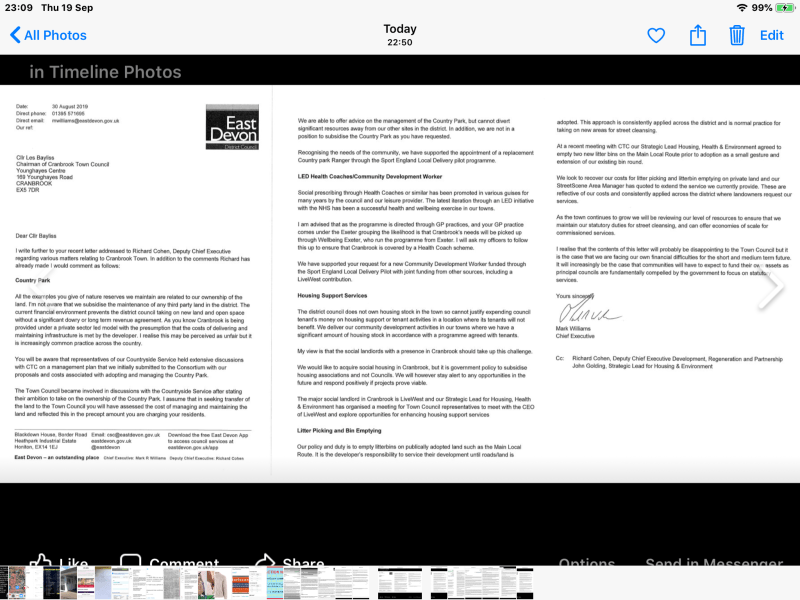
“Devon and Somerset fire service ‘scraps’ £630k IT project”

burning money cartoon

“A cash-strapped fire service has scrapped an IT project that cost £631,000 but was branded “ill-conceived and overly complicated” by a union.

Devon and Somerset Fire and Rescue Service said it had to save £8.4m in the next three years and has planned to close eight fire stations.

The system was used to manage staff training needs and bosses said it was good value but no system was perfect.
But the Fire Brigades Union said it was a “waste of time and money”.

James Leslie, from the union, said the contract should never have been signed off and the money should have been used more wisely.

He said the programme was difficult to use, “never really took off and had been officially scrapped” and replaced with one that was “user-friendly”.

Mr Leslie said part of the programme was never released and as a result training went unrecorded and staff were struggling to find availability on courses.

However, the fire service disputed these claims.

The service said the programme was operational from 2016 until earlier this year but “due to a number of factors” it ended and a new system was developed.

Alex Hanson, Assistant Chief Fire Officer, said the project was “fundamental” in supporting firefighter training.
“No system is completely perfect,” he said. …

… In June, the fire service said it wanted to bring an outdated service into the 21st Century and announced the planned closure of eight stations – seven in Devon and one in Somerset.

The service said it had saved £12.2m over the past five years but still had to “make significant financial savings” because of reduced funding and rising costs.

However, the Home Office said the authority would have £75.6m to spend in 2019-2020 – an increase of £1.9m compared with 2018-2019.

Mr Hanson added the £631,000 was “one-off capital funding to develop a vital system for staff” and could not have been used for wages or savings.”

https://www.bbc.co.uk/news/uk-england-devon-49593612

“Councils ignoring public right to audit accounts”

“Local authorities are refusing to let the public access key information on how their money is being spent, research by the Bureau of Investigative Journalism has found.

Authorities are:

redacting documents to “protect commercial interests”;
setting up council-owned companies that are removed from scrutiny;

failing to respond to members of the public who try to exercise their right to inspect council finances

The Local Audit and Accountability Act 2014 (LAAA) gives citizens and journalists the right to inspect the accounts and related documents of councils, police, fire and other local authorities, and to object to them if they believe something is amiss. It is an especially important right at a time when public bodies are under unprecedented financial pressure.

However, when Bureau journalists and volunteers attempted to exercise that right, some authorities withheld or heavily redacted the information. There was often little evidence that the public interest had been considered and no way of challenging the decision short of a costly court battle.

In one case, the Bureau was prevented from reading a contract because a council officer believed the company involved would sue. Another council refused access to the accounts of a company it had set up to manage a large property portfolio, raising concerns about transparency and accountability.

Duncan Hames, director of policy at Transparency International UK, said: “It’s critical that the public and press are allowed access to key documents about the finances of local authorities to ensure there is no place to hide for the misuse of public money.

“The law is clear that this financial information should be out in the open, so it is imperative that those failing to comply do not continue to withhold it from public scrutiny.”

Commercial interest over public interest

To test the law, Bureau Local volunteers submitted requests to nearly 50 local authorities asking to inspect documents — such as contracts and invoices — relating to the use of private consultants during multimillion-pound property deals, a subject the Bureau is investigating.

Some authorities gave only restricted access to the information, or refused altogether, often on grounds that releasing the information could cause financial damage to the councils and their business partners. …”

https://www.thebureauinvestigates.com/stories/2019-09-11/councils-ignoring-public-right-to-audit-accounts

“Government turns blind eye as council sells “family silver” to pay bills”

“Publicly owned buildings and land could be at greater risk of being sold off by cash-strapped councils after a government ruling, a leading expert has warned.

Peterborough council appeared to breach one of the government’s “golden rules” between 2015 and 2019 when it balanced its books by using £24 million raised from selling assets.

However, after an inquiry into this practice — prompted by the Bureau — the Ministry of Housing, Communities and Local Government (MHCLG) has decided to take no action against the council, potentially leaving the door open for other councils to do the same. The decision seems to be a U-turn, as government officials had previously told the council they disagreed with its position in correspondence seen by the Bureau.

Professor Tony Travers, of the London School of Economics, told the Bureau more local authorities may now take the opportunity to sell the “family silver” to make ends meet.

The ministry declined to comment when asked whether Peterborough’s spending was legal and if other councils are allowed to make use of the policy.

Local authorities are supposedly barred from selling their assets to plug gaps in their finances unless the money is used to fund cost-cutting measures. The regulations are designed to prevent councils becoming reliant on selling off land and buildings to pay running costs.

This is exactly the situation Peterborough finds itself in, leaving it with little of value left. It used money from selling off assets, called capital receipts, to pay what is known as the Minimum Revenue Provision charge, which is a proportion of its annual budget that has to be set aside to repay loans borrowed to fund things such as building schools.

An investigation by the Bureau found that, since 2015, Peterborough had used capital receipts totalling £23 million to meet the cost of MRP, despite guidelines which say the charge must be met from councils’ day-to-day budgets. The council’s latest accounts, released since our story was published, bring that figure up to £24 million.

This reduced the pressure on the Conservative-led council’s finances but also made it dependent on selling assets to break even – an unsustainable position in the long term, as Peterborough itself admits.

In total, Peterborough sold about 50 assets — including pubs, petrol stations, a former community college and farmland — between 2014 and July 2018. In February a further 27 sites were earmarked for sale over the next two years, including a bowling green, allotments, a library and a car park. A Labour councillor called it a “fire sale”.

After the Bureau asked the government about the situation in Peterborough, an investigation was launched. In response, the council insisted it had not broken the law, adding that its spending had been approved by auditors and other external advisers.

Speaking at a council meeting a day later, David Seaton, Peterborough’s cabinet member for resources, dismissed the story as “fake news” and said the council had sought the advice of a leading financial QC who had “given us the opinion that he cannot see Peterborough council acted illegally in any way”.

Councillors then passed this year’s budget, which includes a further £10.6 million in capital receipts to pay the MRP charge.

In the months that followed the council was asked by the government to explain its position. The Bureau obtained copies of correspondence between the council and MHCLG under freedom of information laws. In the most recent letter obtained by the Bureau, dated May 16, a government official made clear to the local authority that the way it spent capital receipts did not fall within the legislation. …”

https://www.thebureauinvestigates.com/stories/2019-09-09/government-allows-peterborough-council-to-sell-family-silver-to-pay-bills

Finally, Parish on Brexit …

Owl isn’t convinced!

“With the current unrest in Parliament – linked to indecision around Brexit – Honiton Nub News contacted local MP Neil Parish to find out his thoughts on what is going on.

He said: “I supported the PM in his call for a general election, so the country can decide who deals with Brexit.

“Parliament is not functioning properly.

“There is no majority for the executive, MPs are not respecting the referendum result – and are now refusing to face public opinion.

“It can’t go on. After Party conference, the impasse must be broken at the earliest opportunity.

“I want to get on with leaving the EU, recruiting 20,000 extra police officers, providing a £14 billion cash boost for schools, 20 new hospital upgrades and transformative infrastructure investment on transport and superfast fibre broadband.

“These are all things which are crucial for our area.”

https://honiton.nub.news/n/local-mp-neil-parish-shares-his-views-on-brexit-and-the-current-state-of-parliament

£350,000 Persimmon home “infected” by radon and with “245 faults” – woman offered “£250 voucher” compensation!

https://www.mirror.co.uk/news/uk-news/mum-offered-insulting-john-lewis-20009623

Swire on prorogation – and a constituent’s response

LETTER SENT BY SWIRE TO CONSTITUENT:

“Dear Mr

Thank you for your email about the votes in the House of Commons on stopping a No Deal Brexit and extending the deadline.

I voted with the Government against the bill as I believe it completely undermines the Prime Minister’s attempt to get a deal on Brexit. It is little more than a cynical attempt to delay or revoke the whole process by those who have never accepted the result of the referendum.

The bill will allow the EU to unilaterally impose & dictate the length of a further Brexit extension therefore putting our future in the hands of the EU. It would go against the result of the 2016 referendum which wanted to have the power back into the hands of the UK.

I believe that not leaving by 31 October could lead to a catastrophic loss of confidence in our political system. The indecision of the last three years and the repeated failure to deliver on the referendum result cannot be allowed to continue.

Thank you again for taking the time to contact me.

Yours sincerely
Hugo Swire”

REPLY BY CONSTITUENT:

“Thank you for your biased reply.

The current Prime Minister is not attempting to get a deal with the EU. This has been confirmed recently by Amber Rudd, EU officials and Leo Varadkar.

I would remind you the 2016 referendum was “ advisory” only. The result has been hijacked by leavers as the “ will of the people “ to leave the EU without a deal.

To state that our future will be in the hands of the EU is incorrect. The UK has always had control over it`s own affairs and always will have. There have been occasions in the past when the UK has chosen not to use those powers. We have never been controlled by the EU without our own consent. The EU does not work like that and you know it. Member states have control over their own affairs and laws.

MPs are at Westminster to have the best interests of their constituents first and foremost in mind. MPs have the resources at hand via advisors and experts to “ save us from ourselves “ and put into action our best interests.This is something you have constantly failed to do.

The naive and gullible who voted to leave the EU in 2016 were encouraged to do so by inveterate liars. Staggeringly, those liars are currently at the very top of Government.

I look forward to the upcoming General Election when we can vote for someone who will at the very least attempt to represent constituents and not just be driven by self interest.”

Who decided to sack “Independent Group” councillor?

LATE CORRECTION: Greens are independent of the Independent Group but Ollie David accepted the role as Lead Member for Environmental Health and the other Green councillor accepted the role of Lead Member for Health and Wellbeing.

How does a group of Independent Councillors sack an independent councillor?

We know how parties and alliances do or might sack a member councillor – they would have a committee meeting of elected members, make a decision and communicate it to other members and the councillor concerned.

But the “Independent Group” appears to have simply decided it was a group and elected itself a leader in the first week of the new council. As it then had the most seats, its Leader got to be Leader of the new council. Green Party councillors also joined the Independent Group (can you be even be Independent and Green Party?). It did not follow up with a committee or internal executive as far as we know, the Leader simply chose Cabinet and other roles for councillors – some of whom were Tories (eg Head of Development Management Committee) and one of whom was an East Devon Alliance member (Dan Ledger – Procurement).

So, did the Leader unilaterally decide to sack Councillor Paul Millar from the Independent Group, or were all of its members involved in the decision or just a small number of them? If so, were Tory councillors and Green councillors also involved in the decision (it seems unlikely the EDA councillor would have been consulted)?

Who initiated the call for the sacking? Were officers involved and, if so, how and why? Will the Monitoring be involved? Was the Monitoring Officer involved? Was the inexperienced, young councillor offered advice or extra training in his new role?

So many questions!

“EDF feels heat from nuclear weld problems”

Hinkley C nuclear plant is where the vast majority og our regional funds have been placed by our Local Enterprise Partnership – many of whose board members have a direct or indirect financial interest in the project.

“The French state electricity group building Britain’s new nuclear plant suffered another setback yesterday when it admitted to possible faults with components used in reactors in France.

The disclosure alarmed investors, raised a new question mark over the French nuclear industry and will fuel speculation that slipshod practices have gained hold in a sector that supplies about three quarters of the country’s electricity.

EDF said that a factory that made steam generators used in nuclear reactors had failed to follow standard procedures. The problem was with the welds on the generators, it said.

The factory is in Saint-Marcel, central France, and is owned by Framatome, a French nuclear group in which EDF has a majority stake. The plant supplies heavy equipment for the French nuclear industry and has provided components for 106 reactors worldwide.

EDF said that Framatome had informed it of “a deviation from technical standards governing the manufacture of nuclear reactor components”. It said that the problem concerned components already installed in reactors, as well as those being prepared for future use. A spokesman for the French Nuclear Safety Authority said that about 20 functioning reactors built after 2008 were believed to be affected.

“EDF, along with Framatome, has been conducting in-depth investigations to identify all affected components and reactors, as well as to ascertain their fitness for service,” EDF said.

The setback comes after a factory in nearby Le Creusot, which belonged to Areva and is now part of Framatome, admitted to having failed to follow safety test procedures during the manufacture of nuclear components. The Nuclear Safety Authority said that test results appeared to have been falsified and added that it had alerted prosecutors to possible fraud.

The latest scandal could hardly have come at a worse time for EDF, which said this summer that the launch of its new-generation nuclear reactor had suffered a further delay. The reactor in Flamanville, Normandy, will now come on stream in 2022, a decade after it was meant to be operating.

EDF is leading the project to build two similar reactors at Hinkley Point in Somerset at a cost of £19.6 billion. They are due to come on stream in 2025.

With difficulties mounting for EDF, its share price fell sharply on the Paris stock market, and closed down 74 cents, or 6.8 per cent, at €10.12.”

Source: Times (paywall)

Who will get ditched councillor’s seat on “Queen’s Drive Exmouth Community Interest Company”?

Currently, directors are:

Ben [Correction: Sam] Hawkins – EDDC Independent Group councillor (Cranbrook)
Paul Millar – fired/resigned Independent Group councillor
Glen Woodcock – Grenadier
Grenadier Exmouth (whatever that means)

Source:
https://beta.companieshouse.gov.uk/company/11017649/officers

It will be REALLY interesting to see who gets the challice! In the gift of Leader Ingham? Depends as Tories and Independent group currently level pegging!

More revelations: EDDC Leader now says he sacked councillor BEFORE he resigned!

This omnishambles story gets more complucated by the minute!

“An Exmouth district councillor who quit the Independent party and attacked the district council’s senior management was sacked from Cabinet, an email has revealed.

In correspondence seen by the Journal, district council leader Ben Ingham said he had already removed Cllr Millar from his role as transformation portfolio holder with ‘immediate effect’ the day before his resignation was announced.

Cllr Millar sent an email to colleagues in which he directed criticism at East Devon District Council’s senior management team.

In an email exchange, Cllr Ingham said: “It was necessary to do this [remove Cllr Millar from post] for a number of reasons over a sustained period.”

Cllr Ingham said he was forced to sack Cllr Millar as he failed to take the ‘many chances’ given to him to ‘show respect to our officers and each other at all times’.

Cllr Ingham said: “This left me with no other choice.

“As a result he has chosen to leave our group.

“The Independent Group placed much faith and hope in Paul Millar.

“We consider it a great shame he was not able to work with us and our outstanding officers. We will adjust accordingly.”

Speaking today, Cllr Millar said: “I was trying to make a contribution but I don’t feel as though I was given any opportunity to do that.

“There have been a few occasions where I have clashed with senior officers.

“It is going to take me a while to learn the ropes. To become a new councillor and be put on the Cabinet, starting straight away while having a full time job, is always going to be a challenge.

“It would have been nice to meet the senior officers to be briefed on important decisions.

“I don’t feel as though I could make important decisions. I am going to carry on as a councillor and try and learn as much as I can and do the best job I think I can locally.”

https://www.midweekherald.co.uk/news/cllr-millar-sacked-before-resignation-1-6262548

Former “Independent Group” councillor expands on reasons for resignation

Just one thing missing from Councillor Ingham’s justification below – why did he choose a brand new councillor to be an important portfolio holder?

Answer: because he utterly refused to co-operate with other independent councillors – many of them experienced – because they belonged to the group he formerly led (East Devon Alliance), preferring to appoint Conservative councillors or ex-councillors (he had also been a Conservative!) from the “ancien regime”, which led this blog to call the group “TiggerTories”.

As you sow, so shall you reap.

“East Devon District Council is in political deadlock after the dramatic resignation of one of the ruling independent group’s councillors.

Former Independent Group councillor Paul Millar, who represents Exmouth Halsdon, resigned today, accusing the district council leadership team of keeping him in the dark on important policy issues.

The council is now deadlocked with 19 Independent councillors and 19 Conservative councillors.

Despite this the council’s leader, councillor Ben Ingham, has said that, ‘it is business as usual for East Devon’.

Nub News contacted Paul Millar and asked him to explain his reasons for resigning, he said: “My experience was that in my four months in the Cabinet I wasn’t asked what I thought about anything, I wasn’t briefed, given options with which to make informed decisions, and attempts to have any influence over my portfolio proved to be impossible.

“In my first week, an email was sent out to colleagues “on my behalf” without me having the opportunity to sign it off or influence its contents. This really upset me because it suggested to colleagues I had formed a particular view on a subject that I hadn’t.

“Being new to local government, I would have appreciated more support and, ultimately, I came to the sad conclusion that some in the Senior Management Team simply don’t trust Councillors to make the decisions the people elected us to make.

He added: “I do respect that others may view things in a different way, but I guess I just wanted to be honest and I’ve been humbled by the number of colleagues across parties who’ve agreed with my sentiments.”

Councillor Ben Ingham, leader of East Devon District Council, has responded to councillor Millar’s resignation stating, ‘it is business as usual for East Devon. He said: “It is very unfortunate when individuals resort to personal and unfounded comments. Such attacks do not help us advance understanding of the work carried out by East Devon District Council’s officers and councillors and their respective roles and responsibilities as detailed in the Council’s Constitution. Rather, they confuse, contribute to rumours and create more harm.

“However, I am confident that the council offered councillor Millar a high level of support and assistance to help him try to adjust to the demands of being a portfolio holder, and I thank him for his contribution. On behalf of the council I am very grateful for the work that councillor Millar has carried out since his election and appointment to the Cabinet and wish him well for the future. Looking forwards, though, it is business as usual for East Devon.”

Nub News was contacted by East Devon councillor and chairman of the East Devon Conservative Association, Bruce de Saram, he had this to say: “Clearly Paul Millar doesn’t yet fully grasp the difference between strategic and operational roles on a council, which I find puzzling, given his previous role as an advisor to a Labour MP Geoffrey Robinson; you might have thought he would understand something of the democratic process and the slow pace of it at times.

“There is huge democratic input and the officers at EDDC do an excellent job on behalf of all residents of East Devon in what is a very challenging work environment. It is hugely unfair and inappropriate to criticise them when they have no right of reply; councillor Millar needs to understand that ‘changing the world’ takes more than three months.”

However in conclusion Councillor de Saram sincerely wished Councillor Millar well and said he looks forward to seeing him at future meetings as a “genuine independent”.

https://exmouth.nub.news/n/district-council-deadlocked-after-dramatic-resignation

Ex-Tory cabinet minister Letwin (now Independent MP for West Dorset) back second referendum

The schism between East Devon and West Dorset MPs widens:

https://www.independent.co.uk/news/uk/politics/brexit-boris-johnson-latest-tory-oliver-letwin-no-deal-referendum-eu-a9098571.html

“Exmouth councillor’s resignation from ‘sinking ship’ Independent group ‘inevitable’ says Conservative chairman”

Councillor Millar was councillor for “transformation” and was investigating the change to the committee system that Independent Group Leader Boris (whoops, sorry Ben) Ingham had been all in favour of – until he became council leader.

“Councillor Bruce de Saram said ‘others are likely to follow’ after Cllr Paul Miilar sensationally resigned from the Independent group, effectively cancelling out its majority at district council.

In an email seen by the Journal, Cllr Millar criticised senior management at East Devon District Council (EDDC) for not consulting him on policy decisions.

Cllr De Saram said that criticism of senior management is ‘hugely unfair and inappropriate’ when they have no right of reply.

When approached by the Journal, Cllr Millar said his comments were based on his own personal experience of the few months he was on the district council cabinet.

Cllr De Saram said: “Councillor Paul Millar is the first senior member of the administration to jump ship before it sinks, whilst blaming others for his decision with others likely to follow.

“Clearly Paul Millar doesn’t yet fully grasp the difference between strategic and operational roles on a council, which I find puzzling, given his previous role as an advisor to a Labour MP Geoffrey Robinson.

“You might have thought he would understand something of the democratic process and the slow pace of it at times.

“There is huge democratic input and the officers at EDDC do an excellent job on behalf of all residents of East Devon in what is a very challenging work environment.

“Councillor Millar needs to understand that ‘changing the world’ takes more than three months.”

Cllr De Saram went on to say he looks forward to seeing Cllr Millar at future meetings as a ‘genuine independent’.

Cllr Millar’s resignation now means the council is deadlocked at 19 Independents and Conservative members apiece.

The Conservative members are set to hold a meeting next week where they will discuss the party’s next move.

Cllr Andrew Moulding, leader of the Conservatives at EDDC, said: “It is too early to say what we will do.

“This could be the start of more people moving away from the Independent group.”

https://www.exmouthjournal.co.uk/news/east-devon-conservatives-react-as-councillor-quits-independent-group-1-6262323

Cranbrook highest anti-social behaviour area in July 2019

“… Police crime statistics have revealed Exeter’s most anti-social neighbourhood.

The area with the most incidents of anti-social behaviour was ‘on or near’ Bluehayes Lane on the outskirts of Cranbrook. The data, provided by police.uk, says there were nine offences of that type in the month of July.

On top of that there were two more reports of criminal damage and arson, one of public disorder, and two vehicle crimes.

The ASB figure, which could include noisy neighbours, rowdiness, littering and graffiti, is higher than traditional trouble hotspots in the city centre of Exeter.

The crime map does not give exact locations of where incidents happened and instead refers to incidents ‘on or near’ a point on the map. That might explain why Bluehayes Lane, a seemingly quiet, rural, single-lane street which has yet to be developed as part of the wider Cranbrook scheme, is named and shamed while most of the other streets in Cranbrook appear crime-free.

The new town to the east of Exeter has been trying to shake off its reputation for low-level crime. Some residents have complained about older teenagers hanging around shops in the evening because they have little else to do. But most say the area is safe and welcoming. …”

https://www.devonlive.com/news/devon-news/crime-figures-reveal-exeters-most-3299820

Another think-tank says too many houses being planned

“Unaffordable property prices are down to Britain’s “broken housing market”, to use Sajid Javid’s words as housing secretary in 2017. The chancellor was referring to the undersupply of new homes, and he was not alone in his analysis. Most people accept that Britain is failing to build enough, including the Bank of England.

“The underlying dynamic reflects a chronic shortage of housing supply, which the Bank can’t tackle directly,” Mark Carney, the governor, said in 2014 and has repeated in various formats since. “We are not able to build a single house.”

Yet it turns out we’ve been wrong. Skyrocketing prices, which have risen 60 per cent above inflation since 2000, have more to do with the Bank than the builders. That’s the Bank’s own finding, published on its Bank Underground blog, where it posts research that officials believe is worth airing. The analysis, using housing data for England and Wales, could not have been clearer. “We find that the rise in real house prices since 2000 can be explained almost entirely by lower interest rates,” the authors write. “Increasing scarcity of housing has played a negligible role.”

To make their argument, they disaggregate housing into its two components: the asset, namely the property; and the service, by which they mean having a roof over your head. If the problem was supply, with more people wanting a place than there are homes to accommodate them, the cost of the service ought to have risen. But rents, a proxy for housing services, have increased roughly in line with inflation, the Bank found. That “does imply that housing hasn’t got significantly scarcer over the past two decades”.

But what about the “chronic shortage”? Ian Mulheirn, chief economist of Renewing the Centre at the Tony Blair Institute for Global Change, says there isn’t one. Official figures show that since 1996 English housing stock has grown by 168,000 per year, while household numbers have increased by 147,000. We have a surplus of 1.1 million homes now, he estimates. Amended figures suggest that England needs only 160,000 homes a year, not the 250,000 in Mr Javid’s 2017 white paper.

What that means, as both the Bank and Mr Mulheirn state, is that the explosion in house prices has been driven by falling interest rates. To many, that may seem obvious. Low rates mean that borrowers can afford more debt— and what they can afford banks will lend. More money means higher prices and, hey presto, a boom. But not a bubble, even though house prices are now eight times average incomes, compared with 4.5 times in the 1990s. Mortgages are as affordable today as they have always been because money is so cheap. In the 1990s the rate on a five-year fixed mortgage was 8 per cent above inflation. Today the margin is 2 per cent.

The Bank cannot be blamed for this price escalator effect. The cause has been near-zero rates and quantitative easing globally, which have pushed borrowing costs down everywhere, as well as fierce competition in the British mortgage market. Nor can it claim innocence. Its own analysis shows that central bank policies are driving up house prices, as it knew in 2014 when, on tightening the mortgage rules, it said that low rates pose “risks to housing markets”.

Rather than economic, the consequences have been social: pushing homes out of reach for those without rich parents, causing home ownership levels to tumble and leaving new borrowers with frightening levels of debt. Dame Colette Bowe, an incoming member of the Bank’s financial policy committee, calls housing “a social issue” and has questioned whether the commitee is getting its approach wrong. The Bank’s new analysis may be a good place for her to start.

Source: Times economic editor

“Green belt earmarked for homes ‘that may never be needed’ “

“Swathes of green belt in the heart of England have been earmarked for new homes for people who may never exist, in a trend fuelled by the drive to double the number built annually nationwide, campaigners have warned. …

… The city council believes it needs land to accommodate 42,400 new homes in the next 12 years, based on population predictions by the government’s Office of National Statistics (ONS), which predict the population will surge by almost a third between the last census, in 2011, and 2031. Green belt in neighbouring areas, including Warwickshire, Nuneaton and Rugby, has also been earmarked for housing to help Coventry meet its target.

Analysis presented at the British Society of Population Studies, in Cardiff, on Tuesday suggested homes earmarked for open fields were being planned for “ghosts”, because there is no wider evidence of the sharp predicted population growth. Just 15,000 new homes were needed, requiring the loss of far less green space.

“If there has been hyper population growth in Coventry, they are ghosts or vampires,” said Merle Gering, a Coventry-based campaigner whose analysis has been endorsed by leading demographers. “They don’t go to school, don’t attend A&E, don’t have babies, don’t own cars, don’t claim state pensions, don’t use gas or electricity, and don’t put waste into their bins … The net result? The death of the green belt.”

Similar fears have been raised elsewhere. Last week campaigners in Birmingham claimed housing need had been deliberately over-estimated after a scheme for 5,000 homes by 2031, on fields near Sutton Coldfield, was halved in size. In January, Andy Burnham, the mayor of Greater Manchester, accused the government of making it impossible to reduce the amount of protected green belt allocated to housing through the use of old population growth figures, which are higher than the most recent projections.

Housebuilders prefer to build on open land because they consider it quicker, cheaper and easier than previously-used brownfield sites. The government wants 300,000 new homes to be built annually by the middle of the next decade – more than double the output over the last 10 years. Campaigners fear planning inspectors are facing political pressure not to query ambitious targets set by councils, even when they involve the destruction of green belt.

“We agree with him entirely in terms of these crazy projection figures,” said John Wareham, the chairman of the Campaign for the Protection of Rural England in Warwickshire. “Coventry has forecasts of around 30% increase in population compared to Stratford-upon-Avon and others which are 10%, which makes no sense. This land between large urban settlements has been there for many hundreds of years and is valuable for leisure and for farming.”

Housebuilding targets set by councils are based on ONS population projections but Gering believes the figures for Coventry are skewed by a large number of foreign students, many of whom will not settle in the area. The ONS, which said it was always looking to improve its statistics to inform policymakers, said it used methods assessed by experts in the field and “we look to produce these estimates as accurately as we can”.

A spokesperson said: “We will continue to engage with the group of concerned residents in Coventry, as we would with any users who need assistance in understanding our estimates.”

Coventry city council said the population projections and the green belt site allocations were assessed by the government’s planning inspectorate.

A spokesperson said it saw “no evidence at this time that the housing requirements identified within its local plan are wrong or failing”.

It added it “will continue to work with our neighbours to monitor housing delivery and supply to inform any need to review the plan in the future”.

Gering’s analysis of the 2011 census and ONS predictions found the rate of growth predicted for Coventry was well over twice the regional average. He found attendances at A&Es over the last decade grew faster in Wolverhampton, Birmingham and Burton; increases in car registrations grew no quicker than in many other areas; and birth rates fell slightly as in most areas.

There was a lower-than-average increase in gas meters, electricity use fell quicker than in other areas, school admissions were average and the number of people on the electoral roll remained steady from 2011 to 2017. He also checked the volumes of domestic waste and found that it was trending in line with other areas.”

https://www.theguardian.com/uk-news/2019/sep/09/green-belt-to-be-destroyed-for-homes-which-wont-be-needed?CMP=Share_iOSApp_Other

Bad news for Cranbrook: “MPs call for pavement parking ban across England”

Many of Cranbrook’s roads are too narrow to avoid parking on pavements and many garages are too small for today’s larger cars.

https://www.bbc.co.uk/news/uk-politics-49635176

Were you 14 -15 at the time of the referendum – your vote now counts!

If you were 14-15 when the referendum to leave the EU took place you are now eligible to vote.

Your voice was NOT heard at the time, but it CAN be heard this time.

You are the generation that is fighting hardest to combat the climate emergency.

You are the generation most let down by inadequate funding of education.

You are the generation that has little hope of owning your own home x unless your home-owning parents help you or die.

You are the generation that needs to be heard.

Register to vote:

https://www.gov.uk/register-to-vote

Exmouth Journal: misleading headline

The headline is:

“Exmouth seafront regeneration talks to no longer be held in secret”

HOWEVER, as the article goes on to say:

following concerns over the ‘secretive’ nature of the new group, East Devon District Council’s cabinet agreed that while the group would meet in private until January 1, the situation would then be reviewed as to if it could be opened up to the public.”

https://www.exmouthjournal.co.uk/news/exmouth-regeneration-groups-talks-no-longer-secret-1-6258682

Not the same thing by any stretch of the imagination.

Still, Tory Exmouth town and district councillor Bruce de Sarum is now a member of the group and he has promised us all complete transparency:

https://eastdevonwatch.org/2019/09/07/tory-party-gangs-up-on-the-independent-group-in-exmouth-about-transparency-and-open-ness/

so it’s all fine – isn’t it!

Development and climate emergency: the tale of Mr Fox, Badger and Peter Rabbit

An independent councillor reports on a meeting of Teignbridge Council discussing development in the age of climate emergency: hilarious, sad, worrying.

“Dealing with the Executive is a strange thing. If like me you have a young child and you’re forced to watch Peter Rabbit on CBeebies you’ll be familiar with the sort of relationship the Exec has with members from other parties.
Fox and Badger really want to eat Peter because he’s a.) a rabbit and b.) a twat but, for some intractable reason, they pass most days in cordial coexistence. Fox even helped Peter move a wheelbarrow full of acorns once. This working relationship, you would think, would make the idea of eventually killing, skinning, disembowling, roasting and eating Peter taboo to Fox and Badger but no – they’ll still have a go one day, right after saying ‘Good morning’ to him. I can’t work out if all the animals are congenitally insincere or just good at compartmentalising their impulses.

There’s a similar ominous détente going on around Mr McShear’s vegetable garden. Nobody’s helping us to carrots, but nobody has, as yet, stoved our heads in with a shovel, despite a clear conviction that we are both on the menu and twattish. Captain Hook, whose avuncular eagerness to have everyone on board is a thousand times better than the Count (I said COUNT) of Monte Christophers, helped me get a new ipad so my constituents can actually talk to me again (the IT people sent me a dozen helpful emails about fixing it to the ipad they were fixing??).

Now, you’ll remember, Newton Abbot has ‘won’ £150,000 to help it become a ‘Garden Town’, with up to £9 million more if it does exactly what its told. We at NSN think this is a con to suck TDC further into the houses-for-money bullshit that makes us all do what we’re told for handouts rather than being properly funded and able to self-determine our own projects, as the ’Localism’ Act once promised (well, promised a bit more of).

Councillor Daws made some excellent points about the Mission Creep that drags councils to do one thing after another – Incremental Development it seems to be called. I asked when the council was going to rename the Climate Emergency a Climate Inconvenience, since every other paragraph TDC produces mentions the Climate Change Emergency with all the heartfelt panic of a sloth on mogodone choosing a supermarket sandwich. These windows will mitigate the Climate Change Emergency …. these drainpipes are Climate-Change-Emergency-neutral … this massive new road is being approved because cars going faster will contribute less to the Climate Change Emergency… the phrase is no more than a verbal tic.

I mentioned the article on Bicester (see past posts) – the ’dog’s dinner’ garden town where, in the name of getting people to work where they live, houses abide in the shadow of warehouses. Gordon, who really does know his background material, said that was written in 2015 (he was right!) before Bicester got its ‘Garden Centre’, which had made everything all right now. I didn’t know what he meant by garden centre… has it got a Fermoys?? We are not allowed follow-up questions. But Bicester has been dog-breakfasted by hideous building. It hasn’t been unbreakfasted by building MORE buildings.

Gordon added that he was disappointed – or was it dismayed? One or the other – that I was calling such things as triple glazing mere ‘green cynicism’.
I think the problem is this: Gordon and co live in a world where the march toward the abyss is inescapable, so we might as well put on the nice new boots Westminster has given us and march slowly if we can. When I suggested that, if the Executive truly believed there to be an EMERGENCY (lets put it in capitals til that, too, just makes us shrug) then it should defy Westminster’s housing targets. An emergency doesn’t mean you carry on as normal. It doesn’t mean you stick slavishly to the script. The car is on fire. Shall we stop on the hard shoulder or shall we keep driving the fucking thing to Alton Towers?*

This made Deputy Alistair Dewhirst smirk contemptuously, which is his absolute number one favourite thing to do when talking to us (unless he’s online at midnight, in which case his favourite thing is to type things and then immediately delete them).

In keeping with his late-night ruminations Alistair said that Welwyn Garden City was the best example of a garden town, and that it is ‘the best, most pleasant place to live and work that it is possible to imagine’. Possibly Alistair visited a different Welwyn Garden City to me, or else he passed through on the Magic Bus in the Sixties. Because the Welwyn Garden City I have visited, several times, is an unmitigated shithole. The deputy’s assertion that ‘if Newton Abbot is to become like that, then we will be remembered’ should chill us all to the marrow but it is at least true. Oh, you will be remembered.

Councillor Jackie Hook, holder of the (Compostable) Portfolio For Climate Change, then announced that she had joined Extinction Rebellion and they ALL agreed that it was National Government that had to change its thinking, not local councils. She added that if anyone wanted to lie down in the path of a digger they were free to do so. In precis, all the change has to come from the Big Noise or the Little People. The muscled appendage of TDC, which might actually have some power in its elbow, is not going to flex, now or ever.

We do, at least, get treated gently by the Lib Dems; I suppose because we’re idealists like they used to be, possibly… once – before they got neutrally reprogrammed by procedure. Not so the Tories, who had just been very cheeky. Mr Hook produced an unsolicited letter from some local cohort of business worthies who said they fully supported being bundled into a garden town. ‘Isn’t Jackie on their panel?’ they enquired.

The Tories then lambasted the Lib Dem Council Tax relief calculations saying that they would hurt the very poorest. All were reminded of their excellent track record of voting specifically to hurt the very poorest by Cllr Connet, who called their remonstrations ‘absolute tosh’.

It was all a lot of fun. But the existential problem we have as members of this council – and I don’t see a way around it – is that we are there with a moral argument, in a body that wants only to discuss procedure. So we find ourselves asked to contribute to working groups on the Greater Exeter Strategic Plan (our contribution: it belongs in the bin) and to the Local Plan (it belongs in the black bin, as no part of it is recyclable), and are constantly told NO. WE ARE MARCHING TO THE CLIFF EDGE TO THE TUNE OF THE BRITISH GRENADIERS* SO PLEASE JOIN IN WITH THE SINGING.

So what can we do, until we can get more of us onto council? I suppose we’ll just keep waiting for death and stealing carrots.

*Obviously I didn’t say the F word in the council chamber, as I don’t want to be in the MDA EVERY week for swearing.

*This in keeping with the 30th anniversary of the Second World War, in which the Germans redesigned our towns to look more like Welwyn Garden City.”

Source: https://www.facebook.com/Liam4college/?__tn__=%2CdkCH-R-R&eid=ARDQFiWLt-1V7yr-UWhnbYLhG-7025qcTpdAJzem7OOVxfz_0pEjE3cIFwYzUsHKSuPr3MS5zzkvSzOw&hc_ref=ARRYuH_r2FD7vNjad1qmLvz1GFcoaEakuz5o-uejwf72fA20k73RJzmTxZpQY6Sx8uI&fref=nf&hc_location=group