Well, whichever way you cut it, we lost out!
https://www.exmouthjournal.co.uk/east-devon-bosses-refute-claims-knowle-was-unsold-1-6277180

Well, whichever way you cut it, we lost out!
https://www.exmouthjournal.co.uk/east-devon-bosses-refute-claims-knowle-was-unsold-1-6277180
From Exmouth Journal
“Dear Sir,
I was shocked at the so called “sacking” of Paul Millar. Here we have a young man interested in getting involved in local politics who should be supported not pilloried for his lack of experience.
In taking on the leadership of a team of Independents perhaps Ben Ingham an experienced Councillor and ex party member has not quite grasped that he is now the manager of individuals not a party gang that he can whip into order .
Leadership in this scenario requires nurturing your team. Working out their strengths and weaknesses and if you see people struggling, stepping in with support and encouragement.
Above all , as presented in the reports that I have read so far, he should not be taking the side of paid officials who are there to advise and deliver what the Councillors decide.
I get the impression that the current Senior Management team in EDDC that he lauds is so used to calling all the shots for years , that a new young broom presenting what they perceive as a challenge to the existing power structure needs to be flattened and crushed from the outset.
Anybody who has changed jobs and become a new boss will know that in the early stages of a new job, it’s always a battle of wills. You will be resented by the old guard who will look for ways to trip you up. That’s where a mentor would come in useful. Charm, persuasion and proving that you have a vision and work hard yourself will usually win through.
So far the new Independent group have badly misread why they were voted in.
People in Exmouth voted for change not continuity. What that means is real transparency, not lip service, being open to feedback and above all listening. The value of listening cannot be emphasised enough. Listen and act. If you find you cannot deliver what people are asking for, tell them why you can’t but offer what else you can do for them.
That’s what we voted for. We now need to see some evidence that the election promises made are not just empty words which the Town sadly has become all too used to from previous administrations.”
“An angry relative of a sick child has confronted Boris Johnson during a hospital visit, criticising the NHS as “not acceptable”.
Mr Johnson was visiting Whipps Cross University Hospital in northeast London when he was confronted by the man on a children’s ward.
In a conversation lasting around two minutes, the man claimed there were not enough doctors or nurses and accused the prime minister of visiting the hospital for a “press opportunity”.
He told Mr Johnson: “There are not enough people on this ward, there are not enough doctors, there’s not enough nurses, it’s not well organised enough.
“The NHS has been destroyed… and now you come here for a press opportunity.”
In response, the prime minister said: “There’s no press here.”
However, the man was quick to point to cameras filming the altercation, saying: “What do you mean there’s no press here, who are these people?”
Seems about the same size as the proposed Sidmouth development at the old EDDC HQ, but without the sea views and parkland location …
“Pegasus Life unveiled proposals to change the use of its recently-completed Marina Gardens project, in Martingale Way, at Portishead Town Council’s meeting on September 11.
The developer completed construction of the 126-home complex – intended for ‘assisted living’ for elderly people – over the summer, but has decided its plans ‘won’t work financially’.
Instead, it will submit an application to North Somerset Council to remove the age restriction to allow the properties to be sold on the open market.
An additional apartment will be created as a result, while 38 will be earmarked for affordable housing schemes.
Emma Webster, Pegasus Life’s head of corporate affairs, said: “As we headed towards the final stages of the development, one of the things we have discovered is quite a lot has gone on.
“In the intervening period (since the application), there have been a number of developments built in North Somerset to address the requirement (for assisted living homes).
“We have taken the decision the application we secured consent for won’t work financially.”
The developer plans to increase parking capacity from 96 to 127 and Ms Webster believes the homes will offer a better ‘quality of life’ for owners.
She also told councillors the firm sees a need for ‘this type of accommodation in Portishead’, and will not be ‘importing people into the area’.
The plans were met with anger from members of the public.
Portishead resident Ken Smith, after hearing Pegasus Life’s presentation, described the development as the ‘worst building in Portishead’.
He continued: “I could probably live with it if you were going to look after old people, but you’ve realised you’re not selling them and you need to make more money by selling to any Tom, Dick and Harry.
“I think you should be ashamed of yourselves.”
Jonathan Mock labelled the building ‘horrific’ in public participation.
“It has all the charm of something from the communist bloc in terms of architecture,” he added.”
https://www.northsomersettimes.co.uk/news/marina-gardens-plans-changed-1-6273316?
Well, as Mandy Rice-Davies would have said (look it up millenials): they would, wouldn’t they …
https://www.devonlive.com/news/devon-news/persimmon-homes-responds-over-alleged-3330144
“Air pollution particles have been found on the foetal side of placentas, indicating that unborn babies are directly exposed to the black carbon produced by motor traffic and fuel burning.
The research is the first study to show the placental barrier can be penetrated by particles breathed in by the mother. It found thousands of the tiny particles per cubic millimetre of tissue in every placenta analysed.
The link between exposure to dirty air and increased miscarriages, premature births and low birth weights is well established. The research suggests the particles themselves may be the cause, not solely the inflammatory response the pollution produces in mothers.
Damage to foetuses has lifelong consequences and Prof Tim Nawrot at Hasselt University in Belgium, who led the study, said: “This is the most vulnerable period of life. All the organ systems are in development. For the protection of future generations, we have to reduce exposure.” He said governments had the responsibility of cutting air pollution but that people should avoid busy roads when possible.
A comprehensive global review concluded that air pollution may be damaging every organ and virtually every cell in the human body. Nanoparticles have also been found to cross the blood-brain barrier and billions have been found in the hearts of young city dwellers. …”
As they say: No sh*t Sherlock!
“A parliamentary committee has slammed the government’s £12 billion Help to Buy scheme for tying up vast sums of money in a policy that has mostly supported homebuyers who could already afford to buy a property while failing to boost the provision of affordable housing or reduce homelessness.
The public accounts committee found that three fifths of buyers who took part in the scheme did not need it to buy a home. It said that the “large sums of money tied up could have been spent in different ways to address a wider set of housing priorities and focus more on those most in need”.
The committee has called on the Ministry of Housing, Communities and Local Government to carry out a full evaluation of the scheme’s value and necessity before a new version of the policy is launched in 2021.
Shares in Britain’s biggest housebuilders, which sell a significant proportion of homes through the scheme, fell this morning on the report. Persimmon lost about 53p, or 2.5 per cent, to £20.48; Taylor Wimpey fell by 4p, or 2.4 per cent to 159p; Barratt Developments slipped 9¼p, or 1.4 per cent, to 641¾p.
Help to Buy was introduced in April 2013 in response to a fall in house sales following the financial crash of 2008, when a tightening of regulations around mortgage lending made it more difficult to buy a property. It was originally intended to run until 2015 but will now last for a decade.
The scheme offers buyers with a deposit of 5 per cent a five-year interest-free loan of up to 20 per cent of the purchase price, or 40 per cent in London. The loan must be repaid in full on the sale of the property, within 25 years, or in line with the buyer’s main mortgage if it extends beyond 25 years.
The current scheme, which runs until March 2021, is not means-tested and is open to first-time buyers and those who have previously owned a property. Buyers can purchase properties valued at up to £600,000. From March 2021, a new scheme which is due to run for two years, will be restricted to first-time buyers and will introduce lower regional caps on the maximum property value, while remaining at £600,000 in London.
Help to Buy has increased housing supply by an estimated 14 per cent. Since it launched, it has supported more than 220,000 home purchases. The government has issued loans with a total value of more than £12.4 billion.
However, the committee warned that the government has allowed the scheme to become a semi-permanent feature of the housing market without thinking through the changes needed to improve the value to be achieved from the scheme. There is also no plan in place to prevent a fall in supply when the scheme ends in 2023.
Research by the committee also found that should house prices fall or interest rates increase, the government could make a substantial loss on the scheme. It warned that homebuyers who have used Help to Buy might not be aware of the financial risks if interest rates change. It also found that buyers who wanted to sell their property soon after purchase might find that they were in negative equity as new-build properties typically cost 15 per cent to 20 per cent more than equivalent “second-hand properties”.
Meg Hillier, Labour MP and chairwoman of the committee, said that the scheme had “increased the supply of new homes and boosted the bottom line of housebuilders.” She added: “It does not help make homes more affordable nor address other pressing housing problems in the sector such as the planning system or homelessness”.
“The scheme exposes both the government and consumers to significant financial risks were house prices or interest rates to change. Better consumer protection needs to be built into similar schemes in the future.”
Source: Times (pay wall)
“Drivers should get free bus passes if they agree to take a car off the road, campaigners say.
The Campaign for Better Transport says the idea could reverse the trend of declining bus use and help take polluting diesel and petrol cars off our streets.
The idea comes in a “manifesto” – The Future of the Bus – which has gone to the government as part of a national strategy to re-invest in Britain’s most popular form of public transport.
Bus services provide the “backbone” of the local public transport network, but savage cuts are leading to a reduction in bus use and services have shrunk every year for a decade. …”
https://www.mirror.co.uk/news/uk-news/give-up-your-car-free-20068860
Owl is not just interested in East Devon, oh no. Owl has relatives in the United States and has been known to cast its beady eyes over the pond to see what the owls over there are up to.
Imagine Owl’s surprise when reading about President Trump’s latest spat with ex-President Obama about Obama’s contract with Netflix to see this Google “push” advert pop up:

Now, Owl knows this is a targeted, personalised ad – but who would have expected it to turn up here? And why does Taylor Wimpey think Owl wants one of their little boxes in Cranbrook?
Obviously desperate times for Taylor Wimpey and Cranbrook!
“A South West Council has agreed a £14.9m loan to its local NHS foundation trust for a new pathology centre.
Bournemouth, Christchurch and Poole Council last week agreed the loan, which, at an annual interest rate of 3.5%, will reap it £4.2m over the 15 year period of the loan.
The trust will use the cash to pay for a new pathology unit, which the trust hopes will lead to efficiency savings.
A report to councillors said that “it is important to emphasise that the Royal Bournemouth and Christchurch NHS Foundation Trusts will be required to make £993k annual capital repayments and the associated interest payment regardless of their financial position, operational performance or success of the One Dorset Pathology service”.
Foundation trusts are not legally allowed to secure a loan against operational assets, so the loan will be unsecured, the report said.
However, it would be issued based on creditor assurance as laid out in Department of Health guidance.
A risk assessment carried out the council concluded that central government would pick up any liabilities if the trust got into financial difficulties and was dissolved.
“This means that all creditors of an FT are protected and all liabilities of all FTs are safeguarded,” the report said.
The trust will make repayments of just under £1m each year.
An interest rate of 3.5% has been based on a suggested rate of 2.75% plus the 0.75% EU state aid margin rate for organisations for strong and normal levels of collateral.
The council said that it would earn £2.4m more on the loan than if it invested it at the prevailing 15-year interest rate.
A one-off upfront arrangement fee of £45,000 will also be payable to cover due diligence and monitoring work.
The council has extended its normal five-year period for investments in order to allow the loan to be made.
The new pathology facility will either be built on land owned by the Royal Bournemouth and Christchurch Hospital at Castle Land East Bournemouth or by land purchased from the Council which is currently part of an adjoining site.
The Royal Bournemouth and Christchurch Hospitals NHS Foundation Trust provides healthcare to the residents of Bournemouth, Christchurch, East Dorset and part of the New Forest. It gained Foundation status in 2005.
The council follows two others which are known to have made similar loans to NHS trusts.
In 2014, Northumberland County Council finalised a loan of £100m to a local NHS trust, which used the money to buy itself out of its outstanding PFI contracts.
In May last year, Blackpool Council agreed a loan of £27.1m to Blackpool Teaching Hospitals NHS Foundation Trust to help restructure the trust’s debt.”
Looks like it if you read this car crash interview with his good friend (but obviously somewhat annoyed) BBC politics editor Laura Kuenssberg:
https://www.bbc.co.uk/news/uk-politics-49717554
Seriously, is that the best an Eton education can offer? If so, get your money back Stanley!
From the blog of East Devon Alliance DCC Councillor Martin Shaw:

“Seaton and Colyton Medical Practice have been fighting a long-running battle over rapidly rising charges for the Health Centre. Total maintenance charges rose from £5556 in 2015-16 (the last year before NHS Property Services took over) to £15,422.66 in 2016-17 and £34,657.39 in 2017-18, with the threat of their topping £40,000 this year. As users will realise, these are ludicrous figures for a building the size of a small bungalow, and the Practice is contesting them.
At the same time, actual service under the maintenance contract has been lamentable – the Centre was still without hot water last week after the boiler broke down in June. The Practice has brought the matter to my attention and I have put it on the agenda of the Health and Adult Care Scrutiny Committee next Tuesday (pp 87-90).
NHS Property Services is a company set up by the Government to manage the NHS estate, with a mandate to charge commercial rents and, where appropriate, sell ‘surplus’ property. The Health Centre was handed over to the company in 2016, along with our community hospitals, when the RD&E took over our area from the North Devon trust.”
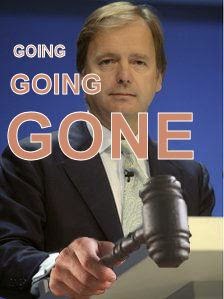
“Devon County Councillor Claire Wright could hold the fate of the country in her hands, bookmakers Ladbrokes are suggesting.
The Independent councillor for the Otter Valley ward has twice stood for election to Parliament and on both occasions came second behind the Conservatives.
But following Sir Hugo Swire announcing last week that he will be stepping down from his role as the MP for East Devon at the next election, Cllr Wright has declared that she will once again be standing. She is now the favourite to take over from Sir Hugo.
Flavible Politics, making projections based on a ComRes poll from September 12 have her winning the East Devon seat in their latest election predictions.
New Statesman political correspondent Patrick Maguire, had also said that apart from North Down, East Devon is just about the only seat in the UK that could plausibly be won by an independent.
Ladbrokes have set the odds on who will have the most seats after the next election at 10/11 for both a coalition of the Conservatives, DUP and the Brexit Party and a coalition of the Labour Party, Liberal Democrats, the Scottish National Party, Plaid Cymru, the Green Party, the Alliance Party of Northern Ireland and the Social Democratic and Labour Party, any elected Independents could determine who the next Prime Minister is.
Posting on Twitter, Ladbrokes said: “It looks like Jason Zadrozny and Claire Wright will get to choose who the next PM is.”
Cllr Jadrozny is the leader of Ashfield District Council, currently run by the Ashfield Independents.
Cllr Wright said on Twitter that she could handle the pressure and that if there is an election soon, she hopes to be East Devon’s MP.
She said: “Over the last three years the Conservatives have been focusing on two things. One to save the party from Nigel Farage and to do that they have basically turned the party into the Brexit Party. Secondly, they have been focusing on cutting public services.
“I see the damage that those austerity policies have done in my ward every single week. Party politics does seem to be broken. The two main parties are irretrievably split. The Conservatives in particular seem to be intent on self-destruction and I think Hugo Swire’s resignation is very much part of that.
“East Devon residents deserve someone who is not going to be tied to the party whip, who is not going to be chasing a ministerial career, but someone who is going to have one agenda only, and that is to put their views and needs above everything else.
“If there is an election in the next few weeks, I hope that I can be that MP.”
She said that the announcement that Mr Swire would not stand in the next election was a shock, but that she has been preparing with her team for a year and that they have recently ramped up their preparations.
Predicting a November election she said: “This will be my third election and my team and I are ready to build on the two previous elections.
“The momentum in 2017 and the excitement and energy was incredible – it felt then that I could win, and now we are that much further on.
“I was a serious threat. Brian May backed me before the last election as one of his ‘common decency’ election candidates.
“I think East Devon will be close whoever the Conservatives put forward. This is the Tory heartland. East Devon has been Conservative for 150 years. That’s what I’m up against. It’s a huge challenge.
“This will be my third general election and my manifesto will be based on a survey I carried out at the beginning of this year. Hundreds and hundreds of people filled out the survey and I feel confident I know the issues that people are concerned about in East Devon.
“The Conservatives have just been disastrous for the country – they have gone from one crisis to the next. It’s been like watching a slow car crash – and in the last few weeks it’s turned into absolute meltdown.
“The whole Tory agenda is simply about saving their own skin. The rhetoric seems to be about how they can out-Brexit the Brexit party and turn themselves into the new Brexit party.
“The things they should have been focusing on are public services and the environment. Devon County Council has lost £100m from its budget and all the people in Devon have lost out on services as a result of those cuts.”
Announcing his decision to stand down, Hugo Swire, who has been the MP for the area since 2001, said: “At a meeting earlier of the Executive if the East Devon Conservative Association I announced that I would not be standing for re-election as the Member of Parliament.
“It was my original intention to stand down in 2022, when the next general election was scheduled to be held.”
He continued: “I served in a number of different roles in opposition, including in the shadow cabinet as Shadow Secretary of State for Culture, Media and Sport. In Government I was first appointed as Minister of State in the Northern Ireland Office and then Minister of State in the Foreign Commonwealth Office.
“Whilst I was honoured to have been appointed to these roles, my greatest privilege has been to serve my constituents, regardless of their political allegiance, I am truly grateful for consistently returning me at elections and will continue to serve them to the best of my ability until an election is called.”
Reaffirming his support to Mr Johnson, he added: “We live in challenging political times, but I remain convinced that to bring the country back together we need to deliver on Brexit and I shall continue to support the Prime Minster and the Government in their endeavours.”
Bruce de Saram, chairman of East Devon Conservatives, said: “East Devon Conservatives would like to thank Hugo for his outstanding work as our MP since 2001 and also his service as a Northern Ireland and Foreign Office Minister, where he developed a passion for the Commonwealth among his many other interests.
“Hugo rose to the challenge of being our MP, winning five general elections. He has continually challenged injustice with great passion and been very visible in the constituency, standing up for local residents.
“We are very sorry to say goodbye to him and wish him well for the future.
“We will now begin a process to select a candidate to build on Hugo’s excellent work.”
https://www.devonlive.com/news/how-independent-devon-councillor-could-3324854
“… there are just fewer and fewer drivers of footfall. You cannot get your hair cut online, so barbers – like nail bars, tattoo parlours and tanning salons – buck the downward trend. But we only need so many of these. Greggs and to-go food stores are buoyant; gyms and takeaways are the only sectors showing double-digit net growth, says PwC. But even that feels precarious. Delivery apps are driving growth in the takeaway sector but, if in-person purchases fall, these could quickly migrate to so-called dark kitchens on industrial estates.
“The reality is we may need fewer high streets in the future,” says a PwC spokesperson. “This opens opportunities to repurpose high street space, while [evolving] to meet consumer demand.”
But what will that look like? In 2011 Mary Portas, retail expert and Cameron-era government consultant, lobbied for an anti-clone-town drive to remodel high streets around independent shops. But bar a few niche fashion, gift or record shops, supermarkets marched relentlessly on. The butcher, baker and candlestick-maker now work in Tesco.
Consequently councils and property developers increasingly want to use food and drink to seed regeneration, many inspired by Altrincham’s Market House. In 2010, 30% of Altrincham’s shops lay empty. In 2014, the Market House opened – a communal dining hall of independent kitchens attached to a speciality market – and, since then, a remarkable ecology of bars, restaurants and coffee shops has evolved around it. Footfall has risen sharply, shop vacancy rates have fallen to 9.7% and brands such as JD Sports and Nando’s have moved into the town’s once-failing shopping area.
Market House’s operator, Nick Johnson, a former board member at property company Urban Splash, claims for the £635,000 it cost (£435,000 came from Trafford council, Johnson contributed the rest) : “It has probably delivered the greatest regeneration outputs of any project in 25 years.”
Little wonder councils love the idea: it allows them to cost-effectively reinvent one of the few central sites they still own, the market.
There are similar schemes in development countrywide. But it will be tough to repeat Altrincham’s success. First, it is a relatively affluent Greater Manchester town bordering Cheshire; and second, Johnson’s unorthodox curation of some exceptional foodie talent (like the artists on his friend Tony Wilson’s Factory records, none of the Altrincham traders have signed contracts) has provided an X factor that councils and developers will find hard to mimic.
There is also something about both the Portas and Altrincham models of handmade, artisan-roasted regeneration that, at their most crude, feel a bit myopically middle class. Mishandled, it can create silos of gentrification that alienate residents. Craft markets are great, but where does your nana buy a new washing line?
If town centres are to shrink and be redrawn, surely the ideal would be to intermingle viable businesses that attract different kinds of customers (in age and socioeconomic status), much as Trafford’s Stretford Mall is trying to blend hip new businesses into its established tenant mix. That fosters social cohesion but, commercially, there is strength in numbers, too – in making it easy to shop at Quality Save and Boots, Greggs and Stretford’s new Food Hall canteen, as mood or budget permits.
Not that this future should always have a commercial imperative. As town centres empty, there is a generational opportunity to reverse the gross monetisation of our public realm. This is a chance to make the principles of placemaking – creating inclusive public spaces where people can enjoy their leisure time without spending money – a reality. Nonprofit arts and cultural organisations forced out by high rents could, likewise, come back into empty shop units (long-term, not as a temporary gesture by developers), to re-engage local people with these spaces – and without it costing them £6 a pint.
But will any of this happen? The short answer is no. Councils do not have the money or the compulsory-purchase powers to radically intervene. Enlightened developers are rare. The patchwork of smaller private landlords who own peripheral space in town centres need to fill their properties, hence the fact that cool cottage industries tend to flourish there, in pockets. But the remote coalition of global property management, pension and investment funds that owns most shopping precincts or malls is, at best, distantly concerned with the local population.
Even if the retail property market crashes (in January, the Royal Institution of Chartered Surveyors warned unusually of “potential for significant changes in value”), such owners will consolidate, sell property, bulldoze it and redevelop, and if shopping centres can limp on, they will. Under new permitted development rights, closed high street retail units can now easily be turned into residential property.
Where will those new residents congregate? High streets may yet be reborn as the genuine heart of their communities, protected from commercial pressure, but don’t bet on it – and certainly not online.”
The south-west, as usual, gets least funding, and, of course, Cranbrook, with no town centre at all, is NOT historic!
“Historic English shopping centres will benefit from a £95m regeneration fund, the government has said.
In all, 69 towns and cities will receive money, with projects aimed at turning disused buildings into shops, houses and community centres.
The largest share of money, £21.1m, will go to the Midlands, with £2m going to restore buildings in Coventry that survived World War Two bombing.
The government said the move would “breathe new life” into High Streets.
The government’s Future High Street Fund is providing £52m of the money, while £40m will come from the Department for Digital, Culture, Media and Sport (DCMS). A further £3m is being provided by the National Lottery Heritage Fund.
Towns and cities had to bid for the £95m funding, which was first announced in May.
The announcement comes after figures showed that about 16 shops a day closed in the first half of the year as retailers restructure their businesses and more shopping moves online.
Lisa Hooker, consumer markets leader at PwC which was behind the research, said retailers had to invest more in making stores “relevant to today’s consumers”, but added that “new and different types of operators” needed encouragement to fill vacant space.
‘Wider regeneration’
The government said the money would “support wider regeneration” in the 69 successful areas by attracting future commercial investment.
“Our nation’s heritage is one of our great calling cards to the world, attracting millions of visitors to beautiful historic buildings that sit at the heart of our communities,” said Culture Secretary Nicky Morgan.
“It is right that we ensure these buildings are preserved for future generations but it is important that we make them work for the modern world.”
Other major projects include a £2m drive to restore historic shop-fronts in London’s Tottenham area, which suffered extensive damage in the 2011 riots.
By region, the funding breaks down as follows:
London and the South East: £14.3m
South West: £13.7m
Midlands: £21.1m
North East and Yorkshire: £17.2m
North West: £18.7m
You can read a full list of the towns and cities that will benefit here
https://www.bbc.co.uk/news/business-49692091
but for south-west:
Chard
Cullompton
Gloucester
Keynsham
Midsomer Norton
Plymouth
Poole
Redruth
Tewkesbury
Weston-Super-Mare
“Increasing competition from online outlets is putting High Streets across the country under growing pressure,” said the DCMS.
“As part of the government’s drive to help High Streets adapt to changing consumer habits, the £95m funding will provide a welcome boost.”
Responding to the move, shadow culture secretary Tom Watson said High Streets had been “decimated” by “a decade of Tory austerity”.
He added: “This funding pales in comparison to the £1bn Cultural Capital fund that Labour is committed to, which will boost investment in culture, arts and heritage right across the country, not just a few lucky areas.”
Owl says: it would be tragic if other mainstream parties put up candidates against her which might bring a Tory back to power.
“National political pundits are predicting that independent Devon politician Claire Wright could be about to make history.
It comes after last night’s shock announcement that East Devon MP Sir Hugo Swire will not stand in the looming General Election. The Conservative saw his majority dwindle in the 2017 General Election after a serious challenge from independent candidate Ms Wright, who came a close second in the traditional Tory heartland – she gained 36 per cent of the votes with 21,270 votes and Sir Hugo took 48 per cent with 29,306 votes.
New Statesman political correspondent Patrick Maguire, said: “This is fascinating. Apart from North Down, East Devon is just about the only seat in the UK that could plausibly be won by an independent (in this case anti-austerity councillor Clair Wright) at the next General Election.”
Historically very few seats in Parliament have ever been won by candidates with no political party backing.
Although there are currently 31 independents in Parliament, they were all elected as members of different political parties and have later quit.
Today the independent Devon County Councillor for Otter Valley admitted she was shocked when she heard Mr Swire’s announcement that he won’t stand in the upcoming General Election. She said: “I had heard a few rumours but I didn’t believe them. There were no signs – in fact he had been more active in recent weeks.
“I think he knew he would have a stiff challenge.
“I have been preparing with my team for a year and we have recently ramped up our preparations rather swiftly. Now I am excited.”
She has been aware that nationally political pundits have begun to watch her with interest. She said: “It’s always nice to get a tweet from a National journalist. I have noticed on my Twitter feed that national journalists have started following me recently.”
Predicting a November election she said: “This will be my third election and my team and I are ready to build on the two previous elections.
“The momentum in 2017 and the excitement and energy was incredible – it felt then that I could win, and now we are that much further on.
“I was a serious threat. Brian May backed me before the last election as one of his ‘common decency’ election candidates.
“I think East Devon will be close whoever the Conservatives put forward. This is the Tory heartland. East Devon has been Conservative for 150 years. That’s what I’m up against. It’s a huge challenge.
“This will be my third general election and my manifesto will be based on a survey I carried out at the beginning of this year. Hundreds and hundreds of people filled out the survey and I feel confident I know the issues that people are concerned about in East Devon.
“The Conservatives have just been disastrous for the country – they have gone from one crisis to the next. It’s been like watching a slow car crash – and in the last few weeks it’s turned into absolute meltdown.
“The whole Tory agenda is simply about saving their own skin. The rhetoric seems to be about how they can out-Brexit the Brexit party and turn themselves into the new Brexit party.
“The things they should have been focusing on are public services and the environment. Devon County Council has lost £100m from its budget and all the people in Devon have lost out on services as a result of those cuts.”
The anti-austerity councillor is also known for her strong stance on protecting the environment. She said she likes to be totally independent: “I like to plough my own furrow. I don’t want to have to answer to a party and told what my policies are.
Bruce de Saram, chairman of East Devon Conservatives, said: “East Devon Conservatives would like to thank Hugo for his outstanding work as our MP since 2001 and also his service as a Northern Ireland and Foreign Office Minister, where he developed a passion for the Commonwealth among his many other interests.
“Hugo rose to the challenge of being our MP, winning five general elections. He has continually challenged injustice with great passion and been very visible in the constituency, standing up for local residents.
“We are very sorry to say goodbye to him and wish him well for the future.
“We will now begin a process to select a candidate to build on Hugo’s excellent work.”
https://www.devonlive.com/news/devon-news/eyes-devon-independent-politician-claire-3316742
Backlog of dead bodies
Clean drinking water
Unrest
Illegal immigrants
Far right
Reduced house building
Fuel shortages
Rubbish piling up
https://www.mirror.co.uk/news/politics/no-deal-brexit-chaos-feared-20058935
Is this why Swire is jumping ship?
“Local authorities are bracing themselves for widespread food, fuel and medicine shortages, civil unrest and job losses in the event that the United Kingdom leaves the European Union without a deal at the end of October.
Well over half of 63 local authorities nationwide expect a shortage of basic necessities if the UK leaves the EU without a Brexit deal, according to Freedom of Information requests sent by the People’s Vote campaign.
According to the documents compiled by the campaign:
68% of councils said they expected food shortages.
59% of councils said they were preparing for fuel shortages.
52% expected medicine shortages.
65% are preparing for “civil unrest,” “increased tensions,” and “public disorder.”
https://www.insider.com/no-deal-brexit-documents-reveal-councils-expect-food-shortages-riots-2019-9

