
Australian cattle truck tells it as it is

1. Your services get worse
Private companies have a legal duty to reward their shareholders, so they have to prioritise making a profit. This means they may end up cutting corners, or underinvesting in your public services. Water companies ignore leaks instead of investing in infrastructure, while private company involvement in the NHS has been bad for patients. Private companies also have ‘commercially confidential’ contracts, so they don’t share information with others; this makes it harder for them to work in partnership to make services better.
2. Your costs go up
You pay more, both as a taxpayer and directly when you pay for public services. Value for money goes down because private companies must make a profit for their shareholders and they also pay their top executives more money. This means either we the people, or the government, or both, end up paying more. Fares on our privatised railways and buses are the most expensive in Europe, while people are also being hit with high energy bills. 57% of 140 local authorities surveyed in 2011 said they had brought outsourced public services back in-house or were considering it, with 60% saying that the main reason was the need to cut costs.
3. You can’t hold private companies accountable
If the local council runs a service, you know where to go to complain. But if a private company runs a service, they are not democratically accountable to you. That makes it harder for you to have a voice. Academy schools are less accountable to parents. Private company Atos tried to silence disability campaigners instead of responding to their concerns about work capability assessments. A report by the Institute of Government reveals problems in outsourcing public services, including a lack of transparency, manipulation of contracts by suppliers and a reluctance to sack underperforming providers.
4. Staff are undermined
If you work in public services, privatisation will make your life harder. A Europe-wide study found that privatisation has had ‘largely negative effects on employment and working conditions’. There are often job cuts and qualified staff are replaced with casual workers, who are paid less and have worse conditions. This has a knock-on effect on the service being provided – for example, in the cases of care workers or court interpreters.
5. It is risky and difficult to reverse
Once our public services are privatised, it’s often difficult for us to get them back. Not only that, we lose the pool of knowledge, skills and experience that public sector workers have acquired over many years. We also lose integration both within and across different public services. A Deloitte report finds that many large companies are bringing services in-house because of the costs, complexity and risks of outsourcing.
But wait!
Aren’t private companies supposed to be better than the public sector? Doesn’t competition reduce costs and improve quality and customer care? No, because there is often very little competition; public services tend to be natural monopolies so there isn’t much choice for consumers. Instead, government (local or national) asks private companies to bid for contracts running our services – but there’s no real opportunity for our voices to be heard.
“… Labour has stuck with the usual protocol. Its candidate is campaigning hard in Richmond Park, leading to fears that he will split the anti-Tory vote. At the local party’s meeting to select the candidate on 4 November, a member called Mike Freedman suggested that proceedings ought to be abandoned. He says he was interrupted by an official sent from the Labour party’s London HQ. “He said: ‘You can’t do that,’” Freedman tells me. “I said: ‘I can.’ He said: ‘Well, I won’t let you. I’ll stop you.’ And he said if we didn’t choose a candidate the party would impose one.” …”
SAVE OUR HOSPITAL SERVICES DEVON PRESS RELEASE
ON THE NATURE OF INDEPENDENCE AND IMPARTIALITY
The ‘Success Regime’/STP Team in Devon
“Save Our Hospital Services Devon (SOHS Devon) is today calling for the abolition of NHS England’s Sustainability and Transformation Plan (STP) for Wider Devon and the suspension of the so-called Success Regime for North, East and West Devon that is now an integral part.
“These two programmes are false, flawed and fraudulent,” says Dave Clinch, a spokesperson for SOHS in North Devon. “They are riddled with public-private, professional-personal conflicts of interest.”
SOHS Devon points out that the Case for Change document on which both the Success Regime and the STP are based was produced by a private-owned health service consultancy, Carnall Farrar. One of the consultancy’s founding partners, Dame Ruth Carnall, is now the ‘Independent’ Chair of the Success Regime pushing through the STP in Devon.
“SOHS Devon believes that there is a pre-determined agenda in Devon to cut services, limit access and reduce demand by redefining medical need to ensure that government cuts are carried out. How can Ms Carnall, who produced the blueprint for the STP, be considered remotely independent in assessing our needs or services to meet them?” asks Mr Clinch.
SOHS Devon points out that to push their agenda for cuts to NHS services and staff, the Success Regime/STP team will have been allocated £7.4 million between 2015 and 2017. Some of this funding has been used to recruit senior staff from those same services they plan to cut; for example, Andy Robinson, who left his role as Director of Finance at the Northern Devon Healthcare NHS Trust to join the Success Regime in Exeter. What is more, Mr Robinson happens to be the partner of the Chief Executive of the Trust, Alison Diamond.
“Professional or personal? How can this relationship avoid directly impacting on the life-and-death decisions now being made?” says Mr Clinch.
Meanwhile, the proposed relocation to Exeter of acute services based at North Devon District Hospital (NDDH) is being overseen by the Success Regime’s Lead Chief Executive Angela Pedder, the former CEO of the Royal Devon & Exeter Foundation Trust.
“How can she be considered unbiased given her former role?” says Mr Clinch. It’s no coincidence that RD&E needs to cover a much bigger deficit than NDDH in Barnstaple.”
On top of this, the two leads on the STP’s Acute Services Review programme are both from hospitals in South Devon, namely Derriford in Plymouth and Torbay in Torquay. SOHS Devon can find no evidence that they are talking to the clinicians working in acute services at NDDH. And the fact is, if the proposed acute services cuts go ahead, people here in North Devon will suffer and die”.
ENDS
Readers are urged to read the full article, only part of which is reproduced below. Social care is NOT about to collapse – it HAS collapsed. In addition, the decision to hand health and social care budgets ( cut to the bone and beyond) means that, with what little help there is available, rich areas will get better care than poorer ones and there will be a postcode lottery for services – which will sometimes depend which side of a road you live on.
Theresa May is under intense pressure from senior doctors and a powerful cross-party alliance of politicians to avert a collapse in care for the elderly, as shocking new figures show the system close to meltdown.
The medical profession, together with Tory, Labour and Liberal Democrat leaders in local government, have demanded a funding U-turn, warning that the safety of millions of elderly people is at risk because of an acute financial crisis completely overlooked in chancellor Philip Hammond’s autumn statement.
New figures obtained by the Observer show that 77 of the 152 local authorities responsible for providing care for the elderly have seen at least one residential and nursing care provider close in the last six months, because cuts to council budgets meant there were insufficient funds to run adequate services.
In 48 councils, at least one company that provides care for the elderly in their own homes has ceased trading over the same period, placing councils under sudden and huge pressure to find alternative provision.
In addition, 59 councils have had to find new care arrangements after contracts were handed back by a provider who decided that they were unable to make ends meet on the money that councils were able to pay them.
The medical profession, council leaders and even the former Tory health secretary, Andrew Lansley, are appalled that the social care crisis – exacerbated by growing numbers of elderly people and the rising costs of paying staff – was not addressed in the autumn statement.
In a letter to the Observer, the leaders of the four main political groups in local government expressed their disquiet at the chancellor’s dismissing talk of a crisis despite calls from politicians, NHS leaders, doctors and others. …
See https://www.theguardian.com/society/2016/nov/26/nhs-elderly-care-close-to-collapse
There was a full page advertisement on the back page of yesterdays Property section of Telegraph for Pegasus with a list of “Developments coming soon” which includes Sidmouth!!
Owl in its innocence thought the DMC meeting this coming Tuesday would
make the decision.
But it seems PegasusLife knows things we don’t. … Nothing new there then.
It will be interesting to see how the DMC talks itself out of a decision very similar to the company’s development in Bath – which was very recently refused, in part because the way the company presented the development, it did not feel that it needed to make provision for affordable housing.
“The number of beds at a Devon hospital trust have fallen by more than a quarter over the past six years.
In July to September 2010, the average number of general and acute beds open overnight at Torbay and South Devon
The occupancy rate for these beds has grown from 64.6% in July to September 2010, to 87.7% in 2016, an increase of 36%, one of the highest in England.
At Northern Devon, the number of beds has also dropped by 21%, from 370 to 294, with occupancy rates rising from 85.5% to 86.4% over the same period.
Across England, for general and acute beds open overnight, the occupancy rate between July and September was 89.1%, up from 87% over the same period in 2015.
The average daily number of beds open overnight was 129,458 in July to September 2016 compared with 130,774 in April to June. The average occupancy rate for all beds open overnight was 87.5%.
Health experts advise that occupancy levels should ideally be under 85%. Anything over this level is regarded as riskier for patients as this leads to bed shortages, periodic bed crises, and a rise in healthcare-acquired infections such as MRSA.
Commenting on the numbers, Mr Ian Eardley, a consultant urological surgeon and Vice President of the Royal College of Surgeons, said:
“The NHS has been able to reduce bed numbers as medical advances mean more modern surgery can take place without an overnight stay. However, these figures suggest bed reductions have now gone too far in the absence of sufficient social care or community care alternatives.
“We are now seeing increasing numbers of frail older patients in hospital because they have nowhere else to go. The lack of additional money in the Autumn Statement for social care and the NHS is only going to make this even harder.
“Today’s figures will come as no surprise to frontline staff who struggle every day to provide for their patients because of increasing demands and a shortage of hospital beds. I and too many of my colleagues all around the country are regularly having to cancel patients’ operations due to a lack of beds and delays in transferring patients back into the community.
“A number of sustainability and transformation plans are proposing further hospital bed reductions. Today’s figures suggest NHS leaders need to think carefully about whether this is a good idea without first putting in place better care in the community.”
The Royal College of Surgeons warned the figures almost certainly underestimate hospital bed shortages in the NHS. The Nuffield Trust think tank warned last month that NHS England’s bed occupancy statistics do not show the true scale of the problem, stating that “with a growing number of patients coming and going during the day, counting bed occupancy at midnight means that crunch times are often invisible”.
The Chancellor has been blasted for giving more taxpayer subsidies to greedy housebuilders – who rake in billions while making the homes crisis worse.
In his Autumn Statement, Philip Hammond ploughed another £1.4bn into the affordable homes programme as well as £1.7bn for developers building on public sector land.
Yet the biggest builders – Persimmon, Taylor Wimpey, Barratt and Berkeley Group – have all missed affordable housing targets set by councils in recent years, while watching profits soar.
They even plan to pay out £6.6bn in extra shareholders’ dividends by 2021, the Bureau of Investigative Journalism found.
Now housing experts are questioning why builders need subsidies when the top four raked in more than £2bn in pre-tax profits last year – with their bosses getting immensely rich.
Eight directors of major housebuilders together earned £230m in the past five years.
Meanwhile, the number of homeless families in temporary accommodation in England has risen 45% since 2010 to 73,120.
Two bosses, Tony Pidgley and Rob Perrins, of Berkeley, have taken £141m in pay and share sales since 2011. They have shares totalling £440m.
MPs and campaigners have accused the top firms of keeping housing supply low to drive up prices.
The big four built 50,000 houses between them in the past year, but are sitting on 450,000 empty building plots.
Joanna Kennedy, chief of housing advice firm Z2K, said: “Only a fool would imagine the big volume builders work in the national interest.”
Shadow Housing Minister John Healey said: “We need much tougher rules. Non-developing firms should forfeit planning permission.”
The big four are all in the Home Builders Federation, who told us: “House building is a high risk business.”
http://www.mirror.co.uk/news/uk-news/greedy-housebuilders-make-billions-getting-9342409
Sent by a correspondent who says it has appeared on the Grenadier website:
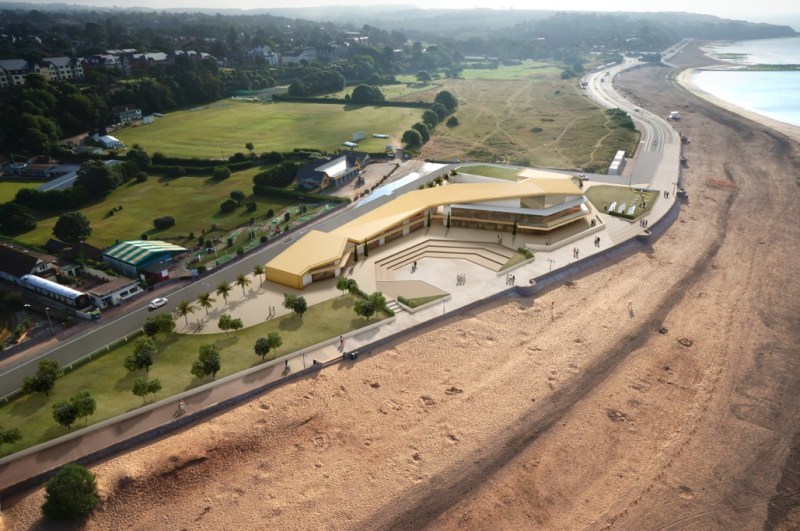
Owl thinks … well, no matter what Owl thinks … what do others think?
If it ISN’T a Grenadier mock-up, perhaps the company would confirm this and perhaps send us an image of their plans.
“Professor Colin Mellors, Chair of the Commission, said: “We will consider every submission we receive from local people before we draw up draft recommendations. We will then open another phase of consultation on those proposals in February.
He added: “Don’t miss this chance to have your say on how your council is run.”
This phase of public consultation closes on December 5.
Consultation responses should be sent to:The Review Officer (East Devon), Local Government Boundary Commission for England, Floor 14, Millbank Tower, London SW1P 4QP”
More information at:
No doubt our Local Enterprise Partnership is on the case. What, it isn’t? What a surprise! Wasn’t “connectivity” one of its responsibilities?
But perhaps it won’t be long before Hinkley C gets its own station to make up for such losses!
Will we be seeing DCC transport supremo Stuart Hughes commenting on this? Hhhmm …
http://www.torquayheraldexpress.co.uk/hands-off/story-29925191-detail/story.html
“Families have reacted with fury at plans to shut Cranbrook Nursery’s provision for babies up to two years old at incredibly short notice.
An email on behalf of the Tillhouse Road nursery was sent out to parents at 7pm yesterday, telling them they are considering closing the baby room and restructuring the rest of the nursery’s provisions.
The closure of the baby room could be as soon as Friday, December 16.
A consultation period has now opened.
One parent, Kelly Keatley, said: “Obviously this is upsetting and frustrating as they are stating that the possibility is that the last day could be December 16 which gives us very little notice to find an alternative.
“It is supposed to be a consultation process but we wonder what that really means.
“They are making this decision without regard for the implications for working parents now in a position where they could be without childcare for January.”
…The nursery, part of Cranbrook Education Campus, consists of four rooms that currently cater from birth to five years.”
Autumn Statement 2016 – Cities, regions, and nations
3.49 Local infrastructure – The government will award £1.8 billion to Local Enterprise Partnerships (LEPs) across England through a third round of Growth Deals.
£556 million of this will go to the North of England,
£392 million to LEPs in the midlands,
£151 million to the east of England,
£492 million to London and the south east, and
£191 million to the south west.
Awards to individual LEPs will be announced in the coming months. This funding of local infrastructure will improve transport connections, unlock house building, boost skills, and enhance digital connectivity. The government will give mayoral combined authorities powers to borrow for their new functions, which will allow them to invest in economically productive infrastructure, subject to agreeing a borrowing cap with HM Treasury. The government will also consult on lending local authorities up to £1 billion at a new local infrastructure rate of gilts + 60 basis points for three years to support infrastructure projects that are high value for money.
3.50 English devolution – The government remains committed to devolving powers to support local areas to address productivity barriers. The government will continue to work towards a second devolution deal with the West Midlands Combined Authority and will begin talks on future transport funding with Greater Manchester. The government will transfer to London, and to Greater Manchester, the budget for the Work and Health Programme, subject to the two areas meeting certain conditions, including on co-funding. The government has also confirmed the Greater London Authority’s (GLA) affordable housing settlement, under which the GLA will receive £3.15 billion to deliver over 90,000 housing starts by 2020-21, and will devolve the adult education budget to London from 2019-20 (subject to readiness conditions). The government will continue to work with London to explore further devolution of powers over the coming months.
3.51 Regional productivity – The government has published a strategy setting out an overall approach to building the Northern Powerhouse, through addressing the key barriers to productivity that the region faces. The government will also publish a Midlands Engine strategy shortly.
3.52 Northern Powerhouse Investment Fund and Midlands Engine Investment Fund – The Autumn Statement confirms the arrangements for these funds, and the British Business Bank will make its first investments from the Northern Powerhouse Investment Fund in early 2017 to support local SMEs and its first investments from the Midlands Engine Investment Fund shortly after.
3.53 Scotland – The government will work with local partners and the Scottish Government towards a city deal for Stirling. The government has confirmed funding for city deals in Aberdeen and Inverness, is making progress towards a deal with Edinburgh, and will consider proposals for a deal with the Tay cities once they are brought forward, meaning all Scottish cities have the opportunity to agree a city deal. The government is also continuing to work with the Scottish Government to implement the Scottish Government’s fiscal framework and new powers set out in the Scotland Act 2016. (37)
3.54 Wales – The government is making good progress in discussions with local partners and the Welsh Government on a city deal for the Swansea Bay City Region. It will also consider options for a growth deal in north Wales and looks forward to receiving proposals from local partners. The government is also continuing to support the implementation of the £1.2 billion city deal for the Cardiff Capital Region, which was agreed in March.
3.55 Northern Ireland – The government continues to work closely with the Northern Ireland Executive towards the introduction of a Northern Ireland rate of Corporation Tax, subject to the Northern Ireland Executive demonstrating it has placed its finances on a sustainable footing.”
Remember, that small amount of money for the south-west has to be shared with:
Swindon and Wiltshire LEP
West of England L
Dorset
Cornwall …
… Devon and Somerset
Not quite the Mighty Boosh then, our LEP!
“Hospitals have been told to discharge thousands of patients and pass some scheduled surgery to private organisations to reduce pressure ahead of a potential winter crisis, it was reported.
Leaked memos also revealed that managers have been banned from declaring black alerts, the highest level, when hospital services are unable to cope with demand, the Daily Telegraph said.
The newspaper claimed instructions were sent by NHS England and the regulator NHS Improvement last month to reduce the levels of bed occupancy in hospitals, which are the most crowded they have ever been ahead of winter.
In the three months to the end of September, 89.1% of acute and general beds were full, compared with 87% last year, prompting the order for hospital trusts to take the drastic measures.
The goal is to reduce occupancy levels down to the recommended safe limit of 85% from December 19 to January 16, the Telegraph said.
Dr Mark Porter, chairman of the British Medical Association, said: “This is evidence of an over-stretched healthcare system that the government has failed to properly fund, which must outsource patient care to private providers to cope with predictable patient demand.”
Hospitals have been told to turn to the private sector to “maximise elective activity”, with operations such as knee and hip replacements likely to be among the outsourced procedures to help free up beds for urgent patients.
The measures are likely to have a significant cost to the NHS.
NHS England said plans to pace elective programmes and hospital discharges are put in place every year to maximise bed availability and reduce the possibility of cancelled operations.
A spokeswoman said: “Our ambition to reduce bed occupancy in hospitals over the festive period is about timely discharge and getting people to the most appropriate care setting ahead of the holidays, so there is capacity for early January when we know pressure is greatest.
“This is part of our well-rehearsed winter preparedness every year.”
A spokeswoman for both NHS England and NHS Improvement added there was a lack of a historic national protocol for hospitals when declaring alerts, leading to “a hotchpotch of confusing terminology”.
She said: “This has led to confusion between hospitals, ambulances and the public over what is happening, how to respond or how they can help.
“The new NHS guidelines are for hospitals to use when managing local operational pressures in order to deliver a consistent approach across the country.”
A letter from Michael Temple, Sidmouth
“Compare and Contrast
The highly controversial PegasusLife application for Knowle is to be decided at 10.30 am on Tuesday 6 December in the Council Chamber at Knowle, Sidmouth.
Readers might like to compare it with other recent PegasusLife applications:
1. Bath (assisted living): refused: “excessive and incongruous height”, “harmful impact upon surrounding heritage assets”, “nearby listed buildings undermined”, “the excessive tall building fails to respect its context”, “harmful impact on character and appearance of surrounding conservation area”.
Bristol (Nuffield Hospital site) – officers can’t support due to “excessive bulk and massing”, “doesn’t relate to surrounding context”, would “dominate the townscape”.
Wilmslow: refused: “too large, too high, no affordables”.
Harpenden (retirement flats) – refused due to “height (20.7 metres)”, “lack of privacy for neighbours”, “footprint 28 degrees greater than existing buildings”, “visually intrusive”, “residents’ parking would spill onto neighbouring roads”.
Knowle, Sidmouth (assisted living – or second homes?) – officers approve.
The East Devon District Council’s planning officer, departing from the Local Plan and its planning strategies, claims the the “benefits” to Sidmouth outweigh the harm to an English-Heritage listed building.
“Benefits”? Could he mean
the overbearing, intrusive impact on the park and neighbourhood of an excessively high, out-of-scale massed development?
the loss of heritage buildings and public assets like the Council Chamber where so many people met recently over the proposed hospital bed cuts?
the loss of weekend parking to this tourist town?
the loss of about 100 jobs?
the blot on Sidmouth’s skyline?
the loss to the public of the park’s fine lawn prospect?
the lack of a contribution towards affordable housing?
possible downtown drainage overflow during flash floods?”
Written Answers – Department for Work and Pensions: State Retirement
Pensions: Uprating (24 Nov 2016)
https://www.theyworkforyou.com/wrans/?id=2016-11-21.53946.h&s=speaker%3A
11265#g53946.q0
Hugo Swire: To ask the Secretary of State for Work and Pensions, what
information his Department holds on the number of pensioners whose
contributions were paid prior to 1997 who are not receiving annual
increases to their private pension payments which are in line with the
retail price index.
Written Answers – Department for Work and Pensions: State Retirement
Pensions: Uprating (24 Nov 2016)
https://www.theyworkforyou.com/wrans/?id=2016-11-21.53946.h&s=speaker%3A
11265#g53947.q1
Hugo Swire: To ask the Secretary of State for Work and Pensions, if he
will make an estimate of the potential cost to providers of requiring
all private pension payments, including to those pensioners whose
contributions were paid prior to 1997, to increase in line with the retail price index.
Is he thinking of retiring?
The number of hospital beds in England taken up by patients being treated for malnutrition has almost trebled over the last 10 years, in what charities say shows the “genuinely shocking” extent of hunger and poor diet.
Official figures reveal that people with malnutrition accounted for 184,528 hospital bed days last year, a huge rise on 65,048 in 2006-07. The sharp increase is adding to the pressures on hospitals, which are already struggling with record levels of overcrowding.
Critics have said the upward trend is a result of rising poverty, deep cutbacks in recent years to meals on wheels services for the elderly and inadequate social care support, especially for older people. …”
… The Department of Health figures showed that the number of bed days accounted for by someone with a primary or secondary diagnosis of malnutrition rose from 128,361 in 2010-11, the year the coalition came to power, to 184,528 last year – a 61% rise over five years.
Such patients only account for one in 256 of all hospital bed days, or 0.4% of the 47.3m total, but the financial cost is considerable as each bed costs the NHS an average of £400 a day to staff and given the condition each spell in hospital because lasts an average of 22 to 23 days.”
“The Royal College of Surgeons has warned of a chronic shortage of NHS hospital beds in England, after occupancy rates for overnight stays topped 89% for a fourth successive quarter.
The maximum occupancy rate for ensuring patients are well looked after and not exposed to health risks is considered to be 85%, a figure that has not been achieved since NHS England began publishing statistics in 2010.
From July to September this year the percentage of beds occupied in wards open overnight was 89.1%, compared with 87% in the same period last year. That was the last time it was below 89%.
The RCS said the figures, published on Thursday, made for alarming reading and indicated a failure to cope with the increasing number of older patients in hospital.
Ian Eardley, a consultant urological surgeon and vice-president of the RCS, said: “The NHS has been able to reduce bed numbers as medical advances mean more modern surgery can take place without an overnight stay. However, these figures suggest bed reductions have now gone too far in the absence of sufficient social care or community care alternatives. …”
What they have in common is, now The Donald has won his election, he is involving his family, his own businesses and his cronies in his political appointments and “strategic” decision-making.
If we have an elected Mayor with vested interests in Devon or Somerset or Devon AND Somerset, what checks and balances do we have to stop the Mayor putting his or her own interests first like The Donald?
If we get a Mayor with Hinkley C connections can we be sure that, where a decision on Hinkley C conflicts with a Devon interest, the Devon interest will have equal weight? Or vice-versa if the Mayor is Devon-centric.
And what if the Mayor has allegiance to neither county – only a national interest as a developer, a developer’s friend or is a large developer’s shareholder. What then?
We all know of politicians and business people with dubious reputations. Few politicians and even fewer members of our Local Enterprise Partnership are trusted. Who can we trust to represent us all?
Institute of Fiscal Studies”
“Chancellor Philip Hammond will not be able to resist calls for extra funding for health and social care for much longer, the head of the Institute for Fiscal Studies has predicted. …”
They join:
The King’s Fund:
Which reported that changes were kept secret from doctors and the public:
The National Audit Office:
Which reports that the NHS is underfunded:
https://www.theguardian.com/society/2016/nov/22/nhs-financial-problems-endemic-and-no-longer-sustainable-national-audit-office-deficit
and
The UK Statistics Agency:
which says numbers simply don’t add up including the purported £10 billion extra cash:
Who disagree? Theresa May and Jeremy Hunt. Their plan? Cut, cut, cut – then privatise what makes money and keep cutting essential services don’t show a profit.
Moral of this story: Don’t get sick but do get angry!

