Exmouth Fun Park temporary “attractions” – consultation extended to 17 January 2018

The deadline for comments to be submitted on plans for temporary attractions for Exmouth seafront has been extended.

East Devon District Council has submitted plans for a temporary use of land, buildings and structures for a 12-month period for the purposes of entertainment, recreation and leisure on the site of the former Fun Park.

… The initial deadline for comments to be registered was January 12 – and some residents reported that during the Christmas holiday period, they were unable to either access the application or submit any comments.

An East Devon District Council spokesman said: “We are not aware of any issues with accessing the application on-line. It certainly appears to be working perfectly at the moment and the site was periodically checked over the festive period to ensure that it was working. We are therefore content that there is no problem with the system and our web-site.

“We have received some additional information from the applicant in the last couple of days. This information is now available on our web-site and to enable interested parties to review and comment on this information the consultation period has been extended to January 17, 2018.”

http://www.devonlive.com/news/devon-news/deadline-extended-comments-temporary-attractions-1011312

Greendale, Hill Barton: councillors meet hurridly to try to ensure they can expand and discuss possible loopholes to enable it

EDDC Tory councillors recently very, very hurriedly organised a meeting of their Strategic Planning Committee when they suddenly realised that the Villages Built Up Area Boundary Plan might severely restrict extension of the massive Greendale Business Park and the smaller but ever-growing Hill Barton Business Park.

The ensuing discussion as to how expansion of Greendale and Hill Barton might be inserted into the plan at this very, very late stage, and the loopholes that might be exploited to enable this was very interesting.

Owl says: This is SO SO reminiscent of the attempts to move the goalposts for the proposed business park in Sidford (so ably fought against by Independent EDA councillor Marianne Rixson)
https://eastdevonwatch.org/2016/06/10/how-did-business-park-on-a-sidford-floodplain-come-to-be-in-the-local-plan/

and the time when councillors attempted to add no less than FIVE business parks to the eastern side of East Devon in the Local Plan in March 2015 when CEO Mark Williams said it was not possible to take the Sidbury site out of the Draft Local Plan when it went to the Inspector but it WOULD be possible to ADD five sites! These were: Woodbury Park (Greendale), Addlepool in Clyst St George, Lodge Trading Estate at Broadclyst, Hungry Fox also at Broadclyst and McBains, presumably the site at Exeter Airport.
https://eastdevonwatch.org/2015/03/30/employment-sites-5-new-sites-sneak-into-the-local-plan/

We are in the consultation period for the EDDC villages plan (consultation closes on 2 February 2018 (see final paragraphs of this post on how to submit a comment)

THE MEETING OF 12 DECEMBER 2017

The East Devon Strategic Planning Committee proposed to change the wording of Policy VP04 and VP05 for Greendale and Hill Barton Business Parks.

The meeting was somewhat controversial as it was held at short notice (8 days) to consider the EDDC Village Plan Consultation. It was agreed that this meeting was to be held urgently but due to the short notice and councillors previous engagements not all councillors where able to attend, with only 7 members of the committee able to attend.

Notes taken from the meeting of the Strategic Planning Committee held at Knowle, Sidmouth on 14 December 2017

For minutes see:

Click to access 141217-strategic-planning-committee-minutes.pdf

Attendance list Committee Members:

Cllr Phil Twiss – Chairman, Cllr Graham Godbeer – Vice Chairman, Cllr Mike Allen, Cllr Colin Brown, Cllr Jill Elson, Cllr Ian Hall, Cllr Mike Howe,
Cllr Philip Skinner

Note that the members present were all Conservative Councillors.

Also present (present for all or part of the meeting):
Councillors: Brian Bailey, David Barratt, Paul Carter(related to the Carters of Greendale) Paul Diviani, Peter Faithfull, Steve Hall

Councillors who could not attend:
Cllr Susie Bond (Independent)
Cllr Geoff Jung (Independent)
Cllr Rob Longhurst (Independent)
Cllr Geoff Pook (Independent)
Cllr Brenda Taylor (Liberal)
Cllr Mark Williamson (Conservative)

Apologies sent: Councillors Susie Bond, Geoff Jung, Rob Longhurst, Geoff Pook, Brenda Taylor and Mark Williamson

Officers present for all or part of the meeting:

Matt Dickins, Planning Policy Manager
Ed Freeman, Service Lead – Planning Strategy and Development Manager EDDC
Rob Murray, Economic Development Manager EDDC
Shirley Shaw, Planning Barrister EDDC
Hannah Whitfield, Democratic Services Officer EDDC
Mark Williams, Chief Executive EDDC

Notes from the meeting relating to the Business Parks.

Cllr Phillip Skinner, declared an interest as a “personal reason” as he knows the owners of Greendale Business Park and Hill Barton Business Park. A “personal interest” rather than a “pecuniary interest” does not automatically exclude a councillor from contributing to a meeting.

The East Devon Villages Plan, which was submitted to the Planning Inspectorate earlier in the year (June 2017) for examination, had been subject to Planning Inspectors hearing sessions in November 2017 for two days at the Council Offices.

Following on from the hearings, a schedule of “main modifications” has been produced by the Inspector for a further public consultation period.

The Inspector will consider representations received during the consultation before finalising her report on the Plan – she had set out a timetable for the consultation on the main modifications to run from 18 December 2017 to 2 February 2018. (7 weeks)

Mr Ed Freeman (Planning Strategy and Development Manager) summarised the modifications and advising of the next steps to the Plan adoption. The modifications did not seek to alter the broad approach taken by the Plan as they have strengthened and clarified the approach, ensuring stronger policy links between the Villages Plan and the adopted Local Plan. The modifications included:

• A policy for Built-up Area Boundaries for villages;
• A policy for Greendale and Hill Barton Business Parks;
• Amendment to Beer and Colyton village/town centre vitality policies;

Councillors questioned the inclusion of inset maps and policies for both Greendale and Hill Barton Business Parks and were discussed at length:

Some Councillors questioned the inclusion of “BUABs” for the two strategic employment sites which they believed were not in accordance with the Local Plan and the wording used within the polices would prevent the two sites from any expansion. The Maps the Councillors were referring to are the areas already approved for Employment/Industrial use and not a Built-up Area Boundary.

Mr Freeman advised that the boundaries shown for both sites in the Villages Plan were for information purposes only and were not policy designations. Both sites were in the open countryside and the Inspector was suggesting that the relevant polices within the Local Plan would be used to determine planning applications for both sites.

A couple of the Committee Members took issue with the reference in the proposed policy of ‘in particular Strategy 7 of the East Devon Local Plan (Development in the Countryside)’ in the new proposed polices relating to the Business Parks of VP04 and VP05, as it was felt to be unnecessary.

Mr Freeman advised that the legislation would not permit the Council at this late stage of the examination process to challenge or amend the modifications put forward by the Inspector; however, a submission could be sent from the Committee in response to the consultation advising of Members preferred wording to the policy.

Councillors suggested that the sites should be treated as “Brownfield employment sites” and not Greenfield sites and that there should be flexibility to allow for appropriate development within and expansion of the sites.

Mr Freeman advised that both sites were clearly Brownfield but this did not change the fact that they were in the open countryside and that developments would be considered as development in the open countryside under the policies of the Local Plan.

Some Councillors believed they had not been given all the appropriate information regarding the economic importance of the sites as detailed in Rob Murray’s (Economic Development Manager) comments when they had made their decision for the sites to be included in the Villages Plan.

Some Councillors attending were under the misapprehension that Hill Barton and Greendale Business Parks are required for delivering the current District and Village Plan Employment Strategies. However, Mr Freeman explained that other strategic Employment sites are being delivered for employment within the district.

Mr Freeman explained that there were many key strategic employment sites within the district and that the employment allocations within the Local Plan would more than deliver the required employment figures for the district. It was recognised that some of the sites were constrained, but work was being undertaken to unlock and deliver those sites. The Villages Plan reinforced what was already in the adopted Local Plan.

He acknowledged that the two sites were important to the district’s economy, however they were both constrained by the road infrastructure and their impacts on neighbouring properties/settlements and the wider landscape. Any expansion needed to be appropriate and delivered in accordance with the Local Plan policies. Previous applications had been approved as departures from the Local Plan where they were considered appropriate and the benefits of the development outweighed the previous Local Plan polices.

Rob Murray (Economic Development Manager) advised that he believed that Greendale and Hill Barton were strategic employment sites for the district and constraining them would exacerbate the current under supply of employment delivery and therefore his recommendation, through the internal officer consultation process, had been that the two sites should be removed from the Villages Plan.

The Meeting decided by 5 votes to 2

1. That the main modifications to the East Devon Villages Plan, as set out in the committee report, and updated sustainability appraisal, be consulted upon from 18 December 2017 to 2 February 2018 (consultation responses received would be submitted straight to the Inspector for consideration in her final report)

2. That the Inspector be sent a submission from the Strategic Planning Committee during the consultation period on the main modifications to the Villages Plan asking her to consider excluding the words ‘in particular Strategy 7 of the East Devon Local Plan (Development in the Countryside)’ from the new polices VP04 and VP05, as the Committee did not consider this to be necessary as all relevant policies within the Local Plan would apply to the two employment sites concerned.

Councillor Philip Skinner proposed and seconded by Councillor Mike Allan. (Mike Allan who is lead councillor for employment and business at EDDC is also the District Councillor, who will be attending the re-established Greendale Liaison Group meetings,)

So why is now necessary to suggest to the Planning Inspector to remove the reference to Strategy 7 of the East Devon Local Plan?

It is hoped that that the Local Parish Councils, Residents Associations, and many local people who are affected by these Business Parks will submit responses to the Inspector during this final consultation period (final day 2 Feb 2018) requesting that:

All the text regarding these Business Parks is included especially the sentence the 5 councillors supported at the Strategic Planning Committee meeting on the 14th Dec requests removing.

“in particular Strategy 7 of the East Devon Local Plan (Development in the Countryside)”

This sentence must remain in Policies VP04 and VP05 of the Villages Plan to ensure a substantial link to the East Devon Local Plan.

Details of how to respond to the Village Plan

The schedule of main modification, the updated SA/SEA, an amended version of the Villages Plan that incorporates the proposed changes and further information about the consultation may be viewed on the Council web site at: Villages plan examination – East Devon
If you wish to comment on the proposed schedule of main modifications or the updated SA/SEA, please email planningpolicy@eastdevon.gov.uk by no later than 2nd February 2018. All responses received will be forwarded to the Inspector for her consideration prior to issuing her report, which will be in the Spring of 2018.
If you want further information please contact the planning policy team on 01395 571533.
The Officer to contact is Linda Renshaw (Mrs) Senior Planning Officer East Devon District Council Tel. 01395 571683 Working days Tuesday, Wednesday and Thursday.

Exmouth temporary attractions planning application – consultation period should be extended

Reminder to people to comment on EDDC temporary attractions planning application to replace the Fun Park.

Closing date 12 January 2018

17/2944/FUL

However the comment page for this planning application was inaccessible over Christmas this should mean that the consultation period should be extended.

District council criticised by Exmouth Town Council for too little detail in planning application!

Another story from the Christmas break:

Our district council is the local planning authority and has professional planning staff – yet it can’t put in a decent explanation of what it will put on Exmouth seafront next year to replace the businnesses it evicted this year.

Can you imagine if you put in an outline planning application for a house with a line around the property and just words like “bedrooms might go here” or “the kitchen might be here” but “then again I might change my mind – and maybe have a conservatory over there , I’m not sure – but give me planning permission and I’ll sort it out”!

AND it’s a regeneration site!

From Exmouth Journal:

“Concerns have been raised over a lack of information on the attractions, which also includes pop-up food outlets and a children’s play area, set to be in place for 12 months from March next year.

An outline planning application is for the Queen’s Drive site – formerly home to Exmouth Fun Park which was evicted in September this year.

EDDC says the attractions will stop the site from becoming ‘unused and derelict’ prior to its redevelopment as part of phase three of the Queen’s Drive regeneration scheme.

At a planning committee meeting this week, Exmouth Town Council opposed the application raising concerns over the lack of information given on the nature of the attractions.

At the meeting, councillor Bill Nash branded the plans ‘a blank piece of paper’.

He said: “There is insufficient information for a decision to be made and I would ask the applicant to withdraw this application and resubmit it.

“The documentation says that at this stage because the end users are not being specified, the size, extent and nature of the structures cannot be identified – how can we give approval on something if we don’t know what it is?”

Nick Hookway, chairman of the Save Exmouth Seafront campaign group, said: “The idea of slicing up the site with three categories of attractions is to be deplored as being quite unnecessary. The application is lacking any form of detail as to the type of facilities that will be available next summer and in no way makes up for the closure of the popular, successful and much valued ‘fun park’.”

An EDDC spokesperson said: “This planning application is for uses that are specifically temporary and it responds directly to town council and wider public concern that the Queen’s Drive area might be unused for a while as development of sites happens.

“It is unfortunate that the town council felt unable to respond positively and promptly to the district’s desire to pave the way for a mix of new, temporary attractions.”

http://www.exmouthjournal.co.uk/news/insufficient-detail-in-exmouth-seafront-plan-say-town-council-1-5329825

Cranbrook estate rent charges 2

(See post below also)

From a correspondent:

Wain Homes (55 properties) and Cavanna Homes (19 properties) have their own Estate Rent Charge which will remain in place but they will pay the higher CTC precept

The Town Council had indicated a willingness in principle to take on the public open space on both sites. Wain Homes remain subject to enforcement because of failure to complete the public open space and we met with them in the summer of 2017 to discuss this.

If they complete the work CTC could adopt the public open space. Hopefully local residents on the site will press Wain Homes to do this.

Cavanna have passed their public open space to a management company but undertook to have talks to have the public open space transferred back so that CTC could adopt it. In both cases the ball is in the developers’ court.”

Cranbrook residents very unhappy about estate rent charge bills

Basically a total mess with large annual bills hitting residents just before Christmas. Many residents dispute work and charges.

And this is interesting:

Double charging because residents pay the full East Devon District Council council tax

EDDC has consistently taken the line that it will not take on responsibility for anything other than its statutory responsibilities and this is not unique to Cranbrook but affecting all other new major developments.
On the face of it this is unfair – Cranbrook residents contribute to all public open space owned by EDDC but the reverse is not the case.

This is why the Town Council is seeking to take on these responsibilities to provide best value for residents of the Town.

It is for EDDC to respond to this point.”

https://www.cranbrooktowncouncil.gov.uk/town-councils-response-statement-re-estate-rent-charge-letters

EDDC Leader’s New Year message … excellent rhubarb crop this year

Summary:

We are wonderful, we are doing so much with so little … rhubarb … rhubarb… rhubarb … waffle … systems thinking … waffle … increasingly reliant on income generated from business rates …commercial mind-set in our decision-making … particularly management of assets …

No mention of the £10m (plus?) to be spent on its new HQ, of course.

Read it if you must, but Owl is still incandescent with rage about Diviani promising to be “lean, clean, green and seen” when they got voted in – instead of which we got profligate, mucky, muddy and opaque!

http://www.midweekherald.co.uk/news/east-devon-district-council-pledges-to-maintain-services-1-5338415

EDDC spends half a million pounds on temporary staff in last year

A Freedom of Information request has elicited the following information:

“What the total spend on Temporary/Interim staff has been in the last twelve months?

£517,550 – December 2016 – Nov 2017”

http://eastdevon.gov.uk/access-to-information/freedom-of-information/freedom-of-information-published-requests/

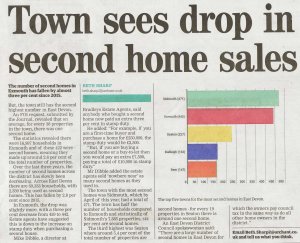
Exmouth sees drop in second home sales

“The number of second homes in Exmouth has fallen by almost three per cent since 2015. But, the town still has the second highest number in East Devon.

An FOI request, submitted by the Journal, revealed that on average, for every 38 properties in the town, there was one second home.

The statistics revealed there were 16,987 households in Exmouth and of these 422 were second homes, meaning they made up around 2.6 per cent of the total number of properties.

Over the last three years, the number of second homes across the district has slowly been decreasing. Across East Devon there are 69,333 households, with 2,339 being used as second homes. This has fallen by 2.8 per cent since 2015.

In Exmouth, the drop was slightly more, with a three per cent decrease from 459 to 442. Estate agents have suggested this is down to the increase on stamp duty when purchasing a second house. Mike Dibble, a director Bradleys Estate Agents, said anybody who bought a second home now paid an extra three per cent in stamp duty. He added: “For example, if you are a first-time buyer and purchase a home for £250,000, the stamp duty would be £2,500.
“But, if you are buying a second home or a buy-to-let then you would pay an extra £7,500, paying a total of £10,000 in stamp duty”.

Mr Dibble added the estate agents sold ‘nowhere near’ as many second homes as they used to.

The town with the most second homes was Sidmouth, which by April of this year, had a total of 471. The town has half the number of households compared to Exmouth and statistically, of Sidmouth’s 7,885 properties, six per cent are second homes.

The third highest was Seaton where around 5.4 per cent of the total number of properties are second homes – for every 19 properties in Seaton there is around one second home.

An East Devon District Council spokeswoman said: “There are a large number of second homes in East Devon for which the owners pay council tax in the same way as do all other home owners in the district.”

Source:
Journal 14 December 2017

The original article:

Final Consultation for the East Devon Villages Plan – your input urgently needed, particularly on business park expansion

The revised policies will provide further controls on Hill Barton and Greendale Business Parks.

On a recent Planning Enforcement Appeal, the Planning Inspector`s conclusion was he disagreed with the appellant’s (FWS Carter and Sons owners of Greendale Business Park) contention that the Local Plan is silent on the matter of employment provision/future development at the major existing employment sites of both Greendale and Hill Barton Business Parks. He stated that ‘although there may be no specific policies for the business parks Strategy 7 and Policy E7, it is perfectly clear that the Plan seeks to apply a “restrictive policy approach” to accommodating further development’.

At a Strategic Planning Meeting last week it was agreed to submit the “Villages Plan” to a further 7 week consultation period which has been through the various consultations and Planning Inspectorates hearings.
East Devon District Council have yesterday(Monday 18th December) submitted the Villages Plan for consultation on the Local Plan Inspectors “Main Modifications” that she had included following her hearings held at Sidmouth in November.

The Village Plan is an extension to the already approved East Devon Local Plan which gives further detail on the 15 larger Villages in the district with new BUAB (Built up Area Boundaries) proposals which will provide some extra development for the next 15 years.

Also included are the two Industrial areas at Greendale Business Park and Hill Barton Business Park which will have an “Employment Area” drawn around them as they are both contrary to the East Devon Local Plan as they are considered to be in the open countryside where development should not be allowed.

The Planning Inspector has proposed two new Policies VP04 and VP05 covering the Business Parks. Reading the other Inspector’s report for the Enforcement Appeal who stated that there were no specific policies for the business parks, these new proposed policies will provide the clarity and guidance required to prevent these Business Parks expanding further into the countryside or closer to local communities.

History of the Village Plan

Following the hearings in 2015 with the Planning Inspectorate it was agreed to remove all villages’ growth targets from the Local Plan and create a subsidiary plan for the Villages. It was also agreed to include further clarity for Hill Barton and Greendale Business Park with this new Village Plan.

The original Village Plan was drawn up by planning officers from the District Council, agreed by the EDDC Strategic Planning Committee and at a meeting of the Full Council to go out for a 6-week public consultation from 22 March to 10 May 2017.

Following the consultations, changes were made to the Plan by the EDDC Planning Officers and the Strategic Planning Committee and then agreed by Full Council and submitted it to the Government Planning Inspectorate. This required another Public Consultation of 6 weeks when all interested parties were invited again to submit comments direct to the inspector followed by an Inspectors Hearing for 2 days in Nov 2017.

This procedure follows the agreed guidance of Democratic Principles, giving the Local Electorate plus the relevant Parish Councils, the ability to scrutinise and to submit comments to enable the District Council and finally the Inspector to ensure the Village Plan Document is both legally compliant and has followed fully the democratic principles.

Policy VP04 relating to Greendale Business Park.

Policy VP04 – Greendale Business Park Inset maps are included in this plan that show the extent of authorised uses at the Greendale Business Park for information purposes only. Development of Greendale Business Park as indicated on the inset map will be considered in accordance with the relevant policies of the development plan, in particular Strategy 7 of the East Devon Local Plan (Development in the Countryside)

Policy VP05 relating to Hill Barton Business Park.

Policy VP05 – Hill Barton Business Park Inset maps are included in this plan that show the extent of authorised uses at the Hill Barton Business Park for information purposes only. Development of Hill Barton Business Park as indicated on the inset map will be considered in accordance with the relevant policies of the development plan, in particular Strategy 7 of the East Devon Local Plan (Development in the Countryside)

These new Policies which the Inspector specifically required to be added to the proposed plan are to make it legally complaint and to link in to the already approved East Devon Local Plan.

It is a key principle to the Local Plan that these Business Parks are not to be extended from their present boundaries as they are in the open countryside.

District Councillor Geoff Jung (Raleigh Ward)

“This is another significant step forward by the Local Planning Authority to provide further support to the local plan strategy for Greendale and Hill Barton Business Parks.”

“The Business Parks provide employment for many local people, but the sites are in the open countryside located some distance from where people live. The Government and Local Authority strategy is to provide employment in locations close to where people live.”

“Further development will be provided within these business parks but expansion beyond their present approved boundaries will be against local planning strategies and policies.”

“If the Village Plan is adopted as proposed this will provide the clarity that local people have been asking for, for years”

“As well as being inappropriate development within the countryside, there are significant highway issues relating to these Business Parks with the HGV traffic on the A3052 Sidmouth Road from the M5 to the Halfway Inn being heavily used and the Sandy Gate roundabout and the Clyst St Mary Roundabout at already at full capacity.”

“It is thanks to local residents, various associations and action groups, and concerned Parish Councils, within the wider area who have worked with tenacity and persistence to get to this final hurdle”

An Urgent Request for Residents to Respond

What is required now is for local people to write or email to the Local Authority in support of 17.3 changes and additions, plus the new Policy VP04 for Greendale Business Park and 18.1-18.2 changes and additions, plus the new Policy VP05 for Hill Barton.

To agree with the Inspectors proposals in full recognising the current employment boundary of Greendale and Hill Barton, this would protect the “open countryside”

The schedule of main modification, the updated SA/SEA, an amended version of the Villages Plan that incorporates the proposed changes and further information about the consultation may be viewed on the Council web site at: Villages plan examination – East Devon

http://eastdevon.gov.uk/planning/planning-policy/villages-plan/villages-plan-2017/villages-plan-examination/

If you wish to comment on the proposed schedule of main modifications or the updated SA/SEA, please email

planningpolicy@eastdevon.gov.uk

by no later than

2nd February 2018.

All responses received will be forwarded to the Inspector for her consideration prior to issuing her report, which will be in the Spring of 2018.

If you want further information please contact the planning policy team on 01395 571533.

The Officer to contact is Linda Renshaw (Mrs) Senior Planning Officer East Devon District Council Tel. 01395 571683 Working days Tuesday, Wednesday and Thursday.


Sidmouth Port Royal: an independent view

“In July, ‘Three Rs’ campaigners unveiled their alternative vision to ‘retain, refurbish, re-use’ the site’s existing buildings.

They wanted to challenge suggestions that the ‘only apparent option’ for the development of eastern town was to construct a multi-use building with 30 homes that could stand up to five storeys high.

Campaigners argue the existing buildings should be retained, the whole area should be refurbished as needed and sites such as the Drill Hall and the old boat park should be re-used.

In a bid to keep the public informed, they have created four information sheets ahead of the publication of a final report on Port Royal.

Councillor Cathy Gardner, [Independent East Devon Alliance] who is one of those leading the Three Rs campaign, said: “We think it is important people have more background information for the proposals for the Port Royal area, particularly while we are waiting for the final report from the scoping study – we are expecting that in January.

“We have tried to be as factual as we can. People ask a lot of questions and sometimes there are misunderstandings, and we just want to help clarify it for everybody.”

The information sheets explain the challenges East Devon District Council (EDDC) faces in redeveloping the site and the importance of the authority deciding on what happens, and argue it is essential to retain the Drill Hall.

The guides also look at what the Ham is and its conveyance, the role played by Sidmouth Town Council, what the Local Plan has to do with Port Royal, and where Devon County Council comes in.

As well as this, the information sheets will address how the car parks could be refurbished.

Cllr Gardner said the campaigners could also cover other topics so asked residents who were unsure on anything or think something should be clarified to let them know.

The information sheets have also been pinned up on a notice boards around Sidmouth and are available online at http://www.retain-refurbish-reuse.uk.

Alternatively, email cathy.gardner@eastdevonalliance.org.uk for an electronic copy.”

http://www.sidmouthherald.co.uk/news/info-sheets-released-to-help-all-understand-potential-port-royal-development-in-sidmouth-1-5322440

CPRE seminar 19/01/2018 10 am: New Housing and The Greater Exeter Strategic Plan – special guest: Hugo Swire

Friday 19th January 2018.
10am-12.30pm.
The Gipsy Hill Hotel,
Gipsy Hill Lane,
Pinhoe, Exeter
EX1 3RN

Guest speakers:
Rt Hon Sir Hugo Swire MP;
George Marshall, Greater Exeter Strategic Plan.

How many new homes are planned for your community and where?

Please join us for this important opportunity to find out more about the Greater Exeter Strategic Plan for Exeter, East Devon, Mid Devon and Teignbridge and the plans for new housing.

All welcome.

Places must be reserved – to book a place please contact us on
01392 966737
or email:
director@cpredevon.org.uk

East Devon mentioned in corruption and bribery article in Sunday Times

See post below for the history of the mention of East Devon.

“Bricks, bribery and mortar — the flaw built into our planning rules

This newspaper’s exposure of a corruption scandal in London is just the tip of the iceberg, says Rohan Silva. Outmoded development laws allow crime to thrive.

Exactly seven years ago today, on December 17, 2010, a young man named Mohamed Bouazizi set himself on fire outside a government building in Tunisia, kicking off the Arab Spring that turned the geopolitics of the region on its head.

In the aftermath of the turmoil, the influential economist Hernando De Soto interviewed Bouazizi’s family — and the families of the dozens of other people who killed themselves in similar ways in countries from Saudi Arabia to Egypt.

De Soto wanted to find out why these young men and women had committed violent acts of self-immolation — and he concluded that every case had the same root cause: “Desperation over property.”

According to De Soto, the absence of enforceable property rights in Tunisia — and across the Arab world — meant people were at constant risk of their property being confiscated by the government, and made it almost impossible to escape poverty and build a better life for their families.

Here in the UK, we tend to think property rights are a developing-world issue — with our long history of land registration and ownership, it’s easy to assume everything is hunky-dory.

If only. Last weekend this newspaper published a damning exposé of corruption in east London, with a £2m bribe sought from a developer in exchange for the promise of permission to build a skyscraper, Alpha Square.

Off the back of this exemplary journalism, the National Crime Agency is investigating the incident. Hopefully the bent politicians and officials will be brought to justice.

But the depressing truth is that corruption is endemic in Britain’s bureaucratic planning system. In every corner of the country, you can find stories of bribery, with local councillors and officials rigging the planning process for their own gain.

Doncaster, Enfield, Greater Manchester, EAST DEVON — these are just a handful of the local authorities where corrupt practices have been discovered in planning departments. In other words, the corruption is systemic and it’s caused by the inadequacy of Britain’s property rights.

To understand why, we need to look back to 1947, when post-war socialist planning was all the rage, industries were being nationalised and the state was steadily gaining control of the “commanding heights” of the economy.

That year, the Town and Country Planning Act was introduced, giving the government the power to determine the direction of property development. This piece of legislation is the basis of today’s planning system — and it took land development rights away from property owners and gave them to the planning authorities. It was another form of nationalisation, in other words.

Ever since, when you buy a piece of land in the UK you receive its property title, but you have absolutely no idea what you’re allowed to build on it — that’s up to planning officials in the local council.

Given that the value of a property can increase by tens — or even hundreds — of millions of pounds depending on what the planners decide, the incentive for corruption among low-paid officials and councillors is overwhelming.

Unfortunately, the lack of clear property rights doesn’t only lead to corruption. It also slows down every aspect of the development process, creating a boon for expensive planning consultants and lawyers.

All this bureaucracy helps explain why too few houses have been built over many decades, with monumental social and economic consequences.

As Mark Littlewood of the Institute of Economic Affairs has pointed out, our outmoded planning system has artificially inflated property prices in the UK by as much as 41%, adding more than £3,000 to the average family’s annual rent or mortgage payments.

What’s more, our post-war planning system stifles innovation. Developers have to play it safe, putting forward generic projects designed to get through the bureaucracy, rather than delivering what consumers want.

As the architect Lord Rogers has asked, why should bureaucrats get to decide on aesthetics? It’s a recipe for the kind of soulless grey buildings you now find in every British city.

Corrupt practices. Market failure. Lack of innovation. These are just some of the consequences of our broken planning system — the last vestige of socialist command-and-control we have left in the UK. (Until Jeremy Corbyn gets elected, anyway.)

It doesn’t have to be like this. In US cities, when you buy a piece of land, it comes with property rights that tell you what you’re allowed to build on it and how much extra space you can add.

This is known as “by-right” planning permission — because you don’t need a bureaucratic process to tell you what you can do. You apply for planning permission only if you want to build more than you’re entitled to.

Now is the time to bring this approach to this country and clamp down on corruption. By strengthening the UK’s framework of property rights and dismantling the failed post-war planning system, we can cut red tape and stamp out bribery.

Thanks to this newspaper’s exposure of corrupt practices, change is surely coming. You might even call it a British Spring.

Rohan Silva”

Source: Sunday Times, paywall

The disgraced ex-EDDC Tory Councillor Graham Brown “If I can’t get planning, nobody will” scandal refuses to die

Remember the disgraced ex-Councilor Graham Brown scandal?

http://www.telegraph.co.uk/news/politics/9920971/If-I-cant-get-planning-nobody-will-says-Devon-councillor-and-planning-consultant.html

Well, it refuses to die.

The Sunday Times today (page 29, main paper) mentions it in passing in an article entitled “Bricks, Bribery and Planning – the flaw built into our planning rules” (full text to follow shortly).

“But the depressing truth is that corruption is endemic in Britain’s bureaucratic planning system. In every corner of the country, you can fund stories of bribery, with local councillors and officials rigging the planning system for their own gain.

Doncaster, Enfield, Greater Manchester, EAST DEVON – these are just a handful of local authorities where corrupt practices have been discovered in planning departments. In other words, the corruption is systemic and it’s caused by the inadequacy of Britain’s property rights”. …”

Brown, at various times, headed up the East Devon Business Forum, was also highly influential in the early stages of the Local Development Plan (which wasted two years or more mostly visiting big development sites owned by prominent businessmen and which had to be abandoned and re-started under the later chairmanship of Councillor Philip Skinner).

Brown held many other posts throughout his long career as an EDDC councillor, mostly related to planning, while running his local planning consultancy business – a fact of which other Tory majority party councillors and officers were very well aware, but did not perceive as not being a conflict of interest – until the Daily Telegraph sting.

His only censure was to be kicked out of his local Tory party – local police refused to be involved with an inquiry due to insufficient evidence. Were local planners and councillors – or even the Daily Telegraph or Anna Minton – asked for evidence? We have no idea.

Brown features (as does East Devon generally – a whole chapter) in the Anna Minton expose “ Scaring the Living Daylights Out of People: The Local Lobby and the Failure of Democracy” (Section 3: The Local Mafia: Conflicts of Interest in East Devon”) :

Click to access scaring-the-living-daylights-final.pdf

As a final insult to injury, after his departure from EDDC he attempted to get the agricultural tie lifted from the farmhouse in which he lived (which would have greatly increased its value by up to 40%) until a local investigation (led by East Devon Alliance) uncovered the fact that he had been receiving EU farming subsidies to the tune of at least £850,000 throughout the period he said he was no longer farming:

https://eastdevonwatch.org/2014/09/22/ex-councillor-browns-facts-disputed-2/

“Social care postcode gap widens for older people”: EDDC tries to claw back its mistakes too late

Last week, desperate Tories put a much-too-little! much-too-late motion to East Devon District Council:

“To ask the Leader of East Devon District Council to request Sarah Wollaston, Chair of the Parliamentary Health Select Committee, to investigate the effects on Rural Communities of the STP actions and to test if Rural Proofing Policies have been correctly applied to these decisions in order to protect these communities”

https://eastdevonwatch.org/2017/12/13/effect-of-sustainability-and-transformation-plans-on-rural-communities-east-devon-tories-miss-the-boat-then-moan-about-it/

As Owl noted at the time, this is somewhat rich, as their Leader, Paul Diviani, voted at Devon County Council AGAINST sending the document to the Secretary of State for Health (where this could have been highlighted in the covering submission) against the instructions of his EDDC Tory Councillors and never having consulted other Devon Tory councils he was supposed to represent. He was ably assisted in this by former EDDC Chairman Sarah Randall Johnson, who as Chair of the DCC committee, railroaded their choice of action by effectively silencing any opposition (EDW passim)

This led to the accelerated closure of community beds in Honiton and Seaton, following on from earlier closures in Axminster and Ottery St Mary.

A subsequent vote of “No Confidence” in Diviani at EDDC (brought by non-Tory councillors) was defeated by the very Tory councillors he had defied!

Now we read that “Social care postcode gap widens for older people” and that social care is breaking down in deprived areas – many of which are inevitably rural.

… The knock-on effects for the NHS see elderly patients end up in hospital unnecessarily after accidents at home, while they cannot be discharged unless they have adequate community care in place. Among men, 30% in the poorest third of households needed help with an activity of daily living (ADL), compared with 14% in the highest income group. Among women, the need for such help was 30% among the poorest third and 20% in the highest third.

There is a growing army of unpaid helpers, such as family and friends, propping up the system. Around two-thirds of adults aged 65 and over, who had received help for daily activities in the past month, had only received this from unpaid helpers, the figures revealed.

Spending on adult social care by local authorities fell from £18.4bn in 2009-10 to just under £17bn in 2015-16, according to the respected King’s Fund. It represents a real-terms cut of 8%. It estimates there will be an estimated social care funding gap of £2.1bn by 2019-20.

While an extra £2bn was provided for social care over two years, a huge gap remains after the latest budget failed to address the issue. Theresa May was forced to abandon plans to ask the elderly to help pay for social care through the value of their homes, after it was blamed for contributing to her disastrous election result. The government has promised to bring forward some new proposals by the summer, but many Tory MPs and Conservative-run councils are desperate for faster action.

Ministers have dropped plans to put a cap on care costs by 2020 – a measure proposed by Sir Andrew Dilnot’s review of social care and backed by David Cameron when he was prime minister.

Izzi Seccombe, the Tory chair of the Local Government Association’s community wellbeing board, said: “Social care need is greater in more deprived areas and this, in turn, places those councils under significant financial pressures. Allowing councils to increase council tax to pay for social care, while helpful in some areas, is of limited use in poorer areas because their weaker tax base means they are less able to raise funds.

“In more deprived areas there is also likely to be a higher number of people who rely on councils to pay for their care. This, in turn, puts even more pressure on the local authority.

“If we are to bridge the inequality gap in social care, we need long-term sustainable funding for the sector. It was hugely disappointing that the chancellor found money for the NHS but nothing for adult social care in the autumn budget. We estimate adult social care faces an annual funding gap of £2.3bn by 2020.”

Simon Bottery, from the King’s Fund, said: “We know that need will be higher in the most deprived areas – people get ill earlier and have higher levels of disability, and carry that through into social care need.

“We also know that the councils that have the greater need to spend are, on average, raising less money through the precept [earmarked for funding social care].”

https://www.theguardian.com/society/2017/dec/16/social-care-for-elderly-postcode-gap-grows

Buckfastleigh dissolves its planning committee – as district and county councils take no notice of its recommendations

Most districts are more likely to take the views of their local Tory association and/or Freemasons Lodges and/or developers than any of its town councils! Well done Buckfastleigh for recognising and admitting this.

“Town Council Dissolve Planning Committee

Yesterday (Wed 13th Dec 2017), at the Buckfastleigh Full Town Council meeting, The Council decided to dissolve it’s Planning Committee.

The Planning, Environment & Transport Committee, which evolved from the Planning Committee that was in place until 2015, has up till now examined and responded on every local planning application made to the Dartmoor National Park Authority (DNPA), Teignbridge District Council (TDC) or Devon County Council (DCC).

At the meeting we observed that as a Town Council we have in fact had no powers in terms of planning since 1974, when TDC took over most of the powers of the then Buckfastleigh Urban District Council, but that many local people still felt that we had some control over planning decisions. This has led to both misplaced hope that bringing a case to the Planning Committee will make a difference to their case and consequent blame when planning decisions go ahead regardless of their concerns.

It has been made quite clear in recent years that the carefully considered and well-informed responses to planning applications to DNPA, TDC and DCC have been ignored by their planning authorities in reaching decisions. In fact the Town Council has recently a formal complaint with DCC about it’s inability to enforce planning legislation and it’s misconduct in issuing planning notices in the case of Whitecleave Quarry.

Since the start of this council in May 2015, none of the responses submitted by the council in response to any major planning proposal in the parish has had an appreciable effect on the outcome. This includes the Town Council’s responses to the DNPA for piecemeal development of the Devonia site at the heart of the town which has now twice been given permission to demolish and build afresh. This despite the Buckfastleigh Neighbourhood Plan, initiated by the Town Council, which, after prolonged and detailed consultation with local residents, has recommended developing a Masterplan for the site which takes into account flood mitigation and coherent future mixed-use and also after assurances that DNPA would work ‘closely’ with us in future and that ‘mistakes’ had been made in the past.

We are quite sure too that our carefully expressed concerns about the upcoming plans for 80 plus new homes at Barn Park and Holne Rd (despite proven lack of local housing need), resulting in increased traffic/parking issues, flood risk and pressure on local amenities, will also be ignored by the DNP, who, in line with the the other authorities, seem always by default to find in favour of commercial developers whilst disregarding the needs of local residents.

We feel that by maintaining a ‘Planning’ committee, which is clearly impotent, we are misleading the public and misdirecting any concerns they have. We believe it would likely have more impact if all the individual councillors and members of the public made their own representations to planning authorities (although evidence is limited that this has any effect either!) and we don’t want to be duped into inadvertently acting as fodder for those authorities going through the motions of carrying out statutory consultative procedures, unless our opinion is actually given some weight.

We will continue to flag up any planning proposals that are likely to have a significant impact on the parish and fight for the interests of our constituents, but we will no longer formally meet as a planning committee to formulate our responses – these will come from full council. The current Planning, Environment & Transport committee will be dissolved and it’s members will meet to discuss any future remit.

Buckfastleigh Town Council”

Effect of Sustainability and Transformation plans on rural communities – East Devon Tories miss the boat then moan about it!

Motion at today’s EDDC full council meeting.

Recall that EDDC council leader voted AGAINST submitting the Sustainability and Transformation Partnership’s plan to the Secretary of State for Health at the meeting of Devon County Council’s Health Scrutiny Committee AGAINST the wishes of his own district council.

Now, that same district council, whose Tory members absolved him of blame for this act are making a TOKEN fuss about its consequences!

“Motion – The effects on Rural Communities of the Sustainability Transformation Partnership (STP) actions in East Devon

“To ask the Leader of East Devon District Council to request Sarah Wollaston, Chair of the Parliamentary Health Select Committee, to investigate the effects on Rural Communities of the STP actions and to test if Rural Proofing Policies have been correctly applied to these decisions in order to protect these communities”.

Proposer Councillor Mike Allen Seconded by Councillor Ian Hall
Supported by:
Councillor Dean Barrow; Councillor Stuart Hughes; Councillor Brian Bailey; Councillor Mark Williamson; Councillor Mike Howe; Councillor Iain Chubb; Councillor Simon Grundy’; Councillor Graham Godbeer; Councillor Tom Wright; Councillor Jenny Brown”

Click to access 131217-combined-council-agenda-and-minute-book.pdf

Cranbrook: bad news for E.on? Regulator to investigate district heating networks

Residents of Cranbrook are stuck with E.on for 80 years unless things change as reported by Owl here in February 2017:

https://eastdevonwatch.org/2017/02/05/cranbrooks-district-heating-system-under-fire-no-switching-allowed-and-developers-get-a-cut-for-80-year-contract/

and here in 2016:
https://eastdevonwatch.org/2016/07/28/cranbrook-what-can-happen-when-you-are-tied-to-one-district-heating-energy-supplier/

“The UK’s competition regulator has announced that it is launching a comprehensive study into domestic heat networks to make sure that households are getting a good deal.

Competition and Markets Authority on Thursday said that heat networks – systems that heat multiple homes from one central source – currently supply about half a million UK homes through about 17,000 networks.

Between now and 2030, the number of customers using heat networks is expected to grow significantly to around 20 per cent of all households. But the sector is not currently subject to the same regulation as other forms of energy supply such as mains gas and electricity.

The CMA said that, as a result of that, it’s concerned that many customers, a large proportion of whom live in social housing, may be unable to easily switch suppliers or are locked into very long contracts – some for up to 25 years.

There’s a risk, the regulator said, that they may be paying too much or receiving a poor quality of service.

It said that its study into the networks would examine whether customers are aware of the costs of heat networks both before and after moving into a property and whether heat networks are natural monopolies. It would also look at the prices, service quality and reliability of heat networks.

“Heat networks can play an important role in cutting carbon and keeping down energy bills for customers. However, we have concerns that this sector may not be working as well as it could be for the half a million homes heated by these systems now and the millions that may be connected in the future,” said Andrea Coscelli, chief executive of the CMA.

“That is why we’re taking a closer look at this market to ensure that heat network customers get a good deal on their energy now and in the future.”

The CMA study will be completed within the next 12 months. It said that it would source evidence from a wide range of stakeholders, including heat network builders and operators, other government departments, local authorities, sector regulators and consumer groups.

An interim report updating on the CMA’s progress will be published in six months.

Heating networks can be better for the environment because they deliver lower carbon emissions, which can also result in cost benefits for households.

Because of this, heat networks have become an important part of the Government’s strategy to reduce carbon and cut heating bills.”

http://www.independent.co.uk/news/business/news/uk-domestic-heat-networks-review-competition-markets-authority-review-regulator-a8096396.html

“Knowle developer will only pay for affordable housing if profits exceed expectations” – yeah, right!

Over 100 flats selling at around £400,000 or more with massive service charges. Will they make a profit? Of course not – developers never do in these circumstances!

“PegasusLife had argued its proposals should be classed under ‘residential institutions’ – branded ‘C2’ in planning terms – meaning it would not need to make a contribution.

Landowner East Devon District Council (EDDC) had contested it should be classed as C3 for housing, meaning there would normally be a payment towards off-site affordable housing.

An agreement between the parties, revealed last week, shows there is an ‘overage’ clause, so PegasusLife would only pay out if the scheme exceeds its forecasts.

An EDDC spokeswoman said: “PegasusLife has submitted viability evidence to demonstrate that the scheme would not be viable if it were to provide affordable housing, which the council has accepted.

“The council has had this information independently assessed by specialists in development viability who have confirmed that the development cannot afford to meet the council’s policy requirements for affordable housing.

“Accordingly, the council has required an overage clause to be included within the section 106 agreement, which will seek to obtain a contribution towards affordable housing in the event that the scheme is more profitable than currently envisaged.

“This approach has been used before and supported by planning inspectors at appeal. If the development is found to be C2 by the inspector then there would be no affordable housing required to be provided.

“However, the Knowle inquiry is still ongoing and is timetabled to conclude today (Tuesday).

“We anticipate receiving a final decision from the inspector in January.”

The section 106 agreement shows that the land is valued at £5.8million.

The deal with PegasusLife is worth £7.5million to EDDC, which will put the cash towards its £10million relocation to Exmouth and Honiton.

The dispute about whether the development should be classed as C2 or C3, as well as concerns about overdevelopment and the impact on the site’s listed summerhouse, led councillors to refuse planning permission last December.

The developer took its appeal to the Planning Inspectorate.

The inspector, Michael Boniface, is set to make a site visit this afternoon to inform his decision.”

http://www.sidmouthherald.co.uk/news/knowle-developer-will-only-pay-for-affordable-housing-if-profits-exceed-expectations-1-5308352