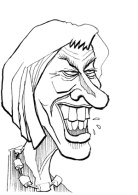
The “great and the good” should speak up for our NHS – but remember those who speak and vote against it

From Letters page, Guardian: remember it was Paul Diviani and Sarah Randall Johnson that took Honiton and Seaton hospitals from us.

• “I was thrilled to read Professor Stephen Hawking’s glowing tribute to our “finest public service”. At 75 years of age and a world-class scientist known by everyone in the country, Professor Hawking is in a perfect position to state his case for the prosecution of the Tories and Jeremy Hunt in particular, for their mendacity over what they say they are doing for the NHS, while undermining it by cuts, underfunding and demoralisation of staff, as well as introducing privatisation for years without proclaiming their real aim, which is to destroy the NHS and replace it with a US-style insurance system controlled by multinational companies.

Many ordinary patients like me have protested to our local MPs over the years about the political decisions the Tories have made to ultimately scrap the NHS, and their relentless pursuit of the drip-drip methods of convincing people that we cannot afford the NHS any more. This is a total lie, and I would like other well-known people who value and cherish the NHS to come out and say so before it’s too late.

Nye Bevan said the NHS would exist only as long as people were willing to fight for it. Let’s hear it from the great and the good in support of the treasure in our midst.

Lynda Mannix
East Grinstead, West Sussex”

https://www.theguardian.com/society/2017/aug/30/labour-ought-to-speak-out-about-the-nhs-as-strongly-as-stephen-hawking

More on that Diviani “No Confidence” vote

http://www.devonlive.com/news/devon-news/calls-made-east-devon-council-399289

REMEMBER:

A vote AGAINST means the councillor involved supports the decision to close community hospital beds and agrees that the EDDC vote to keep them open counted for nothing – party before people.

An ABSTENTION is as good as a vote AGAINST but means that the councillor involved wants to pretend it doesn’t – still party before people.

A councillor ducking the meeting without a very good reason is AGAINST the motion AND a coward and a disgrace to his or her community.

And remember too their votes in subsequent elections when YOU vote for what is important in East Devon.

Anyone taking bets on Diviani and/or Randall-Johnson’s future plans?

Could our two most notorious local councillors Paul Diviani (Leader, EDDC but sitting as a co-optee on the controversial Devon County Council Health Scrutiny Committee) and/or its chairman, Sarah Randall-Johnson (see article below on secret DCC Standards Committee meeting on her conduct) perhaps be lining themselves up for lucrative and/or powerful jobs with our local Clinical Commissioning Group (or whatever its next incarnation will be)?

After all, they have ably demonstrated where their sympathy lies and there will no doubt be many opportunities over the coming months to put their sympathies into action.

Diviani already has form, being a councillor member of our Local Enterprise Partnership responsible for extra housing throughout Devon and Somerset and the many, many other pies in which he has his fingers. Including a leading role in “Greater Exeter” plans.

Randall-Johnson was Diviani’s predecessor as Leader of EDDC (until being ignominiously trounced by Claire Wright in local elections) but has failed to rise to such a dizzy height again at DCC (and may – or may not – have scuppered her chances of ever doing so with her recent behaviour).

Until her recent appointment as Chairman of the Health Scrutiny Committee she had to content herself with appointments to the DCC Pensions Board, East Devon Highways and Traffic Orders Committee, East Devon Locality (County) Committee and the Devon and Somerset Fire and Rescue Authority.

And few of us can forget that she was the unsuccessful “Cameron’s Cuties” competitor for the Tory Totnes seat won by Sarah Wollaston?

Where better for both of them to spread their wings than our CCG?

Or, is Owl hooting up the wrong tree? Is Randall-Johnson’s behaviour designed to show her Tory councillor colleagues what a “strong and stable” leader she might make for DCC?

Or, and here Owl’s eyes widen to bulging, might she be gearing up for yet another bid to become an MP and flexing her muscles for such a bid?

A chance to show Diviani exactly what you think of him for destroying our community hospital beds

Remember, anyone who votes AGAINST this motion, or ABSTAINS or is not at the meeting for spurious reasons, is guilty of destroying our local health service and killing off Axminster, Ottery, Seaton, Budleigh and Honiton community hospital beds – and cares not one jot what you may think.

“13 September 6pm, EDDC extraordinary meeting:

Motion – Vote of no confidence in the Leader

“On Tuesday 25th July 2017, Cllr Diviani chose not to represent the opinions of this Council or the people we represent at the DCC Health and Adult Care Scrutiny Committee meeting when he was clearly expected to do so. This Council no longer has confidence in Cllr Diviani’s commitment to represent our collective interests nor lead our East Devon communities as the figurehead for local government. We call for his resignation.’

Proposed by Councillor Ben Ingham, seconded by Councillor Val Ranger and supported by Councillors Cathy Gardner, Matt Coppell, Marianne Rixson, Rob Longhurst, Dawn Manley, Geoff Jung, Peter Faithfull, Susie Bond, Roger Giles, Matt Booth, Peter Burrows, Steve Gazzard, Megan Armstrong and Douglas Hull.”

Please attend to show how you feel and speak if you want to.”

Source: East Devon Alliance, Facebook

Honiton Hospital beds closed – motion of “no confidence” in EDDC Leader 13 September 2017 6pm

Susie Bond, EDDC Independent Councillor, Feniton reports”

“This morning I attended a vigil outside Honiton Community Hospital. It was called to mark the end of inpatient care in the town. It was a sad day, as it now means that there are no inpatient beds in the hospitals in Seaton, Axminster, Honiton and Ottery St Mary.

I wasn’t sure what to expect … it’s a Bank Holiday and the weather was glorious … so I half expected to be there with just a handful of people.

I was wrong.

The event had been organised by Honiton Patients’ Action Group … a well-organised and furious bunch of people.

A group of about 50 turned up, armed to the teeth with placards, happy to vent their feelings to the local press about the parlous state of future community health provision.

Among those present this morning was Cllr Martin Shaw (county councillor for Seaton and Colyton) who spoke about his grave concerns for health provision. He had also addressed Devon County Council’s Scrutiny Committee meeting in July (https://seatonmatters.org/2017/07/26/the-health-scrutiny-committee-which-didnt-scrutinise/).

The decision to close the inpatient beds in Honiton had not been the subject of public consultation, so those present felt that this was sufficient cause for Devon County Council’s Health and Adult Care Scrutiny Committee to refer the decision to close the hospital beds to the Secretary of State, Jeremy Hunt. In turn, he would have had to refer the decision to the Independent Reconfiguration Panel (which describes itself as ‘the independent expert on NHS service change’).

Had that decision been made at their July meeting (https://devoncc.public-i.tv/core/portal/webcast_interactive/293466), those present at the vigil today would probably have still been worried about their future health care, but at least they would have felt that every avenue open to them had been explored.

Instead they were denied this last opportunity by political shenanigans of epic proportion.

I watched the webcast of the July meeting of DCC Health Scrutiny Committee (http://www.devonlive.com/news/devon-news/conduct-committee-members-investigated-devon-312213) and was frankly appalled at the charade being played out before my eyes.

Questions have been raised about how the meeting was conducted and the Standards Committee at DCC meets tomorrow to decide if the complaints are well founded.

Meanwhile, members of East Devon District Council have expressed dismay about the way an almost unanimous vote on a Motion expressing real concern about the conduct of the Clinical Commissioning Group was ignored and have called an Extra Ordinary Meeting of full Council to discuss a Motion of No Confidence in the leader, Cllr Paul Diviani, who sat on Devon County Council’s Health and Adult Care Scrutiny Committee as a representative of the leaders of all the district councils in Devon.

Cllr Diviani effectively voted against referring the decision to close inpatients beds in Honiton to the Secretary of State and later admitted under robust questioning that he had not canvassed the views of the other leaders.

The Extra Ordinary Council meeting will be held on

Wednesday 13 September
at EDDC’s headquarters at the
Knowle, Sidmouth,
starting at
6 p.m.

Diviani and Randall-Johnson are satisfied these questions have been answered on bed closures – do you agree?

30 [plus] questions” that must be asked BEFORE care at home can be implemented:

Pre-implementation

The model of care:

• Does the new model of care align with our overriding ambition to promote independence?
• Is there clinical and operational consensus by place on the functions of the model and configuration of community health and care teams incorporating primary care, personal care providers and the voluntary care sector?
• Is there a short term offer that promotes independence and community resilience?
• Is there a method for identifying people at highest risk based on risk stratification tool?
• Are the needs of people requiring palliative and terminal care identified and planned for?
• Are the needs of people with dementia identified and planned for?
• Is support to care homes and personal care providers, built into the community services specification?
• Is support for carers enhanced through community sector development support in each community?
• Has the health and care role of each part of the system been described?
• Have key performance indicators been identified, and is performance being tracked now to support post implementation evaluation, including impact on primary care and social care?

Workforce:
• Is there a clear understanding of the capacity and gaps in the locality and a baseline agreed for current levels and required levels to meet the expected outputs of the changed model of care?
• Is there a clear understanding of and plan for any changes required in ways of working:
o thinking
o behaviours
o risk tolerance
o promotion of independence, personal goal orientation

• Have the training needs of people undertaking new roles been identified, including ensuring they are able to meet the needs of patients with dementia?
• Do we have detailed knowledge with regards to investment, WTE and skill mix across the locality and a plan for achieving this?
• Are system-wide staff recruitment and retention issues adequately addressed with a comprehensive plan, and where there are known or expected difficulties have innovative staffing models been explored?

Governance, communications and engagement:
• Is there a robust operational managerial model and leadership to support the implementation?
• Has Council member engagement and appropriate scrutiny taken place?
• Is there an oversight and steering group in place and the process for readiness assessment agreed?
• Have providers, commissioners and service users and carers or their representative groups such as Healthwatch agreed a set of key outcome measures and described how these will be recorded and monitored?
• Is there a shared dashboard which describes outcomes, activity and productivity measures and provides evaluation measures?
• Is there an agreed roll out plan for implementation, which has due regard to the operational issues of managing change?
• Is there a comprehensive & joint communications and engagement plan agreed?
• Is there a need for a further Quality or Equality Impact Assessment?

Implementation
• Is there a clinical and operational consensus on the roles of each sector during the implementation phase including acute care, community health and care teams, mental health, primary care, social care, the voluntary care sector and independent sector care providers?
• Is there an implementation plan at individual patient level describing their new pathway, mapping affected patients into new services?
• Are the operational conditions necessary for safe implementation met?
• Have the risks of not implementing the change at this point been described and balanced against any residual risk of doing so?

Post Implementation
• Is there a description of the outcomes for individuals, their carers and communities?
• Are the mechanisms for engagement with staff, users of services and carers in place and any findings being addressed appropriately?
• Is there a process in place for immediate post implementation tracking of service performance including financial impact to all organisations?
• Is longer term performance and impact being tracked for comparison against pre-implementation performance?
• Have we captured user experience as part of the process, and have findings been addressed and recorded to inform the planning of future changes?
• Are there unintended consequences or impacts (e.g. on primary care or social care) which need to be addressed before any further change occurs?
• Is there a clear communication plan for providers and the Public describing the new system and retaining their involvement in community development?”

Source: http://www.newdevonccg.nhs.uk/about-us/your-

Now Seaton and Honiton hospital beds are closed, here’s something to look forward to

Better keep fingers crossed that you or your loved ones are not in a similar position to some of the people mentioned here.

But if you are one of the unfortunate ones, remember Paul Diviani (EDDC), Sarah Randall Johnson (DCC), Neil Parish MP, Hugo Swire MP, Minister Jeremy Hunt and Prime Minister Theresa May all put you there. They all have one thing in common: they are Conservative politicians whose decisions led to this situation – and think carefully about whether you would vote for them now or in the future knowing what you know now.

People who receive care at home have told a health watchdog that a lacklustre service has meant they have had to go two weeks without a shower, eat their dinner at 3.30 in the afternoon and be cared for by workers who can’t make a bed.

The failings highlighted in a report by Healthwatch England drew on the experiences of more than 3,000 people who receive care at home. Other problems described in the document include care workers coming at different times to those scheduled, not having enough time to fulfil all their duties and some missing appointments altogether.

Across England there are more than 8,500 home care providers, collectively helping an estimated 673,000 people with tasks such as washing, cooking, dressing and taking medication. The report suggested that home care was “in a fragile state” and that care packages were being “designed to meet the needs of the service provider rather than the service user”.

One home care user in Redcar and Cleveland said: “Sometimes they give me a shower but they go over their time. Most of the time they haven’t got the time to give me one so I go a couple of weeks without one and that is not right. I feel dirty.”

A woman in her 80s told Healthwatch Bradford her care workers were unable to boil an egg or make the bed, while another said staff needed to be taught “home care common sense”.

A care user in Barnet, north London, said: “I am diabetic and sometimes carers are late or don’t show up and that really affects my medications and insulin administration.”

However, Healthwatch, the health and care consumer champion, stressed that most people had positive things to say about their domiciliary care – with many older people praising the service because it enables them to remain in their own home and to maintain as much independence as possible.

Neil Tester, the deputy director of Healthwatch England, said: “We heard examples of compassionate care from dedicated staff, but people also talked about care that doesn’t meet even basic standards. Given the challenges facing the social care sector, it is more important than ever that people’s voices are heard.”

Izzi Seccombe, the chairwoman of the Local Government Association’s community wellbeing board, said: “This report shows that while most people report that their services are good there is a need to improve services.

“The financial pressure facing services is having an impact and even the very best efforts of councils are not enough to avert the real and growing crisis we are facing in ensuring older people receive the care they deserve.

“The continuing underfunding of adult social care, the significant pressures of an ageing population and the ‘national living wage’ are combining to heap pressure on the home care provider market.”

She added: “This study shows the strain providers are under, and emphasises the urgent need for a long-term, sustainable solution to the social care funding crisis.

“While the £2bn announced in the spring budget for social care was a step in the right direction, it is only one-off funding and social care services still face an annual £2.3bn funding gap by 2020.”

A Department of Health spokesman said: “Everyone deserves access to high-quality care, including those who receive it in their home. This is why we have introduced tougher inspections of care services to drive up standards, provided an additional £2bn for adult social care, and have committed to consult on the future of social care to ensure sustainability in the long term.”

https://www.theguardian.com/society/2017/aug/24/report-highlights-failings-of-home-care-services-in-england

(Tory) Council leaders, don’t you just love ’em – not!

Current leader of EDDC, Paul Diviani, and his Tory friends on the council voted against hospital bed cuts at EDDC (which is toothless on this matter) but he then voted FOR the same cuts at Devon County Council, which has just a few gnashers, but where former EDDC Leader and DCC councillor for Whimple, Sarah Randall Johnson, silenced a legitimate opposition debate on closures using very dubious tactics against her arch-enemy (campaigner and ouster from her EDDC seat) Claire Wright:

https://eastdevonwatch.org/2017/08/12/conduct-of-health-committee-members-investigated-by-devon-council-diviani-and-randall-johnson-heavily-criticised-for-behaviour/

Now the former Leader of Grenfell Tower Council joins the merry band:

The council leader who presided over the Grenfell Tower disaster offered paid “advice” on public sector cutbacks – and tried to “whitewash” his CV in the process.

Nick Paget-Brown resigned as leader of Kensington and Chelsea council after the authority’s woeful response to the deadly inferno drew widespread criticism.

He has remained a councillor but has attracted fresh ire from survivors and rival politicians after advertising his own company – NPB Consulting – on his new Linkedin profile.

The firm, of which he is managing director, offers specialist advice on “financial planning in an age of austerity” to other councils.

Paget-Brown is also accused of hurling a “final insult” to victims as he has omitted his experience as council leader from his CV’s career history, leaving a space between the end of his time as deputy leader in 2013 and founding NPB in 2017. His appointment as leader was mentioned elsewhere. …

Paget-Brown used the networking site to advertise his skills, including “policy analysis, seminars, briefings and drafting assistance for organisations working with local authorities”.

Emma Dent Coad, the Labour MP for Kensington, said: “Paget-Brown’s attempt to whitewash his career by becoming a cost-cutting consultant is the final insult.”

Moyra Samuels, co-founder of the Justice 4 Grenfell campaign, said: “To effectively say, ‘I’m moving on swiftly to my next project’ shows complete disdain for this community.”

At the time of his resignation, Paget-Brown said he shared responsibility for the “perceived failings” of the council. “

http://www.huffingtonpost.co.uk/entry/grenfell-paget-brown_uk_599a96bbe4b0e8cc855e707e

Only “perceived” note …

RIP Seaton Community Hospital beds – vigil, noon today

The town with the largest catchment area for elderly people – its community hospital closes the doors on its beds today.

Built by public subscription, funded by a hard-working League of Friends, only its outpatient services will remain – for now.

The heart of a community stops beating today.

Thanks to the vote of East Devon District Leader (Paul Diviani – who voted at EDDC against his own district recommendation) and former Leader and Chair of DCC Health and Social Care Committee Sarah Randall-Johnson, who voted along with all other Conservatives on that committee not to refer the closures of Seaton and Honiton (next Monday) to the Secretary of State.

This will leave the whole of the eastern side of the district with no community beds at all – the few remaining beds to be (for the time being) in Sidmouth and Exmouth, closer to Exeter and Cranbrook.

Worse than fake news – no news

Midweek Herald website has no information on the imminent, speeded-up of the total closure of Seaton Hospital’s community beds on 21 August 2017 and those in Honiton on 28 August 2017.

Today’s Midweek Herald has one letter bemoaning closure in general – and nothing else.

And nothing on the referral of the conduct of the DCC meeting chaired by Sarah Randall Johnson at which referral to the Secretary of State was squashed by a Tory block vote and refusal to debate any alternative and no mention of a planned fight back by Honiton Hospital patients and supporters. Or of Diviani voting one way at EDDC (against closure) and the opposite way at DCC and admitting that when he voted as the representative of Devon’s district councils, he hadn’t actually consulted any of them.

No news is bad news.

Still, you will be able to see praise for the council-subsidised Thelma Hulbert Gallery, so that’s ok then.

“Conduct of health committee members investigated by Devon council” – Diviani and Randall-Johnson heavily criticised for behaviour

“Devon County Council has confirmed it is looking into the conduct of members of one of its committees following a debate and vote not to refer a decision to close 72 community hospital beds in Devon to the secretary of state for health.

The matter was debated by the health and adult care scrutiny committee meeting at Exeter’s County Hall on July 25.

Among those who have expressed their concerns is Val Ranger, East Devon District Council ward councillor for Newton Poppleford and Harpford.

She says that at a meeting of East Devon District full council meeting on July 26, Cllr Paul Diviani, who sits on the committee as a representative of district councils, admitted he had not asked the opinion of other district councils about whether they wished to refer the decision to close local hospital beds to the secretary of state, and could offer no evidence on that basis that he was representing their views.

At the meeting Cllr Diviani was among those who voted not to refer the decision to the secretary of state.

Cllr Ranger said: “He said he voted not to because it was unlikely that the secretary of state would overturn the decision.

This seems duplicitous on two count. The first for failing to adequately represent the views of the district councils.

“Secondly for assuming the role of the secretary of state by stating there was no point in referring the matter to him as he was unlikely to overturn the decision.

“At the EDDC scrutiny committee on June 22, EDDC’s views and recommendations were very clear; Northern, Eastern and Western (NEW) Devon Clinical Commissioning Group (CCG) has failed to provide the evidence needed to support their plans.

“However, Cllr Diviani failed to represent those views or the views of other district councils as he did not seek them. He has admitted he voted independently of both EDDC and other district councils, rendering his vote as entirely without integrity in his role at the DCC meeting.

“The vote is an entirely unsafe and undemocratic way of conducting business and brings both EDDC and DCC into disrepute.”

A spokesman for Devon County Council said: “We have received a number of comments, representations and complaints about the health and adult care scrutiny committee held last week and about the conduct of members at that meeting.

“We will be looking at all the points raised by Cllr Ranger and others under our normal procedures to see if there are any issues to be addressed.”

However, Cllr Diviani is confident the investigation by DCC will conclude there has been no wrong doing.

He said: “I take this predictable and entirely politically motivated complaint against me by people who contribute little or nothing positive to the debate at face value, and feel sure that DCC will dismiss the allegations as unfounded.

“I have neither seen or heard anything from Ms Ranger on how her party would address the huge challenges facing the NEW Devon CCG and the NHS.

“As the web cam at County Hall malfunctioned and didn’t record properly, the gist of what I said is as below. I did also explain that my position on that scrutiny committee is by virtue of my being elected by the other leaders of all the Devon districts to represent the county-wide views of the district councils, not just East Devon, and is a function I perform regularly both locally and in London through the District Councils Network where I represent the South West.

“There is a tendency to assume that everything is fine as it is, when it quite clearly is not, and that the government will keep throwing money at the NHS as they always have in the past.

“What that underestimates are the social care costs which are massive, but if tackled correctly will reduce the acute care costs, as evidenced by the Kings Fund report. We will still need our hospital buildings which in Honiton are already being used differently, for example, for kidney or chemotherapy treatments. Staffing is still a problem but that is not building dependent.

“Many of us have made a positive decision to live and indeed work in the countryside and a direct result of that decision is a diminution of accessible services we can reasonably expect the state to provide. When able, it is a price we gladly pay for the quality of life afforded.

“In straightened times, we need to cut the cloth accordingly. As is well documented, the largely under funded cost of adult social care is a significant factor in the problems besetting the NHS where the acute care service is the treatment of last resort, and very good it is too, but with the budget sliced off to the top tier local authority.

“As the truly excellent Kings Fund Report from 2016 made exceedingly clear, sorting adult social care comes first and if we tackle that with the help of the district councils the benefits will flow. The NHS cost pressures will diminish and the money can best be spent where most needed.

“In East Devon we have enormous and justifiable pride in our local hospitals and all our existing towns were well endowed. Costs are, however, never static and will always rise without innovation.

“But here we are talking service industry which is always people dependent and where low wages do not necessarily translate into low cost. Simply put, if one person falls, it will take two people to rectify the situation, and if not rectified speedily, the condition and costs multiply exponentially.

“And speedily must mean access to care, quickly. Our travel times are well known and until they are resolved, we will always need staging posts to either stop people occupying the acute provision when unnecessary or to maintain them in a degree of comfort until they can reach the comfort and safety of their own living space.

“The major flaw appears to me to be the ever present ‘one size fits all’. Flexibility is key and our response should be the start.

“Attempting to browbeat the secretary of state with a demand to overturn his own policies is counter intuitive. I prefer to ask him to rural proof our rural situation before allowing any further reductions in service which we on the ground can see will be detrimental, but our transformers would discount. But that is a local decision which should be made locally.”

Also among those who have raised concerns over the debate and vote at the scrutiny meeting is Claire Wright, Devon County Councillor for Otter Valley Ward.

She has said how she was “disappointed” by the behaviour of scrutiny committee chair Sara Randall Johnson who “appeared to do her utmost” to prevent any referral.

She said: “I am also disappointed with the attitude of the majority of the Conservative group who used a variety of ill-informed views and remarks to justify their determination not to refer, refusing to hear or see any member of the public’s distress, frustration and disbelief at the proceedings.

“The chair’s attitude made me angry and led to a protracted row where I repeatedly asked her why she had allowed a proposal to be made and seconded at the very start of the meeting by her conservative colleague, Rufus Gilbert, not to refer to the secretary of state for health, when I already had a proposal that I had lodged with her and the two officers, before the meeting.”

She added: “When they did what they did at the health scrutiny meeting, the Conservatives betrayed thousands of local people.”

The close vote whether to refer the decision was six votes to seven, with two abstentions. All those who voted with Cllr Gilbert’s motion were Conservative’s.

Cllr Wright, who is seeking advice on what happened at the meeting, concluded: “I am quite certain that with a different approach by the chair the outcome would have been different, and local peoples views would have been respected and acted upon.”

http://m.devonlive.com/conduct-of-health-committee-members-investigated-by-devon-council/story-30478465-detail/story.html

Hospital closures: “Repulsive party political puppet show” and “Bow your heads in shame”

Two letters in View from … titles – pulling no punches

Seaton DCC Councillor on that shameful DCC Health Scrutiny meeting – and Diviani’s disgraceful behaviour

“Councillor-Sara-Randall-Johnson (from this article):

Why did Devon’s Health and Adult Care Scrutiny Committee block the proposal to refer the closure of our beds to the Secretary of State?

The idea that the Chair, Councillor Sara Randall Johnson (left), was settling an old score with Claire Wright makes a nice story but overlooks the concerted Conservative position. The collusion between Randall Johnson and Rufus Gilbert – who rushed to propose a ‘no referral’ motion before Claire could move her motion to refer – was obvious to all, as was her keenness to persuade her colleagues not to have a recorded vote.

Equally striking, however, is that only one out of 12 Tories on the Committee – Honiton’s Phil Twiss – voted against Gilbert’s motion. The other 7 Tories who voted were all for allowing the beds to be closed; 2 who had reservations abstained; 2 more were (diplomatically?) absent. Whipping is not allowed on Scrutiny committees, but this gives a strong impression of a Tory consensus. Members who were uncertain of their support were unwilling to defy it beyond abstention. Twiss was obviously a special case, as the one committee member whose hospital will lose its beds.

Clearly the Conservative Group on DCC gave their East Devon members the main role in dealing with the Eastern Locality hospital beds issue when in May (with its return to Scrutiny looming) they made Randall Johnson chair and nominated two Exmouth members, Jeff Trail and Richard Scott, as well as Twiss as members of the Health Scrutiny Committee. With East Devon Tory leader, Paul Diviani, representing Devon’s district councils, 5 of its Tory members were from East Devon and only 7 from the other five-sixths of the Tory group.

East Devon Tories on the committee certainly lived up to their role on Tuesday. All except Trail voted, making half of all Tory votes cast on the committee and 3 out of 7 on the pro-CCG side. In contrast, only 4 of the 8 Tories from elsewhere in the county cast a vote on this crucial issue: East Devon’s Tories may have convinced themselves, but not their colleagues.

Paul Diviani spills the beans

With Randall Johnson preoccupied with timekeeping (except when the CCG were speaking), Scott silent and Twiss asking questions, it was left to Diviani to express the Tory rationale. He claimed to speak for Devon district councils as a whole, but has acknowledged that he had consulted none of the others. He was happy to defy his own Council, which has voted to keep hospital beds, and spoke for himself – and East Devon Conservatives.

Diviani’s caustic little speech deserves more attention than it has been given.

He started by saying that those who decide to live in the countryside expect diminished service, and must cut their cloth accordingly in current times – forgetting that many have lived here all their lives, or moved here long before the present Tory government arrived to savage the NHS.

‘Costs will always rise without innovation’, Diviani continued, forgetting that the ‘costs’ of community hospitals are rising particularly because of the Tory innovation which gave them over to NHS Property Services and its ‘market rents’.

‘Local decisions should be made locally’, he averred, overlooking the fact that Sustainability and Transformation Plans, Success Regimes and NHS property sales are all national initiatives forced on the local NHS – while NEW Devon CCG is so unrepresentative even of local doctors that only full-time managers (Sonja Manton and Rob Sainsbury) are allowed to present its case in public while its ‘practitioner’ figurehead, Dr Tim Burke, hides in a corner.

When, however, Diviani warned that ‘attempting to browbeat the Secretary of State to overturn his own policies is counter-intuitive’, he expressed the truth of the situation. The closure of community hospitals results from the determined policies of the Conservative Government. (Referral would have served the purposes of delaying permanent closures, embarrassing the Government and forcing its Independent Reconfiguration Panel to give an assessment of the issue.)

East Devon Tories are the Government’s faithful servants. ‘Don’t trust East Devon Tories’ over the hospitals, I warned during the County elections. How right have I been proved.”

East Devon Tories were central to ditching Seaton and Honiton hospital beds

Who exactly does EDDC Leader Diviani represent? And who does he consult?

Questions at last night’s Full Council meeting at Knowle shed some light on this. Members of the public pointed out that Councillor Paul Diviani had voted against both his own EDDC council and public opinion, at Devon County Council just two days previously (25th July), by supporting the decision that ‘Your Future Care’ should not be referred to the Secretary of State.

The EDDC Leader’s vote on this occasion could be regarded as crucial, as the decision had been narrowly carried by 7 votes to 6, and was met by cries of “Shame on You” from the public, as reported on BBC Spotlight tv the same evening.

Last night at Knowle, Councillor Diviani replied that he had to vote the way he had at the DCC Health and Adult Care Scrutiny Committee because he was representing the views of the eight Devon District Councils. But when Cllr Roger Giles, Chair of EDDC Scrutiny Committe, then asked him if he had consulted Mid Devon, North Devon, South Hams, Teignbridge, Torridge and West Devon, the answer was no.

So is the oft-repeated phrase from Cllr Diviani and close colleagues, “We are where we are” , the consequence of poor leadership? Fortunately in democratic Britain, our leaders are not permanent fixtures.

Footnote: For reference, one of the questions asked last night, is copied below. All can be heard on the audio recording of the Full Council meeting, soon to be available on the EDDC website.

‘At the 17th May 2017 EDDC Full Council meeting, Councillor Mike Allen said, and the council formally agreed, that care in the community had not yet been proven to work.

Yesterday (25th July 2017), the EDDC Leader voted at Devon County Council Health and Adult Welfare Scrutiny Committee that ‘Your Future Care’ proposals be NOT referred to the Secretary of State. (This decision was made by 7 votes to 6).

Through the Chair, will Councillor Diviani kindly explain how voting against his own Council fits with his leadership of it? ‘

Bed closures at Honiton and Seaton – the final stitch-up by Tory Councillors

Councillor Martin Shaw (EDA, Colyton and Seaton) reports:

[Names of those voters have been amended – it does not affect the result]

“The 7 councillors who voted NOT to refer the decision to close Honiton and Seaton hospital beds were:

Sarah Randall-Johnson
Paul Diviani (Leader of East Devon District Council, representing Devon district councils), and county councillors
Richard Scott (Exmouth),
Rufus Gilbert,
Sylvia Russell,
Paul Crabb and
Ron Peart.

The 6 councillors who voted against this motion, i.e. to refer the decision, were Claire Wright (Otter Valley, Independent), Brian Greenslade and Nick Way (Liberal Democrat), Hilary Ackland and Carol Whitton (Labour) and Phil Twiss (Honiton, Conservative).

Jeremy Yabsley (Conservative) abstained as did John Berry. Two other Tories,
Jeffrey Trail (Exmouth) and
Philip Sanders, gave their apologies.

Six public speakers, Cllr Roger Giles (Chair of East Devon’s Scrutiny Committee), Paul Arnott (Colyton), Cllr Jan Goffey (Mayor of Okehampton), Cllr Mike Allen, Bob Sturtivant and Stephen Craddock (Honiton), spoke eloquently against the closures for two and a half minutes each. County Councillor Ian Hall (Axminster) and I also addressed the committee for five minutes each.

Three representatives of NEW Devon CCG and the RD&E (who run the hospitals and are working with the CCG) were then allowed to make a very lengthy Powerpoint presentation and contribute freely to the discussion – which none of the public speakers, Ian Hall or I were allowed to do.

Claire Wright had prepared a detailed motion to refer the closures and had submitted it to the Chair before the meeting. However when debate began, Cllr Randall Johnson chose not to call Claire to speak but called Rufus Gilbert who immediately proposed the motion not to refer, which was quickly seconded by Sylvia Russell.

This blatant manoeuvre by the Chair meant that the committee never considered point by point, as Claire’s motion would have required it to, the 14 questions on which it had asked the CCG to satisfy it. Despite an excellent report from Hilary Ackland which concluded that the CCG had failed to convince, the Committee basically abdicated its scrutiny role and blocked a referral without discussing most of the objections which we had raised.

Claire and I are planning to complain about the way the meeting was handled. If you want to watch it, it’s online at

https://devoncc.public-i.tv/core/portal/webcast_interactive/293466.

Thank you all for your support for the hospitals over the last 9 months. Be assured, however, that this is not the end of the matter, since the CCG and RD&E are both developing ‘estates strategies’ which will centre on what to do with space freed up by the closures. “

Oh dear! Diviani is described as “strong and stable”!

“Councillor Mark Williamson proposed Councillor Paul Diviani as Leader of the Council for the ensuing year. This proposal was seconded by Councillor Brian Bailey.

In proposing, Councillor Mark Williamson spoke highly of Councillor Diviani’s leadership during the many challenges which had faced the Council over the years he had been Leader and of his faith in Councillor Diviani’s ability to lead though future challenges. He undertook the role calmly, purposefully and with intelligence and was a strong and stable leader.”

Click to access 260717-council-agenda-with-minute-book.pdf

page 37

Yarcombe Neighbourhood Plan: Inspector unhappy about throttling of new businesses

In this month’s Cabinet agenda papers (page 56) there is a report of changes that its Inspector wishes to see before EDDC accepts it.

This comment caught Owl’s eye:

It is not the role of the planning system to protect existing businesses from the impact of market forces and competition from new entrepreneurs, which would run counter to national policy to support the sustainable growth and expansion of all types of business and enterprise in rural areas. For this reason, I am not satisfied that part ii) of policy CFS2, which requires new proposals not to have a negative impact on existing businesses, has appropriate regard to national policy. Nor would it contribute to the achievement of sustainable development. I therefore propose to modify policy CFS2 to delete ii) of CFS2, paragraph 6.9 and the last part of paragraph 6.8 after ‘our community’. For the reason explained in paragraph 4.9 above, I am modifying the policy to clarify in iii) that any ‘adverse impact’ should not be ‘significant’

Click to access 140617combined-cabinet-agendapublicversion.pdf

It seems that Yarcombe puts the protection of existing businesses over and above the creation of any new ones.

Leader Paul Diviani is the district councillor for Yarcombe and lists amongst other responsibilities:

Blackdown hills Area of Outstanding Natural Beauty (AONB) joint advisory committee
SPARSE rural special interest group
Making it Local Action Group (Chairman)

Surely he supports Tory free market policies and will wholeheartedly support the Inspector’s suggested changes.

Can officers and councillors work together? Owl, donkey, fox or sheep?

“… Because the goals of officers and members are often incompatible, organisational conflict is inevitable and inherent, but it’s also important to remember it’s not, of itself neither “good” nor “bad”.

Political competence on the part of both political and managerial leaders is essential to the successful achievement of workable compromises. Politically competent managers expect resistance to their attempts to achieve the best outcomes, but nevertheless keep on using their small “p” political skills and attributes, including influencing and resilience, until they get the right results.

It’s important to remember that those tensions and conflicts — and the inevitable frustrations — do serve an important purpose. Political and managerial leadership should be collaborative but not collusive. Members and officers all need someone who can tell them when they are wrong to maintain a healthy balance between collaboration and mutual challenge.

Successful political leaders and senior officers are distinguished by their ability to construct trust, through collaborative approaches to leadership, to enable them to manage the tension and potential conflict between the different political and managerial logics.

Baddeley and James (1987) describe four types of political behaviour, which are distinguished by varying degrees of integrity and politically awareness. They use animal characteristics to describe the behaviours which help or hinder the effective management of the political and managerial interface.

A lot depends on the extent to which people are both politically aware and acting with integrity. We may hope that all senior political leaders and managers are “owls” — both politically aware and acting with integrity, but those operating at the political and managerial interface have to be prepared to recognise “foxes” and to limit the damage caused by compliant and naïve “sheep” or self-serving and politically incompetent “donkeys”.

You have an important role and invaluable expertise but that isn’t enough to ensure members will listen to your advice, no matter how right you are. Don’t forget that political and managerial logics are very different. We might like to think that everyone we work with is an ‘owl’ but we’ll all meet plenty of ‘foxes’ – as you’d expect in a political environment – and more than enough ‘donkeys’ and ‘sheep’.

The secrets of success for managing relationships with members: develop relationships of trust but don’t collude. And tell them the truth but not in a way that causes them to reject both you and the message. You are a professional but you should not try to assert your professional status by talking down to members or making them feel foolish — no good will come of it. You may need to spend more time on complex issues than you’d expect. Use questions to start difficult conversations: “How do you think we should tackle this?” rather than starting with a statement, “this is what we should do”. Enjoy!…”

http://www.room151.co.uk/resources/officer-member-relationships-trust-is-the-key/

“Claim ‘too many decisions at EDDC made by officers’ “

Owl’s question: why is EDDC involved in running a theatre at all? Perhaps it’s because Leader Diviani has a soft spot for them as he worked in the entertainment industry in the 1970s and 1980s!

“A debate over pay-and-display parking charges at a Sidmouth venue spilled over into claims key parties were not consulted and that officers repeatedly go over councillors’ heads.

East Devon District Council’s (EDDC) scrutiny committee raised concerns the proposed regime – aimed at raising up to £30,000 a year for the Manor Pavilion – could deter users and be ‘counter-productive’.

Members were told they could not ‘call in’ the cabinet’s decision to approve the new charges, but they could make recommendations on the implementation.

Graham Liverton, an honorary alderman of the council, said: “I do appreciate the efforts you’ve gone to get this on the agenda, but I fear it won’t make a jot of difference.”

He chairs the Manor Pavilion steering committee, but said he had received a letter from an officer saying it is ‘no longer required’.

The meeting heard that, while members can still meet, it will no longer be administered by an EDDC officer.

Mr Liverton said: “In other words, because we disagreed with the decision [to introduce charges], we get the sack. I think that’s a great shame. The whole thing, from beginning to end, has been disgraceful.”

He said many key users had to learn of the proposals in the Herald, adding: “The communication from EDDC has been so abysmal – it’s beyond belief.”

Officers said Sidmouth’s ward members had been told about the proposals, but admitted the town council was not consulted.

Councillor Maddy Chapman raised concerns no vote was taken about the future of the steering committee, adding: “Too many decisions are being made in this council that aren’t going through the proper channels. 
“Any amount of money won’t be enough to put new chairs in that theatre. It’s not going to work.”

Cllr Cathy Gardner added: “This is another example of how the council seems to be acting in a heavy-handed way of ‘we know best’. There are ways to make this usable for people who actually use the Manor Pavilion.

“If it means people don’t use the car park, that’s counterproductive. I can’t see how much money it will raise – it could have a big negative impact.”

The income from the car park’s 21 spaces will be ring-fenced for investment in the theatre and arts centre.

Theatre manager Graham Whitlock said its 277 chairs ‘will not last’ another five years and a previous quote said they would cost £150 apiece to recondition.

EDDC also hopes to bring in an online ticketing system he said will cost £10,000 a year.

“By charging for the car park we can continue to develop for the future,” added Mr Whitlock.

Scrutiny committee members backed EDDC’s plan to extend the maximum parking time from three to four hours, and called for the charges to end at 6pm, not 8pm as proposed.

They also said consulting users, ward councillors and Sidmouth Town Council should be an important part of the process.

http://www.sidmouthherald.co.uk/news/claim-too-many-decisions-at-eddc-made-by-officers-1-5024478

“Local authorities launch legal action over plans to downgrade hospital”

Owl says: could you EVER see EDDC doing this? NEVER – while Diviani is in charge.

“A group of local authorities have launched a judicial review challenge over what they described as a “confusing and flawed” consultation process on plans to downgrade services at a local hospital.

The challenge over Oxfordshire Clinical Commissioning Group’s plans for Banbury’s Horton General Hospital is being led by Cherwell District Council.
South Northamptonshire Council, Stratford-on-Avon District Council and Banbury Town Council are acting as co-claimants. The legal action is also being supported by the Keep the Horton General campaign group.

The OCCG’s proposed changes affect services including maternity, critical care and hospital bed use.

The consultation covers five key proposals which include taking all of the most serious critical care patients and all stroke cases directly to Oxford.
It also proposes changing the way hospital beds are used and permanently closing almost 200 beds between the Horton and Oxford hospitals.

Cherwell said that a key aspect of the changes would involve changes to the maternity unit and replacing a consultant-led service with only midwives. “This would mean there would be no doctors or opportunity for epidural relief which means 90% of mothers will have to travel to Oxford or other hospitals.”

The only proposal which would increase availability at the Horton would relate to planned care services, it argued. These would be welcomed with the right investment, the council said.

Ian Davies, interim joint chief executive of Cherwell and South Northamptonshire Councils, said: “Oxfordshire Clinical Commissioning Group has carried out a two-phase consultation into plans to downgrade key services at the Horton General Hospital. This approach has proved incredibly confusing and those who will be most affected by any changes – namely the residents of Banbury and surrounding areas – are still unsure as to exactly what is happening to their local hospital.

“For over two months we have struggled to help local people understand the implications of what is being consulted on and we have tried to answer the real concerns of real people. But there is still widespread confusion. We know the Horton General Hospital is a very valued and accessible hospital to people in north Oxfordshire, south Northamptonshire and parts of the Stratford district who regard it as their ‘local’ hospital of choice.
“These proposals have significant and permanent implications for future access to local services. Therefore we consider it entirely unacceptable that the OCCG is trying to move ahead with plans which have not been fully understood by those who will suffer the consequences.”

Cherwell said that a decision on whether it would receive permission to bring the judicial review challenge was expected next month.”

http://localgovernmentlawyer.co.uk/index.php?option=com_content&view=article&id=30617%3Alocal-authorities-launch-legal-action-over-plans-to-downgrade-hospital&catid=174&Itemid=99