Clinton Devon Estates wants to know what you think of them!

Owl says: perhaps someone could ask why they want to pinch part of the Budleigh Hospital Hub garden to build 2 houses. And how sustainable their AONB developments really are.

“Clinton Devon Estates

Let us know your thoughts.

How we engage with you and what you think about our approach to sustainability is important to us and we want to get it right.

Your feedback to this survey will play an important part in helping us develop our future communications. Take part and be in with a chance of winning one of three £100 high street gift vouchers.

Click here to complete our short survey

https://www.research.net/r/CDECommunity

And now the bad news …

“The Health and Adult Care Committee will scrutinise social care, safeguarding and special needs services for adults alongside the operation of the NHS across Devon.

It will be chaired by Broadclyst Conservative councillor Sara Randall-Johnson with Crediton Liberal Democrat Nick Way as vice chairman.”

SRJ – the EDDC Leader who was deposed at EDDC by Independent Claire Wright and has probably never forgiven her for it;

SRJ – who tried desperately to get the Totnes nomination won by Sarah Woolaston and who has probably never forgiven her for it;

SRJ – who spent £250,000 of taxpayers money opposing what is effectively now “Greater Exeter”

SRJ – whose Tory blood runs deep, deep and brightly shining in her veins.

Thanks, DCC – that’s just what we need.

Local politics: no change unless WE the voters change it

Another local blog (Facebook – Devon United) republished this article from East Devon Watch originally blogged 3 YEARS AGO

“What a GREAT time to be an Independent candidate!

Grassroots rebellion over arrogant leadership in Devon and Cornwall
By Western Morning News | Posted: October 05, 2014
By Phil Goodwin

Westcountry councils face a growing rebellion from a grassroots movement weary at being ruled by an out-of-touch and “arrogant” leadership, the Western Morning News on Sunday reports today.

Campaigns have sprung up across the region in opposition to a perceived centralisation of power which has left many voters feeling removed from the democratic process.

A revolt in Cornwall has seen parish councils form an alliance against the “emerging dictatorship” of the unitary “super council” and threaten to picket County Hall in protest. [Last week, Cornwall’s Lib Dems and Independents again formed a ruling coalition]

In Mid-Devon, a petition has been launched against the cabinet-style of government, where decision-making power is confined to a handful of senior Conservative figures. [Conservatives majority refused to make the change]

In East Devon a quasi-political pressure group has been formed to unify opposition after a series of controversial planning issues. Paul Arnott, chairman of the East Devon Alliance, said chief executives and unelected officers wield excessive influence and are answerable only to a powerful political elite. [EDA had its first county council success this month and Independents at EDDC now number 16].

“What we see now is a kind of corporate CEO mentality which is just not appropriate at a district council,” he added. “This not Wall Street – it is East Devon, and we are supposed to be following a localism agenda.

“The effect is setting a tone of unelected arrogance – we would like to see a return to the wise and kindly town clerk approach of days gone by.”

Labour’s Local Government Act of 2000 introduced modifications to the old committee system, including the cabinet and leader model, which is common throughout Devon and Cornwall. This allows the ruling party to populate the cabinet with its own members, regardless of the make-up of the council. [Still the case in East Devon]

In Mid-Devon, where the Conservatives hold a 57per cent majority of the 42 seats, the Liberal Democrats and Independents have no representation and all of the senior power is concentrated in nine Tory councillors. [Still the case in Mid Devon]

The same set-up can be seen at Devon County Council, where Tories hold 61per cent of the seats but all the cabinet posts, and at East Devon District Council, where a 71per cent majority holds 100per cent of the cabinet posts. [No change]

The Campaign for Democracy in Mid-Devon hopes to collect the 3,000 signatures required to force a referendum on the style of governance. [Didn’t happen]

Nick Way, a Lib Dem member at the authority, supports a return to the committee system. “I think it is more democratic, particularly for a small authority like us,” he said.

“The current system is almost like a dictatorship of the majority – at the end of the day they have a majority but a change would make it easier for their back-benchers to have more of a say and influence policy.”

Harvey Siggs, a Somerset county councillor and vice chairman of South West Councils, says he understands the frustration given the cuts but disagrees with claims of a democratic deficit.

“In Somerset we spend a lot of time trying not to be remote,” he added.

“A good cabinet does its absolute best to be as transparent as possible and we still have to be accountable to the full council.

“With the pace of life and all the things that need to be dealt with, I don’t think the committee system is fit for purpose.

“All too often the disaffected people are around planning. There are winners and losers but mostly, the losers don’t complain.”

[Somerset’s Leader, Conservative John Osman was deposed by a Lib Dem this month but Tories still have a stranglehold on the council]

In Cornwall, representatives of 15 parish councils packed a hall in Chacewater last week in a bid to rally all 213 town and parish councils to join a revolt against Cornwall Council. [unsuccessfully]

The gathering came in response to the infamous “Chacewater Letter” which branded the unitary authority an “emerging dictatorship”.

The letter, in July, criticised Cornwall Council’s lack of communication, its savings plans, planning policy, arms lengths organisations and highly paid officers.

At the highly charged meeting on Tuesday, fellow parish councillors agreed and declared change at Cornwall Council must happen.

More militant members called to draft in the local government ombudsman, for the formation of an alliance of parish councils and even for protests at the doors of County Hall.

Truro City councillor Armorel Carlyon, who chaired the meeting despite her own council not endorsing the criticism, told those gathered she could see the “democratically elected members being airbrushed out of the picture” by non-elected council officers.

Read more at http://www.westernmorningnews.co.uk/Grassroots-rebellion-arrogant-leadership-Devon/story-23044099-detail/story.html

When posted: https://eastdevonwatch.org/2014/10/05/the-peasants-of-devon-are-revolting/

Claire Wright – hustings and canvassing news

“There will be a

Hustings tomorrow (Friday 26 May) at
Cranbrook Education Campus. It starts at 7.30pm.

I hope to see you there!

Another hustings in Exmouth takes place on Tuesday 30 May, at the Holy Trinity Church, also at 7.30pm.

MOST of the candidates will be there…. [Hugo Swire has refused to attend candidate hustings].

Final two Saturdays of the general election:

Visiting a town centre where you are!

I would love to meet as many of you as possible!

Saturday 27 May

10am – Ottery St Mary – outside Boots
11.30am – Cranbrook outside Younghayes Centre
2pm – Exmouth Magnolia Centre – outside Boots
3:30pm – Budleigh Salterton (town end of the seafront)

Saturday 3 June

10am – Topsham, outside Methodist Church
Midday – Sidmouth in market square
2.30pm – Exmouth Magnolia Centre, outside Boots
4pm – Budleigh Salterton – town end of the seafront”

“Amber Rudd denies cuts to police were factor in Manchester atrocity”

“The home secretary, Amber Rudd, has denied that cuts in police forces contributed to Monday’s terror atrocity in Manchester.

Rudd was confronted on BBC1’s Question Time on Thursday night by a member of the studio audience who said Theresa May had been warned by the Police Federation that cuts in frontline officers would undermine their ability to gather low-level intelligence about possible threats. Rudd insisted that the majority of such intelligence came from community leaders operating within the Prevent counter-terrorism programme, rather than from police officers on the street.

The audience member said: “We are 20,000 police officers down and we get atrocities like this. Does the government not expect this?” Rudd responded: “I don’t accept that. I have asked the head of counter-terrorism whether this is about resources. It is not.

“There may a conversation to have about policing, we may have that at some stage. But now is not that conversation. We must not imply that this terrorist activity may not have taken place if there had been more policing.”

Beneath Abbott’s police funding gaffes, Labour’s numbers make sense
The home secretary added: “Good counter-terrorism is when you have close relationships between the policing and intelligence services. That is what we have. That is why the UK has a strong counter-terrorism network. It’s also about making sure we get in early on radicalisation. But it’s not about those pure numbers on the street.”

The audience member replied: “I think it is about police numbers, because it is low-level intelligence that gives you the information.” …”

https://www.theguardian.com/uk-news/2017/may/25/amber-rudd-denies-cuts-to-police-were-factor-in-manchester-atrocity

“School spending to fall by 7 per cent if Conservatives win election, Institute for Fiscal Studies says”

From today’s Daily Telegraph – Swire’s wishy-washy letter to the PM seems to have gone ignored. It must have been SO much better for Swire when old-Etonian pals and holiday companions Cameron and Osborne were in charge:

“School spending per pupil looks set to fall by 7 per cent despite a Conservative pledge to increase the education budget if the party wins the general election.

However spending would increase if either Labour or the Liberal Democrats win power, according to the independent Institute for Fiscal Studies.

In a new paper examining each of the main political parties proposals for education spending, the IFS calculated school budgets in England could face a real-terms cut of almost 3 per cent by 2021/22 if the Tories win the election.

This rises to a 7 per cent reduction by 2021/22 once the cuts schools have faced over the past two years are taken into account.

Labour’s plans would leave per pupil spending 6 per cent higher in real terms over the same five year period – 2017/18 to 2021/22.

The IFS – which publishes a wide appraisal of all the manifestos today – the Liberal Democrats’ plans would see per pupil spending protected in real terms at the 2017/18 level. …”

A Conservative’s view of the General Election

For balance, Owl provides the following article by Rod Liddle in the Conservative “Spectator” magazine:

“I am trying to remember if there was ever a worse Conservative election campaign than this current dog’s breakfast — and failing. Certainly 2001 was pretty awful, with Oliver Letwin going rogue and Thatcher sniping nastily from behind the arras. It is often said that 1987 was a little lacklustre and Ted Heath had effectively thrown in the towel in October 1974. But I don’t think anything quite matches up to this combination of prize gaffes and the robotic incantation of platitudinous idiocies.

To have suggested that the hunting with dogs legislation might be subject to a free vote in the House of Commons was, whether you are pro hunting or against, a move of quite stunning stupidity. Why alienate that 84 per cent of the electorate opposed to fox-hunting (Ipsos-Mori, 2016), especially when some of them (including me) are quite passionately anti-hunting and might be tempted to change their vote? And when you already have the pro-fox-hunting votes in your grasp? It makes no electoral sense.

Still more remarkable was the decision to force demented people to sell their own houses, if they can remember where they are, to pay for their own care. Followed very shortly by an embarrassing U-turn.

This was passed off by the Tories as an example of pristine honesty, of nettles being grasped in an admirably transparent manner. But, like much of the current Tory campaign, it smacked to me of two things — complacency and arrogance. It suggested yet again that Theresa May called this election convinced that almost nothing she could do or say would prevent the inevitable landslide.

I think she was horribly wrong about that. I just pray to the Lord Jesus Christ that she was not so horribly wrong that we wake up on 9 June to find that Diane Abbott is the Home Secretary, Emily Thornberry in charge of Trident, all part of a Labour-Lib Dem-Tartan Munchkin Alliance, aided by that sinister reptilian Green woman, Lucas, and Natalie Wood or whatever her name is from Wales, look you.

That scenario is still unlikely, but I will bet it is not half so unlikely as many of you, or Theresa May, believed when the election was called. Back then the headlines were talking of a Labour and Ukip wipeout and a landslide for the Tories.

I never remotely bought that notion, no matter what the polls said. I have been banging on for ages about how the Labour vote, especially in the north, is a lot ‘stickier’ than the pollsters think. My guess was that May would win a majority of 30 or so, but that was before Conservative Central Office took out its hardy shotgun and began blowing off both of its feet. I may have to revise that figure downwards. Either way, and those gaffes excluded, here’s why I think the Tory lead in the polls has been halved — yes, halved — despite the fact that the Labour party is led by Chauncey Gardiner out of Hal Ashby’s wonderful satire Being There.

First, the election was not wanted and is deeply resented beyond the Westminster bubble. The only people who actually enjoy elections are journos and the politically active: that leaves 97 per cent of the population who are somewhat averse, especially after a bruising referendum last year. May is resented for having foisted the election upon us, and people may be inclined to punish her for it, either by staying at home or voting against. The most salient comment of this election may have been made on the day it was called, by Brenda of Bristol: ‘Oh no, what’s she done that for?’ People suspect that their lives are being disrupted for Theresa May’s political and personal gain. And they’re not wrong, are they?

Second. Jeremy Corbyn is not notably less popular in the Midlands and north of the country than Ed Miliband was. And he has had a good election so far. The Labour vote remains buoyant and is growing. Don’t forget that the populist revolution we have seen here and in the US and in Europe does not come exclusively from the right. Corbyn presents an anti-establishment populist left-wing agenda, much as did Syriza and Five Star (and the SNP, come to that) and he offers it to an electorate which has a certain appetite for such radicalism. If he changed his tune on immigration he could conceivably win.

Third. Theresa May has the personal warmth, wit, oratorical ability and attractiveness of an Indesit fridge-freezer which has been faultily connected by a man called Trevor for five quid, cash in hand, and which is now full of decomposing Findus Crispy Pancakes. There is no vision, there is no chutzpah. Just the bland repetition of meaningless phrases. Corbyn is a far better campaigner.

Fourth. Yes, the Labour front bench has the collective IQ of a fairly small bowl of krill. But the Conservative front bench is pretty thinnish, too, isn’t it? Would you book Amber Rudd or Philip Hammond to deliver a rousing speech at your company’s annual shindig? I’d rather listen to a tape of Greylag geese squabbling over mating rights.

Fifth. The Ukip vote will migrate to the Tories en masse — but in the south, where they don’t need it. Far less so in the north and Midlands, where they do need it. There, many will remain with Ukip, especially if Paul Nuttall ramps up the anti-Islam rhetoric in the wake of the Manchester atrocity. Of the rest, a fair few will go back to the habitual berth of the Labour party.

Sixth. I had not expected the Lib Dem vote to disappear. But given that it does seem to be disappearing, it won’t turn up in the pockets of Conservative candidates. Almost anyone but — and most likely Labour.

I’ve always thought that calling the election was a mistake predicated on misplaced confidence. Today, I’m even more convinced of that view.“

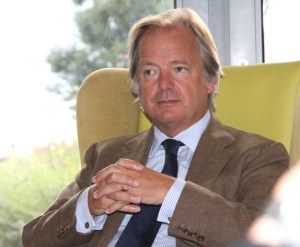
Photoshop – so useful for Swire!

The Swire photo on Twitter:

Now, Owl may be wrong, but isn’t this cropped from this – that chair and that view sure look similar:

IMG_1314

Original photo source: Sidmouth Herald
http://www.sidmouthherald.co.uk/news/east-devon-mp-signs-fairer-funding-letter-to-pm-1-4989277

Independent councillors are again power brokers in Cornwall

“This month’s county elections left Cornwall with 46 Conservative councillors, 37 Liberal Democrats and 30 Independents.

As the largest party the Conservatives had first go at putting together a ruling coalition. But, reports BBC News, their proposal was rejected by the Independents unanimously.

Instead:
The Liberal Democrats and independent councillors have regained joint control of Cornwall Council following two weeks of uncertainty.

Adam Paynter from the Lib Dems is the new leader following a secret ballot by councillors on Tuesday.

Independent councillor Julian German is to take on the role of deputy leader.

The council was run by a Lib Dem and Independent coalition before the elections.”

http://liberalengland.blogspot.co.uk/2017/05/lib-dems-and-independents-take-back.html

“Ministers could have to lay bare their private Whitehall diaries after Freedom of Information win”

Owl says: bet there are a lot of interesting diaries at EDDC!

“Ministers could be forced to reveal details of their ministerial diaries after the Government failed in a bid to block disclosure of a diary kept by former Tory health secretary Andrew Lansley.

The ground-breaking case marks the first time the courts have considered the public right to see entries contained in a ministerial diary under the Freedom of Information Act 2000.

Transparency campaigners say the case is of importance because the diary covers the time Mr Lansley was working on the Health and Social Care Act and allegedly subjected to extensive lobbying by private healthcare interests.

A journalist, Simon Lewis, made a request to the Department of Health under the Freedom of Information Act 2000 to see diary contents for the period May 12 2010 to April 30 2011.

Mr Lansley was health secretary in David Cameron’s Government from 2010 to 2012.

Only a redacted version was produced but in March 2013 the Information Commissioner required the department to disclose the majority of the withheld information.

The Government has now lost a series of legal challenges to the commissioner’s decision, ending in a unanimous three-judge appeal ruling yesterday in favour of disclosure.

It was handed down by Sir Terence Etherton, Master of the Rolls, sitting with Lady Justice Black and Lord Justice Davis.

In the lead ruling, Sir Terence said the FOI Act created a general right of access to information held by public authorities but allowed for exemptions from disclosure.

The Government attacked two earlier tribunal decisions allowing disclosure of the Lansley diary.

Government lawyers argued the tribunals were wrong to find the relevant balancing exercise between disclosure and non-disclosure came down in favour of disclosure.

Sir Alex Allan, a former chairman of the Joint Intelligence Committee, had been among Government witnesses who gave evidence that disclosure “would not assist the understanding of the processes of government and would be liable to mislead and misinform the public as to the efficiency and extent of the work of the minister”.

Dismissing the Government appeal, Sir Terence said there were “11 particular types of benefit” from disclosing the information, including “general value of openness” and “transparency in public administration”.

The judge also rejected the Government’s claim that the Department of Health did not hold the diary information “for the purposes” of the FOI Act.

He declared that while Mr Lansley was a minister in the department the diary entries “were held by the department for itself even if they were also held – in the case of personal and constituency matters – for Mr Lansley as well”.

The judge added: “I cannot see that the termination of Mr Lansley’s ministerial position made any difference to that position.

“In particular it seems to me clear that it remained relevant or potentially relevant to the department to know, as a matter of historical record, where Mr Lansley had been and with whom on particular occasions, should there be a political, journalistic or historical interest raised with the department in relation to those matters.”

A Cabinet Office spokesman said: “The Government is considering the decision of the Court of Appeal and will respond in due course.”

http://www.telegraph.co.uk/news/2017/05/24/ministers-could-have-lay-bare-private-whitehall-diaries-freedom/

Billionaires and developers rush to fill Tory election coffers

“The Conservatives received a huge boost in donations in the three months before Theresa May called a surprise general election, according to figures published by the Electoral Commission.

The party received £5.46m from January to March this year, more than twice the £2.65m given to Labour.

By the time the prime minister called the election on 18 April, the Tories had received £1.85m more in donations during the first quarter of the year than it had in the last three months of 2016.

The biggest individual donation came from the Conservative party treasurer, Michael Davis, who gave the party £317,000. The South African-born former mining executive is overseeing the party’s fundraising efforts, which have targeted wealthy businesspeople and city figures.

Last week, it emerged that the Conservatives had raised £1.5m more than Labour in the first week of the general election campaign, receiving more than £4.1m while Labour raised just over £2.7m.

The Conservatives are expected to get close to the £19m maximum they are permitted to spend during an election campaign. Labour is expecting to spend less than the Tories, amid a drive for donations from its 500,000 members. …

Other major donations to the Conservatives include £55,000 from the Rigby Group, which owns exclusive hotels including Bovey Castle in Devon, where the Olympic diver Tom Daley recently celebrated his wedding.

A company called Anglesource, run by the billionaire Arora brothers, also gave £50,000.

A property firm owned by a Palestinian-born businessman has given £65,000 to the Conservatives this year. CC Property UK is owned by Said Khoury, a billionaire who also owns CCC, the largest construction firm in the Middle East.

Other major donations came from Leopold Noe, the property developer, who gave the Conservatives £130,000. The hedge-fund manager John Armitage gave £125,000.

JS Bloor (Services), linked to the property tycoon John Bloor, gave £120,000. JS Bloor and Armitage also made donations in the first week of the election campaign, which are subject to different reporting rules.

According to the Electoral Commission, the Tory party also has a credit facility of £5,554,000, while Labour has access to borrowing £113,000.”

Labour received £1.96m from trade unions, including £657,702 from Unite. Public funds are also listed for each party, which predominantly boost the totals for opposition parties. …”

https://www.theguardian.com/politics/2017/may/23/tories-5m-donations-boost-before-may-called-snap-general-election

Tory donors and diners from oil companies get well treated in Conservative manifesto?

“Oil executives whose industry is promised further government support if the Conservatives are returned to power have given more than £390,000 to the party since Theresa May became prime minister.

They include Ian Taylor, the chief executive of Vitol, whose firm was fined for making payments to an Iraqi state-owned firm, and Ayman Asfari, the chief executive of Petrofac, who was recently interviewed by the Serious Fraud Office over suspected corruption.

Three of the donors have attended dinners with May or senior ministers since she took office.

The payments will raise eyebrows because the 2017 manifesto includes a specific commitment to build upon previous “unprecedented” government support for the oil and gas industry. …”

https://www.theguardian.com/business/2017/may/23/oil-bosses-have-given-390000-to-tories-conservatives-under-theresa-may

Cranbrook “country park” to go to public inquiry

Basically, developers want to skimp, and EDDC has no other way open to attempt to thwart their stinginess.

Don’t hold your breath for a good result in the current political and developer-led situation.

http://www.devonlive.com/public-inquiry-to-be-held-of-plans-for-countryside-park-in-cranbrook/story-30348970-detail/story.html

Progressive alliance – an idea whose time has come

“Caroline Lucas, Green Party

In an increasingly complex world, no one party has a monopoly on wisdom. People at the grassroots understand this – now the parties need to catch up
As the polls narrow, the Tories attack the idea of a progressive alliance and the possibility of coalition government because they know these could deny them their landslide. In the long term they fear a progressive realignment breaking their stranglehold on office and power. They are right to be scared because while on the surface all for them seems strong and stable, just below a new politics is bubbling up.

If Antonio Gramsci’s haunting phrase “the old is dying and the new cannot be born” was ever applicable to a UK general election, then it is this one. The old election is taking place in party headquarters, at the daily press briefings and meet-the-people events with no real people. But what is most old-school about this election is the main parties’ tribalism: “Only Labour can defend the NHS”; “Only the Tories can provide strong and stable blah”. It’s all about them: they believe they have a monopoly on the wisdom, superiority and singular ability to manage a world that is becoming more complex by the day. They are out of their depth. We know it and inwardly they do too.

The new election campaign is happening from the bottom up in local parties and communities. When Labour insisted on standing a candidate in the Richmond Park byelection last November, after the Greens stood aside to give the Liberal Democrats a freer run at Zac Goldsmith, thus establishing the working principle of the Progressive Alliance, Labour polled fewer votes than they had members. It is always the people who get it first.

Because what is being exposed during this campaign are the limits of deeply tribal parties in an increasingly non-tribal society. Our democracy is a tired adversarial system designed for two parties when we live in a multi-party moment. Young people simply don’t understand why you can’t join more than one party – and often do. The Women’s Equality Party has shown a different way of doing things is possible by saying this is fine.

Critics complain that “progressive” is a woolly term, so let me define it: being a progressive means believing the best in people, not the worst; that a good society is one that knows it is not yet good enough. It means being impatient for greater equality, democracy and sustainability.

When a progressive alliance government is formed it will introduce proportional voting so we never have to fight against the electoral system again. So this is more than just a deal to defeat the Tories in June. The progressive alliance is based on the principle that we make better decisions by working together. Unlike the arrogant view that any one party knows it all and can do it all, we believe there is wisdom to be found in the crowd. The Greens think most about the environment, Labour about work and the Liberals about liberty. This can be a winning political hand. Not least because it starts to help us deal with the complexity of the world we face. …”

https://www.theguardian.com/commentisfree/2017/may/23/progressive-alliance-general-election-labour-future

“The state of rural services” report

“Changes to rural transport provision affect access to a range of service facilities and outlets, where these are not available locally and where travel is necessary. Recent reductions to bus services are therefore of direct relevance to various topics covered by this report.

Similarly, rural access to a range of services is altering due to the provision of and take-up of online services. This has considerable scope to address long standing concerns about rural access to services, if geographic distance is no longer such a barrier. However, this is not straightforward. Not all groups are online, some rural areas await decent (broadband) connectivity and one consequence may be less used physical outlets e.g. bank branches.

The demography of rural areas and, in particular, the growing number of older people has implications for the future of services covered in this report. On the one hand it places considerable extra pressures on public services such as GP surgeries and adult social care, especially if funding for them is tight, as it has been for some years and seems likely to continue being. On the other hand older age groups are more likely to be users of locally based commercial services in rural areas, such as convenience stores, thus helping them to survive. Retired people who remain in good health are also likely to make up a good proportion of the volunteers engaged with providing community-run services. …”

https://ruralengland.org/the-state-of-rural-services-2016-report/