Election survival guide

“The NHS needs thousands of extra beds to prevent patients being subjected to “corridor care” this winter, doctors have said.
The Royal College of Emergency Medicine (RCEM) analysed NHS data and found that 4,000 to 6,000 extra beds were needed to “keep emergency departments moving” by ensuring that patients could be accommodated.
Katherine Henderson, president of the college, said: “Our number one priority is to put an end to ‘corridor care’ this winter. To do this we will need at least 4,000 extra staffed beds.
“Emergency departments aim to have most patients treated and back home on the same day, but nearly a third of all patients who go to major A&Es needed to be admitted to a bed.
“A lack of beds means that many patients have to wait long times in undignified conditions, often on a trolley in a corridor. Last year nearly a third of a million people waited for over 12 hours. No patient should have to experience this for even a couple of hours, let alone for over half a day as some do.”
It is deemed unsafe if more than 85 per cent of available beds are occupied at any one time because this would leave hospitals unable to cope with surges in demand. Last winter occupancy rates hit an average of 93.5 per cent, Dr Henderson said, adding that more than 15,000 beds, or about one in ten, had been lost since 2010.
This summer was the worst ever in terms of the number of patients waiting more than 12 hours for a hospital bed, she said.
“This is a difficult position to be going into winter in. Without more beds, with appropriate nursing staffing, we fear we may be in for another record-breaking winter,” she added.
An NHS spokesman said: “The NHS will indeed be opening up thousands of beds over the next few months, based on the local availability of nurses and other staff. Hospitals will also be working closely with community health services and local authorities’ home care and care home services.”
A Department of Health and Social Care spokesman said: “We have invested £240 million in adult social care to ease pressures this winter by getting patients home quicker and freeing up hospital beds across England.”
Source:Times (paywall)
 Her election team – so YOUNG, so diverse – hurrah!
“The news broke last night when I was in one of my regular election campaign team meetings.
Subject to approval by the Lords, there will be a general election on the 12 December.
So we’ve started the countdown to what is being dubbed the most unpredictable and epic general election in living memory.
The last December election was almost 100 years ago, and campaigning is going to tough, with dark nights, cold and possibly pretty awful weather.
But despite the challenges of leafleting and door knocking, last night the air of excitement was palpable. We sensed the enormity and potential of what we’re about to enter.
An election that is alive with possibility. Anything could happen, according to polling experts, like Professor John Curtice.
The next six weeks are for us, stretch gloriously out, full of intense activity, inspiring interactions with others and above all, hope. Hope that this time the East Devon constituency could finally break its 150 year Conservative rule and see an Independent MP elected, whose manifesto is based on local people’s views and who intends to truly represent the people of East Devon, with no party whip to get in the way of that representation.
This is my third general election. I have effectively been campaigning to be East Devon’s MP for six years, including over a year of preparation for this one.
The preparation we’ve put into this campaign is in sharp contrast to the snap election of 2017 where I was completely taken by surprise by the announcement, which arrived in the middle of the Devon County Council elections.
I had to gather a team and funding at what felt like 100mph, while still campaigning to retain my county seat!
And who would have thought that in this election, in a supposedly safe Conservative seat, an election would have been called with no Conservative candidate! Sir Hugo Swire, of course has announced his intention to resign.
This time feels different. It has a different energy about it. I’ve been a councillor for a decade. And I’m a seasoned campaigner, having fought five elections (this is the sixth) since 2011 and once again, I have a strong, committed and extraordinarily motivated and hardworking team around me. I am also very fortunate to have a much wider team of hundreds of leafleters and door knockers.
That’s not to say we don’t need more though. We do!
I hope that the election in East Devon will reflect the mood of the nation in that my opponents will be respectful and polite when challenging me and I in turn, also pledge to operate in the same way.
I’m really looking forward to getting out there and meeting lots of you!
I’m signing off now. There’s much to do!
I can’t wait!
Pic: Here’s some of my core team last night a few moments after we heard the general election confirmed for the 12 December.”

A local person?
Someone parachuted in to what was once a safe seat (that’s how Swire got it with no connection to East Devon at all) but which is now very, very unsafe?
Will the Brexit Party contest it?
Will Lib-Dems split votes and allow a Tory to keep the seat?
So many questions, so few answers …
But at leadt it won’t be a very long campaign!
East Devon: be a trendsetter – elect Claire Wright – Independent!
“Professor John Curtice Makes Prediction On General Election 2019
The UK’s leading election expert Sir John Curtice told LBC he expects parties other than the two major ones to have a record number of MPs in the upcoming General Election.
The UK is expected to go to the polls on 12th December after Jeremy Corbyn told Labour MPs to back Boris Johnson’s proposal for an early General Election.
Sir John is the man who predicted Brexit and has been in charge of the accurate exit polls in the recent elections in 2015 and 2017.
And speaking to Shelagh Fogarty, he gave a surprising prediction of what we can expect.
He said: “I think the safest prediction is that we will have a record number of non-Conservative and non-Labour MPs in this parliament.
“The SNP look set to win the vast majority of seats in Scotland. The Liberal Democrats given their position in the polls should do extremely well. We expect Caroline Lucas and the Green Party to hang on to her seat.
“We could have more than 100 MPs that do not belong to either of the other two parties.
“That matters for two reasons. The first is that it makes it difficult for either Conservative or Labour to win an overall majority if you’re taking the fact that 100 of the seats are already spoken for.
“Secondly, it matters because this is an asymmetric election. It’s an election that Boris Johnson has to win. If he does not get a majority or something very close to it, he will not be able to stay in government because the Conservatives do not have any friends elsewhere.
“The Labour Party, by contrast, at least has the possibility of doing a deal with the SNP, a deal with the Liberal Democrats, getting support of the Greens and maybe even the DUP not standing in their way.
“Bear in mind, this is not an election that Labour have to win to stop Brexit, but it is an election that they and the other opposition parties simply need to deny the Conservatives a majority.”

“The major UK political parties go into the election with radically different positions on Brexit. In short:
A vote for the Conservative party is a vote to take Britain out of the EU.
A vote for the Labour Party is a vote to put any Brexit deal to a referendum, in which voters could vote to remain.
A vote for the Liberal Democrats is a vote to revoke Article 50 and cancel Brexit.
A vote for the Brexit Party is a vote for a no-deal Brexit.”
AND A VOTE FOR CLAIRE WRIGHT (INDEPENDENT) IS A VOTE FOR EAST DEVON!
Claire Wright could be a powerful figure if elected to Parliament. She could be amongst a handful of MPs that could tip the balance in a hung parliament.

Here’s Tory Skinner waxing lyrical about £1.5 million for Exmouth College (though Tigger Nick Hookway has concerns):
https://www.exmouthjournal.co.uk/news/cil-money-for-community-college-expansion-1-6344922
and here’s news of cash for the completion of a road in Dinham Way – with Skinner again seeming to have the biggest voice and Hookway again expressing reservations:
https://www.radioexe.co.uk/news-and-features/local-news/exmouth-projects-backed/
Tail … dog … wagging … again?
And so near general election time.
And when will other towns and villages get their shares of Community Infrastructure Levy goes into one big pot rather than being locality-based like Section 106?


Of course they did.
Unfortunately, most other MPs didn’t, so it’s back to La La Land tomorrow …
Of course, Swire doesn’t care when it is … he’s off whatever happens.
So, so nany of Devon’s economic eggs in Hinkley C’s basket – dropped in there by our Local Enterprise Partnership, with the vested interests of its board members uppermost.
And no wonder Germany has dropped nuclear in favour of renewable energy.
“An official report rapped French energy giant EDF on the knuckles Monday for lacking a “culture of quality,” as reflected in huge delays and price overruns at a nuclear plant it has been building for more than a decade.
The report was presented to EDF’s largest shareholder, the French government, which called for an urgent “plan of action” to improve standards at the company and get the much-needed plant online.
The delays at the Flamanville site in northern France come on top of a massive cost overrun at the Hinkley Point nuclear project EDF is building in Britain and a decade-long delay to the Olkiluoto plant in Finland.
EDF’s European Pressurised Reactor (EPR) reactor in Flamanville is now seven years late and costs have more than tripled to 12.4 billion euros ($13.7 billion).
Earlier this month, the company said fixing faulty welding on the Flamanville reactor will add 1.5 billion euros ($1.6 billion) to the already swollen price tag.
When Electricite de France began work on the reactor in 2007 it targeted a launch date of 2012. It is now eyeing 2022.
Presented by Jean-Martin Folz, ex-boss of car-maker PSA, Monday’s audit report highlighted a loss of competence at EDF and slammed the company for lacking a “culture of quality.”
Economy Minister Bruno Le Maire said the report underscored “an unacceptable lack of rigour” at EDF.
He ordered the company to put in place an action plan within a month to bring its nuclear project to the “highest levels”.
EDF chief executive Jean-Bernard Levy, at the same press conference, said he accepted the findings and vowed the company would “redouble its efforts” to boost skill levels.
Folz said that in spite of the problems, the EPR project has successfully demonstrated the “relevance” of the new technology.
– Frustration –
The EDF’s board a few months ago discussed abandoning the Flamanville project but the French state still supports the build despite frustration with the delays.
The project was meant to showcase the third-generation EPR reactor technology that EDF has sold to Britain and Finland.
In September, EDF announced that an EPR reactor it is building on Britain’s south coast would also be delayed, and cost between 1.9 and 2.9 billion pounds ($2.4-3.7 billion) more than initially estimated.
A similar EPR third generation nuclear power plant project in Olkiluoto in Finland is now 10 years behind the initial schedule.
The government acknowledges the delays risk severely denting France’s international reputation as a reliable provider of nuclear energy technology.
Folz said EDF would need to embark on a massive investment and recruitment drive, which was only possible if the government commits to “stable, long-term programmes for the construction of new reactors and the maintenance of the existing fleet.”
The state is considering building more reactors but Environment Minister Elisabeth Borne insisted Monday a decision cannot be taken before EDF has demonstrated the effective running of the EPR.
France relies on nuclear power for 72 percent of its electricity needs. The government wants to reduce this to 50 percent by 2035 by developing more renewable energy sources.
The government has said it would shut 14 of 58 reactors, spread across 19 power plants, by 2035.
But France, by far the country most reliant on nuclear energy, has no intention of phasing this source out altogether, like Germany.
The nuclear sector provides jobs for nearly a quarter of a million people.
Two reactors in Fassenheim in the east of the country are still online despite a 40-year lifespan that expired two years ago.
Last year, a parliamentary report highlighted failings in the safety and defences of the country’s nuclear plants, citing a series of shutdowns at sites around the country.”
https://www.france24.com/en/20191028-audit-raps-french-energy-giant-edf-over-nuclear-project
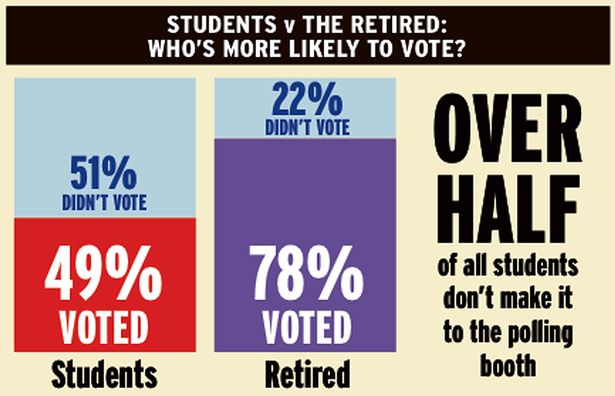
 “Nearly 60 per cent of applications were from people aged 34 and under 34. …”
Are you one one of them? If not register at:
https://www.gov.uk/register-to-vote
Tonight Channel 4 Dispatches, 8 pm:
“Antony Barnett investigates how a future trade deal with President Trump’s America might leave the NHS footing a bill for billions, with less money for UK healthcare. US drug giants are lobbying negotiators to make the NHS pay more for medicines.”
Press Release
“Challenged by EDDC to come up with a solution for the development of Phase 3 Queen’s Drive, Councillor Nick Hookway and a team of committed local residents present their scheme to the Delivery Group at EDDC on Monday 28th October.
Highlight of the costed plan include a free play area for the under 8s and an innovative pay play area with high ropes, water wars and climbing towers for older children and adults.


The vision is to create a destination that will complement the Watersports Centre and Restaurant offer on phase2 and will cater for all age groups, all abilities and huge variety of interests. It is backed by research into current trends in the leisure industry, the experience of other seaside towns in England and surveys carried out by locals and HemingwayDesign.
In addition to the play areas there are plans for an intimate arts/performance space for hire, a sunken garden where the Swans used to be and a gift shop and café. The educational feature of the scheme is an interactive Discovery Centre telling the story of our unique coastline and estuary. Fronting the site a brand new Crazy Golf.
All this will be delivered by a not for profit organisation so that community benefit will be felt by local residents. Councillor Hookway will be asking EDDC that these proposals will be given equal opportunity alongside Hemingway Design so that the Town can decide what happens on the Seafront.”
and here:
https://www.devonlive.com/whats-on/alternative-vision-exmouth-seafront-site-3476360
Not looking good … now being attacked for wanting to employ consultants to tell him what town centre problems are:
“East Devon District Council ‘lacks good detailed intelligence about its towns and their economic wellbeing’.
Cllr Ben Ingham, leader of the council, admitted: “This is not a good state of affairs,” when questioned at Wednesday night’s full council meeting.
It came after Cllr Mike Allen asked questions over the decision of the portfolio holder for economy, Cllr Kevin Blakey, to commission a major study into town centres.
Cllr Allen asked for an indication of the cost proposed and in the interests of proper transparency, for the Consultancy brief envisaged be put to the next Overview Committee for discussion before any expenditure is committed. …”
https://www.devonlive.com/news/devon-news/east-devon-lacks-good-intelligence-3474769

Owl says: Well, duh! And just how long has EDDC’s CEO been in the job? Where was his “hindsight”?.
And our “Leader” is now fully au-fait with the language if the previous majority party as far as giving non-answers is concerned!
Everything changes, nothing changes …
“At last Wednesday’s full council meeting, Cllr John Loudoun, asked questions around the keeping of notes from meetings that officers of the council are involved in.
Notes of meetings when senior council officers meet with developers over planning issues should be made in future, councillors have been told.
It follows an instance where East Devon District Council’s chief executive allegedly told developers to appeal his own council’s refusal of planning permission for the Sidford Business Park.
Paragraphs 13 and 14 of the Richard Kimblin QC final closing arguments at a planning inquiry held this said: “After the 2016 application was refused, there was a meeting with Councillor Stuart Hughes and the CEO of the Council. The CEO advised that the way to progress was to appeal. That is an extraordinary state of affairs.”
The claims, made both in writing and verbally, were unchallenged by East Devon District Council during the inquiry, but afterwards, an East Devon District Council spokesman said that Mr Williams did not advise the appellant of anything but the applicant chose to interpret the comments he did make as encouraging an appeal, and the comments were made in a ‘situation where a degree of hyperbole and exaggeration is not unusual’.
At last Wednesday’s full council meeting, Cllr John Loudoun, asked questions around the keeping of notes from meetings that officers of the council are involved in.
He said: “Sometimes officers from this Council, beyond those directly responsible for local planning matters, meet and/or discuss with developers their planning applications. Sometimes these meetings take place to discuss applications that this Council has failed to support.
“Does the leader of the council agree with me that when such meetings and/or discussions take place, it is most imperative that they are held in ways that give residents faith that the Officers are transparent and accountable in these matters?
“Does the leader agree with me that it would be appropriate that at such meetings, or in such discussions, there should be more than one Officer present, such as a legal adviser and/or planning officer? Do you agree that any meetings or discussion with developers when they relate to planning should have a formal record kept of what was discussed and agreed, and why?”
In response, Cllr Ben Ingham, leader of the council, said: “The circumstances surrounding any meeting will determine whether it is necessary for them to be held in any particular way. I have the upmost faith that our officers would appreciate the need to act in a way that ensures nothing untoward occurs.
“But in hindsight, it is probably a very good advice and many members and officers of the council may say in future they will.”
It was of a number of questions raised at the meeting relating to concerns about the processes of the council which followed what some councillors called the ‘shambles’ of the previous full council meeting which left councillors unclear as to what they were voting for.
Cllr Loudoun added: “At the last Full Council meeting there was lengthy debate around a motion. A Member at one point interjected and proposed ‘that the question now be put’ and the chairman put this point of order to the meeting.
“Many members did not fully appreciate the implications of voting for or against this point of order and when passed by a show of hands, there appeared to be confusion amongst some Members as to what had just been agreed. When the chairman invited the meeting to vote on the motion on the agenda paper, some Members appeared not to understand what was happening and what they were now being asked to vote on.
Once the meeting had voted on the motion some Members were confused and it was only at this point that it was fully explained what had happened and the implications of their first vote, but by this point the votes had been cast and decisions made.
“The meeting ended with some Members expressing frustration and/or confusion about what the meeting had decided. Does the Leader recognise this set of events and if he does, what would he recommend this Council does to avoid a similar set of circumstances occurring in the future?”
In response, Cllr Ingham said: “It is not for me to say what other members may or may not have understood. I understood what was happening but members are always able to ask for confirmation on what is going on and I am sure the Chairman would, in such circumstances, ensure that clarity was given on the procedures from the officers present. We have may acted at a speed that was not appropriate for new members.”
Asked by Cllr Paul Millar on the potential merits of ensuring Members can make informed decisions when asked to vote in Council meetings, Cllr Ingham said that any council or committee makes mistakes, but as the new council learns, he hopes members and officers will make fewer mistakes when acting in a hurry.
Cllr Eleanor Rylance also questioned why a significant number of meetings had been scheduled to take place during the half-term break. As well as the full council meeting, a Strategic Planning Committee, an Audit and Governance Committee, and a Scrutiny Committee meeting took place last week.
She said: “In the spirit of inclusivity, how is it that this council is wilfully disadvantaging anyone with school aged children, caring responsibilities for school aged children, or those who work in schools or other educational establishments, by organising major meetings including this one during school half term? This is entirely avoidable. Please can the council set its timetable with school dates in mind in the future?”
In response, Cllr Ingham said: “Whilst it would clearly be difficult to plan a yearly meeting cycle to accommodate school holidays, particularly bearing in mind the length of the summer holiday and the potential impact on the business of the Council, it would be helpful to consider if changes could be made in future. “
https://www.devonlive.com/news/devon-news/leader-says-hindsight-notes-should-3475242
“Parts of the UK are ageing twice as fast as other areas of the country, while in some cities the population is getting younger, a divergence that will have a lasting impact on local economies, local government and national politics, according to new research. …

The research is here:
resolutionfoundation.org
“Corporate addition to high debt threatens to destabilise the world economy. Not my words – those of the International Monetary Fund.
A recent report by the IMF says that “in a material economic slowdown scenario, half as severe as the global financial crisis, corporate debt-at-risk could rise to $19 trillion —or nearly 40 percent of total corporate debt in major economies—above [2008] crisis levels.”
In other words, in an economic slowdown, many firms will be unable to cover even their interest expenses with their earnings. Countries most at risk are US, China, Japan, Germany, Britain, France, Italy and Spain.
One study estimated that in 2018 UK s FTSE 100 companies alone had debt of £406bn.
Sinking in debt
Low interest rates have persuaded companies to pile-up debt in the belief that they will be able to use it to maximise shareholder returns. The key to this is tax relief on interest payments.
Ordinary folk don’t get tax relief on interest payments for mortgages or anything else because successive governments argued that such reliefs distort markets and encourage irresponsible behaviour.
However, corporations get tax relief on all interest payments. Currently for every £100 of interest payment, companies get tax relief of 19%, the prevailing rate of corporation tax, which reduces the net cost to £81. The tax subsidy enables companies to report higher profits.
Companies do not necessarily use debt to finance investment in productive assets. The UK languishes near the bottom of the major advanced economies league table for investment in productive assets and also lags in research and development expenditure.
British companies appease stock markets by paying almost the highest proportion of their earnings as dividends. BHS famously borrowed £1 billion to pay a dividend of £1.3bn. Carillion used its debt to finance executive pay and dividends. Thomas Cook had at least £1.7bn of debt but that did not stop lavish executive pay and bonuses.
Fatal effects
Corporate debt facilitates profiteering and tax avoidance. Water companies have long used ‘intragroup debt‘ to dodge taxes. Typically, they borrow money from an affiliate in a low/no tax jurisdiction. The UK-based company pays interest which qualifies for tax relief and reduces the UK tax liability.
Many a tax haven either does not levy corporation tax or exempts foreign profits from its tax regime. As a result, the affiliate receives the interest payment tax free.
It is important to note that the company is effectively paying interest to another member of the group and no cash leaves the group. The inclusion of interest payments in the paying company’s cost base can also enable it to push up charges to customers, especially if has monopoly rights on supply of goods and services.
Thames Water is an interesting example here. From 2006 to 2017, it was owned by Macquarie Bank and operated through a labyrinth of companies, with some registered in Caymans.
During the period, Thames’ debt increased from £2.4bn to £10bn, mostly from tax haven affiliates, and interest payments swelled the charges for customers. Macquarie and its investors made returns of between 15.5% and 19% a year.
For the period 2007 to 2015, the company’s accounts show that it paid £3.186bn in interest to other entities in the group alone. Tax relief on interest payments reduced UK corporate tax liability. For the years 2007-2016, Thames Water paid about £100,000 in corporation tax.
Private equity entities use debt to secure control of companies and engage in asset-stripping. A good example is the demise of Bernard Mathews, a poultry company.
In 2013, Rutland Partners acquired the company and loaded it with debt, which carried an interest rate of 20%. This debt was secured which meant that in the event of bankruptcy Rutland and its backers would be paid before unsecured creditors.
In 2016, Bernard Matthews’ directors, appointed by Rutland, decided that the business was no longer viable and sought to sell it. However, they only sold the assets of the company which realised enough to pay secured creditors, Rutland and banks.
The big losers were unsecured creditors, which included employee pension scheme, HMRC and suppliers. The purchaser of the assets told the House of Commons Work and Pensions Committee that it offered to buy the whole company, including its liabilities, but the offer was declined by Rutland because by dumping liabilities it collected a higher amount.
What needs to change
There is some recognition that corporate addiction to debt poses a threat to the economy. Following recommendations by the Organisation for Economic Co-operation and Development, the UK has placed some restrictions on the tax relief for interest payments, but that is not enough.
An independent enforcer of company law is needed to ensure that companies maintain adequate capital. Companies need workers on boards to ensure that directors do not squander corporate resources on unwarranted dividends and executive pay.
The insolvency laws need to be reformed to ensure that secured creditors can’t walk away with almost all of the proceeds from the sale of assets and dump liabilities.
And finally, tax relief on debt needs to be abolished altogether.”
https://leftfootforward.org/2019/10/prem-sikka-how-companies-use-debt-to-line-their-pockets/
“The December 12 date is really odd for many reasons. It’s so near Christmas, it’s after universities have ended their terms, etc,” the Labour leader said. “There’s lots of, lots of things very odd about that date.” …