Greater Exeter Strategic Plan – where are we? In trouble!

All change on the Planning Front for East Devon.

Ever since David Cameron’s coalition government’s efforts to provide local communities with a say in local planning decisions with the “Localism Act” in 2011 (giving communities the power to draft “Neighbourhood Plans,” designed to provide a degree of self-determination to how local communities could be developed in the future) the powerful developers and landowners lobby has been active to reclaim their powerful grip on developing our communities.

First was the new National Planning Policy Framework (NPPF) in 2012 which threw out the old planning regulations and provided a “developer-driven” new planning policy, with just a “nod” to the Localism Act, Neighboured Plans and District wide plans.

The new NPPF introduced a policy that if the District or Neighbourhood Plan was not “up to date” then there would be a presumption of allowing any proposed development from a developer. Therefore, Councils and local communities quickly set about drawing up their Neighbourhood Plans and District Plans to plug the gap created by the new 2012 NPPF policies.

East Devon District Council who had been dragging their feet for years to complete their Local Plan, finally managed to obtain the approval of the Planning Inspectorate in January 2016 to cover the period up to 2031. Lympstone had got its Neighbourhood Plan approved in 2015 and since then over 30 Neighbourhood Plans are either approved or in the process of being drafted by community groups within East Devon.

It was therefore thought that East Devon and its communities had substantial protection from greedy landowners and developers up to 2031 and with the extra protection of the East Devon Villages Plan, approved in July 2018 (which gave further defined policies for larger Villages and some large Business Parks) residents and developers appeared to understand where development would or would not be allowed.

However, in late 2016 Exeter City Council, whose Chief Executive Karime Hassan (previously East Devon’s District Council officer who created and developed the concept of the new town of Cranbrook) proposed a joint “Strategic Plan”, along with neighbouring councils East Devon, Teignbridge, and Mid Devon.

The four councils then started a joint over-riding masterplan for Exeter and the surrounding area known as the GESP (the Greater Exeter Strategic Plan).

It was clear that Exeter was almost completely built-out and the infrastructure in roads and transport required for further city centre and commercial growth was urgently required if the continued success known as the “Exeter Growth Point” was to continue. Without a joint plan for infrastructure, the commute into the City would become intolerable and hinder the targeted housebuilding requirements set by the Government for each of the 4 separate councils.

In October 2018 the Government draw up yet another updated version of the NPPF (National Planning Policy Framework) very much on the lines of the 2012 Policies, but with various tweaks to assist in the over-riding government strategy of encouraging developers to build many more dwellings.

The new 2018 NPPF provided clearer guidance that if an individual Council was unable to provide enough development land for extra dwellings required by the government’s growth targets, neighbouring councils may be allowed to build out extra housing for their partner and other neighbouring authorities.

According to East Devon District Councils Strategic Planning Committees agenda item 12 for discussion on the 29th January 2019:

“Timetable for production of a new East Devon Local Plan”

Within the introduction to the agenda item it states:

…given changing circumstances and other factors, that a “light touch” review of the currently adopted local plan is unlikely to be a practical option for a new local plan.”

What the changing circumstances and other factors are, is not explained but it is clear from the report it is clearly in relation to GESP.

Because the GESP Strategic Plan policies will over-ride the East Devon Local Plan policies, the report seems to suggests that the “changing circumstances and other factors” relate to the new GESP policies which override the Local Plan, Village Plan and probably most Neighbourhood Plans – affecting a large area of East Devon! So much so that, rather than the GESP plan dovetailing into the 3-year-old approved East Devon Local Plan and 1-year-old Villages Plan with all the years of public consulting, Council debate and literally years of work by the planning team, it will be jettisoned for a brand-new Local Plan to dovetail into the strategies of the GESP plan!

Although the GESP plan has been in preparation for 2 years, no formal discussion or meeting has been held at any Council Chamber at any of the four Councils involved. Meetings have taken place to consider the 700 plus sites throughout the Greater Exeter area submitted for assessment by what is known as the “Housing and Economic Land Availability Assessment (HELAA) panel” The Panel is made up of “key stakeholders”, with a recognised interest in the development of land for housing and employment, and housing and economic development sector, including housebuilders, social landlords, local property agents and other related professionals together with local community representatives and other agencies. The membership of these meeting has been confidential and there has there been no publication of their deliberations or recommendations.

To be clear: meetings between two lead councillors from each Authority, plus officers have kept the draft policies and site options totally under lock and key – with none of the meetings been reported or minuted.

However, all is to be revealed AFTER the local council elections in May 2019 – consultation has always been scheduled to begin no earlier than June 2019.

This suggests that the draft policies and site options affecting East Devon will be so radical and so totally at variance to the East Devon Local Plan and Villages Plan that they will all require total re-writing, with a brand-new Local Plan (subsidiary to GESP) and all the costs and uncertainties this will bring.

Why have these Councils been so secretive on the GESP proposed development site considerations for proposed strategies for commercial and housing development for this part of Devon? Could it be that Tory controlled East Devon, Teignbridge, and Mid Devon Councils have elections on May 2nd this year (Labour Exeter elects only one-third of its council this year) and a brand new super-growth plan – superseding their Local Plans – will not be considered much of vote-grabber?

Don’t say you weren’t warned!

Greater Exeter – city council plans and housing need

Now that Exeter is planning (at least) 450 homes on sites adjacent to Exeter bus station (and possibly even more), is this 450 fewer homes that the rest of Greater Exeter has to supply to “meet Exeter’s needs”?

https://www.devonlive.com/news/business/new-300million-exeter-bus-station-2236936

Teignbridge District Council Tory majority down to 1 – implications for Greater Exeter

Owl says: The Greater Exeter Strategic Plan must be approved by all linked authorities. EDDC has already refused to sign up to the latest draft and now Teignbridge can no longer rely on whipped Tories. 1 vacancy, 23 Tories, 6 Independents and 16 Lib Dems – so Independents now VERY powerful ….

“The ruling Conservative party have seen their majority on Teignbridge District Council slashed to a wafer-thin one after the resignation of a councillor.

Cllr Amanda Ford, the previous ward member for the Teign Valley, quit the council earlier this month.

No reason for her departure has officially been stated, but just weeks before she left, she had threatened to quit as a result of ‘allegations of bullying by senior council officers’, an accusation the council has strongly refuted. …”

https://www.devonlive.com/news/tory-majority-slashed-one-after-2238257

“Fewer households will ‘reduce need for new homes’ “

Will the number of extra houses predicated for the Greater Exeter area (57,000] be reduced in line with these new findings? Of course not – develipers rule, OK!

“There are likely to be 1.4 million fewer households in England by 2041 than the government originally thought, a forecast that economists warned yesterday could have a big impact on housebuilding targets.

The Office for National Statistics said that the number of households in England was projected to grow by 159,000 a year, from 22.9 million in 2016 to 26.9 million by 2041.

The figures are used by the government to work out future housing needs and have been a key reason for its target of building 250,000 to 300,000 homes a year.

This is the first year that the projections have been calculated by the ONS rather than by a government department.

A large proportion of the growth will come from the rising elderly population. Households headed by someone aged 65 years and over are set to account for 88 per cent of total growth between 2016 and 2041. The highest growth is set to take place in London and the lowest in the northeast.

However, while this overall 17 per cent increase in households may seem large, it is significantly smaller than the projection made in 2014. Then, the government said that there would be an extra 210,000 households a year in England, resulting in 28 million homes by 2041.

Bidwells, a property consultancy, said that the latest projections would lead to a dramatic drop in the required number of homes in England.

Ian Mulheirn, director of consulting at Oxford Economics, said that the drop in projections demonstrated that there were several myths around Britain’s housing shortage and argued that it was not necessary to build 300,000 homes a year.

“Over the last 20 years, the various housing departments have used a methodology to predict household need that was flawed,” he said. “It predicted that a significantly higher number of households would form and it was consistently shown to be incorrect at each census point.

“The ONS has changed the methodology and if we had used their figures over the last 20 years we wouldn’t have this figure of extremely high housing need being quoted everywhere.”

Previous projections made by the government were based on census data starting in 1971, which showed household sizes steadily shrinking as more people chose to live alone or to have smaller families. But this trend stopped around 2001, which is when the ONS is now basing its projections from.

The latest figures were disputed, however. Matthew Spry, senior director at Lichfields, a property consultancy, said: “The number of households that have formed can only ever match the number of dwellings that there are for people to live in. Statistically a household cannot form if it doesn’t have an extra house to form into.”

The ONS has also made a new assumption for net migration. It is now projected to be 152,000 a year from mid-2023 onwards. The 2014 projection had assumed 170,500 a year.

Joanna Harkrader, of the Office for National Statistics, said that the slower growth reflected “lower projections of the population — notably assumptions around future births, how long we will live and migration — and more up-to-date figures about living arrangements, such as living with parents or cohabiting.”

Source: Times (pay wall)

Another blow to a new Cranbrook town centre?

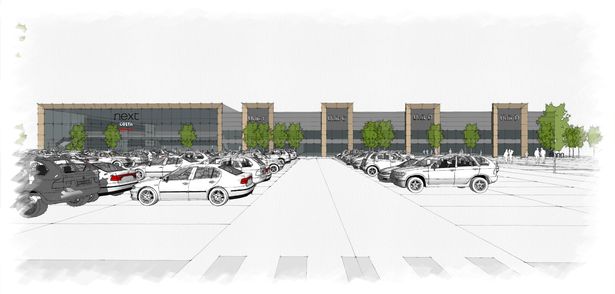
A large shopping centre development at Sowton was recently turned down by Exeter City Council because it did not fit in with their vision for local centres in the large new housing developments springing up in that area. The scheme called for an out-of-town shopping centre with the likes of Next, Boots, etc.

The developer, rather than appealing the decision, has swiftly withdrawn the original plans and submitted a revised application, thus avoiding the hefty cost of submitting new plans.

They now say they will (possibly) include a post office, pharmacy and gym and maybe other smaller retail elements. This, they feel, fulfills the requirement for a more local feel to the plans.

Whether Exeter City Council agrees with this, or if an appeal is successful if they still reject it remains to be seen.

But it certainly puts a damper on those retail ventures willing to open up in secondary, nearby areas such as Cranbrook and those developers willing to take a chance on anything but (highly profitable) housing.

Clyst St Mary and the Greater Exeter Strategic Plan – the EDDC position

This was the addendum to the post below – the East Devon District Council case for the extra 57,000 homes it has been agreed must be built around Exeter. Do note that government funding is NOT guaranteed by any current budgetary measures nor are there any major job creation schemes in the pipeline.

ALSO NOTE: these are paragraphs from the report, not the full report, chosen to reflect the particular issues for Clyst St Mary:

“The purpose of this report to Strategic Planning Committee is not intended to pre-judge any Greater Exeter Strategic Plan (GESP) detailed assessment and evidence gathering but simply to start the debate to establish broad principles and locations for growth.

The continued growth of the district and the future incentives form a vital element in the mitigation of the future financial pressures anticipated in East Devon from 2020/21.

GESP gives an opportunity for councils to negotiate deals with the government to fund additional infrastructure in association with growth.

Much infrastructure funding comes from development, central government grants and the Councils themselves. Other Councils have worked with the Government to agree ‘infrastructure deals’ to provide more and higher quality homes in return for infrastructure investment e.g. Oxfordshire have agreed a deal where the Government provides up to £215 million towards infrastructure and housing in return for a commitment to a specific number of homes being built. We realise that new development, transport and infrastructure need to be thought about together and more detail on those issues will be identified and consulted on in the draft GESP in the summer of 2019.

Up to 2040, extra large-scale infrastructure is likely to cost more than £1 Billion. This will be determined to a large extent by future development sites in the plan but these sites are not yet determined. The infrastructure we may need to provide up to 2040 in the GESP area are:

New primary and secondary schools; Relief to major junctions on the M5; Improvements to the A30/A303; A number of new Park and Ride sites on the main roads into Exeter; Walking and cycling routes in and between towns and Exeter; Improvements to rail and bus routes and buses; Low carbon energy generation and a smart grid; New, accessible green space; Healthcare facilities; Community facilities; Internet connectivity and mobile communications and this is likely to cost around £700m.

Projects are funded in part but there is still a large ‘funding gap’.

Providing more, better and a wider variety of new homes is the main way to improve the present unbalanced housing situation. New NPPF policies require a baseline of a minimum of 844 homes per year to be accommodated in East Devon although this is less than the 950 new homes per year already agreed in the East Devon Local Plan to 2031. However, the baseline of 844 homes does not account for any additional need that the Council may agree to accommodate with neighbouring authorities in GESP which may lead to an increase in the overall number.

Therefore, if Councils deliver more than the minimum total provision of 2,600 housing per year for the combined GESP areas, then the Government will provide more funding for infrastructure. Prompt housing delivery could also be Government funded for affordable housing lost through right to buy sales in our high value housing Districts which continues to be problematic. Additionally, East Devon’s aspiration of one job per home will also need to deliver enough employment space to accommodate a minimum of 844 jobs per year with Councils in the South West agreeing that they will also try to double the size of the local economy by 2036 to increase local prosperity. Evidence suggests that the area has a high number of entrepreneurs and small businesses and encouraging these businesses and providing suitable accommodation for them to expand and grow will be an important factor for accommodating growth.

The NPPF recommends the effective use of previously developed or ‘brownfield’ land for meeting development needs but avoiding low density to make optimal use of sites with allocated sites and those with outline permissions being commenced within five years.

The government intend that viability assessment work is primarily undertaken at the plan making stage. The onus is on local authorities to undertake robust viability assessments which are open and transparent and publically available. The revised NPPF addresses the importance of good design (“Paragraph 124. The creation of high quality buildings and places is fundamental to what the planning and development process should achieve. Good design is a key aspect of sustainable development, creates better places in which to live and work and helps make development acceptable to communities”).

However, decision making in relation to flood risk and heritage assets remains unchanged in the revised NPPF with one of the Key Issues in the Report to Committee stating

· Flood zones – Clearly we should not be planning for new homes in areas at high risk of flooding and so areas within flood zones 2 and 3 should be excluded from any search for locations to accommodate growth.
Two of the main principles for growth are to
· Accommodate growth outside of areas within flood zones 2 and 3 and ensure that sustainable drainage systems are incorporated to ensure that surface water is wherever possible dealt with on site.
· Locate growth in locations well served by jobs and services to minimise the need to travel and encourage the use of walking, cycling and public transport to promote sustainable travel.

Suitable locations for accommodating growth recommend the west end of the district as it is less constrained. There may be some scope for further growth at Cranbrook but it is not likely to be close to the scale of growth accommodated in the last two local plans in this area.

9. Options for growth in the North West quadrant of the district
The western most quadrant of the district to the north of Exmouth and west of Ottery St Mary is the least constrained part of the district for accommodating growth. The land is relatively flat with no landscape designations. It is well served by main roads with good vehicle access via the M5, A30, A3052 and A376 and has good existing public transport links with the railway line and existing bus routes. The main constraints in this area of the district are the airport safeguarding and noise zones but these cover a relatively small part of the area and development could readily be accommodated outside of these zones.

9.1 Centre growth around one or more existing villages ​

This scenario would identify a number of key villages with scope for significant expansion based on factors such as access to public transport, road infrastructure and the services and facilities available within the village. This option has the benefits of helping to support existing businesses and services potentially helping to secure the future of existing village shops, schools, pubs, churches etc. It could also encourage new services and facilities to be provided which are then beneficial to existing residents as well as new residents. This is something that the new NPPF encourages, however these issues would require further consideration on a village by village basis as in most cases growth would have to be quite substantial (in the region of 400 – 500 homes) to make it viable to deliver the required services and facilities to make the settlement suitably sustainable for growth and in the process could harm the character of the village and the existing community.

9.3 Establish a further new town – This scenario would involve the creation of a new community similar to Cranbrook within the western part of the district. Cranbrook has been successful in delivering a high number of new homes in a relatively short space of time and has delivered some significant infrastructure alongside such as schools, a community centre and the railway station. There is however still much to be delivered at Cranbrook and the creation of a similar new town in the district could harm delivery at Cranbrook. Cranbrook benefited from substantial government investment to get development started and there is no guarantee that such resources would be made available again. It has also been a private sector led development and there is some uncertainty whether the private sector would commit to a further new town delivered on a similar basis in the district. Cranbrook has also been criticised for delivering one type of housing which has successfully met the needs of young families but it has not to date provided a wide range of choice to meet the broad range of housing needs that exist in the district. The delivery of a town centre and some other key facilities at Cranbrook is still pending with the town needing to reach a critical mass to support these things. This in itself illustrates the scale a new community needs to achieve before such facilities can economically be provided.

9.5 Establish a number of new villages – This scenario would involve the creation of a series of modern Devon villages that could reflect to some degree the form of existing villages within the district. This option would potentially be the most sensitive option in landscape terms. If the villages were designed so that they had different characters and form then there would be the greatest potential to broaden the choice of housing in the district and maximise delivery rates by having several developers delivering different types of housing simultaneously across the area and is favoured in terms of delivery as there would be scope to have several builders delivering simultaneously with each village providing opportunities to develop their own form and character. A significant concern with this option is the ability of new villages to deliver the required service and facilities as well as jobs alongside the housing. Existing villages are struggling to maintain such facilities and providing new within a new village is likely to be even more difficult unless the villages are quite large and facilities are somehow shared with neighbouring settlements and good transport links provided between them.

Exmouth – Options for growth at Exmouth include sites that are locally sensitive and would potentially involve incursions into the Maer Valley or expansion of the town out into the Lympstone ward.

9.7 Each of these options raises issues but the new NPPF acknowledges that “The supply of large numbers of new homes can often be best achieved through planning for larger scale development, such as new settlements or significant extensions to existing villages and towns, provided they are well located and designed, and supported by the necessary infrastructure and facilities. By working with the support of their communities, and with other authorities if appropriate, strategic policymaking authorities should identify suitable locations for such development where this can help to meet identified needs in a sustainable way.”

9.8 The assessment of each of the options is at an early stage but Members views are sought on these options and any clear preferences that Members may have.

Recommendations:

· A significant proportion of growth to be accommodated within the western part of the district.
· Accommodate growth in the existing towns focusing strategic growth around Axminster, Exmouth, Honiton and Ottery St Mary with the remaining towns taking more modest growth to meet the needs of those settlements.
· Villages to bring forward modest levels of growth to meet their own needs through neighbourhood plans.
· Focus development around main transport corridors where possible.

11. Conclusion

It is early days in terms of understanding how growth could be accommodated in the district and this report is not intended to pre-empt this work which will establish an evidence base to inform detailed consultation and discussion in the future. The principles included in this report are proposed as a baseline position to inform strategy development and work only but hopefully help to aid understanding of the issues and start the debate.

Greater Exeter Strategic Plan – Update and Vision

Since the previous consultation the GESP team has been busy analysing the consultation responses, the sites suggested and exploring issues for preparing the Draft Plan. A consultation will be held between 5 October and 30 November 2018 on a new vision for the plan, separated into three sections covering ‘the plan, ‘the place’ and ‘the priorities’ and includes the key areas of housing, a potential transport strategy and required infrastructure but no details about specific proposals will be published until the summer of 2019 (after the Local Elections in May 2019).”

Save Clyst St Mary Summer 2018 Update

“It’s been a while since I was last in touch with you regarding proposed future, large scale developments in Clyst St Mary and I’m aware that there are a number of residents interested in our Campaign who are new to the village, so I am writing to provide a brief summary. I hope you find this helpful.

Thanks to the support of so many residents from all parts of our village, we have managed thus far to fight plans to substantially increase the number of homes in the village (by over 100%!). We have fought this on the grounds of the proximity to flood plains, significant traffic and safety concerns, issues regarding pollution and the lack of existing infrastructure. We have never been against all future development, but feel that any future growth needs to be sustainable.

As I write, the situation regarding the Friends Provident site is that twenty one months on from the submission of the planning application for 150 dwellings and employment space at Winslade Park, these proposals are still awaiting a decision from East Devon District Council.

As you may have seen in the press this week, there are plans to develop a ‘second Cranbrook’. This could have significant implications for Clyst St Mary because this village has been earmarked for future development but without substantial road infrastructure improvements any sizeable development will be accessed via our roundabout, adding to the already excessive level of traffic congestion that so many of us have to face on a daily basis!

Worryingly, there is also a rumour that East Devon District Council plan on connecting sizeable development (in the region of 12,000 houses) to Clyst St Mary stretching along the A3052. The report goes before the District Council Strategic Planning Committee on Tuesday 4th September.

Our East Devon District Councillor is Mike Howe. You may also be interested in the following article from Devon Live

https://www.devonlive.com/news/devon-news/second-cranbrook-new-town-more-1944438

or the 70 page link to the Council’s report below

Click to access 040918strategicplanningcombinedagenda.pdf

Thanks to one of our Campaign’s members, I am able to attach a much more detailed summary of these plans (see separate post above) focusing on how they relate to our village.

May I take this opportunity to thank you, once again, for your continued support. Please spread the word if you meet new residents who may not be aware of the Council’s intentions for the village. We are always grateful for more hands-on support from residents, so if you would like to get more actively involved, please do let me know.

With best wishes,

Gaeron

https://saveclyststmary.org.uk/

Greater Exeter Strategic Plan: consultation about consultation and Skinner has a pet project other councils are ignoring

Correctiin: headline changed from Diviani to Skinner as it is assumed it is new Deputy Leader who wants a sports venue. Well, he is known to be a rugby fan!

“The vision is about to start to decide specific issues in October, with the aim to prepare a draft plan for consultation in the summer of 2019 after the local elections.” …

For the GESP area, 2,600 homes a year are needed, meaning over the 20 years of the plan to 2040, around 57,200 new homes will be built. …

[Here follows a masterpiece of shooting down Diviani’s idea for a “major sporting venue” ncely!]

“In previous discussions regarding the GESP, the Deputy Leader of East Devon District Council has put forward the idea of developing a regionally or nationally significant sports arena and concert venue within the GESP area.

The consultation does not specifically refer to this concept as work in understanding the need for such a facility and how it could be delivered are at an early stage as it is focusesd at high level issues and does not talk in any detail about specific proposals.

It is however considered that the consultation asks about public aspirations for the delivery of infrastructure thus enabling respondents to raise the opportunity for such a facility and make suggestions for what it would be. …”

https://www.devonlive.com/news/devon-news/could-57000-new-homes-exeter-1948541

Is YOUR village on the EDDC list for expansion? And another east/west divide

East Devon District Council Strategic Planning Committee are going to discuss:

“Principles for accommodating the future growth needs of East Devon”

on 4 September 2018.

The Committee are being asked to endorse

“The proposed principles for growth” as the basis for future discussion and consultation on accommodating extra growth in the district.”

The document is described as the “start of the debate” for future East Devon growth points for both the GESP (The Greater Exeter Strategic Plan) and the East Devon Local Plan review, which is required to be updated within the next two years.

For the last few years East Devon District Council have achieved their own Local Plan agreed target of 950 dwellings per year. (EDDC Target is 17,100 dwellings between the years of 2013 to 2031).

Recently Central Government decided to calculate each District`s housing requirement targets on a set matrix. East Devon’s build out figure has been set to be 844 homes per year. However, the report suggests that rather than achieve the Government target of 844 new houses per year there is a proposal to build out much higher levels of growth.

The report explains that the objective of higher growth could be achieved by what is called a “Growth Deal” with Central Government where a group of Councils agree to build more housing in return for infrastructure investment from central funds.

This proposed “Growth Deal” is being prepared by the Councils of East Devon, Exeter, Teignbridge and Mid Devon through the “GESP” Greater Exeter Strategic Plan.

It is recognised that Exeter is unable to provide the housing land required to sustain the expected growth of the city, and the rural areas and towns in the rest of the combined area will be required to increase their housing requirements in exchange for the infrastructure improvements for access to and from the city of Exeter.

Improvements to the motorway junctions, new roads, extra park and rides, rail improvements, new stations and an integrated transport system are all identified as priority improvements to overcome the already chronic delays on Exeter`s transport network. There are also aspirations for a “sports hub and concert venue” for Greater Exeter to be included in the GESP infrastructure needs.

The report gives a brief synopsis of the towns in East Devon and concludes that other than the new town of Cranbrook there is limited scope for growth due to the various towns’ proximity to the AONB designated areas, or they are bordering on the coast or close to flood plains.

The conclusion from the report is that the existing towns will only accommodate minimal growth, and with two-thirds of East Devon being included in the AONB of the Pebblebed Heaths or the Blackdown Hills the only area that can accommodate substantial growth is within the North West part of the district.

The report describes this area as the Western most quadrant of this district to the North of Exmouth and West of Ottery St Mary. The land is described to benefit from being relatively flat with no landscape designations. It is also well served by main roads with good vehicle access via the M5, A30, A3052 and A376 and has good existing public transport links with the railway line and existing bus routes.

There are 3 possible ways described as to how development could be achieved in this area.

1. Establish a further new town. Basically, create another Cranbrook. However, the report considers that the creation of another new town in the area could harm the delivery of Cranbrook.

2. Establish a number of new villages. Create a series of modern Devon villages but the report considers that this option would be most damaging in landscape terms.

3. Centre Growth around Existing Villages.

Growth would be required to be substantial with around 400 to 500 extra homes to be added to a number of existing villages (The report does not state how many villages will be required within this area). However, this could harm the character of the village and the existing community.

The new NPPF acknowledges that:

“The supply of a large number of new homes can often be best achieved through planning for larger scale development such as new settlements or significant extensions to existing villages and towns, provided they are well located and designed, and supported by necessary infrastructure and facilities.”

A list of the Parishes within the expansion area for extra housing area

By referring to a map of the area these are the Parishes(villages) which are within the West of the district which could have development of between 400 to 500 extra dwellings, parishes identified could be:

Nether Exe
Rewe
Brampford Speke
Upton Pyne.
Stoke Canon ​

All these Villages are North of Exeter and access is by way of the A377 – which is not listed as one of the featured roads, so it is unlikely these will be included.

Broadclyst
Clyst Honiton
Sowton
Rockbeare
Wimple.​

These Villages are close to Cranbrook and therefore unlikely to be selected to avoid the villages and town merging.

Clyst Hydon
Clyst St Lawrence
Aylesbeare
Marsh Green

These Parishes are remote from a main road or railway station which probably eliminates them because of their unsustainable location.

Lympstone

This Village is already designated in the report to provide growth for Exmouth.

This leaves the following Parishes most likely to be included for further expansion in the proposals:

Poltimore
Huxham
Clyst St Mary
Clyst St George (includes the village of Ebford)
West Hill
Woodbury​ (includes the village of Woodbury Salterton and Exton)
Farringdon.

The “Principles for Growth” which the committee are being asked to agree to:

• A significant proportion of growth to be in the Western part of the district by either a new town or extending a number of villages or building new villages.

• Plus, modest growth in existing towns with strategic growth around Axminster, Exmouth (including Lympstone), Honiton and Ottery St Mary.

• All other Villages to be encouraged to provide modest growth through their Neighbourhood Plans.

• Focus development on main transport corridors if possible.

Conclusion:

For the last few years, East Devon has successfully complied with the government`s Housing Strategy, with their current Local Plan and at present build out rates, this will over subscribe the Government Building Target until the year 2031.

The Government is not forcing East Devon to co-operate with Exeter to provide some of their housing needs. This decision is totally at the discretion of the District Council and their leaders.

Yes, Exeter is a thriving growth city, and it is recognised that the road and rail connections are dire, but why destroy the character of a part of East Devon for these improvements?

The very reason people choose to relocate to Exeter, its surrounding towns and villages is the beautiful Devon countryside; the building of a mass of new housing will simply make the area a mirror image of the existing areas the people are wanting to move away from!

So, to satisfy the aspirations and needs of the City of Exeter, the rural west area of East Devon will be required to build many more houses with either another new town or new villages or building an extra 500 houses to a number of existing village communities.

Will the Strategic Planning Committee endorse this proposal or not?

EDDC objects to new Exeter shopping centre in Cranbrook’s back yard!

Makes a change to see EDDC objecting to anything that developers want – but in this case they do NOT want the Exeter City Council-led Moor View shopping centre in Cranbrook’s back yard!

And how many times have we pleaded for impact assessments and sequential tests on developments in East Devon, only to be told they are not required! Boot now on other foot!

Officer comments on the proposed development which Exeter City Council officers are recommending although it goes against their own Local Plan.

“East Devon New Community Partners (Cranbrook developers) Objects

The applicants have stated that one of the purposes of the development is to provide retail facilities for new business and residential communities, some of which are in East Devon.

However, these developments have been designed with their own centres/ancillary facilities, which represent the most sustainable solution to meeting the needs of people living and working in the area and the proposal could undermine the viability and deliverability of these.

The Moor Exchange development should not be seen as being in any way necessary to meet these needs.

The applicants have not carried out a sequential test or impact assessment of the proposal on Cranbrook Town Centre.

This is contrary to the NPPF and PPG.

Land is available at Cranbrook Town Centre to meet the identified need. There is already development in the consented town centre at Cranbrook which would face competition from this development and emerging developments will also be affected.

The impact assessment should take into account existing development and development expected to come forward over the next 5 years.

The response stating that Cranbrook Town Centre is not identified as a town centre on the Local Plan proposals map is semantics – Strategy 12 refers to the provision of a town centre at Cranbrook.

It also has outline consent. It will be included on the proposals map for the forthcoming Cranbrook Plan DPD.”

Cranbrook – just another suburb of Exeter and now unlikely to get its long-promised town centre?

Exeter City Council is working in partnership with surrounding District Council Partners, isn’t it? Or is it?

The Councils of East Devon, Teignbridge, Mid Devon and Exeter have been working for some time now towards a combined Strategic Plan – “Greater Exeter” – though we are not allowed to know EXACTLY what that means until after the next local elections in May 2019. Public consultation, which had been timetabled for this year was postponed until then but no reason given. It seems unlikely to offer good news.

But perhaps recent developments in the Exeter/Cranbrook area might shed just a little light on forward plans.

Firstly, it does makes sense to share ideas and come up with a plan to benefit the whole area rather than cram everything into the bulging-growth City of Exeter. Indeed, Plymouth is doing the same thing with its surrounding councils.

In theory, it allows the spread the housing evenly throughout the wider area, enables the building of strategic new roads and other infrastructure and improves bus and rail services to help manage the ongoing problems of congestion in the City. Basically, spread the costs, the developments, and share in the joint benefits this will bring. We see an example of this here:

https://eastdevonwatch.org/2018/08/06/western-east-devon-profits-from-extra-buses-eastern-east-devon-gets-nothing-time-to-join-west-dorset/

East Devon has been working hard with Exeter for some years now with developments in their contiguous areas, creating the new town of Cranbrook, the Exeter Science Park and Sky Park (all on East Devon land) to provide workspace and office accommodation close to the City of Exeter.

However, EDDC has found it impossible to persuade retailers (and their partner developers) to take space in their planned “Cranbrook Town Centre”, which currently consists of only half a dozen small shops and a pub. A second “town centre” was mooted for the next phase of housing development but has never been firmed up.

Cranbrook and other massive housing developments close to the Exeter city boundary (Monkerton, Pinhoe) are now simply dormitory estates to Exeter, relying on the retail offer provided by the City and Sowton to supply the ever-increasing housing in these locations.

The reluctance of retailers and developers to come forward to provide the shops in the heart to the new town of Cranbrook is not difficult to understand. Most retailers are going through a massive change with most companies reporting closures, downturn in profits and many high street names pulling away from the traditional high street.

However, in the greater Exeter area, there is yet another reason for the reluctance of investment into the Cranbrook retail offer. Despite the abandonment of the Bus and Coach Station site last year for retail redevelopment, Exeter’s planners are recommending approval for a massive new “Out of Town Retail Park” close to the MET office and only a short journey from Cranbrook:

https://www.devonlive.com/whats-on/shopping/massive-exeter-retail-park-includes-1866178

The Exeter planners state the application is contrary to their own council policy as the proposed development will not be a ‘local centre’. But the scheme does provide, as part of a wider package, a “local function” – and so it is extremely unlikely that a more ‘traditional’ local centre will be delivered within the newly built housing estates at Monkerton and Hill Barton area of the City. The City planners conclude this is the only realistic opportunity to secure local retail facilities in the area – including Cranbrook.

The applicants claim the scheme will offer a mix of use classes including food retail, non-food retail, restaurants and cafes with ancillary drive thru’ offerings too.

If this application is approved by Exeter City Council next week (13th August 2018) and goes ahead this will be another massive hurdle that East Devon will need to overcome to persuade retailers to locate in their own town centre. As a result, if Exeter planners have their way the likelihood of any retail local centre at Cranbrook coming forward look to be close to zero.

Exeter councillors are being told the City will benefit from a massive economic injection associated with the scheme – with a £15 million construction investment, 260 average construction jobs during the build, 520 FTE permanent jobs, £12 million estimated total annual wage bill across the development, £9 million estimated total annual expenditure in the UK economy by employees of the development, 160 FTE jobs supported in the wider economy by the development, £1.1 million annual business rate contribution and finally up to £2.2 million in Community Infrastructure Levy.

And if this bid fails, there are three more massive retail offerings in the pipeline within half a mile of the same area and all within the Exeter City Council boundary:

https://www.devonlive.com/news/devon-news/exeter-smyths-next-mcdonalds-costa-1769559

So where does that leave “partnership”? And Cranbrook?

Exeter Council coffers will benefit substantially, and East Devon District Council get a large “Out of Town Retail Park” on the edge of their almost shop-less Cranbrook new town.

What a great partner Exeter City Council is proving to be by cherry-picking the juicy benefits and income streams provided by their partners’ hard work in providing the dwellings that will provide the customers to flood into Exeter’s new retail park.

Cranbrook is basically becoming an eastern version of Alphington (Marsh Barton, Matford) – just another suburb of congested, polluted, not-that-great Exeter.

Don’t look to eastern East Devon for jobs unless you have a car

Following on from the post on an increase in buses and frequencies on the western side of East Devon (which has effectively become a commuting suburb of Exeter:

https://eastdevonwatch.org/2018/08/06/western-east-devon-profits-from-extra-buses-eastern-east-devon-gets-nothing-time-to-join-west-dorset/

comes this information:

“Bad buses ruin work chances

Unreliable buses that are too expensive are causing low-income families to miss out on jobs, according to a study by the Joseph Rowntree Foundation.

Fewer services mean people are unable to travel long distances and guarantee punctuality, putting commuters at risk of losing their job. Since 2010 funding for buses has dropped £182 million, fares have risen 13 per cent above inflation and 3,347 routes have been cut.”

Source: Mirror page 25

“Local council [and LEPs?] plans for Brexit disruption and unrest revealed”

Owl says Wonder what EDDC, DCC, Greater Exeter and our Local Enterprise Partnership have up their sleeves? Or do they have sleeves at all! Will they enlighten us?

Councils around the UK have begun preparing for possible repercussions of various forms of Brexit, ranging from potential difficulties with farming and delivering services to concerns about civil unrest.

Planning documents gathered by Sky News via freedom of information requests show a number of councils are finding it difficult to plan because they are not clear about the path the government in pursuing.

The responses, from 30 councils around the UK, follow the publication of details of Kent council’s no-deal planning, which suggests thatparts of the M20 might have to be used as a lorry park to deal with port queues until at least 2023.

Bristol council’s documents flag up a potential “top-line threat” from “social unrest or disillusionment during/after negotiations as neither leave nor remain voters feel their concerns are being met”.

One of the fullest responses came from Pembrokeshire council, which released a Brexit risk register detailing 19 ways it believes leaving the EU could affect the area.

Eighteen are seen as negative, of which seven are deemed potentially high impact, including the “ready availability of vital supplies” such as food and medicines.

The one positive impact was that Brexit may drive people to move away from the UK, which could reduce demand on council services.

A number of councils, including East Sussex, are worried about the provision of social care after Brexit because of the potential fall in the number of EU nationals working in the sector.

According to Sky, East Sussex’s report says: “There has already been a fall in the number of EU nationals taking jobs in the care sector and the county council has great concerns that the end of freedom of movement will put further pressure on the sector that is already stretched and struggling to deliver the level of care required for our ageing elderly population.”

A number of councils have expressed concern about the disappearance of various EU funding streams and whether thethe Treasury would step in to replace them.

The local authority in the Shetlands released a document saying that tariffs on lamb exports under a no-deal Brexit would mean 86% of sheep farms could expect to make losses. The current figure is about 50%.

One common complaint, according to Sky, was frustration at the lack of central government information about which plan might be pursued. Wirral council said: “Given the lack of detail from government about any proposed deal or arrangements, it is difficult to carry out an assessment that is not purely speculative at this time.”

https://www.theguardian.com/politics/2018/aug/01/local-council-plans-for-brexit-disruption-and-unrest-revealed

We MUST stop embedding Local Enterprise Partnership growth figures into local strategies

Readers know Owl bangs on about our LEP promising to double growth in Devon and Somerset up to 2030. Their figures then go on to be embedded in many Devon and Somerset council growth strategies.

Now we read (Sunday Telegraph Business – paywall) that the Office of Budget Responsibility believes that “growth” will “flatline for [at least] a decade, reaching as little as 2% over that period.

Will the Greater Exeter Strategic Plan (public consultation about which is being postponed until after 2019 local elections – a very ominous sign) use LEP figures or more pessimistic government forecasts?

And then there’s the effect of Brexit ……!

Good luck with that delivering of doubled growth, Local Enterprise Partnership!

And recall about EDDC and Exeter City Council wanting to make the Cranbrook “Growth Point” a digital miracle!

“Research has found that Exeter is the worst digitally connected city in the UK.

New data from GoCompare compares and contrasts 57 major business hubs across the country, taking into account an array of digital infrastructure such as WiFi availability, broadband speed and mobile/4G coverage.

Exeter ranked 57 out of the 57 cities with just 6.31 per cent 4G coverage, an average internet download speed of 26.84mbps and 1,166 people per public WiFi hotspot.

Unsurprisingly, some of the biggest cities in the UK ranked as the most connected including London, Manchester and Birmingham.”

Greater Exeter – will city living take some of the pressure off East Devon?

It seems that, after years of decline, living in cities has become more and more popular for all age groups, but particularly you g professionals. Given the decline in rural services such as loss of transport, infrastructure, sixth forms, community hospitals and shops, this is not too surprising.

However, when it comes to living in Exeter it seems less popular with its city council (headed as CEO by former EDDC Head of Regeneration Karim Hassan) which appears to favour student housing and leisure centres and cinemas over homes.

And our developer-led Local Enterprise Partnership sees housing growth in areas which its developers favour for very high house prices – pretty towns and commutable rural villages, the coast – including AONBs.

There is no data for Exeter in the article but Plymouth’s city centre population has increased by 34%.

Here is what a BBC article has to say:

“The growth in city centre living is down to young people – older generations have not returned from the suburbs in significant numbers.
Some are students, whose numbers grew with the expansion of university education.

For example, the student population in Sheffield city centre grew by more than 300% between 2001 and 2011, according to census data. By 2011 there were 18,500 students, accounting for about half the population.
Similarly, Liverpool’s city centre student population grew by 208% (6,300 more people), and Leeds 151% (7,700 more people).

But the popularity of big city centres among young, single professionals is the main factor.

The number of 20 to 29-year-olds in the centre of large cities (those with 550,000 people or more) tripled in the first decade of the 21st Century, to a point where they made up half of the population. There is no reason to think that this trend has eased since the census.

Only one in five city centre residents were married or in a civil partnership, while three-quarters were renting flats and apartments.
More than a third had a degree, compared with 27% in the suburbs and outskirts of cities. …”

https://www.bbc.co.uk/news/uk-44482291

Will the Greater Exeter Strategic Plan (now held over until after local elections in May 2019] recognise this new trend? It would certainly take a lot of pressure off East(ern) East Devon.

Exeter or Cranbrook … Exeter or Honiton … hhhmmmm.

https://www.bbc.co.uk/news/uk-44482291

Council challenges planning inspector decision affecting strategic planning

Implications for the Greater Exeter Strategic Plan? You know, the one being delayed until after the next council elections …. for some reason …

“South Gloucestershire Council is to bring a legal challenge over a planning inspector’s decision to grant planning permission for a 350-home development in Thornbury.

The proposed Cleve Park scheme would also include a 70-unit elderly care facility, associated open space, community and commercial facilities, and infrastructure. The planning application was made by Welbeck Strategic Land LLP.

The local authority said it had “carefully considered” the Inspector’s decision and would be issuing legal proceedings challenging it.

South Gloucestershire added that it had written to the Secretary of State for Housing, Communities & Local Government James Brokenshire, “requesting that he exercises his powers to recover the planning appeals relating to developments in Charfield and another in Thornbury from the Planning Inspectors, and make the decisions himself”.

These requests relate to two applications, one for outline planning permission for the erection of 121 homes and a retail outlet on land off Wotton Road in Charfield (Barratt Homes, Bristol), and also the appeal relating to land south of Gloucester Road, Thornbury (Bovis Homes Ltd), which seeks outline consent for the demolition of existing agricultural shed buildings and residential development of up to 370 homes, a flexible use building, public open space, accesses onto Gloucester Road and associated infrastructure.

The council said that it considered that these appeals, if granted, would undermine the Joint Spatial Plan (JSP) process and its impact upon the residents and communities of South Gloucestershire.

Cllr Toby Savage, Leader of South Gloucestershire Council, said: “Enough is enough. I am determined to see the council take a robust approach to challenging unsustainable development across the district. Where we have taken difficult decisions to proactively and positively plan for future housing and jobs growth, we should not have decisions from the Planning Inspectorate which undermines this work as it only stores up economic, social and environmental problems for the future.”

Cllr Colin Hunt, Cabinet Member for Planning at the council, said: “In South Gloucestershire we are trying to be plan led with our decisions on planning applications. While we appreciate that we have a shortfall on our five year land supply, nonetheless we want decisions to reflect that we have a solid plan that was prepared in consultation with the public.”

http://localgovernmentlawyer.co.uk/index.php?option=com_content&view=article&id=35658%3Acouncil-to-challenge-grant-of-planning-permission-for-350-home-scheme&catid=63&Itemid=31

Sidford Business Park – a grubby history

Tim Ford, once a much-respected plumbing and electrical contactor in Sidmouth, is renewing his controversial application to build a business park in the AONB at Sidford. (18/1094/MOUT)

Incredulous locals wonder how it was possible for a council to allocate an ‘employment site’ in its local development plan that is on a flood plain, is a rich wildlife habitat, and whose main access would be a narrow street where two lorries can’t pass without mounting the pavement!

For the dominant Tory group on East Devon District Council it was easy!

First, they let landowners and developers decide where to build. In 2007 they asked East Devon Business Forum how much employment land the district would need over the next 25 years. EDBF was a lobby group which included the Carters of Greendale, the Stuarts of Hill Barton and Tim Ford of Sidmouth. Their answer was predictable: lots and lots!

Second, they put Chair of EDBF, Cllr Graham (‘I ain’t doin’ it for peanuts!’) Brown:

https://eastdevonwatch.org/2017/12/17/the-disgraced-ex-eddc-tory-councillor-graham-brown-if-i-cant-get-planning-nobody-will-scandal-refuses-to-die/

in charge of quietly asking landowners where they would like to build. Apparently, the proposal for a Sidford business park was first mooted at one of these confidential meetings in July 2010.

Third, in 2011 they elected Paul Diviani, founder member of EDBF, as leader. Under him the District Council became what many saw as a ‘Development Corporation’, the planning system became less about protecting the environment and more about encouraging building.

Fourth, they didn’t listen to the public or community groups whom they ignored or misrepresented. Sidmouth Chamber of commerce said the business park would be catastrophic for local businesses, Council minutes recorded the Chamber as supporting it!

Fifth, they whipped their large political majority to vote through the Sidford allocation. When hostile public reaction worried them just before the 2015 council elections they voted to ‘remove it’ from the Local Plan. Universal Rejoicing! But in 2016 the Inspector kept it in the Plan. Why? Because East Devon’s chief planning officer had not been instructed to give the Inspector reasons for the council’s change of mind!

Former EDDC Leader Diviani is now EDDC’s representative on the Greater Exeter Strategic Plan. In its confidential meetings he is helping to oversee a gigantic overspill project along the A3052 in the west end of the District where hundreds of acres of land are being earmarked for a massive expansion of business parks and thousands of new houses.

Indeed one such expansion was announced only this weekend near Cranbrook, where the developer is quoted as saying:

“The first, ‘Scenario 1’ is a response to existing market demand with the provision of a single large unit of around one million square feet (92,9000 sq.m.).

‘Scenario 2’ would see the site offer a multi-unit option, providing a range of sizes and configurations informed by ongoing market need.”

http://www.midweekherald.co.uk/news/huge-distribution-centre-near-cranbrook-is-given-the-nod-by-planners-1-5564832

Which all makes the wretched Sidford application even less necessary!

Would you choose immediate A-road and motorway access to Exeter and the M5 or access down a country road where two medium-size vehicles cannot pass?

Devon and Somerset – a new Klondike gold rush?

The LEP housing numbers, anticipating 50,000 new households in Devon, are almost certainly driven in part by the heroic assumptions about the local economy, as Owl has pointed out many times.

As we know, the LEP assumption is 4% growth per annum for the next 18 years. Such a sustained economic boom would invoke a ‘Klondike’ style immigration rush into Devon and Somerset, as the economies of all of the rest of the western world failed to compete with us at that level.

East Devon’s current Local Plan is based upon an anticipated annual UK economic growth rate of 3% from 2007, which has turned out to be just over 1%.

This, of course, is why many of our employment sites are dormant (and one of the many reasons why we do not need a new site in Sidford), and all our town centres are struggling – there simply isn’t demand.

Even if economic growth was to average 3% growth from now until the end of the Plan period, which looks incredibly optimistic, we would still have 33% more employment land than we need, according to East Devon’s own numbers.

The LEP’s projections have been laughed at by everyone – especially, Owl gathers, in Whitehall.

But they feed into a whole raft of housing and economic projections, that will ultimately emerge as policy around the region.

What assumption will be used for the Greater Exeter Strategic Plan (GESP) projections, Owl wonders? Now delayed until after the next local council elections in 2019?

Will the GESP team dare to condemn the LEP numbers, or will they adopt them, even when they must know they are nonsense?

What might happen if those without vested interests in the growth of expensive housing in the area were for once denied a say due to conflict of interest?

And where are the signs of the revisions of our Local Plan, based on current realities, that are required every 5 years?

Is one Devon unitary council being created by stealth?

DCC Leader John Hart said on Spotlight this evening, that the reason Devon isn’t going for unitisation is that the government usually insists on 0.5m population for a unitary council and so Devon would need 2 unitary councils and, whichever way you cut it, that would result in one rich council and one poor council. (Presumably he means a north/south divide or east/west).

(No worries, Mr Hart, ALL councilswill be very poor, very soon!)

BUT WAIT! Isn’t “Greater Exeter” coming in close to 500,000 population?

Exeter – approx 120,000
Mid Devon – approx 80,000
Teignbridge – approx 125,000
East Devon – approx 140,000

YES – it is big enough to be unitary and is developing an over-arching “Strategic Plan”.

Are we getting a “Greater Exeter” unitary council by stealth?