Greater Exeter Strategic Plan: consultation about consultation and Skinner has a pet project other councils are ignoring

Correctiin: headline changed from Diviani to Skinner as it is assumed it is new Deputy Leader who wants a sports venue. Well, he is known to be a rugby fan!

“The vision is about to start to decide specific issues in October, with the aim to prepare a draft plan for consultation in the summer of 2019 after the local elections.” …

For the GESP area, 2,600 homes a year are needed, meaning over the 20 years of the plan to 2040, around 57,200 new homes will be built. …

[Here follows a masterpiece of shooting down Diviani’s idea for a “major sporting venue” ncely!]

“In previous discussions regarding the GESP, the Deputy Leader of East Devon District Council has put forward the idea of developing a regionally or nationally significant sports arena and concert venue within the GESP area.

The consultation does not specifically refer to this concept as work in understanding the need for such a facility and how it could be delivered are at an early stage as it is focusesd at high level issues and does not talk in any detail about specific proposals.

It is however considered that the consultation asks about public aspirations for the delivery of infrastructure thus enabling respondents to raise the opportunity for such a facility and make suggestions for what it would be. …”

https://www.devonlive.com/news/devon-news/could-57000-new-homes-exeter-1948541

Is YOUR village on the EDDC list for expansion? And another east/west divide

East Devon District Council Strategic Planning Committee are going to discuss:

“Principles for accommodating the future growth needs of East Devon”

on 4 September 2018.

The Committee are being asked to endorse

“The proposed principles for growth” as the basis for future discussion and consultation on accommodating extra growth in the district.”

The document is described as the “start of the debate” for future East Devon growth points for both the GESP (The Greater Exeter Strategic Plan) and the East Devon Local Plan review, which is required to be updated within the next two years.

For the last few years East Devon District Council have achieved their own Local Plan agreed target of 950 dwellings per year. (EDDC Target is 17,100 dwellings between the years of 2013 to 2031).

Recently Central Government decided to calculate each District`s housing requirement targets on a set matrix. East Devon’s build out figure has been set to be 844 homes per year. However, the report suggests that rather than achieve the Government target of 844 new houses per year there is a proposal to build out much higher levels of growth.

The report explains that the objective of higher growth could be achieved by what is called a “Growth Deal” with Central Government where a group of Councils agree to build more housing in return for infrastructure investment from central funds.

This proposed “Growth Deal” is being prepared by the Councils of East Devon, Exeter, Teignbridge and Mid Devon through the “GESP” Greater Exeter Strategic Plan.

It is recognised that Exeter is unable to provide the housing land required to sustain the expected growth of the city, and the rural areas and towns in the rest of the combined area will be required to increase their housing requirements in exchange for the infrastructure improvements for access to and from the city of Exeter.

Improvements to the motorway junctions, new roads, extra park and rides, rail improvements, new stations and an integrated transport system are all identified as priority improvements to overcome the already chronic delays on Exeter`s transport network. There are also aspirations for a “sports hub and concert venue” for Greater Exeter to be included in the GESP infrastructure needs.

The report gives a brief synopsis of the towns in East Devon and concludes that other than the new town of Cranbrook there is limited scope for growth due to the various towns’ proximity to the AONB designated areas, or they are bordering on the coast or close to flood plains.

The conclusion from the report is that the existing towns will only accommodate minimal growth, and with two-thirds of East Devon being included in the AONB of the Pebblebed Heaths or the Blackdown Hills the only area that can accommodate substantial growth is within the North West part of the district.

The report describes this area as the Western most quadrant of this district to the North of Exmouth and West of Ottery St Mary. The land is described to benefit from being relatively flat with no landscape designations. It is also well served by main roads with good vehicle access via the M5, A30, A3052 and A376 and has good existing public transport links with the railway line and existing bus routes.

There are 3 possible ways described as to how development could be achieved in this area.

1. Establish a further new town. Basically, create another Cranbrook. However, the report considers that the creation of another new town in the area could harm the delivery of Cranbrook.

2. Establish a number of new villages. Create a series of modern Devon villages but the report considers that this option would be most damaging in landscape terms.

3. Centre Growth around Existing Villages.

Growth would be required to be substantial with around 400 to 500 extra homes to be added to a number of existing villages (The report does not state how many villages will be required within this area). However, this could harm the character of the village and the existing community.

The new NPPF acknowledges that:

“The supply of a large number of new homes can often be best achieved through planning for larger scale development such as new settlements or significant extensions to existing villages and towns, provided they are well located and designed, and supported by necessary infrastructure and facilities.”

A list of the Parishes within the expansion area for extra housing area

By referring to a map of the area these are the Parishes(villages) which are within the West of the district which could have development of between 400 to 500 extra dwellings, parishes identified could be:

Nether Exe
Rewe
Brampford Speke
Upton Pyne.
Stoke Canon ​

All these Villages are North of Exeter and access is by way of the A377 – which is not listed as one of the featured roads, so it is unlikely these will be included.

Broadclyst
Clyst Honiton
Sowton
Rockbeare
Wimple.​

These Villages are close to Cranbrook and therefore unlikely to be selected to avoid the villages and town merging.

Clyst Hydon
Clyst St Lawrence
Aylesbeare
Marsh Green

These Parishes are remote from a main road or railway station which probably eliminates them because of their unsustainable location.

Lympstone

This Village is already designated in the report to provide growth for Exmouth.

This leaves the following Parishes most likely to be included for further expansion in the proposals:

Poltimore
Huxham
Clyst St Mary
Clyst St George (includes the village of Ebford)
West Hill
Woodbury​ (includes the village of Woodbury Salterton and Exton)
Farringdon.

The “Principles for Growth” which the committee are being asked to agree to:

• A significant proportion of growth to be in the Western part of the district by either a new town or extending a number of villages or building new villages.

• Plus, modest growth in existing towns with strategic growth around Axminster, Exmouth (including Lympstone), Honiton and Ottery St Mary.

• All other Villages to be encouraged to provide modest growth through their Neighbourhood Plans.

• Focus development on main transport corridors if possible.

Conclusion:

For the last few years, East Devon has successfully complied with the government`s Housing Strategy, with their current Local Plan and at present build out rates, this will over subscribe the Government Building Target until the year 2031.

The Government is not forcing East Devon to co-operate with Exeter to provide some of their housing needs. This decision is totally at the discretion of the District Council and their leaders.

Yes, Exeter is a thriving growth city, and it is recognised that the road and rail connections are dire, but why destroy the character of a part of East Devon for these improvements?

The very reason people choose to relocate to Exeter, its surrounding towns and villages is the beautiful Devon countryside; the building of a mass of new housing will simply make the area a mirror image of the existing areas the people are wanting to move away from!

So, to satisfy the aspirations and needs of the City of Exeter, the rural west area of East Devon will be required to build many more houses with either another new town or new villages or building an extra 500 houses to a number of existing village communities.

Will the Strategic Planning Committee endorse this proposal or not?

Exmouth: dunes to disappear to replenish beach sand 2020-2025?

Fascinating that one of EDDC’s “old guard” councillors, Ray Franklin, got it SO wrong!

“… Cllr Ray Franklin, the portfolio holder for environment at East Devon District Council back in 2004, said: “The dunes will recover – it’s the way of nature. Sand has been lost, but it’s likely that the next storm will come from a different direction and bring more sand with it.”

And implications for the water sports centre?

“… Exmouth Beach is expected to be depleted over time, with the 2015 Beach Management Plan anticipating that beach recharge (importing new sand onto the beach) may be required between 2020 – 2025. The Beach Management Plan recommends that consideration is given to recycling of the material comprising the dunes to reinforce the beach between the new lifeboat station and Orcombe Point. …”

https://www.devonlive.com/news/devon-news/what-happened-exmouths-iconic-sand-1935782

Blackhill Quarry: planning application at DMC 4 September 2018 10 am

Owl says: How unfortunate that people who work for a living may not be able to attend.

But how fortunate so many of the DMC members are long-retired and can be at Knowle at 10 am with no problem at all.

TOWN AND COUNTRY PLANNING ACT 1990
PROPOSAL:
LOCATION:
Outline application seeking approval of access for construction of up to 3251 sqm (35,000 sq ft) of B2 (general industrial) floor space with access, parking and associated infrastructure (details of appearance, landscaping, scale and layout reserved for future consideration)

Blackhill Quarry Woodbury Exeter EX5 1HD

… the application has been placed on the agenda for consideration by the Council’s Development Management Committee at their meeting on 4 September 2018.

The meeting will take place at The Council Chamber, Council Offices, The Knowle, Sidmouth and is due to commence at 10am.”

Cranbrook – just another suburb of Exeter and now unlikely to get its long-promised town centre?

Exeter City Council is working in partnership with surrounding District Council Partners, isn’t it? Or is it?

The Councils of East Devon, Teignbridge, Mid Devon and Exeter have been working for some time now towards a combined Strategic Plan – “Greater Exeter” – though we are not allowed to know EXACTLY what that means until after the next local elections in May 2019. Public consultation, which had been timetabled for this year was postponed until then but no reason given. It seems unlikely to offer good news.

But perhaps recent developments in the Exeter/Cranbrook area might shed just a little light on forward plans.

Firstly, it does makes sense to share ideas and come up with a plan to benefit the whole area rather than cram everything into the bulging-growth City of Exeter. Indeed, Plymouth is doing the same thing with its surrounding councils.

In theory, it allows the spread the housing evenly throughout the wider area, enables the building of strategic new roads and other infrastructure and improves bus and rail services to help manage the ongoing problems of congestion in the City. Basically, spread the costs, the developments, and share in the joint benefits this will bring. We see an example of this here:

https://eastdevonwatch.org/2018/08/06/western-east-devon-profits-from-extra-buses-eastern-east-devon-gets-nothing-time-to-join-west-dorset/

East Devon has been working hard with Exeter for some years now with developments in their contiguous areas, creating the new town of Cranbrook, the Exeter Science Park and Sky Park (all on East Devon land) to provide workspace and office accommodation close to the City of Exeter.

However, EDDC has found it impossible to persuade retailers (and their partner developers) to take space in their planned “Cranbrook Town Centre”, which currently consists of only half a dozen small shops and a pub. A second “town centre” was mooted for the next phase of housing development but has never been firmed up.

Cranbrook and other massive housing developments close to the Exeter city boundary (Monkerton, Pinhoe) are now simply dormitory estates to Exeter, relying on the retail offer provided by the City and Sowton to supply the ever-increasing housing in these locations.

The reluctance of retailers and developers to come forward to provide the shops in the heart to the new town of Cranbrook is not difficult to understand. Most retailers are going through a massive change with most companies reporting closures, downturn in profits and many high street names pulling away from the traditional high street.

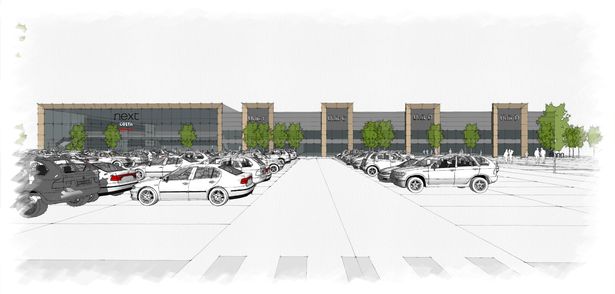
However, in the greater Exeter area, there is yet another reason for the reluctance of investment into the Cranbrook retail offer. Despite the abandonment of the Bus and Coach Station site last year for retail redevelopment, Exeter’s planners are recommending approval for a massive new “Out of Town Retail Park” close to the MET office and only a short journey from Cranbrook:

https://www.devonlive.com/whats-on/shopping/massive-exeter-retail-park-includes-1866178

The Exeter planners state the application is contrary to their own council policy as the proposed development will not be a ‘local centre’. But the scheme does provide, as part of a wider package, a “local function” – and so it is extremely unlikely that a more ‘traditional’ local centre will be delivered within the newly built housing estates at Monkerton and Hill Barton area of the City. The City planners conclude this is the only realistic opportunity to secure local retail facilities in the area – including Cranbrook.

The applicants claim the scheme will offer a mix of use classes including food retail, non-food retail, restaurants and cafes with ancillary drive thru’ offerings too.

If this application is approved by Exeter City Council next week (13th August 2018) and goes ahead this will be another massive hurdle that East Devon will need to overcome to persuade retailers to locate in their own town centre. As a result, if Exeter planners have their way the likelihood of any retail local centre at Cranbrook coming forward look to be close to zero.

Exeter councillors are being told the City will benefit from a massive economic injection associated with the scheme – with a £15 million construction investment, 260 average construction jobs during the build, 520 FTE permanent jobs, £12 million estimated total annual wage bill across the development, £9 million estimated total annual expenditure in the UK economy by employees of the development, 160 FTE jobs supported in the wider economy by the development, £1.1 million annual business rate contribution and finally up to £2.2 million in Community Infrastructure Levy.

And if this bid fails, there are three more massive retail offerings in the pipeline within half a mile of the same area and all within the Exeter City Council boundary:

https://www.devonlive.com/news/devon-news/exeter-smyths-next-mcdonalds-costa-1769559

So where does that leave “partnership”? And Cranbrook?

Exeter Council coffers will benefit substantially, and East Devon District Council get a large “Out of Town Retail Park” on the edge of their almost shop-less Cranbrook new town.

What a great partner Exeter City Council is proving to be by cherry-picking the juicy benefits and income streams provided by their partners’ hard work in providing the dwellings that will provide the customers to flood into Exeter’s new retail park.

Cranbrook is basically becoming an eastern version of Alphington (Marsh Barton, Matford) – just another suburb of congested, polluted, not-that-great Exeter.

Swire opposes Sidford Business Park

“Hundreds of people have lodged objections against the controversial application to create 8,445 sq m of employment floor space at the Two Bridges site.

The plans, which could create 250 jobs, represents 37 per cent of what was previously proposed and submitted to East Devon District Council (EDDC) in 2016.

Sir Hugo has hit out at the plans and raised concerns, slamming it as an ‘unwanted development in the wrong place’.

In a letter to East Devon District Council’s leader Councillor Ian Thomas, Sir Hugo said: “We have already seen Sidford absorbed by Sidmouth. It was because of this that I objected to a proposal for a cycle path between Sidford and Sidbury as I believed it would not be long before someone insisted on an illuminated path which could lead to gradual urbanisation between the two.

“Likewise, it seems to me to build a business park between Sidford and Sidbury, albeit nearer to Sidford, is an unwanted development in the wrong place.

“You will be familiar with the well-rehearsed arguments both for and against but I cannot see how this proposed development would do anything but detract from the area and to lead to more congestion and pollution on what is an already overused road.

“Equally I cannot see why the Alexandria Business Park could not be properly redeveloped to accommodate any need for new light industrial space.”

Sir Hugo then urged the council to turn the ‘unwanted’ planning application down.

Say No to Sidford Business Park campaigners held a protest last week that was attended by more than 80 people.

Petitioners have also been going door-to-door to gauge people’s views.

A Say No to Sidford Business Park spokesman said: “Obviously we welcome the position taken by Sir Hugo on what is a very important issue for local people. On this matter, we feel he has got it completely right.”

When the Herald went to press, EDDC had received 368 comments about the application, 254 of which were objections and 111 of which were in support.”

http://www.sidmouthherald.co.uk/news/mp-sir-hugo-swire-opposes-plans-for-new-business-park-at-sidford-1-5637131

“A protest opposing the plans for a multi-million pound business park at Sidford will be held next month”

“Campaigners have also launched a petition and have called on residents to join forces and back their efforts.

So far, more than 200 objections have been lodged against the application to create 8,445sqm of employment floor space on the Two Bridges site.

The plans, which could create 250 jobs, represents 37 per cent of what was previously proposed and submitted to East Devon District Council (EDDC) in 2016.

When the Herald went to press, a total of 232 comments had been submitted to EDDC – this included 211 objections and 20 supporters.

From Monday, July 9, Say No to Sidford Business Park campaigners have said they will be going door-to-door in Sidford and Sidbury in order to obtain signatures for their petition, in the first instance.

Volunteers then plan to submit the signatures to EDDC before the authority’s Development Management Committee makes a decision on the application.

Anyone who would be interested in volunteering on one or more of the days between July 9 and 12, from 6pm until 8pm, has been asked to come forward to help collect signatures.

Campaigners will also have street stalls in the centre of Sidmouth on Saturday, July 14 and Saturday, July 21.

Volunteers will be collecting signatures for the petition and will be seeking help from anyone who would like to help with the Say No to Sidford Business Park drive.

A campaign spokesperson said they would be running a number of initiatives throughout July.

A protest will be held on Monday, July 23, between 4pm and 5.30pm. Further details will be released closer to the time.

A spokesperson said: “We would like to thank everyone who has so far put a ‘NO Sidford Business Park’ poster in their window.

“This is an easy way of showing your opposition to the planning application.

“Please print and display the poster and give copies to friends and neighbours to put up.

“If you know of someone who you want to receive our emails then let us have their email address and we will add it to the extensive contact list.

“Thank you for the many messages of support that we have received.”

For more information email nosidfordbusinesspark@yahoo.com.”

http://www.sidmouthherald.co.uk/news/protest-to-be-held-oposing-sidford-business-park-1-5582304

Massive extension of Exmouth approved despite “ifs, buts and maybes” and 5% affordable housing

Controversial plans that would see 350 new homes built on the edge of Exmouth have been narrowly approved, despite it being called a wish list full of ifs, buts and maybes. …

East Devon District Council’s Development Management Committee on Tuesday gave a reluctant thumbs-up to the scheme, despite serious concerns raised about the access to the site on Dinan Way and the ‘disgusting’ number of affordable homes that would be provided and objections from Exmouth and Lympstone councils, local ward councillors, Devon County Council and residents.

Outlining the application, planning officer, Chris Rose said that the site was allocated in the Local Plan. He said that it had been tested that the site was not viable if 25 per cent affordable housing was provided but instead only five per cent, 18 houses, had been offered. …

Mike Deaton, Principal Planning Officer for Devon County Council said that they were objecting to the application, partly as the junction of Hulham Road and Exeter Road already exceeds capacity and the new development will therefore compound an existing problem, particularly as the use of Wotton Lane, Summer Lane and Featherbed Lane is unsustainable.

… He said that the solution was an extension of Dinan Way to connect Hulham Road with the A376, but that as there was no guarantee of where the funding could come from, it made it difficult to support the application without the infrastructure being in place.

He also said that the county council’s first priority around education needs would be to expand Exmouth Community College which is already at capacity ahead of the new primary school as part of the development site.

Cllr Paul Carter though said he didn’t see many positives of the application and said that the whole thing needs to be better.

He added: “This is somewhat of a pig’s ear. We have taken so much time to get to this stage and still so much is undecided. I am just flabbergasted that there is only five per cent of affordable housing and has the feel of ‘we will make do’.”

Cllr Maddy Chapman said that Exmouth doesn’t need a new primary school, and added: “I very much doubt that the good ladies of Exmouth will want to breed a second family to fill it.”

https://www.devonlive.com/news/devon-news/yes-plans-350-new-homes-1743813

Sidford Business Park: noise pollution kills

““There’s consistent evidence that road traffic noise leads to heart attacks,” says Dr Yutong Samuel Cai, an epidemiologist at Imperial College London. He recently analysed the health data of 356,000 people in Britain and Norway and found that long-term exposure to traffic noise affects our blood biochemistry, over and above the effects of exhaust fumes. “Noise and air pollution usually co-exist, but we can adjust our statistical model to factor out the air pollution. Noise seems to have its own effect on the cardiovascular system.” Another study, from Barts and the London School of Medicine, has linked noise pollution from road traffic to instances of type 2 diabetes. Cai stresses that more study is needed, for example, to quantify the different health impacts of constant low-frequency noise (a motorway) and intermittent peak noise (your neighbour playing techno at 3am). “There’s relatively little study of railway noise or airport noise, for example. But it is a growing area of research at the moment.”

The World Health Organization has calculated that at least 1m healthy life-years are lost every year in western European countries because of environmental noise, with cardiovascular disease contributing to the vast majority of these deaths, especially high blood pressure, heart attacks and coronary heart disease. It is thought that noise triggers the release of the stress hormone cortisol, which damages blood vessels over time. Humans evolved our acute hearing millions of years ago, when we were prey animals and had to pinpoint predators, so it is no wonder we find noise stressful. It is hardwired. A leading acoustics engineer, Trevor Cox, hypothesises that the noises we find most stressful are distress calls – screams with an unhinged roughness to them, caused by the vibrations of the vocal folds when someone is truly terrified. The frequencies are similar to the archetypal horrible sound, fingers scraping down a blackboard; and to an electric drill angrily ripping through plasterboard.

Noise exposure has also been linked with cognitive impairment and behavioural issues in children, as well as the more obvious sleep disturbance and hearing damage. The European Environment Agency blames 10,000 premature deaths, 43,000 hospital admissions and 900,000 cases of hypertension a year in Europe on noise. The most pervasive source is road-traffic noise: 125 million Europeans experience levels greater than 55 decibels – thought to be harmful to health – day, evening and night. However, airport noise and railway noise cause more complaints – ask any of Boris Johnson’s constituents. Hacan, a campaign group for residents living under the Heathrow flight path, claims that 620,000 to 920,000 people are affected by noise from the airport – vastly more than for any other airport in Europe.” …

https://www.theguardian.com/lifeandstyle/2018/jul/03/sonic-doom-noise-pollution-kills-heart-disease-diabetes

Village Development Plan Approved by EDDC Strategic Planning Committee

The long-suffering residents of Farringdon and Woodbury Salterton are now one step closer from being a little more confidant with their fears of further growth from the Industrial Business Parks on their doorsteps from Hill Barton and Greendale Business Parks.

These 2 business parks have been growing at a considerable rate over the last 20 years which has provided important business opportunities and employment. However, it has been felt that further growth would be inappropriate in the open countryside some distance away from any major towns.

East Devon Local Plan proposals in the Local Plan approved in 2016 supported planned commercial growth would be at Cranbrook and areas close to Exeter together with other major towns in the district.

However there has been a number of challenges made to these policies with a number of Planning Inspectors hearings and High Court cases to these particular policies.

It was always known that the Local Plan would be challenged for development at these Business Parks and some villages. Therefore, the Local Authority proposed an additional planning document known as the “Villages Development Plan” which is an additional planning document drawn up by the Strategic Planning Department at East Devon which will provide further guidance and clarity to the largest villages in the district and the two business parks.

Finally, after 3 years of deliberation and public consultations, East Devon`s Strategic Planning Committee meeting this week, agreed to recommend to the East Devon`s Full Council meeting on the 25th of July that the “Villages Plan” be adopted.

The Villages Plan has been through several rounds of public consultation and the plan text has been refined to reflect the comments made.

Then followed a Planning Inspectors hearing plus an examination and recently returned by the Planning Inspector with an agreed approval following further changes and amendments.

The result of the Strategic Planning Committees approval and recommendation to the next Full Council meeting to adopt the new policy document will provide clarity and guidance on planning matters to the Villages and to the two Business Parks.

In the case of the Business Parks new planning policies are to be adopted.

Policy VP04 and VP05 which include a map that shows the extent of authorised uses at the Business Parks. Beyond the “Employment Area” shown on the map, any further planning applications will be considered to be in the “open countryside” and will be subject to stringent countryside protection policies.

It is therefore hoped by the rural villages of Farringdon and Woodbury Salterton that this endorsement of restricting further expansion at these Business Parks will provide clarity and certainty for the community for many years.

Sidford: industrial site resubmitted to planning

http://www.sidmouthherald.co.uk/news/new-plan-for-employment-site-at-sidford-is-submitted-1-5517102

“UK government criticised for ‘shocking’ inaction on insulating draughty homes”

“The government’s failure to take action on insulating draughty homes has been criticised by the statutory body for energy consumers.

As millions of households brace for another round of energy bill rises after British Gas and EDF Energy hiked their prices, Citizens Advice said silence by ministers on energy efficiency plans would mean consumers lost out and insulation installers would go bust.

Zoe Guijarro, policy manager at the consumer group, told the Guardian: “I think it’s hugely damaging because we’ll have a lot of catchup to do. In the meantime we will have lost a lot of installers, who will have gone out of business – a lot of expertise. It’s not a shame – it’s shocking in this day and age, really.”

The government axed its flagship energy efficiency scheme in 2015 and has yet to replace it or signal what might come next. Guijarro said the black hole on policy could lead people to conclude energy efficiency is unimportant, even though experts view it as vital for cutting bills and carbon emissions. …”

https://www.theguardian.com/business/2018/apr/15/uk-government-inaction-citizens-advice-insulating

“Griff Rhys Jones supports new report and says we must not lose our precious countryside by building low density sprawling estates”

Press Release:

“Civic Voice president Griff Rhys Jones has today added his voice to campaigns by six community groups fighting “garden communities” being imposed on them by the Government.

He has penned a powerful Foreword to a Smart Growth UK report mostly written by community groups around the country who are opposing garden towns and villages. Griff warns that, far from being utopias, these are disordered schemes that ignore local communities and would be located in unsustainable locations.

“We encounter proposals that are not going to answer local needs for housing at all, but will waste precious countryside by building low density sprawling estates and creating expensive houses. Brownfield land in England can accommodate one million houses, So get on with it and use that.” he says.

Griff warns that terms like “housing crisis” and “emergency” are being used to force through development of the countryside which fails to provide the affordable homes we need as a nation.

The report sets out detailed objections by six groups opposing Government-sponsored garden communities and four opposing large greenfield developments marketed as “garden villages” by their promoters.

““Planning” by definition means looking to the future. That must mean the long-term future as well as the next few years. We need to recognize that people who urge care, caution and attention are not dwelling in the past. They are not NIMBYS, says Griff. “They are protecting the future.”

He says the protests, assessments and legitimate concerns in the report make sober reading.”

Report:

Click to access Garden%20Communities%20Report.pdf

“Stampede to build homes threatens the rights of locals”

Article by Andrew Motion, President, CPRE in today’s Times (pay wall):

In launching the revised National Planning Policy Framework (NPPF) last month, the communities secretary Sajid Javidpromised “a continued emphasis on development that’s sustainable and led locally”. Was he really talking about the same NPPF that, for the past five years, has forced wholly unsustainable development on communities already struggling with overstretched infrastructure and shrinking green spaces?

Initial analysis of the revisions by the Campaign to Protect Rural England shows that there is still not enough emphasis on a plan-led system such as the one that has been a cornerstone of our local democracy since 1947. We are calling for the final version to give a cast-iron guarantee that locally agreed development plans (including neighbourhood plans) should be upheld when deciding planning applications. It is the only way to restore communities’ faith in neighbourhood planning.

Local volunteers spend a great deal of time and effort in promoting good development, assessing housing needs and negotiating sites that respect settlement boundaries and preserve valued green spaces. So it is deeply disheartening that the revised NPPF could allow local authorities to overrule neighbourhood plans, either when local plans are reviewed (every five years) or if not enough homes are delivered elsewhere.

Communities across England are being targeted by parasitic “land promoters” who speculate on their ability to shoehorn large, expensive homes on to greenfield sites. In many cases the financial might of these companies allows them to steamroller councils in the appeals process, where the NPPF’s current “presumption in favour of sustainable development” provides the necessary loophole.

If it’s hard to achieve democratic decisions with respect to housing, the situation threatens to become even worse with fracking. The majority of recent applications have been decisively rejected by local authorities, yet the revised NPPF forces local authorities not only to place great weight on the supposed benefits of fracking for the economy, but also to recognise the benefits for “energy security” and “supporting a low-carbon transition”. This misguided emphasis can only lead to more travesties like January’s approval for oil exploration by West Sussex county council, in the face of 2,739 letters of objection (and 11 in support).

We must have new housing and infrastructure, but it remains vitally important that development benefits those who have to live with it. Now more than ever, we need to put people at the heart of the planning system.”

“The Greater Exeter plan has been delayed”

Owl is STILL having difficulty understanding how the Greater Exeter Strategic Plan (GESP) fits in with the Devon and Somerset Heart of the South West Strategic plan!!! So many strategies, so many plans, so many people being paid to work out how to invent what might, or more likely might not, turn out to be a wheel – though one of them MIGHT just manage to invent a square one!

“Mid Devon, East Devon, Teignbridge and Exeter City Council, in partnership with Devon County Council, are teaming up to create a Greater Exeter Strategic Plan (GESP) which focuses on the creation of jobs and housing until 2040.

… A consultation on the issues that the GESP should focus on took place 12 months ago and it was initially hoped that a consultation on a draft plan would begin in January of 2018.

But publication of the draft plan has been delayed and it is now likely that the draft GESP will be published in the summer of 2018.

Explaining the delay, a statement said: “In respect of the Greater Exeter Strategic Plan (GESP), and since our last Local Development Scheme was approved, there have been a number of factors which have delayed plan production.

“These include the fact that a great many sites were submitted through the Housing and Employment Land Availability Assessment ‘call for sites’ and these are being carefully assessed as well as further draft changes to national Government planning policy and a wish to investigate differing ways to ensure we can secure the best forms of development, including the highest quality new housing with supporting facilities, to meet our future needs.”

… The GESP will sit above District-level Local and community Neighbourhood Plans, taking a long-term strategic view to ensure important decisions about development and investment are coordinated. … “

https://www.devonlive.com/news/devon-news/greater-exeter-plan-been-delayed-1412993

Insolvent (Tory) council – the blame game begins!

“Cash-strapped Northamptonshire County Council should be scrapped, according to a government report.

The report, ordered by Local Government Secretary Sajid Javid, recommends “a new start” which is “best achieved by the creation of two new unitary councils”.

Council leader Heather Smith resigned following the report’s publication.

Northampton North MP Michael Ellis called the management of the authority a “national scandal”.

He said he was “appalled” by the report, which “makes for chilling reading”.

Conservative councillor Ms Smith criticised “vicious attacks by four local MPs”, adding “you cannot win” if the “machinery of government turns against you”. …

The report said its findings are “very serious” for the council and its residents.

The council “did not respond well, or in many cases even react, to external and internal criticism”, Mr Caller said.
He added individual councillors “appear to have been denied answers” to legitimate questions. …

Mr Caller was also critical of the council’s ‘Next Generation Model,’ which planned to outsource all services and create four new bodies for child protection, care of vulnerable adults, providing health and well-being services, and improving the county.

The report said the model did not have “any documented underpinning” of how it intended to deliver £68m of savings, and “served to obscure and prevent effective” budgetary control.

It does add the council “employs many good, hardworking, dedicated staff”.”

http://www.bbc.co.uk/news/uk-england-northamptonshire-40610349

Blackill Engineering Extension – is this an excuse to drive a new industrial site into the heart of the Pebblebed Heaths?

These days most large developers pay for pre-application advice before submitting a planning application. A recent Freedom of Information request has uncovered the advice that was offered to someone (name redacted) seeking such advice on proposed business units at Blackhill Quarry, Woodbury in early October 2017.

Specifically this proposal was for the erection of AN ADDITIONAL industrial building to support the existing business, Blackhill Engineering, being operated form the site together with the erection of FIVE ADDITIONAL industrial buildings for use by other businesses.

In summary the advice given was that this would not comply with the protective policies that cover this sensitive site. A much stronger employment benefit case regarding the expansion of the existing business to justify a departure from these policies would be needed. The five speculative industrial buildings would not justify a policy departure.

On 20 December 2017, within three months of this advice, planning application 17/3022/MOUT was submitted for outline application seeking approval of access for construction of up to 3251 sqm (35,000 sq ft) of B2 (general industrial) floor space with access, parking and associated infrastructure.

The accompanying justification reads:

“There is considerable and clearly identified need for the existing business at Blackhill Engineering to expand as a result of that business having grown considerably over recent years and with its existing premises now at full capacity. The provision of additional facilities on the application site would allow the company to continue its expansion and so deliver additional economic and employment benefits to the local area…. With the winding down of the existing quarry use of the site, there is a short and fortuitous window of opportunity in which to address BESL’s growth requirements with the reuse of an area of former minerals processing site….It is a crucial part of both local and national employment strategy to protect existing businesses and to encourage their expansion. If approved, the scheme would allow the existing business not to only remain at the site but also to expand. The resulting investment will enable a substantial increase in the provision of highly skilled jobs in the area, increased training opportunities for apprentices and added value to the local economy. Furthermore, the expansion of the Blackhill Engineering will help reinforce the vitality of its parent organisation…”

So, is this application all about the needs of Blackhill Engineering to expand, having already designed flood defence gates for New York City Hospital, worked for the European Space Agency and the pier at Hinkley Point, which in October seemed to require only one building; or more about Clinton Devon Estates trying to generate rent from a new industrial park? Restoration provides no income.

For those interested here is the detailed pre-application advice, given on an informal basis and without prejudice, in about half the words:

The extant planning permission on the site requires a restoration and aftercare scheme to be implemented following cessation of the quarrying operations. As part of this condition, alternative schemes (subject to planning permission) can be considered but two policies are of particular relevance:

East Devon Local Plan- Strategy 7 – Development in the Countryside.

This strategy states that development in the countryside “will only be permitted where it is in accordance with a specific Local or Neighbourhood Plan policy that explicitly permits such development”. In this instance, there is no local or neighbourhood plan which would permit the proposal and, therefore, it is considered that it would not comply with Strategy 7.

East Devon Local Plan- Policy E5 – Small scale Economic Development in Rural Areas.

This policy states that the expansion of existing businesses designed to provide jobs for local people will be permitted where

1. it involves the conversion of existing buildings. Or

2. if new buildings are involved, it is on previously developed land. Or

3. if on a greenfield site, shall be well related in scale and form and in sustainability terms to the village and surrounding areas.

In this instance, the Local Planning Authority recognise the previously developed nature of the site, however, in the ‘Glossary of Terms’ section of the Local Plan (which echoes those contained in the National Planning Policy Framework) previously developed land specifically excludes land that has been developed for minerals extraction or waste disposal by landfill purposes where provision for restoration has been made through development control procedures.

Accordingly, the land would be considered as greenfield.
In terms of Policy E5, as the site would not be well related in sustainability terms to Woodbury or surrounding areas, the proposal would be contrary to policy.

However, if sufficient justification can be made in terms of the needs of the existing business being operated from the site to expand into an additional building, then the economic benefits may outweigh the environmental harm, of the unsustainable location as a departure from the Local Plan.

For this purpose, an economic benefits statement would need to be submitted as part of an application.

The five speculative units being located in an unsustainable location would not be acceptable.”

Last legs for Thelma Hulbert gallery?

Owl says: The gallery, in Honiton, has swallowed up around £500,000 of our council tax money over the last few years. Could The Beehive (also a gobbler of funds in the past) perhaps house the gallery’s art and activities?

Or, here’s a thought: display it in the new £10 million HQ currently under construction in Honiton!

“Unprecedented increases in council tax starting in April will not offset cuts to services including children’s centres and libraries, local authorities have warned.

The Local Government Association (LGA) said councils in England would raise an estimated £1.1bn through higher council taxes in 2017-18, but this would not cover the £1.4bn lost through cuts to central government funding plus the higher wage bill of £1bn.

Nearly half of English councils with responsibility for providing social care for adults and children will increase council tax by the maximum 5.99% allowed – 2.99% for general council tax plus a further levy of up to 3% to pay for the care of older and disabled adults – but this will not prevent further cuts to services, according to the LGA.

Councils will continue to reduce or close services such as children’s centres, libraries, leisure centres, parks, museums and road repairs to plug growing gaps in adult and children’s social care and homelessness services, it says.

The widespread emergence of what some councillors have dubbed “pay more, get less” budget settlements comes as town halls struggle to balance the books after years of cuts in core government funding.

Northamptonshire county council effectively declared itself bankrupt earlier this month after admitting that rising costs and shrinking income made it unable to set a legal budget.

The council must set out revised plans for cuts at a meeting this week after an auditors report warned that its existing proposed budget plans were “not credibly achievable”.

Northamptonshire’s predicament highlights how councils are increasingly reliant on one-off measures such as dipping into reserves, or selling buildings and land, to meet the spiralling cost of social care. Those pressures are being compounded in some cases by the failure to deliver savings with existing cuts.

The LGA said 147 of the 152 English authorities that provide social care services would levy a 3% council tax precept from April to raise extra cash for the care of older and disabled adults. Although this will raise an extra £548m, it will be wiped out by the cost of meeting the national minimum wage.

These councils face additional costs estimated to be at least £400m over the next 12 months as result of a legal judgement that requires care employers to pay the minimum wage to carers working sleep-in shifts, backdated for six years.

Out of the 152 “social care” authorities, 108 also plan to increase general council tax by between 2.95% and the maximum 2.99% allowed. This will raise an estimated £548m. Five councils have said they will freeze council tax for 2018-19. …

… A spokesman for the Department of Housing, Communities and Local Government said: “As part of our finance settlement, we are delivering a real-terms increase in resources to councils over the next two years, more freedom and fairness, and greater certainty to plan and secure value for money.

“We want to work with local government to develop a new funding system for the future and encourage councils to submit responses to the review currently under way.”

England’s councils have experienced a 40% cut in central government funding since the start of the decade and face a £5bn funding gap by 2020.

The Local Government Information Unit thinktank warned this month that many English local authorities were teetering on the edge of financial crisis.”

https://www.theguardian.com/society/2018/feb/26/council-tax-hikes-will-not-stop-cuts-to-local-services-authorities-warn

Greendale Business Centre: FWS Carter and Sons application fails at the High Court

PRESS RELEASE:

“After 3 years challenging the planning system, Greendale Business Park owners are required to return an area back to Agricultural use.

It may have taken 3 years but finally the Planning Department at East Devon District Council (EDDC) has succeeded in winning a long running planning and legal challenge.

It was the 8th Feb 2015 when earth moving and general building works were first reported to EDDC Enforcement Officers by neighbours of Greendale Business Park. This was on a 3.5Ha site, east of the existing permitted development area at the Business Park near the village of Woodbury Salterton.

Following investigation, the Local Planning Authority (EDDC) served an Enforcement Notice to the owners FWS Carter and Sons, but they chose to ignore the notice and carried on developing the site at “their own risk”.

A planning application was submitted nine months later (06/11/2015 15/2592/MOUT) but the development was considered to lie outside the agreed development area for Greendale Business Park and it was refused by EDDC. A second attempt was made with a similar proposal split into 2 separate planning applications the following December but this was also refused (06/12/2016 16/2597/FUL and 16/2598/MFUL).

The Local Planning Authority then issued the owners with an Enforcement Notice, requesting the removal of the industrial concrete hardstanding, fences, buildings and the return of the land to agricultural use. The company then appealed to the Government’s Planning Inspectorate in March 2017 for the decision to be revoked.

on Dec 7th, 2017 the Inspector found in favour of the Local Authority and upheld their enforcement decision, but within days the Company lodged an appeal with the High Court. Last week 08/02/2018 the Judge ruled that there was no case to answer and therefore the decision by the Local Authority was upheld and costs of £3998 was set against the applicants, FWS Carter and Sons.

The Company now has 6 months to remove all industrial activity and return the land to agricultural use. This work will be monitored very closely

Another section of the Business Park (an area approximately 1Ha) south of the Greendale Business Park and just off Hogsbrook Lane, has also been developed without planning consent. The owners FWS Carter and Sons claimed in Oct 2017 that this land has been in “unlawful” industrial use for more than 10 years and they applied for a little-known planning regulation loophole known as a “Certificate of Lawfulness ” (17/2441/CPE) to enable the area to continue to be used without requiring further planning approval.

However, the Local Planning Authority followed Legal Advice and concluded that the land had not been used “unlawfully” for 10 years because there was lawful permitted development with a gas pipeline contractor occupying the site for 3 years. Because of this, the Certificate of Lawfulness was refused and it is expected that an Enforcement Notice will be served on the Company for this breach of planning shortly.

Councillor Geoff Jung, EDDC Ward Councillor for Raleigh Ward which includes Greendale Business Park says, “It is a great shame that the Company started to develop this area prior to any planning permission being in place. The efforts and costs incurred by the company in developing the site, including the cost of architects, planning consultants, barristers, solicitors, court costs, contractors’ costs and everyone’s time has all been wasted.”

“Add to that the considerable costs to the local authorities` planning, enforcement and legal teams in endeavouring to provide a sound and fair case.”

“It’s quite clear the Planning System has moved on enormously in the last 15 years, with much more openness and clarity, mainly down to modern technology. Planning applications and official documents are now open to scrutiny at the touch of a button and can be viewed without leaving your house.”

“Previously documents were available only at District and Town Halls, for interested parties to view but now the internet and Local Authority Planning Portals provide everyone with a better understanding of the planning regulations and legal issues involved.”

“I look forward to the day when all developers will follow the normal planning procedures and not proceed in such a cavalier way. This may have been the way it was done in the past but its proving much more difficult now.”

“I would like to thank the many local people who have frequently written to the Planning Authority to comment whenever it was required, as well as the Planning and Legal Team at East Devon District Council who ensured that the Planning Regulations were correctly upheld”

“Councils used as ‘human shields’ for cuts, says John McDonnell”

“John McDonnell has accused the government of using cash-strapped local councils as “human shields” to absorb deep spending cuts by the Treasury.

The shadow chancellor seized on reports that Surrey – where the Runneymede and Weybridge constituency of the chancellor, Philip Hammond, is located – was facing a £100m cash crisis.

Analysis by the Bureau of Investigative Journalism identified Surrey as the council facing the largest gap between expected revenues and expenditures in the coming financial year. The average deficit at the 150 councils the bureau examined was £14.7m.

Meanwhile, a survey of senior council officials by the Local Government Information Unit thinktank found that almost 80% had no confidence in the future sustainability of council finances.

McDonnell said: “If you ever wanted to see the utter failure of this government, look no further than your local council. Many are struggling to maintain many basic services because they are being forced to pass on Tory cuts.

“There needs to be an urgent change of direction in local government funding in this country. We need to see an end to a situation whereby Tory governments are using local councils like human shields as they continue to drive ahead with their failed austerity agenda.”

McDonnell appeared at a conference in Preston alongside the shadow communities secretary, Andrew Gwynne.

Many of the councils under greatest financial pressure are in Tory-held areas, and Conservative MPs have put pressure on the government to relieve the squeeze in particular areas.

Sajid Javid, the communities secretary, announced an extra £150m this week specifically to be spent on social care in areas of greatest need, amid a growing backlash from backbenchers.

But council leaders said it would not be enough to meet rapidly increasing needs.

The LGIU’s survey of councils’ finances suggested that 94% are planning to raise council tax in the coming year to make ends meet, and 65% will be dipping into their financial reserves.

In his speech, McDonnell highlighted alternative approaches to delivering local services.

Labour believes the threat to council services, such as social care and support for children, are the latest stark illustration of the ongoing impact of austerity.

The government has promised to put social care funding on a sustainable footing; but a green paper on the issue is not due to be published until next summer.”

https://www.theguardian.com/society/2018/feb/08/john-mcdonnell-councils-used-human-shields-funding-cuts