Seaton Tramway as it is now:
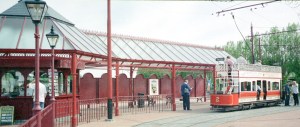
Development plan:


Seaton Tramway as it is now:
Development plan:
Note that the DUP – which is keeping this government in power – isn’t getting representation either!
Though, of corse, it would just take some honourable Tories to unstick this – lol!
Oh, for another party to win the next election outright and shove this back at them!
Democracy? Yes, Owl remembers that …
“Theresa May has been accused of ‘tearing up’ her disastrous election result and rigging Parliament for the Tories.
In an “unprecedented power grab”, the government is trying to give itself the power to dominate the committees which scrutinise laws – despite having failed to secure a majority in the election.
It means it will be harder for opposition MPs to block legislation and laws which adversely affect people’s lives will get steam-rolled through Parliament.
A motion tabled yesterday by Tory Commons leader Andrea Leadsom today seeks to overturn the rule that the Government of the day has a majority on committees only if they have the majority of MPs. …
Labour leader Jeremy Corbyn tweeted: “An unprecedented attempt to rig parliament and grab power by a Conservative government with no majority and no mandate.”
Rules introduced in 1995 state that the Government only gets a majority on standing committees if they have a majority in the House of Commons.
Theresa May failed to secure a majority in June’s election, finding herself eight seats short of controlling the house outright.
She was forced to cut a billion pound deal with the hardline Democratic Unionist Party in return for them lending her their support in key votes.
MPs will vote on the rule change on Tuesday.
Downing Street insisted the Government wanted a balanced situation in Parliament.
http://www.mirror.co.uk/news/politics/theresa-accused-tearing-up-election-11132453
Written Answers – Department of Health: Fire and Rescue Services: Cancer
(8 Sep 2017)
https://www.theyworkforyou.com/wrans/?id=2017-09-04.7823.h&s=speaker%3A11265#g7823.q0
Hugo Swire: To ask the Secretary of State for Health, how many fire fighters have developed cancer in the first 10 years after retirement since 1967.
“A failing academy trust has asked to give up all of its 21 schools just a few days into the new term.
Wakefield City Academies Trust (WCAT) said it had decided to make the request after concluding it could not undertake the “rapid improvement our academies need and our students deserve”.
Four of its schools across Yorkshire are rated as good or outstanding by Ofsted, while 11 out of the 14 primary academies, and six of the seven secondary schools are below the national average.
The Department for Education said it would work with the trust, which would continue to run the academies until a new sponsor could be found. …”
https://www.theguardian.com/education/2017/sep/09/failing-academy-trust-to-pull-out-of-21-schools
Buyer beware – that’s the message from the BBC Money Box Live programme today at midday. When buying a luxury retirement property a large part of your purchase price can disappear into thin air almost immediately!
“Half of new-build retirement homes sell at a loss.
Around half of new build retirement homes sold during a 10-year period were later re-sold at a loss, according to exclusive research for the BBC.
The research by the Elderly Accommodation Counsel charity found falls in value could be more than 50%.
It looked at thousands of Land Registry records for resale details of homes built between 1998 and 2012. The charity found many properties built after 2002 had underperformed the general property market.
Adam Hillier of the Elderly Accommodation Counsel (EAC), which advises people considering retirement housing, called the scale of the falls “startling”.
Steep falls
According to the research, 51% of retirement properties built and sold between 2000 and 2010, and then sold again between 2006 and 2016, suffered a loss in value. For those properties which declined in value, the average loss was 17%. For some, the falls are much steeper.
The EAC found that for new build retirement properties sold between 2005 and 2007, and then resold between 2012 and 2014, more than four fifths fell in value. The average loss for these properties was 25%.
Mr Hillier said it was unclear why it was happening. “It’s the million dollar question, really. “I think part of it is the new build premium – especially when it comes to retirement housing,” he said. Another reason could be under-investment from developers once they have built the properties, he said.
“The traditional model was to hand over these properties to a managing agent to run them,” he said. “Does the developer have that much of an interest in investing in the property?” The trend has continued in recent years too. For new retirement properties sold between 2008 and 2010, and then resold between 2015 and 2017, nearly two thirds were sold for less than the purchase price. The average loss here was 19%.
Money Box spoke to the residents of one development – Burlington Court, in Bridlington in East Yorkshire – where prices have more than halved since it was first built around a decade ago.
According to Land Registry figures, one flat in Burlington Court, bought new in 2006 for £166,000, was resold for just £70,000 in 2014. Another two bedroom apartment bought for £140,000, in 2008, was sold last year for £58,000.
Ken, 91, bought his flat in Burlington Court for around £180,000 in 2008.
“I thought when I bought this that if I lived for another five or six years, my children would get maybe £190,000 for it,” he said. “In actual fact they’ll be lucky to get £70,000 for it, maybe even £60,000. “It’s criminal really. When I mention it other people, they say: ‘Why should you worry, you won’t be here?’ “But I do feel my son and daughter have lost out. It’s a lot of money,” he added.
Margarete, 92, paid nearly £150,000 for her flat eleven years ago. She sold a detached bungalow in York. Like most residents of Burlington Court, she says it’s a nice place to live, with a nice community of people. But Margarete says she’s always wanted to move back to Germany, where she was born. However the value of her property means that isn’t now an option.
“My friends in Germany always wanted me to go back.” “But if I get £40,000 for this flat I’d be lucky. I couldn’t afford to go back to Germany and buy a place there.”
Incentives
The largest developer of retirement homes, McCarthy and Stone, told the BBC that the numbers did not include incentives given to the original buyers, which effectively lowers the purchase price. The company also said it had worked hard to increase resale values in recent years, including extending leases, retaining management of developments, and providing sales support.
“The vast majority of our retirement apartments increase in value on resale”, McCarthy and Stone told the BBC in a statement.
“It is also important to understand that the value of specialist retirement housing is not purely financial. It improves lives, provides peace of mind, care and support and ultimately helps older people maintain their independence.
“However, we recognise that there are a small number of cases, particularly with our older properties, where resale values of some apartments haven’t performed as we would have wished. This can be down to many reasons, including the performance of some local property markets.”
McCarthy and Stone, which also built Burlington Court, said resale values in that particular development had been hit by a lack of car parking spaces and a difficult local property market.
‘Seriously wrong’
Sebastian O’Kelly, director of BetterRetirementHousing.com, said: “Dismal resale prices for retirement properties help explain why only 2% of over-65s live in designated retirement properties – far less than the US or Australia. “Something is seriously wrong with the business model that these flats fall so drastically in value.
“The retirement housing sector will not expand notably until this is addressed. That would be more effective than attempting to deny that the problem exists.”
Listen to the full report on Money Box, midday on Saturday 9 September on BBC Radio 4.”
PegasusLife one-bed properties at Knowle could start at anything from £300,000 – £400,000 at their current prices. At their development in Cheltenham, one bed apartments start at £447,950. Service charges can start in the high thousands per year.
Closer to home, Millbrook Village in Exeter comes in at a very cheap (!)£325,000 for one bedroom, but this may be because sales appear to have been somewhat slow:
“Theresa May is a “hopeless” leader of a “weak” government and Britain would be better off with an administration like Tony Blair’s in the early years, a major Tory donor has said.
Lord Harris of Peckham said the Prime Minister is “no Thatcher” and criticised her “shell-shocked” general election performance, in which the Tories disastrously lost their House of Commons majority from a position of apparent strength.
In a scathing interview, Lord Harris suggested Mrs May’s record as home secretary was not “that great”, described her attacks on aspects of capitalism and big business as “stupid”, and warned she was making a “mistake” by criticising excessive pay.
The peer instead backed Scottish Tory leader Ruth Davidson for the top job.
“She’s very practical, very solid and won’t give in,” he said.
“She’s clever as well as growing up on a council estate. I think she’s top class.
“They should get her in as an MP… see how she gets on working her way up and I think in three or four years’ time she’d make a great prime minister.” …”
http://www.telegraph.co.uk/news/2017/09/08/tory-donor-brands-theresa-may-weak-hopeless/
In case you think that all our MPs are interested in is Brexit, well, it’s not true. Some of them have MUCH more important things to do:
“Encouraging gardening needs to be put at the heart of Government policy making, Tory MPs have said in a report backed by Theresa May.
A 56-page report from the Conservative Environment Network said that “getting more people gardening” has to be part of a “truly holistic, cross departmental, high impact policy”.
The report, which has been sent to Cabinet ministers, said encouraging gardening should be adopted as a policy by a range of government departments including health, justice, defence, local government and education.
Gardening could help to cut childhood obesity, improve public spaces, help people deal with mental stress and provide purpose for prisoners in jails.
Tory MP Rebecca Pow – a former BBC, ITV and C4 reporter who specialised in the environment, farming and gardening – wrote in the report: “Gardens, gardening, and horticultural skills can have a striking effect on our communities.
“Getting more people gardening is a truly holistic, cross departmental, high impact policy.” …
… “To get the full benefits that the power of plants can provide our communities with, especially in urban areas, requires an interlinked approach and now is the time to sow those seeds and spread those roots for the greater good.” …
The Prime Minister said the report “raised the health benefits of green space, which are becoming ever more recognised”.
She pledged that Defra “will consider the evidence within that report and will focus on what can be done to ensure that the benefits provided by access to green space are available to all segments of society”.”
Just to point out a few things:
Many people don’t even have houses to live in, let alone gardens to tend so could we perhaps sort that out first?
Public open spaces and parks are being concreted over by developers (including Clinton Devon Estates land grab of the Budleigh Hospital Garden)
Most new builds have gardens the size of pocket handkerchiefs full of builders rubble
(Cranbrook is a good example where gardens are six concrete paving slabs and a narrow strip of green)
How many examples of OUR council doing these things can YOU think of from these examples from the Consultation Institute!
Loaded questions on reducing the number of councillors:
https://www.consultationinstitute.org/consultation-news/council-accused-using-loaded-question-consultation/
Consultation described as “deplorable” on future delivery of services:
https://www.consultationinstitute.org/consultation-news/councils-engagement-consultation-communities-described-deplorable/
Telephone consultation had leading questions on Local Plan:
https://www.consultationinstitute.org/consultation-news/draft-local-plan-telephone-survey-criticised-leading-questions/
“Shambolic consultation” on police station closures:
https://www.consultationinstitute.org/consultation-news/lib-dems-slam-mayors-shambolic-consultation-over-police-station-closures/
“Shoddy” consultation on mental health cuts:
https://www.consultationinstitute.org/consultation-news/mental-health-public-consultation-branded-shoddy/
It’s what we all suspected – money goes into profits not wages – yet who are the people in charge of our LEP? Those who suck up those profits! That’s the market economy.
“The UK is the most geographically unbalanced economy in Europe and needs radical reform, an IPPR think-tank report has concluded.
The study highlighted that 40% of the countries output is produced in London and the South East and average incomes in the North West, South West, West Midlands and Wales are now more than 30% lower than in London. …
It stated gains from growth have gone largely into profits rather than earnings, and the UK economy is now in the longest period of pay stagnation for 150 years.
IPPR noted that though GDP per head has risen by 12% since 2010, average earnings per employee have fallen by 6%.
Since the 1970s the share of national income which has gone to wages has gradually declined, from 80% to 73%, while the share going to profits has increased.
The wage share is now the lowest it has been since the second world war, said the report.”
http://www.publicfinance.co.uk/news/2017/09/uk-most-geographically-unbalanced-economy-europe
“… What this study does is to show, using just data and no model projections, that flood risk is indeed increasing but at the rare to very-rare flood end. The milder floods that are more of a nuisance than a threat to property and lives, are actually decreasing. This is worse news than before though, as it is these milder floods that make up the bulk of the refill to our water supply reservoirs.”
The various protections on Woodbury Common must be a real headache for Clinton Devon Estates which controls the land via the Pebblebed Heaths Conservation Trust
Fear not, they have a plan!

Rent-Iron-Age-hut anyone – just an idea …
http://www.devonlive.com/news/history/2500-year-old-iron-age-429852
“… The nationally important archaeological site and prominent landmark was previously put on Historic England’s at risk register when it became apparent that the area was suffering, predominantly from erosion due to a high volume of visitors but also due to damage from tree roots and scrub growth.
But last year the Pebblebed Heaths Conservation Trust secured funding from Natural England’s Countryside Stewardship scheme to undertake extensive restoration work that will directly contribute to conserving and protecting the site, resulting in its eventual removal from the at Risk Register.
The funding will enable better interpretation at the monument, creating a sense of welcome for visitors so they become aware of its archaeological significance upon arrival, while promoting an understanding and appreciation of its national and historical importance.
… Volunteers are being sought to assist with some of the work, and the Trust plans to establish a volunteer archaeological monitoring scheme to give local people with an interest in archaeology or natural history the opportunity to be involved in ongoing preservation work. The Trust is also planning on hosting guided walks for people to learn more about the site.”
http://www.devonlive.com/news/history/2500-year-old-iron-age-429852
Note:
Pebblebed Heaths Conservation Trust is an environmental charity and forms part of conservation group that includes a Land Management Company. It is funded by Clinton Devon Estates with financial support from DEFRA.
Additional support comes from charitable donations. The Trust’s outdoor countryside learning education work is supported by the Ernest Cook Trust and the Otter Valley Association.
Clinton Devon Estates owns 80% of what remains of the Pebblebed Heaths, the core area of which is designated as a Site of Special Scientific Interest, a Special Area of Conservation and a Special Protection Area. The Commons owned by Clinton Devon Estates include Aylsebeare, Harpford, Hawkerland, Colaton Raleigh, Woodbury, Bicton, East Budleigh, Dalditch and Mutter’s Moor (the latter is not a Common), with all but Aylsebeare and Harpford managed by the Pebblebed Heaths Conservation Trust.
Relax! It isn’t Swire or Parish – it’s MP Kevin Foster in Torbay! Can you honestly see Parish doing something similar for cut-off Seaton or doing anything that isn’t about the A 303? Or Swire bringing up the fact that in Sidmouth the council has also declined a petition about the future of Port Royal? Get a grip!
“Torbay Council has been blasted during a debate in the House of Commons for a ‘Jobsworth’ attitude to a local bus campaign. As reported by DevonLive, residents in Torquay are dismayed at the axing of the number 65 bus.
They have prepared a petition containing more than 1,200 signatures, but Torbay council has declined to accept it at its next meeting.
Torbay MP Kevin Foster duly took the petition to the House of Commons and presented it there, at which point the Deputy Speaker Lindsay Hoyle told him: “You need to have another word with that local authority.
Mr Foster joined a group of 30 residents battling to get the 65 bus route reinstated after it was axed in April. The route covered some of the hilliest areas of the town including Hele, Babbacombe and Ellacombe.
Campaigner Val Baker said: “Since the bus was axed, many of the most vulnerable and elderly members of the community have been left cut off and isolated. People say they feel cut off from the outside world now and their only alternative is to use a taxi, which they can ill afford.”
The nationwide Campaign for Better Transport is urging Torbay Council to rethink its transport plan and consult with the community. They say the misery of the bus cuts is an all-too-common story all over the country.
In the House of Commons Mr Foster handed in the petition and said: “Some Jobsworths at Torbay Council have decided they wish to reject this petition, so it’s welcome that this House is more responsive to my residents’ views than some officers at their local council.
“The petition declares that the cancellation of the 65 bus will have detrimental impact on local residents and in particular elderly residents. The petition therefore requests that the House of Commons urges Torbay Council to commit to providing a similar service to the previous 65 service for the sake of the local residents as soon as possible.”
http://www.devonlive.com/news/devon-news/mp-blasts-jobsworth-torbay-council-442106
Good for those people who have raised their own money for this service. Perhaps the CCG can now provide dedicated buses from the proceeds of the sale of assets from rest of East Devon, where Leagues of Friends also tirelessly continue to raise funds for their bedless hospitals, for similar buses to other “health hubs” or to the two remaining community hospitals in Sidmouth and Exmouth – otherwise those people outside the “nine parishes” will have an inequality of service.
And Owl loves the optimism of the last sentence: “When phone lines are established at the hub, residents will be able to ring up and arrange for the bus to collect them.” Anyone who has ever tried to maintain a rota for such a service and who has had to prioritise how such a service is funded, maintained and accessed will understand Owl’s qualms when the private company running the hub starts to make the executive decisions about who uses it and when.
“New community mini bus will help transport people to new health and wellbeing hub
A ‘ring and ride’ bus which will transport residents to the new Budleigh Salterton Health and Wellbeing Hub has officially been handed over.
The bus was purchased two years ago following an cash injection of more than £20,000 from the Parishes Together Fund.
Now, the bus will give residents in the nine parishes that contributed towards that initial cost transport, a form of transport to the former hospital. It will also allow people in the Budleigh area to get transport to Exmouth Hospital for appointments.
That includes Budleigh Salterton, Colaton Raleigh, Otterton, East Budleigh with Bicton, Exmouth and Lympstone.
Dr David Evans, chairman of Budleigh Salterton Hospital League of Friends, said: “The Hub Bus and local transport is of immense importance to the Budleigh Salterton Community Hospital Health and Wellbeing Hub.”
The tail-lift minibus will be kept at the hub in what used to an ambulance bay.
The running costs of the bus will be shared between Budleigh Hospital League of Friends and their Exmouth counterparts and the bus will be managed by Westbank Community Health, which has the lease of the new hub.
Hub project manager Rob Jones added: “What we wanted to try and do is to reduce worry about not being able to get to the hub.”
Dr Evans also revealed that a grand opening of the new health and wellbeing hub is due to take place this November.
He added: “The contractors have now finished the refurbishment of the hospital and moved out last week.
“They have completed an excellent assignment and the result is absolutely superb.
“It is desirable that the hub is fully functional for the grand opening in very early November.
“This will show what can be done when a community hospital faces closure.”
Furniture and fittings funded by the League of Friends are due to be introduced in the next month with services being phased in during September and October.
Royal Devon and Exeter Hospital is due to move some its services into the hub next month.
When phone lines are established at the hub, residents will be able to ring up and arrange for the bus to collect them.”
http://www.exmouthjournal.co.uk/news/budleigh-salterton-hub-bus-handed-over-1-5183505
Claire Wright Facebook:
“URGENT. DEBATE TODAY AND ON MONDAY 11 SEPT!!!
If you care about nature and environmental protections please email Hugo Swire about this.
He simply parrots Michael Gove’s misleading nonsense about all nature laws being transferred over, but there very different plans afoot within the Tory Party.
I know someone will say what’s the point, but if we don’t lobby him he will simply claim no one really cares or people don’t believe it is a priority.
He needs to speak and vote the right way on this Bill.
I lodged a motion on this very issue at Devon County Council earlier this year and got it through virtually unopposed, however the response from central government was anything but reassuring.
No promises whatsoever.
In East Devon there are important landscape legal protections and there are also many species currently protected under EU law that are at risk of losing that protection…. at a time when nature is more depleted than ever before.
If you are on Twitter tweet him with this link. The more public the better.
Even better back it up with an email. Simply paste the points in the article into an email as a request, with a short personal intro.
It will take just two minutes 🙂
Let’s hold Hugo Swire to account.
hugo.swire.mp@parliament.uk”
“The City gave the thumbs-up to new boss Greg Fitzgerald’s “small is beautiful” turnaround plans for struggling Bovis Homes on Thursday, marking the shares up 8% despite a slump in first-half profits.
Bovis sacked its previous chief executive David Ritchie in January after profit warnings and controversy over “bribes” for buyers to move into barely finished homes — triggering opportunisitic takeover bids from rivals Redrow and Galliford Try.
Fitzgerald’s medicine involves rebuilding the business’s scarred reputation with customers and scaling back its growth plans, now aiming to sell 4000 homes a year instead of 6000 by 2020.
The firm has also shed 120 jobs to cut costs by merging two of its regional businesses.
But the payouts are getting bigger, with investors in line for £180 million in special dividends, funded by cutting exposure and investment on its larger sites, and selling some developments.
The ordinary dividend is jacked up 5% this year, with the promise of an extra 20% in 2018.
Shares jumped 8% or 85.7p to 1140p despite a 31% slide in profits to £42.7 million in the first half of the year.
The ex-Galliford boss, who took over in April, said the housebuilder’s woes were “very fixable”.
He said: “I’ve got a great hand of cards, we’ve just got to play that hand of cards better than we have in the past.
“Our strategy represents the minimal risk for the maximum shareholder return. Where Bovis is at the moment, that’s the right thing to do instead of charging on to get to 10,000 units. We’re well on the way to fixing Bovis but it is going to take more than a day.”
Jefferies analyst Anthony Codling called the strategy a “new dawn” and upgraded his estimates for the firm’s annual profits.”
“Local bodies responsible for economic growth and business support across England need to become more accountable and transparent to gain full support from the country’s small firms, according to the Federation of Small Businesses (FSB). The call comes ahead of the 100-day anniversary this weekend of elections for six new Combined Authority mayors.
A previously unreleased FSB survey finds that the majority (70%) of small firms in England with an opinion on devolution support the principle of giving more powers to local leaders. Two thirds (64%) feel devolution deals are good for their individual businesses.
However, small firms are concerned about their ability to feed into devolution deal making. Only one in seven (15%) feel they have been consulted on the devolution process in their area. More than half (57%) feel they cannot contribute to ongoing decision-making and a similar proportion (53%) believe there are not means to hold locally elected leaders to account.
Mike Cherry, FSB National Chairman, said: “The success of devolution deals will hinge on effective collaboration between new and existing local leaders. Transparency is key. Combined Authorities must clearly demonstrate how they are promoting growth and establish channels through which they can be held accountable. No doubt they’ll be heeding the NAO’s warning about becoming ‘a curiosity of history’.
“With new devolution proposals in the pipeline, future deals must be established on the basis of need. What we can’t have is the political affiliations of negotiators playing any role in fresh agreements.
“It’s encouraging to see that our new mayors are already engaging with small businesses in some areas. A number have established business advisory groups, and we urge those that haven’t to follow suit, ensuring they bring together representatives from all sections of the business community.”
Small businesses also flag the need for greater accountability among Local Enterprise Partnerships (LEPs). Less than half (45%) of those with an opinion on the issue believe they are able to communicate directly with their local LEP.
More encouragingly, the majority (53%) believe their LEP represents the interests of their local business community, though only one in three (32%) feel LEPs represent the views of their individual firms.
Mike Cherry added: “LEPs do some great work across England and it’s crucial that they’re equipped to maintain their vital business support services beyond Brexit and play a key role in delivering an ambitious Industrial Strategy. That being said, reform is urgently needed.
“All LEPs are obliged to have a small business champion in place and that obligation needs to be met right across the country. Equally, the Government should produce comprehensive business data, including unregistered businesses, at a LEP level so Partnerships can tailor local growth strategies effectively.”
“LEPs need to be beyond reproach in terms of their governance, overall transparency and representativeness. They should be channels for economic growth and targeted business support, not old boys’ clubs.”
In May 2017 Clinton Devon Estates (CDE) ran an online survey which was covered by Owl. Questions were heavily weighted towards suitably glowing answers, such as:
“How credible do you think “We pledge to do today what is right for tomorrow” is as a statement from Clinton Devon Estates?”
In July 2017 Owl then ran the story of how CDE had made a last minute land grab by submitting an outline planning permission to develop half of the Budleigh Hospital Garden for two small houses. The Neighbourhood Planning team had nominated the garden as an historic open green space and the new health hub hoped to use it as an outdoor therapeutic area. As stakeholders in the Neighbourhood Plan CDE had been consulted at all stages but had not divulged their plans for the space.
CDE followed this by launching an appeal on the grounds that EDDC had not determined the application within the prescribed time. This appeal has now been roundly rejected.
A planning inspector has ruled against CDE on the appeal, and it seems CDE might now have to think of other ways to wheedle their way our hearts and minds.
Here is the text of a Budleigh Journal article on the appeal:
“A controversial planning application which sought to build houses on a section of Budleigh Salterton green space has been rejected at appeal.
The outline application, for means of access, proposed two houses to be built on half of the former hospital gardens, in Boucher Road.
Applicant Clinton Devon Estates (CDE) appealed to the planning inspectorate against the length of time it had taken East Devon District Council to reach a decision on the plan.
But planning inspector Andy Harwood ruled that the appeal should be dismissed and that the proposal was rejected.
In his report he said: “The retention of the remaining garden would continue to meet some needs for local people. It would continue to be a pleasant landscaped area. “However, it is not demonstrated how the space would be enhanced by the proposal.”
Mr Harwood also pointed out that under the East Devon Local Plan, development should not involve the loss of land of recreational value.
The whole garden had been earmarked for activities relating to the health and wellbeing hub, due to open at the former hospital later this year.
In response to the ruling, a CDE spokesman said: “We have noted the inspector’s report and will be considering our options in due course.”
Town council planning committee chairman Courtney Richards said: “That land was designated an open space in our Neighbourhood Plan. I am glad to see that will be retained for open space in the town.
“Having that open space available for people at the hub will be of tremendous benefit.”
See the full Inspector’s decision here:
The somewhat chilling phrase that CDE are now “considering their options” should no doubt include taking the views of the local community into account when making decisions and pledging to do today what is right for tomorrow.
Owl recollects the First Law of Holes that states that: “if you find yourself in a hole, stop digging”!
“A hearing will take place on Wednesday (September 13) on the planning appeal by the owoners of Lilyfarm Vineyard, Budleigh Salterton.
The future of a controversial planning application to build managers’ accommodation on land in Budleigh Salterton is set to be decided.
An ‘informal’ hearing has been set to hear arguments for and against an application to extend Lilyfarm Vineyard, in Dalditch Lane, and to build separate managers’ accommodation on site.
The hearing will take place at Knowle Village Hall on Wednesday (September 13) from 10am.
After East Devon District Council’s development management committee voted to reject the application and Budleigh Salterton Town Council opposed the application.
Business owners Alan and Faye Pratt were disappointed when the proposal to improve facilities was rejected.”
Faye said: “We believe our vineyard makes a positive contribution to the area and we now need to live on the site to sustain and grow the business”.
http://www.exmouthjournal.co.uk/news/appeal-hearing-lilyfarm-vineyard-1-5183580
BAD Tesco – go and sit in the naughty corner for 30 seconds!
“Tesco topped the list of plastic bags sales but no other company in the top 10 made administration deductions, including Asda, Morrison, the Co-op, Marks and Spencer, Aldi, Iceland and Waitrose.
“The legislation for the 5p plastic bag charge is clear that the money raised should go to good causes,” said Mary Creagh MP, chair of the environmental audit committee. “Five years after the horsemeat scandal and three years after a false accounting scandal, Tesco finds itself again in the spotlight for doing the wrong thing. They should drop this ridiculous charge immediately.”
Neil Parish MP, chair of the environment, food and rural affairs select committee, said: “As much money as possible from the plastic bag tax should be going to charitable causes. It would be great to see Tesco follow the lead of other retailers and not deduct admin costs. That would be a very positive step for Britain’s biggest supermarket to take. … ”
“Analysis by Social Market Foundation found that UK communities living by the coast have higher rates of unemployment compared to inland area. In 85% of Britain’s 98 coastal local authorities in 2016 people were paid less than the national average, with those living by the seaside earning £3,600 less. We asked readers to tell us about the areas they live in and how things have changed over the years. …
[Great Yarmouth]
… Then there are the road networks, in particular the infamous A47 Acle Straight which needs work to stop the consistent traffic problems. MP Brandon Lewis is rarely here or shows any interest unless there is an election. All new housing is unaffordable to buy and rent is high everywhere; a lot of people live in cramped, unsafe properties. The excuses change, but everything stays the same and has done for many years. …
… A former mayor of Copeland described Millom as “a place of despair”. Redundancies in local industries (for example, Vickers shipyard which was made defunct in 2007) have led to more unemployment. Local shops have closed as larger nationwide stores such as Tesco have opened. Some local transport links have been shut down and already infrequent local buses have reduced their services. The train service is bad, with trains being regularly cancelled at short notice, and the roads are narrow and poorly maintained. This all increases the isolation communities and individuals feel.
Two bank branches have closed, as well as several pubs and the job centre. The local food bank has more demand and fewer donations. A family member and a school friend of mine committed suicide. Another two school friends have died from complications from alcohol dependency. Then there are holiday homes in the Lake District which price locals out of house purchases. People are hopeless and depressed. The situation will deteriorate without some form of intervention.”

